RSS
 

Archive for the ‘Creativity’ Category

Doing Our Dirty Work: Crows Trained to Clean Up Cigarette Butts

10 Oct

[ By SA Rogers in Gadgets & Geekery & Technology. ]
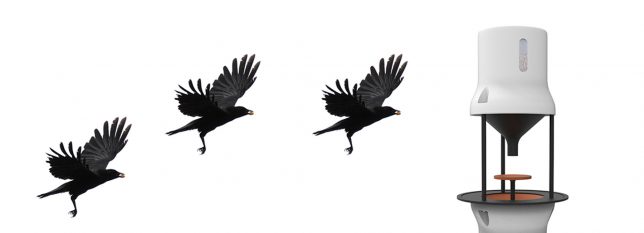
Should we really be training ultra-smart birds to do our dirty work for us, picking up cigarette butts all over our cities in exchange for treats? One Dutch start-up hopes their clever ‘Crowbar’ will be an easy and mutually beneficial way to deal with the ongoing problem of this specific kind of urban litter, making use of the corvid’s unusual intelligence. Crowded Cities proposes hanging smart machines around the city that train the birds to clean up butts.
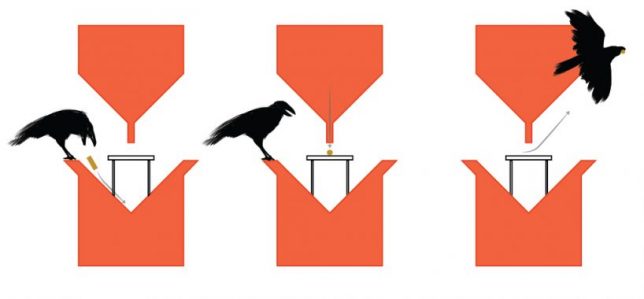
‘Crowbar’ is based on the ‘Crow Box,’ an open-source project that gives crows peanuts in exchange for coins. The birds learned that they only get rewarded for inserting a particular kind of object. The Crow Box is just one example of humans testing crows’ ability to understand cause and effect and documenting the results.  They explain the process as follows:

“The crows bring a cigarette filter to the Crowbar, where they drop it into the bottom funnel to get it checked. After the camera has recognized the cigarette filter as  a filter, it returns a bit of food to the table in front of the crow. The crow goes out telling others, or keeps his secret to himself – we are not sure.”
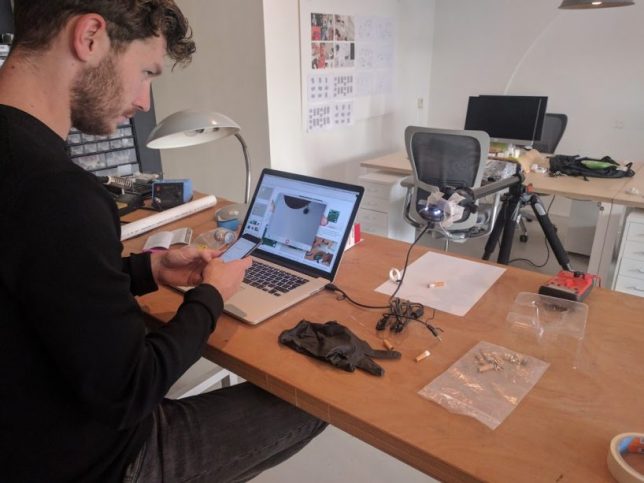
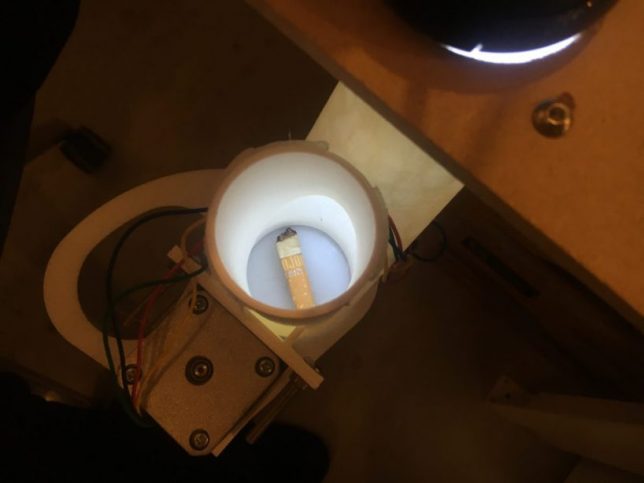
Apparently we’ll find out, as the team finishes assembling the CrowBar and puts it out into the world. In the Netherlands, more than 6 billion cigarette filters are tossed onto the street each year, and each one takes 12 years to degrade. It’s not hard to imagine this project seeing some kind of success – have you ever had a crow drop a nut right in front of your car while you’re driving, in the hopes that your tires will act as giant nutcrackers? They’re incredibly smart.

But it’s a bit disturbing to imagine crows being repeatedly exposed to the carcinogens present in cigarette butts, potentially punishing them in the long term for a stupid human behavior. Plus, it’s only a matter of time before the crows start snatching lit cigarettes right out of people’s hands.

Share on Facebook


[ By SA Rogers in Gadgets & Geekery & Technology. ]

[ WebUrbanist | Archives | Galleries | Privacy | TOS ]

WebUrbanist

 
Comments Off on Doing Our Dirty Work: Crows Trained to Clean Up Cigarette Butts

Posted in Creativity


Rail to Trail: 12 U.S. Park Projects Reclaiming Urban Infrastructure

10 Oct

[ By SA Rogers in Destinations & Sights & Travel. ]

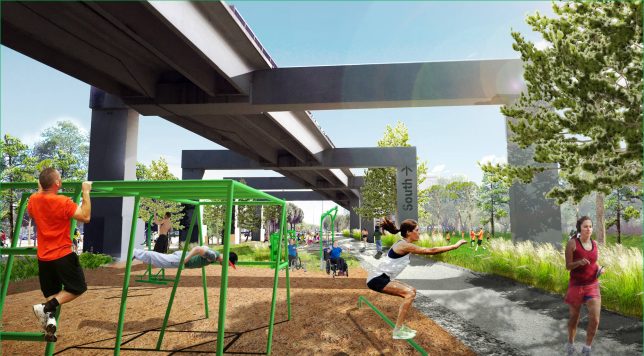
A whole lot of valuable land in America’s densest urban centers is occupied by the disused and often toxic remnants of neglected infrastructure, industrial complexes and other blight that could be green space instead. Taking inspiration from New York City’s High Line, an elevated linear park along a former New York Central Railroad spur, many cities are transforming urban riverbanks, viaducts, underpasses, freeway structures and even the tops of tunnels into parks, bike paths, pedestrian routes and other public amenities.

11th Street Bridge Park, Washington DC by OMA and OLIN

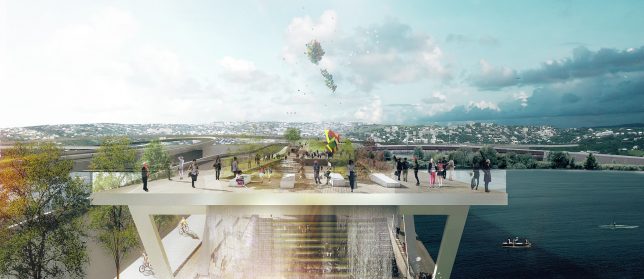
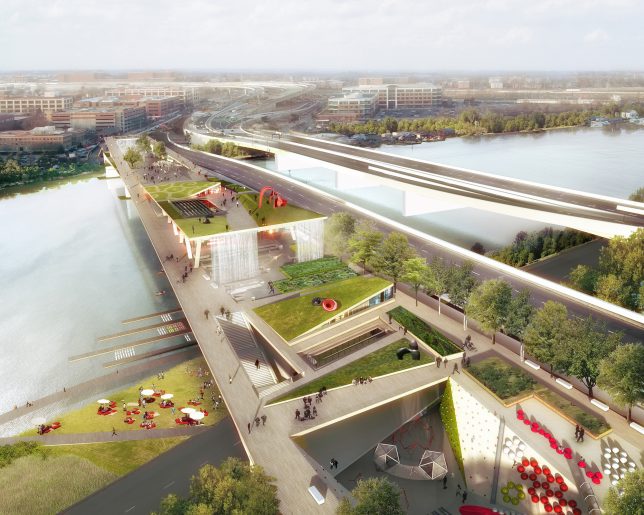
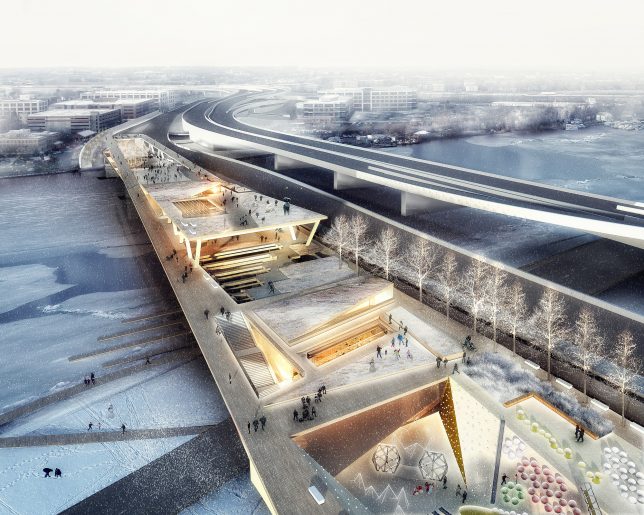
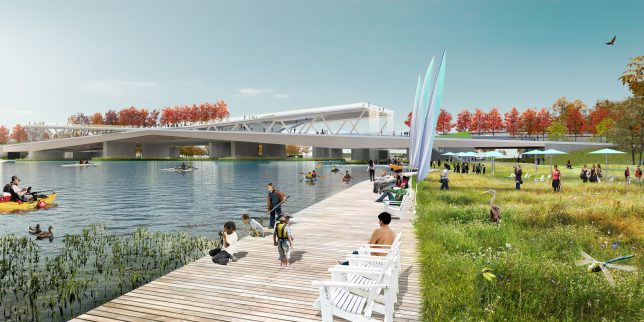
An aging freeway structure over the Anacostia River in Washington D.C. is set to become the 11th Street Bridge Park, with officials announcing in October 2017 that a design by OMA + OLIN has been chosen. Each ‘lane’ of the bridge is pulled upward toward the middle, crossing each other to form an X shape; the space underneath these overhangs will host a performance area, cafe, plazas and other public functions.

Lowline, New York City, New York by James Ramsey and Daniel Barasch

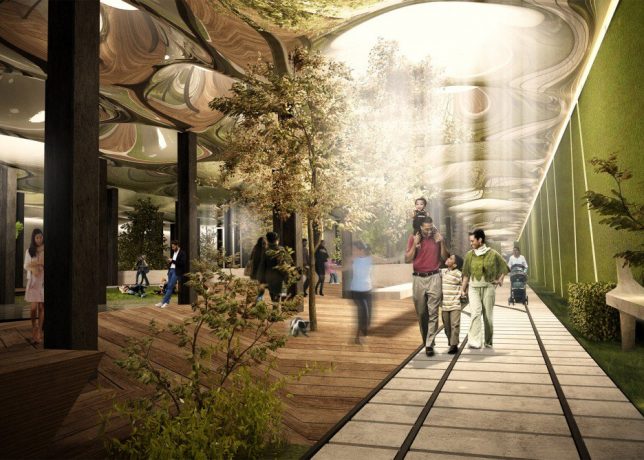
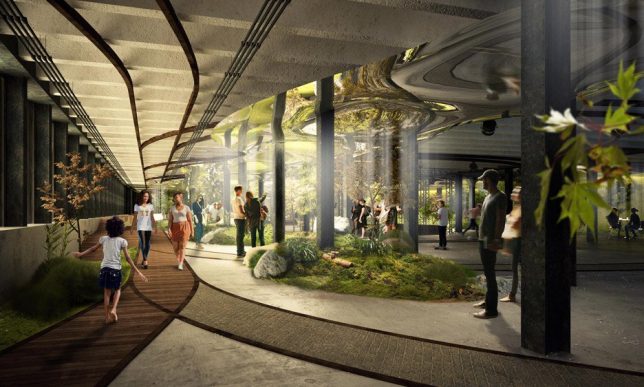
Complementing New York City’s famous High Line park, a 1.45-mile greenway built on a former New York Central Railroad spur, the subterranean ‘Lowline’ has been given a green light. Set to be the world’s first underground park, it will be tucked into a former trolley terminal in Manhattan’s Lower East Side, with a design by James Ramsey and Daniel Barasch. “The transformation of an old, forgotten trolley terminal into a dynamic cultural space designed for a 21st century city is truly a New York story,” says Barasch. “We know with input from the community and the city, we can make the Lowline a unique, inspiring space that everyone can enjoy.”

The 606, Chicago, Illinois by Collins Engineering, Michael Van Valkenburgh Associates, Frances Whitehead

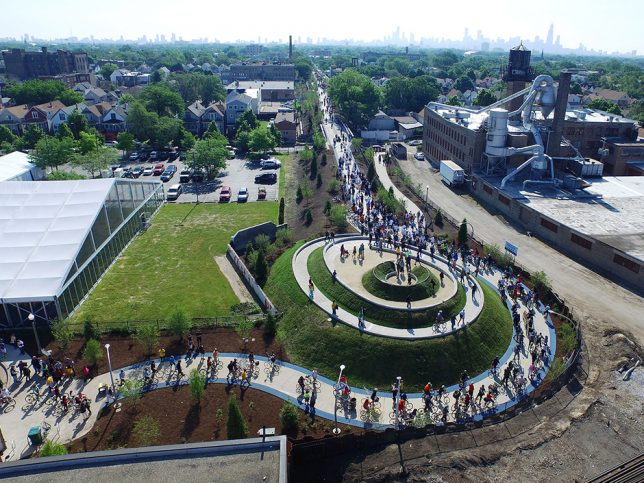
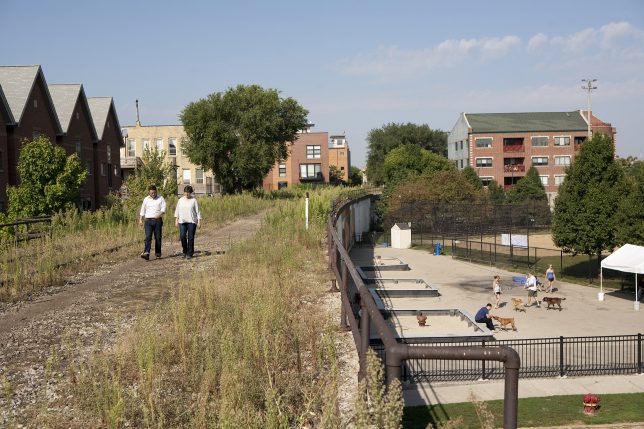
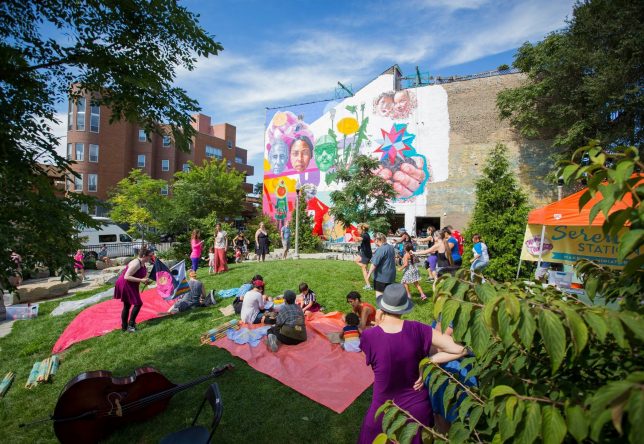
Chicago converted its abandoned Bloomingdale Rail Line into a 2.7 mile linear park called the 606 (named for the zip code prefix shared by everyone in the city.) The greenway connects four separate neighborhoods and includes a park and trail system with elevated trails for bikers, runners and walkers as well as event spaces and lots of greenery. The project was designed by the firm Frances Whitehead, which approached it as a ‘living work of art,’ demonstrating the vital role that arts play in the fabric of the city.

The Underline, Miami, Florida by James Corner Field Operations

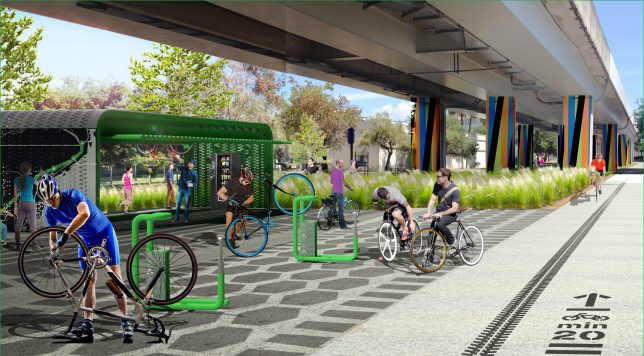
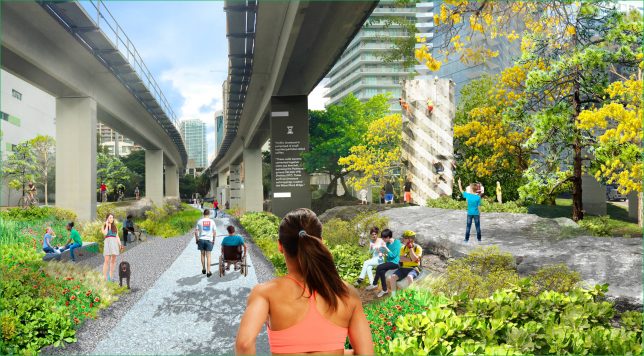
Down in Miami, a stretch beneath an elevated rail line could become ‘The Underline,’ a new public park by James Corner Field Operations, one of the studios behind the High Line in NYC. The 10-mile-long park and urban trail would sit beneath the city’s MetroRail, following an existing bike path called the M-Path, but widening it and adding a parallel pedestrian path that winds through various ecosystems of native plants and habitats for birds and butterflies. Spaces for arts and recreation would be scattered along the way, like pop-up structures and a bike tune-up station.

Next Page – Click Below to Read More:
Rail To Trail 12 U S Park Projects Reclaiming Urban Infrastructure

Share on Facebook


[ By SA Rogers in Destinations & Sights & Travel. ]

[ WebUrbanist | Archives | Galleries | Privacy | TOS ]

WebUrbanist

 
Comments Off on Rail to Trail: 12 U.S. Park Projects Reclaiming Urban Infrastructure

Posted in Creativity


Outta Sight: 15 Closed & Abandoned Opticians

09 Oct

[ By Steve in Abandoned Places & Architecture. ]

The optics are all wrong when it comes to these closed and abandoned opticians, optometrists and ophthalmologist shops as anyone can clearly see.

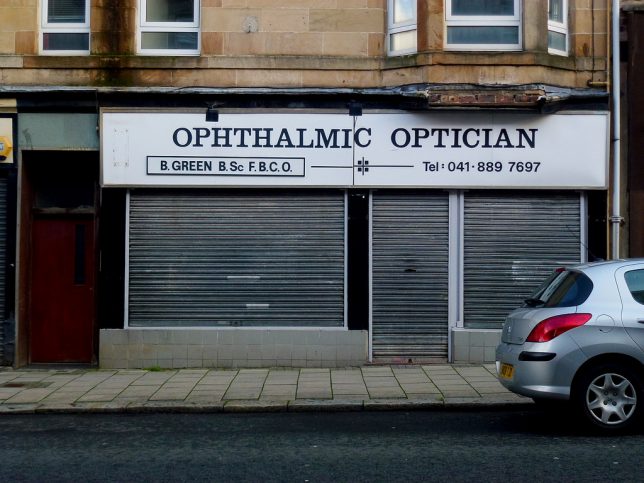
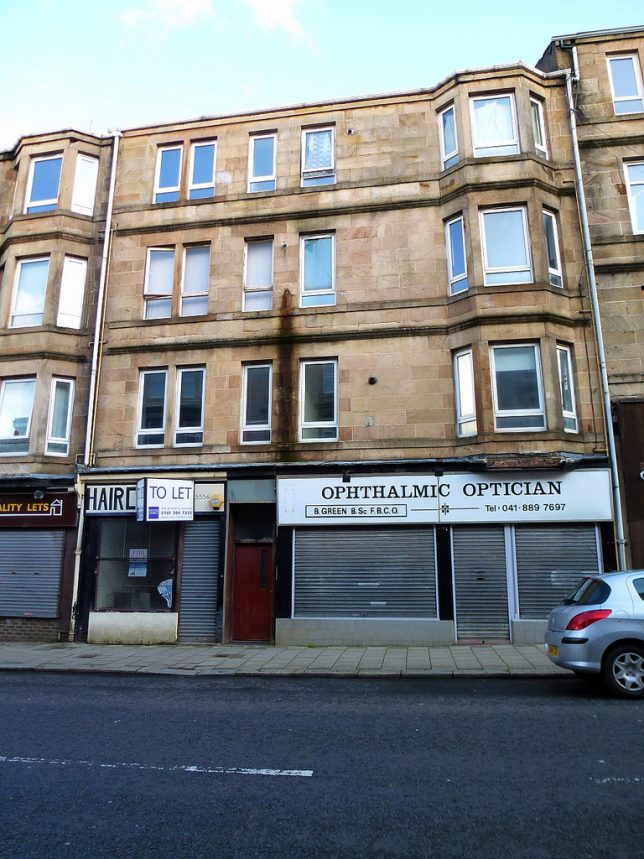
There’s no optician like an Ophthalmic Optician, except of course when it’s closed and there’s, er, no Ophthalmic Optician no more. Such is the case in Castlehead, a declining district of West Paisley, Scotland, where it seems there are more steel-shuttered shops than stores still open for business. Flickr member David Cameron Paisley Photographer (dddoc1965) captured this sorry sight – or should that be “sorry site” – in early November of 2014.

Spec Easy

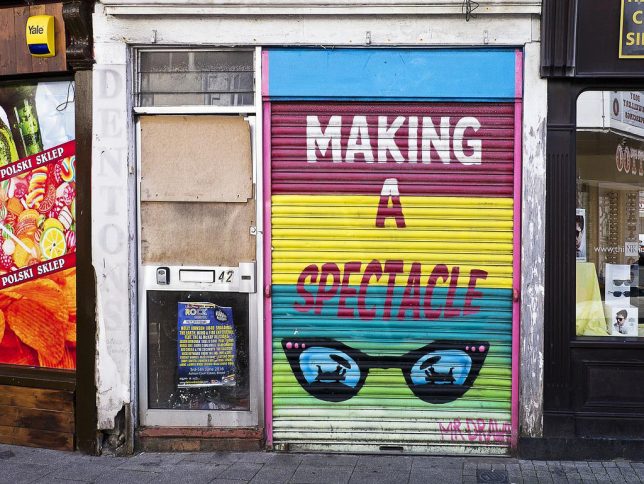
It takes some extra effort if you want to stand out between a Polish foods store and a tattoo parlor. Thus it’s not surprising this abandoned Bristol, England optician’s rainbow-hued sign is the last remaining sign of the store’s previous existence. Flickr member Graeme Dawes (HUNGRYGH0ST) snapped the store’s lurid yet eye-catching signage in May of 2016.

Innercity Vision

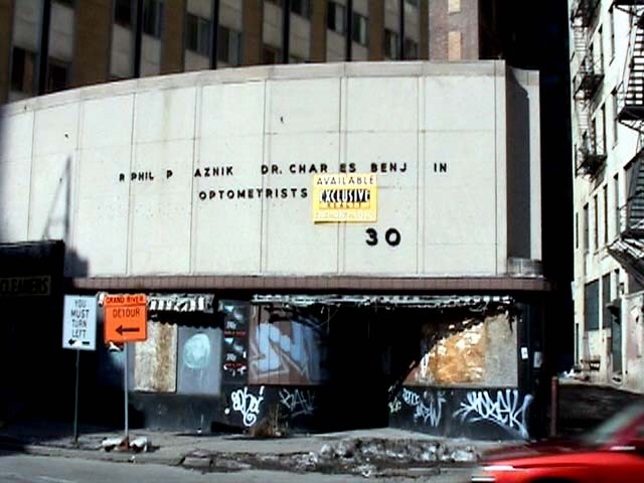
Touring downtown Detroit by bus and on foot isn’t such a great idea today and it wasn’t so wise back in 2004, when Flickr member Lucas (bilateral) did just that – and survived to show & tell the tale. We presume Drs. Phillip Aznik and Charles Benjamin also survived their exodus out of urban Detroit though their long-abandoned optometrist store (and its sign) didn’t quite make it.

Sol Survivor

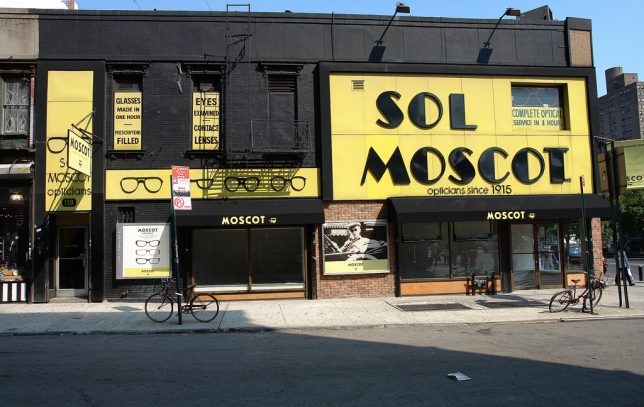
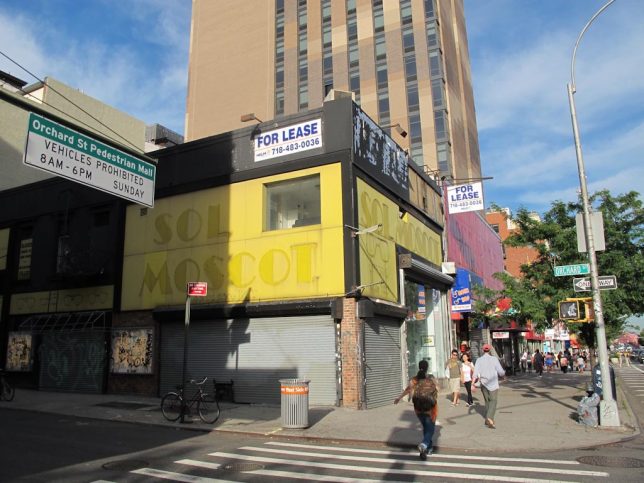
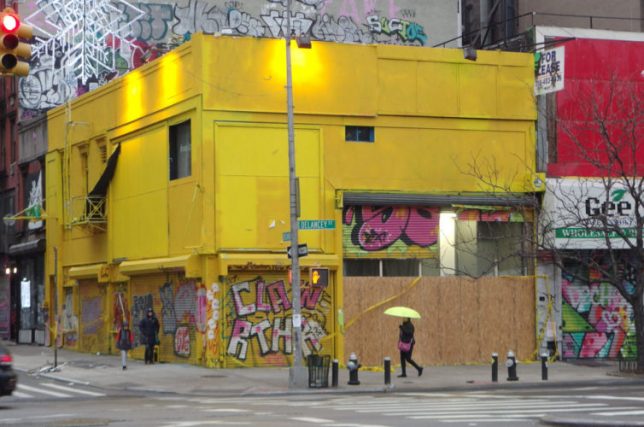
Sol Moscot Opticians (founded 1915) was a Lower East Side landmark from 1935 to 2013, when the business moved to new digs on the opposite side of Delancey Street.

The old store sat sporadically abandoned for several years following the move, until demolition and construction on a 12-story mixed-use tower finally commenced in early 2017. We’re guessing the new development will be far less colorful which in hindsight (see what we did there?), would be a bit sad.

The Italian Jobless

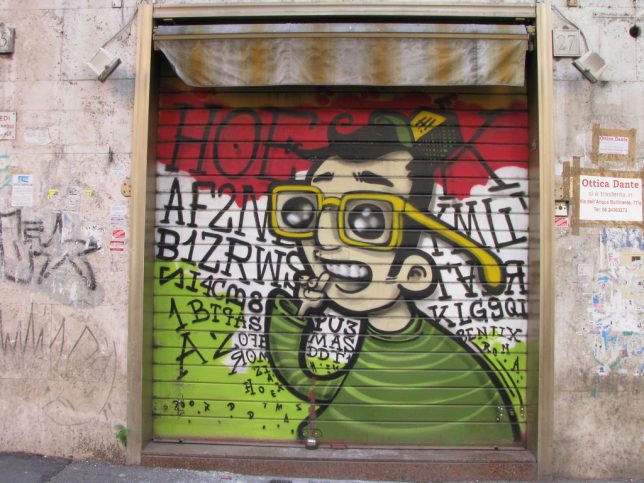
While the late and lamented Sol Moscot store was, in its later stages, almost overwhelmed by a flood of (perfectly legal) graffiti, this unnamed abandoned optician in Rome, Italy has only the above painted panel to prove its previous occupation. Good thing that sole example is awesome! Flickr member Tobia Maschio (The Great Slug) snapped this brilliant work of anonymous street art on July 16th of 2010.

Next Page – Click Below to Read More:
Outta Sight 15 Closed Abandoned Opticians

Share on Facebook


[ By Steve in Abandoned Places & Architecture. ]

[ WebUrbanist | Archives | Galleries | Privacy | TOS ]

WebUrbanist

 
Comments Off on Outta Sight: 15 Closed & Abandoned Opticians

Posted in Creativity


Sea Wall: Dark Multi-Story Mural Shows Stormy Waters on City Streets

07 Oct

[ By WebUrbanist in Art & Street Art & Graffiti. ]

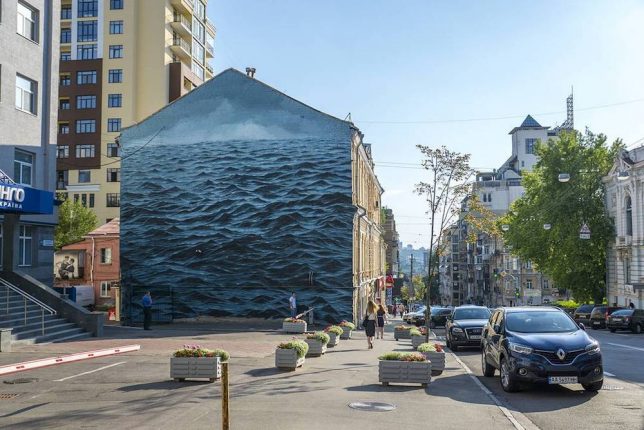
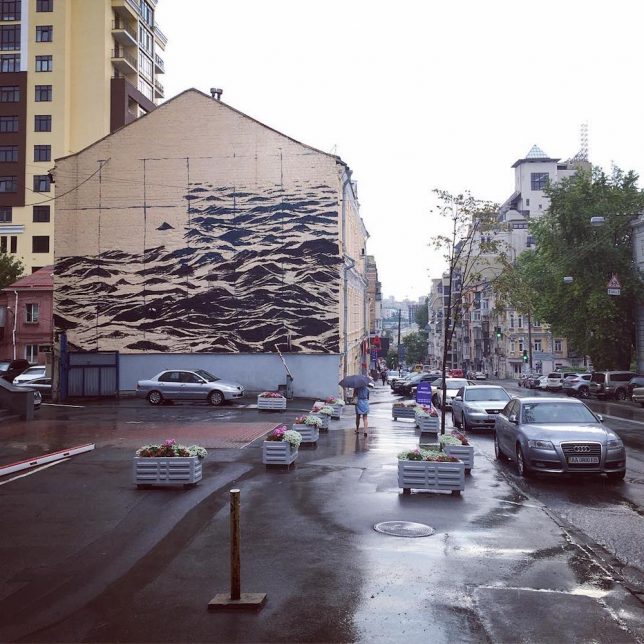
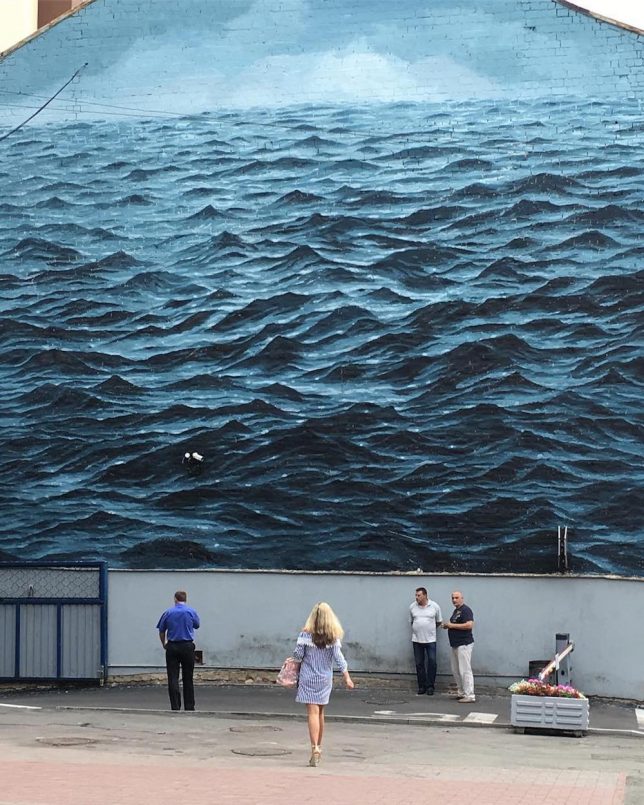
Lapping up the side of a three-story building in Kiev, Ukraine, this dark mural mixes blue and gray hues to capture dark waters and skies of the Black Sea.

Originally from London and based in Cape Town, South Africa, artist Jake Aikman enjoys working on extreme and dramatic landscapes, from dark blue oceans to dark green forests and distant lonely mountains.

The focus in most of his pieces is not so much the scene but the setting — especially at larger scales and absent figures, as in this piece, they create a tone or mood rather than telling a particular story. In short: they leave a lot to the imagination, like a blank canvass providing a time and place but no characters.

This particular piece is one of his largest to date and was produced for Art United Us. Spanning the entire side of a structure, it was completed in just over a week.

Share on Facebook


[ By WebUrbanist in Art & Street Art & Graffiti. ]

[ WebUrbanist | Archives | Galleries | Privacy | TOS ]

WebUrbanist

 
Comments Off on Sea Wall: Dark Multi-Story Mural Shows Stormy Waters on City Streets

Posted in Creativity


Slinky Chairs: Accordion-Style Transforming Furniture Stretches & Bends

06 Oct

[ By SA Rogers in Design & Furniture & Decor. ]

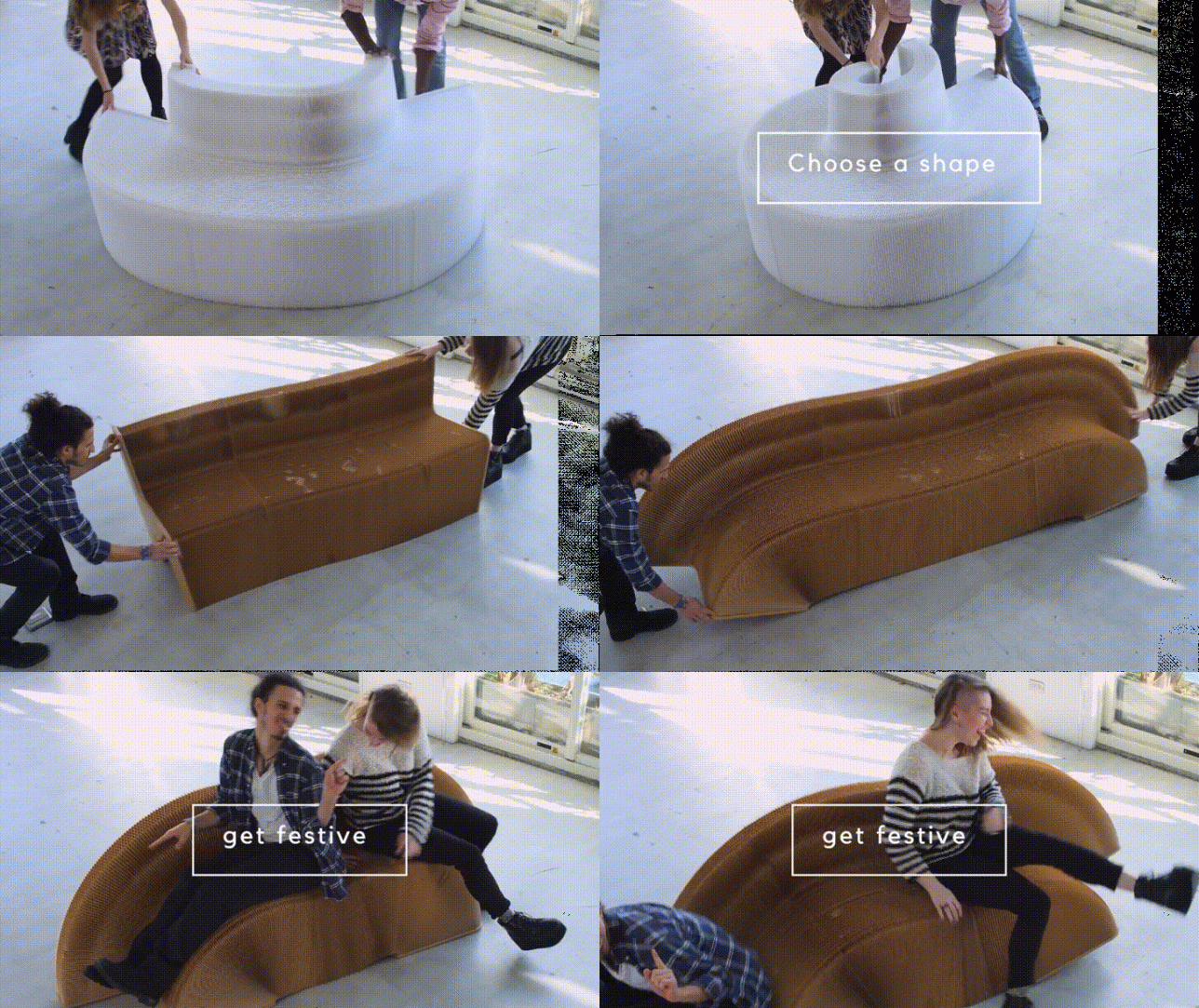
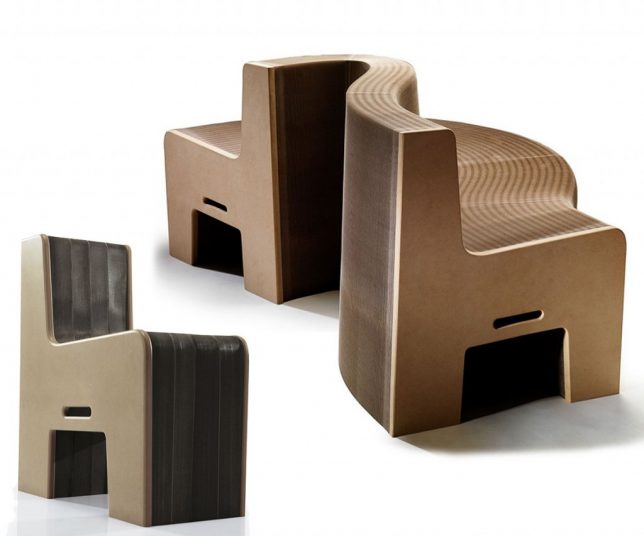
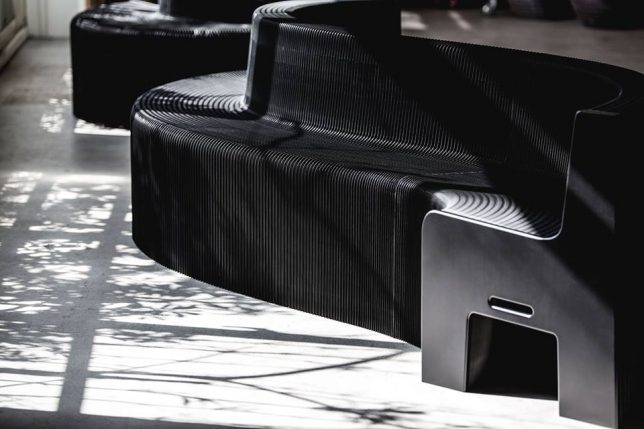
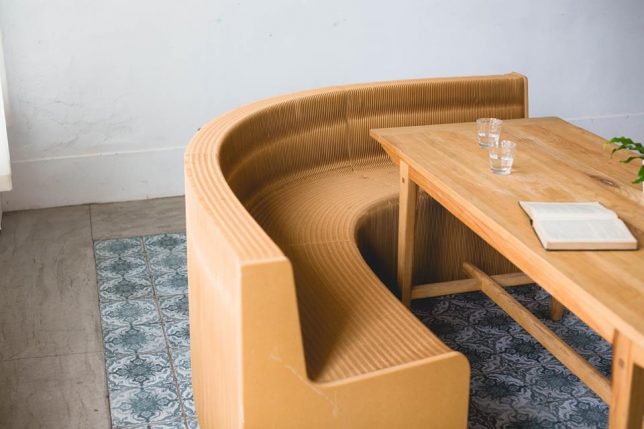
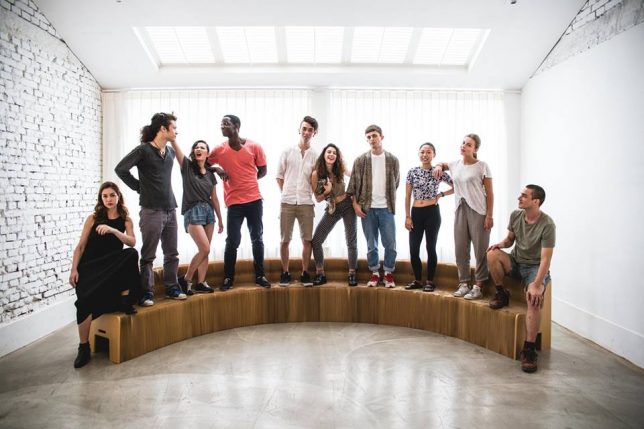
What starts as a flat, stackable, highly portable package expands more than ten times its original size when you pull on either end, bending and curling to become a sofa for a group. The Flexible Love Sofa and Chair are made from 100% recycled paper, yet they’re surprisingly strong, with the longer sofa holding up to 4,232 pounds at once when fully expanded. Designed in Taiwan, the series is available in ‘marble’ white, ‘lava’ black and ‘earth’ brown, and measures just over 5 inches across when collapsed.

The Flexible Love company shows off what the seats can do in a series of videos, so you can see it in action. It looks remarkably easy to manipulate, and somehow stays in place when you curl it into an S-shape or bend one end to the ground. If you’re skeptical that it can really hold as much weight as the company claims when expanded to its full 30-foot width, they’ve provided several images in which a group of people all stand on the seat at once.

With furniture like this, you’d never need to worry about accommodating extra guests again. It’s fun to see the different ways in which it can be arranged around tables. Each piece is hand-crafted of FSC-certified materials, assembly-free, recyclable and made with non-toxic finishing. Though the Flexible Love website is currently down for maintenance, you can purchase both the sofa and chair model at Expand Furniture in the meantime, with prices starting at $ 380.

Share on Facebook


[ By SA Rogers in Design & Furniture & Decor. ]

[ WebUrbanist | Archives | Galleries | Privacy | TOS ]

WebUrbanist

 
Comments Off on Slinky Chairs: Accordion-Style Transforming Furniture Stretches & Bends

Posted in Creativity


Inflatable Luggage: Air-Framed ‘Zippelin’ Bags Made of Old Tarps & Bike Tubes

05 Oct

[ By WebUrbanist in Design & Products & Packaging. ]

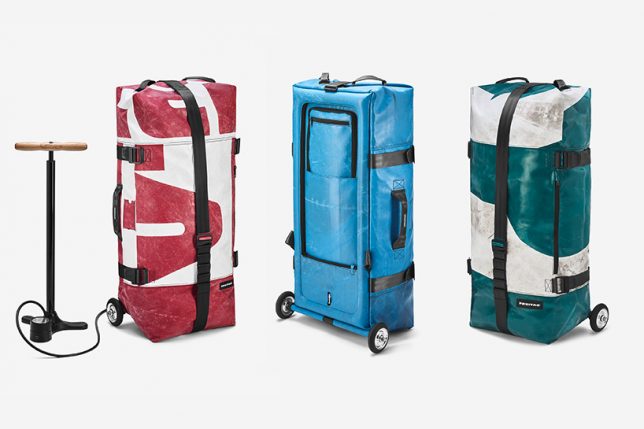
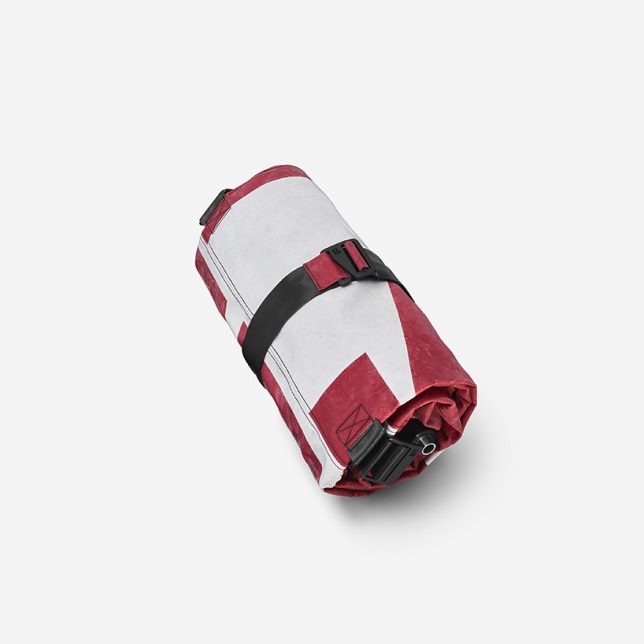
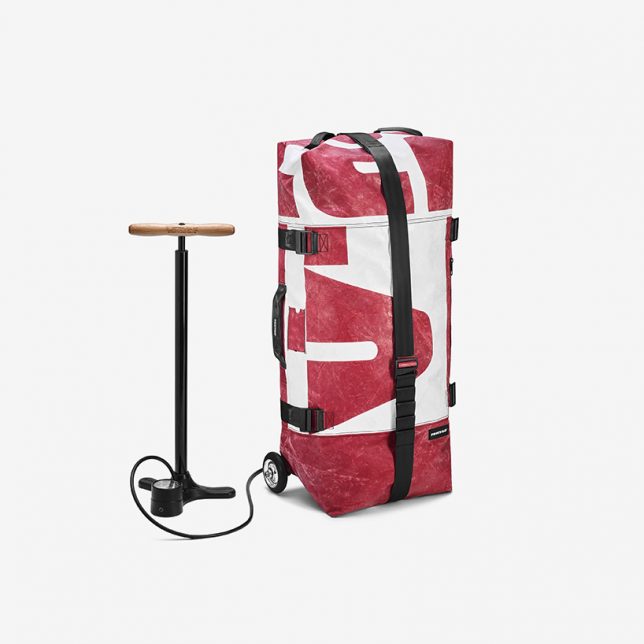
Lightweight, durable and compact, this new recycled Zippelin bag series features wheels for rolling like any good luggage. But instead of metal or plastic frames, these bags employ bicycle tire inner tubes that can be inflated instead. This strategy also allows the bags to pack into tiny space for storage when not in use.

Using truck tarpaulins that are made to resist water and withstand wear, the bags have evolved — early versions still included frames, which added weight. These were swapped out for bike tubes which, conveniently enough, can be inflated using a standard bike pump (no need to buy a specialized device).

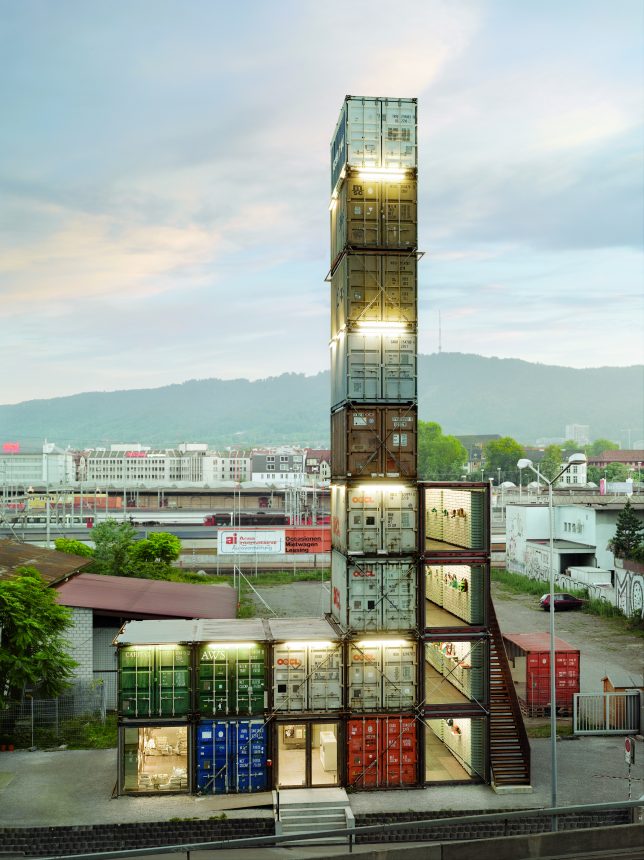
FREITAG is not stranger to recycling — its headquarters in Zurich, Switzerland, is housed in a stacked shipping container building that boasts a similar rugged look, worn materials and an upcycling ethos.

Like the variegated containers that make up its home, the company’s Zippelin bags are all different. Helpfully, this also makes each bag easier for its owner to spot and identify, since each one is unique.

A product engineer at FREITAG and former architect, Nicola Stäubli says she’s “familiar with air-supported structures” and she also “used to be a bike messenger and was impressed by folding bikes that are fully functional when mounted, and compact when you stow them away.”

Share on Facebook


[ By WebUrbanist in Design & Products & Packaging. ]

[ WebUrbanist | Archives | Galleries | Privacy | TOS ]

WebUrbanist

 
Comments Off on Inflatable Luggage: Air-Framed ‘Zippelin’ Bags Made of Old Tarps & Bike Tubes

Posted in Creativity


Pop-Up Parking Garage & Rooftop Green Space Rises Higher When it Rains

05 Oct

[ By SA Rogers in Architecture & Public & Institutional. ]

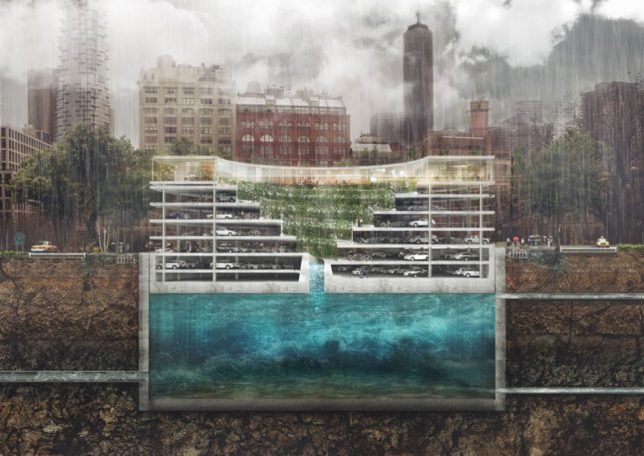
Stormwater flooding, too few places to park and a lack of green space are three of the main issues plaguing every major city, and this strange but kind of brilliant building concept attempts to solve all three at once. ‘POP-UP’ by Danish architecture firm THIRD NATURE places a five-level parking garage topped with a public park on top of a stormwater reservoir, with the building’s height changing depending on how much it has rained lately.

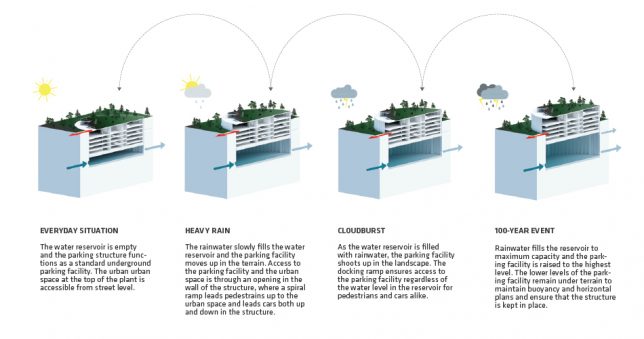
On a dry day, all that’s visible of the POP-UP structure is the rooftop park, which essentially sits at ground level. But when rain falls, it fills the underground reservoir, causing the parking structure to rise higher in the landscape, highlighting its adaptability in the face of changing weather. The architects present it as an alternative to constructing a rainwater reservoir that’s empty most of the time or a mono-functional parking facility that takes up valuable urban space.

“By 2050, the Earth’s population is expected to grow to over 9 billion people,” says THIRD NATURE. “The migration to cities is on the rise and urban spaces are under pressure from the growing numbers of cars and traffic in the streets. With the quest for green, livable and human-scale cities cars and car parking have become an increasing challenge fighting for m2 in the dense cities – often at the price of urban areas and parks.”

“At the same time, climate changes require cities to handle huge amounts of stormwater generated by more and more powerful cloudbusts – this by building large water reservoirs under roads and squares. The situation calls for a rethinking of the way we establish parking, storage of stormwater and new urban spaces.”

They compare the building to a piece of cork in a glass of water. Hydraulic and mechanical lifts would help balance the weight ratios of parked cars in the structure to make sure it’s able to move up and down smoothly without changing the water level underneath. The two lowest levels of the parking structure would be off-limits, remaining underground to ensure the stability and buoyancy of the building.

Though an approach that reduces the number of individual vehicles allowed into a city would arguably be more practical, it’s also true that many places (especially in the United States) are likely to remain car-centric for the foreseeable future. Is this a realistic compromise?

Share on Facebook


[ By SA Rogers in Architecture & Public & Institutional. ]

[ WebUrbanist | Archives | Galleries | Privacy | TOS ]

WebUrbanist

 
Comments Off on Pop-Up Parking Garage & Rooftop Green Space Rises Higher When it Rains

Posted in Creativity


It’s Alive! 14 Algae-Powered Inventions for Food, Light, Energy & Oxygen

04 Oct

[ By SA Rogers in Conceptual & Futuristic & Technology. ]

If we could just get beyond pesky hiccups like catastrophic climate change and wanting to obliterate each other with nuclear weapons, we humans could learn from our mistakes and create a future that’s actually cooler and more sustainable than anything we dreamed up during the 20th century. Making the most of microalgae, one of the most ancient and prolific organisms on earth, we could produce abundant clean energy and healthy foods while also reducing the amount of CO2 in the air and producing more oxygen. These designs show just how this symbiotic process could manifest in our lives.

Living Chandelier Filled with Algae

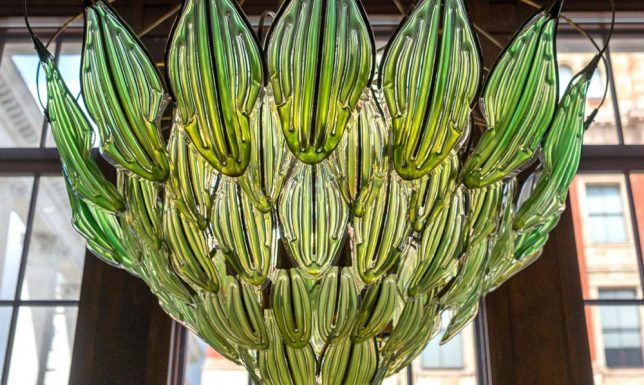
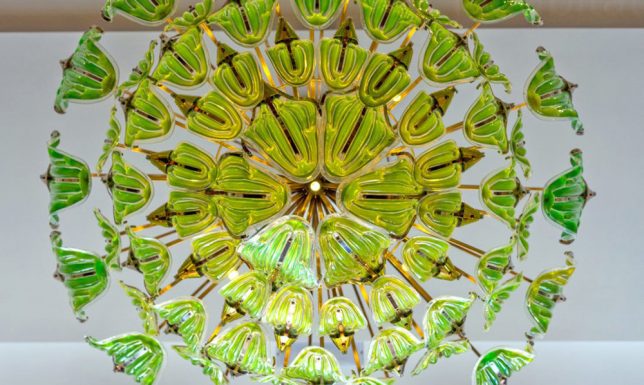
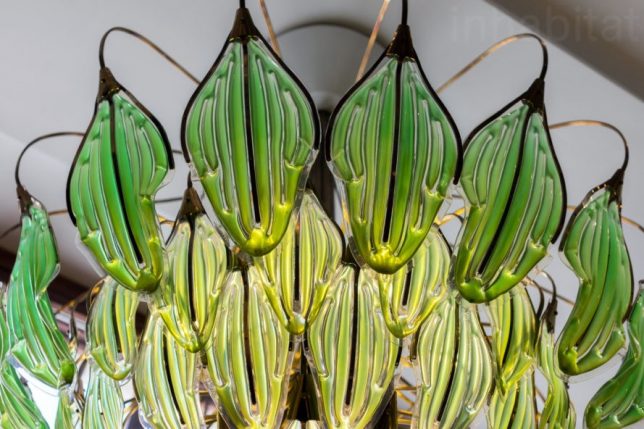
Embedded with LED bulbs and sustained by daylight, ‘Exhale’ by Julian Melchiorri is a living chandelier with beautiful glass components filled with various shades of green algae. The glass ‘leaves’ take in CO2 from the room and release oxygen, too, making it a striking air purifier. Melchiorri is a designer and engineer, but he’s also a leading biochemical technology researcher, and he’s been working on his ‘artificial leaf’ concept for years.

‘Algae Green Loop’ Proposal for Chicago’s Marina City Towers

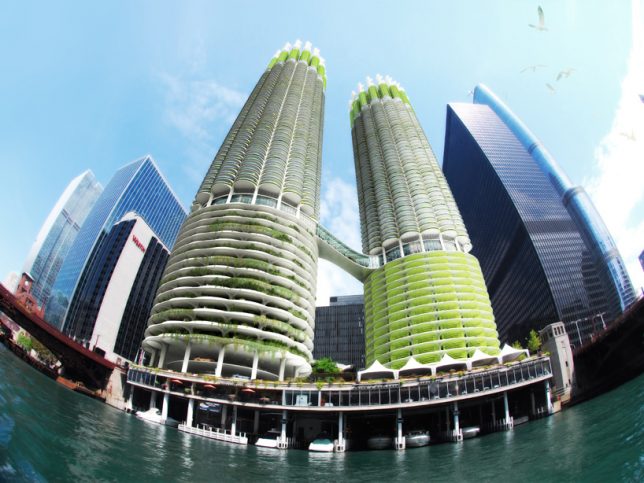
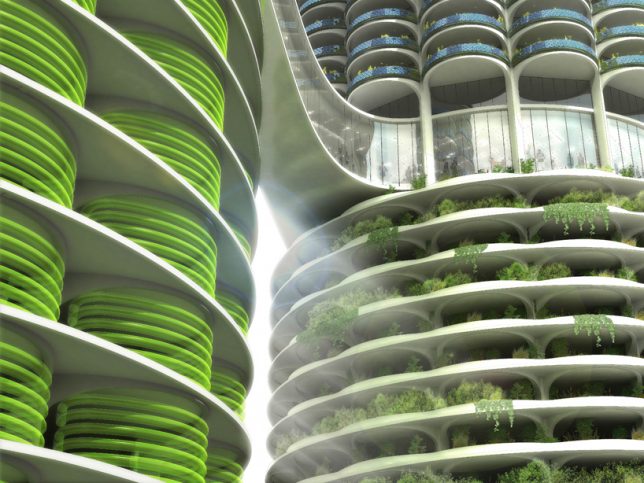
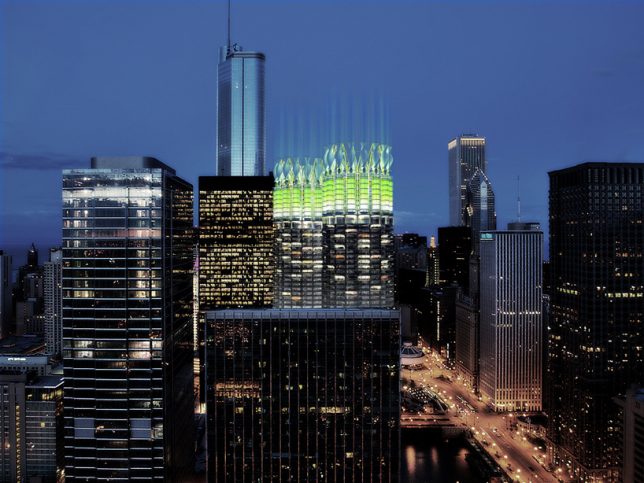
Architecture office Influx Studio imagines a dramatic makeover for the Marina City Towers in Chicago, retrofitting them to absorb CO2 through loops of bioreactors to help mitigate climate change. The closed-loop system sequesters carbon from the air, absorbs it through vegetal photosynthesis and produces its own energy through the same wind turbines that suck in CO2 and through the algae bioreactors that process it.

Photosynthetic Algae Furnishings

[vimeo128654962]

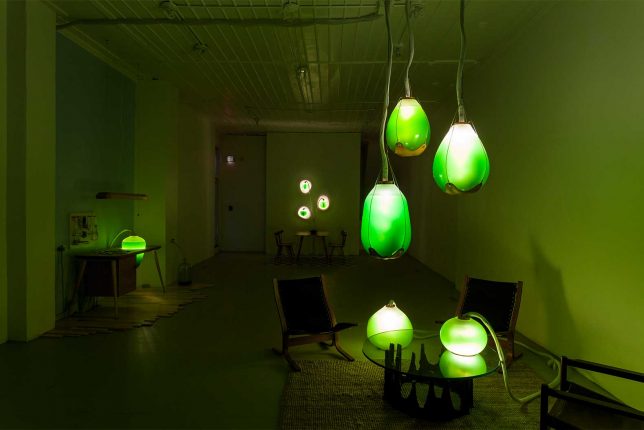
‘Living Things’ is a series of bio-powered furnishings exploring ‘symbiotic living,’ his which micro-algae help light up our homes. Presented in a series of vignettes, the project contains furniture and lamps that are both beautiful and beneficial. “The morphologies of hand-blown glass vessels function both as lighting and heating elements for the human occupants, and high functioning photobioreactors which provide heat, light, agitation, air supply nutrient and waste control to the living algae inside.”

World’s First Algae-Powered Building

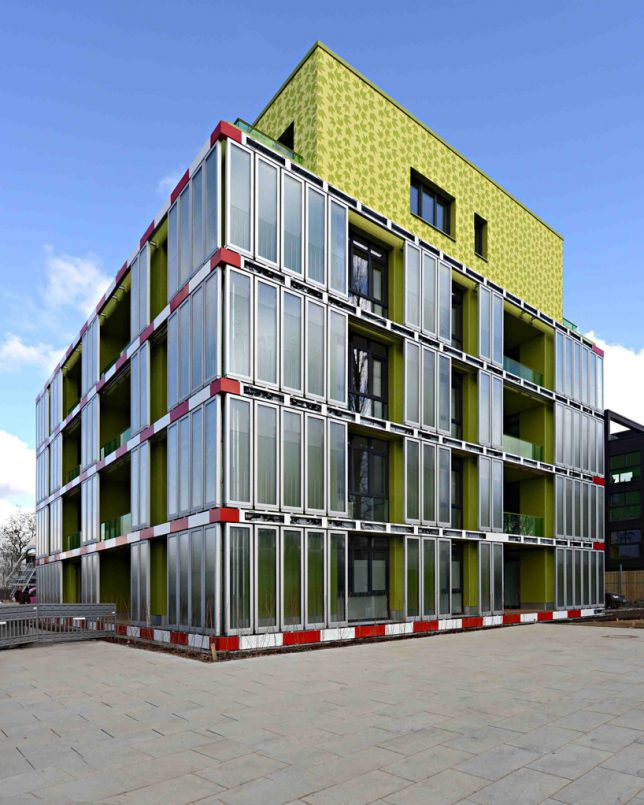
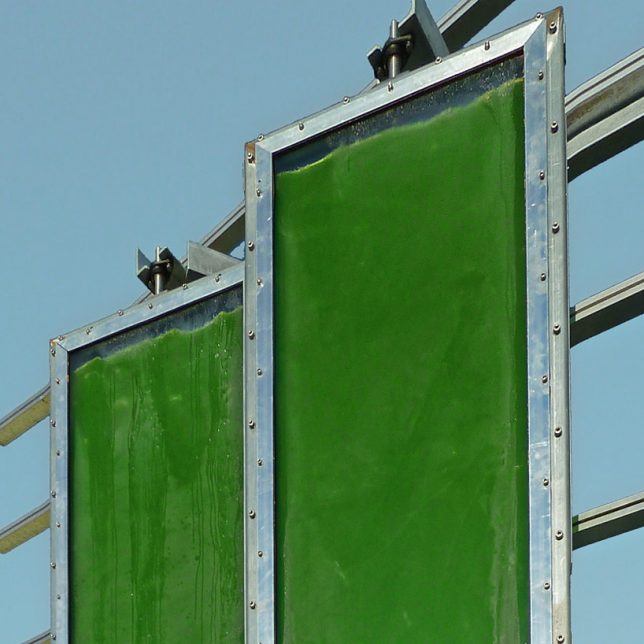
Lots of concepts tout the ability to power an entire building on algae, but have you ever actually seen one built? BIQ House in Hamburg, Germany by Austrian firm Splitterwerk features the world’s first iso-adaptive facade in the form of algae-filled glass panels shading the southeast and southwest faces of the building. The algae is sourced from a nearby tributary of the Elbe River and constantly changes color as it grows. The panes produce biomass as the algae multiplies, and reduce the amount of energy needed for cooling inside the building.

Living Portraits Made with Microscopic Algae

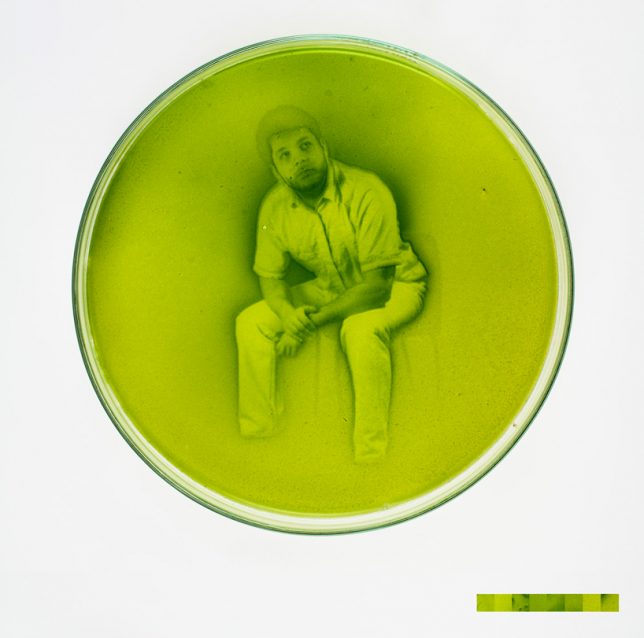
Living algae cultured in petri dishes clump together to form images in a living twist on traditional photography techniques. Artist and researcher Lia Giraud places a mix of chemical nutrients in the dish and exposes them to an image, and the cells react to the light and form solids of various densities, resulting in the different shades of green that produce the image.

Next Page – Click Below to Read More:
Its Alive 14 Algae Powered Inventions For Food Light Energy Oxygen

Share on Facebook


[ By SA Rogers in Conceptual & Futuristic & Technology. ]

[ WebUrbanist | Archives | Galleries | Privacy | TOS ]

WebUrbanist

 
Comments Off on It’s Alive! 14 Algae-Powered Inventions for Food, Light, Energy & Oxygen

Posted in Creativity


MAD Architects Redesign Turns Ugly Paris Tower into Giant City-Scale Mirror

03 Oct

[ By WebUrbanist in Architecture & Offices & Commercial. ]

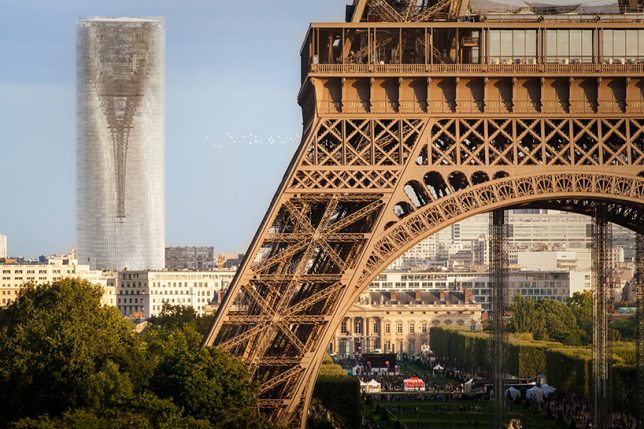
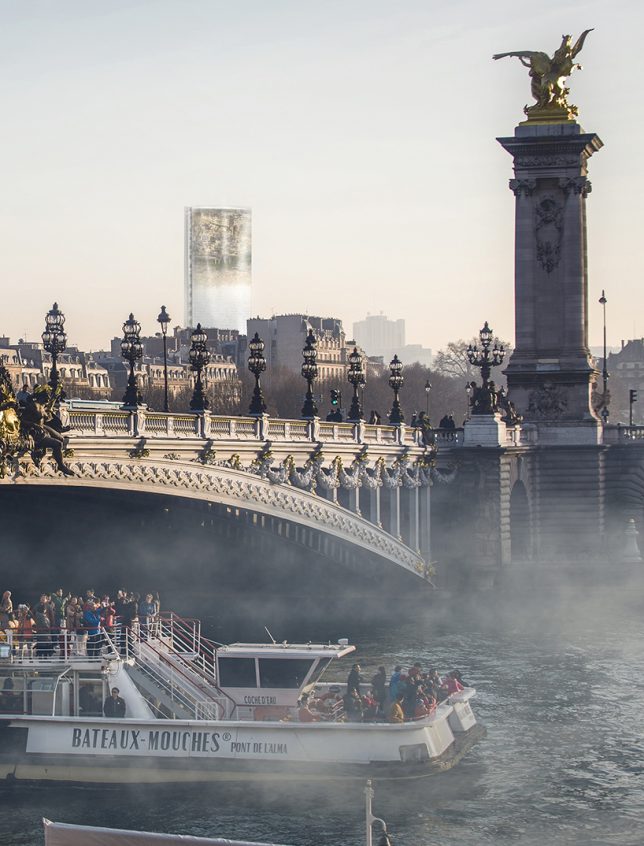
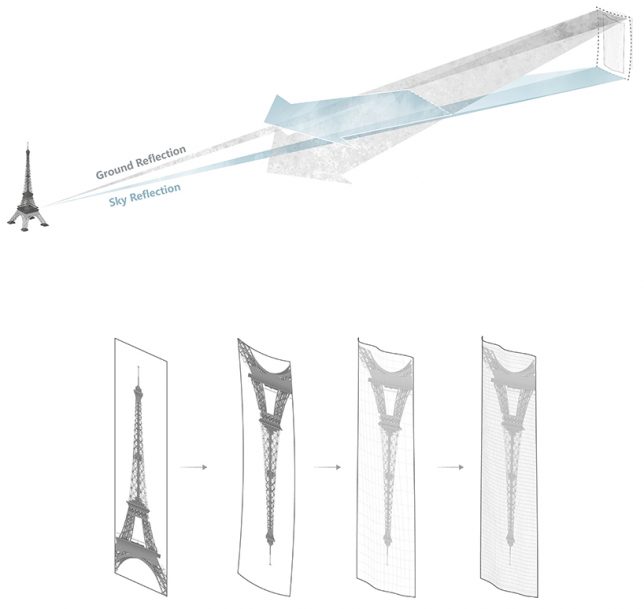
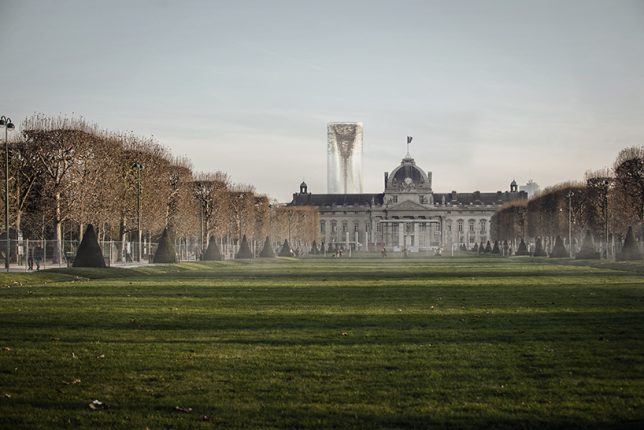
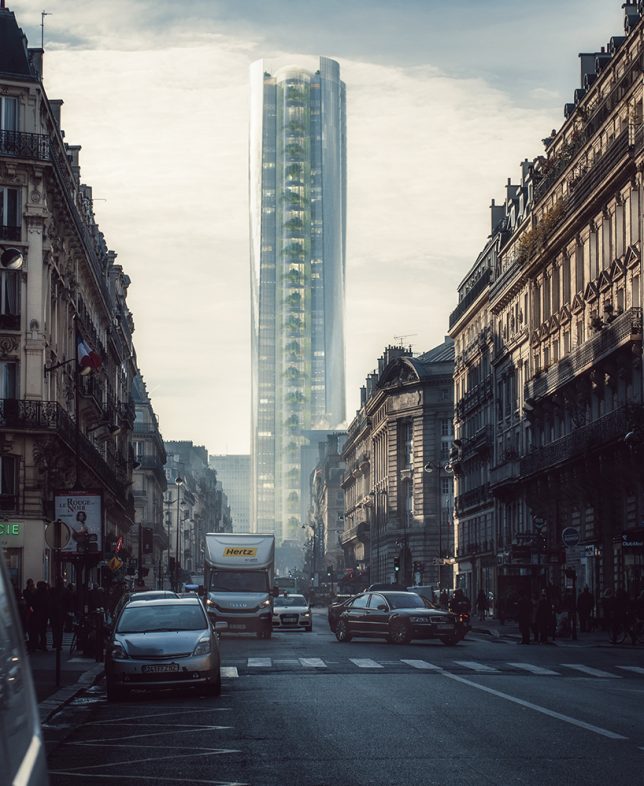
Tall, dark and brooding, the infamous Maine-Montparnasse Tower is an unexciting skyscraper, especially by Parisian standards, but that could all change if MAD Architects converts it into a city-scale mirror. Their renovation proposal employs clever optical tricks to reflect and invert the surrounding cityscape.

When it was built, Montparnasse was the tallest building in France and heralded as a technological achievement. But unlike the Eiffel Tower, which was controversial at first but became a symbol of the city, this skyscraper never gained iconic status — in fact, it led urban building heights to be capped at seven stories. Some quip it has the most beautiful views in the city, in part because those views don’t include the building.

MAD Architects aims to change perceptions of the tower and its role in the city using concave glass panels tilted at an angle to create reflections of the surrounding built environment.

Viewers would be able to see surrounding streets, roofs and buildings in its mirrored facade. In a way, the resulting design both blends into the environment while also highlighting the beauty of the French capital and showing it from generally unseen angles.

“Today, we cannot really demolish this building and the historical regrets it stands for,” explains one of the architects behind the proposal, “but we can establish a new perspective to re-examine and think about how humanity can co-exist and interact with the tower and its environment, to bring meaning to our hearts.”

Perhaps unfortunately, while the firm was shortlisted in a redesign competition, another team was chosen to renovate the structure before the upcoming Olympic Games. Still, the design idea is out there, and another city might have its own ugly tower in need of transformation.

Share on Facebook


[ By WebUrbanist in Architecture & Offices & Commercial. ]

[ WebUrbanist | Archives | Galleries | Privacy | TOS ]

WebUrbanist

 
Comments Off on MAD Architects Redesign Turns Ugly Paris Tower into Giant City-Scale Mirror

Posted in Creativity


Houses to Human Hearts: 13 Recent Breakthroughs in 3D-Printed Designs

03 Oct

[ By SA Rogers in Conceptual & Futuristic & Technology. ]

When 3D printers are widely accessible and affordable, will we see another industrial revolution, enabling us to manufacture just about everything we need on demand? Progress made in 3D printing thus far looks promising. Designers, engineers, architects and even novices are printing everything from fully functional human hearts and custom biodegradable shoes to full-scale architecture and bicycle bridges. One designer even printed himself a large-format camera based on three models he couldn’t afford.

Beating Artificial Heart

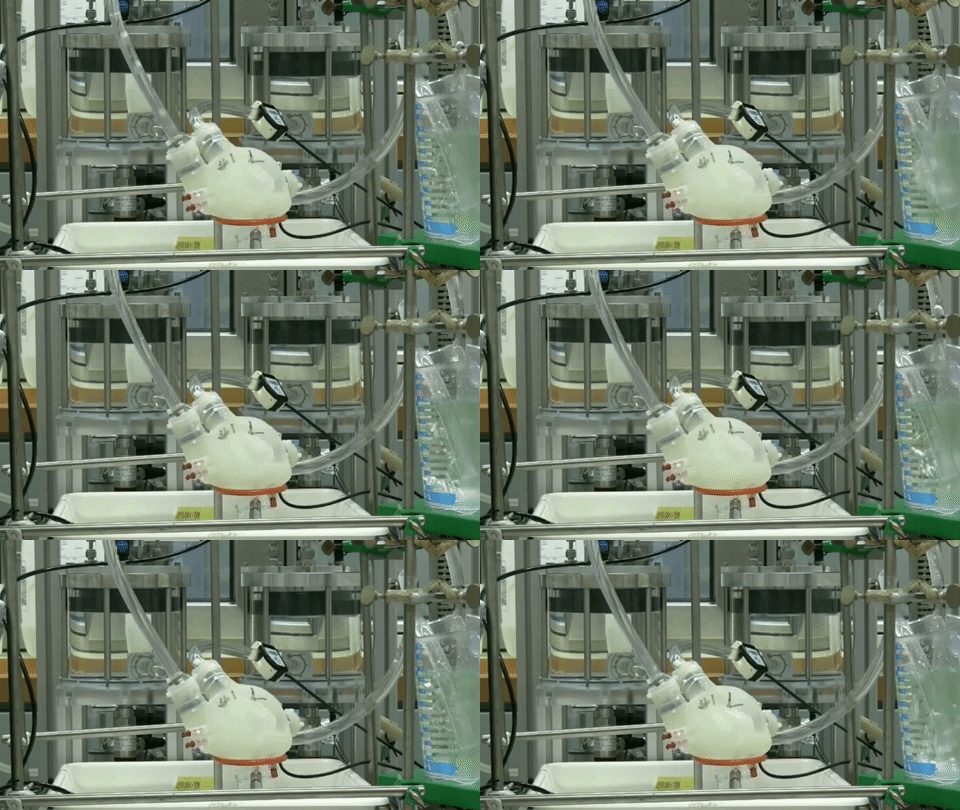
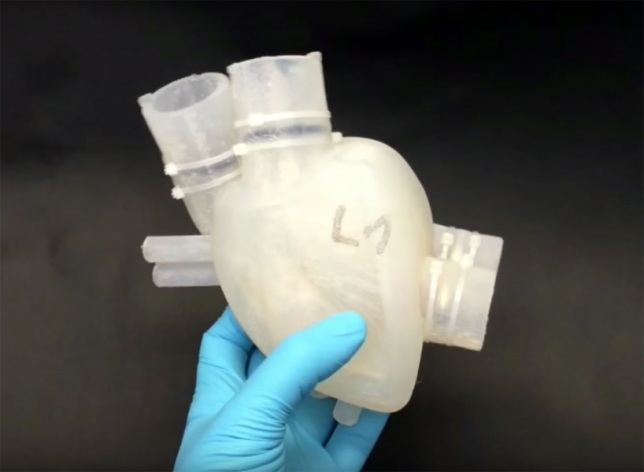
Created by researchers at ETH Zürich, this 3D-printed silicone heart beats almost like a real one, and though it’s not yet considered a viable long-term replacement, it can help keep a patient’s blood flowing while they’re waiting for a donor organ. Right now, the material can only withstand about 45 minutes of usage, but the team sees it as a proof of concept showing a way forward for artificial hearts in the future.

Ceramic Constellation Pavilion

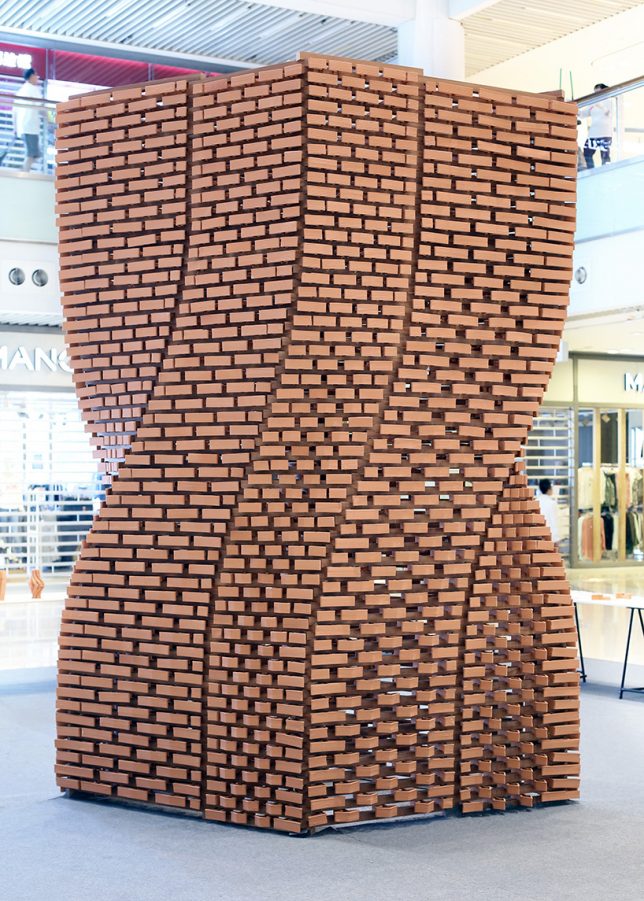
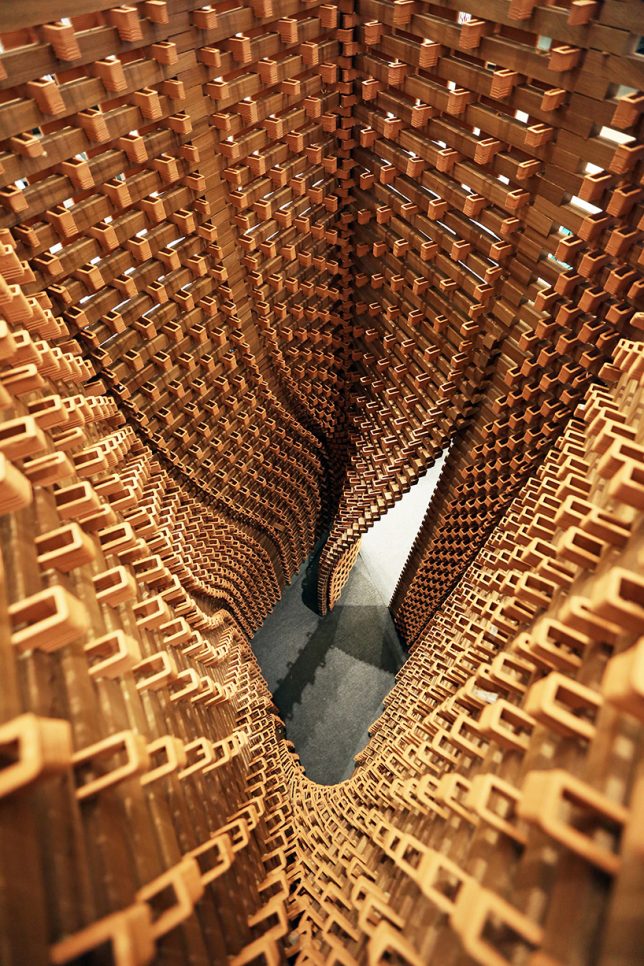
Made entirely of 3D-printed terra-cotta bricks with a unique shape that allows them to slot together without conventional brick bonding techniques, ‘Ceramic Constellation Pavilion’ gives us a glimpse at what we might be able to achieve with 3D-printed architecture in the decades to come. The structure was created by the University of Hong Kong’s Department of Architecture along with Sino Group. “In a context that has largely been shaped by standardization and mass production, the project seeks to overcome the constraints of today’s architectural production through the introduction of a structure made entirely of non-standard components.”

Robotic Sign Language Arm

Shortages of sign language interpreters internationally (and the difficulty of finding one on the spot) led the students behind Project Aslan to seek better ways to bridge the communication gap between the hearing and deaf communities. This robotic sign language hand is one result, using 3D printing to make it more affordable and easy to build. The robot receives information from a local network to activate its joints, allowing it to interpret written language into sign language. It’s not meant to replace human interpreters, but rather step in when they aren’t available, and can be used to teach sign language, too.

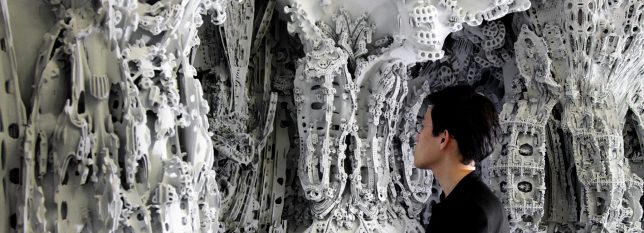
Digital Grotesque II 3D-Printed Grotto

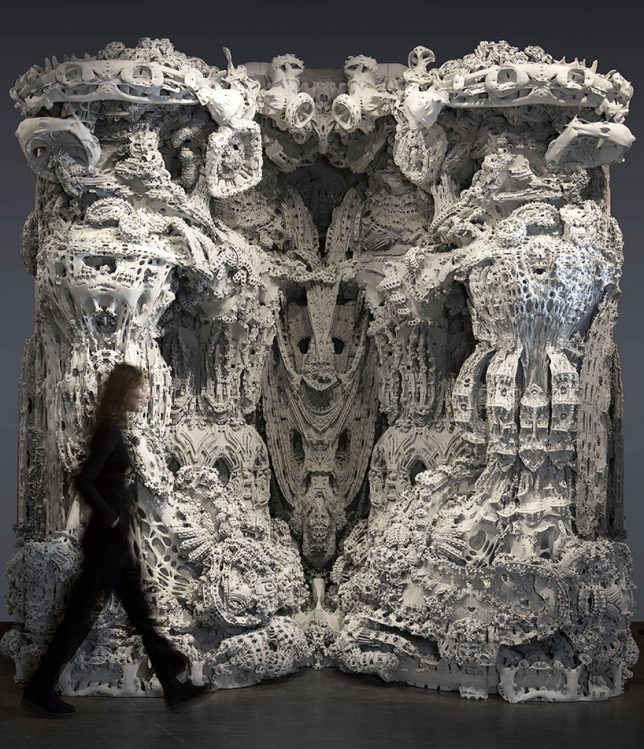
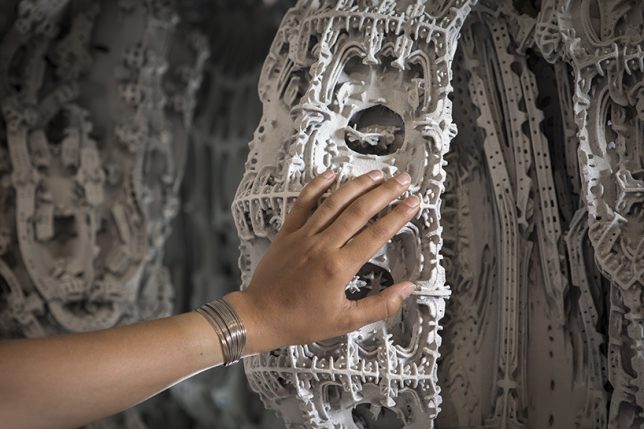
Designed entirely by algorithms, ‘Digital Grotesque II’ is a 3D-printed pavilion made of 7 tons of printed sandstone, with an incredible 1.35 billion surfaces. It’s another look at how we could achieve unprecedented complexities, porosities and spatial depth in future architecture using 3D printing and other new methods of fabrication as robotics become more accessible.

Flying Iron Man Suit

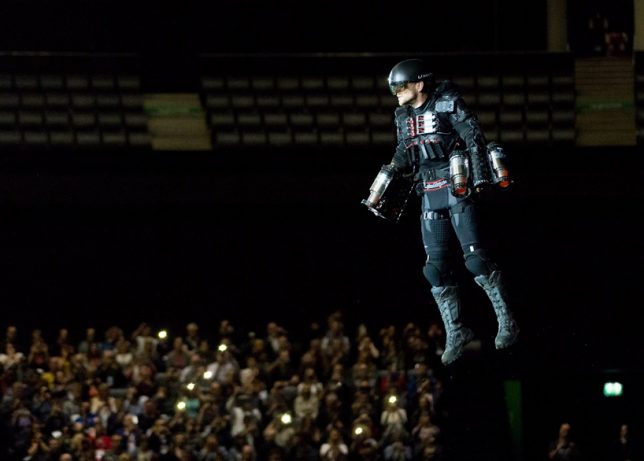
Considering the optimism and rapid rate of progress in the 20th century, many of us expected to have cooler toys by now. Are we finally about to get a suit that lets us fly? Kind of. The Iron Man suit by Gravity Industries is set to be 3D printed in metal, with six miniature jet engines mounted to the arms and back for vertical takeoff and flight. However, it’ll literally take an Iron Man to wear the thing, as it takes enormous strength to control the jets. The suit itself weights up to 90 pounds.

Next Page – Click Below to Read More:
Houses To Human Hearts 13 Recent Breakthroughs In 3d Printed Designs

Share on Facebook


[ By SA Rogers in Conceptual & Futuristic & Technology. ]

[ WebUrbanist | Archives | Galleries | Privacy | TOS ]

WebUrbanist

 
Comments Off on Houses to Human Hearts: 13 Recent Breakthroughs in 3D-Printed Designs

Posted in Creativity