RSS
 

Archive for the ‘Creativity’ Category

Wiki Your City: Mobile App Lets You Geo-Tag Articles

02 Mar

[ By Steph in Gadgets & Geekery & Technology. ]

Wiki GeoData App 1

Wikipedia is making it easier than ever to participate in the aggregation of user-provided knowledge and information with its GeoData extension, a mobile app for iPhones and Androids. This app enables users to geo-tag articles and images and instantly upload their own images, right there on location.

Wiki GeoData App 2

The GeoData extension will provide app developers with a new spatial database with which they can create maps and improve Wikipedia’s current app and the ‘Nearby’ add-on. The Nearby function takes you on a virtual tour of notable sights in your area, directing you there and giving you the history and other pertinent data.

Wiki GeoData App 3

The more spatial coordinates are added to Wikipedia entries, the more accurate and interactive Wikipedia’s mobile app can be. The mobile app currently offers search suggestions, full text search, saving pages for offline viewing, sharing pages via social media and reading pages in other languages.

Wiki GeoData App 4

The coolest thing about this function will be discovering all sorts of interesting locations and monuments in your neighborhood that you probably didn’t even know existed. To learn more about how it works, check out the Wikimedia Foundation blog.

Share on Facebook


[ By Steph in Gadgets & Geekery & Technology. ]

[ WebUrbanist | Archives | Galleries | Privacy | TOS ]


WebUrbanist

 
Comments Off on Wiki Your City: Mobile App Lets You Geo-Tag Articles

Posted in Creativity


The Silent Valley: Landscapes Overtaken by Urbanization

01 Mar

[ By Steph in Art & Drawing & Digital. ]

Silent Cities Yongliang 1

The rapid industrialization of China and its effects on the nation’s beautiful natural scenery are depicted taking over traditional landscape scenes in a stunningly detailed series of digital works by artist Yang Yongliang. The imagery of Song dynasty artists, who painted pastoral scenes filled with peaceful mountains and pristine waterways, is juxtaposed to disconcerting effect with futuristic megacities, leaving little land untouched by urban growth.

Silent Cities Yongliang 2

Silent Cities Yongliang 4

The viewer must get very close to each work to see all of the complexities contained within them. Yongliang has envisioned a future in which there is virtually no escape from the hand of man, with skyscrapers clinging to the sides of mountains and rivers clogged with boats. What might be a dark nighttime scene is hazy with light pollution, made even brighter by presumably smog-filled skies.

Silent Cities Yongliang 5

‘Sleepless Wonderland’, pictured above, even mimics the artistic style of 12th century Song dynasty painters with ‘cun’, traditional texture strokes that were used to outline trees and texture land surfaces. These Song landscapes have long been considered an ideal representation of the beauty of Chinese nature.

Silent Cities Yongliang 9

Silent Cities Yongliang 8

Silent Cities Yongliang 7

In other works, such as ‘Crocodile and Shotgun’, figures in traditional Chinese dress look out upon wasted landscapes filled with industrial remnants and land mines. ‘Bowl of Tapei’ offers two variations of the city: one idyllic, with hovering clouds, the other dystopian and steaming with factory smoke. See more at Galerie Paris Beijing.

Share on Facebook


[ By Steph in Art & Drawing & Digital. ]

[ WebUrbanist | Archives | Galleries | Privacy | TOS ]


WebUrbanist

 
Comments Off on The Silent Valley: Landscapes Overtaken by Urbanization

Posted in Creativity


Cloud Station: Floating Helium Roof for Ukraine Transport Hub

01 Mar

[ By Steph in Architecture & Public & Institutional. ]

Under the Cloud 1

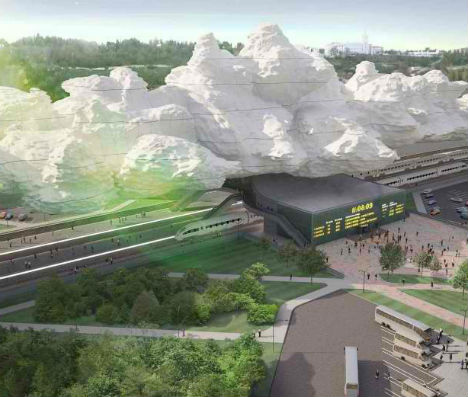
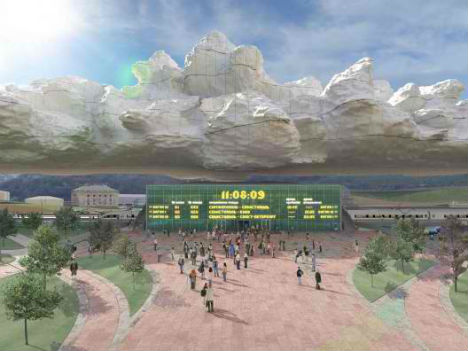
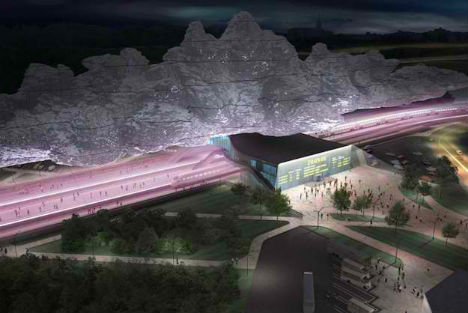
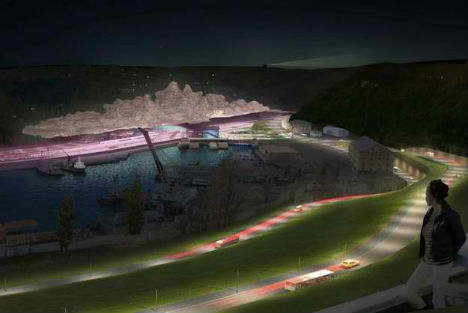
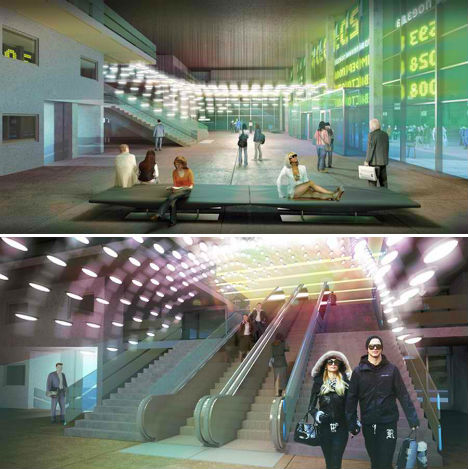
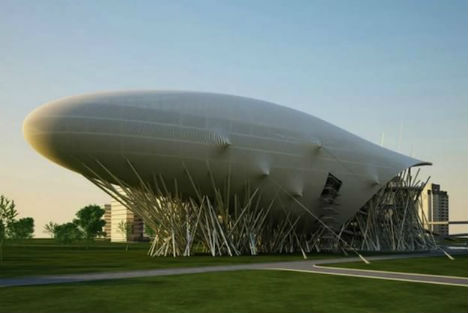
A train station envisioned for the town of Sevastopol in Ukraine seems to be perpetually covered in clouds, topped with a light, helium-lifted structure inspired by airships. ‘Under the Cloud‘ consists of a passenger terminal building and a buoyant freeform canopy that hovers over the green roof of the main building.

Under the Cloud 2

Under the Cloud 3

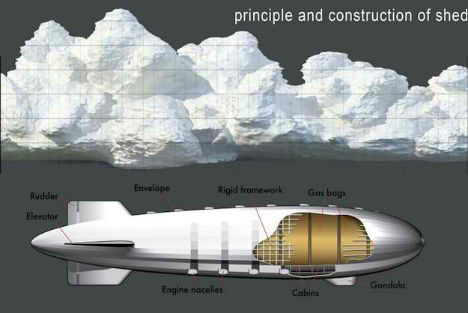
The canopy shell has an aluminum frame with longitudinal and transverse trusses, the helium gas held inside a rigid framework in bags. With the guy lines securing it, it really does seem as if it could lift away into the sky at any moment.

Under the Cloud 4Under the Clouds 5

Says designer Arthur Kupreychuk, “The supporting structure of the canopy is similar to the structure of an airship. The canopy strives upward by buoyancy forces, if its average density is less than the density of the atmosphere.”

Under the Cloud 5

Under the Clouds 6

What’s the purpose of this canopy? Judging by the designer’s other projects, it may just be for fun. Kupreychuk previously designed The Draft Parking Lot with the Car Service Station, another airship-inspired structure “conceived as the embodiment of the boundless creative thought of an architect, who often must try to restrict it and leave it unfulfilled.” This concept won the distinction of being “the most surreal project designed in ArchiCAD” in 2011.

Share on Facebook


[ By Steph in Architecture & Public & Institutional. ]

[ WebUrbanist | Archives | Galleries | Privacy | TOS ]


WebUrbanist

 
Comments Off on Cloud Station: Floating Helium Roof for Ukraine Transport Hub

Posted in Creativity


Future Skyscraper: Arup Presents Awesome Vision for 2050

28 Feb

[ By WebUrbanist in Conceptual & Futuristic & Technology. ]

future skyscraper robotic minions

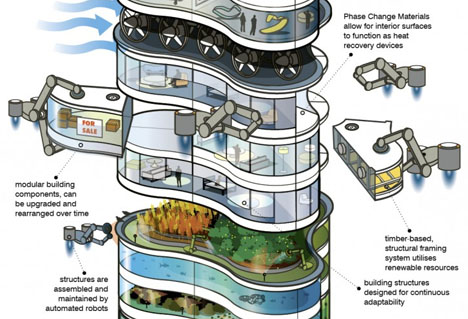
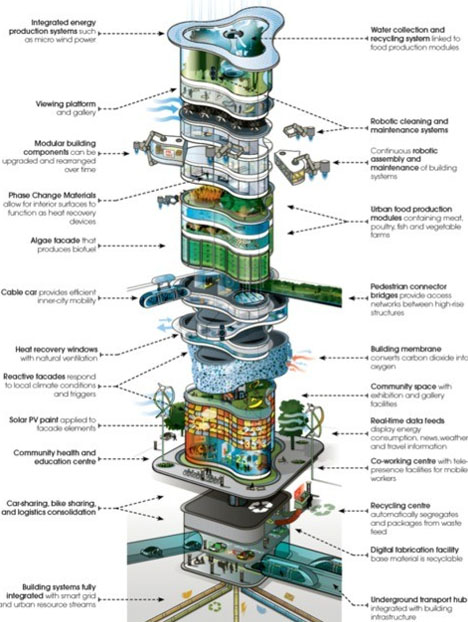
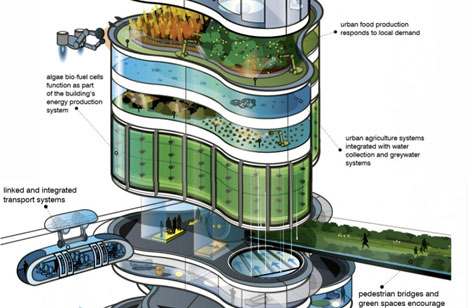
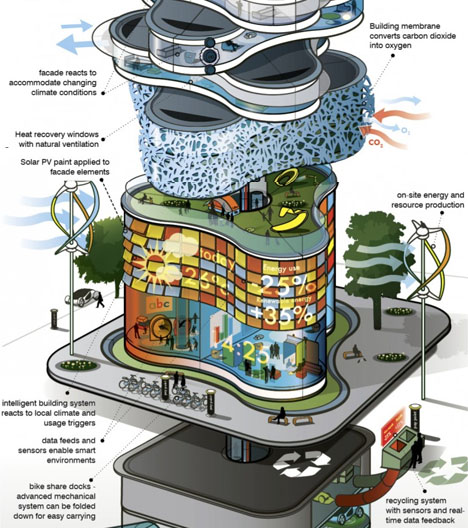
Rather than turning toward far-flung science-fiction, these designers have extrapolated current engineering techniques and evolving technologies. This skyscraper thus fuses passive power generation, urban agricultural endeavors, modular climate-sensitive skins and mobile plug-and-play platforms.

future skyscraper modular concept

Architects of the 20th Century learned the hard way that actually predicting the future of built environments is essentially impossible. Arup‘s engineers take a different approach with this concept, playing out a number of both feasible and fantastic ideas all in one inspiring schematic design – more infographic than proposal.

future tower power agriculture

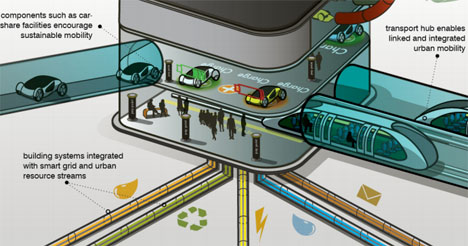
Imagine smart systems and fully-integrated transit reducing the cost and time of urban conveyance and decreasing the distance between production, storage and use of energy, food, water and other essential resources.

future concept skyscraper design

A lot of these themes (buildings producing more energy than they consume, for instance) are already playing out individually and in prototype form in current structures, but the ways in which they with synthesize into new structural languages remain to be seen.

future architecture engineering concept

The result is not a design proposal as such (though viewed on those terms, it is a thing of wonder), but an experimental illustration of the kinds of things we might find in the future, fused to and integrated with structures yet unbuilt.

Share on Facebook


[ By WebUrbanist in Conceptual & Futuristic & Technology. ]

[ WebUrbanist | Archives | Galleries | Privacy | TOS ]


WebUrbanist

 
Comments Off on Future Skyscraper: Arup Presents Awesome Vision for 2050

Posted in Creativity


Making It: 10 (More!) Futuristic Materials That Exist Today

28 Feb

[ By Delana in Conceptual & Futuristic & Technology. ]
amazing new materials

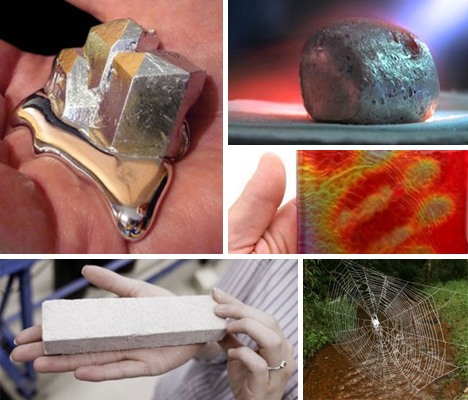
The materials we use to create consumer products and infrastructure objects are constantly evolving as technology advances. The futuristic materials of a generation ago are commonplace today, just as the most amazing of new materials today will be completely familiar a generation from now. But right now, these 10 materials are some of the most fascinating and newsworthy substances in the world.

Gallium, the Metal that Melts in Your Hand
gallium amazing element

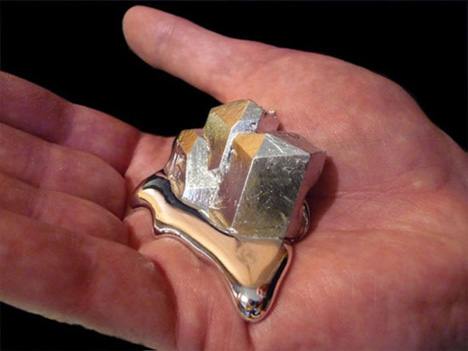
Although the above image looks like it’s been Photoshopped, it’s completely real. Gallium is a chemical element with such a low melting point that it turns to liquid in the human hand. It shatters like glass and breaks down other metals, but it’s non-toxic to humans.

Given its bizarre properties, gallium is understandably a favorite of scientists, science teachers and their students. The above videos show some of the most popular experiments using gallium, including one in which a spoon made of gallium melts in a cup of 85 degree (F) water.

Self-Healing Concrete for Smarter Streets
self-healing concrete

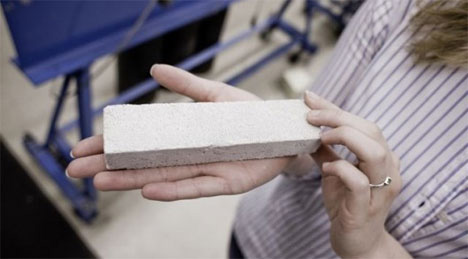
Repairing or replacing damaged concrete creates a financial and environmental burden. Smart materials which can repair themselves seem to be the future of construction technology, but most of those invented in recent years have required the addition of an outside material or stimulus to activate their healing properties. The smart concrete developed by University of Rhode Island engineering student Michelle Pelletier has microscopic capsules of a sodium silicate healing agent embedded in it. When a crack appears in the concrete, the sodium silicate acts with other components of the concrete to fix the cracks, sometimes making the structure even stronger than before.

BAM!
BAM worlds second hardest material

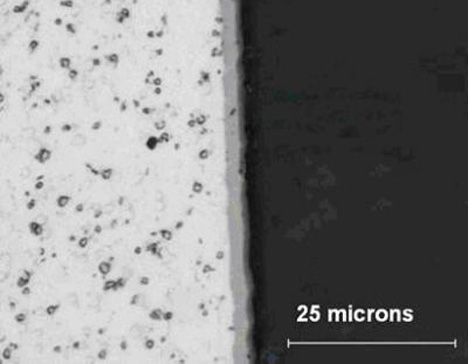
Like many important materials, BAM was discovered accidentally. The combination of boron, aluminum, magnesium and titanium boride was discovered in 1999 by scientists at the US Department of Energy Laboratory in Ames, Iowa while they were looking for a material that generates electricity when heated. BAM is among the hardest materials in the world, surpassed only by diamond and cubic boron nitride. But perhaps even more impressively, BAM is also incredibly slippery, outperforming even Teflon. Coating industrial machine rotors with this wonder alloy could save U.S. industries upwards of $ 179 million a year in operating costs thanks to the resulting reduction in friction.

Temperature-Reactive Tiles

Moving Colors color changing tiles

These color-changing glass tiles that are activated by temperature changes have the potential to turn every part of our world into a hypercolor dream. The tiles, made by a company called Moving Color, are already being used in showers but could also be used in kitchens, cars, appliances and cookware – just to name a few.

 What a Robust Web They Weave…

toughest biological material

It’s difficult to judge scale from the above photograph, but trust us: that is one massive spiderweb. It was made by a Darwin’s bark spider, found only on the island of Madagascar. These surprisingly small spiders (none over 2 centimeters or .78 inches have ever been observed) make some of the largest webs in the world. Even more impressive is the material of which the gigantic webs are made. The Darwin’s bark spider uses silk that is astonishingly strong: about 10 times stronger than Kevlar, in fact, making it the world’s toughest known biological material. The spider’s extraordinary natural silk is being studied so that we can someday create a human-made material that is nearly as tough.

To the Moon, ALICE!
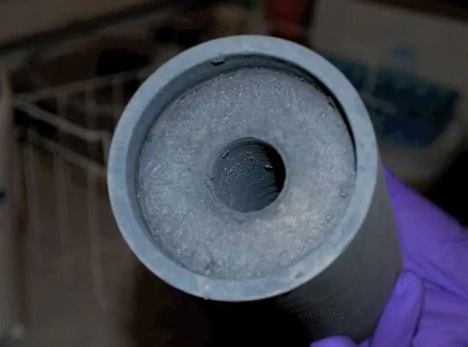
ALICE aluminum rocket fuel

This unassuming cylinder of grey stuff could change the way we go to the moon – and beyond. It’s a new type of rocket fuel made of aluminum and ice, ingredients which earned the fuel the name ALICE. The spacecraft fuel is being developed by researchers at Purdue University as a more environmentally friendly way to send Earthly machines into space. Current methods of propelling spacecraft put an enormous amount of pollutants into the atmosphere, but ALICE is kinder to our home planet. Researchers hope that the new fuel could even be made on the moon or Mars – or anywhere else water can be found – for a manned return flight, meaning that the outbound flight would not have to carry enough fuel for the return flight.

Starlite, Star Bright…
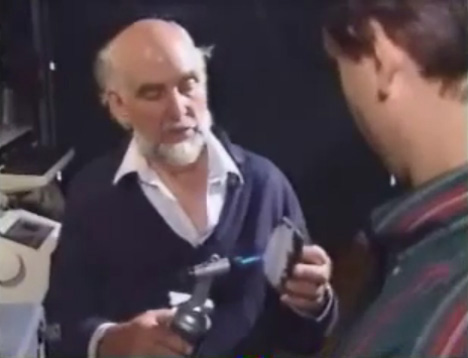
Starlite amazing material

There is an amazing material that was invented way back in 1986 but still has not been widely used by any industry. Starlite is a plastic-like material that can withstand a nuclear blast or temperatures hotter than those on the surface of the sun. It was invented by a former hairstylist named Maurice Ward who was trying to develop an insulation material that would not emit toxic fumes in case of a fire. Instead, he came up with the miraculous Starlite – but he never commercialized his invention. Rumors about the fantastic material and its enigmatic inventor abound, but no one seems quite sure about why the material has never been put into widespread use. Sadly, we may never see Starlite reach its full potential; Ward died in 2011 and he was one of only two people on Earth who knew how Starlite is made.

Changing Phases
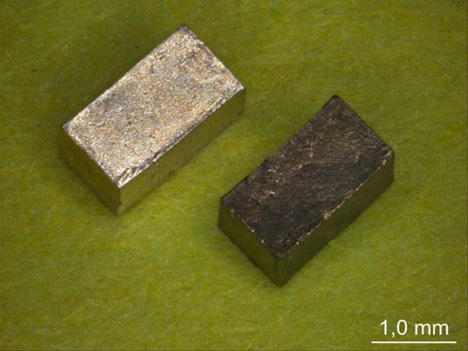
intelligent form changing nanomaterial

Scientists at the Technical University of Hamburg and the Institute for Metal Research in Shenyang, China use the example of cooking a breakfast egg to explain their research. The firmness of the egg can be adjusted just by changing the amount of time it is boiled. However, when an egg gets too firm, the cooking time can’t be reversed to make the egg softer again. Their research makes it possible for metals to change between hard and soft states with the touch of a button – a button that triggers an electric signal. This alone is an exciting development, but the scientific community is, as usual, looking ahead. They envision materials that can heal their cracks autonomously. They predict that in the future, “smart” metals and alloys will exist that can selectively become stronger when they sense an impact, thereby preventing damage.

Improving Your Lot in Life

filtering parking lots

Parking lots are disgusting, dirty places – largely because of the pollution inflicted by thousands of cars every day. The fluids that leak from cars onto the pavement are often washed right onto surrounding soil or nearby bodies of water. The Environmental Protection Agency wants to make parking lots a lot cleaner in the future, so they are studying an absorbent material that will soak up those vehicle fluids. Rather than being washed into the environment by rain or snow, the fluids flow through the permeable parking lot and into special collection tanks to be disposed of responsibly.

This Ship Has Sailed
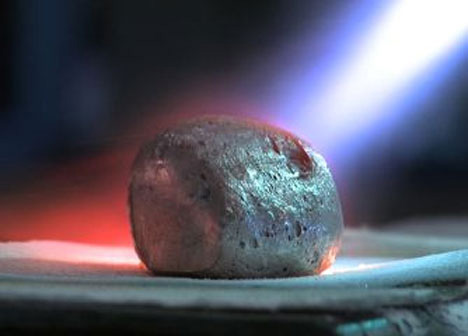
aluminum foam packing material

International trading means that plenty of consumer products and materials are sent from one country to another on cargo ships. While this is an important part of global commerce, it is bad news for the environment since said cargo ships cause a huge amount of pollution. European Union researchers created a unique material meant to make super-light cargo ships possible. Aluminum foam, pictured above, is lighter than water and is very stiff. Sandwiched between two sheets of steel, the aluminum foam can withstand enormous force while allowing for an overall lighter ship and, therefore, lower fuel consumption. Tests indicate that the aluminum foam can cut down on ships’ weight by 30 percent, which could reduce CO2 emissions equivalent to 60 trucks’ worth for every super-light ship.

Share on Facebook


[ By Delana in Conceptual & Futuristic & Technology. ]

[ WebUrbanist | Archives | Galleries | Privacy | TOS ]


WebUrbanist

 
Comments Off on Making It: 10 (More!) Futuristic Materials That Exist Today

Posted in Creativity


Give Your Eyeteeth: Surreal Hyper-Realistic Lip Makeup

27 Feb

[ By Steph in Art & Drawing & Digital. ]

Eye Teeth Makeup 1

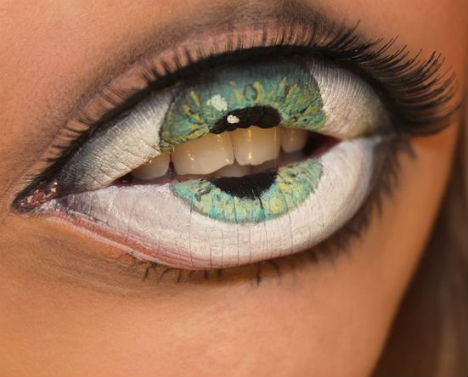
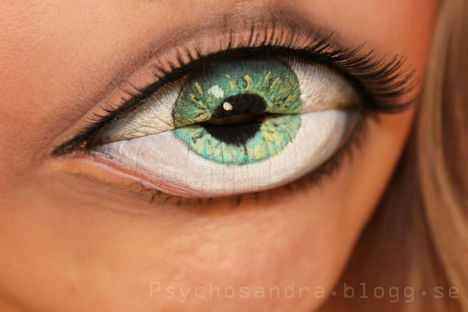
The word ‘eyeteeth’ has taken on a new meaning with a set of surreal and disconcerting images from Swedish makeup artist Sandra Holmbom. While most of Holmbom’s looks are much more conventional, the artist occasionally creates dramatic effects that incite a double-take. The image of an eyeball parting to reveal a set of teeth seems like something from a nightmare.

Eye Teeth Makeup 2

Eye Teeth Makeup 3

“Pretty, it’s not, but I had fun anyway,” Holmbom says of the look.

Eye Teeth Makeup 4

Eye Teeth Makeup 5

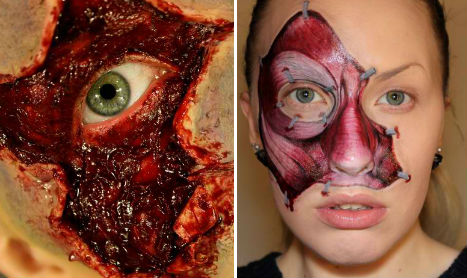
The makeup artist has also created gory effects like exposed musculature and wounds, as well as more humorous looks, like the character ‘Timon’ from the animated Disney movie ‘The Lion King.’ See more at her blog.

Share on Facebook


[ By Steph in Art & Drawing & Digital. ]

[ WebUrbanist | Archives | Galleries | Privacy | TOS ]


WebUrbanist

 
Comments Off on Give Your Eyeteeth: Surreal Hyper-Realistic Lip Makeup

Posted in Creativity


Custom Redress: 7 DIY Clothing Designs, Ideas & Reuses

27 Feb

[ By WebUrbanist in Design & Products & Packaging. ]

diy design ideas

From color-your-own and converted-umbrella dresses to hoodies-turned-tote-bags and color-scanning sewing machines, a simple, clever and clearly-executed design concept can be as brilliant as the most fashion forward runway piece. See some cool and colorful prototypes first, or skip ahead to learn simple tricks and tips to turn your most ordinary, disused and abused clothes into one-of-a-kind wonders.

Inside the Lines: Self-Colored Convertible Outfits

diy self colored dress

Consider Berber Soepboer, who started with the most obvious of blank slates: a black-and-white base made to be filled in by the wearer with colored markers.

diy convertible color outfits

From that baseline, she has gone on to  incorporate buttons, snaps and folds that allow each outfit to convert on the fly.

Wash, Rinse, Recolor: Color-Changing Dresses

diy color changing dress

For those afraid they might color outside of the lines, Fernando Brizio has an even simpler alternative. A series of simple pockets in these modest white outfits provide the basis for custom color schemes.

You can choose how to arrange the results by deciding which colors to slot in where, and watching them bleed outward to form patterns … then wash them out and start again.

Upcycled Apparel: Old Shirts to New Tops & Skirts

diy upcycled top skirt

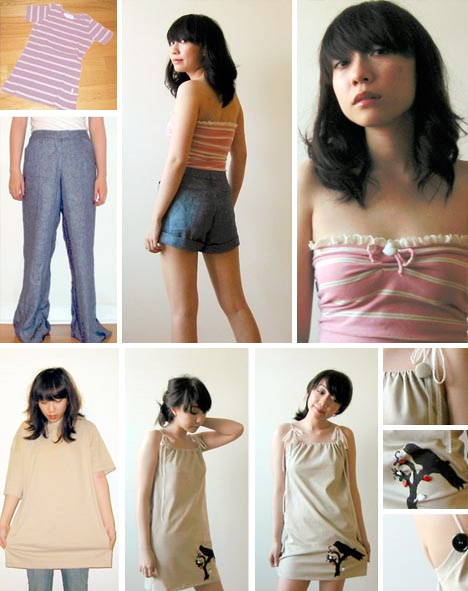
But what about your existing wardrobe? It turns out there is lot to be done on that front as well, like this series of old baggy shirts turned into stellar new tops and dresses by Mari Santos.

diy upcycled clothing ideas

Step by step, she takes clothing items that would normally be destined for the dumpster (or at best: the thrift store) and makes dynamic new outfits from them.

Share on Facebook


[ By WebUrbanist in Design & Products & Packaging. ]

[ WebUrbanist | Archives | Galleries | Privacy | TOS ]


WebUrbanist

 
Comments Off on Custom Redress: 7 DIY Clothing Designs, Ideas & Reuses

Posted in Creativity


Abandoned App Leads You to Local Urban Exploration Sites

26 Feb

[ By Steph in Gadgets & Geekery & Technology. ]

Abadoned App 1

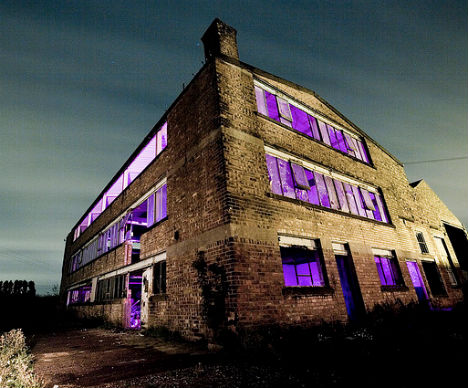
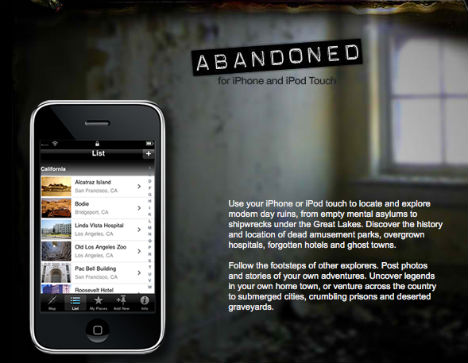
Half the fun of exploring abandoned places is the hunt – stumbling upon obscure sites, or determining the precise location of better-known ones with a collection of vague clues from previous urban explorers. It’s not a great idea to have hordes of curious people descending upon crumbling ruins and dilapidated structures for obvious reasons, ranging from trespassing laws to dangerous conditions. But for abandoned places aficionados who’d rather cut to the chase, the ‘Abandoned’ iPhone app by THE FORM pinpoints locations on a map.

Abandoned App 2

The community-based app relies on user input to determine where abandoned sites are located. And beyond mere maps, the app allows you to post photos and stories of your own adventures. Not only does this help fill out the lore of interesting places, it can help people avoid dangerous areas or give precise instructions for easy access.

Abandoned App 3

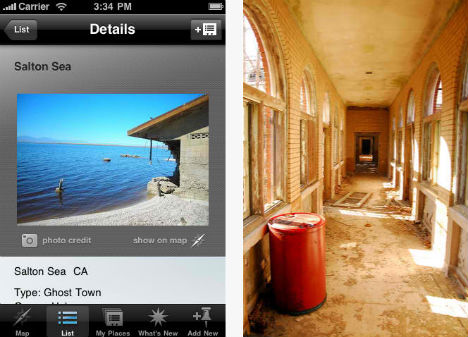
GPS mapping automatically locates and displays abandoned sites near you, and you can store a private log of your own locations if you don’t want to share with others. Rate sites from one to five stars, share your comments and contribute to locations submitted by others.

Abandoned App 4

Urban exploration has long relied upon word-of-mouth. In many cases, people in the know share information about certain sites only with others who can be trusted not to damage the site, call attention to themselves, or take risks that could result in injuries. For that reason, this app might receive mixed response from dedicated urban explorers, and those interested in keeping certain sites secret from the public at large. But on the other hand, a lot of abandoned sites are in serious need of attention, and the sooner they’re saved, the more of their history can be preserved. Get it at iTunes.

via Pop Up City; top image via nocturne

Share on Facebook


[ By Steph in Gadgets & Geekery & Technology. ]

[ WebUrbanist | Archives | Galleries | Privacy | TOS ]


WebUrbanist

 
Comments Off on Abandoned App Leads You to Local Urban Exploration Sites

Posted in Creativity


Factory to Self-Fabrication: 14 3D-Printed Design Objects

26 Feb

[ By Steph in Gadgets & Geekery & Technology. ]

3D Printed Main

The world of desktop 3D printing has made factory-style fabrication possibilities available to artists and designers, who turn digital models into three-dimensional solid objects with successive layers of plastic or metal. Virtual computer-created blueprints are sliced into digital cross-sections for the machine, which lays down layers of liquid, powder or sheet material. Here are 14 fun examples of what people are coming up with, from practical objects like lamps and jar lids to toys and sculpture.

Nervous System by Data is Nature

3D Printed Nervous System

Designer Jessica Rosenkrantz of Nervous System created these 3D-printed forms resembling sea anemone, coral and barnacles, in neon shades of pink, blue, yellow and orange. ‘Each execution of the program, a new random double curved NURBS surface is created for the barnacles to grow on. Colours range from yellow to pink based on generation of the barnacle, yellow barnacles randomly subdivide into pinker and pinker ones. The pores will also be open to different degrees between the different executions of the program.’

Amazing 3D Skull Sculptures by Josh Harker

3D Printed Filigree Skull 1

3D Printed FIligree Skull 2

Artist Josh Harker is known for intricate lacework skulls as well as realistic portraits and figures, and forensic art, all created using computer software and 3D printing technology. Harker holds the #1 and #4 most-funded sculpture projects in the history of crowdfunding site Kickstarter. “My intent is to explore and give form to the architecture of the imagination. By disengaging the conscious mind I am able to examine esoteric visions before they submit to a recognizable metaphor. I am then able to capture and refine them into the forms I command offering the opportunity to study their identity and structure.”

The Modiverse: ModiBot

3D Printed Modibot

3D Printed Modibot 2

“Welcome to the future of toys,” say Go, Go Dynamo, the creators of the ModiBot, who provide plans for 3D printed toys like dinosaurs, knights and ninjas. “ModiBots are a creative framework for creating poseable characters, but it’s meant to be built upon like a skeleton,” toy designer Wayne Losey told Wired of the snap-to-build system. “We also want to put the ability to create ‘content’ into a user’s hands. ModiBot is ultimately a tool for that.”

Biologically-Inspired Robots

3D Printed Biological Robot

These biologically-inspired robotic structures by Randy Sarafan attempt to blur the lines between artificial and organic creatures, made of rigid and flexible materials that mimic the properties of joints and musculature.

3D Printed Record

3D Printed Record

Turn your digital music file into physical records using a technique developed by Amanda Ghassei. “I printed these records on a UV-cured resin printer called the Objet Connex500.  Like most 3D printers, the Objet creates an object by depositing material layer by layer until the final form is achieved.  This printer has incredibly high resolution: 600dpi in the x and y axes and 16 microns in the z axis, some of the highest resolution possible with 3D printing at the moment. ”

The Horse Marionette by Michaella Janse van Vuuren

3D Printed Horse Marionette

All components of this incredible working horse marionette by artist Michaella Janse van Vuuren were 3D-printed. “The image of the horse itself was inspired by a drawing that I made during this time. The Horse Marionette has fully functional joints and movable wings. All the horse’s parts have been placed in the same digital file so no assembly is required afterwards. When strung up the horse comes to life.”

Interlocked Cubes

3D Printed Interlocking Cubes

Tiny interlocking shapes make up larger shapes that you can manipulate (very carefully!) with your hands. The Dod’net is a network of 64 dodecahedra with edges just 1 millimeter thick. You can order these shapes and more at Shapeways.

Share on Facebook


[ By Steph in Gadgets & Geekery & Technology. ]

[ WebUrbanist | Archives | Galleries | Privacy | TOS ]


WebUrbanist

 
Comments Off on Factory to Self-Fabrication: 14 3D-Printed Design Objects

Posted in Creativity


Spiral Out of Control: Guggenheim Museum Extension Idea

25 Feb

[ By WebUrbanist in Architecture & Public & Institutional. ]

guggenheim addition

The Guggenheim Museum in New York may be the most iconic work of American architect Frank Lloyd Wright – as such, any addition to it will invariably be the center of much debate … but this one (despite being more concept than call for change) could stir more discussion than most.

guggenheim artistic extension concept

A typical disjunctive approach to adding to or around classic architecture would involve setting the new elements apart from the old, to make the distinction clear. This conjunctive one by OIIO Architecture embraces the existing form, and builds dramatically upon it.

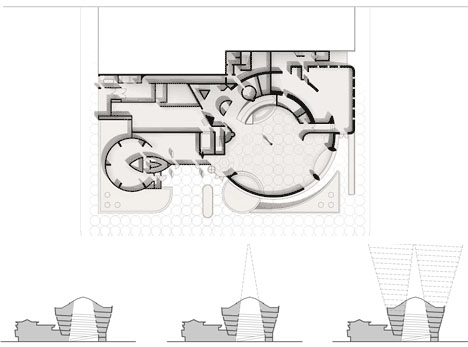
guggenheim floor plan addition

The design involves tripling the existing floor space by winding the outward-wrapping spiral that forms of gallery core up even higher and wider. The existing roof would be removed and re-added to the new top.

guggenheim current versus proposed

Critics will be quick to point out that though the form is maintained, the proportions are thrown for a loop, so to speak – and tapers the inner cone down to a small point. For all kinds of reasons, it is unlikely such a proposal would ever make its way into reality – still, as an experiment, it is quite beautiful.

Share on Facebook


[ By WebUrbanist in Architecture & Public & Institutional. ]

[ WebUrbanist | Archives | Galleries | Privacy | TOS ]


WebUrbanist

 
Comments Off on Spiral Out of Control: Guggenheim Museum Extension Idea

Posted in Creativity