RSS
 

Archive for the ‘Creativity’ Category

Vertical Landfill: Monument to Civilization Honors Our Trash

08 Mar

[ By Steph in Architecture & Cities & Urbanism. ]

Monument to Civilization Vertical Landfill 1

Nearly all of our most majestic architecture reflects pinnacles of achievement for our species, and one architect aims to call attention to yet another way in which we are ‘spectacular:’ our unmatched ability to produce incredible amounts of waste. ‘Monument to Civilization‘ is a vertical landfill tower that offers both a serious solution for urban waste management and a commentary on our unsustainable habits.

Monument to Civilization Vertical Landfill 2

Monument to Civilization Vertical Landfill 3

The third place winner in eVolo’s 2012 Skyscraper Competition, ‘Monument to Civilization’ is not just a sobering daily reminder of how wasteful we can be, and the pressing need for new solutions. It’s also a power plant, harvesting methane gas from all that rotting trash and using it to help keep the city running.

Monument to Civilzation Vertical Landfill 4

Lin Yu-Ta envisions a narrow tower reaching high into the sky. Noting that we often “build towers for towers’ sake,” the Taiwanese designer puts some meaning behind the spectacle: the 1,318-meter (4,324-foot) height of this tower proposal represents the space that would be needed to store just a single year worth of trash from New York City alone.

Monument to Civilization Vertical Landfill 5

“The ever-growing Monument may evoke the citizens’ introspection and somewhat leads to the entire city’s waste-decreasing and better recycling. Perhaps all metropolitan cities would inverse the worldwide competition from being the tallest to the shortest.”

Share on Facebook


[ By Steph in Architecture & Cities & Urbanism. ]

[ WebUrbanist | Archives | Galleries | Privacy | TOS ]


WebUrbanist

 
Comments Off on Vertical Landfill: Monument to Civilization Honors Our Trash

Posted in Creativity


Lunar Soil Structures: 3D-Printing Dwellings on the Moon

07 Mar

[ By WebUrbanist in Conceptual & Futuristic & Technology. ]

3d printed space base

One of the biggest challenges of settlements in space is the cost of transporting materials and technologies for construction, a problem addressed beautifully via 3D printing technology in this architectural proposal (currently being prototyped on Earth).

3d robot space printer

The design by Foster + Partners (in conjunction with the European Space Agency) uses a minimum of imported materials – mainly: an inflatable core, pumped up into domes and tunnels on site.

3d base concept prototype

Yet despite its simplicity, the project addresses everything from extreme temperature fluctuations to gamma radiation in this ingenious multi-person dwelling, effectively allowing humans to bypass the need to burrow below the surface while still using it effectively as a shield.

3d space home model

The man-made domes at the center of the concept are augmented by 3D-printed material derived from locally-sourced soil – a concrete-style foam substance providing stability, safety and structural support.

Share on Facebook


[ By WebUrbanist in Conceptual & Futuristic & Technology. ]

[ WebUrbanist | Archives | Galleries | Privacy | TOS ]


WebUrbanist

 
Comments Off on Lunar Soil Structures: 3D-Printing Dwellings on the Moon

Posted in Creativity


Preservation Puzzle: Extreme Ideas to Save an Urban Facade

07 Mar

[ By WebUrbanist in Architecture & Public & Institutional. ]

historic preservation prentice ideas

The Prentice Women’s Hospital building at Northwestern University has some serious fans, including a range of architects such as Frank Gehry, Robert Venturi, Tadao Ando, Jacques Herzog, Pierre de Meuron, who would like to see it preserved. The open question: is the exterior of sufficient historical value to keep, even if it means building up through, above and/or around it?

historic new tower solution

While a wonder of structural engineering with an iconic shape, the structure simply is not practical or fit-to-purpose anymore. One daring proposal from Studio Gang Architects (illustration by Jay Hoffman) involves adding dozens of upper stories, and nearly a million square feet, while leaving the shell of the original intact.

historic mirrored facade idea

A scheme by Cyril Marsollier and Wallo Villacorta won a competition to suggest alternatives with another approach – one that allows half of the building to be absorbed by a new structure, while reflecting the other half – using a mirror-image effect to preserve the complete appearance via a rather ingenious and nuanced illusion.

historic original humorous proposals

Critics exist on both sides. Some say this proposal strips away so much of the building and its context that what is left is really metaphorically (not just literally) a shell. Others suggest that any solution bends too far toward impracticality to accommodate an arguably unattractive building (many consider it an eyesore). Humorists like LunchBreath have weighed in as well, as seen above.

historic preservation proposal rendering

Meanwhile, the university itself does not seem interested in considering preservation options, so these concepts, while compelling, could well be moot in the end. Still, the High Line in New York is a great example of how enough public pressure and celebrity support can change the minds of an entire city, and perhaps a private institution as well.

Share on Facebook


[ By WebUrbanist in Architecture & Public & Institutional. ]

[ WebUrbanist | Archives | Galleries | Privacy | TOS ]


WebUrbanist

 
Comments Off on Preservation Puzzle: Extreme Ideas to Save an Urban Facade

Posted in Creativity


3D Printed Car is Strong, Light and Close to Production

06 Mar

[ By Steph in Technology & Vehicles & Mods. ]

Urbee 2 3D Printed Car

The Urbee 2 is strong as steel, half the weight of a conventional vehicle, and can be manufactured in a warehouse full of plastic-spraying 3D printers. The teardrop-shaped 3D-printed car is an ecologically sound hybrid, and it looks cool, too. Aerodynamic and futuristic, this car could be a total game-changer for the automobile industry, leading to a rise of small-batch automakers.

Urbee 2 3D Printed Car 3

The three-wheel, two-passenger prototype vehicle with a generously sized, curved transparent roof (also made of plastic) was constructed by Kor Ecologic at RedEye, an on-demand 3D-printing facility with a Fused Deposition Modeling printer that sprays molten polymer one microscopic layer at a time to create the desired shape. The whole car takes about 2,500 hours to manufacture, but the process is fully automated.

The Urbee 2 3D-printed car’s light weight makes it so fuel-efficient, creator Jim Kor aims to make it from San Francisco to New York City on ten gallons of gas. Kor Ecologic’s design ideals for the project include causing as little pollution as possible during manufacturing, operation and recycling of the car, using local or regional and/or recyclable materials whenever possible, and making it affordable.

Urbee 2 3D Printed Car 2

You might wonder just how safe a plastic car can really be, but Kor is aiming high in that department, too. The bumpers will be just as strong as their sheet-metal equivalents. The final goal for the Urbee is not just to exceed all current automotive safety standards, but be able to pass the tech inspection required for race cars.

Share on Facebook


[ By Steph in Technology & Vehicles & Mods. ]

[ WebUrbanist | Archives | Galleries | Privacy | TOS ]


WebUrbanist

 
Comments Off on 3D Printed Car is Strong, Light and Close to Production

Posted in Creativity


Airborne Architecture: 12 Images of Flying French Houses

06 Mar

[ By WebUrbanist in Art & Photography & Video. ]

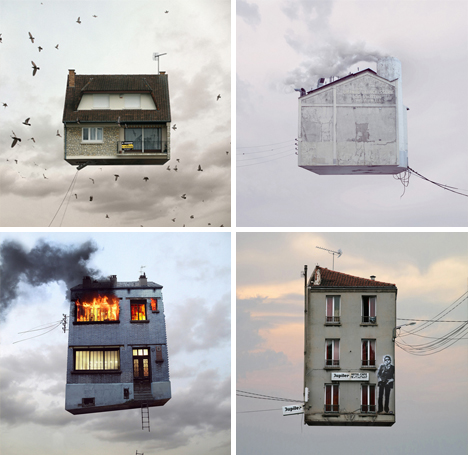
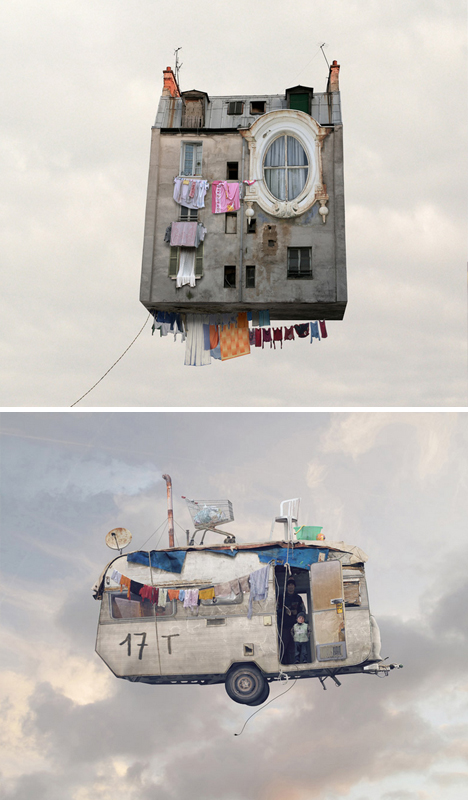
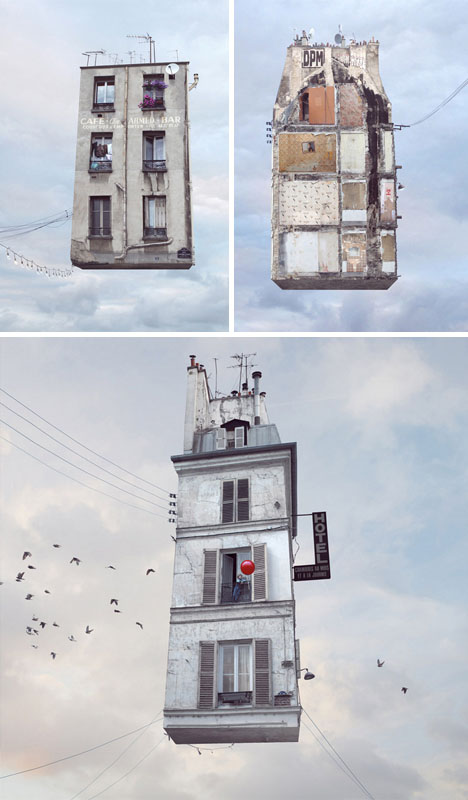
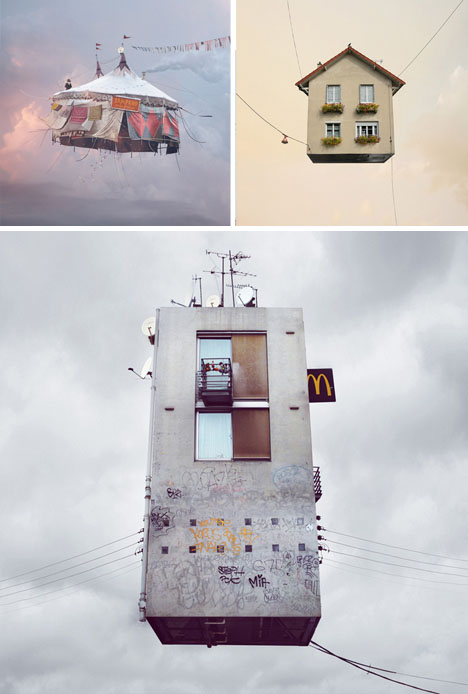
Context – that is the key to taking the ordinary and making it amazing in this series of displaced homes soaring up from forgotten streets of Paris. The results float like an intentionally mundane version of Pixar’s UP, or a modern-day urban Wizard of Oz Tale.

Laurent Chehere picks a range of dwellings, but most are dilapidated and seem perhaps sad in their crowded urban environment. She takes photographs of local buildings, tents and trailers, then photoshops their surroundings into something radically new.

Some are slathered in graffiti – others shown with clotheslines in everyday use. To this, she adds a few whimsical gestures – power lines, strings of lights, earthward ladders and other odds and ends to tie down each piece like a balloon and keep it from floating away.

One consequence of ripping these from the ground and setting them in the sky is simply an enhanced focus on an otherwise-connected building. In these isolating images, townhouses become standalone works, and we start to see them differently.

Share on Facebook


[ By WebUrbanist in Art & Photography & Video. ]

[ WebUrbanist | Archives | Galleries | Privacy | TOS ]


WebUrbanist

 
Comments Off on Airborne Architecture: 12 Images of Flying French Houses

Posted in Creativity


Harvest Energy from Power Lines to Recharge Your Batteries

05 Mar

[ By Steph in Gadgets & Geekery & Technology. ]

Energy Parasite Gadget 1

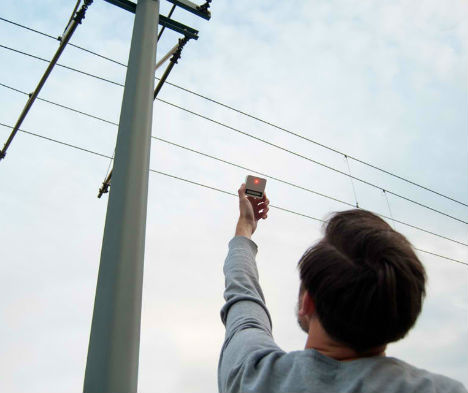
The entire city is your power source with an innovative gadget by designer Dennis Siegel that harvests energy from electromagnetic fields and instantly recharges batteries. These ‘energy parasites’ make use of electromagnetic fields produced as a result of information transfer, or as byproducts of electric equipment, from power lines to coffee machines.

Energy Parasite Gadget 2

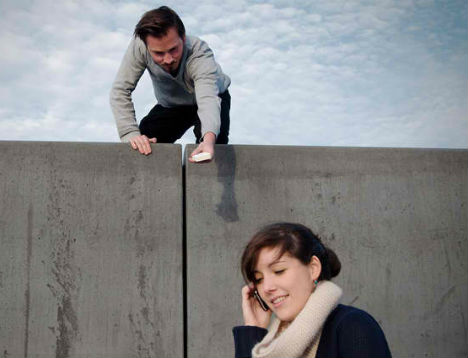
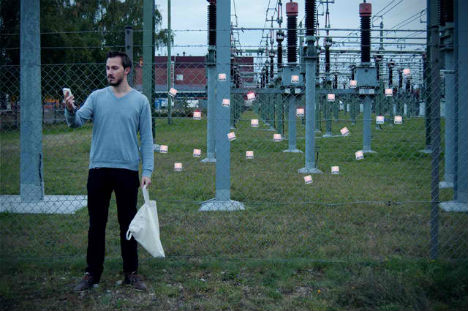
In a series of images, Siegel holds out the device to gather energy from home appliances and power plants, even hovering creepily beside a cell phone user. An LED light on top of the device will let you know that electromagnetic fields are nearby, and even how strong they are.

Energy Parasite Gadget 3

The energy gathered is stored in a conventional battery, so you can gain ‘redundant’ energy from the power supply of all kinds of electronics and then use the battery to power something else.

Energy Parasite Gadget 4

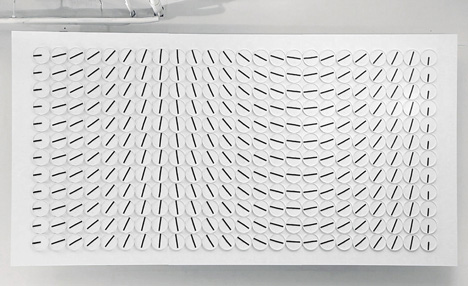
Siegel created two types of harvesters, one suitable for frequencies below 100Hz, like those produced by home electronics and appliances, and one for higher frequencies like radio broadcast, Bluetooth and WLAN. Imagine if this capability could be built into devices like smartphones, so you never had to worry about losing your charge while out and about.

via Pop Up City

Share on Facebook


[ By Steph in Gadgets & Geekery & Technology. ]

[ WebUrbanist | Archives | Galleries | Privacy | TOS ]


WebUrbanist

 
Comments Off on Harvest Energy from Power Lines to Recharge Your Batteries

Posted in Creativity


7 Monumental Abandoned Wonders of Military Architecture

05 Mar

[ By Steph in Abandoned Places & Architecture. ]

Abandoned Military Main

Rusted sea forts, top-secret submarine bases, sprawling military hospital complexes and entire islands still stand as silent reminders of wars long past, from Ukraine to New York’s Hudson River. These seven monumental wonders of abandoned military architecture are steeped in history, often still littered with decommissioned aircraft and pieces of weaponry.

RAF Stenigot, England

Abandoned Military RAF Britain

Abandoned Military RAF Britain 2

(images via: urban spaceman)

Massive, alien-looking radar dishes litter the landscape at RAF Stenigot, a World War II-era radar station in Lincolnshire, England. Part of the Chain Home radar network, which was intended to provide long range early warning for raids, the site continued to serve for other communication purposes after the war and was decommissioned in 1980. Most of it was demolished by 1996, but four tropospheric scatter dishes still remain, along with a few other structures.

Russian Island Base in the Sea of Japan

Abandoned Military Soviet Base Japan

Abandoned Military Soviet Base Japan 2

(images via: english russia)

A small horseshoe-shaped island in the Sea of Japan that was once the setting of a war over its gold resources, Askold has been abandoned for decades. In 1892, the Headquarters of the Vladivostok Fortress created a permanent observation post there, and it became a point of tension between Russia and Japan. The island is cluttered with the remains of what little was built or left behind – the base of a long-gone pier, derelict lighthouses, rusted artillery, a power station, a command post, barracks and a handful of vehicles.

The island has never been inhabited, and is rarely visited by tourists due to the difficulty of reaching it from the mainland. Unused since World War II, much of the infrastructure has crumbled, and one part of the island is now inaccessible after the collapse of a bridge. Though it was once a place of war, Askold is now remarkably peaceful – and still, incidentally, full of gold.

Beelitz Heilstätten Military Hospital, Berlin

Abandoned Military Beelitz 1


Abandoned MIlitary Beelitz 2

(images via: arcanum, studiospecialplace, 28dayslater)

This beautiful abandoned 19th century sanitarium complex located in Beelitz, just outside Berlin, was used by the Germans as a military hospital through the second World War and then occupied by the Russians for the same purpose until 1995, well after the German reunification. It was abandoned altogether in 2000. Surrounded by pine woods, the hospital complex consists of about 60 buildings including a surgery, psychiatric ward and rifle range. Its most infamous patient is none other than Adolf Hitler, who recuperated there after an injury sustained in World War I in 1916.

Some of the buildings have been painstakingly restored by a German preservation group, but most of them are left to ruin. It’s a popular destination for urban explorers in the area, but of course, not everyone goes there just to enjoy the bittersweet beauty of such an ornate decaying complex. In 2008, a photographer lured a model to the abandoned operating theater for a photo shoot, and murdered her. Its dark history also includes a period before it was abandoned when a serial killer known as The Beast of Beelitz began to terrorize local women connected to the sanatorium, strangling them with pink lingerie.

People who live in or near the restored buildings do so with caution. Local architect Michael Wetzlaugk bought and converted one of the outbuildings to live with his family, but stresses that he and his son are accomplished marshal artists with a collection of exotic weapons.

Share on Facebook


[ By Steph in Abandoned Places & Architecture. ]

[ WebUrbanist | Archives | Galleries | Privacy | TOS ]


WebUrbanist

 
Comments Off on 7 Monumental Abandoned Wonders of Military Architecture

Posted in Creativity


Works of Impossible Architecture Built from Found Photos

04 Mar

[ By WebUrbanist in Art & Drawing & Digital. ]

found architecture

Like dreams while you are having them, these buildings make perfect sense subjectively and yet no sense objectively. They are seamlessly integrated, yet structurally surreal … and, like a dream when waking up: the details are hard to recall when you look away.

found architecture photo collages

Jim Kazanjian searches through tens of thousands of photographs in search of the perfect bits and pieces for each otherworldly creation. Some of the results seem almost plausible, while others stretch the limits of gravity, structural integrity and even the imagination.

found buildings black white surreal

Per his artist statement at 23Sandy (where you can also buy prints): “Jim Kazanjian’s surreal landscapes offer phantasmagoric visions of a where-is-this world, defined by impossibly complex architecture and M.C.Escher-esque black-and-white graphics.”

found architecture impossible structures

“Inspired by the imaginary realms of cult author H.P. Lovecraft—whose wild, cosmic short stories set the mold for much of the 20th century’s best science fiction—Kazanjian’s aim is to redress the “misunderstanding that photography has a kind of built-in objectivity…to defamiliarize the familiar.”

Share on Facebook


[ By WebUrbanist in Art & Drawing & Digital. ]

[ WebUrbanist | Archives | Galleries | Privacy | TOS ]


WebUrbanist

 
Comments Off on Works of Impossible Architecture Built from Found Photos

Posted in Creativity


Slam Drunk: 12 Weird, Wild & Wacky Basketball Courts

04 Mar

[ By Steve in Architecture & Cities & Urbanism. ]

12 Weird, Wild & Wacky Basketball Courts
These 12 jaw-dropping basketball courts stretch the limits of Dr. James Naismith’s original vision far beyond the prescient gym teacher’s wildest hoop dreams.

Inges Idee’s 3D² Court

Inges Idee Munich 3D basketball court(images via: 22 Words/Marcus Buck)

We’re not sure if the Occupational School Center Munich in Germany even has a basketball team but if they don’t, they should, since their decidedly out of the ordinary three-dimensional court takes the concept of home field advantage to absurd levels.

Inges Idee 3D Munich basketball court(images via: de-zen)

Titled 3D² by artist Inges Idee and created in 2006, the regulation-sized basketball court incorporates several of the existing lamp posts that – besides providing light – add an extra dimension of difficulty to any attempted game. According to Idee, playing on the computer-designed court “requires creative engagement for its use.” No kidding.

Space Jammed

Dubrovnik Croatia basketball court(image via: SloTraveller)

Space is at a premium in the ancient seaside city of Dubrovnik but so is the desire to go one-on-one with one’s fellow dribblers. Captured magnificently by Flickr user SloTraveller, this otherwise unremarkable clay court shoehorned between centuries-old buildings is a favorite photographic subject aided by some spectacular points of view.

Ducks Dunks Deluxe

University Oregon Ducks pine basketball court(images via: GoDucks.com and Siamese NYC)

“Riding the pine” took on a new and better meaning for members of the University of Oregon Ducks when, in 2011, their strikingly stenciled new basketball court was unveiled to the public. “We wanted to design the most iconic television presence possible for the University of Oregon,” explained Nike’s vice president for design and special projects Tinker Hatfield, “by conjuring up a highly unique and visible basketball floor design” at Matthew Knight Arena. We’d say they succeeded.

University Oregon pine basketball court(image via: North By Northwestern)

Intended to reflect the view of someone looking skyward from a Pacific Northwest forest floor, the court is made from 6,944 square feet of sustainably-harvested Northern Hard Maple weighing approximately 45,000 total pounds. The graphics were completed by Idaho Falls, Idaho -based United Services using almost 2 miles of stencil material and requiring 2,500 man hours of labor.

Share on Facebook


[ By Steve in Architecture & Cities & Urbanism. ]

[ WebUrbanist | Archives | Galleries | Privacy | TOS ]


WebUrbanist

 
Comments Off on Slam Drunk: 12 Weird, Wild & Wacky Basketball Courts

Posted in Creativity


A Million Times: Clock Wall is a Moving Art Installation

03 Mar

[ By Delana in Gadgets & Geekery & Technology. ]

a million times humans since 1982

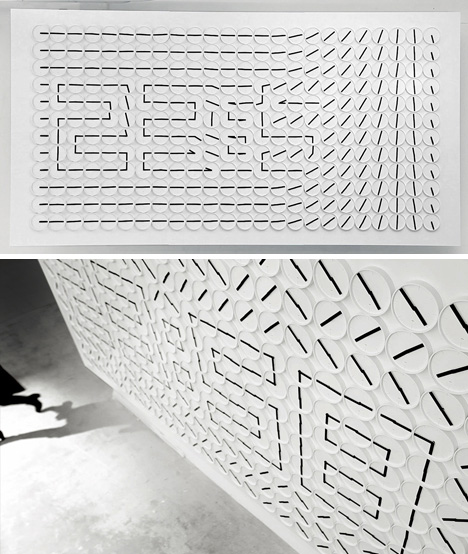
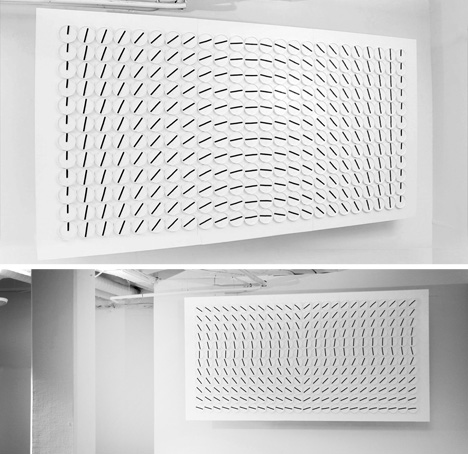
Staring at the hands of an analog clock for too long can lead to the feeling that the hands are moving in odd ways. In the case of this large installation, however, that feeling is completely true. Known as A Million Times, the installation features 288 analog clocks and 576 motors – one for each minute and hour hand.

The piece was created by Stockholm design studio Humans Since 1982. The studio has worked with clocks in the past, giving them new functions that not only celebrate their physical form but demonstrate the many ways in which moving hands can work together to create entirely new aesthetic designs.

art installation analog clocks

In the case of A Million Times, the hands of each clock are controlled by custom iPad software. The hands can be moved to create letters or numbers, but as seen in the video above, the most visually impressive part of the display is when all of the hands rotate at once to create the illusion of waves or an undulating surface.

analog clock display

The project strips the clocks of their pragmatic existence and turns them into mesmerizing works of art. Each clock is perhaps a bit boring on its own, but the overall display of 288 individual clocks ends up being far more memorable than you might have imagined.Through the above article, we can recommend you the latest dresses.Shop dress in a variety of lengths, colors and styles for every occasion from your favorite brands.

Share on Facebook


[ By Delana in Gadgets & Geekery & Technology. ]

[ WebUrbanist | Archives | Galleries | Privacy | TOS ]


WebUrbanist

 
Comments Off on A Million Times: Clock Wall is a Moving Art Installation

Posted in Creativity