RSS
 

Archive for the ‘Creativity’ Category

Game, Cassette, Match: 10 Abandoned Video Stores

07 Apr

[ By Steve in Abandoned Places & Architecture. ]

abandoned video stores
Once as common as the VHS and Betamax tapes they rented out, video stores these days are fading away faster than the images on a well-worn cassette someone forgot to rewind. These 10 abandoned video stores are caught between the night they closed and the day a more relevant tenant takes over the lease.

Terminal Virus

abandoned video store viral video(images via: Tattoed Steve’s Storage Unit Of Terror)

The store sign’s font absolutely screams “EIGHTIES!” but the name – Viral Video – presciently anticipates the advent of YouTube and the corresponding end of the rental video era. As the poster child for classic Mom & Pop video stores, Keansburg, New Jersey’s Viral Video exudes a folksy vibe even in its abandoned afterlife. Repurposed wooden bookshelves ironically hold video tapes organized by genre and the assortment of admonishing signs are only missing “No Shoes, No Shirt, No Service.”

Twice Unlucky

abandoned video store Seattle theater(image via: Curtis Cronn)

Kudos to Flickr user Curtis Cronn for composing this cool color-infused capture of a now-nameless abandoned video store on Queen Anne Avenue in Seattle, Washington. The store was obviously a movie theater back in the days when video tape technology was the coming thing. Just goes to show you what comes around, goes around.

Movie Scene No Longer Seen

abandoned video store Movie Scene Savannah(images via: RetailByRyan95)

How many movies could a Movie Scene move if a Movie Scene could move movies? Quite a few, considering the Hayes, VA store was in business for almost 7 years before giving up the ghost in March of 2009. Full credit Flickr user RetailByRyan95 for immortalizing the former car garage, Jeff’s Cycle Center and Video Update (an SNL reference?) before it re-opened as an AutoZone.

Hurray For Hollywood (Video)

abandoned video store Hollywood Video(images via: j4349 and C-Bunny)

Chewbacca’s star on Hollywood Video’s walk of fame serves to date the era of video cassette rentals with pinpoint accuracy but while the empire might strike back, Hollywood Video is down for the count. Occupying the medium-sized niche between small strip-mall stores and large anchor stores like Blockbuster, Hollywood Video – at least, this location in Savannah, GA – just couldn’t survive the big squeeze.

Next Page:
Game Cassette Match 10 Abandoned Video Stores

Share on Facebook


[ By Steve in Abandoned Places & Architecture. ]

[ WebUrbanist | Archives | Galleries | Privacy | TOS ]


WebUrbanist

 
Comments Off on Game, Cassette, Match: 10 Abandoned Video Stores

Posted in Creativity


Revealing Historical Photos Show US White House Gutted

06 Apr

[ By WebUrbanist in Architecture & Public & Institutional. ]

white house remodel project

Imagine the state of it: the United States executive mansion after 150 years of continuous occupation. By this time, the already-aging White House had retrofit with a maze of modern amenities like plumbing, electricity and heating – none of which this expansive estate was constructed to house.

white house historic interior

Per reporter Brian Resnick, sagging ceilings, scaffolding and supports had rendered the structure an unsanitary fire hazard by the late 1940s – some suggested scrapping it entirely and starting from scratch, but President Truman lobbied to keep and rehabilitate it.

white house reconstruction photos

As these amazing photographs from the National Archives & Truman Library illustrate, the entire interior had to be ripped out. Historically valuable materials and decor were meticulously cataloged and stored, and temporary steel columns and beams erected to keep the exterior from collapsing.

white house oval office

To get equipment like bulldozers inside and clear debris required disassembling machines to avoid bursting holes in the sides of the structure – rebuilding would have been cheaper and faster, but this careful treatment preserved irreplaceable pieces of US history.

white house grand remodel

In all rooms and on all levels, lathe, plaster, brick and mortar were laid bare, giving a unique one-time view – fortunately captured in photographs – into the hidden structure and secret architecture of the most important residence in America.

Share on Facebook


[ By WebUrbanist in Architecture & Public & Institutional. ]

[ WebUrbanist | Archives | Galleries | Privacy | TOS ]


WebUrbanist

 
Comments Off on Revealing Historical Photos Show US White House Gutted

Posted in Creativity


Exotic Green Getaway: Lush Villa Made of Local Materials

05 Apr

[ By Steph in Boutique & Art Hotels & Global. ]

Alila Villas Eco Travel 1

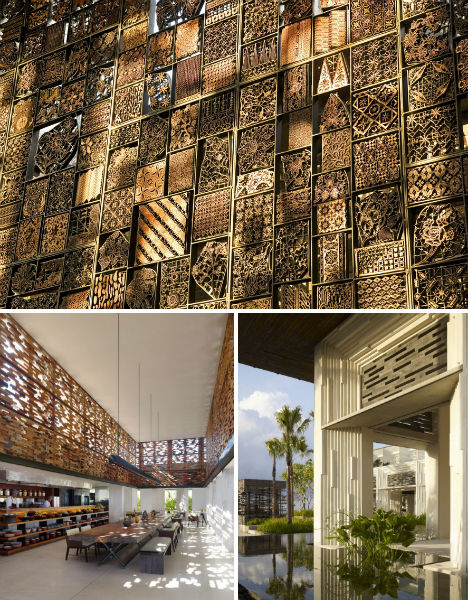
Merging traditional Balinese visual flair with the openness of modern architecture, Alila Villas Uluwatu is a picturesque resort with individual villas connected by bridges over sparkling expanses of water. The hotel is set on a gently sloping hillside, and eschews typical high, pointed Bali-style roofs in order to maintain a democratic view of the sea. Made of locally sourced materials, the hotel and villa development aims to balance environmental responsibility with a sense of luxury.

Alila Villas Eco Travel 5

Alila Villas Eco Travel 2

Located in Uluwatu on the Bukit Peninsula of Bali, Alila Villas has 50 hotel suites and 35 residential villas.  Rather than standing out in stark relief against the natural setting, like many other self-consciously tropical resorts in the area, Alila Villas follows the natural contours of the land.  The terraced, low-pitched roof of the main structure was made of Balinese volcanic pumice rock that can support the growth of ferns and other vegetation, mimicking the look of local hillside farms.

Alila Villas Eco Travel 4

Each of the hotel rooms faces the gardens, which are full of reflecting pools and native plants, making them feel as if they extend into the outdoor spaces. The villas are glass structures encased in slatted wood, which screens the sun and provides a bit of privacy. Each has its own pool with a cabana overlooking the ocean.

Alila Villas Eco Travel 3

The stone walls of the resort came directly from the site itself, and all other materials were sourced from either Bali or the neighboring island of Java. Sustainable materials, careful preservation of vegetation, rainwater collection, a greywater recycling system and large roof overhangs that provide natural cooling come together for an eco-friendly getaway that honors the local culture and history.

Share on Facebook


[ By Steph in Boutique & Art Hotels & Global. ]

[ WebUrbanist | Archives | Galleries | Privacy | TOS ]


WebUrbanist

 
Comments Off on Exotic Green Getaway: Lush Villa Made of Local Materials

Posted in Creativity


Photoshop in Real Life: Portrait Series Takes Tools Literally

05 Apr

[ By WebUrbanist in Design & Graphics & Branding. ]

photoshop realism

Anyone who has used Adobe products, Photoshop or otherwise, knows that they have necessarily become quite creative in naming some of their more abstract, surreal and unusual functions.

photoshop based manipulation series

Flora Borsi of Budapest, Hungary, is a photographer and photo editor who has explored these meanings in return, taking them back out of the digital realm and applying them to ‘real life’ situations.

photoshop in real life

Through turns of phrase (‘Convert to Smart Object’) and other twisted interpretations, this series of portraits is an exploration of self, exhibition of abilities and simply fun series of mildly manipulated photos.

photo manipulations historical portraits

Her other series show off her capacity to understand and reproduce historical styles, but also to take and subvert visual expectations, in turn silly, serious and in some cases quite macabre.

Share on Facebook


[ By WebUrbanist in Design & Graphics & Branding. ]

[ WebUrbanist | Archives | Galleries | Privacy | TOS ]


WebUrbanist

 
Comments Off on Photoshop in Real Life: Portrait Series Takes Tools Literally

Posted in Creativity


Eyebombing: 21 Street Artworks Utilize 42+ Googly Eyes

04 Apr

[ By WebUrbanist in Art & Street Art & Graffiti. ]

eyebombing googly eyes

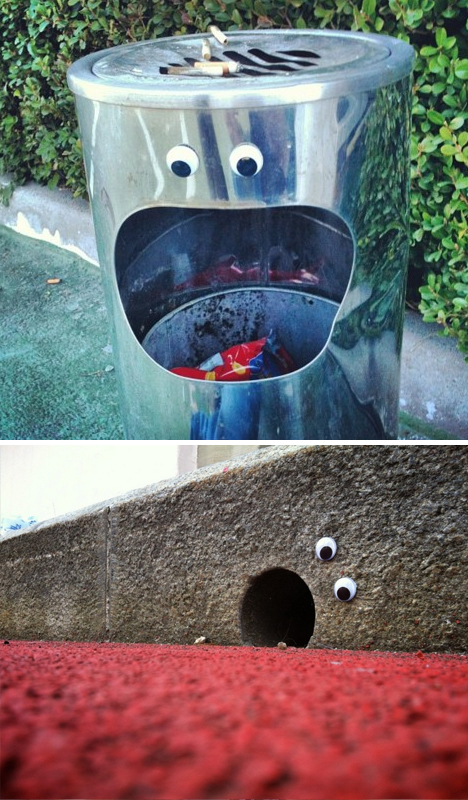
Unlike graffiti tags or other stylized and personalized approaches to urban art, eyebombing is an equalizer. Like a crowd behind Guy Fawkes masks, the work of any of the following 21 example ‘eyebombers’ is inherently anonymous due to the similarly simple materials used in each case.

eyebombing happy sad faces

Of course, the eyes just set the stage for further anthropomorphic interpretation ; with them in place, other street elements like grates, slots, posts and more suddenly become faces, mouths and limbs.

eyebomb frown smile examples

Context, with or without the intention of an artist, supplies emotion – even the most neutral eye placement makes for implied facial expressions of all kinds.

eyebomb hand railing snake

Per Eyebombing.com, these unsigned interventions are “different from traditional types of street art like tagging, sticking, stencils” because “the above forms are largely driven by egocentric behaviour, like getting seen, respect and maybe a hope to get famous, often using vandalism as modus operandi.”

eyebomb expressive urban art

Instead, they claim, it is about the message, the humor and simply brightening someone’s day. And while you can buy eyes from their site, they are also (again like a generic mask) available essentially anywhere and quite inexpensively, making this an easy art form to get involved with wherever you may be.

Share on Facebook


[ By WebUrbanist in Art & Street Art & Graffiti. ]

[ WebUrbanist | Archives | Galleries | Privacy | TOS ]


WebUrbanist

 
Comments Off on Eyebombing: 21 Street Artworks Utilize 42+ Googly Eyes

Posted in Creativity


Ruin Academy: Urban Lab in an Abandoned Building

04 Apr

[ By Steph in Abandoned Places & Architecture. ]

Ruin Academy 1

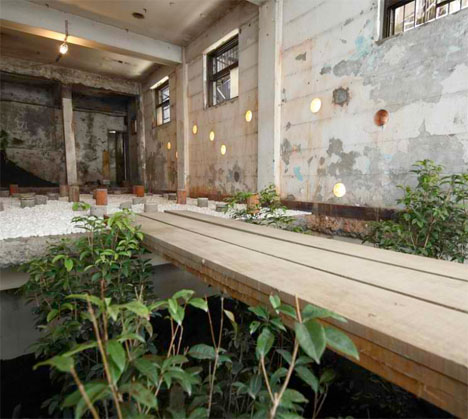
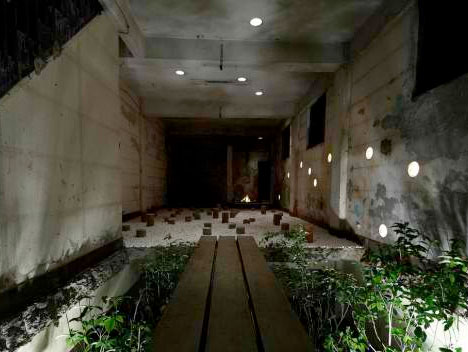
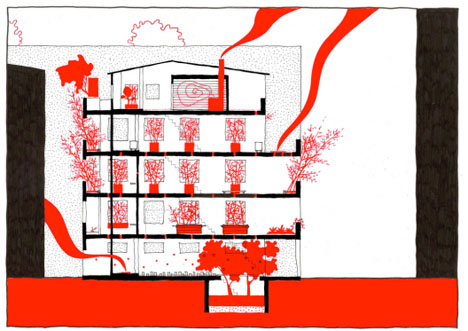
Occupying an abandoned five-story apartment building in central Taipei, Ruin Academy is a living architectural laboratory where holes drilled in the walls let rain inside, plants grow from the floors and the bones of the structure serve as ‘compost’ for the future of the city. A collaboration between Finland-based Casagrande Laboratory and the Taiwanese JUT Foundation for Arts & Architecture, this project aims to “re-think the industrial city and the modern man in a box.”

Ruin Academy 3

Ruin Academy 2

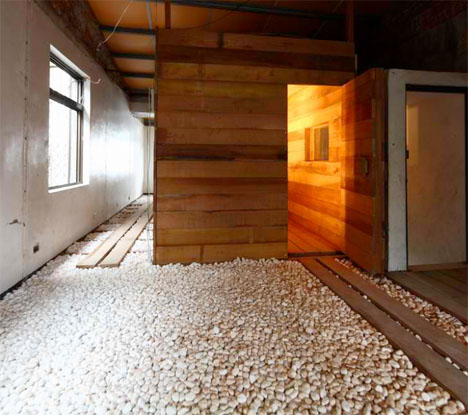
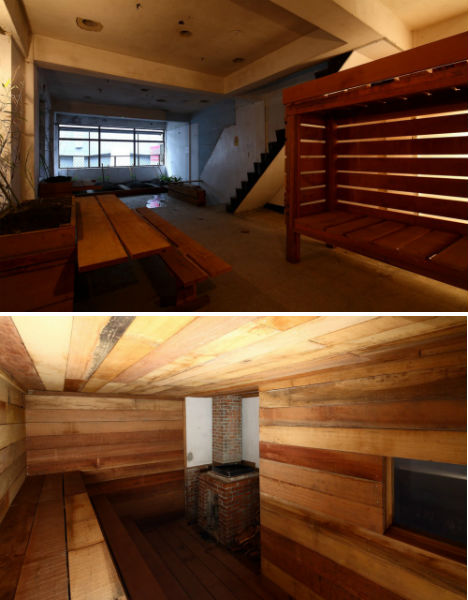
Ruin Academy serves as a setting for workshops and courses for various Taiwanese and international universities in subjects like architecture, urban design and environmental art. The lines between the city and the building have been blurred with the removal of windows and interior walls, so bamboo and vegetables can be grown indoors. Students and professors sleep in ad-hoc dormitories. The mahogany elements of the interiors, like walkways and steps, are made to be rearranged as the inhabitants’ needs change.

Ruin Academy 5

Ruin Academy 4

“The Ruin Academy is looking at the ruining processes of Taipei that keep the city alive,” says Marco Casagrande on the Ruin Academy blog. The idea is that static urban structures aren’t a natural way of life, and that the ‘Third Generation City’ would mix nature with human construction in an ever-changing symbiosis. Restoring nature within cities, growing food indoors, and living in structures that constantly adapt and change is seen as a more organic way for humans to interact with our environment.

Ruin Academy 6

The Ruin Academy is just one of the many illegal, unsanctioned ‘parasite’ structures that have popped up on top of and around Taipei’s conventional modern buildings. Organic and often transient structures made of materials like bamboo or plastic sheeting sprout on the roofs of concrete skyscrapers and in abandoned lots, used as artist housing, urban farms, night markets and other social gathering places.

Share on Facebook


[ By Steph in Abandoned Places & Architecture. ]

[ WebUrbanist | Archives | Galleries | Privacy | TOS ]


WebUrbanist

 
Comments Off on Ruin Academy: Urban Lab in an Abandoned Building

Posted in Creativity


Frightening Archaeological Finds: 15 Odd Human Remains

03 Apr

[ By Steph in Culture & Cuisine & Global. ]
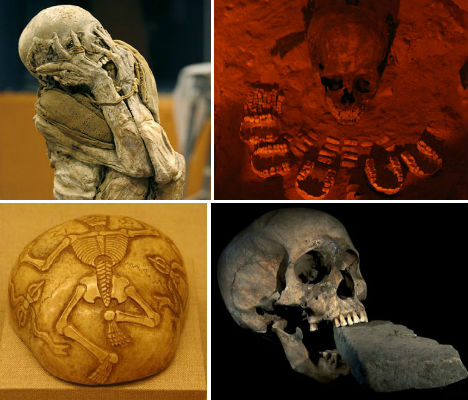
Human Bones main

What bizarre and terrifying ‘treasures’ from long-gone ancient civilizations are still hidden in crypts, caves and deep within the earth? Most archaeologists may spend their days painstakingly brushing sand off pieces of pottery, but occasionally, they unearth evidence of the darker side of humanity – cannibalism, sacrifice, mass murder, deadly paranoia about vampires and witches, and even chemical warfare. These 15 archaeological finds of ancient human remains are among the most grisly, frightening and fascinating.

Vampire of Venice

Human Bones Vampire of Venice
Among the corpses of medieval plague victims was one very curious find: a skull with a brick shoved so forcefully between its jaws, they were broken. The technique was used on suspected vampires in Europe during this time, especially when natural biological processes after death resulted in dark blood-like liquid streaming from the mouth. Researchers have determined that not only was this elderly woman feared a vampire after her death, she may have been accused of witchcraft before she met her end. Most people didn’t live to be her age, estimated at 60-71 years, and many medieval Europeans believed that the devil gave the elderly powers to cheat death. Older women were particularly suspect because it was assumed that they had little to live for, and were vulnerable to offers of power.

The Screaming Mummies

Human Bones Screaming Mummies 2 Human Bones Screaming Mummies

Imagine opening a sarcophagus to find a mummy that seems to be screaming for all eternity. In the past, when ‘screaming mummies‘ were discovered, archaeologists assumed that they must have been buried alive or killed in some other painful manner. Now, however, they usually agree that mummies are commonly found with their jaws open due to their heads falling back after death. The most famous screaming mummy is Unknown Man E, an Egyptian mummy found in 1886, who could be the murderous son of Ramses III. Another is even more shocking, with its hands covering its face in apparent terror; it was among the remains of the Chachapoya Indians of Peru.

Pile of Headless Vikings

Human Bones Headless Vikings

Evidence of a shocking massacre was discovered when archaeologists unearthed 51 thousand-year-old skulls – along with another pit containing their headless bodies – in Weymouth, UK. Found in 2009, these young male Vikings were brutally slain sometime between 910 and 1030 CE. Analysis of their teeth confirmed that they were from Scandinavia. They were likely war captives of the Anglo-Saxons, executed by having their heads hacked off.

Neanderthal Cannibals
Human Bones Neanderthal Cannibals

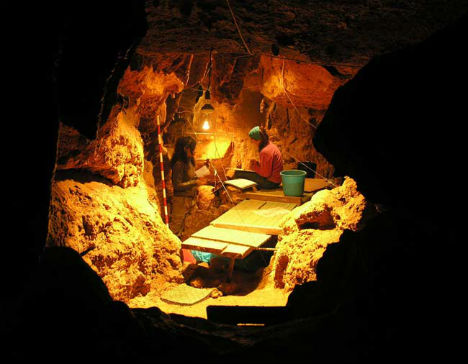
The bones of twelve neanderthals found in a cave in Spain were cut and snapped, indicating that they were likely ‘processed’ by fellow neanderthals as food. The possible family group, which included three adult males, three adult females, three adolescents, two children and an infant, is one of the most significant examples of cannibalism among neanderthals. “There are many different markings in many different bones in all 12 individuals, including traditional cut marks to disarticulate bones and remove muscle insertions, snapping and fracturing of long bones to extract the marrow,”researcher Carles Lalueza-Fox told LiveScience.

Bathhouse Baby Disposal

Human Bones Bathhouse Babies

How and why were the bones of nearly 100 infants discarded like trash in a late Roman, early Byzantine sewer beneath a bathhouse in Israel? Found in 1988 in Ashkelon, the remains indicate that the babies died before three days of age, and show no signs of disease or skeletal malformation. While scholars hypothesized that the babies were girls, since female infanticide was common during that time, tests have since shown that many were male. The reasoning behind their death is still a mystery.

The First Leper

Human Bones First Leper

The earliest archaeological evidence of leprosy is found in a 4,000-year-old skeleton unearthed in India in 2009. Leprosy is difficult to study because the bacteria that causes it is tricky to culture for research, and scientists are still unsure of exactly when and where it originated. This skeleton was not only the oldest leper ever found, it was also the first evidence of leprosy in ancient India, supporting the idea that the disease migrated between Africa and Asia during a period of urbanization, growing population density and new trade routes.

Murdered Bog Bodies

Human Bones Bog Bodies

The peat bogs of northwestern Europe have turned out to be one of the richest sources of ancient human remains in the world, preserving bodies so perfectly that they sometimes still contain blood and stomach contents. ‘Bog bodies‘ such as the Grauballe Man, pictured, date from 8,000 B.C.E. to the early medieval period. It seems that these people were not buried in the peat bogs, nor did they simply die there – they died violently. Researchers believe they were most likely sacrificed, or executed as punishment for crimes or perceived flaws.

Skulls Used as Cups
Human Bones Skull Cups

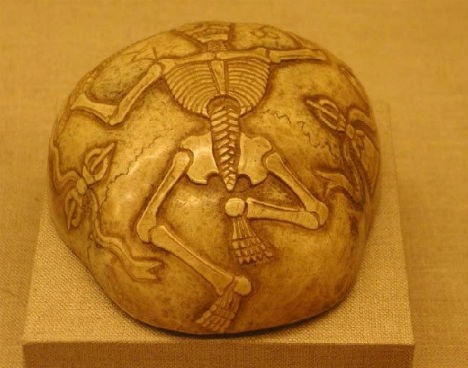
Three human skulls found in Gough’s Cave, Somerset, England were carefully worked into the shape of bowls, indicating that they were used to drink from. At 14,700 years old, these are the oldest skull cups ever discovered, and they were surrounded by other human remains that had been snapped to get to the marrow inside, suggesting cannibalism.

Next Page:
Frightening Archaeological Finds 15 Odd Human Remains

Share on Facebook


[ By Steph in Culture & Cuisine & Global. ]

[ WebUrbanist | Archives | Galleries | Privacy | TOS ]


WebUrbanist

 
Comments Off on Frightening Archaeological Finds: 15 Odd Human Remains

Posted in Creativity


Transforming Dhaus Designers Announce Origamic DTable

03 Apr

[ By WebUrbanist in Architecture & Houses & Residential. ]

dhouse unfolding architecture

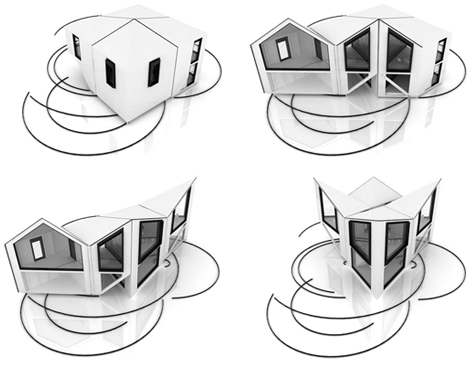
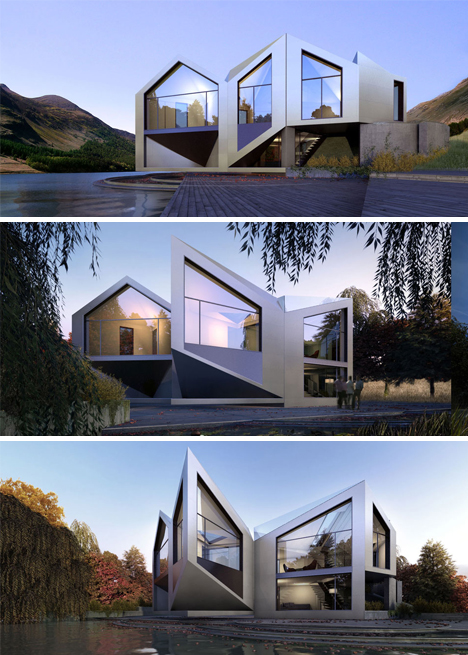
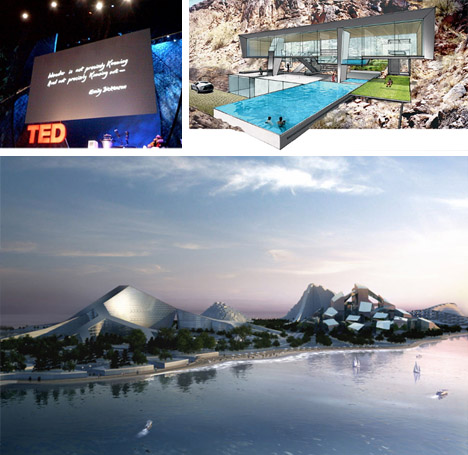
As featured previously on WebUrbanist, the Dhaus is a radical transforming building with eight specific configurations and all kinds of deployments in between. This time around, we have even more from its creators, from models and videos to a new piece of furniture based on the same concept (video and images of the latter at the end!).

But first, a refresher and new details on the house design: “Conceived for the harsh, climatic extremes from ‘Lapland to Cape Horn and Aleutians to Auckland’ The D*Haus concept can respond dynamically to its environment by controlled adaptation to seasonal, meteorological and astronomical conditions.”

dhouse real life prototype

Imagine a view you can control on demand, and exposure centered around annual weather cycles: “The flexibility of the D*Haus allows adaptation from winter to summer, and day to night by literally moving inside itself.”

dhouse modular season models

Aside from the seasons, there is also security and open-plan versatility: ”The thick heavy external walls unfold into internal walls allowing glass internal walls to become facades. Doors become windows and vice versa.”

dtable modular rotating design

Their most recent design is a table based on the same modular principles of the house – something more people have space for and can afford to own. The D*Table launches on Kickstarter tomorrow. Like its larger counterpart, it consists of four pieces that can be swung inward, out and around into various functional settings fit for different uses and interior layouts.

Share on Facebook


[ By WebUrbanist in Architecture & Houses & Residential. ]

[ WebUrbanist | Archives | Galleries | Privacy | TOS ]


WebUrbanist

 
Comments Off on Transforming Dhaus Designers Announce Origamic DTable

Posted in Creativity


Visionary Videos: 7 Awe-Inspiring TED Talks on Architecture

02 Apr

[ By WebUrbanist in Architecture & Public & Institutional. ]

ted architecture

Watch these videos and you will never see built environments in the same way again. Some tackle timeless questions of light, dark and color, while others address emerging technologies and the architectural problems of tomorrow. Skim the descriptions below to decide which you want to view – or take an hour of your day to enjoy them all!

Richard Kelly starts out with Le Corbusier’s modern classic Notre Dame du Haut in Ronchamp, illustrating the amazing plays of light and dark that together make for a deeply spiritual experience of space. He goes on to talk about Richard Kelly, a pioneer of lighting design, who talked in terms of focal glow (space-dominating sources), ambient luminescence (mood lighting) and plays of brilliants (bright points in a dark space). If you have any doubt about the importance of light and color in architectural design, you need to watch this video.

Daniel Libeskind is a designer who preaches what he practices. He abhors neutral and strives for inspirational, emotional, complex, risky, raw and story-telling architecture that both describes but also rises above the times in which it is built. At the same time, he is not a proponent of artistic expression for its own sake, but shows surprising pragmatism – architecture, like the Ground Zero memorial towers, should fit the consensus and respond to the needs of people occupying it.  Whether or not you are a fan of his elaborate Deconstructivist-style monuments and institutions, this talk will help you put one of today’s most energetic architects in context.

Rachel Armstrong proposes self-repairing and evolving metabolic materials that will step beyond design and history. She boldly proposes that sustainability means connecting to nature in a fundamental way: namely, with building blocks that can grow and change. It is more than just a vision, though – she brings actual material developments to the table that defy the inert qualities of familiar concrete, wood and bricks.  These can respond in real time to environmental conditions. Instead of imposing structure upon matter, these concepts, like what they contain, are necessarily dynamic – they will literally grow out of material science in the coming years.

Magnus Larsson has an improbable but grand project in mind, turning bacteria and grains of sand into a sandstone wall that could span the entire continent of Africa.  Each second, one billion grains of sand are created in the world – some become sandstone, but others collect in dunes and deserts. Each day, the Saharan frontier moves a meter forward, taking over human-occupied lands and displacing populations. To reclaim vast and uninhabited areas of the Earth, it only makes sense that we turn the destructive desertification power of sand to our advantage. This proposal would have multiple benefits, reclaiming such spaces, reducing droughts and curbing climate change.

Bjarke Ingels asks how we tell the architectural design stories outside of the finished project, using alternative media (including comic books!) to talk about history, evolution and the avante garde of architecture. If you enjoy offbeat comparisons, visual juxtapositions,  comedic concepts and experimental expression, this is a much-watch video.

Cameron Sinclair was and is an early proponent of open-source architecture to address everyday issues of sustainable global design, from emergency housing and transitional shelter to shipping container infrastructure, straw bale construction, mobile health clinics and more. This talk is now nearly a decade old, but the lessons are just as applicable today, or perhaps more so than ever.

Liz Diller (of Diller + Scofidio) describes architecture as a special-effects machine – beyond basic shelter, it is theatrical in essence. Her work challenges conventions of spatial use and building technology. Notably, she recognizes that her projects are not always easy to capture and display in museum retrospectives – they are about a time, place and experience, for better (and/)or for worse. This video should be a fittingly light-hearted end to these series of somewhat-heavy features.

Share on Facebook


[ By WebUrbanist in Architecture & Public & Institutional. ]

[ WebUrbanist | Archives | Galleries | Privacy | TOS ]


WebUrbanist

 
Comments Off on Visionary Videos: 7 Awe-Inspiring TED Talks on Architecture

Posted in Creativity


Stealth Wear: Counter-Surveillance Fashion Protects Privacy

02 Apr

[ By Steph in Conceptual & Futuristic & Technology. ]

Stealth Wear Anti-Drone Fashion 1
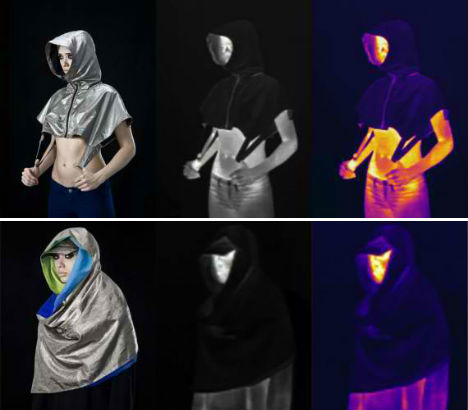
The rise of surveillance technology, including face recognition software, drones, body scans and cell phones as GPS locators, has resulted in some creative attempts to elude it. Designer Adam Harvey experiments with “fashion to challenge authoritarian surveillance” in a series called Stealth Wear (via PSFK). Anti-Drone garments protect against thermal imaging, a special cell phone pocket blocks signals, and off-the-wall makeup and hair styling techniques make it hard to ID faces.

Stealth Wear Anti-Drone Fashion 2

Stealth Wear Anti-Drone Fashion 3

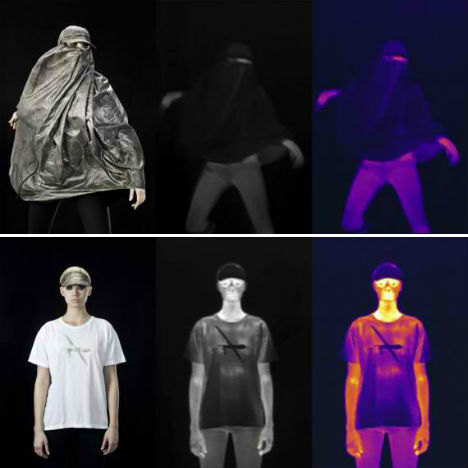
The Anti-Drone garments are made with a lightweight, breathable metallized fabric that reflects heat, masking the wearer’s thermal signature so they won’t show up in thermal imaging scans. Two of the designs are inspired by Muslim garments, including the burqa and scarf. “Conceptually, these garments align themselves with the rationale behind the traditional hijab and burqa: to act as ‘the veil which separates man or the world from God,’ replacing God with drone,” says Harvey.

Stealth Wear Anti-Drone Fashion 4

These garments aren’t intended to be serious gear for survivalists looking to elude The Man. They’re fashion, Harvey explains, exploring the ways in which we can interact and aestheticize our culture of rising surveillance. Technically, even the small parts that aren’t covered by the garments, like the hands and face, can give you away. The OFF Pocket, however, is definitely usable: it’s a flexible waterproof cover fitting most sizes of phones, including Nexus and iPhones, that blocks all incoming and outgoing call signals.

Stealth Wear Anti-Drone Fashion 5

Stealth Wear Anti-Drone Fashion 6

If you want to avoid facial recognition software determining your identity, you’ll have to get even more creative. Developed as his master’s thesis, Harvey’s project CV Dazzle attempted to find makeup and hair styles that would elude recognition. This collaboration between hair stylists, makeup artists and fashion designers used custom software that exposes the vulnerabilities of the OpenCV face detection algorithm, creating styles that exploit these weaknesses. The looks are definitely a bit cyber-punk, but it’s interesting to see them gain a little practicality. Check out an article on ‘how to hide from machines’ that explores more of these techniques at DISmagazine.

Share on Facebook


[ By Steph in Conceptual & Futuristic & Technology. ]

[ WebUrbanist | Archives | Galleries | Privacy | TOS ]


WebUrbanist

 
Comments Off on Stealth Wear: Counter-Surveillance Fashion Protects Privacy

Posted in Creativity