Category: Creativity

  • Heat-Sensitive Business Cards Take On Temporary Images

    [ By Steph in Design & Graphics & Branding. ]

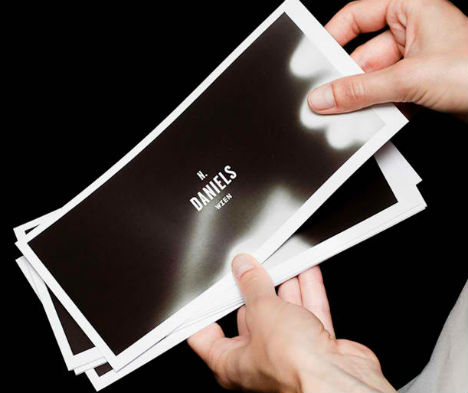
    Thermal Business Cards 1

    Many of the people who end up with your business cards will use them to jot down notes or grocery lists, but this creative twist on the conventional lets them leave their mark in a much more fun and memorable way. Austrian graphic design studio Bureau Rabenstein created a set of heat-sensitive, white-bordered business cards that look like developing Polaroids for photo producer Natalie Daniels.

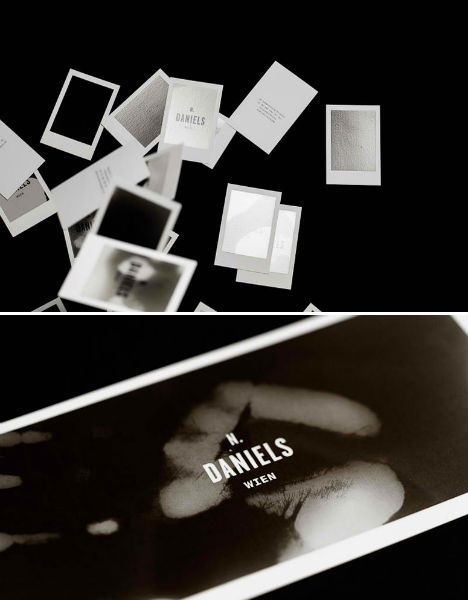
    Thermal Business Cards 2

    The thermo-sensitive black ink under the surface takes on the imprint of whatever is placed upon it – be it fingers, lips or objects – for just a few moments before they fade.

    Thermal Business Cards 3

    While they’re are certainly nowhere near as cheap to produce as plain old paper ones, they’re also nowhere near as disposable. Creative business cards like these will not only make a (literal) impression, they’re likely to stick around as fun keepsakes instead of ending up in the trash.

    Thermal Business Cards 4

    Other cool, way-out-of-the-box business card designs include razor blades, lock picking kits, pop-up cards, Legos and x-rays. Check out 15 examples.

    Share on Facebook


    [ By Steph in Design & Graphics & Branding. ]

    [ WebUrbanist | Archives | Galleries | Privacy | TOS ]


    WebUrbanist

  • Rendering the Digital Physical: 10 Bitcoin Designs & Ideas

    [ By WebUrbanist in Gaming & Computing & Technology. ]

    bitcoin digital physical designs

    The crypto-currency Bitcoin is all over social media, blogs and news sites. But beyond the volatility, speculation and noise there is a fascinating question being asked and answered: from coins to wallets, how does the world’s first widespread digital currency manifest in visual or physical form(top image by cybrbeast)

    bitcoin 3d currency variants

    The Bitcoin logo is a rather simple affair, borrowing much from traditional currencies (a partial strike-through) and clearly, most of all, the United States dollar. For some, though, seeing is not enough – for emotional and practical reasons alike, many want a physical analogue to their virtual wealth.

    bitcoin physical round design

    That baseline design, however, has spawned not only 3D renderings approximating solid coins, but actual physical coins themselves for fans of hand-held collectibles. The Casascius series have solid brass, electroplated gold and pure silver variants that ‘contain’ real Bitcoins (an address with a private key hidden below a removable hologram). Like Gold Eagles, the value of these on the secondary market has consistently stayed above the ‘spot’ price for the currency they contain.

    bitcoin paper currency notes

    And it does not end there. For security purposes, many people prefer to keep copies (in some cases: their only copies) of their virtual Bitcoin ‘wallet’ in offline form. For better or worse, this translates computer-centric risks (hacking and data corruption) back into more familiar ones (physical theft or loss). Designers on that front  have come up with a number of interesting options, from plasticized and paper ‘notes’ to self-printed wallets. In the decentralized, open-source spirit of Bitcoin, many designers (like Doctor 75R) give these designs out freely as well.

    bitcoin printable folding wallet

    Canton Becker lists off the advantages of his variant, shown above: “(1)Private key is hidden behind folds, so your wallet content is still safe if left out in the open or photographed. (2) Tamper-proof tape indicates when you (or someone else!) has revealed the private key. (3) Folding design obfuscates private keys so they’re hidden even when holding wallet up to a bright light. (4)Reverse side has basic wallet operation instructions and a register for writing down deposits / balance. (5) Private and public keys are replicated (and rotated) in triplicate to maximize chances of recovering keys if paper is damaged / crumpled.”

    bitcoin physical ring designs

    There is even a movement toward making Bitcoin secret (de)coder rings – like gold or silver ones, they can be stolen, but they also allow you to wear and keep your wealth (literally) close at hand. By engraving the private key on the inside of the band, there is no way to see it unless you (or someone) takes it off.

    bitcoin wallpaper digital designs

    And, of course, anything with sufficient fans warrants making wallpapers – here are a series of six available at full size on Flickr.

    Share on Facebook


    [ By WebUrbanist in Gaming & Computing & Technology. ]

    [ WebUrbanist | Archives | Galleries | Privacy | TOS ]


    WebUrbanist

  • Tag Before the Tide: Temporary 3D Sand Graffiti by DAIM

    [ By WebUrbanist in Art & Street Art & Graffiti. ]

    3d graffiti wall sand

    Artist Mirko Reisser has long developed a highly personalized (and profoundly cool) approach to making two-dimensional tags appear three-dimensional on surfaces, but in this unusual project, he created an actual physical object out of sand.

    sand graffiti start finish

    Like anyone building a fort or castle on the beach, DAIM was well aware of the time limits and necessarily temporary nature of this little installation – he documents the role of the tide in first encircling, then destroying this sculptural graffiti.

    3d graffiti daim letters

    And in case you have not seen is other work, here are some more traditional spray-painted pieces. He has plenty of street tags too, but it’s clear that with the time, space and security of an indoor venue, his attention to detail is able to add incredible depth and dimension to his work.

    Share on Facebook


    [ By WebUrbanist in Art & Street Art & Graffiti. ]

    [ WebUrbanist | Archives | Galleries | Privacy | TOS ]


    WebUrbanist

  • Sleeping Around: Pop-Up Hotel in a Shipping Container

    [ By Steph in Boutique & Art Hotels & Global. ]

    Sleeping Around Hotel 1

    Do you want to spend a night on a river bank, a cliff, a meadow or a busy urban street? The ‘Sleeping Around’ pop-up hotel concept can go virtually anywhere you like, setting up quickly in locations where static architecture isn’t possible or practical. Made from four recycled 1950s shipping containers, this traveling hotel opens up possibilities for travelers who want more than just a night of comfort.

    Sleeping Around hotel 2

    Sleeping Around consists of six shipping containers – four are individual hotel rooms, one serves as a sauna and the sixth is a breakfast and lounge area. Each of the hotel rooms has a floating bed, spacious rain shower, iPod docking station and air conditioning system.

    Sleeping Around Hotel 3

    The hotel has already spent a few weeks on the banks of the Scheldt in Antwerp, where the containers were procured, and is now on the move. Travelers interested in staying there can track its location on the website, and put in requests for future spots. It can be set up and ready to go within five hours of arriving.

    Sleeping Around Hotel 4
    This hotel may not be quite as mobile as the super-compact Hotello, which is basically a self-contained hotel room setup in a wheeled trunk, but it opens intriguing possibilities for the future of travel accommodations. If you could choose any location to set up a temporary hotel, where would it be?

    Share on Facebook


    [ By Steph in Boutique & Art Hotels & Global. ]

    [ WebUrbanist | Archives | Galleries | Privacy | TOS ]


    WebUrbanist

  • Performance Architecture: 10 Dramatic Opera Sets & Stages

    [ By Steph in Architecture & Public & Institutional. ]

    Amazing Opera Stages Main

    Magnificent, surreal stages rise from the depths of Austria’s Lake Constance, rotating, glowing, rising and falling in time with the plots of famed operas, plays and musicals. Unparalleled in their scale and complexity, these stages are built every two years for the Bregenz Opera Festival, which began in 1946. With each season that passes, the sets get even more impressive. Here are 10 standouts.

    Andre Chenier

    Amazing Opera Stages Andre Chenier

    AMazing Opera Stages Andrew Chenier 2

    Amazing Opera Stages Andre Chenier 3

    Looking like the remains of some fallen civilization, a statue emerges from the lake, its head draped. Then the fabric begins to fall away, revealing a set of stairs that lead right up to the figure’s eye. This interactive set for Andre Chenier, an opera set during the French Revolution, grows even more amazing as the night goes on: the neck of the statue is severed, the head falling back to reveal an additional set.

    A Masked Ball

    Amazing Opera Stages A Masked Ball

    Amazing Opera Stages A Masked Ball 2

    A massive skeleton looms over an open book as the scene for A Masked Ball, an opera by Guiseppe Verde. One of the Bregenz Festival’s most iconic sets, this one from 1999 is fairly simple compared to the amazingly complex ones seen in more recent years.

    Tosca

    Amazing Opera Stage Tosca

    Amazing Opera Stages Tosca 2

    Puccini’s Tosca played out against this unforgettable backdrop, which featured a giant eye with an iris that actually rotates to reveal a hidden room. Scenes for the James Bond movie Quantum of Solace were filmed in the front of the building and in the audience while this stage was still active, in 2008.

    La Boheme

    Amazing Opera Stages La Boheme

    The 2001-2002 seasons of the Bregenz Festival featured three giant bistro tables and chairs for Puccini’s La Boheme, one of the world’s most popular operas.

    Aida

    Amazing Opera Stages Aida

    Life-sized replicas of the Statue of Liberty – or at least, bits and pieces of it – made a dramatic setting for a contemporary adaptation of Verdi’s Aida, symbolic of the breakdown of human rights. The pieces were mounted to cranes, and seemingly floated up into the sky at various points in the opera.

    Carmen

    Amazing Opera Stages Carmen

    Though not as surreal as many of the other sets,  the 1991-1992 stage for Georges Bizet’s Carmen was no less epic.

    West Side Story

    Amazing Opera Stages West Side Story

    Abstract representations of a rather futuristic-looking city rose and curved as a surprising stage for Leonard Bertstein’s musical West Side Story in 2003.

    The Magic Flute

    Amazing Opera Stages Die Zauberflote

    Last seen at Bregenz nearly twenty years ago with this magnificent rocky stage, The Magic Flute (Die Zauberflote, presented in German with English subtitles) will return for 2013 and 2014 with a new set.

    The Troubadour

    Amazing Opera Stages Troubadour

    Il Trovatore, or The Troubadour, had a very industrial-looking stage – a recreation of an oil refinery in stark red, which spewed fire from those smokestacks during its run in 2005.

    Fidelio

    Amazing Opera Stages Fidelio

    A prison rears up right amidst a life-sized Cardiff street as the set for Fidelio, an Italian opera about insidious evil in the world.

    Share on Facebook


    [ By Steph in Architecture & Public & Institutional. ]

    [ WebUrbanist | Archives | Galleries | Privacy | TOS ]


    WebUrbanist

  • Recovering Literature: Bold Classic Book Cover Redesigns

    [ By WebUrbanist in Design & Products & Packaging. ]

    classic power of books

    It takes a powerful book to survive decades or even centuries and stay prominently in the public eye. This pair of classics are a rarity in that respect, but like any books, one thing does change over time: their covers.

    classic book cover remodel

    First, Fahrenheit 451, reintroduced by designer Elizabeth Perez. In her words, it is “a novel about a dystopian future where books are outlawed and firemen burn any house that contains them. The story is about suppressing ideas, and about how television destroys interest in reading literature.”

    classic fahrenheit 451 redesign

    And what would be more apt than a book cover and binding that reflects that horrific world? The one becomes a match, and the spine becomes a striking surface, powerfully reinforcing the core message of the novel.

    classic penguin cover blacked

    classic censorship cover concept

    Then we have 1984,  part of a series of re-releases from Penguin designed by David Pearson – again, the message of censorship becomes boldly emblazoned right on the cover of the volume.

    classic book smell perfume

    But with physical books being, perhaps an endangered species, maybe you would like something new to swap into your collection but that also breaks traditional boundaries. Introducing: Paper Passion, a scent from Stiedl. It is a fragrance based on the smell of books – a powerful scent familiar with anyone who has revisited their childhood favorites.

    Share on Facebook


    [ By WebUrbanist in Design & Products & Packaging. ]

    [ WebUrbanist | Archives | Galleries | Privacy | TOS ]


    WebUrbanist

  • Future Architecture: 7 Surreal Award-Winning Skyscrapers

    [ By WebUrbanist in Conceptual & Futuristic & Technology. ]

    skyscrapers futuristic

    The first skyscrapers were impossible drawings at the times they were imagined, yet today glass towers that scale to the skies are everyday structures.  On land, by sea, in the air (or in one case: outer space), these entries are daring and visionary, defying convention, technology and at times even gravity.

    skyscraper polar umbrella project

    First, the winner of the 2013 Evolo Skyscraper Competition, the Polar Umbrella (by Derek Pirozzi), a buoyant skyscraper that protects and regenerates the polar ice caps. The umbrella helps shade the ice below it, which is, in turn, rebuilt via water frozen by energy generated “through an osmotic (salinity gradient power) power facility housed within the building’s core.”

    skyscraper first place award

    It can much more than just a remote outpost: “Through its desalinization and power facilities, this arctic skyscraper becomes a floating metropolis equipped with NOAA (National Oceanic and Atmospheric Administration) research laboratories, renewable power stations, dormitory-style housing units, eco-tourist attractions, and ecological habitats for wildlife.”

    skyscraper flying light park

    From the sea we shift our sights to the sky, where a high-flying design (third-place winner) aims to supplement dense cities with much-needed recreational and green space. Capped with a helium balloon and supported by solar-powered propellers, Light Park (by Ting Xu and Yiming Chen) is a floating skyscraper.

    skyscraper sky park diagrams

    Lofted greenery helps clean the air above urban centers, and the plan balances program and structure: “Programmatic platforms that host parks, sports fields, green houses, restaurants, and other uses are suspended from the top of the structure by reinforced steel cables; the platforms fan in different directions around the spherical vessel to balance its weight. These slabs are also staggered to allow for maximum exposure to sunlight on each level.”

    skyscraper space gravity grid

    Before we get to a few back on the ground,  we have covered sea, sky and the next step? Space. That’s where the Stratosphere Network of Skyscrapers comes in – a bold idea by a Chinese team to create a skyscraper grid in space. The Buckminster-Fuller-worthy hex network of globe-spanning architectural infrastructure is mind-boggling in its implications. Independently, these incredible towers are impossible to support, but as a network, they reinforce one another, and are mutually suspended above the Earth.

    skyscraper futuristic network diagrams

    If is a tall order in practice, but a brilliant concept in theory: “In this case the network of buildings and bridges connected to each other, covering the entire circumference of the earth, will no longer need structural ground support and can be suspended in the air by the effect of the earth gravity. The elevated bridges and buildings that relate the grid can reach any height with out worrying about overturning, earth-quakes, floods and any other natural disasters.”

    Next Page:
    Future Architecture 7 Surreal Award Winning Skyscrapers

    Share on Facebook


    [ By WebUrbanist in Conceptual & Futuristic & Technology. ]

    [ WebUrbanist | Archives | Galleries | Privacy | TOS ]


    WebUrbanist

  • Lawless Metropolis: Kowloon Walled City, Then and Now

    [ By Steph in Architecture & Cities & Urbanism. ]

    Kowloon Walled City 1
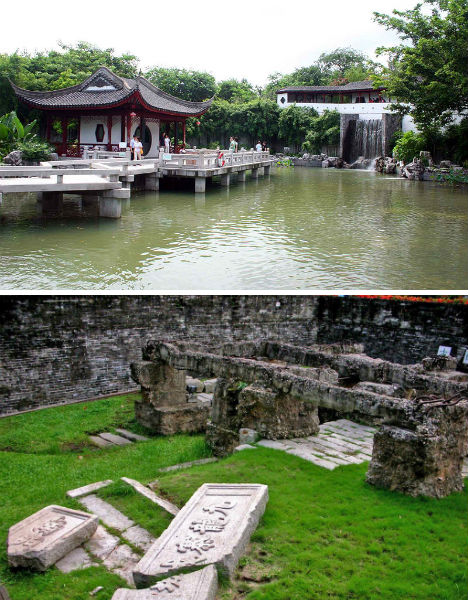
    Twenty years ago, a dank, lawless, congested and compacted lawless city located just outside Hong Kong was evacuated and destroyed, putting an end to the nearly century-old settlement first created as a Chinese military fort. Kowloon Walled City was packed with at least 50,000 inhabitants in 6.5 acres just before its demolition in 1993, and its history included a period of mob rule with sky-high rates of prostitution, gambling and drug use. Today, it’s the Kowloon Walled City Park, a tranquil place modeled on traditional gardens of the early Qing dynasty.

    Kowloon Walled City 2

    The former fort became an enclave when Britain gained control of the New Territories, which is one of the three main regions of Hong Kong. During World War II, as the Japanese occupied Hong Kong, the walled city’s population began to multiply dramatically. Once Japan surrendered, China announced plans to take back the city from Britain, and even more refugees poured inside, increasing the number of squatters to 2,000. Unable to drive them out, both China and Britain washed their hands of the situation, allowing it to rule itself.

    Kowloon Walled City 3

    But it was hardly a democracy that rose inside Kowloon in response. Underground mob groups increased already-rampant crime, taking control of brothels, gambling parlors and opium dens. Hong Kong police would only attempt to infiltrate the city in large groups.

    The architecture of Kowloon Walled City was haphazard, rising vertically with such narrow alleyways on the interior that sunlight rarely penetrated to street level. Pipes constantly dripped onto pedestrians. Children climbed to the rooftops to play. Many interior apartments had no windows. These factors came together to give it a dystopian feel, popularizing it as a setting for novels and games.

    Kowloon Walled City 4

    Exasperated with the unsafe, unsanitary conditions, China and Britain mutually agreed to tear it down. In its place, a 330,000-square-foot park was created, completed in 1995. Paths and pavilions inside are named after the streets and buildings of the vanished Walled City. Some artifacts, like entrance plaques and the city’s south gate, are on display. Where the city’s 300 interconnected buildings once stood are now floral walks, ponds and carefully cultivated gardens. Catch a glimpse into Kowloon Walled City’s fascinating past at the website of photographer Greg Girard.

    Share on Facebook


    [ By Steph in Architecture & Cities & Urbanism. ]

    [ WebUrbanist | Archives | Galleries | Privacy | TOS ]


    WebUrbanist

  • 7 Destroyed Architectural Wonders of the Modern World

    [ By Steph in 7 Wonders Series & Global. ]

    Destroyed Architecture Main

    We hear so much about the vanished wonders of the ancient architectural world, it’s easy to forget about those of our more recent history, from the 19th century to the present. These train stations, palaces, monuments and skyscrapers may not be as grand and dramatic as the Colossus of Rhodes and the Hanging Gardens of Babylon, but each of them represents the loss of an icon. Whether by fire, war, demolition or terrorist attacks, these 7 destroyed architectural wonders may be gone, but they remain important symbols of our cultural heritage.

    Old Penn Station, New York City

    Destroyed Architecture Penn Station

    Just one of many historic New York City buildings that have vanished, the original Pennsylvania Station was a pink granite structure inspired by Roman and Greek architecture, occupying two city blocks from Seventh Avenue to Eighth Avenue and from 31st to 33rd Streets. It covered an area of 8 acres, and featured a cavernous concourse. Inspired by the Roman Baths of Carcalla, the main waiting room was the largest indoor space in New York City at 150 feet in height, and one of the largest public spaces in the world. It served as a spectacular entrance to the city, with dozens of passenger trains arriving and departing each day for cities like Chicago and St. Louis.

    Its grandiosity couldn’t save it from the onward march of progress, however. By the late 1950s, intercity rail travel declined dramatically. Plans for a new Penn Station, which is now the busiest passenger transportation facility in the United States, were announced in 1962; demolition on the old building began in 1963, making way for Madison Square Garden. The cost of maintaining the building had become prohibitive. Three eagles statues from the station were salvaged and remain in the city, including two in front of the Penn Plaza and Madison Square Garden complex.

    The Crystal Palace, London

    Destroyed Architecture Crystal Palace London 2 Destroyed Architecture Crystal Palace London

    Built in Hyde Park, London to house the Great Exhibition of 1851, The Crystal Palace was a cast iron and plate glass building measuring 990,000 square feet. It hosted more than 14,000 exhibitors from around the world, displaying examples of the latest technology. The building was rebuilt even larger when the exhibition was over, in a residential area beside Sydenham Hill, to become a ‘winter park and garden under glass.’ It boasted two towers and a number of fountains with over 11,000 jets, and soon became the world’s first theme park with a rollercoaster, cricket matches and other entertainment. The gardens even had a prehistoric swamp with models of dinosaurs, just thirty years after the existence of these creatures was discovered.

    But times were hard, and the owners had difficulty making enough money to keep the Palace running. It fell into financial ruin and underwent a series of misfortunes including wind damage and fires. It was declared bankrupt in 1911. In 1936, another fire broke out, this one catastrophic, and the building could not be saved. The grounds have been used for various purposes since then, and in 2011, it was announced that the Crystal Palace Football Club would build a new stadium and athletic track there.

    Königsberg Castle, East Prussia

    Destroyed Architecture Konigsberg Castle

    With its beginnings in the 13th century and a great expansion in the 1700s, Köningsberg Castle was an important landmark in the East Prussan capital of Königsberg (Kaliningrad) for centuries. What began as a fortress was later designated a castle, home to the Grandmasters of the Teutonic Order and then various Prussian rulers. It featured a gothic tower stretching 328 feet into the air, with 284 steps to the top. It contained an extensive library as well as a palace church. By the 20th century, many rooms were turned into a museum full of art and provincial archives.

    The region was plunged into disorder and violence during World War II, and the city was bombed in a series of air raids by the Soviet Air Force, mainly in retaliation for the German bombing of Moscow. More than 90% of the city, including the castle, was destroyed by 1945, and the German population was forced out of the city by the occupying Soviets. Under their rule, the city became Kaliningrad. While the ruins of the castle’s stone walls still stood for decades, they were ultimately blown up in 1968. The site of the castle is now the city’s main square.

    Pearl Monument, Bahrain

    Destroyed Architecture Pearl Monument

    Erected in 1982 in honor of Bahrain’s first time hosting the Gulf Cooperation Council, the Pearl Monument featured six ‘sails’, representing the member nations of the council, supporting a pearl, which symbolized those nations’ shared heritage and Bahrain’s history of pearl cultivation. It was built in the center of Pearl Roundabout, located near the city of Manama’s financial district.

    In 2011, the monument became central to the Bahraini uprising. Several thousand demonstrators set up tents  and obstructed traffic in the roundabout to protest the first fatality of the uprising, and police soon cracked down, killing at least four more civilians. Tanks were deployed to disperse the demonstrators, and while the Prince of Bahrain urged the government to allow peaceful protest, the camp was bulldozed and set on fire. The government tore down the Pearl Monument, stating that it had been “desecrated” by the protests and had to be “cleansed.”

    Next Page:
    7 Destroyed Architectural Wonders Of The Modern World

    Share on Facebook


    [ By Steph in 7 Wonders Series & Global. ]

    [ WebUrbanist | Archives | Galleries | Privacy | TOS ]


    WebUrbanist

  • Liu Bolin is Back: ‘Invisible Man’ Artist (Dis)Appears Again

    [ By WebUrbanist in Art & Photography & Video. ]

    invisible liu bolin

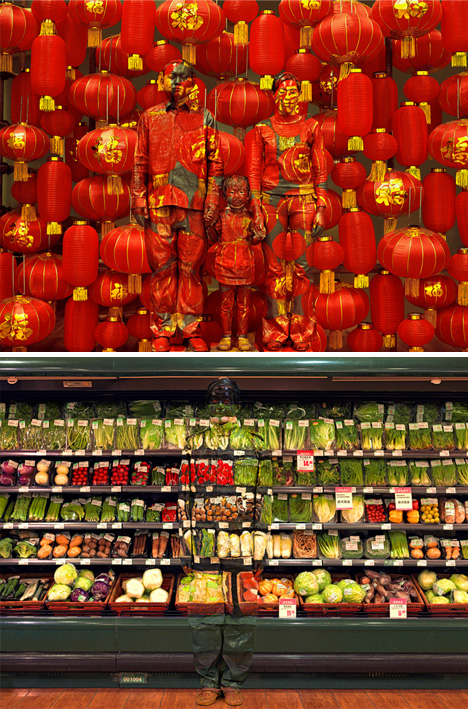
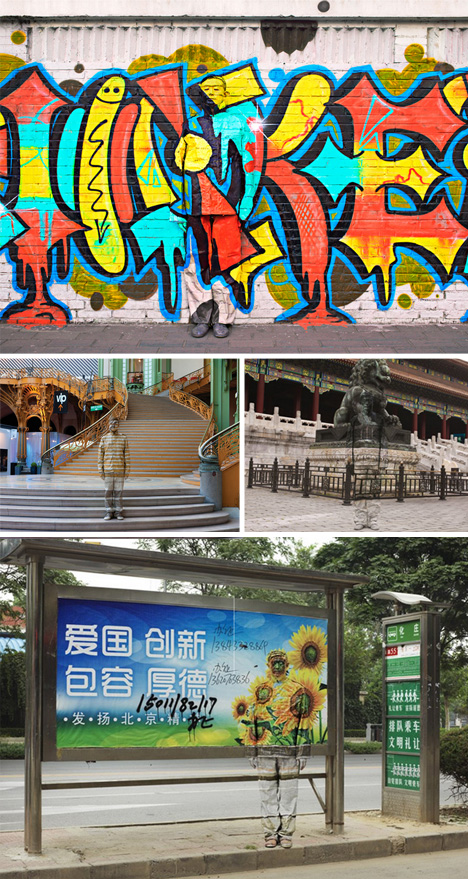
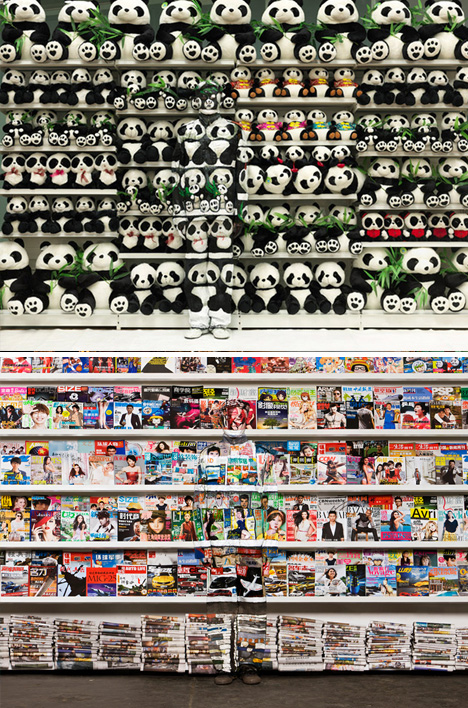
    The master of urban camouflage has returned, this time exhibiting his latest photographic wonders at the Galerie Paris-Beijing – as always, without the aid of Photoshop or any other post-editing processes.

    invisible map and family

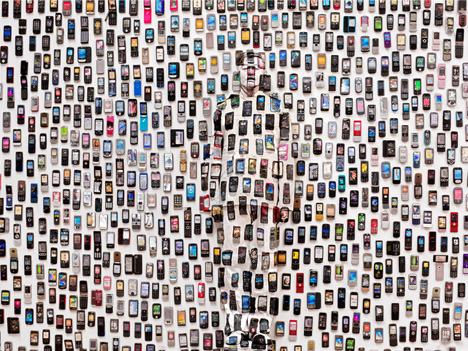
    This time, Liu Bolin slips into in a range of familiarly public contexts, in front of iconic buildings and street graffiti … but now also sometimes with companions, or in strangely commercial settings, blending in with store shelves of stuffed animals, fresh vegetables and cell phones. His art is evolving its message.

    invisible costume public spaces

    It is worth noting that his intention is not to fully vanish into his surroundings, but, instead, to let them encompass him – the  trompe l’oeil is intentionally incomplete.

    invisible camouflage commercial context

    He is making visual statements about change, commercialization, and the sublimation of the individual to the role of context and process.

    Share on Facebook


    [ By WebUrbanist in Art & Photography & Video. ]

    [ WebUrbanist | Archives | Galleries | Privacy | TOS ]


    WebUrbanist