RSS
 

Archive for the ‘Creativity’ Category

Fit for a Villain: 12 Surprisingly Homey Underground Lairs

13 May

[ By Steph in Architecture & Houses & Residential. ]

Underground Lairs Main

Nuclear missile silos, former quarries, natural caves and man-made hills camouflage homes ranging from rustic and understated to modern and luxurious. Seeming ideally suited to shield unsavory dealings from view, these subterranean lairs are perfect for villains – or just ordinary people who want to live in a really cool place.

Secret Subterranean Passage Connects Barn to Home

Underground Lairs Barn Home 1

Underground Lairs Barn Home 2

Looking out over the land, all you’ll see here is a very unassuming stone-and-wood barn. But go inside that barn and you’ll discover a concealed entry to an underground passage that leads to a hidden home. Villa Vals emerges from the hillside to look out onto a beautiful view. Located in Switzerland, this subterranean residence is also a part-time rental.

Subterra Castle Converted Nuclear Missile Silo

Underground Lairs Nuclear Missile Silo 1
Underground Lairs Subterra

Underground Lairs Nuclear Missile Silo 2

When Ed Peden first laid eyes upon what would later become his home, it was little more than a dark, dark, unmaintained hole in the ground. This underground nuclear missile silo wasn’t exactly welcoming, but Peden bought it for the relatively low cost of $ 48,000 and transformed it into a comfortable family residence. The home is topped by a modest-looking wooden structure, and nothing would look amiss at all if it weren’t for the escape hatches that have been altered to look like castle towers. The home takes up just a third of the nearly 20,000 available square feet of space underground.

Cave House, Festus, Missouri

Underground Lairs Cave House 2

A 17,000-square-foot artificial cavern left by a 1930s sandstone mine in Festus, Missouri is now a beautiful modern family home. Located 45 feet below a forest (and a neighboring home), Cave House was temporarily a roller rink and concert venue hosting the likes of Tina Turner and Bob Seger, and the back chamber still has the stage they performed upon. The middle chamber measures 80 by 80 feet, used by the family as a ‘party room’, and the front chamber holds most of the home. The property is 2.8 partially wooded acres with three freshwater springs and fourteen waterfalls.

Atlas F Missile Base House, Abilene, Texas

Underground Lairs Atlas F

Inspired by Ed Peden’s Subterra, a man named Bruce Townsley purchased an Atlas F missile base near Abilne, Texas for $ 99,000. Townsley transformed just 1,000 square feet of the sprawling base into his living space. Notable features like the massive blast doors have been preserved, while much of the home now has a coat of bright white paint that makes it feel surprisingly welcoming.

Malator, Wales

Underground Lairs Malator 2

Underground Lairs Malator 1

Commonly known by neighbors in Wales as the ‘Teletubby House’, Malator is mostly hidden within a hill, with no more than a clear glass facade and a steel chimney to give it away. Built in the town of Druidstone in 1998, the small underground dwelling has a turf roof and working porthole windows.

Underground House in a Former Quarry

Underground Lairs Quarry UK

An old quarry in the Eden Valley of Cumbria, UK hosts a two-story house with a massive glass facade to bring in daylight and warmth. The earth-sheltered, eco-friendly home was designed by architect John Bodger for Phil and Helen Reddy.

Next Page:
Fit For A Villain 12 Surprisingly Homey Underground Lairs

Share on Facebook


[ By Steph in Architecture & Houses & Residential. ]

[ WebUrbanist | Archives | Galleries | Privacy | TOS ]


WebUrbanist

 
Comments Off on Fit for a Villain: 12 Surprisingly Homey Underground Lairs

Posted in Creativity


Fighting the Future: 3D-Printed Gun Fired, Blocked by US

13 May

[ By WebUrbanist in Gadgets & Geekery & Technology. ]

3d gun

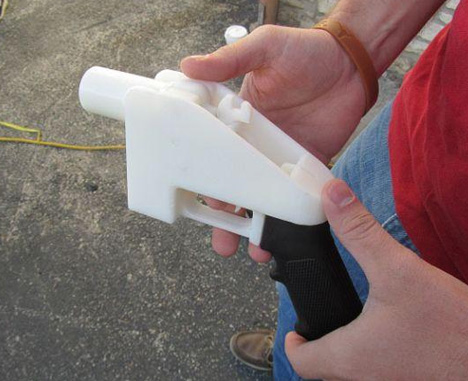
The story has unfolded fast, and people on both sides are furious. Within days of a successful test firing of the Liberator, this working 3D-printed weapon has attracted the attention of the United States government. 100,000+ downloads in,  the State Department has stepped in to try and stop further distribution.

3d gun in case

Cody Wilson of Defense Distributed and his crew have been harshly criticized, both by those who wanted him to stand up to authority and others who wish he had never created or released the blueprint files in the first place.

3d printed plastic gun

Despite adamantly contending they would not cave to external pressure, Defcad – the site hosting the 3D gun and other illicit-object designs – now has a white-on-red warning at the top of the page summarizing the situation for visitors. None of this, of course, has stopped people from distributing the files in a variety of alternative venues.

3d printer gun component

On the one hand, it is entirely understandable that people would fear a future in which gun control is difficult or impossible thanks to ease of on-demand printing. Further, its parts and breakdown also make it easy to sneak through security checks, making it potentially more dangerous in some ways than a traditional firearm.

3d firearm parts disassembled

On the other hand, people can already make guns with the right shop equipment (better ones than those that can be currently printed), plus history has shown that fighting inevitable shifts in technology is an uphill battle. In tech, much like in war, sophisticated capabilities tend to win in the end, regardless of which side was ‘right’ to begin with. Information, as they say, wants to be free.

Share on Facebook


[ By WebUrbanist in Gadgets & Geekery & Technology. ]

[ WebUrbanist | Archives | Galleries | Privacy | TOS ]


WebUrbanist

 
Comments Off on Fighting the Future: 3D-Printed Gun Fired, Blocked by US

Posted in Creativity


Can’t Be Shaved: 12 Abandoned Barber Shops

12 May

[ By Steve in Abandoned Places & Architecture. ]

abandoned barber shops
This abandoned barber shop triple-quartet collectively echoes with the metallic chattering of honed clippers tempered by hazy undertones of warm conversation.

Losing Your Head

abandoned barber shop Yanceyville NC(image via: Adam’s Journey)

The abandoned Richardson’s Barber Shop in Yanceyville, North Carolina, appealed to potential customers by displaying the unique motto “We need your head in our business” on the outside wall. Kudos to roving photographer Adam Prince for snapping the shop in a favorable light, or at least in favorable lighting.

abandoned barber shop Yanceyville NC(images via: CCHA and Adam’s Journey)

Evidently the snappy slogan wasn’t the best way to get ahead IN business because by the fall of 2005, Richardson’s was OUT of business. On the bright side, though the ex-clip joint is looking faded and forlorn these days the circus flyers marring its front picture window in the autumn 2005 image above weren’t a permanent addition.

Rest In La Paz

abandoned barber shop Spain(image via: Photorator)

The conquista-door has long slammed shut at the eerily exquisite La Paz Peluqueria de Caballeros (Gentlemen’s Hairdresser) shop sleepily snuggled in a small southern Spanish city. Shaded by gently waving palm trees and lit by a lone wrought iron lantern, the soot-stained stucco-walled shop exudes an aura of timeless style highlighted by the rich patina coating the frame of its cozy, glassed-in, second floor balcony.

A REALLY Close Shave

abandoned barber shop Bannack Montana ghost town(images via: SeaBix, Chuck_893 and Byron Serrano/Pinterest)

The well-preserved ghost town of Bannack, Montana, had a good run: it was founded in 1862 and finally abandoned in the 1970s. The former gold-mining town and territorial capitol boasted a population of around 10,000 and at least four saloons at its peak; one of which featured a one-seat barber shop in a front corner.

abandoned barber shop Bannack Montana saloon(image via: Chuck_893)

Legend has it that occasionally gunfights would break out among the drinkers, giving whomever was enjoying a trim at the time a close shave without the benefit of razor or cream. A tip of the hat goes to Flickr user Chuck_893 for his snap of the weather-beaten barber chair above

Next Page:
Cant Be Shaved 12 Abandoned Barber Shops

Share on Facebook


[ By Steve in Abandoned Places & Architecture. ]

[ WebUrbanist | Archives | Galleries | Privacy | TOS ]


WebUrbanist

 
Comments Off on Can’t Be Shaved: 12 Abandoned Barber Shops

Posted in Creativity


Amphibious Architecture: Foundations Float Above Floods

11 May

[ By WebUrbanist in Architecture & Houses & Residential. ]

floating homes

Floodwaters rise, drench homes, then recede, leaving disaster in their wake – a temporary change renders many structures permanently uninhabitable. But what if houses could ride out the storms, rising with the tides, then settling back down to the ground when the water is gone?

floating adaptive aquatic architecture

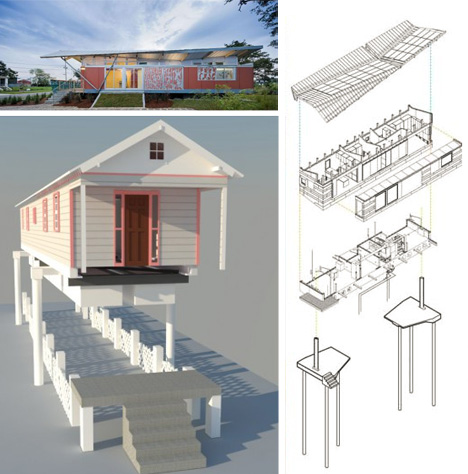
Based on the tragedy of Hurricane Katrina in New Orleans, Morphosis (along with Brad Pitt’s Make it Right Foundation) has designs for new adaptive architecture, while the Bouyant Foundation Project proposes a system for retrofitting existing homes. Each approach would allow structures to do lift off the ground in an emergency and uses regional shotgun-style dwellings as their baseline typology.

floating flood disaster design

BFP outlines a process that involves attaching buoyancy blocks below the home, connecting them to the sub-frame, and installing four corner guideposts to keep the building in place along horizontal axes while allowing it to lift (and settle) vertically on demand.

Connections to utilities (gas, water, power and so forth) would be either severable or extendable, so they could detach and reattach or simply expand and contract as needed. In plan, nothing changes – in elevation, predictable but periodic disasters are accommodated.

Share on Facebook


[ By WebUrbanist in Architecture & Houses & Residential. ]

[ WebUrbanist | Archives | Galleries | Privacy | TOS ]


WebUrbanist

 
Comments Off on Amphibious Architecture: Foundations Float Above Floods

Posted in Creativity


GIF-fiti: Trippy Animated Street Art Photos by INSA

10 May

[ By Steph in Art & Street Art & Graffiti. ]

giffiti insa 4

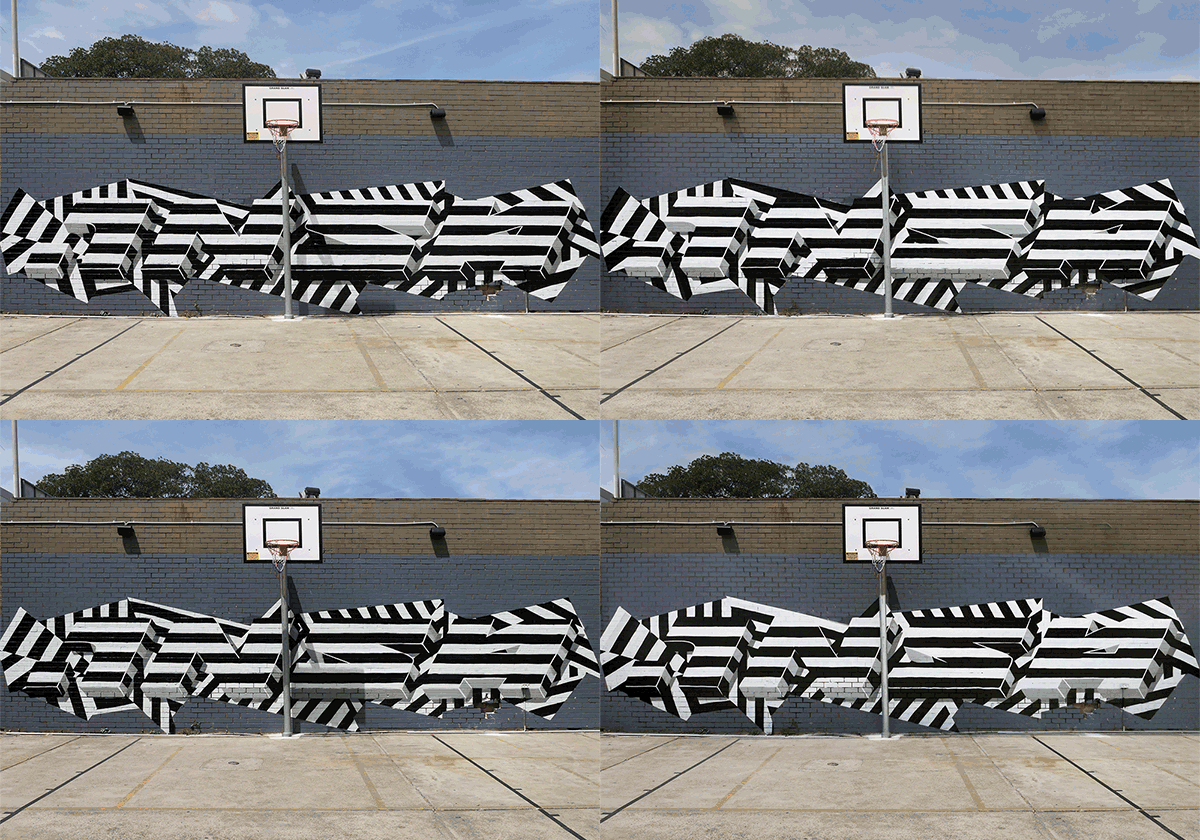
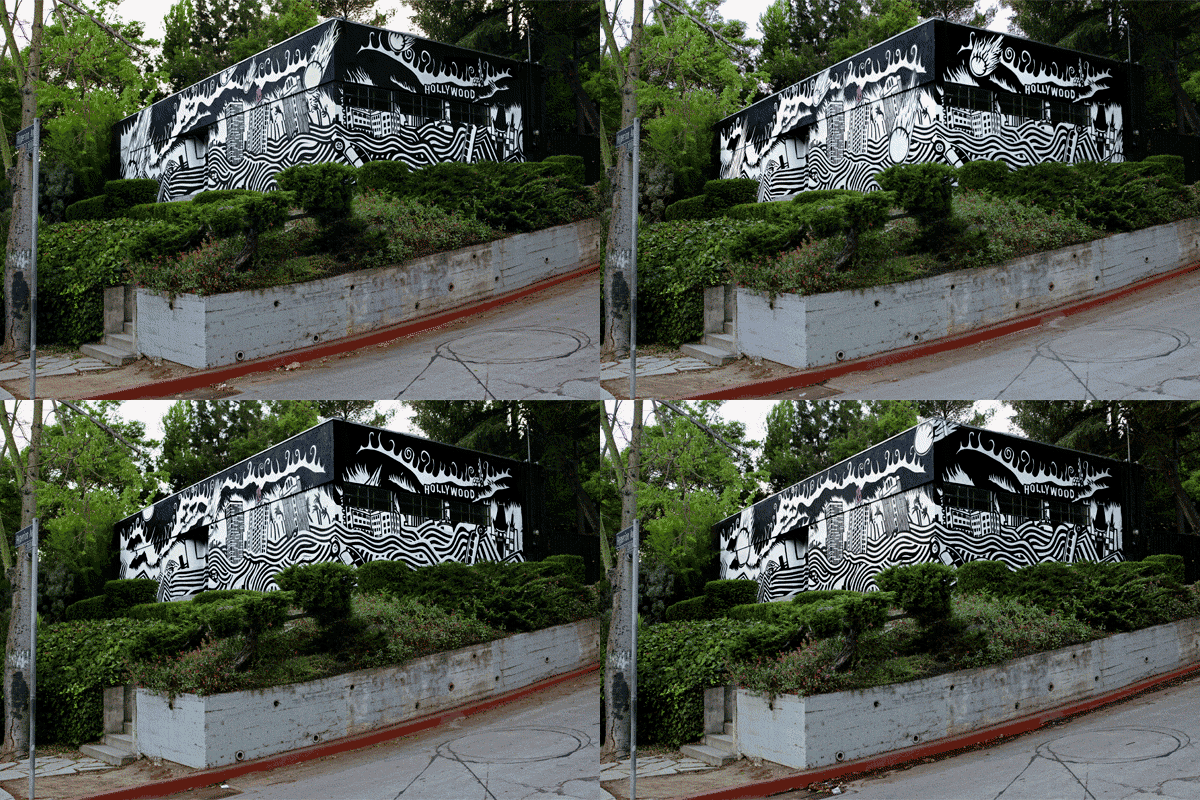
Unlike most street art, INSA‘s murals weren’t made to be seen in person – they’re best viewed online. That’s because the UK-based artist painstakingly paints, photographs and re-paints each of his works several times over in order to create these amazing animated GIF images.

giffiti insa 1

Each piece is created with movement in mind, with the artist envisioning the final animated result as he paints each step. What looks like a relatively ordinary mural when passed on the street becomes mesmerizingly kinetic when seen as a final work of art.

giffiti insa 3

These made-for-the-internet works of physical street art defy the conventional wisdom that art is best appreciated in person, though it would still be nice to check out all of the details up close. The internet brings what was once hyper-local to the masses.

giffiti insa 2

In an interview with Adobe, INSA says “I realized I was viewing more paintings online than in real life, the majority of art I was accessing was on the internet. Whether that was street art from around the world, or exhibition openings on blogs, and it disheartened me a little, because although it was great to be able to see so much work, I realized this was never the way the artist would have intended for their work to be seen. So I thought an interesting way to play with this idea was to create art specifically to be viewed online: to the point that you could not actually see it in reality. So, in fact, the internet becomes the best viewing platform for the work.”

Share on Facebook


[ By Steph in Art & Street Art & Graffiti. ]

[ WebUrbanist | Archives | Galleries | Privacy | TOS ]


WebUrbanist

 
Comments Off on GIF-fiti: Trippy Animated Street Art Photos by INSA

Posted in Creativity


Hidden Hotline: Only Kids Can See this Lenticular Message

09 May

[ By WebUrbanist in Design & Guerilla Ads & Marketing. ]

lenticular poster

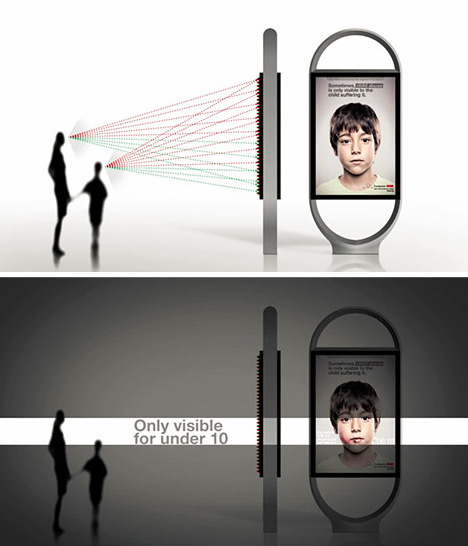
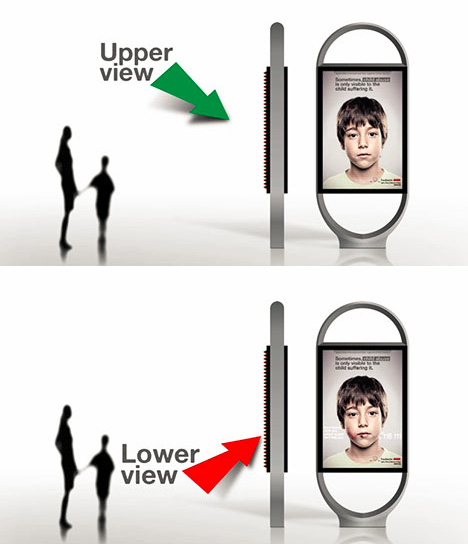
Children already at risk may also risk further abuse if they are seen to be seeking help, hence this twist on lenticular printing – a message that reads one way to tall adults, and another to small minors.

lenticular help message

The ANAR Foundation needed a way for potential victims to read their communication secretly (including the unspoken visual content – bruises on the portrait), without alerting those accompanying them on the street.

lenticular secret hidden message

Shifting from one perspective to the other slowly reveals an increasingly different image as well as additional text, including the helpline phone number.

Lenticular images are often used to create dynamic billboards that shift as people walk or drive by, but this variant flips the typical format on its side and gives it a higher purpose than mere marketing.

Share on Facebook


[ By WebUrbanist in Design & Guerilla Ads & Marketing. ]

[ WebUrbanist | Archives | Galleries | Privacy | TOS ]


WebUrbanist

 
Comments Off on Hidden Hotline: Only Kids Can See this Lenticular Message

Posted in Creativity


Modular Bright Idea: Colorful São Paulo Sidewalk Tea Shop

09 May

[ By WebUrbanist in Architecture & Offices & Commercial. ]

colorful storefront

A blend of fun, flexible, efficient and honest, The Gourmet Tea shop design in Brazil’s biggest city is both regional and universal, responding to everyday needs for opening and closing while also attractive to passerby pedestrians.

colorful modular street vendor

Designed by Alan Chu (images by Djan Chu), the storefront is a patchwork of brightly-colored squares and reflects the brand and its rich variety (35 flavors) of organic teas to be found within.

colorful sidewalk tea shop

But the patches are more than decorative – they unfold in various ways to reveal everything from the store’s signage to its purchasing counter and shelves full of wares.

colorful storefront closed configuration

Despite its apparent complexity, it is ultimately built of inexpensive plywood and folds down into a space-saving box in a few simple steps, making it a cost-effective solution for street-side vending.

Share on Facebook


[ By WebUrbanist in Architecture & Offices & Commercial. ]

[ WebUrbanist | Archives | Galleries | Privacy | TOS ]


WebUrbanist

 
Comments Off on Modular Bright Idea: Colorful São Paulo Sidewalk Tea Shop

Posted in Creativity


Creepy Portraits Made Using DNA from Gum & Smokes

09 May

[ By Steph in Conceptual & Futuristic & Technology. ]

DNA Portraits 1

The chewed gum, fingernail clippings and cigarette butts you leave behind in public places could say a lot more about you than you’d like to imagine. Artist Heather Dewey-Hagborg makes this abundantly clear with her series, ‘Stranger Visions’, which reproduces people’s faces using DNA extracted from such forensic evidence collected in New York City and Brooklyn.

DNA Portraits 2

Dewey-Hagborg is a PhD student studying electronic arts at Rensselaer Polytechnic Institute in Troy, New York. After extracting the DNA from her samples, she focuses on specific genomic regions, sequences them and then enters the data into a computer program, which produces a model of the face of the person who tossed that item onto the ground.

DNA Portraits 3

From those models, Dewey-Hagborg produces sculptures of the faces using a 3D printer. These life-sized portraits, which look similar to death masks, hang on gallery walls, often beside wooden boxes holding the original samples and showing photographs of where they were found.

DNA Portraits 4

The artist learned about DNA extraction from a course in molecular biology at Genspace, a do-it-yourself biology lab in Brooklyn where she does some of her work. She uses standard DNA extraction kits ordered online to analyze the DNA. The results are shockingly detailed; a mask of her own face made using the same technique shows just how accurate the results can be. However, there’s no way to tell age from DNA, so the computer produces a 25-year-old version of the person. Learn more about the process at Smithsonian.

Share on Facebook


[ By Steph in Conceptual & Futuristic & Technology. ]

[ WebUrbanist | Archives | Galleries | Privacy | TOS ]


WebUrbanist

 
Comments Off on Creepy Portraits Made Using DNA from Gum & Smokes

Posted in Creativity


Future Past: 7 Wonders Predicted 100+ Years Ago

08 May

[ By Steph in Technology & Vintage & Retro. ]

Future Past Predictions Main

“These prophecies will seem strange, almost impossible,” reads the intro to a 1900 article printed in the Ladies Home Journal entitled ‘What May Happen in the Next Hundred Years.‘ And over a century later, many of them do. The “wisest and most careful men in our great institutions of science and learning” envisioned that by the year 2001, we humans would have willfully made all wild animals extinct to make room for ourselves, and we’d be eating sterile foods zipped from laboratories to our homes via pneumatic tubes. But some of these ideas are more prescient than others, accurately imagining innovations like factory farming and even the internet.

Wild Animals Don’t Exist Anymore, Except in Zoos

Future Past Predictions Wild Animals

(image via: paleofuture)

“Man’s steadily increasing need for more space will eventually force untamed beasts to pay their way in the scheme of things, or join the species already extinct,” reads a 1926 article in the Galveston Daily News. That attitude was surprisingly common during the early 20th century, despite the fact that the predictions in the Ladies Home Journal article underestimated a century of future population growth by billions. The Ladies Home Journal article predicted that animals wouldn’t exist in the wild anymore at all, and would only be found in zoos, unless they were in use as livestock or service animals.

The article predicts that rats and mice will have been completely exterminated (along with mosquitoes, flies and roaches, which would require filling in all swamplands and chemically treating all still-water streams) and that cows will be so fat, they’ll be as slow as livestock pigs. “Food animals will be bred to expend practically all of their life energy in producing meat, milk, wool and other by-products. Horns, bones, muscles and lungs will have been neglected.” Sounds like modern-day conditions at many of America’s largest factory farms.

Purchases and Pre-Cooked Meals Are Delivered via Pneumatic Tubes

Future Past Predictions Pneumatic Tubes

(image via: machinelake)

In an era when compressed food tablets actually seemed like a great idea, sterile pre-cooked meals made in laboratories rather than kitchens were an appealing concept. The Ladies Home Journal article imagines that ready-cooked meals would zoom from these central labs to private homes via a vast system of pneumatic tubes. Equipped with all manner of electrical gadgets not found in homes, these laboratories would also be able to supply food cheaper than it would cost to cook for yourself, since they’re buying ingredients in such large quantities. You press a button, your food zips to you within minutes, and then you send the packaging and utensils back to be chemically cleaned. Store purchases and mail would be delivered in much the same way.

Furthermore, you’d never have to worry about anyone breathing on your food, or exposing it to the atmosphere of the busy streets. Shopkeepers would be arrested if they dared to store food that wasn’t essentially hermetically sealed, or if they sold “stale or adulterated produce.” The miracle of always-fresh produce would be achieved using liquid-air refrigerators.

The idea of pneumatic delivery hasn’t gone away altogether – some cities use pneumatic tubes to dispose of trash, and a company called the Foodtubes Project aims to reduce greenhouse gas emissions by transferring much of the UK’s deliveries from trucks on the roads to underground tubes.

The Suburb is the Promised Land for Taller, Healthier Americans

Future Past Predictions Broadacre Suburbia

(image via: mediaarchitecture.at)

The suburbs seemed like utopia for people living in clogged, smoggy cities. The predictions of the day envisioned Americans not only living much longer thanks to quiet lives in the peaceful suburbs, but also be one to two inches taller on average thanks to better health “due to vast reforms in medicine, sanitation, food and athletics.” In fact, suburbs would be so amazingly beneficial for mankind, city housing would be practically eliminated, and building in blocks would be illegal.

Americans, and humans in general, are indeed taller than we were in the year 1900, thanks to ample amounts of nutritious foods, though that could very well change with the unhealthy fast-food diets that have become increasingly common over recent decades. The suburban dream hit its peak during the ’50s, however, and is now starting to fizzle, with many young people choosing to live in cities for access to efficient transportation, jobs and culture.

Zero Traffic Noise in Cities as Transit Goes Underground

Future Past Predictions Carless Cities

(image via: wikimedia commons)

The dream of the suburbs would be achieved with quiet, high-speed transportation that was virtually invisible at surface level, with “well-lighted and well-ventilated” underground railways in broad subways or tunnels, as well as monorails and elevated streets. Trains would take passengers from New York to San Francisco in a day and a night (imagine!). It’s easy to see why this seemed so readily achievable in the year 1900; the first underground railway in the world opened in London in 1863 and transportation grew more efficient by the year. People hadn’t yet been seduced by the status and freedom of individual automobiles.

We may have high-speed trains in much of the world (though sadly, still not in most of America), but car-free cities “free from all noises” are far from our current reality. However, at least one city may be able to achieve that ideal: ‘Great City’, a dense carless metropolis being built from scratch in a rural area outside Chengdu, China.

Next Page:
Future Past 7 Wonders Predicted 100 Years Ago

Share on Facebook


[ By Steph in Technology & Vintage & Retro. ]

[ WebUrbanist | Archives | Galleries | Privacy | TOS ]


WebUrbanist

 
Comments Off on Future Past: 7 Wonders Predicted 100+ Years Ago

Posted in Creativity


Vertical Horizon: Urban Photographs Turn City Upside Down

08 May

[ By WebUrbanist in Art & Photography & Video. ]

vertical horizon hong kong

Hong Kong has to be one of the most-photographed cities on Earth, but these shots present a rarely-seen perspective by documentarians or pedestrians … unless they look straight up.

vertical urban photo shoot

From Vertical Art Space: “Romain Jacquet-Lagreze is a French graphic artist with a Masters in multimedia and art from East Paris University. His interest in photography began during his period of working in Los Angeles and Tokyo, and subsequently blossomed into a passion after his arrival in Hong Kong.”

vertical urban built environment

His Vertical Horizon series emphasizes the vast scale of tall structures, but also the “heterogeneous character” of the built environment – traditional alongside modern, scrappy versus refined, small set against large.

vertical city landscape photos

While some of his images are taken from the top down, or at an angle, many of the most powerful ones are straight-up vertical captures. Somehow, these more predictable approaches lack the striking gravitas of their deceptively-flat  cousins.

Share on Facebook


[ By WebUrbanist in Art & Photography & Video. ]

[ WebUrbanist | Archives | Galleries | Privacy | TOS ]


WebUrbanist

 
Comments Off on Vertical Horizon: Urban Photographs Turn City Upside Down

Posted in Creativity