RSS
 

Archive for the ‘Creativity’ Category

A Closer Look: Super-Simple Macro Lens for Smartphones

31 Aug

[ By Delana in Gadgets & Geekery & Technology. ]

easy-macro lens

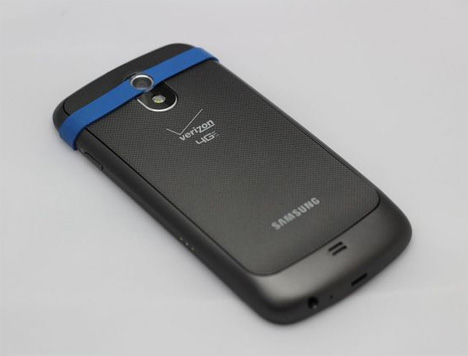
Taking photos on our mobile phones has become a daily activity for a lot of us, but getting really high-quality pictures usually requires some kind of clunky add-on lens and a special app. Taking macro pics on your mobile device is made super-simple by the Easy-Macro Smartphone Lens.

extreme close up of snowflake

Created by Adam Hicks, the Easy-Macro is a macro lens that fits right over the built-in lens of your device. It fits any phone or tablet thanks to its super-stretchy band. The small lens provides 4X magnification and requires nothing more than just stretching onto your device.

slip-on macro lens for iphones ipads ipods

The device is composed of a simple lens and a band that holds it onto your device. It fits everything from a thin 4th generation iPod Touch to a big iPad. No software is needed to make the lens magnify your target subject, so it can be used with any device an any operating system.

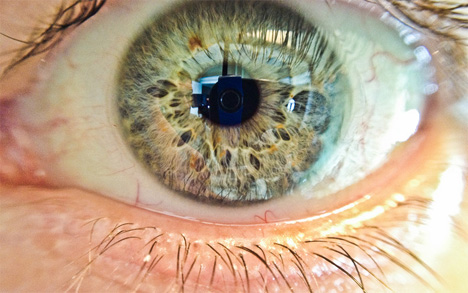
The results are surprisingly high-quality, especially for such a simple device. The lens can capture the tiniest details and create some very impressive ultra-close-ups. The company had been producing the lenses for several years before turning to Kickstarter for help bringing the production back to the US from China.

Share on Facebook


[ By Delana in Gadgets & Geekery & Technology. ]

[ WebUrbanist | Archives | Galleries | Privacy | TOS ]


WebUrbanist

 
Comments Off on A Closer Look: Super-Simple Macro Lens for Smartphones

Posted in Creativity


Abandoned Quarry to Ice World: Pit Reclaimed as Resort

30 Aug

[ By Steph in Global & Travel & Places. ]

Abandoned Quarry Resort China 1

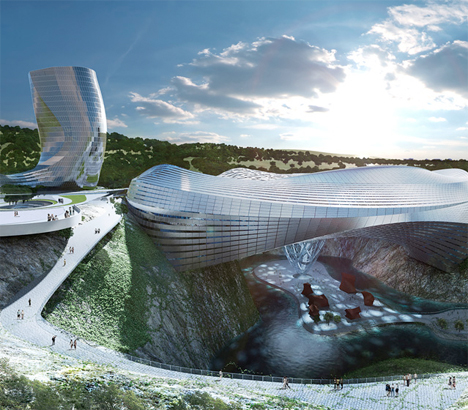
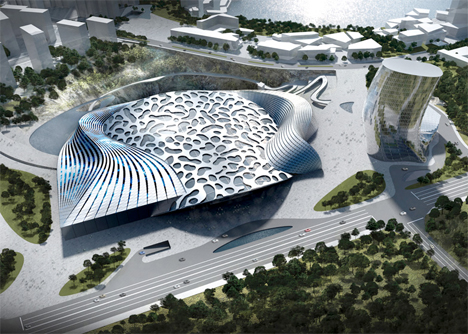
China is set to get yet another quarry-turned-resort in an ambitious project by Coop Himmelb(l)au architecture, transforming an abandoned mining pit into an artificial icy landscape with an indoor skiing center and a cantilevered outdoor swimming pool. The Deep Pit Ice and Snow World at Dawang Mountain Resort near Changsha, China will also include a 100-meter-tall hotel with over 300 rooms looking out over Tongxi Lake and Dawang Mountain.

Abandoned Quarry Resort China 2

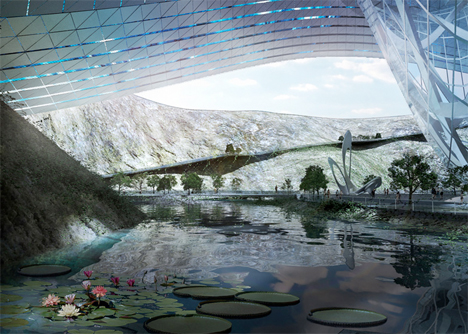
Spanning 170 meters cliff-to-cliff of what is currently an abandoned cement quarry, the resort will offer both cold-weather and warm-weather recreational opportunities, with the icy and snowy attractions inside a sculpted shell. Beneath this volume will be a sunken garden featuring cliffside pathways, ponds and islands. A central glass cone will cut through the building to bring natural daylight into this subterranean space.

Abandoned Quarry Resort China 3

A 60-meter (196 feet) waterfall will crash from the cantilevered outdoor swimming pool on the edge of the quarry, deep into the pit. From inside the Snow and Ice World, visitors can peer through large glass facades onto the watery landscape filled with greenery.

Abandoned Quarry Resort China 4

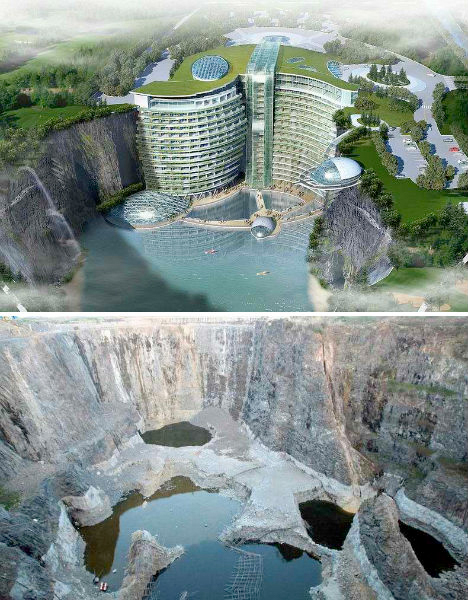
The project is very similar to the Shimao Intercontinental Hotel (pictured above), a 19-story, 5-star hotel located deep within a 328-foot abandoned quarry near the base of Tianmashan Mountain near Shanghai. Though the concept seemed too crazy to be true, construction has already begun. That resort will include an aquarium, restaurants, and recreational activities taking advantage of the unique landscape, like rock climbing and water-based sports.

Share on Facebook


[ By Steph in Global & Travel & Places. ]

[ WebUrbanist | Archives | Galleries | Privacy | TOS ]


WebUrbanist

 
Comments Off on Abandoned Quarry to Ice World: Pit Reclaimed as Resort

Posted in Creativity


Stack on Sheets: Minimalist Printer Needs No Paper Tray

30 Aug

[ By WebUrbanist in Gaming & Computing & Technology. ]

stack simple paper printer

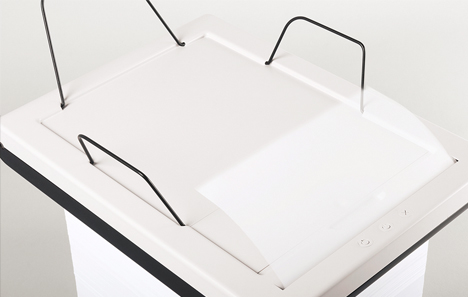
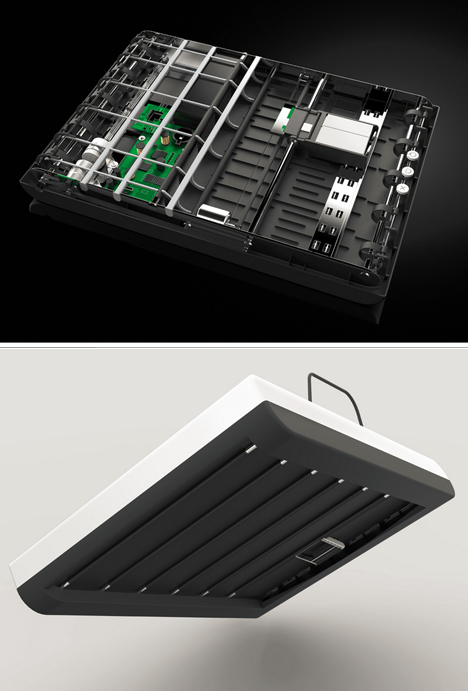
An elegant concept and beautifully executed, this thesis project strips away everything but the essentials from the process of printing, proposing a simple solution to reduce visual clutter in your office.

stack printer design concept

Dubbed Stack, an aptly short title for such a minimal machine, the design represents a thesis solution by Mugi Yamamoto. Aside from its small size and refreshingly spare appearance, its approach also circumvents a classic shortfall of typical printers: the size of the paper tray.

stack minimal printer design

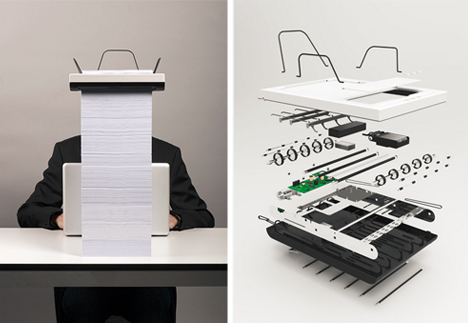
Instead of reloading frequently, you simply set Stack on top of a pile of blank sheets of paper and let it work its own way down, itself a lovely process that also lets you know how far you are through the printing job at hand.

stack printer design details

A few points of concern, though, from a practical standpoint: it is hard to say how well the printer would remain stable as it progresses, or whether shifts in weight along the way would cause jams. It is also not entirely clear whether power cords would pose an problem, or how high the finished paper stack could go before potentially spilling off the sides. Still, as a concept, it is lovely, and at least some of these issues could be corrected by introducing elements like guides that flip down to keep the stack aligned below, or higher supports above to stabilize finished sheets.

Share on Facebook


[ By WebUrbanist in Gaming & Computing & Technology. ]

[ WebUrbanist | Archives | Galleries | Privacy | TOS ]


WebUrbanist

 
Comments Off on Stack on Sheets: Minimalist Printer Needs No Paper Tray

Posted in Creativity


Animal House: Woodland Creatures Adopt Deserted Cabins

29 Aug

[ By WebUrbanist in Abandoned Places & Architecture. ]

abandoned home animal portraits

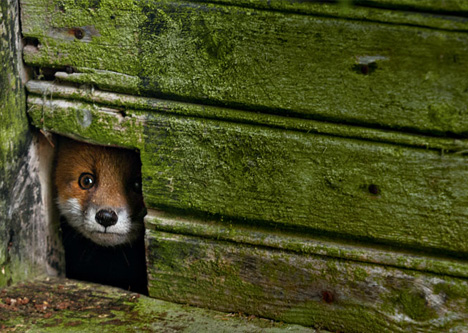
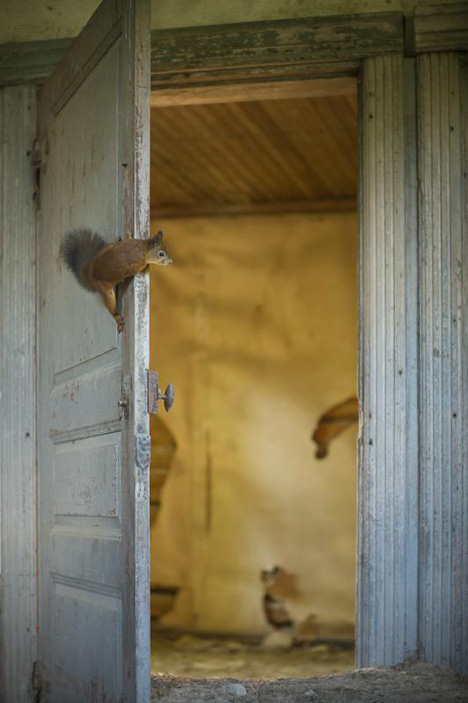
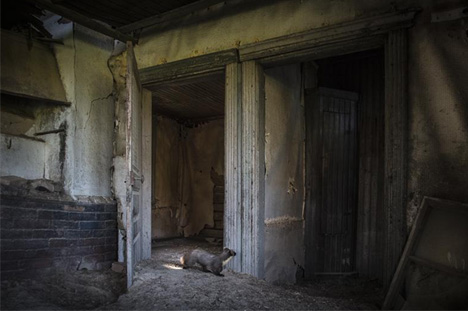
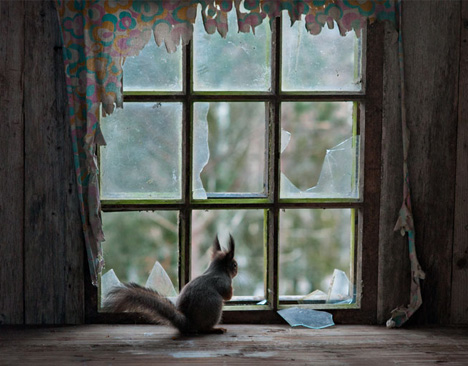
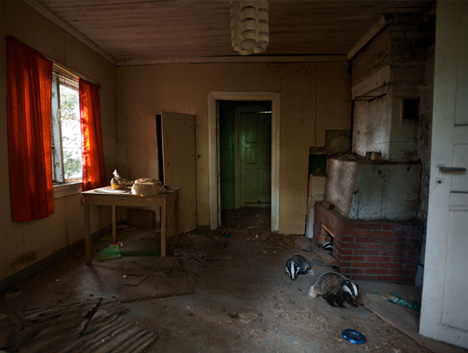
These interior photos by Kai Fagerström depict wild forest inhabitants who have made derelict human-owned dwellings their own – domestic portraits-at-home with a undomesticated twist.

abandoned space fox hole

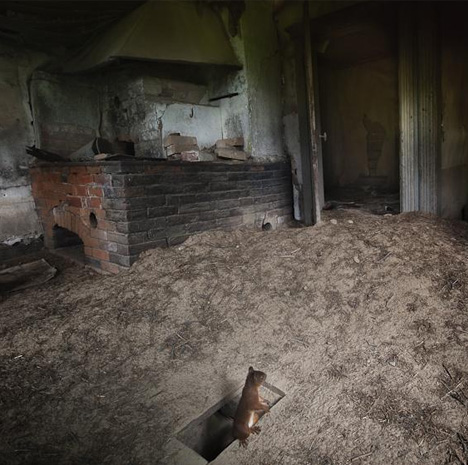
An abandoned series of small shacks and quaint cottages in Finland, slowly reclaimed by nature, show hints of slowly-invading of plant life,  but the even faster introduction of woodland animals including squirrels, foxes, owls and more.

abandoned room animal pictures

This surprising variety of crafty creatures have adopted and reshaped the existing spaces to suit their own needs, tunneling through vents and fireplaces, nesting and resting between walls and below floors.

abandoned home wild animals

Though this photography project started with a few quick shots in a set of cabins in the woods near the photographer’s summer home, the deserted spaces have turned out to be so rich in potential wildlife portraits that the results now populate an entire book of images (The House in the Woods).

abandoned building door squirrel

Great patience is required to wait and take just the right desired shots, which are so well-composed you could almost imagine the animals posed to have their picture taken. “Deserted buildings are so full of contradictions [and] I am fascinated by the way nature reclaims spaces that were, essentially, only ever on loan to humans.”

abandoned space animal series

abandoned window sill squirrel

abandoned house badger family

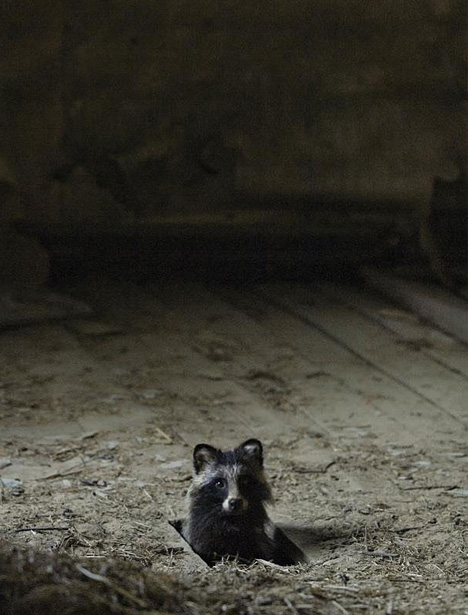
Each image has a story, often elaborate, about how it was taken. About the last one above, for instance, from National Geographic: “On a summer night a family of badgers file into the kitchen from a tunnel they dug under the fireplace. It took four years before Fagerström finally caught the skittish, nocturnal weasels. For this shot he set his camera on a windowsill, then stood outside on a ladder for hours before pressing the shutter via remote control.”

Share on Facebook


[ By WebUrbanist in Abandoned Places & Architecture. ]

[ WebUrbanist | Archives | Galleries | Privacy | TOS ]


WebUrbanist

 
Comments Off on Animal House: Woodland Creatures Adopt Deserted Cabins

Posted in Creativity


Forest Pavilion is World’s First 3D-Printed Architecture

29 Aug

[ By Steph in Conceptual & Futuristic & Technology. ]

Worlds First 3D Printed Architecture 1

There has been a lot of competition to design and execute the first prototype of a 3D-printed architectural structure, including complex concepts for houses inspired by nests and möbius strips. But it looks like that honor goes to Smith | Allen, an Oakland, California-based duo of designers who have created the Echoviren Pavilion.

Worlds First 3D Printed Architecture 2

The airy white pavilion consists of 585 interlocking components made of plant-based bio plastics, printed over 10,800 hours, mimicking the look and feel of its setting in a redwood forest. Measuring 10x10x8, the structure was assembled in four days.

Worlds First 3D Printed Architecture 3

The bioplastics will enable the pavilion to eventually decompose naturally within the forest, just like the trees that grow all around it. That process will take 30 to 50 years. It will also become a habitat for insects, moss and birds during its time in the forest.

Worlds First 3D Printed Architecture 4

The Echoviren Pavilion was made using 7 of the Type A Machines Series 1 printers. The team actually used these small-scale printers to create large bricks with which to build, leading some critics to state that it’s not a truly 3D-printed structure, printed in much larger parts to create the whole. The true test of 3D architecture will come when larger printers are used to lay out the material for the components, layer by layer, but the Echoviren Pavilion is still a beautiful example of what 3D printers can do.

Share on Facebook


[ By Steph in Conceptual & Futuristic & Technology. ]

[ WebUrbanist | Archives | Galleries | Privacy | TOS ]


WebUrbanist

 
Comments Off on Forest Pavilion is World’s First 3D-Printed Architecture

Posted in Creativity


Car Parks or Works of Art: 14 Exemplary Parking Facilities

28 Aug

[ By Steph in Architecture & Public & Institutional. ]

Parking Architecture Main

Most parking facilities are eyesores, designed with function in mind without paying heed to context or aesthetics. But in some cases, parking garages can be so innovative, high-tech, bright and – yes – even beautiful, that they’re notable works of architecture in and of themselves.

Detroit’s Michigan Theater

Parking Lots Detroit Theater

Parking Lots Detroit Theater 2

Built in 1926 alongside the connected 13-story Michigan Building office tower, the 4,000-seat Michigan Theater was once the jewel of Detroit, described as the world’s finest theater. But by the mid-1960s, it closed, partially due to a lack of parking – ironic, given its ultimate usage. The theater has continued to decay, but its beautiful shell remains intact as a three-level, 160-space parking deck.

72DP, Sydney

Parking Architecture 72DP

An extensive, colorful geometric mural decorates an underground car park in Sydney, Australia by architects Marsh Cashman Koolloos (MCK.) “The objective of the project was to breathe new life into the space which, having been rendered in concrete with little inlet of natural light, felt quite dark and heavy. Working closely with the owners, who possess a keen design sensibility, it was decided that the mural would cover all surfaces in a blanket of bright color. There was also a request that the larger wall surfaces be left blank with an eye towards potentially introducing additional, individually commissioned works at a future date. nevertheless it was vital that the installation feel and function as a complete work in its own right.”

Parkhaus Engelenschanze, Stuttgart, Germany

Parking Architecture Parkhaus

This light-filled parking garage totally gets rid of that creepy enclosed feeling that many of these structures can foster. The Parkhaus Engelenschanze features an all-glass exterior, and its inner courtyard even has a waterfall, a creek and curtains made of reclaimed glass.

The VW Tower, Wolfsburg, Germany

Parking Architecture VW Tower

Two towering silos are used to store vehicles at Volkswagen’s production facility and Autostadt visitor attraction in Germany. Reaching 48 meters (157 feet) into the air, the towers contain up to eight hundred cars lifted into position by rotating mechanical arms.

Ballet Valet, Miami

Parking Architecture Ballet Valet

You might not expect a parking garage to be among a city’s most impressive architecture, but in Miami’s case, the Ballet Valet really does stand out. Completed in 1996 by Arquitectona, the garage in Miami’s Art Deco district  is covered in grid-patterned fiberglass that serves as a terrace for climbing greenery. The garage sparked a trend in the city for well-designed parking facilities.

Next Page:
Car Parks Or Works Of Art 14 Exemplary Parking Facilities

Share on Facebook


[ By Steph in Architecture & Public & Institutional. ]

[ WebUrbanist | Archives | Galleries | Privacy | TOS ]


WebUrbanist

 
Comments Off on Car Parks or Works of Art: 14 Exemplary Parking Facilities

Posted in Creativity


Micro-Cities: Tiny Buildings Fuel Miniature Urban Renewal

28 Aug

[ By WebUrbanist in Art & Street Art & Graffiti. ]

mini building street art

Electrical boxes beware – Evol is back to up to his old tricks, turning urban fixtures and unused walls into tiny cityscapes using a deceptively simple toolbox comprised of cardboard, stencils and spray paint.

mini architecture electrical boxes

From process to execution, this artist is both scrappy and calculating, employing quick-and-dirty materials that are easy to obtain and fast to install, but with a remarkable eye for detail, right down to windows, balconies, satellite dishes and flower pots.

mini tiny building installatoins

Dotting the sidewalks of Berlin, perhaps aptly at the urban intersection of where communist East once met democratic West, the faux structures themselves are almost relentlessly monotonous from a distance. The facades are just drab and generic enough style-wise to look (perhaps ironically) incredibly lifelike and believable.

mini buildings drab weathered

Up close, these sprayed-in-place or pasted-on building faces exhibit not only convincing architectural details but also anticipated (yet always-unpredictable) marks of weathering, which in turn reinforce their apparent realism.

micro machines for living in

Le Corbusier, who many blame for the preponderance of ugly mass-produced architecture born of mid-century urban renewal, called buildings “machines for living in.” For better or worse, Evol seems content to continue this tradition at a smaller scale, relentlessly building whole cities worth of micro-machine habitats.

Share on Facebook


[ By WebUrbanist in Art & Street Art & Graffiti. ]

[ WebUrbanist | Archives | Galleries | Privacy | TOS ]


WebUrbanist

 
Comments Off on Micro-Cities: Tiny Buildings Fuel Miniature Urban Renewal

Posted in Creativity


15-Year Photo Project: Construction of a 150-Year Bridge

27 Aug

[ By WebUrbanist in Architecture & Public & Institutional. ]

joseph blum bridge photo

A photography project well over a decade in the making, these images by Joseph Blum show the human side and vast scale of construction behind the world’s largest self-anchored suspension bridge, slated to open this Labor Day Weekend in San Francisco and built to last for one hundred and fifty years.

blum bay bridge

Blum has a 25-year professional background in construction that informs his work but also gives him credibility with workers, enabling him to take close up and personal shots on site. He routinely braved dangerous heights with camera in hand, given remarkable behind-the-scenes access that in turn required extensive gear and safety precautions.

blum bridge above below

In the following interview with WebUrbanist, Joseph Blum goes into detail about his intentions, approach and what he learned about construction, photography and himself through this long and epic photographic journey.

blum bay construction workers

Notably, almost (if not every) image in the resulting series has a human element. “My intention on this job  and in all of my work is to document and honor the human labor involved in the project,” Blum explains. In this case, he “attempted to photograph the construction labor processes insofar as it was possible from the perspective of the workers actually doing the work” in order ” to show how they take the engineers’ plans and drawings and transform them into living structures of steel and concrete.”

blum san francisco series

Then there is the time frame of the project itself, spanning over a decade during which time there has been a massive shift from traditional film toward digital photography. Blum walks us through the timeline and his own transitions: “When I began this project I was shooting black and white film exclusively and did not believe that would ever change. During the course of the project digital photography burst on to the scene and became ever more sophisticated. I began shooting digital on the job as a supplement, but over time I began to rely upon it more and more.” Eventually, he started “to understand that in photography what is most important is the image and whether it is captured on black and white or color film or digitally is secondary.”

blum bridge construction detail

But the learning process also went beyond technical choices: “I also learned a great deal more about bridge construction and the work processes of the various trades.” Blum ended up “hanging out with the work groups for extended periods of time, forming relationships with the workers, getting to understand how they organized their work and their work relationships,” which in turn “increased my understanding of how this kind of labor is accomplished and also allowed me get images that no one else could.”

blum interview building detail

On a personal level, perhaps this photographer also found a secret to longevity in those high-flying spans overlooking the city: “Although the years went by and I got older, I felt that the project kept me young. photographing the bridge in the middle of the beautiful San Francisco bay required me to carry a substantial photo bag, to do a great deal of walking and climbing in all kinds of weather and i found that every single day that i went out to shoot was invigorating and energizing.” For more information about his work and exhibitions, as well as more images, click here to visit Joseph Blum’s website.

Share on Facebook


[ By WebUrbanist in Architecture & Public & Institutional. ]

[ WebUrbanist | Archives | Galleries | Privacy | TOS ]


WebUrbanist

 
Comments Off on 15-Year Photo Project: Construction of a 150-Year Bridge

Posted in Creativity


Human Harp: Suspension Cables on Bridge Make Music

27 Aug

[ By Steph in Art & Installation & Sound. ]

Human Harp Suspension Bridge Installation

A digital and mechanical module that fastens onto bridges and connects via retractable strings to a wearable suit creates a ‘human harp,’ a musical collaboration between the user and the bridge. The harpist moves in a sort of dance to pull the strings, creating the sounds, which are felt in real-time through vibrations on the bridge. The installation will travel to bridges around the globe, so pedestrians have a chance to try it out for themselves.

London-based artist Di Mainstone got the idea when looking at the Brooklyn Bridge during a residency in New York City, and seeing its similarity to the musical instrument. She envisioned a clip-on sound interface that would allow pedestrians to ‘play’ the bridge as if it were really a harp.

Human Harp Suspension Bridge Installation 4

The Human Harp was created by a collaborative team of artists, e ngineers and researchers using cutting-edge technology. The modules on the device utilize magnets in acrylic bubbles to detect the angle of the ropes. The movements are processed using software packages to generate the sounds. Watch the video to get an idea of the process.

Human Harp Suspension Bridge Installation 2

“As I listened to the hum of the steel suspension cables, the chatter of visitors and the musical ‘clonks’ of their footsteps along the bridge’s wooden walkway, I wondered if these sounds could be recorded, remixed and replayed through a collaborative digital interface? Mirroring the steel suspension cables of the bridge, I decided that this clip-on device could be harp-like, with retractable strings that physically attach the user or Movician’s body to the bridge, literally turning them into a human harp.”

Human Harp Suspension Bridge Installation 3

“We could imagine this process is a game of international research whispers, with information passing from one laboratory onto another.  All hubs will be integral to this dialogue, as the Human Harp develops and grows on its journey around the globe.”

Share on Facebook


[ By Steph in Art & Installation & Sound. ]

[ WebUrbanist | Archives | Galleries | Privacy | TOS ]


WebUrbanist

 
Comments Off on Human Harp: Suspension Cables on Bridge Make Music

Posted in Creativity


Parasitic Architecture: 15 Precariously Perched Structures

26 Aug

[ By Steph in Architecture & Cities & Urbanism. ]

Parasitic Architecture main

These parasitic buildings commandeer wasted urban space, often siphoning utilities from their host buildings. Some are additions that make no attempt to blend into the original structures, some are serious solutions for making the most of existing space, and others make artistic statements on fringe society and sustainable growth, but all illustrate that there are still many corners and crevices of our cities that could be put to use.

ParaSITE Inflatable Shelters
Parasitic Architecture Inflatables

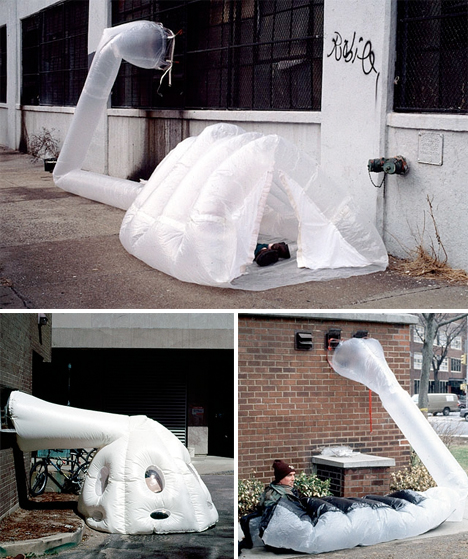
Michael Rakowitz creates inflatable ‘paraSITE shelters’ for the homeless, often specifically designed to suit individual needs, which narrowly fit within the definitions of legal temporary structures since they’re not much larger than a sleeping bag. They’re often made on a budget of less than five dollars using trash bags, ziploc bags and clear waterproof packing tape, and attached to the ventilation systems of adjacent buildings. One man, for example, requested as many windows as possible, because “homeless people don’t have privacy issues, but they do have security issues. We want to see potential attackers, we want to be visible to the public.”

Urban Tree Huts by Tadashi Kawamata
Parasitic Architecture Tadashi Tree Huts

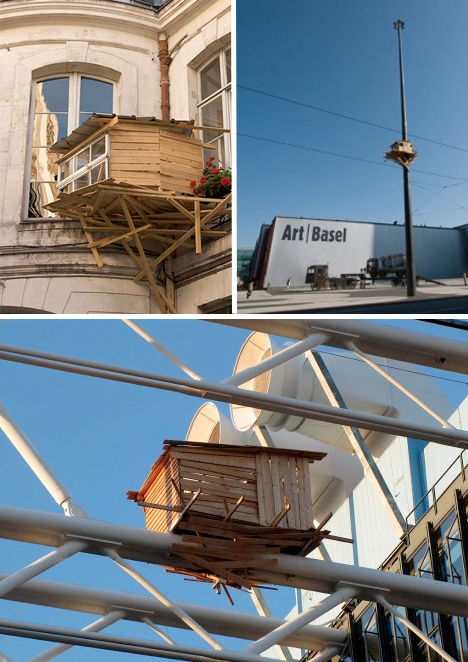
Tadashi Kawamata’s rustic pine tree houses are normally found where you would expect them – in trees (though sometimes in unexpected places, like New York City’s Madison Square Park.) But sometimes, they’re attached like man-made bird nest to urban locations, like lamp posts, bridge trusses, scaffolding and luxury apartment buildings.

Stone Villa  on Top of a Chinese Condo Tower
Parasitic-architecture-stone-mountain

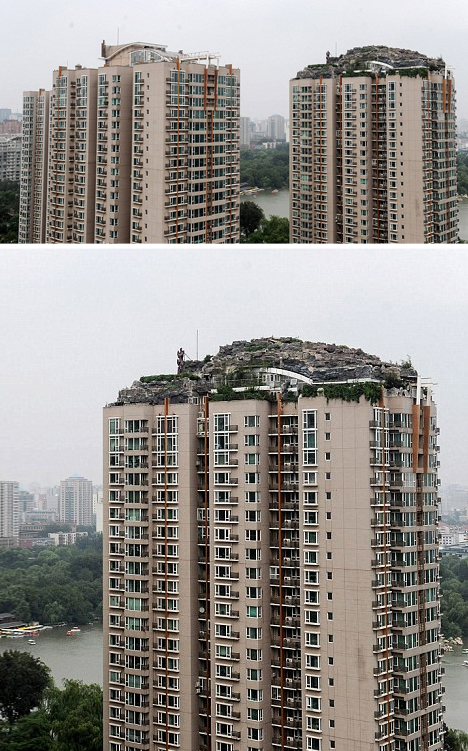
An eccentric Chinese man spent six years creating his very own mountain paradise – on top of a Beijing high-rise – illegally. It has everything you’d expect from a luxury residence including boulders, trees, gardens, winding paths, viewing platforms and pools, hauled up through the building to adorn his private penthouse retreat. Unsurprisingly, other residents in the 26-story building have complained about construction noise and even flooding. The Chinese government has ordered the professor to remove the 800-square-meter villa.

Prefab Parasite

Parasitic Architecture Calder

Empty vertical surfaces could become the basis of parasitic living spaces made out of prefab panels. The dwellings could be affixed to any wall or pylon strong enough to support them using a mountain plate. This particular design, by Lara Calder Architects, features paneling made of compressed bamboo and recycled paper. It measures about 400 square feet, and features an open-air rooftop terrace. A combination staircase and service shaft connecting the home to power, sewer and water is the only part touching the ground.

Excrescent Utopia: Parasite Architecture for the Homeless

Parasitic Architecture Homeless Utopia

British architecture graduate Milo Ayden De Luca envisions parasitic structures for the homeless that could cling to the sides of lamp posts . Made of cheap and readily available materials like pulleys, nylon and rope lines, the structures are translucent and nearly weightless.

Next Page:
Parasitic Architecture 15 Precariously Perched Structures

Share on Facebook


[ By Steph in Architecture & Cities & Urbanism. ]

[ WebUrbanist | Archives | Galleries | Privacy | TOS ]


WebUrbanist

 
Comments Off on Parasitic Architecture: 15 Precariously Perched Structures

Posted in Creativity