RSS
 

Archive for the ‘Creativity’ Category

Destroyed Cathedral: Rare Photos Offer Glimpse Into WWI

06 Sep

[ By Steph in Architecture & Public & Institutional. ]
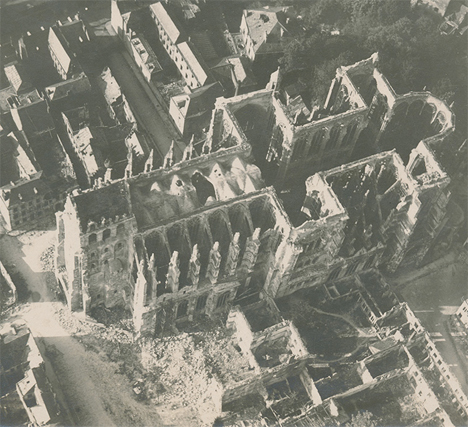
Destroyed Cathedral France WWI 1

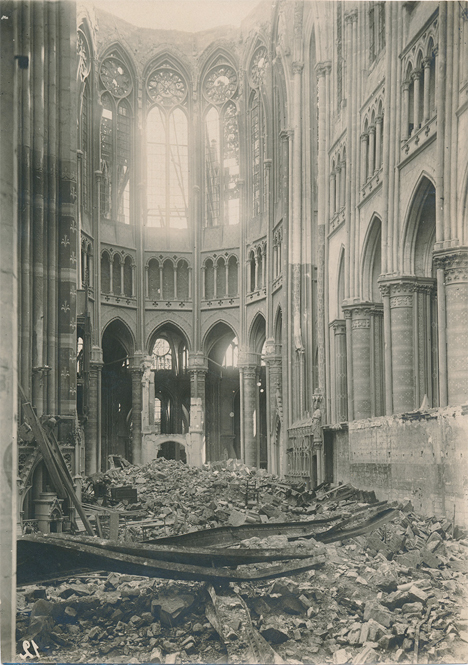
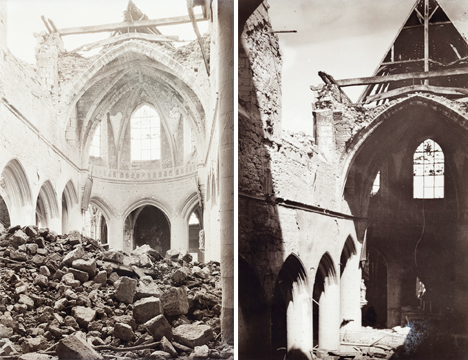
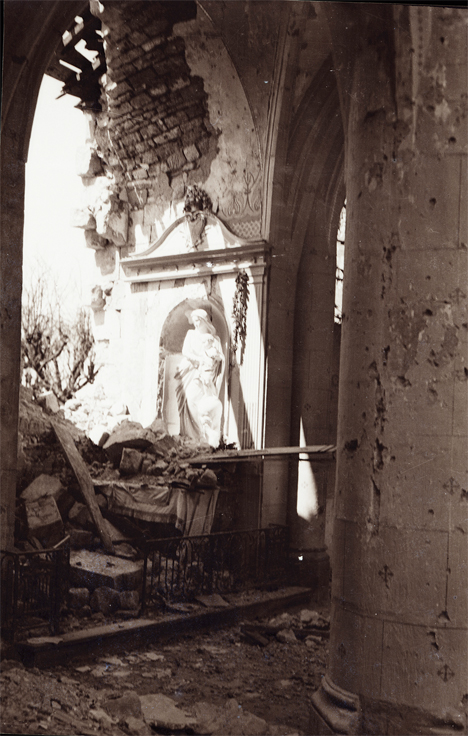
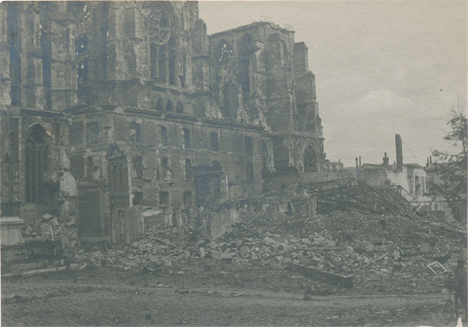
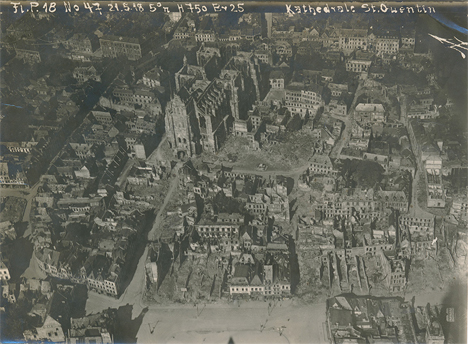
Seen from the eyes of a German officer, these dramatic photos depict the St. Quentin Cathedral in northern France, which was almost completely destroyed during World War I. They’re part of a collection of over a thousand photos, stereographs and negatives saved by Lt. Walter Koessler’s family and shared by his grandson on Tumblr and in a forthcoming Kickstarter-funded book.
Destroyed Cathedral France WWI 2
“Walter’s training as an architect drew him to photograph and sketch many buildings throughout the war,” writes Dean Putney, who has taken on the task of preserving and printing the photos. “Churches were a particular favorite, and with their roofs blown off by battle these were probably rare opportunities to capture their insides on the insensitive film of the time.”
Destroyed Cathedral France WWI 3

Destroyed Cathedral France WWI 4

The church was constructed over a period of nearly two hundred years, starting in the 12th century, and survived damage from both fire and invaders’ artillery several times prior to World War I. In 1916, a bomb dropped nearby blew out many of its stained glass windows, and in 1917, a fire destroyed everything within its walls, causing the vaulting of the central nave to collapse, and destroying parts of the flying buttresses.
Destroyed Cathedral France WWI 6

In 1918, the Germans almost succeeded in blowing the whole thing to dust. Having chased out the occupiers, French soldiers entered the cathedral to find that ninety-three holes had been drilled in the walls and pillars and filled with explosives. A German engineer captain was left behind to finish off the task, and stopped just in time. The church has since been restored.
Destroyed Cathedral France WWI 7

Koessler’s photos offer a unique glimpse not only into the German side of the war (as Putney points out, most surviving photos were taken by the Allies) but the personal viewpoint of a photographer who had been trained as an architect. See the whole series at the Walter Koessler Project.

Share on Facebook


[ By Steph in Architecture & Public & Institutional. ]

[ WebUrbanist | Archives | Galleries | Privacy | TOS ]


WebUrbanist

 
Comments Off on Destroyed Cathedral: Rare Photos Offer Glimpse Into WWI

Posted in Creativity


Curved Skyscraper Melts Cars, Starts Fires with Heat of Sun

06 Sep

[ By WebUrbanist in Architecture & Cities & Urbanism. ]

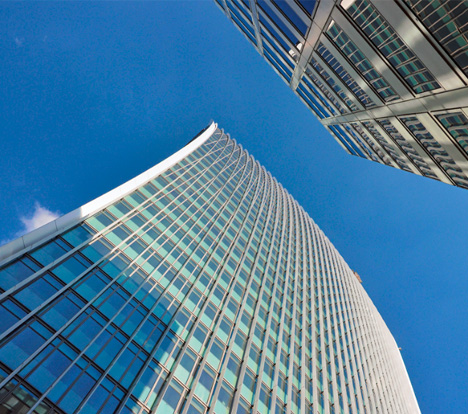
reflected light london skyscraper

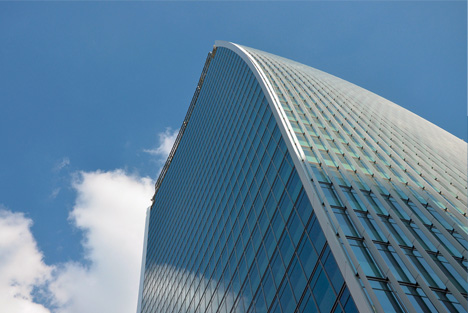
A nearly-complete London tower is being investigated thanks to reflected daylight that is dazzling (and sizzling) the neighborhood in extreme, surprising and undesirable ways. The structure is suspected as the source of myriad problems, from cooked car parts in adjacent vehicles (parked in its bright glare) to spontaneous fires in a nearby businesses (with carpets catching fire from the focused light).

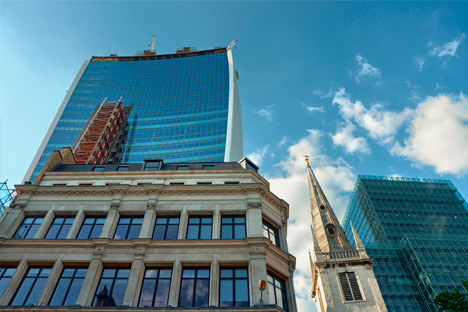
reflective skyscraper daylight

On the vehicular front, per Mirror News in the UK (images via [Duncan]): warped side panels, melting mirror casings and a burning smell in some cars all point to the proverbial finger at glare caused by the uniquely-shaped, 37-story structure known as the Walkie Talkie building still under construction. While the matter is studied, usage of parking spots that fall under the building’s reflected spots of sunlight has been suspended.

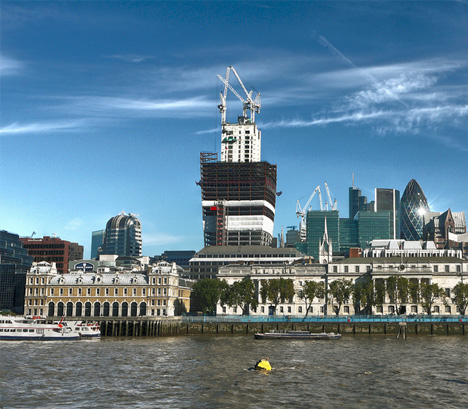
reflective architecture under construction

Meanwhile, local businesses report peeling and puckered paint and other forms of heat damage to their exteriors and interiors, including a carpet that spontaneously ignited, presumably due to the light rays reflected from above and focused through the facade glass storefront.

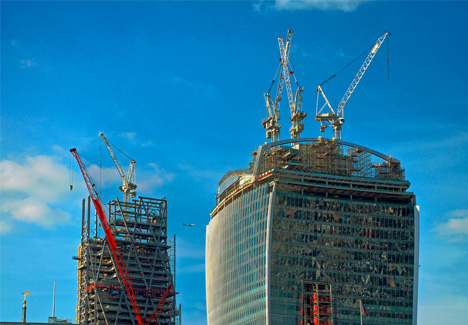
reflective tower building

As a temporary measure, the building developers are apparently doling out cash for repairs and preventative measures to affected individuals and businesses until a lasting solution can be found.

reflecive building shape curved

This almost-finished work of urban architecture has a 300 million dollar price tags, yet it remains unclear how this fundamentally problematic design issues can be addressed now that the skin has been installed. Thankfully, the damage should be nearly done for this year. As the sun drops in the sky over the next few weeks of fall, the phenomena should disappear … at least until next summer, that is, but at least it buys the developers a bit more time.

Share on Facebook


[ By WebUrbanist in Architecture & Cities & Urbanism. ]

[ WebUrbanist | Archives | Galleries | Privacy | TOS ]


WebUrbanist

 
Comments Off on Curved Skyscraper Melts Cars, Starts Fires with Heat of Sun

Posted in Creativity


Live Between Buildings: Narrow Micro-Homes Fill City Gaps

05 Sep

[ By WebUrbanist in Architecture & Houses & Residential. ]

narrow home competition entry

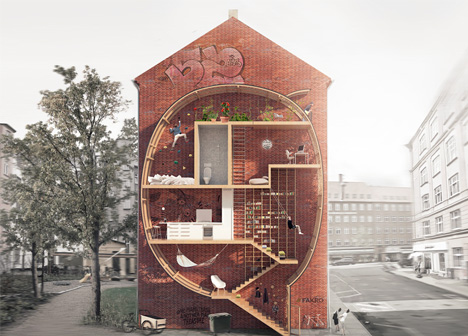
Playful yet thought-provoking, this project asks: what do we do with small leftover spaces in cities … particularly in urban areas where even a few square feet of real estate can cost a fortune?

narrow house competition winners

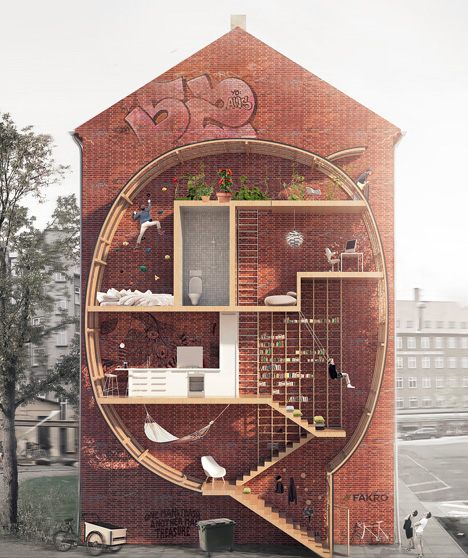
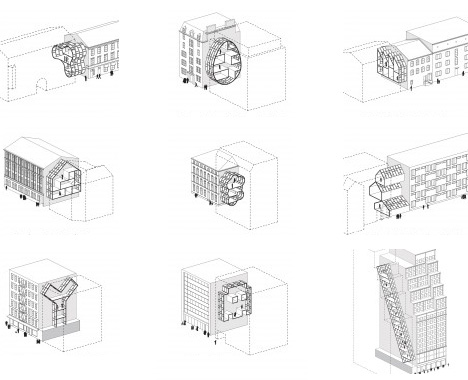
Live between Buildings by Ole Robin Storjohann and Mateusz Mastalski won first place in a Loft 2 competition held by FAKRO, which challenged contestants to rethink loft living and material efficiency without sacrificing light and space.

narrow interstitial house concept

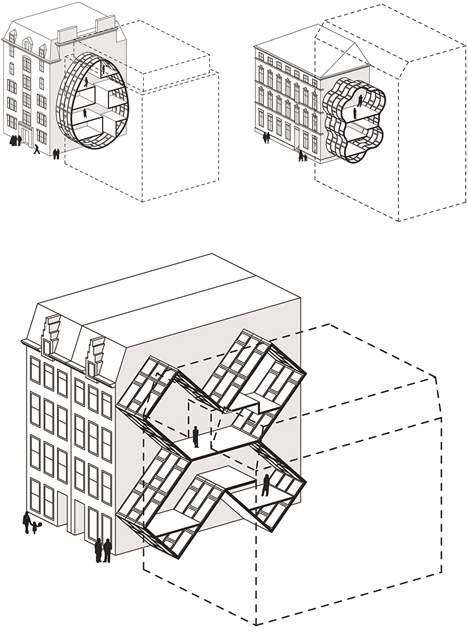
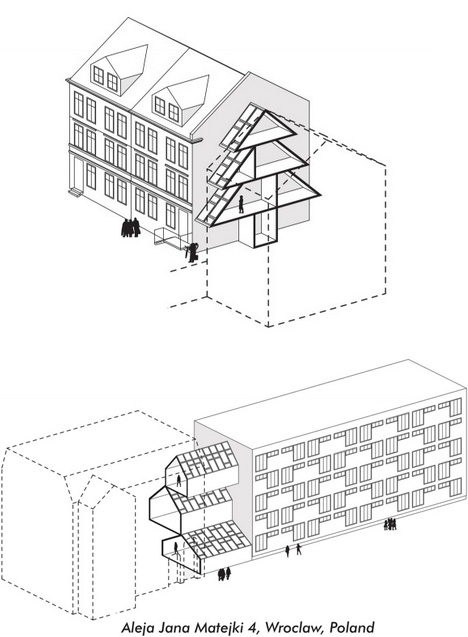
Their various prototype proposals have nearly no ground footprint, being instead suspended in part or entirely between existing structures. In testing the idea, they took actual buildings and voids, abstracted and simplified their forms, all to show how such interventions would work in major cities from New York and London to Amsterdam and Tokyo.

narrow home architectural entries

A wide selection of shapes suggests many possibilities using modular pieces, including half-serious and semi-practical suggestions, such as egg and X shapes, as well as outright silly ones, like a Christmas-tree home or cloud-bubble house, more intended just to illustrate the potential flexibility.

narrow home case studies

Out of a variety of compelling entries, just why did this pair win the award? “The Jury appreciated the way the basic idea – creating small infill-dwellings in-between existing buildings – has been worked out in extended research, thus providing models for various housing types in different cities. The plan can be realized entirely out of roof windows (with some technical adjustments) and offers an innovative idea for using empty spaces in urban fabric. The possibility of shapes is endless. The project was very beautifully drawn and communicated on a single sheet, the section describing both the architectural idea and the exciting occupation of the proposed building.””

Share on Facebook


[ By WebUrbanist in Architecture & Houses & Residential. ]

[ WebUrbanist | Archives | Galleries | Privacy | TOS ]


WebUrbanist

 
Comments Off on Live Between Buildings: Narrow Micro-Homes Fill City Gaps

Posted in Creativity


Zaha Hadid’s Apartment Block Overlooking NYC High Line

05 Sep

[ By Steph in Architecture & Houses & Residential. ]

Zaha Hadid High Line Apartments NYC 1

A glittering glass apartment block with volumes flowing into each other in dynamic stacked arrangements will be architect Zaha Hadid’s first building in New York City. Set to overlook the second section of the High Line, the city’s elevated park, the 11-story sculpted glass and steel development aims to draw in luxury buyers with a double-height lobby, private courtyards, a communal garden and residences measuring up to 5,500 square feet.

Zaha Hadid NYC High Line Apartments 2

The mid-rise apartment block will feature approximately 37 apartments, each with its own private terrace, 11-foot ceilings and state-of-the-art features. Located in Chelsea at 520 West 28th Street, the building will also offer a large roof terrace and an indoor pool and spa.

Zaha Hadid NYC High LIne Apartments 3
“Our design is an integration of volumes that flow into each other and, following a coherent formal language, create the sensibility of the building’s overall ensemble,” says Hadid. “With an arrangement that reinvents the spatial experience, each residence will have its own distinctive identity, offering multiple perspectives and exciting views of the neighborhood.”

Zaha Hadid NYC High Line Apartments 4

The creation of the High Line, which was formerly an abandoned section of elevated railway, has spurred a rash of new economic and real estate development in areas of the city that had slumped a bit. According to The New York Times, the High Line as generated $ 2 billion in private investment, including a number of other deluxe apartment buildings, art galleries, restaurants and boutiques.

Share on Facebook


[ By Steph in Architecture & Houses & Residential. ]

[ WebUrbanist | Archives | Galleries | Privacy | TOS ]


WebUrbanist

 
Comments Off on Zaha Hadid’s Apartment Block Overlooking NYC High Line

Posted in Creativity


Wearable Tech of the (Distant) Future: 13 Sci-Fi Suits

04 Sep

[ By Steph in Art & Drawing & Digital. ]

Imaginary Wearable Tech Sci Fi Suits Main

We’re probably a century or two away from working mechanized exoskeletons modeled on the movements of crickets, but the great thing about digital concept art is there are no limits other than those of the creators’ imaginations. These gadget-covered robotic suits and helmets for the humans of the future may not be coming to stores any time soon, but it’s easy to imagine them playing major roles in movies and video games. In fact, you might just find yourself making up stories about what each one can do as you view them.

Cricket Exo-Suit by Matthew Burke

Imaginary Wearable Tech Cricket Suit

Artist Matthew Burke envisions a combination exoskeleton/vehicle inspired by a cricket in this 3DStudio Max rendering finished in Photoshop.

Combat Mech Suit by Mike Andrew Nash

Imaginary Wearable Tech Mech Suit

Imaginary Wearable Tech Mech Suit 2

This incredibly detailed CGI rendering by Mike Andrew Nash looks so real, it’s hard to believe it’s not a physical model. It’s a combat mech warrior suit the artist calls 21-A BW, or Terran Infiltration Unit.

Diving Suit by Cat-Meff

Imaginary Wearable Tech Diving Suit

Artist Cat-Meff envisions a diving suit that would turn any human into a sort of mechanized dolphin/mer-creature. “This is probably one of the coolest ways to spend your holidays in 2025,” the artist writes.

Hazard Suit by Lucas Hardi

Imaginary Wearable Tech Hazard Suit

“The character is a high-ranking official wearing a suit equipped for hot, cold and bad air,” says artist Lucas Hardi of this 3D hardsurface modeling exercise.

Next Page:
Wearable Tech Of The Distant Future 13 Sci Fi Suits

Share on Facebook


[ By Steph in Art & Drawing & Digital. ]

[ WebUrbanist | Archives | Galleries | Privacy | TOS ]


WebUrbanist

 
Comments Off on Wearable Tech of the (Distant) Future: 13 Sci-Fi Suits

Posted in Creativity


Swiss-Army Bathroom: Spine-Inspired Space-Saving Design

04 Sep

[ By WebUrbanist in Design & Fixtures & Interiors. ]

space saving bathroom design

Like a giant-sized Swiss Army knife, this narrow column unfolds to reveal everything your bathroom could need – a NASA-worthy, space-age modular design idea.

spiral unfolding bathroom design

A water-transmitting ‘spinal cord’ connects independently-rotating ‘vertabrae’, each of which includes a core function, from shower heads and cisterns above to storage in the middle and basins and toilets below.

space saver spinal bathroom

The combined system mounts to the ceiling and floor to form single set of pivot points, providing stability for the spiraling functions in between and a single simple pair of inflows and outflows.

space bathroom design specs


From Design Odyssey: “The Vertebrae was designed by Paul Hernon and it basically incorporates a toilet, a sink, a water cistern and two showers into an 8 foot tall compact steel column that can be folded up when not in use.

space rotating modular bathroom

As for the intention: “It was designed for those living in a small cramped apartment who might not have the room for a bathroom with all the amenities they would like. Each module is hand crafted from 3mm aluminum with polished hand welded seams.”

Share on Facebook


[ By WebUrbanist in Design & Fixtures & Interiors. ]

[ WebUrbanist | Archives | Galleries | Privacy | TOS ]


WebUrbanist

 
Comments Off on Swiss-Army Bathroom: Spine-Inspired Space-Saving Design

Posted in Creativity


Indoor Skydiving Inside Concrete Silos & Cargo Containers

03 Sep

[ By WebUrbanist in Architecture & Offices & Commercial. ]

converted concrete skydiving center

Take your pick between a pair of once-abandoned silos: one lets you explore nearly 100 vertical feet of underwater space with hidden caverns, while the other suspends you in virtual free fall, riding air currents in a cylindrical wind tunnel.

converted cargo shipping containers

While those two primary volumes form the core experience of this conversion project, a series of shipping containers (stacked ten stories high) surrounding these structures will provide support and circulation spaces. Warsaw studio Moko Architects aims to start construction in just over one year on this ambitious project, set in the city’s industrial district.

converted concerete silo section

The modified cargo containers additions are designed to contain offices, shops, a cafe and hostel as well training rooms or sports outfitters for visitors. These stacked  attachments will be form a dynamic array and be connected via staircases spanning between the central cylinders. As they slip past one another in space, outdoors decks are formed organically as well on various roof levels within the vertical design configuration.

Next Page:
Indoor Skydiving Inside Concrete Silos Cargo Containers

Share on Facebook


[ By WebUrbanist in Architecture & Offices & Commercial. ]

[ WebUrbanist | Archives | Galleries | Privacy | TOS ]


WebUrbanist

 
Comments Off on Indoor Skydiving Inside Concrete Silos & Cargo Containers

Posted in Creativity


Macro to Micro: Intricate Paper Cut Art Inspired by Nature

03 Sep

[ By Steph in Art & Sculpture & Craft. ]

Rogan Paper Cut Art 1

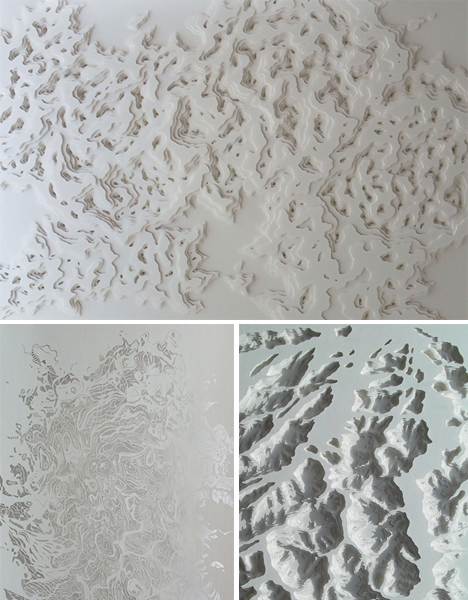
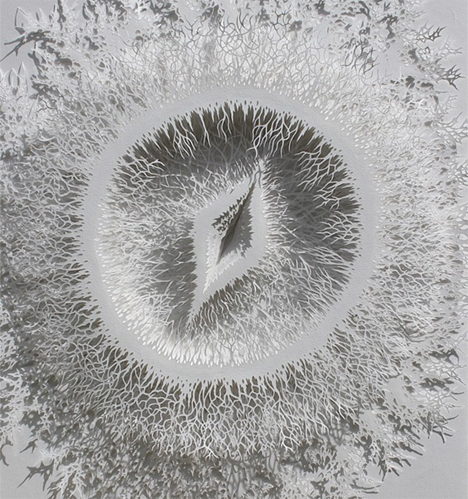
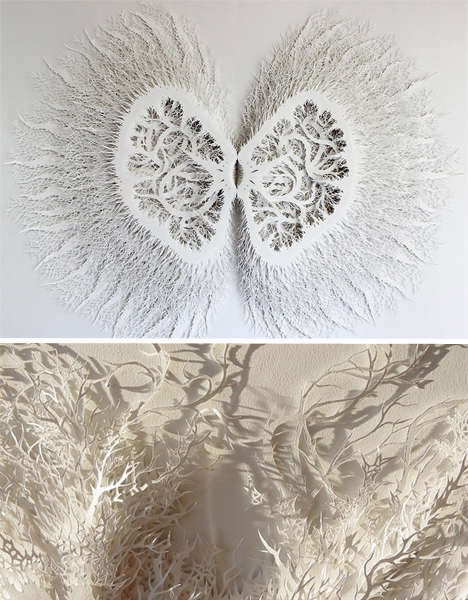
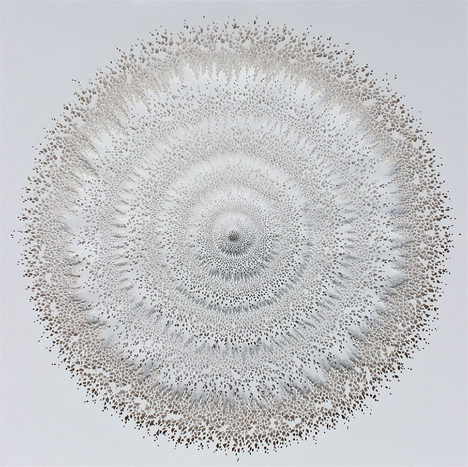
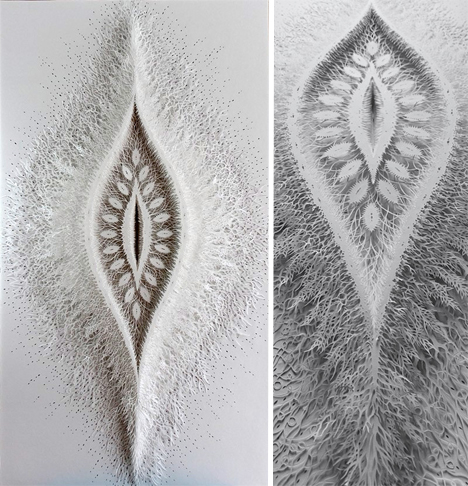
What starts as a scientific study takes on a life of its own, guided only by the imagination of artist Rogan Brown as he transforms a sheet of paper into a masterful sculpture with thousands of tiny incisions. Rogan takes his inspiration from natural organic forms, mineral and vegetal, ranging from microscopic individual cells to large-scale geological formations.

Rogan Paper Cut Art 7

Each of these sculptures is incredibly time-consuming, with a single work sometimes taking more than five months to complete. Rogan starts with a pattern that catches his eye, carefully observing his chosen inspiration and creating ‘scientific’ preparatory drawings. But then, as he states, “everything has to be refracted through the prism of the imagination, estranged and in some way transformed.”

Rogan Paper Cut Art 3

Rogan Paper Cut Art 2

The artist sees the very long, arduous process of not only allowing his imagination to take over the work in a natural way but actually making those precision cuts in paper as an essential element of the work. “The finished artifact is really only the ghostly fossilized vestige of this slow, long process of realization.”

Rogan Paper Cut Art 4

Rogan Paper Cut Art 5

The complexity of Rogan’s work calls to mind the papercut art of Tomoko Shioyasu, whose own nature-inspired paper tapestries based on the structure of cells can measure as large as twelve feet high and eight feed wide.

Share on Facebook


[ By Steph in Art & Sculpture & Craft. ]

[ WebUrbanist | Archives | Galleries | Privacy | TOS ]



WebUrbanist

 
Comments Off on Macro to Micro: Intricate Paper Cut Art Inspired by Nature

Posted in Creativity


Leisure in the Sky: 13 Elevated Railway + Rooftop Parks

02 Sep

[ By Steph in Architecture & Cities & Urbanism. ]

Elevated Parks Main

In cities where highways and high-rises have taken up virtually every square foot of real estate there is to be had, lush parks, pedestrian walkways and bike paths can be hard to come by. That’s why, in many cities, supporters of public green space are starting to look up, and they’re reclaiming and rehabilitating abandoned infrastructure in the process. New York City’s The High Line has inspired cities across the world to consider disused railways and viaducts as elevated parks, and rooftop recreation spots are increasing in popularity, too.

The High Line, New York City

Elevated Parks High Line NYC

A rail track that was decommissioned in 1980, standing in disrepair as an eyesore for decades, is now one of New York City’s most popular attractions after its transformation into an elevated park. The High Line is a one-mile section of the former New York Central Railroad spur called The West Side, running along the lower west side of Manhattan, offering views of the city and the Hudson River along with walkways, naturalist plantings, and spots to rest. Its revitalization has spurred development in neighborhoods that lie alongside it.

Namba Parks, Osaka

Elevated Parks Osaka

Eight levels of sloping parks full of trees, cliffs, boulders, lawns, streams, waterfalls and outdoor terraces gradually wind up the rooftop of a lifestyle center adjacent to a 30-story tower in Osaka, Japan. Namba Parks provides greenery and recreation space in a city full of concrete, where nature can be difficult to access. Spaces carved from this rooftop space down to the bottom level of the building create artificial ‘canyons’ for natural lighting.

Promenade Plantee, Paris

Elevated Parks Paris

Promenade Plantee is the elevated park that started it all, predating the High Line by nearly twenty years. It was built along Paris’ elevated Viaduct des Arts, which supported the Vincennes Railway from 1859 to 1969. The arcades under the viaduct were converted into art galleries and artisan workshops.

QueensWay Park on the Long Island Railroad, New York

Elevated Parks Queensway

The QueensWay project has been a controversial proposal, because although additional public green space would be a great thing for the residents of the Queens borough of New York City, many people feel that restoring the rail line to underserved areas would be even more beneficial. Nonetheless, the plan is moving forward, with a 3.5-mile section of decommissioned railway set to become a park.

Next Page:
Leisure In The Sky 13 Railway Rooftop Parks

Share on Facebook


[ By Steph in Architecture & Cities & Urbanism. ]

[ WebUrbanist | Archives | Galleries | Privacy | TOS ]


WebUrbanist

 
Comments Off on Leisure in the Sky: 13 Elevated Railway + Rooftop Parks

Posted in Creativity


Scanning The Skyline: 10 Bizarre Barcode Buildings

01 Sep

[ By Steve in Architecture & Cities & Urbanism. ]

barcode buildings
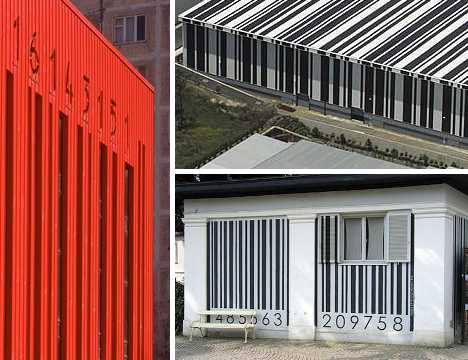
You’re gonna need a bigger scanner. These 10 larger than life Universal Product Barcode emblazoned buildings epitomize the digitization of modern society.

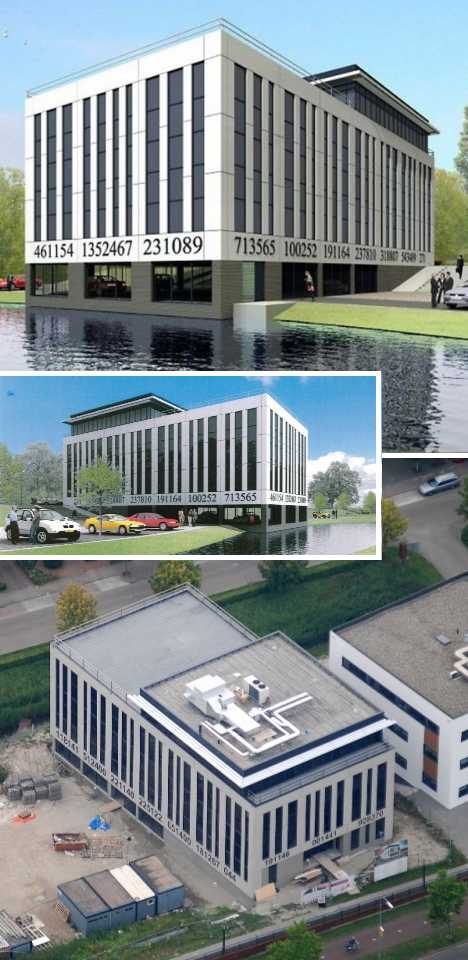
Middelburg, Netherlands, by Hercuton

Barcode Building Middelburg Netherlands Hercuton(images via: Bouwgroep Peters BV)

The plainly-named Barcode Building is one of the newest (completed 2011) large structures in the very old city of Middelburg, the Netherlands. Architects of the Dutch design & build organization Hercuton were charged by their client with creating a building that not only looked modern, but both the layout and infrastructure had to reflect today’s environmentally-friendly aesthetic.

Barcode Building Middelburg Netherlands Hercuton(image via: Henk Kosters)

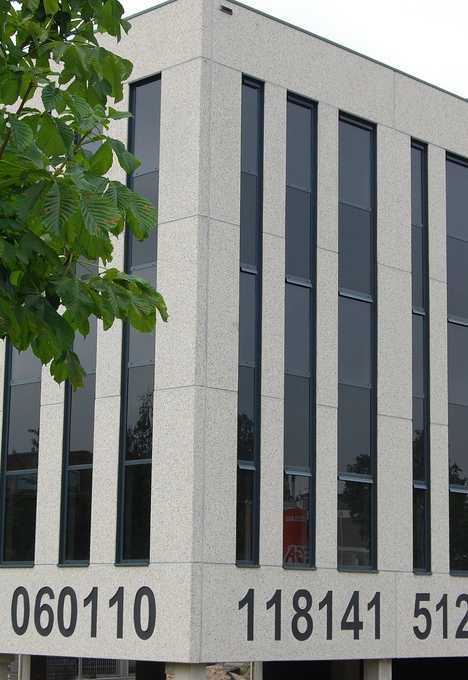
The white walls of the Barcode Building are broken up by vertical strips of tinted window glass that extend from the top of the four-story structure down to the open parking garage beneath the building at street level. The use of random six-digit numbers beneath each stack of three windows reinforces the illusion of a giant barcode while adding visual interest to the structure as a whole.

Shtrikh Kod Building, St. Petersburg, Russia

Shtrikh Kod Building barcode St. Petersburg Russia(images via: Eikongraphia)

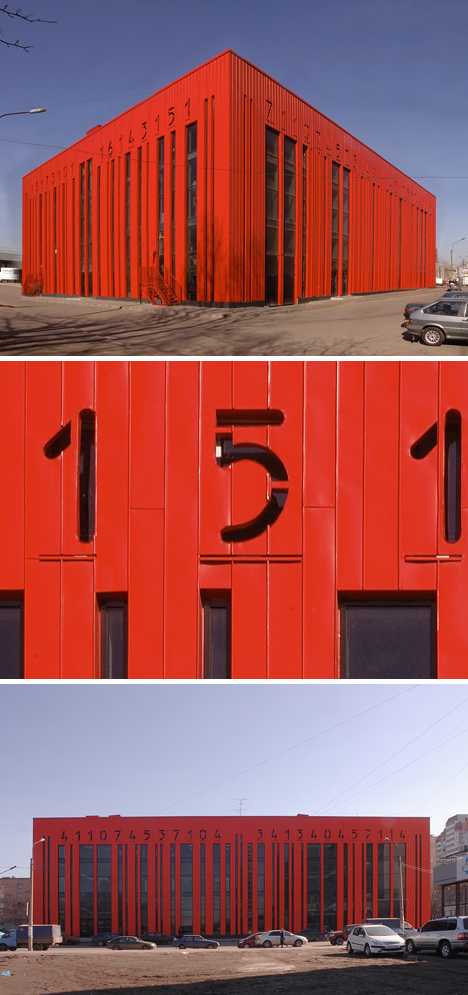
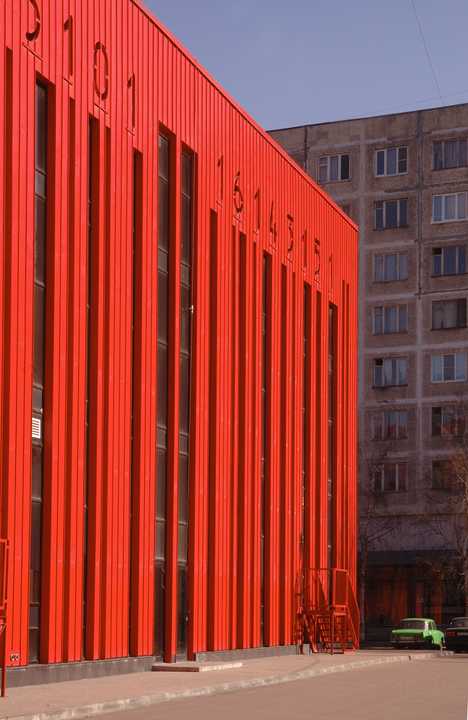
Shtrikh Kod means “Barcode Building” in Russian, which is appropriate since there’s really no other way to describe it. The edifice, located in historic St. Petersburg, was designed by Vitruvius & Sons Studio and it was completed in 2007.

Shtrikh Kod Building barcode St. Petersburg Russia(image via: Eikongraphia)

Kudos to photographer Alexey Naroditsky for capturing the stark yet striking exterior of the Barcode Building. It should be noted that one of the commenters at the Eikongraphia website where Naroditsky’s images are on display opined that “The facade’s hue is close to that of the red 633nm laser light commonly used in bar code scanners.” Coincidence?

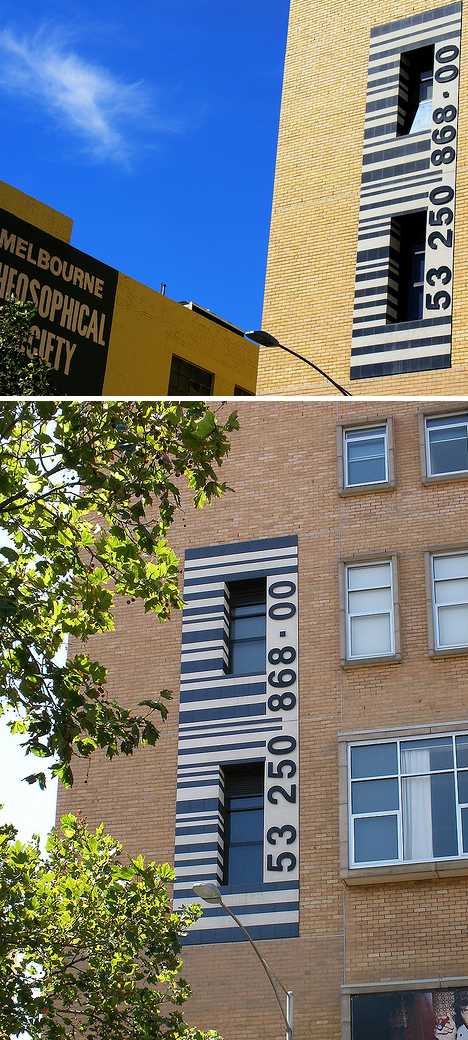
Melbourne Theosophical Society, Melbourne, Australia

Melbourne Theosophical Society bookshop barcode (images via: Jodi and Bo Virkelyst Jensen)

The Melbourne Theosophical Society Bookshop & Library at 126 Russell Street appears much like any other mid-century yellow brick building except for one thing… an odd inset space on the facade that holds a barcode! The roughly two-story tall barcode encompasses a pair of windows and would seem to be a later addition to the building. Why is it there and what does it mean? That’s a rather theosophical question best left for others to wrestle with.

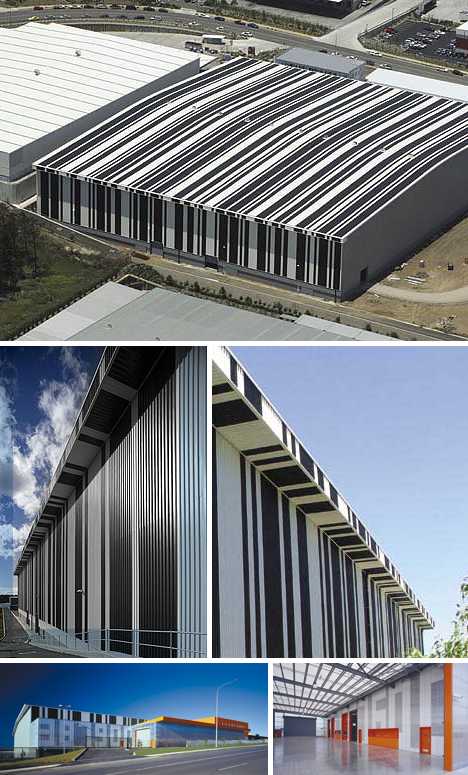
Recall Information Centre, Greystanes, New South Wales, Australia

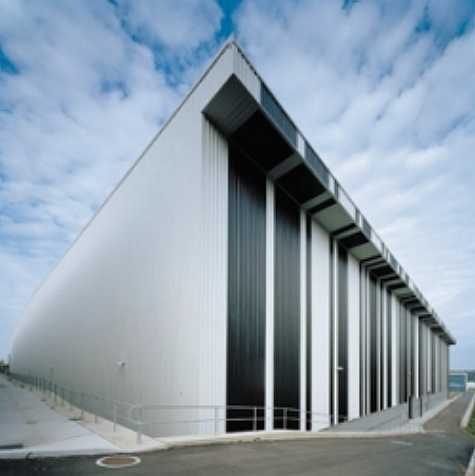
Recall Information centre warehouse Sydney Australia barcode (images via: Lysaght, Blue Scope Steel and Specifier)

Staying in the antipodes for the moment, we present an uncharacteristically lively warehouse designed by Thierry Lacoste from Lacoste + Stevenson Architects. Built for the Recall company to store nearly four and a half million archive boxes of corporate records, the building’s exterior is made from 21,000 square meters od steel cladding sourced from BlueScope Lysaght.

Recall Information Centre Sydney barcode building(image via: Specifier)

“Barcodes are at the center of everything which Recall does,” explains Thierry Lacoste. “That was the first consideration, then there was the challenge of how to handle a very big wall area. We decided on the barcode theme to break up its visual impact then worked on a couple of ideas before we finally specified a pattern which is actually Recall’s Australian Business Number as a barcode.” Recall operates 250 state-of-the-art information centers around the world but only one sports the Greystanes center’s wild barcode exterior graphics.

Next Page:
Scanning The Skyline 10 Bizarre Barcode Buildings

Share on Facebook


[ By Steve in Architecture & Cities & Urbanism. ]

[ WebUrbanist | Archives | Galleries | Privacy | TOS ]


WebUrbanist

 
Comments Off on Scanning The Skyline: 10 Bizarre Barcode Buildings

Posted in Creativity