RSS
 

Archive for the ‘Creativity’ Category

Nothin’ But Net: 12 Slam Dunk Artistic Basketball Court Designs

03 Jul

[ By SA Rogers in Design & Fixtures & Interiors. ]
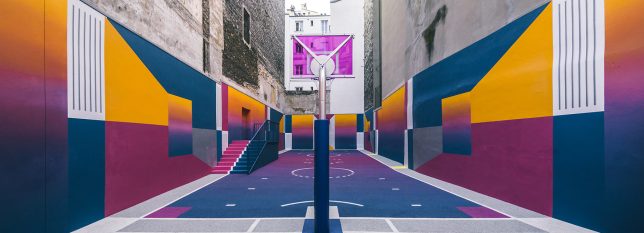
Way cooler than your standard basketball court, these custom-designed settings and hoops turn the sport into something like an interactive art installation in which the players ‘perform’ in more ways than one. Outdoor courts are painted in vivid hues or plunked on rooftops, hoops are reinvented in stained glass or set within the crashing waves of the ocean, and court lines light up and transform.

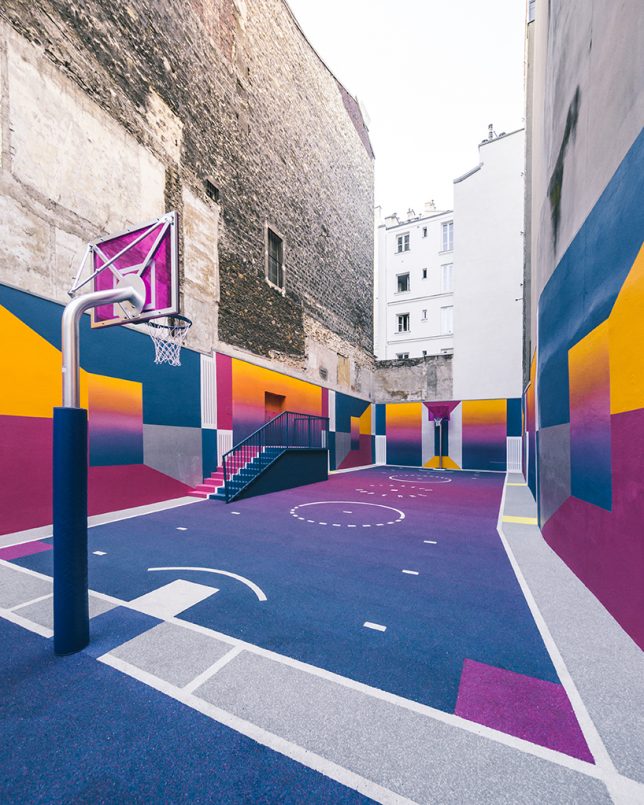
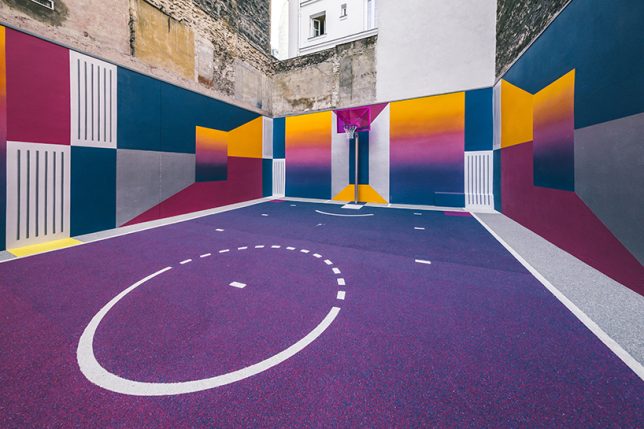
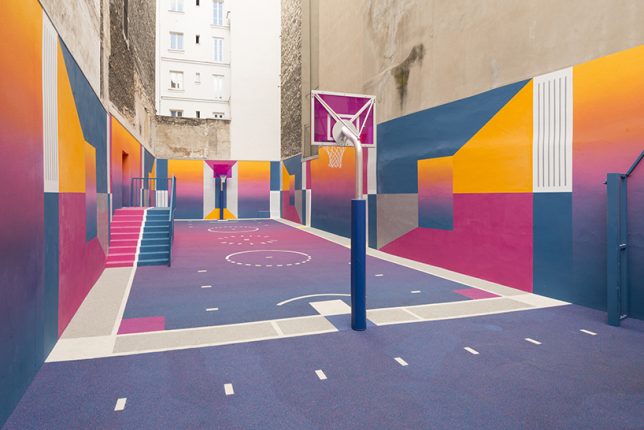
Pigalle Basketball Court in Paris by Pigalle, Ill-Studio and NIKE
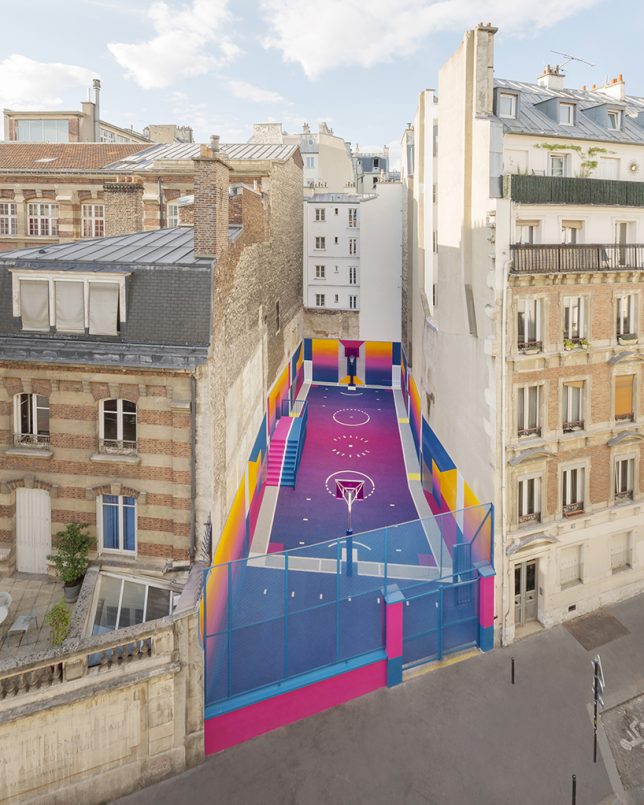
French fashion brand Pigalle teamed up with Ill-Studio and NIKE to paint a stunning sunset-hued basketball court set between two apartment buildings in Paris. Gradients of deep blue, fuchsia, pink, orange and yellow creep up the walls of the three surrounding structures and out to the sidewalk to celebrate the release of Pigalle’s latest collection with NIKElab.

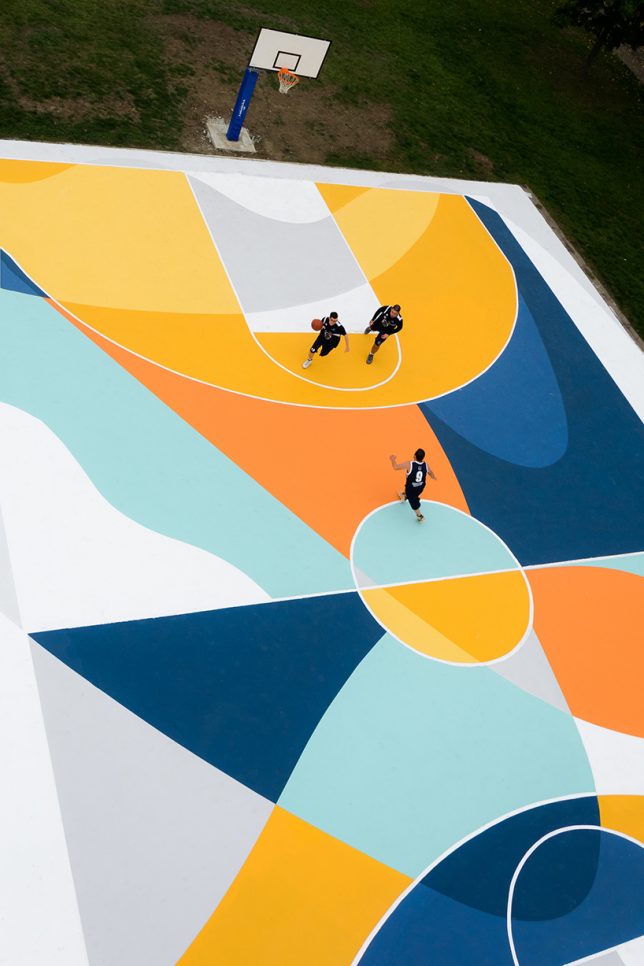
Carlo Carrá Park in Alexandria, Italy by Gue
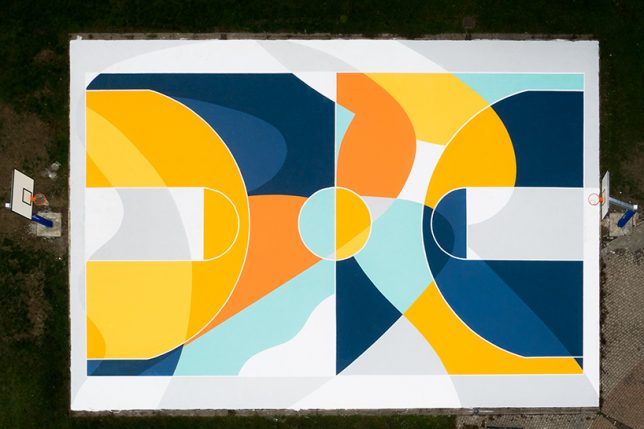
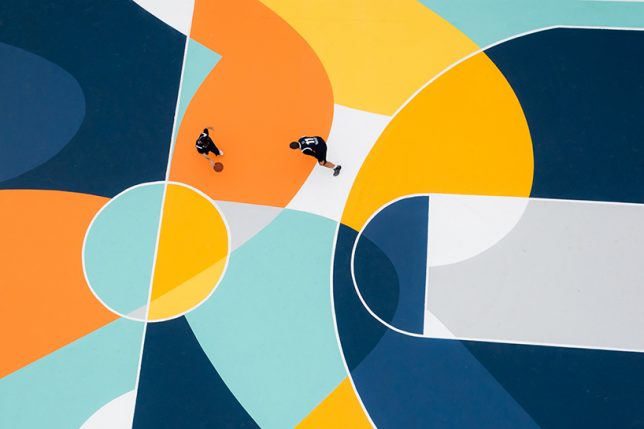
The muralist known as ‘Gue’ gave the basketball court at Carlo Carrá Park in Alexandria, Italy a bright makeover as part of an urban regeneration and redevelopment effort. “The idea was born from the possibility of being able to cross the field’s space,” says the artist, “and to stay inside the composition and change the perception of shapes through the game’s movement.”

House of Mamba Basketball Court by NIKE
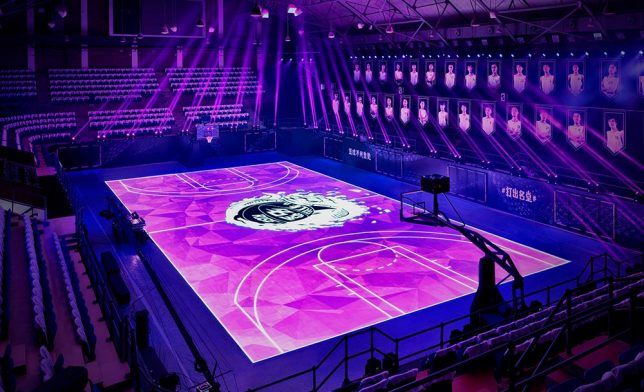
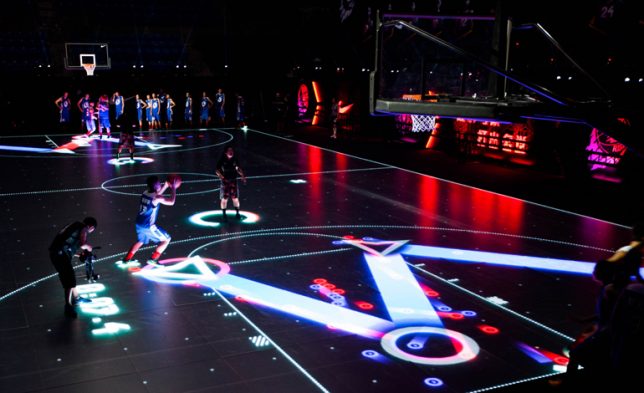
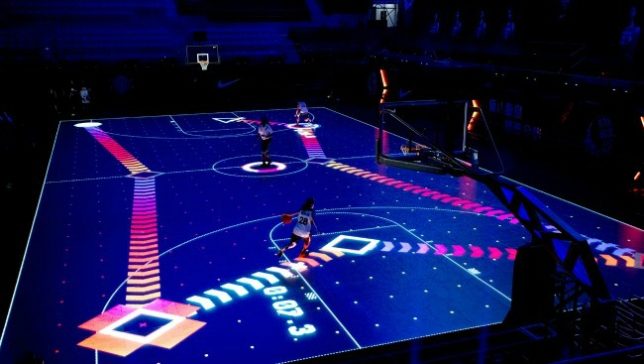
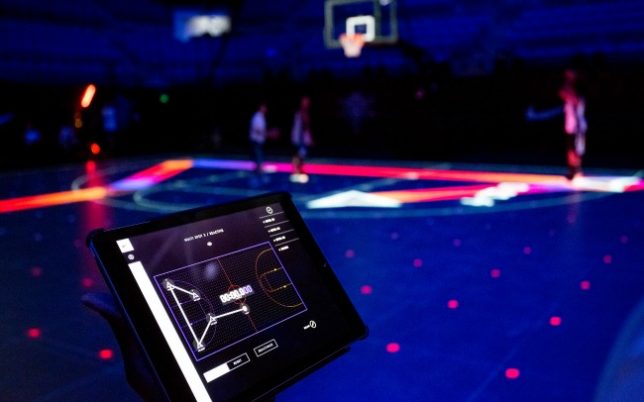
Leave it to NIKE to create a totally functional basketball court that doubles as a work of modern installation art. The brand teamed up with AKQA to develop a full-sized LED court for the NIKE RISE basketball tour taking place across China, utilizing motion-tracking and reactive LED visualization to lead players through drills based on Kobe Bryant’s training. Then, in 2015, they completed ‘Rise 2.0,’ a second version of the court with LeBron James.

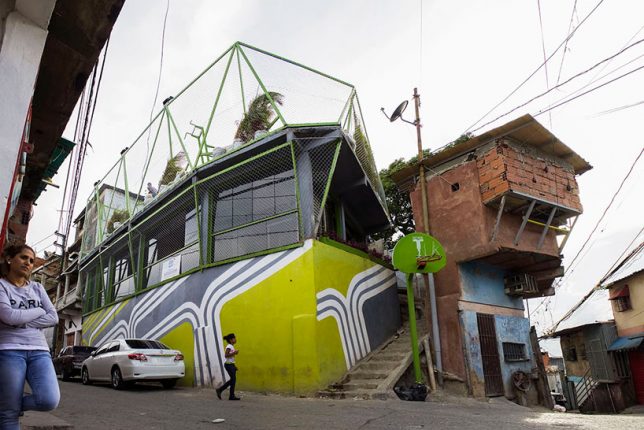
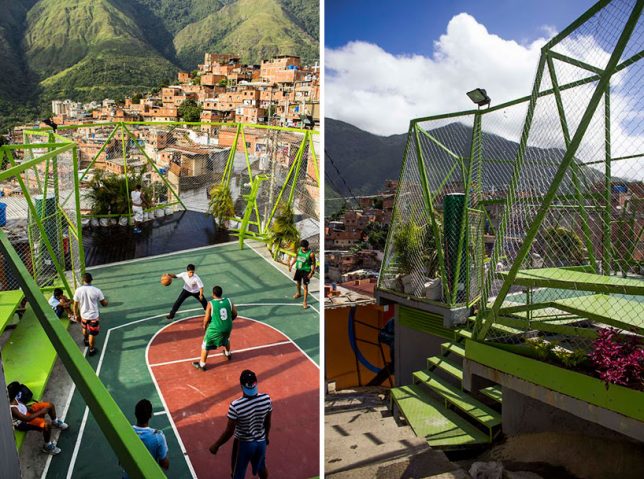
Rooftop Basketball Court in Venezuela by PICO Estudio
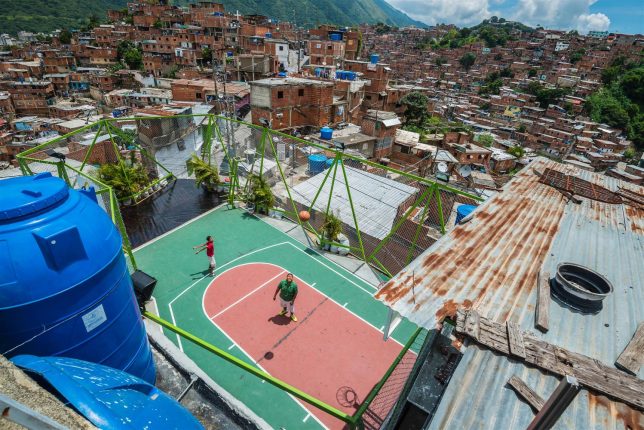
Design collective PICO estudio teamed up with local and international firms as well as volunteers and community members to transform a self-built house that was once a drug trafficking venue in Caracas, Venezuela into a valuable community space hosting a recording studio, computer area, waiting area, kitchen and an incredible rooftop basketball court retrofitted with vibrant green steel framing and chain-link fencing for safety.

Next Page – Click Below to Read More:
Nothin But Net 12 Slam Dunk Artistic Basketball Court Designs

Share on Facebook


[ By SA Rogers in Design & Fixtures & Interiors. ]

[ WebUrbanist | Archives | Galleries | Privacy | TOS ]


WebUrbanist

 
Comments Off on Nothin’ But Net: 12 Slam Dunk Artistic Basketball Court Designs

Posted in Creativity


Like A Rock Star: 12 Iconic Movie Corvettes

03 Jul

[ By Steve in Culture & History & Travel. ]

The Chevrolet Corvette’s long list of silver screen starring roles turned America’s first mass-produced sports car into an automotive pop culture icon.

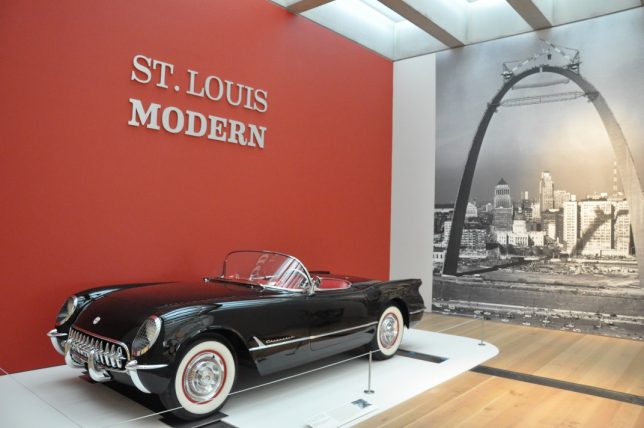
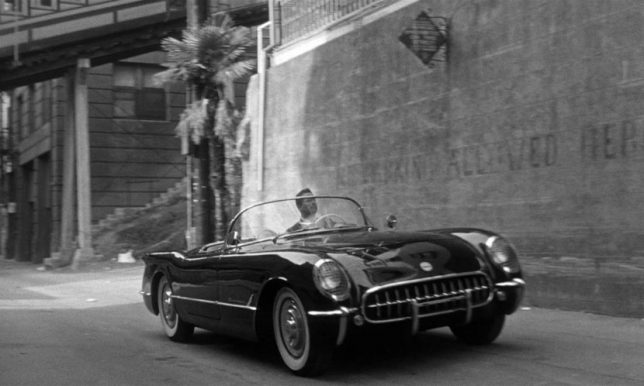
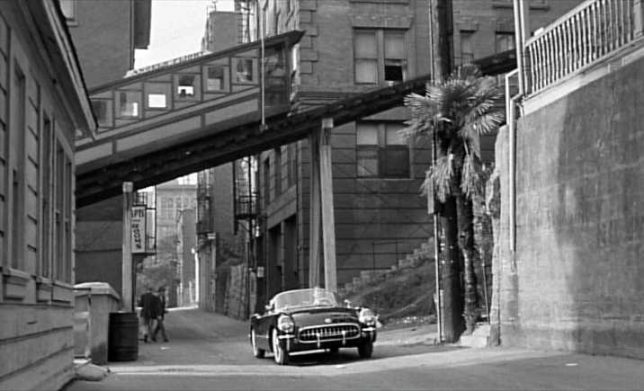
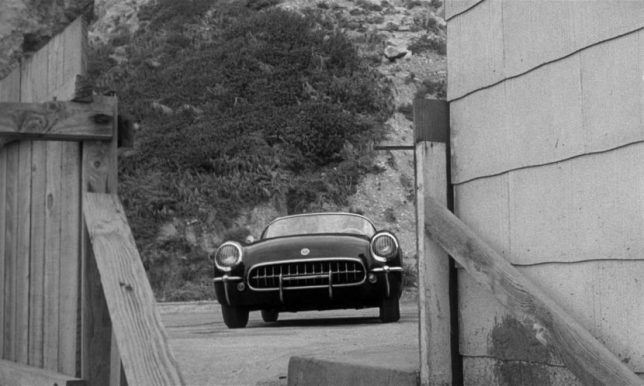
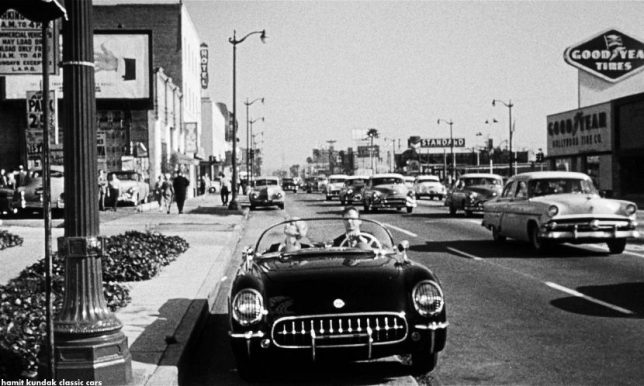
One of the Corvette‘s first film appearances was in the 1955 film noir classic Kiss Me Deadly. Directed by Robert Aldrich, the movie starred Ralph Meeker as Mickey Spillane’s hard-boiled private investigator Mike Hammer. The latter roamed the mean streets of Los Angeles in his 1954 Corvette, one of only 3,640 manufactured that year and one of only FOUR painted black.

Hammer’s black ‘vette may have looked cool but performance was anything but hot due to the pedestrian Stovebolt Six engine under its fiberglass hood. GM introduced a V8 for 1955 but limited model year production to just 700 in order to move the rest of the slow-selling ’54s. Even so, Hammer’s sleek (for the times) ride definitely added badly-needed panache to a niche model whose future was very much in doubt.

True Lies – 1959 Corvette

True Lies, a 1994 action-adventure-comedy starring Arnold Schwarzenegger, Jamie Lee Curtis, Tom Arnold, Tia Carrere, Bill Paxton, Eliza Dushku, and even Charlton Heston has aged rather well. Ditto for the red 1959 Corvette driven by Paxton (playing sleazy used car salesmen Simon) as he regales AH-nold on his time-tested seduction technique: “Let’s face it, Harry, the ‘Vette gets ’em wet.”

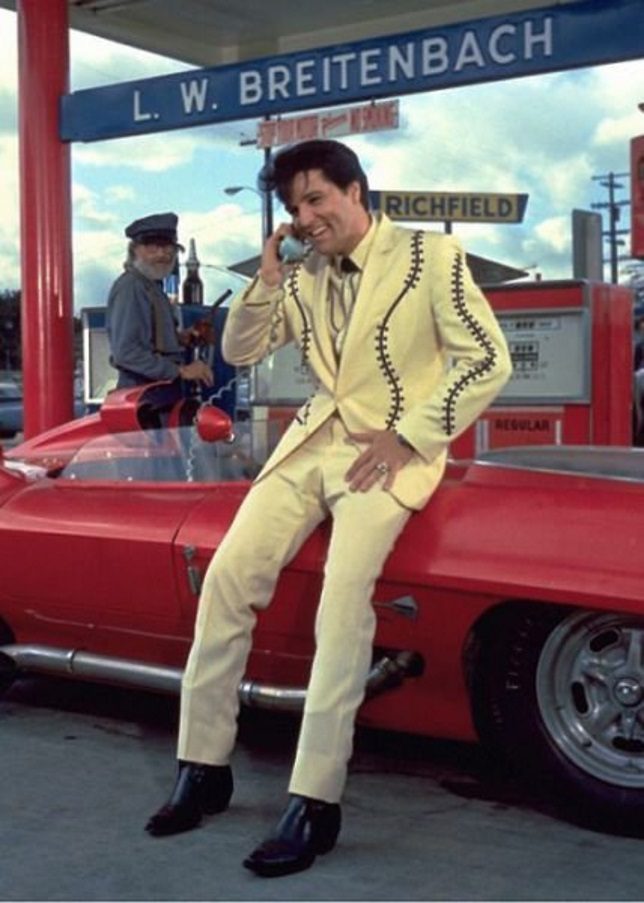
Clambake – 1959 Corvette XP-87 Stingray Racer

“Hey buddy, where’s the gas cap on this thing?” Built in 1959 “to test handling ease and performance,” the Corvette XP-87 racer won an SCCA National Championship in 1960. It was then modified with the addition of a passenger seat and made the rounds of the auto show circuit.

The XP-87 bowed out in grand style, appearing in the 1967 film Clambake as the private car of Elvis Presley’s oil tycoon character. Thank you, XP-87, thank you very much.

Heavy Metal – 1960 Corvette

“You can hedge your bet on a clean Corvette”… Heavy Metal – the 1981 animated sci-fi fantasy film produced by Ivan Reitman and inspired by the eponymous graphic magazine, featured a 1960 Corvette but if you arrived a few minutes late to the movie theater, you probably missed it.

Here’s a link to the ‘vette’s impressive entrance (dude totally sticks the landing!) in which it literally brings evil to the world in the form of the glowing green loc-nar. Mustang owners most definitely approve.

Next Page – Click Below to Read More:
Like A Rock Star 12 Iconic Movie Corvettes

Share on Facebook


[ By Steve in Culture & History & Travel. ]

[ WebUrbanist | Archives | Galleries | Privacy | TOS ]

WebUrbanist

 
Comments Off on Like A Rock Star: 12 Iconic Movie Corvettes

Posted in Creativity


Rebuilding Memories: Meticulous Miniatures by Iraqi Immigrant Ali Alamedy

01 Jul

[ By SA Rogers in Art & Sculpture & Craft. ]

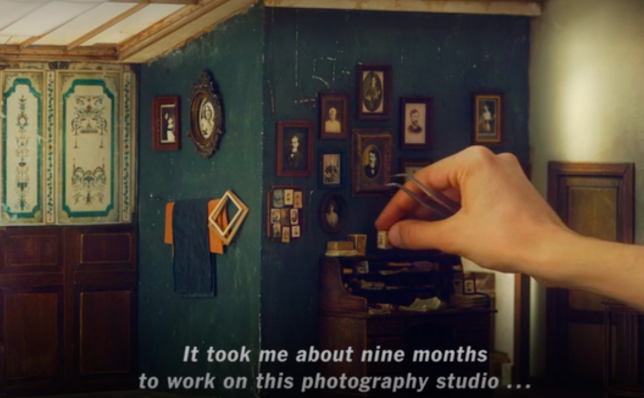
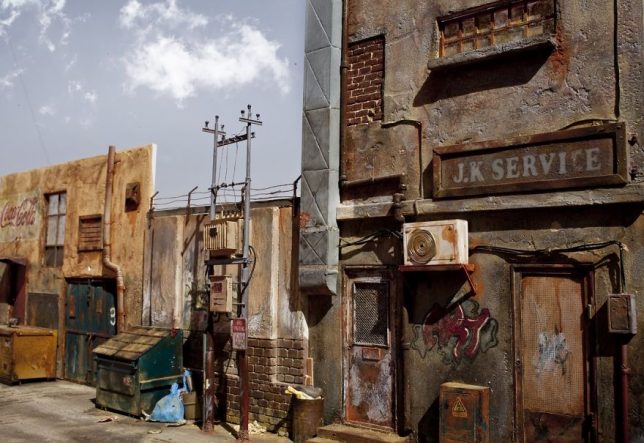
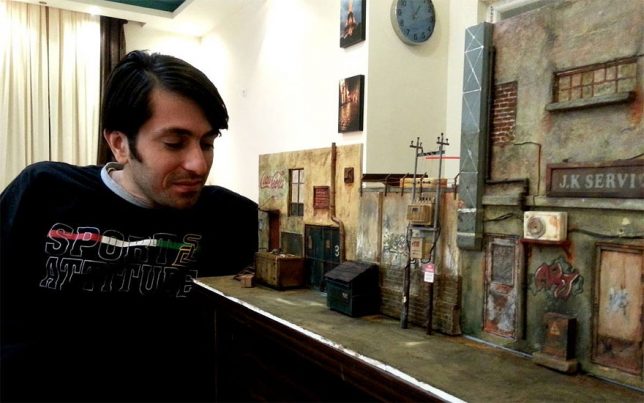
Born in Karbala during the Iraq-Iran War while his father was imprisioned by Saddam Hussein as a dissident, Ali Alamedy turned to books as a means of escape, wishing he could transport himself into the fictional settings between the pages. Later, as an adult, he began to bring those scenes to life – along with places from his own memories, and recreations of places that only exist in his imagination – in finely rendered miniature. In Arabic, the word ‘miniature’ translates to ‘a small painting on paper,’ so he didn’t find out about the existence of dioramas outside of his own art until he started searching for these words in English on the internet.

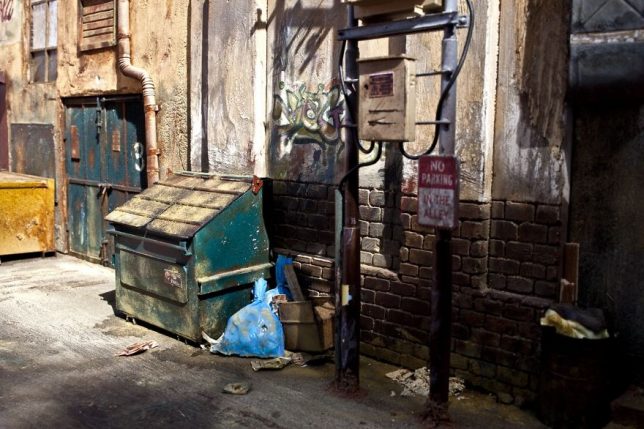
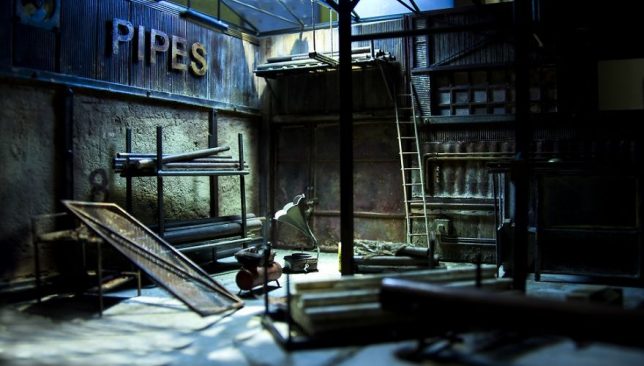
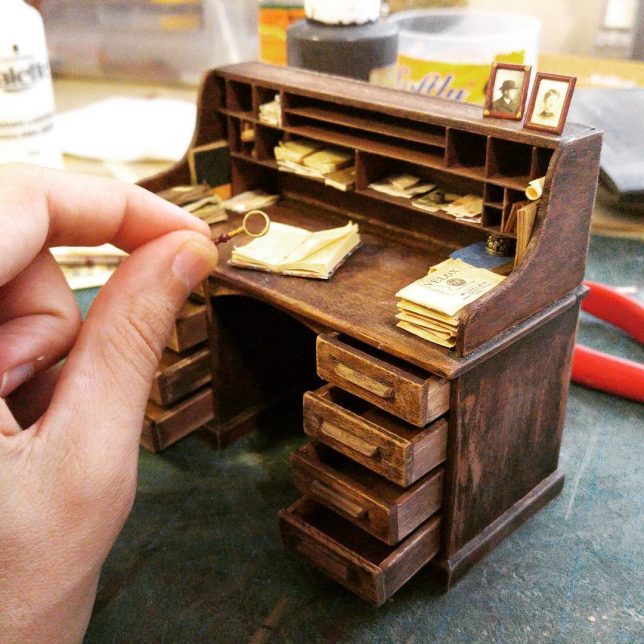
“When a budding artist has a burning desire to create a vignette, they don’t let the lack of building materials stop them,” he writes on Bored Panda. “This was exactly what happened to me when I started to make miniatures. I used any resource I could scrounge: aluminum foil, paper clips, plastic rods, foam board, coffee for weathering, anything that held possibilities.”

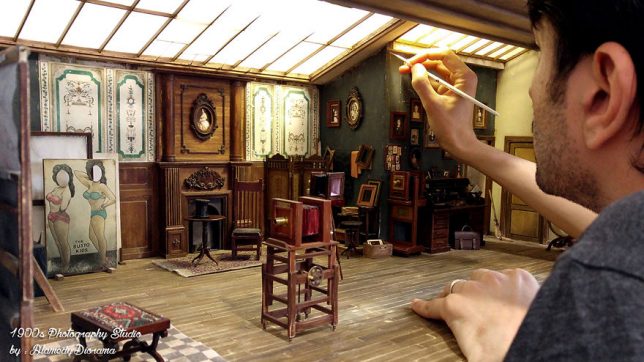
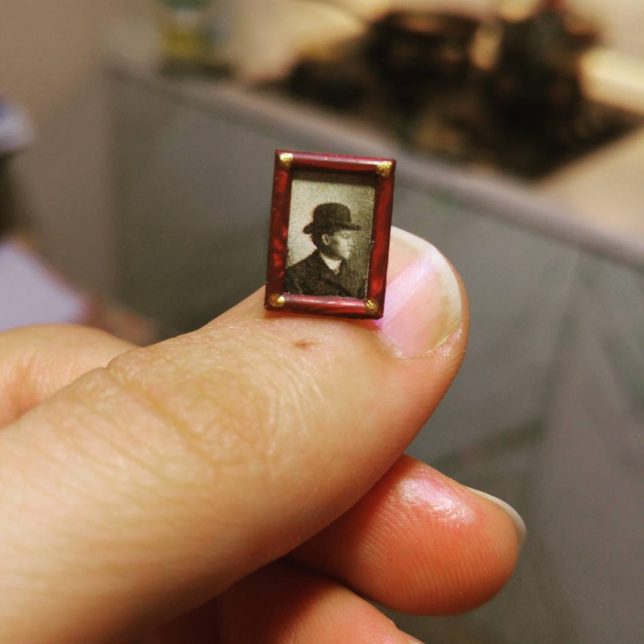
He began posting his work on Facebook, attracting fans all over the world, and his work has grown more and more meticulous. His largest project to date is the 1900s photo studio he built in honor of an old photographer. He spent 9 months building more than 100 miniature objects from scratch based on historical photographs of real studios, which, he notes, was a particular challenge due to the fact that all the photos were in black and white.

“The hardest part was how to recall the spirit of such a place in a small scale,” he says.

The New York Times gets a deeper look into both Alamedy’s work and his past in a new video, and you can see lots more detailed images on his Instagram.

Share on Facebook


[ By SA Rogers in Art & Sculpture & Craft. ]

[ WebUrbanist | Archives | Galleries | Privacy | TOS ]

WebUrbanist

 
Comments Off on Rebuilding Memories: Meticulous Miniatures by Iraqi Immigrant Ali Alamedy

Posted in Creativity


Dream Deep: Trippy Maps Reenvisioned by Google’s Artificial Neural Network

29 Jun

[ By WebUrbanist in Art & Drawing & Digital. ]

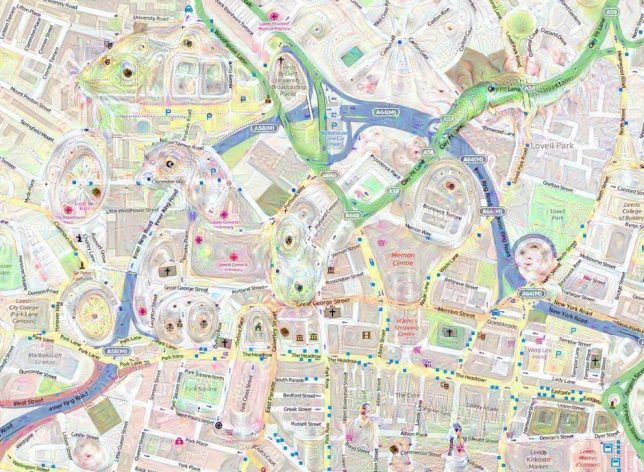
FaceApp and similar reality-warping applications are especially fun to use in ways their designers never intended. Along similar lines, Google’s DeepDream (designed for photo manipulation) creates fascinating results using photographs but is even more stunning when applied to representations of cityscapes.

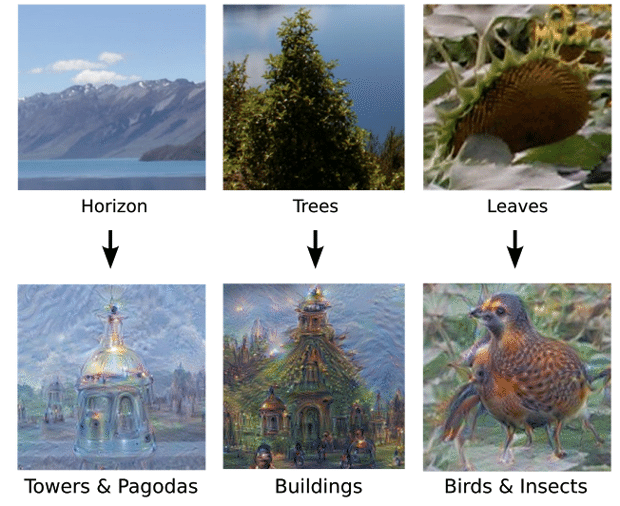
While training DeepDream (a neural network that adapts like a brain to new inputs) to identify, differentiate and understand images, Google researchers discovered it could “over-interpret” results as well. In short: it could start to “read into” images from previous experience, resulting in an array of beautiful (if disturbing) hybrids.

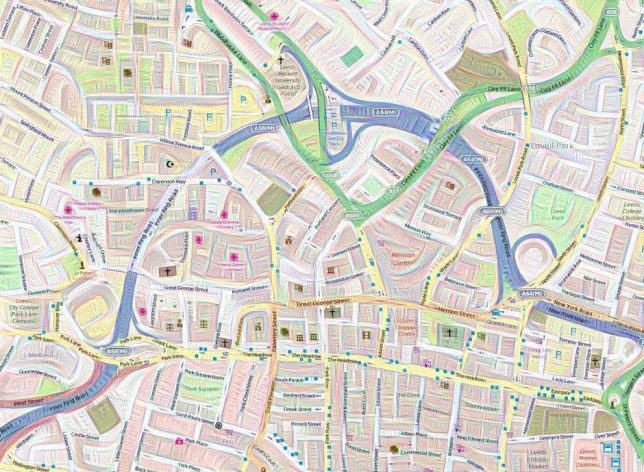
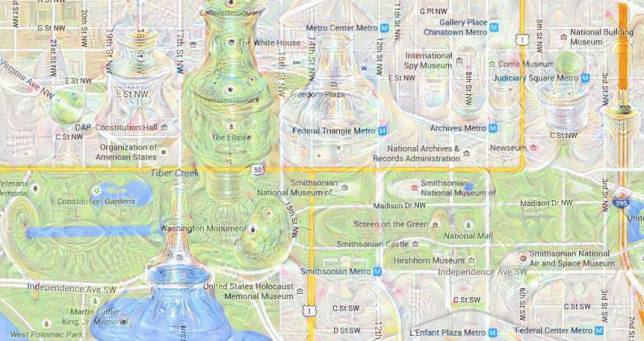
Once it went public, mapmakers were among those intrigued by the possibilities of geo-visualization, turning flat maps into seemingly living landscapes. Tim Waters, a geospatial developer, began taking OpenStreetMap data and running it through the system, generating these strangely psychedelic urban environments.

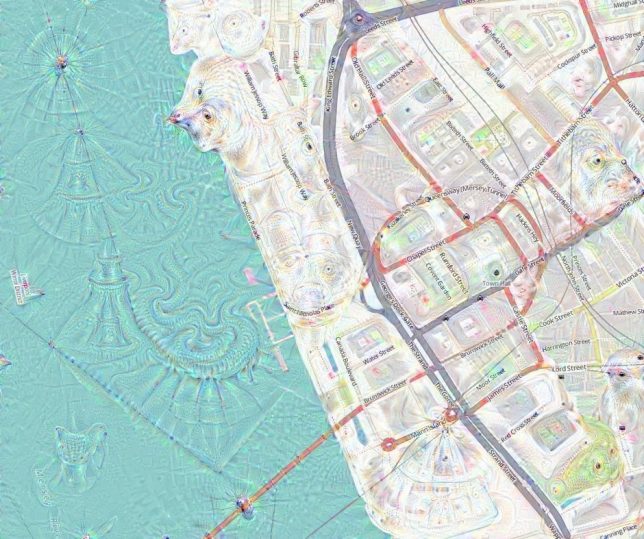
He discovered that a short run could create fractal and quilting effects, while longer and reiterated processing started to introduce faces and creatures to the mix.

Above: monkeys and frogs seem to emerge from the grid, while a coastal region forms the head of a bear, making the landscape look like a giant bearskin rug. Overall, the effects are quite beautiful, creating a sense of depth and adding character to what would otherwise be fairly generic representations.

Share on Facebook


[ By WebUrbanist in Art & Drawing & Digital. ]

[ WebUrbanist | Archives | Galleries | Privacy | TOS ]

WebUrbanist

 
Comments Off on Dream Deep: Trippy Maps Reenvisioned by Google’s Artificial Neural Network

Posted in Creativity


Laptop/Rooftop: Chicago Apple Store is Crowned with a Giant MacBook

29 Jun

[ By SA Rogers in Architecture & Offices & Commercial. ]

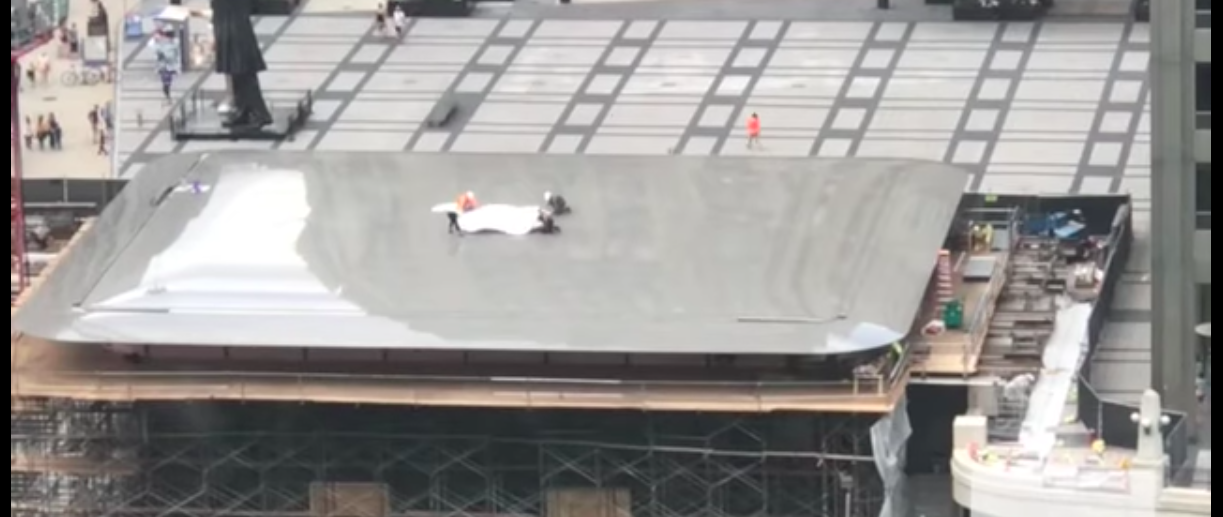
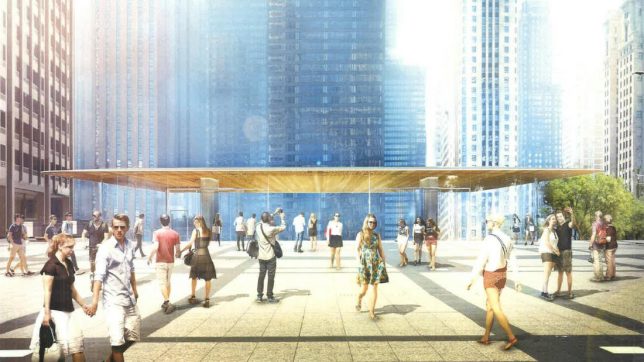
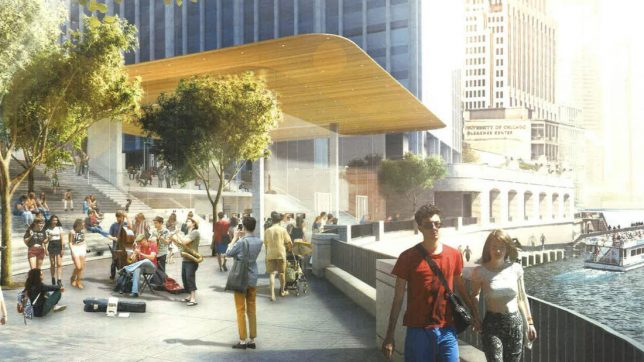
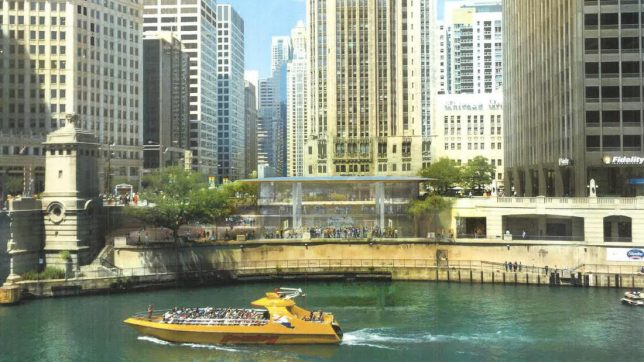
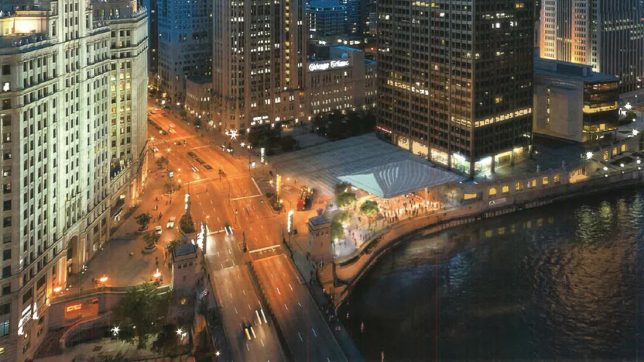
Construction is in full swing on Chicago’s new Apple store by Foster + Partners, revealing a surprise design feature that wasn’t visible in the firm’s early renderings: a gigantic MacBook for a roof. When the project was initially unveiled in 2015, the drawings depicted a sleek two-story structure with river views, glass walls and a slimline roof canopy that looks like it’s precariously balancing on slender supports. But construction crews recently added a shiny metallic silver finish to that canopy – and a familiar white Apple logo.

The store is a relocation of Apple’s Chicago flagship, and will measure about 20,000 square feet. The glass walls range from 14 to 32 feet in height, but there’s little danger of breakage, as they consist of four layers of half-inch-thick glass melded with additional layers of thicker laminated glass. The carbon fiber roof is made of a similar material as yacht hulls, which is what gives it that iconic sheen. It’s four feet thick in the center and just four inches thick at its tapered edges.

You can see this unexpected addition in action in the video above. DNA Chicago reports that crews affixed the logo and left it in place for no more than 60 minutes before removing it again, but it seems likely that it’ll return, especially since the Chicago Tribune reported back in March that the logo would be part of the design. The Tribune has more photos of the construction process.

Share on Facebook


[ By SA Rogers in Architecture & Offices & Commercial. ]

[ WebUrbanist | Archives | Galleries | Privacy | TOS ]

WebUrbanist

 
Comments Off on Laptop/Rooftop: Chicago Apple Store is Crowned with a Giant MacBook

Posted in Creativity


Architecture for Animals: 13 Structures Designed with Non-Human Use in Mind

29 Jun

[ By SA Rogers in Architecture & Public & Institutional. ]

If we’re going to keep animals in artificial environments to make money off gawking at them, you’d hope we’d at least design these structures sensitively, hiring top architects to give them the kind of loving care we’d give to our own homes. Whether building spacious zoo enclosures mimicking natural environments, bat-friendly bridges, stables to house horses in ultimate comfort or wildlife crossings over highways, this collection of animal-centric architecture aims to be the next best thing to leaving animals in the wild where they belong, and giving them plenty of space from human activity.

Panda House by Bjarke Ingels Group / BIG

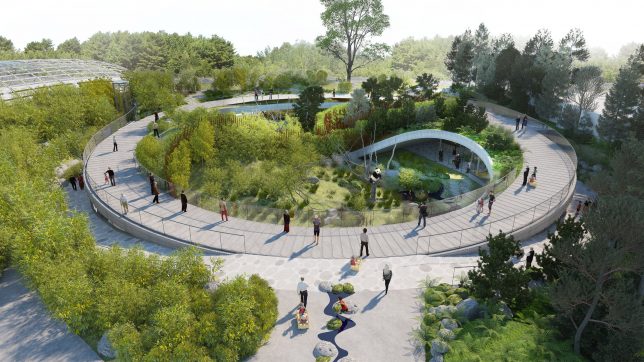
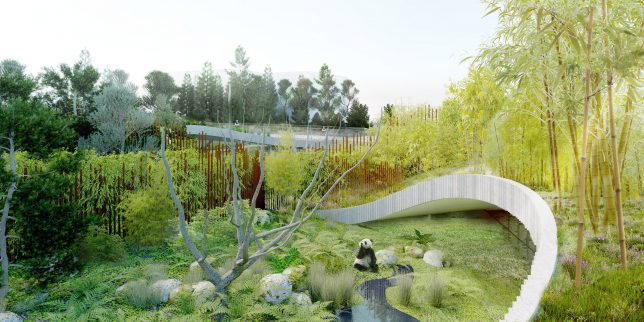
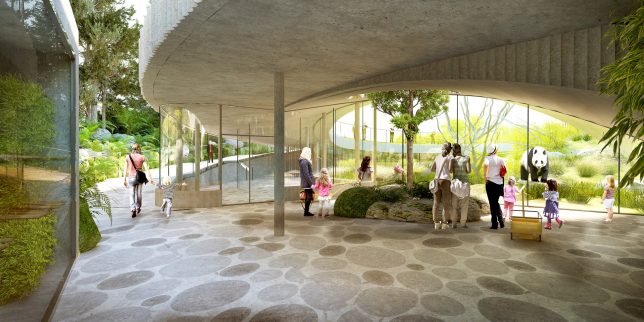
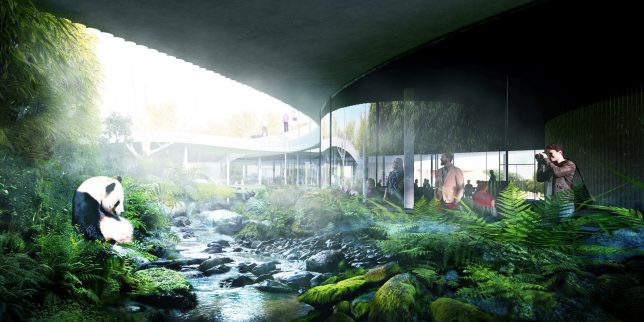
BIG designed a circular indoor/outdoor enclosure for giant pandas at the Copenhagen Zoo, set to open in 2018. The spacious and lushly planted structure will house two pandas relocated from Chengdu, China in a layout inspired by the Chinese yin-yang symbol, with each half tilting up at either end. There’s a bamboo forest on one side and a denser ‘misty’ forest on the other to represent the panda’s habitats in the wild.

Bat-Friendly Bridge by NEXT Architecture

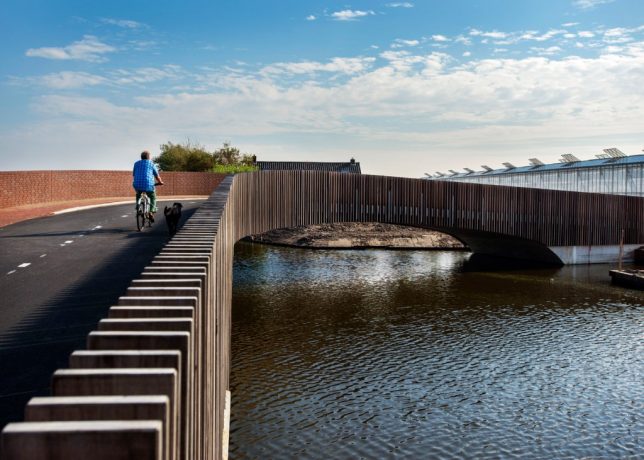
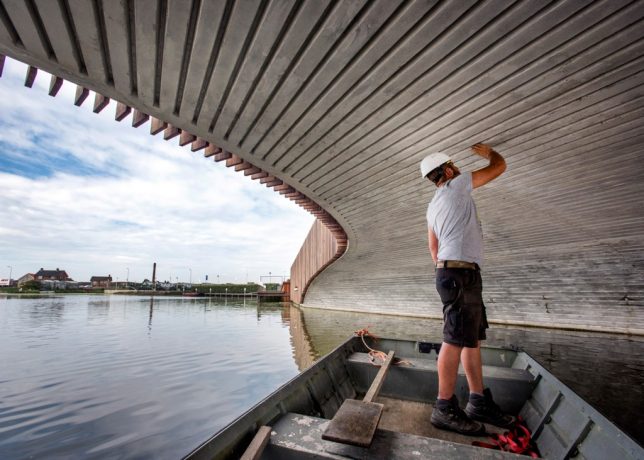
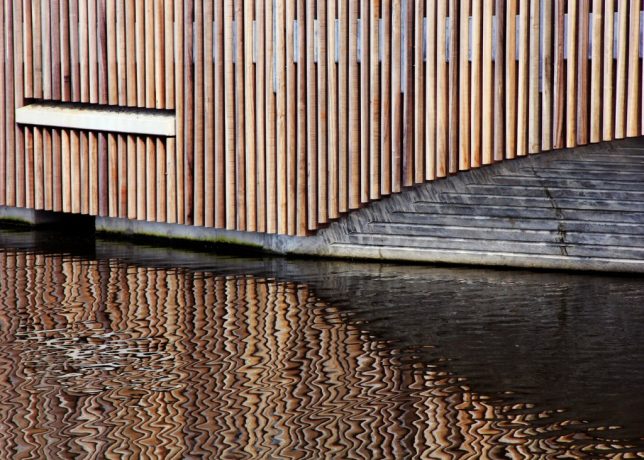
This bridge by Next Level Architecture in South Holland doubles as a bat habitat, with just a few modifications to a conventional bridge design, providing an example that could be replicated all over the world. Spanning a river that’s an important natural pathway for the local bat population, the bridge features extra-thick concrete to increase its thermal mass, making it warm for winter hibernation and a cool summer nesting spot.

Raven Enclosure at the Tower of London by Llowarch Llowarch Architects

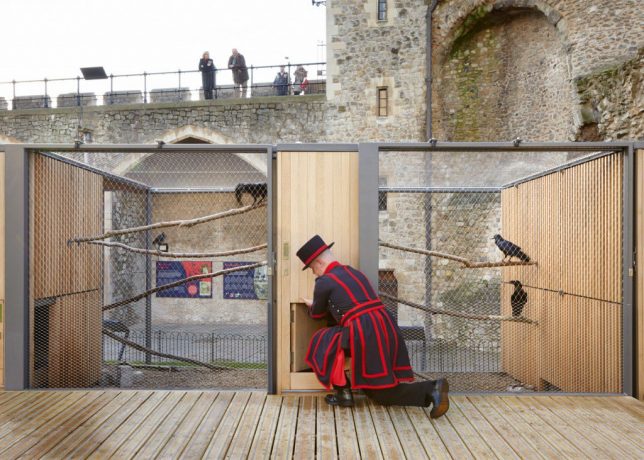
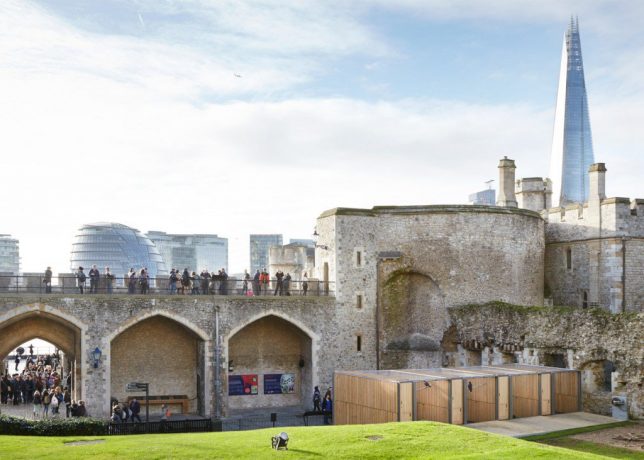
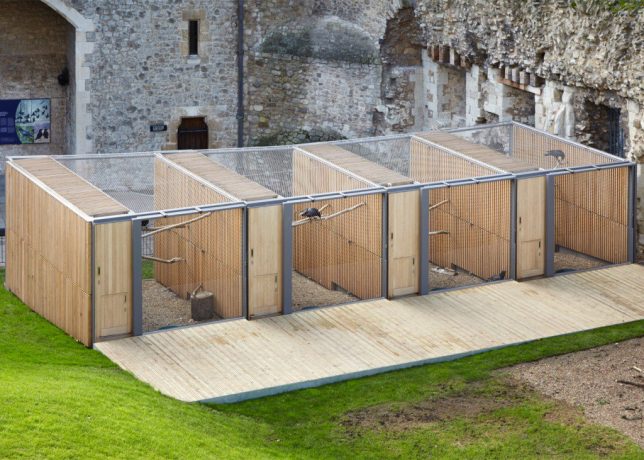
Five oak and mesh aviaries by Llowarch Llowarch Architects contrast with the ancient forms of the Tower of London, replacing the ‘ad hoc collection of sheds’ once used to house the complex’s famous resident ravens. According to English legend, if the ravens ever leave the Tower of London, the kingdom will fall – so the birds have been protected inhabitants of the historic palace, fortress and prison since the 17th century. Of course, different ravens have come and gone over the years.

Finnish Stables by Pook

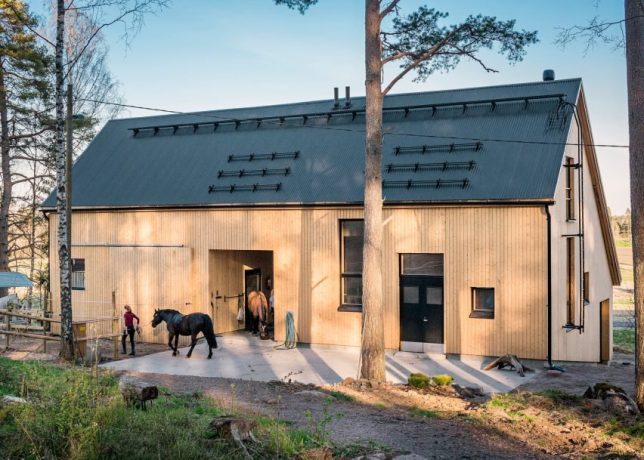
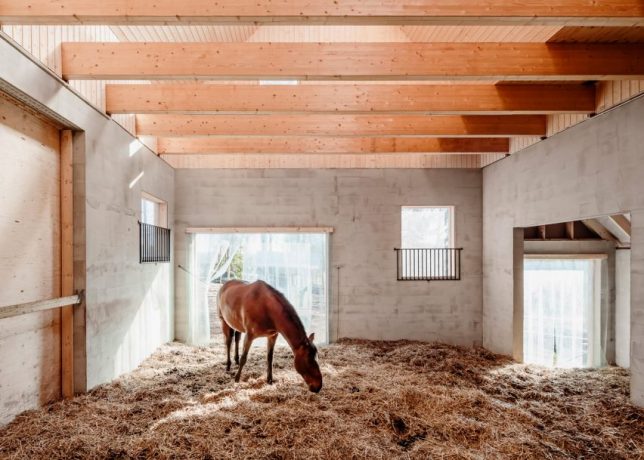
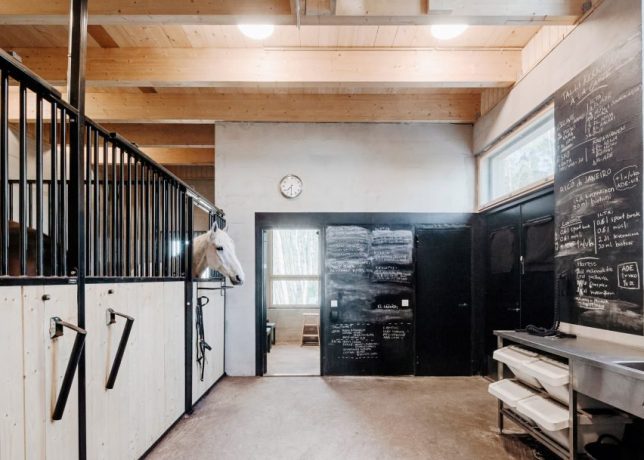
Local architecture studio Pook designed this stylish stable on the edge of a Finnish forest to blend in with the rural setting and complement the local architectural vernacular. The layout creates wind shelters in outdoor spaces to protect the horses against the southwestern winds. Inside, there’s an open room for feeding and walking the horses, storage for equipment and a barn for manure. The use of untreated pine in the cladding helps naturally control the humidity of the environment for the horses’ health.

Kangaroo Enclosure by White Arkitekter

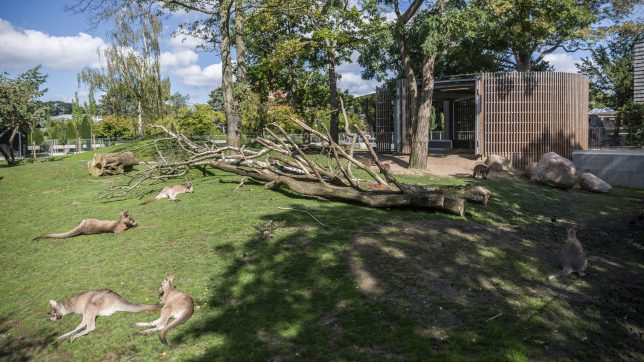
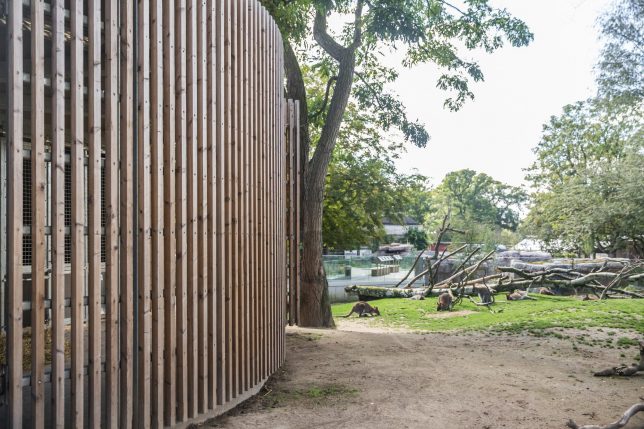
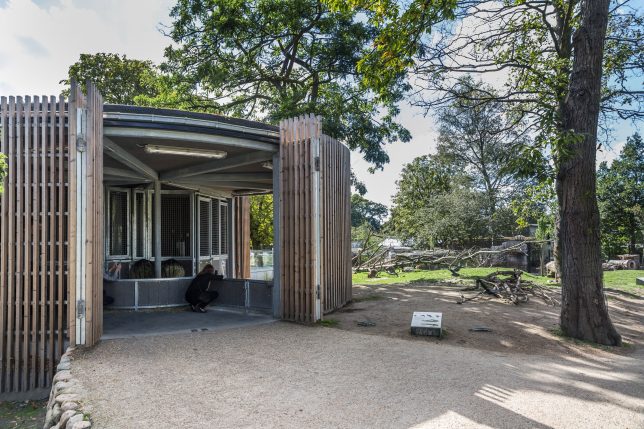
Another modern addition to the Copenhagen Zoo is this cylindrical house for Tasmanian kangaroos by White Arkitekter, which allows visitors to enter the kangaroos’ enclosure without stressing the animals. Part of the enclosure is for the kangaroos themselves, with a heated concrete floor to keep them warm in winter. The slatted timber doors can be folded back to open parts of the space to the wider enclosure, while others remain closed so shy kangaroos can have their privacy.

Next Page – Click Below to Read More:
Architecture For Animals 13 Structures Designed With Non Human Use In Mind

Share on Facebook


[ By SA Rogers in Architecture & Public & Institutional. ]

[ WebUrbanist | Archives | Galleries | Privacy | TOS ]

WebUrbanist

 
Comments Off on Architecture for Animals: 13 Structures Designed with Non-Human Use in Mind

Posted in Creativity


Behind the Curtain Wall: Theatrical Facade Rotates Around Cultural Center

28 Jun

[ By WebUrbanist in Architecture & Offices & Commercial. ]

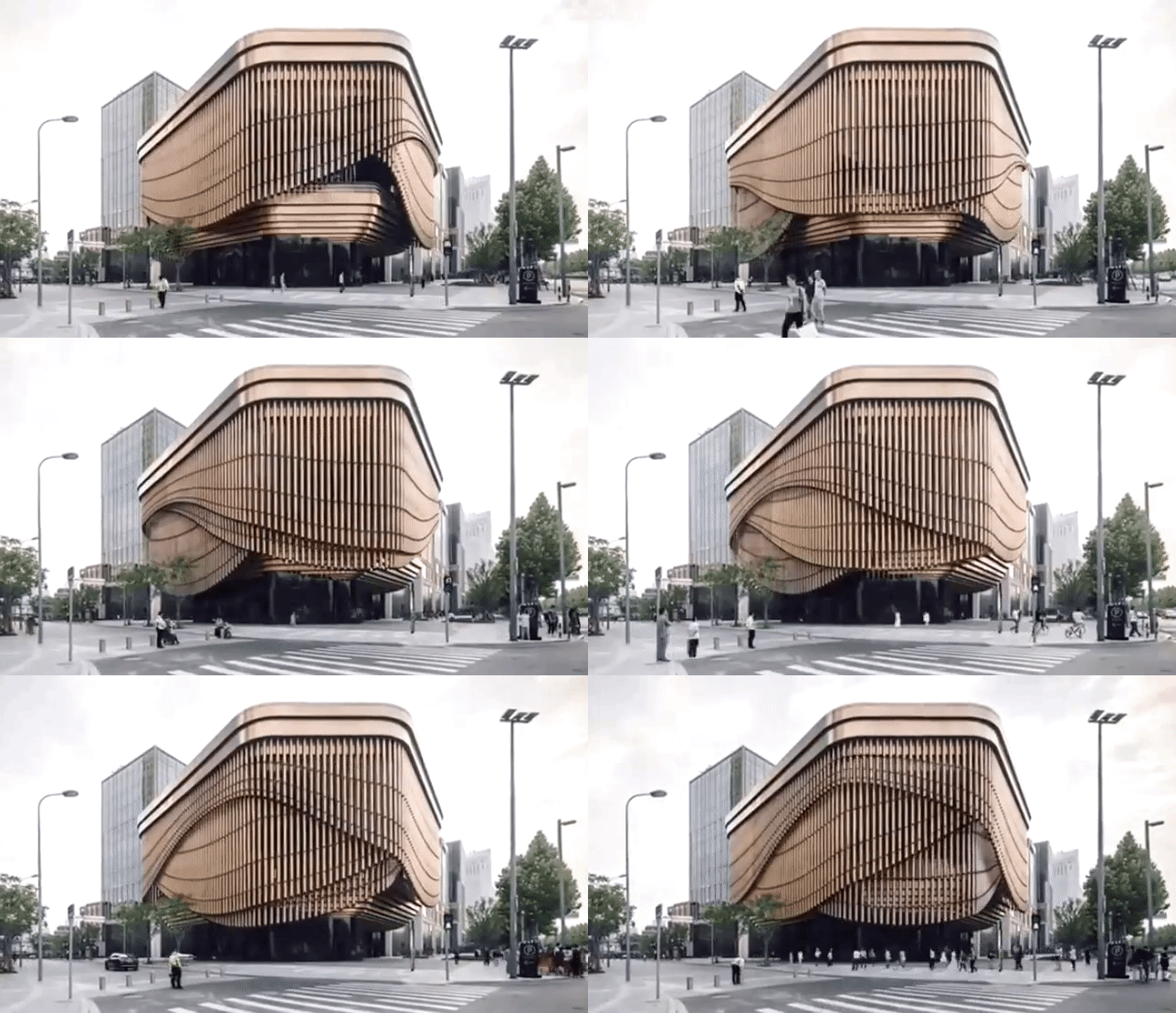
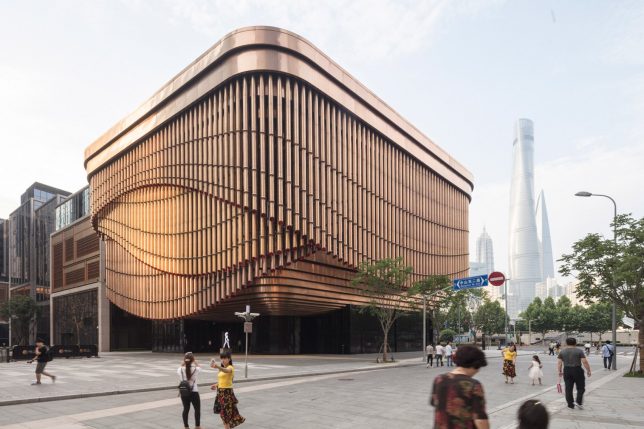
This mesmerizing mobile facade is an aesthetic and engineering marvel, but one has to wonder: could the mechanisms behind it be appropriated for other architectural purposes, like: providing light and shade on demand or on a schedule?

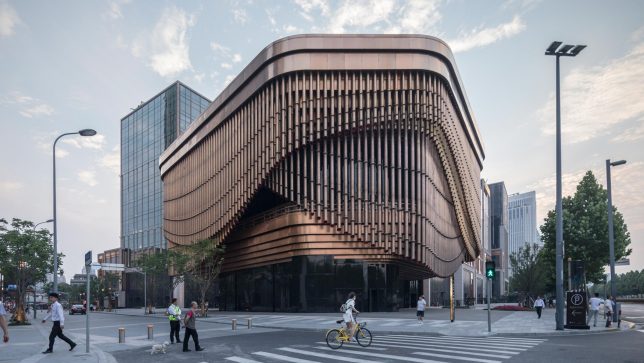
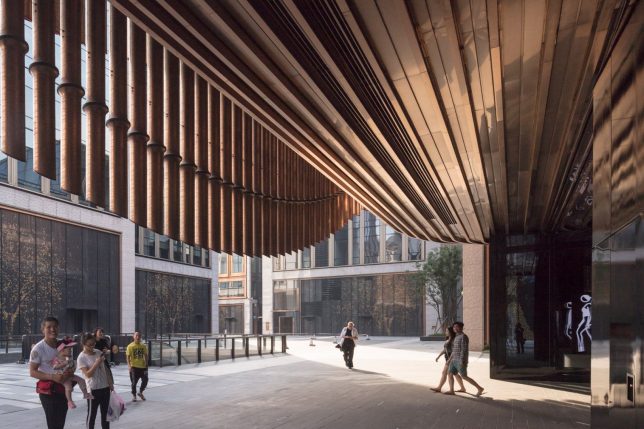
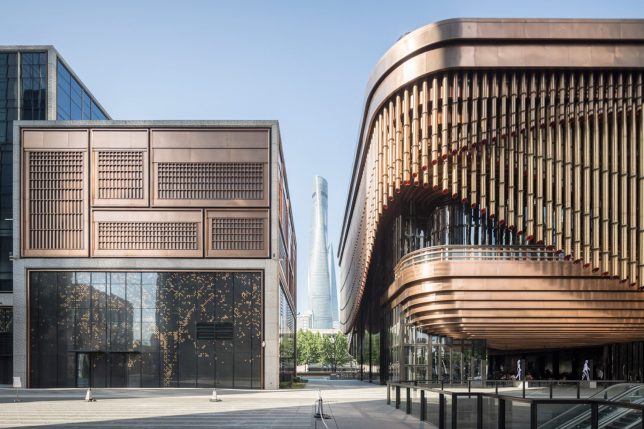
The dynamic design wraps a new cultural center in Shanghai, part of a 190,000-square-meter development by Foster + Partners in collaboration with Heatherwick Studio (images by Laurian Ghinitoiu).

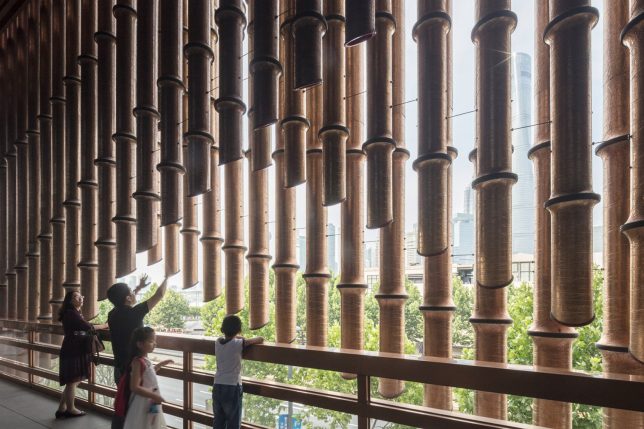
It was inspired by Chinese theaters with bamboo-like bronze tubes set in three layers around the perimeter, constituting what the designers describe as “a moving veil, which adapts to the changing use of the building, and reveals the stage on the balcony and views towards Pudong.” The effect is certainly stunning, but despite the description, it seems to be mostly for show — an novelty experience for visitors and viewers.

The same kinds of systems, however, could be deployed more strategically, using other kinds of semi-opaque screens, for instance, that could automatically position themselves throughout the day to provide layers of shade. Such an application would have practical benefits, reducing cooling costs inside structures and increasing human comfort.

Alternatively, a similar screen system could be controllable by occupants, allowing building users to block off sections for things like meetings or film screenings requiring different amounts of natural light. For now, it remains a fascinating one-off work, but hopefully architects will consider adding this as a tool in their kit, applying similar technical sophistication to solve other site-specific design problems.

Share on Facebook


[ By WebUrbanist in Architecture & Offices & Commercial. ]

[ WebUrbanist | Archives | Galleries | Privacy | TOS ]


WebUrbanist

 
Comments Off on Behind the Curtain Wall: Theatrical Facade Rotates Around Cultural Center

Posted in Creativity


CityTree: High-Tech Green Wall Cleans as Much Pollution as a Forest

27 Jun

[ By SA Rogers in Conceptual & Futuristic & Technology. ]

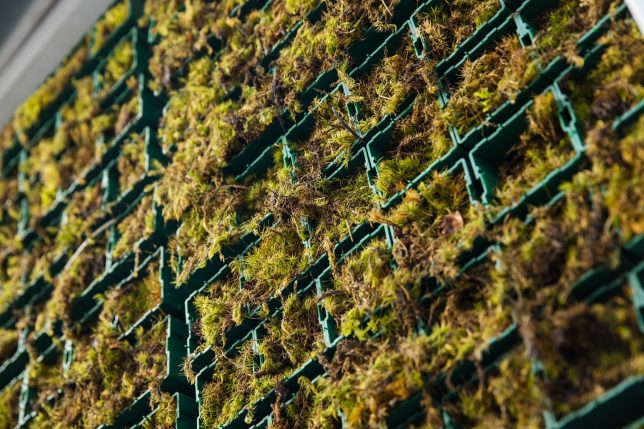
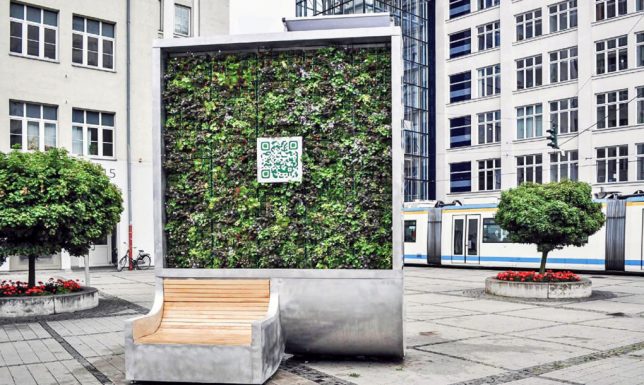
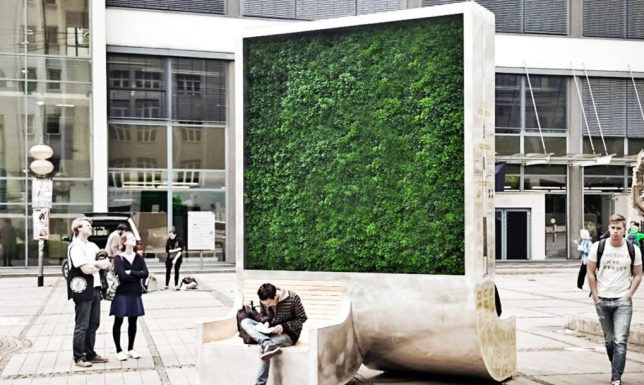
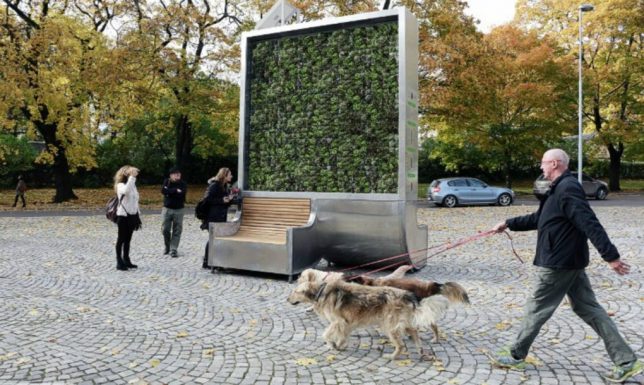
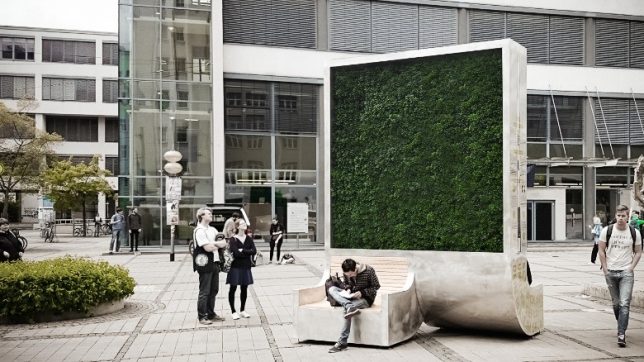
A 13-foot-tall high-tech green wall encased in a concrete frame is capable of cleaning as much polluted air as an entire forest, combining the Internet of Things and biotechnology to collect data while it improves the urban environment. Created by Green City Solutions, the ‘tree’ isn’t really a tree at all, but rather a moss culture that removes dust, nitrogen dioxide and ozone gases from the air while also collecting weather data, providing electricity via solar panels and filtering its own rainwater.

Wifi sensors measure factors like temperature, water quality and soil humidity that help each CityTree self-regulate while also allowing the creators to measure how efficient it is at its job. Over a period of a year, each one can remove up to 240 metric tons of climate change-inducing CO2 from the air. Each one features a display for information or advertising. It also features optional benches on either side, and can be vandalism-proofed and customized according to a city or company’s needs. Green City Solutions takes care of the maintenance, and there’s a slim-line version measuring one square meter for smaller spaces.

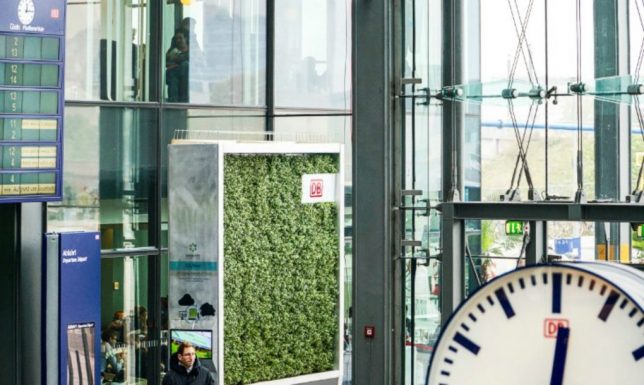
Asia’s first CityTree went up in Hong Kong last summer, and around 20 others have been installed in cities like Oslo, Paris and Brussels. More are planned, but red tape tends to get in the way, stalling its growth to additional cities. The German-based company plans to introduce the CityTree to lower-income countries like India as well. While it’s definitely not enough to combat urban air pollution on its own, it’s an interesting element to integrate into a more comprehensive strategy.

Share on Facebook


[ By SA Rogers in Conceptual & Futuristic & Technology. ]

[ WebUrbanist | Archives | Galleries | Privacy | TOS ]


WebUrbanist

 
Comments Off on CityTree: High-Tech Green Wall Cleans as Much Pollution as a Forest

Posted in Creativity


The Earth as a Canvas: 25 Monumental Works of Land-Based Art

27 Jun

[ By SA Rogers in Art & Installation & Sound. ]

Treating the Earth like a canvas and natural objects like rocks, sticks, sand and ice as art materials, we alter the natural environment to reflect ourselves and our own artistic impulses – even if only temporarily, until these works of land-based art are erased by nature itself.

Animated Land Art by Paul Johnson

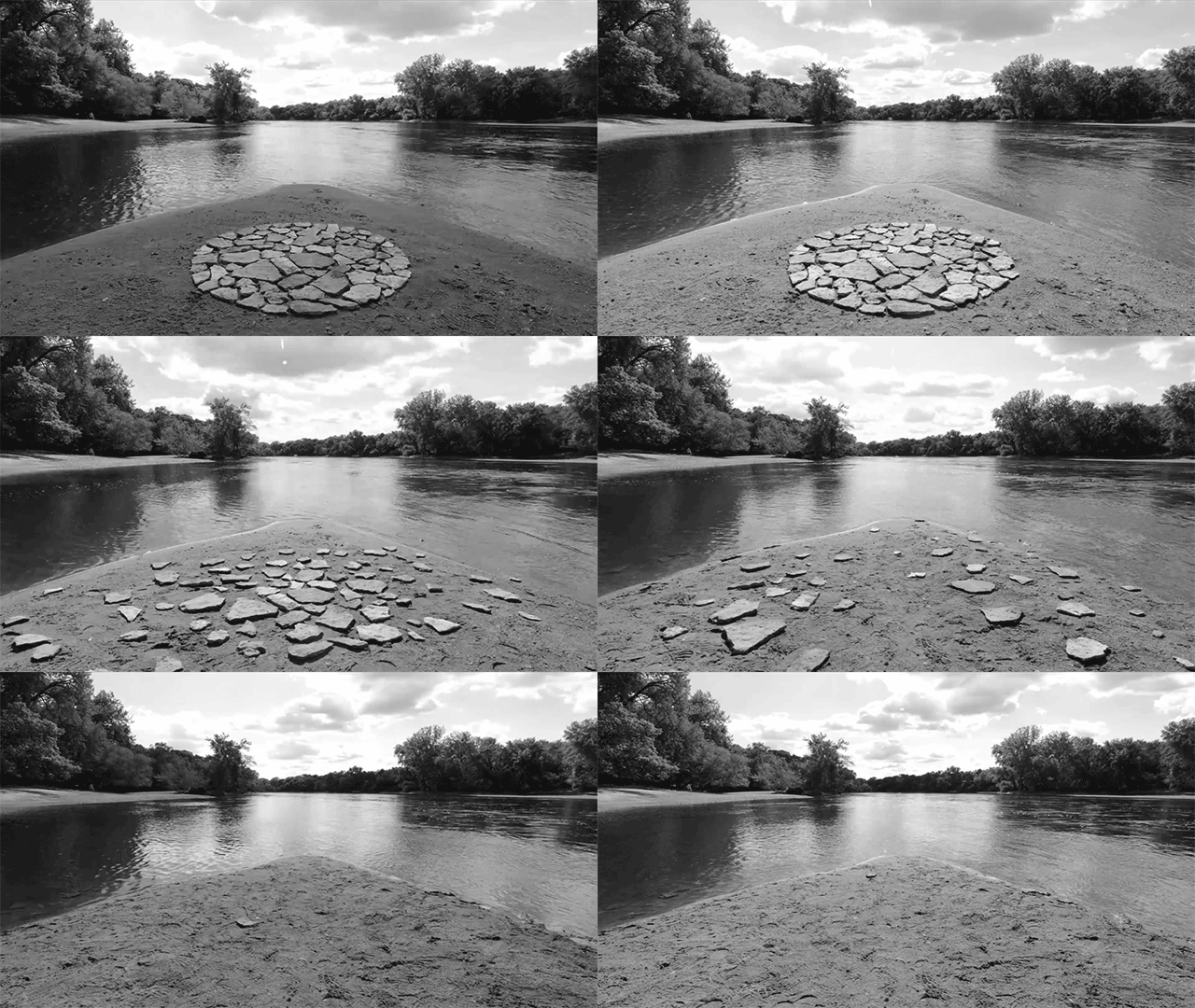
For his ‘Earthworks in Motion’ series, artist Paul Johnson takes inspiration from such legendary land artists as Andy Goldsworthy and Jim Denevan, using some of the same techniques but crafting them into stop-motion animations filmed in parks and nature preserves around Minneapolis/St. Paul, Minnesota.

Ash Dome by David Nash

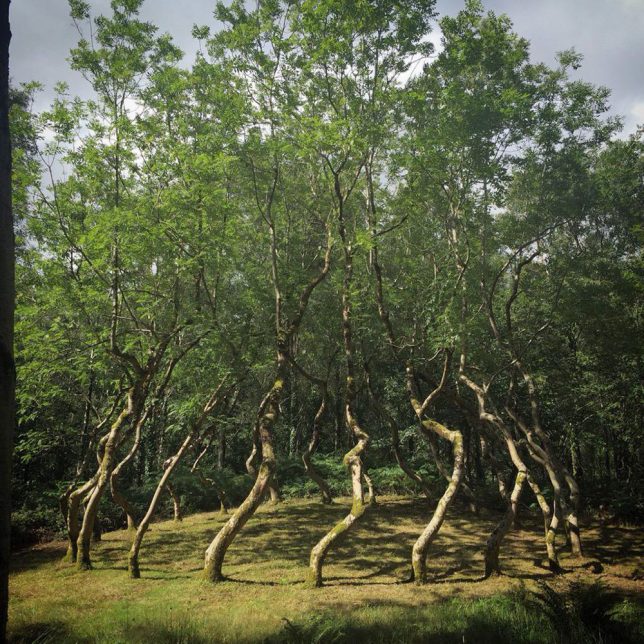
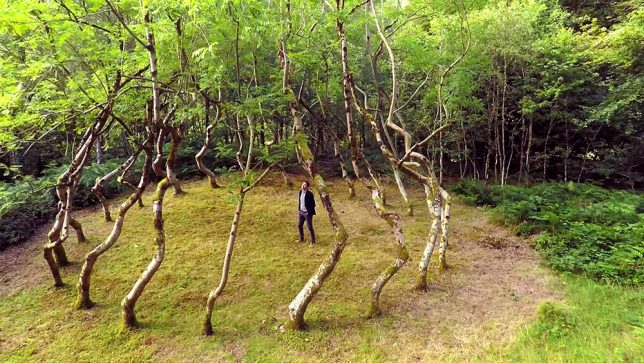
In 1977, sculptor David Nash secretly planted and trained a circle of 22 ash trees to grow into a shape resembling a vortex on an area of land in Wales. 40 years later, they’ve grown enough for the shape to be discernible. Nash says that at the time, during the Cold War and other unrest, planting something that couldn’t be properly enjoyed until the 21st century seemed like a leap of faith.

Van Gogh’s ‘Olive Trees’ Planted in a Field

Vincent Van Goh’s masterpiece painting ‘Olive Trees,’ completed in 1889, comes to life – literally – in a Minneapolis field as artist Stan Herd uses nature as his canvas and paints. The piece was viewable from the air during autumn 2015 and then mowed down in concentric circles reminiscent of Van Gogh’s painting strokes.

Seven Magic Mountains by Ugo Rondinone

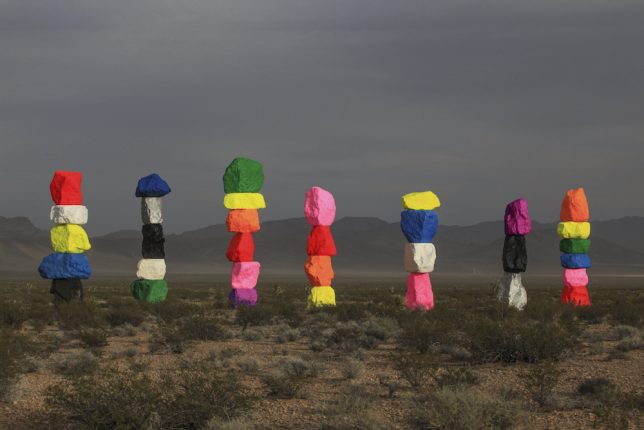
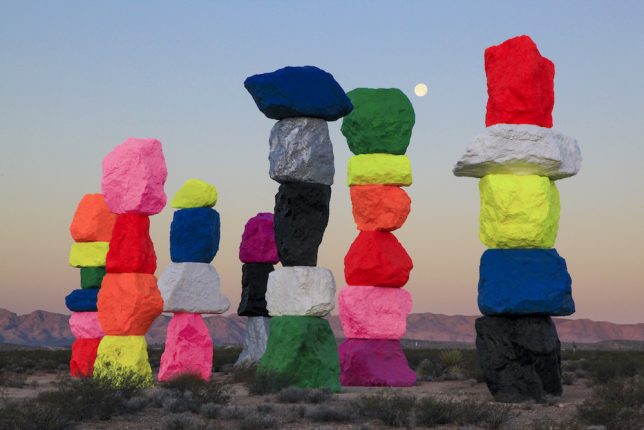
Each of Swiss artist Ugo Rondinone’s ‘Seven Magic Mountains’ made of stacked limestone stands between 30 and 35 feet tall painting in dayglo yellow, red, pink, silver and other colors. They’re set just south of Las Vegas as a monumental work of land art, installed in May 2016 and due to remain in place until May 2018, so there’s still time to see it in person.

Snow Murals by Simon Beck

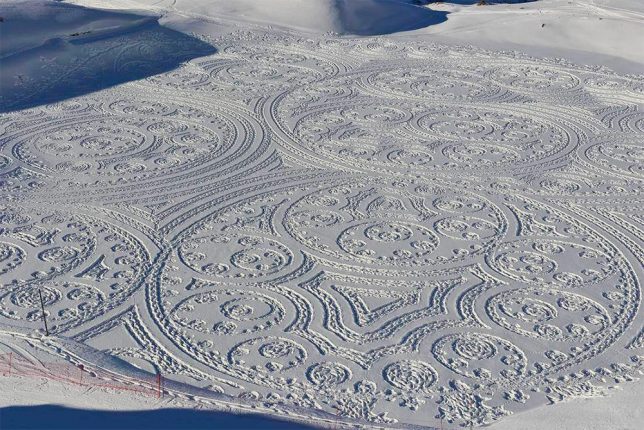
Simon Beck uses snowshoes to manually imprint dazzling patterns and shapes into snowy fields, photographs them from above and then allows them to be blown away, covered by more snow or trampled. It can take up to 5,000 steps an hour for 10 hours at a time to complete an average piece.

Next Page – Click Below to Read More:
The Earth As A Canvas 25 Monumental Works Of Land Based Art

Share on Facebook


[ By SA Rogers in Art & Installation & Sound. ]

[ WebUrbanist | Archives | Galleries | Privacy | TOS ]


WebUrbanist

 
Comments Off on The Earth as a Canvas: 25 Monumental Works of Land-Based Art

Posted in Creativity


New IKEA Smart Home Fixtures Compatible with Google, Apple & Amazon

26 Jun

[ By WebUrbanist in Design & Fixtures & Interiors. ]

Furniture giant IKEA is making its new low-cost smart home fixtures voice-controllable can connect with ease to systems including Google Home, Apple HomeKit and Amazon Alexa.

The company has been pushing in the direction of making homes smarter for some time, with furnishings able to wirelessly charge phones, for instance. But with TRADFRI, they are taking the next step, providing low-cost options that can be operated through a variety existing connected-home systems.

“With IKEA Home Smart we challenge everything that is complicated and expensive with the connected home. Making our products work with others on the market takes us one step closer to meet people’s needs, making it easier to interact with your smart home products,” says Björn Block, Business Leader for IKEA Home Smart.

Smart lights, motion sensors, dimmers, door locks, all with additional layers of remote control, are slowly transforming everyday interiors into interactive design spaces. The barrier to entry is also intentionally low: the cost is one factor, but the solutions are also plug-and-play, requiring no complex knowledge or specialized coding. Their latest releases are set to be in stores later this summer or early this fall.

Share on Facebook


[ By WebUrbanist in Design & Fixtures & Interiors. ]

[ WebUrbanist | Archives | Galleries | Privacy | TOS ]


WebUrbanist

 
Comments Off on New IKEA Smart Home Fixtures Compatible with Google, Apple & Amazon

Posted in Creativity