RSS
 

Archive for the ‘Creativity’ Category

The Apprehension Engine: Machine Makes Disturbing Horror Movie Music

11 Jul

[ By SA Rogers in Design & Products & Packaging. ]

Is this the most terrifying musical instrument ever made? If you just take a quick glance at it, you’ll likely say no – it’s an unassuming (albeit rather strange) jumble of strings, rods, reverbs and metal rulers attached to a boxy wooden base. But just you wait until composer Mark Coven, whose work includes the stunning score for the 2016 horror film The Witch, sits down at it and starts to play. The sounds that emerge from the ‘Apprehension Engine’ are designed to give you the creeps, and they’re quite effective.
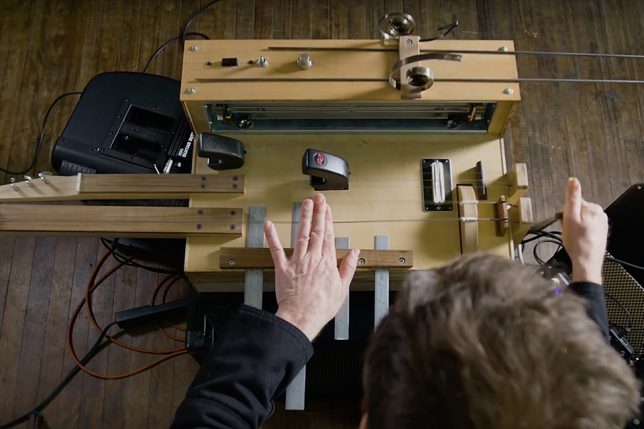
Korven, who has scored a number of feature films over the years, was sick of using the same old digital samples to get the signature scraping, creaking, squealing and rumbling sounds that help provide a hair-raising atmosphere. The world of creating analog sound effects in audio post-production is pretty fascinating, and foley artists use all sorts of weird objects to create many of the sounds you hear in an average movie or TV show.
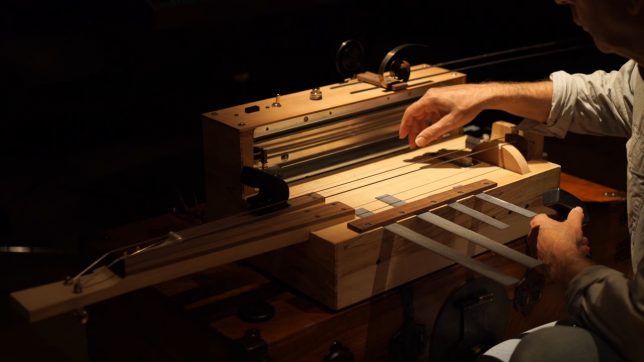
But Korven wanted something very specific, all together in a single instrument, so he turned to his friend Tony Duggan-Smith, a guitar maker, to help him craft it. In this video, Korven demonstrates to Great Big Story how the Apprehension Engine works as he plucks, wiggles, flicks, thumps and runs a bow across the various objects connected to the instrument.

Share on Facebook


[ By SA Rogers in Design & Products & Packaging. ]

[ WebUrbanist | Archives | Galleries | Privacy | TOS ]

WebUrbanist

 
Comments Off on The Apprehension Engine: Machine Makes Disturbing Horror Movie Music

Posted in Creativity


Acclaim for the Reclaimed: 14 Cool Upcycled Architecture Projects

11 Jul

[ By SA Rogers in Architecture & Houses & Residential. ]

Going beyond simple stacks of shipping crates and ripped-apart pallets, these creative upcycled architecture projects reclaim stuff like corrugated iron, 5-gallon water bottles, old doors and even junk left over from the London Olympics as building materials and truly elevate them to new heights. These projects offer some fresh ideas, use the materials in new ways or demonstrate how recycled and upcycled architecture integrate into modern designs.

Stedsans in the Woods: Upcycled Permaculture Farm in Sweden

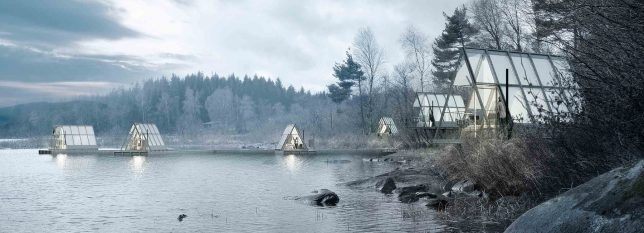
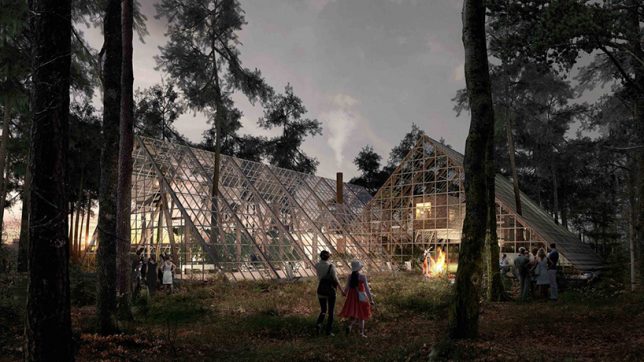
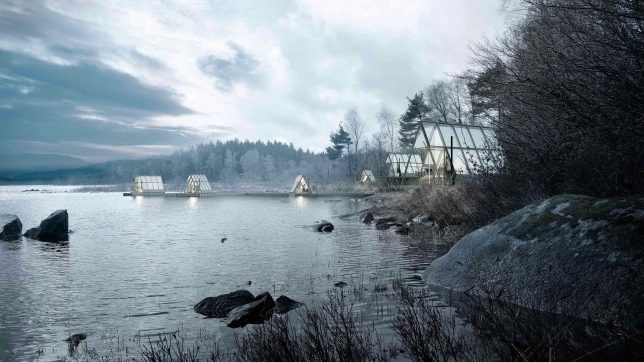
This permaculture farm and retreat nestled in the woods of southern Sweden will function as a “lab for discovering better ways to eat, live and connect with nature,” including a farm-to-table restaurant and a collection of beautiful treehouse-like cabins made of waste wood, fragments of old barns and glass from abandoned greenhouses.

Rising Moon Pavilion Made of Recycled Water Bottles

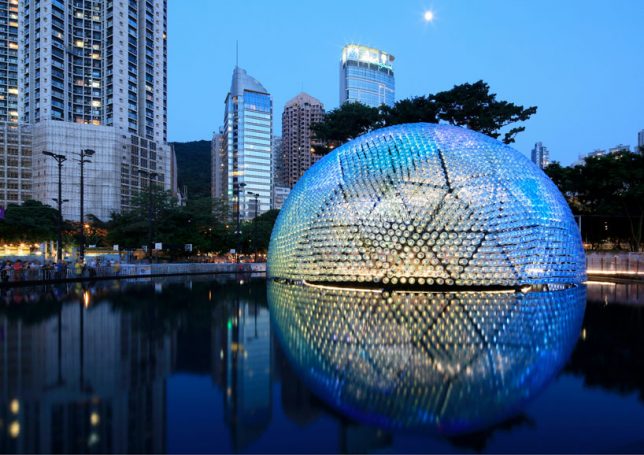
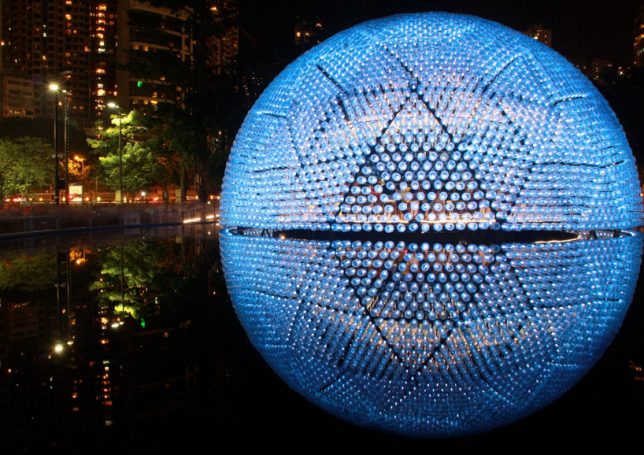
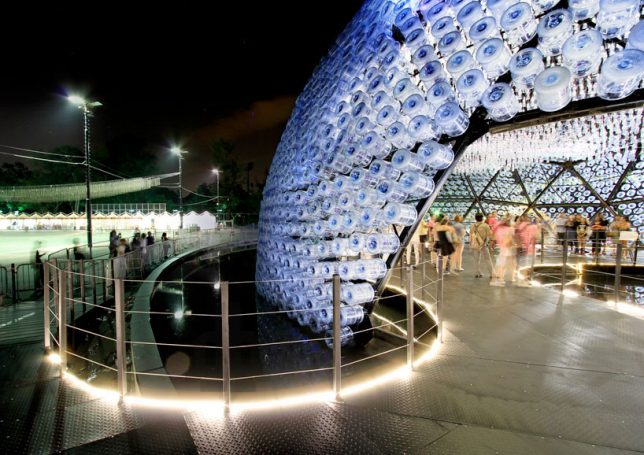
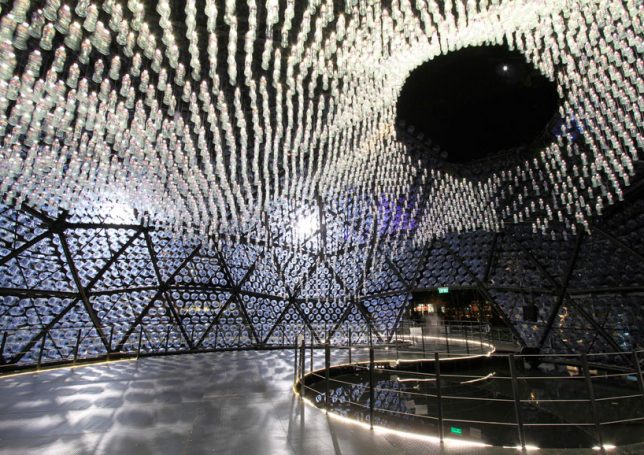
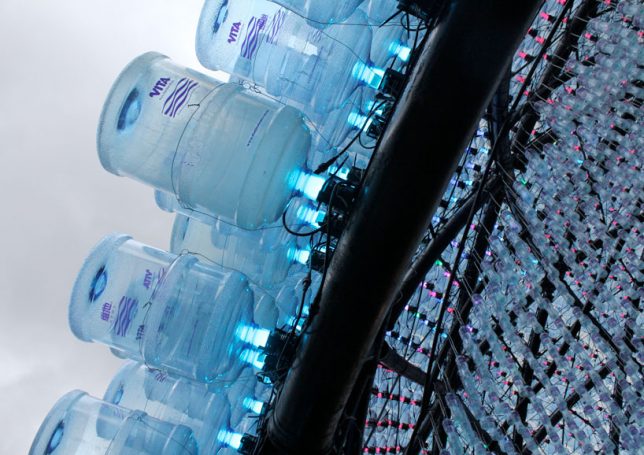
Reflecting itself into a perfect sphere on the surface of a still pool, ‘Rising Moon’ by Hong Kong-based studio Daydreamers Design is a geodesic dome fitted with 4,800 five-gallon polycarbonate water bottles, each acting as a lantern to help the structure glow. At night, they transmit light from inside out, while during the day, the interior is illuminated by the sun. LED torches are attached to pre-fabricated triangular modules with the bottles fitted over them, and an additional 2,300 bottles hang from the ceiling.

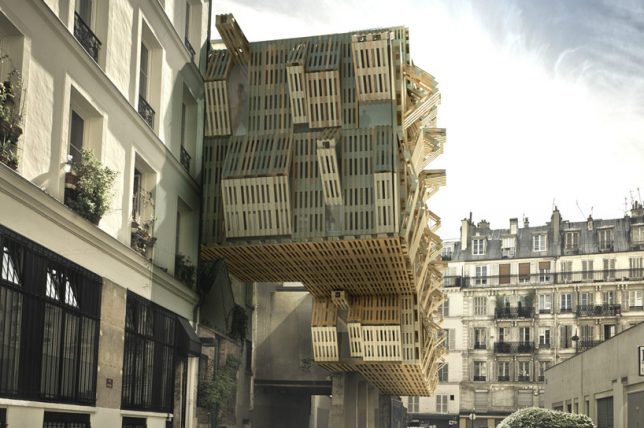
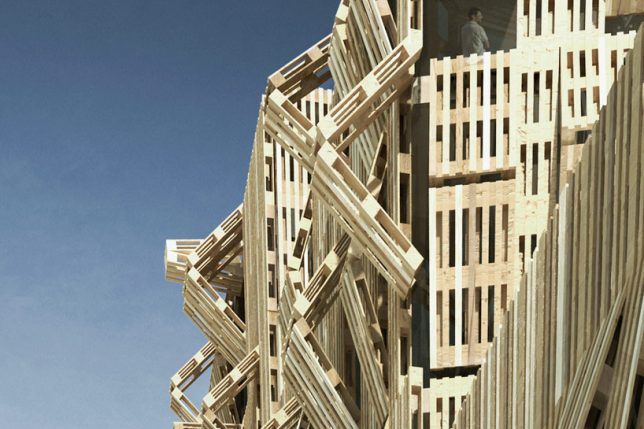
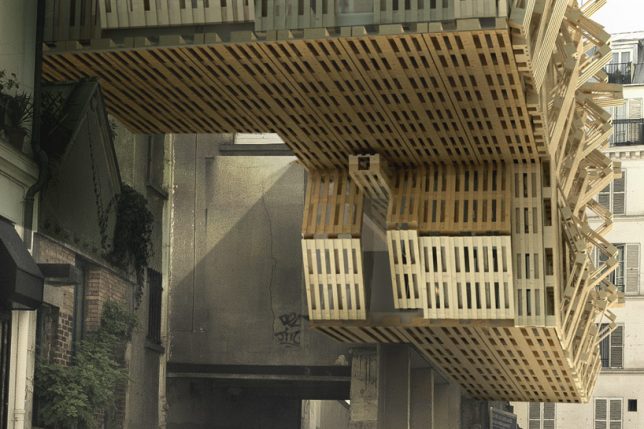
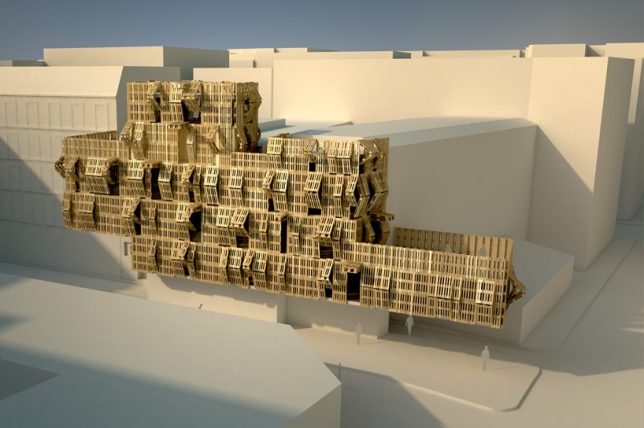
Parasitic Student Residences Made of Pallets for Paris

French architect and graffiti artist Stephane Malka proposes ‘Ame-Lot,’ a series of parasitic structures made of upcycled pallets and other reclaimed materials that attach to existing architecture. The pallets fold and unfold to let more light into the interior, and the structures can be constantly rearranged and added to as necessary for growth, becoming a visual meter of consumption in the city.

Collage House Made of Recycled Doors by S+PS Architects

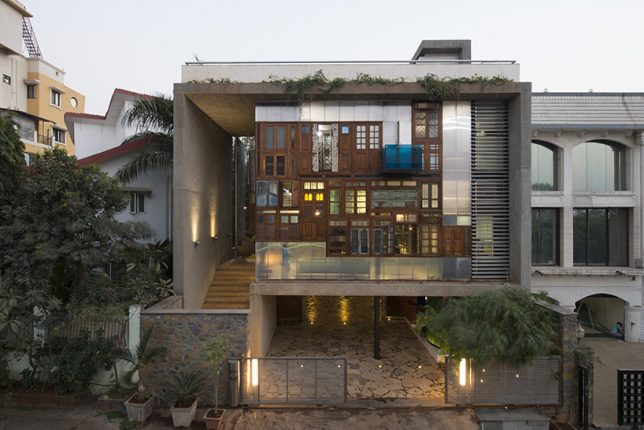
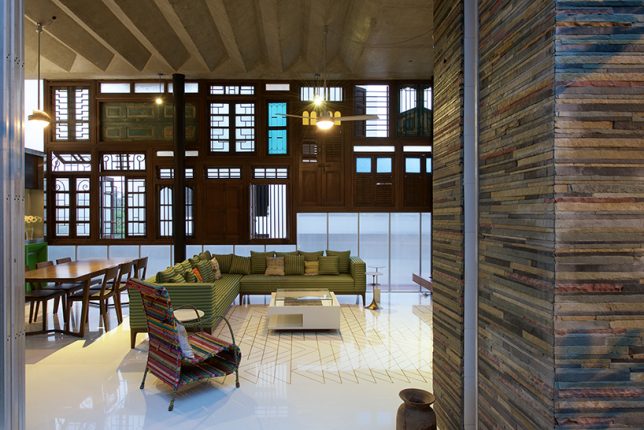
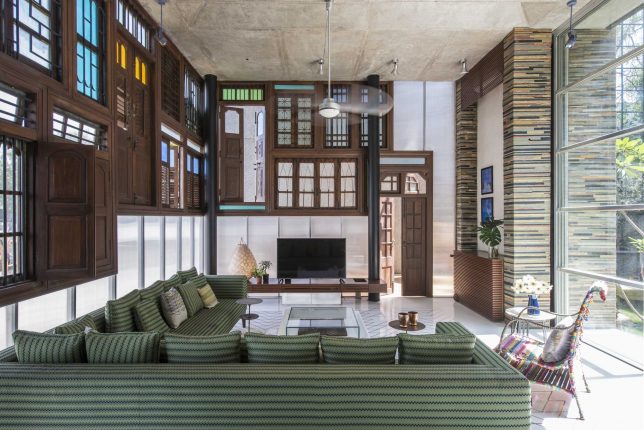
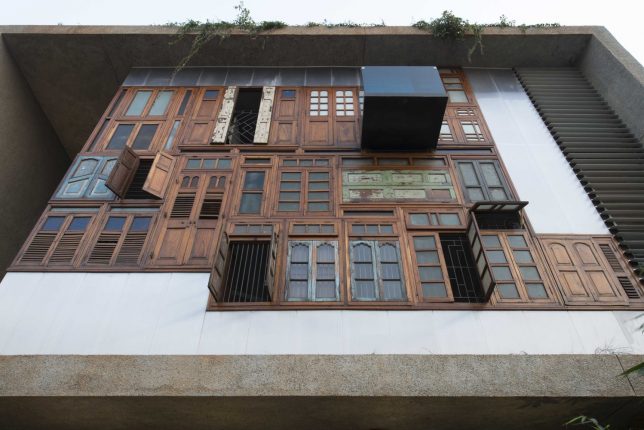
Over a dozen reclaimed doors and windows salvaged from demolished houses in the city make up a highly unusual and creative collage-style facade for a Mumbai residence by S+PS Architects. This double-height curtain wall makes for some seriously striking curb appeal, and sets the tone for the living room as well. The architects also incorporated other found materials into the home, like metal pipe leftovers pieced together like bamboo to form a ‘pipe wall,’

K Valley House Clad in Reclaimed Iron by Herbst Architects

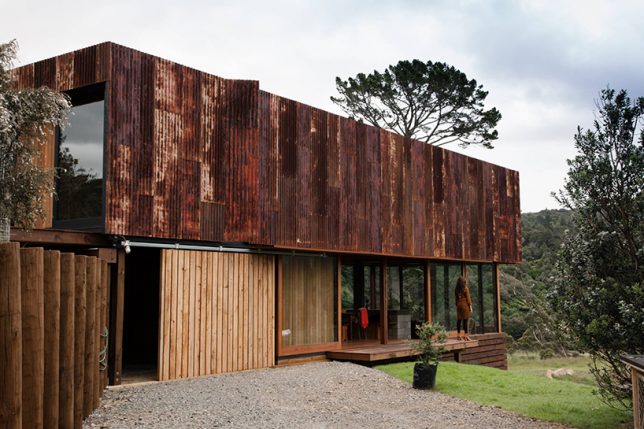
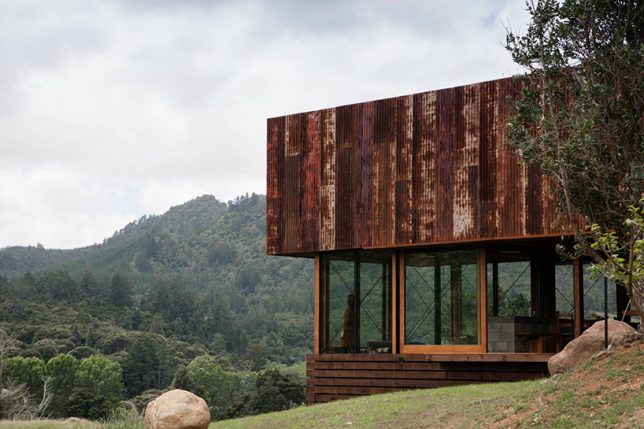
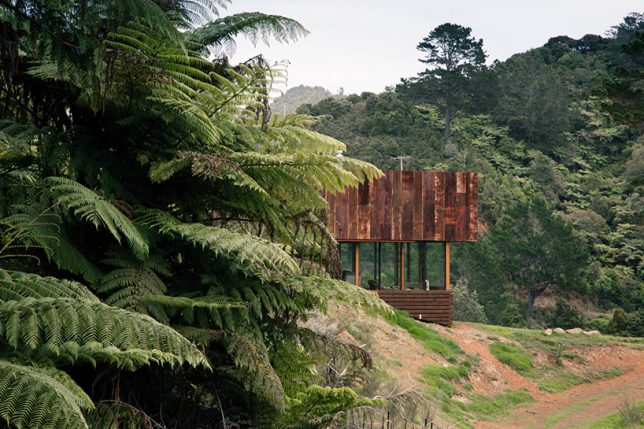
Rusted corrugated iron sheets resembling the sheds often seen in the New Zealand countryside contrast beautifully with the greenery of the Kauaeranga Valley in ‘K Valley House’ by Herbst Architects. “We positioned the form straddling the ridgeline, engaged with the slope at the high end and floating above the land as it falls away,” they say.

Next Page – Click Below to Read More:
Acclaim For The Reclaimed 14 Cool Upcycled Architecture Projects

Share on Facebook


[ By SA Rogers in Architecture & Houses & Residential. ]

[ WebUrbanist | Archives | Galleries | Privacy | TOS ]


WebUrbanist

 
Comments Off on Acclaim for the Reclaimed: 14 Cool Upcycled Architecture Projects

Posted in Creativity


Russia Hour Traffic: Andrey Tkachenko’s Soviet Car Concepts

10 Jul

[ By Steve in Art & Drawing & Digital. ]

Russian freelance artist Andrey Tkachenko reveals the figurative swans hidden deep within the notoriously ugly ducklings of the Soviet automobile industry.

“General Motors is not in the business of making cars. It is in the business of making money.” So stated the late Thomas Murphy, Chairman of General Motors from 1974 thorough 1980. That mantra was turned on its head back in the USSR where state-run automotive “businesses” cranked out an astonishing variety of unappealing utilitarian conveyances that wouldn’t make their manufacturers money unless they were melted down and minted into kopeks.

That said, Soviet designers managed to express their creativity in very limited ways though such expressions always took a back seat to utilitarianism. Andrey Tkachenko, a young freelance artist and graphic designer based in the northwestern Russian Federation city of Nizhny Novgorod, looks beyond the limits of those stodgy soviet auto designs and extrapolates their modest aesthetics to heights the original designers feared to even imagine. Case in point: the GAZ-13 M13 “Chaika”, a soviet luxury car produced between 1958 and 1981 that falls stylistically between a Packard Caribbean and a Checker cab. Most Chaikas were painted black; the two-toned example above being a rare exception.

Putin Approved

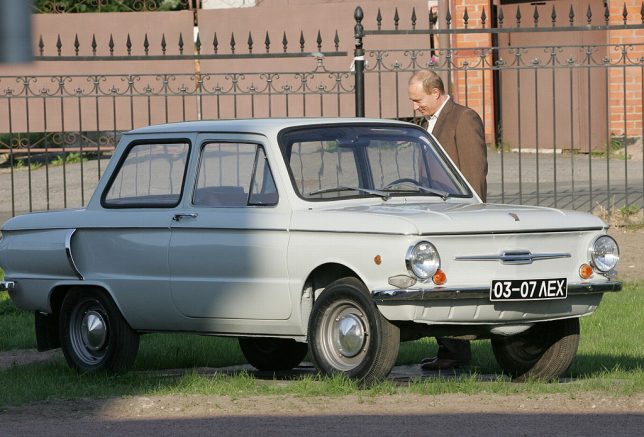
We’re showcasing some of Tkachenko’s graphic renderings – “ciberconcepts”, as he calls them – along with images of their real-world inspirations. It’s an endeavor made possible though the artist’s trademark of captioning most of his works with the vehicle’s model designations. However, we must take issue with the “ZAZ-969 Coupe Japanese Style” above; it’s actually a ZAZ-968 similar to Vladimir Putin’s first car, a 1972 model. Being a judo aficionado holding a black belt, Vlad would likely approve of Tkachenko’s subtly Japanesque makeover.

Zuk On This

The Zuk (Polish for “Beetle”) was manufactured by the FSC Lublin Automotive Factory in Poland for a mind-boggling 40 years – from 1958 through 1998 – with few changes over the production run. Panel van versions were exported to the Soviet Union which is how Andrey Tkachenko knows of them. Tkachenko’s take on the alarmingly slab-sided Zuk transforms the rough & ready van into a Jagermeister-spewing “Time Attack Custom Project”. Can’t say it doesn’t look too shabby, with or without the aid of Jagermeister shots. Just below it is a real-world Zuk parked beside a late-production (between 1979 and 1994) ZAZ-968M.

Step On The GAZ

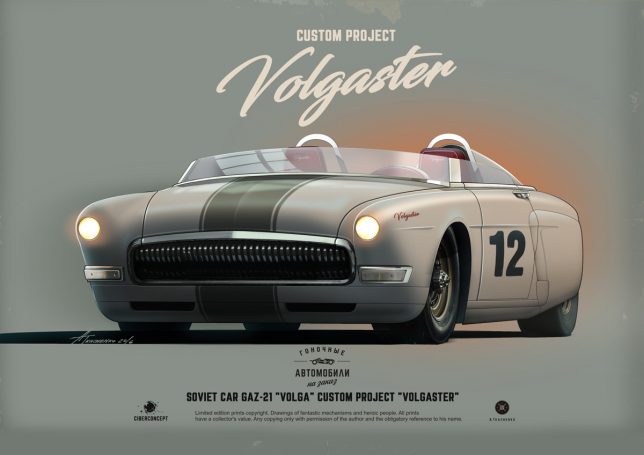
The GAZ-21 “Volga” was a so-called “executive car” manufactured by GAZ (“Gorky automobile factory” in English) from 1956 through 1970. Volga’s were desirable cars in their day, though one had to be in the KGB to order the hot V8-powered version with an automatic transmission. Exuding a 1952 Ford-ish vibe, the third series (1962-70) displayed a toothy chromed grill that features prominently in Tkachenko’s chop-topped, two-seater “Volgaster”.

Next Page – Click Below to Read More:
Russia Hour Traffic Andrey Tkachenkos Soviet Car Concepts

Share on Facebook


[ By Steve in Art & Drawing & Digital. ]

[ WebUrbanist | Archives | Galleries | Privacy | TOS ]


WebUrbanist

 
Comments Off on Russia Hour Traffic: Andrey Tkachenko’s Soviet Car Concepts

Posted in Creativity


Water You Can Eat: Edible Drink Bubbles Aim to Eliminate Plastic Bottle Waste

09 Jul

[ By WebUrbanist in Design & Products & Packaging. ]

So far so good: the creators of these edible water balls have begun deploying them at large-scale festivals, the kinds of places where hundreds of disposable plastic bottles are used and trashed. But while this type of innovation bodes well for the future of biodegradable design, there are still some flaws to be sorted out before it can begin to seriously tackle the big problem: 35 billion plastic water bottles tossed in the garbage every year.

Ooho!’s solution is pretty simple and ingenious: drop frozen balls of water (or other beverages) into a (thankfully) tasteless solution that forms a gelatinous layer around the outside. Once the ice melts, drinkers can pick up and pop a gulp, or if that seems too strange: puncture the membrane (which then biodegrades in weeks) and drink from it. Made of seaweed, the “container” layer can also be colored and flavored.

Between crowdfunders and other backers, they have a lot of funding behind them, and “the team at Skipping Rocks Lab—made up of chemists, engineers, designers and business advisors–are continuing to pioneer the use of seaweed in other packaging uses, with a mission to become the leading global producer of seaweed-based packaging.”

The whole process uses a lot less energy than normal bottles require, but does it serve to replace them? In pop-up settings, like festivals and sporting events, it could — especially if the machinery used to make them can be made mobile. But for ordinary everyday use the problem is trickier — the membranes are delicate and would pop if tossed into bags or pockets.

Still, the science is worth pursuing: the same method could be expanded to make more robust and larger frameworks (better analogs for ordinary bottles). And the technology could be improved to, made to create and dispense water balls on a more mobile and automatic basis in public-event settings (e.g. ball-vending machines). For now, it isn’t the invention to end plastic bottles some might hope, but it is a step in the right direction and — at least in limited contexts — makes for a sustainable drinking alternative.

Share on Facebook


[ By WebUrbanist in Design & Products & Packaging. ]

[ WebUrbanist | Archives | Galleries | Privacy | TOS ]

WebUrbanist

 
Comments Off on Water You Can Eat: Edible Drink Bubbles Aim to Eliminate Plastic Bottle Waste

Posted in Creativity


Defiant Democracy: Parthenon Replica Made of 100,000 Banned Books

08 Jul

[ By SA Rogers in Art & Installation & Sound. ]

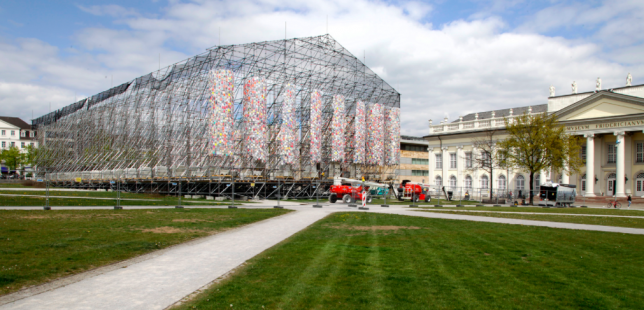
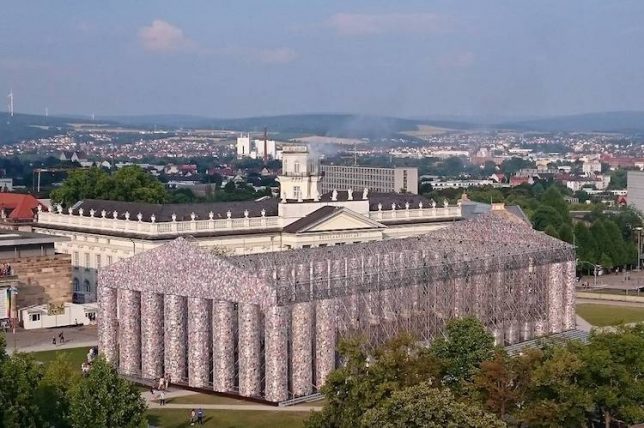
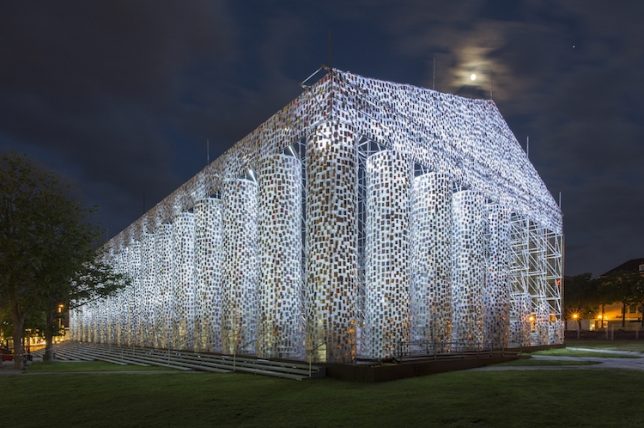
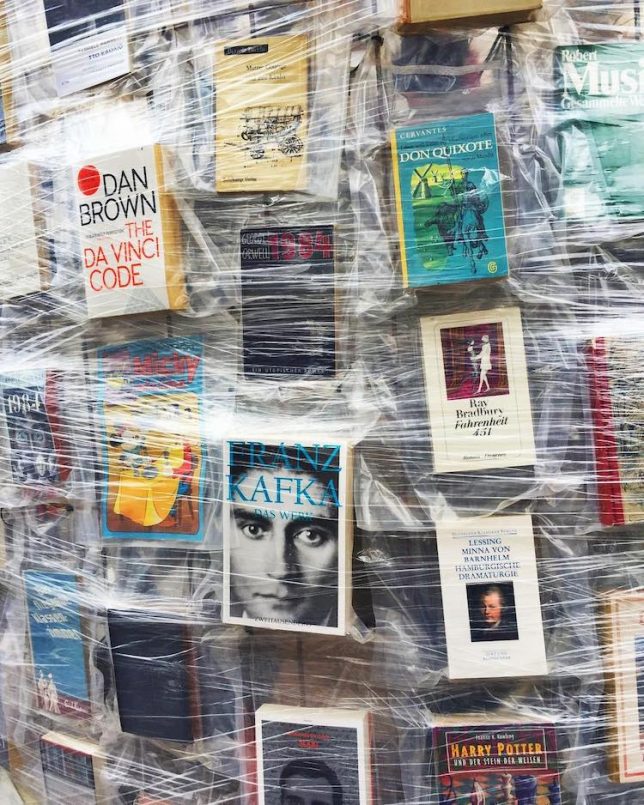
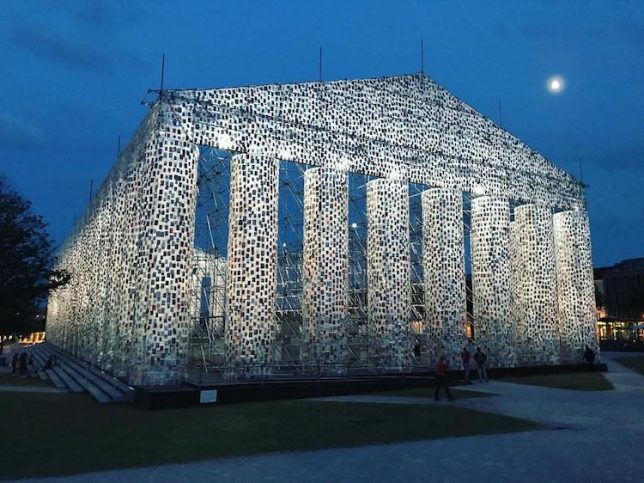
Standing on the site where Nazis burned 2,000 books by Jewish and Marxist writers, this Parthenon is not made of marble, but of 100,000 books that have been or remain banned by various governmental entities around the world. The Parthenon of Books by Argentine artist Marta Minujin faithfully recreates the historic Athens landmark in Kassel, Germany with various editions of 170 banned books, all wrapped in plastic and donated by the public.

Why the Parthenon? Because Athens was one of the world’s first democracies and the Parthenon was built as a negotiation between the government and the Athenian public, with each element voted upon. Today, it stands as a potent symbol of democracy itself. Minujin aims to make a statement about censorship.

The titles include Mark Twain’s The Adventures of Tom Sawyer, the Kite Runner by Khaled Hosseini, Salman Rushdie’s The Satanic Verses, Cecily von Ziegesar’s Gossip Girl, Harry Potter and the Sorcerer’s Stone and George Orwell’s 1984. The books are wrapped around a metal frame like a shingled facade with their covers visible, proving that despite efforts to keep their contents from the public, they have endured.

The Parthenon of Books was erected as part of the Documenta 14 art festival, and maintains the same dimensions as the original. It’s also the second time Minujin has installed the piece; in 1983, she erected a similar installation of books to condemn censorship imposed by the military dictatorship after the falling of the junta in her home country of Argentina.

The artist will keep accepting copies of the banned books and adding them to the structure until Documenta ends on August 4th, and then the books will be distributed to anyone who wants them.

Photos by: Rosa Maria Ruehling, Ictanner, Alex Gorlin, ahoisparky, rachelmijaresfick

Share on Facebook


[ By SA Rogers in Art & Installation & Sound. ]

[ WebUrbanist | Archives | Galleries | Privacy | TOS ]

WebUrbanist

 
Comments Off on Defiant Democracy: Parthenon Replica Made of 100,000 Banned Books

Posted in Creativity


Panda Power Plant: Shaped Solar Panel Array Forms China’s National Animal

06 Jul

[ By WebUrbanist in Drawing & Digital & Gadgets & Geekery & Technology. ]

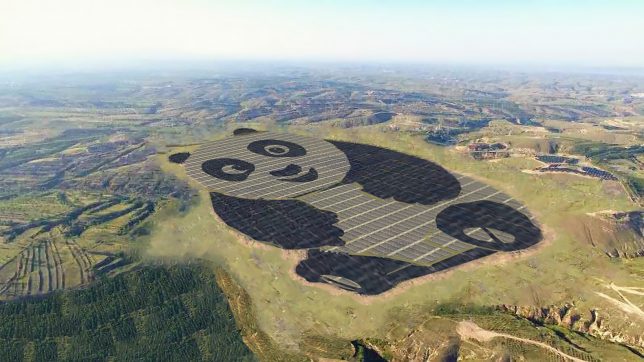
The world’s largest solar power-producing nation is showing off its record-setting green energy production through an adorable new array shaped like a giant panda bear, the national animal of China.

This Panda Power Plant in Datong, China, is the brainchild of Panda Green Energy in partnership with the United Nations Development Program. And this first sections of this huge creature-shaped station mosaic have just been hooked up to the grid.

The plant also going to grow — currently at 50 megawatts, the installation will have a capacity of 100 MW upon completion. Over the next 25 years, the array is estimated to provide as much power as a million tons of coal and to reduce CO2 emissions by over 2.5 million tons.

The whole panda figure is part of the power production process: darker parts of the animal shape (like legs and arms) are made up of monocrystalline silicone solar cells — gray areas (face and torso) are thin-film solar cells.

An educational center alongside the Panda Power Plant aims to teach children about the advantages of solar power and other forms of sustainable energy. Meanwhile, more panda plants are in planning phases as well across China, and some may also end up outside the country.

Share on Facebook


[ By WebUrbanist in Drawing & Digital & Gadgets & Geekery & Technology. ]

[ WebUrbanist | Archives | Galleries | Privacy | TOS ]

WebUrbanist

 
Comments Off on Panda Power Plant: Shaped Solar Panel Array Forms China’s National Animal

Posted in Creativity


Underground Illusions: Anamorphic Parking Lot Turns Flat Paint into Sculpture

06 Jul

[ By SA Rogers in Art & Installation & Sound. ]

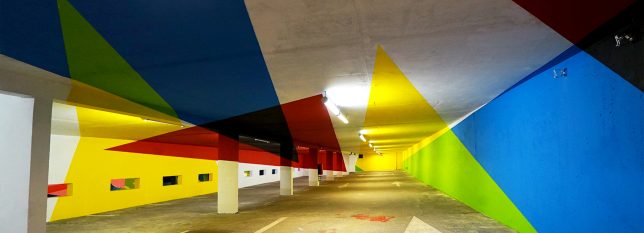
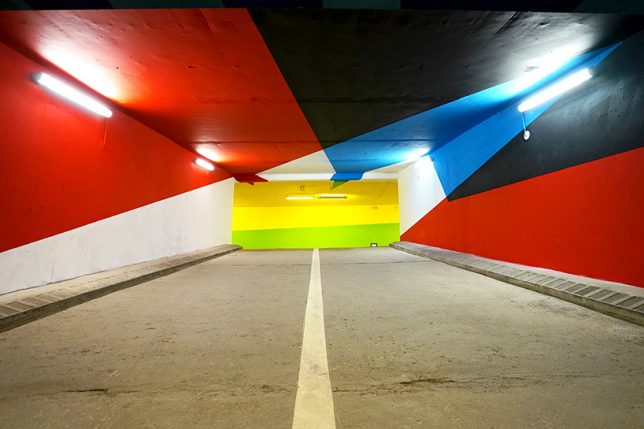
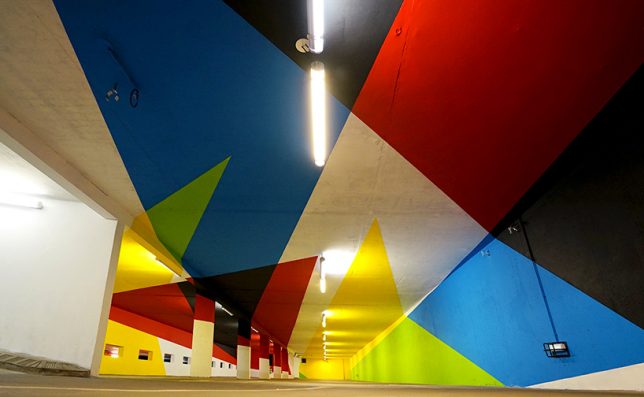
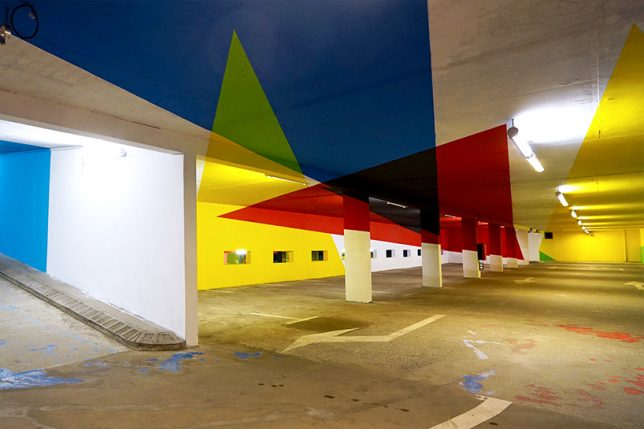
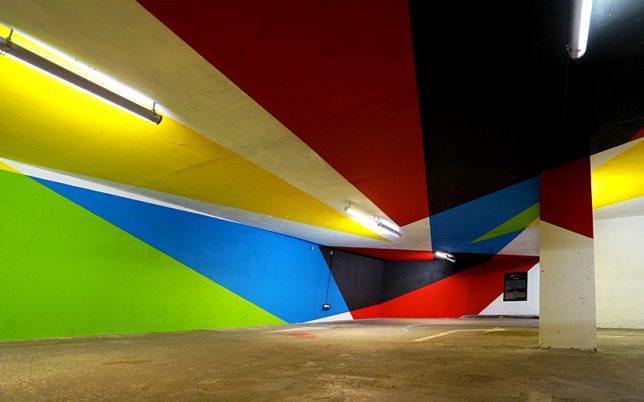
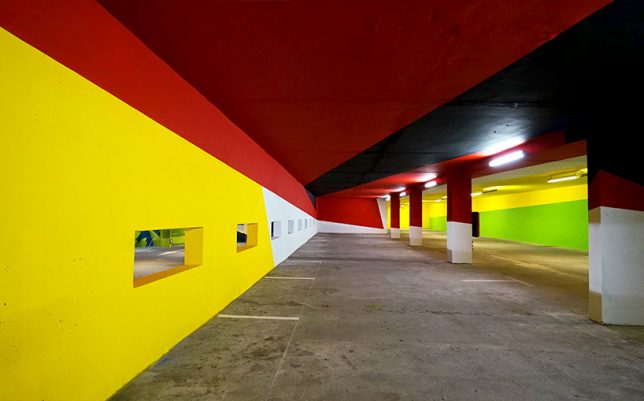
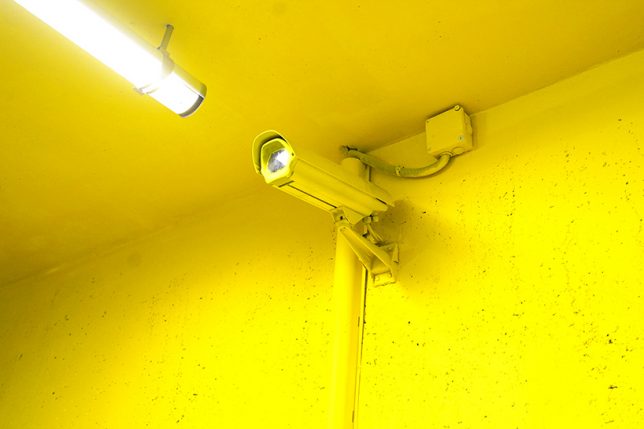
You’re driving through an underground parking garage when suddenly, the colorful geometric shapes splashed all over every surface pop out into three dimensions. Try not to crash your car! When optical illusions line up right, they can be really disorienting, and it’s always cool to see them carried out on a large scale. Argentinian artist Elian Chali got to take over an entire parking lot in the Saint-Gervais Mont Blanc region of France, transforming it into a trompe l’oeil canvas.

“This artwork, which uses basic geometry and primary colors, makes use of the architectural factors where it inhabits,” says Chile. “Each element adopts a new function and the space becomes a huge sculpture. The relationship with the environment is not easy to achieve, therefore not only the walls will be intervene, but the painting will invade everything that you find in your way in order to offer to the users of the parking, the possibility of breathing inside a work of art.”


It’s a pretty cool effect, with some triangles stretching dozens of feet and crossing ceilings, support pillars and walls to end on the floor. Presented by 2KM3 Contemporary Art Platform and curated by Hugues Chevallier and Zoer, the piece comes together as an optical illusion when you hit just the right spot while driving through.

Chali is known for applying his signature vivid style to buildings around the world in the form of massive murals, often taking up entire multi-story facades. Each one takes its respective environment into account in its composition, paying homage to the history of the building and its setting, the materials it’s made of, and the ways in which it has aged or weathered. Keep up with his work on Instagram.

Share on Facebook


[ By SA Rogers in Art & Installation & Sound. ]

[ WebUrbanist | Archives | Galleries | Privacy | TOS ]

WebUrbanist

 
Comments Off on Underground Illusions: Anamorphic Parking Lot Turns Flat Paint into Sculpture

Posted in Creativity


Tread Lightly: 16 Clearly Stunning Transparent Floor Designs

06 Jul

[ By SA Rogers in Drawing & Digital. ]

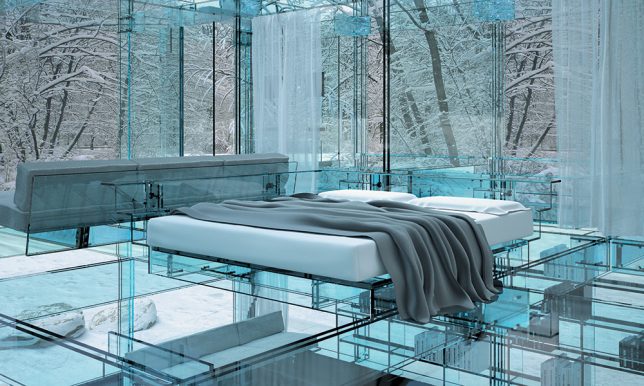
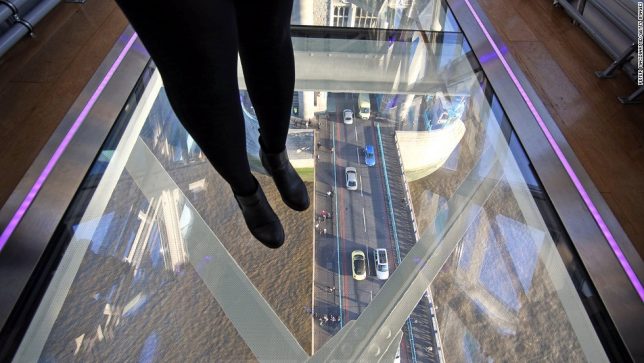
Glass floors give us a glimpse at what’s beneath our feet – whether that’s the historical bones of a building, a swimming pool on the next floor, the city streets or the bottom of a canyon – while freaking us out over the potential of breakage. And yes, sometimes these glass floors really do crack, no matter how ‘unbreakable’ they’re supposed to be, including those situated hundreds of feet above the ground.

2 Glass-Bottomed Bridges in China

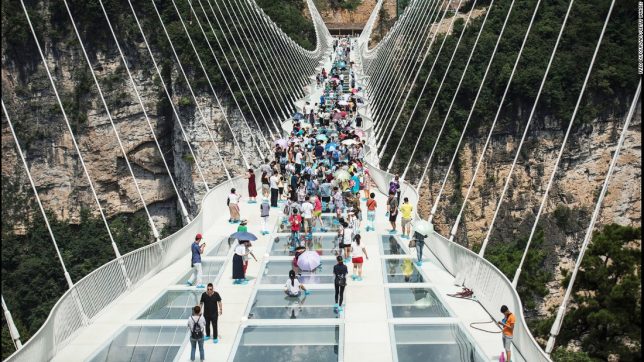
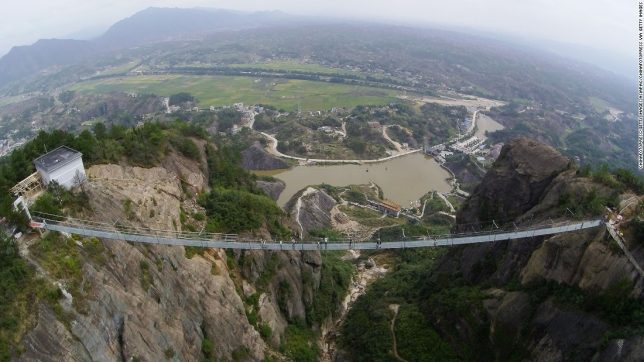
You’d better not be afraid of heights if you’re gonna cross this glass-bottomed bridge in China, suspended a stomach-turning 590 feet above ground level in China’s central Hunan Province. Known locally as Haohan Quiao, the bridge features glass panels measuring 24 millimeters thick, which are supposedly 25 times stronger than regular glass. But this isn’t the only such bridge in China. The second is the structure hanging 1350 feet over the bottom of Zhangjiajie Grand Canyon – and this bridge really did crack at one point under an unexpected volume of visitors, forcing its closure. This one is officially the world’s longest glass bridge.

Office in Oslo by Reiulf Ramstad

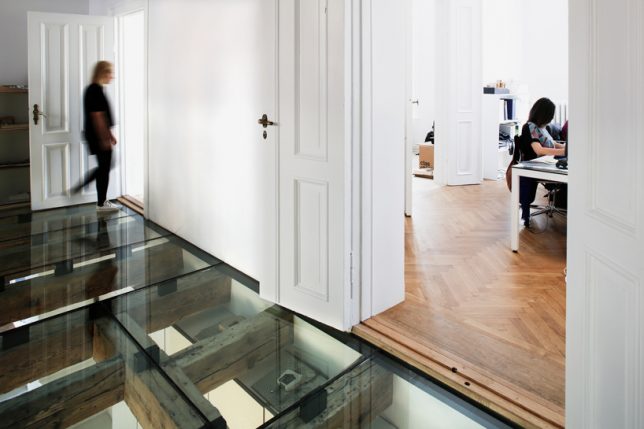
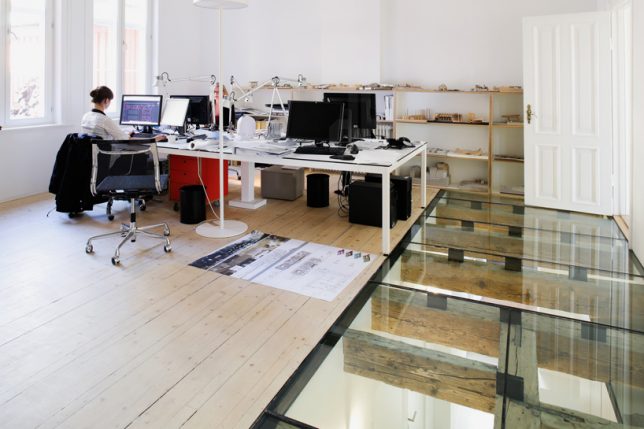
A 19th century villa gets a modern update by architect Reiulf Ramstad, while this transparent section of floor reveals the old beams hidden beneath the newer materials for a reminder of the building’s history.

Hotel Les Cols Pavellons

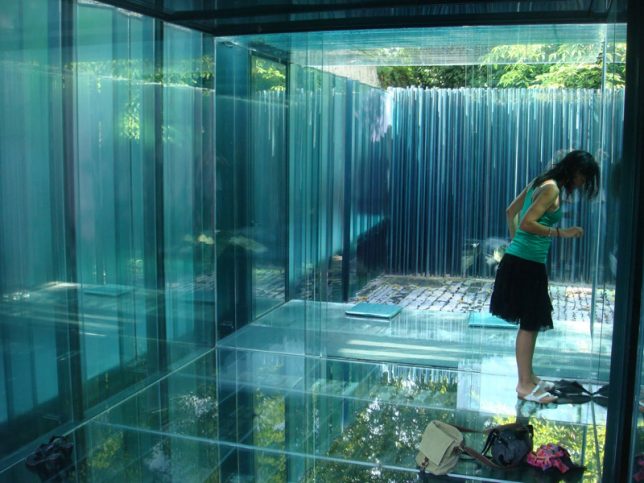
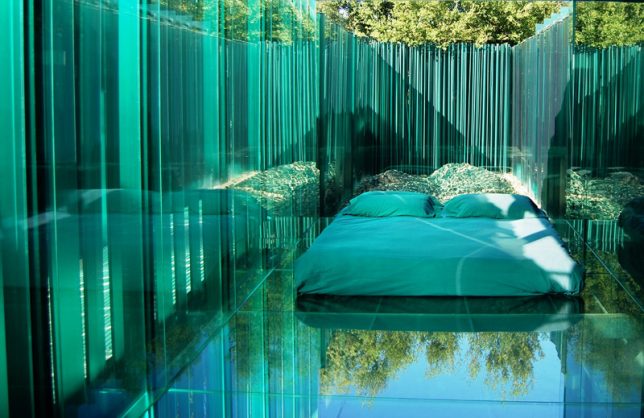
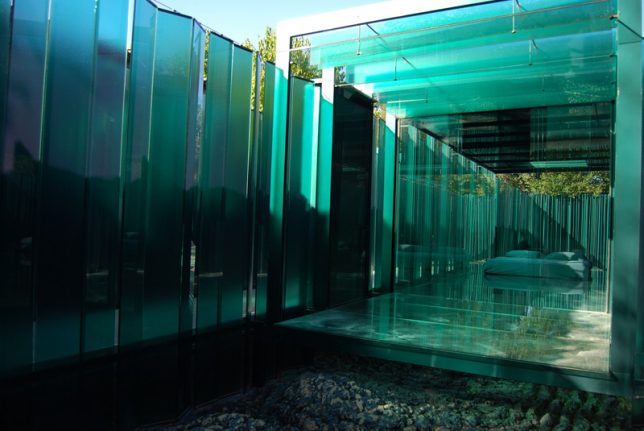
You’d never guess that just beyond the traditional-looking 13th century farmhouse at hotel Les Cols Pavellons in the Catalan town of Olot is a series of ultramodern glass pavilions. These ‘zen’ hotel rooms are like crystal cubes housing almost nothing but a bed, a glass table and chairs and a bath for a minimalist experience that’s all about experiencing the design.

Glass-Bottomed Sky Slide in Los Angeles

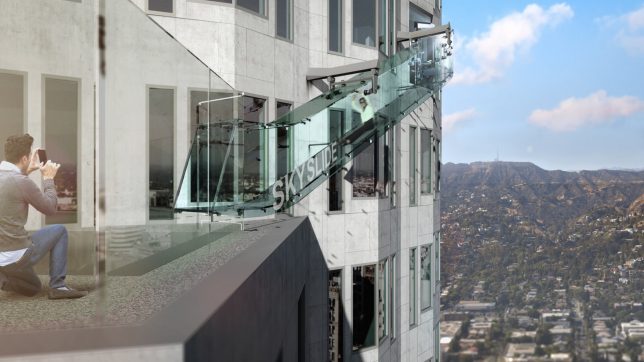
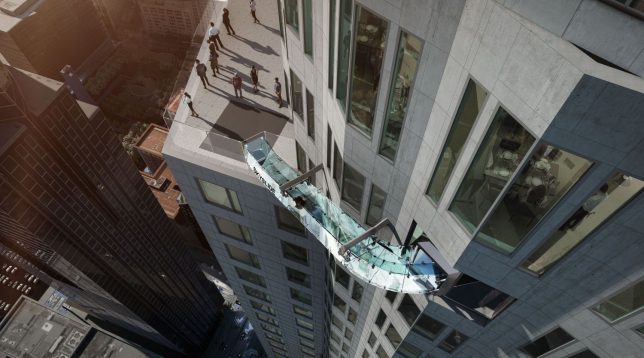
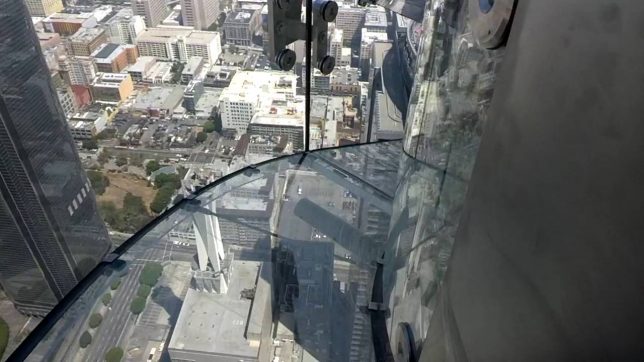
More than just a glass-bottomed observation deck, which is becoming more common all over the world, this attraction at the U.S. Bank Tower in downtown Los Angeles is a fully functioning slide that chutes guests 45 feet from a window on the 70th story to a terrace on the 69th.

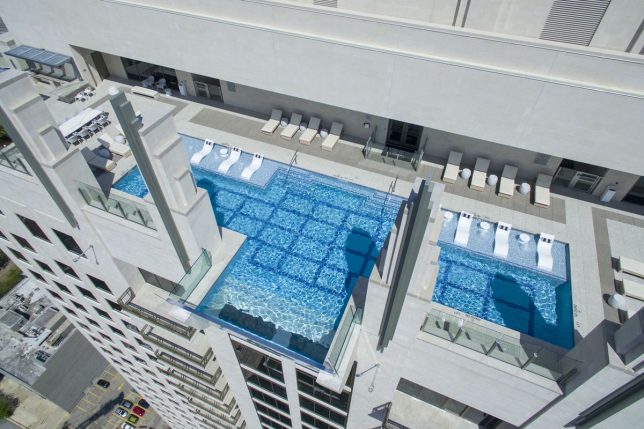
Glass-Bottomed Suspended Pool in Houston

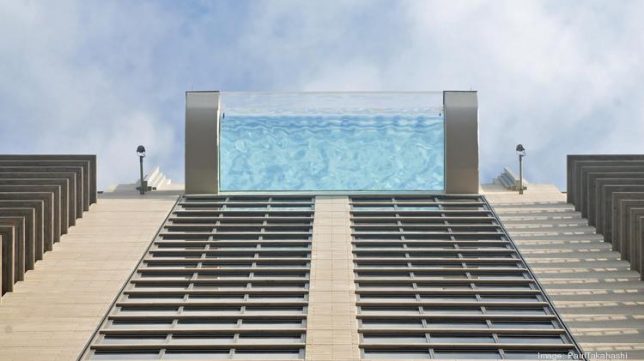
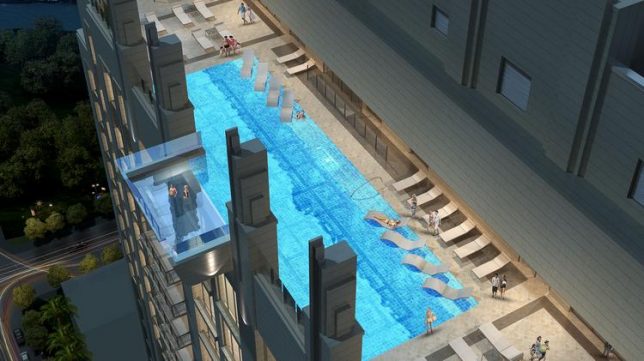
Houston is home to an awesome plexiglass pool that cantilevers 10 feet past the edge of the building, 500 feet above street level. Installed at the new Market Square Tower apartment building by Jackson & Ryan Architects, the skypool offers views of the Houston skyline, and stops passersby in their tracks on the sidewalk below.

Next Page – Click Below to Read More:
Tread Lightly 16 Clearly Stunning Transparent Floor Designs

Share on Facebook


[ By SA Rogers in Drawing & Digital. ]

[ WebUrbanist | Archives | Galleries | Privacy | TOS ]

WebUrbanist

 
Comments Off on Tread Lightly: 16 Clearly Stunning Transparent Floor Designs

Posted in Creativity


Graffiti by Drone: Team of Spray-Painting UAVs to Make Huge Mural in Berlin

05 Jul

[ By WebUrbanist in Art & Drawing & Digital. ]

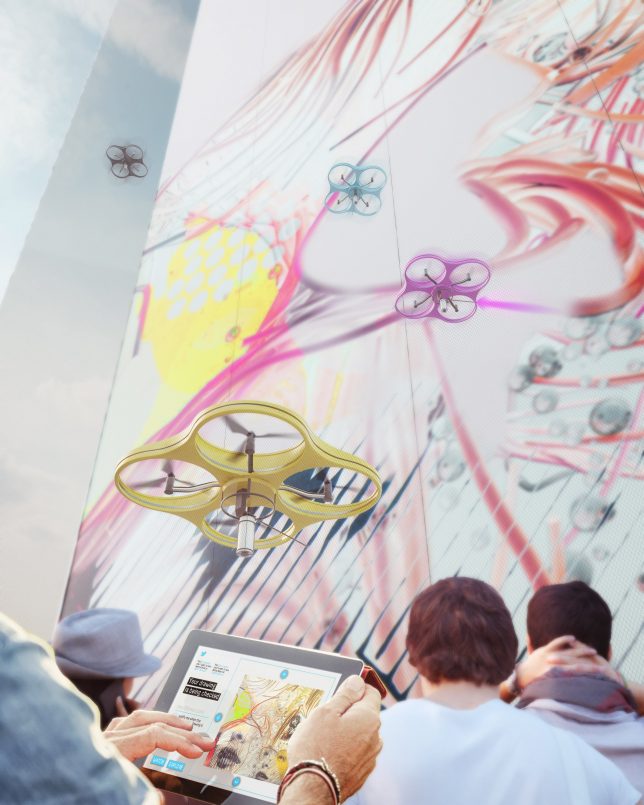
Taking to the skies in Berlin, a set of color-coded drones aims to make the biggest spray-painted mural ever made (at least by robots) using unmanned aerial vehicles equipped with programmed paintings. And this is just the beginning: painting drones could enable civic artwork in hard-to-reach places, and eventually serve practical applications, re-coating infrastructure and architecture.

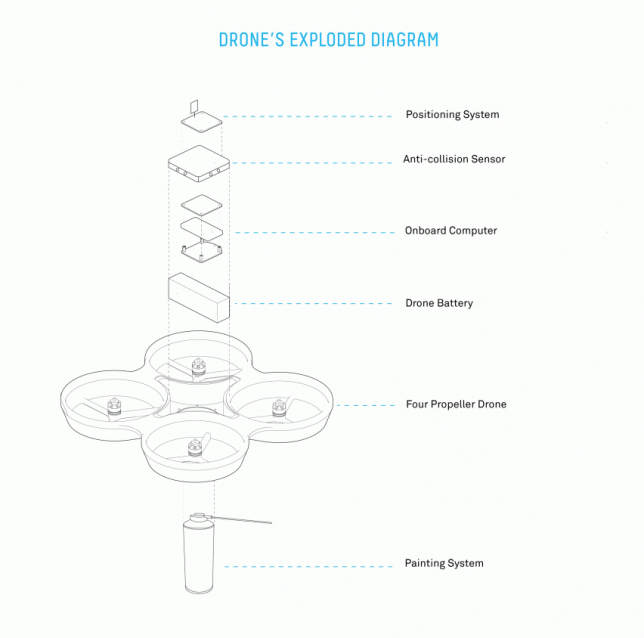
Designed by architect (and director of MIT’s Senseable City Lab) Carlo Ratti’s, the Paint By Drone system employs sets of four drones, each loaded with its own paint tank. Like a CMYK (Cyan, Magenta, Yellow, Key [Black]) system much like modern printers, each contributes a layer to the piece. Together, these layers can add up to a full spectrum of color possibilities.

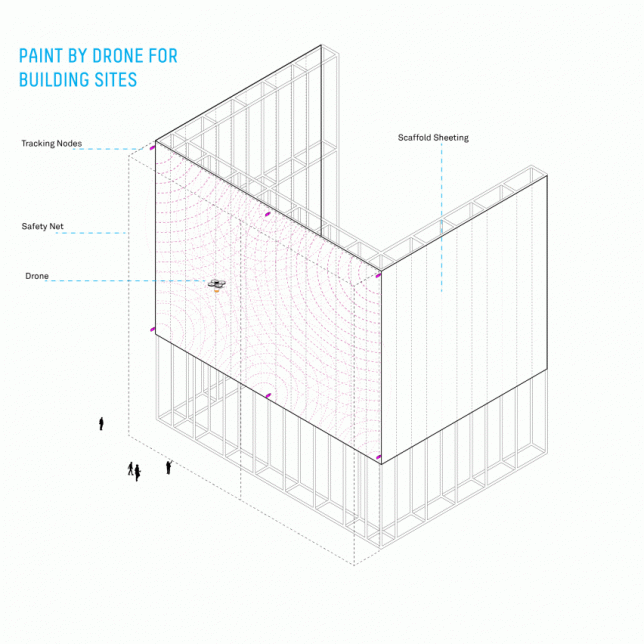
Ratti’s team has used drones before — as tour guides at MIT, for instance — and is now experimenting with ways to engage them with other activities in the built environment, testing their limits in a more public and large-scale setting. In this case, the sheeting that wraps scaffolding, ordinarily left blank and dull (or used for advertising) can be dynamically turned into something beautiful.

The drones can be adapted to work with different inputs, allowing passers by to submit designs, for instance, or to select sections of canvas to paint. For now, they are being deployed on a surface stretched across scaffolding, but the idea is to ultimately enable public art in more places — precision-guided small drones can reach high up on (or under) structures like bridges that would be difficult (and dangerous) for people to access directly.

More on the mechanics of the system: “A central management system regulates the drones’ operations in real-time, from image painting to flight, using an advanced monitoring system that precisely tracks the UAV’s position, detecting multiple devices simultaneously. Furthermore, a protective net placed on the scaffolding’s’ cover allows the drones to move into a safe space. Drones can draw content submitted digitally, via an app. The artistic input can come from either crowdsourced platforms or from a curator orchestrating the contributions of several people.”

“Paint by Drone represents a next step,” in their research, reports Carlo Ratti Associati, “on both vertical drawing and open-source design, which includes projects such as OSARC (Open Source Architecture) at the 2012 Istanbul Design Biennial and the Vertical Plotter system featured at Milan Expo 2015’s Future Food District, which entered the Guinness World Record as the world’s largest plotted image. The new concept pushes the previous boundaries of time and space, having the potential to be installed in just a few hours in a city and paint on any surface.”

Share on Facebook


[ By WebUrbanist in Art & Drawing & Digital. ]

[ WebUrbanist | Archives | Galleries | Privacy | TOS ]

WebUrbanist

 
Comments Off on Graffiti by Drone: Team of Spray-Painting UAVs to Make Huge Mural in Berlin

Posted in Creativity


Wreck: Replica Mercedes Benz S550 Made of Faceted Mirrored Stainless Steel

04 Jul

[ By SA Rogers in Art & Sculpture & Craft. ]

Life is tenuous and luxury easily lost, as illustrated in brilliant glittering fashion by this perfect replica of a Mercedes Benz S550 that has seen better days. Can arbitrarily assigned status be maintained even once an object has been used, abused and discarded for newer and nicer things? Artist Jordan Griska ruminates on these questions and contradictions with ‘Wreck,’ a crushed vehicle reproduced in faceted mirrored stainless steel.

Though its appearance intimates violence and destruction, the car remains undeniably beautiful thanks to all of those individual panes reflecting light at a slightly different angle, making it look like an oversized gemstone. Philadelphia Contemporary, which premiered the sculpture last fall at the city’s Pier 9, notes that the sculpture touches on the ways in which debauchery and decadence can spin out of control.

“Wreck is based on a computer-generated model of a luxury sedan, in a video game, which was manipulated to look like it was involved in a crash that resulted in a fatality,” says Griska. “I crafted 12,000 individual pieces of mirror-finish stainless steel, over the course of almost two years, in order to transform that model into a full-sized three-dimensional monument.”

“The perfect geometry and flawless materiality of the piece reflect the inspiration of idealized digital design, in stark contrast with the grimness of the reality it represents. Beauty, technology and engineering collide with death and reality.”

Share on Facebook


[ By SA Rogers in Art & Sculpture & Craft. ]

[ WebUrbanist | Archives | Galleries | Privacy | TOS ]

WebUrbanist

 
Comments Off on Wreck: Replica Mercedes Benz S550 Made of Faceted Mirrored Stainless Steel

Posted in Creativity