Blog

  • Phase One introduces first Schneider Kreuznach ‘Blue Ring’ zooms

    $ (document).ready(function() { SampleGalleryV2({“containerId”:”embeddedSampleGallery_0196598875″,”galleryId”:”0196598875″,”isEmbeddedWidget”:true,”standalone”:false,”selectedImageIndex”:0,”startInCommentsView”:false,”isMobile”:false}) });

    Phase One has announced two Schneider Kreuznach ‘Blue Ring’ lenses designed with the XF system in mind, the first zooms in the series. The Schneider Kreuznach 40-80mm LS F4.0-5.6 and the Schneider Kreuznach 75-150mm LS F4.0-5.6 are optimized for the company’s full frame (53.7 x 40.4mm) medium-format system.

    The new Blue Ring lenses join the recently announced Schneider Kreuznach 110mm LS F2.8 and 240mm LS F4.5. Both feature the ability to sync flash at shutter speeds up to 1/1600sec and built-in electronics that allow autofocus to be individually calibrated. Phase One claims this series of lenses is built to its highest quality assurance standards

    Phase One Announces First Schneider Kreuznach Blue Ring Zoom Lenses

    Prime Lens Quality Featuring Full Frame Sensor Coverage, Improved Precision, and Advanced Electronics

    COPENHAGEN, July 18, 2016 – Phase One, creator of the world’s finest open-platform high-end camera systems and professional imaging software, today added two new Schneider Kreuznach lenses to its comprehensive family of lenses. These two Blue Ring zoom lenses feature impressive front glass elements, with front lens diameters of 63mm and 65mm respectively, delivering edge-to-edge coverage of full frame 645 format. Used on a Phase One XF 100MP system, the lenses are able to take full advantage of the sensor’s resolution; a 100MP capture renders a 100MP image with breathtaking fidelity.

    — The Schneider Kreuznach 40-80mm LS f/4.0-5.6 Zoom lens renders ultra sharp resolution on all zoom distances from wide to normal focal length;

    — The Schneider Kreuznach 75-150mm LS f/4.0-5.6 Zoom lens delivers great versatility. It’s preferred for on-location fashion shoots, with a range from normal to telephoto.

    Together, these two lenses comprise an effective zoom range from 40mm to 150mm. Each lens is equipped with a zoom lock function on its barrel and is designed to maintain focus position while zooming. They each support flash synchronization up to 1/1600s. The new built-in electronics permit individual focus calibration when used with the Phase One XF Camera System.

    “Creating optics this large with such tight tolerances is quite an achievement, “said Espen Beck, Phase One Senior Product Manager. “A Phase One full frame 100MP medium format sensor is 1.5 times larger than the cropped size 50MP medium format and 2.5 times larger than sensors found in high-end 35mm DSLRs. Capturing the full resolution of a square sensor this size with a round lens and avoiding crop means that the entire lens must be larger, which requires larger movements of individual lens elements while meeting the requisite standards for speed and precision.

    “Schneider Kreuznach lenses are designed to deliver the ultimate analogue input to be shaped and refined with the Phase One XF 100MP Camera System and Capture One software. This design also benefits the Phase One XF 50MP system, which can exploit the ‘sweet spot’ of the lens, producing impeccable results.”

    Designed by Schneider Kreuznach and produced by Phase One Japan, Schneider Kreuznach “Blue Ring” zoom lenses are refined with robust, aerial-grade mechanics and manufactured to meet Phase One’s highest quality assurance standards. Their enhanced precision, mechanical build, and look and feel complement the Phase One XF Camera System design.

    For more information, including specifications for the two new “Blue Ring” lenses, please go to: https://www.phaseone.com/en/Products/Camera-Systems/Lenses

    There will be a hands-on Webinar demonstration of the lenses on Tuesday, July 19.

    For more information, times and to register, please go to:

    https://attendee.gotowebinar.com/rt/2633991530877302018

    Availability and Pricing

    The two new Blue Ring Zoom lenses are available to order now. They are compatible with the Phase One XF, Phase One 645DF+ and Mamiya 645DF+ or DF camera systems.

    The Schneider Kreuznach 75-150mm LS f/4.0–5.6 Zoom is shipping now. Manufacturer suggested retail price: 5.490 EUR / 5,990 USD

    The Schneider Kreuznach 40-80mmLS f/4.0–5.6 Zoom is expected to ship by August 1, 2016. Manufacturer suggested retail price: 7.990 EUR / 8,990 USD

    Phase One Camera Systems and all accessories are available through Phase One photography partners worldwide: www.phaseone.com/partners.

    For a demo of a Phase One Camera System, please sign up here: www.phaseone.com/demo

    About Phase One

    Phase One A/S is the world-leading provider of medium format digital photography systems and imaging solutions for professional photographers and industrial applications. Established in the early 1990s, Phase One is a true digital photography pioneer with a passionate commitment to image quality excellence and creative freedom. Phase One’s engineering and design expertise has produced imaging breakthroughs from high- resolution camera systems to advanced software for better photographic workflows and raw file editing. Phase One’s understanding and ability to optimize hardware and software integration underscores their award winning Capture One Pro software – widely preferred by professional photographers.

    Phase One’s industrial division focuses on imaging accuracy for industrial applications ranging from aerial image acquisition to cultural heritage preservation – from mapping the globe, to protecting priceless works of art and documents.

    Today, with control over all aspects of the medium format camera system supply chain, Phase One is uniquely positioned to help photographers and imaging experts everywhere stand out above the competition and realize their creative visions without compromise.

    Based in Copenhagen Denmark and embracing the high demand of Scandinavian design excellence, Phase One is dedicated to delivering the best image quality and user experience. With offices in New York, London, Tokyo, Cologne, Hong Kong, Shanghai and Tel Aviv, and with its expert teams of global partners, Phase One is committed to serving and supporting its customers worldwide.

    Phase One and Capture One are registered trademarks of Phase One A/S. All other brand or product names are trademarks or registered trademarks of their respective holders.

    Learn more here:

    Phase One at: http://www.phaseone.com

    Twitter at: http://www.twitter/PhaseOnePhoto

    Facebook at: http://www.facebook.com/pages/PhaseOnePhoto

    Google+ at: http://plus.google.com/+phaseone/posts

    LinkedIn at: http://www.linkedin.com/company/16665
    Articles: Digital Photography Review (dpreview.com)

  • Dystopian Textile: Beirut Architect Builds Bulletproof Headscarf

    [ By WebUrbanist in Design & Products & Packaging. ]

    head scarf

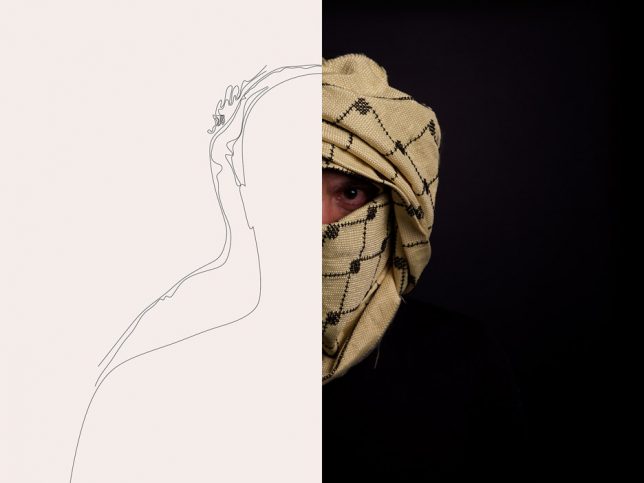
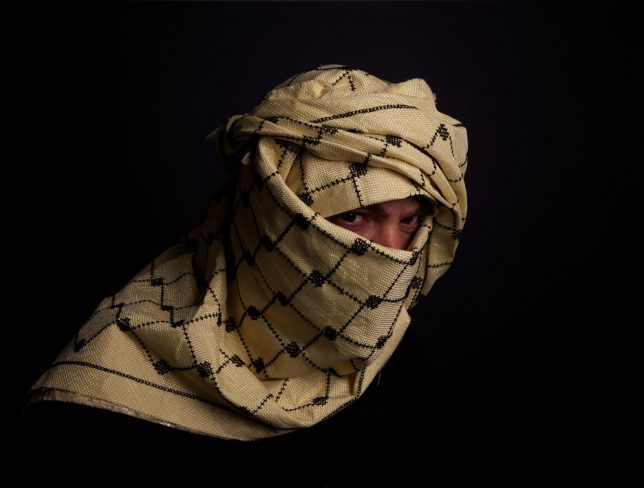
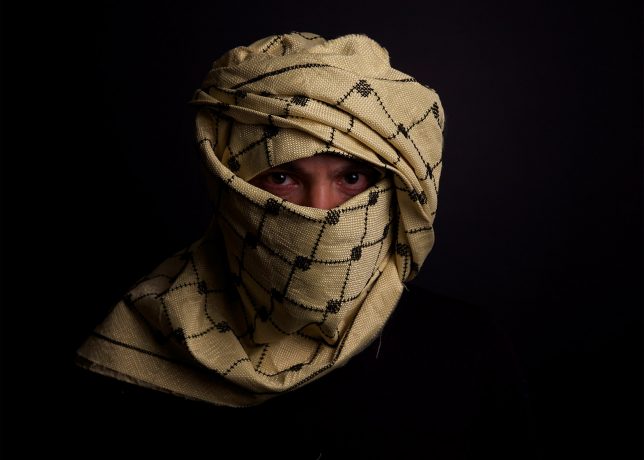
    Somewhere between disturbing practical and abysmally pessimistic, this gender-neutral, anti-ballistic headscarf draws on a long history of regional fashion traditions but with a depressingly contemporary twist: it is constructed from Kevlar.

    bullet resistant textile design

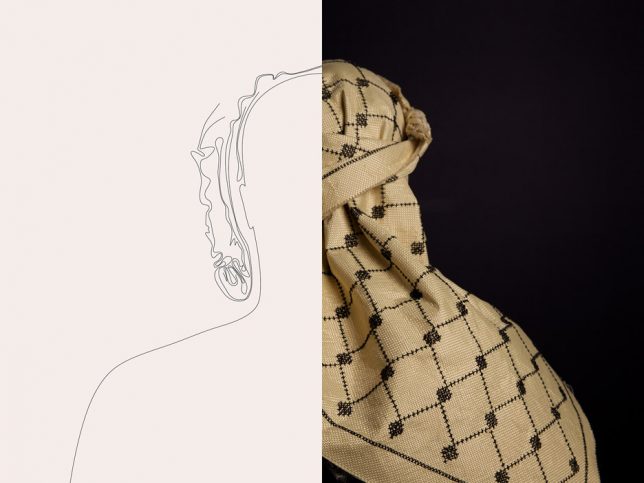
    Salim al-Kadi seems ambivalent on the question of the whether this accessory is practical or political, but he put serious effort into making it work, regardless. The K29 Keffiyeh 001 was made from para-aramid synthetic fiber, of the kind used in body armor including bulletproof vests.

    bulletrpoof head wrap kevlar

    The architect brought the Kevlar to a Palestinian refugee living in Lebanon and had her weave in a traditional pattern without compromising the bullet-resisting efficacy of the material. Of course, a shot to the head, cloth or no, is certain to be damaging if not deadly, regardless of whether the bullet is stopped.

    bullet scarf middle east

    Historically, keffiyeh have been worn around the Middle East as a way for men (and women) to gain protection from sun and sand. It is wrapped in different ways depending on the place, but does not stand out, a sort of hidden-in-plain-sight statement about the state of war and tension in the region.

    Share on Facebook


    [ By WebUrbanist in Design & Products & Packaging. ]

    [ WebUrbanist | Archives | Galleries | Privacy | TOS ]


    WebUrbanist

  • Samyang introduces XEEN 135mm T2.2, first ‘summer blockbuster’ lens

    Samyang is making good on its promise of a new lens every week for five weeks, kicking things off with a XEEN 135mm T2.2 cinema lens. It slots into the company’s relatively new lineup as the longest lens in the range.

    Like its siblings, the XEEN 135 is offered with interchangeable mount fittings for PL, Canon EF, Nikon F, Sony E and Micro Four Thirds bodies. Its manual focus only and uses an 11-blade aperture. No price is given, but XEEN series lenses have averaged around $ 2500 each.
    Articles: Digital Photography Review (dpreview.com)

  • The Brave New World of Robotic Pizza Delivery is Almost Here

    [ By SA Rogers in Gadgets & Geekery & Technology. ]

    robot food delivery

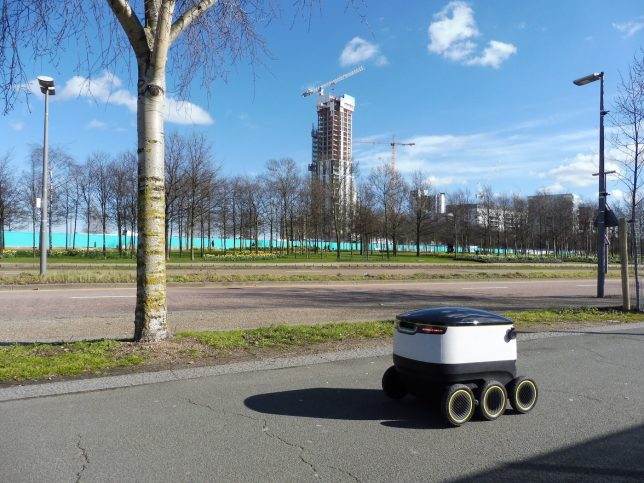
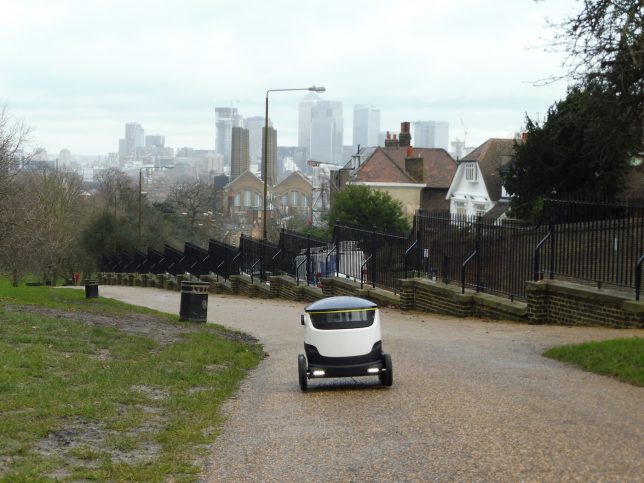
    Thus far, the 21st century has been pretty disappointing for those of us who grew up expecting flying cars, teleportation devices and recreational trips to the moon by the time we were adults. While there were some things sci-fi films like Back to the Future got right – including video calls, flat-screen televisions, wearable technology and biometrics – nobody short of a billionaire villain type actually has a robotic butler that can bring them food at the push of a button. But if you live in London, you will soon be able to access the next best thing: dinner delivery via a six-wheeled droid.

    food droid 2

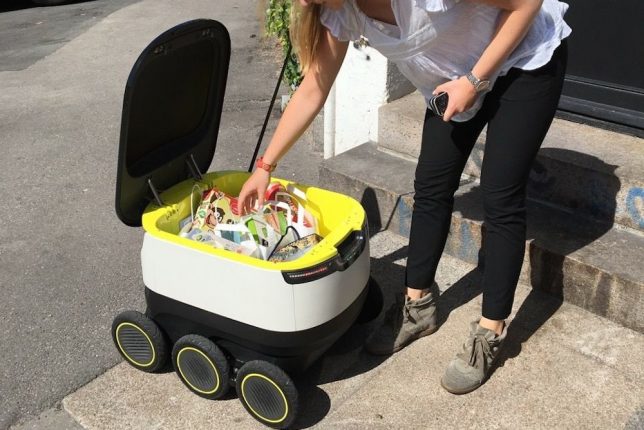
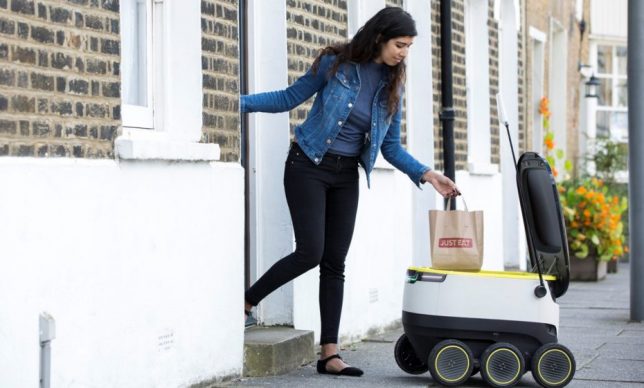
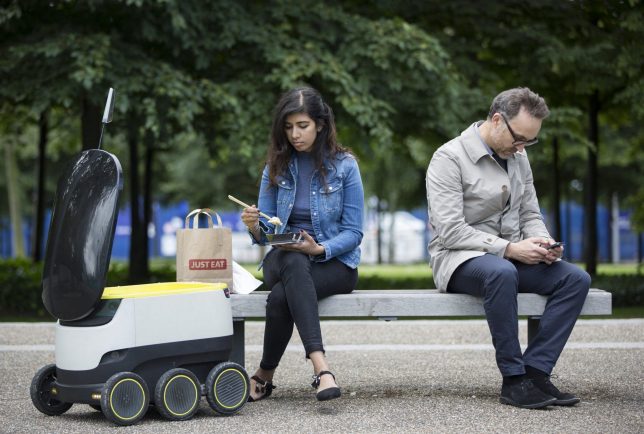
    Starship Technologies, which is run by two Skype co-founders, is partnering with London food delivery startups Just Eat and Pronto to send what essentially look like wheeled coolers through the streets, dropping off meals to customers within a 2-3 mile radius. Tests will also be carried out in Dusseldorf, Germany, and in Starship’s home city of Tallinn, Estonia. This is on top of 5,000 miles of previous testing in places like Glastonbury, where the bots have “met over 400,000 people without a single accident,” but this is the first time they’ll be delivering food to actual paying customers. Starship is expected to announce rollouts in the U.S. in the coming months.

    robot food delivery 4

    Is it really the next best thing to a robot butler, though? The first question that pops into many people’s heads when reading about this technology is whether somebody can just kick that self-driving droid around a little bit and steal your food for themselves. It’s a fair question. Starship says for these first test drives, the bots won’t be fully automatic – the company will monitor their progress remotely and take over if anything goes awry.

    robot food delivery 3

    food droid

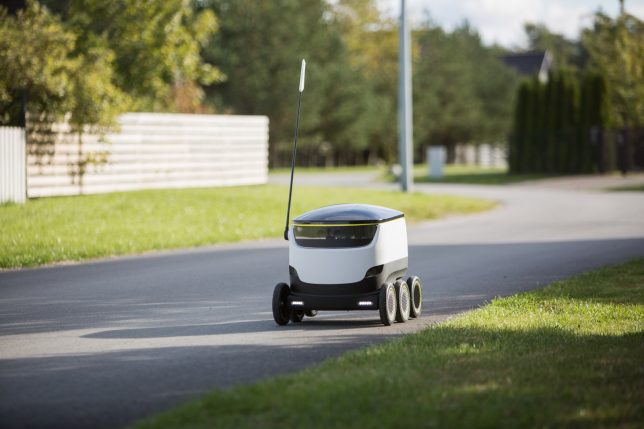
    The zero-emissions delivery bots sense obstacles in their path and navigate around pedestrians, getting out of the way as necessary, as seen in the video above. Not just anyone can access what’s inside, either. The customer who ordered the food has to use an app on their phone to open it, ensuring that the robot doesn’t just roll up to somebody else who lives in your apartment building and give them your pad thai.

    Share on Facebook


    [ By SA Rogers in Gadgets & Geekery & Technology. ]

    [ WebUrbanist | Archives | Galleries | Privacy | TOS ]


    WebUrbanist

  • Mindshift Gear gives Moose Peterson backpacks a facelift

    Mindshift Gear has given the Moose Peterson backpack range an update with new design elements and materials, according to the California-based company. The bags now feature tuck-away belts and harnesses, stronger seams and shoulder straps as well as new zipper pulls that make it easier to open and close the compartments when wearing gloves. The three bags each retain the original ‘Moose Ear’ automatically closing flaps that help to keep dust out of the main sections of the bags, but now the bags are slightly larger to take accomodate bigger modern DSLR cameras.

    The bags each hold three DSLR bodies with attached lenses, with the MP-1 V2.0 being the larger model that’s suitable for very long lenses, and the MP-7 V2.0 is the smaller, but still capable of holding a 70-200mm type lens on one of the bodies. The MP-1 V2.0 is priced at $ 349.99, the MP-3 V2.0 is $ 279.99 and the MP-7 V2.0 is $ 199.99.

    For more information visit the Mindshift Gear website. 

    Press release:

    MindShift Gear and Moose Peterson Collaborate to Update Classic Moose Peterson Outdoor Photography Backpacks

    SANTA ROSA, CALIF. – Working in partnership with renowned wildlife photographer Moose Peterson, MindShift Gear has updated the three classic Moose Peterson backpacks. Initially designed for wildlife and safari photographers, the backpacks feature a three-compartment layout that helps protect their gear from the elements.

    The Moose Pack series is available in three sizes: MP-1, MP-5 and the smallest, the MP-7. The backpacks can carry up to three DSLR camera bodies with telephoto lenses attached—up to 600mm f/4. This strategy enables photographers to be ready to capture wildlife at any distance without changing lenses or exposing the sensor to the elements.

    The backpacks also feature the same innovative “Moose Ear” flaps that close automatically, protecting camera gear from dust and debris common in wildlife photography. And because nature photographers often travel to remote locations, the packs are designed to meet airline carry on requirements, and even fit in the overhead compartment of the smallest regional jets.

    Moose Peterson is a recognized Nikon USA Ambassador, Lexar Elite Photographer, recipient of the John Muir Conservation Award, and Research Associate with the Endangered Species Recovery Program. He also shares his knowledge through writing, being published in over 143 magazines worldwide, authoring 28 books including Photographic FUNdementals and Taking Flight and Captured, and lecturing across the country to thousands of photographers. As one of the original Nikon shooters to receive the D1 in 1999, Moose became the first wildlife photographer to shoot strictly digital.

    “Moose Peterson backpacks are renowned for serving the needs of traveling photographers,” said Doug Murdoch, Think Tank Photo’s CEO and lead designer. “It has been a joy collaborating with him on bringing these classic designs back to the marketplace. While their design and materials have been enhanced, the designs of all three backpacks retain Moose’s original vision.”

    KEY FEATURES

    • Original 1998 ‘Moose Ears’ design with auto-close compartment flaps protect the interior from dust, spray, wind, etc.
    • Three compartment system allows you to keep lenses attached providing the quickest way to access gear
    • Tuck-away harness system with removable waistbelt easily allows you to streamline your bag when loading it in a train, plane or automobile (MP-1 & MP-3 only)
    • Sized for carry-on, allowing you to get the maximum amount of gear on the plane
    • Long glass carrying solution with body attached
    • Tripod/monopod mounting system on side and front
    • Flap guard protects front zippers
    • Highest quality RC Fuse YKK zippers, 600D and 420D nylon construction for long-lasting durability and strength
    • Dual-density foam padded shoulder harness, cushioned with air mesh
    • Zippered side pockets fit full-sized flashes (MP-7 only)
    • Stretch water bottle pocket fits 32 oz. water bottle
    • Robust zipper pulls are easily gripped with or without gloves
    • Seam-sealed rain cover/drop cloth included protects against rain and dust

    GEAR CAPACITY

    Moose Peterson MP-7 V2.0

    • Holds 1 gripped body attached to 70–200mm f/2.8 and two ungripped bodies with primes attached, two flashes and accessories
    • Or, holds 1 gripped body and one ungripped body with 70–200mm f/2.8, 24–70mm f/2.8, 14–24mm f/2.8 (or 16–35mm f/2.8), a 2x teleconverter, two flashes and accessories
    • Maximum lens size: 200mm f/2 attached to a gripped body

    Moose Peterson MP-3 V2.0

    • 3 gripped DSLRs with lenses attached, 1–2 additional lenses and 1–2 flashes and accessories
    • Or, 3 gripped bodies and 1 ungripped body detached from lenses, 4–5 standard zoom lenses, 1–2 flashes, a 2x teleconverter and accessories
    • Maximum lens size: Holds 600mm f/4 detached or 500mm f/4 lens attached to a gripped body

    Moose Peterson MP-1 V2.0

    • 3 gripped DSLRs with lenses attached,3–5 additional lenses, 2x teleconverter,1–2 flashes and accessories
    • Or, 3 gripped bodies and 1 ungripped body detached from lenses, 7–8 standard zoom lenses, 1–2 flashes, a 2x teleconverter and accessories
    • Maximum lens size: Holds 800mm detached

    MATERIALS
    Exterior: For superior water resistance, all exterior fabric has a durable water-repellant coating, plus the underside of the fabric has a polyurethane coating. The backpacks also feature highest-quality abrasion-resistant YKK® RC-Fuse zippers, 420D velocity nylon, 600D polyester, 1680D ballistic nylon, 320G DuraStretch mesh, nylon webbing, 350G airmesh, nylon webbing, 3-ply bonded nylon thread.

    Interior: high-density velex, 210D silver-toned nylon lining, hexa mesh pockets, high-density closed-cell foam, 3-ply bonded nylon thread.

    TECHNICAL SPECIFICATIONS

    Moose Peterson MP-7 V2.0
    External Dimensions: 15” W x 15.5” H x 8” D (38.1 x 39.4 x 20.3 cm)
    Large Camera Compartment: 5.3” W x 14” H x 6.5” D (13.5 x 35.5 x 16.5 cm)
    Small Camera Compartments (each): 5” W x 6.3” H x 6.5” D (12.5 x 16 x 16.5 cm)
    Weight: 2.5–3.3 lbs. (1.1–1.5 kg) (Lower weight excludes all dividers and accessories)

    Moose Peterson MP-3 V2.0
    External Dimensions: 14” W x 20” H x 8” D (35.5 x 50.8 x 20.3 c m)
    Large Camera Compartment: 6.8” W x 18” H x 6.8” D (17.3 x 46 x 17.3 cm)
    Small Camera Compartments (each): 6” W x 8.5” H x 6.8” D (15 x 21.5 x 17.3 cm)
    Weight: 3.2–4.6 lbs. (1.5–2.1 kg) (Lower weight excludes all dividers and accessories)

    Moose Peterson MP-1 V2.0
    External Dimensions: 14” W x 23” H x 8” D (35.5 x 58.4 x 20.3 c m)
    Large Camera Compartment: 6.8” W x 21.8” H x 6.8” D (17.3 x 55. 4 x 17.3 cm)
    Small Camera Compartments (each): 6” W x 10” H x 6.75” D (15 x 25 x 17 cm)
    Weight: 3.7–5.1 lbs. (1.7–2.3 kg) (Lower weight excludes all dividers and accessories)

    Articles: Digital Photography Review (dpreview.com)

  • Nico360 to be ‘world’s smallest’ 360-degree camera

    A Hong Kong-based startup is looking to fund production of Nico360, a waterproof 360-degree camera. Claiming it will be the ‘world’s smallest’ at 46 x 46 x 28mm, Nicocam says its camera will include two 16MP Sony sensors capable of 25MP still images and 2560 x 1440/30fps video. As with many other 360-degree cameras, Nico360 will be able to produce content for stereoscopic VR headsets. A 1/4″ mount will be used, and the camera will accept microSD cards.

    Users will be offered four video recording options: Flat Mode, Sphere Mode, Planet Mode, and VR Mode. Spherical panoramas will be created via in-camera stitching; Nico360 will also offer live video streaming using either via Bluetooth 4.0 or WiFi 5Ghz/ac. Finally, Nico360 will feature an integrated stereo microphone, stabilization and 32GB of internal storage. 

    Nicocam plans to sell Nico360 for $ 199. A $ 99 pledge will reserve backers a ‘super early bird’ version on Indiegogo, and the camera is estimated to ship to supporters in October 2016. The funding campaign also offers a ‘full accessories pack’ for $ 89 and a 5000mAh Battery Selfie Stick for $ 39.

    Via: Indiegogo

    Articles: Digital Photography Review (dpreview.com)

  • 7 Tips for Better Marine Wildlife Photography

    I’m an ocean girl. To me, there is no better way to spend a summer day than to get out on the water and explore the mystery that is the deep blue sea, and hopefully experience some of the majestic creatures that live in it and on it.

    Whether you are photographing on shore or from a boat, there are a few tips that will help you improve your marine wildlife photography. Underwater photography, though, is an entirely different thing, with a different set of techniques, that are not covered in this article.

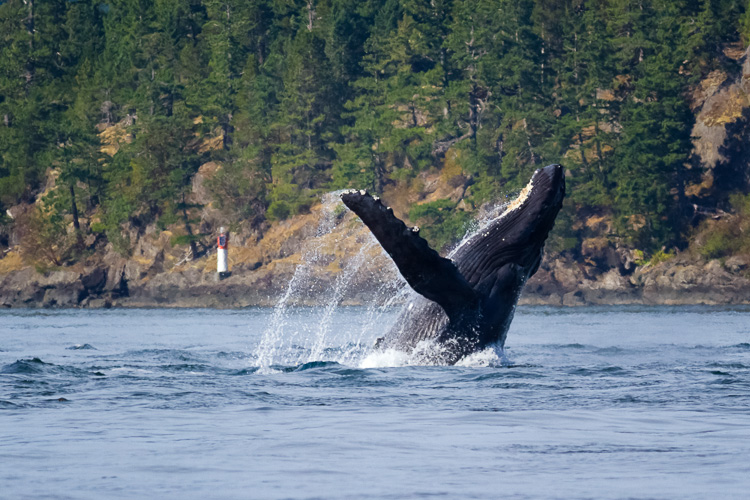
    Humpback whale breaching near Campbell River, British Columbia

    Humpback whale breaching near Campbell River, British Columbia

    The photos in this article were all made in the cool waters off the west coast of North America, but the same tips apply to marine photography all over the world.

    1 – Explore the Shore

    Let’s start with the shore where you’ll find all sorts of sea creatures. Check the tide tables, and if you can find a rocky beach at low tide. You’ll discover all the animals that live in the shallow tide pools such as urchins, sea anemones, starfish, mollusks and crabs.

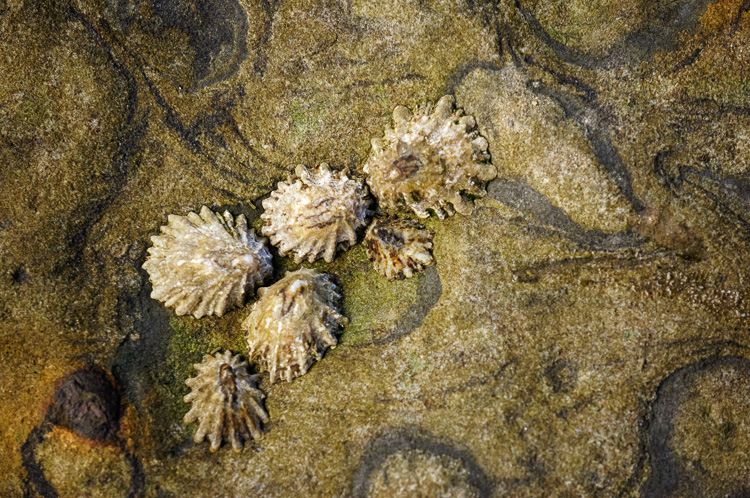
    Mollusks in a Tide Pool in Big Sur, California

    Mollusks in a Tide Pool in Big Sur, California

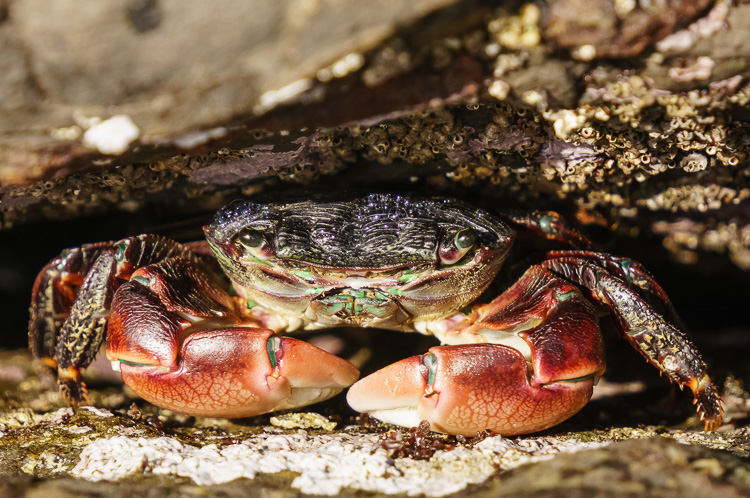
    Except for the crabs, they don’t seem to mind your presence one bit, so you can get some practice photographing the creatures that don’t notice you. Crabs sometimes pay attention, but if you don’t get too close, you may find they come out of the tide pools, and out from under rocks, and sometimes put on a bit of a show. I photographed this crab in Big Sur, California, where it came out from a crack in the rocks, and proceeded to make all sorts of bubbles as it began molting.

    Crab at Big Sur, California

    Crab at Big Sur, California

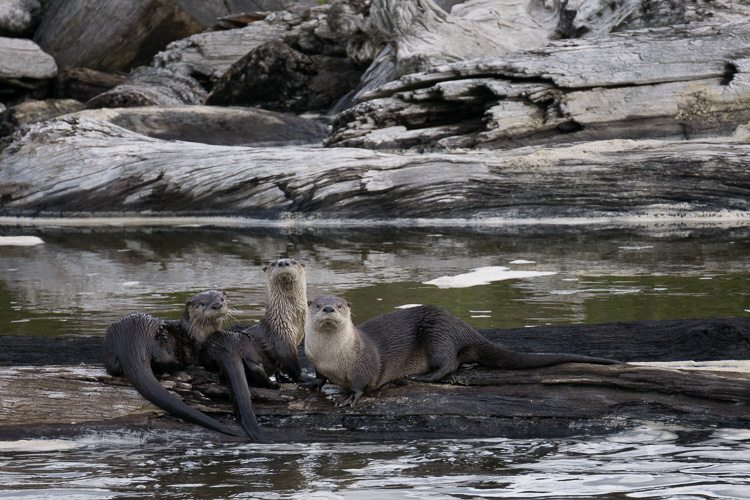
    Close to shore, you may also be able to photograph sea otters and river otters (which are also found in salt water). Like other animals, given enough space and time to get used to you, they will go about their daily tasks in your presence, even looking directly at you (and your camera) allowing you to make images that feel intimate.

    River Otters, Redwood National Park, California

    River Otters, Redwood National Park, California

    You’ll also find all kinds of sea birds to photograph such as gulls, geese, ducks, cormorants, and eagles.

    2 – Get Out in the Deep

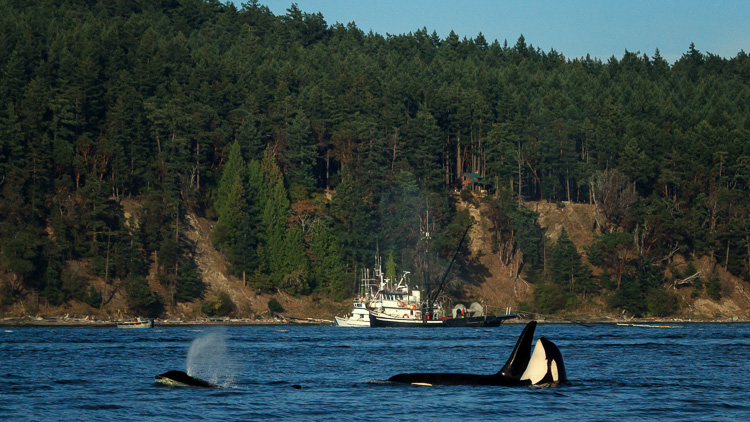
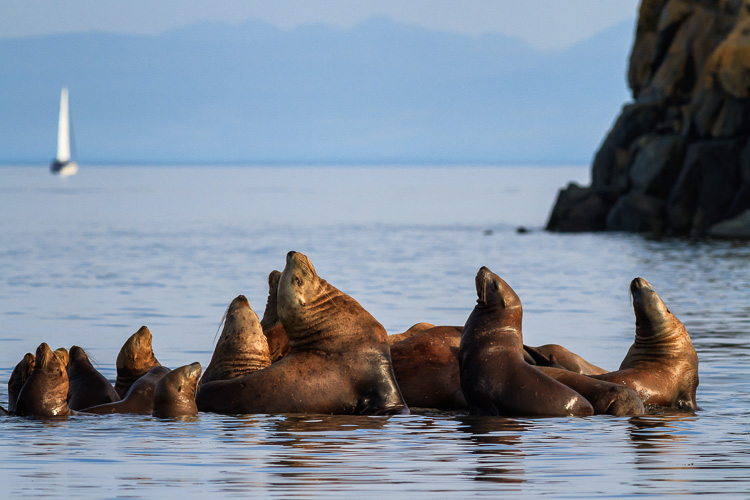
    My favourite way to photograph marine wildlife is to get out in a boat. Whether you kayak, row, paddle, sail or use a power boat, there’s nothing like the freedom a boat gives you when it comes to exploring the ocean and finding wildlife. If you don’t have access to a boat, consider renting one. Or, try a whale watching tour, which are well worth the money for the photo opportunities they provide including whales, dolphins, seals, and sea lions.

    Orcas and commercial fishing boats near San Juan Island, Washington.

    Orcas and commercial fishing boats near San Juan Island, Washington.

    Weather makes all the difference between an enjoyable day on the water, and those days that make you feel a little on the green side. Check the weather forecast before choosing your day, and once you are out there, keep an eye on changing conditions to stay safe.

    If you are driving the boat yourself, and you expect some choppy seas, you should keep your camera safe and dry while underway. I store mine in a Pelican case, which is shockproof and waterproof, so I don’t have to worry about my camera while driving the boat. When shooting, try not to get splashed because salt water can do a lot of damage to your camera.

    Sea lions basking on rocks near Vancouver Island, British Columbia.

    Sea lions basking on rocks near Vancouver Island, British Columbia.

    3 – Shoot Handheld

    For marine wildlife photography, shooting handheld gives you the freedom to move quickly, as the animals do. Unless you are photographing animals that don’t move very much in the tide pools, a tripod or monopod can slow you down and you’ll likely miss the shot. They are also not very practical on boats.

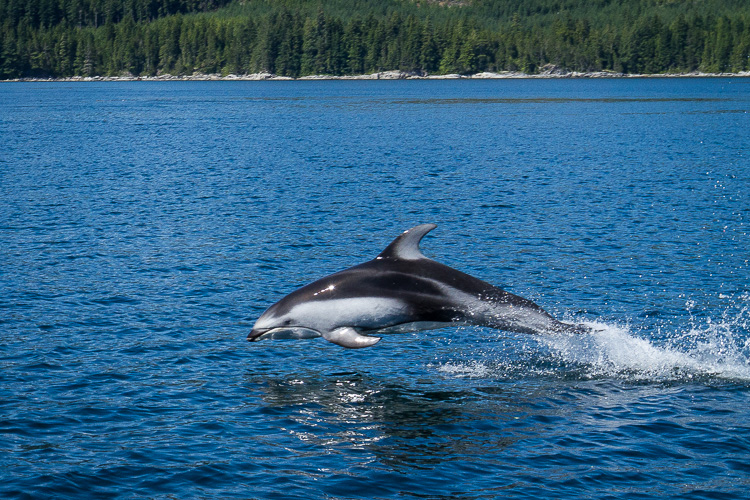
    Instead, use a high ISO, a fast shutter speed, and shoot handheld. Remember to turn your image stabilization on to prevent any camera shake blur. I usually start out with ISO 400 and a shutter speed of 1/1,000th of a second, then make changes based on lighting conditions and the speed the animals are moving. For dolphins and whales, an even faster shutter speed may be required.

    Pacific White Sided Dolphin in Johnstone Strait, British Columbia

    Pacific White Sided Dolphin in Johnstone Strait, British Columbia

    4 – To Polarize or Not?

    When shooting in tide pools, a polarizing filter can be helpful to cut through the glare of light reflecting off the surface of the water, and allow you to see through to the creatures that are underwater. Aside from that however, I don’t generally use a polarizing filter because the cost of doing so is about one stop of light. If I’m not trying to see through the water, I would rather have that stop of light for a faster shutter speed, or a lower ISO for better image quality.

    5 – Lenses

    You’ll need a variety of lenses for shooting marine wildlife. If you are shooting birds and whales, you’ll need a long telephoto lens to get you close enough to make an image with impact. I like to use a 70-300mm zoom lens or a 400mm prime lens for most of my marine wildlife photography.

    Dolphins, on the other hand, will require a wide angle lens because they tend to get very close to the boat. My favourite lens for dolphins is my 11-35mm. So bring a variety of lenses along, and just make there is no salt water spraying around when you switch lenses.

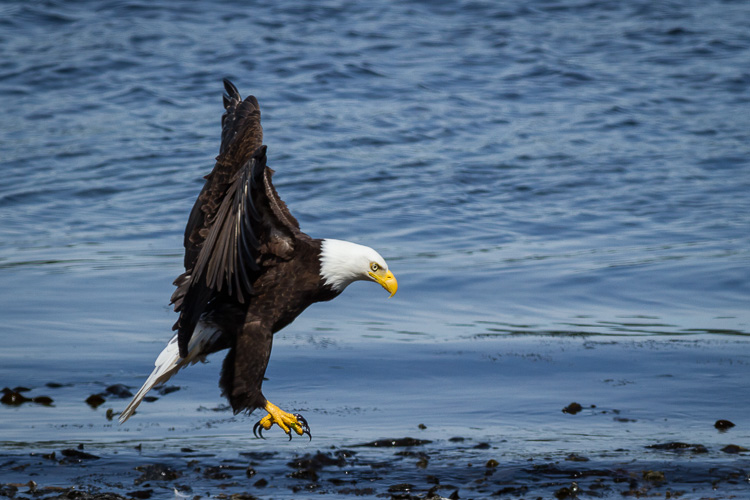
    Bald Eagle in Campbell River, British Columbia.

    Bald Eagle in Campbell River, British Columbia.

    6 – Focus Modes

    When photographing the creatures that don’t move too much, one shot auto focus or even manual focus is fine. But when shooting animals that move fast, you’re better off using continuous autofocus mode because it locks on to your subject and tracks its movement, increasing your chances of getting a sharp image. It’s not easy though. Getting focus fast enough to capture the moment is probably the biggest challenge in this type of photography.

    7 – Respect the Animals

    When you are so close that your presence changes the animal’s behaviour, you are too close. Respect their space by using a longer lens, instead of getting too close. Don’t forget, in most areas there are rules about how close you can get to marine wildlife, especially whales. Usually it is around 100 meters or 100 yards, so check the rules (laws) in your area before heading out.

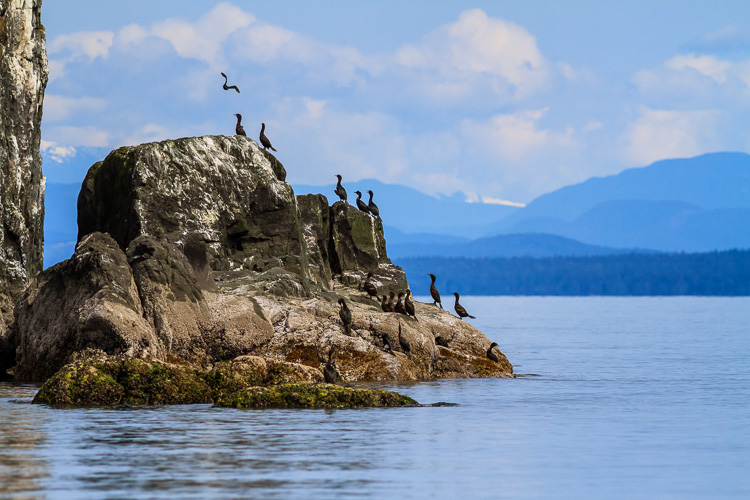
    Cormorants on Middlenatch Island, British Columbia.

    Cormorants on Middlenatch Island, British Columbia.

    I hope these tips help you capture the sometimes elusive, but majestic creatures of the sea, the next time you explore the shoreline or go on a boating adventure.

    This week we are doing a series of articles to help you do better nature photography. See previous articles here:

    • 3 Habits Every Outdoor Photographer Should Develop to Avoid Missing Shots
    • 5 Tips for Better Nature Photography
    • 27 Serene Images of the Natural World
    • Weekly Photography Challenge – Nature
    • 10 Ideas for Photographing Nature in your Backyard
    • 6 Tips for Capturing Character and Personality in Wildlife Photography
    • 5 Tips for Setting the Focus in Your Landscape Photography

    googletag.cmd.push(function() {
    tablet_slots.push( googletag.defineSlot( “/1005424/_dPSv4_tab-all-article-bottom_(300×250)”, [300, 250], “pb-ad-78623” ).addService( googletag.pubads() ) ); } );

    googletag.cmd.push(function() {
    mobile_slots.push( googletag.defineSlot( “/1005424/_dPSv4_mob-all-article-bottom_(300×250)”, [300, 250], “pb-ad-78158” ).addService( googletag.pubads() ) ); } );

    The post 7 Tips for Better Marine Wildlife Photography by Anne McKinnell appeared first on Digital Photography School.


    Digital Photography School

  • Abandoned Architecture as Art: 13 Radical Reclamation Projects

    [ By SA Rogers in Art & Installation & Sound. ]

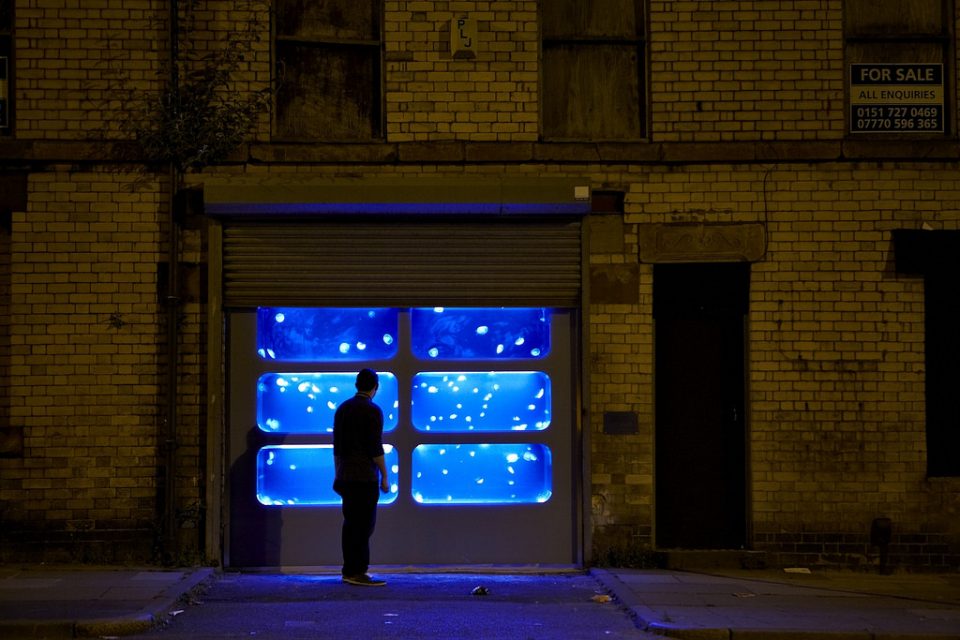
    abandoned art jellyfish 1

    When an abandoned structure can’t be rehabbed in the traditional sense, whether due to practical constraints or simply becoming obsolete, it can be transformed for another purpose with paint, tape, lights and sculptural installations. Artists transform derelict buildings into public art, sometimes visible to lots of passersby and sometimes only to the urban explorers who might be curious enough to climb through a broken window.

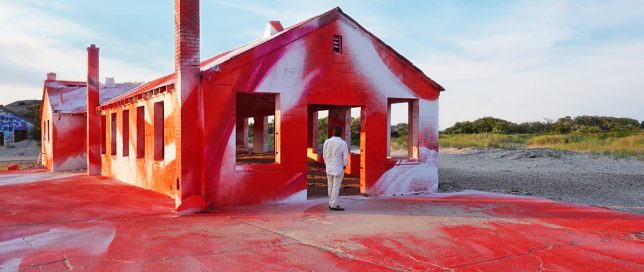
    Aquatics Building by Katharina Grosse

    abandoned art aquatics 1

    abandoned art aquatics 2

    abandoned art aquatics 3

    abandoned art aquatics 5

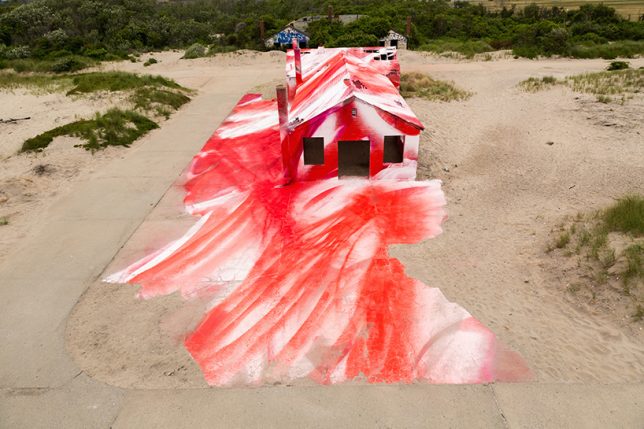
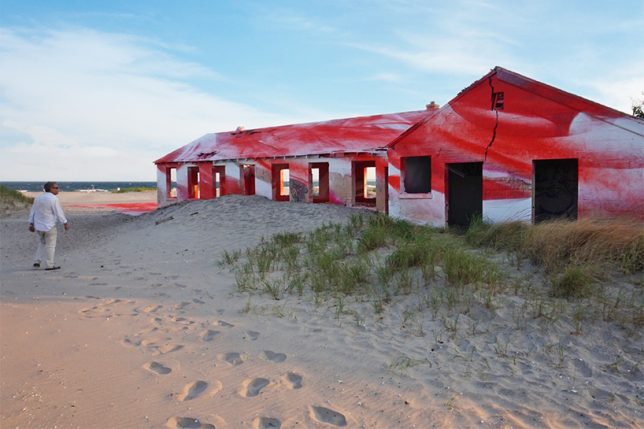
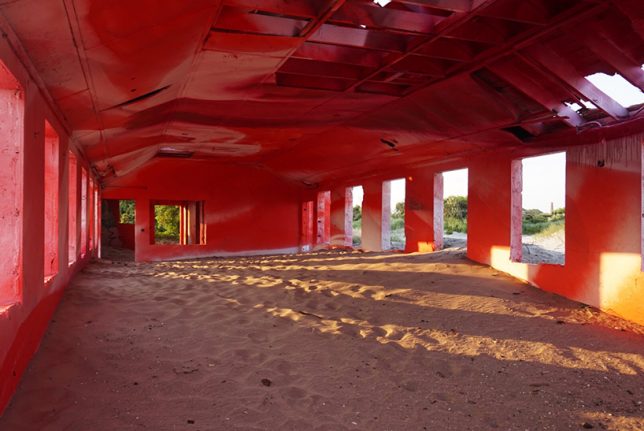
    One of many abandoned military buildings making up Fort Tilden on the Rockaway Peninsula in Queens now spills red onto the surrounding sand in a site-specific installation by artist Katharina Grosse. The former aquatics building is highlighted inside and out in abstract crimson strokes meant to mimic the effect of a sunset in the Rockaways. The structure is set to be demolished in late 2016.

    Circular Mural Inside Water Tank by Christina Angelina & Ease One

    abandoned art water tank

    abandoned art water tank 2

    abandoned art water tank 4

    abandoned art water tank 5

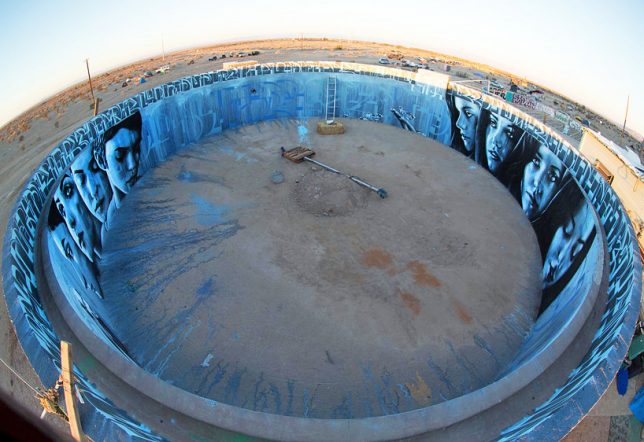
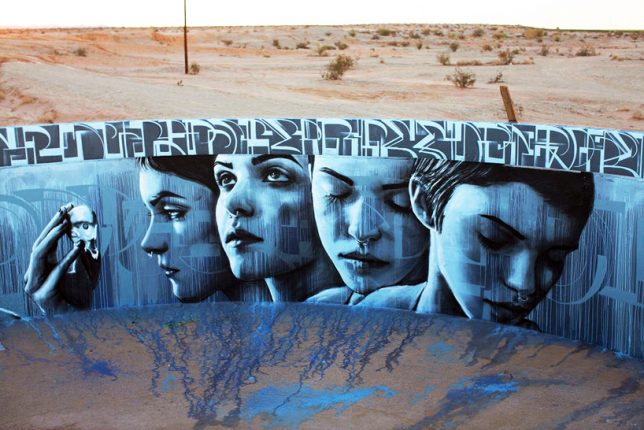
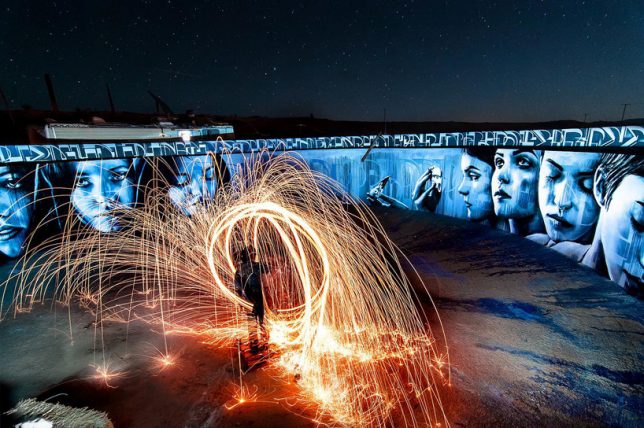
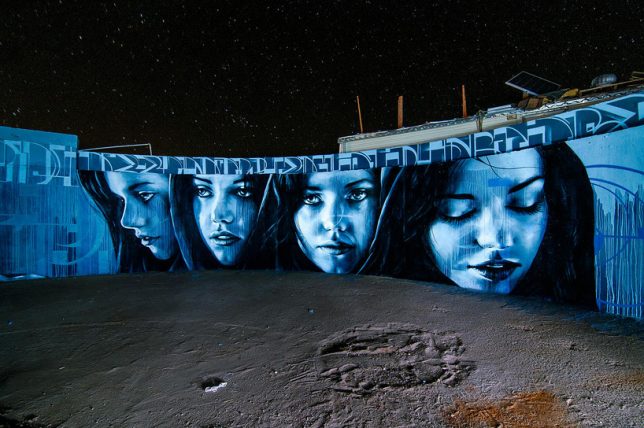
    Only urban explorers curious enough to gain access to this abandoned water tank in Slab City, California will ever see this somber circular mural in person, climbing a staircase to the top of the tank to gaze inside. Artists Christina Angelina and Ease One create a starkly emotional contrast to the red and beige tones of the desert beyond the tank’s walls.

    Flower House in Detroit by Lisa Waud

    abandoned art flower house

    abandoned art flower house 2

    abandoned art flower house 3

    abandoned art flower house 4

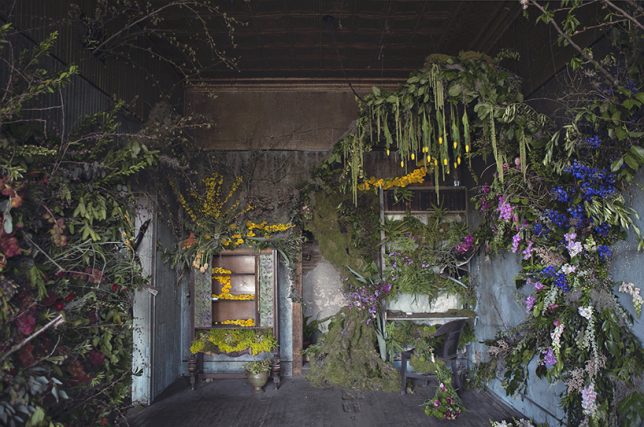
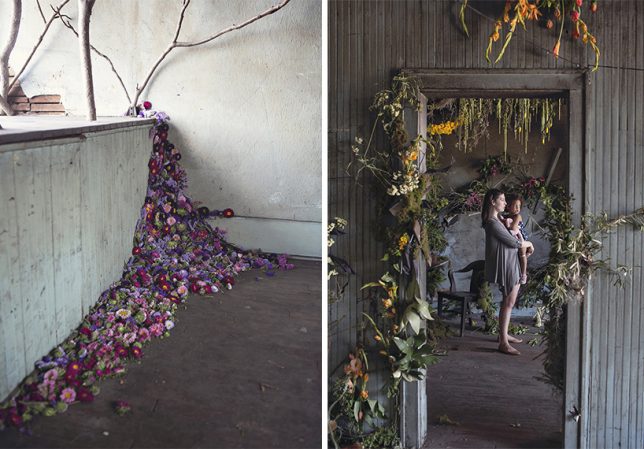
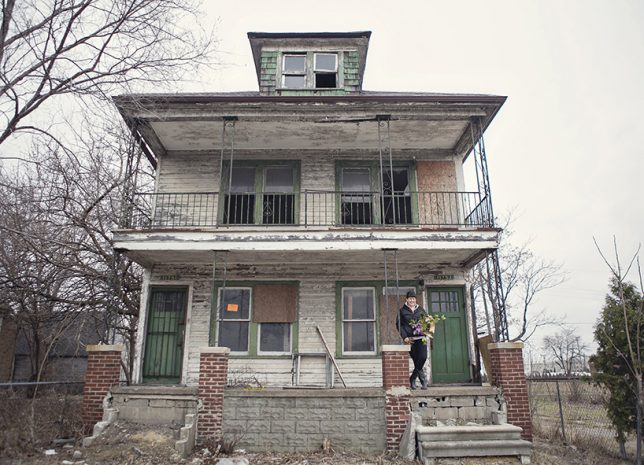
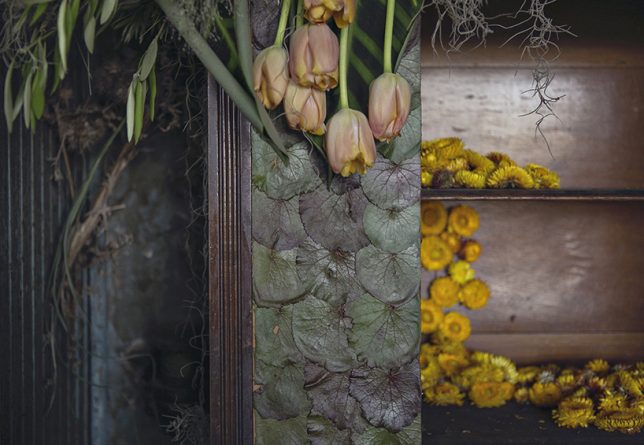
    ‘Flower House Detroit,’ conceived by Lisa Waud and realized with the help of florists from across the country, may be a temporary reclamation of an abandoned place, but it’s among the most striking installations for its contrast of life and decay. Each room had a different designer creating artful compositions of flowers, trees and even weeds, beautifying the space before it was deconstructed and repurposed. The land the neglected house stood on will be converted into a flower farm for Waud’s design business.

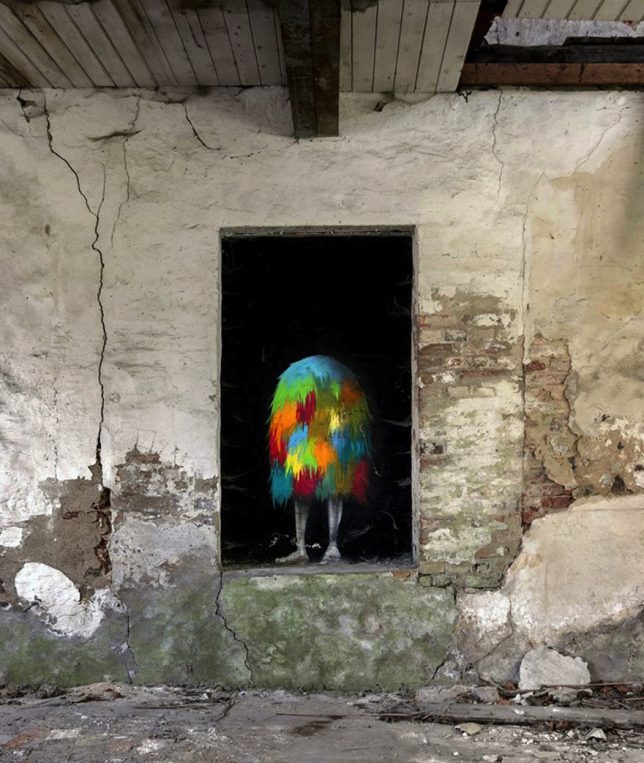
    Monsters by Kim Köster

    abandoned art monsters 21

    abandoned art monsters 2

    abandoned art monsters 3

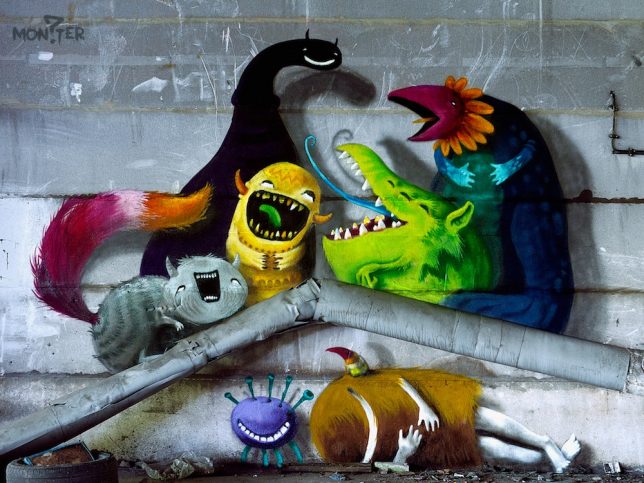
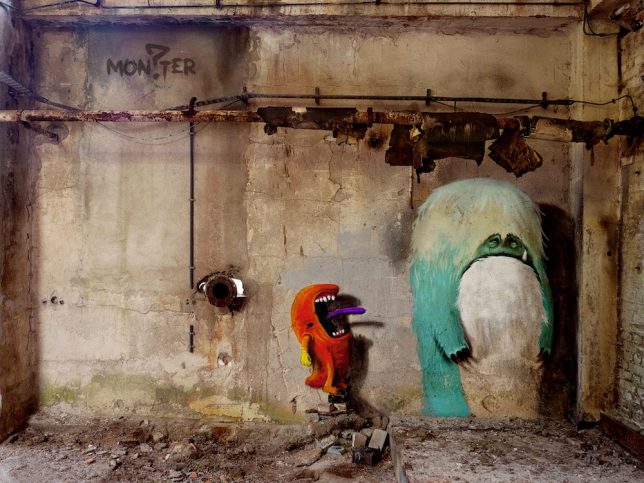
    The idea of pairing monsters and abandoned buildings may sound like a nightmare, but German street artist Kim Köster makes both seem less scary with a series of fun paintings in Berlin. Choosing easily accessible public spaces as his canvas, the artist not only takes some of the fear out of dark derelict rooms in a physical sense, but also brings the to a much wider audience thanks to an interactive children’s picture book called Monzster.

    Next Page – Click Below to Read More:
    Abandoned Architecture As Art 13 Radical Reclamations

    Share on Facebook


    [ By SA Rogers in Art & Installation & Sound. ]

    [ WebUrbanist | Archives | Galleries | Privacy | TOS ]


    WebUrbanist

  • New resolution: how much progress has the Fujifilm X-T2 made for video?

    4K video capability was one of the big surprises in the X-T2’s specification. We’ve taken a closer look at how the camera operates in movie mode and added a sample video to our First Impressions Review.

    Only beta firmware exists at present, so there’s no F-Log mode available yet, and the operation may yet change, so we explain where the X-T2 has improved and how it could be made still better.

    As well as our (beta) video sample, we’ve also expanded our still image sample gallery.

    Articles: Digital Photography Review (dpreview.com)

  • Planning A Shoot With A Creative Team

    Plan a shoot!


    Hey FashionPhotographyBlog.com readers,

    Last time we discussed what is a creative team and how to find one. Once you have assembled your creative team, it’s time to plan a shoot together. I’ll be using the experience from one of my previous shoots to talk about this process. 


    I’m going to walk you through some of the planning behind my editorial for Kenton Magazine, “Surrealia,” however, the same basic principles apply to planning a test.


    Get Inspired! 


    Come up with a concept and do your research. The idea behind this shoot started when talking to an illustrator, and good friend, Matt Tedford. (Check out his work, he’s awesome!) We wanted to collaborate on an editorial so took some time to sit down and look at other editorials which incorporate illustration.


    These were our two favorites:


    – Defragmentation of Beauty by Marcin Tyszka for 25 Magazine

    – Abbey Lee Kershaw by Greg Kadel for Numero


    One thing we planned on doing was to use seamless and have a simple background. This way nothing detracts from the illustration. This idea of a non-distracting background was apparent in both the editorials we favored and reaffirmed our initial plan.


    By dissecting what we saw in our two favorite stories, together we decided on a general direction for where the illustrations should go. From Greg Kadel’s images, we loved the use of bright pops of color and cutouts around the model. From Marcin Tyszka’s shoot, we loved the organic, free feeling the illustrations had and the use of line. I left a lot of the illustration to Matt, without too much guidance, because I trust his aesthetic. Good thing too, it turned out amazing!


    marcin-tyszka-25-magazine Marcin Tyszka


    abbey_lee_kershaw-numero-magazine-shot-by-greg-kadelGreg Kadel


    Find your team


    After deciding on what type of style we want for illustration, we decided to keep the clothing simple as to not distract or fight with the artwork to be added later. Being a bit inspired by Givenchy’s Spring 2012 collection and current trends, we decided on high contrast clothing and the use of the peplum. Simple, classic and chic. Hair was to be simple, down with beautiful curls and body. Makeup was decided to be pretty natural with a light smokey eye to define the face a bit, in order to compliment the hair and clothing.


    We had our idea, now we had to find our team. Be sure to look for creatives that will compliment your concept. If a hairstylist is fantastic at big, beautiful waves but doesn’t favor doing up-dos (which is what you’re planning on doing), perhaps keep them on hold until you have a shoot that requires that big, beautiful wavy hair that they excel at. If someone is enjoying what they’re doing, it will show.


    Styling was easy. Jocelyne, a stylist and all around awesome person that I’ve worked with before was the obvious choice. Her style matched exactly what we were looking for. She is great at keeping it simple and classy without over styling with accessories or trying to do too much at once (which is quite common, especially among stylists just starting out.) Fashion doesn’t have to be about excess! Often, less is more.


    For hair and makeup we got lucky and were able to find one artist that is excellent at both! I had seen Mayela’s work around and loved her portfolio. I contacted her with details about our shoot and next thing we knew, she said yes and it was time to shoot!


    So now that you have planned your shoot, got inspired and found your team it’s time to get ready to shoot. However, with a team of people on board. How do you communicate your photographic vision effectively with your team. Stay tuned, because next time we will be discussing how to communicate your ideas clearly using mood boards.


    IMAGE SOURCE:


    Feature image: Defragmentation of Beauty by Marcin Tyszka for 25 Magazine (left) & Abbey Lee Kershaw by Greg Kadel for Numero (right)

    Image 1: Defragmentation of Beauty by Marcin Tyszka for 25 Magazine

    Image 2: Abbey Lee Kershaw by Greg Kadel for Numero


    Fashion Photography Blog