RSS
 

Posts Tagged ‘XPro2’

Fujifilm releases firmware updates for X-T2, X-Pro2 and two lenses

06 Oct

Fujifilm has released firmware updates for its X-T2 and X-Pro2 camera bodies. The update to version 2.12 on the X-T2 and version 3.12 on the X-Pro2 fixes an issue that could occasionally cause the cameras to lock up when shooting in continuous high speed mode.

The X-T2 and X-Pro2 firmware updates are available to download at the links below:

  • X-T2 Firmware ver. 2.12
  • X-Pro2 Firmware ver. 3.12

Additionally, the company released updates for its XF 18-55 and XF 10-24 lenses. The new versions of the lens firmware fix an issue that could cause the focal length to be displayed incorrectly, and/or cause shaking in peripheral parts of images, even with focal length focus fixed.

You can download those updates by clicking on the links below.

  • XF18-55 Firmware ver. 3.22
  • XF10-24 Firmware ver. 1.12

Articles: Digital Photography Review (dpreview.com)

 
Comments Off on Fujifilm releases firmware updates for X-T2, X-Pro2 and two lenses

Posted in Uncategorized


Major firmware updates coming for Fujifilm X-T2 and X-Pro2

23 Mar

Fujifilm will launch a couple of major firmware updates for its X-T2 and X-Pro2 cameras. The first one, available at the end of this month, brings the X-T2 up to version 2.00 and the X-Pro2 up to 3.00. Another update will arrive in late May.

The first update brings no less than 27 feature improvements to Fuji’s flagship mirrorless cameras, including an option to enable focal length-dependent minimum shutter speed in ISO Auto, up to 15 minute exposures in T mode, more options for bracketing while shooting Raw and added autofocus flexibility.

Several other updates are aimed at improving handling during video shooting, including the addition of a live histogram for X-T2 owners.

A second round of updates will come in May. Firmware 2.10 for X-T2 and 3.10 for X-Pro2 will add -6 and -7 EVF brightness settings for very low light shooting and the ability to assign functions to the rear command dial. A few functions are added for the X-T2 only including tethered shooting via Wi-Fi. See the very long list of updates below.

X-T2 version 2.00 & X-Pro2 version 3.00 – due late March 2017

1. Shooting RAW in Bracketing and Advanced Filters
The update enables you to use the RAW format when shooting not only in AE Bracketing but also in other Bracketing modes (ISO, Dynamic Range, White Balance, Film Simulaitons) and also in Advanced Filter modes.

2. Extended ISO 125 and 160 selectable
The update adds ISO125 and ISO160 to extended ISO levels available.

3. Programmable long exposure of up to 15 minutes
Long exposure in the T mode currently goes only up to 30 seconds. The update will allow users to extend it up to 15 minutes.

4. ON/OFF for 1/3-step shutter speed adjustment (X-T2 only – already in X-Pro2)
The update allows you to turn off the Command Dial’s function to adjust shutter speed by 1/3 steps in order to prevent unintended adjustments.

5. Full-range ISO adjustments with the Command Dial (X-T2 only)
With the update, set the ISO “A” position to “Command” to adjust ISO sensitivity across the full range, including extended ISOs, with the Front Command Dial.

6. “AUTO” setting added for the minimum shutter speed in the ISO Auto setting
The update adds an AUTO option for the minimum shutter speed in the ISO Auto setting, that allows the camera to automatically define the minimum shutter speed according to the focal length of the lens attached.

7. Faster “Face Detection AF”
The update enables the use of Phase Detection AF for faster performance in Face Detection AF.

8. Improved in-focus indication in the AF-C mode
The update reduces focus hunting in the AF-C mode, making it easier to track a subject.

9. Addition of a smaller Focus Point size in Single Point AF
The update adds a smaller Focus Point size in Single Point AF, bringing the total number of available sizes to six. The new smallest size facilitates pin-point focusing.

10. Addition of “AF Point Display” (X-Pro2 only – already on X-T2)
With the update, you can choose to have AF Points constantly displayed in Zone AF and Wide / Tracking AF, making it easier to track a subject.

11. Addition of “AF-C Custom Setting” (X-Pro2 only – already on X-T2)
The update adds “AF-C Custom Setting” for specifying focus-tracking characteristics. Choose from five presets according to your subject’s type of movements.

12. Addition of “Portrait / Landscape AF Mode Switching” (X-T2 only)
The update allows you to specify separate AF mode and AF point settings for portrait orientation and landscape orientation.

13. Change of focus frame position while enlarging it
The update allows you to move the position of focus frame while enlarging it in Single Point in the AF-S mode or in the Manual Focus

14. Activation of the Eye Sensor in video recording (X-T2 only)
The update allows you to use the Eye Sensor during video recording to automatically switch between EVF and LCD.

15. Change of ISO sensitivity during video recording (X-T2 only)
The update allows you to change ISO setting during video recording.

16. Re-autofocusing in video recording
With the update, half-press the Shutter Release button or press the button assigned to “AF-ON” function during video recording to re-do autofocusing.

17. Display live histogram during video recording (X-T2 only)
The update allows you to display a live histogram during video recording.

18. Optimization of external microphone’s input level (X-T2 only)
The update optimizes external microphone’s input level (lower limit revised from -12dB to 20dB) to reduce white noise when an external microphone with preamp is connected.

19. Addition of “Eye Sensor + LCD Image Display” in the View Mode
The update gives the “Eye Sensor + LCD Image Display” option in the View Mode that allows you to shoot through the viewfinder and check images on the LCD, just as you would with an SLR.

20. Shorter EVF display time-lag (X-Pro2 only – already in X-T2)
The update shortens EVF’s display time-lag in the AF-C mode so that you will not miss a photo opportunity.

21. Constant “Dual” mode display (X-T2 only)
With the update, the small window in the Dual mode stays on even when you half-press the shutter release button.

22. Automatic vertical GUI for LCD (X-T2 only)
With the update, when you hold the camera in the portrait orientation, the camera will automatically display the GUI on the LCD in the same orientation.

23. Name Custom Settings
The update allows you to assign a specific name to Custom Settings 1 – 7.

24. Copyright information in EXIF data
The update allows you to register the photographer’s name and the copyright holder’s name in advance so that the camera automatically adds the information to EXIF data for each image.

25. Voice Memo function
The update enable you to record 30-second “Voice Memo” clips in the Playback mode.

26. Extended AE Bracketing
The update extends AE Bracketing from the current 3 frames +/-2EV to up to 9 frames +/-3EV.

27. Addition of “Shoot Without Card” mode
With the update, you can have the “Shoot Without Card” mode turned OFF so that the camera can not shoot when there is no SD card inserted.

X-T2 version 2.10 & X-Pro2 version 3.10 – late May 2017

28. Support for computer tethering via Wi-Fi (X-T2 only)
The update adds support for computer tethering via Wi-Fi.

29. Addition of “All” AF mode (X-T2 only)
With the update, select “All” in the AF mode so that you can select the AF mode and Focus Area size by only using the Command Dial.

30. Function extension for “Shutter AF” and “Shutter AE” (X-T2 only)
With the update, you can specify different settings for AF-S and AF-C in “Shutter AF” and for AF-S / MF and AF-C in “Shutter AE.”

31. Addition of “-6” and “-7” to EVF’s brightness setting
Additional options of “-6” and “-7” to the “EVF Brightness” setting so that, even in an extremely low-light condition, the brightness of the EVF does not distract you from shooting.

32. Switchover of the main and sub displays in the Dual Display mode (X-T2 only)
The update allows you to switch between the main and sub displays in the Dual Display mode.

33. Function assignment to the Rear Command Dial
With the update, you can assign a specific function to be activated when the Rear Command Dial is pressed.

Articles: Digital Photography Review (dpreview.com)

 
Comments Off on Major firmware updates coming for Fujifilm X-T2 and X-Pro2

Posted in Uncategorized


Hands-on with new ‘Graphite’ Fujifilm X-T2 and X-Pro2 (and the XP120)

06 Jan

Hands-on with new ‘Graphite’ Fujifilm X-T2 and X-Pro2 (and the XP120)

For the most part a glittering parade of the utterly unnecessary*, CES does occasionally throw up a gem for camera geeks. Last year it was Nikon’s D500 and D5, and this year we’re very taken with Fujifilm’s new ‘Graphite’ editions of the X-T2 and X-Pro2. More specifically, the X-Pro2 is ‘Graphite’, while the X-T2 is offered in a lighter, shinier ‘Graphite Silver’.

You’ve seen the cameras before, but not like this – click through for a closer look. 

*I saw something last night called a ‘Smart Lawn’. I’m not kidding.

Hands-on with new ‘Graphite’ Fujifilm X-T2 and X-Pro2 (and the XP120)

The X-T2’s new graphite silver finish is actually really nice. The gloss silver looks flashy without being gaudy. It will certainly attract more attention than the standard body but doesn’t scream ‘bling’. 

Hands-on with new ‘Graphite’ Fujifilm X-T2 and X-Pro2 (and the XP120)

According to Fujifilm, the new finish is achieved by layering three coats, over the magnesium-alloy shell. The first coat is matte black…

Hands-on with new ‘Graphite’ Fujifilm X-T2 and X-Pro2 (and the XP120)

…the second coat uses something that Fujifilm calls “Thin-film Multilayer Coating Technology” to apply the smooth silver finish… 

Hands-on with new ‘Graphite’ Fujifilm X-T2 and X-Pro2 (and the XP120)

…and the final coat is a clear varnish, for a glossy finish. The end result is very nice indeed, we think. 

Hands-on with new ‘Graphite’ Fujifilm X-T2 and X-Pro2 (and the XP120)

The graphite silver X-T2 will ship later this month, for $ 1799 body-only. That’s $ 200 more than the standard X-T2.

Hands-on with new ‘Graphite’ Fujifilm X-T2 and X-Pro2 (and the XP120)

Not to be left out of the party, the X-Pro2 is getting a new color treatment, too. This time, it’s just plain ‘Graphite’. Darker and more subtle than the silver X-T2, the graphite X-Pro2 looks great. It’s still glossy, but not ostentatious. 

Hands-on with new ‘Graphite’ Fujifilm X-T2 and X-Pro2 (and the XP120)

The Graphite X-Pro2 will be kitted with a special matching 23mm F2 R WR lens (not available separately). These pictures were taken under pretty rotten mixed hotel lighting, but hopefully you get the idea.  

Hands-on with new ‘Graphite’ Fujifilm X-T2 and X-Pro2 (and the XP120)

The graphite finish is also a multilayer coating, and according to Fujifilm the distinctive shade is achieved by increasing the amount of black pigment in the top coat. 

Hands-on with new ‘Graphite’ Fujifilm X-T2 and X-Pro2 (and the XP120)

The Graphite edition X-Pro2 kit will come with a dedicated LH-XF35-2 lens hood for the 23mm F2, in matching graphite finish (of course).

Hands-on with new ‘Graphite’ Fujifilm X-T2 and X-Pro2 (and the XP120)

In all functional respects, the Graphite X-Pro2 is precisely the same as the standard model that we reviewed here. The Graphite kit will be available later this month for $ 2,299.95, which is about $ 150 more than the standard camera and lens. 

Hands-on with new ‘Graphite’ Fujifilm X-T2 and X-Pro2 (and the XP120)

As well as the new graphite editions of the flagship X-series, Fujifilm also took the wraps off a new rugged camera, the XP120. 

The XP120 has a 16.4MP BSI-CMOS sensor and a 28-140mm lens, and is waterproof to 20m/65ft, shockproof to 1.8m/5.7ft and freezeproof to -10C/+14F.

Hands-on with new ‘Graphite’ Fujifilm X-T2 and X-Pro2 (and the XP120)

Other features include a 3″ LCD, unique ‘Cinemagraph’ feature, which ‘produces still photos with moving elements’, 1080/60p video (with a wind filter) and Wi-Fi.

Hands-on with new ‘Graphite’ Fujifilm X-T2 and X-Pro2 (and the XP120)

The XP120 will come in four colors – blue, sky blue, green and yellow – and will be available in February for $ 229.

Articles: Digital Photography Review (dpreview.com)

 
Comments Off on Hands-on with new ‘Graphite’ Fujifilm X-T2 and X-Pro2 (and the XP120)

Posted in Uncategorized


Fujifilm unveils Graphite Silver X-Pro2 and X-T2

05 Jan

As it did with the X-T1, Fujifilm is now offering a new ‘graphite silver’ color for the X-Pro2 and X-T2, produced using a multilayered coating. The X-Pro2 will come bundled with a matching XF23mm F2 R WR lens and hood. 

The graphite silver X-Pro2 and X-T1 will ship in late January for $ 2299 and $ 1799, respectively.

New FUJIFILM X-Pro2 Body with XF23mmF2 R WR Lens and Lens Hood Kit, Graphite Edition

The new FUJIFILM X-Pro2 Graphite Edition boasts an all-new color to the X Series lineup. The X-Pro2 Graphite Edition has a rich, metallic texture due to a specialty multilayer coating. This edition will include the compact and lightweight FUJIINON XF23mmF2 R WR and LH-XF35-2 lens hood in the same unique Graphite color as the body, achieving high resolution performance and a fast and silent AF system. The new FUJIFILM X-Pro2 Graphite Edition maintains the features of the current X-Pro2, adopting an extremely high-grade graphite color created through a multilayer coating process for the exterior of the camera body. By increasing the amount of black pigment component of the top coating, the camera achieves a more rich metallic texture. The package will be released as the FUJIFILM X-Pro2 Body with XF23mmF2 R WR Lens and Lens Hood Kit, Graphite Edition in late January 2017. 

New FUJIFILM X-T2 Body, Graphite Silver Edition

Building on the popularity of the elegant Graphite Silver version of the X-T1, Fujifilm introduces the new FUJIFILM X-T2 Graphite Silver Edition which will be supplied with tailor-made accessories including a premium leather strap, aluminum hot shoe cover and matching EF-X8 hot-shoe mount flash. The X-T2 Graphite Silver Edition is treated with a multi-layer coating that is triple baked to produce an elegant and tactile finish. The first layer is a matte black undercoat, applied to the magnesium top cover. This undercoat delivers deeper blacks in shadow areas to make highlights stand out. The second layer uses Thin-film Multilayer Coating Technology to apply graphite silver for an incredibly smooth finish with a luxurious shine. The third layer is a clear varnish for a glossy finish. The new X-T2 Graphite Silver Edition will be released in late January 2017.

Availability and Pricing

The FUJIFILM X-T2 Graphite Silver Edition will be released in late January 2017 in the U.S. and Canada for USD $ 1,799.95 and CAD $ 2,199.99.

The FUJIFILM X-Pro2 Graphite Edition will be released in late January 2017 in the U.S. and Canada for USD $ 2,299.95 and CAD $ 2,899.99.

Articles: Digital Photography Review (dpreview.com)

 
Comments Off on Fujifilm unveils Graphite Silver X-Pro2 and X-T2

Posted in Uncategorized


Fujifilm X-T1 and X-Pro2 firmware updates released, X-T2 update delayed again

09 Nov

Fujifilm has released two firmware updates: firmware version 5.00 for the X-T1 and version 2.01 for the X-Pro2. Unfortunately, X-T2 owners will have to wait a few more weeks for their own firmware update, which is now scheduled to release on November 29th. When the X-T2 firmware is finally released, it will add support for tethering with Adobe Lightroom.

The new X-Pro2 camera body firmware update brings several bug fixes, as well as improvements to AF tracking and phase detection AF accuracy, improvements to optical image stabilization when using the electronic shutter, and the addition of an auto power save feature to the ‘Power Management’ menu.

The X-T1 firmware, meanwhile, is very small, and involves added support for the EF-X500 Shoe Mount Flash, as well as new menu and function items related to it.

The X-T1 firmware update is available here, and the X-Pro2 update is available here.

Articles: Digital Photography Review (dpreview.com)

 
Comments Off on Fujifilm X-T1 and X-Pro2 firmware updates released, X-T2 update delayed again

Posted in Uncategorized


Fujifilm X-Pro2 firmware 2.0 adds focus points, improves PDAF accuracy

07 Oct

Fujifilm has released firmware v 2.0 for the Fuji X-Pro2, bringing many tweaks, changes and bug fixes to the company’s flagship APS-C camera. Among the changes is an increase in the number of focus points to 325, as well as improved phase detection autofocus accuracy via the X-T2’s AF algorithm, improved AF tracking in Continuous L burst rate shooting in AF-C mode, the addition of support for the EF-X500 shoe mount flash, new 15/30 second and 1 minute time options for ‘Auto Power Off,’ and improved optical image stabilization when using the electronic shutter.

The full firmware 2.0 changelog:

  • 1. The NUMBER OF THE FOCUS POINT has increased.(*) The options available are 91 POINTS(7×13) and 325 POINTS(13×25) on the NUMBER OF THE FOCUS POINT of the AF/MF SETTING in the Shooting Menu.
  • 2. Improvement of phase detection AF accuracy. By employing the new AF algorithm used in the X-T2, the AF accuracy has been improved.
  • 3. AF tracking function has been improved when CONTINUOUS L in the AF-C mode.
  • 4. In AF-C mode, AE function will work while pressing the shutter button halfway.
  • 5. AF tracking function works while CONTINUOUS shooting in the AF-C mode with the Electronic Shutter.
  • 6. AF tracking function works while CONTINUOUS H shooting in the AF-C mode instead of zone AF.
  • 7. STILL IMAGE(single frame shooting) is available when CONTINUOUS L in the AF-C mode.
  • 8. The focus point of Eye Detection AF has been changed to the eye closer to the camera.
  • 9. Compatibility with the Shoe Mount Flash EF-X500.(*) Additional functions like the multi-flash lighting, high-speed flash sync and so on can be used with the EF-X500. Accordingly, the FLASH SETTING and the Shooting Menu is dramatically changed.
  • 10. The items that can be assigned to the Quick Menu have changed.(*) FLASH FUNCTION SETTINGS and FLASH COMPENSATION have been added due to the compatibility with the Shoe Mount Flash EF-X500.
  • 11. The roles that can be assigned to the Function buttons have changed.(*) FLASH FUNCTION SETTINGS, TTL-LOCK and MODELING FLASH have been added due to the compatibility with the Shoe Mount Flash EF-X500.
  • 12. Addition of AUTO POWER SAVE.(*) AUTO POWER SAVE option has been added to the POWER MANAGEMENT of the Setup Menu. Select ON to save the power consumption and make the battery life longer.
  • 13. Addition of setting time in AUTO POWER OFF.(*) 15 SEC, 30 SEC and 1 MIN have been added to the AUTO POWER OFF of the POWER MANAGEMENT in the Setup Menu.
  • 14. S.S OPERATION option has been added to BUTTON/DIAL SETTING in the Setup Menu.(*) Select OFF to disable the shutter-speed fine-tuning using the command dials.
  • 15. Change of the CORRECTED AF FRAME in the OVF.(*) Specification of the CORRECTED AF FRAME of AF/MF SETTING in the Shooting Menu has been changed. OFF: The frame moves according to parallax to show the focus point. ON: The CORRECTED AF FRAME in the OVF is fixed on the recommended value described in the Owner’s manual. If the minimum focus range of the attached lens is greater than the recommended value, the frame is displayed on the position of the minimum focus range. *Upgrade the firmware of the lenses after the firmware of the camera is upgraded.
  • 16. The phenomenon is fixed that in rare cases the magnification of the OVF doesn’t switch appropriately when a lens is changed.
  • 17. The bright frame movement in the OVF has become more smoothly while zooming in and out.
  • 18. OIS function has been improved while using Electronic Shutter.
  • 19. The phenomenon is fixed that in rare cases frames of live view on a smartphone drop while using the application software “FUJIFILM Camera Remote”.
  • 20. The phenomenon is fixed that exposure sometimes doesn’t change appropriately in Aperture Priority AE while using an M MOUNT ADAPTER.

Articles: Digital Photography Review (dpreview.com)

 
Comments Off on Fujifilm X-Pro2 firmware 2.0 adds focus points, improves PDAF accuracy

Posted in Uncategorized


Fujifilm X-Pro2 versus X-T2: Seven key differences

17 Jul

Fujifilm X-Pro2 versus X-T2: Seven key differences

In the X-T2 and X-Pro2, Fujifilm offers two flagship cameras that have a lot in common, but are designed for slightly different purposes. So which one should you buy? We’ve broken down the key differences.

Video

Let’s get probably the biggest differentiator out of the way right up front – the X-T2 offers 4K video, while the X-Pro2 makes do with standard HD. The addition of 4K to the X-T2 surprised us a little when we first saw it on the spec sheet, but it’s clear that Fujifilm sees this feature as an important ‘must have’ in a camera as versatile as the X-T2. The X-T2 can record video in clips up to 10min duration, or 30min when the optional power booster grip is attached. 

The X-Pro2, on the other hand, is meant for a different kind of photographer – one who is more stills-oriented, and more likely to shoot with prime lenses than zooms. The addition of 4K to the X-Pro2 would have certainly increased its cost – and the engineers tell us that it would also have increased its size and weight as a consequence of the necessity for a beefed-up heat sink. So if you need 4K, the X-T2 is the camera for you. 

Rear LCD screen

The X-Pro2, being the more ‘traditional’ of the two cameras, has a simple, fixed rear LCD. In contrast, and in keeping with its ultra-versatile ‘do anything’ design philosophy, the X-T2 features a complex, multi-articulating screen that enables easy framing from high and low angles in both landscape and portrait orientations. This articulating design is also more useful for video work.

The decision by Fujifilm (which actually manufactures capacitive membranes for touchscreens) not to include touch sensitivity in either camera is a little disappointing. Also a bit odd is the resolution difference between the screens on the back of the X-T2 and X-Pro2. The X-Pro2’s screen resolution is 1.6 million dots – somewhat higher than the 1.04 million-dot screen on the back of the X-T2 (it’s the difference between 900 x 600 rather than 720 x 480 pixels).

So in summary: If you want screen articulation, go for the X-T2. If you don’t mind a fixed screen, you’ll get slightly higher resolution from the X-Pro2.

Viewfinder

At a quick glance, the electronic viewfinder specifications of the X-Pro2 and X-T2 are very similar. Both are centered around the same 2.36 million-dot OLED display, and both offer a window on the world that is both sharp and detailed. But the X-T2’s electronic viewfinder is the better of the two, for a couple of important reasons.

First is the addition of ‘burst mode’ to the X-T2, which increases the refresh rate of the live view image in the camera’s viewfinder to 100fps. And second is the complex optical assembly (shown above) that focuses the viewfinder’s image into your eye. The X-T2’s EVF is one of the best electronic finder that we’ve ever used. Its unusually high magnification of 0.77X and 100% frame coverage place it a level above the 92% coverage and 0.60X of the X-Pro2.

But before we dismiss the X-Pro2 altogether…

Viewfinder

The X-Pro has one major trick up its sleeve – its viewfinder is a ‘hybrid’ type, that also offers a rangefinder-style optical view, which employs frame-lines to preview composition.

The difference between an optical and electronic viewfinder experience is hard to explain until you’ve compared them directly, but if you’re shooting with prime lenses between 28 and 50mm equivalent, the X-Pro2’s optical finder is a delight. Electronic manual focus assist in optical finder mode is an added bonus. The X-T2’s fully electronic finder is a better choice if you’re primarily a zoom lens user.

Ergonomics

While the basic control logic of the X-T2 and X-Pro2 is very similar (and more or less standard across the entire X-series) the two cameras are ergonomically quite different. The rangefinder-style X-Pro2’s viewfinder is positioned off to the left of the camera (with its back facing you) while the X-T2’s finder sits in a DSLR-style ‘hump’ in line with the lens axis. 

Which of these designs appeals more to you is a matter of personal preference (skip back to the previous slide for a better explanation of the technical differences between the two cameras’ viewfinders) but the experience of shooting with them is subtly different as a result.

The X-Pro2 (shown above) is designed with stills shooters primarily in mind, and more specifically, stills shooters who like to use prime lenses. The X-Pro2 doesn’t handle quite as well with Fujifilm’s longer, heavier zooms, whereas these are the kinds of lenses that the X-T2 is specifically designed to be paired with. With the optional power booster grip attached, the X-T2 balances nicely, even with Fujifilm’s beefiest lenses. And of course, that grip also duplicates key controls for vertical format shooting. 

Faster…

Of these two cameras, the X-T2 is the faster. Designed to cater to the needs of sports and action photographers the X-T2 boasts a maximum continuous shooting rate of 8 fps, with continuous autofocus. This can be increased to 11 fps in boost mode, with the optional grip. The fastest framerate with live view maintained is less, at 5 fps, but this is still plenty fast enough for most subjects. In fully electronic shutter mode, maximum framerate caps out at 14 fps.

The X-Pro2, in contrast, is limited to 8 fps with autofocus, and a mere 3 fps with live view maintained in the viewfinder.

These are different horses designed for different courses. The speed-oriented X-T2 also boasts a USB 3.0 interface, capable of considerably greater data transfer rates than the USB 2.0 interface of the X-Pro 2. In addition both the X-T2’s SD card slots are compatible with the latest UHS-II interface type, whereas only the #1 slot of the X-Pro2 can make full use of these cards.

…and longer

As well as increasing the X-T2’s speed and duplicating its controls for vertical format shooting, the optional power booster grip also triples the camera’s battery life. It’s not magic – the grip simply accommodates an additional two batteries, bringing the total number of available cells to three. Hence three times the endurance, to a rated ~1000 exposures.

The X-Pro2 lacks an accessory grip, and endurance caps out at around 250 exposures with the EVF, and ~350 when the optical finder is used (CIPA ratings in all cases).

Autofocus

The X-T2 incorporates Fujifilm’s most advanced autofocus system yet. It boasts 325 AF points (169 of which offer phase detection) which work in concert to offer a ‘hybrid’ autofocus system. Extensive customization of the X-T2’s continuous autofocus performance is made possible with Canon-style AF setting ‘sets’.

For now, the X-T2’s AF is superior to the very similar system found in the X-Pro2, but this is Fujifilm we’re talking about – the most firmware updatey company of them all (except perhaps Samsung – RIP). As such, we’re told that the X-Pro2’s autofocus system will be brought up to par with the X-T2’s in terms of baseline performance by way of a firmware update scheduled for autumn.

Autofocus

Note that the X-T2’s AF-C customization options (above) will remain unique to this model though, meaning that the X-T2 will remain a better choice if AF performance – or action photography in general – are your priorities. 

Which one should you buy?

If you’re in the market for a new camera and the Fujifilm X-Pro2 and X-T2 are on your list, chances are that both will keep you pretty happy. As far as image quality is concerned, we’re very pleased by the output from their 24MP APS-C sensor, and in video mode, both models are lightyears ahead of previous-generation X-series cameras. The X-T2 scores over the X-Pro2 in terms of video simply by the addition of a pretty impressive 4K specification, and both cameras produce good-looking HD footage.

Beyond the basics, the X-Pro2 is probably a better choice for prime lens photographers, thanks to its off-center hybrid viewfinder which offers both electronic and optical viewing options. If you mostly shoot candids, street portraits or non-moving subjects in general, its lower maximum shooting rate, (slightly) more basic AF system and non-articulating LCD screen might not bother you at all.

In contrast, the faster, more action-oriented X-T2 is a better all-rounder. It can take pictures more quickly, its viewfinder can refresh more quickly, the rear LCD articulates in useful ways, and with the optional power booster grip attached, it offers a vastly better battery life. It’s also much more comfortable to use with Fujifilm’s heavier zoom lenses than the boxier X-Pro2.

Did we miss anything? Let us know in the comments. 

Articles: Digital Photography Review (dpreview.com)

 
Comments Off on Fujifilm X-Pro2 versus X-T2: Seven key differences

Posted in Uncategorized


Side by Side Comparison: The Sony a6300 Versus Fujifilm X-Pro2

17 Jul

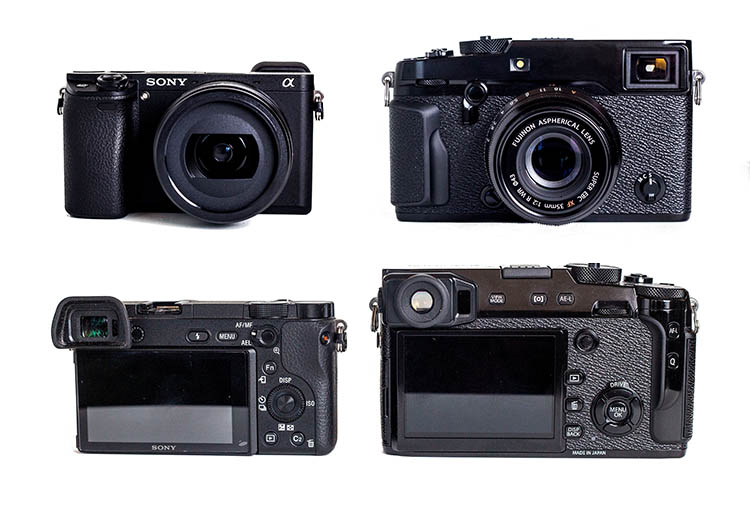
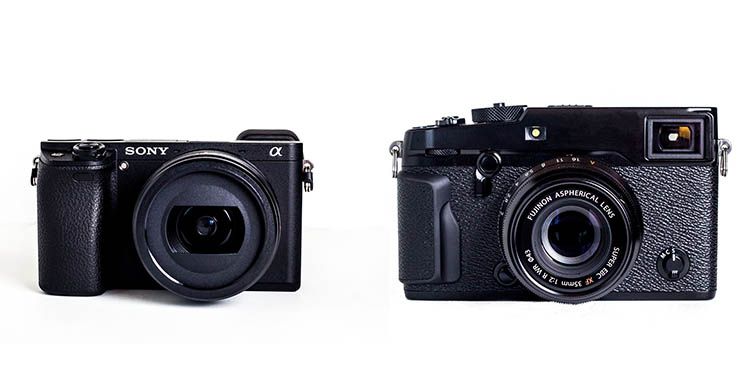
The Sony a6300 and Fujifilm X-Pro2 are two mirrorless cameras that debuted very recently as updated versions of their popular and beloved predecessors. Both cameras are comparable in technical specs and appeal, but how does each fare when compared side-by-side? Find out below!

Fujifilm X-Pro2 versus Sony a6300 6

Technical Specs: Main Similarities

Camera Sensors and Format

Both the a6300 and X-Pro2 are APC-C crop sensor bodies with a 1.5x crop factor. Each has a CMOS sensor with 24-megapixel resolution and is capable of shooting in both JPG and RAW on SD memory cards.

Solid, Weather-Resistant Body

Perhaps the biggest cosmetic upgrade that Sony made to the a63000 was including a tougher, more weather-resistant body. Like the X-Pro2, the a6300 is composed of magnesium alloy promises to be dust and moisture resistant.

Fujifilm X-Pro2 versus Sony a6300 6

In-Camera Wi-Fi

Like most modern digital cameras, both the X-Pro2 and a6300 have built-in Wi-Fi, making it a snap to transfer photos from your camera to your mobile phone, or shoot remotely via a mobile app.

Technical Specs: Main Differences

Price

The a6300 can be purchased body-only for $ 998.00, while the X-Pro2 is quite a bit more expensive at $ 1,699.00. Accompanying Fujifilm lenses also tend to be pricier than Sony equivalents.

Size and Weight

The X-Pro2 is quite a bit bulkier and heavier, weighing in at 15.70 ounces (445 g) body-only compared to the a6300’s 14.25 ounces (404 g). In terms of dimensions, the X-Pro2 is also slightly bigger with dimensions of 5.5 x 3.3 x 1.8″ (141 x 83 x 56 mm), compared to the a6300’s dimensions of 4.7 x 2.6 x 1.9″ (120 x 67 x 49 mm). Accompanying Fujifilm lenses are also heavier and larger than Sony equivalents.

Sony a6300

Sony a6300

Fuji X-Pro2

Fuji X-Pro2

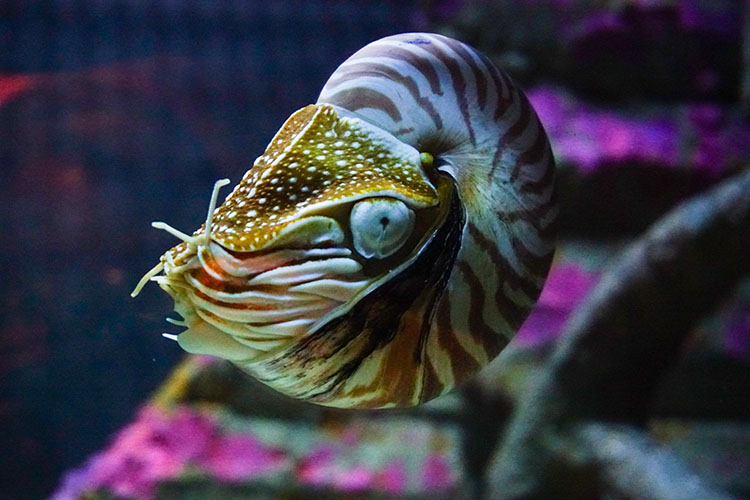
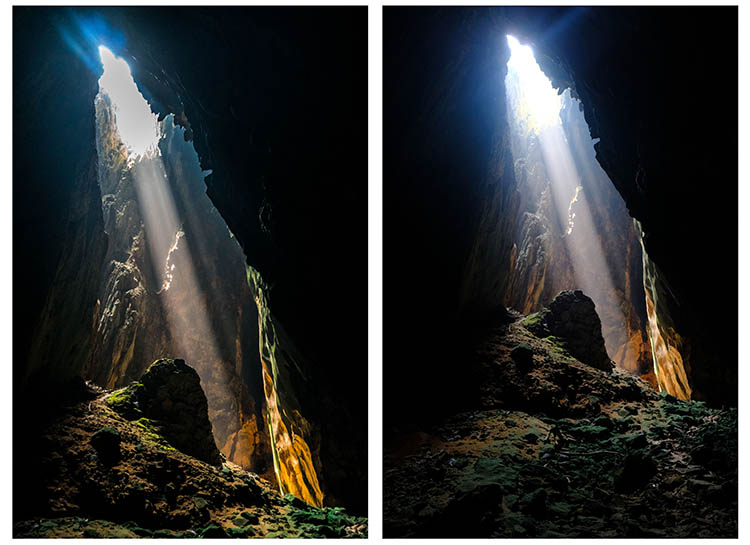
Both shot with the same settings. Images are straight from the camera, unedited.

Video

The a6300 can record 4K video, while the X-Pro2 can only record video at 1080p. Interestingly, the Fujifilm offers two SD-card slots compared to the Sony’s single SD-card slot. You’d think Sony would squeeze in another slot to accommodate their higher-quality video formats.

Viewfinders

Among the unique features of Fujifilm’s digital cameras is their signature hybrid viewfinder which really shines on the X-Pro2. For those unfamiliar, the hybrid viewfinder offers the ability to switch between optical (rangefinder style) and electronic viewfinders , which can be a huge advantage for photographers who dislike shooting with electronic viewfinders only, which is what you get with the a6300.

Focus Tracking

Besides the inclusion of 4K video, the main selling point of the a6300 was its brand new sensor, and what Sony claims is the world’s fastest autofocus (dubbed “4D focus”) with 425 phase detection autofocus points. Combined with the Sony’s ability to shoot at up to 11 frames per second and accurate lock-on AF, the a6300 is a beast for shooting sports and action photography.

Comparatively, the X-Pro2 sports a total of 273 AF points including 169 embedded phase-detect AF points, plus a maximum burst rate of 8 frames per second.

Sony a6300

Sony a6300

Fuji X-Pro2

Fuji X-Pro2

Display Screen

While both cameras have a 3-inch rear LCD screen, the a6300 has a pop-out tilting screen, while the Fujifilm’s screen is melded to the camera body.

Built-in Flash

The a6300 offers a small pop-up flash that can be angled to bounce off the ceiling, in addition to a hot-shoe mount, while the X-Pro2 does not have a built-in flash (only a hot-shoe mount).

In Practice

Given the technical similarities and differences above, how did it actually feel to handle both cameras? The Fujfilm’s weight and size were definite factors, especially while switching between the smaller, lighter-weight Sony. With that being said, one could definitely argue that Fujifilm’s heavier, more solid camera and lenses felt like a higher-quality investment compared to some of Sony’s lightweight, plastic-based lenses.

Sony’s newly engineered 4D focus tracking was incredibly spot-on and accurate, especially compared to the Fuji. However, unless you’re shooting a ton of action scenes, Sony’s ultra-fast autofocus is a luxury that isn’t a make or break feature. One feature on the Sony that did come in handy was the flexible pop-up flash that would have been nice to have on the Fuji.

Fujifilm X-Pro2 versus Sony a6300 6

Sony a6300 photo on the left; Fujifilm X-Pro2 photo on the right. Both shot with the same settings. Images are straight from the camera, unedited.

The X-Pro2 has a clear vintage, rangefinder look and feel to it, which some photographers may prefer. Personally, I preferred the feel and overall button placement of the Sony, and was ultimately able to customize buttons and settings to operate it similarly to my Canon 5D Mark III.

On both cameras, the built-in Wi-Fi was a little tricky to set up, but from then on was incredibly intuitive and easy to wirelessly transfer images straight from the cameras to cell phones.

Sony a6300

Sony a6300

Fuji X-Pro2

Fuji X-Pro2

One last consideration – lens availability

Since both the a6300 and X-Pro2 are interchangeable lens cameras, compatible lens selection is another crucial difference between the two brands. Fujifilm lenses, while more solid and often more expensive, are contained to primes with a rather limited selection of zoom lenses, most of which have variable maximum apertures. In comparison, Sony offers a slightly more varied selection of lenses from primes and wides to mid-range and telephoto zooms.

Which is better for you?

Both the X-Pro2 and a6300 are feature-packed, brand new cameras that will appeal to different types of photographers.

Go Sony: If you value wicked fast autofocus, enhanced video recording capabilities, and/or are on a bit of a budget, the Sony a6300 is probably best for you.

Go Fuji: If you love the look and feel of a rangefinder camera, value Fuji’s unique hybrid viewfinder, and/or have a larger budget, the X-Pro2 will be your new favorite camera.

Sony a6300

Sony a6300

Fuji X-Pro2

Fuji X-Pro2

Have you tried either or both of these cameras? What are your thoughts?

googletag.cmd.push(function() {
tablet_slots.push( googletag.defineSlot( “/1005424/_dPSv4_tab-all-article-bottom_(300×250)”, [300, 250], “pb-ad-78623” ).addService( googletag.pubads() ) ); } );

googletag.cmd.push(function() {
mobile_slots.push( googletag.defineSlot( “/1005424/_dPSv4_mob-all-article-bottom_(300×250)”, [300, 250], “pb-ad-78158” ).addService( googletag.pubads() ) ); } );

The post Side by Side Comparison: The Sony a6300 Versus Fujifilm X-Pro2 by Suzi Pratt appeared first on Digital Photography School.


Digital Photography School

 
Comments Off on Side by Side Comparison: The Sony a6300 Versus Fujifilm X-Pro2

Posted in Photography


Fujifilm to update X-Pro2 firmware, releases new lens roadmap

07 Jul

Fujifilm has announced new firmware for its X-Pro2 mirrorless camera which, most notably, updates the autofocus algorithm to be in-line with the just-announced X-T2. The company promises better AF speed and accuracy, but notes that the use case-based system on the X-T2 will not be available on the X-Pro2.

The firmware update also improves parallax correction when using the OVF and adds support for the new EF-X500 external flash. 

X-Pro2 owners will be able to get their hands on the new firmware this October.

Along with the new firmware, Fuji has also refreshed its X-mount lens roadmap (shown below), adding three new XF lenses: 23mm F2 R WR, 50mm F2 R WR and 80mm F2.8 R LM OIS WR Macro. The 23mm will be shipping this year, while the other two will arrive in 2017.

One lens that was removed is the 120mm F2.8 R Macro, which has been replaced with the aforementioned 80mm Macro. Fuji states that this is ‘to meet the market demand for compact and lightweight lenses.’

Press release:

FUJIFILM ANNOUNCES NEW FIRMWARE UPDATE FOR THE X-PRO2 AND UPDATED XF LENS ROADMAP

Valhalla, N.Y., July 7, 2016 – As a leader in advanced digital camera technology and outstanding image quality, FUJIFILM North America Corporation today announced a new Firmware Update Version 2.0 for the FUJIFILM X-Pro2 that includes improvements to the autofocus system, compatibility with the new FUJIFILM EF-X500 flash, new power management options and a more accurate and easier-to-use Optical Viewfinder.

Firmware Update V.2.0 Key Features:

  1. The new autofocus algorithm* (found in the new FUJIFILM X-T2) produces faster and more accurate autofocus.
    * Excludes the new AF-C Custom Settings functions.
  1. Compatibility with the new hot-shoe mount FUJIFILM EF-X500 flash. The camera will now support high-speed flash sync and multi-flash lighting.
  2. AUTO POWER OFF will now have 15 second, 30 second, and 1 minute options, allowing more customizable power management.
  3. The parallax correction function will be improved to provide a more accurate and easier-to-use Optical Viewfinder.

Availability

The new firmware will be available for download in October 2016. 

Updated XF Lens Roadmap

Also announced is an updated roadmap for developing interchangeable lenses for the X Series line of mirrorless digital cameras. The latest roadmap adds three new lenses: the compact, lightweight and stylish semi-wide angle lens XF23mmF2 R WR, the compact mid-telephoto lens XF50mmF2 R WR and the mid-telephoto 1:1 macro lens XF80mmF2.8 R LM OIS WR Macro. The expanded 25-lens lineup covers extensive angles of view from ultra-wide angle to ultra-telephoto, and will now expand the macro category to further enhance photographic versatility.

Changes from the previous roadmap released in February 2015

The XF120mmF2.8 R Macro lens, listed in the previous roadmap, has been replaced with the XF80mmF2.8 R LM OIS WR to meet the market demand for compact and lightweight lenses. To support our customers who were expecting a telephoto macro lens, this new lens is compatible with the existing teleconverters to extend its reach into the telephoto range.

Articles: Digital Photography Review (dpreview.com)

 
Comments Off on Fujifilm to update X-Pro2 firmware, releases new lens roadmap

Posted in Uncategorized


Review: Fujifilm X-Pro2 Mirrorless Camera

15 Jun

Ever since Fujifilm unveiled their debut consumer camera in late 2010, the fixed-lens x100, the brand has become a favorite for professionals, and enthusiasts who seek an advanced digital camera experience, that still retains much of the look and quality of the classic film era.

Fujifilm’s very first mirrorless interchangeable-lens camera, the X-Pro1, was released in March 2012 to much praise from critics and users, and was recently replaced with its successor, the X-Pro2. Given the four year gap between camera models, there are many upgrades and improvements in the new X-Pro2, all achieved without adding significant weight or bulk to the camera. Prices are clearly a big differentiator at this point, with the older X-Pro1 going for as little as $ 799, and the X-Pro2 currently set at $ 1,699. But pricetag aside, just how many more features are packed into the X-Pro2, and is it worth it?

Fujifilm X-Pro2 Review

What’s in the Box

The Fuji X-Pro2 can be purchased body-only for $ 1,699; this basic kit comes with the following accessories in the box:

  • NP-W126 Li-Ion Battery Pack
  • BC-W126 Battery Charger
  • Body Cap
  • Shoulder Strap
  • Strap Clip
  • Clip Attaching Tool
  • Protective Cover

Recommended Accessories

While the X-Pro2 has a slightly better battery life than its predecessor, it’s still on the low side. As a result, it doesn’t hurt to have a spare NP-W126 Li-Ion Battery, or two, on you for longer shoots. Since the X-Pro2 has dual SD card slots, having one or two memory cards is also handy, although in testing I never fully maxed out a single 32GB SD card.

In terms of lenses, this X-Pro2 was tested specifically with the Fujifilm 35mm f/2 WR, a beautiful prime lens that equates to about 56mm on a crop sensor, and the Fujifilm 18-55mm f/2.8-4, a compact mid-range zoom that’s about 28-88mm on a crop sensor. Both lenses are relatively affordable ($ 399 and $ 699 respectively) and together made for a solid, compact, travel photography kit. Lens preference will, of course, depend on your shooting style, and Fujifilm has many other lens choices available.
Fujifilm X-Pro2 Review

Technical Specs

Sensor and Image Capture

First, let’s review the X-Pro2’s specs, which are vastly improved over its predecessor.

  • The X-Pro2 has an upgraded 24.3MP CMOS III APS-C sensor, giving it a significantly higher pixel count compared to the X-Pro1’s 16.3MP CMOS I sensor.
  • The processor is also the new X Processor Pro.
  • Native ISO range has also increased from 200-12800 (or 100-51200 in expanded mode).
  • Continuous shooting on the X-Pro2 is also slightly faster at 8fps, up from 6fps on the X-Pro1, and a continuous high buffer of up to 83 JPEG frames compared to 21 frames on the X-Pro1.
  • Metering is still 256 zone TTL, but besides Multi, Spot, and Average metering, the X-Pro2 adds Center-Weighted metering, which was absent on the X-Pro1.
Fujifilm X-Pro2 Review

Sample image shot at sunset. No tripod or extra lens filters.

Perhaps one of the biggest feature additions on the X-Pro2 is a shutter that allows for both mechanical and electronic capture; the latter allows for more flexibility. The mechanical shutter speed has increased to as high as 1/8000th, compared to 1/4000th on the X-Pro1. The X-Pro2 also enables the use of an electronic shutter speed with an even wider range of one second to 1/32,000. The X-Pro2 also includes Face and Eye Detection, meaning it will seek out faces and eyes when shooting. This is a very handy feature for photographing people, and it proved to be highly accurate during test shots.

Viewfinder and LCD

While both viewfinder and LCD sizes really didn’t change much in terms of physical size, both received a bump in resolution, and an updated User Interface in the X-Pro2. The viewfinder also finally allows for diopter adjustment, and the electronic viewfinder (EVF) has a wicked fast refresh rate of 85 frames per second. Still absent is a pop-out LCD screen.

Fujifilm X-Pro2 Review

Sample image. Shot handheld without a tripod.

Autofocus

The X-Pro2 has made some pretty giant leaps in the realm of autofocus. This camera now has 273 autofocus points, which is quite a bit more than 49 on X-Pro1. It also includes single, zone, wide/tracking autofocus modes, all of which were lacking on the X-Pro1. Finally, the X-Pro2 adds a physical feature that Canon DSLR users will find familiar: a mini joystick button which Fujifilm calls the focus lever. Besides acting as a button, the focus lever enables quick selection for all 273 autofocus points, and also helps you navigate through the menu.

Body and Handling

When it comes to the X-Pro2’s build, it is still comprised of a sleek, half matte black body, with a distinctly retro look. However, the build material is now magnesium-alloy versus aluminum for the X-Pro1. Despite using lighter material, the X-Pro2 is still slightly heavier than its predecessor, weighing in at 495 grams (17.5 oz.) versus 453 grams (16 oz.). In terms of dimensions, the X-Pro2 is a tiny bit wider and deeper, but it still looks about the same size as the X-Pro1.

The battery life on the X-Pro2 has been slightly improved, up to 380 frames, versus 300 frames on the X-Pro1. That’s still on the low side, so carrying a spare battery or two certainly won’t hurt. Camera startup time is a hair faster at 0.4 seconds, compared to 0.5 seconds. Also, the X-Pro2 now has dual SD card slots, which will certainly help with the increased size 24.3MP files. A built-in flash is still not included, but flash sync speed is now at 1/250 of a second, up from 1/180.

WiFi has been added to the X-Pro2 allowing for geotagging, wireless image transfer, and remote camera control. Finally, the X-Pro2 comes with improved weather sealing with 61 points of dust, water, and cold resistance. This doesn’t make the X-Pro2 waterproof, but it does allow for shooting in more diverse conditions.

Fujifilm X-Pro2 Review

Sample image shot with the Fujifilm 35mm f/2, handheld without a tripod.

Is It Worth It?

This is a difficult question to answer, given the plethora of vastly different digital camera options available today. Whether you go for the X-Pro2 or not, will really come down to your personal preferences and budget.

Personally, I loved the image quality of the X-Pro2, as well as its retro buttons and controls. With that said, the retro controls are unique to Fujifilm digital cameras, and can take some getting used to if you’ve been using a point and shoot, DSLR, or another brand of mirrorless camera. It’s also worth noting that while the X-Pro2 is definitely not as bulky and heavy as a professional DSLR, it’s not as compact and lightweight as other mirrorless cameras such as the Sony a6300, which has very similar technical specs, packed into a much smaller body.

Fujifilm X-Pro2 Review

Sample image shot outdoors, handheld with no extra filters.

Overall Thoughts

With higher shutter speeds of 1/8,000 or even 1/32,000 using the electronic viewfinder, higher ISO ranges, vastly improved autofocus, and enhanced weather sealing, the X-Pro2 has officially become a serious contender for professional photographers. If you’re looking to invest in a Fujifilm mirrorless interchangeable camera, it’s hard to go wrong with the X-Pro2. While deals can certainly be had with the older X-Pro1 model, the significant upgrades in the X-Pro2 make it a worthy investment if you have the money to spare.

googletag.cmd.push(function() {
tablet_slots.push( googletag.defineSlot( “/1005424/_dPSv4_tab-all-article-bottom_(300×250)”, [300, 250], “pb-ad-78623” ).addService( googletag.pubads() ) ); } );

googletag.cmd.push(function() {
mobile_slots.push( googletag.defineSlot( “/1005424/_dPSv4_mob-all-article-bottom_(300×250)”, [300, 250], “pb-ad-78158” ).addService( googletag.pubads() ) ); } );

The post Review: Fujifilm X-Pro2 Mirrorless Camera by Suzi Pratt appeared first on Digital Photography School.


Digital Photography School

 
Comments Off on Review: Fujifilm X-Pro2 Mirrorless Camera

Posted in Photography