RSS
 

Posts Tagged ‘Writers’

Writer’s Favorite Lens: 50mm f/1.8

03 Feb

Picking a favorite lens can be tricky, because there are aspects of a variety of lenses that I like. Sometimes I like to use zoom lenses, sometimes prime lenses, and other times specialty lenses like macro or ultra-wide-angle. But despite the variety of options available, at the end of the day I keep coming back to one particular lens as my pick of the litter. The lens that gets the job done no matter what situation I’m in, the one that consistently produces outstanding results more than any other, is my trusty Nikon 50mm f/1.8G. It’s a workhorse that has survived rain, cold, and even being dropped on a concrete garage floor. It’s incredible versatility is why I like to recommend it to photographers – especially those new to the craft who want to expand beyond their kit lens.

yucca

Value and versatility

When I was first exploring digital photography several years ago, I was enticed by the zooming function of a kit lens and could not understand why anyone would want a lens with a fixed focal length. It seemed quite limiting, and since I was just getting my feet wet I did not understand why I would spend over $ 200 on a non-zooming lens when I could spend less than half that on one that covered a greater variety of focal lengths. The price, I thought, made the lens a waste of money. But nevertheless I listened to the advice of my friends Ryan and Kevin and skipped the kit lens entirely, opting instead to shoot only with the Nikon 50mm f/1.8 on my newly-acquired D200. And my, oh my, what a difference that made.

Despite what might seem like a high price tag for new photographers, this lens is quite inexpensive compared to many of its counterparts. Because its focal length is not especially wide, but not all that tight, it can be used in an astonishing variety of situations even on a crop-sensor camera. In fact, the only time I have found myself reaching for a wider lens is when I am shooting multiple people indoors. If I’m using my “Nifty Fifty” during these situations I have to either stand clear across the room or at the other end of the hallway to fit my subjects in the shot.

Other than that it works great for nature, architecture, animal, and especially portrait photography. I have done several portrait sessions with nothing but this 50mm lens, and it produces solid results if you want close-ups with beautiful blurry backgrounds or even whole group shots. While other lenses like the 85mm f/1.8 or 35mm f/1.8 are ideal for tighter or wider shots, this one lens can cover a greater variety of your photographic needs like almost nothing else. The price might seem a bit steep, but it will certainly pay off over time.

portrait

If you’re on a limited budget and want to take nice portraits, look no further than a 50mm lens.

Features

At first glance it might not seem like a non-zooming lens would have much in the way of features, and this particular one doesn’t even have image stabilization that is found on some cheaper kit lenses! But the more I used this lens, the more I realized how many features it did have, and how much they impacted my photography.

For instance, this lens has two focusing modes: Automatic/Manual and Manual. Because I use back-button focusing on my camera, the A/M mode on the 50mm f/1.8 means I don’t have to press any buttons or change any options if I want to quickly shift between Automatic and Manual focusing. On many other lenses I would need to fiddle with a switch on the lens itself in order to change this option. That might not seem like much of a hassle, but I have been in many situations in which I needed to quickly change from Automatic to Manual focusing and back. Not having to flip a switch every time has been an incredible time saver, and resulted in much better photos with much less frustration on my part.

droplet

Being able to switch easily between manual and automatic focus allowed me to get this shot of a precariously-perched water droplet.

Another key feature of this lens is its overall size. While a big zoom lens might seem tempting, and indeed they are certainly useful in a variety of situations, I like the compact size of this lens because it makes it ideal for tossing in a camera bag or carrying around for a day of casual shooting. It only protrudes a few inches from the camera, rendering it quite inconspicuous in a crowd of people. Though it is not ideal for street photography on a crop sensor body, it has allowed me to get plenty of candid shots in a variety of situations because it was simply easy to carry around on my camera.

guitar

While it is a bit on the tight-angle end for casual street photography, the 50mm lens on a crop sensor body can still deliver outstanding results.

Finally, there are a few features of the actual construction of the lens that elevate this lens as my favorite. One of the round glass elements inside the lens is aspherical, which significantly reduces some of the optical oddities caused by a defect called “chromatic aberration” that crops up on photos from time to time. This helps ensure that the photos I take using this lens are tack-sharp and have less of the strange color fringes that can show up on the edges of various elements of a picture.

It helps you learn

tower-flare

Learning to work within the constraints of this lens helped me understand so much more about photography than I would have otherwise.

Noted speaker Martin Villeneuve said that “constraints can actually boost creativity,” and this has certainly been my experience with this non-zooming 50mm lens. Shooting exclusively with it for over a year helped me learn far more about photography than I ever would have otherwise. Its wide aperture unlocked creative photographic opportunities that I would have never experienced with a kit lens Also, the inability to zoom forced me to become more invested in the situations I was photographing, as well as seek out new angles from which to shoot them. This has helped me learn how to use available light much better because I rarely needed to use the on-camera flash or external speedlights, and it helped me understand how the various elements of exposure worked in tandem because there was so much room to experiment with such wide aperture values.

bike

Even in the pouring rain, this lens has never let me down.

To take the idea of working within limits a step further, and help me continually experiment with photography, I started a blog called Weekly Fifty where I post one image each week that was taken with this 50mm lens. After almost two years of doing this I feel like I am just scratching the surface of what it has to offer! Whether you are a new photographer looking for an addition to your gear bag, or a seasoned professional who wants to push new creative boundaries, you can’t go wrong with this simple but powerful piece of glass.

Do you use a 50mm lens? Post your thoughts about it in the comments below, or share any other favorite lenses you might have as well.

googletag.cmd.push(function() {
tablet_slots.push( googletag.defineSlot( “/1005424/_dPSv4_tab-all-article-bottom_(300×250)”, [300, 250], “pb-ad-78623” ).addService( googletag.pubads() ) ); } );

googletag.cmd.push(function() {
mobile_slots.push( googletag.defineSlot( “/1005424/_dPSv4_mob-all-article-bottom_(300×250)”, [300, 250], “pb-ad-78158” ).addService( googletag.pubads() ) ); } );

The post Writer’s Favorite Lens: 50mm f/1.8 by Simon Ringsmuth appeared first on Digital Photography School.


Digital Photography School

 
Comments Off on Writer’s Favorite Lens: 50mm f/1.8

Posted in Photography


Writer’s Favorites – 35mm Prime Lens

04 Jan

Street Photography

When I was 15, I was diagnosed with Attention Deficit Disorder. While it has gotten much better with age, when I was younger the slightest stimuli would grab my attention. It was a tough job to keep me focused on a single task (it still is if you ask my wife).

Why am I telling you this and what does this have to do with my favorite lens / focal length? I’m telling you because over the years simplifying things has become very important to me and for my photography, and this has manifested itself into a love of the simple 35mm prime lens. I much prefer the simplicity of sticking with a single focal length, as long as a situation allows for it.

When I say 35mm prime, I am referring to the 35mm focal length, so it would be a 35mm lens on a full frame, around a 23mm lens on a cropped APS-C sensor, and around a 17mm lens on a micro four thirds camera.

Lightweight

Brooklyn Bridge35mm lenses are light and non-intimidating, which is a huge advantage for daily use. For this reason, I prefer lenses that are a little slower, such as a 35mm f/2 instead of a 35mm f/1.4, because the f/2 lenses are usually significantly smaller than their faster counterparts. I rarely feel the need to use f/1.4, particularly since most newer digital cameras can shoot very well at high ISOs.

The Freedom of a Prime Lens

Using a single focal length is a great way to simplify your photography and to make it more consistent. The constraint can slow you down and help you think more critically about perspective and framing. It can help you grow as a photographer.  In addition, 35mm  is just wide enough without being too wide. It will not overly distort a scene, but it will allow you to capture a wide scene from a close distance.

Fuji X100s + 23mm (35mm equivalent)

Fuji X100S

Fujifilm X100S with 23mm F2 Lens (35mm equivalent).

Currently, my favorite 35mm lens is actually a camera, the Fuji X100S, which has a fixed 23mm (35mm equivalent) f/2 lens that is not removable. I use this small camera as a daily complement to my DSLR system and am now able to carry a high quality camera with me everywhere, no matter what I am doing.  Because the lens was built specifically for the Fuji X100S, it is a spectacular combination and the image quality is very comparable with my high-end DSLR in a much lighter camera body.

A 35mm can be used for a variety of situations. It is not perfect for every situation, but you can use it for street photography, landscapes, travel photography, portraiture, and even architecture. Here are my favorite ways to use the 35mm focal length.

Street Photography

Street Photography

The 35mm focal length is one that has been used by many street photographers over the years and there is a reason that so many do. The focal length makes it easy to show an entire scene, to combine a person and a background, or to combine multiple subjects within the same frame from a close distance. It is wide enough for you to show a large area of background while still focusing on a main subject at a close and intimate distance.

PortraiturePortrait

A 35mm can even be used for portraiture. It is not your typical lens for a tight headshot, where an 85mm to 120mm is ideal. However, the 35mm excels at producing wonderful environmental portraits from a little further away, where both the person and elements of the background are prominent. It is wide enough to include a lot of the surroundings, but not too wide to significantly distort the subject’s features.

Architecture

Architecture

This focal length is not ideal for zooming into building details at far distances, however it is a great focal length for capturing buildings. The constraint can almost turn into an advantage as you begin to photograph buildings in ways that you might not otherwise. I do not recommend only a 35mm for architectural photography, but a 35mm can be a big asset much of the time.

Urban Landscapes

Urban Landscape

The focal length is wide enough to include a scene with a lot of depth and a lot of interest, while not being too wide as to significantly distort the features of the scene.

Travel Photography

Overstuffed Photo Backpack

Have you ever given your wife a black eye by swinging around a tripod that was attached to your backpack at 5am, while getting out of a taxi at the airport for a vacation to Mexico with her extended family? Here is how I used to pack for vacations. I no longer pack like this for vacations.

So for these reasons the 35mm is my favorite lens. Do you use it? What is your fave and why?

googletag.cmd.push(function() {
tablet_slots.push( googletag.defineSlot( “/1005424/_dPSv4_tab-all-article-bottom_(300×250)”, [300, 250], “pb-ad-78623” ).addService( googletag.pubads() ) ); } );

googletag.cmd.push(function() {
mobile_slots.push( googletag.defineSlot( “/1005424/_dPSv4_mob-all-article-bottom_(300×250)”, [300, 250], “pb-ad-78158” ).addService( googletag.pubads() ) ); } );

The post Writer’s Favorites – 35mm Prime Lens by James Maher appeared first on Digital Photography School.


Digital Photography School

 
Comments Off on Writer’s Favorites – 35mm Prime Lens

Posted in Photography


Writer’s Favorite Lens – The Canon 24-105mm f/4

21 Dec

I like shooting all manner of outdoor scenes. I am a sucker for landscapes and seascapes, which almost always require a wide-angle lens. I really enjoy exploring new cities with my camera, which also requires a wide-angle lens but can also be helped by a little zoom to capture details. And, of course, I like taking pictures of my family while we are out, which requires portrait focal lengths. My favorite lens, the Canon 24-105mm f/4 does all these things, and does them remarkably well.

Bernard

A wide angle allows you to get right behind your subject and also get the background. Shot at 24 mm (1/100, f/8, ISO 200)

So when the dPS writers began writing about their favorite lenses, I did not need to think more than a second to determine which lens was my favorite. I carry other lenses, like an extreme wide angle, and a longer telephoto zoom, but I find I rarely need to break them out. In fact, perusing my Lightroom library shows me that I actually used the 24-105mm to capture over 60% of all the pictures I have ever taken.

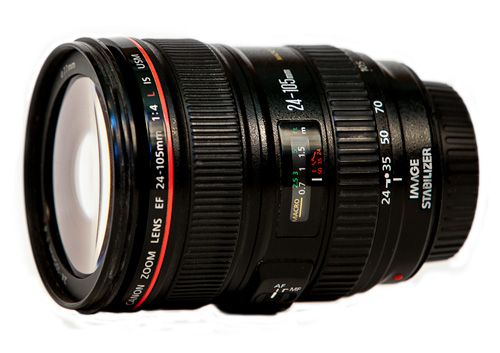
Canon 24-105mm f/4 L IS

Image courtesy of Canon

Here is a quick look at the technical specs for this lens:

  • Local lengths: 24-105 mm (38mm – 168mm on APS-C cameras)
  • Aperture: f/4 (max.) – f/22 (min.)
  • Dimensions: 8.4 cm x 10.7 cm (3.3″ x 4.2″)
  • Weight: 670g (1.47 lb.)
  • Minimum focusing distance: 45 cm

A Great “Walking-Around” Lens

Sure, there is a place for prime lenses. But gone are the days when serious photographers needed to carry around a bunch of prime lenses in order to get high quality. Sometimes you want to just carry your camera and one lens. And sometimes you just don’t want to have to change lenses.

With the 24-105mm, you can carry one lens of high quality and moderate size, and shoot with it all day. It will handle landscapes, urban, street, and people photography really well. As such, it is almost ideal for taking on the family vacation, where you will likely encounter any or all of these scenes. Rather than dig through your bag to find a lens, then change lenses, and then get the shot, you can just walk around with the 24-105mm on your camera and be ready for almost everything.

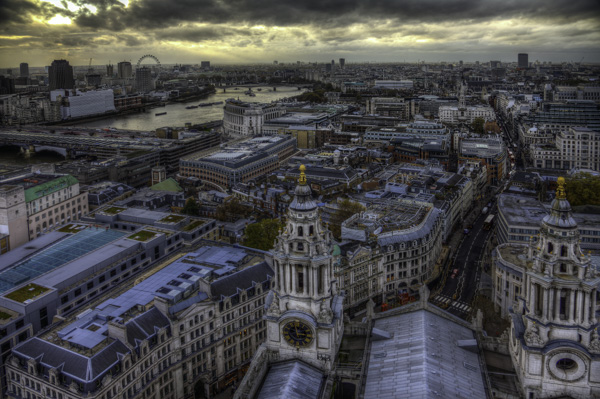
London from top of St. Paul's

The 24-105mm is great for urban shots where you want to zoom out to get the whole scene. It is also nice to walk around with one lens when you have to climb a bunch of stairs, like at St. Paul’s Cathedral in London. Zoomed all the way out at 24mm (1/80 sec., f/5.6, ISO 200).

This is particularly true for full-frame shooters. At full frame, zooming all the way out to 24mm will take a nice wide angle shot, and that is often as wide as you will need to go. Further, at full frame you need to get up to 105mm to cover the portrait focal lengths and get a little bit of telephoto for details. More on that in a second.

High Quality

But am I really just advocating for good walk-around lenses in general? I don’t think so. The focal lengths for these sort of lenses are nice, but they have to be of high quality, and the 24-105mm is remarkable in that regard. It is an L-series lens. It is fully weather sealed. It is sharp and has great image quality. It is known for fast and accurate focusing. My personal experience with it has borne this out. But beyond that, any test I have ever seen of this lens has given it high marks. I have honestly never seen a bad review of this lens (or even a luke-warm one).

Western Lake

Landscapes and seascapes require a good wide angle. Shot at 28mm (1/30 sec., f/16, ISO 200).

Compared to Other Mid-Range Zooms

But don’t most serious photographers use a 24-70mm for their mid-range zoom lens? Perhaps. I believe they are drawn to the aperture of f/2.8 (versus the f/4 for the 24-105mm). There is no question that the wider aperture of such lenses will get you a greater degree of background blur, and the 24-70 is a really nice lens. But I have a few reasons why the 24-105mm is a better choice for many photographers, particularly those shooting full frame:

1 – Image stabilization

Although the aperture on the 24-70mm opens up one stop more (f/2.8 versus f/4), the 24-105mm has image stabilization, which actually gives you three extra stops in low-light situations.  So unless you need to stop the action in low light, you will actually get better low-light performance out of the 24-105mm.

2 – Better for portraits

If you want to shoot portraits, the 24-70mm is not a good choice despite its wider aperture, at least if you are shooting full frame. The best focal length for portraits is in the range of 80-90mm, which is not included in the range of the 24-70 mm at full frame. It will get there with an APS-C camera since the crop factor will result in an effective focal length of up to 105mm, but not at full frame.

3 – Price/cost

The 24-105mm is a relative bargain at $ 1,150, since you will pay almost twice as much for the 24 -70mm f/2.8.

The price of the 24-105mm becomes even better if you buy it along with a camera, as it is the “kit lens” for some high-end Canon cameras.

The Importance of Lens Diameter

One final note on price, and that is to consider the effect of the purchase of filters. I use a lot of filters, as do many outdoor photographers. I carry three different strength neutral density filters, a polarizer, and a graduated neutral density filter kit. Some photographers might add a UV filter to that list as well. So it is worth mentioning that another good thing about the 24-105mm is that its lens diameter of 77 mm is the same as other common Canon lenses (it is the same for the three lenses I use most often).

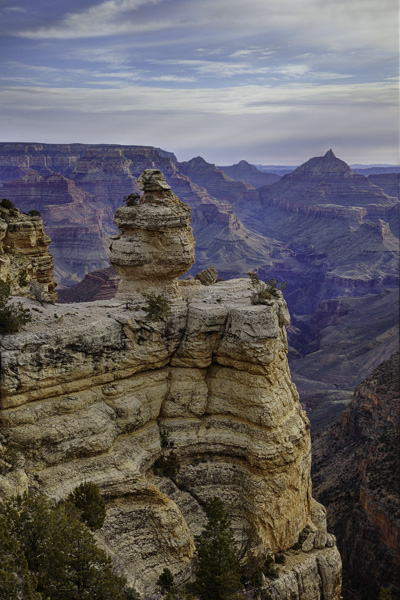
Grand Canyon

When out hiking, you often want to keep your weight down, so a walking around lens like the 24-105 works great. Shot at 58 mm (1/200 sec., f/11, ISO 250).

Why is that important? Because having the same lens diameter on different lenses means that I can use the same set of filters on all of them. If I had to buy new sets of filters for lenses of different diameters, it would get very expensive, very fast. That is especially true if you are using high-quality filters (and you should be, since it directly affects the optics).

Lenses that share the 77 mm diameter with the 24-105mm include the:

  • 100 – 400 mm f/4.5 – 5.6
  • 70 – 200 mm f/2.8
  • 17 – 55 mm f/2.8
  • 17 – 40 mm f/4
  • 16 – 35 mm f/4
  • 10 – 22 mm f/3.5 – 4.5

Not for Everyone

So I think the 24-105mm f/4 is the perfect combination of great focal lengths, high quality, and reasonable price. It will allow you to take landscapes, urban scenes, street photos, and family pictures. You might never take it off your camera.

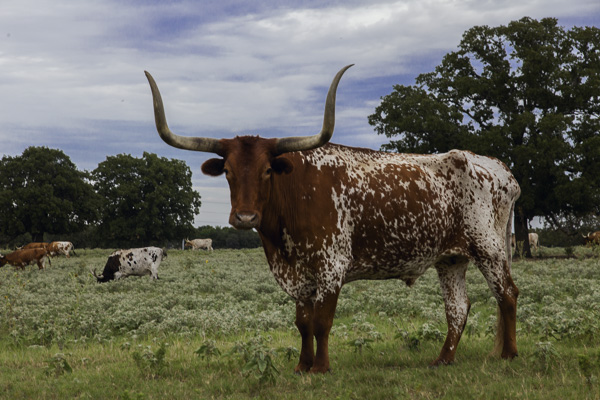
Longhorn

Sometimes you want to zoom in a bit. Shot at 82 mm (1/100 sec., f/8, ISO 400).

But, of course, the 24-105mm is not for everyone. Even among those looking for a good walking-around lens, the $ 1,150 price tag might be too strong. In addition, there are a lot of things this lens won’t do, like macro, for example.  It doesn’t have enough reach for sports or wildlife photography. Although the focal length of the 24-105mm does cover the “portrait lengths,” portrait and wedding photographers will doubtlessly want a faster lens. In fact, anyone shooting inside will likely want a faster lens (larger maximum aperture).

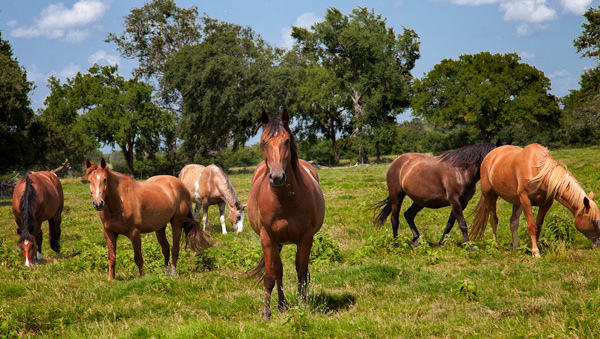
When you are photographing horses, you need to be ready for a variety of focal lengths.  Sometimes they will walk up to you looking for a treat, and sometimes they stay away.  These stayed away, so I needed all 105 mm.  (Shot at 105 mm, 1/160 sec., f/11, ISO 200)

When you are photographing horses, you need to be ready for a variety of focal lengths. Sometimes they will walk up to you looking for a treat, and sometimes they stay away. These stayed away, so I needed all 105 mm. (Shot at 105 mm, 1/160 sec., f/11, ISO 200)

Conclusion

For many, the 24-105mm will be a great choice. Rarely do you see this combination of focal length, quality, and price. I would say that it would make a great addition to your photography bag, except that it is likely that this lens won’t spent much time in your bag (unless your camera is also in your bag). I agree with Bryan Carnahan of The Digital Picture, who writes that “if I had only one lens, this would be the one.”

googletag.cmd.push(function() {
tablet_slots.push( googletag.defineSlot( “/1005424/_dPSv4_tab-all-article-bottom_(300×250)”, [300, 250], “pb-ad-78623” ).addService( googletag.pubads() ) ); } );

googletag.cmd.push(function() {
mobile_slots.push( googletag.defineSlot( “/1005424/_dPSv4_mob-all-article-bottom_(300×250)”, [300, 250], “pb-ad-78158” ).addService( googletag.pubads() ) ); } );

The post Writer’s Favorite Lens – The Canon 24-105mm f/4 by Jim Hamel appeared first on Digital Photography School.


Digital Photography School

 
Comments Off on Writer’s Favorite Lens – The Canon 24-105mm f/4

Posted in Photography


Writer’s Favorite Lens the Nifty Fifty on a Cropped Sensor Camera

18 Nov

50mm1Growing up, the first letter of my last name was towards the end of the alphabet, which meant that I was one of the last kids who got to choose my electives in high school. It was for this reason that I ended up with strange electives such as Physics, Advanced Placement Composition, Metal Shop, and eventually Black and White Photography. I was less than thrilled about taking Photography – I had SATs to take, colleges to get in to, and certainly did not have time for a photography class taught by the Psychology teacher who was notorious for making kids walking around campus with their hands in the shape of a rectangle, “visualizing” the shot. Despite my best efforts, somewhere between the enlarger and placing my paper in the developer for the first time, I fell in love.
I clung to black and white film photography for a number of years, until husband bought me my first DSLR – a Canon Rebel XS. One of the very first things I noticed was that something was wrong. Even when shooting with some of my favorite focal lengths, something looked off. After consulting Dr. Google, I quickly realized that the difference was that I learned photography in 35mm film format, and that the cropped sensor of the Canon XS made my lenses function in a different way than I was used to. There are plenty of articles that go into great depth explaining the hows and whys of cropped sensors, but what you need to know is that if you own an entry-level DLSR, you probably have one. If you do have a cropped sensor camera, you also need to know that a 50mm lens on a cropped sensor camera doesn’t actually act like a 50mm lens. Rather, APS-C (cropped sensor) cameras have a magnification factor of either 1.6x (Canon) or 1.5x (Sony & Nikon). So, you need to multiply the length of the lens on your camera by the magnification factor above in order to see what focal length that particular lens will function as on your camera. For example, if you put a 50mm lens on a cropped sensor camera, you have to multiply by 1.6x which means that your 50mm lens is actually functioning more like an 80mm lens.

50mm3

This is important because when you see reviews of lenses, or even when professional photographers talk about lenses, chances are that the images that they include will be taken with a full frame camera, which does not have a cropped sensor. In other words, even if you buy exactly the same lens, your photos will probably not look similar if you are using a cropped sensor camera. Now, please hear me when I say that this doesn’t mean that your camera is “bad” or that you need to upgrade your gear – you are capable of taking some absolutely amazing photos with a cropped sensor camera and a nifty fifty lens. There is a TON of potential there at a fairly low price point, which is why the 50mm f/1.8 lens is the first upgrade that a lot of new photographers make, and rightfully so! Today, I’d like to showcase a few of my favorite uses of a 50mm lens on a cropped sensor camera. In fact, every photo in this article was taken with a Canon 50mm f/1.8 lens and either a Canon XS or Canon 60D, which are both cropped sensor cameras.

Newborn Photography

50mm2

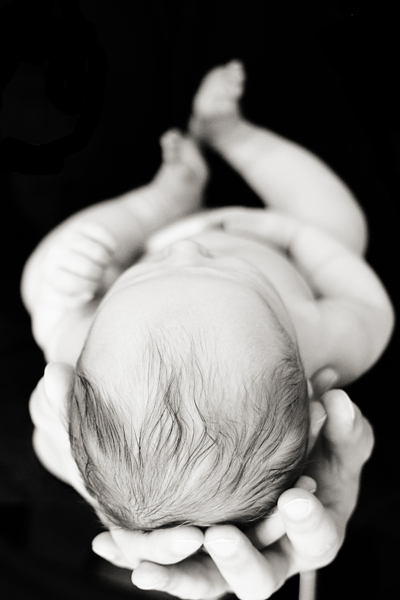
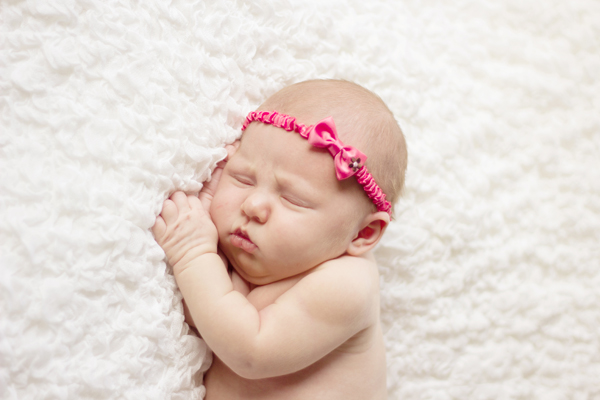
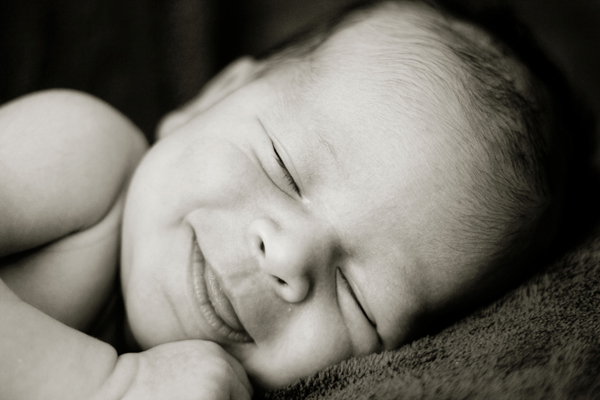
When I’m photographing newborns, I’d say that the 50mm lens is on my camera 90% of the time. I like to go to the new parents rather than have them come to me whenever possible because I tend to find that mom and baby relax a bit faster in their own space, and I like to include a lot of “lifestyle” images in the session as well. However, doing so comes at a trade-off, which is that I don’t have as much control over the light in their home as I would in my space. Yes, I can move furniture if necessary or even shoot in the kitchen if that’s where the best natural light is, but it’s also nice to have a lens that can accommodate lower-light situations if needed, and the 50mm certainly can do just that when I shoot wide open or close to it. I find that the sweet spot in terms of aperture with this lens is around f/2.5, which is typically sufficient, but I like the fact that I can go down even further if I want to bring the focus to little feet, hair, or newborn features.

Nature Photography

50mm4

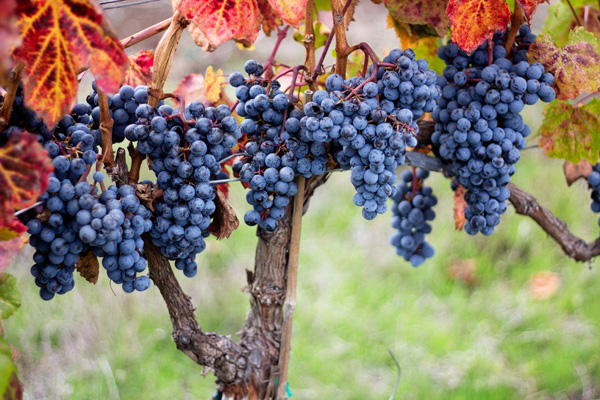
While I have experimented with landscape photography using my 50mm lens, I prefer a wide angle lens (somewhere around 35mm) for that purpose. That said, while the 50mm may not be your best option for capturing waterfalls or beautiful mountain ranges, the 50mm lens shines in capturing the smaller details of nature – think flowers, vegetables, fruit, leaves, snow covered branches, and buds on trees.

50mm5

Portraits

Of course, one of the most common uses for the 50mm lens is for standard portraits. I use my 50mm lens most often for portraits of one or two people, but have pulled it out quite frequently for groups of about three to six people as well (any more than six, and I prefer a wider angle lens). When I first purchased the 50mm lens, I was so excited about the ability to create a blurred background in portraits that I almost always shot wide open, with the aperture at f/1.8. It was so exciting to be able to achieve that bokeh!

However, I also created a lot more work for myself and ended up with a lot fewer photos that nailed focus because the depth of field was so shallow, and any small movement of a kid could throw the focus out of whack . Now, I tend to set the aperture around f/2.5 when I’m shooting portraits, which still gives plenty of blur in the background but also makes my life a little easier. This is especially true when it comes to photographing toddlers and young kiddos that are often moving even when they’re “sitting still”. The bottom line? Don’t fall into the trap of shooting wide open all the time just because you can!

50mm6

Unexpected Surprises

When I’m out and about, I often toss my camera with the 50mm lens in my purse or in the car. As I’ve mentioned, it’s my favorite lens, and the one that gets the most use, so it’s a generally safe bet. That said, there have been a handful of occasions in which my 50mm lens may not have been my first choice if I had other options with me, but it performed better than expected nonetheless.

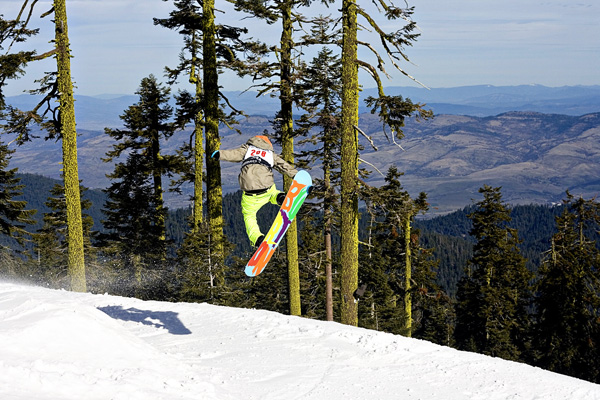
One such instance was when we ended up at a ski resort on the day of their high school snowboarding competition. I grabbed my camera just for fun, and was surprised at how well the 50mm lens handled a shot that I’d typically prefer a wider angle for. So, don’t be afraid to experiment with a 50mm lens even beyond the standard portrait applications, there’s a whole lot of potential there!

50mm8

Your Thoughts?

Do you own a 50mm lens? What do you find yourself using it for most often? Do you have a cropped sensor or full frame camera?

The post Writer’s Favorite Lens the Nifty Fifty on a Cropped Sensor Camera by Meredith Clark appeared first on Digital Photography School.


Digital Photography School

 
Comments Off on Writer’s Favorite Lens the Nifty Fifty on a Cropped Sensor Camera

Posted in Photography


Writer’s Favorite Lens – the Canon 40mm Pancake Lens

16 Nov

Like many beginning photographers, I’ve been a long-time fan of zoom lenses throughout much of my four year photography career. This past year, however, something in my brain shifted and I began to first accumulate and suddenly prefer using prime lenses. I began with the humble Canon 50mm f/1.8, eventually adding a 100mm f/2.8 macro lens. For many months, this combination of lenses paired with my Canon 6D became my preferred travel photography kit, replacing my beloved 16-35mm f/2.8. I loved the compact, significantly lighter kit that I was now able to tote around in my discrete Kata DSC 437 camera bag.

DPS 08

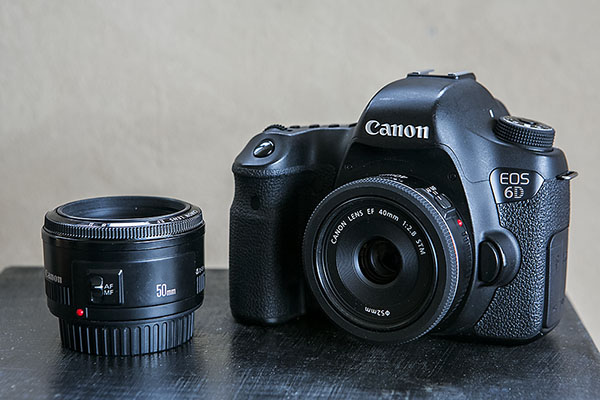
Several weeks ago, I decided to pull the trigger on another prime lens: the Canon EF 40mm f/2.8 STM pancake lens. Announced by Canon in June 2012, this is a relatively new lens and is the smallest ever made by Canon. Intrigued by its smaller size and slightly wider focal length, I decided to use it in place of my nifty fifty lens on a two week trip to New York and Montreal. The resulting images I took and overall experience shooting with the 40mm have secured it as my favorite new all-around shooting lens. Here are some reasons why you too may want to consider adding the 40mm pancake lens to your collection.

DPS Pancake lens 03

Makes DSLR cameras even more compact

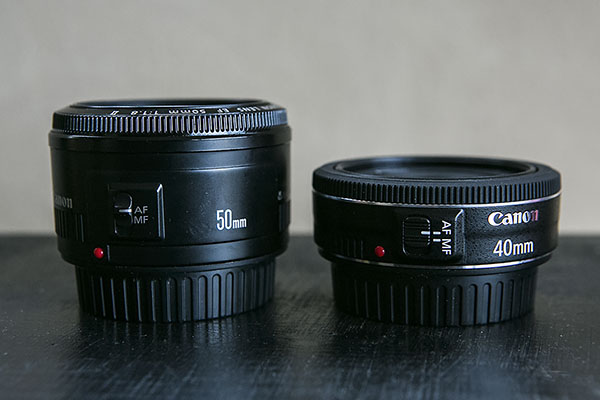
At 22mm (0.86″) deep, the 40mm is significantly shorter than the 50mm f/1.8, which measures 41mm (1.6″) deep. The 40mm’s shortened length makes it easy to slip it into a relatively small camera bag, or even a medium sized purse.

DPS Pancake lens 02

Allows for the “perfect normal” focal length for full-frame cameras at a reasonable price

While the 40mm will work on every Canon DSLR ever made, it is optimized for use on full-frame digital cameras. I always found 50mm to be slightly too long for most of the casual street photography or travel shots that I want to take, and Canon doesn’t make a 35mm for less than $ 500. Priced brand new at $ 199.99, the 40mm is the perfect balance in terms of focal length and cost, providing an incredibly natural perspective to images at a reasonable cost.

DPS FINAL 05

Solidly built with instant manual focus override

Despite being drastically shorter than the 50mm f/1.8, the 40mm actually weighs about the same at 4.6 ounces (130 grams). This is likely due to the 40mm being constructed of both metal and plastic, giving it a very solid and secure feel, especially when compared to the mostly plastic 50mm f/1.8. Like the 50mm f/1.4, the 40mm also has an outer focus ring that can be adjusted at any time for instant manual-focus override when shooting in Canon’s One Shot focus mode.

DPS New York Food

Ideal for street, architectural, and food photography

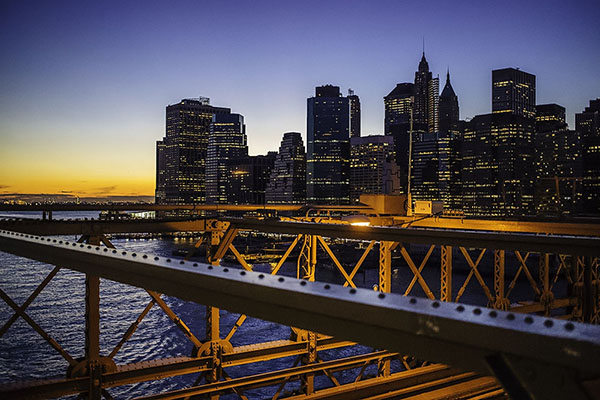
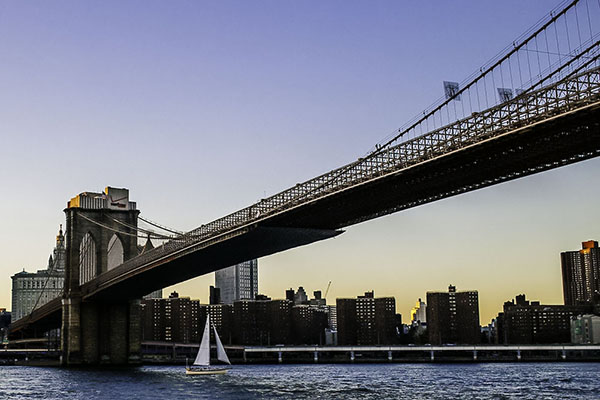
The 40mm’s compact build makes it very easy to stow in casual bags of nearly any size. Its size also makes it more inconspicuous, making it ideal for street or documentary photography, as opposed to the popular 24-70 f/2.8 lens, which always seems to stick out. My travels through New York and Montreal saw many tall buildings and skyscrapers which were admittedly harder to shoot with the 40mm, making me miss my wider 16-35mm.

DPS FINAL 02

However, the 40mm was still wide enough to capture certain architectural scenes, and the benefit was the lack of distortion when captured at 40mm versus 16mm. This meant far less lens correction in post-processing. Another area of photography that is immensely easier with the 40mm is food and drink photography for the casual shooter.

DPS New York Food

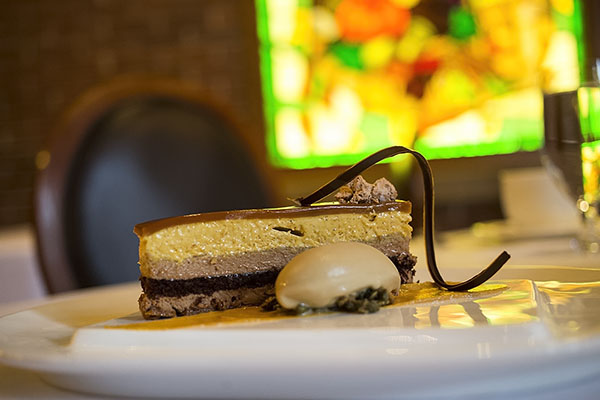
If you want to make less of a show of grabbing a few snaps of a dish while being seated at a restaurant, the 40mm’s wider focal length and minimum focusing distance of 0.3m (11.8″)  – compared to 0.45m (17.7″) on the 50mm f/1.8 – is perfect for capturing what is immediately in front of you without having to stand up and fuss with angles.

DPS Portrait 02

The One Downside to Having a Pancake Lens

Throughout my three weeks of shooting with the 40mm, I had only one minor complaint that to me is the compromise of having a slimmer lens: lack of space to properly handle the lens during lens changes. It is much harder to attempt spur of the moment lens changes without accidentally getting fingerprints on one side of the lens or potentially dropping it.

Do you have a favorite lens? Have you tried this little gem? Share your thoughts in the comments.

The post Writer’s Favorite Lens – the Canon 40mm Pancake Lens by Suzi Pratt appeared first on Digital Photography School.


Digital Photography School

 
Comments Off on Writer’s Favorite Lens – the Canon 40mm Pancake Lens

Posted in Photography


Writer’s Favorite Lens – 70-200mm Zoom

14 Nov

What is the best lens for taking flattering portraits? ZOOM, ZOOM, ZOOM!

Zoom Main

Model credits left to right: Sherri Lee Bigs/Image courtesy Nine Network Australia, Nicole Di Silva/Foxtel, Jocelyn Idriss. All images copyright Gina Milicia

“I’ve learned that people will forget what you said, people will forget what you did, but people will never forget how you made them feel.” – Maya Angelou

My love affair with the zoom lens began in the late 80’s. I started my career as a portrait photographer using an entry level Nikon with an 80-200mm Sigma zoom lens. Back in the day “zoom lens” was code for paperweight or doorstop because they had the similar optics to a pair of cheap sunglasses and were about as sharp as a butter knife.

Zoom lenses were for amateurs, pros used prime lenses.

After I’d been shooting for a few years and could afford better gear, the zoom was shunned to the back of my kit. It only saw the light of day on the rare occasion I photographed a wedding or a corporate event. Then in 2004 I met and fell in love with the Canon 70-200mm zoom. I have to be honest here and tell you that it wasn’t love at first sight. I’d been burned before by zoom lenses that promised so much and yet delivered very little. But, it didn’t take much to convince me that this lens was different and completely revolutionized the way I worked.

The Good

Zoom Good 1 Zoom Good 2
Zoom Good 3

Model credit: Mimi Elashiry, John Scott Personal PR, Next Models Hair and Make-Up by Rachid

This is a typical way I might use the 70-200mm zoom in a portrait shoot. The first image is set up as full length shot at a focal length of 70mm, then I zoom in to create a three-quarter shot at 150mm, and again to create a tight headshot at 200mm.

Many of my clients suggest that I just shoot full length, and then they will crop to headshot or three-quarter in post-production.
This sounds great in theory, but there are two problems with cropping in this situation. First, you end up with less than twenty percent of the original file, which is a drastic reduction in quality, and reduces a 60MB file to approximately 10MB. Second, the lens compression factor at 70mm is very different than at 200mm.

Zoom Good 8

Model credit: Tommi Pitsas

Zoom Good 8A

A tight headshot at 200mm creates the most beautiful blur (or bokeh) in the background (top image of Tom) that is not as prominent if the image were photographed at full length and cropped (bottom image of Tom above).

I love working with a zoom lens when I’m taking portraits because it means I can set up my shot and create full length, three-quarter and tight head shots without having to move the camera. I can stay out of my model’s personal space, which can be intimidating or confronting, and keep the momentum of the shoot flowing.

Zoom Good 6

Zoom Good 7

Zoom Good 9

Model credits: Images Gina Milicia, Courtesy Nine-Network Australia

Being able to work this quickly is perfect for editorial and celebrity photo shoots, which are always fast paced and high pressure.

Zoom Good 4

Model credit: Boone Freund and Jocelyn Idriss. Try capturing this beautiful moment with a wide angle lens. The only way you could get close enough is if you were on the bike too!

The long zoom lens is also perfect for capturing intimate photos of couples or children, and even pets. I’m often shooting well back at 200mm, and this makes it much easier for my model to forget I am even taking their picture.

Zoom Good 5

Model credit: Jocelyn Idriss

The whole “look” and feel of a portrait can be radically changed by focal length choice. A focal length less then 50mm will distort facial features. Some photographers love this look and have successfully incorporated it into their shooting style.

I love to work with a focal length between 100mm and 200mm. Facial features are compressed slightly, which is flattering for portraits. I don’t like the way a wide focal length looks and it doesn’t suit my shooting style.

The Bad

The 70-200mm is a heavy lens to carry around all day long. The extra weight can make handheld shooting difficult. Its size and length also makes it stand out, making it incredibly difficult for you to shoot incognito, such as at an event or when taking street photos or travel pics. In these cases, I opt for my walk-around zoom, the 24-105mm Canon f/4, which is perfectly suited to these situations and is much lighter!

The other downside of shooting with a long lens is I’m often backed into corners or having to shoot through windows or doorways just to be able to get the shot. I’m constantly shooting with my back to the wall. Literally!

The Ugly

The most annoying part about working with zoom lenses is the zoom action is continually sucking dust onto my camera sensor. Unwanted dust means I need to get my sensor professionally cleaned more often which is an added cost, and extra down time I wouldn’t have if I stuck to prime lenses.

My Choice

70 200L

I work with the Canon 70-200mm IS F2.8 L series. It’s my workhorse, and I use it on 70-80% of my shoots. An average photo shoot for me will consist of approximately 2000-4000 frames, and I can’t think of another lens in my kit that would give me the consistency, ease, speed and high standard of the 70-200mmm.

If you are considering buying a zoom there are now many excellent ones on the market. The price drops significantly if you choose a slower lens (f/4 instead of f/2.8) and one without image stabilization, that is almost unnecessary these days because cameras can shoot at a much higher ISO. If your budget is tight, you might also consider buying second hand. Yes, zoom lenses are pricey, but remember your lenses should last you a minimum of 10 years if you look after them. I’ve had mine for 10 years now, and it’s outlasted three cameras. This fact alone makes the 70-200mm my most cost effective investment.

The other option you may like to consider is renting a long lens for a weekend. Prices are very reasonable.

It took me ten years of experimentation with different focal lengths before I found my happy place. Do you like to shoot long? Which lens do you think is the most flattering lens for portraits? I’d love to hear your thoughts.

The post Writer’s Favorite Lens – 70-200mm Zoom by Gina Milicia appeared first on Digital Photography School.


Digital Photography School

 
Comments Off on Writer’s Favorite Lens – 70-200mm Zoom

Posted in Photography


Writer’s Favorite Lens – the 50mm f/1.4 Lens

12 Nov
005

1/400, f/4.0, ISO 320

It’s easy to love the 50mm f/1.4 lens. It’s a jack-of-all-trades. It’s that best friend that never lets you down. It’s the cowboy of all the lenses; it can pretty much do anything you ask it to do. If I was forced to only keep one lens, I’d have to choose this one. I’d even go as far as to say that most of you probably have this lens, and if you don’t, you should.

Sometimes the 50mm f/1.4 doesn’t get appreciated as much as it deserves to be. It’s unassuming. It doesn’t look intimidating and professional on your camera. It doesn’t cost you an arm and a leg or your first-born child. It’s definitely not showy, and not really a lens that you’re going to brag about to your photographer friends. But man, when you need a lens that’s got your back, this is the one.

Before I go on, I want to clarify that I’m talking about my Nikon 50mm f/1.4 lens on a full frame body. If your camera is a cropped sensor, the 35mm f/1.4 lens will have similar results. You can also get the 50mm 1.8 lens for less money, but if you can spend a few extra dollars, get the sturdier, faster, 50mm f/1.4 (or even the 50mm f/1.2 if you’re a Canon user).

008

1/400, f/3.5, ISO 400

Convenient and Lightweight

The 50mm f/1.4 is great to take just about anywhere when you want to capture life around you. If you don’t want to lug around a bunch of heavy equipment, throw this lightweight gem on your camera, and go. Sure, there will be some shots that won’t be perfect with the 50mm, but you’re going to be able to get most of what you want. If you’re a smaller person like I am (5’3″ if I’m on my tiptoes), a little less weight can make a big difference if you’ve got a lot of walking around to do. I’ll admit that my arm gets really tired with the bigger lenses sometimes.

The freedom of smaller and lighter weight will allow you to move around more, without the restriction of maneuvering a big long lens, or pulling out a tripod. You can get it in and out of your camera bag easily, and keep it close to you, which will lessen the chance of gear getting stolen or broken.

You’ll be able to get up close if you need to, if you’re in a public place, or you can pull back a bit and get the whole scene. Your 50mm sees about the same as how things look to your eye in real life. So if you see something you want to capture, you just put the camera up, and there it is, pretty much how you just saw it. You don’t have to worry about everything being closer or farther away than you expect.

Ready for Anything

006

1/500, f/2.8, ISO 400

If your 50mm is on your camera most of the time, you’re ready to capture the unexpected. You won’t be stuck with a lens that absolutely won’t work for the situation. There are few situations that the 50mm can’t at least do a decent job. Sometimes you don’t have time to change to a different lens, because deer don’t come knocking at your front door very often, and they don’t stay for tea and cookies!

I’m not saying that you can’t ever use another lens, but the 50mm is a great lens to have on-the-ready.

Great at Capturing Details

001

1/1250, f/1.8, ISO 400 // 1/640, f/2.5, ISO 400

The 50mm lens is great to capture those details around you. Your feet make great zoomers, and you can easily move back to get more of the scene or closer to get those details in the shot. It feels like an extension of your eyes and brain, so taking photos becomes second nature.

Expert at Depth of Field and Bokeh

007

1/125, f/2.2, ISO 800

The 50mm f/1.4 offers awesome depth-of-field options. You can have just one small part in focus with the rest of the photo dropping away into creamy bokeh. You can also open that aperture all the way up to f/1.4 when you don’t have much light to work with. Those extra couple of f-stops can make a huge difference when every bit of light counts. If you’ve never owned a faster lens like this one (for example, if you’ve only been using the kit lens that comes with your camera), this will open up a whole new world to you!

Perfect for Portraits

009

1/1250, f/1.8, ISO 400

The 50mm can be a great portrait lens. Yes, there are lenses that might be better for portraits, but sometimes I really love the portraits I can make with my 50mm. You don’t have to get so close to your subject that you’re breathing on their face, but you don’t have to get so far away that you’re shouting instructions to them.

I find that sometimes the 50mm allows me to have the best connection to my subjects. I can touch their arm to move them into a better position, and talk to them and connect. Then I step back slightly and capture exactly what I just worked on, before I lose the connection and natural look we just achieved. Also, sometimes those big lenses can feel intimidating to your subject; the 50mm doesn’t look quite so scary.

Best All-Around Lens

004

1/320, f/2.0, ISO 800

You can also use your 50mm for other things besides people, of course (sometimes I do forget about that, because I’m kind of attached to photographing human beings). You can use the 50mm for still-life photos, scenery, and even some wildlife (especially if a deer comes right up to your house). There aren’t many things that the 50mm is useless for. It’s a great lens to have when you don’t know for sure what kind of photography you want to do, and you want to experiment for a little while.

Essential for Indoor Shooting

003

1/100, f/3.2, ISO 800

The 50mm is almost essential if you want to shoot indoors. If you want to read more ideas on using this lens indoors with natural light, go check out Tips For Great Indoor Portraits Using Natural Light. I love that I can maneuver in almost any space, even small homes, and still get everything I want in the photo. It’s also great if you don’t have tons of natural light available indoors, and you don’t want to use additional lighting and flash equipment.

002

1/250, f/4.0, ISO 400

The 50mm f/1.4 is so versatile that you can capture a family with their beautiful surroundings, or you can capture the most intimate close-up detail. It’s so easy to carry around that you won’t dread taking it along with you on your adventures. It’s so intuitive that you will feel like your heart is making photos, and your brain doesn’t have to work as hard. It’s so inexpensive that most photographers can add it to their collection.

Are you in love with your 50mm lens? Share in the comments why or why not. I’d love to hear what you think.

The post Writer’s Favorite Lens – the 50mm f/1.4 Lens by Melinda Smith appeared first on Digital Photography School.


Digital Photography School

 
Comments Off on Writer’s Favorite Lens – the 50mm f/1.4 Lens

Posted in Photography


Writer’s Favorite Lens – the Tamron 18-270mm

09 Nov

Darren recently suggested that the dPS writers to contribute to a semi-regular series featuring our favorite lenses, and I knew, hands down, which lens I wanted to feature: my daily workhorse, the Tamron 18-270mm lens. All photographs in this article, with the exception of the lens itself were taken with the Tamron 18-270mm.

church, fall, autumn, architecture, framing, fall leaves, Tamron18-270mm

Introducing the Tamron 18-270mm

The full name of this lens is the Tamron 18-270mm f/3.5-6.3 Di II VC PZD lens. It is a great all-in-one zoom lens and covers a wide-range of photography situations. Vibration control (VC) allows you to handhold at slower shutter speeds, and the proprietary piezodrive autofocus is quiet and fairly fast. Tamron makes versions of this lens compatible with Canon, Nikon, and Sony camera bodies. While some may argue that this lens is a “jack-of-all-trades but master of none,” I would contend that the Tamron is a perfect fit for the photographer looking to get a lot of use out of a single lens.

camera lens, tamron, tamron18-270, all-in-one zoom, zoom lens, photography

Ideal Uses for the Tamron 18-270mm

The Tamron 18-270mm is a perfect lens for travel photography and for the photographer-on-the-go who does not want to spend time constantly switching lenses or hauling large amounts of gear. In a single lens, you have the capability of shooting everything from wide angle, to 50mm, to a pretty substantial zoom.

When I made the decision to upgrade and replace my two kit lenses (the Canon 18-55mm and 55-250mm), I knew that I wanted a lens or lenses that would cover a similar range of photography situations and offer an improvement in image quality. I was also preparing for some extensive traveling (including backpacking) and did not have an endless budget, so both weight and cost were important considerations.

hiking, backpacking, Badlands, tent, camping, travel photography, Tamron18-270mm

At 450 g (0.99 lbs) this is not a light lens, but it compares favorably to other long zoom lenses, such as the Canon 55-250mm I was replacing (390 g or 0.86 lbs), the Canon 24-105mm (525 g or 1.16 lbs), or the Canon 70-300mm (630 g or 1.39 lbs). After a long day of hiking and photographing, you will know that you have been carrying your camera around, but you would be hard-pressed to find another lens for a DSLR that will give you this range and flexibility that is any lighter.

Price-wise, the Tamron is a steal. This lens retails today for around $ 450 USD, and its newly-released upgrade, the Tamron 16-300 f/3.5-6.3 Di II VC PZD Macro currently retails for $ 599 USD, after rebate. This is a great value for a quality lens for those who lack unlimited funds to spend on multi-thousand dollar lenses.

Advantages of All-in-One Zooms

The main advantage of an all-in-one zoom lens, like the Tamron, is the flexibility. You can go from shooting a wide-open landscape shot to a close-up zoom of an individual bird in the flick of a wrist. These two photographs at Mammoth Hot Springs were taken just moments apart, at the two extremes of the Tamron’s range. If look carefully in the middle left of the wide view, you can just make out the bird. You will no longer have the excuse of “not having the right lens” if you miss a prime photographic opportunity.

Yellowstone, Mammoth Hot Springs, landscape, photography, National Park, wide angle, Tamron18-270mm

Yellowstone, Mammoth Hot Springs, landscape, photography, National Park, zoom lens, Tamron18-270mm, bird, wildlife

Never having to change lenses also keeps my camera and sensor cleaner, my reaction speed faster, and my backpack and purse emptier. I rarely travel around with a full camera bag, since I can slip an extra battery or a few filters into a pocket or my purse. In fact, I can easily stow the entire camera, with the Tamron lens attached, in my fairly-small purse without incident (though I usually use a neoprene wrap around it).

Tamron18-270mm

The Tamron 18-270mm lens is a great lens for you if you do not want to specialize or you want to shoot a wide range of subjects and situations. You can go from shooting close-ups in the mornings, to architecture at midday, to your child’s soccer game in the afternoon, and still have the same lens on for shooting a few shots of the moon before bed.

closeup, macro, bee, bumblebee, Tamron18-270mm

architecture, theater, blackandwhite, Tamron18-270mm

moon, full moon, eclipse, night photography, astrophotography, Tamron18-270mm

The main downside to an all-in-one zoom is that you have a range of aperture values across the different focal lengths. With the Tamron 18-270mm, I can shoot as wide as f/3.5 at 18mm but only have f/6.3 at 270mm. Prime lenses offer much wider aperture values. As a workaround, backing up and using the longer focal lengths still allow you to capture decent blur and bokeh.

If you want a zoom or all-in-one zoom lens with a wider aperture value across the whole range, you need to be prepared to shell out significantly more money (say, a cool $ 2199 USD for the Canon EF 70-200mm f/2.8L IS II USM or $ 1450 for the version without image stabilization).

Why I Love the Tamron 18-270mm

In the end, your favorite lens comes down to what you want to shoot and how much you can afford. For me, the Tamron 18-270mm was an excellent choice to satisfy my wide-ranging photographic interests on a limited budget. The majority of photographs that I take, including those for my articles here on dPS, have been shot using my trusty Tamron 18-270mm lens. With this single lens, I am ready for nearly any photographic opportunity that comes my way.

6 month old, newborn photography, infant, baby, mother and child, mom, Tamron18-270mm, portrait

What will you shoot? What’s your favorite lens?

The post Writer’s Favorite Lens – the Tamron 18-270mm by Katie McEnaney appeared first on Digital Photography School.


Digital Photography School

 
Comments Off on Writer’s Favorite Lens – the Tamron 18-270mm

Posted in Photography


Wanted: Freelance news / features writers!

26 May

DPRlogo.png

We’re on the lookout for freelance writers to contribute news and short feature content for our homepage. If you’re an experienced writer with great editorial instincts who loves ferreting out interesting and unusual photo-related content, we want to hear from you. Click through for more details.

News: Digital Photography Review (dpreview.com)

 
Comments Off on Wanted: Freelance news / features writers!

Posted in Uncategorized


Wanted: Freelance news/features writers. Also, DPReview is hiring!

07 Jun

DPRlogo.png

We’re on the lookout for freelance writers to contribute news and short feature content for our homepage. If you’re an experienced writer with great editorial instincts who loves ferreting out interesting and unusual photo-related content, we want to hear from you. Also, DPReview is hiring! We have two open full-time positions available: we’re looking for an Editor to join our team of writers and reviewers, and a Software Manager. Click through for more details.

News: Digital Photography Review (dpreview.com)

 
Comments Off on Wanted: Freelance news/features writers. Also, DPReview is hiring!

Posted in Uncategorized