Tag: world’s

  • Pillars of Green: 85,000 Plants on World’s Largest Vertical Garden Facade

    [ By WebUrbanist in Architecture & Houses & Residential. ]

    An extensive living facade system in Bogota, Columbia, represents growth in the right direction, away from unrealistic tree-covered skyscrapers toward more sustainable and useful vertical greenery.

    The Santalaia building has plants spanning over 30,000 square meters of its surface area, able to produce oxygen for over 3,000 people annually (and filter tons of heavy metals, harmful gases and other airborne particulates). Paisajismo Urbano installed this specific system, developed by Ignacio Solano.
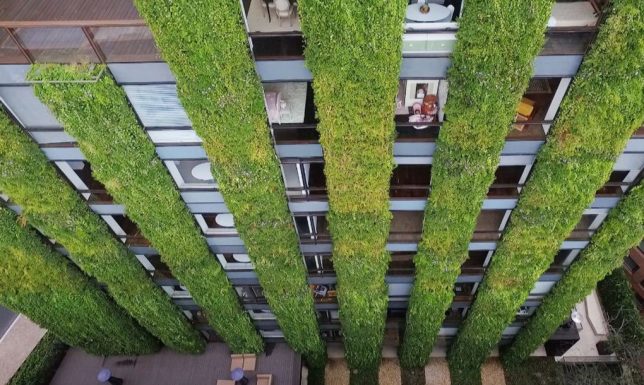
    The recent trend (in renderings and to some extent reality) of putting trees onto tall towers is problematic from engineering and ecological standpoints. “Intensive” greenery requires thicker layers of soil and more complex systems for watering, maintenance and structural support. “Extensive” greenery, by contrast, provides many of the same benefits with lower cost and less wasted energy.

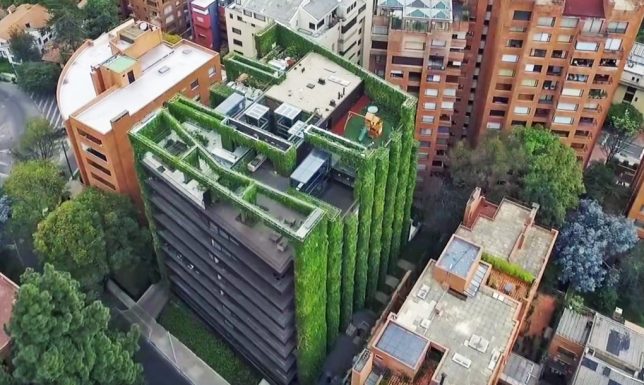
    Many architects are naturally tempted to place trees on buildings, which do have a few functional advantages (like providing shade and making for nice-looking renderings). Still, building residents as well as the public would be better served in most cases by systems like this one. Even then, it is important to determine in advance what the goals and intended benefits are, since any green installation is complex and requires ongoing support.

    Share on Facebook


    [ By WebUrbanist in Architecture & Houses & Residential. ]

    [ WebUrbanist | Archives | Galleries | Privacy | TOS ]


    WebUrbanist

  • Ferrari Designer Launches World’s Most Luxurious Sleeper Train in Japan

    [ By WebUrbanist in Technology & Vehicles & Mods. ]

    Public transit meets luxury transport in this elegant and open train design with rich interiors as well as copious windows for viewing the passing landscape.

    The champagne-colored Shiki-Shima sleeper boasts aesthetics by Ken Kiyoyuki Okuyama, the automotive designer behind the Ferrari Enzo as well as Maserati Quattroporte. Inside, branching window frames are meant to conjure images of tree-lined forests.

    Window geometries on the exterior reflect the different needs of interior spaces, from lovely common rooms and fancy dinner cars to split-level sleeping compartments.

    The design is also distinctly Japanese, featuring traditional wood, paper and lacquer interiors with tatami mats and artistic techniques developed over centuries of history.

    and brings the elegant physique of a supercar to public transport. with dome cars, large geometric windows and a plush sofas, a trip on the rain suite shiki-shima is comparable to a luxury cruise.

    “Okuyama nods to japanese artisanal crafts with his use of bentwood—made by curving wood with steam—to frame the sofas and seating. Meanwhile, oriental carpet mills takes car of the design under foot, using their signature ornate carpets that can already be found in the Vatican palace and Kyoto state guest house. The train consists of 17 rooms in total, with two large suite rooms and 15 smaller ones. JR east, the rail operator behind the luxury masterpiece, seeks to provide ‘a high-grade space’ that is currently unseen in existing railway journeys.”

    Share on Facebook


    [ By WebUrbanist in Technology & Vehicles & Mods. ]

    [ WebUrbanist | Archives | Galleries | Privacy | TOS ]


    WebUrbanist

  • Waterbird demos world’s first bendable Multi-Slider

    Photo Gear News has a hands-on video of Waterbird systems’ Multi-Slider, which the company touts as a world’s first. The slider can easily go from linear to curved, and users can make fine adjustments to the curve using an allen wrench. Each segment of the track has a tripod mount in order to keep things stable.

    An included motor moves the camera smoothly along the track, while a controller lets the photographer define the positions, speed and acceleration for camera movement. The controller can also be controlled remotely from a mobile device.

    The Multi-Slider comes in three sizes: 80cm, 120cm and 150cm, and Waterbird can produce custom sizes, as well.

    Pricing has yet to be announced.

    Articles: Digital Photography Review (dpreview.com)

  • World’s first 100-million-pixel drone launched by DJI and Hasselblad

    Chinese drone manufacturer DJI has announced that it is to launch a new drone later this year that will be fitted with a 100-million-pixel Hasselblad H6D-100c camera. The DJI M600 Pro will be aimed at those who need precise and detailed aerial pictures, as it will not only produce extremely high resolution images but users will be able to position the drone with what the company describes as ‘centimeter-level’ accuracy using the D-RTK GNSS navigation system.

    The H6D-100c will be attached to DJI’s Ronin-MX gimbal and will be carried by the M600 drone’s six-rotors, with images streaming back to Earth via the Lightbridge 2 system. The drone is set for release in the third quarter of the year, with a price no doubt as spectacular as the promised image quality.

    For more information see the DJI website.

    Press release:

    DJI And Hasselblad Introduce World’s First 100-Megapixel Integrated Aerial Photography Platform

    DJI M600 Pro Drone, Ronin-MX Gimbal And Hasselblad H6D-100c Camera Combine For Unparalleled Aerial Imaging Package

    DJI, the world’s leader in civilian drones and aerial imaging technology, and Hasselblad, the leader in high-quality professional medium format cameras, Tuesday marked the start of the next era of aerial photography by introducing the first 100-megapixel integrated drone imaging platform.

    The DJI M600 Pro drone, the Ronin-MX gimbal and the Hasselblad H6D-100c camera combine each company’s unparalleled technological expertise to create an unprecedented tool for precise, detailed and accurate aerial imaging. Professional drone users can continuously control camera operations in flight using the DJI GO app, in order to provide rich imagery for landscape and fine-art photography, robust data for surveying and mapmaking, and endless possibilities for future professional endeavors.

    The flight platform for the combination is the DJI M600 Pro drone, an advanced and adaptable six-rotor flight platform equipped with the powerful Lightbridge 2 transmission system, a dustproof propulsion system and six Intelligent Flight Batteries. The M600 Pro can be guided by the D-RTK GNSS navigation system, which can withstand strong magnetic interference to provide highly precise centimeter-level 3D positioning. This enhanced accuracy over typical barometer, compass and GPS systems makes it ideal for exacting commercial, industrial and scientific applications.

    The Hasselblad H6D-100c camera is a triumph of camera technology, with a large 53.4 mm x 40.0 mm sensor that offers outstanding detail, color reproduction and tonal range even in poor lighting conditions using the HC and HCD lens family. The camera mounts on the drone through the Ronin-MX three-axis stabilized gimbal, which uses powerful motors and inertial measurement units to resist high G-forces, maintain stability and hold the horizon.

    The M600/Ronin-MX/H6D-100c platform is the latest product collaboration since DJI assumed a stake in Hasselblad in late 2015, allowing the companies to explore fruitful collaborations on their advanced technology. Their first joint product, released in July 2016, combined the M600 drone platform with the A5D medium format camera. Hasselblad remains the only medium format camera company collaborating with DJI to bring unprecedented quality to drone photography.

    The M600/Ronin-MX/H6D-100c platform is on display through April 27 at the NAB Show in Las Vegas, Nevada, in DJI booth #C2807 in the Central Hall of the Las Vegas Convention Center. The combination will be released in the third quarter of 2017 at a price to be announced later.

    Articles: Digital Photography Review (dpreview.com)

  • The Big Bend: U-Shaped ‘World’s Longest Skyscraper’ is Intentionally Absurd

    [ By SA Rogers in Architecture & Cities & Urbanism. ]

    the big bend

    There’s lots of competition for the title of world’s tallest skyscraper, but does anyone care about the world’s longest – even when it extends vertically into an upside-down U shape? If you were to take ‘The Big Bend’ and straighten it out to stand on one end, it would extend impossibly high into the air, especially for how skinny it is. But architecture studio Oiio seems to be poking some fun at architectural norms and ‘luxury’ at the same time with this fictional structure.

    the big bend 2

    Designed to fit into New York City’s Billionaire’s Row, a controversial set of super tall, ultra-luxury residential skyscrapers that tend to block views and cast shadows into Central Park, The Big Bend wonders whether the prestige of an absurdly high structure still exists when it’s bent in half. It maintains roughly the same dimensions as a super tall structure, so does that mean the developers can charge as much for the apartments inside as they would if it extended all the way up into the clouds?

    big bend gif

    The tongue-in-cheek design repeatedly references the Monopoly-style, top-hatted caricature of a billionaire in its renderings, and the firm’s statements about their proposal reveal a frustration with the way buildings in this echelon are designed, regulated and priced.

    the big bend 5 the big bend 4

    “There is an undeniable obsession that resides in Manhattan,” says the firm. “It is undeniable because it is made to be seen. There are many different ways that can make a building stand out, but in order to do so the building has to literally stand out. We have become familiar with building height measurements. We usually learn about the tallest building and we are always impressed by its price per square foot. It seems that a property’s height operates as a license for it to be expensive. New York City’s zoning laws have created a peculiar set of tricks through which developers try to maximize their property’s height in order to infuse it with the prestige of a high rise structure.”

    the big bend 3

    “But what if we substituted height with length? What if our buildings were long instead of tall? If we manage to bend our structure instead of bending the zoning rules in New York, we would be able to create one of the most prestigious buildings in Manhattan. The longest building in the world. The Big Bend can become a modest architectural solution to the height limitations of Manhattan. We can now provide our structures with the measurements that will make them stand out without worrying about the limits of the sky.”

    Share on Facebook


    [ By SA Rogers in Architecture & Cities & Urbanism. ]

    [ WebUrbanist | Archives | Galleries | Privacy | TOS ]


    WebUrbanist

  • World’s Sexiest Parking Garage Has a New Competitor For the Crown

    [ By SA Rogers in Architecture & Public & Institutional. ]

    parking garage cliniques 1

    It may not be as jaw-dropping and awe-inspiring as Detroit’s decaying Michigan Theater parking garage, nor quite as multifunctional as the stunning Herzog de Meuron structure at 1111 Lincoln Road in Miami – but this new structure in Belgium is definitely one for the books. The undulating wooden slate facade of this staff parking garage for the Cliniques Universities Saint-Luc hospital in Brussels is beautifully fluid, with a clever design that disguises most of its bulk underground while remaining architecturally interesting.

    parking garage cliniques 5

    parking garage cliniques 8

    parking garage cliniques 4

    Modulo Architects and De Jong Gortemaker Algra Architects were charged with creating a functional industrial structure capable of holding 985 cars that would also serve as a welcoming introduction to the hospital itself, incorporating daylight, natural materials and a striking look. Taking inspiration from natural canyons, they created a stepped design that brings sunlight down into the first two subterranean levels.

    parking garage cliniques 9

    parking garage cliniques 6

    parking garage cliniques 10

    The two above-ground parking decks “bridge the terrain gradient” between street level and the green roof, which is designed to be both a functional outdoor space and something pleasant to look at from the higher floors of the adjacent hospital. The parking garage effectively raises this green space above street level for a sense of privacy, avoids obscuring views of the surrounding architecture and manages to be pretty cool to look at, itself.

    parking garage cliniques 7

    parking garage cliniques 2

    parking garage cliniques 3

    “We challenged ourselves to also make the underground decks clear and pleasant,” the architects say. “By introducing a sinuous ‘canyon’ encompassing the garage that allows light and air to reach even the lowest deck. Natural light and this (eventually green) canyon-wall contribute to orientation and ensure a positive experience for the user. The facades, made of meandering hardwood slats (FSC), naturally relate to the character of the canyon. An appealing building, nicely embedded with added value for the user is the result.”

    Share on Facebook


    [ By SA Rogers in Architecture & Public & Institutional. ]

    [ WebUrbanist | Archives | Galleries | Privacy | TOS ]


    WebUrbanist

  • World’s fastest SD cards hit 299MB/s write-speed according to Sony

    Sony has announced what it is describing as the world’s fastest SD memory cards with the launch of the new SF-G series. The three cards under the new label are capable of reading out at a rate of 300MB/s, but more significantly for camera performance they can accept data at a write speed of up to 299MB/s. Such speeds equip them to receive high resolution video as well as to cope with the new wave of extreme frame rates in DSLR and mirrorless cameras – such as that produced by the Olympus OM-D E-M1 ll.

    Sony says that it isn’t just the physical properties of the cards that assist getting long bursts of high resolution images recorded, as the company has also developed a new algorithm that it says ‘prevents loss of speed in data writing even after repeating burst shooting, and contributes to the camera’s speed of burst shooting’.

    Sony will launch three different capacities in the SF-G range; 32GB, 64GB and 128GB, and says the very high read rates possible will reduce the time it takes users to copy large amounts of data from the cards – so long as a suitable card reader is used. Conveniently then, Sony has also announced a new card reader that uses USB 3.1. The MRW-S1 is claimed to be the fastest card reader in the world too, due to its adoption of SuperSpeed USB and a direct, cable-free connection between the reader and the PC’s USB port.
    No pricing has been released with the news, but the SF-G cards are due to go on sale in March while the card reader is expected for April.

    It’s interesting to note, however, that the card is still rated as U3 speed class, meaning that it’s only guaranteed to be able to sustain a writing speed of 30MB/s, which is significant if you’re attempting to shoot video (30MB/s is 240 Mbps). It’s unclear whether this is because the card can’t dependably write fast enough to earn a V60 rating or if Sony simply hasn’t fully adopted the SD 5.0 standard yet.

    For more information visit the Sony memory card website.

    Press Release

    Sony launches the World’s Fastest SD card, the SF-G series

    World’s fastest SD Card for writing speeds up to 299MB/s, for burst mode shooting and 4K video with DSLR

    Faster reading speeds up to 300MB/s, for quick file transfer
    File rescue software to recover accidentally deleted photos and videos

    Faster than ever before

    Sony has applied years of experience in professional media to expand the current high performance memory card line up with an ultra-fast speed model that will maximise your camera performance. Introducing the world’s fastest SD card, the SF-G series is the perfect accompaniment for your high-performance DSLR or mirrorless camera, offering up to 299MB/s write speeds, contributing to longer high-speed continuous burst mode shooting for high-resolution images with cameras supporting UHS-II.

    Available in 32GB, 64GB or 128GB storage capacity, this memory card’s blazing-fast write speed also allows for a shorter buffer clearing time, making sure you will never miss those life-changing moments or shots.

    A Sony developed algorithm prevents loss of speed in data writing even after repeating burst shooting, and contributes to the camera’s speed of burst shooting – this is an SD card you can rely on.

    Another brilliant feature of this SD card is the ultra-fast read speed of up to 300MB/s. Paired with a memory card reader, the cards can transfer large volumes and file sizes to a computer very quickly, contributing to a more efficient workflow for professionals.

    “As the continuous shooting of higher-resolution images and adoption of 4K video with DSLR and mirrorless camera increases, the inherent need for larger, faster and more reliable cards becomes apparent. Thanks to the SF-G series, we continue to show our commitment to providing a full range of extremely high performance media devices to professional photographers and enthusiasts, maximising their camera performances” said Romain Rousseau, European Product Marketing Manager.

    The perfect back-up

    Sony’s SD products are highly reliable and durable and offer such features as water proofing and anti-static protection which help keep your precious contents safe. But when you are out all day shooting fast with time at a premium, accidental deletion of images can happen. With Sony’s free downloadable File rescue software, you can quickly recover deleted images or videos, including RAW images and 4K XAVC-S video files.

    MRW-S1, the fastest card reader for SF-G series

    In conjunction with SF-G series, Sony is introducing a new memory card reader, model MRW-S1, the perfect solution to drastically improve workflow efficiency after shooting by quickly transferring large data from SF-G series SD cards to a PC. This compact card reader offers an in-built SuperSpeed USB (USB3.1 Gen.1) standard A port for cable-free PC connection, so that your files can be copied faster than copying through the SD slot on a PC.

    The new SF-G series SD cards will be available in stores in March 2017 and the MRW-S1 card reader will be available in stores in April 2017.

    For more information on Sony’s SD card lineup, including the SF-G series, please visit; https://www.sony.co.uk/electronics/storage-devices/t/sd-cards

    Articles: Digital Photography Review (dpreview.com)

  • World’s fastest SD cards hit 299MB/s write-speed according to Sony

    Sony has announced what it is describing as the world’s fastest SD memory cards with the launch of the new SF-G series. The three cards under the new label are capable of reading out at a rate of 300MB/s, but more significantly for camera performance they can accept data at a write speed of up to 299MB/s. Such speeds equip them to receive high resolution video as well as to cope with the new wave of extreme frame rates in DSLR and mirrorless cameras – such as that produced by the Olympus OM-D E-M1 ll.

    Sony says that it isn’t just the physical properties of the cards that assist getting long bursts of high resolution images recorded, as the company has also developed a new algorithm that it says ‘prevents loss of speed in data writing even after repeating burst shooting, and contributes to the camera’s speed of burst shooting’.

    Sony will launch three different capacities in the SF-G range; 32GB, 64GB and 128GB, and says the very high read rates possible will reduce the time it takes users to copy large amounts of data from the cards – so long as a suitable card reader is used. Conveniently then, Sony has also announced a new card reader that uses USB 3.1. The MRW-S1 is claimed to be the fastest card reader in the world too, due to its adoption of SuperSpeed USB and a direct, cable-free connection between the reader and the PC’s USB port.
    No pricing has been released with the news, but the SF-G cards are due to go on sale in March while the card reader is expected for April.

    For more information visit the Sony memory card website.

    Press Release

    Sony launches the World’s Fastest SD card, the SF-G series

    World’s fastest SD Card for writing speeds up to 299MB/s, for burst mode shooting and 4K video with DSLR

    Faster reading speeds up to 300MB/s, for quick file transfer
    File rescue software to recover accidentally deleted photos and videos

    Faster than ever before

    Sony has applied years of experience in professional media to expand the current high performance memory card line up with an ultra-fast speed model that will maximise your camera performance. Introducing the world’s fastest SD card, the SF-G series is the perfect accompaniment for your high-performance DSLR or mirrorless camera, offering up to 299MB/s write speeds, contributing to longer high-speed continuous burst mode shooting for high-resolution images with cameras supporting UHS-II.

    Available in 32GB, 64GB or 128GB storage capacity, this memory card’s blazing-fast write speed also allows for a shorter buffer clearing time, making sure you will never miss those life-changing moments or shots.

    A Sony developed algorithm prevents loss of speed in data writing even after repeating burst shooting, and contributes to the camera’s speed of burst shooting – this is an SD card you can rely on.

    Another brilliant feature of this SD card is the ultra-fast read speed of up to 300MB/s. Paired with a memory card reader, the cards can transfer large volumes and file sizes to a computer very quickly, contributing to a more efficient workflow for professionals.

    “As the continuous shooting of higher-resolution images and adoption of 4K video with DSLR and mirrorless camera increases, the inherent need for larger, faster and more reliable cards becomes apparent. Thanks to the SF-G series, we continue to show our commitment to providing a full range of extremely high performance media devices to professional photographers and enthusiasts, maximising their camera performances” said Romain Rousseau, European Product Marketing Manager.

    The perfect back-up

    Sony’s SD products are highly reliable and durable and offer such features as water proofing and anti-static protection which help keep your precious contents safe. But when you are out all day shooting fast with time at a premium, accidental deletion of images can happen. With Sony’s free downloadable File rescue software, you can quickly recover deleted images or videos, including RAW images and 4K XAVC-S video files.

    MRW-S1, the fastest card reader for SF-G series

    In conjunction with SF-G series, Sony is introducing a new memory card reader, model MRW-S1, the perfect solution to drastically improve workflow efficiency after shooting by quickly transferring large data from SF-G series SD cards to a PC. This compact card reader offers an in-built SuperSpeed USB (USB3.1 Gen.1) standard A port for cable-free PC connection, so that your files can be copied faster than copying through the SD slot on a PC.

    The new SF-G series SD cards will be available in stores in March 2017 and the MRW-S1 card reader will be available in stores in April 2017.

    For more information on Sony’s SD card lineup, including the SF-G series, please visit; https://www.sony.co.uk/electronics/storage-devices/t/sd-cards

    Articles: Digital Photography Review (dpreview.com)

  • Worlds Under Glass: 33 Miniature Cities & Architectural Sculptures

    [ By SA Rogers in Art & Sculpture & Craft. ]

    thomas doyle 7

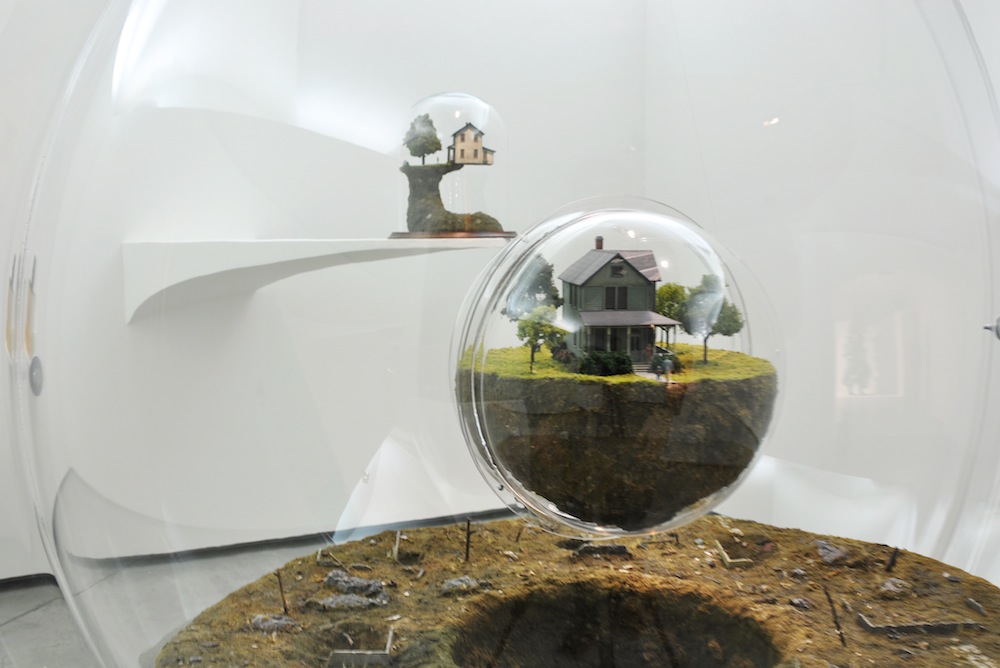
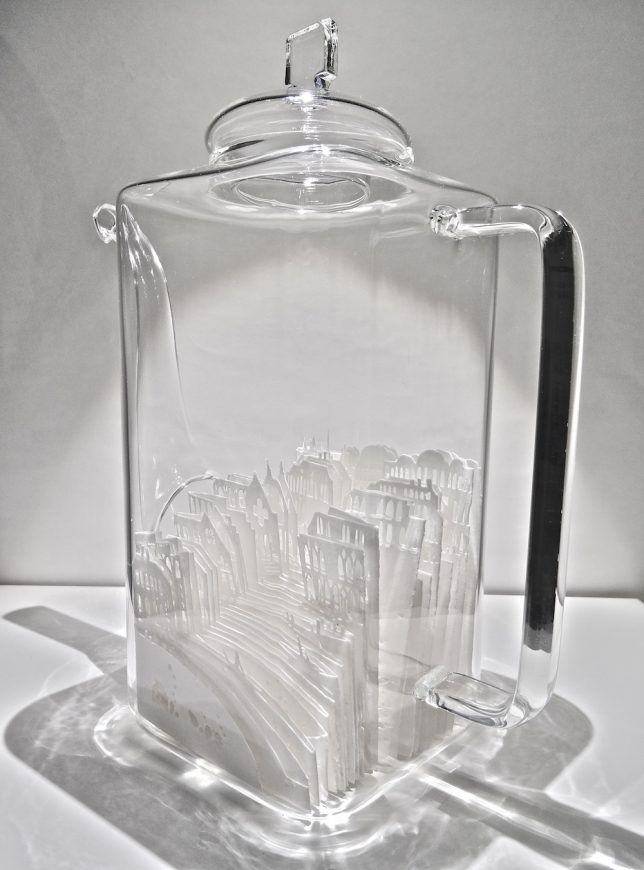
    Sheltered by glass vessels like tiny self-contained biomes, these miniature buildings and cities seem to have their own atmospheres and variable gravity, with houses teetering on the edges of cliffs or springing out of clouds in the sky. Artists craft small-scale structures from balsa wood, paper, cardboard and other materials and house them under domes, bottles, teapots and Victorian terrariums.

    Balsa Wood Architecture by Vera van Wolferen

    wolferen 1

    wolferen 2

    wolferen 3

    wolferen 4

    Often incorporated into animations, Vera van Wolferen’s tiny balsa wood structures can also be structures telling their own stories. A recent series of structures perches tiny dwellings on stilts or stretches them several stories into the ‘sky’ beneath a glass dome, often emerging from cotton ‘clouds.’

    Paper Cities by Ayumi Shibata

    ayumi shibata 1

    ayumi shibata 2

    ayumi shibata 3

    ayumi shibata 4

    Slivers of two-dimensional cities and landscapes curl around each other within glass vessels in rosebud-like arrangements or stack up into faux hillsides to create a three-dimensional whole in these works by Ayumi Shibata. The artist uses traditional Japanese paper cutting techniques, noting that the Japanese word for ‘paper’ is ‘Kami,’ which can also mean ‘god,’ ‘spirit’ or ‘divinity.’

    “Kami move freely beyond time, universe and places, appearing during events, as well as in our houses and our bodies,” she says. “These spirits also dwell in paper. In the religion of Shinto, white paper is considered a sacred material.”

    Micro Matter by Rosa de Jong

    rosa de jong 1

    rosa de jong 2

    rosa de jong 3

    rosa de jong 4

    rosa de jong 5

    rosa de jong 6

    Enclosed within glass domes or test tubes, Rosa de Jong’s ‘Micro Matter’ sculptures bring unfathomably small worlds to life, each one seemingly floating in its own low-gravity atmosphere. The works often feature dilapidated homes, farm buildings, mines and construction sites, exploring the ways in which built environments interact with nature. The sculptures are created in a way that’s similar to building a ship in a bottle, snugly inserting the pieces to fit their vessels just right.

    Next Page – Click Below to Read More:
    Worlds Under Glass 33 Miniature Cities Architectural Sculptures

    Share on Facebook


    [ By SA Rogers in Art & Sculpture & Craft. ]

    [ WebUrbanist | Archives | Galleries | Privacy | TOS ]


    WebUrbanist

  • Absurdism: Artists Fight Over Use of World’s “Blackest Black” & “Pinkest Pink”

    [ By WebUrbanist in Art & Drawing & Digital. ]

    black whirlpool

    For the past few years, British artist Anish Kapoor has been making use of his exclusive rights to something called Vantablack, a high-tech pigment touted as the blackest shade of black. His unique access, however, has sparked an escalating (and increasingly absurd) feud in the art world.

    Developed by NanoSystems, the remarkable Vantablack pigment uses microscopic tubes oriented to capture light and deflect it internally rather than letting it bounce in a way visible to viewers. Designed for military and astronomical applications, it absorbs an incredible 99.96% of light.

    ventablack

    But Kapoor’s usage rights have been criticized by other artists like painter Christian Furr who see it as monopolistic, limiting the potential of other creatives to explore artistic potential of the material.

    “Using pure black in an artwork grounds it,” he notes. “All the best artists have had a thing for pure black – Turner, Manet, Goya. This black is like dynamite in the art world. We should be able to use it – it isn’t right that it belongs to one man.”

    pink attack

    Recently, as a sort of satirical retaliation, British artist Stuart Semple created a flourescent pink pigment, designed to be the “pinkest pink” in the world. To drive the point home, the shade is available for purchase (just a few dollars per pot) to anyone on the planet except Kapoor, who is legally banned from buying the stuff.

    Anyone placing an order has to agree that they are not Anish Kapoor, nor associated with him or purchasing it on his behalf. It is designed to be the exact opposite of the blackest black, reflecting a maximum amount of light to make it appear as garishly bright as possible.

    pinkest pink

    Kapoor, however, managed to procure some anyway, posting images on social media and further fanning the flames of this off-color artistic war.

    “I was really sad and disappointed that he felt so left out that he needed to orchestrate some conspiracy to steal our pink,” says Semple. “It would be nice if he owned up, said sorry and gave me my Pink back.” All in all, his reactions paint Kapoor as somewhat petty given his own exclusive use of the blackest black.

    diamond dust glutter

    Semple, meanwhile, has also created the “world’s most glittery glitter”, “the “world’s greenest green” and the “world’s yellowest yellow” and is similarly banning Kapoor once again from these creations — at this point, presumably any reaction would paint Kapoor further into a corner.

    The idea of artists “owning” a color is not unique to this particular feud. A deep shade of blue (International Klein Blue) was patented by an artist decades ago. Since his death, however, it has been used in various contexts, including by performers of the Blue Man Group.

    Share on Facebook


    [ By WebUrbanist in Art & Drawing & Digital. ]

    [ WebUrbanist | Archives | Galleries | Privacy | TOS ]


    WebUrbanist