RSS
 

Posts Tagged ‘World’

Beyond Chernobyl: 15 Design Concepts for a Post-Nuclear World

26 Jul

[ By SA Rogers in Art & Drawing & Digital. ]

Screen Shot 2016-07-25 at 8.51.52 AM

30 years post-Chernobyl and 5 years after Fukushima, we still haven’t figured out how to deal with lingering radiation in the wake of a nuclear disaster or come up with a foolproof way to protect ourselves from similar incidents in the future. Nuclear disaster-focused concept designs address everything from repopulating Chernobyl and safeguarding against radiation-poisoned seafood from Japan to living in a dystopian post-apocalyptic future where mechanical dogs scout the streets.

Self-Contained Fallout-Absorbing City for Chernobyl

nuclear pripyat-self-contained-city

nuclear pripyat-city-in-a-box

nuclear pripyat-aurora-skyscraper-design

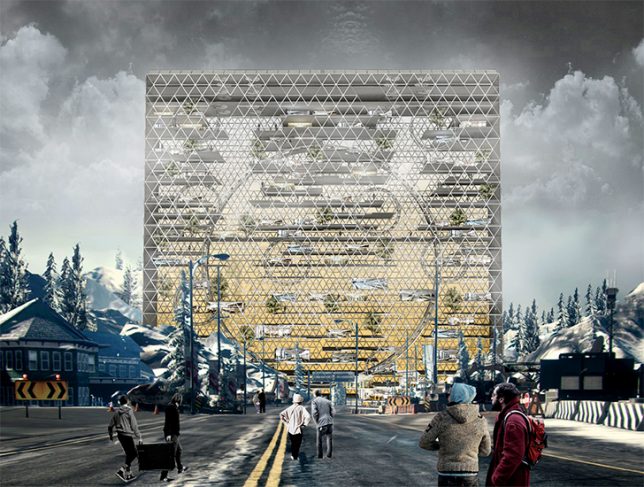
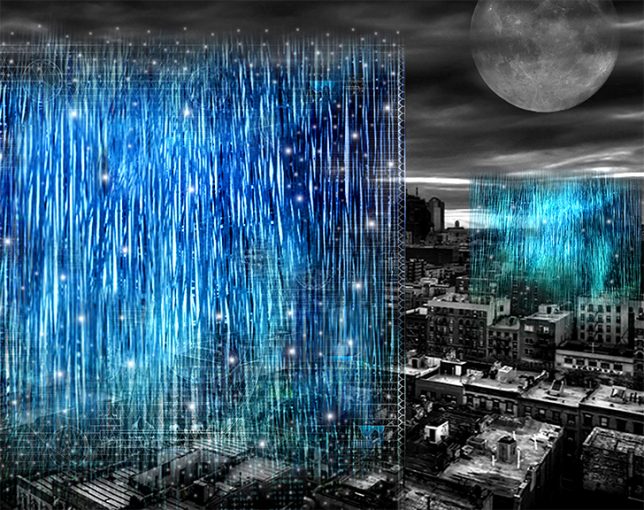
People are beginning to resettle the post-Chernobyl nuclear wasteland surrounding Pripyat, Ukraine whether radiation reaches safe levels or not, and this skyscraper concept is an attempt to minimize harm, creating a sort of self-contained oasis among the fallout. The skin of the building essentially acts as an anti-radiation force field, and the ‘Unexpected Aurora’ building itself filters air and water and harvests solar energy.

HAL Exoskeleton Turned Radiation Suit

nuclear HAL suit 2

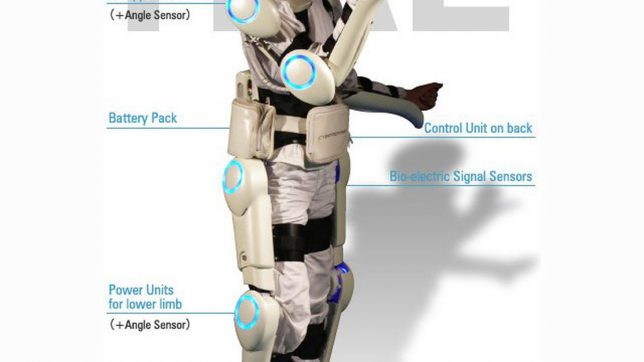
Originally designed to help people with muscle diseases, the Hybrid Assistive Limb (HAL) suit got a post-Fukushima upgrade to make it a radiation-proof suit for emergency responders. A typical anti-radiation tungsten vest weighs up to 132 pounds, making it very difficult to wear for long periods, but the HAL exoskeleton supports its weight, reducing fatigue and allowing greater access to hazardous sites.

Revitalization of the Chernobyl Zone

nuclear chernobyl revitalization

nuclear chernobyl revitalization 2

nuclear chernobyl revitalization 3

nuclear chernobyl revitalization 4

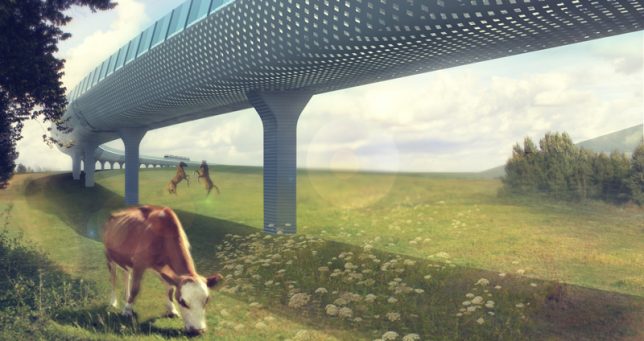
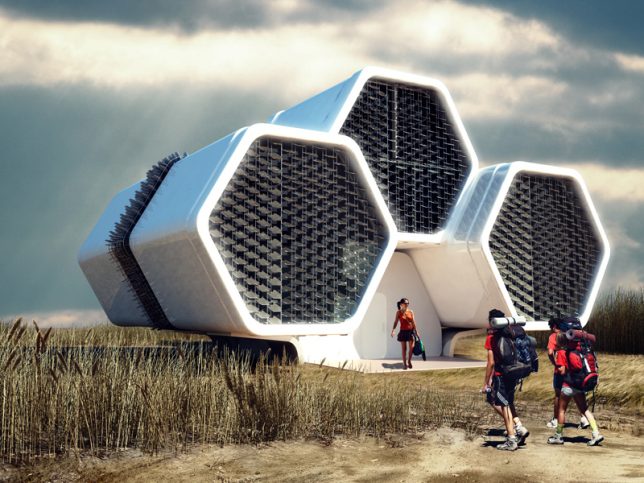
Another proposal for repopulating the Chernobyl exclusion zone seeks not to be entirely self-contained, but act as a framework for further development of human activity in the area, with a mono-railroad as its backbone. This rail line leads to modular train stations with emergency shower cabins and a decontamination zone, as well as honeycomb-shaped modular housing and observation towers. The development accommodates stubborn residents and curious tourists alike, providing plenty of opportunities to observe Pripyat in its new form.

Fukushima Plates Detect Radiation

nuclear radiation plate

nuclear radiation plate 2

nuclear radiation plate 3

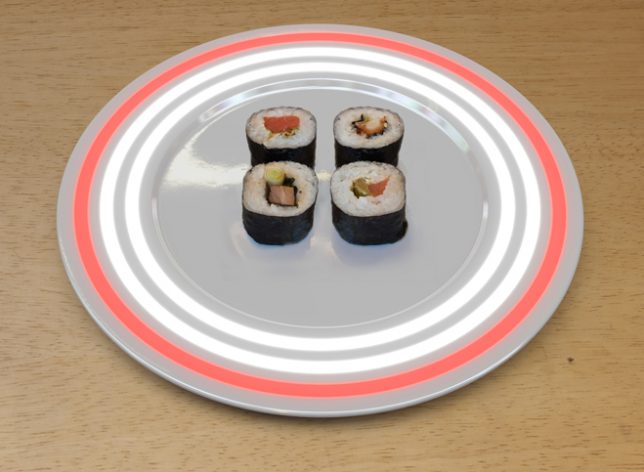
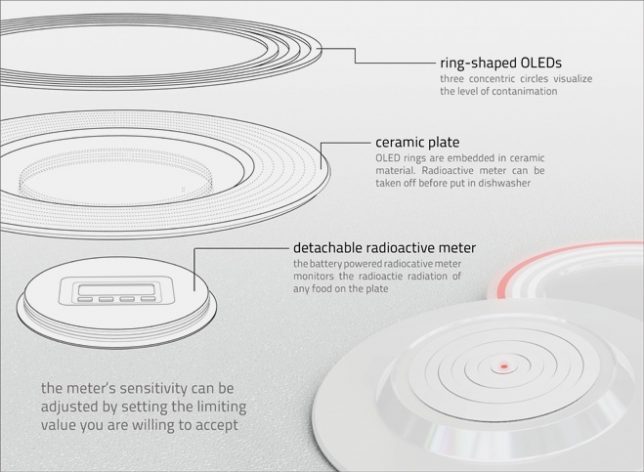
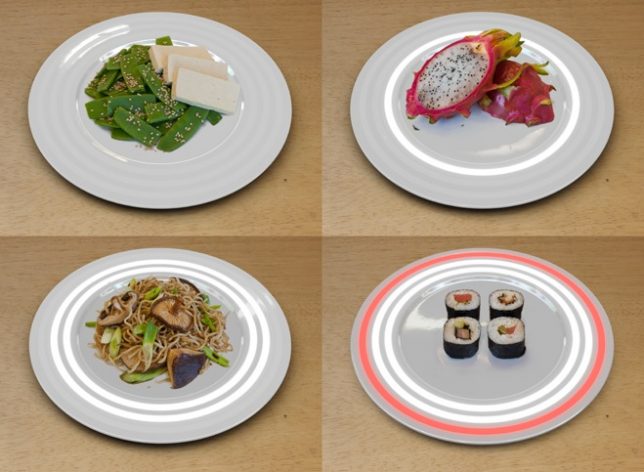
After the Fukushima disaster in Japan, a lot of sushi lovers questioned whether seafood imported from the region was safe, hence this concept by German designer Nils Ferber. There’s a radiation meter built right into each plate, with LED lights to warn you if your food is dangerously radioactive. One glowing white light tells you your food contains low levels of radiation, two white lights advise caution while a large red ring tells you it’s not safe to eat. “In a society that sacrifices reason to profit, security becomes a luxury for those who can afford it,” says the designer. “The plate might become an indispensable tool of survival in the future.”

Mech Suits, Chernobyl Patrol + More by Vitaly Bulgarov

chernobyl black phoenix main

Screen Shot 2016-07-25 at 8.52.41 AM

nuclear bulgarov 1

nuclear bulgarov

nuclear bulgarov 4

nuclear bulgarov 3

nuclear bulgarov 5

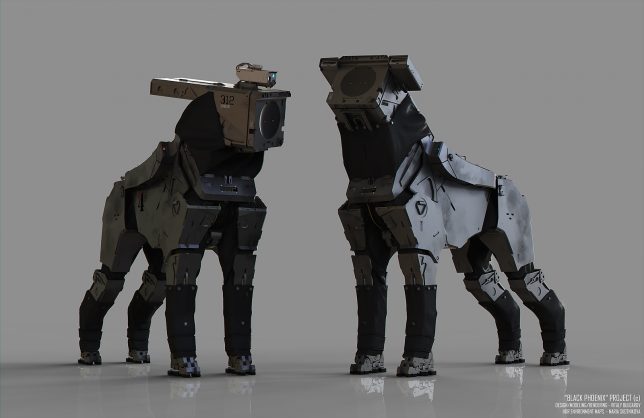
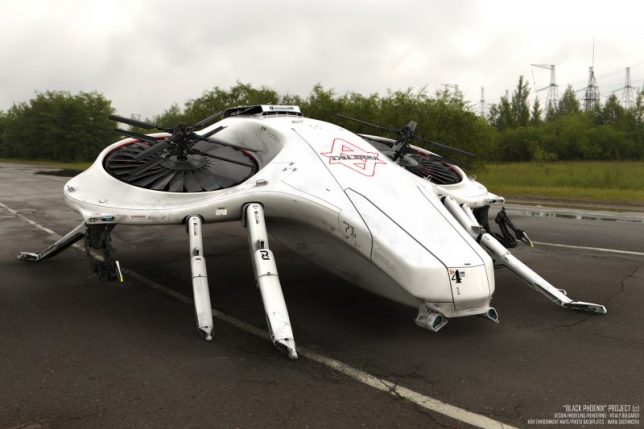
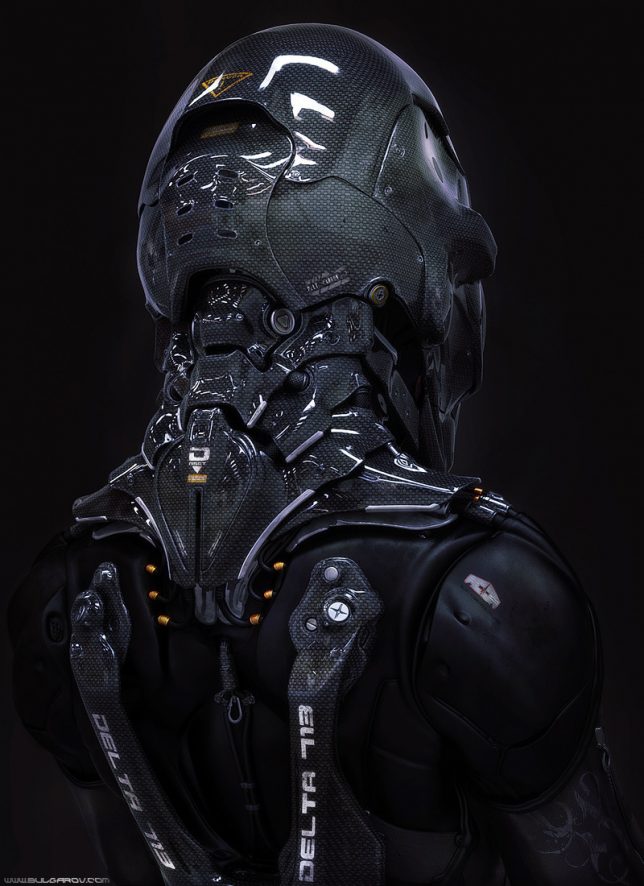
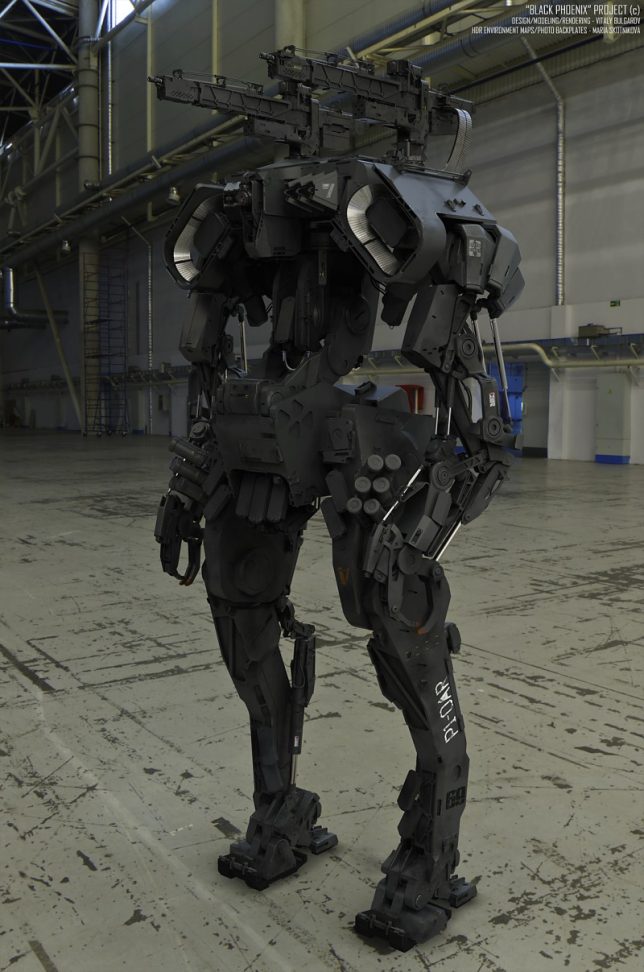
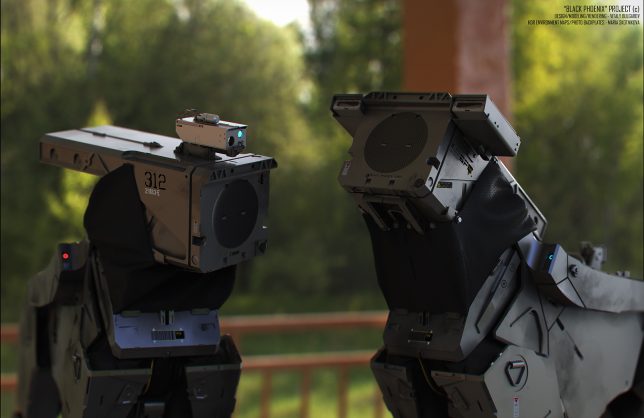
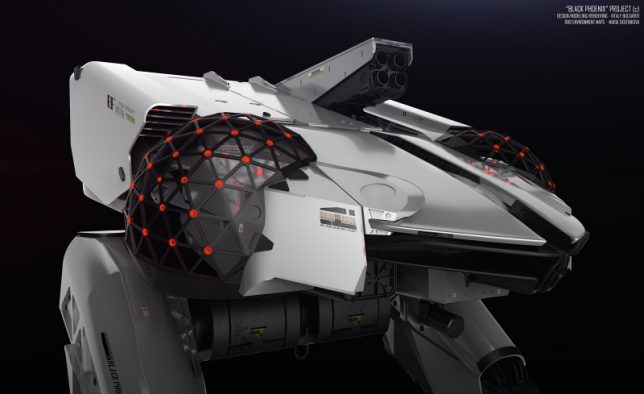
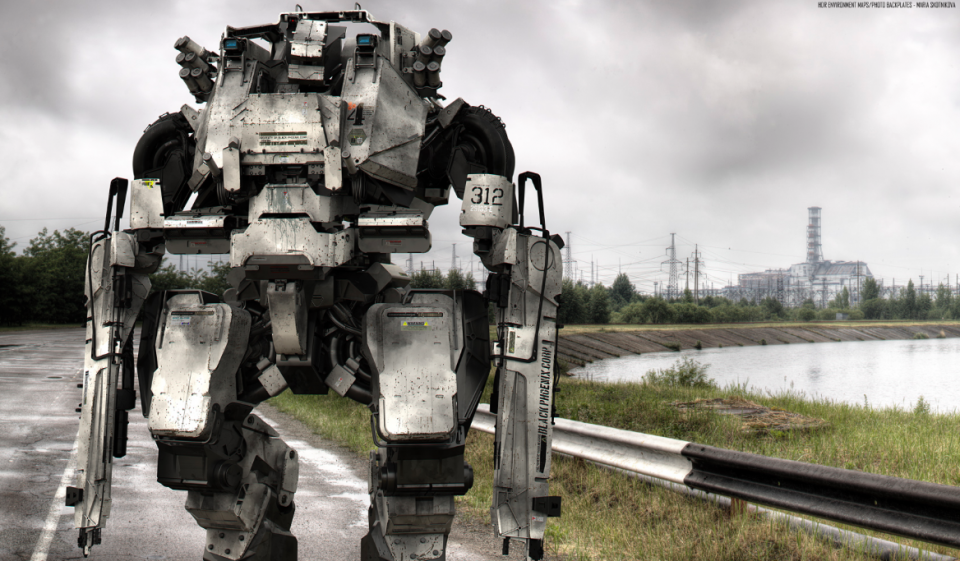
Moscow-based concept designer Vitaly Bulgarov presents a series of digital proposals for ‘The Black Phoenix Project: Chernobyl Patrol,’ ranging from semi-civilian drones to advanced weaponry systems. The artist works for game developer Blizzard and created this 3D visualization as a demonstration on speeding up the process of creating concept art with design software like Brush and SoftImage XSI. The mech designs include robotic Scout Dogs, an ‘Arachnid Tank,’ a missile-launching ‘Public Protector,’ infantry bots and an ambulance/rescue robot, and they’re clearly oriented toward a post-apocalyptic, war-torn scenario in Chernobyl rather than just dealing with radiation.

Next Page – Click Below to Read More:
Beyond Chernobyl 15 Design Concepts For A Post Nuclear World

Share on Facebook


[ By SA Rogers in Art & Drawing & Digital. ]

[ WebUrbanist | Archives | Galleries | Privacy | TOS ]


WebUrbanist

 
Comments Off on Beyond Chernobyl: 15 Design Concepts for a Post-Nuclear World

Posted in Creativity


Real world test: The Panono is a 108MP spherical camera

24 Jul

‘Uh, what is that thing?’

‘What is that thing?’ That’s the question I was asked pretty much every time I took the Panono out shooting. There is a lot of curiosity surrounding 360/VR content and my week spent fielding questions from curious onlookers as I dipped my toes into a new, more immersive photographic world is proof of that. In fact, only once did someone walk up to me and say “Hey I know what that is, its a 360 VR camera!” And it was a 12 year old child.

Damn know-it-all kids making us all look bad…

Yes, it can be tossed in the air to take a picture. 

So uh, what exactly is it? The Panono is the highest resolution 360-degree still camera currently on the market. A grapefruit-sized ball constructed of tough plastic, the Panono contains 36 separate cameras. Each camera uses a 1/4″ sensor (a bit smaller than the sensor likely found in your smartphone) and when the files are combined, the result is a 108MP 360-degree image that allows one to pan and zoom around the scene. 

Panono started off as a thesis project, but was later successfully funded via crowd-sourcing campaigns (DPreview field-tested an early version in 2013). Designed in Germany and constructed in Poland, everything about the camera is surprisingly frustration-free and the controls are intuitive. I say ‘surprisingly’ only because Panono is such a new company and good UI often takes time to get right. But once paired with a smart device, taking shots, processing  and sharing them is all a breeze. 

For optimal viewing, open the 360 in full screen mode. This image was shot using the HDR-setting, which combines a properly-exposed image with one exposed for highlights. 

The design 

The Panono only has a single button on the top. Holding it down for a second turns the camera on and off. When it’s switched on, the button can also be used to take images without the need for a smart device. However, for the best user experience, you’ll want to use the app to set up and control the Panono remotely from a phone or tablet. 

Around the periphery of the Panono’s one and only physical button is a glowing LED. It lights up when the camera is switched on and blinks whenever a photo is taken. If battery or internal space is getting low, part of the LED ring will illuminate red next to the corresponding symbol. While useful in dim conditions, the LED ring is near impossible to see in bright light.

There is a micro-USB port located at the very bottom of the camera for charging. It doubles as a mounting point for the Panono Adapter (to mount it on a tripod) and the Panono stick (a selfie stick). However when plugged into a computer via Micro-USB, the Panono is not discoverable. 

The app

Pairing with a device simply requires turning the Panono on and connecting to it via Wi-Fi. The password to connect is written directly on the side of the unit. Once connected, open up the app. At the bottom of the screen there are five icons. If you’ve properly paired the unit, green lines will appear above the camera icon (which is the shooting screen), indicating you are connected.

Most of the shooting controls are accessed via the center-most camera icon on the bottom. The app is also used to push images downloaded to your device to the cloud for processing. You can also view your processed 360s. 

Simply tap the green camera button to fire a shot. For more control over the camera’s exposure and color parameters, tap the gear symbol. 

To take images from within the shooting screen simply tap the green camera button bottom center. By default the camera will beep and blink when a photo is fired (the beep can be turned off). For more controls, tap the gear symbol in the lower right. There you can control a number parameters, like dialing in a white balance or specific exposure. I found the auto exposure and white balance modes largely worked fine for the majority of the places I shot. But it’s nice that those additional manual controls exist.

There is also a switch to toggle HDR mode on and off. If you’re mainly photographing static subjects, HDR mode is very useful. You can see an example of it on and off below:

The above image was shot as an HDR file, the one below was not.

The camera has 16GB of internal storage. Once an image is taken it is stored locally within the camera and a low-resolution un-stitched version of the image will appear within the app’s shooting screen for quick viewing. If you’re please with the preview, simple tap “download from camera,” and the files are transmitted to your device, but only temporarily – more on that in a moment.

It’s worth noting that if you are shooting a non-HDR image, there is a 10-sec black out time between when a shot has been fired and when an additional shot can be taken. When shooting an HDR image, that time gap is closer to 30 seconds. When the camera is ready to shoot again, the circle around the camera symbol/trigger button will turn from white to green. 

Once back in the comfort of a proper Wi-Fi connection open the “Task” screen (2nd icon from the right). There you’ll find all your transmitted 360’s. With the tap of a finger you can upload them to the Panono cloud where their servers do all the hard work of stitching and processing – you can simply sit back and make yourself a cocktail. In about 10 minutes, your 360s will appear in your Panono account where you can share them either via a direct link, iframe embed or Facebook/Twitter/Google+. It’s really that easy.

Articles: Digital Photography Review (dpreview.com)

 
Comments Off on Real world test: The Panono is a 108MP spherical camera

Posted in Uncategorized


The Brave New World of Robotic Pizza Delivery is Almost Here

19 Jul

[ By SA Rogers in Gadgets & Geekery & Technology. ]

robot food delivery

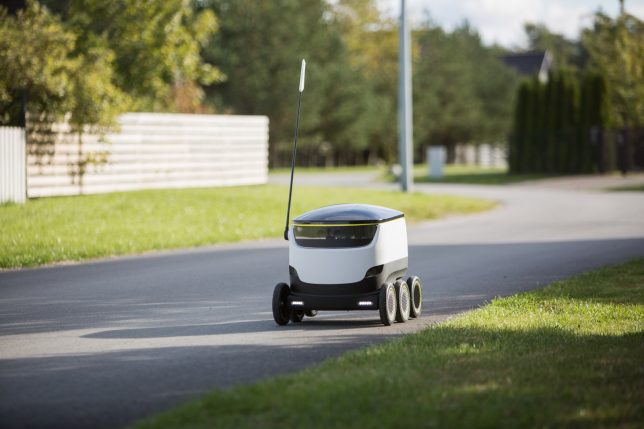
Thus far, the 21st century has been pretty disappointing for those of us who grew up expecting flying cars, teleportation devices and recreational trips to the moon by the time we were adults. While there were some things sci-fi films like Back to the Future got right – including video calls, flat-screen televisions, wearable technology and biometrics – nobody short of a billionaire villain type actually has a robotic butler that can bring them food at the push of a button. But if you live in London, you will soon be able to access the next best thing: dinner delivery via a six-wheeled droid.

food droid 2

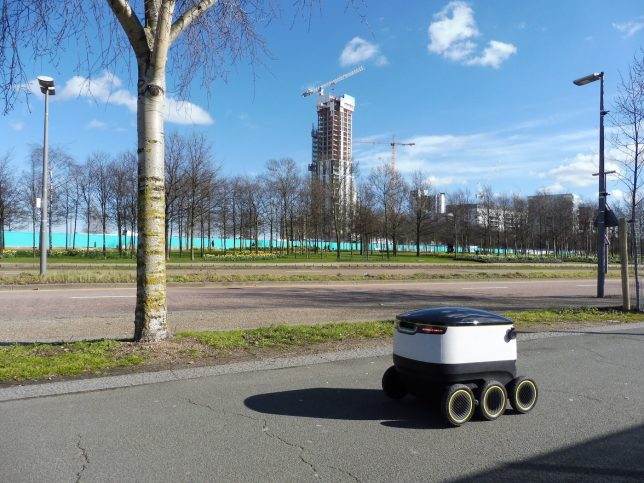
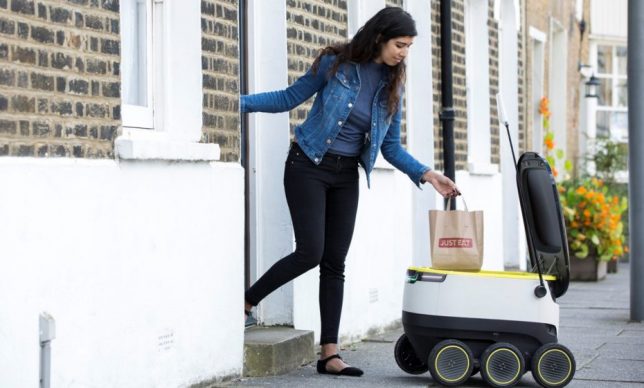
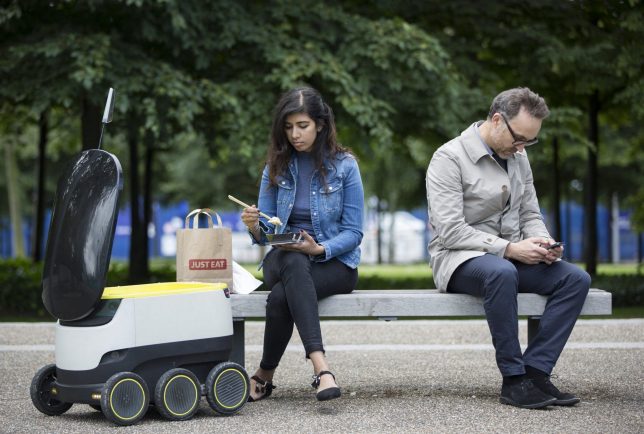
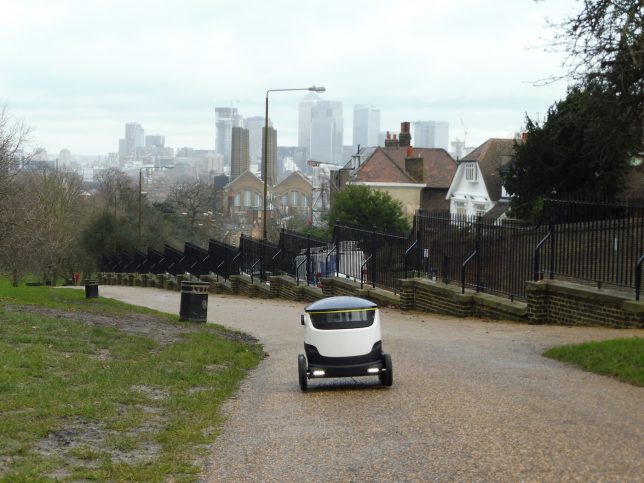
Starship Technologies, which is run by two Skype co-founders, is partnering with London food delivery startups Just Eat and Pronto to send what essentially look like wheeled coolers through the streets, dropping off meals to customers within a 2-3 mile radius. Tests will also be carried out in Dusseldorf, Germany, and in Starship’s home city of Tallinn, Estonia. This is on top of 5,000 miles of previous testing in places like Glastonbury, where the bots have “met over 400,000 people without a single accident,” but this is the first time they’ll be delivering food to actual paying customers. Starship is expected to announce rollouts in the U.S. in the coming months.

robot food delivery 4

Is it really the next best thing to a robot butler, though? The first question that pops into many people’s heads when reading about this technology is whether somebody can just kick that self-driving droid around a little bit and steal your food for themselves. It’s a fair question. Starship says for these first test drives, the bots won’t be fully automatic – the company will monitor their progress remotely and take over if anything goes awry.

robot food delivery 3

food droid

The zero-emissions delivery bots sense obstacles in their path and navigate around pedestrians, getting out of the way as necessary, as seen in the video above. Not just anyone can access what’s inside, either. The customer who ordered the food has to use an app on their phone to open it, ensuring that the robot doesn’t just roll up to somebody else who lives in your apartment building and give them your pad thai.

Share on Facebook


[ By SA Rogers in Gadgets & Geekery & Technology. ]

[ WebUrbanist | Archives | Galleries | Privacy | TOS ]


WebUrbanist

 
Comments Off on The Brave New World of Robotic Pizza Delivery is Almost Here

Posted in Creativity


27 Serene Images of the Natural World

15 Jul

This week we are doing a series of articles to help you do better nature photography. See previous articles here:

  • 3 Habits Every Outdoor Photographer Should Develop to Avoid Missing Shots
  • 5 Tips for Better Nature Photography

So here are some examples of some shots of nature to give you some ideas, or just to make you feel refreshed like a walk in the woods.

Nutmeg66

By nutmeg66

Matoff

By Matoff

Dave Edens

By Dave Edens

Anderson Mancini

By Anderson Mancini

Moyan Brenn

By Moyan Brenn

Daniel Sallai

By Daniel Sallai

Moyan Brenn

By Moyan Brenn

Susanne Nilsson

By Susanne Nilsson

M.shattock

By m.shattock

Md. Al Amin

By Md. Al Amin

Chris Gin

By Chris Gin

ELKayPics / Lutz Koch

By eLKayPics / Lutz Koch

Jack Haskell

By Jack Haskell

Hehaden

By hehaden

W. Visser

By W. Visser

Jeff Power

By Jeff Power

U.S. Department Of The Interior

By U.S. Department of the Interior

Richard Walker

By Richard Walker

Christopher Michel

By Christopher Michel

Shutter Fotos

By Shutter Fotos

Neil Howard

By Neil Howard

Jason Carpenter

By Jason Carpenter

Sri Dhanush K

By Sri Dhanush K

Massmo Relsig

By Massmo Relsig

Images By John 'K'

By Images by John ‘K’

Ravas51

By ravas51

Lenny K Photography

By Lenny K Photography

googletag.cmd.push(function() {
tablet_slots.push( googletag.defineSlot( “/1005424/_dPSv4_tab-all-article-bottom_(300×250)”, [300, 250], “pb-ad-78623” ).addService( googletag.pubads() ) ); } );

googletag.cmd.push(function() {
mobile_slots.push( googletag.defineSlot( “/1005424/_dPSv4_mob-all-article-bottom_(300×250)”, [300, 250], “pb-ad-78158” ).addService( googletag.pubads() ) ); } );

The post 27 Serene Images of the Natural World by Darlene Hildebrandt appeared first on Digital Photography School.


Digital Photography School

 
Comments Off on 27 Serene Images of the Natural World

Posted in Photography


A photographer’s intro to the world of video

13 Jul

It took me a long time to recognize the appeal of video shooting. Even in a job where I have to use a camera’s video features, it was only fairly recently that I moved beyond just taking short clips (essentially stills with a little bit of movement in them) and started to think in terms of using video and editing to tell stories.

Given that most modern cameras offer at least rudimentary video tools, I wanted to share my experiences and perhaps encourage others to start thinking about shooting at 24 or more frames per second.

The good news is that a lot of the things you learn as a photographer are immediately useful as you take your first steps in video shooting. But, as I discovered, at almost every stage I encountered differences and additional factors to consider. Many of which I wished someone had told me when I started…

Stop shaking the camera, you’re making me feel sick

The first thing that became apparent when shooting video for the first time was the need to keep the camera steady. I remember my Dad teaching me how to keep my camera steady and be aware of my breathing when shooting relatively long exposures, but no amount of good breathing technique or bracing the camera against a pillar is enough to give steady video.

Even if your camera is hand-holdable, don’t expect that to mean you’ll shoot it hand-held.

This makes sense, of course: most stills shooting only requires you to hold your camera steady for fractions of a second whereas video lets the viewer see how steady you’ve been for seconds or minutes at a time.

What I’ve learned is that in-camera stabilization can be enough to stop your footage looking unwatchably juddery, but unless you’re aiming for a ‘run-and-gun’ aesthetic, you’ll need to use a tripod or some sort of stabilization rig.

Exposing some limitations

Exposure is another area where the lessons I’d learned from stills photography are useful but incomplete. You still get to control the same variables, but the range of control you have is somewhat restricted. It’s still a question of managing light, but with a greater risk of finding yourself with too much of the stuff.

For me it’s a question of shutter speed, which has a more obvious impact on the appearance of your footage than is usually the case in stills shooting. A fast shutter speed in stills photography will freeze motion, a slow one will allow the subject to blur but there’s often a large range in between these two extremes. In video, there’s a narrower range before the viewer starts to notice the difference.

The 180 degree shutter ‘rule,’ where you use a shutter speed that’s half the duration of each frame (so 1/48th seconds for 24 fps shooting) isn’t an inviolable law, but the further you stray from it, the more jarring or muddled your footage will look. This can be a creative choice, of course, but only counts as such if you’ve consciously made it.

This made me think back to when I was first experimenting with stills photography, and getting a feel for the boundaries set by the longest shutter speed I could hand-hold, the widest aperture I had available and the highest ISO setting I found acceptable. Once I was familiar with these, one of the first purchases I made was a faster lens (that’s right: a 50mm F1.8) to get more light to extend these capabilities.

With stills shooting, one of the first things you buy is a bright lens to get more light, with video it’s an ND filter, to get rid of it.

With video and the further restriction over the fastest shutter speed I’m willing to use, it’s a decent ND filter I need to buy, to reduce the light level to fit your boundaries.

A neutral density (ND) filter allows you to use use wide apertures and the relatively slow shutter speeds that a lot of videographers favor. An adjustable ND filter provides even more flexibility.

A return to JPEGs

Added to these exposure limitations has been another throw-back to my first days as a photographer: having to revert to an 8-bit, compressed shooting format. Having spent some time learning the distinctions between video file formats, the main lesson has been that none of the ones I’m likely to encounter are anything like Raw.

Once you’ve been spoiled by the seemingly endless dynamic range that can fit in a 14-bit Raw file and the ability to set and adjust the white balance at the ending stage, it’s a shock to go back to having to get exposure and white balance perfect when you shoot.

Flat tone curves and Log profiles provide a means of squeezing a bit more useable DR into those 8-bit files, but this can make it even harder to judge correct exposure. I’d highly recommend shooting some test footage and trying to grade it back into something useful, before committing yourself to the flattest tone curve you can find.

Articles: Digital Photography Review (dpreview.com)

 
Comments Off on A photographer’s intro to the world of video

Posted in Uncategorized


Sweet Spot: Panasonic Lumix DMC-GX85 Real World Samples

01 Jun

The Panasonic Lumix DMC-GX85 has the makings of one sweet camera. It uses a well-regarded 16MP Four Thirds sensor (with no AA filter), is 4K capable and features Panasonic’s depth from defocus AF system.

Packed inside a sleek, customizable body, the GX85 features a new shutter mechanism that appears to solve the thorny issue of shutter shock, a problem that plagued its big brother, the GX8. The GX85 also features a 3-axis stabilized sensor, that when combined with a Panasonic stabilized lens, offers 5-axis of stabilization, making it the most steady Panasonic Four Thirds camera to date.

DPReview writer Dan Bracaglia has been using the GX85 for a while, and as well as various locations around Seattle he also took it on a recent trip to New Jersey.

Articles: Digital Photography Review (dpreview.com)

 
Comments Off on Sweet Spot: Panasonic Lumix DMC-GX85 Real World Samples

Posted in Uncategorized


1/4 World Trade Center: Tulsa’s Half-Sized, Untwinned Tower

11 May

[ By WebUrbanist in Architecture & Offices & Commercial. ]

untwineed

The BOK Tower in Tulsa, Oklahoma, looks uncannily like the vanished Twin Towers of the New York City skyline and this is neither accidental nor coincidental. This skyscraper was constructed just a few years after its distant cousins in NYC, was designed by the same architect as the World Trade Center buildings, and explicitly intended to be a replica.

Indeed, it looks nearly identical, from its sleek vertical facade slits right down to its bi-level lobby, marble walls, hanging textiles and other interior design elements. It is a close copy in nearly every significant way, except … it is just half the size.

New York City Skyline - World Trade Center

It all started with CEO John Williams, who was so impressed by the Twin Towers in New York that he hired the same architect, Minoru Yamasaki, to build four quarter-scale replicas of the towers in Tulsa. This quatruple-tower schemed faced a cost issue: four sets of elevators for four quarter-sized structures.

As the story goes, Williams then took the architectural model, grabbed one of the towers, put it on top of another, and decided to go with one half-height copy instead. The result is in essence a one-quarter copy: the building is half the height of one twinned tower, or a fourth of the combined height (image below by Caleb Long).

bok towers

Initially called One Williams Center, the single quarter-footprint, half-as-high replica stands 667 feet tall and was the tallest building not just in Tulsa but in all of the Plains States when it was built. It was completed in 1976, just three years after the World Trade Center towers in New York.

downtown tulsa

One might be left wondering, however: why does the tower not get more recognition as a close relation of two iconic, beloved and now-fallen buildings in the Big Apple? For one thing, it is a rather minimalist Modernist skyscraper, much like many others found in cities around the United States (and the world) from the mid-Century period.

Perhaps most importantly, though, it lacks the most defining characteristic of its cousins, an essential quality, as noted by French philosopher Baudrillard, of ‘double-ness’ that truly defined the Twin Towers. In many ways, that characteristic of ‘being twinned’ is what made them internationally iconic, standing out against more decorative (but singular) structures in the skyline.

one world trade center

Today, One World Trade Center stands as a symbol of unity, looking almost like two intersected towers rotated around a central axis then fused. This single structure manages, in a way, to capture the twinned aspect of the former towers, now memorialized on the pavement below.

Share on Facebook


[ By WebUrbanist in Architecture & Offices & Commercial. ]

[ WebUrbanist | Archives | Galleries | Privacy | TOS ]


WebUrbanist

 
Comments Off on 1/4 World Trade Center: Tulsa’s Half-Sized, Untwinned Tower

Posted in Creativity


Winners of 2016 Sony World Photography Awards announced

25 Apr

$ (document).ready(function() { SampleGalleryV2({“containerId”:”embeddedSampleGallery_5299746697″,”galleryId”:”5299746697″,”isEmbeddedWidget”:true,”standalone”:false,”selectedImageIndex”:0,”startInCommentsView”:false,”isMobile”:false}) });

An Iranian photographer has won the $ 25,000 top prize in the 2016 Sony World Photography Awards with a collection of portraits taken to highlight the horrors of acid throwing and the plight of its victims. Asghar Khamseh, a photojournalist with Iran’s Mehr News Agency, was given the title L’Iris d’Or Photographer of the Year a ceremony in London last week, at which he was also named the winner of the Contemporary Issues prize. His ‘Fire of Hatred’ project portrays the shocking injuries that acid throwing inflicts and the mental trauma it can create, but also the pride, strength and dignity of the mainly women and children affected by these too-common attacks.

The ceremony also honored 15 other category-winning photographers across 14 professional competitions, an Open section for amateur photographers as well as student and youth contests. The Open winner, Kei Nomiyama from Japan, won a prize of $ 5000, and all category winners won trophies as well as Sony camera equipment. For the first time a photographer won two categories, with Canada’s Kevin Frayer coming out on top in both the Environment and People competitions.

The prize for Outstanding Contribution to Photography went to a Chinese and Japanese couple, RongRong and inri for their promotion of, and influence on, contemporary photography in China.

The ninth Sony World Photography Awards received 230,103 entries from photographers in 186 countries, and category winners, shortlisted and commended images will be exhibited in Somerset House in London until the 8th May. A book of images is also available.

For more information on the awards visit the Sony World Photography Awards website.


Press release:

Grand prize winners announced for the world’s largest photography competition – 2016 Sony World Photography Awards

Iranian photographer Asghar Khamseh wins L’Iris d’Or Photographer of the Year and $ 25,000 prize for powerful portraits of acid attack victims

London, 21st April 2016: The overall winners of the world’s largest photography competition, the 2016 Sony World Photography Awards, are named today by the World Photography Organisation. An exhibition of all the winning and shortlisted work will run at Somerset House, London from 22nd April – 8th May.

Following a record-breaking 230,103 submissions to its ninth edition, the awards’ Honorary Judging Committee has selected Iranian photojournalist Asghar Khamseh as the recipient of its most coveted prize, the L’Iris d’Or Photographer of the Year.

Chosen from the winners of the awards’ fourteen Professional categories, the winning work, ‘Fire of Hatred’, is a powerful portrait series tackling the social issues around the violent act of acid throwing. Khamseh was announced as the winner of the $ 25,000 (USD) prize at an awards ceremony in London in front of industry leaders. The winners and finalists of all fourteen Professional categories were also announced at the ceremony.

At the ceremony, the World Photography Organisation announced Kei Nomiyama, Japan, as the Open Photographer of the Year and recipient of $ 5,000 (USD). In addition, the organisation announced the winners of the Youth and Student Focus Photographer of the Year titles. All winners of the night received the latest Sony digital imaging equipment.

Scott Gray, CEO, World Photography Organisation comments: “The awards consistently provide an incredible array of work, from a multitude of countries, and most importantlyprovide the chance for photographers to be discovered and extend their careers. I hope that the winning work this year can provide an inspiration to other photographers, helping to push their creative boundaries, whilst also serving to build the wider appreciation of photography.”

The Sony World Photography Awards annually recognises the world’s best photography. Free to enter and open to all photographers, the awards are an authoritative voice in the photographic industry that has the power to shape the careers of its winning and shortlisted photographers.

L’IRIS D’OR PHOTOGRAPHER OF THE YEAR – ASGHAR KHAMSEH
Born in Tehran in 1963, Asghar Khamseh is a photojournalist with Mehr News Agency, Iran, whose work focuses on social issues.

The winning series ‘Fire of Hatred’ is a powerful series of portraits of the victims of acid attacks. This beautiful yet thought-provoking work examines the social issues around this violent crime – looking past the physical and psychological damages suffered, and towards the social stigma and blame the victims, who are mainly women and children, suffer.

Dominique Green, Chair, Documentary Jury said of the work: “Portraits of disfigurement resulting from social violence are undoubtedly a hard-hitting subject, and one which the longstanding tradition of documentary photography does not shy away from. The power of Asghar Khamseh’s imposing series ‘Fire of Hatred’ is such that he enables the viewer to face head-on intimate images, which could be testing to examine closely, with empathy and respect which in turn allows the viewer to become a witness and not just a spectator. The Jury were united in their admiration of this work and the light it shed on the tragic practice it exposes.”

PROFESSIONAL CATEGORY WINNERS AND FINALISTS
The winners of the seven Documentary and seven Art categories hail from 10 countries and, for the first time, two Professional categories have been won by one photographer in the same year. Photographers were judged on a body of work.

ART CATEGORIES
Architecture winner: Amélie Labourdette, France
2nd – Hui Zhang, China / 3rd – Stephan Zirwes, Germany
Candid winner – Kirstin Schmitt, Germany
2nd – Nick Ng, Malaysia / 3rd – Andrea Rossato, Italy
Conceptual winner – Julien Mauve, France
2nd – Alejandro Beltran, Venezuela / 3rd – Barbaros Kayan, Turkey
Landscape winner: Maroesjka Lavigne, Belgium
2nd Maoyuan Cui, China / 3rd Stefan Schlumpf, Switzerland
Portraiture winner: Marcello Bonfanti, Italy
2nd Fauzan Ijazah, Indonesia / 3rd Rubén Salgado Escudero, Spain
Staged winner: Alberto Alicata, Italy
2nd Cristina Vatielli, Italy / 3rd Kristoffer Eliassen, Norway
Still Life winner: Francesco Amorosino, Italy
2nd Oliver Schwarzwald, Germany / 3rd Hiroshi Watanabe, Japan

DOCUMENTARY CATEGORIES
Campaign winner: Jetmir Idrizi, Kosovo
2nd – David Chancellor, UK / 3rd – Antoine Repessé, France
Contemporary Issues winner – Asghar Khamseh, Iran
2nd – Kevin Frayer, Canada / 3rd – Simona Ghizzoni, Italy
Current Affairs winner – Angelos Tzortzinis, Greece
2nd – Andrea and Magda, Italy & France / 3rd – Andrew Burton, USA
Daily Life winner: Espen Rasmussen, Norway
2nd Sandra Hoyn, Germany / 3rd Stephanie Sinclair, USA
Environment winner: Kevin Frayer, Canada
2nd Li Feng, China / 3rd Lucy Nicholson, UK
People winner: Kevin Frayer, Canada
2nd Filippo Venturi, Italy / 3rd Alessandro D’Angelo, Italy
Sport winner: Nikolai Linares, Denmark
2nd Jens Juul, Denmark / 3rd Annick Donkers, Belgium

OPEN PHOTOGRAPHER OF THE YEAR – KEI NOMIYAMA, JAPAN
“Enchanted Bamboo Forest” by Kei Nomiyama was selected as the single best image in the world by a panel of judges chaired by Jael Marschner, former picture editor Time Out London / Sunday Times Travel. The photographer was awarded $ 5,000 (USD) at the London ceremony.

A Ph.D. Associate Professor in Environmental Chemistry at Ehime University, Japan, Nomiyama is keen wildlife and underwater photographer. His photograph was shot in the mountains of Shikoku Island and captures the Luciola parvula firefly at the beginning of the rainy season.
The photograph was selected from 10 Open category winners announced on 29th March. The Open competition asks for a single image and is open to all photographers.

YOUTH PHOTOGRAPHER OF THE YEAR – SAM DELAWARE, US
A beautiful portrait of the photographer’s sister won 18 year old student Sam Delaware the Youth Photographer of the Year title. Born in Freeport, Maine and currently attending school in Angwin, California, Delaware is a self-taught photographer who has been shooting since the aged of 12. The photographer was flown to London to attend the awards ceremony as part of his prize.

The winning image was selected from three Youth category winners announced on 29 March, the Youth competition is open to all photographers aged 12-19.

STUDENT FOCUS PHOTOGRAPHER OF THE YEAR
Sofia Jern, aged 23 of Novia University of Applied Sciences, Finland, secured the Student Focus Photographer of the Year title. She collected €30,000 worth of Sony photography equipment for her university at the awards ceremony in London. Jern’s winning work follows the lives of ‘glue boys’, young male drug users escaping reality on the streets of Kitale, Kenya.

Student Focus works worldwide with over 400 educational institutions with photography courses and is one of the world’s leading programmes for photography students. It is supported by the British Journal of Photography. www.worldphoto.org/student-focus

OUTSTANDING CONTRIBUTION TO PHOTOGRAPHY – RONGRONG & INRI
RongRong & inri, the influential photographic husband and wife team who have shaped contemporary photography in China and beyond, collected their Outstanding Contribution to Photography prize at the London awards ceremony. They were recognised by the World Photography Organisation for both their careers as artists and their significant impact on Asian photography.

RongRong & inri’s photography reflects the intimate world that they have created together and pushes the boundaries of traditional black-and-white darkroom techniques. Together they founded China’s first contemporary art space dedicated to the medium, the Three Shadows Photography Art Centre, and the 2015 Jimei x Arles Photo Festival in partnership with Les Recontres d’Arles.

The first major European showing of RongRong & inri’s work, celebrating their careers will be presented at Somerset House as part of the Sony World Photography Awards Exhibition.
The Outstanding Contribution to Photography prize has previously been awarded to Mary Ellen Mark, William Eggleston, Eve Arnold, Bruce Davidson, Marc Riboud, William Klein, Elliott Erwitt and Phil Stern.

EXHIBITION AND BOOK
All the winning and shortlisted images will be exhibited at Somerset House, London from 22nd April – 8th May. The exhibition will also include a special dedication to Outstanding Contribution to Photography recipients, RongRong & inri.

The exhibition is accompanied by a book of the winning and selected shortlisted works, available to buy from www.worldphoto.org
Articles: Digital Photography Review (dpreview.com)

 
Comments Off on Winners of 2016 Sony World Photography Awards announced

Posted in Uncategorized


In the thick of the action: Nikon D5 real world samples gallery

18 Apr

With a newly designed 20MP full-frame sensor, an advanced autofocus system with 153 phase-detect points, a robust build with full weather sealing and 12 action-freezing frames per second, the Nikon D5 has been getting plenty of attention around the DPReview office over the past couple of weeks. It’s a purpose-built machine: we don’t think there’s a camera in the world that can keep erratically moving subjects in focus during fast bursts like the D5 can. But it’s good at a lot else as well.

We’ve toted it to tennis matches, a rugby match, up and over the Cascade mountains, along the Puget Sound waterfront and even a styled wedding shoot. After all, though the D5’s specs may indicate it’s geared toward the discerning sports shooter, that doesn’t mean Nikon’s new flagship wouldn’t make a great (though hefty) all-rounder for photographers shooting all day, every day.

Articles: Digital Photography Review (dpreview.com)

 
Comments Off on In the thick of the action: Nikon D5 real world samples gallery

Posted in Uncategorized


Aperture Art: 360 Doors & Windows of the World Sorted by Country

15 Mar

[ By WebUrbanist in Art & Photography & Video. ]

doors of the world

This gorgeous collection of photographic montages highlights regional similarities and differences between types and styles of door and window designs all across Europe, starting with Porto, Portugal:

windows of porto portugal

The Alps:

windows of the alps

Santa Susana, Spain:

windos of santa susana spain

Sesimbra, Portugal:

windows of sesimbra portugal

London, England:

windows of london england

Burano, Italy:

windows of burano italy

Andre Goncalves, a photographer from Lisbon, set about creating this catalog of colors and textures with his ‘Windows of the World’ series (mostly by city and region), then expanded to develop ‘Doors of the World’ as well (sorted by country):

Romania:

doors of romania

England:

doors of england

Portugal:

doors of portugal

Individually, a single door might not say much about a city or country, but taken together: patterns emerge, from tile work around doors to color preferences and decorative touches.

Barcelona, Spain:

windows of barcelona spain

Montemor-o-Novo, Portgual:

windows of montemor-o-novo portugal

Evora, Portugal:

windows of evora portugal

Venice, Italy:

windows of venice italy

Bucharest, Romania:

windows of bucharest romania

Lisbon, Portugal:

windows of lisbon portugal

Share on Facebook


[ By WebUrbanist in Art & Photography & Video. ]

[ WebUrbanist | Archives | Galleries | Privacy | TOS ]


WebUrbanist

 
Comments Off on Aperture Art: 360 Doors & Windows of the World Sorted by Country

Posted in Creativity