RSS
 

Posts Tagged ‘works’

Unconstructed: 25 Visionary Works by World-Famous Architects

06 Mar

[ By WebUrbanist in Conceptual & Futuristic & Technology. ]

unbuilt architecture

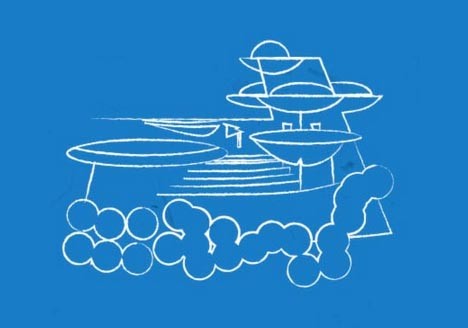
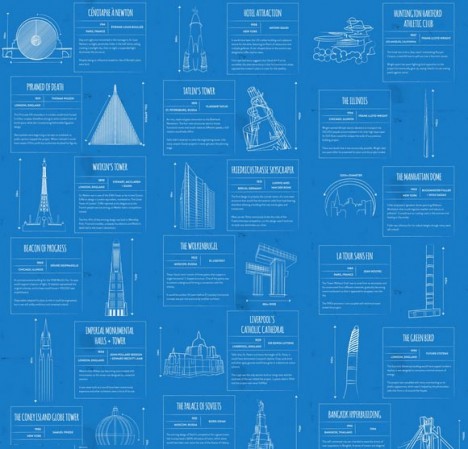
Some were conceived of as storytelling devices or futuristic concepts, while others were intended for actual construction before the plans were scrapped, but each of these buildings tells a unique story about a time, a place and an architect.

frank lloyd wright unbuilt plan

Compiled by Rubberbond, a UK construction company that has seen more than a few ambitious projects get cancelled, this inforgraphic contains works by abstract visionaries like Buckminster Fuller and contemporary practitioners including Jean Nouvel.

famous mies skyscraper prototype

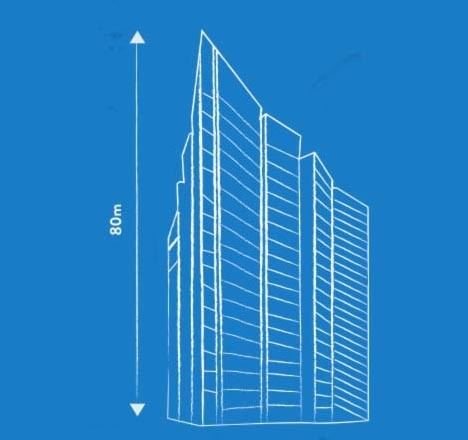
One skyscraper concept in particular, by Modernist minimalist like Mies van der Rohe, portended a huge shift in direction – futuristic at the time, it became the basis for an entire system of building construction in the century that followed. Gaudi, Wright and Foster are also on the list of similar influencers – often, the virtues of their built works generated interest in their unfinished projects, too.

hyperbulilding by oma

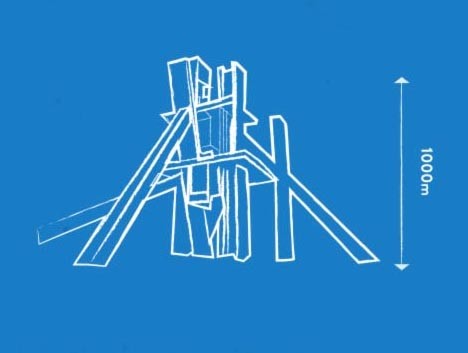
Still other works, like the hyperbuilding concept by OMA, were never intended to be built but were instead created to test a hypothesis or explore an idea – in this case: the self-contained city.

famous unbuilt architect buildings

“Unbuilt buildings represent the forgotten dreams of architects; projects that could have defined a community’s identity. At best the drawings and blueprints will now be displayed in museums, though that’s small consolation to the architects who stayed up late at night scribbling, while envisaging a skyline that would proudly display their signature style.”

Share on Facebook


[ By WebUrbanist in Conceptual & Futuristic & Technology. ]

[ WebUrbanist | Archives | Galleries | Privacy | TOS ]


WebUrbanist

 
Comments Off on Unconstructed: 25 Visionary Works by World-Famous Architects

Posted in Creativity


Most Massive Murals: 14 Large-Scale Works of Urban Art

04 Nov

[ By Steph in Art & Street Art & Graffiti. ]

Large Murals Asia's Tallest 1

Human faces loom over the city on the sides of skyscrapers, colorful characters cover industrial silos and Boeing airplanes and entire neighborhoods serve as canvases for optical illusions in some of the world’s largest-scale murals. Taking up hundreds of thousands of square feet in some instances, these massive works of urban art required an astonishing amount of paint to produce.

World’s Largest Mural in Berlin
Large Murals Berlin Apartment 1

Large Murals Berlin Apartment 2

Believed to be the world’s largest mural, this project in Berlin measures as astonishing 236,800 square feet and consists of imagery inspired by the nature in a nearby zoo. Completed by the French mural company CiteCreation, the work spans three buildings of an apartment complex and appears to significantly best the current Guinness World Record holder, the 178,200-square-foot Pueblo Levee Mural Project in Colorado.

Tribute to Architect Oscar Niemeyer by Eduardo Kobra
large murals kobra niemeyer 1

murals kobra niemeyer 2

Nearly the entire height of a skyscraper in Sao Paulo, Brazil pays colorful tribute to architect Oscar Niemeyer in honor of what would have been his 105th birthday. Muralist Eduardo Kobra completed the 170-foot-tall work of art in early 2014 with the help of four other artists.

Boeing 737 Mural by Os Gemeos
Large murals boeing os gemeos 1

Large murals Boeing 737 2

It took 1,200 cans of spray paint to complete this incredible mural on the outside of an entire Boeing 737. Brothers Otavio and Gustavo Pandalfo, known as Os Gemeos, painted their signature yellow characters on the plane that carried the Brazilian national football team during the World Cup, completing the project in just a week.

Shepard Fairey’s 14-Story Paris Mural
Large murals Fairey 1

Large Murals Fairey 2

Known best for his iconic political portraits, artist Shepard Fairey also works in larger scales, with this 14-story mural in Paris being a notable example. Working in conjunction with Mairie du 13e, Butterfly and Mehdi from Galerie Itinerrance, Fairey completed the mural for a community art project called Street Art 13.

Asia’s Tallest Mural by Hendrik Beikirch
Large Murals Asia's Tallest 1

Large Murals Asia's Tallest 2

A 230-foot-high building standing in the foreground of Daniel Libeskind’s glimmering Hauendaue i’Park building in Busan, South Korea, this mural by German artist Hendrik Beikirch depicting a fisherman stands as a reminder of the nation’s working class.

Next Page – Click Below to Read More:
Most Massive Murals 14 Large Scale Works Of Urban Art

Share on Facebook


[ By Steph in Art & Street Art & Graffiti. ]

[ WebUrbanist | Archives | Galleries | Privacy | TOS ]


WebUrbanist

 
Comments Off on Most Massive Murals: 14 Large-Scale Works of Urban Art

Posted in Creativity


Phantom Monuments: Haunting Works of Light Graffiti by Sola

23 Sep

[ By Steph in Art & Street Art & Graffiti. ]

Sola Light Graffiti 17

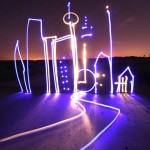
Swirls and pillars of light hover in fields or against dark urban backdrops like phantom monuments, captured on camera in a way that just can’t be perceived by the human eye. UK-based artist Sola literally paints with light, his amorphous creations seeming to take on three dimensions for just a split second as if the light itself has gathered up a mass of its own.

Sola Light Graffiti 13

Sola Light Graffiti 3

Sola Light Graffiti 1

Sola Light Graffiti 14

Looking for an outlet for personal expression led Sola to professional photography, documenting the sports, bands and lifestyles that he was into. Eventually, though, he wanted something that would give him more control over the creative process.

Sola Light Graffiti 2

Sola Light Graffiti 4

Sola Light Graffiti 6

Sola Light Graffiti 11

Sola Light Graffiti 15

“Then I found light painting. Quite by accident one night while shooting landscapes of the urban environment and instantly I knew it was what I’d been looking for. I like to keep things real. I shoot with digital cameras, yes, but I employ principles of analogue film technology – in that once I’ve made an image I don’t change it any more than I could in a darkroom and therefore what you see, is what I shoot.”

Sola Light Graffiti 7

Sola Light Graffiti 8

“I believe there’s a real magic to creating something wondrous that’s ‘real.’ Sure, there’s a place for post production in this world but on the whole, you won’t find any here. To the point that even if I am caught in the scene the image is thrown away. I aim to create images that allow the viewer to suspend their reality and simply enjoy the energy and mystery of the image.”

Sola LIght Graffiti 9

Sola Light Graffiti 16

See lots of more Sola’s work, including collaborations with NIKE and other brands, at LightBombing.com.

Share on Facebook


[ By Steph in Art & Street Art & Graffiti. ]

[ WebUrbanist | Archives | Galleries | Privacy | TOS ]


WebUrbanist

 
Comments Off on Phantom Monuments: Haunting Works of Light Graffiti by Sola

Posted in Creativity


Loaves of Art: Classical Works Revealed in Slices of Glass

12 Jun

[ By Steph in Art & Sculpture & Craft. ]

Loren Stump Sliced Glass Art 1

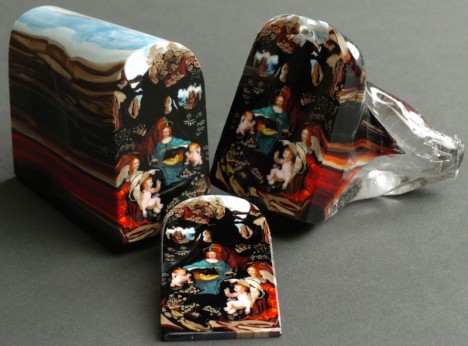
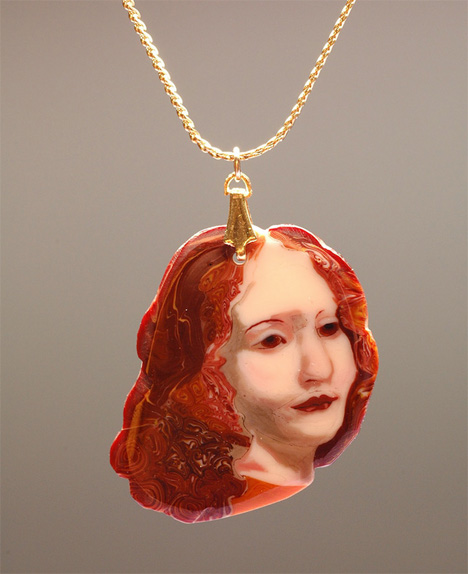
This loaf of colored glass may not look like much from the outside, but slice into it and you’ll find an incredible recreation of Leonardo da Vinci’s painting Virgin on the Rocks. Self-taught glass master Loren Stump has adapted a 4,000-year-old Middle Eastern technique to produce detailed images that are only seen when the glass ‘cane’ is cut into cross-sections.

Loren Stump Sliced Glass Art 3

Murrine may be centuries old, but typically consists of abstract or floral patterns, which are much easier to create. Stump creates his intricate images by layering hundreds of tiny glass rods in various colors and thicknesses, resulting in a ‘loaf’ that can sell for $ 5,000 per slice.

Loren Stump Sliced Glass Art 2

Loren Stump Sliced Glass Art 4

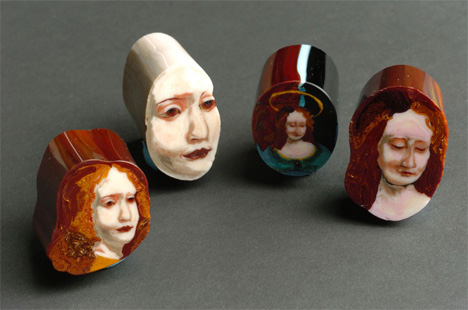
The artist also creates individual smaller-sized faces that are sliced into pendants for jewelry and also manipulates two-dimensional murrine slices into three-dimensional forms. Watch a demonstration in the video above.

Share on Facebook


[ By Steph in Art & Sculpture & Craft. ]

[ WebUrbanist | Archives | Galleries | Privacy | TOS ]


WebUrbanist

 
Comments Off on Loaves of Art: Classical Works Revealed in Slices of Glass

Posted in Creativity


Trick of the Light: 12 Shining Works of Holographic Art

21 Jan

[ By Steph in Art & Drawing & Digital. ]

Holography Art Main
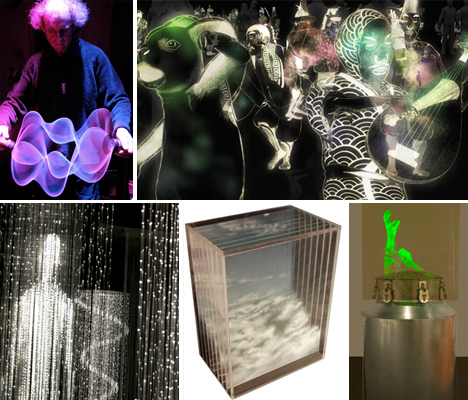
Holograms suggest a depth and dimension that isn’t really there, an illusion of matter in space that can range from a low-tech flickering image in a children’s book to ghostly computer-generated projections of people on stage. No matter how simple or complex the techniques used, it’s all a trick of the light, a way of fooling our eyes – whether they’re just images painted onto layers of glass or created with three-dimensional HDTV video.

Dancing Japanese Holograms by Teamlab

Hologram Art Dancing Japanese Teamlab

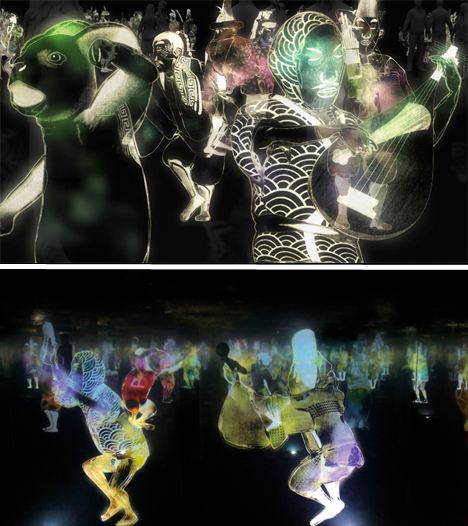
Visitors to the Singapore Art Museum found themselves surrounded by ghostly dancing figures, some playing instruments, in what seemed like a book of Japanese illustrations come to vivid, kinetic life. The maze of holograms is a digital installation by Teamlab, inviting anyone entering the darkened gallery to move within and even interact with the figures. Each figure senses the presence of the viewer and responds by playing music, creating a ripple effect in other nearby holograms.

Three-Dimensional Mesh Portraits

Hologram Art Mesh Portraits

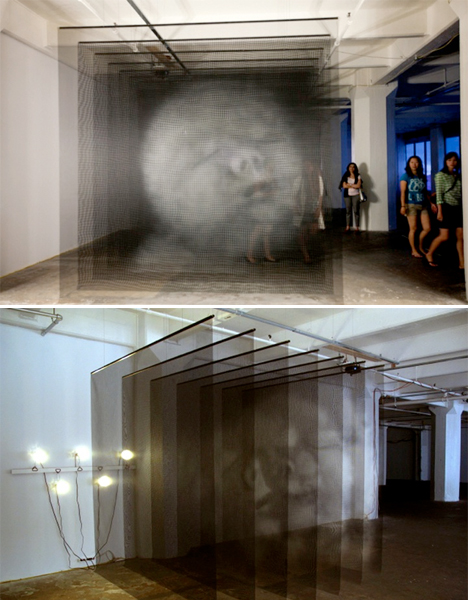
Depending on where you stand when you view these three-dimensional works by artist Seth Wulsin, you’ll see either a jumble of different facial features or a holographic image that seems to move slightly. The large-scale pieces, entitled Ánimas, consists of portraits painted on suspended mesh screens. When viewed from the front, they come together into a sort of holographic image. Moving closer or further away gives each portrait extra dimension.

Holographic Trees in a Landscape

Hologram Art Trees Landscape

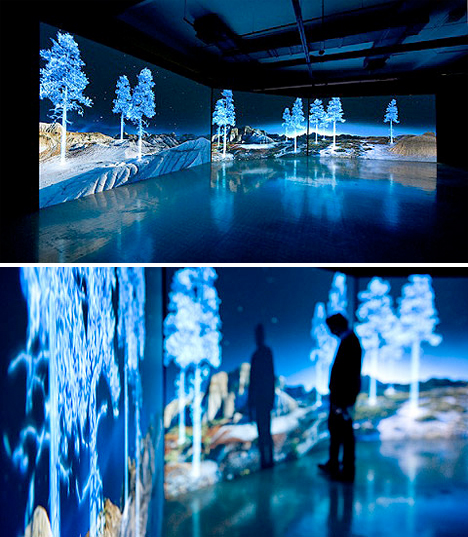
Vivid blue holograms of trees appear in unlikely places, like the desert, in this high-tech installation by Kelly Richardson. The artist uses high definition video and three-channel projection to create the illusion. Says Richardson of the work, “Mining the aesthetics of cinema and science fiction, The Erudition presents a lunar-esque looking landscape with what appears to be an unlikely monument or proposal, consisting of holographic trees blowing in fictional wind. Is this slightly malfunctioning display a forgotten site for proposed colonization? Better yet, is this some kind of alien artwork?”

Ghostly Holographic Art Drawn on Panels of Glass

Hologram Art Panes of Glass

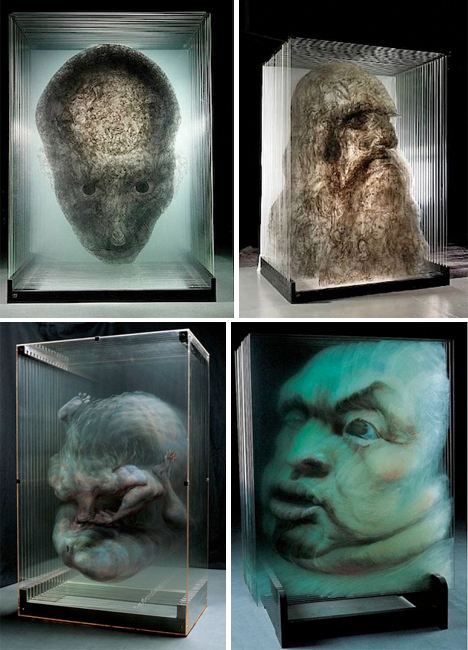
Beijing-ased artist Xia Xiaowan paints imagery onto panes of glass with special colored pencils, and then layers the glass to create a three-dimensional appearance. This sort of ‘painted hologram’ achieves the same effects as high-tech holographic art in an entirely manual, low-tech way. Each image is made up of 14 to 30 panes of glass, seeming to move and shift as you walk around it and view it from different perspectives.

Next Page – Click Below to Read More:
Trick Of The Light 12 Shining Works Of Holographic Art

Share on Facebook


[ By Steph in Art & Drawing & Digital. ]

[ WebUrbanist | Archives | Galleries | Privacy | TOS ]


WebUrbanist

 
Comments Off on Trick of the Light: 12 Shining Works of Holographic Art

Posted in Creativity


Metering Modes and How Your Camera Meter Works

20 Jan
Proper Exposure vs. How the Camera Exposes

Proper Exposure vs. How the Camera Exposes

Exposure is a complex beast. Mastering it is of the utmost importance. Exposure and composition are the two most critical components towards making a great image. Exposure is based on three components:

  1. The ISO or sensitivity to light
  2. Aperture or the size of the opening that will let in light, and
  3. Shutter Speed which defines the duration the light will have to pass through the aperture

Whether you shoot in Manual, Aperture Priority or Shutter Priority; there is no difference in how the meter evaluates the scene.

Measuring the light, or brightness of the scene you are trying to capture, is a critical component in determining the perfect exposure. To establish this you need a meter that can read the levels of brightness.

Exposure is measured using light meters.  There are two types: one measures the light falling on the subject or scene, called an incident light meter; the other measures the light reflected off the scene or your subject, and is called a reflected light meter. All meters that are built into digital cameras are reflected light meters, and we will be addressing that type in this article. The more you understand these meters and how they work, the better you will be at understanding and interpreting what they are telling you. Keep in mind that incident light meters are far more accurate than reflected light meters.

How does your camera determine exposure?

Reflected light meters attempt to read the amount of light in the scene you are trying to capture. Unfortunately, those readings are guesses. You may have had the misfortune of photographing a very dark or black subject and have it come out looking over exposed, or a snow scene where the snow looks grey or under exposed. The reason for this behavior is that the camera’s light meter believes that most scenes should average to a mid-grey, also referred to as 18% grey. This middle grey is a mid-point between the darkest shadows and the brightest highlight. Since the camera meter has no idea about white or black, you need to help it using some form of exposure compensation based on the tonality of your subject or scene.

Metering Modes

To help with exposure, and determining how much to compensate, cameras have various metering modes. Typically, the three basic modes are Matrix (also called Evaluative), Center-weighted and Spot metering. Each of these is applicable in particular situations, but do not rely on just one of these modes to do it all for you.

Evaluative Metering
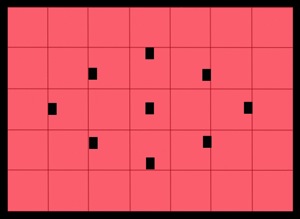
Evaluative Metering

Evaluative Metering

In this metering mode, the meter divides the scene up into a grid and analyzes each segment for highlight and shadow (bright and dark) information. Once that data is collected, it calculates the average value and bases the exposure on that average. Keep in mind that all cameras do not have the same number of areas within the frame. Also, they don’t all calculate the average value for exposure the same way. Manufacturers use complex formulas to arrive at exposure values.  Therefore, it is important that you understand how your camera behaves in various situations and learn when to trust it, and when not to trust it.

Many of the newer DSLR’s not only average the grid, but place additional emphasis on the focusing points that are in use during that particular image capture.

In the next series of images, matrix metering was used to set the exposure. Two foam-core boards, one white and the other black, were placed side by side in the same light.

For the first image, the camera read the exposure while it was pointed in the middle of the white and black boards.  The camera read all the white and the black and came to a reasonable conclusion by averaging the exposure.

S5A9661.jpg

Evaluative Metering – centered between the white and black boards

S5A9658.jpg

Metered off of the white board


The next image was shot with the camera meter reading taken from the white board.  The white was captured as grey and the black a darker grey.  This is because the camera tries to make everything neutral grey or 18%.

 

Metered on the Black Board

Metered off of the black board


In the third image, the camera read the exposure from the black board.  The resulting image is overexposed making the whites too bright, and a dark grey where it should have been black.


Center-Weighted Metering
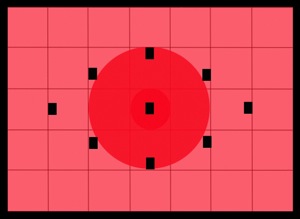
center-weighted.jpg

Center-Weighted metering

This method of metering lays the most importance on the central portion of the frame, which can be as much as 75% or more, while little or no importance is given to the corners of the frame. Many pro DSLR’s will allow you to adjust the diameter of the center weight area.

This mode of metering is preferred by many photographers and has a reasonable level of accuracy. Also keep in mind that most subjects tend to be centrally placed when framing. You then obtain the exposure and recompose before capturing the image.

Spot Metering
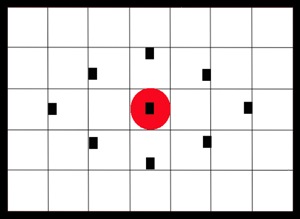
spot.jpg

Spot metering

This mode measures the light from a very small part of the scene only.  The area measured is typically the center of the image, using approximately a 3 to 7 degree range of measurement.  It is usually less than 5% of the area of the frame. With most of the mid to upper end DSLR’s, you can arrange the placement of the spot within the frame so as to identify where you want the reading captured (usually it follows where you focus).

This is a very accurate metering mode. It will provide precise readings from small areas of your scene and is most effective in high contrast situations.

The same white and blackboards were photographed once again using spot metering. As you can see in the images below, the same problem exists. Even the spot meter was fooled.

_S5A9659A

Spot metered on the black (left image) and then Spot metered on the white board (right image)

To obtain a correct exposure so the camera is not fooled, a spot meter reading was taken using a grey card placed in the same light as the black and white boards.  This exposure setting based on the grey card was used to photograph the two boards.  The image below shows good exposure.

S5A9661.jpg

Exposure reading using a grey card

How do you switch metering modes?

The Metering icon is represented by an eye-shaped graphic within a rectangle. Your camera’s metering system may have three or more metering modes and the display will change based on which mode is selected.

Which Metering Mode should you use and when?

Matrix metering

Matrix metering works well for scenes that are evenly lit.  It can be used as a go-to method for grab shots. Even though the camera meter may fail you, these meters are highly sophisticated, computer controlled devices and can be relied upon for general photography. You can leave your camera on this mode and use it as a means of exposure education.

Center-Weighted metering

Use this for any scene where you want the primary subject to be correctly exposed while the rest of the image can be generally ignored for proper exposure. This is ideal for people and pet portrait photography, Still life and some product photography.

Center-Weighted is much more consistent and predictable compared to matrix metering. Use it wisely to control where the camera will be measuring the scene and those areas where the lighting does not play a key role in your composition.

Use this mode for outdoor portraits, high contrast scenes, product and food photography to name a few.

Spot metering

Spot metering gives the maximum accuracy and exposure control. This is ideal for back-lit subjects, close-up and macro photography. It can be used to read the brightest and darkest zones for landscapes. You could not do lunar photography without this mode.  Remember to use this mode any time it is important to correctly expose for a subject that does not fill the frame.

Spot metering mode works exceptionally well in situations where your primary subject is much lighter or much darker than its surroundings.

Exposure compensation

In a number of situations, you will need exposure compensation to get the right exposure, irrespective of the metering mode you select. Scenics with a lot of snow cover will be under exposed and will require an increment of +1 or more stops of exposure to make the snow look white.

Conversely, a black furry bear or a person wearing very dark clothing will be overexposed and will require negative exposure compensation of -1 or more stops.

So which mode should you use?

The answer is – it depends on the subject, the light direction, etc. Choose matrix or evaluative metering for evenly lit scenes. Use Center-weighted for scenes that have high contrast and where you want the primary subject to be properly exposed. Use Spot metering for back-lit subjects until you get very familiar with metering, use the spot meter for back lit subjects.

In conclusion, for exposure accuracy an incident light meter can be helpful as your camera’s light meter is easily fooled. But learning how your camera meter works will help you get better, more accurate exposures as well.

The post Metering Modes and How Your Camera Meter Works by Shiv Verma appeared first on Digital Photography School.


Digital Photography School

 
Comments Off on Metering Modes and How Your Camera Meter Works

Posted in Photography


By a Thread: 31 Excellent Works of Embroidered Art

14 Jan

[ By Steph in Art & Drawing & Digital. ]

Embroidered Art Main

This ain’t your grandmother’s cross-stitched bible verses. Contemporary artists exploit, subvert and otherwise manipulate the traditional craft of embroidery with hyperealistic portraits, surreal seemingly LSD-induced additions to old photos or pretty flowers added to actual x-rays. Some even use bread – or their own skin – as the canvas for their threaded creations.
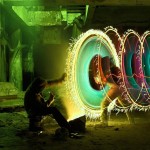
Family Portraits Sewn into the Palm of an Artist’s Hand

Embroidery Art Palm Portraits 2

Embroidery Art Palm Portraits 1

Combining visual and performance art, David Cata sews portraits of his family members into the palm of his own hand, poking the thread through the topmost layer of skin. The series symbolizes people who have ‘left their mark’ on the artist’s life, just as the portraits leave their mark on his skin. “Their lives have been interwoven with mine to build my history, every moment lived stays in the memory to finally be forgotten. Somehow, this fact is painful, since there are only material things and traces that people leave behind.”

Traditional Temari Spheres by 88-Year-Old Grandmother

Embroidered Art Temari Spheres 2

Embroidered Art Tamari Spheres 1

Flickr user NanaAkua shares photos of the 500-odd, incredibly intricate temari spheres embroidered by her 88-year-old grandmother. Temari balls are a form of Japanese folk art (of Chinese origin), often made from the thread of old kimonos and given as gifts to children on New Year’s Day.

Bear Sculptures Embroidered with Anatomy

Embroidered Art Bears 1

Embroidered Art Bears 2

Embroidered Art Bears 3

Bears are seemingly turned inside-out with embroidery of their anatomy in stunning lifelike sculpture by Deborah Simon. Measuring about two feet square, the sculptures reveal internal organs, musculature, skeletons and nerves. The series highlights how human desire for their pelts puts these majestic creatures in danger. “Bears are the ultimate stuffed animals; both the iconic plush toy and the prized taxidermy specimen for hunters,” says Simon. “Most of the sculptures deal with vulnerability; the vulnerability that the animals face from environmental degradation, conflicts with people, suburban sprawl and poaching. I particularly find the dichotomy between the defanged, declawed childhood toy and the fierce reality of a top predator fascinating.”

Embroidered Flesh by Eliza Bennet

Embroidered Art Flesh Bennet 1

Embroidered Art Flesh Bennet 2

David Cata isn’t the only artist using the thick, relatively bloodless skin of his palms as a surface for embroidery. Eliza Bennet uses a similar method, but her work invokes more of a visceral reaction of disgust for its visual mimicry of wounds. The idea is to highlight the idea of embroidery being women’s work, and women’s work being ‘easy.’ Bennet notes that many low-paid jobs typically aligned with women, like cleaning, caring and catering, can be difficult and labor-intensive. “Through a personally charged perception, I explore a range of issues relating to the formlessness of both individual and social reality,” she says.

Embroidered X-Rays by Matthew Cox

Embroidered Art X-Rays 1

Embroidered Art X-Rays 2

Traditional embroidery is juxtaposed with plastic x-ray film in this series by Matthew Cox, superimposing images of vivid life on top of the stark white-bones-on-black. Fleshy hands hold flowers, or reach up toward the sky.

Next Page – Click Below to Read More:
By A Thread 31 Excellent Works Of Embroidered Art

Share on Facebook


[ By Steph in Art & Drawing & Digital. ]

[ WebUrbanist | Archives | Galleries | Privacy | TOS ]


WebUrbanist

 
Comments Off on By a Thread: 31 Excellent Works of Embroidered Art

Posted in Creativity


Car Parks or Works of Art: 14 Exemplary Parking Facilities

28 Aug

[ By Steph in Architecture & Public & Institutional. ]

Parking Architecture Main

Most parking facilities are eyesores, designed with function in mind without paying heed to context or aesthetics. But in some cases, parking garages can be so innovative, high-tech, bright and – yes – even beautiful, that they’re notable works of architecture in and of themselves.

Detroit’s Michigan Theater

Parking Lots Detroit Theater

Parking Lots Detroit Theater 2

Built in 1926 alongside the connected 13-story Michigan Building office tower, the 4,000-seat Michigan Theater was once the jewel of Detroit, described as the world’s finest theater. But by the mid-1960s, it closed, partially due to a lack of parking – ironic, given its ultimate usage. The theater has continued to decay, but its beautiful shell remains intact as a three-level, 160-space parking deck.

72DP, Sydney

Parking Architecture 72DP

An extensive, colorful geometric mural decorates an underground car park in Sydney, Australia by architects Marsh Cashman Koolloos (MCK.) “The objective of the project was to breathe new life into the space which, having been rendered in concrete with little inlet of natural light, felt quite dark and heavy. Working closely with the owners, who possess a keen design sensibility, it was decided that the mural would cover all surfaces in a blanket of bright color. There was also a request that the larger wall surfaces be left blank with an eye towards potentially introducing additional, individually commissioned works at a future date. nevertheless it was vital that the installation feel and function as a complete work in its own right.”

Parkhaus Engelenschanze, Stuttgart, Germany

Parking Architecture Parkhaus

This light-filled parking garage totally gets rid of that creepy enclosed feeling that many of these structures can foster. The Parkhaus Engelenschanze features an all-glass exterior, and its inner courtyard even has a waterfall, a creek and curtains made of reclaimed glass.

The VW Tower, Wolfsburg, Germany

Parking Architecture VW Tower

Two towering silos are used to store vehicles at Volkswagen’s production facility and Autostadt visitor attraction in Germany. Reaching 48 meters (157 feet) into the air, the towers contain up to eight hundred cars lifted into position by rotating mechanical arms.

Ballet Valet, Miami

Parking Architecture Ballet Valet

You might not expect a parking garage to be among a city’s most impressive architecture, but in Miami’s case, the Ballet Valet really does stand out. Completed in 1996 by Arquitectona, the garage in Miami’s Art Deco district  is covered in grid-patterned fiberglass that serves as a terrace for climbing greenery. The garage sparked a trend in the city for well-designed parking facilities.

Next Page:
Car Parks Or Works Of Art 14 Exemplary Parking Facilities

Share on Facebook


[ By Steph in Architecture & Public & Institutional. ]

[ WebUrbanist | Archives | Galleries | Privacy | TOS ]


WebUrbanist

 
Comments Off on Car Parks or Works of Art: 14 Exemplary Parking Facilities

Posted in Creativity


Painted People: 31 Works of Art on Human Canvas

29 May

[ By Steph in Drawing & Digital. ]

Painted people main
Human bodies become exotic animals and crashed cars, or blend almost seamlessly into intricate backgrounds, with careful application of body paint and a bit of acrobatics. These 31 works of art turn people into living canvases, sometimes celebrating the graceful shapes and movement of their bodies, and at other times, disguising it.

Alexa Meade’s 2D Paintings on 3D People

Painted People 2D 1
Painted People 2D 2

Those aren’t two-dimensional paintings on a flat surface; they’re real, live people transformed into human canvases by artist Alexa Meade. “The models are transformed into embodiments of the artist’s interpretation of their essence,” says Meade. “When captured on film, the living, breathing people underneath the paint disappear, overshadowed by the masks of themselves.

Wallpaper People by Emma Hack

Painted People Wallpaper 1
Painted People Wallpaper 2

Painted models virtually disappear into patterned backgrounds in works by artist Emma Hack. The models must be painstakingly hand-painted to match up perfectly with backgrounds that are often very complex, and then remain perfectly still so the scene can be photographed. It can take as long as nineteen hours to apply the makeup for a single scene.

Human Animals by Gesine Marwedel

Painted People Animals

The graceful, flexible bodies of performance artists are an ideal medium for artist Gesine Marwedel, who uses paint to turn them into animals like flamingos, dolphins, hummingbirds and tigers. “Body painting is not just paint on a living canvas, it is picking up the body shapes in a subject and the painting on the body,” Marwedel told PSFK. “It is the transformation of a human being into a breathing, moving, living work of art.”

Painted Alive: Brilliant Work by Craig Tracy

Painted People Alive Tracy

Owner of the world’s first gallery dedicated to fine art body painting (located in New Orleans), Craig Tracy creates his own beautiful and surreal body painting portraits that blend human models into backgrounds or turn them into psychedelic works of art. Rather than hiding the models, however, Tracy celebrates the shapes of their bodies, often exaggerating them and using them for creative effect.

Next Page:
Painted People 31 Works Of Art On Human Canvas

Share on Facebook


[ By Steph in Drawing & Digital. ]

[ WebUrbanist | Archives | Galleries | Privacy | TOS ]


WebUrbanist

 
Comments Off on Painted People: 31 Works of Art on Human Canvas

Posted in Creativity


Lightroom for your tablet? A mobile version could be in works

02 May

TS80x80~cms_posts_6365066828_Lightroom.png

Adobe product manager Tom Hogarty yesterday offered a tantalizing sneak peek into future Lightroom functionality. On Scott Kelby’s web show, The Grid, Hogarty demoed an iOS app that allows a wide range of raw file edits on the iPad that can sync back to your Lightroom catalog. You can watch it in action on connect.dpreview.com.

News: Digital Photography Review (dpreview.com)

 
Comments Off on Lightroom for your tablet? A mobile version could be in works

Posted in Uncategorized