RSS
 

Posts Tagged ‘wish’

Designing the Perfect Camera – What Features are on Your Wish List?

18 Feb

The perfect camera doesn’t exist, but if I were a camera designer, I know exactly what sort of camera I would make for myself, and how I’d improve on the one that I’ve already got. I’m not asking for the impossible either – all these ideas could be implemented using current technology. Really, what I would do is take the camera I already own – the Fujifilm X-T1 – and add the best bits from other cameras, to make a kind of super-camera, or at least one that is better tailored to my own needs.

1 – Sensor size

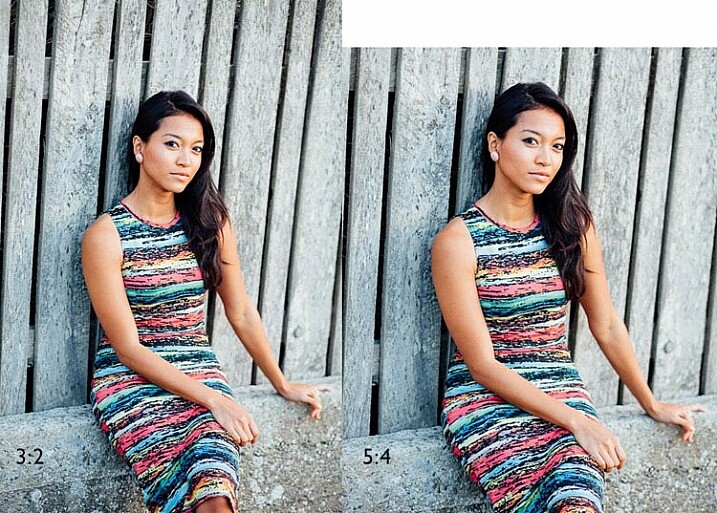
Let’s start with the sensor. The X-T1’s sensor uses the same 3:2 aspect ratio as other APS-C and medium format cameras. This often works well when taking photos in the landscape orientation. But it doesn’t work nearly so well when taking photos in the portrait orientation (with the camera turned on its side).
Aspect ratio

The portrait on the left has an aspect ratio of 2:3 (width always comes first), the same as the sensor on the X-T1. The portrait on the right shows how it would look if the sensor had a 4:5 aspect ratio. The area is the same, but the width and height are different.

It’s surprisingly hard to create a good composition that utilizes all the space in the frame well, especially for landscapes and portraits. It’s much easier with a shorter rectangle, such as those found in large format cameras (aspect ratio 5:4), some medium format film cameras (7:6) and Micro four-thirds cameras (4:3).

For example, check out the landscapes of Joe Cornish. He uses a large format camera for a lot of his work, and he uses the portrait orientation a lot. It works really well with the short rectangle.


My proposal is this. Ditch the 3:2 aspect ratio sensor and place it with one that uses the 5:4 aspect ratio. But keep the area of the sensor – don’t make it bigger or smaller. This would give you several benefits:

  • It’s easy to compose images within the 5:4 aspect ratio.
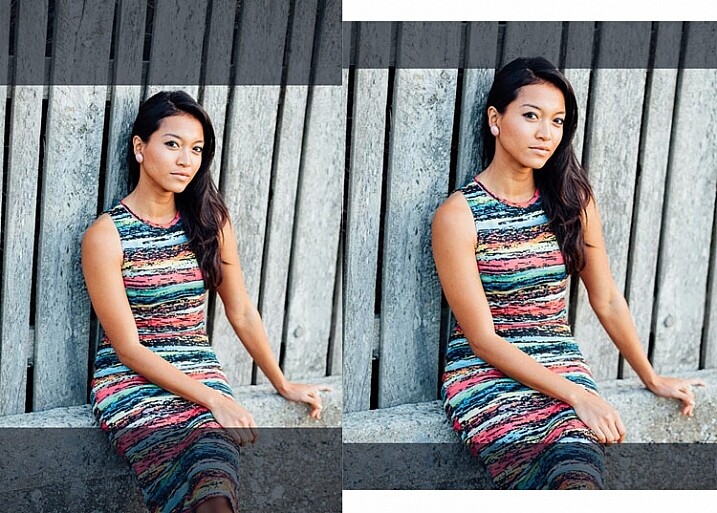
  • If you crop to a square (as I often do because I love the square format) you use more of the sensor than when you crop the current APS-C sensor.
  • You get a slight improvement in image quality, especially at wide apertures, because you are using the centre part of the lens to create the image.
Aspect ratio

The above two photos, cropped to a square. The dark grey area shows the unused part of the sensor. You lose less information captured from the 5:4 sensor than you do from the 3:2 one.

What I don’t want to see, is a full-frame camera introduced into the Fujifilm range. The problem with having two sensor sizes in the same range, is that it greatly complicates the process of making, and buying lenses. It’s far better, as Fujifilm has done so far, to use a single sensor size throughout the range (in my opinion).

2 – In-Camera Image Stabilization

I think this is a fantastic idea, and I’d like to see it in Fujifilm cameras. The advantage of having Image Stabilization in the camera is that you can use it with any lens. That includes wide-angles, which you can then potentially hand-hold at shutter speeds like 1/4 or 1/8 second, giving all sorts of interesting creative possibilities when it comes to recording movement. Sony and Olympus have got this one right.

Fast shutter speed

I took this photo with a 35mm lens at 1/180 second to freeze movement. This lens doesn’t have Image Stabilization, but if it were built into my camera, I could try taking the photo at a shutter speed as slow as 1/15 or 1/8 second. The man would be a blur, creating a different image entirely. Image Stabilization lets you try this with a hand-held camera, so you don’t have to use a tripod.

3 – Quick control dial

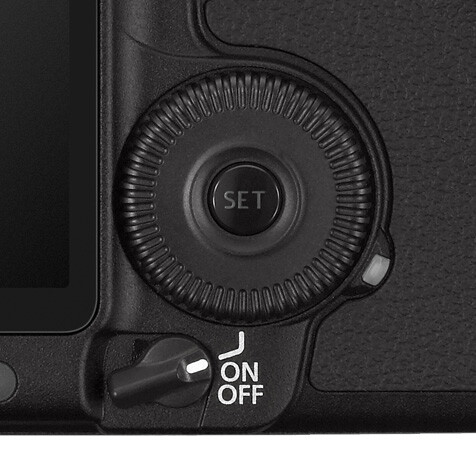
Mid-range and high-end Canon cameras have a quick control dial – a thumbwheel on the back of the camera, that you can move while looking through the viewfinder. The big advantage of the quick control dial is that you can adjust exposure compensation without removing your eye from the viewfinder.
Quick control dial

The quick control dial on the EOS 5D Mark II. Its position means that it’s easy to move with your thumb, while looking through the viewfinder.

The X-T1 can already display a histogram in the viewfinder. With a quick control dial you can adjust exposure compensation (when in an automatic mode like aperture priority, shutter priority or program) as you go, to get the histogram where you want it. All guesswork regarding exposure is gone. The current exposure compensation dial is too hard to move while looking through the viewfinder, and reduces the usability of the camera.

The joystick added to the X-Pro 2 for quick movement through the autofocus points would also be a welcome addition.

4 – Dual card slots

Probably coming in the XT-2, but essential for backing up photos. Good quality memory cards are virtually indestructible. If your camera saves a copy of each photo on two different cards this makes backing up photos much easier, especially while travelling.

So Fujifilm, if you’re listening, I know I’m only one user among many, but I’d love it if you could give some consideration to these ideas. Especially the one about sensor size, which I think could revolutionize the way we use cameras.

Your turn

If I could add just one feature to my X-T1 it would be the 5:4 aspect ratio sensor. So here’s a question for you – if you could add just one feature to your camera, which would it be and why? I’m looking forward to reading your answers, this should be interesting.

Mastering Lenses photography ebookMastering Lenses

My new ebook Mastering Lenses: A Photographer’s Guide to Creating Beautiful Photos With Any Lens shows you how to get the best from the lenses you own already. A comprehensive guide to exploring the creative potential potential of wide-angle, normal and telephoto lenses, it’s also the ultimate buying guide for readers thinking about purchasing a new lens for their camera. Please click the link to learn more or buy.


googletag.cmd.push(function() {
tablet_slots.push( googletag.defineSlot( “/1005424/_dPSv4_tab-all-article-bottom_(300×250)”, [300, 250], “pb-ad-78623” ).addService( googletag.pubads() ) ); } );

googletag.cmd.push(function() {
mobile_slots.push( googletag.defineSlot( “/1005424/_dPSv4_mob-all-article-bottom_(300×250)”, [300, 250], “pb-ad-78158” ).addService( googletag.pubads() ) ); } );

The post Designing the Perfect Camera – What Features are on Your Wish List? by Andrew S. Gibson appeared first on Digital Photography School.


Digital Photography School

 
Comments Off on Designing the Perfect Camera – What Features are on Your Wish List?

Posted in Photography


Wish you could take Amazing Photos? Now you can with our Brand New Course

17 Sep

Wish you could take amazing photos with that camera that rarely comes out of Auto Mode?? Now you can.

With our brand new photography course – presented on video – Photo Nuts and Shots.

It’s a follow up to the incredibly popular Photo Nuts and Bolts course released earlier this year and complements our best-selling ebook of the same name (and author, Neil Creek).

If you already know your way around your camera but want to gain real skills that you’ll use in every shot you take, then this creative photography course is for you.

And for a limited time, it’s available at the special introductory price of just USD $ 39 – which is a saving of 33%.?

What you’ll learn

In 10 easy-to-understand video lessons, Neil reveals the tools, techniques and thought processes for producing amazing photos:

  • Learn to harness light to convey emotion
  • Understand the impact of great composition and how to achieve it
  • Take the sharpest possible photos
  • Discover how to adapt your camera’s exposure to get the shot you want
  • Master the concepts of shot perception, planning and execution – in any setting
  • Know when to break the rules for creative effect
  • Tap into your creativity to be the best photographer you can be
  • Because the videos are streamable and downloadable, you can go through at your own pace and in any order.

And the best part is that Neil’s teaching is practical and immediately actionable, so you’re guaranteed to see an instant improvement in the quality of your shots.

Take a look…

For a quick video preview, or to find out more, head here and check out the full details of this great new course.

Great photography CAN be learned – and Photo Nuts and Shots will show you how.

So get your camera ready and take this all-new dPS course today/

googletag.cmd.push(function() {
tablet_slots.push( googletag.defineSlot( “/1005424/_dPSv4_tab-all-article-bottom_(300×250)”, [300, 250], “pb-ad-78623” ).addService( googletag.pubads() ) ); } );

googletag.cmd.push(function() {
mobile_slots.push( googletag.defineSlot( “/1005424/_dPSv4_mob-all-article-bottom_(300×250)”, [300, 250], “pb-ad-78158” ).addService( googletag.pubads() ) ); } );

The post Wish you could take Amazing Photos? Now you can with our Brand New Course by Darren Rowse appeared first on Digital Photography School.


Digital Photography School

 
Comments Off on Wish you could take Amazing Photos? Now you can with our Brand New Course

Posted in Photography


POLL: What do you wish you understood better when you started photography?

23 Feb

Let’s get a discussion going on what you wish you understood better when you first got in to photography. Please fill in the poll below, you can check off up to three choices, and add your comments below.

If it’s not listed check off “other” and add a comment.

What was your biggest obstacle? What did you struggle most to understand?

Note: There is a poll embedded within this post, please visit the site to participate in this post’s poll.

googletag.cmd.push(function() {
tablet_slots.push( googletag.defineSlot( “/1005424/_dPSv4_tab-all-article-bottom_(300×250)”, [300, 250], “pb-ad-78623” ).addService( googletag.pubads() ) ); } );

googletag.cmd.push(function() {
mobile_slots.push( googletag.defineSlot( “/1005424/_dPSv4_mob-all-article-bottom_(300×250)”, [300, 250], “pb-ad-78158” ).addService( googletag.pubads() ) ); } );

The post POLL: What do you wish you understood better when you started photography? by Darlene Hildebrandt appeared first on Digital Photography School.


Digital Photography School

 
Comments Off on POLL: What do you wish you understood better when you started photography?

Posted in Photography


17, October, 2014 – I Wish I Knew How To Paint

25 Oct


Sometimes it is good to slow it down and reflect on our photography.  In his last article Frank Sauer showed us how much we could find to photograph in our own backyard.  Today we share Frank Sauer’s newest essay I Wish I Knew How To Paint.  I hope you enjoy this essay and take some time this weekend to explore the world around you and try some photography like Frank describes.  

We still have a few spots open on our first and second Antarctica Trips.  Take a look at the instructor line up and give some serious consideration in joining us for this amazing adventure.  If you have any questions contact Kevin Raber.  You can learn more about these two trips HERE.


The Luminous Landscape – What’s New

 
Comments Off on 17, October, 2014 – I Wish I Knew How To Paint

Posted in News


Chai Lifeline’s Camp Simcha Special: (Alex) Avi’s Wish Fulfilled

10 Jan

campsimcha.org | http After a fantastic Camp Simcha Special summer experience, Alexander (aka Avi) was about to board a plane back to Tampa, FL when Chai Lifeline made his dream come true. Sam Zaks showed up with a brand new Nikon D90, a gift from Chai Lifeline and an anonymous donor who met him last week during a visit to camp. Alexander had been a budding photographer until his accident two years ago, and the camera will allow him get back in the game on a new level. He was clearly moved when presented with the gift outside the Continental Airlines terminal at Newark Airport, and was ecstatic to be sharing the moment with his counselor and friends. As the video shows, he could not stop smiling as the group crowded around him, singing and cheering in true Camp Simcha Special EPIC ’11 fashion. Many thanks to Avi’s counselors, Yoni Burstyn & Yaakov Avigdor, for initiating this wonderful surprise.Each summer, 400 seriously ill children are treated to unforgettable, medically supervised overnight camp experiences at Camp Simcha, for children battling cancer and other hematological illnesses, and Camp Simcha Special, for children with debilitating chronic conditions. At Camp Simcha and Camp Simcha Special, children and teens trade hospital rooms and doctors’ offices for fun, friendship, and hope for the future. Campers enjoy traditional camp activities in fully handicapped-accessible facilities. Talent shows, concerts, and helicopter, hot-air, and motorcycle rides make every
Video Rating: 5 / 5


10 Items from a Photographer’s Wish List to Make Santa Faint

24 Oct

I was recently browsing through B&H catalog and one thing struck me quite a bit, namely this: Okay, it’s Broncolor, one of the best lighting brands, but… It is a light stand! You know, a stick with wheels. $ 6 000? Come on guys, maybe it makes 0 to 60 mph in 2 seconds? Or what? Anyway, I thought it would Continue Reading
Photodoto

 
Comments Off on 10 Items from a Photographer’s Wish List to Make Santa Faint

Posted in Photography


James Nachtwey: TED Prize wish: Share a vital story with the world

08 May

www.ted.com Accepting his 2007 TED Prize, war photographer James Nachtwey shows his lifes work and asks TED to help him continue telling the story with innovative, exciting uses of news photography in the digital era.TEDTalks is a daily video podcast of the best talks and performances from the TED Conference, where the world’s leading thinkers and doers are invited to give the talk of their lives in 18 minutes — including speakers such as Jill Bolte Taylor, Sir Ken Robinson, Hans Rosling, Al Gore and Arthur Benjamin. TED stands for Technology, Entertainment, and Design, and TEDTalks cover these topics as well as science, business, politics and the arts. Watch the Top 10 TEDTalks on TED.com, at http