RSS
 

Posts Tagged ‘We’ve’

We’ve updated our Sony a6100 sample gallery

02 Jan

$ (document).ready(function() { SampleGalleryV2({“containerId”:”embeddedSampleGallery_7727683859″,”galleryId”:”7727683859″,”isEmbeddedWidget”:true,”selectedImageIndex”:0,”isMobile”:false}) });

Sony’s a6100 is the perfect entry-level camera for folks looking to step up their photography game to something more powerful than their phone. We’ve updated our sample gallery to give you a better sense of its capabilities.

See our Sony a6100 sample gallery

Articles: Digital Photography Review (dpreview.com)

 
Comments Off on We’ve updated our Sony a6100 sample gallery

Posted in Uncategorized


Lens Rentals calls the Z7 the ‘best built mirrorless full-frame camera we’ve taken apart’

31 Oct

In case you were wondering what’s packed inside the Nikon Z7 and how well constructed it is, Lens Rentals has kindly cracked one open so you don’t have to, as promised in its EOS R teardown.

The camera equipment rental and repair business, famous for its camera teardowns, has documented the process of taking the Z7 apart, showing pictures of the weather sealing, electronic design, internal structure, and component layout of Nikon’s flagship full-frame mirrorless camera.

Roger Cicala, the man behind the teardown and founder of Lens Rentals, praises the extensive weathersealing protection from ingress of dust and moisture in the camera’s construction, and says the joints in the body are overlapped, screwed together and then covered by adhesive and rubber. He’s also impressed with the neatness of the electronics and the way the boards are packed into the body without leaving much space between them, especially with the in-body image stabilization.

“[The IBIS] noticeably more compact, has less travel than the Sony system, and seems more robust,” says Cicala. “From our focus on repair, we see this as a good thing – early Sony IBIS systems would sometimes move enough to jam and/or break. (To be clear, that’s not an issue with newer Sony cameras. I point this out just to show that the manufacturers have been watching each other.)”

Cicala’s only concerns seem to be that the diopter adjustment knob might not stand being pulled out and pushed in multiple times in rental models, and that the tripod screw isn’t as deep as some, so runs the slight risk of a long thread busting through it.

In conclusion Cicala says “I’m impressed by the very solid construction of the chassis and IBIS unit. I’m impressed with the neat, modern engineering of the electrical connections […] I’m not here to tell you which camera is best to use or has the best performance. I’m just here to say this is a damn well-built camera, the best built mirrorless full-frame camera we’ve taken apart.”

Go to the full teardown on Lens Rental’s website to see more photos and a more thorough take with all his comments. And remember, don’t try this at home!

Articles: Digital Photography Review (dpreview.com)

 
Comments Off on Lens Rentals calls the Z7 the ‘best built mirrorless full-frame camera we’ve taken apart’

Posted in Uncategorized


Playing a Super Mario Bros. level with Hololens is the best case for AR we’ve seen

23 Jun

Developer Abhishek Singh makes a compelling case for wearing a headset and looking silly – he created an augmented reality Super Mario Bros. level and played through it in New York’s Central Park. Oh, and he dressed as Mario for the demo video below, which is the best thing ever.

Singh tells Upload VR that he had to re-think some of the game elements to make it playable on a human scale – Mario can jump much higher than any plumber we know. Of course, there would be some obvious challenges bringing a game like this to the masses. But we’ve got our fingers crossed for a future of virtual reality includes life-size Koopas and gold coins.

Articles: Digital Photography Review (dpreview.com)

 
Comments Off on Playing a Super Mario Bros. level with Hololens is the best case for AR we’ve seen

Posted in Uncategorized


Flying drones over the internet isn’t the future we wanted, but it’s the one we’ve got

25 Mar
You’re flying… kind of! Cape lets registered users fly drones in remote locations. Takeoff and landing are handled automatically by the drone.

We were promised jetpacks, but as many-a-scholar has noted, here we are knocking on 2020’s door and we are still jetpackless. We have, however, managed to put countless drones into the sky. While jetpacks are scarce, a drone can be had for as little as $ 15 and as much as, well a hell of a lot more than that. Anyone can fly a cheapo drone into their living room wall, but if you want to fly a bigger drone somewhere cool there are costs, logistics and federal guidelines to contend with. What’s an apartment-dweller with big drone flying ambitions to do?

Enter Cape: a service that lets you fly real drones in real outdoor locations, without leaving the comfort of your home or your web browser. No license, no learning curve, no expensive crashes. Flight locations are exclusively located in California at this point, and the service is in beta so its developers expect to work out some bugs and improve latency before launch. Deep into a stretch of grey Seattle weather, flying a drone around a sunny California desert sounded fantastic to me.

Just sitting at my desk in Seattle, flying over the Sacramento River. You know, no big deal.

How I learned to stop worrying and love the drone

Cape’s locations include desert and coastal sites including San Francisco Bay, the Salton Sea and Sacramento River. Each has its own hours and days of availability, but most are available weekdays until 5pm Pacific Time. Provided your internet connection is robust, all you need to do is select a site that’s available and hop to the controls of your very own DJI Inspire 1.

Your flight begins with a diagram of your keyboard control shortcuts overlaying the camera’s live feed. Getting started just requires pressing ‘enter’ to initiate autopilot take-off. And there you are – soaring above the California desert with the press of a button.

When your session starts, you’re met with this handy controls diagram.

Cape’s drones are as dummy-proof as you’d hope they would be. A map in the corner of the screen indicates where your aircraft is in the geo-fenced zone. You can’t go beyond the zone’s boundaries, can’t crash your drone into another drone, and can’t stray outside of minimum and maximum altitudes – autopilot will kick in and prevent you from doing any of these things.

You quite literally learn the controls on the fly, but they’re easy to master. There’s some lag, but it was honestly less than I expected. In no time, I was zooming across a little patch of California desert at a reasonable speed and legal altitude. There wasn’t much to see, since that’s how deserts are, aside from some distant brush and pixelated mountains on the horizon.

And on that topic: considering you’re flying a drone that could very well be a world away, the live feed resolution isn’t bad. At best it looks like a Google Street View image, but most of the time it’s a bit more pixelated than that as it catches up with your movements. This translates to a slightly less awe-inspiring experience than, say, actually being there to gaze on some distant desert mountains.

I’m trying to drown this drone and it’s having none of it.

It’s a small world after all

The zones feel small once you’ve flown from one edge to the other, and by necessity the controls are pared down to a minimum. If it’s a truly realistic piloting experience you’re hankering, I’m not sure it’ll scratch that itch. Playing tennis on a Nintendo Wii is convenient and fun in its own way, but it’s not the same experience as playing on a real court with a racquet in your hand. You don’t come away with the same satisfaction when so much is done for you.

So if it doesn’t quite provide the same excitement as flying a drone in person, is it escapism that Cape can provide? Sure, getting a peek at the sun for the first time in days, even virtually, felt pretty nice. I can attest to how strong the desire is around Seattle to be somewhere sunny right now. I got a little bit of that escapism from Cape, but not so much that I’ll be racing back to fly somewhere else tomorrow.

But really, when you think about what Cape allows you to do, it’s kind of incredible. You’re controlling an aircraft hundreds, maybe thousands of miles away, in real time. Finding visually rich places where those drones can be operated safely and legally seems like a tricky balance. Cape’s website says the company is working on ‘unlocking new locations,’ and if one of those locations is in say, Norway or Iceland, then you’d definitely have my attention.

It’s not jetpacks, but maybe we’re getting closer.

Articles: Digital Photography Review (dpreview.com)

 
Comments Off on Flying drones over the internet isn’t the future we wanted, but it’s the one we’ve got

Posted in Uncategorized


CP+ 2017 – Sigma interview: ‘We’ve learned that some customers require exceptional lens performance’

27 Feb
Kazuto Yamaki, CEO of Sigma Corporation, pictured at CP+ 2017, with Sigma’s new 14mm F1.8.

Sigma released four lenses at this year’s CP+ show in Yokohama – the 14mm F1.8 DG HSM Art, 24-70mm F2.8 DG OS HSM Art, 135mm F1.8 DG HSM Art and 100-400mm F5-6.3 DG OS HSM. We’re at the show, where we made time to sit down with Kazuto Yamaki, CEO of Sigma, to find our more about the new lenses. 


You’ve told me previously that you really want Sigma to make more wideangle lenses. Do you think you’re achieving that goal with the 12-24mm and new 14mm?

Yes, but I’m still not satisfied. I think we need to make more wide-angle lenses. A fast 14mm was one of the lenses that our customers were asking for. Most existing 14mm lenses are F2.8, so F1.8 was a challenge.

The new Sigma 14mm F1.8 is the fastest lens of its kind, and according to Sigma, should outperform competitive, slower designs from other manufacturers.

What have you learned, from making the Art series?

We’ve learned that some customers require exceptional lens performance. We believe that our mission is to make products that other manufacturers don’t have. If we just released similarly-specified lenses to existing models, we wouldn’t be contributing to the industry, or benefiting customers. So our Art series is meant to provide the best performance.

They’re bulky and heavy, it’s true, but our customers like them because of the performance. That’s what we learned.

Hands-on with Sigma MC-11 (CP+ 2016)

You now make a mount adapter for Sony E-mount, but are you planning native support for the Sony E-mount in the future?

Yes, that’s our plan. Our plan is to develop full-frame lenses for Sony E mount, and in the future we will have more E mount lenses. But it takes time. Normally it takes about two years to develop one lens, sometimes three. So even if I start the process now, the lens might come out in two years time.

Sigma’s new Art-series lenses have a degree of weather-sealing – why now?

It’s based on customer demand. Some of our customers said that rain and snow sometimes got into the lens mount, so they wanted sealing. And the other reason is that it’s becoming a trend. Other manufacturers are offering sealed mounts.

Does that make the design process more complex?

No, not really. The only seal is around the lens mount. It’s not a perfect weather-proofing like our Sports series. The 150-600mm for instance has sealing everywhere, on the focus ring and zoom ring.

Of the lenses in the Global Vision line, which were the most complex to bring to market?

Our 12-24mm zoom. Because that lenses uses a very large aspherical element, and at the time, no other company was producing an element of this kind, and there were no machines capable of producing it. So we designed a custom machine to make that element. But as a result of developing that technology, we were able to create this new 14mm F1.8.

The Sigma 12-24mm ultra-wide zoom is a complex design, containing a very large aspherical (front) element.

The Global Vision line is almost five years old. What are you most proud of?

Firstly, I’m still not satisfied. We need to do more. But these days, I’m pretty happy that people regard Sigma as a high-quality company. In the past, some people regarded Sigma as just another third-party lens manufacturer, and maybe even as a cheap, low-quality lens supplier. But people’s perception has been changing, gradually, and I’m very happy about that.

One of the things that professional Canon and Nikon photographers rely on is the support networks for service, like CPS and NPS. Is a professional service support system something that Sigma is interested in creating?

I think we’ll have to. In Japan we’ve already started a pro support project, and I hope we can create a global professional support system very soon.

In the past you’ve expressed concern that you don’t want Sigma to grow too much, too quickly, because this might threaten some the magic of being a small company. Is this something that you’re still worried about?

Growing too fast is not good. We need to grow, but we should grow gradually. We need to develop our capability to produce higher-quality products. That’s the priority. Then turnover, and sales, and profit will follow. We do not prioritize making the company bigger. We focus on product quality, and technology.

Over the past five years, we’ve actually been making fewer lenses, because we decreased the number of cheaper lenses we were producing. But we’ve expanded our manufacturing capacity, because the higher-end lenses use more glass. Cheaper lenses might use 10-15 elements, but these higher quality lenses use 15-20, sometimes even more elements. So more capacity is needed to make a single lens. We’ve actually invested massively in the past five years.

Sigma and Fujifilm have recently introduced lineups of cine lenses. How much growth do you see in this segment?

We don’t know. Even before I decided to get into the cine lens market, I tried to collect market data, but there’s no data out there. It’s not available. It’s only anecdotal. But we guessed that this segment will grow in the future.

Video has lower resolution demands than stills, but we’ve been designing lenses for 36+ megapixel sensors for several years. That is equivalent to 8K, in video terms. A lot of traditional cine lenses aren’t that high resolution. Our lenses might be more affordable, but they’re top quality.

The Sigma Cine lens range includes a geared version of the company’s 18-35mm F1.8, now known as the 18-35mm T2. The lens covers the Super 35 format and requires a roughly 350 degree rotation to zoom from 18-35mm, allowing very precise control.

Do you have a market share target for your cine lenses?

No, we’re waiting to see how the market develops. We can dream, but it’s not the same thing!


Editors’ note:

We always enjoy speaking to Mr Yamaki, partly because on the occasions when we get the opportunity to do so, it’s usually because he’s just unveiled something really interesting. Mostly though, we enjoy speaking to Sigma’s CEO because he’s a nice guy. Open, honest, and candid about Sigma’s plans and ambitions, Mr Yamaki is well-liked in the photography industry, even by his competitors.

Speaking of competitors, I get the feeling that Mr Yamaki was compelled to deliver the new 14mm F1.8 partly out of a general disappointment with the available options for photographers. Sigma has a strong history of innovating in the wide and ultra-wide market, and the new 14mm, alongside the previously-released 12-24mm certainly look like a confident statement of intent. If the 14mm is as good as Mr Yamaki claims (and we are rarely disappointed by the optical performance of Sigma’s Art series) it looks set to be a reference lens for landscape, architectural and astrophotographers. We’re hoping to be able to post a gallery of samples very soon – watch this space.

Also interesting, is another statement of intent – Sigma’s move into affordable cine lenses. While the company is not competing (yet) with the Arris of this world, or with Canon’s Cinema EOS optics, Sigma (like Fujifilm) sees an opportunity to cater to a newer generation of videographers who are working with mirrorless systems. Optically, Sigma’s cine lenses should be top notch, although being based on existing stills lens designs, we’re told that some qualities, such as focus breathing, might cause issues for professional broadcast and film cinematographers. There is a reason, after all, that high-end professional cine lenses can cost tens of thousands of dollars.

So what next for Sigma? We wouldn’t be surprised if Mr Yamaki is working on more wideangle lenses, and following the new 24-70mm F2.8, it seems likely that the company will refresh its 70-200mm F2.8 in the near future, too. More Sony E-mount optics are also on the way, we’re told, which will be welcome news to Sony a7-series users.  

Articles: Digital Photography Review (dpreview.com)

 
Comments Off on CP+ 2017 – Sigma interview: ‘We’ve learned that some customers require exceptional lens performance’

Posted in Uncategorized


How Far We’ve Come: Canon 5DS R (2015) vs Canon D2000 (1998)

28 Apr
Canon DSLR comparison between the Canon D2000 and the Canon 5DS R

Over on my YouTube channel All Things Photo I’ve released a video looking at how far DSLR technology has come in 17 years by comparing the first Canon branded DSLR circa 1998, the Canon D2000,  to the latest Canon DSLR, the Canon 5DS R.To my surprise the D2000 still has some tricks up its sleeve!

The amusing thing about creating this video is that it took me down memory lane as to why I held out until 2006 to dive in on buying a very expensive DSLR. I held out on shooting film to avoid unacceptable digital noise in long exposures and to continue shooting full frame.  Now its amusing looking back at how bad things were, but I take solace in having more than decent alternatives. It’s good to remember back to the pain points of old school DSLRs to appreciate how good we have it today.

The post How Far We’ve Come: Canon 5DS R (2015) vs Canon D2000 (1998) appeared first on JMG-Galleries – Landscape, Nature & Travel Photography.


JMG-Galleries – Landscape, Nature & Travel Photography

 
Comments Off on How Far We’ve Come: Canon 5DS R (2015) vs Canon D2000 (1998)

Posted in Equipment


Something we’ve never seen before: LensRentals eviscerates the Fujifilm XF55-200mm F3.5-4.8R LM OIS

27 Feb

Into ‘the land of Fuji’

Roger and Aaron over at LensRentals have been tearing lenses down again. This week they’ve ‘eviscerated’ Fujifilm’s XF 55-200mm F3.5-4.8R LM OIS – the company’s mid-price tele zoom. The name may be redolent of a ‘$ 100 extra for a dual lens kit’ zoom but inside they found surprises at every turn. And not just with regards the number of screws holding the thing together.

The 55-200mm doesn’t have the fastest aperture range but it’s a fast-focusing, weather sealed telephoto zoom that we’ve always been impressed with. Fujifilm has often hinted that the X Series was partly an opportunity for its lens designers to show-off what they could do, so it’s probably to be expected that the designs are quite creative.

The system with the most screws

Having only broken a minor element of the lens in trying to open it up (something Roger didn’t want to embarrass Aaron by mentioning, so we shan’t dwell on it), they found the front section of the lens was held together with a lot more screws than usual. And, that many of these were screwed into metal inserts, rather than easily stripped or broken plastic columns. This turns out to be something of a recurrent feature of the 55-200, prompting Roger’s assertion that: ‘If you want the system with the most screws, you want Fuji, no question.’

Commenter helps Cicala find his orientation

Things got interesting when they dug a little deeper. Having removed the rear screws from their metal-inlaid holes, they discovered two sensors attached around the lens’s rear element. Since the element is static, Roger wasn’t clear what their role was and hoped that he’d be able to rely-on (and recognise) the wisdom of the crowd. He was right to, as pro photographer Trenton Talbot immediately guessed that they were gyroscopic sensors. A look at the way they’re orientated, relative to one another, along with a bit of Googling, suggests he’s right: they appear to be Epson gyro sensors, presumably feeding information to the lens’s stabilisation system.

The ‘R’ is for ‘by-wire’

Digging further into the lens revealed one of the few conventional parts of the 55-200mm’s design: the spring ball-bearings used to provide clicks as you turn the aperture ring. That ring being secured in place with screws, of course. It’s a similar approach to the one we saw in LensRentals’ tear-down of the Sony FE 35mm F1.4 a little while ago: the ring itself doesn’t directly drive anything, its movement is registered with a sensor, then sprung ball bearings are added to provide a stepped feel to the dial. Unlike the Sony, they can’t be disengaged.

Full metal barrel

A few loosened screws later, our intrepid duo found themselves facing a solid-looking metal zoom barrel, attached with three similarly solid ‘keys’ with which the zoom barrel transfers its motion to the mechanisms below. Cicala says he’s impressed with this level of construction on such a modestly-priced lens: another recurrent feature.

Fujifilm takes and eccentric path

Roger noted the ‘complex dance’ performed by the lens elements in Leica’s SL 24-90mm F2.8-4 when he tore that apart. That lens featured six helicoid paths that different elements trace as the lens is zoomed. That’s a $ 5000 lens. By comparison, the Fujifilm drives five groups in a similarly intricate optical shuffle, in a package you can pick up for one tenth of the cost.

Limited degrees of freedom

Down past the IS mechanism and carefully screwed-down aperture assembly, Aaron and Roger reached the focus element. There’s a sensor detecting the position of the focus group within the lens barrel then, on the group itself, what appears to be another one to detect the focus element’s position within the group’s housing.

But, wherever the focus element itself is, you can be fairly sure it’s not crooked: as Roger points out, the twin linear motors (10 o’clock and 2 o’clock in this image) and the rail along which the focus element moves (12 o’clock) are all broad, flat bars, rather than circular rods, meaning the element shouldn’t go askew as it races on its way.

Conclusion

Overall, Cicala says he’s impressed with the construction of the 55-200mm, especially given how much the lens sells for. He also seems pleased by the degree of optical adjustment that can be conducted on the lens, given the challenges of building lenses consistently. ‘This looks like a lens that was designed by people who know how to make reliable lenses,’ he concludes.

When ‘modern’ lens design is discussed, it’s often in terms of the use of Computer Aided Design to develop the optical formulae. But, just like the Sony FE 35mm, the Fujifilm shows an innovative approach to construction and focus drive. LenRentals ventured into the land of Fuji, ‘where things are done differently,’ with some trepidation but seem to have returned with a healthy respect for what goes on there, as well as a couple of screws that were probably supposed to stay there.

Articles: Digital Photography Review (dpreview.com)

 
Comments Off on Something we’ve never seen before: LensRentals eviscerates the Fujifilm XF55-200mm F3.5-4.8R LM OIS

Posted in Uncategorized


New iPhone 6s is Here! Come See What We’ve Got in Store For it.

10 Sep

Happy New iPhone Day!!!

While you’re queuing up to snag your brand new phone, check out these accessories to deck it out.

And remember: On Wednesdays, our iPhones wear pink.

(…)
Read the rest of New iPhone 6s is Here! Come See What We’ve Got in Store For it. (0 words)


© Erin for Photojojo, 2015. |
Permalink |
No comment |
Add to
del.icio.us

Post tags:


Photojojo

 
Comments Off on New iPhone 6s is Here! Come See What We’ve Got in Store For it.

Posted in Equipment


Smartphones versus DSLRs versus film: A look at how far we’ve come

04 Jan

strangecameras.jpg

Just how far have we come since film? One photographer sets out to try and find the answers by comparing the results of several DSLRS, two leading smartphones and some Fuji film in both bright sunlight and low light conditions. See the results and judge for yourself at connect.dpreview.com.

News: Digital Photography Review (dpreview.com)

 
Comments Off on Smartphones versus DSLRs versus film: A look at how far we’ve come

Posted in Uncategorized


We’ve Got to Be That Light – A Gift to America’s Teachers

08 Sep

A heartfelt thank you to teachers across America for their unwavering dedication to the next generation. Dr. Jeff Goldstein, Center Director National Center for Earth and Space Science Education ncesse.org John Boswell Symphony of Science http Symphony of Science Remix Keynote Address “Science – It’s Not a Book of Knowledge … It’s a Journey” National Science Teachers Association (NSTA) National Conference March 2011, San Francisco, CA To download the audio track, and continue the journey, with essays and other videos, visit blogontheuniverse.org On Twitter: @DoctorJeff (twitter.com A special thanks to the National Science Teachers Association for providing the video footage of the March 2011 Keynote Address. We would also like to thank the following teachers and organizations for thoughtful suggestions and images of joyful learning. Smithsonian’s National Air and Space Museum Birmingham North City Learning Centre, England Fairmount Elementary School, Carol Fraser, photographer Gemini Observatory Houston Symphony, Jami Lupold, photographer Pearl Hall Elementary, Building Cultural Bridges, Jami Lupold, photographer Kathleen Benditt, Janice Harvey, Louisa Jaggar, James Jordan, Jennifer Kelly, Stefanie Long, Colleen McIntyre, Sandy Montgomery, Gary Patterson, Pat Smith, Pam Whiffen, Cathy Williamson Teaching is the eternal bond between young and old that is at its heart–joy. -drjeff Lyrics—We’ve Got to be That Light Every generation must pass on The wisdom of the previous

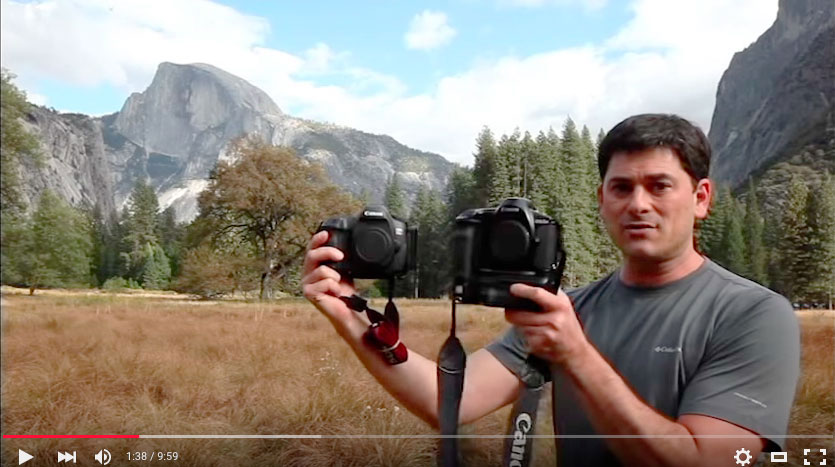
Photographer Jason P. Odell demonstrates how to set up Nikon DSLR cameras to use the AF-ON button technique for autofocusing. To read about this technique, visit: www.luminescentphoto.com