RSS
 

Posts Tagged ‘Water’

Ghost Rider: Disappearing Audi Billboard Made of Water Vapor

26 Mar

[ By Steph in Design & Guerilla Ads & Marketing. ]

audi water vapor 1

It’s a wonder nobody crashed their real cars doing a double-take at a glowing Audi that seems like an apparition, appearing in a fog and then disappearing just as quickly. German ad firm Thjnk came up with this ephemeral ad campaign for the hybrid-electric Audi A7 Sportback h-tron quattro to highlight the fact that nothing but water vapor comes out of its exhaust.

“We asked ourselves, where do you place ads for the most environmentally friendly and progressive engine Audi has ever built? Nowhere. So for the car that leaves nothing behind but vaporized water, we created ads that leave nothing behind but vaporized water.”

Audi Water Vapor 2

Though the agency doesn’t specify how the effect was achieved, it seems that an LED image is projected onto water vapor to get that ghostly look. The ads were placed in busy areas of big cities at night, flashing briefly and then vanishing.

audi water vapor ad 3

Check out 300+ other creative advertising campaigns, from guerrilla marketing to controversial ads using revolting imagery and graphic content to hawk hand soap, nose trimmers and other products and services.

Share on Facebook


[ By Steph in Design & Guerilla Ads & Marketing. ]

[ WebUrbanist | Archives | Galleries | Privacy | TOS ]


WebUrbanist

 
Comments Off on Ghost Rider: Disappearing Audi Billboard Made of Water Vapor

Posted in Creativity


Tokina to launch water dispersing filter coating and IR-cut ND range

26 Feb

Japanese optical manufacturer Tokina is showing a hydrophilic filter coating that forces water droplets to spread into a thin film so that they become invisible to the camera. The coating will allow photographers to carry on shooting when rain or spray on the lens would otherwise obstruct the optical path. Read more

Articles: Digital Photography Review (dpreview.com)

 
Comments Off on Tokina to launch water dispersing filter coating and IR-cut ND range

Posted in Uncategorized


7 Uncommon Tips for Winter Sunrise Photos Near Water

26 Feb

DPS3

There are few things in photography that people love more than dreamy sunrise shots full of bold oranges, big suns, washing waters, and burnt horizons. The dawn of a new day is a spiritually significant event as our past misdeeds of yesterday are forgotten under the promise of fresh beginnings. Sunrise also affords us some of the best light to work with in photography.

However, if you live near the coast and you plan to get up early to take some sunrise shots that involve you being in or around rocks on the water’s edge, there are some key things you must remember, especially in the cold, winter months.

1. Set the alarm earlier than you think.

This is stage one. You’ve calculated that the sun rises at 6:00 a.m., you want to get there by 5:30 to set up, it takes you 10 minutes to get there, so you set the alarm for 5:10. But be honest, it never works like this does it? The alarm goes off at 5:10, it’s cold, you’re snug in bed, it’s dark outside, you were in the midst of a dream, and you roll back over. Missed sunrise. How often do you ever jump straight out of bed at 5:10 to take photos, in the midst of winter? By learning this mistake, I set the alarm for 4:40 then give myself three hits on the snooze button to take me to 5:10. It never fails (unless it’s cloudy!!)

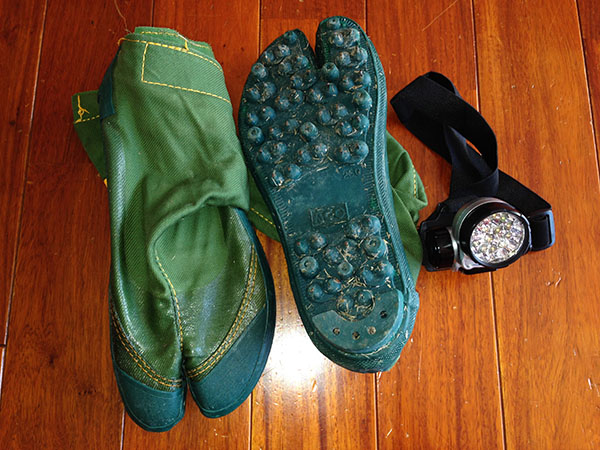
2. Make sure you have shoes with spikes on the bottom.

Think about it – you’re an avid photographer who has set up a kit to your liking with lenses, filters, batteries and your camera. You put it in your bag, put your shoes on, head to the wet, rocky location then bammo, you fall over on the freezing, slippery moss. Either you or your bag gets wet, and neither is a desired result. There’s nothing scarier than trying to keep your bag on your back and out of the water as you slip around the rocks on ill-equipped shoes.

I have fisherman’s boots that cost $ 40. They have small metal spikes on the sole, perfect for getting across the rocks, and for scurrying to new locations quickly. They’re waterproof too. Alternatively, you could try the little clamp-ons that hikers use in icy conditions. They work well too, but your shoes will get cold and wet.

3. Use a head torch (headlamp).

The first time I brought mine I felt utterly ridiculous, like I was a miner heading down into the pits. Now, I wouldn’t dream of not having one. The convenience of having both hands free to see where you’re going, to open and close your bag, and set your camera up in the dark is without comparison. Especially if you are trying to get filters and holders attached to the ends of lenses.
DPS5

4. Have at least two lens cloths and other lens cleaners or pens.

Imagine this scenario: you are changing your lens out on the rocks and you put your cleaning cloth down to free your hands. There is a little bit of residue on the rocks so when you pick up your cloth and started wiping the lens, it gets coated in a film of goo. You may be able to clean the lens with different parts of the cloth (depending on the type of rock goo!) but it will likely leave most of the cloth dirty. Therefore, you will be unable to clean other lenses later on when they inevitably get hit by sea-spray.

How can I picture such a scenario? Sadly, I have lived it, and there is nothing worse than getting up early to a prime location, only to have your single cleaning cloth ruined before your shooting appetite has been satisfied, leaving you unable to do anything with other lenses that need cleaning. Now I always carry at least three cleaning implements in my bag.

5. Study the tides.

Ideally, you should know exactly what you want to shoot, so you can frame the shot before you go and know where the water will be. This is not always possible, but at least you should know what the tide will be at sunrise. You might go somewhere the day before and see a perfect shot in your head, only to return at dawn the next day and find those beautiful rocks covered in two metres of water. There’s no point setting the alarm for 4:40am if the subject you want in your shot is submerged like a sunken ship.

DPS1

6. Know where the sun rises. This may seem ridiculous – east you say! Well yeah, the sun rises in the east, but exactly where on the horizon will it rise for you? The angle changes every day. I once woke at 4:00 a.m. to get a shot in at sunrise only to realize after setting up that even my Sigma 10-20mm couldn’t get the sun and subject in my frame. East isn’t just east. Know exactly where the sun rises on the horizon in order to frame the shot you want.

DPS2

7. Mittens not gloves.

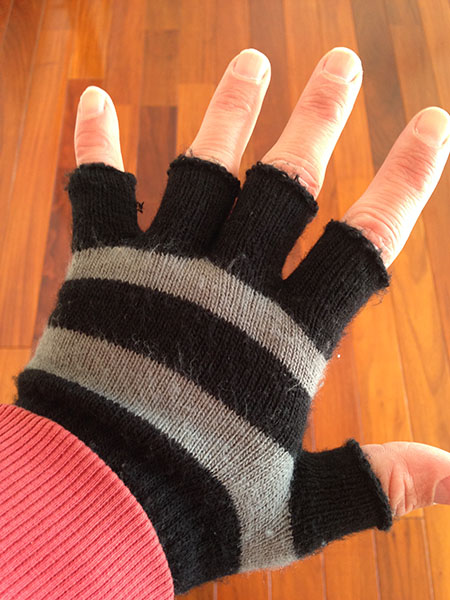
In the wintertime, near the coast, you need something to cover your hands. But not gloves. Mittens are those cute, little gloves that have all the tops of the fingers cut off. The very reason you need mittens is to keep the tips of your fingers free to play with the camera and to get everything set up. This is very difficult with padded, woolly gloves on. Also, don’t make the mistake of buying woollen gloves, then cutting the tops off yourself. This leaves threads hanging that get longer and longer every day, and more and more annoying.
DPS6

The joy of getting those early morning shots makes a perfect start to the day. Follow these tips and all you’ll have to worry about is framing that perfect shot.

googletag.cmd.push(function() {
tablet_slots.push( googletag.defineSlot( “/1005424/_dPSv4_tab-all-article-bottom_(300×250)”, [300, 250], “pb-ad-78623” ).addService( googletag.pubads() ) ); } );

googletag.cmd.push(function() {
mobile_slots.push( googletag.defineSlot( “/1005424/_dPSv4_mob-all-article-bottom_(300×250)”, [300, 250], “pb-ad-78158” ).addService( googletag.pubads() ) ); } );

The post 7 Uncommon Tips for Winter Sunrise Photos Near Water by Iain Stanley appeared first on Digital Photography School.


Digital Photography School

 
Comments Off on 7 Uncommon Tips for Winter Sunrise Photos Near Water

Posted in Photography


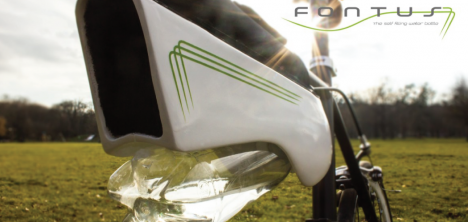
H2O to Go: Bike Bottle Makes Water from Thin Air as You Cycle

17 Nov

[ By WebUrbanist in Conceptual & Futuristic & Technology. ]

water bottle in situ

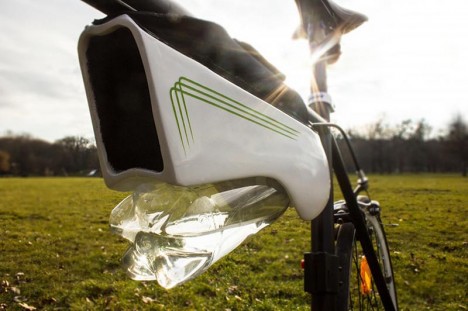
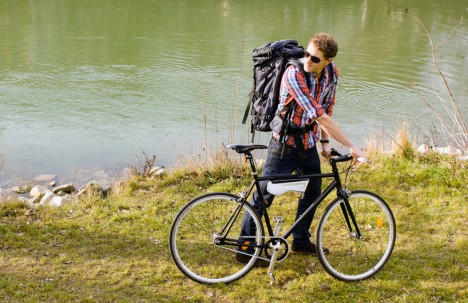
Using air flow and solar energy, this ingenious device creates up to 16 ounces (a half-liter) per hour of drinkable water via condensation as you ride, quenching your thirst just when and where you need it most: while cycling hard in hot and humid climates.

fontus bottle

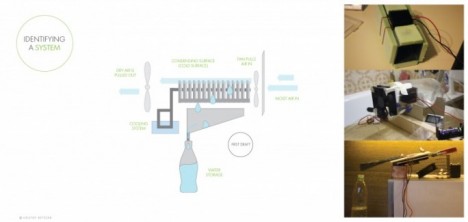
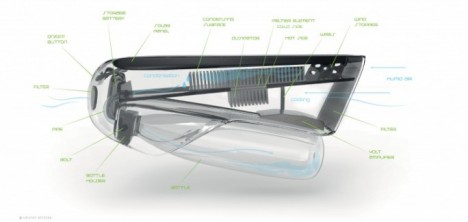
water bottle explanatory diagram

Austrian designer Kristof Retezár has submitted his work on this self-filling water bottle (dubbed Fontus) for award consideration to the James Dyson Foundation. His prototype and proposal cite potential benefits both to athletes but also more broadly to regions where obtaining potable water can be difficult (in many cases, these are also places where many travel by bicycle).

fontus water bottle design

water bottle humidity graph

The gadget itself attaches to the frames of bicycles and contains a slot where a standard-sized disposable water bottle can be attached, filled and detached when needed. Retezár experimented with various materials, systems and processes to make a working prototype in his own bathroom, testing under various temperatures and humidity conditions.

water bottle experimental stage

water bottle from air

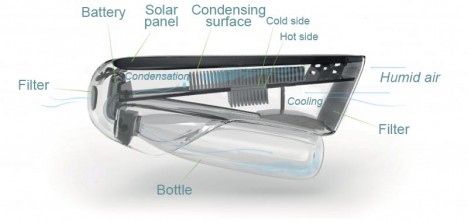
How does it work? “Basically, condensation occurs when you cool air to its saturation point. Fontus has a small internal cooler that is divided into two halves. A solar panel provides energy to cool the upper half of the condenser, a process that heats the lower half. When air flows past the heated lower half, it makes the top cool even further. Air moving through the chambers is slowed and cooled to condense moisture, which drips down into the bottle.”

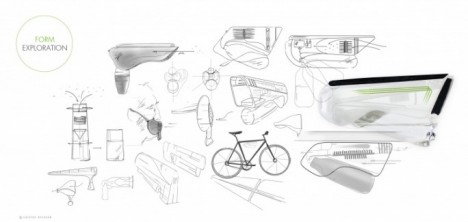
water bottle form design

water bottle design prototype

For now, it is a work in progress – whether this design hits mass-production without kinks or complications remains to be seen. The inspiration: “According to UN statistics, More than 2 billion people in more than 40 countries live in regions with water scarcity. In 2030, 47% of the world´s population will be living in areas of high water stress. Water scarcity may be the most underestimated resource issue facing the world today. Every measure to ease this upcoming crisis is a welcome one.”

water bottle modeling process

air condensed water bottle

“Harvesting water from the air is a method that has been practised for more than 2000 years in certain cultures mostly in Asia and Central America. The Earth’s atmosphere contains around 13.000 km3 of mostly unexploited freshwater. This project is an attempt to discover these resources. My goal was to create a small, compact and self-sufficient device able to absorb humid air, separate water molecules from air molecules and store water in liquid form in a bottle.”

Share on Facebook


[ By WebUrbanist in Conceptual & Futuristic & Technology. ]

[ WebUrbanist | Archives | Galleries | Privacy | TOS ]


WebUrbanist

 
Comments Off on H2O to Go: Bike Bottle Makes Water from Thin Air as You Cycle

Posted in Creativity


Riding the waves to smooth water images

15 Sep

Photos that feature milky-smooth flowing water seem to have a Marmite effect on people: they’re either loved or hated. I’m often rather ambivalent towards them, but it doesn’t mean that it isn’t a useful technique to have up your sleeve if you’re faced with a weir or waterfall and you want to capture an image with smooth-looking water that has a sense of flow to it.

Image thanks to Tom at Triggertrap

Image thanks to Tom at Triggertrap

There’s no great secret to shooting a photo that has water flowing through it that looks smooth: it’s done using a long exposure. The slow shutter speed captures the the water as it moves, making it blurred. The blur, in this instance, gives the water a smooth appearance.

Shooting long exposures in daylight hours comes with an inherent problem, however. Over-exposure. Our cameras’ sensors are capable of detecting far more light than we think they are, and even using the lowest possible ISO and smallest available aperture, a long exposure can result in an over-exposed photo when taking during the day. To get around this irritation, you might want to try a neutral density (ND) filter over your lens.

APL0719-1024x681

Image thanks to Tom at Triggertrap

ND filters are grey filters that cut down the amount of light that enters your lens without affecting the colour of your images. They come in different grades, or densities, blocking out between one stop and 12 stops of light. Screw one over your lens and you’ll give yourself a great deal more flexibility when it comes to shooting daytime long exposures.

Then of course you’ll need a tripod. You might want to capture the motion blur of the water, but you’ll want to avoid camera-shake and the rest of the scene getting the wobbles. Even though you’ll be using a very small aperture with an enormous depth-of-field, still think carefully about your framing of the shot and its point-of-focus. Make sure it’s telling a story.

Image thanks to Tom at Triggertrap

Image thanks to Tom at Triggertrap

Obviously you’ll need to have your camera in manual mode to ensure that you can adjust the shutter speed, ISO, and aperture to get the photo that you want. Almost certainly you will need to use the lowest ISO and smallest aperture avalable. When it comes to shutter speed, you might find that you need to venture into bulb mode to get the shutter speed you need. And we recommend that you use a remote shutter release to prevent jolting your camera on its tripod and shifting its focus, too.

Then it’s a case of hitting the cable release and leaving the camera to do its thing.


All images are courtesy of Triggertrap. You can learn more about using remote releases on the awesome Triggertrap How-to site!

This article was originally posted at Riding the waves to smooth water images , on Photocritic.

PLEASE NOTE — The contents of the Photocritic blog is strictly copyrighted, and this feed is for personal, non-commercial use only. The use of this feed on other websites is a copyright infringement, so you should only ever be able to read this text in a feed reader. Digital Fingerprint: d07805f964d211dfdfe227d609f7448f

Photocritic

 
Comments Off on Riding the waves to smooth water images

Posted in Photography


Memo Bottle: Slim Paper-Shaped Water Canteen for Laptop Bags

14 Sep

[ By WebUrbanist in Design & Products & Packaging. ]

memo mobile flat bottle

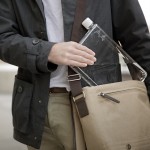
Rectangular, skinny and designed to fit in briefcases or computer bags, his is definitely a bottle with a message: it is time to make your preferred refreshment receptacle more mobile.

memo bottle various sizees

memo flat pack bottle design

memo bottle on table

A sleek portable solution for your potables, the memobottle comes in standardized paper sizes to fit your preferred carrying case alongside books or computers, including Letter, A4 and A5 in the initial run.

memo bottle to go

memo bottle hipster kit

memo bottle design prototype

Its creators come from dry places – Melbourne, Australia and San Diego, California – and have a mission in mind that involves more than mere convenience:  “Single use bottle consumption [results in] 1,500 plastic bottles being used and discarded every second in the US.” Further, “bottled water is about 1,400 times more expensive than tap water and often less regulated.”

memo bottle stands up

memo plastic dishwasher safe

memo water bottle

memo leak proof bottle

The memobottle is a dishwasher-friendly, long-life, BPA-free water bottle that uses plastic, which its makers claim is more environmentally friendly than aluminum or stainless steel. The design definitely has its fans, with the project already over-funded by 1000% on Kickstarter with nearly one month left to go.

Share on Facebook


[ By WebUrbanist in Design & Products & Packaging. ]

[ WebUrbanist | Archives | Galleries | Privacy | TOS ]


WebUrbanist

 
Comments Off on Memo Bottle: Slim Paper-Shaped Water Canteen for Laptop Bags

Posted in Creativity


Water Buses: New Nautical Transit Solution for Urban Islands

31 May

[ By WebUrbanist in Technology & Vehicles & Mods. ]

water bus rendering

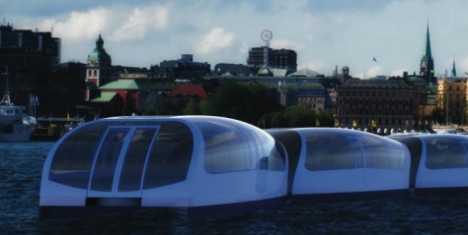
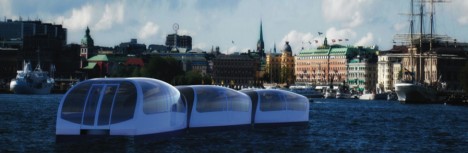
Fathoms beyond traditional boat taxis, this modular water bus proposal for Stockholm bridges critical gaps within the current public transit system while also making boarding faster and transfers easier.

water bus sketch idea

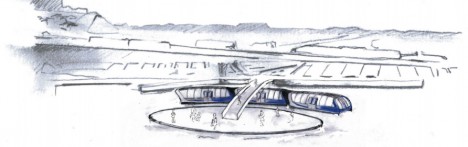
Developed by the KTH Royal Institute of Technology’s Department of Aeronautical and Vehicle Engineering, the Waterway 365 project fills in transportation voids, in part by taking the quickest and most direct routes possible across the water. Featuring wide back and side exits as well as, the solution is also bike-friendly for rapid boarding and disembarking. Adding versatility to the design, modular detachable sections make the approach more adaptable to different passenger volumes.

water bus flow diagram

These water buses are also designed to run year-round, operating through winter freezes. To save materials and energy, the designers eschewed steel reinforced hulls in favor of lighter metal. The resulting vehicles are structured to handle some ice but are ultimately to be paired with ice-breaking plow boats as needed in extreme conditions. Initially envisioned for the country’s biggest city, the idea is to deploy these to bridge other urban waterways around Sweden as well.

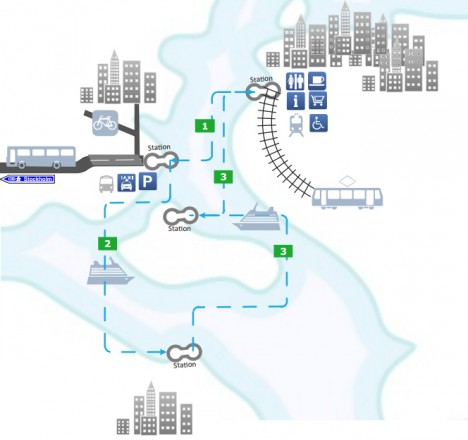
water bus route map

From the design study: “A city comprised of islands, Stockholm seems a natural for the concept of water transit. Door-to-door travel time on at least one typical trip across town, the study shows, could potentially be reduced by one-third.Connecting essential nodes, the idea is to reduce congestion as well as energy consumption in the long run.

water and land vehicles

nautical bus taxi design

water train horizontal

Water-based public transit already exists in many places, including the canals of Venice, but generally utilizes either flat-style ferries or streamlined boats. These approaches represent two extremes that this new water bus design aims to navigate between – the ease of getting on and off, on the one hand, versus speed and handling of the vehicle on the other.

Share on Facebook


[ By WebUrbanist in Technology & Vehicles & Mods. ]

[ WebUrbanist | Archives | Galleries | Privacy | TOS ]


WebUrbanist

 
Comments Off on Water Buses: New Nautical Transit Solution for Urban Islands

Posted in Creativity


Drinkable Book: Tear-Out Pages Filter, Clean & Purify Water

09 May

[ By WebUrbanist in Design & Products & Packaging. ]

drinkable book front pages

Each sheet from this life-saving tome can provide 30 days of drinkable water – all together, the entire volume is able make a total of 5,000 liters fit for human consumption (enough for four years).

drinkable book final design

The project, a collaboration between scientists, engineers and typographer Brian Gartside, was created for the non-profit WaterIsLife as both an educational tool and vital resource.

drinkable stacked book

drinkable volume front back

Coated in silver nanoparticles and written on with food-grade inks, the pages are able to actively kill off deadly diseases found in the water supply of developing countries. Straining out particles and reducing bacteria counts by over 99.99%, their filtering capabilities leave safe-to-consume potable liquid on par with American tap water.

filter book box

drinkable book page tear

Co-engineered by creators from Carnegie Mellon and the University of Virginia, the sheets are made to be torn out easily and inserted into a filter box, which doubles ingeniously as a storage and shipping container for the books as well.

drinkable book filter insertion

drinkable reservoir safe pour

Best of all, the book is cheap to produce and thus practical to manufacture and distribute in bulk to those in need. Including various tips teaching proper sanitation techniques and the dangers of dirty water, its messages of awareness are also translated into numerous languages to make it globally legible.

Share on Facebook


[ By WebUrbanist in Design & Products & Packaging. ]

[ WebUrbanist | Archives | Galleries | Privacy | TOS ]


WebUrbanist

 
Comments Off on Drinkable Book: Tear-Out Pages Filter, Clean & Purify Water

Posted in Creativity


Liters of Light: DIY Solar from Used Bottles, Bleach & Water

28 Mar

[ By WebUrbanist in Design & Products & Packaging. ]

liters of light roofs

Now setting its sights on a million homes, the organization behind this remarkably cheap approach to solar home lighting has already transformed the lives of thousands who were previously living in the dark.

liter of light roof

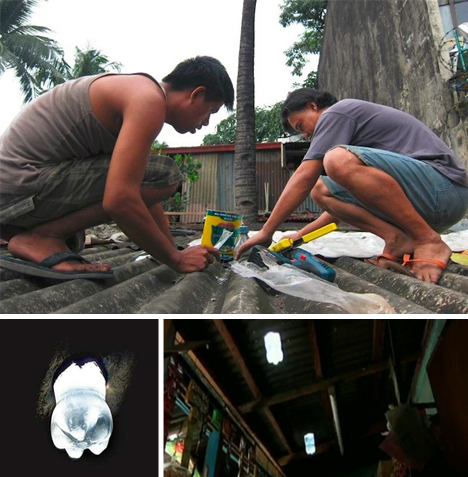
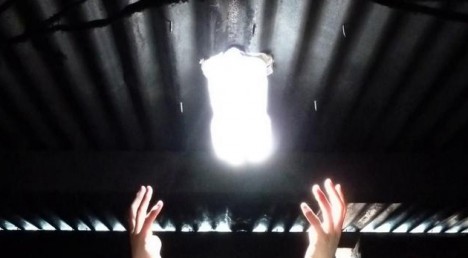
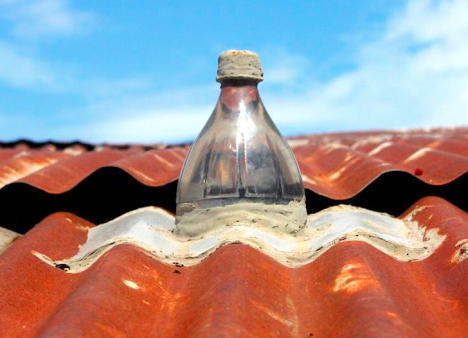
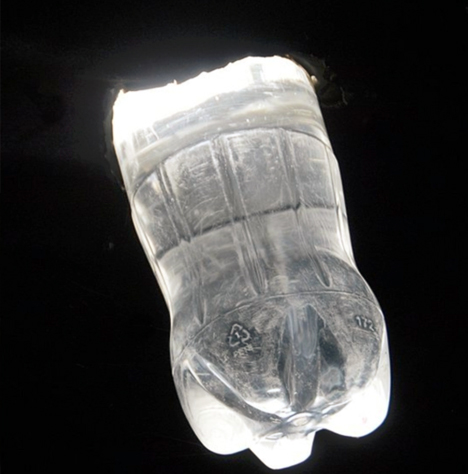
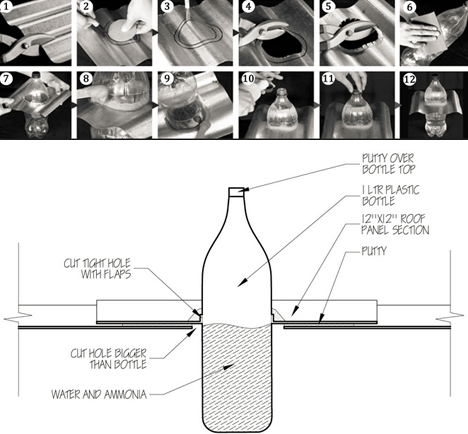
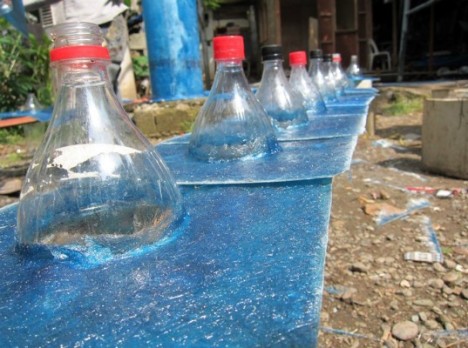
Installed in the metal roofs of windowless shacks, bottles of water help spread incoming light while the bleach keeps each bottle clean and clear, resulting in an output equivalent to that of a 60-watt bulb.

liter light project roof

These light bottles reduce the fire danger posed by poor electrical connections, cuts down on the cost of electric lighting and encourages recycling at the same time.

liter of light bottle

But a big part of the brilliance of the endeavor, pardon the pun, is in the simplicity of installation: effectively anyone can scavenge the major materials involved and teach others how to put them in place.

liter light construction steps

liters of light project installation

A Liter of Light grew out of an idea by Alfredo Moser from Brazil, enhanced by MIT students and aimed at addressing a problem facing millions in the Philippines: the absolute absence of natural light in their often-informal dwellings. Their latest goal is to raise funds to install these light bottles in homes across Manila.

Share on Facebook


[ By WebUrbanist in Design & Products & Packaging. ]

[ WebUrbanist | Archives | Galleries | Privacy | TOS ]


WebUrbanist

 
Comments Off on Liters of Light: DIY Solar from Used Bottles, Bleach & Water

Posted in Creativity


Walking on Water: Fun Non-Newtonian Fluid Experiment

11 Jan

[ By Steph in Gadgets & Geekery & Technology. ]

Walking on Water Experiment 1

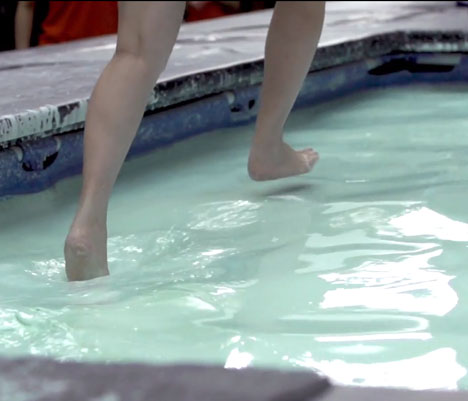
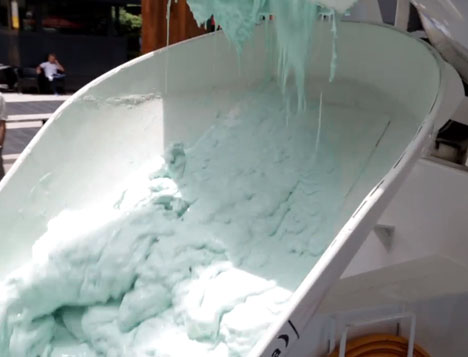
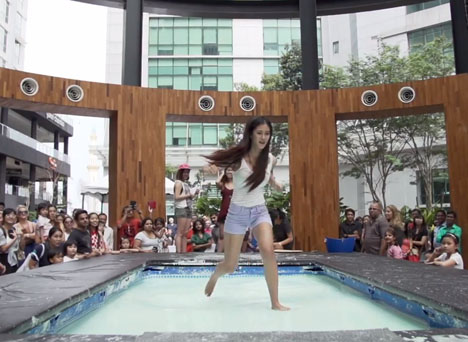
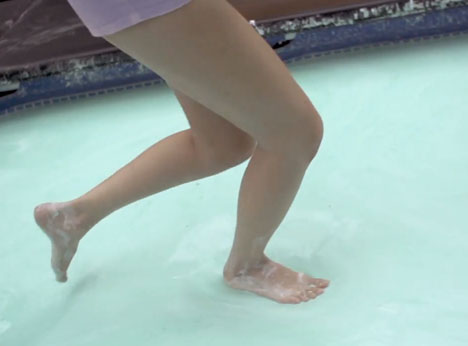
When you step into a pool of water, you fully expect your foot to fall right down to the bottom, unless you’re under the delusion that you’re the savior of mankind. But if that water has just the right mix of cornstarch in it, you’ll just sort of bounce along the surface. Film company WeAreKix teamed up with Mach by Hong Leon Bank to fill a pool with 8,000 liters of non-Newtonian fluid for an event that makes science fun.

Walking on Water Experiment 2

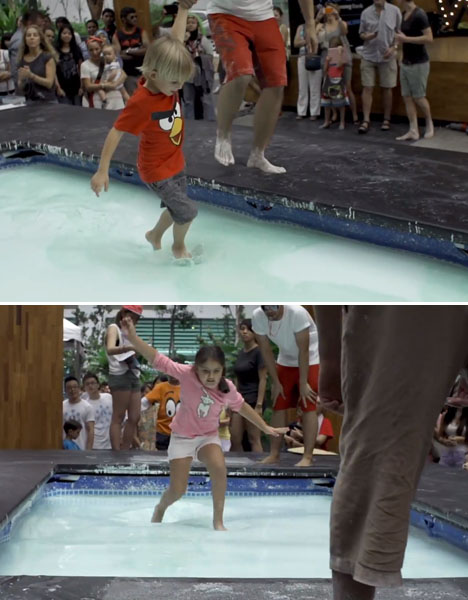
A slight blue tint to the fluid makes the illusion more complete; it really does look like a pool of cloudy water until you witness the surreal sight of someone trotting along the surface like it’s no big deal. Of course, you have to tread lightly and quickly, or you might actually break through and get sucked into the sticky fluid like the little kid in the video.

Walking on Water Experiment 4

Walking on Water Experiment 3

The event took place in Kuala Lumpur and offered a party-like environment to explore the science of non-Newtownian fluid. Visitors ran, jumped and even rode their bikes across the surface of the pool.

Walking on Water Experiment 6

Walking on Water Experiment 7

Mythbusters carried out a similar experiment, trying out all sorts of possibilities before settling on non-Newtowntian fluid made with 1,000 pounds of cornstarch.

Share on Facebook


[ By Steph in Gadgets & Geekery & Technology. ]

[ WebUrbanist | Archives | Galleries | Privacy | TOS ]


WebUrbanist

 
Comments Off on Walking on Water: Fun Non-Newtonian Fluid Experiment

Posted in Creativity