RSS
 

Posts Tagged ‘Wait’

Don’t wait for Holga – this battery-free Instax printer is already on the market

18 Oct

Toy manufacturer Tomy has announced the KiiPix, a battery-free smartphone printer that’s remarkably similar to the one Holga has been promoting through its Kickstarter campaign. The biggest difference between the two is that you can get the KiiPix today, rather than having to wait for a Kickstarter.

The KiiPix is designed very much like the Holga version, other than the pull-up bellows, and uses the same principles for copying the screen of your smartphone onto Fujifilm Instax Mini instant film.

To make a print, users are encouraged to turn up the brightness of their screen and place the smartphone face down on a frame supported by a fold-out stand. The shutter is tripped using a nearly identical side-lever mechanism as the Holga Printer, and a winding crank draws the film from the cassette through the exit slot to trigger development.

The only thing the KiipIx needs to print photos is a steady supply of Instax film. It collapses down to 135x55x175mm/5.3×2.1×6.88in to stow away easily in a bag for carrying around. The printer has been available since August, and retails for$ 40/£39. It comes in a range of colors depending on your region. For more information see the Tomy website.

PRINT PICTURES ANYTIME, ANYWHERE WITH KIIPIX

KiiPix from TOMY is the new and innovative smartphone printer that instantly prints your favourite photos straight from your smartphone to create lasting memories.

Unlike many instant cameras or photo-printing devices, KiiPix does not require batteries, an app or Wi-Fi to use; simply open up the device, place your smartphone on top, press the button and rotate the dial to print out your photo. KiiPix’s compact design means it’s easily portable so you are ready to print photos anytime, anywhere. It comes in three colours: cherry blossom, sky blue and jet black and at an affordable price point of £39.99 is guaranteed to appeal to the masses.

As the revival of retro inspired products becomes more prominent in both the fashion and technology industries, Kiipix is tipped to be the must-have lifestyle product for millennials, students and young women in 2018. From fashion, to gaming systems, to food, consumer trends show that nostalgic brands are resonating with millennials as they embrace old favourites.

There has been a huge surge in the popularity of instant photography in the last number of years as consumers turn to analogue camera equipment and discover the joy of print photography in this digital age. KiiPix combines both the new and the old, as users can capture and modify photos on their smartphones before instantly printing, retro style.

Kiipix will be supported with a strong digital and social media campaign, as well as being present at experiential consumer events; influencer marketing will also be central to the product launch.

KiiPix – SRP: £39.99
The innovative KiiPix device is light and compact, and collapses into a peggable closed box making it easily portable measuring at 135 mm x 55 mm x 175 mm. KiiPix comes in three colours, cherry blossom, sky blue and jet black. Available in August 2018. Suitable for 10 years plus.

All TOMY toys are cleverly designed to develop children’s core skills whilst they play. Manufactured to the highest standards, this collection of reliable toys continues to be a family favourite, building on the heritage and core values, which parents associate with TOMY. For more information on TOMY please visit www.tomy.com, become a fan at Facebook.com/tomy.toy.uk or follow us on @TomyToysUK.

Articles: Digital Photography Review (dpreview.com)

 
Comments Off on Don’t wait for Holga – this battery-free Instax printer is already on the market

Posted in Uncategorized


Report: iPhone users will have to wait until 2019 for a triple-camera device

09 May

If you want a smartphone with a triple-camera setup, Huawei’s P20 Pro is currently your only option. And vy the looks of it, this won’t change any time soon… at least not if you prefer to stick to Apple’s iPhone over Android devices. According to a report in the Taipei Times—which is citing a research note from Yuanta Securities analyst Jeff Pu—Apple is likely to launch a triple-camera iPhone model, but this won’t happen before the second half of 2019.

Like on the Huawei, the third lens would likely provide a 3x optical zoom, improving zoom quality over the current top-models’ 2x lenses. It’s also fair to assume the triple-camera will be reserved for a flagship device, likely a third generation iPhone X that could launch around September of next year if Apple sticks to its usual launch schedule.

This scenario is supported by another previous report by former KGI Securities analyst Ming-Chi Kuo, who ruled out any significant changes to Apple’s current dual-camera system on the iPhone X and 8 Plus for the 2018 models.

Articles: Digital Photography Review (dpreview.com)

 
Comments Off on Report: iPhone users will have to wait until 2019 for a triple-camera device

Posted in Uncategorized


The Wait: A beautiful ode to patience and wildlife photography

04 Jan

Michel D’Oultremont is one of the brightest rising stars in the world of wildlife photography, and that’s not just our opinion—at just 22-years-old, he was named ‘Rising Star’ by the Wildlife Photographer of the Year competition. His work very much speaks for itself, but his work ethic is what’s turned the most heads, thanks to this intense short film by Contra titled The Wait.

The Wait follows Michel on a trip to Romania, where he went searching for the ‘perfect’ photo of the bison recently reintroduced to the Carpathian mountains.

Throughout the film, Michel explains his evolution as a wildlife photographer: how he began by taking pictures that were very “documentary” style before backing away to allow more breathing room and compositional space between himself and the animals he was capturing.

“I tried to put more importance on the environment or the play of light, rather than the animal itself,” he explains in the video. “I’d prefer to take a picture of a common bird in a beautiful environment…” That’s how he captures photos like the ones he shared with DPReview below. Environmental shots that are about so much more than their primary subject; photos that show the scene as it was.

“I do not cheat in my pictures, no flash, no post-treatment after,” he told me over email. “I do not remove any items and add none.”

$ (document).ready(function() { SampleGalleryV2({“containerId”:”embeddedSampleGallery_4635490971″,”galleryId”:”4635490971″,”isEmbeddedWidget”:true,”selectedImageIndex”:0,”isMobile”:false}) });

But the short film is titled Wait, after all, so it doesn’t take long for Michel to arrive at his main subject. As he hunkers down for his week-long wait in the Carpathian mountains, he begins to speak of patience, one of the most challenging skills one must develop to capture powerful wildlife photography.

“Patience is one of the most important things to have. Without patience it’s not possible to see the animals,” he narrates. “If half an hour, an hour passes and you’re fed up and want to leave the hide, it’s just not going to work. Generally, you’ve got to be in place for [at least] a few hours to be forgotten by nature.”

For many of his shots, it often takes a week or a week and a half of waiting, watching, and learning the environment before he captures the photograph he’s after. Which is, in the end, about how long it took to finally capture the bison on camera:

To see the rest of the bison photos he captured while in the Carpathians, or if you’re just in need of inspiration this Thursday, definitely check out the full short film at the top. It’s one of the more poignant and accurate descriptions of the kind of love-of-nature and love-of-photography that it takes to stand out as a wildlife photographer these days.

And if you enjoy the film, be sure to visit Michel’s website, like his Facebook page, and give him a follow on Instagram for lots more.

Articles: Digital Photography Review (dpreview.com)

 
Comments Off on The Wait: A beautiful ode to patience and wildlife photography

Posted in Uncategorized


Worth the wait? A look inside the Pentax K-1

18 Feb

Announcing the K-1

Here it is – the long awaited full-frame Pentax. The K-1 is a solidly constructed camera that feels good in the hand, and should appeal to many photographers looking to step up from APS-C Pentax DSLRs, as well as those looking to use older K-mount glass on a full-frame format.

The body of the K-1 is constructed of a lightweight magnesium alloy, and has 87 seals around the body. Ricoh claims that the K-1 is dustproof, weather-resistant and cold-resistant.

Big viewfinder

Although most people are likely to buy a full-frame camera because they tend to offer better image quality than smaller sensor models, full frame DSLRs gain an operational benefit as a side effect. The larger mirror needed to cover the larger sensor means that more light is reflected up into the viewfinder, meaning it’s easier for a full-frame DSLR to have a large, bright viewfinder, compared to a smaller-sensor version.

The K-1’s viewfinder offers a ‘near 100%’ field of view at a pretty substantial 0.7x magnification. This isn’t the very largest available but it’s still very large and very bright, and will be a significant step up for any users of APS-C cameras. By way of comparison, the Pentax K-3 II’s 0.95x viewfinder is equivalent to 0.63x once you take crop factor into account.

Tilting cradle LCD

The K-1 features an unusual rear LCD arrangement. The panel itself is attached to a tilting cradle that itself is mounted on four legs that slide along a cross-shaped series of slots. As the legs slide out towards the outer points of this cross, the screen moves outwards from the back of the camera. Because the legs all move independently, the cradle can tilt slightly up/down and left/right, even before the LCD is tilted up or down.

The ribbon cable extending from the back of the camera to the LCD is enclosed in a rubber sleeve, so that the weather sealing extends to the rear screen.

LED lights

On the back of the LCD cradle are four small LED lamps that can be used to shed light on the camera’s rear controls. Ricoh says that compared to backlit buttons, this is a better way of providing illumination while maintaining the weather sealing of the buttons on the back of the camera. You do, of course, have to position the LCD in such a way that it the light from those LEDs reaches the controls.

Another LED sits below the viewfinder hump and lights up the lens mount to make it easier to swap lenses in the dark. Finally, there’s an LED fixed in the camera’s card bay that lights up both the card slots and the socket for remote control connection. The brightness of each of these lamps can be configured independently, so that only the area of illumination you want to operate have any effect when you press the lamp button on the top of the camera.

Multi Function Dial

One of the main areas on which the K-1’s controls differ from the well-liked K-3 series bodies is the addition of the Multi Function Dial. This adds a third command dial to the camera’s rear corner but one whose function can be changed simply by rotating a labelled dial just next to the viewfinder hump.

This means that an already customizable two-dial camera becomes a three dial camera whose behavior can be altered without digging into the camera’s menus. We suspect most people will leave the third dial set to ISO or Exposure Comp, most of the time, but it’s an interesting way of extending the degree of direct control and we’ll be interested to see how it ends up being used.

Autofocus module

The autofocus sensor, which Ricoh is calling SAFOX 12, has been updated. Thirty-three AF sensors, twenty-five of which are cross-type (and centrally located), cover a relatively small portion of the frame. The center point along with those directly above and below can focus down to -3EV, and are also ‘high precision’ (longer baseline), which means that when a F2.8 or faster lens is attached, focusing using these points leads to higher accuracy. This is particularly important when shoot faster primes with this camera: as we’ve seen on other brands’ DSLRs, 36 megapixels have a way of highlighting any slight focus imprecision. We’d expect users to have to do some focus fine-tuning to get the best from the K-1, and Ricoh offers a rudimentary AF microadjustment feature to do just that.

With the current ecosystem of Pentax lenses, we expect autofocus speeds to vary considerably based on lens (with older screw-driven lenses in particular likely to exhibit slower performance), but the good news is that the newest Pentax zoom lenses we’ve tried do appear to have significantly quicker AF motors.

Metering and continuous AF

Ricoh is also claiming a ‘Real-Time Scene Analysis System’ that utilizes the new PRIME IV engine and an 86,000-pixel RGB metering sensor for scene analysis using color, facial information, and movement to aid the camera’s metering and AF systems. Not only does this promise to increase accuracy of metering, it also allows the camera to automatically select the correct AF point to stay on your subject (subject tracking) when using continuous AF.

This isn’t new to Pentax – nor any recent Nikon or Canon DSLR with 3D tracking and iTR, respectively – but we’ve found performance to be lacking in previous bodies like the K-3. A brief play with a pre-production K-1 and the relatively fast-to-focus 15-30mm F2.8 in a non-test environment indicated that the system, while fairly accurate, was slow at tracking subjects across the frame. The AF points do move to stay on a moving subject, but do so sluggishly, which means it’ll be of limited utility with faster moving subjects. The limited AF coverage also means it’s unlikely fast-paced shooters will experience much success shooting this way, possibly falling back to relying on single point AF.

Pixel-shift to sample all colors

The K-1 includes an updated version of the Pixel-Shift Resolution mode introduced on the K-3 II. Like that camera, the K-1 takes four shots, shifting its sensor by one pixel between each shot. This means it captures red, green and blue information at every capture location, resulting in an image with full color information for every output pixel.

The latest implementation tries to cancel-out the effects of subject movement as its shooting the four images. Ricoh tells us not to expect it to cope with major changes, such as a car driving across the frame but that it should cope with leaves moving in the breeze.

As well as the more accurate color capture, the benefit of capturing four frames is that the noise performance is improved (because noise can be averaged-out between the frames). It should also mean higher dynamic range, which theoretically could improve up to 2 EV from sampling four images, possibly putting it in competition with the 645Z’s industry-leading Raw dynamic range.

AA-filter simulation

The K-1 also offers the anti-aliasing filter simulator feature that first appeared on the K-3. This vibrates the sensor during exposure just enough to blur the light across more than one pixel. This removes the risk of high frequency patterns clashing with the camera’s color filter, which otherwise results in false color and spurious patterns (aliases) appearing in images.

The camera offers two intensities of filter simulation and, because the sensor itself doesn’t have a physical AA filter, it can also offer an ‘Off’ mode. As on the K-3 II there’s also a filter bracketing option that lets you shoot consecutive images with different degrees of AA filter effect applied, so that you can use a filtered version of the shot if the unfiltered version exhibits moiré.

Astrotracer

The K-1 includes built-in GPS and an electromagnetic compass, giving it the kind of location awareness that you’d usually only expect from a smartphone. The camera uses this, in conjunction with its image stabilization system, to offer the Astrotracer feature that Pentax developed back in 2011. This uses the GPS to work out where the camera is and hence how much the Earth’s rotation will affect the apparent position of the stars overhead.

The camera can then shift and rotate its sensor during a long exposure to track the relative movement of the stars so that they appear as points, rather than trails, in the resulting image. Since this inevitably blurs static objects in the scene, it is most useful for creating low noise starscapes. Night time landscape photographers will also find this tool useful if they combine images with the Astrotracer on and off, using appropriate masking techniques. (Image courtesy of Pentax)

Lens-lineup: FA lenses

At the time of launch, Ricoh offers approximately 12 FA and DFA full-frame lenses. This list includes five FA primes, including the 31, 43 and 77mm ‘Limited’ series. On top of these there are five D FA zooms: a 15-30mm F2.8, 24-70mm F2.8 and 70-200mm F2.8, along with the newly-announced 28-150mm F3.5-5.6 and the 150-450mm F4.5-5.6. Finally, there are two D FA macro lenses: a 50mm and a 100mm.

In addition to these, the camera includes lens correction data for 14 out-of-production lenses – making clear how important backwards compatibility is to this camera.

Using crop lenses on K-1

The K-1 can, of course, still use the Pentax DA lenses designed for the company’s APS-C cameras. By default the camera will use a 15MP APS-C-sized crop of the sensor if a DA lens is mounted but can be made to use its full sensor region, if you’d prefer. Ricoh has published a list of those lenses (all of which are primes) that will produce relatively useable results in full frame mode, if the aperture is stopped down.

DA Prime Lens / Utility on K-1
DA 14mm Crop Mode Only DA 50mm F1.8 Stopped-down
DA 21mm Limited Crop Mode Only DA* 55mm F1.4 Stopped-down
DA 15 F4 Limited Crop Mode Only DA 70mm Limited Stopped-down
DA 35mm F2.4 Stopped-down DA* 200mm F2.8 SDM Fully Functional
DA 35mm F2.8 Macro Stopped-down DA* 300mm F4 SDM Fully Functional
DA 40mm Limited Stopped-down DA 560mm F5.6 Fully Functional
DA 40mm XS Stopped-down RC1.4X Crop Mode Only

Summary

It should be apparent to anyone that the K-1 is a very impressive-looking camera. While we doubt it’s going to be cutting-edge in every respect when it comes to performance, it offers a very solid looking set of specifications with some very clever and genuinely useful flourishes in a very solid looking body.

That in itself is likely to be enough to satisfy the patient Pentax lens owners who’ve been wanting a camera like this for so long. For those people not already committed to the system, there’s the appeal of the price. $ 1799 is an aggressive price for a camera of this caliber and should help extend its appeal beyond the system’s existing users.

Articles: Digital Photography Review (dpreview.com)

 
Comments Off on Worth the wait? A look inside the Pentax K-1

Posted in Uncategorized


4 Good Reasons Why You May Want to Wait to Share Client Photos

14 Dec

A few decades ago the Heinz company ran a series of commercials featuring people patiently waiting for their ketchup to be poured from glass bottles, each ending with the tagline, “The best things come to those who wait.” Even though these ads seem kind of silly now, they do have a lesson for photographers: sometimes it pays to be patient, especially when sharing photos with your clients.

Almost every time I return from a photo shoot, and start going through the pictures on my computer, I get caught up in the excitement and have a nearly unbearable urge to start sending pics, previews, and first-looks to my clients. I often can’t wait to share my work with them so they can see for themselves how things turned out. However, if you take the opposite approach and apply the brakes a bit, you and your clients will have a much more positive experience, and you will be better prepared for the long run and the rewards it brings. If you are the type of person who, like me, wants to send your clients a few sneak peeks or previews before you deliver your finished pictures, here’s a few reasons you might want to reconsider that practice.

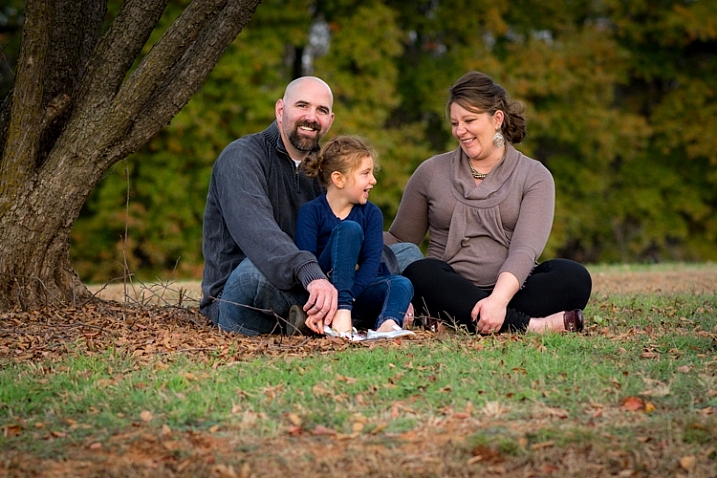
wait-to-share-photos-family-kids-park

1 – Put your best foot forward

Recently I spent an hour in the park taking pictures of a family, and as I was going through nearly a thousand images in Lightroom later that evening, I came across a few that I just had to share with the parents. They were so precious, and their little girl looked like she was having the time of her life, so I knew they would be thrilled to get a couple photos right away. I sent them to the mother’s mobile phone and she responded with ecstatic adulations, and a few minutes later the pictures showed up on Facebook where they immediately got dozens of likes and a handful of comments like “Great shot!” and “Lovely family!” So far so good, right? I mean, where’s the harm in sending a few pictures the evening after a photo session if that is the result?

My goal in sending a few initial photos was to give my clients a sneak peek (that’s literally what I said when I texted her: “Here’s a sneak peek from today’s session!”) which would whet her appetite for the rest of the photos, but in doing so I essentially ruined the surprise. It’s like sneaking a peek, to use the expression, beneath the wrapping paper a week before Christmas and getting a glimpse at your presents–it’s fun, but it makes the actual unwrapping a bit anticlimactic, since you already know what to expect.

Another problem with this approach is I found a few other pictures later on that were even better, but by then the surprise had worn off. Yes the clients were still thrilled to get their images, but by the time I had the official gallery all put together, with watermarked proofs for sharing on social media, the excitement had worn off and her friends were not as interested as they were initially. I basically sacrificed quality on the altar of immediacy, and in doing so hurt my brand just a tiny bit in the process.

wait-to-share-photos-family-tree

If I had simply waited until all the photos were finished and given my clients everything when I was truly ready to do so, I would have had much better results overall. Every photo would have been personally selected, properly edited, and appropriately watermarked for sharing on social media. My client’s photos would have looked better and so would my photography operation in general. This same scenario has repeated itself time and time again, and often my wife has to talk me down from the edge. I’m eager to share a few quick photos, but if I just wait a week or two until they are actually ready for sharing, the results are always better for everyone involved.

2 – Initial edits are usually not the final edits

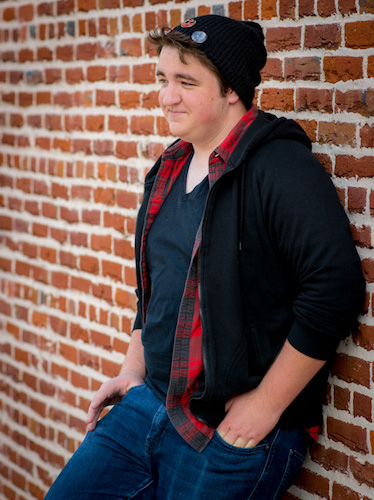
wait-to-share-photos-senior-brick-wallThis second lesson is more practical and less emotional, but it rings true for me every time. My initial edits to my pictures are almost never the same as my final edits, and thus rushing to share images right away inevitably leads me to getting an inferior product into the hands of my customers. My editing workflow in Lightroom looks something like this:

  1. Import all photos
  2. Apply custom portrait presets
  3. Pick out my favorites
  4. More editing
  5. Cut out more photos
  6. Edit again
  7. Cut down again
  8. Edit, tweak, enhance
  9. Export the best of the best for printing and sharing

If I share a preview of the session with my clients, it’s usually after step 4, or worse, step 3. (Which sadly has been known to happen more times than I care to admit.) That means I am giving my client, and everyone with whom they share those sneak peeks, images that are quantitatively inferior to what I am capable of producing. If you were baking a cake that you know needs 30 minutes in the oven, would you serve it after 25 minutes because you can’t wait for your guests to taste it? No way! You would serve it only when it’s done and give your friends the highest quality dessert possible as a result. We should give our photographs, and the people with whom they are shared, no less than the time they need to be the quality they deserve.

wait-to-share-photos-child-red-shirt

3 – People think things that take longer, are higher quality

Think for a moment about something special you have in your life: a physical object, a trinket or knicknack, or something with function or purpose like a bookshelf or cabinet. More likely than not, the things we hold dear, and to which we assign greater value, have one thing in common – they were constructed with care over time. Humans often assign greater significance to things that we know took a long time to create. Spelunkers gaze in awe at natural rock formations and crystals that were formed bit by bit, over millions of years. We pay more for wines that has been aged over time, even though they are often no better than their one-year-old counterparts. Rome itself, so the saying goes, was not built in a day. Why then are we, as photographers, so quick to share photos with our clients, if people expect that quality takes time?

I know how tempting it can be to want to share a few pictures right after you are done with a photo session. It hapens to me almost every time! It might get you some immediate accolades from your clients, but can be somewhat counterproductive in the long run. Early sharing can send the wrong signal to your clients, and their friends, about the quality of your pictures. Think about it from your clients’ perspective – would you feel good about spending $ 500 on a photo session if the photographer finished editing your images in one day, or would you rather know that he or she spent a week or two to get the colors, the cropping, and other edits just right?

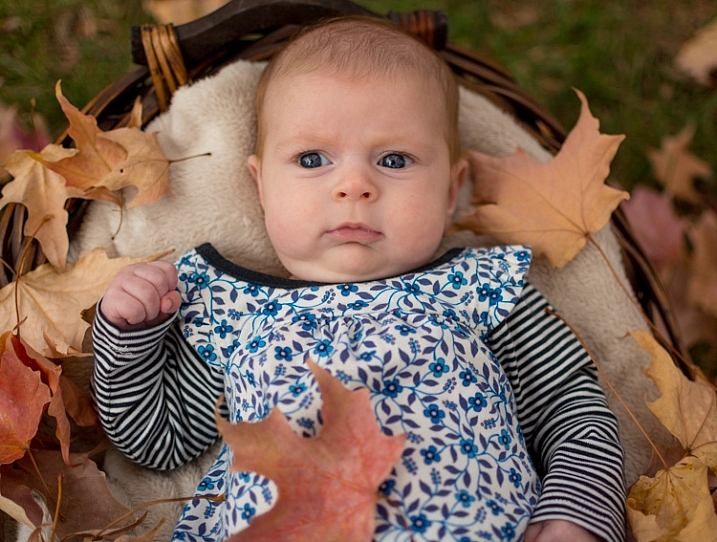
wait-to-share-photos-baby-basket

If your clients have to wait a week or two for their pictures they will assign a much greater value to them, because they know it took you longer to arrive at the final product. When I think about giving clients a preview or sneak peek, my wife, ever the voice of reason, usually pulls me back from the edge and reminds me that we’re only helping our business in the short term. That is not creating the type of high-quality perception we want people to have when they think about having us do their pictures.

4 – Sharing photos early cheapens your talent and skill

One of the nice things about the prevalence of smartphones is that everyone has a camera. Of course the downside to this is many people also consider themselves photographers, when they may not have all the training, experience, and skill that most of their professional counterparts possess. While I’m not one to judge, and far be it from me to say whose work has value and whose work does not, I do know that if you want people to spend money on your photography services, you need to give them a reason to do so.

Why should I pay someone $ 1500 to shoot my wedding if my friend says he can do it for half that with his new Canon Rebel and a kit lens? Why should I pay $ 300 for pictures of my kids when my sister can just use her  iPhone with its really nice camera? The reason is because you, as a photographer, are much more than just a person with a camera. People are paying you for your knowledge and skills, your ability to work with people and capture their emotions, and to create beauty and art with the press of a shutter button. You have experience shaped by years of trial and error. Sharing pictures within hours of taking them can send your clients a signal that your work is no different than anyone else with a halfway decent camera.

wait-to-share-photos-birthday-cake

It was so tempting to share this photo with the girl’s mother right away, but after a week I had taken more time to properly edit it to where it was much better than the original.

By carefully culling your photos from a session, taking time to edit them to perfection, and choosing only the best of the best to eventually give to your clients, you are sending a message that you might not be the fastest game in town, but you mean business, and do quality work. To use another food analogy, anyone can stop at a fast food burger joint and get a quick meal. For a quality top-notch hamburger you need a sit-down restaurant where your food takes a decent amount of time to prepare. Even if both establishments get their beef from the same distributor, the public perception of the latter will almost always be greater than the former, partly for the simple reason that you don’t get your food right away. The same holds true for photography – the best things come to those who wait.

wait-to-share-photos-baby-basket-park

Of course one obvious problem here is how long to wait. As a general rule I like to give my clients their images within two weeks, and often a bit sooner. Much more than that and they can get a bit annoyed, as you would also have a problem waiting two hours for a hamburger, no matter how tasty it was. Every photographer is different, and the length of time depends on many different variables, but as long as you set your clients’ expectations upfront you should be fine. You might even benefit from over-estimating the length of time it will take, and then delivering your pictures a bit sooner. This type of under-promising and over-delivering can go a long way towards building goodwill with your clients, and give them an even more positive impression of you and your work.

What about you? Do you like to share your photos online right away or take your time? I’m interested to hear your thoughts in the comments section below.

googletag.cmd.push(function() {
tablet_slots.push( googletag.defineSlot( “/1005424/_dPSv4_tab-all-article-bottom_(300×250)”, [300, 250], “pb-ad-78623” ).addService( googletag.pubads() ) ); } );

googletag.cmd.push(function() {
mobile_slots.push( googletag.defineSlot( “/1005424/_dPSv4_mob-all-article-bottom_(300×250)”, [300, 250], “pb-ad-78158” ).addService( googletag.pubads() ) ); } );

The post 4 Good Reasons Why You May Want to Wait to Share Client Photos by Simon Ringsmuth appeared first on Digital Photography School.


Digital Photography School

 
Comments Off on 4 Good Reasons Why You May Want to Wait to Share Client Photos

Posted in Photography


Wait for the Q: Leica Q First Impressions Review

10 Jun

Despite the naming similarity with Pentax’s tiny mirrorless cameras, the Leica Q, with a 24MP full-frame sensor and fixed 28mm F1.7 stabilized lens it’s not quite like anything we’ve seen before. It has all the good looks of an M-series rangefinder, adding modern features like a 3″ 1.04M dot touchscreen and built-in Wi-Fi. Our first impressions review takes an in-depth look Leica’s new enthusiast compact. Read more

Articles: Digital Photography Review (dpreview.com)

 
Comments Off on Wait for the Q: Leica Q First Impressions Review

Posted in Uncategorized


The wait is over: Canon EOS 7D Mark II First Impressions Review

15 Sep

Enthusiast photographers have been waiting in agony for a replacement to the Canon EOS 7D for five years. Their wishes have finally been granted – and in a big way – with the arrival of the EOS 7D Mark II. With a new sensor, improved AF system, faster image processor, and Full HD video, we think that it was worth the wait. For a lot more on the 7D II, read our detailed First Impressions Review.

Articles: Digital Photography Review (dpreview.com)

 
Comments Off on The wait is over: Canon EOS 7D Mark II First Impressions Review

Posted in Uncategorized


Wait! It’s Not What it Looks Like!

13 Sep

That's pretty much what I had to tell my wife, the first time she saw this baby in my basement.

And yeah, I do know what it looks like. Doesn't help that it has the words "Wizard Stick" printed on the other side of it, either.

But actually, this thing is a hand-held, AA-powered fog machine. Yeah it is…

Read more »
Strobist

 
Comments Off on Wait! It’s Not What it Looks Like!

Posted in Photography


loading please wait

12 Feb

faught him like 15 times, he tabbed everytime, then i get a loading screen.
Video Rating: 3 / 5