RSS
 

Posts Tagged ‘vertical’

Final Cut Pro X 10.4.9 adds ProRes Raw camera setting adjustments, improved vertical editing and more

26 Aug

Apple has released its latest update to Final Cut Pro X, bringing with it a number of new features, including the ability to finally adjust ProRes Raw camera settings.

Although it’s listed under ‘Other new features,’ one of the most welcomed additions in the update is the ability to adjust ProRes Raw camera settings, such as ISO, color temperature and exposure compensation in the new controls within the inspector.

These new options address what was a big hole in the ProRes Raw workflow with FCPX. We asked our own Jordan Drake of DPReview TV for his thoughts on these new additions and he had the following to say:

’Working with ProRes Raw was initially jarring, as it did not respond like other photographic or cinematic raw formats. White balance and ISO were not directly adjustable, and attempting to use the built in tools to simulate those adjustments often led poor colors or noisy shadows. This new update allows adjustments to white balance, exposure and ISO and will hopefully allow ProRes Raw to behave more like R3D Raw, or Apple’s primary competition Blackmagic BRaw. Camera manufacturers aside from Blackmagic seem to be moving towards ProRes Raw, so this added functionality will be a big benefit for many current and future cameras.’

Also new is an improved proxy workflow with the ability to generate proxy media in custom frame sizes (1/8, 1/4, 1/2, or full resolution), the ability to create proxies in either ProRes Proxy or H.264 and the ability to create a proxy-only copy of a library to reduce the size of a project.

It’s now easier to compose footage for use in vertical-preferred platforms, such as Snapchat, Instagram TV, TikTok and others.

Apple has also added a number of new social media tools within FCPX, including automated project transformation for square of vertical delivery via the new ‘Smart Conform’ tool, the ability to view footage outside the viewer boundary for easier composing in non-traditional formats, as well as custom overlays for guides and a new ‘Duplicate Project As’ option that works with the new ‘Smart Conform’ tool to make creating videos for multiple platforms easier.

For other minor feature updates and bug fixes, head on over to Apple’s changelog for FCP 10.4.9. The update should be available as a free update in the macOS App Store if you’ve already purchased FCPX.

Articles: Digital Photography Review (dpreview.com)

 
Comments Off on Final Cut Pro X 10.4.9 adds ProRes Raw camera setting adjustments, improved vertical editing and more

Posted in Uncategorized


Instagram unveils IGTV, a new standalone app for sharing hour-long vertical videos

21 Jun

Instagram has finally cleared the air regarding rumors and reports that the Facebook-owned social network was looking to get more heavily involved in video content. A new blog post on Instagram’s website confirms the impending release of Instagram TV, a new standalone app with a focus on long-form, vertical-first video content.

As detailed by Instagram in its announcement blog post, Instagram TV — IGTV for short — is different from the main Instagram app in a few ways. ‘First, it’s built for how you actually use your phone, so videos are full screen and vertical. Also, unlike on Instagram, videos aren’t limited to one minute. Instead, each video can be up to an hour long.’

When you download and log in to IGTV, you shouldn’t have to spend much time going out there and finding content from the get-go. Once you’ve logged into IGTV, any content creators you follow on Instagram will already be a part of your video content on IGTV. Akin to YouTube, IGTV calls each creator’s page a ‘channel,’ although the call to action remains ‘follow,’ unlike ‘subscribe’ on YouTube.

From the second you open IGTV on your device, video content will immediately start playing. Instagram compares this to how a television automatically starts playing content when you turn it on, but it’s more or less a fancy way of saying IGTV content is autoplay content.

To keep things familiar, IGTV makes it easy to keep tabs on your favorite creators and find new ones. As with the Instagram app, IGTV will feature a ‘For You,’ ‘Following’ and ‘Popular’ tab for navigation. There’s also a new ‘Continue Watching’ section for revisiting old videos you didn’t finish for whatever reason. You can also like, comment and share videos with friends via Instagram’s direct messaging system.

In addition to being a standalone app, IGTV content will also appear in the main Instagram app. It’s not known whether this cross-app integration will stay, as it seems to more or less to be an effort to get Instagram users onboard with the new app. Whatever the case, for the time being, you should be able to catch the latest content from the people you follow right within the Instagram app.

IGTV will be rolling out across the globe over the ‘next few weeks’ for both Android and iOS.

Articles: Digital Photography Review (dpreview.com)

 
Comments Off on Instagram unveils IGTV, a new standalone app for sharing hour-long vertical videos

Posted in Uncategorized


Horizontal or/and Vertical Format in Kayak Photography

17 Oct

Like most paddlers I have a tendency to shoot pictures in a horizontal (landscape) format. It is more tricky to shoot in a vertical format from my tippy kayaks, especially, when I have to use a paddle to stabilize my camera.
paddling with a camera

 
Comments Off on Horizontal or/and Vertical Format in Kayak Photography

Posted in Photography


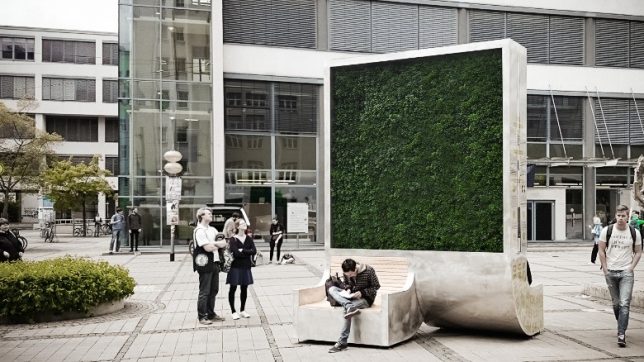
Compact CityTree: Vertical Micro-Garden Packs a Forest’s Worth of Green Benefits

17 Aug

[ By WebUrbanist in Architecture & Cities & Urbanism. ]

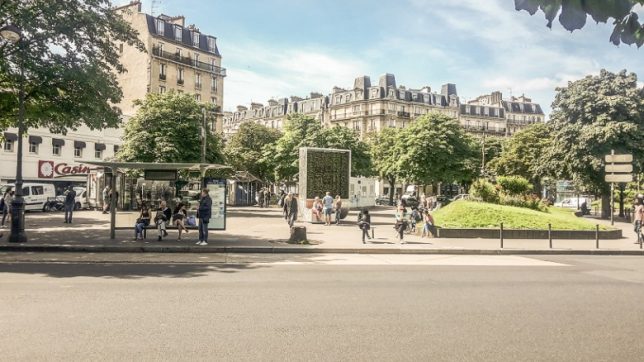
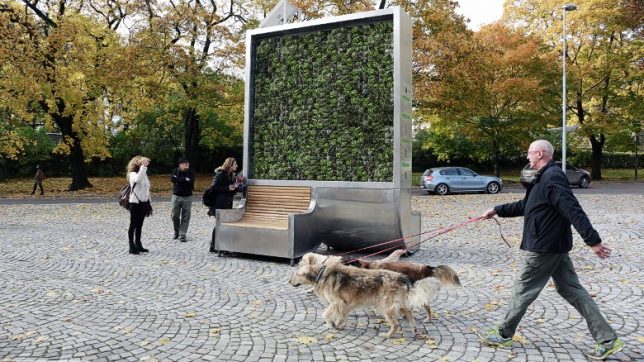
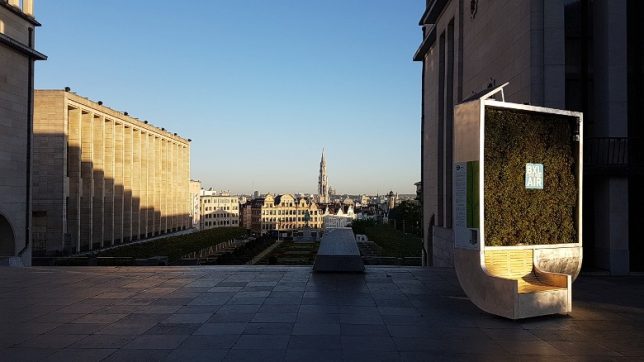
Packing the environmental impact of as many as 275 actual urban trees, these multi-functional CityTree units are dense and efficient fighters of urban air pollution (the single largest environmental health risk). Each CityTree can remove 240 metric tons of CO2 per year, as much as a small forest.

Developed by Green City Solutions in Berlin, the CityTree is covered in moss cultures — their high surface area ratios help remove dust and other airborne gasses and chemicals at a rate much higher than normal trees. Each unit has solar panels providing electricity and automated rainwater collection systems to store and distribute moisture as needed. Sensors help monitor soil humidity, temperature, water and air quality in and around each unit.

CityTrees have started sprouting in places like Paris, Brussels and Hong Kong, occupying a few square meters on city sidewalks while also (optionally) serving as public seating. Of course, air pollution is rarely evenly distributed in cities, so placement in high-traffic/emissions areas is also critical.

Developed by an architect and an engineer, the CityTree has been in the works for over a decade. “Our ultimate goal is to incorporate technology from the CityTree into existing buildings,” one of the designers told CNN. “We dream of creating a climate infrastructure so we can regulate what kind of air and also what kind of temperature we have in a city.” Beyond this compact and mobile application, lessons learned from monitoring and growing dense mosses on individual CityTree installations could also be applied on larger structural surfaces down the line.

Share on Facebook


[ By WebUrbanist in Architecture & Cities & Urbanism. ]

[ WebUrbanist | Archives | Galleries | Privacy | TOS ]


WebUrbanist

 
Comments Off on Compact CityTree: Vertical Micro-Garden Packs a Forest’s Worth of Green Benefits

Posted in Creativity


The Vertical ELPH: remembering Canon’s PowerShot TX1 hybrid camera

28 Jul

Buried among the February 2007 announcements of Canon’s PowerShot SD750 and SD1000 Digital ELPHs*, and the A560 and A570 IS was the PowerShot TX1. It took the main features of camcorders at the time, namely the vertical design, rotating display and long-ish lens and put them into a stylish body about the same size as your average Digital ELPH. Add in 720/30p video and it quickly became obvious that the TX1 was created to bridge the worlds of photo and video shooting.

* The SD750 was known as the IXUS 75 while the SD1000 was the IXUS 70 outside of North America.

Behind that metal door was an F3.5-5.6, 39-390mm equivalent lens.

The PowerShot TX1 was based around a 1/2.5″, 7.1MP CCD, which was paired with Canon’s DIGIC III processor. While the F3.5-5.6, 10X zoom lens was quite long for that day, it had a focal range of 39-390mm equivalent, so wide-angle work was out. The lens featured Canon’s excellent image stabilization system – a necessity when capturing video at long focal lengths. Keeping with the stylish look of the ELPH/IXUS lineup, the TX1’s lens hid itself behind a door when powered off.

The 1.8″, 114k-dot LCD could rotate a total of 270 degrees, fitting in perfectly with the TX1’s camcorder-like design.

Canon had to cram a lot of buttons into a small area on the diminutive TX1. The result was a camera with pretty lousy ergonomics. DPReview’s Simon Joinson sums up the TX1’s ergonomic issues nicely in this paragraph:

‘Sexy looks aside, in use the design is nothing short of a disaster, and has the unique ability to make you feel like you have too many fingers on your right hand. Once you’ve mastered not blocking the lens the challenge is to take a picture without jolting the camera, change settings without dropping it, or use it to take a vertically orientated picture at all. It’s better if you use two hands, but not a lot.’

Ouch. Something that came along with the small body was a small battery. The TX1’s CIPA rating of 160 shots per charge was probably the worst I’ve seen in almost 20 years of reviewing cameras.

The TX1 took SD and MMC cards, and you needed a big one to store more than a few minutes of video.

Ergonomics and battery life aside, the PowerShot TX1 took pretty nice photos. Its resolution was competitive with other 7MP cameras, distortion was relatively mild and its noise levels weren’t too bad at ISO 400 (going much higher than that on a compact was a bad idea). As with most compacts, the TX1 had some image quality shortcomings: clipped highlights, purple fringing and redeye were all problems, though the latter could be fixed in-camera.

For those hoping that the TX1 would be a camcorder replacement, it wasn’t. Its 1080/30p video is noticeably softer than what you’d get from an HD camcorder and the use of the Motion JPEG codec meant that each second of video took up 4.5MB on your memory card.

Photo courtesy of DCResource.com

The TX1 didn’t have an HDMI port (but what camera did then?) so if you wanted to hook into a nicer TV, it took a lot of cables. On the right in the photo above are component video cables, which take up one port on the camera. Naturally, you’d want to listen to the high quality stereo sound recorded by the TX1, which required a second cable: the composite one you see above-left. It ended up being quite the rat’s nest.

In the end, the Canon PowerShot TX1 generated a lengthy list of pros and cons and was the recipient of DPReview’s ‘Recommended (but only just)’ award.

Sample Gallery

$ (document).ready(function() { SampleGalleryV2({“containerId”:”embeddedSampleGallery_8656738448″,”galleryId”:”8656738448″,”isEmbeddedWidget”:true,”standalone”:false,”selectedImageIndex”:0,”startInCommentsView”:false,”isMobile”:false}) });


Did you actually have a PowerShot TX1 and want to share your memories? Leave ’em in the comments section below! As always, suggestions for future Throwback Thursdays can be left there, as well.

Articles: Digital Photography Review (dpreview.com)

 
Comments Off on The Vertical ELPH: remembering Canon’s PowerShot TX1 hybrid camera

Posted in Uncategorized


Pillars of Green: 85,000 Plants on World’s Largest Vertical Garden Facade

23 May

[ By WebUrbanist in Architecture & Houses & Residential. ]

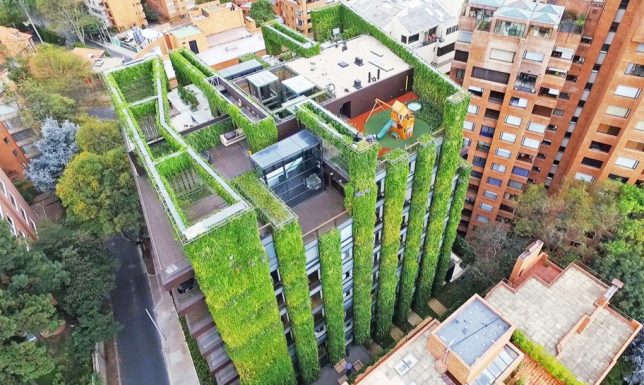
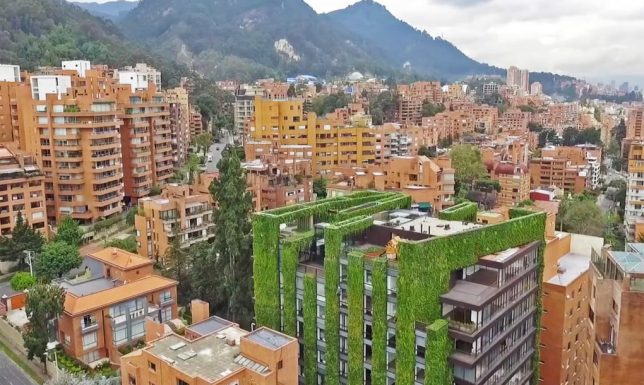
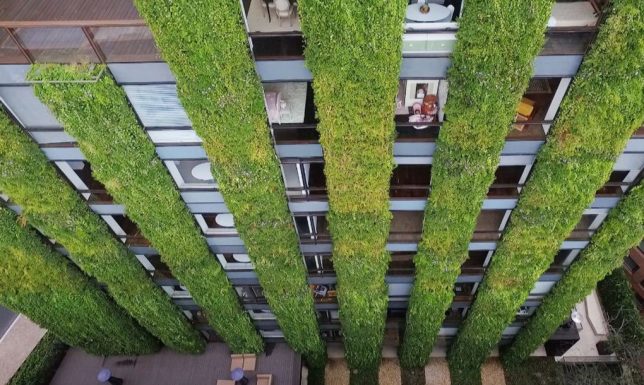
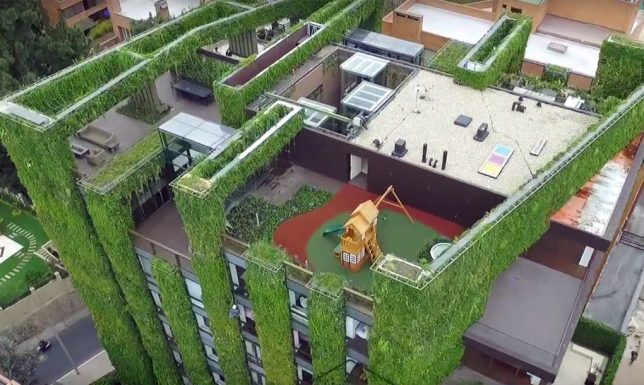
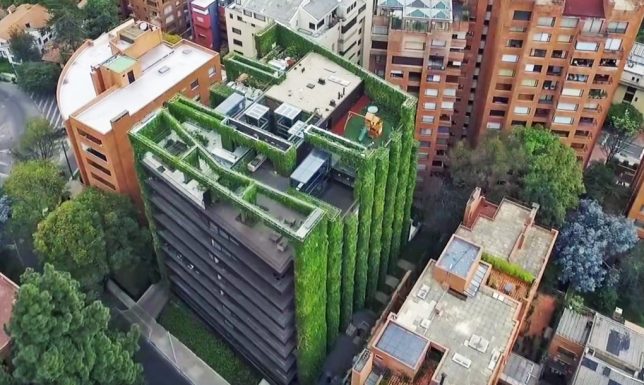
An extensive living facade system in Bogota, Columbia, represents growth in the right direction, away from unrealistic tree-covered skyscrapers toward more sustainable and useful vertical greenery.

The Santalaia building has plants spanning over 30,000 square meters of its surface area, able to produce oxygen for over 3,000 people annually (and filter tons of heavy metals, harmful gases and other airborne particulates). Paisajismo Urbano installed this specific system, developed by Ignacio Solano.

The recent trend (in renderings and to some extent reality) of putting trees onto tall towers is problematic from engineering and ecological standpoints. “Intensive” greenery requires thicker layers of soil and more complex systems for watering, maintenance and structural support. “Extensive” greenery, by contrast, provides many of the same benefits with lower cost and less wasted energy.

Many architects are naturally tempted to place trees on buildings, which do have a few functional advantages (like providing shade and making for nice-looking renderings). Still, building residents as well as the public would be better served in most cases by systems like this one. Even then, it is important to determine in advance what the goals and intended benefits are, since any green installation is complex and requires ongoing support.

Share on Facebook


[ By WebUrbanist in Architecture & Houses & Residential. ]

[ WebUrbanist | Archives | Galleries | Privacy | TOS ]


WebUrbanist

 
Comments Off on Pillars of Green: 85,000 Plants on World’s Largest Vertical Garden Facade

Posted in Creativity


Wash, Raise, Repeat: Vertical Top-Loading Dishwasher Saves Space

02 Jan

[ By WebUrbanist in Design & Fixtures & Interiors. ]

vertical-dishwasher

Dishwashers have become household items in many American homes but have changed little since their invention, leaving room for improvement (especially in cases where ‘room’ is an issue). Many of the small problems associated with the traditional design are not initially obvious until pointed out — we are simply too used to them.

vertical-top-loading-washer

Front-loading versions can take up considerable space while taking dishes in and out. We take for granted, for instance, that the loading and unloading processes often have to be dedicated, all-at-once tasks in kitchens where folded-down doors get in the way. Front-loader doors also represent a potential point of failure if their water seals are degraded or damaged.

future-dishwasher-design

Designers Moshen Jafari Malek and Behzad Taheri have decided to take a top-down approach, developing a top-loading variant that addresses leaks as well as space issues. Putting the spray bar in the center also eliminates another problem with certain conventional designs: getting things equally clean on all racks and levels. The designers also note that a variable-height center shelf could allow more versatility in terms of including larger pots and pans. At the same time, the vertical design avoids messing with what works: porous wire-frame shelves and side containers for silverware. It makes you wonder: what other ordinary appliances are just waiting for a simple but powerful redesign?

Share on Facebook


[ By WebUrbanist in Design & Fixtures & Interiors. ]

[ WebUrbanist | Archives | Galleries | Privacy | TOS ]


WebUrbanist

 
Comments Off on Wash, Raise, Repeat: Vertical Top-Loading Dishwasher Saves Space

Posted in Creativity


Apple rumored to work on 5-inch iPhone with vertical dual-cam

28 Dec

According to the Japanese blog Mac Okatara, Apple might introduce a new smartphone model in 2017 with a 5″ display to slot in between the existing 4.7″ and 5.5″ variants. The report, which originates from a Taiwanese supplier, also says the new mid-size iPhone would use an iPhone 7 Plus-like dual-camera, albeit with a vertical lens alignment rather than a horizontal one.

This rumor is in line with multiple other reports which have stated that in 2017 Apple will launch three rather than two new iPhone models. Alongside updated versions of the current models with 4.7″ and 5.5″ LCD displays, a new premium model with OLED display technology is expected. This device could also feature Apple’s dual-camera technology. 

As always, this kind of rumor is best taken with a pinch of salt but we were quite impressed with the iPhone 7 Plus dual-camera in our full review and would love to see the technology integrated into a smaller form factor. We should know more by September 2017.

Articles: Digital Photography Review (dpreview.com)

 
Comments Off on Apple rumored to work on 5-inch iPhone with vertical dual-cam

Posted in Uncategorized


Retail Micro-Farming: MIT & Target to Launch In-Store Vertical Farms

07 Nov

[ By WebUrbanist in Architecture & Offices & Commercial. ]

target-vertical-farms

At the convergence of the localvore and vertical farming movements, Target’s new in-store micro-farms are positioned to offer the freshest possible produce to consumers. On offer: leafy greens and herbs initially but eventually also potatoes, beets, zucchini, tomatoes peppers and more.

city-farm-design

In collaboration with the MIT Media Lab and IDEO, the company’s Food + Future CoLab will be testing their indoor production technology in stores around the country starting next spring. Target aims to leverage its scale to optimize their approach over time while also using their strategy to attract conscientious consumers.

vertical-farming-in-store

Among other advantages, local and in-store aquaponic setups require less water and no pesticides as compared to outdoor alternatives. Also, since stores are already temperature-controlled for food storage and customer consideration, heating and cooling are effectively taken care of without additional energy expenditures.

vertical-farm-store

Neither vertical farming nor close-to-source produce are new. Huge vertical farms have enjoyed success from Japan to New Jersey and rooftop farms often provide food for local communities or restaurants and hotels below. Still, like a similar project in Germany, this takes the idea to the next level, offering fresh organic crops alongside conventional ones right in a retail grocery shopping outlet. As populations continue to urbanize, demand for city-grown food (without the transportation costs and with appeal to local-oriented eaters) will only continue to grow.

Share on Facebook


[ By WebUrbanist in Architecture & Offices & Commercial. ]

[ WebUrbanist | Archives | Galleries | Privacy | TOS ]


WebUrbanist

 
Comments Off on Retail Micro-Farming: MIT & Target to Launch In-Store Vertical Farms

Posted in Creativity


How to Shoot Vertical Panoramas (Vertoramas)

01 Sep

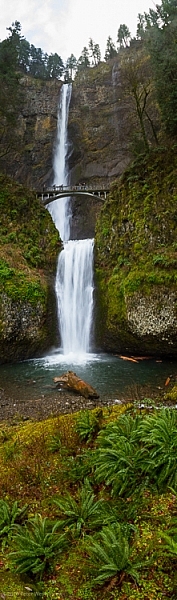
PWC-Oregon2012-0205-0684-PanoThe Eiffel Tower. The Statue of Liberty. Redwood trees. Not all the world fits into our horizontal frame of it. Some of it climbs up and up! For those images you need to learn a new technique; vertical panoramas, or vertoramas as they are known.

What are vertoramas?

A vertorama is simply a panorama, but shot vertically. It is for the tall things of the world, and uses much of the same techniques as a panorama, but with some important considerations I’ll touch on later in this article.

They are as simple as two shots combined to capture more foreground, or a chance to capture the tallest of the tall things on the planet without a wide-angle lens. They are a great option when you don’t have a super-wide angle lens, or you want to capture more detail than that wide angle lens will provide in one shot.

Picking the best subjects

Tall things are the obvious choice for making vertical panoramas, but also look at your normal images to see what can be included in the foreground.

For instance, this view of Mount Lassen in Lassen Volcanic National Park is pretty enough.
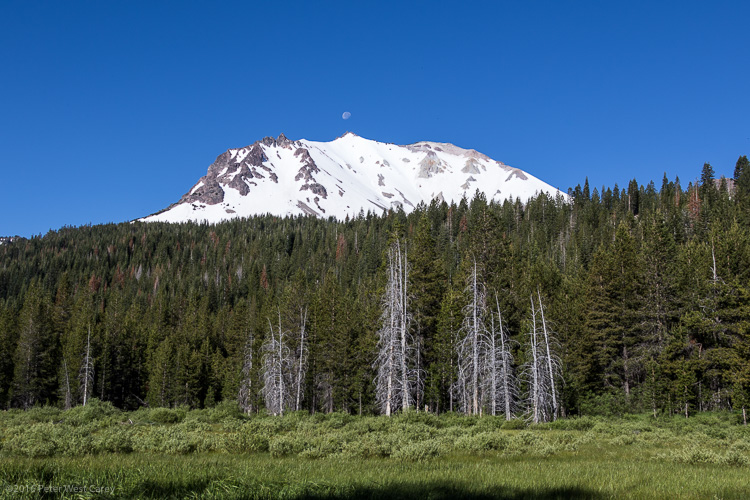
PWC-Travel2016-0624-8343

But what else is going on in the foreground? And not just the foreground, but the extreme foreground?
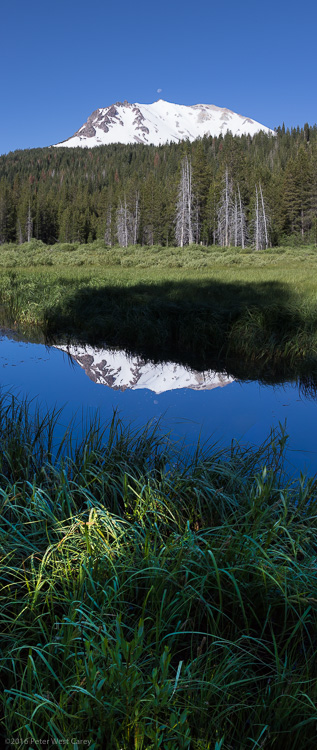
PWC-Travel2016-0624-8329-Pano

A Vertorama can take your normal landscape image and give it depth, like this image of Delicate Arch in Utah.

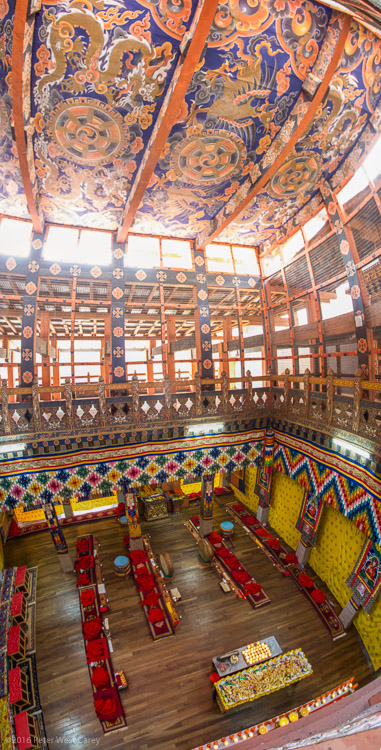
I pick subjects where my vantage point gives me something above and below a level view of the subject. This view of a temple in Bhutan is such a location, as I was on a balcony with subjects below and certainly above.
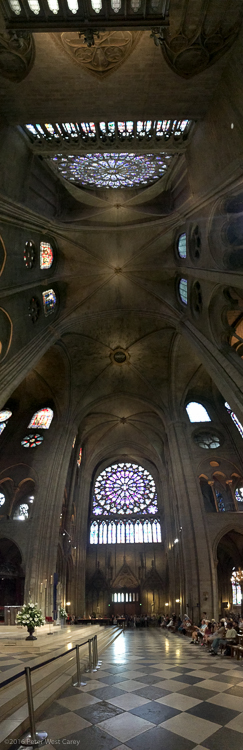
Vertoramas are also used to emphasize the enormity of an area. In this case I used my iPhone’s panorama mode, turned the phone sideways, and kept panning up and up, and then back over the top of my head (flexibility is a key with this format!) to show the grandeur of the structure. Shot inside the amazing Cathedral Notre-Dame de Paris.
PWC-France2015-083121-0711

Waterfalls, statues, buildings, trees, landscapes…they are all ripe for the format.

How to shoot vertoramas

Shooting vertoramas is not much different than shooting panoramas, but there are some important considerations. First, if you need help with panoramas, dPS writer Barry J Brady has a good article on them here: How to Shoot Panoramic Photos. The settings are the same for vertical panos, but you need to make sure you can pan all the way up with your subject, which is sometimes hard to do with a tripod.

Where it gets a little trickier is in the distance of your subject. This is fundamentally different than panoramas, because for the most part, panoramas have a roughly equal distance from the camera to all parts of the scene. Roughly.

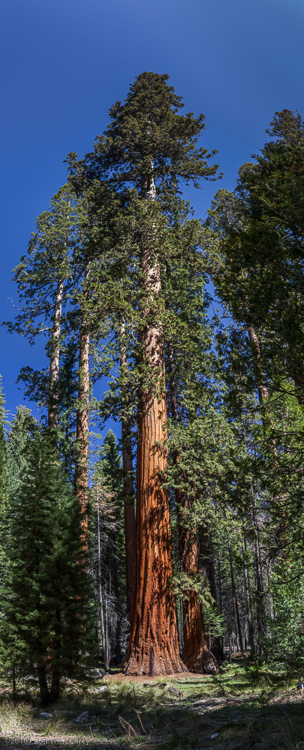
But a vertorama often has a subject leading away from it and this can cause distortion.Can you imagine the truck of this redwood tree being much closer than the 200 foot tall top?
PWC-Sequoia in Mariposa Grove

In which case, give yourself plenty of room at the bottom of the image as that will be your constriction point when you go to crop. I shoot landscape orientation (camera in horizontal position) for almost all of my vertoramas, in order to have enough space to crop.

Editing Options

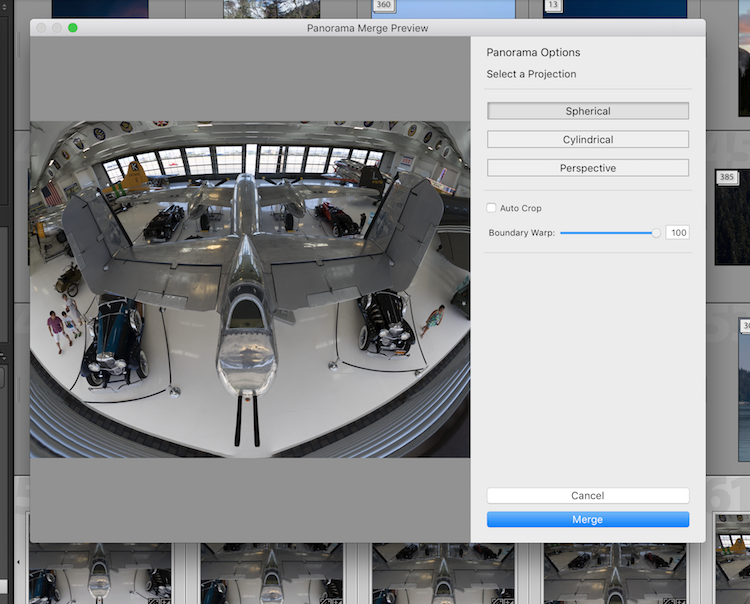
I find more and more that the PhotoMerge -> Panorama feature in Adobe Lightroom works just fine for vertoramas. So does the same feature in Photoshop proper, maybe 80% of the time. Where it comes up short is in the variety projections.
PWC-Vertorama-screenshot

If you are looking for a little more power, try AutoPano Giga by Kolor (now owned by GoPro). There are a number of projections that can help with vertoramas, including Hammer. Plus it has the fun Little World projection that helps make those funky, little world images.

Both programs are run just as they would be for a horizontal panorama.

Things to consider

Sometimes I look at vertoramas and I think they have no place in our digital world. When so much of what we view is on a horizontal screen, it’s hard to see their full beauty. You can turn your phone sideways, but you’re still missing the scale of the shot. Have you found yourself scrolling a lot in this article, and maybe not even seeing the whole images?
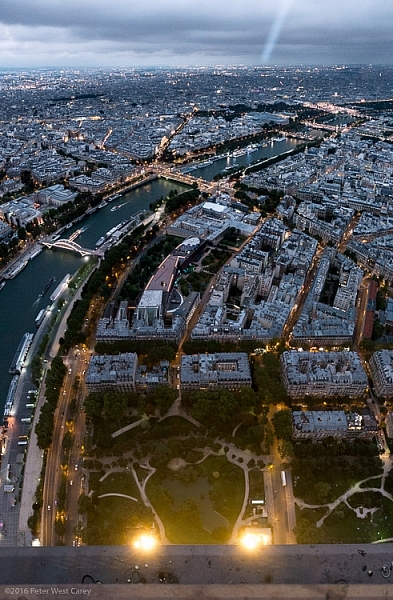
PWC-France2015-083117-0943-Pano

That being said, I love how vertoramas look when they are printed. Printing can be done at Costco, Walgreens or any place that prints panoramas.

Vertoramas can be trickier to shoot than a regular panorama as your tripod doesn’t typically pan up and down as smoothly as side to side. I suggest getting more acquainted with shooting these images handheld. It’s not hard to do.

Also, use your smartphone camera. That panorama mode works perfectly fine when you pan the camera skyward. Most newer phones even realize you made a vertorama and flip the image so it looks proper.

Lastly, vertoramas don’t all need to be skinny and tall. They are also used to create a more formal aspect, even a nice square, of a subject hard to capture in a single frame. This image of Central Park in New York is an example as it was shot with a 50mm lens on a crop sensor camera, far from being wide angle. But the result is a nice, wide image that gives more depth to the scene. See also: 5 Steps to Rock the Brenizer Method.
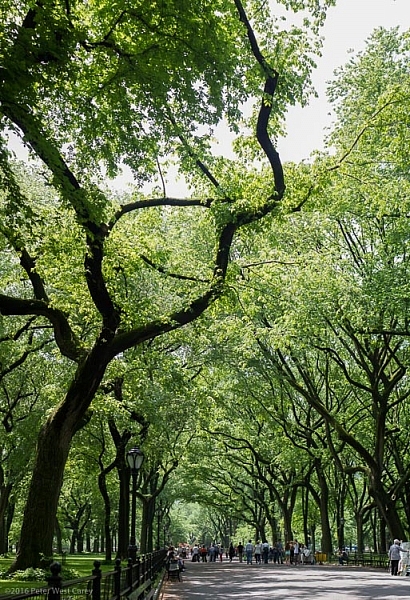
A vertical panorama of trees and tourists in Central Park, New York City, New York, USA

A vertical panorama of trees and tourists in Central Park, New York City, New York, USA

Conclusion

Vertoramas are a fun way to explore the world. They stretch our normal view, and force us to think creatively to capture what we are after. I personally love the format for what the extra foreground can bring to the story.

If you’ve shot vertoramas before, what are some of your favorite subjects? Any other advice you might give to beginners? Please share in the comments below, along with your vertical panorama images.

googletag.cmd.push(function() {
tablet_slots.push( googletag.defineSlot( “/1005424/_dPSv4_tab-all-article-bottom_(300×250)”, [300, 250], “pb-ad-78623” ).addService( googletag.pubads() ) ); } );

googletag.cmd.push(function() {
mobile_slots.push( googletag.defineSlot( “/1005424/_dPSv4_mob-all-article-bottom_(300×250)”, [300, 250], “pb-ad-78158” ).addService( googletag.pubads() ) ); } );

The post How to Shoot Vertical Panoramas (Vertoramas) by Peter West Carey appeared first on Digital Photography School.


Digital Photography School

 
Comments Off on How to Shoot Vertical Panoramas (Vertoramas)

Posted in Photography