RSS
 

Posts Tagged ‘Urban’

Skinned Buildings: Latex Casts of Derelict Urban Surfaces

05 Nov

[ By Steph in Art & Installation & Sound. ]

Skinned Buildings Latex 1

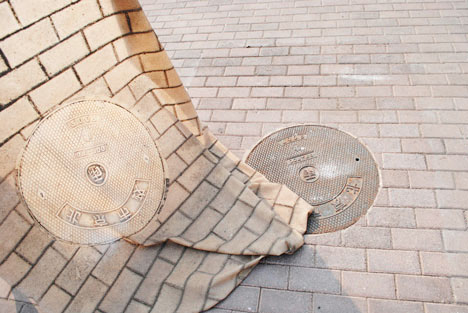
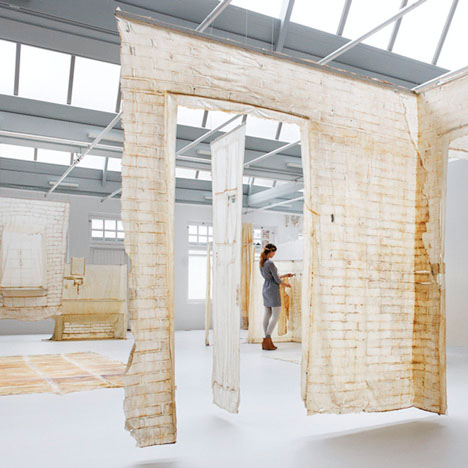
Draped like the macabre souvenirs of a serial killer, ghostly skins of old buildings billow on clotheslines, bearing the grime of the surfaces from which they were cast. Amsterdam design studio KNOL Ontwerp preserves the memory of cobblestone streets, brick walls, fireplaces and doors by coating them in latex to create a tactile impression of their surfaces.

Skinned Buildings Latex 2

Skinned Buildings Latex 3

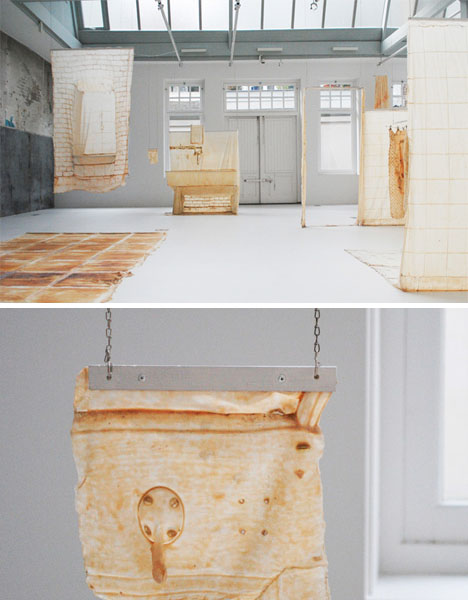
Installed at the Sandberg Institute of Amsterdam, ‘Skinned’ has these castings hanging like funeral shrouds from the gallery ceiling. The latex is fittingly translucent, almost immaterial, adding to the sense that each piece is just the faintest echo of the solid object from which it was taken. Most of the skins come from vacant buildings around Amsterdam.

Skinned Buildings Latex 4

Not only is the exact texture and shape of the original structure captured in great detail, but also some of the dirt. The designers made no effort to clean up any of the surfaces they cast, so when they peeled away the latex, a little bit of the structure’s history came off with it.

Skinned Buildings Latex 5

Skinned Buildings 6

“Like skin transplantations they can be taken to other spaces where they get a new spatial meaning. They take us to a wold in which places are no longer fixed to specific locations, but become nomadic or ‘liquid.’ When the skins are drawn out of their original context and are brought to a new one, their character changes. The impact on for example an abandoned office building is remarkable.”

Share on Facebook


[ By Steph in Art & Installation & Sound. ]

[ WebUrbanist | Archives | Galleries | Privacy | TOS ]


WebUrbanist

 
Comments Off on Skinned Buildings: Latex Casts of Derelict Urban Surfaces

Posted in Creativity


Invisible Skyway: Urban Optical Illusions Conceal & Distort

30 Oct

[ By WebUrbanist in Art & Street Art & Graffiti. ]

illusion artist bridge

New Zealand artist, illusionist and urbanist Mark Hewson has a good many tricks up his sleeve involving spatial deception, convincing citizens there is less (or more) to their city than can ordinarily be seen.

illusion fake sky bridge

His first trick in this series: disguising an ordinary street-crossing skyway from a series of key vantage points. But even from alternate angles where the lines do not sync up, the effect is dizzying. Our pattern-seeking brains keep looking for transparency or reflection where there is just a solid painting.

optical urban illusion art

Other illusions in his repertoire involve mirroring or warping unseen elements behind solid surfaces or sheets of material. Again, this toying with voids and our structural expectations induces odd forms of visual vertigo.

optical trick magic photois

In previous projects, like the Lost Space Installation, he has worked with gaps and openings, filling them in with imaginary scenes that range from plausible to impossible. While these may be more obviously fake on the surface, they create a nonetheless potent sense of spatial distortion and disorientation.

Share on Facebook


[ By WebUrbanist in Art & Street Art & Graffiti. ]

[ WebUrbanist | Archives | Galleries | Privacy | TOS ]


WebUrbanist

 
Comments Off on Invisible Skyway: Urban Optical Illusions Conceal & Distort

Posted in Creativity


Urban Niche: Townhouse & Courtyard Fill Thin Lot in Hanoi

21 Oct

[ By WebUrbanist in Architecture & Houses & Residential. ]

niche urban house hanoi

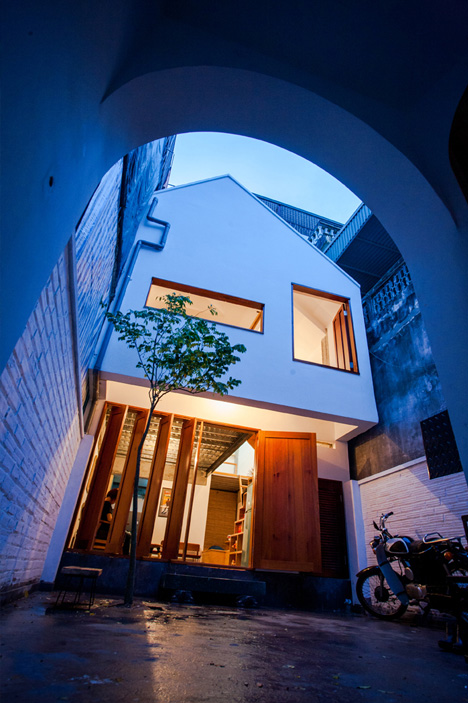
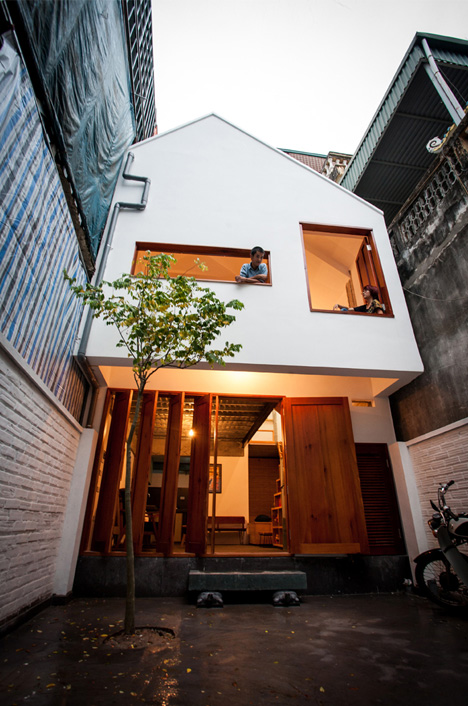
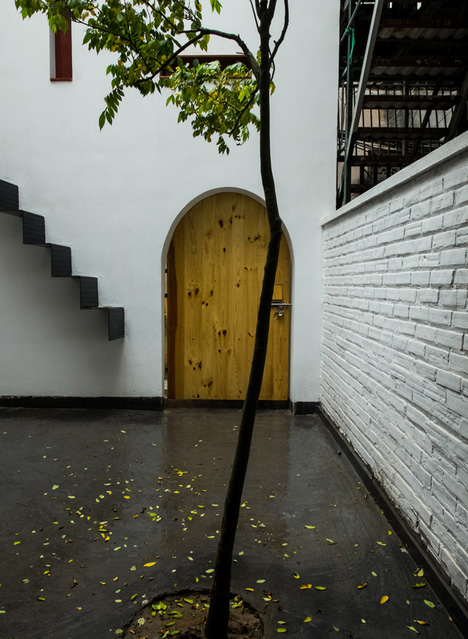
In some situations there is simply no way to add windows to the side of a home – this design rises to the challenge, stretching and reshaping a small urban lot to fit a cozy and low-cost solution in the capital of Vietnam.

niche exterior entry details

niche finishes wood concrete

With a limited budget (around $ 15,000), the client (a musician with a family) sought a space that would feel cozy and private, yet open and close to nature … all difficult propositions to reconcile in a house touching walls with both its residential neighbors.

niche courtyard home design

niche house floor plans

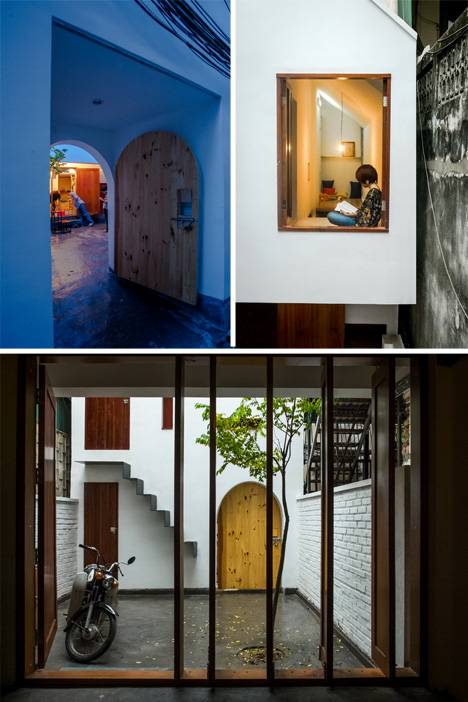
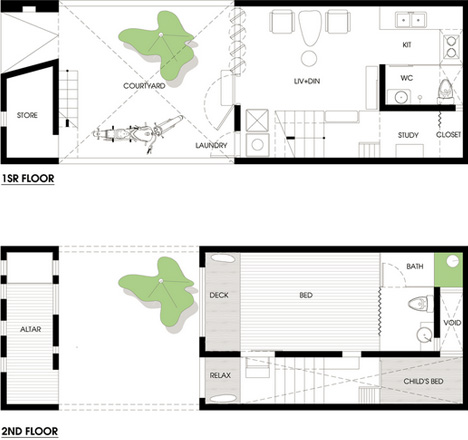
The main structure, designed by Adrei-Studio Architecture, was set back from the street to create an open courtyard between a small entry volume and the primary residence.

niche home room details

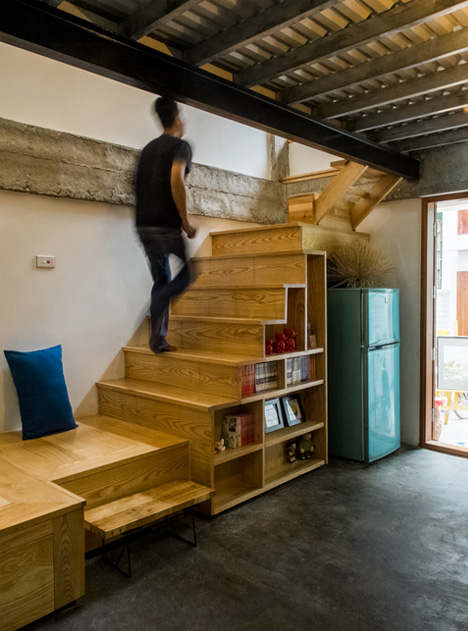
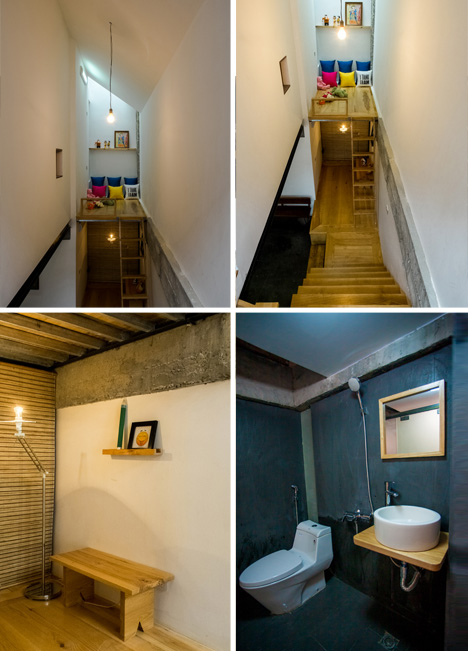
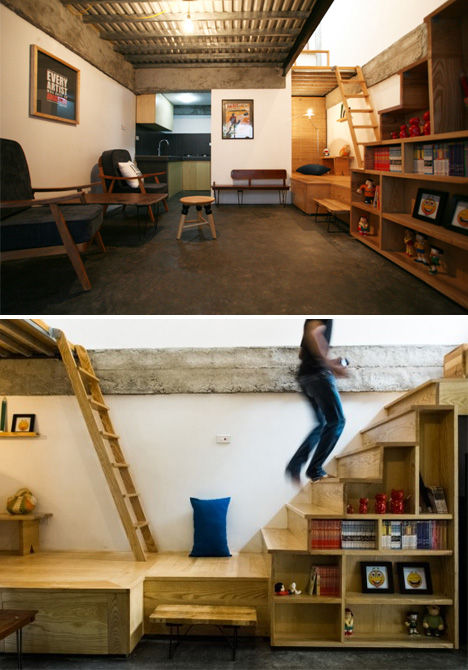
Asymmetrical elements create a sense of movement as one circulates the site, while traditional Vietnamese detailing and warm materials make it feel like a home. Window seats, platform lofts, under-stair storage and other small touches are found throughout.

niche home exterior space

niche main living room

Those seemingly minor touches, in fact, are what make the project: little moves that together go a long way toward creating a sense of place, including various niches, nooks, crooks and crannies created to enliven the interior and connect back to the exterior as well.

Share on Facebook


[ By WebUrbanist in Architecture & Houses & Residential. ]

[ WebUrbanist | Archives | Galleries | Privacy | TOS ]


WebUrbanist

 
Comments Off on Urban Niche: Townhouse & Courtyard Fill Thin Lot in Hanoi

Posted in Creativity


Converted Clock Tower: Ultimate Urban Loft with a View

11 Oct

[ By Steph in Architecture & Houses & Residential. ]

Converted Clocktower Penthouse 1

At the top of a former cardboard box factory built in 1915, within a clock tower overlooking Brooklyn and Manhattan, is one of New York City’s most remarkable residences. The pinnacle of the Clocktower Building is a three-story penthouse measuring over 6,800 feet, with four 14-foot glass clocks – one on every wall of the top floor.

Converted Clocktower Penthouse 2

Converted CLocktower Penthouse 3

The clocks offer massive, unparalleled views of the city in all directions. Additional windows provide a look at the Manhattan Bridge to the Statue of Liberty from a soaking tub. Or, simply go on the sky roof cabana and enjoy it in the open air.

Converted Clocktower Penthouse 4

Converted Clocktower Penthouse 5

Transformed from its industrial past, the penthouse features a ceiling that extends from 16 to 50 feet in height, as well as a glass-enclosed, three-story elevator running up the center of the space. It entered the market in 2009 for $ 25 million – the most expensive apartment on record in Brooklyn by far – and has now been lowered to $ 18 million.

Converted Clocktower Penthouse 6

Converted Clocktower Penthouse 7

For a while, as it went unsold, the clock tower penthouse was put up for rent for a mere $ 50,000 per month. It’s also been offered up for various special events while it sits on the market, including a dinner for Esquire Magazine.

Share on Facebook


[ By Steph in Architecture & Houses & Residential. ]

[ WebUrbanist | Archives | Galleries | Privacy | TOS ]


WebUrbanist

 
Comments Off on Converted Clock Tower: Ultimate Urban Loft with a View

Posted in Creativity


Converted Clock Tower: Ultimate Urban Loft with a View

09 Oct

[ By Steph in Architecture & Houses & Residential. ]

Converted Clocktower Penthouse 1

At the top of a former cardboard box factory built in 1915, within a clock tower overlooking Brooklyn and Manhattan, is one of New York City’s most remarkable residences. The pinnacle of the Clocktower Building is a three-story penthouse measuring over 6,800 feet, with four 14-foot glass clocks – one on every wall of the top floor.

Converted Clocktower Penthouse 2

Converted CLocktower Penthouse 3

The clocks offer massive, unparalleled views of the city in all directions. Additional windows provide a look at the Manhattan Bridge to the Statue of Liberty from a soaking tub. Or, simply go on the sky roof cabana and enjoy it in the open air.

Converted Clocktower Penthouse 4

Converted Clocktower Penthouse 5

Transformed from its industrial past, the penthouse features a ceiling that extends from 16 to 50 feet in height, as well as a glass-enclosed, three-story elevator running up the center of the space. It entered the market in 2009 for $ 25 million – the most expensive apartment on record in Brooklyn by far – and has now been lowered to $ 18 million.

Converted Clocktower Penthouse 6

Converted Clocktower Penthouse 7

For a while, as it went unsold, the clock tower penthouse was put up for rent for a mere $ 50,000 per month. It’s also been offered up for various special events while it sits on the market, including a dinner for Esquire Magazine.

Share on Facebook


[ By Steph in Architecture & Houses & Residential. ]

[ WebUrbanist | Archives | Galleries | Privacy | TOS ]


WebUrbanist

 
Comments Off on Converted Clock Tower: Ultimate Urban Loft with a View

Posted in Creativity


Gas Station to Sheep Pasture: NYC Urban Intervention

20 Sep

[ By Steph in Art & Installation & Sound. ]

Gas Station Sheep Urban Art 1

Twenty-five silent, unmoving sheep gather on a carpet of lush green grass in the unlikeliest of places: an industrial gas station in the Chelsea neighborhood of New York City. This surreal pop-up landscape is a team effort between art collector Michael Shvo and Paul Kasmin Gallery, aiming to bring outdoor exhibitions to a broad audience.

Gas Station Sheep Urban Art 2

Found in the center of the High Line arts district, ‘The Sheep Station’ installation incorporates iconic epoxy stone and bronze ‘Moutons,’ sculptures by the late artist Francois-Xavier Lalanne. For Lalanne, the sheep symbolized a personal mission to demystify art.

Gas Station Sheep Urban Art 3

This unexpected pastoral scene, which will be in place until October 20th 2013, is just one of a series of rotating public exhibitions that will be hosted at the former Getty Station. The station has been reclaimed by Paul Kasmin Gallery as a way to bring art – and a sense of fun – to a wider array of people than those who might wander into a museum or gallery.

Gas Station Sheep Urban Art 4

See more pictures and stay on top of other upcoming exhibitions at GettyStation.com.

Share on Facebook


[ By Steph in Art & Installation & Sound. ]

[ WebUrbanist | Archives | Galleries | Privacy | TOS ]


WebUrbanist

 
Comments Off on Gas Station to Sheep Pasture: NYC Urban Intervention

Posted in Creativity


Micro-Cities: Tiny Buildings Fuel Miniature Urban Renewal

28 Aug

[ By WebUrbanist in Art & Street Art & Graffiti. ]

mini building street art

Electrical boxes beware – Evol is back to up to his old tricks, turning urban fixtures and unused walls into tiny cityscapes using a deceptively simple toolbox comprised of cardboard, stencils and spray paint.

mini architecture electrical boxes

From process to execution, this artist is both scrappy and calculating, employing quick-and-dirty materials that are easy to obtain and fast to install, but with a remarkable eye for detail, right down to windows, balconies, satellite dishes and flower pots.

mini tiny building installatoins

Dotting the sidewalks of Berlin, perhaps aptly at the urban intersection of where communist East once met democratic West, the faux structures themselves are almost relentlessly monotonous from a distance. The facades are just drab and generic enough style-wise to look (perhaps ironically) incredibly lifelike and believable.

mini buildings drab weathered

Up close, these sprayed-in-place or pasted-on building faces exhibit not only convincing architectural details but also anticipated (yet always-unpredictable) marks of weathering, which in turn reinforce their apparent realism.

micro machines for living in

Le Corbusier, who many blame for the preponderance of ugly mass-produced architecture born of mid-century urban renewal, called buildings “machines for living in.” For better or worse, Evol seems content to continue this tradition at a smaller scale, relentlessly building whole cities worth of micro-machine habitats.

Share on Facebook


[ By WebUrbanist in Art & Street Art & Graffiti. ]

[ WebUrbanist | Archives | Galleries | Privacy | TOS ]


WebUrbanist

 
Comments Off on Micro-Cities: Tiny Buildings Fuel Miniature Urban Renewal

Posted in Creativity


Porta-Park: Mobile Urban Square the Size of a Parking Spot

23 Aug

[ By WebUrbanist in Art & Installation & Sound. ]

portable urban square project

Compact and portable, this crafty collaborative design-build project is part art installation and part impromptu gathering space. This student-built platform pushes people to think about the flexible potential of public space – it also showcases the power of group brainstorming and rapid prototyping.

portable student public space

Facilitated by Izmo in Italy, participating students followed a process-oriented approach. They were presented a framework for construction – a metal-framed rectangle – divided into four quadrants. Each of these sections was assigned to a group along with a set of discarded building materials ready to be reused and a time limit for construction.

portable public space deployed

The cut, pasted and painted result looks somewhat like a three-dimensional patchwork quilt. Its various sides feature fold-out furniture, sliding drawers and secret slots from which various interactive objects are deployed on demand. The structure itself sits on wheels and is sized to fit into public parking spaces or other small and slim sites.

portable park design build

About Izmo itself: “The name Izmo originates from the word isthmus, a thin strip of land that joins two areas. Our research topic is in fact the territory: where interactions take place between individuals and public space . Our mission is to link the territories, the people with the land and the citizens with each other. We do this, for instance, through projects of urban design, installation; organization of seminars, meetings and workshops; and development of Web platforms. In all cases, the projects designed by Izmo come from reading and from listening to people and places that will benefit from our operations.”

Share on Facebook


[ By WebUrbanist in Art & Installation & Sound. ]

[ WebUrbanist | Archives | Galleries | Privacy | TOS ]


WebUrbanist

 
Comments Off on Porta-Park: Mobile Urban Square the Size of a Parking Spot

Posted in Creativity


Dimensions of urban aesthetics

13 Aug

Ein Beitrag von: Abdullah Genc

„I have never felt salvation in nature. I love cities above all.“ So oder so ähnlich sprach einst Michelangelo. Und mir aus der Seele. Ich frage mich, wie es wohl heute um seine Ansichten stünde, wenn er die Möglichkeit hätte, den Victoria Peak in Hong Kong zu besteigen und ein Panorama unter seinen Füßen zu haben, das durch die Kraft seiner Einzigartigkeit eine Aura der Erhabenheit aus jedem noch so kleinen Winkel ausstrahlt.

Hong Kongs urbane Ästhetik trägt nicht zu Unrecht ihren Titel als vertikalste Stadt der Welt. Vielleicht hielte Michelangelo einfach nur still, schweigend, staunend und genießend. Denn manchmal ist es die Stille, die es vermag, Gedanken und Gefühlen Ausdruck zu verleihen, wenn Worte nicht mehr ausreichen. So wie beim Anblick dieser visuellen Pracht. Und nicht selten ergeht es mir in ähnlicher Weise.

Sehr oft frage ich mich, woher diese persönliche Faszination nach jenen künstlichen Welten wohl kommen mag, welchen Ursprung sie in mir hat. Eine Faszination, die mich verleitet, zu behaupten, wenn nicht gar festzustellen: Ja, ich bin ein Träumer. Denn oft ertappe ich mich dabei, wie ich wegdrifte und mir eine nicht unähnliche Welt nach eigenen Zutaten vorstelle, in die ich gedanklich flüchte: Stadt.
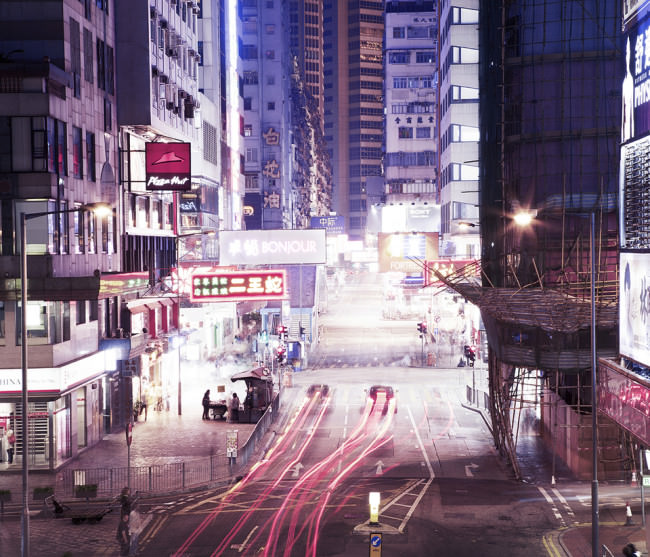
Hong Kong © Abdullah Genc

Formvollendete Bauten, die in ihrer Gesamtheit eine noch schönere optische Symbiose ergeben. Tag. Dämmerung. Nacht. Stille. Wasser. Vorbeiziehende Wolken. Atmosphäre. Licht und Schatten. Leuchtende Farben und Lichter der Nacht, die ihr Nötiges tun, um dem Ganzen Seele zu verleihen. Und meine Person mittendrin.

Es ist fast so, als wünschte ich, die Mittel wie Dom Cobb in Nolans Inception zu besitzen, der sich mit Hilfe künstlich erzeugter Träume seine eigene faszinierende Stadtwelt kreiert. Nicht zuletzt deswegen zählt jener Film zu meinen absoluten Lieblingswerken, die mich immer wieder inspirieren.

Inspiration gehört zu meinen wichtigsten Antriebsquellen. Denn vor nicht allzu langer Zeit entdeckte ich die Fotografie für mich, die mittlerweile zu einem sehr wichtigen Teil meiner Persönlichkeit geworden ist.

Einem nicht mehr wegzudenkenden Teil, da ich mit ihr ein Werkzeug gefunden habe, jene Faszination, Emotionen, Gedanken und was auch immer in mir drin ist, nach außen zu kanalisieren.
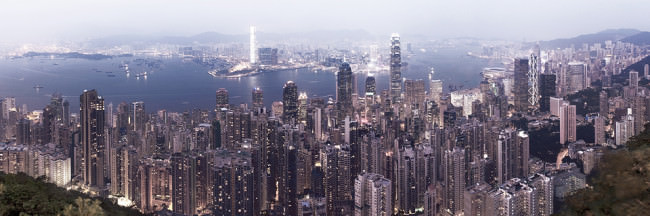
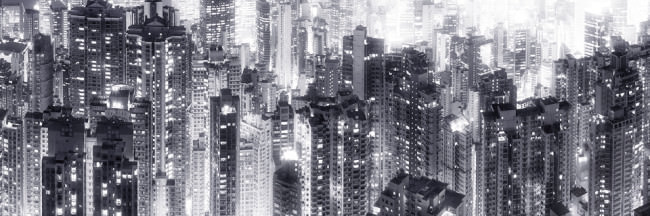
Hong Kong © Abdullah Genc

Hong Kong © Abdullah Genc

Und mich meiner Umgebung in einer Weise mitzuteilen, von der ich denke, dass sie zuweilen direkter und unmissverständlicher ist als meine eigene wörtliche Sprache. Meine Fotografie konzentriert sich, wie insofern unschwer herauszulesen ist, auf das Thema Stadt. Sei es die Darstellung von ästhetisch anmutenden Stadtszenerien sowohl bei Nacht als auch bei Tag.

Seien es Portraits von Menschen in nächtlichen Stadtkulissen inspiriert durch etliche Filme, die in mir als Filmnerd und in meinen Gedanken rumschwirren. Oder auch das authentische Leben auf den Straßen der Städte: Urbanität ist ein Thema, das mich sicher noch lange beschäftigen wird.

Mit dem großen Wunsch, auch einmal über den Tellerrand meiner heimatlichen Umgebung in Kiel und Istanbul zu blicken und auf der Suche nach neuer Inspiration, begab ich mich 2012 auf eine Reise nach Hong Kong und Dubai. Und ich war letztlich nicht enttäuscht, die Entscheidung für diese Städte aus dem Bauch heraus getroffen zu haben.
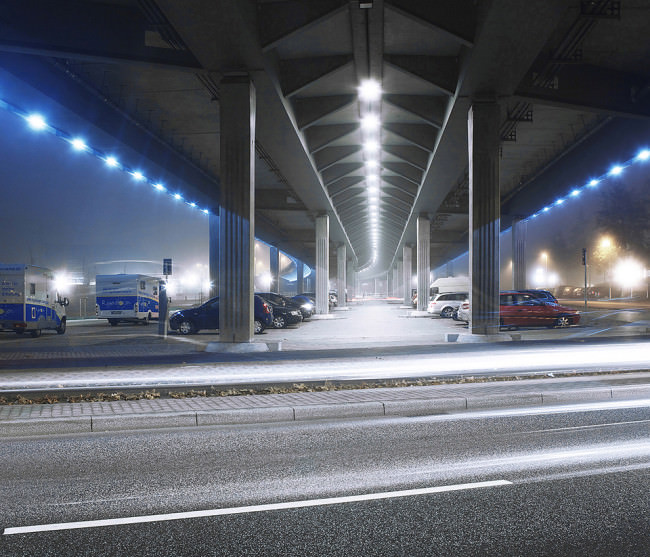
Kiel © Abdullah Genc

Denn was ich vorfand, war nicht nur atemberaubend wie mein Tag auf dem Victoria Peak; es ist auch furchteinflößend, vor einem Gebäude wie dem Burj Khalifa zu stehen. Sprich: Jede Menge unmittelbarer Momente städtischer Inspiration. Und die Kamera als Werkzeug und Ventil, jene Emotionen in Bildern auszudrücken.

Mein Equipment beschränkte sich dabei auf das Nötigste: Die zuverlässige Canon 5D Mk II, die 24-70mm f/2.8 und 70-200mm f/2.8 der gleichen Marke, ein Stativ und zwei Graufilter für Langzeitbelichtungen am Tag. Womit wir auch bei meiner bevorzugten Methode wären, das Werkzeug anzuwenden.

Denn die Langzeitbelichtung ist für mich ein probates Mittel, den Moment der seelischen Zeitdehnung auf die Bilder zu übertragen, die entstehen, nachdem ich etwas für mich entdeckt habe und für einen Moment innehalte.

Durch jene Momente auf meiner Reise entstanden die Bilder, die ich neben bisherigen aus Kiel und Istanbul zu einem Album mit dem Titel „Dimensions of urban aesthetics around the world“ zusammengefügt habe.

Die Werke liegen hier in verschiedenen Formaten vor und sind sowohl bei Tag als auch bei Nacht aufgenommen, da es mir hier wichtig war, meine Fotografie der Szenerie anzupassen und nicht umgekehrt.
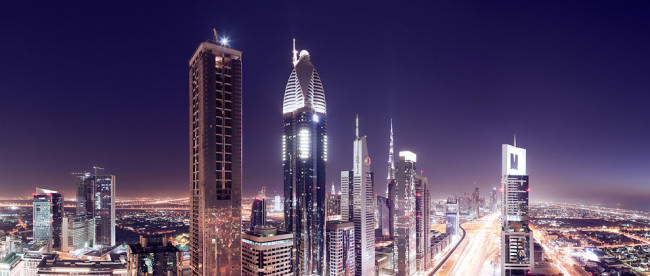
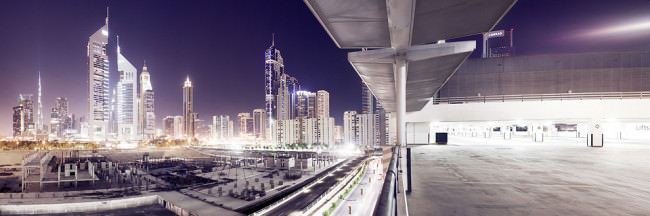
Dubai © Abdullah Genc

Dubai © Abdullah Genc

Denn für mich macht es keinen Sinn, eine Umgebung, die prädestiniert für ein Panorama ist, in ein Bild mit Normalformat zu quetschen.

Nun, was bleibt festzuhalten? Woher kommt jene Faszination für das Urbane? Ich weiß es nicht und kann es nicht sagen. Nur soviel, dass sie da ist. Denn auch durch persönliche Erlebnisse weiß ich mittlerweile, dass es nicht leicht ist, den Ursprung von Emotionen und Gefühlen zu ergründen. Sie sind entweder da. Oder auch nicht.

Aber dass man sie ausdrücken kann, weiß ich nicht zuletzt auch dank der Fotografie. Und ich bin mehr als glücklich, die Kamera als ein Ventil hierfür gebrauchen zu können. Klingt alles nach naiver Stadtromantik, Stadtmelancholie, was auch immer. Ist aber so.

Auch wenn das Thema der Urbanität sicher genug Raum dafür bietet, die Stadt als solche zu kritisieren, empfinde ich dies jedoch nicht als meine Aufgabe. Vorerst nicht.
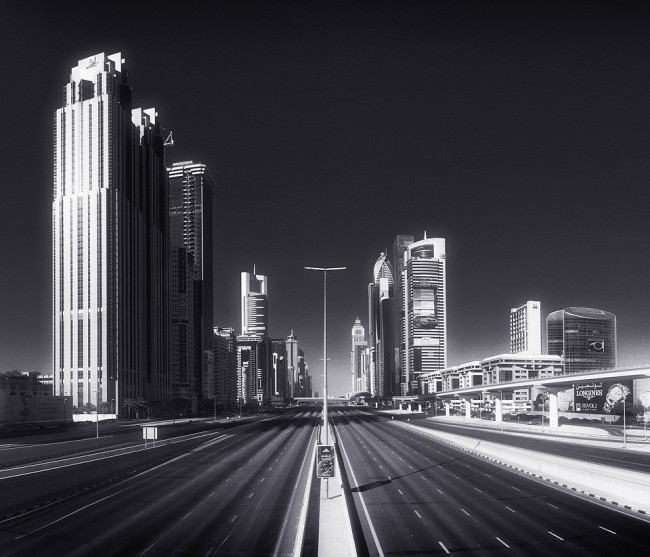
Dubai © Abdullah Genc

„Dimensions of urban aesthetics“ ist meine fotografische Abhandlung über die Schönheit von Urbanität. Nicht mehr und nicht weniger. Aber zum Glück bietet die Fotografie und das Betrachten von Bildern auch reichlich Raum für subjektive Erfahrungen, die mit den Intentionen des Fotografen nicht immer deckungsgleich sein müssen.

Jeder entdeckt etwas Anderes und manchmal auch Persönliches. Und auch das ist das faszinierende Wesen der Fotografie.


kwerfeldein – Fotografie Magazin
 
Comments Off on Dimensions of urban aesthetics

Posted in Equipment


Forgotten Cities: 7 Unbuilt Urban Wonders of the World

12 Aug

[ By Steph in Architecture & Cities & Urbanism. ]

Unbuilt Urban Wonders Main

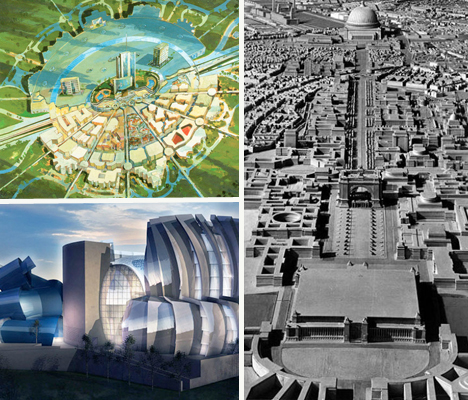
Hundreds of outlandish architectural proposals envisioned for cities around the world are rejected every year, but some are notable for their vision, controversial nature or sheer scale. Berlin, for example, would be a very different place if Hitler had won World War II, and massive cities designed by Buckminster Fuller could be floating on the seas just off American shores. These seven unbuilt urban wonders of the world range from feasible concepts and almost-built developments to utopian pipe dreams.

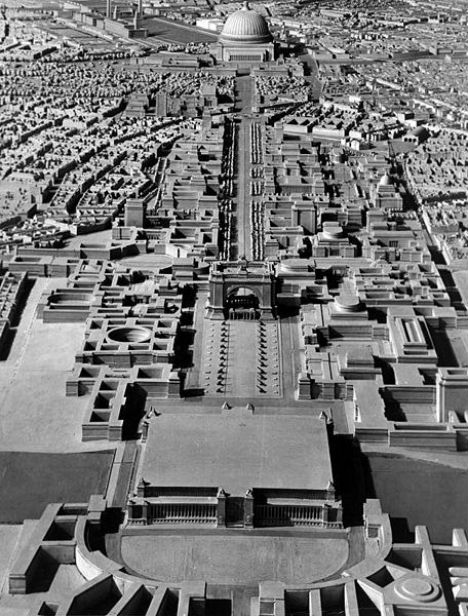
Welthaupstadt: Hitler’s Vision for Berlin

Unbuilt Urban Wonders Hitler's Berlin

If Hitler had won World War II, as he expected, this is what he planned to do to Berlin: turn it into ‘World Capital Germania,’ filled with monuments honoring himself and the Third Reich. The photograph depicts a miniature model Hitler created along with Albert Speer, the “first architect of the Third Reich.” Among the massive planned structures were an Olympic stadium that would remain the largest in the world today if it had ever been completed, a large open forum, and a triumphal arch based on Paris’ Arc de Triomphe (only much larger, naturally.)

The city would have been reorganized around ‘The Avenue of Splendours,’ a north-south axis serving as a parade ground with traffic diverted into an underground highway. Sections of the tunnels were started but never completed, and remain in place today.

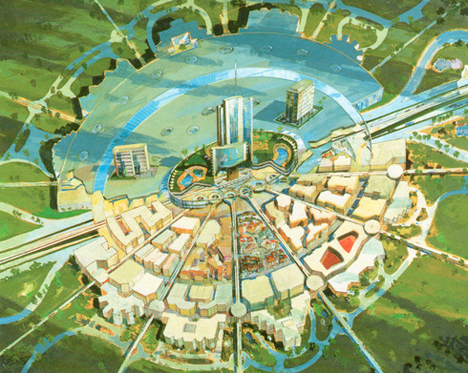
Project X: Disney’s EPCOT as a Real City

Unbuilt Urban Wonders Project X Disney 1

Unbuilt Urban Wonders Project X 2

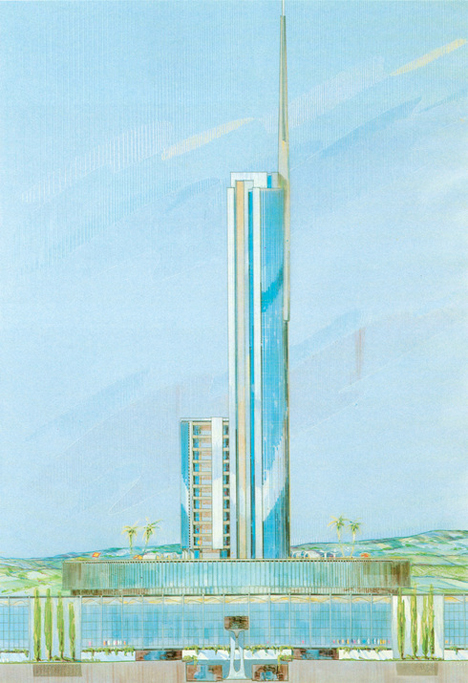
Walt Disney wanted EPCOT (the Experimental Prototype Community of Tomorrow) to be a real, functioning city, and had every intention of making it so when he first began working on ‘Project X,’ the basis of what would eventually become Walt Disney World in Orlando, Florida. Walt wanted EPCOT to be the opposite of 1950s Los Angeles, where he lived and worked. Plans for the project were designed in the special ‘Florida Room’ at Disney Studios. With a thirty-story hotel as its centerpiece, EPCOT was meant to be “a utopian environment enriched in education, and in expanding technology. A perfect city with dependable public transportation, a soaring civic center covered by an all-weather dome, and model factories concealed in green belts that were readily accessible to workers housed in idyllic suburban subdivisions nearby.”

Walt made a film showcasing the new city and showed it to a few friends shortly before his death. Walt’s brother Roy was skeptical, however, and shifted the plans to create ‘Disneyland East,’ or Walt Disney World. EPCOT isn’t exactly what Walt imagined, but vestiges of his ideas can be seen in the city of Celebration, Florida, located on the Disney World property.

Dongtan, China: The First Mega Eco-City That Almost Was

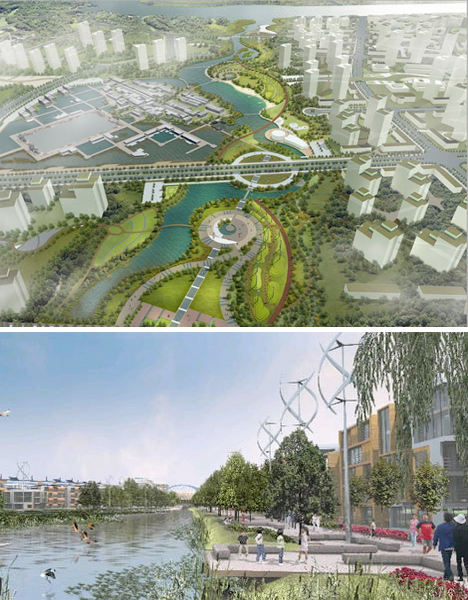
Unbuilt Urban Wonders Dongtan City China

Dongtan was to be an eco-friendly utopia, the worlds first large-scale sustainable city producing 100% of its own energy from wind, solar, bio-fuel and recycled city waste. Public transit was to be powered by clean tech like hydrogen fuel cells, though the city was designed to be walkable and bikeable. Organic farms within the city limits were to produce most of residents’ food. Developers imagined that Dongtan would serve as a shining example for cities across China and the developing world.

Plans called for the city to be partially constructed by 2010, with accommodations for 10,000 residents, and fully functional for 50,000 by 2020. They began to fall apart in 2006 when Shanghai’s former mayor, the most enthusiastic supporter of the project, was arrested for property-related fraud, and reporters visiting the site found that ground hadn’t even been broken.

Next Page:
7 Unbuilt Urban Wonders Of The World

Share on Facebook


[ By Steph in Architecture & Cities & Urbanism. ]

[ WebUrbanist | Archives | Galleries | Privacy | TOS ]


WebUrbanist

 
Comments Off on Forgotten Cities: 7 Unbuilt Urban Wonders of the World

Posted in Creativity