RSS
 

Posts Tagged ‘Underwater’

World’s First Floating Underwater Tunnels to Span Fjords in Norway

30 Jul

[ By WebUrbanist in Architecture & Cities & Urbanism. ]

subsurface bridge

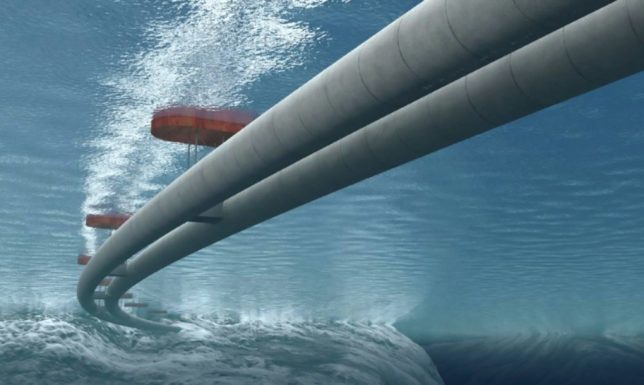
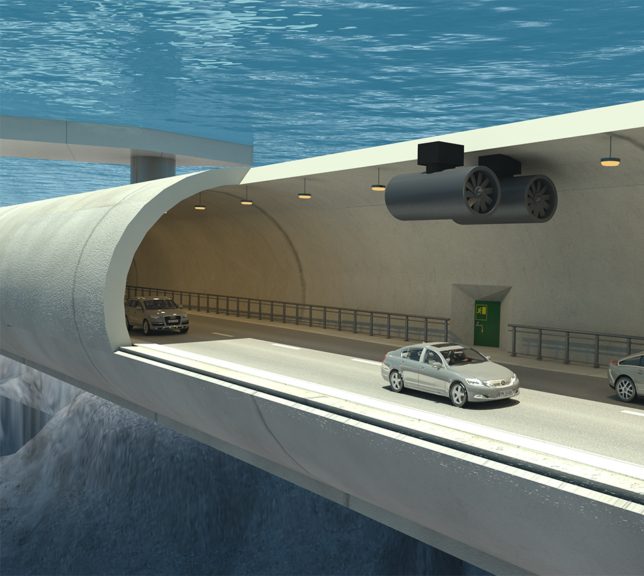
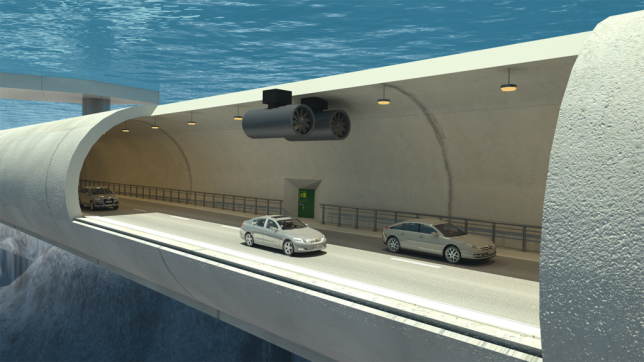
Norway is working to create the world’s first “submerged floating bridges,” suspended from surface pontoons and engineered to span its vast network of wide and deep fjords. A system of truss-framed tubes hung 100 feet below the surface will be wide enough for two traffic lanes. They will also be easier, faster and cheaper to construct than underground tunnels or over-water bridges, at least in the complex sites for which they are being planned.

underwater bridge norway

Norway already has over a 1,000 traffic tunnels (including a few dozen subsurface ones), but anchoring these to the ground in deep fjords is impractical. Also, long spans mean more complex engineering (and higher costs) for surface bridges. The nation currently relies heavily on a system of less-efficient ferry routes that can be unpredictable and impacted by weather.

floating bridge seattle

Floating bridges on the surfaces of water bodies are common in places like Seattle, where a combination of length and depth makes traditional bridges more difficult and less cost-effective. Essentially, underwater tunnel bridges would work the same way, except the pontoon supports will reside above rather than below the roadways.

nautical underwater first bridge

Underwater bridges also have advantages for nautical traffic, allowing ships to pass over them and between surface buoys. Normal bridges (unless they can be raised and lowered) create long-term height caps for the kinds of sea vessels that can pass below them.

So far, the country has committed $ 25 billion to pursuing this project, stating with an analysis of wind and waves to determine how best to stabilize this new type of subsurface bridge. Initial plans call for a first tunnel to span the 4,300-feet deep, 3,300-feet wide Sognefjord.

Share on Facebook


[ By WebUrbanist in Architecture & Cities & Urbanism. ]

[ WebUrbanist | Archives | Galleries | Privacy | TOS ]


WebUrbanist

 
Comments Off on World’s First Floating Underwater Tunnels to Span Fjords in Norway

Posted in Creativity


Deep dive: the Canon EOS-1D X Mark II is an underwater ace

19 Jul

Canon 1Dx Mark II Underwater Camera Review

By Backscatter Staff

Backscatter Underwater Video & Photo is the largest underwater imaging equipment supplier in the world. They love the water, and they personally dive and shoot with the gear they sell. This article originally appeared on their website and is reproduced here with their permission.

Backscatter is fortunate to have a large customer base of professional underwater filmmakers. This year our conversations on 4K cinema have revolved around three cameras: Red Weapon/EPIC Dragon, Sony a7R Mark II, and the new Canon EOS-1DX II. We’ve spent many hours underwater with each of these cameras and this article compiles our Canon 1DX II tests from four uniquely skilled underwater professionals.

Canon 1Dx Mark II underwater housing system configured for wide angle.
Nauticam NA-1DXII Underwater Housing, Nauticam 8.5 inch Dome Port, Keldan 8,000 Lumen Video Lights,Canon 1Dx Mark II Camera, Canon 8-15mm Fisheye Lens.

Who is this camera for?

If you’re both an underwater photographer and filmmaker, our test results confirm the Canon 1DX II is hands down the greatest camera we’ve tested to date. It’s a no compromise professional photography camera capable of shooting both 20MP stills at 14fps and 4K 60p video in incredibly low light. While it doesn’t offer the raw video and flexibility of a RED, it shoots broadcast quality 4K motion at a fraction of the size and cost and out performs favorites such as the Sony A7 series in low noise when tasked with the extreme requirements of underwater white balance.

Backscatter has spent over 20 years finding the best underwater cameras and we’ve learned that a chart-topping land camera is not always the best underwater camera. The new Canon 1DX Mark II is a good example. While leading groups such as DxOMark give it a ranking of 21st place, we give the Canon 1DX MK II a clear first place position for underwater applications.

The high ISO and high bit rate of the Canon 1Dx II combine to make smooth blue water transitions without banding or red channel noise even at extreme underwater white balance settings of 50,000K+. This video was shot with Canon 1DX II, Canon 8-15mm lens, and ISO settings from 320-6400. Select HD playback of 4K for full experience. Video by Backscatter staff Berkley White.

Real-world underwater low light performance

ISO performance results can vary greatly between underwater and land environments. Underwater we are forced to use extreme white balance settings of 30,000K – 50,000K or swim around with 10,000 Lumen lights just to illuminate a subject 3 feet from the camera. These underwater requirements can turn land camera test results upside down.

Our previous tests showed the Canon 1Dc was a top performer with a maximum of ISO 1250 for images in blue water and a maximum of ISO 2500 when shooting in high contrast or artificial light. The new Canon 1DX MK II now opens up blue water scenes to ISO 2500 and high contrast shots such as caves or wrecks in ambient light up to ISO 6400 even at extreme white balance settings.

White balance is less of an issue for underwater photography as raw files are easily corrected in post. For this application we do agree that cameras such as the Sony A7 series and Nikon D810 offer better low light performace, but we found the Canon 1DX II’s combination of great white balance capabilities, high bit rate video, and great ISO performance make it the best performing camera for photographer / videographer professionals.

This video was shot at 50 feet underwater with only a manual white balance and no artifical light. Canon remains king when it comes to nailing color underwater with a manual white balance. The live autofocus of the Canon 1DX II was able to stay focused on this grouper, even at lips to lens distances with thin depth of field. Shot with Canon 1DX II and Canon 8-15mm lens. Select HD playback of 4K for full experience. Video by Backscatter Pro Team member Erin Quigley.

The simplicity of underwater white balance – without filters or lights

Most underwater videographers have preferred Canon cameras for a good reason. Red light is lost within the first 10 feet underwater and you’re quickly left with nothing but the blues. To make whites appear white in ambient light, you’ll need an extreme white balance setting of 30,000K – 50,000K or more. Currently only Canon DSLRs offer this extreme white balance range to produce brilliant underwater color in-camera. As our previous testing shows, Sony cameras such as the entire A7 series are unable to white balance below 10 feet without a red filter on the lens as it is limited to 9,900K. Required filter use makes shooting in mixed lighting difficult or logistically impossible underwater. Our latest tests with the new Nikon D500 revealed it to be the best Nikon to date, but it often takes 10 to 20 attempts to register an underwater white balance at depth. RED cameras can white balance without a filter, but even modified with a H2O ELPF can’t match the rich blues that are so easily produced with Canon cameras. 

When performed correctly underwater, a manual white balance with the Canon 1DX II will almost eliminate the need for color correction in post and not burden the underwater videographer with filter maintenance or the requirement to always keep subjects within 3 feet of even the brightest underwater lights. If you want to keep it simple underwater, nothing beats a camera that produces great underwater color with a manual white balance.

While Canon’s new autofocus system stunned us in wide angle and on-land tracking tests, it’s still not quite there for real world underwater macro without further experimentation. Stay tuned for our new tests. Video by Backscatter staff Rusty Sanoian.

Autofocus with underwater cinema? Almost!

Canon’s new Dual Pixel Autofocus performed incredibly well on land and we were excited to put it to the test underwater. This new autofocus system includes Flexizone Mode which offers a manually positioned zone at any point on the screen while the new AF Tracking Mode allows the focus zone to follow a moving subject across the frame. Experienced underwater videographers know that autofocus has only spelled certain death with all large sensor cameras to date. Thus, we were stunned to discover that Flexizone AF Mode was not only fast but extremely accurate in underwater wide angle scenes. For example, Erin Quigley’s video of the grouper was shot in full AF Servo mode even at close focus and low depth of field. We were even able to start a clip two meters away from a subject and push in until the subject touched the dome with smooth focus throughout. Flexizone AF Mode was the most accurate and responsive system we’ve seen for underwater wide angle.

We hoped AF Tracking Mode would shine with the razor thin depth of field in underwater macro scenes. This mode worked surprisingly well on land, but was not a slam dunk underwater. First, underwater housings don’t yet offer the ability to use the touchscreen to select focus points and require the user to position the focus zone with the joystick and activate with the set button. Secondly, water motion and passing particles seemed to cause the focus to hunt enough that we preferred to set and lock focus for most macro subjects. While some of Rusty Sanoian’s Monterey macro video used AF Tracking Mode, the majority was captured by locking focus before each shot. We are currently testing lowering the secondary menu options that Canon has cryptically named “When Active” and “AF Speed” to see if we can make AF Tracking a reliable function for underwater macro.

Experienced underwater videographers should also note that the Canon 1Dx Mark II default setting is for Movie Servo AF to be enabled and thus the camera will AF continuously even when not recording. We recommend modifying the custom controls menu to reprogram the Set or the front Function button to Pause Movie Servo AF and always monitor the LCD to verify AF is paused during low contrast pans. Further, it’s important to note that Pause Movie Servo AF will sometimes turn off after the camera goes to sleep or is cycled on and off causing unwanted AF activation. Underwater camera operators might find it best to turn Movie Servo AF off when shooting a full dive in very low contrast conditions.

Videos shot at 60p then slowed down to 30p has the effect of adding more drama to the image. More importantly, underwater shooters can’t always set up a tripod on a pristine reef and slow motion helps us eliminate camera shake for hand held sequences. Video by Backscatter Pro Team member Dustin Adamson.

Why is 4K 60fps amazing for underwater video? Stability!

We’ve all fallen in love with slow motion videos and the hidden world that is exposed when we slow down real time. The Canon 1DX II would not be considered a slow motion camera on land, but 60fps and 120fps video is about all we need in the fluid underwater environment. On land it may be easy to mount a camera to a tripod for rock steady footage, but we can’t always drop a tripod on a pristine reef. Slowing down reality helps us add stability to our shots. Maybe that clip of the mother humpback with her calf caught you unexpectedly and you had some camera shake? Slowing your 60fps video to 30fps will double your clip length and smooth out your camera wobbles. Maybe you were fighting your tripod when a tiny jaw fish was aerating his eggs? Playback your video at 30fps to get 2x the time on a great macro behavior shot with less camera shake. You’ll pay a price on hard drives when shooting higher frame rates, but you’ll double your chances to get the shot.

Cons of large file sizes and issues with new CFast cards

The Canon 1DX II is outfitted with (1) CF and (1) CFast card slot. All 4K 60P recording longer than 10 seconds must be recorded to the new CFast card. At a blistering 6GB per minute, you’ll need to buy 256GB CFast cards to get roughly 40 minutes of recording time per dive. Newcomers to low compression 4K will also need to upgrade their portable and home hard disks in a major way. Hard drives are inexpensive these days, but CFast cards are bleeding edge and still demand a premium price.

Canon recently issued a firmware update to fix issues with Sandisk CFast cards. Our test pilots didn’t experience any of these Sandisk issues, but one had a catastrophic issue with a Lexar 256GB card that was unrecoverable. Currently Backscatter is only recommending Delkin 256GB CFast cards as they have been the only cards without reported issues. Stay tuned for more feedback from the field.

Which 4K camera is best underwater? 

Canon 1DX II VS. SONY A7 SERIES CAMERAS

In an era where airline baggage fees have people compromising with smaller cameras, the mirrorless Sony a7R Mark II has been a crowd favorite for good reason. Its large sensor produces beautiful low noise 42MP stills, 4K 30p video, and a complete system is easily carried on a plane all at a great price. It performs best when shooting macro scenes where features such as focus peaking and super 35 mode really shine. The Sony a7R Mark II becomes difficult to use for underwater wide angle. The above-mentioned inability to white balance without a filter makes shooting with or without lights on the same dive almost impossible. Advanced photographers will miss an optical viewfinder when trying to compose wide-angle scenes at upward angles. In these situations the mirrorless screen overexposes and only provides a guess on classic underwater photo compositions. Filmmakers will greatly prefer the 800mbps data rate and 60fps of the Canon 1DX II over the Sony’s 100mbps and 30fps when scaling to larger projects. For most people the choice between these two cameras will be a mater of budget, physical size, and ability to overcome the limitations of the Sony a7R Mark II. 

Canon 1DX II VS. RED EPIC DRAGON

If your project has the budget, the RED EPIC DRAGON remains the ultimate “fix it in post camera.” RED continues to offer the greatest dynamic range, bitrate, and lens selection. If your project has skilled editors and colorists, they’ll prefer the flexibility that raw video offers to correct shooting errors and ability to color match a project across a wide range of unpredictable natural light sequences. The H2O OLPF filter and Dragoncolor 2 color space have significantly helped RED reproduce underwater color, but we’d like to see more underwater performance in a system in this price range. While RED remains king of large budget projects, the Canon 1DX II will certainly be the top pick for streamlined underwater productions. Based on our tests, the Canon 1DX II offers better saturated blues and overall lower noise in the blue light (red light starved) underwater environment. Assuming the proper white balance and exposure is attained while in water, the 1Dx Mark II footage looks fantastic out of the camera and is ready to pass to the Director or Producer in the field eliminating the need for expert level grading. If your project is heavy underwater and you have a medium to small budget, the 1Dx Mark II is an easy win.

Canon 1Dx Mark II underwater housing configured for macro.
Nauticam NA-1DXII Underwater Housing, Nauticam Flat Port, Nauticam SMC Macro Lens, Dive & See 5 inch Monitor, Light & Motion Sola Video 2500 Lumen Lights, XIT404 Tripod Plate, XIT404 Tripod Legs, Canon 1Dx Mark II Camera, Canon 100 IS Macro Lens.

We know you have questions – give us a call!

The team here at Backscatter is just like you. We want to spend the least on our personal gear, but still get the most future-proof camera system available. Give our cinema experts a call. We’re happy to walk you through all of the options and guide you towards the best camera for your goals and budget. 


Backscatter Underwater Video & Photo is the largest underwater imaging equipment supplier in the world. Since 1994, Backscatter has supported sport divers, filmmakers, and production companies with gear and technical support from its locations in Monterey, California and Derry, New Hampshire. Backscatter is far from a typical retailer and lives by its motto, “We dive, shoot, and service everything we sell” by publishing hundreds of detailed gear reviews from first hand experience and offering instructional seminars and trips around the world.

Backscatter is the only US retailer with a complete in-house warranty service center for all major underwater brands. Backscatter is the US distributor for Olympus in the scuba diving retail channel and also manufacturers its own line of underwater camera accessories such as the FLIP system of color correction optics for GoPro cameras. For more about Backscatter or articles on equipment and technique, please see http://www.backscatter.com

Articles: Digital Photography Review (dpreview.com)

 
Comments Off on Deep dive: the Canon EOS-1D X Mark II is an underwater ace

Posted in Uncategorized


Amazing underwater 4K footage from Canon EOS-1D X Mark II

14 Jun

Backscatter Underwater Video & Photo in Monterey CA is the world’s leading supplier for underwater imaging equipment. But as well as selling underwater photography gear, the staff at Backscatter also put it to good use.

Staff member Russ Sanoian has been diving with the Canon EOS-1D X Mk II for a little while and you can check out the results of his dives in the video below. We spoke to Russ about what makes a good underwater camera, and why he thinks the EOS-1D X Mark II is a good option for stills and video shooters.

What do you do at Backscatter?

Backscatter is the largest underwater Photography store in the world. We dive, shoot and service everything we sell and all employees are underwater videographers and photographers. I am our Product Manager and responsible for sales of underwater equipment. 

What makes a good underwater camera?

Large sensors and High ISO are critical for good underwater performance as it’s typically a low light environment. Artificial lights or strobes can help with macro/close up, but for wide-angle photography. To shoot with the EOS-1D X Mark II I’m using a Nauticam 1D X Mk II housing with a Small HD Monitor.

What has impressed you about the Canon EOS-1D X Mark II underwater?

I owned and shot with the Sony a7R II before the 1D X Mk II, but the Canon shoots 4K at 60p, which is a big deal. It’s great in low light and ISO at 2500 footage is incredibly clean.

I’ve also found that Canon cameras are the best for manual white balance underwater, they will nail a custom white balance setting at any depth and have the best blues in the industry even edging out RED cameras. So far I have shot the EOS-1D X Mark II with the Canon EF 100mm F2.8L IS USM Macro IS and the Canon EF 8-15mm F4L Fisheye USM attached.

Can you share some quick tips for underwater photography?

Always shoot in manual mode, and lock focus manually. This can be extremely challenging for macro subjects but is the best way to shoot with such a narrow depth of field. The 1D X Mk II has incredible autofocus and I have been testing it but so far it’s just not accurate enough for underwater work.

Articles: Digital Photography Review (dpreview.com)

 
Comments Off on Amazing underwater 4K footage from Canon EOS-1D X Mark II

Posted in Uncategorized


Unidentified Floating Object: Sea Vessel With Underwater Lookout

17 May

[ By Steph in Technology & Vehicles & Mods. ]

unidentified floating object 1

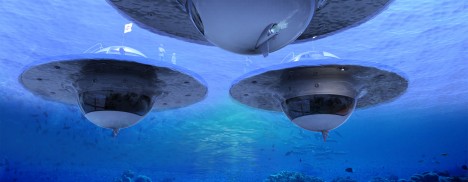
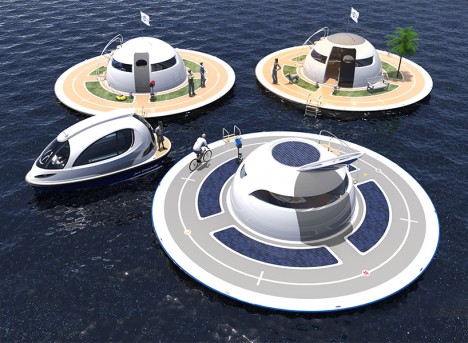
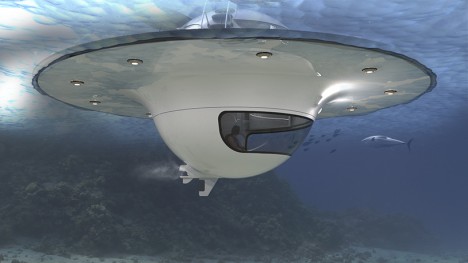
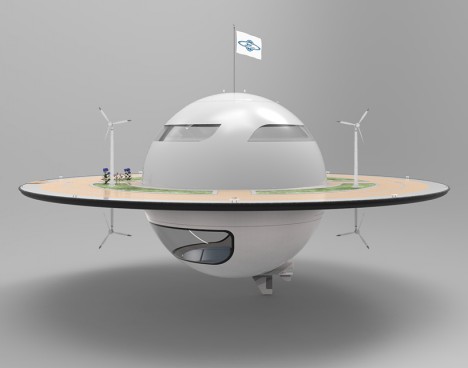
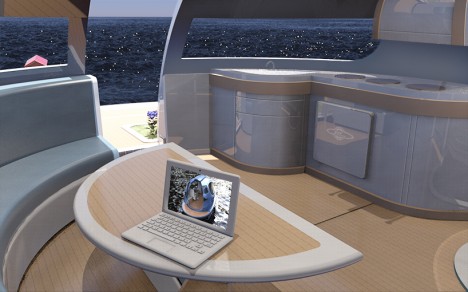
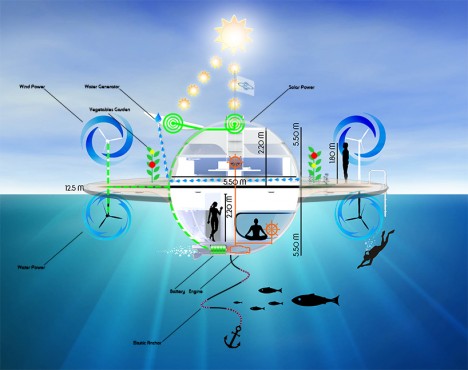
Here’s one UFO you won’t be seeing in the skies, but rather on the surface of the sea, half of its iconic shape disguised beneath the waves in the form of an underwater viewing dome. The ‘Unidentified Floating Object’ concept is the newest weird watercraft design from Italian water transportation company Jet Capsule, envisioned as a semi-autonomous floating home complete with a vegetable garden, water generator and wind turbine.

unidentified floating object 6

unidentified floating object 2

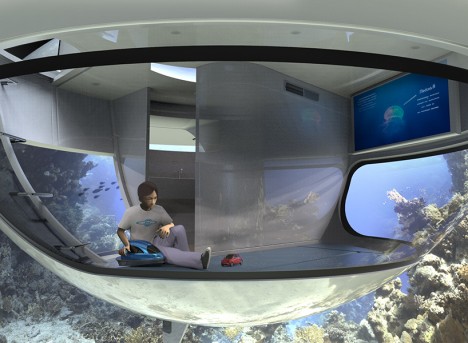
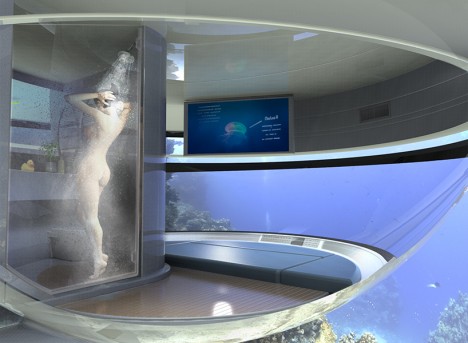
You won’t get very far very fast, as this thing reaches a top speed of just 3.5mph, but it’s not meant to be a speedboat or even really a means of getting from one place to another. It’s a recreational watercraft crossed with a vacation home, offering habitable areas both above and below the surface of the water, including a sub-level bathroom where you can shower while gazing out at the surrounding marine life.

unidentified floating object 5

unidentified floating object 7

unidentified floating object 9

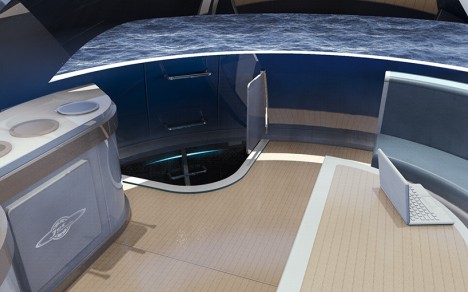
The flat ring around the central sphere functions as an exercise track for jogging or biking, and there’s a plantable strip so you can grow grass, flowers, trees or food. Opening the top hatch enables the collection of both solar energy and rainwater, and underwater turbines gather energy from the currents. There’s an anchor on an elastic cord so you can stay in place when you want to. The top cabin features a built-in kitchen, semi-circular dining area and lots of windows for taking in the views, and the whole thing runs on a battery-powered jet motor.

unidentified floating objet 3

unidentified floating object 4

unidentified floating object 8

Jet Capsule is about to seek funding to create the first working prototype, with a Kickstarter launch reportedly coming soon, so it looks like they’re serious about getting this thing into the hands of consumers. No word yet on an estimated retail price.

Share on Facebook


[ By Steph in Technology & Vehicles & Mods. ]

[ WebUrbanist | Archives | Galleries | Privacy | TOS ]


WebUrbanist

 
Comments Off on Unidentified Floating Object: Sea Vessel With Underwater Lookout

Posted in Creativity


Leica launches its first rugged camera with the X-U (Typ 113) underwater compact

21 Jan

$ (document).ready(function() { SampleGalleryV2({“targetContainerClass”:”sampleGalleryImageViewerContainer”,”galleryId”:”5760715033″,”isEmbeddedWidget”:true,”selectedImageIndex”:0,”startInCommentsView”:false,”isMobile”:false}) });

German camera manufacturer Leica has announced it has produced a waterproof, shock-proof and dust-proof compact camera that uses an APS-C sensor. The Leica X-U (Typ 113) joins the X family of compacts, but offers waterproofing to 15m / 50ft and a body that is designed to be used both beneath and above the waves.

The camera uses a 16.3MP CMOS sensor like the other models in the X series, but sports a 23mm F1.7 Summilux ASPH lens that delivers the same angle of view as a 35mm lens would on a full-frame camera. The lens can focus down to 20cm and features a flash housing directly above the axis of the front element that reduces the distance between the flash and the subject – which will be useful underwater, as illumination drops off quickly. The flash has a guide number of only 5m at ISO 100, and according to Leica has an operating range of 0.3-2m at that ISO setting. 

The camera shoots both Raw and JPEG files, and has a movie mode that records at 30 fps in 1080 HD resolution. When used underwater a press of the UW button activates Underwater mode, which adjusts the white balance accordingly and sets distortion correction to suit the conditions.

Leica says the camera was designed in collaboration with Audi Design, and that the top plate is made from high grade aluminum and the body coated in ‘high-grip TPE armoring’. 

The camera is available now, and costs £2400 / $ 2,950. A floating neck strap is available for £50 / $ 95 and a wrist strap for £32 / $ 65. Correct me if I’m wrong, but I think this is Leica’s first ever commercially available underwater camera.

For more information see the Leica website. 


Press release:

Built for the challenge – born for adventure: Introducing the Leica X-U

New outdoor camera from Leica delivers outstanding picture quality in the harshest conditions   

Leica Camera has unveiled its first camera designed specifically for outdoor and underwater photography – the Leica X-U (Typ 113).  

Incorporating a fast Leica Summilux 23mm f/1.7 ASPH. lens (equivalent to 35mm in 35mm format) with underwater protection filter, and a large APS-C CMOS sensor, this fully waterproofed member of the Leica X family delivers images with exceptional brightness and clarity, even in the harshest of conditions.  

Created for the adventurous photographer, the Leica X-U allows the user to capture breathtaking underwater moments in perfect detail, at depths of up to 15 metres. Shock-resistant, dust-sealed and shatter-proof, this rugged camera is the ideal companion for any outdoor expedition or adventure – whether it’s action or underwater shooting, extreme sports, travel, architectural or landscape photography – and also offers video capture in full HD quality.  

Optimum picture performance is guaranteed, thanks to the cutting-edge technology the X-U shares with all models in the Leica X range. Combined with its professional 16.5 MP (16.2 MP effective) APSC CMOS sensor, the Leica X-U’s premium Summilux 23 mm f/1.7 ASPH. lens ensures natural colour reproduction and outstanding resolution, even at the closest focusing distance of 20 centimetres. Its fast f/1.7 maximum aperture also offers the freedom to explore the creativity of selective focusing. In addition, due to the camera’s excellent resistance to stray light and flare, the Leica X-U is the perfect choice for an extensive range of indoor and outdoor lighting conditions – at any time of day or night.  

Made in Germany in collaboration with Audi Design, the stylish yet minimal Leica X-U focuses on the essential features: simple and intuitive operation, as well as ultimate precision. With a top plate made from premium aluminium and high-grip TPE armouring, the body ensures exceptional usability, handling and durability, as well as water resistance to a depth of up to 15 metres.  

Designed to embrace the elements, and for the most ambitious photography projects, the Leica X-U incorporates a non-slip body, a toughened monitor screen cover, and a failsafe double locking system for the battery compartment and memory card slot. These robust protective features ensure that photographers can concentrate fully on their subject, with full confidence in the camera’s durability.  

Furthermore, the minimal, intuitive design of the Leica X-U puts the most important creative tools directly at the photographer’s fingertips. Aperture and shutter speed can be set quickly and easily using the straightforward, typical ’Leica-style’ dials, while a practical underwater snapshot button ensures the camera is ready to capture the wonders of the underwater world immediately – without the need to search through menus. Thanks to the camera’s high resolution three inch screen and a wide range of useful automatic features, it takes just seconds to find the precise settings the photographer requires to capture their decisive moment.

Additionally, with its anodised aluminium control dials and an integrated flash above the lens, the Leica X-U is a perfect example of exceptional quality and attention to detail.

For those on a challenging professional assignment or a magical holiday of a lifetime, important moments can also be recorded in full HD, cinema-quality video – with a choice of 1920×1080 or 1280×720 pixel resolution, at 30 full frames per second in MP4 format. And whether the footage is intended for a professional production or a home movie to share with friends and family, the Leica X-U delivers high quality results that perfectly capture that special adventure.

Leica X-U (Typ 113) specifications

Price
MSRP $ 2950
Body type
Body type Large sensor compact
Body material Aluminum
Sensor
Max resolution 4928 x 3264
Image ratio w:h 3:2
Effective pixels 16 megapixels
Sensor photo detectors 17 megapixels
Sensor size APS-C (23.6 x 15.7 mm)
Sensor type CMOS
Color space sRGB
Color filter array Primary color filter
Image
ISO Auto, 100-12500
White balance presets 5
Custom white balance Yes (2 spots)
Image stabilization No
Uncompressed format RAW
JPEG quality levels Super fine, fine
File format
  • JPEG (Exif v2.3)
  • Raw (DNG)
Optics & Focus
Focal length (equiv.) 35 mm
Optical zoom 1×
Maximum aperture F1.7 – F16.0
Autofocus
  • Contrast Detect (sensor)
  • Multi-area
  • Center
  • Selective single-point
  • Single
  • Continuous
  • Live View
Autofocus assist lamp Yes
Normal focus range 20 cm (7.87)
Number of focus points 11
Screen / viewfinder
Articulated LCD Fully articulated
Screen size 3
Screen dots 920,000
Touch screen No
Screen type TFT LCD
Live view Yes
Viewfinder type None
Photography features
Minimum shutter speed 30 sec
Maximum shutter speed 1/2000 sec
Exposure modes
  • Program
  • Aperture priority
  • Shutter priority
  • Manual
Built-in flash Yes
Flash range 2.00 m (at ISO 100)
External flash Yes
Flash modes Automatic, automatic/red eye reduction, on, on/red eye reduction, long-term synchronization/red eye reduction, off
Drive modes
  • Single
  • Continuous
Continuous drive 5.0 fps
Self-timer Yes
Metering modes
  • Multi
  • Center-weighted
  • Spot
Exposure compensation ±3 (at 1/3 EV steps)
AE Bracketing ±3 (3 frames at 1/3 EV steps)
Videography features
Resolutions 1920 x 1080 (30p), 1280 x 720 (30p)
Format MPEG-4
Microphone Stereo
Speaker Mono
Storage
Storage types SD/SDHC/SDXC
Connectivity
USB USB 2.0 (480 Mbit/sec)
HDMI No
Microphone port No
Headphone port No
Remote control No
Physical
Environmentally sealed Yes
Battery Battery Pack
Battery description BP-DC8 lithium-ion battery & charger
Battery Life (CIPA) 450
Weight (inc. batteries) 635 g (1.40 lb / 22.40 oz)
Dimensions 140 x 79 x 88 mm (5.51 x 3.11 x 3.46)
Other features
Orientation sensor Yes
GPS None

Articles: Digital Photography Review (dpreview.com)

 
Comments Off on Leica launches its first rugged camera with the X-U (Typ 113) underwater compact

Posted in Uncategorized


Benjamin Von Wong’s Shark Shepherd photoshoot captures an underwater fantasy

20 Jan

Photo by Benjamin Von Wong

Photographer Benjamin Von Wong has released photos and a video from his new Shark Shepherd photo shoot, which features a model in a white dress in the sea as sharks swim nearby. The shoot took place in Fiji and aims to expose a less-often seen side of sharks as peaceful creatures. ‘I wanted to create a series of images that would help break those stereotypes and show that it is possible for us to co-exist together in perfect harmony,’ said Von Wong in a post on his blog.

In his PIX 2015 talk, Benjamin Von Wong discusses his journey from taking what he describes as ‘ordinary’ photos to creating ‘extraordinary’ imagery. Throughout his career, he’s made a name for his surreal images that blend practical elements, fantastic locations and post-processing. For Shark Shepherd, nothing has been added in post-processing – the photo shoot features model Amber Bourke, a champion free diver, with assistance provided by divers Steve Hathaway and Kris McBride. According to Von Wong, the shoot took place over three days with more than six hours of waiting for curious white tipped reef sharks to swim up close. The sharks were described as being like ‘squirrels at a park,’ getting close out of curiosity but darting away quickly when someone moved.

Articles: Digital Photography Review (dpreview.com)

 
Comments Off on Benjamin Von Wong’s Shark Shepherd photoshoot captures an underwater fantasy

Posted in Uncategorized


Sunken Ruins of Alexandria to be World’s First Underwater Museum

04 Nov

[ By WebUrbanist in Architecture & Public & Institutional. ]

sunken egypt underwater museum

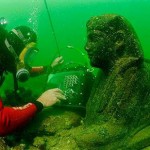
The Ministry of Antiquities in Egypt is planning to turn submerged ruins of ancient Alexandria into an underwater museum, allowing tourists access to 2,500 of subsurface stonework dating back to 365 AD.

sunken ruins

Plans or this ambitious intervention, designed by French architect Jacques Rougerie, were put on hold for years during a period of regional turmoil, but are now back on track. Fiberglass tunnels will connect waterfront galleries to underwater viewing areas where visitors can see the ruins in context.

The 270,000 square foot area in Alexandria Bay is protected by the UNESCO Convention on the Protection of the Underwater Cultural Heritage and includes the Lighthouse of Alexandria, one of the seven ancient wonders of the world. Much of the area was submerged in the Middle Ages due to earthquakes.

underwater museum

Part of the purpose of the project is to further protect the ruins, which are prominent targets for thieves and difficult to police without permanent surrounding infrastructure and round-the-lock eyes on the site.  “The museum will reshape the Arab region, as it will be the first of its kind in the world,” said Youssef Khalifa, chair of the Central Administration of Lower Egypt Antiquities. “Undoubtedly it will revive tourism and boost the Egyptian economy after a long recession.”

Share on Facebook


[ By WebUrbanist in Architecture & Public & Institutional. ]

[ WebUrbanist | Archives | Galleries | Privacy | TOS ]


WebUrbanist

 
Comments Off on Sunken Ruins of Alexandria to be World’s First Underwater Museum

Posted in Creativity


Underwater Homes: Deserted Basements as Stormwater Cisterns

04 Oct

[ By WebUrbanist in Abandoned Places & Architecture. ]

basement cistern basetern

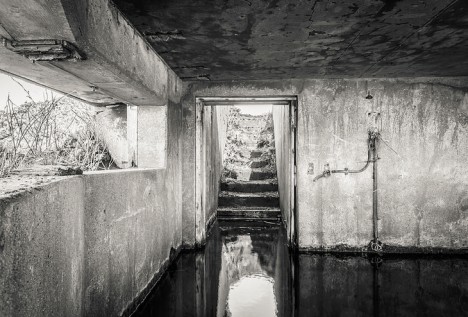
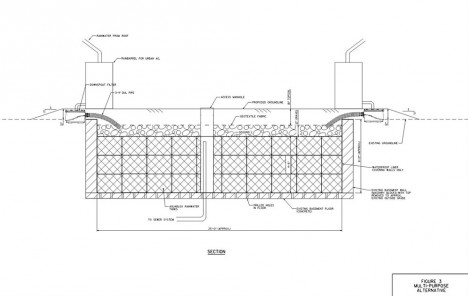
In a dual effort to address urban blight and ailing infrastructure, Milwaukee, Wisconsin, is piloting a new program to turn the basements of abandoned houses slated for demolition into rainwater basins. Meanwhile, the surface expression of these cisterns could be anything from a revealing expression of this new underground infrastructure to micro-parks or urban farms depending on neighborhood needs.

basement cistern project

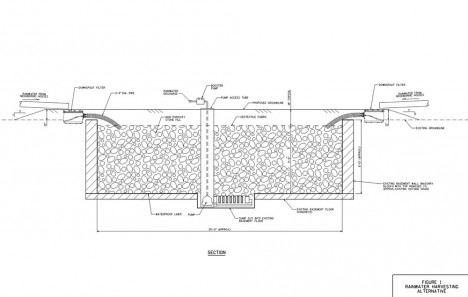
Conceived by Erick Shambarger, the deputy director of Milwaukee’s Office of Environmental Sustainability, “The BaseTern concept is simple. Stormwater will be directed to an abandoned or foreclosed property’s basement, which, after the aboveground structure is demolished, is waterproofed and filled with gravel and stormwater-harvesting cells.” Effectively, load on existing stormwater runoff systems is reduced and complete demolition costs are simultaneously mitigated.

underground cistern system milwaukee

GIS data shows that the neighborhoods with the largest flood risks are also those with the highest foreclosure rates. The city owns over 900 deserted and condemned buildings, now potential candidates for unusual adaptive reuses. A basement cistern can hold anywhere from 10,000 to 40,000 gallons of water during storms and reduce adjacent flooding accordingly. Similar systems could also be deployed in coastal areas particularly susceptible to floods and where many waterfront homes are already being abandoned.

underground basement abandoned fill

Author Geoff Manaugh observes that “while there is something metaphorically unsettling in the idea that parts of a blighted, financially underwater neighborhood might soon literally be underwater—transformed into a kind of urban sponge for the rest of Milwaukee—the notion that the city can discover in its own economic misfortune a possible new engineering approach for dealing with seasonal flooding and super-storms is an inspiring thing to see.” (Flooded basement image by Naql).

Share on Facebook


[ By WebUrbanist in Abandoned Places & Architecture. ]

[ WebUrbanist | Archives | Galleries | Privacy | TOS ]


WebUrbanist

 
Comments Off on Underwater Homes: Deserted Basements as Stormwater Cisterns

Posted in Creativity


Lost & Found: Underwater Ghost Town Resurfaces 30 Years Later

23 Jan

[ By WebUrbanist in Abandoned Places & Architecture. ]

abandoned village from above

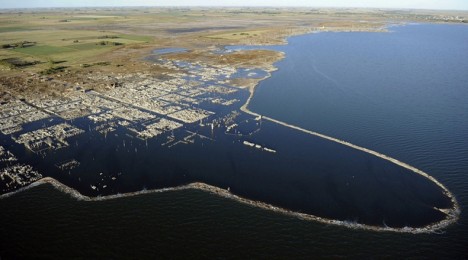
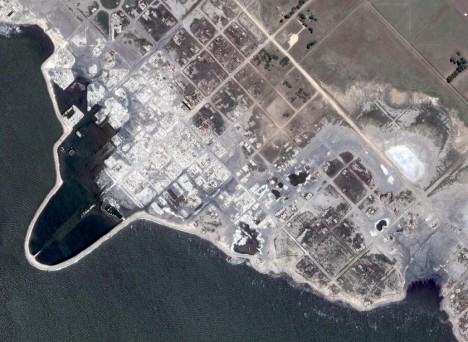
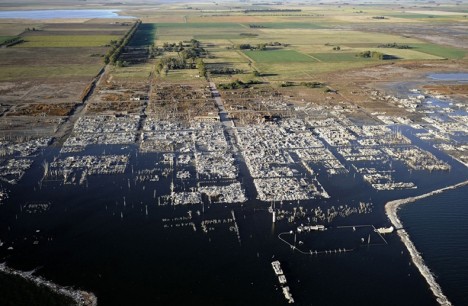
Like a corroded time capsule, this submerged village has risen from the depths after being flooded decades ago when the local lake broke its banks and left Epecuen under dozens of feet of water. In 1985, a rare weather pattern broke a nearby dam first, then the dike protecting the town, quickly making most of it uninhabitable. Today, long-term changes in the regional climate have brought down the overall level of the lake, resurfacing the town.

sunken village resurfaced underwater

Giving a tour of his devastated hometown, the man in the award-winning video above , Pablo Novak, claims his father predicted the return of water to the areas of land on which people were building back in the 1980s – at its peak, the place drew in over 25,000 tourists a year. Today, Pablo is the only remaining resident, slowly exploring the remnants now revealed as waters around the lake have lowered.

villa epecun from above

underwater village before after

Located near Buenos Aires, it is hard to imagine that this place – with a permanent population of 5,000  at one point – was once a busy destination from tourists around the country and even the world, renowned for its high-salinity lake in which people came to bathe. This salt content is largely responsible for the high levels of damage done to the town’s buildings and infrastructure during its years underwater.

underwater deserted abandoned buildings

underwater village ruins

slaughterhouse abandoned town

First, the fields began to flood, driving our narrator’s cows, horses, pigs sheep and goats back further onto land and forcing Pablo to buy a family home in a neighboring village. Now 85 years old, he always assumed the town would be rebuilt, but that has never come to pass.

sunken town ruins

sunken village washed roots

abandoned underwater town resufraced

Since the waters have receded, Pablo now tries to appreciate the solitude left in its wake and gives tours to those who come these days not to soak but to see the once-sunken village now risen once again to the surface. Images by Sam Verhaert, Jonathan Evans and Pablo Gonzales via Inhabitat.

Share on Facebook


[ By WebUrbanist in Abandoned Places & Architecture. ]

[ WebUrbanist | Archives | Galleries | Privacy | TOS ]


WebUrbanist

 
Comments Off on Lost & Found: Underwater Ghost Town Resurfaces 30 Years Later

Posted in Creativity


Dicapac WP-S10 Underwater Housing Review

21 Jan

Peter-West-Carey-Case2014-1229-7411In an industry known for getting what you pay for, I am always skeptical of cheap, new solutions where only expensive ones existed previously. But curiosity got the better of me before a trip last year to Barbados when I wanted to take photos of turtles underwater, but lacked funds for a $ 3000 underwater housing for my DSLR. That’s when I dropped $ 60 on a housing and prayed it would not kill my Canon 7D.

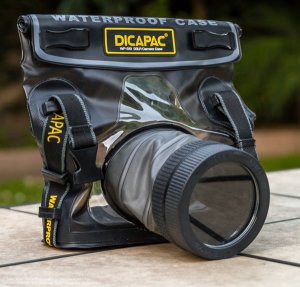
The housing I chose is from a company you probably have never heard of – Dicapac USA. They have a few models for different sized cameras and mine is the WP-S10 model, suitable for normal size DSLRs (they have smaller size bags for point and shoot as well as mirrorless cameras).

The lay of the bag

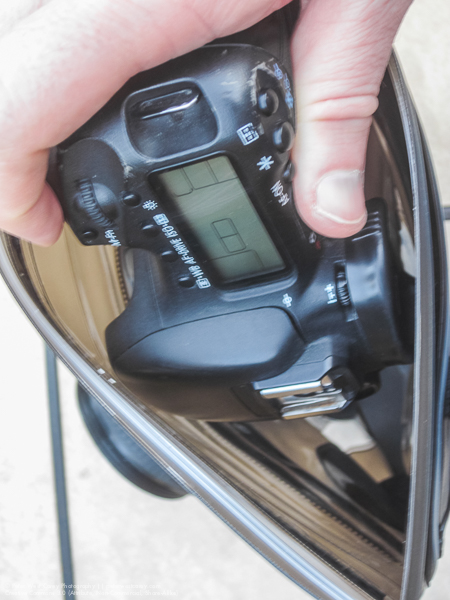
For lack of a better term, the Dicapac is a heavy duty Ziploc bag with a special port for your lens. But unlike your average sandwich bag, the plastic on the Dicapac is heavy duty PVC/TPU and the seams are all welded tight on the inside.

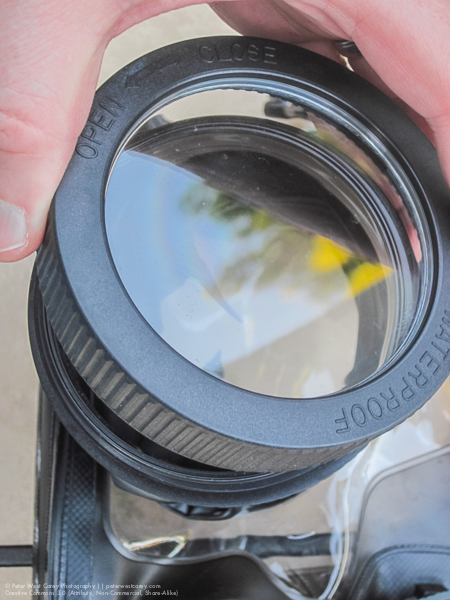
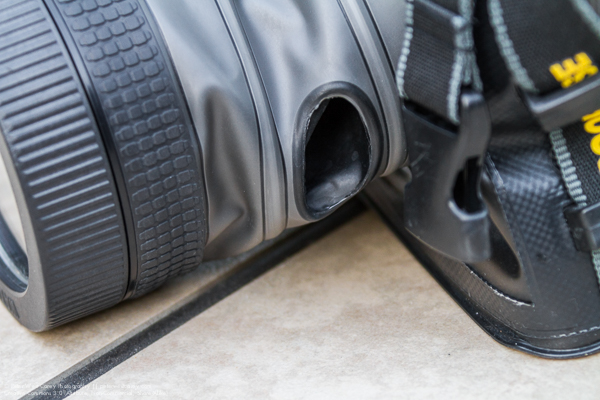
With a clear plastic back, LCDs are easy to view and there is a softer rubberized plastic opening for a shutter release finger. Extending out the front of the bag is the lens tube with a special screw on port for the end. The tube also has two of the finger holes to allow for adjustment of zoom (typically on zooms that use a dial, rather than push/pull type) and focus. It is also conceivable to activate side-of-lens controls, such as VR/IS or manual focus modes.
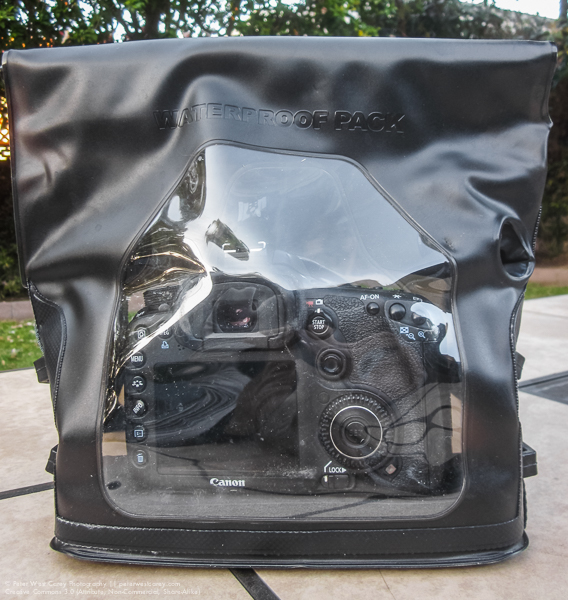
Peter-West-Carey-Case2014-1229-1298

The top of the bag is where the sealing happens. There is a double industrial plastic clamping zip along the top and then strips of Velcro to hold things in place.
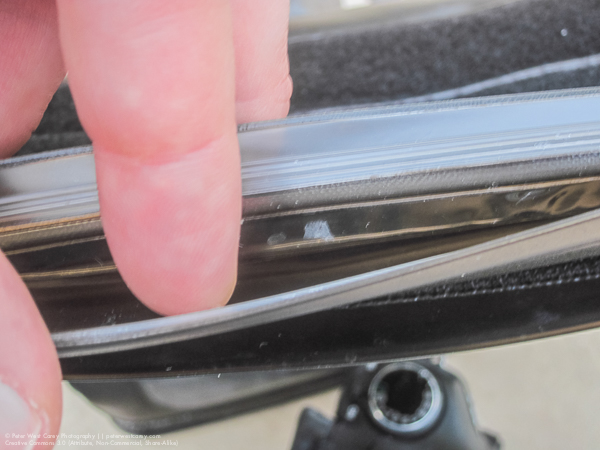
Peter-West-Carey-Case2014-1229-1287

Inside, the bag is fairly sparse but it does come with a one inch thick foam pad to place beneath your camera.

How it works

Following trial and error and then searching the Internet, I found it easiest to insert my camera with the lens off. I was using a Canon 7D without the standard battery grip. This made it easy to slide in the top with the zip open. I was then able to take off the front port and insert my Canon EF 10-22mm lens, attaching it to the body inside the bag. A smaller camera, like the Digital Rebel lineup of cameras, would probably fit easily without removing the lens. For me, it wasn’t required, but it was easier.

Peter-West-Carey-Case2014-1229-1288 Peter-West-Carey-Case2014-1229-1289

I then checked the front optics of my lens for smudges or dirt before screwing on the lens port. It was a little tricky finding the beginning thread but easier after a couple of practices. Now, like any Ziploc, I had to squeeze out the excess air and then clamp shut the top zip. This isn’t a sandwich in a bag so this too took a few practice tries to get most of the air out. So far, nothing earth shattering.

Next, you need to roll down the zip a few times and then attache the first velcro strip to hold it in place. Lastly, you attach one last, larger velcro strip, to hold everything closed. There is also an additional neck strap that can be clipped into the buckles, but I usually didn’t use it.

In use

As an operational note, I practiced zipping up the bag with only paper towels inside a few times. I then dunked the unit in my bathtub to make sure no water got inside. I suggest new owners do the same to ensure their unit is not faulty.
Peter-West-Carey-Barbados2014-0808-1330

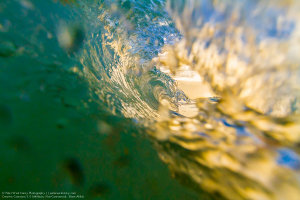
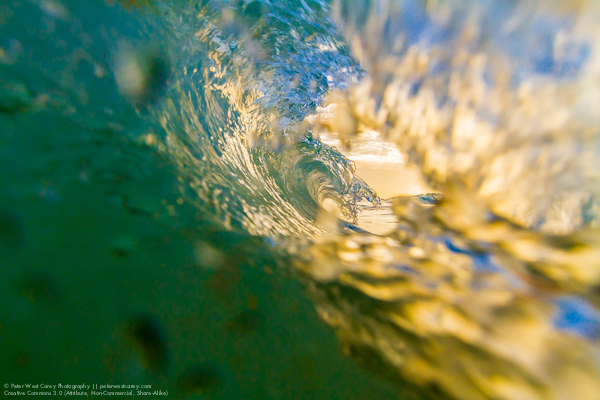
After a few very boring photos of the drain in my bathtub, and a flight to the Caribbean Island of Barbados, it was time for a real world test of the case. With no pretty coral out front our hotel, I took some inspiration from Clark Little and decided to shoot through wave tubes toward the setting sun.

The camera was already in the bag when I realized my best bet was to use manual focus and simply set it to a given depth, rather than miss shot after shot in the fast breaking surf. With the holes in the side of the lens tube I was able to switch over to manual focus without much problem. Setting my focus took a little more effort as the holes don’t allow a wide range of movement. Meaning I had to spin my focus ring about half an inch at a time. No biggie, it just takes longer and won’t work well for lots of fast action.

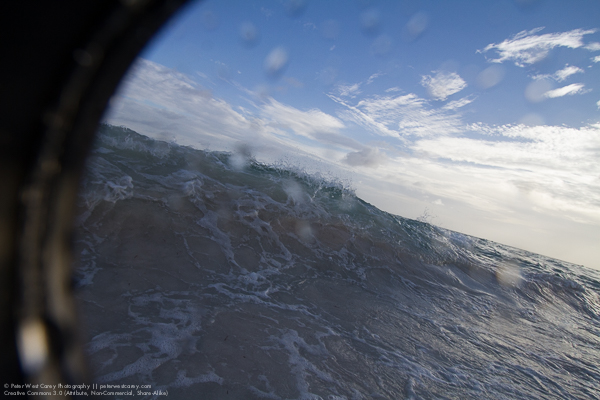
Because my lens didn’t fully fill the lens tube, I had to pull back on the tube with my fingers in both tube holes to keep the port flush against the front of my lens. In time this causes fatigue and after about 30 minutes of shooting I was starting to feel cramps in my hands. Not bad, but I wouldn’t want to shoot a weddings with this setup.

This is what happens if you don’t pull back on the tube with a wide angle lens installed:
Peter-West-Carey-Barbados2014-0808-1202

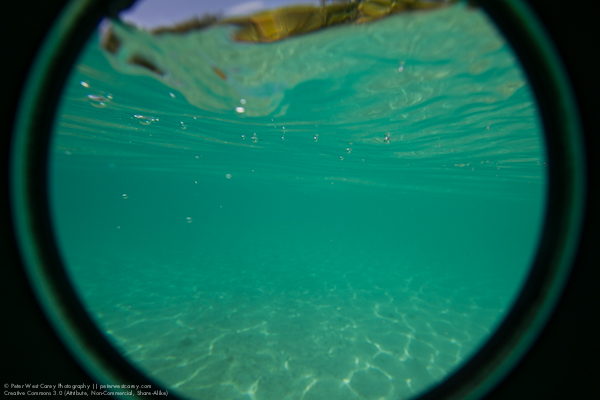
But it can be used to create a nice “porthole” effect:
Peter-West-Carey-Barbados2014-0809-2878

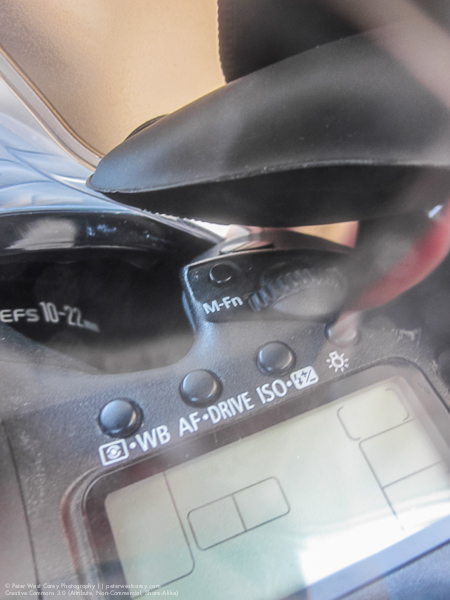
Shutter activation was easy but most controls, especially the rear wheel, on my camera were not accessible. This meant I had to think ahead and set the frame rate to continuous and choose my metering mode as well as shooting mode. I could spin the front/top dial which controlled my aperture but the back dial was useless as I couldn’t reach it.

Here is the range of motion you can expect from the activation access hole. That black thing at top is my finger:
Peter-West-Carey-Case2014-1229-1291

I was able to adjust my zoom with the same effort needed for focusing. So, again, not swift but doable.
Peter-West-Carey-Case2014-1229-7420

How did it do?

My first run with the bag in the surf showed me that it could take a pounding but after a while I needed to check to make sure the top Velcro was still tight. It needed to be adjusted a couple times because of this specific use and I noticed a few droplets of water on the inside of the case. nothing much. I was able to dry the bag off with a towel on the beach, remove it (this time leaving the lens on so as to not let water get in the threads of the front port) and review images. After making some adjustments, I placed the camera back in and waded back to the surf for more.
Peter-West-Carey-Barbados2014-0808-1330

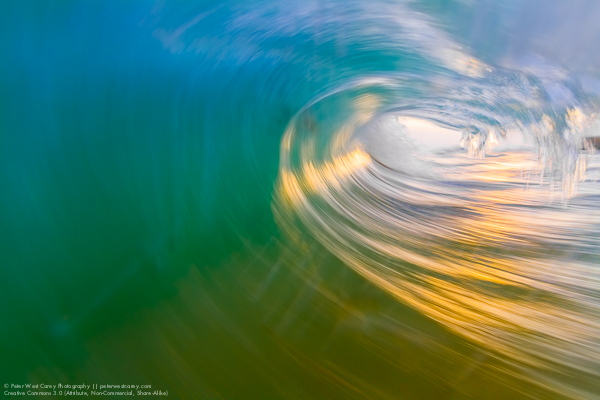
Closing down my aperture made motion blur possible:
Peter-West-Carey-Barbados2014-0808-1903

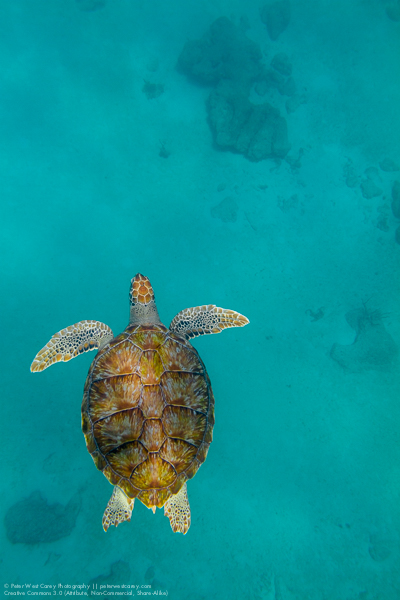
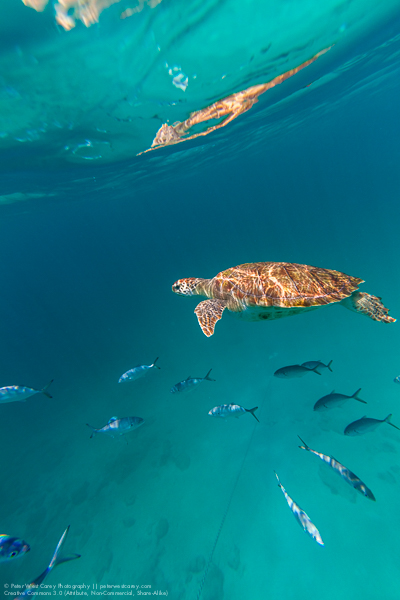
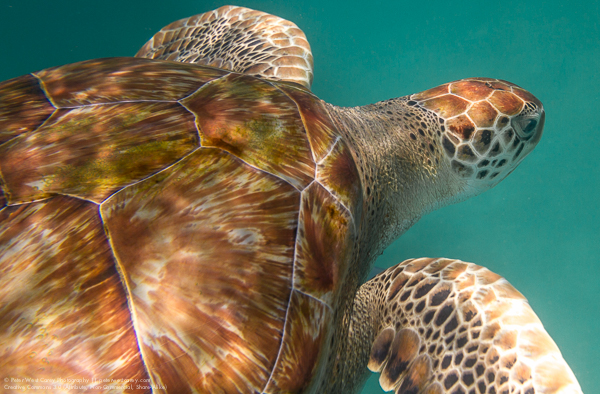
While use of the viewfinder is possible, it is difficult in waves with goggles on. Later, when I was snorkeling and shooting turtles, I was able to better line up shots. But truth be known, it was just easier to shoot blindly and let experience help me line up the shots. Use of the rear LCD in LiveView mode is also possible with slower moving action, like the turtles.

For my three times taking the the bag into the saltwater, including duck-dives in the waves and 15 foot dives to meet turtles, the bag never leaked significantly. It does get a little hard to hold after a while as your hand is in a non-normal grip.
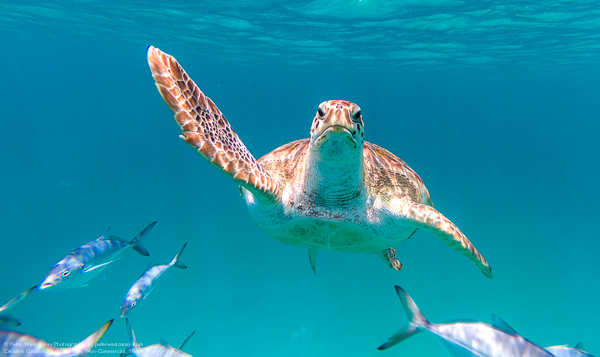
Peter-West-Carey-Barbados2014-0809-2553

A hawksbill sea turtle (Eretmochelys imbricata) swims directly a

Gliding Along Peter-West-Carey-Barbados2014-0809-2376

Conclusion

For the money and intended use, this bag is worth the expense. As proof, I have already sold a stock photo of one of the turtles, which covered the cost of the bag.

This bag is good for recreational use but not SCUBA. It is rated to 16’/5m (JIS IPX8 standard). Some people have voiced concerns about cameras overheating but I left my camera on inside the bag for over two hours with no problem (the 7D has a warning when it gets too hot).
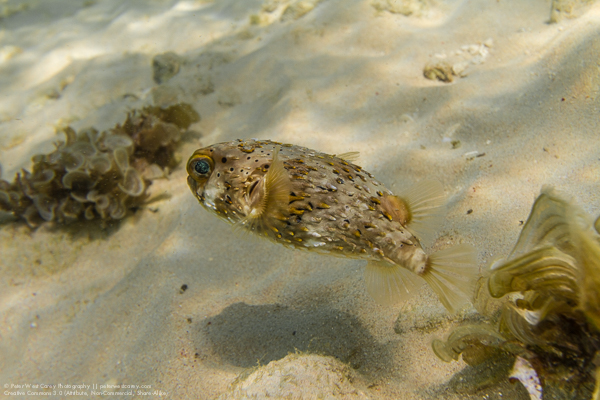
Peter-West-Carey-Barbados2014-0809-2912

It also works well as a general dry bag and I think it would be great for times you want to keep spray or sand out of your gear. It would be idea for whitewater rafting or piece of mind while ocean kayaking. I heard talk of an adapter which helps the front port attach to your lens as a filter would, which would greatly aid in shooting and cramps. I have not yet found it.

I will be heading to Mexico, Belize, Alaska, Jamaica, Australia and New Zealand this year and plan to take the bag with me for each trip. I will also get a small bottle of Rain-X to help with beading when taking wave shots.

PROS

  • Cheap – $ 70 on Amazon.
  • Can be used with multiple cameras.
  • Packs small for traveling as compared to hardshell housings.
  • No need for different ports for different lenses. Would work well with a 100mm macro, for instance.
  • Viewfinder use is possible, but not often used.
  • Port window comes off for easier camera and lens insertion.
  • Neck strap and loops you can clip to keep it with you, hands-free, while swimming.
  • Functions as a drybag out of the water.
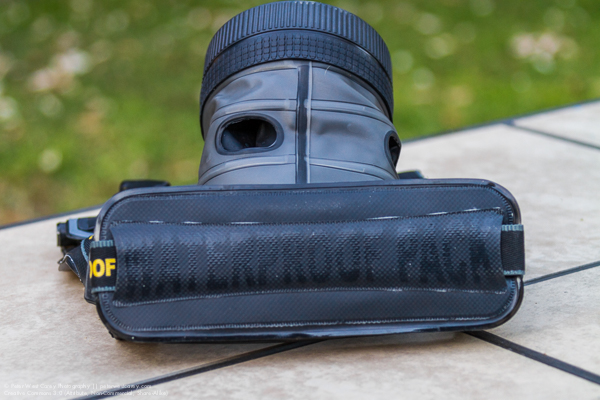
Peter-West-Carey-Case2014-1229-7421

CONS

  • Limited button and dial control. You have to think ahead about some settings.
  • It takes practice to seal properly.
  • It’s hard to zoom and focus quickly, but it can be done.
  • Holding the lens to the port is tiring.
  • While not holding the camera, it flops around inside the bag.
  • Lens port has a coating which makes polarizing filter use impractical (shows rainbows). Otherwise, it is fairly neutral.
  • No flash use, internally nor with external flash, although it may be possible with a wireless transmitter.

If you have specific question, I am happy to answer them in the comment section below.

googletag.cmd.push(function() {
tablet_slots.push( googletag.defineSlot( “/1005424/_dPSv4_tab-all-article-bottom_(300×250)”, [300, 250], “pb-ad-78623” ).addService( googletag.pubads() ) ); } );

googletag.cmd.push(function() {
mobile_slots.push( googletag.defineSlot( “/1005424/_dPSv4_mob-all-article-bottom_(300×250)”, [300, 250], “pb-ad-78158” ).addService( googletag.pubads() ) ); } );

The post Dicapac WP-S10 Underwater Housing Review by Peter West Carey appeared first on Digital Photography School.


Digital Photography School
 
Comments Off on Dicapac WP-S10 Underwater Housing Review

Posted in Photography