RSS
 

Posts Tagged ‘These’

These drink coasters look like a camera lens when stacked

02 Sep

Looking for a stylish way to keep condensation from forming unsightly rings on your desk? Are you a huge photography nerd? Fotodiox has a solution that will keep both parts of your psyche nice and happy: cup coasters that, when you stack them together, appear to form a single camera lens.

Fotodiox calls the quirky product the CraftMaster LenzCoaster, and offers them in three different varieties.

A careful look at each LenzCoaster ‘lens’ reveals that it is split into five sections, each section a different drink coaster with silicone padding. Magnets embedded in each coaster keep the pieces together when stacked.

The lens coasters are offered in white and black, the latter of which comes in a variety with black and red ‘caps.’ Fotodiox is offering all three versions now for $ 25.

Articles: Digital Photography Review (dpreview.com)

 
Comments Off on These drink coasters look like a camera lens when stacked

Posted in Uncategorized


No Windows, No Problem: These 12 Houses Are Bright, Beautiful & Private

31 Aug

[ By SA Rogers in Architecture & Houses & Residential. ]

Windowless houses might sound dark and depressing, but the careful control of apertures in a building’s facade can actually be a brilliant technique for enhancing privacy, making views more pleasant and creating the feel of a secluded sanctuary. Fortress-like from the outside, they’re surprisingly bright and airy inside, often thanks to courtyards, terraces and rear glazing hidden from view of the street and neighbors.

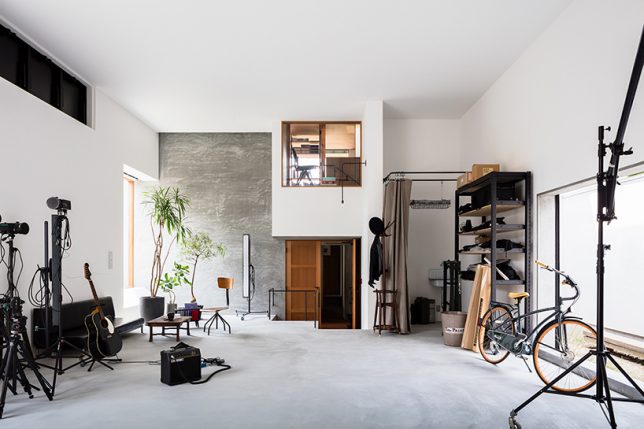
House for a Photographer by FORM, Shiga, Japan

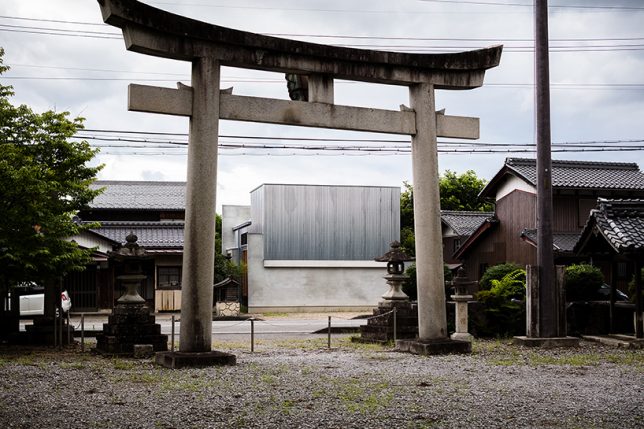
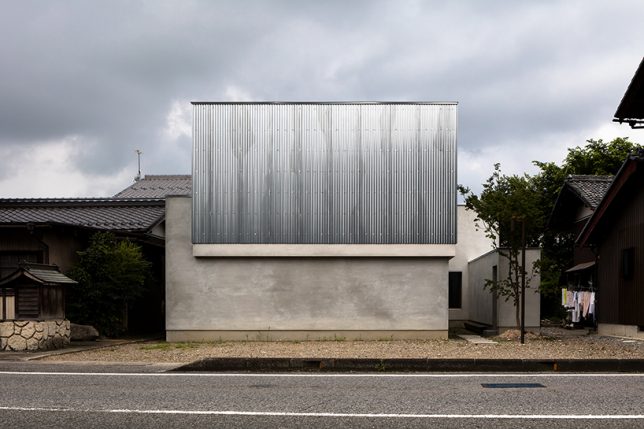
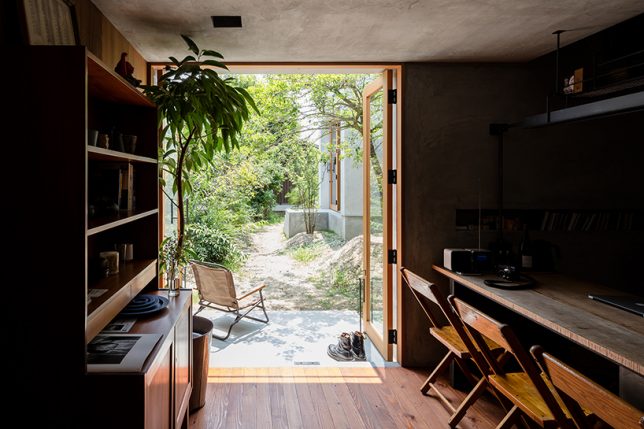
The client who commissioned this home from FORM is a photographer who wanted a studio and gallery for his work attached to his living quarters, all on a compact L-shaped lot. From the outside, it looks like an impenetrable box, but take the narrow alleyway into the gallery space and you’ll find a private courtyard that feels like an inner sanctum, echoing the atmosphere of the temple across the street. The building’s only windows look out onto the courtyard instead of the street, resulting in a mood of turning inward.

W House by Cukrowicz Nachbaur, Bezau, Austria

The shape of this residence in Austria by Cukrowicz Nachbaur might be that of an archetypal home, but its street-facing facade covered in timber slats certainly isn’t. Located close to another rural residence, this home gets privacy by arranging a two-story volume next to a one-story volume with a courtyard between them. All the home’s windows and sliding glass doors are arranged to look out onto this courtyard, aside from a few skylights, and first-floor porches are set beneath the overhanging second story to create secluded outdoor areas.

Domus Aurea by Alberto Campo Baeza & Gilberto L. Rodriguez, Monterrey, Mexico

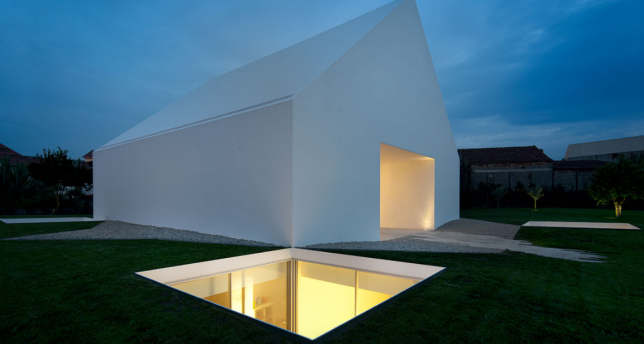
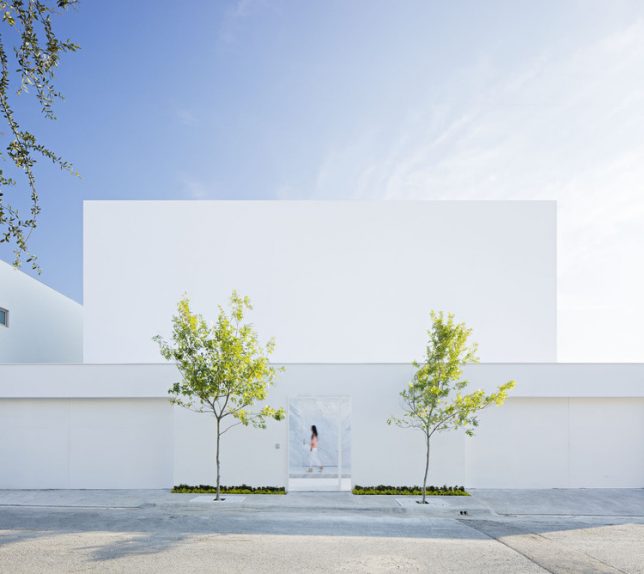
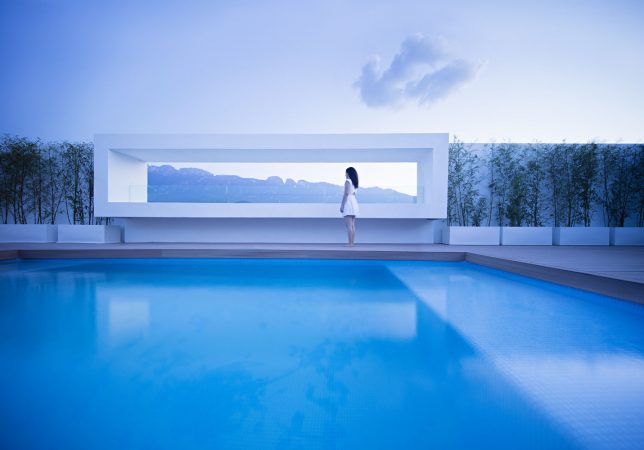
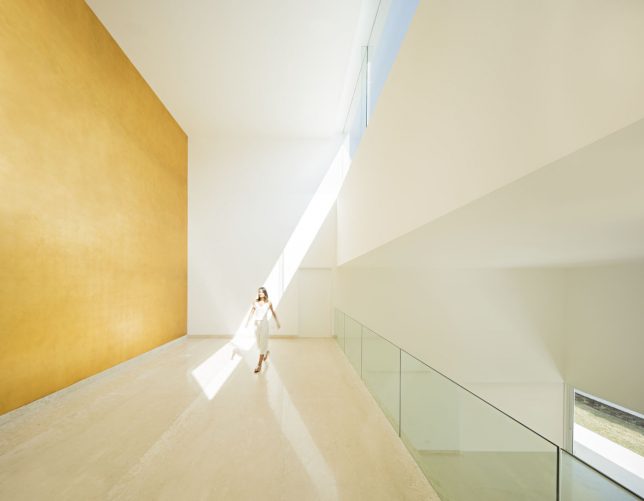
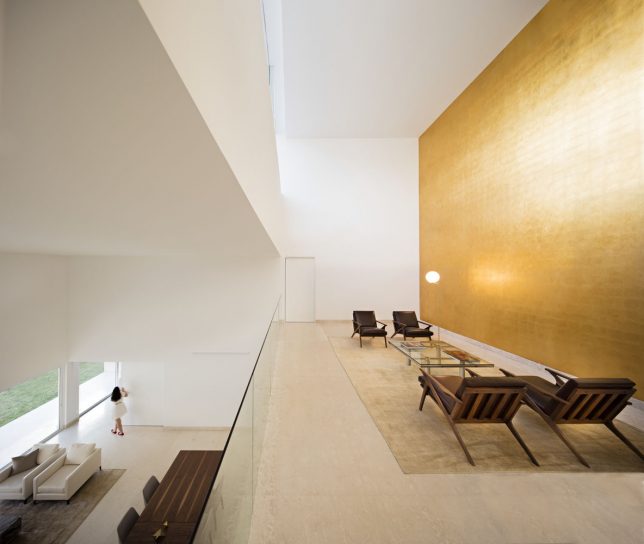
Modeled on the Emperor Nero’s house in Ancient Rome as well as the vivid works of Mexican architect and engineer Luis Barragán, ‘Domus Aurea’ by Alberto Campo Baeza features a gilded interior wall designed to reflect carefully targeted golden light throughout the space. Though the home’s openings amount to no more than some skylights and a narrow line of glazing on the first floor, the light bounces from one surface to the next. The architect placed the most public common areas on the first floor, the private rooms on the second and a swimming pool on the roof.

Mountain House by Hiroki + Tomoko Sekiguchi, Hyogo, Japan

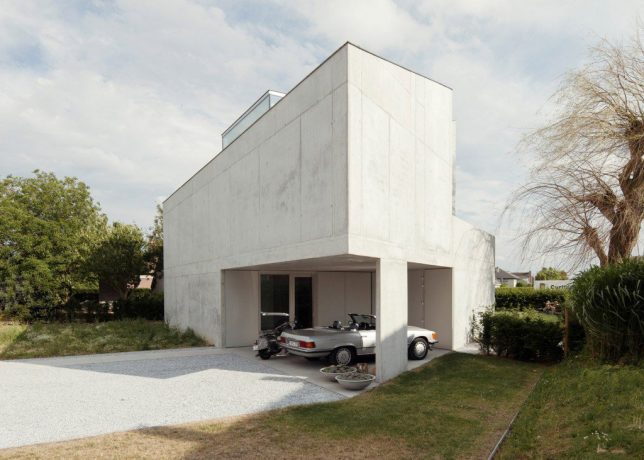
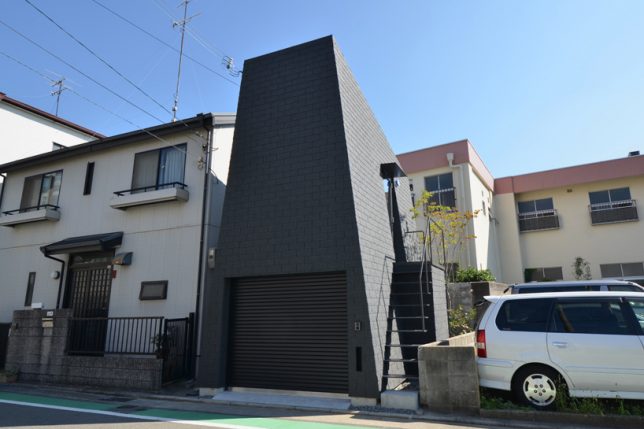
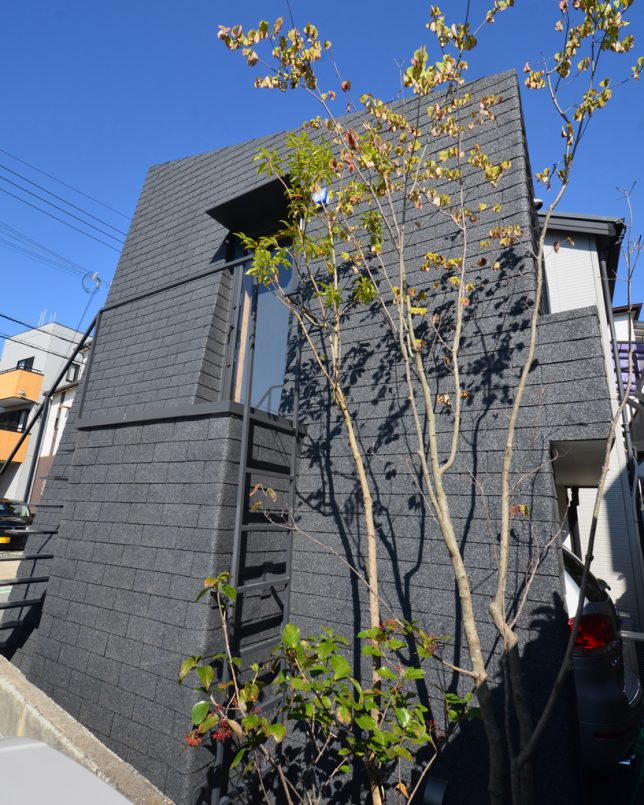
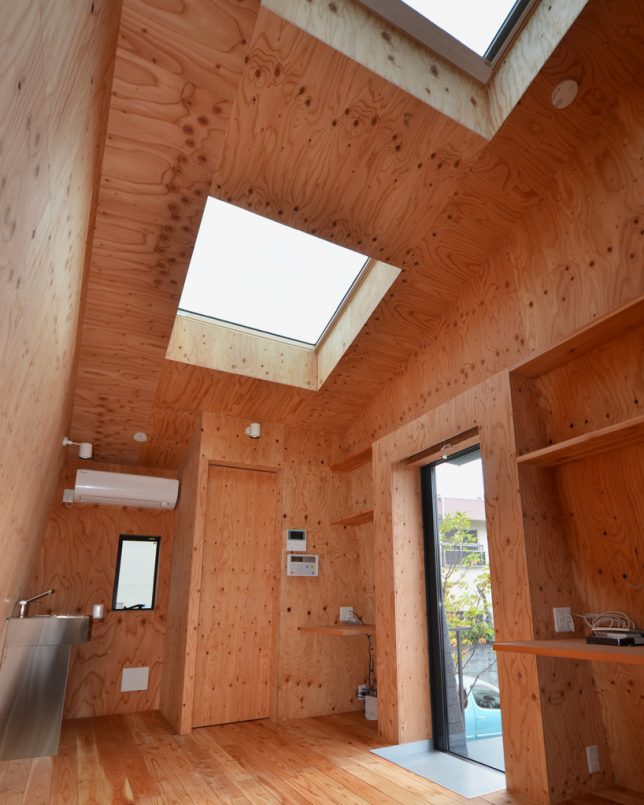
Situated on a tiny lot practically sitting right on top of its neighbors, this home by Hiroki + Tomoko Sekiguchi gains some measure of privacy by opening up to the sky instead. The sloped walls create a little more space between the home and the houses next door, and the living spaces sit atop a parking garage for the owners’ vehicle.

Next Page – Click Below to Read More:
No Windows No Problem These 12 Houses Are Bright Beautiful Private

Share on Facebook


[ By SA Rogers in Architecture & Houses & Residential. ]

[ WebUrbanist | Archives | Galleries | Privacy | TOS ]


WebUrbanist

 
Comments Off on No Windows, No Problem: These 12 Houses Are Bright, Beautiful & Private

Posted in Creativity


These guys captured the total solar eclipse from a stratospheric balloon

26 Aug

For all of the many (many many) eclipse photos and videos that have been release, this is probably a view you haven’t seen yet: the shadow of the moon traversing Oregon, as seen from a stratospheric balloon.

The video was captured by Liem Bahneman, a self-proclaimed ‘armchair aeroscience geek’ who posted the final version to his Vimeo account alongside this description:

I launched a camera-laden balloon before totality passed over Central Oregon. There were three still cameras (one being a Ricoh Theta 360) and a GoPro recording video. This is the edited video, showing launch, the shadow of totality passing, and the last 40 seconds is the last of the footage before the battery died.

The video more or less explains itself. After reaching altitude around the 40-second mark, you begin to see the shadow of the moon creep over the landscape from the right of the frame… and keep creeping until it’s pass through and off into the distance stage-left. It might not be as awe-inspiring as watching the sun become obscured, but it’s still somehow mind-blowing to see so much of the Earth cast in darkness.

Articles: Digital Photography Review (dpreview.com)

 
Comments Off on These guys captured the total solar eclipse from a stratospheric balloon

Posted in Uncategorized


These incredibly intricate pinhole cameras are made from clay

22 Aug

$ (document).ready(function() { SampleGalleryV2({“containerId”:”embeddedSampleGallery_8966365626″,”galleryId”:”8966365626″,”isEmbeddedWidget”:true,”standalone”:false,”selectedImageIndex”:0,”startInCommentsView”:false,”isMobile”:false}) });

Steve Irvine is an incredibly talented ceramic artist, but he’s been passionate about photography for almost as long as he’s been working with clay. “It only seems natural,” he says, “that the two passions should come together.” And when they do, the ceramic pinhole cameras you see above are the result.

In the gallery above, each camera is followed by a sample photograph taken with the selfsame camera.

Most are made using a combination of throwing and hand-building techniques, glazed and fired by Irvine, and then improved upon with little antique dials, gadgets and other accents until the final product looks like something out of your favorite steampunk universe. As Irvine explains on his website, these creations are fully-functional cameras:

These are fully functional pinhole cameras. They have no lens, light meter, viewfinder, or automatic shutter, and yet they can produce gallery quality images. I use black and white photo paper in them for the negatives. The negatives are either 4 x 5 inches, or 5 x 8 inches.

You can find more examples of Irvine’s pinhole photography at this link. And if you want to see how one of these cameras is made, you can find a step-by-step tutorial on Irvine’s website here.


All photos by Steve Irvine and used with permission.

Articles: Digital Photography Review (dpreview.com)

 
Comments Off on These incredibly intricate pinhole cameras are made from clay

Posted in Uncategorized


Deadly Pleasures: The Devil’s in the Details of These Dark Miniature Scenes

19 Aug

[ By SA Rogers in Art & Sculpture & Craft. ]

Every dumb thing we humans do in this modern-day ‘civilized’ world is laid out in excruciating detail in these miniature scenes by artist Frank Kunert – not to mention our fears and anxieties. A row of public toilets is placed on a stage so strangers can watch you poop. A bride and groom poise at the end of a diving platform far too high above a pool, their friends and family watching below. A children’s slide empties onto a highway, and a bassinet is equipped with a desk so the little one can get to work as soon as possible. Pipes funnel human waste straight from the toilet upstairs into a television set, and a balcony projects into the path of a train.

Each of these works is a darkly humorous critique mocking us for contemporary habits and practices, from setting ourselves up for danger a la the Darwin Awards to creating cycles of consumption that kill us instead of satisfying us. Art museums are literally out of reach. The only living tree visible in the neighborhood is solely accessible via a dangerous staircase. A beautiful modern villa cuts off sunlight to the hovel below.

Some of the scenes look ordinary upon first glance, and it takes a moment to realize what’s wrong with them. Doors on the side of an apartment tower might lead into nothing but air, or a single chair at a formal dining table is placed out in the cold while the rest are cozy indoors.

Kunert painstakingly crafts each of these miniature scenes as part of his series Photographs of Small Worlds, and then documents them for his portfolio. He works on each one until it captures the mood and message he’s aiming for without any digital manipulation. You can see more of his work at his website, which offers much of his portfolio in photo book form, or in person September 10th 2017 through January 28th 2018 at Germany’s Museum Boppard.

Share on Facebook


[ By SA Rogers in Art & Sculpture & Craft. ]

[ WebUrbanist | Archives | Galleries | Privacy | TOS ]


WebUrbanist

 
Comments Off on Deadly Pleasures: The Devil’s in the Details of These Dark Miniature Scenes

Posted in Creativity


Happier Campers: Take Your Gear to a New Level With These 15 Innovations

16 Aug

[ By SA Rogers in Destinations & Sights & Travel. ]

Elevate your camping style with the latest high-performance gear like twig-burning stoves, tree tents, bear-proof coolers and portable loungers. These major upgrades will keep you dry, warm, fed and comfortable no matter how rugged your destination, even when you’re traveling on foot instead of in a DIY RV, fancy pop-up car tent or luxuriously equipped off-road trailer.

Biolite Basecamp Stove

By now, you’ve probably seen the cool BioLite, a compact portable stove that burns twigs and then uses the heat as energy to power your gadgets (if not, you should check it out!) Now, the company is taking things up a notch with the BaseCamp, a portable grill that runs on larger pieces of wood. Smaller pieces of firewood or fallen branches both can be placed in the stove’s opening to cook your food – even in camping locations that don’t allow campfires – and an orange power pack on the side collects the energy. The BaseCamp also features a built-in light.

Scrubba Portable Laundry Wash Bag

Prefer not to tote dirty laundry around on an extended camping trip, or want to freshen up your favorite hoodie halfway through? The Scrubba is a brilliantly simple way to wash textiles. Its interior is lined with little nubs that scrub your garments as you massage the exterior of the bag for a machine-quality wash in three minutes. That’s more effective than using a bucket, and you never even have to get your hands dirty. The bag weighs just 5 ounces and doubles as a dry bag.

Tentsile Tree Tent

Marketing itself as a ‘portable tree house,’ the Tentstile tree tent lets you sleep high above the ground (how high is up to you!) by attaching to three nearby tree trunks. Stack them on top of each other to create temporary treehouse cities with your friends, or hang hammocks underneath them for an extra dry sleeping space. The number of people you can sleep using these systems is only as limited as the tree trunks around you.

Yeti Hopper Cooler

Dubbed ‘the world’s toughest cooler,’ the Yeti has become a household name for its durability and dependability. The hard-sided Yetis keep food and ice colder for longer than any other cooler on the market, and now the company is offering soft-sided versions, too, like the Hopper and the Hopper Flip. Each one is waterproof, including the Hydrolok zipper, and can withstand a bear mauling.

Sea to Summit Tarp Poncho

Heading into rainy territory? Keep your gear – and yourself – dry with the Sea to Summit Ultra-Sil Nano Tarp Poncho. Made of lightweight waterproof fabric, it’s big enough to accommodate your pack while you’re hiking, and then converts from a wearable into an ultralight 2-person shelter.

Next Page – Click Below to Read More:
Happier Campers Take Your Gear To A New Level With These 15 Innovations

Share on Facebook


[ By SA Rogers in Destinations & Sights & Travel. ]

[ WebUrbanist | Archives | Galleries | Privacy | TOS ]


WebUrbanist

 
Comments Off on Happier Campers: Take Your Gear to a New Level With These 15 Innovations

Posted in Creativity


These Nikon videos break down the gear and settings you need to shoot the eclipse

08 Jul

The total solar eclipse that’s about to take place next month presents an extremely rare photo opportunity. We have some pointers (and a little bit of opinion) coming at you from an expert in the coming days, but in the meantime, the folks at Nikon have put together a useful pair of tutorial videos that will help you nail that perfect eclipse shot when the time comes.

To be clear: these videos were created by the Nikon USA YouTube channel. To that end, there are a few points in the gear video specifically where the branding is laid on pretty thick; however, if you can get past the PR, the information is very useful and, in fact, brand-agnostic. Photographer Lucas Gilman knows his stuff.

Nikon broke down their tutorial into two 3-minute videos: Gear & Prep and Camera Settings. If you’re planning to shoot the eclipse, grab yourself a pen and pad, scroll down, and click play.

Part 1: Gear and Preparation

The first stop on the gear and prep train is safety—get proper eye protection and slap a solar filter onto your lens to prevent sensor damage. Then, Gilman touches on the kind of camera and lens you should choose.

For his needs, he’s picked a D500 APS-C body for a bit of extra reach, and a Nikkor 200-500mm lens attached to a Nikon 1.4x teleconverter.

Finally, Gilman outlines some of the accessories you’ll want to bring along. Namely: a stable tripod, extra memory cards, a few fully charged batteries, and a cable release.

Camera Settings

Now that you have the proper gear, it’s time to set up your camera. In the second video, Gilman discusses how to determine the proper exposure for two key eclipse shots: a closeup of the sun at totality and photographing the crescent.

While your settings will obviously vary depending on the conditions on the day you’re out there shooting, the tips in the video above will get you most of the way there.


Photos courtesy of Nikon USA

Articles: Digital Photography Review (dpreview.com)

 
Comments Off on These Nikon videos break down the gear and settings you need to shoot the eclipse

Posted in Uncategorized


These Courses WILL Make You a Better Photographer (70% Off Today)

02 Jul

We’re already halfway through our popular mid year sale and we’re really excited to offer you this deal, because we love helping people discover how to take great photos and we know this one will help do just that.

For the next 30 hours we’re offering our entire range of online photography courses at a massive 70% OFF.

Normally $ 99 each, today you can get any of our five courses for just $ 29 (USD) each. That’s incredible value!

These step-by-step courses created by talented photography experts include:

  • Night Photography by Jim Hammel – released just this year so that you can take amazing photographs at night
  • Lightroom Mastery by Mike Newton – every photographer should have a copy of this to create perfect photos!
  • Lightroom Mastery: People & Portraits by Mike Newton – will help you transform dull headshots into stunning portraits
  • Photo Nuts and Bolts by Neil Creek – the ideal course for the beginner photographer
  • Photo Nuts and Shots by Neil Creek – creative photography advice from a pro so you can get off auto

Each course is packed with series of tutorials, with demonstrations shot in high-quality video by professional photographers, and you can follow along at your own pace.

You get lifetime access to these courses, so you don’t have to rush to finish them and you can go back and review topics any time you like.

Check out all the discounted courses here on our courses page for the next 30 hours only and start improving your photography today.

The post These Courses WILL Make You a Better Photographer (70% Off Today) by Darren Rowse appeared first on Digital Photography School.


Digital Photography School

 
Comments Off on These Courses WILL Make You a Better Photographer (70% Off Today)

Posted in Photography


Optical Illusion Architecture: These 11 Buildings Are Not What They Seem

08 Jun

[ By SA Rogers in Architecture & Public & Institutional. ]

Pinched, warped, rippled, steeply angled and mirrored until they disappear into the sky, these buildings are not quite what they seem at first glance. Sometimes, it takes a nice long look at their outlines and proportions to determine where their facades actually begin and end, and how they can possibly be balanced so precariously.

Rachel Raymond Mirror House

In the space once occupied by the historic Rachel Raymond House in Belmont, Massachusetts, a beautiful mirrored illusion rose: ‘Mirror House’ by Pedro Joel Costa Architecture and design, which pays tribute to the original home’s modernism while looking to the future.

The Dancing House, Prague

Prague’s ‘Dancing House,’ also known as ‘Fred and Ginger,’ is actually the Nationale-Nederlanden building by architect Vlado Milunic, built in cooperation with Frank Gehry in 1996. One of the dual towers of the building appears to be warped and distorted, as if someone squished it up against the other.

Australian Customs Service Building, Melbourne

From most angles, it’s virtually impossible to tell what’s going on with the facade of the Australian Customs Service Building in Melbourne, clad as it is in an unusual graphic black and white pattern. The theme is reportedly repeated inside.

Pinnacle at Symphony Place, Nashville, Tennessee

The tall and thin mirrored Pinnacle at Symphony Place almost manages to disappear into the sky altogether when conditions are just right, becoming like a ghostly suggestion of a building instead of something decidedly solid and real.

Lucid Stead by Phillip K. Smith III, Joshua Tree, California

Alternating its logs with long stretches of mirror, artist Phillip K. Smith III makes his Joshua Tree installation ‘Lucid Stead’ blend with its environment so effectively it seems to be little more than a few dark brown lines floating in the desert.

Next Page – Click Below to Read More:
Optical Illusion Architecture These 11 Buildings Are Not What They Seem

Share on Facebook


[ By SA Rogers in Architecture & Public & Institutional. ]

[ WebUrbanist | Archives | Galleries | Privacy | TOS ]


WebUrbanist

 
Comments Off on Optical Illusion Architecture: These 11 Buildings Are Not What They Seem

Posted in Creativity


Avoid These 5 Common Camera Setting Mistakes Made By Beginners

31 May

Over the years, I’ve taught many new photographers and observed how they used their cameras. I have noticed a handful of common mistakes that many of them make. While there is a lot more to learn about photography, if you can avoid or fix these issues alone, you will find that your photographs will be much sharper and of much better quality.

Avoid These 5 Camera Setting Mistakes Typically Made By Beginners

1. Not raising the ISO high enough

It used to be commonly taught that you always needed to go as low as possible with the ISO for digital cameras. This was because early digital cameras had horrible noise at higher ISOs. These days, that has completely changed. Newer digital cameras can shoot with incredible quality at ISO 800, 1600, 3200, and even 6400 for higher end cameras. The noise is much less noticeable than it used to be, and it is much more pleasant looking.

Avoid These 5 Camera Setting Mistakes Typically Made By Beginners

This has changed how we can shoot. While your ISO should still be as low as possible when the camera is on a tripod when you’re shooting handheld you will often want to raise your ISO up much higher. Unless I am purposely shooting with a very large aperture such as f/2.8, I typically keep my ISO at 400 in sunlight, 800-1600 in light to dark shade, and 3200 and 6400 when handheld at dusk or at night. This allows me to use a faster shutter speed to offset handheld camera shake or motion in subjects, along with a decent depth of field. My shots are much sharper because of this.

Unless you are shooting in Manual Mode, I suggest taking your camera off of auto-ISO. You never want to let your camera choose two of the three settings (shutter, aperture, and ISO) because it will mess up your photographs a lot of the time. The camera should only be choosing one of those three settings for optimal use.

2. Using a shutter speed that’s too slow

Avoid These 5 Camera Setting Mistakes Typically Made By Beginners

To offset the handheld camera shake, the shutter speed always needs to be ONE over the focal length of your lens. So if you are shooting with a 50mm lens, your camera will need to be at 1/50th of a second (or faster) to make sure the image is sharp. This comes even more into play with a zoom lens because a 300mm lens will need a 1/300th of a second shutter speed in order for the image to not look blurry. This is because slight vibrations are much more noticeable when you magnify a small area in the distance. This is also why I will often raise my ISO when zooming at far distances.

For subjects in motion, you will need a fast enough shutter speed to freeze them. I prefer a minimum of 1/250th of a second to freeze people walking. You will need an even faster shutter speed as you get to subjects such as cars.

3. Not using exposure compensation (+/-) or the right meter mode

Avoid These 5 Camera Setting Mistakes Typically Made By Beginners

If you are using Aperture or Shutter Priority mode, Exposure Compensation is your best friend, particularly in scenes with tricky lighting. Your camera’s light meter is not creative – it wants to make everything look a neutral gray, but that is problematic in images with lots of dark or bright tones. Maybe you want those tones to look gray for creative purposes, but most likely, you will want them to be true to the scene. This is where Exposure Compensation (+/-) comes into play.

For instance, in scenes with lots of bright snow or a bright sky, this could trick the camera into thinking that it needs to overly darken the image to make those white areas look gray. Or if you are shooting at night, or in a dark alleyway, the camera’s light meter will try to make those dark tones look like a lighter gray, thus brightening the image too much. Similar problems can also appear when shooting in areas with both bright highlights and dark shadows, or if your subject is backlit.

On a related note, many photographers keep their camera on the wrong metering mode. There are three main metering modes; Evaluative, Center-weighted, and Spot metering. Evaluative will expose for the entire scene, Center-weighted will expose based on the spot that you focus on and an expanded area around it, and Spot metering will measure the light based on only the spot that you point to. I personally find Evaluative to be too broad and Spot to be too focused, so I mostly use Center-weighted metering mode.

Read more here: Cheat Sheet: Understand Metering Modes On Your Camera

4. Not getting the focus point right

Avoid These 5 Camera Setting Mistakes Typically Made By Beginners

Some photographers leave their focusing completely up to the camera. This is a terrible idea as the camera will often focus on the wrong point, ultimately ruining your image. You need to be in control of your focusing and put the focus on the most important subject in the image.

On a similar note, it is common for photographers to get that new 50mm f/1.8 or f/1.4 lens and immediately think that they need to shoot everything at f/1.4 because they can. Some situations will be good for f/1.4, but it’s important to realize how shallow the depth of field is at that aperture.

If you are shooting with a really shallow depth of field, the focus needs to be perfect and exactly right on the most important subject. If you are photographing a person and you put the focus point on the person’s ear or nose instead of their eyes, it will be noticeable and it will mess up the photograph. Often, I prefer to shoot portraits like this at f/4 instead of f/1.8 or f/2.8. There is still a beautiful background with bokeh, yet more of the person is in focus. This minimizes any focusing mistakes as well.

5. Using image stabilization when using a tripod
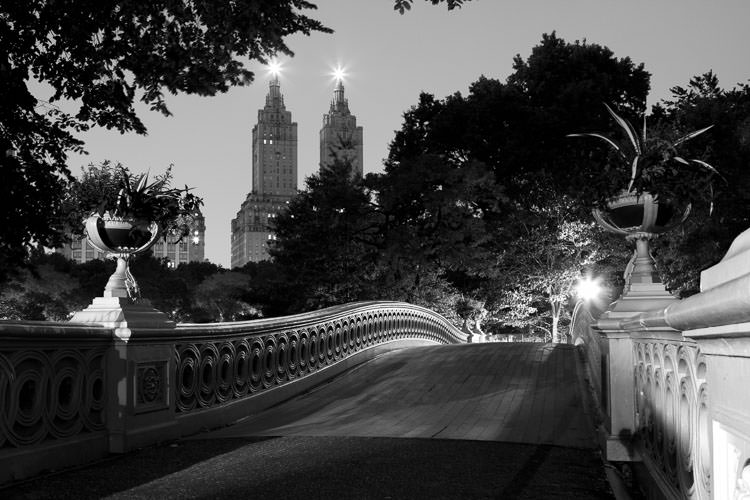
Avoid These 5 Camera Setting Mistakes Typically Made By Beginners

The image stabilizer in your lens or camera will make your photographs sharper when handheld. However, it can also create minor vibrations while keeping the camera steadier, and these vibrations can actually backfire when you are on a tripod. Sometimes they will introduce blur. So always make sure to turn the image stabilizer off when you are using a tripod. If you ever notice your photographs on a tripod are slightly blurry, this issue and wind are the most likely culprits.

Conclusion

There you have it. The bottom line is that if you can learn to conquer and avoid these five common beginner mistakes, you’ll be on your way to better photography.

The post Avoid These 5 Common Camera Setting Mistakes Made By Beginners by James Maher appeared first on Digital Photography School.


Digital Photography School

 
Comments Off on Avoid These 5 Common Camera Setting Mistakes Made By Beginners

Posted in Photography