RSS
 

Posts Tagged ‘That’s’

The ‘Chairpod’ is a chair-tripod hybrid that’s either ridiculous or brilliant

22 Jan
Photos via DC Watch

Sometimes an idea is so crazy, it might just be brilliant—what might be described as “wonderfully weird.” The upcoming Chairpod by Japanese tripod manufacturer Velbon might be one of those inventions… or it might just be weird. We haven’t decided yet, so we’ll leave that judgement up to you.

Originally reported on by Japanese site DC Watch (translated version here), the Chairpod HY 127 is a hybrid between a tripod and a three-legged folding chair that was originally exhibited at CP+ 2017 (how did we miss that!?). One of the legs, in this case, has a standard tripod camera mount on the top that can be extended out to bring the camera level with your face. At max length, it’s reportedly 117 centimeters tall, or about 3.8 feet, without the optional extension rod. And if you won’t want to use it sitting down, it turns into an odd sort of monopod.

According to DC Watch, the Chairpod will be released through major retail chains in Japan “in late January”, and the publication expects it to cost about 19,850 Yen (~$ 179 USD). No word yet on whether or not this quirky masterpiece will make it to the US or European markets.

Articles: Digital Photography Review (dpreview.com)

 
Comments Off on The ‘Chairpod’ is a chair-tripod hybrid that’s either ridiculous or brilliant

Posted in Uncategorized


HDR is enabled by default on the iPhone 8 Plus, and that’s a really good thing

15 Oct

Capturing HDR (high dynamic range) photos using an iPhone or iPad camera isn’t a new feature, but using it in the iPhone 8 Plus is the first time I’ve been wowed by it.

HDR images are balanced and realistic, to the point where you may not even think about whether a photo is HDR or not. In fact, in the iPhone 8 and iPhone 8 Plus, Apple is so confident in the results that HDR is an automatic setting. When I mentioned to a friend that I was testing the HDR feature, he visibly winced, but there’s no need: Apple’s implementation shows that the term “HDR” doesn’t have to be associated with the garish, hyperreal look of a lot of HDR imagery. They’re often just darn good photos.

HDR Auto by default

On iPhone 7, iPhone 7 Plus, and earlier models, even under iOS 11, the HDR mode can be manually turned on, off, or set to Auto in the capture interface. On those devices, Auto means the camera decides whether HDR should kick in to improve a photo when capturing scenes under low light or with a lot of tonal contrast (such as a bright sky and dark foreground). A small yellow “HDR” icon appears at the top of the screen when it’s active.

Capturing the HDR photo saves two images: the original metered image and a single HDR version that is a blend of three exposures (regular, light, and dark, which are recorded and combined in-camera, not saved as individual images). You can opt to hold onto that original by going to Settings > Camera > HDR (High Dynamic Range) and choosing Keep Normal Photo.

For the iPhone 8 and iPhone 8 Plus (and the forthcoming iPhone X), however, auto HDR is enabled by default. And it’s not exactly the same HDR effect used by previous devices. The 8 and 8 Plus include an image sensor with larger pixels and improved silicon – a new ISP (image signal processor) and more powerful A11 Bionic main processor. Together they add more processing oomph, resulting in more dramatic HDR effects – without taking it too far.

I tested using an iPhone 8 Plus, but the feature applies to the iPhone 8 and iPhone X, as well.

HDR in the Real World

Taking the iPhone 8 Plus outside on a sunny day provided dramatic results. In fact, it may subtly alter the way you take photos with the iPhone. Bright areas, such as clouds in the sky, appeared blown out while framing the shot. Typically, the way to compensate for that would be to reduce the exposure before you take the photo (tap the screen to set the focus and exposure, and then drag the brightness indicator down to darken the scene). However, in the captured photo, the HDR feature restored detail in the clouds and often presented blue skies where they weren’t visible in the preview.

Preview image
Final image

If you’re shooting with Live Photos turned on (which records a few seconds of video around the still image), when you review your images in the Photos app, the “before” image briefly appears before cross-dissolving into the final HDR image.

Comparing iPhone 8 Plus and iPhone 7 Plus

Capturing the same scene with an iPhone 8 Plus and an iPhone 7 Plus reveals general improvement in the new model. Although both cameras’ HDR did a good job dealing with overexposed clouds, the iPhone 8 Plus tended to offer more graduated tones. Overall, it also did a better job of filling in shadows; the iPhone 7 Plus pulled more toward reducing exposure throughout to compensate for the brightness.

HDR photo with iPhone 7 Plus
HDR photo with iPhone 8 Plus

That adjustment is welcome when photographing people. Often you don’t want to turn on HDR for portraits, because the effect exaggerates the contrast in facial features. But if Auto HDR is always available, you won’t have that control (unless you turn off Auto HDR in the Camera settings). Since the iPhone 8 Plus is also lifting the shadows, the effect isn’t as pronounced.

iPhone 7 Plus iPhone 8 Plus

Sometimes, Auto HDR didn’t engage under conditions when I expected it would, and still produced good results. When photographing in low-light, the iPhone 8 Plus turns first to increasing ISO and other software processing to create a usable image.

iPhone 8 Plus telephoto lens, no HDR
iPhone 8 Plus wide angle lens, no HDR

Conclusion

Making HDR a transparently automatic feature on the iPhone 8, iPhone 8 Plus, and iPhone X is a smart move on Apple’s part. Intelligent HDR application was one of the things that made the Google Pixel’s camera so good, so it seems wise for Apple to follow suit. Although Auto HDR can be turned off in the Camera settings, letting you choose when to activate HDR mode, in my testing I found little reason to do so.

Articles: Digital Photography Review (dpreview.com)

 
Comments Off on HDR is enabled by default on the iPhone 8 Plus, and that’s a really good thing

Posted in Uncategorized


Casio launches intense-looking GZE-1 action cam that’s waterproof to 50 meters

13 Oct

Casio just announced an action camera that it claims is drop-, water- and freeze-proof, and comes with a 13mm f/2.8 equivalent lens. It’s called the GZE-1, and it’s the first of a new line of Gz EYE models that are aimed at extreme sports enthusiasts.

The camera is said to use G-Shock technology borrowed from the Casio’s sports watch brand, and can be controlled either by a Casio Pro Trek watch, a smart phone or the dedicated (and optional) remote controllers, one of which has a LCD screen that allows users to see the action live. The camera itself doesn’t have a viewing screen.

CD controller “GEC-10” PRO TREK Smart “WSD-F20”

Despite having a 21.14-million-pixel 1/2.3-type backlit CMOS sensor, the GZE-1 turns out only 6.9MP still images and FullHD video. It can, however, record frame rates of up to 240fps, and allows users to vary the frame rate during a clip to mix slow-motion with normal motion in the same sequence. This allows action moments to be shown in slow-motion without users having to record the whole sequence at a high frame rate, or having to combined multiple clips of different speeds in post-processing.

Three-axis electronic image stabilization helps to keep movie footage smooth (though it does nothing for stills) and over-sized buttons make the camera easy to control with gloves on. A resin body coating and a urethane bumper helps the camera withstand drops from 4 meters, high pressure blasts from waves, and water in general to depths of up to 50 meters. The body is also IP 6X dust-proof and can operate in temperatures as low as -10°C.

No price has been released yet but the Casio GZE-1 is due to go on sale at the end of the month in Japan… we’re still waiting to see if it becomes available elsewhere in the world.

For more information, see this translated version of the Casio GZE-1 product page.

Articles: Digital Photography Review (dpreview.com)

 
Comments Off on Casio launches intense-looking GZE-1 action cam that’s waterproof to 50 meters

Posted in Uncategorized


Why should you care about the Sony RX10 IV? Phase detection autofocus, that’s why

16 Sep

The Sony RX10 IV is a fixed lens camera with a 1″-type sensor and 24-600mm equivalent lens that can shoot 4K video or stills at 24 fps, but that’s not what we think is interesting about it. The addition of phase detection autofocus is pivotal to all of those features. If you have a little over a minute to spare, we’ll tell you why. And for bonus points, we shot this video entirely hand-held with an RX10 IV and continuous AF turned on.

Sony RX10 IV impressions, sample images and more

Articles: Digital Photography Review (dpreview.com)

 
Comments Off on Why should you care about the Sony RX10 IV? Phase detection autofocus, that’s why

Posted in Uncategorized


Hands-on with AirSelfie, a mini selfie drone that’s on sale now

03 Mar

Hands-on with AirSelfie

Remember AirSelfie? Start your ‘getting off the ground jokes,’ because the mini-drone camera is now on sale to the general public. The company behind the Kickstarter project is in the process of servicing its initial backers.

The device is designed to allow individuals and groups to take self-portraits from a greater distance than an out-stretched arm or selfie-stick will allow. As it has a very short range (20m/66ft) and limited flying time, AirSelfie is technically not classified as a drone. Thus it stands beyond the legislation and licensing laws that complicate flying larger camera drones – meaning that anyone can use one.

Hands-on with AirSelfie

Fitted with a lens with an angle of view (69°) that corresponds with what you’d expect from a 30mm on a 135 body, the camera is capable of capturing far more scenery and the subject’s surroundings from its maximum flying distance from the controller, and the 5MP sensor is good for 1080p HD video at 30fps as well as for stills. A 4GB memory card is built-in to store images, which can be transferred either through the built-in 2.4GHz Wi-Fi to a smartphone or via USB directly to a computer.

Hands-on with AirSelfie

The AirSelfie is controlled through a smartphone app that’s available for Apple and Android devices, and a self-timer allows users to put the phone out of sight before the picture is taken. As the device weighs only 61g it could be susceptible to being blown off course outside, but an undercarriage camera is designed to keep it hovering over the same spot while sonar helps to maintain a consistent height. The sonar also informs the device when it is coming into land so that the fans are slowed and switched off automatically – which makes it safer to catch!

Hands-on with AirSelfie

The four fans are driven by 7.4v brushless motors and powered by a 260mAh lithium polymer battery. On a full charge users can enjoy up to three minutes of flight, but an accessory power bank can deliver 50% charge in just ten minutes, and a full charge in 40 minutes.

Hands-on with AirSelfie

When not in use the AirSelfie can be housed in the back of a charging phone case designed for specific models.

Hands-on with AirSelfie

The company says it has used an anti-vibration construction inside the AirSelfie to reduce the impact of the rotating blades on the quality of image that can be created, but it isn’t clear yet what ISO or shutter speed range the device has to help it avoid camera shake.
The gadget seems very well made and is metal casing appears reasonably robust, while the rotor blades are protected from crash damage as they are positioned within the casing. The noise created will be acceptable outside and at parties, but this isn’t the kind of drone that can be deployed to capture a romantic moment in a restaurant without annoying the other guests.

Hands-on with AirSelfie

Orders for the AirSelfie will be delivered in May/June and it costs £220/€259 with the phone cover and £229/€269 with the power bank instead. For more information see the AirSelfie website.

Articles: Digital Photography Review (dpreview.com)

 
Comments Off on Hands-on with AirSelfie, a mini selfie drone that’s on sale now

Posted in Uncategorized


That’s a Wrap! 15 Building Facades Veiled in Plastic & Cloth

06 Jul

[ By SA Rogers in Architecture & Cities & Urbanism. ]

Stretched or hung around the skeletons of buildings, these membranes made of plastic, fabric and metal mesh act like architectural clothing, diffusing light and obscuring the original forms. From Christo and Jeanne Claude’s iconic Wrapped Reichstag to homes enveloped in translucent ETFE, these veiled structures have an air of mystery, their second skin often made of unexpected materials like plastic bottles or camouflage-printed textiles.

Lucas Cultural Arts Museum by OMA

wrap facade OMA 1

wrap facade oma 2

wrap facade oma 3

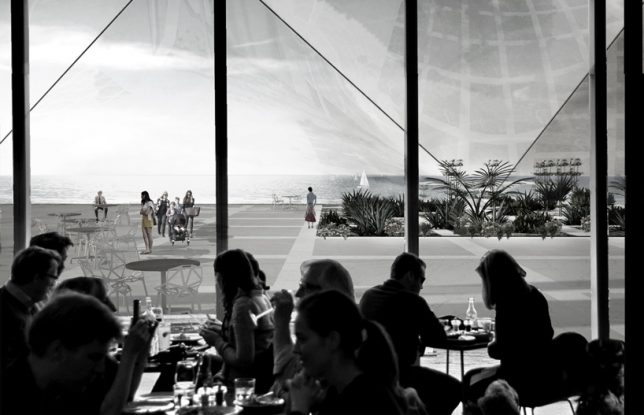
Once it’s finally built, after a long delay that saw its planned building site changing from Chicago to California, the Lucas Cultural Arts Museum (LCAM) could be veiled in a dome-like transparent membrane made of ETFE plastic. Designed by OMA, this second layer creates a sheltered, freely accessible sky park, and can also function as a giant movie screen.

Wrapped Reichstag by Christo + Jeanne Claude

wrap facade reichstag 3

wrap facade reichstag 4

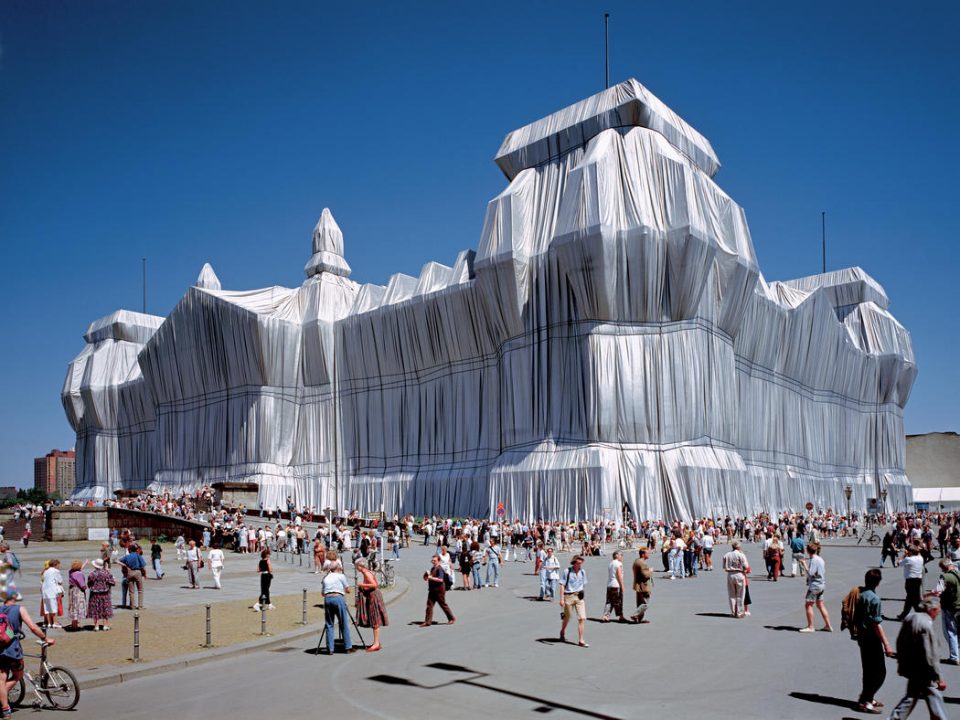
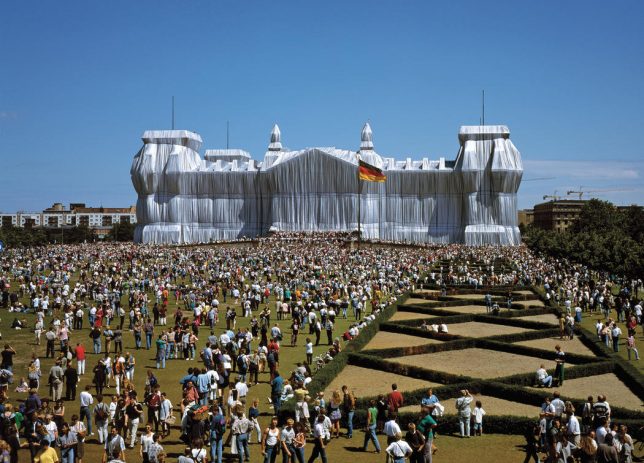
Virtually any structure with a membrane of some sort wrapped around it evokes the iconic work of artistic duo Christo and Jeanne Claude, particularly ‘Wrapped Reichstag.’ In 1995, the artists completely covered the entire Kunstmuseum Bonn with more than a million square feet of aluminum-colored fabric as a symbol for the new Germany after the fall of the Berlin Wall. The project cost $ 15 million USD and remained in place for two weeks.

Shrink-Wrapped Storefront by SO-IL

wrap facade storefront

wrap facade storefront 2

wrap facade storefront 3

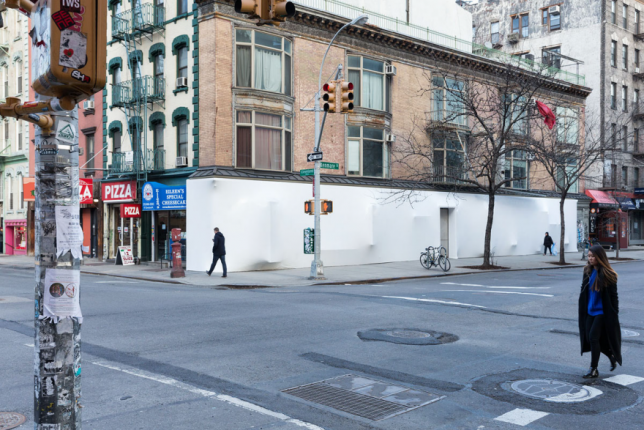
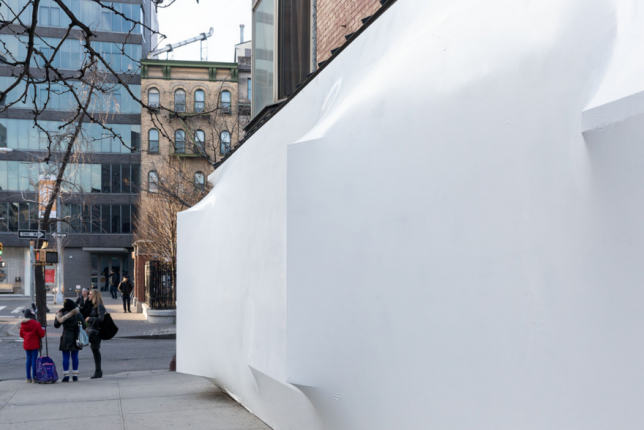
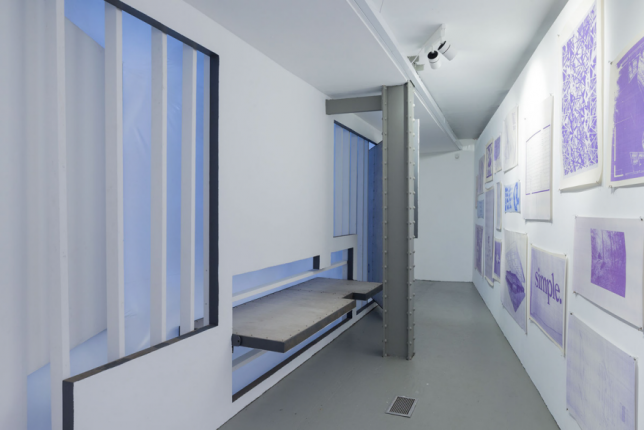
Brooklyn-based studio SO-IL literally shrink-wrapped the famous Storefront for Art and Architecture’s facade in white plastic, creating a mysterious series of bulges and a single entryway. Taking inspiration from the seasonal storage of boats, SO-IL plays with the concept of artistic preservation. It’s actually not unusual for entire buildings to be shrink-wrapped for various purposes, like sensitive renovations, but the company that helped carry out the project noted that artistic usage of the wrapping method is rare. The new facade gave the storefront a snow-white and pristine look that lasted just days as it proved a tempting surface for vandals.

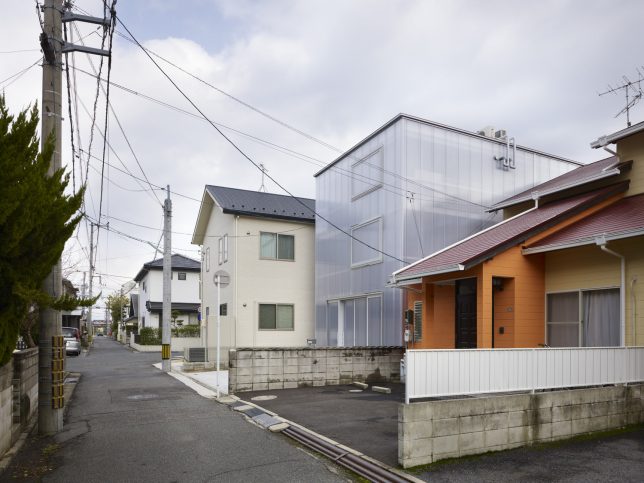
Glowing Home in Japan by Suppose Design Office

wrap facade glowing house 1

wrap facade glowing house 2

wrap facade glowing house 3

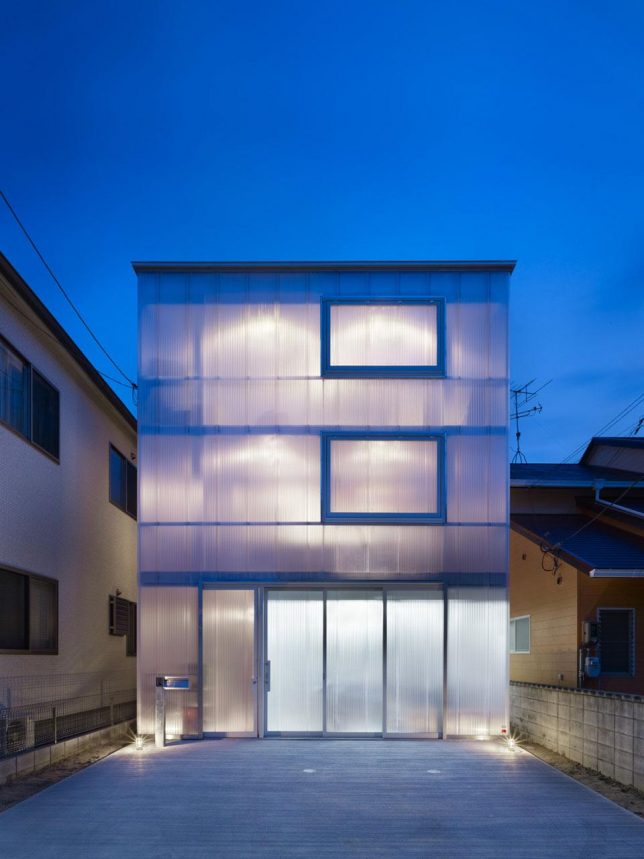
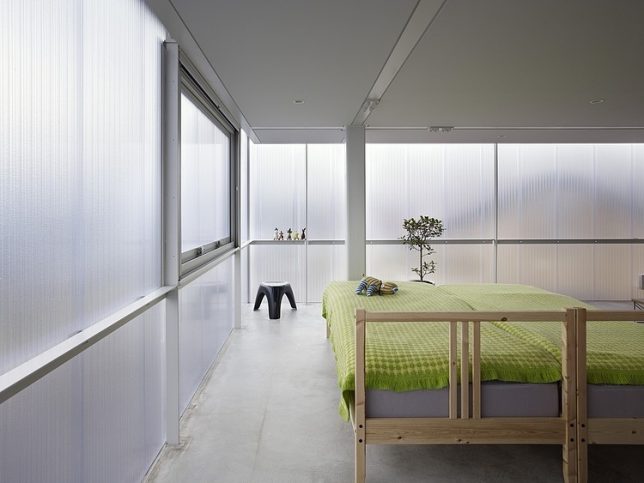
Plastic sheets wrapped around the exterior of a three-story steel home in Hiroshima filter light and create a lantern-like effect at night when illuminated from within. This translucent envelope enables a light-filled home on the inside, which was no small task for architecture firm Suppose Design Office as the narrow property is boxed in on three sides. Reed shades are hung in the upper stories during the summer to keep them from overheating.

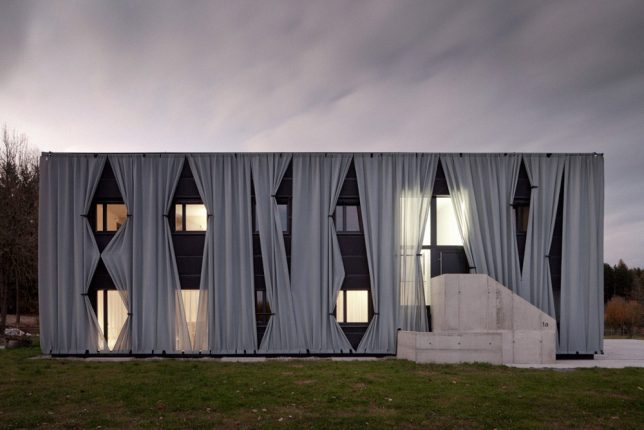
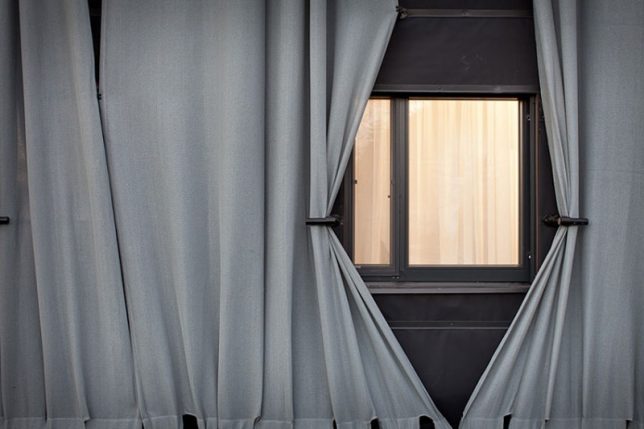
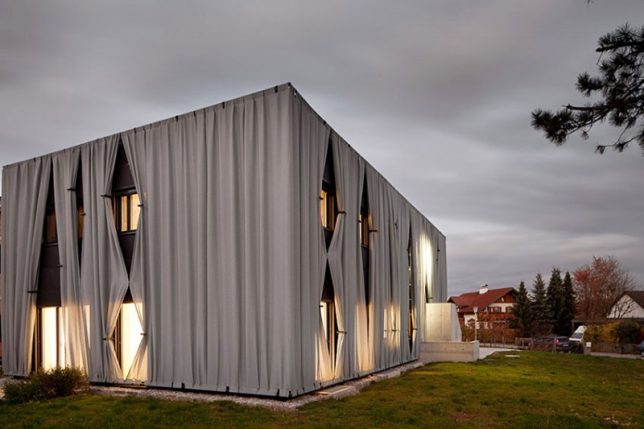
Exterior Curtains on an Australian Home

wrap facade curtains

wrap facade curtains 2

wrap facade curtain house 3

wrap facade curtain house 4

In a reversal of the usual curtained windows, Herzl Arkitekten of Austria covered an entire two-story building in oversized outdoor draperies, veiling the outside of the duplex from view. Pegs hold the curtains open around windows and doors.

Next Page – Click Below to Read More:
Thats A Wrap 15 Building Facades Veiled In Plastic Cloth

Share on Facebook


[ By SA Rogers in Architecture & Cities & Urbanism. ]

[ WebUrbanist | Archives | Galleries | Privacy | TOS ]


WebUrbanist

 
Comments Off on That’s a Wrap! 15 Building Facades Veiled in Plastic & Cloth

Posted in Creativity


Great Gear that’s Back in Stock

20 Jun

What did the camera gear say when it found itself in a pot of soup, again?

We’re back in stock!

A few of our favorite goodies are back in action in the Photojojo Shop. Grab ‘em while we’ve got ‘em!

(…)
Read the rest of Great Gear that’s Back in Stock (0 words)


© laurel for Photojojo, 2016. |
Permalink |
No comment |
Add to
del.icio.us

Post tags:


Photojojo

 
Comments Off on Great Gear that’s Back in Stock

Posted in Equipment


Activeon launches Solar X action camera that’s powered by the sun

09 Jan

A solar-powered action camera that can take 70% of its charge from the sun in just 30 minutes has been announced by Activeon. The Solar X uses a 16MP CMOS sensor to shoot a combination of stills and video footage, and can supplement its two-hour internal battery with four hours of additional charge from a pair of solar panels mounted on its detachable charging case. In Burst Speed Charging mode the case takes half an hour to get the battery from flat to 70%, and then it takes a further half an hour to get it to 100%. 

The Solar X uses a 2″ touch screen for its menu system, as a viewfinder and for viewing footage recorded. Video can be recorded in what the company calls 2160p 4K resolution, but at a rate of 15 frames per second. The camera can manage six frames per second in stills mode, and users will have control of white balance, ISO and exposure values. The camera can also detect when it is mounted upside down. Built-in Wi-Fi allows the Solar X to be controlled via a smartphone app, and the company will launch an automatic cloud service for its users. 

The Activeon Solar X will be available from March at around $ 430. 

For more information see the Activeon website. 

Articles: Digital Photography Review (dpreview.com)

 
Comments Off on Activeon launches Solar X action camera that’s powered by the sun

Posted in Uncategorized


Is it the smartphone or lack of fun that’s killing the camera?

29 Aug

Camera companies are struggling to sell cameras – that much is widely known. But analyst Heino Hilbig says that it’s not smartphones, market saturation or the fallout of the 2008 financial crisis that’s caused this. Instead he argues that it’s the fun-factor and easy operation that the iPhone brought that have made cameras seem less attractive. We think he’s on to something. Read more

Articles: Digital Photography Review (dpreview.com)

 
Comments Off on Is it the smartphone or lack of fun that’s killing the camera?

Posted in Uncategorized


That’s No Moon: Artists Launch Huge Human Head Balloon

11 Jan

[ By Steve in Art & Installation & Sound. ]

ojisora_human_head_balloon_Japan_main
A bizarre art installation based on a dream saw a 50-ft tall balloon become a bizarre “Man In The Moon” as it rose above the streets of Utsunomiya, Japan.

ojisora_human_head_balloon_Japan_1

ojisora_human_head_balloon_Japan_2

Residents of Utsunomiya, a smallish city roughly 60 miles (100 km) north of Tokyo, Japan, experienced the shock of their lives on the evening of December 13th, 2014 when they espied the full moon rising over the horizon.

ojisora_human_head_balloon_Japan_19

ojisora_human_head_balloon_Japan_20

ojisora_human_head_balloon_Japan_21

No doubt dozens of necks suddenly snapped in a group double-take as residents suddenly realized that’s no moon… it’s the enormous inflated head of one of their neighbors!

ojisora_human_head_balloon_Japan_3

ojisora_human_head_balloon_Japan_4

Give credit to Japanese art trio Me (in collaboration with the Utsunomiya Museum of Art) for the uniquely unusual “Ojisora” project, an artistic effort spanning over two years from conception to realization. Its origin rests with one of the three artists, Haruka Kojin (above, right), who as a junior high school student dreamed of an old man’s grossly enlarged and disembodied head floating over town and country .

ojisora_human_head_balloon_Japan_6

ojisora_human_head_balloon_Japan_5

Upon awakening from her dream, Kojin quickly sketched her recollection and then just as quickly forgot about it. Many years later, she came across her sketch and wondered… was there some way to recreate her dream in real life? After consulting with her two co-artists and with the support of the Utsunomiya Museum of Art, Kojin took the first step towards realizing – and sharing on a mass scale – her odd dream from so many years before.

Next Page – Click Below to Read More:
Thats No Moon Artists Launch Huge Human Head Balloon

Share on Facebook


[ By Steve in Art & Installation & Sound. ]

[ WebUrbanist | Archives | Galleries | Privacy | TOS ]


WebUrbanist

 
Comments Off on That’s No Moon: Artists Launch Huge Human Head Balloon

Posted in Creativity