RSS
 

Posts Tagged ‘TECH’

DJI AeroScope demo shows drone tracking tech in action

21 Nov

In October, DJI introduced a new technology called AeroScope that makes it possible for law enforcement and other officials to track drones that broadcast info. The system was launched to address growing concerns about drones being operated in forbidden locations, such as near airports or over wildfires. AeroScope works by picking up telemetry and ID data broadcast by DJI drone.

The Verge recently shared a video showing AeroScope in action.

The system, which is a box-shaped device that includes a touchscreen display, issues an alert when it detects a drone nearby. Officials can pull up the ID and telemetry info the drone is broadcasting and potentially use that to identify the operator. A explained in the video, AeroScope shows the operator’s email address, which officials can message for direct contact.

Speaking to DIY Photography, DJI said that email addresses were displayed to users in a beta version of the AeroScope software, and that such abilities won’t be included in the final version.

There are some limitations to the AeroScope system. For example, drones that aren’t registered won’t provide info that helps officials identify the operator. As well, the system is localized, meaning it can only detect drones within a couple miles of the device. DJI previously explained that it chose this localized tracking method to prevent drone data from being easily amassed in government databases.

Articles: Digital Photography Review (dpreview.com)

 
Comments Off on DJI AeroScope demo shows drone tracking tech in action

Posted in Uncategorized


AI-based upsampling tech creates high-res versions of low-res images

01 Nov

Upsampling image and video files usually leads to pixelation and soft textures, simply because algorithms are not capable of replacing non-existing image detail. But scientists at the Max-Planck Institute for Intelligent Systems in Germany have come up with a clever solution that is capable of producing better results than anything we’ve seen so far.

The team has developed a tool called EnhanceNet-PAT, which is capable of creating high-definition versions of low-resolution images, using artificial intelligence. It’s not the first attempt at solving the super-resolution task but the approach is a new one.

Talking to Digital Trends, Mehdi M.S. Sajjadi, a member of the research team said

“Before this work, even the state of the art has been producing very blurry images, especially at textured regions. The reason for this is that they asked their neural networks the impossible – to reconstruct the original image with pixel-perfect accuracy. Since this is impossible, the neural networks produce blurry results. We take a different approach by instead asking the neural network to produce realistic textures. To do this, the neural network takes a look at the whole image, detects regions, and uses this semantic information to produce realistic textures and sharper images.”

To train the technology, large image libraries were fed into the AI-based system to accumulate knowledge of textures. The neural network is then given the task of upsampling previously downsized images. Finally, the research team compares the results to the original high-resolution image and modifies the algorithm to correct for errors or inconsistencies—this way, the algorithm keeps improving and after some time can work without any human help.

According to the team, photographic applications for the network include upsampling old movies to 4K resolution or restoring old photographs. However, the system could also be used to enhance object detection, for example in image search or mobility applications, such as self-driving cars. It seems that cheesy “Enhance!” trope from CSI is about to become reality…

To learn more about this technology, check out the full research paper here.

Articles: Digital Photography Review (dpreview.com)

 
Comments Off on AI-based upsampling tech creates high-res versions of low-res images

Posted in Uncategorized


Demo: Adobe’s experimental ‘Cloak’ tech is like Content Aware Fill for video

21 Oct

Yesterday at Adobe MAX, the lucky attendees got to see a few of Adobe’s signature “Sneaks”: sneak peeks at crazy features that are in development. And chief among them this year was something code-named Adobe Cloak.

In essence, Adobe Cloak is the video-editing counterpart to Photoshop’s Content Aware Fill. Simply outline the portion of your video that you would like removed—be it a stationary object or a couple walking through your scene—and Adobe Cloak will intelligently erase them from the shot. This is, of course, something VFX artists have been doing for ages, but automating the process to this degree is impressive to say the least.

Adobe sent us a few demo videos of the feature in action, which you can check out above. And if you want more details about how Adobe Cloak works/was developed, Engadget got to sit down with Adobe research engineer Geoffrey Oxholm and VFX product manager Victoria Nece to talk about the technology, which is still “in the experimental stages.”

The bad news is, there’s no current plans to implement it. The good news? They wouldn’t be working on it if they didn’t plan to implement it some time, right!?

Articles: Digital Photography Review (dpreview.com)

 
Comments Off on Demo: Adobe’s experimental ‘Cloak’ tech is like Content Aware Fill for video

Posted in Uncategorized


DJI ‘AeroScope’ tech shares your drone’s ID and location with law enforcement

17 Oct

DJI has launched a security solution that enables law enforcement and other ‘authorized parties’ such as aerospace agencies to receive identifying information and location data from DJI drones being operated nearby.

The company calls this solution AeroScope, and explains that it is based on existing communication technologies. Put simply, AeroScope uses the communications link between a DJI drone and its remote control to broadcast telemetry data and either a serial number or registration number to anyone with an AeroSpace receiver. In addition to location and ID, the data that is being broadcast includes details such as altitude, flight speed, and direction.

AeroScope is already in use at two unspecified international airports and DJI says that testing is underway in other environments.

During a demonstration last week, DJI explained that AeroScope receivers automatically detect when a related drone powers on nearby, plotting the drone’s location on a map alongside its serial or registration number. With this information, officials can determine who the device’s registered owner is; however, DJI was adamant that this system does not broadcast personally identifiable data (though that could change in any jurisdiction that establishes regulations requiring such info).

AeroScope is DJI’s way of addressing growing concerns from law enforcement and governments around the world over the ability (or lack thereof) to identify and track drones that violate UAV regulations. There have been, for example, instances of drones flying in restricted airspaces, at too high of altitudes, over crowds, and over prison yards. Identifying the owner and operator of these drones remains difficult.

On the other side of the debate are concerns over privacy, which is why DJI decided to use existing communications tech to locally transmit info—rather than the Internet. This, explains DJI, prevents governments from automatically cataloging this data in a database. Only authorized parties will have access to the AeroScope receiver.

The receiver is already compatible with all current DJI drones, but other drone makers can configure their products to transmit ID information that can be picked up by AeroScope, in case law enforcement decides to set this up as some sort of ‘standard.’

Press Release

DJI Unveils Technology To Identify And Track Airborne Drones

AeroScope Addresses Safety, Security And Privacy Concerns While Protecting Drone Pilots

12 October 2017 – DJI, the world’s leader in civilian drones and aerial imaging technology, today unveiled AeroScope, its new solution to identify and monitor airborne drones with existing technology that can address safety, security and privacy concerns.

AeroScope uses the existing communications link between a drone and its remote controller to broadcast identification information such as a registration or serial number, as well as basic telemetry, including location, altitude, speed and direction. Police, security agencies, aviation authorities and other authorized parties can use an AeroScope receiver to monitor, analyze and act on that information. AeroScope has been installed at two international airports since April, and is continuing to test and evaluate its performance in other operational environments.

“As drones have become an everyday tool for professional and personal use, authorities want to be sure they can identify who is flying near sensitive locations or in ways that raise serious concerns,” said Brendan Schulman, DJI’s Vice President for Policy and Legal Affairs. “DJI AeroScope addresses that need for accountability with technology that is simple, reliable and affordable – and is available for deployment now.”

DJI demonstrated the system today in Brussels, Belgium, showing how an AeroScope receiver can immediately sense a drone as it powers on, then plot its location on a map while displaying a registration number. That number functions as the equivalent of a drone license plate, and authorities can use it to determine the registered owner of a drone that raises concerns. In March 2017, in response to growing calls by governments worldwide for remote identification solutions, DJI released a white paper describing the benefits of such an approach to electronic identification for drones.

AeroScope works with all current models of DJI drones, which analysts estimate comprise over two-thirds of the global civilian drone market. Since AeroScope transmits on a DJI drone’s existing communications link, it does not require new on-board equipment or modifications, or require extra steps or costs to be incurred by drone operators. Other drone manufacturers can easily configure their existing and future drones to transmit identification information in the same way.

Because AeroScope relies on drones directly broadcasting their information to local receivers, not on transmitting data to an internet-based service, it ensures most drone flights will not be automatically recorded in government databases, protecting the privacy interests of people and businesses that use drones. This approach also avoids substantial costs and complexities that would be involved in creating such databases and connecting drones to network systems.

This system is consistent with DJI’s problem-solving approach to drone regulation, which aims to strike a reasonable balance between authorities’ need to identify drones that raise concerns and drone pilots’ right to fly without pervasive surveillance. DJI has led the industry with safety and security advances such as geofencing and sense-and-avoid technology, and believes the rapid pace of innovation provides the best means to address new policy concerns.

Drone identification settings will be included in DJI’s initial drone software to allow customers to choose the content of their own drone’s identification broadcast to match local expectations both before and after identification regulations are implemented in different jurisdictions. To protect customers’ privacy, the AeroScope system will not automatically transmit any personally identifiable information until regulations or policies in the pilot’s jurisdiction require it.

“The rapid adoption of drones has created new concerns about safety, security and privacy, but those must be balanced against the incredible benefits that drones have already brought to society,” said Schulman. “Electronic drone identification, thoughtfully implemented, can help solve policy challenges, head off restrictive regulations, and provide accountability without being expensive or intrusive for drone pilots. DJI is proud to develop solutions that can help distribute drone benefits widely while also helping authorities keep the skies safe.”

For more information about AeroScope, please contact aeroscope@dji.com.

Articles: Digital Photography Review (dpreview.com)

 
Comments Off on DJI ‘AeroScope’ tech shares your drone’s ID and location with law enforcement

Posted in Uncategorized


Arri repurposes internal filter tech to create a line of heavy-weight ND filters

24 Aug

Cinema equipment powerhouse Arri has introduced a new line of full spectrum neutral density filters that are designed to be used in front of the lens. The company says it has drawn on its expertise creating internal filtration systems for its ALEXA Mini and the AMIRA movie cameras to produce the new line of eight strengths that range in optical density from 0.3 to 2.4 (1 to 8 stops).

Arri says it has used coatings to reflect infrared wavelengths, which should help maintain a neutral color balance and good contrast, and that the filters are made with Schott B270i glass for its purity and even, parallel surfaces. With new technologies such as high resolution capture and output, as well as HDR viewing, better quality filters are required at the shooting stage, says Arri.

These filters will be available in 6.6 x 6.6in/167.6mm x 167.6mm and 4 x 5.65/101.6mm x 143.5mm sizes will weigh a solid 0.609lbs/276.6g and 0.316lbs/143.5g respectively. No prices have been released yet, but these should be some of the best ND filters on the market when they do launch.

For more information, see the specs below or visit the Arri website.

Manufacturer Information

Full Spectrum Neutral Density Filter

The new ARRI Full Spectrum ND filter serves as the front line of image control. A natural succession to ARRI’s high quality products, this external FSND filter not only provides protection but has a palpable effect on image quality.

Due to the increasing standards of modern deliverables, current industry image quality demands such as Ultra HD, High Dynamic Range, and Wide Color Gamut, and an increase in customer and end-user demand for external filters of the highest quality, ARRI was inspired to create their own FSND external filter. ARRI is already very familiar with premium filters; the ALEXA Mini and the AMIRA cameras come equipped with an internal FSND filter that is highly respected in the industry and purely color neutral. Now, the unsurpassed dynamic range of ARRI’s camera sensors do not have to be diminished or distorted by external filters of lesser quality.

Main Features:

  • Renowned Full Spectrum ND Filters from ALEXA Mini and AMIRA now as front filters
  • Highest contrast and truest color transmittance for HDR capture
  • Multiple layers of coating for easy cleaning and prolonged filter life
  • Long-lasting CORDURA® pouches lined with MICRODEAR® anti-static cleaning cloth
  • Fast inventory tracking through unique, laser-engraved barcodes

Additional Features:

  • Optical quality, Schott B270i glass with completely flat and parallel surfaces for image sharpness
  • Anti-reflective coating for contrast and top HDR deliverables
  • Hard coating for prolonged filter life
  • Hydrophobic and oleophobic coating for easy and fast cleaning
  • C-Shaped, black edge prevents chipping and reflection
  • Anti-static premium pouch for safe storage
  • Engraved, unique barcode for fast inventory tracking and proof of ownership
  • Purely color neutral for true image capture

Articles: Digital Photography Review (dpreview.com)

 
Comments Off on Arri repurposes internal filter tech to create a line of heavy-weight ND filters

Posted in Uncategorized


MIT’s newest photography tech can retouch an image before it’s captured

04 Aug

MIT has developed a new machine learning technology that is able to retouch an image in real-time, presenting the photographer with the final product before they snap the photo. The system, which is being presented by both Google and MIT researchers at the digital graphics conference Siggraph in Los Angeles, was trained using thousands of both raw and retouched images that comprise a dataset created by MIT and Adobe, among others.

The automatic image retouching system is lightweight enough to be used on an ordinary smartphone, and it can be equipped with multiple different styles. While real-time image retouching isn’t a new idea, the ability to perform it on a smartphone is. Talking about this, researcher Jon Barron explains:

Using machine learning for computational photography is an exciting prospect but is limited by the severe computational and power constraints of mobile phones. This paper may provide us with a way to sidestep these issues and produce new, compelling, real-time photographic experiences without draining your battery or giving you a laggy viewfinder experience.

In order for the image retouching to work in real-time on low power devices like smartphones, the researchers developed a system that modifies a low-resolution version of the final image, then translates those edits to the full-resolution photo.

With this method arose a big problem, however. Namely, that the low-resolution image doesn’t contain enough data to adequately determine edits for the full-resolution version. Two different solutions were found to solve this problem, the first being that the system outputs ‘a set of simple formulae’ rather than the low-res image itself, and the second being a method for applying the formulae to the full-resolution photo. The team explains that technology in detail in the video below:

Articles: Digital Photography Review (dpreview.com)

 
Comments Off on MIT’s newest photography tech can retouch an image before it’s captured

Posted in Uncategorized


Art of Wearable Tech: 10 Fashionable Designs Help with Fun, Sex & Self-Defense

03 Aug

[ By SA Rogers in Gadgets & Geekery & Technology. ]

Not all wearable tech has to be a tiny smartphone on your wrist or a device that tracks how many steps you’ve taken – it can also record your memories as you see them, visibly react to your emotions, flirt with people on your behalf, warn others they’re invading your personal space or even measure your sexual performance. These unconventional wearables are also a little less dorky than usual, aiming to blend fashion and technology in a way that’s exciting,  beautiful and sometimes strange.

Robotic Jewelry by MIT Media Lab

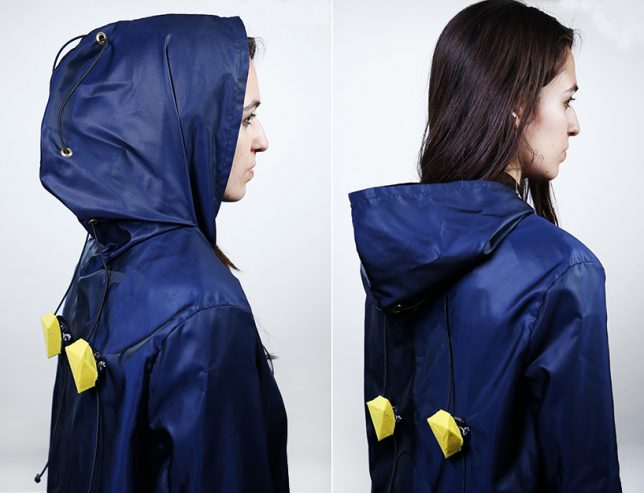
What look, at first, like jewels or little bulbous decorative accents on a blouse suddenly start crawling around like they’ve got minds of their own. ‘Kino’ is a collection of ‘living’ jewelry from MIT Media Lab, designed to reconfigure itself in response to environmental conditions. “It is our vision that in the future, these robots will be miniaturized to the extend that they can be seamlessly integrated into existing practices of body ornamentation. With the addition of kinetic capabilities, traditionally static jewelry and accessories will start displaying life-like qualities, learning, shifting, and reconfiguring to the needs and prefereces of the wearer, also assisting in fluid presentation of self.”

Lumoscura Smog Mask by Stephanie Liu

Dazzling fiber optics inspired by shimmering white peacock feathers make the need to wear a smog mask at least a little bit more fashionable. Says designer Stephanie Liu, “Masks have always been associated with disease, fear and negativity. Some wear it in public to hide their identities, in reality it attracts attention and can generate fear and stress amongst those in their immediate surroundings. As air pollution becomes more and more of an issue in many countries, people have begun to surrender to wearing a mask for the sake of their health, however there are still a lot of people who do not wear masks for many reasons – the top three being unattractive, uncomfortable and repelling people.”

Smart Self-Defense Spider Dress by Anouk Wipprecht

People might be less likely to mess with you if the mechanical spider you’re wearing as a dress makes a sudden move. That’s the idea behind the Smart Spider Dress by Anouk Wipprecht, powered by Intel Edison. The legs of the spider constantly move, reacting to the wearer’s real-time biometrics as well as violations of social norms, like when someone invades their personal space. “Since the system based with mechanic spider legs is literally hosted on the shoulders of the wearer and attacks using the same viewing angle as the wearer, the system knows how you feel and adapts to those feelings,” says Wipprecht.

MIT Duoskin Temporary Electrical Tattoos

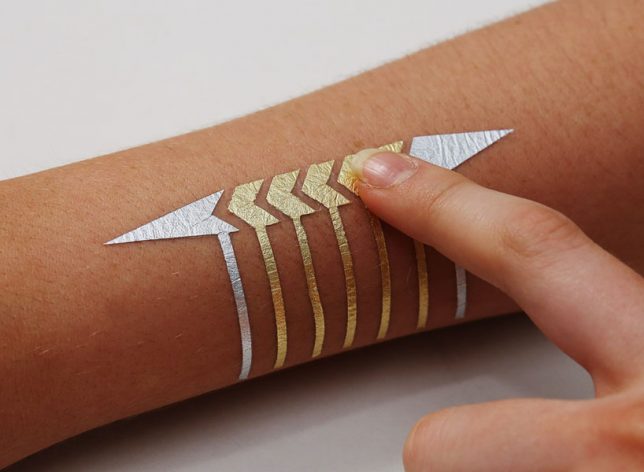
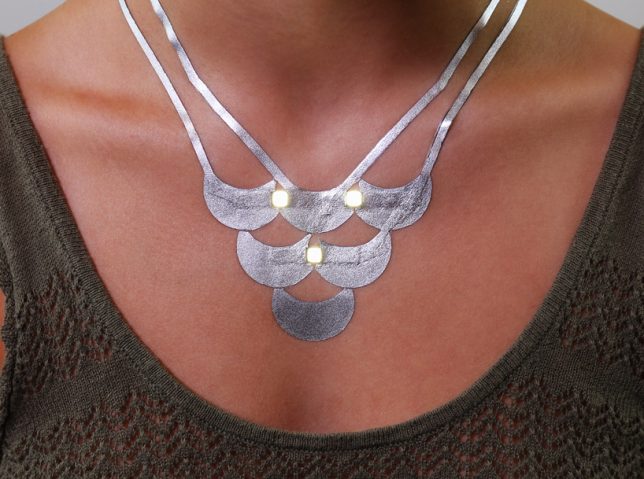
Anyone can create functional devices directly attached to their skin, including lights and controls for mobile devices, using an electricity-conducting gold leaf paint in a fun design that makes it look like a metallic tattoo. “We believe that in the future, on-skin electronics will no longer be black-boxed and mystified; instead they will converge toward user friendliness, extensibility, and aesthetics of body decorations, forming a DuoSkin integrated to the extent that it has seemingly disappeared,” says MIT, who refer to the project as ‘digital skin jewelry.’

i.Con Smart Condom Ring Measures Performance

No more boasting about your performance using inaccurate figures. The i.Con smart condom ring by British Condoms will know exactly how long you last, how many positions you used, ‘velocity of thrusts,’ ‘girth’ and other data, sending the information straight to your smartphone via bluetooth. One positive of this technology is, it can give users a way to measure improvement if their data is disappointing and they want to work on things. But perhaps even more valuable is the fact that the wearable comes with an ‘antibodies filter’ to detect the presence of sexually transmitted infections.

Next Page – Click Below to Read More:
Art Of Wearable Tech 10 Fashionable Designs Help With Fun Sex Self Defense

Share on Facebook


[ By SA Rogers in Gadgets & Geekery & Technology. ]

[ WebUrbanist | Archives | Galleries | Privacy | TOS ]


WebUrbanist

 
Comments Off on Art of Wearable Tech: 10 Fashionable Designs Help with Fun, Sex & Self-Defense

Posted in Creativity


The Art of Tech Living: Amsterdam’s Urban Campsite Lets You Sleep in Sculptures

25 Jul

[ By SA Rogers in Destinations & Sights & Travel. ]

Every year, Amsterdam’s Centrumeiland of Ijburg hosts ‘Urban Campsite,’ a public exhibition of sculptural habitats allowing local residents and tourists can spend the night in mobile sculptures. Designers, artists and architects are invited to create cool structures that are way more interesting than the average tent and install them at Science Park, a new area in Amsterdam-East. This year’s theme is ‘The Art of Tech-Living,’ envisioning how art can give science and technology a little boost of imagination.

“Did you ever feel the urge to sleep in a piece of art? Well, then this is your chance! UrbanCampsite is the place where a camping and unique artistic objects meet. You can stay in beautiful, special, sometimes crazy works of art furnished as a hotel room. The UrbanCampsite offers its guests all the amenities of a normal campsite … and quite a lot more than that!”

Prospective guests book the individual habitats on AirBnB, and each sculpture is fully furnished inside. These ‘sleeping objects’ typically have room for two, though a couple will fit children as well, and they range from 85-120 Euros per night. They’re often made of reclaimed materials like trampolines, shrink wrap, pallets and metallic insulation.

For 2017, the selection of sleeping objects includes a mini monastery with an oak sapling at its center, a giant camera obscura, a Dutch electric car from the 70s once used as a mobile post office, a stargazing lab, a 360-degree rotating research ship and a “luxury bungalow made of a sewer tube,” among others.

“Waiting for Water” by Stefanie Rittler and Sascha Henken, for example, bills itself as a humorous view on climate change, saying “The sea water level is constantly rising. Should we wait or change something?” In any case, you can enjoy the views from the upper-level bedroom while the exhibition is still safe on dry land.

Share on Facebook


[ By SA Rogers in Destinations & Sights & Travel. ]

[ WebUrbanist | Archives | Galleries | Privacy | TOS ]


WebUrbanist

 
Comments Off on The Art of Tech Living: Amsterdam’s Urban Campsite Lets You Sleep in Sculptures

Posted in Creativity


New tripod tech

07 May

Cinema5D recently posted a video look at the new Manfrotto Nitrotech tripod head, which uses a ‘nitrogen piston mechanism’ to push up against the bottom of the tripod head where its horizontal axis would normally be. You can read the full article along with the video here.

What do you think? Does the Nitrotech head look like something you would use?

Articles: Digital Photography Review (dpreview.com)

 
Comments Off on New tripod tech

Posted in Uncategorized


Adobe Research tackles selfie photography with new AI-powered tech

07 Apr

Adobe Research, the company’s research and development division, has released a look at a new technology that tweaks selfies to improve how they look. The technology, which is presented in a new Adobe video, is designed to improve mobile portrait photography by enabling users to adjust the photo’s perspective, depth of field, and more.

Adobe describes its new technology as ‘the potential future of selfie photography,’ demonstrating how it can be used to replicate a more flattering focal distance, adjust the position of the subject’s head within the image, adjust the depth of field using automatic portrait masking and apply styles found in other portraits, such as images found in a Google Image search.

This technology is powered by Adobe Sensei, an artificial intelligence and deep-learning framework the company introduced at Adobe MAX 2016 last November. The selfie technology isn’t available to consumers at this time, but instead serves to highlight Adobe’s latest developments and to introduce photographers to the kind of tools they may have access to in the future.

Articles: Digital Photography Review (dpreview.com)

 
Comments Off on Adobe Research tackles selfie photography with new AI-powered tech

Posted in Uncategorized