RSS
 

Posts Tagged ‘taught’

Google taught an AI to create pro-level photos from Street View imagery

18 Jul

Google is in possession of vast amounts of Earth imagery via its Street View product, and now it is testing machine learning as a way to harvest ‘professional-level photographs’ from that imagery. As detailed in a newly-published study, Google researchers created an experimental deep-learning system that trawls Street View landscapes in search of high-quality compositions.

Machine learning, while capable at tasks that involve ‘well defined goals,’ struggles in the face of subjective concepts such as determining whether a photograph has high aesthetic value. Google developed this latest deep-learning system as a way to explore how artificial intelligence can learn subjective concepts such as photography—training the system using professional photographs taken by humans.

Compositions identified by the AI from the Street View imagery were then automatically improved using an editing tool called ‘dramatic mask’ that enhances an image’s lighting.

Here are a few examples from the Google Research Blog:

“Using our system, we mimic the workflow of a landscape photographer,” the researchers explain. “From framing for the best composition to carrying out various post-processing operations.”

To test the quality of its AI-generated photos, Google asked professional photographers to blindly rate a collection of photos from various sources, including its Street View photos. The team’s conclusion from those ratings is that, “a portion of our robot’s creation can be confused with professional work.”

Articles: Digital Photography Review (dpreview.com)

 
Comments Off on Google taught an AI to create pro-level photos from Street View imagery

Posted in Uncategorized


How Black and White Photography Taught Me to Capture Emotion

04 Sep

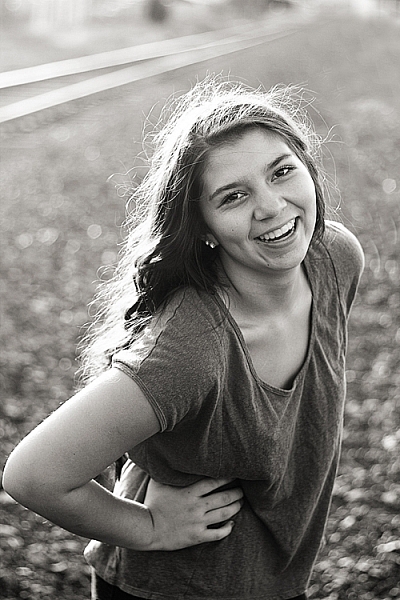
My first experience with photography was a black and white film photography class in high school. We were given one roll of film per week, and told to, “go capture something compelling.” Though learning photography on a fully manual, very low-tech camera, resulted in a bit of a learning curve when I switched over to digital (hello metering modes, back button focus, and exposure compensation!), one of the most important things that my first black and white photography class taught me was the importance of capturing emotion in photography.
capture-emotions-2

Ted Grant–an amazing Canadian photojournalist–has said, “When you photograph people in color, you photograph their clothes. But when you photograph people in black and white, you photograph their souls!” While I’ve certainly seen my fair share of color photos that beautifully capture emotion, I also relate to Grant’s words very much.

capture-emotions-4

Black and white strips the image down to the basics

In a sense, black and white photography strips away all the extras, and forces you to think about things like contrast and emotion, in a way that isn’t always be as crucial when you’re shooting in color. Whether intentional or not, it can be easy to use color and props as a sort of crutch in photography. I love a photo of a toddler licking a giant multi-colored lollipop just as much as the next person. But, the tendency with images like that can sometimes be for the color and the whimsy to carry the image, rather than the emotion.

Starting in black and white photography taught me that it’s not enough to have perfectly matched clothing, or a brightly colored chandelier hanging from a tree in the woods. It’s not enough to stand someone in front of a beautiful backdrop and tell them to smile. Compelling photographs do more than that. They give you a glimpse into what the person being photographed is feeling right at that moment.
capture-emotions-6

Black and white only challenge

If you’ve never had experience shooting exclusively in black and white, I highly suggest giving it a try. Most digital cameras have the capacity to shoot black and white right in camera (consult your manual). It’s a really great exercise to occasionally force yourself to do so. Grab a friend, and go shoot 50 or 100 frames in black and white.

I do recommend shooting black and white right in camera for this exercise, because it completely eliminates color from the equation. It’s a quick and easy way to see which images are successful in black and white, and which are not. It also helps train your brain to “think” in black and white. Once you’ve completed this quick exercise, take a look at your images. Are your black and white images compelling? If not, one of the reasons may be that the images are lacking emotion.

capture-emotions-1

Getting emotion into your images

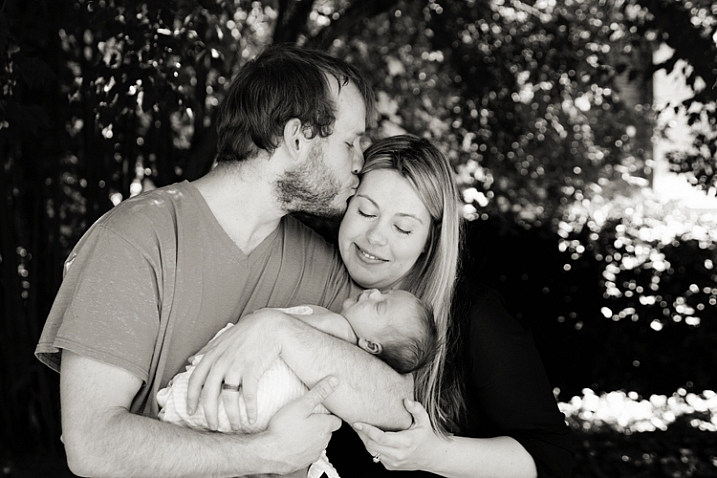
As a photographer, there’s no exact science to capturing emotion in your photos. Some children will be naturally expressive, and some couples will be naturally affectionate. Other people may need a bit of help getting comfortable enough to express themselves in front of the camera. As always, building rapport with the people that you’re photographing, before and during the session, will go a long way in helping them relax and feel comfortable.

capture-emotions-8

Your subjects will mirror you

In my experience, the key to capturing emotion, is helping your subjects to actually feel the same emotion that you’re trying to capture during the session. One simple and effective tip is to remember that humans naturally mimic the emotions and attitudes of those around them. As the photographer, if you come into the session laughing and joking around, it’s much more likely that the people you’re photographing will start to laugh and joke around as well.

So, keep a book of silly knock knock jokes tucked into your camera bag, or come prepared to tell a funny story that happened to you recently. If you’re having a bad day, make the conscious decision to leave it behind for the duration of your session, and even fake it until you make it if you must. It really does make a difference!

Couples
capture-emotions-3

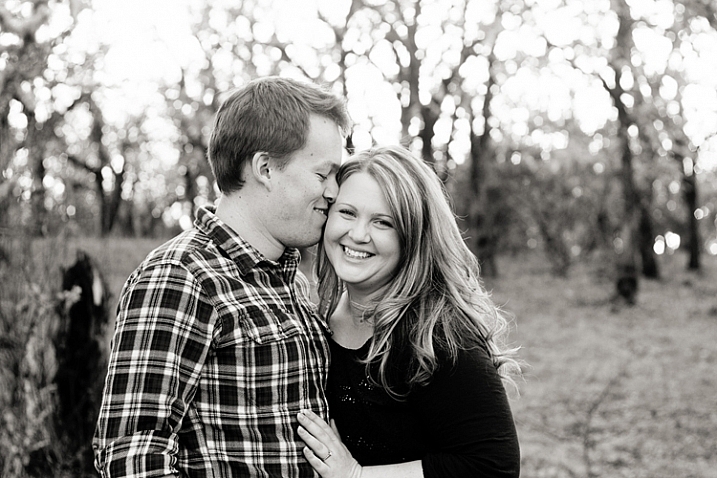
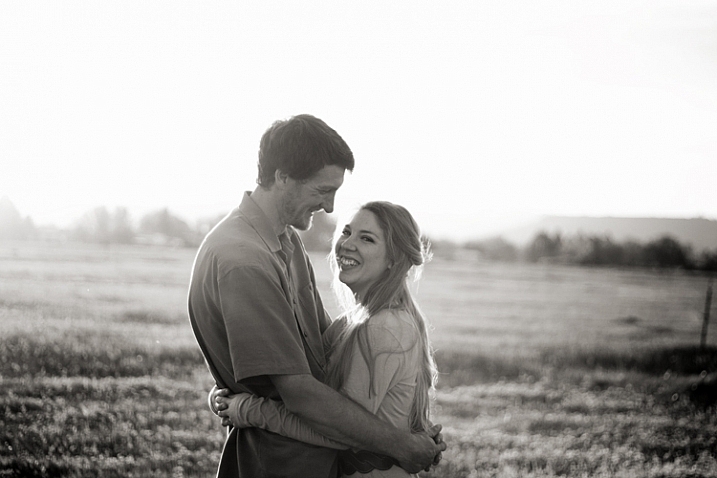
When photographing couples, asking them to tell you a story about how they met, got engaged, or the best part of their wedding, are all topics that can help cultivate real emotions during your session. Ask the question, then wait and watch carefully, with camera in hand, for interaction between the couple during the story.

Kids

For kids, try asking them about their favorite movie, TV show, or the best part of their week so far. If you don’t have children around the same age as the ones you’re photographing, it’s a good idea to ask the parents in advance about the sorts of books, songs, TV shows, movies, and/or sports their children enjoy so that you can prepare thoughtful questions that will allow them to talk about the things they love.

capture-emotion-9 capture-emotions-7

Get them laughing

As funny as it sounds, another method that’s really effective in making people laugh is to actually ask them to fake laugh. Ask them to be silly and to give you their biggest and deepest Santa Claus chuckle. It will feel weird and awkward, but the end result is usually that everyone around starts genuinely laughing, and that’s the moment you’re waiting for as the photographer.

During family sessions, getting mom or dad to play along and be over-the-top silly, almost always helps elicit laughs from the kids. It’s a good idea to tell the parents in advance that you’re going to ask them to be silly and ridiculous, but that if they just roll with it, the kids will smile and laugh in a natural way. They won’t if you just say, “look here and smile!”
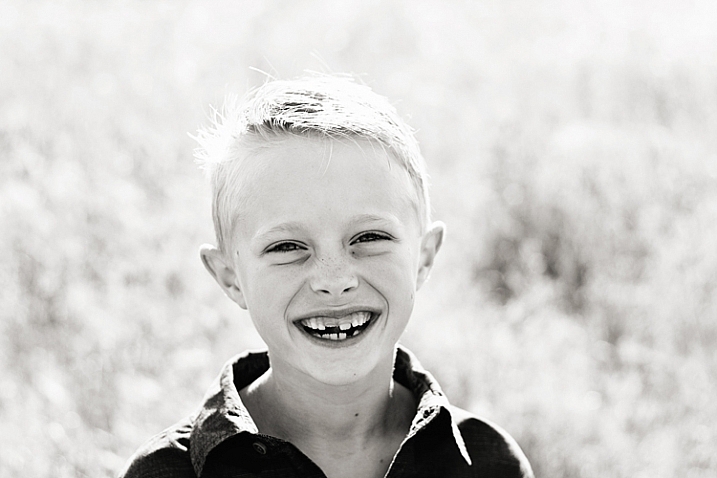
capture-emotions-5

Summary

I no longer shoot exclusively in black and white, nor am I arguing that black and white photography is the only way to capture emotional images. Ones that capture real emotions will be compelling whether they are processed in color or in black and white. However, upon reflecting on my personal journey in photography, I can clearly see that beginning with black and white photography forced me to prioritize emotion in my images over color, props, and styling, in a way that has strengthened my photography overall.

Do you struggle with capturing genuine emotion in your images, or does it come easily for you? Do you have any other tips about capturing emotion to share? Please share in the comments below.

googletag.cmd.push(function() {
tablet_slots.push( googletag.defineSlot( “/1005424/_dPSv4_tab-all-article-bottom_(300×250)”, [300, 250], “pb-ad-78623” ).addService( googletag.pubads() ) ); } );

googletag.cmd.push(function() {
mobile_slots.push( googletag.defineSlot( “/1005424/_dPSv4_mob-all-article-bottom_(300×250)”, [300, 250], “pb-ad-78158” ).addService( googletag.pubads() ) ); } );

The post How Black and White Photography Taught Me to Capture Emotion by Meredith Clark appeared first on Digital Photography School.


Digital Photography School

 
Comments Off on How Black and White Photography Taught Me to Capture Emotion

Posted in Photography


Eric Kim: 10 lessons William Klein has taught me about street photography

02 May

klein-kid-gun-488x660.jpg

We love the work of LA-based street photographer Eric Kim, and we’re big fans of his regularly-updated blog. In this 2-page article, originally published on his website, Eric explains how the work of famed street photographer William Klein has taught him valuable lessons that inform his own outlook, and his photography. Click through to read more. 

News: Digital Photography Review (dpreview.com)

 
Comments Off on Eric Kim: 10 lessons William Klein has taught me about street photography

Posted in Uncategorized


Why the Instagram Debacle Just Taught Every Tech Company to Take Your Photos More Seriously

22 Dec

Why the Instagram Debacle Just Taught Every Tech Company to Take Your Photos More Seriously

“Whatever kind of victory all those protests achieved, it wasn’t one for consumer rights — if anything, Instagram is the real winner here. The company just managed to score a round of positive press for retracting an unpopular change and give itself the ability to actually use photos in ads.” — Nilay Patel, The Verge

Over at the Verge Nilay Patel makes a case that the backlash earlier this week against Instagram’s unpopular TOS update was actually a loss for consumers not a gain. He argues that Instagram’s current TOS is broader than their more explicit proposed one and so consumers are worse off, not better off. Because Instagram technically still holds the rights to sell your photos under their current TOS, and even more broadly, the consumer backlash was misguided and really did more harm than good.

I disagree with Nilay and feel that actually this week’s backlash was one of the more significant movements yet for photo sharing on the web.

It’s not that Facebook (whose TOS is equally broad) and Instagram couldn’t legally sell your photos on the web under their broad TOS in the past or in the future, it’s more that *politically* it is now far more difficult for them to begin selling your photos out from under you on the web using their broader TOS.

Who cares what the TOS says, the message that Facebook got loud and clear this week is not to f*** with your photos. Your photos are important. You care about them. They are much more personal to you than Facebook may have previously considered. They have emotional importance and significance and collectively your users will rise up and bash you in the face if you try to exercise terms of your TOS that your lawyers have allowed you to screw around with photos. Whatever your future monetization strategies might be, they will not be based on a loss of control over OUR creative efforts — even our duckface creative efforts.

No, there is no question about it. Instagram lost this week and they lost big. This is in no way a positive for Instagram. People trust them less and they had to turn around and eat crow, they gained nothing.

Flickr won big at Instagram’s expense and Google+ won a little. Flickr won more because like Instagram their site is 100% about photography. They also just released a pretty awesome new iPhone app that is in fact even slickr than what Instagram currently offers.

Flickr also went out of their way last year to really drive home the ownership rights of your photos. This old forgotten post was revived with new life as a stark contrast to what it felt like Instagram was trying to pull. Kevin Systrom eventually even had to parrot back some of that “yes, we know your photos are your photos” stuff in his awkward non-apology apology.

Dan Lyons wrote a post that talked about Google+ winning some here too. Google+ smartly has a provision in their TOS that specifically limits their rights to your photos to basic operational use. Google+ is probably the most active community of photographers on the web today and are a natural beneficiary from what Lyons’ refers to as “Facebook Greedheads.”

The biggest winner or all though was you, the photographer. Whatever Instagram’s original intention was in being more specific in their TOS, it backfired on them. The idea that they could/would profit off your emotionally significant photos without your consent, authorization or most important, sharing the dough, hit a nerve with photographers and likely won’t be tried again by anyone in a long, long time.

The thing is, this didn’t have to be such a painful learning experience for Instagram. There was/is in fact a HUGE opportunity for some smart social media property make a ton of money off of your photos, Instagram just went about it wrong.

As much as Flickr’s deal with Getty sucks (photographers get a miserly 20% payout) photographers on Flickr still went bonkers for it when Flickr released it. The idea that you could actually get PAID to post your photos on a social network, paid ANYTHING, had most users on Flickr clamoring to get into the program, not out of the site.

Even though Flickr/Getty’s call for artists group is now closed (due to overwhelming demand) almost 90,000 photographers joined this group hoping to get selected by Getty for the right to sell their photos for the paltry 20% payout.

The difference with Flickr’s deal though was that 1. you CHOOSE to opt in and 2. at least you got paid something.

What if instead of Instagram saying, “hey, we might sell your photos without your consent and pay you NOTHING,” they said, “hey, do you want to sell your Instagram photos and if we sell them for you split the money 50/50″? Instead of losing accounts and becoming the scourge of the internet for three days, they would have had photographers rushing to sign up and begin marketing their images on their site.

Although there are sites out there like 500px and SmugMug that let you sell your photos now, Flickr is the only larger social network that has a selling program. Google+, Instagram, Facebook, even Twitter, all have a major opportunity to become the first large social network to allow us to license our images through their service and share in the revenue with them. This is a multi-BILLION dollar industry dominated at present by Getty who is not paying creatives enough for their work. What the internet does best is get rid of middlemen when they are being unreasonable, and an 80/20 split with photographers is unreasonable.

Instead of stealing our work and paying us zero, how about using your significant reach in reputation, marketing and search to partner with us and empower us to sell our work together. I guarantee you that whoever comes up with the best program first has some of the best photography on the web flooding your network. Even if 99% of us never sell a single photo, simply giving us the feeling that we have the opportunity to sell a photo would be a powerful incentive to get us active and humming on your network.


Thomas Hawk Digital Connection

 
Comments Off on Why the Instagram Debacle Just Taught Every Tech Company to Take Your Photos More Seriously

Posted in Photography


jpmetz taught me everything I know!

02 Aug

Thanks Justine! www.youtube.com retouchmeyt blog: retouchmeyt.blogspot.com