Summer is a great time to get outdoors and shoot amazing photos. The weather is sublime, the plants are all blooming and it’s just an all around great time of year. The last thing you want to do is lug around your hunky DSLR. This list of sleek and compact image makers will provide you with all of the best Continue Reading
The post Top 7 Gear Picks 2014 to Try This Summer appeared first on Photodoto.
We aren’t going to talk about cleaning your lenses (although you should), I’m not going to tell you to use a tripod (you should know that), and I’m definitely not going to tell you to compare last year’s photography to this year’s (but that’s not a bad idea). No, I’m going to suggest you get out of your comfort zone and do something new.
If you open up your Flickr, 500px, or wherever you store your thousands of kitty cat photographs you might notice that there may be a lot of similar shots. Different subjects, but a similar style perhaps? Different styles, but the same type of subjects? Most of us have done it, it sounds like this: “I only do portraits”, “I only shoot landscapes”, or “I never use a flash”.
So, in an attempt to bust out of your comfort zones I’m going to share 5 tips with you to use this summer that have helped me overcome my own creative plateaus over the years.
Interesting fact: 77% of all photographers have at least one cat photograph in their portfolio. Another interesting fact: I have no idea if that is true, but there is a 50% chance that it is.
Five tips for improving your summer photography
Tip 1 – Same Place, Different Time
It’s time to master light, your photography will improve leaps and bounds with the mastering of one specific element – timing. Mastering the light means many different things in the art of photography; mastering your manual settings, mastering the flash, or mastering your timing. All of these things impact one another but the one that I want to focus on is timing. Besides, they say timing is everything.
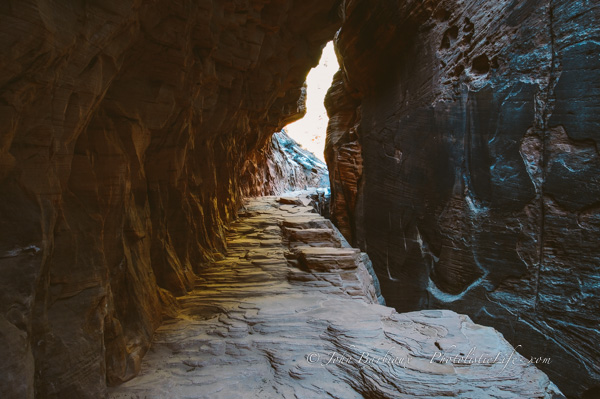
Knowing when and where the light will be gives you a huge advantage over other photographers. Knowing that at around 2:30 p.m. the sun will be at an angle that paints light into the pathway is priceless if you are visiting this place and may not return in the future.
Knowing where the sun sets, where the sun rises, and how the light will illuminate various subjects during different times of the day will help you master your timing. The sun rises in the east and sets in the west, if you know which direction you are facing when the sun is directly above you you’ll have a better idea what time of the day to photograph any interesting subjects or scenes you may find.
There are apps and websites all over the Google machine that can assist you when you are traveling to new and exotic places. There is a program you can download onto your phone, computer, watch (not yet but maybe someday) called The Photographer’s Ephemeris that allows you to input a location and figure out exactly where the sun will be at a given time. You can plot your position on top of a topographical map and determine what direction the sunlight will fall, and then plan accordingly.
*Topographical maps are helpful when planning a photography trip where mountains raise up high enough to throw large shadows on areas you may be planning to photograph. The topographical map gives you the height and depth of the contours of the landscape of your location.
Tip 2 – Be Specific, Don’t Spray And Pray
Do you need a fresh 16GB SD card every time you take a photo walk? Maybe you take 100 photographs in the hopes that one ends up being acceptable. Before you take a photograph ask yourself if it’s really that interesting. Is it throwing a unique shadow? Does the light hit it in a way that will catch viewers eyes? Will it cause viewers to ask a question (other than “Why would you photograph that?”)?
Taking a great photograph doesn’t generally happen by accident. Ansel Adams once said a great photograph is one that fully expresses what one feels, in the deepest sense, about what is being photographed. How many of the thousands of photographs squirrelled away on your hard drive were taken with the type of forethought Ansel Adams described?
This summer, challenge yourself to contemplate each shot, think about whether or not the subject is interesting enough to take the time to photograph. What you will find is that if you take the time to contemplate a shot before you press the shutter you’ll have less overall shots but more “keepers”.
Tip 3 – Use A Different Focal Length
Get out of your comfort zone and force yourself to use a different focal length this summer. If you don’t have multiple lenses then use a different focal length on your zoom lens. By using a different focal length you’re forcing yourself to think before you shoot. You’re forcing yourself to compose the image in your mind before ever putting the viewfinder up to your little peepers.
Renowned photographer Henri Cartier-Bresson used a 50mm lens almost exclusively when he wasn’t on assignment. By using the 50mm lens so frequently he was able to see, and compose, an image without putting the camera up to his eye. If you focus on a single focal length long enough you’ll learn what will be in or out of the frame without having to take the shot.
Tip 4 – Roam Free Like Buffalo. You know, before we shot them all.
Get off the beaten path. Literally, get off of the trails, paths, and otherwise marked walking areas to find hidden gems buried in hard to reach places. The summer’s dry weather creates safer hiking conditions as well as the longer days which allow you to venture further off the beaten path without worry of being eaten by wolves in the dark.
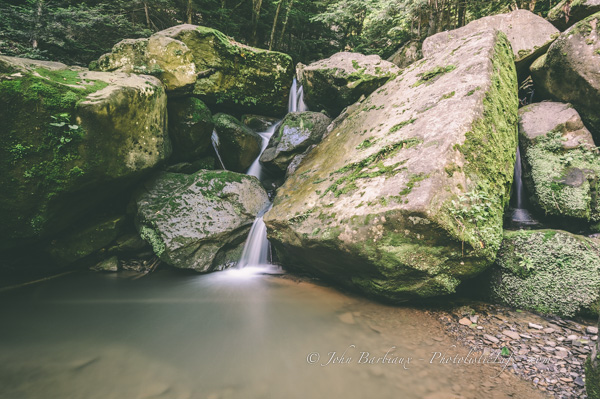
This shot was taken with the Nikon 16-35mm at 19mm, ISO 100, f/10, 15 seconds.
There are a couple of ways to find hidden gems around where you live, searching the internet is the easiest. Flickr is a great resource, you can search the name of your home town and once you find an interesting area you can check the photographs info for a location (assuming the photographer included it). The other way is to grab a hand held GPS (or your phone) and venture off into areas you have not explored before, like Indiana Jones minus the whip and man-purse.
Tip 5 – Photograph In Bad Weather
Bad weather can be a bummer, moods get bent and plans are spoiled. Most people pack up their gear and head home (or don’t go out at all) if the weather is anything but perfect. Take advantage of the warmer weather and plan a photo outing next time the weather looks foul.
Plan to visit places that are normally bustling with people for an opportunity to capture unique shots. When bad weather strikes you’ll have an opportunity to capture people scrambling for a dry place or reflections in puddles. Alternatively, you have an opportunity to capture photographs of places that are normally busy, void of life (think empty sidewalks in the city).
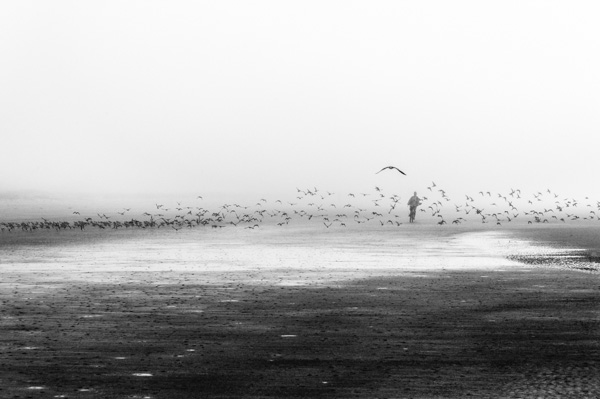
Beaches are a great place to go right before or after a storm, the ominous clouds and rolling fog create dramatic scenes. Be sure to be prepared for rain and/or strong wind, Adorama has cheap covers for your camera that will keep the water and sand from damaging your precious gear. Try not to change lenses in sandy, windy, and wet conditions, there is a good chance that you’ll end up with debris inside your camera or lens.
Summer photography offers hundreds, if not thousands, of opportunities to practice photography morning, noon, and night. The weather is warmer and the days are longer, there are festivals for everything almost every weekend. If you’re having trouble coming up with something to photograph check out local towns websites for their calendar of events, there is a good chance something is going on near you.
The post 5 Hot Tips For Improving Your Summer Photography by John Barbiaux appeared first on Digital Photography School.
Summer in North America means severe weather for much of the continent. Powerful storms are accompanied by unusual cloud formations, signs of the violent atmospheric conditions that spawn turbulent weather. Photographer Mitch Dobrowner and guide Roger Hill have spent the past few summers traveling the US chasing storms, and creating stunning black-and-white images in the process. Click through to see some of these gorgeous photos of some ugly weather.
Summer’s fast on its way out, something we’re acutely aware of in the Pacific Northwest. We’re trying to make the most of our sunny days before the clouds and drizzle set in. For a healthy dose of Vitamin D any time of year, take a look at photographer Isac Goulart’s sun-soaked images. The Brazilian photographer’s colorful beach photos aim to capture the very essence of long summer days. Check them out – and maybe take a few of your own before the weather’s gone.
Whoever said “If you can’t take the heat, get out of the kitchen” probably wasn’t aware we would be making such a liberal interpretation of the saying.
Heat comes from sun. Summer sun is bright. Bright light is tricky to photograph.
It’s no secret that bright midday sun is one of the more challenging types of light to expose properly. We’re talking blown out highlights, harsh shadows, squinty subjects… oh my!
Don’t sweat it, friends. This guide will show you how to get the best shots in the midday sun.
We can wrangle those top-down rays with quick easy fixes to soften harsh light, resolving your bright light issues before you even have time to hashtag them.
How else are you going to document that tan you’ve been working on all summer?
Pro Tips for Midday Shooting
p.s. We’re hiring for an amazing opening at Photojojo. We’re looking to re-invent what/how/where we publish online, and we’re seeking one amazing somebody to lead the charge. Learn more and apply for our Editorial & Community Lead.
p.p.s. Tell friends!
Why It’s Cool
Summer is a great season for shutterbugs… between the golden mornings and evenings we’ve got, like, 2 extra hours of daylight to bask and snap in. And nothing says summer like bright, colorful, high-contrast photos! So why are you spending this extra shooting time inside?
Light is everything to photographers, so take the camera outside and stop actin’ like it’s not. It’s always high noon somewhere, so you might as well turn down those ISO settings and learn how to beat the heat.
Use these tips and tools to improve your lighting skills by shaping, bouncing, blocking, and even adding it back afterwards. You’ll perfect your sharp shootin’ so you can keep exposing when bright light is unavoidable, anytime of year.
Ingredients:
Any kind of camera
Lens filters – polarized, neutral density (ND), or your own DIY
Fill light – a reflector, foam board, or flash
Shade
Photo editing software or app
A friend or model
SLAP A FILTER ON IT
Think of lens filters like a sweet pair of shades for your camera. They come in all shapes and sizes (including phone sized), so no man or machine will be left squinting in the sun.
Generally – exposing for bright daylight requires some combination of small aperture setting and high shutter speed. Your camera’s sunnies… or, er… filters are one of the easiest ways to reduce the amount of light entering the lens and re-gain creative control in harsh lighting conditions.
Yep. That means shallow depth of field and slow shutter speeds are no longer out of the question! Since they’ll reduce your exposure by a few stops – neutral density (ND), polarized, or DIY filters will be your best bets for softening a case of the midday brights.
Need a FILTER hack? Try using your own sunglasses as a filter on your phone, point & shoot, or DSLR (depending on the size of your lens). Play with the composition a little and use your glasses as a frame within your photos.
ARE YOU FILL-IN’ THE HEAT YET?
There are two great ways to fill in and break up harsh shadows caused by overhead light: Bouncing light and flashing it.
Yeah… we said “flash”. Sure, the concept of fighting light with more light may sound like an idea from another galaxy, but it’s actually necessary to get the right exposure on a backlit subject. Oh, and diffusing said flash will help to produce a more flattering end result!
Similarly, a reflector or white foam board will bounce the light, filling in shadows caused by an overhead light source (like that giant one we call “the sun”.) Pretty much any flat, white object can bounce light. You could even use a pocket-sized version in your phoneography.
Need a FILL hack? Look down! Lightly colored surfaces (like sand or concrete) will bounce a nice glow on your subjects. Scout out a spot near one of these bright patches when you’re lacking the extra arms to hold a reflector in place.
SHADY BUSINESS
When you’re getting scorched or just plain fed up, scour the area for a patch of shade. It can be manmade or au naturale, just watch out for spotty light! Buildings and trees are a good place to start your quest.
When there’s no shade to be sought, there are a couple easy ways to create your own. Keep an umbrella or a sheet on hand for such occasions. Not only will you soften that pesky light, you may even earn yourself a cool nickname like “MacGyver of the Shadows”.
Once your shade is in check, position your subject in front of an equally shaded background (near the edge of the shadow they’re under). Now when you shoot you’re getting the best of the shade AND the light. Like a boss.
Need a SHADE hack? Try using a bed sheet as a scrim. Throw it over something tall and place your subject beneath it. Or have a photoshoot while your beach towel is hanging out to dry!
EDITABLE INSURANCE
Kinda like a bad sunburn – there’s not much you can do after the fact to fix it an overexposed picture. No… not even with aloe vera.
It’s much easier to recover underexposed areas of a picture using photo editing software. That’s like photography SPF, dude.
To underexpose photos on your phone, tap the screen to focus on a bright area of your shot before hitting the shutter. Snapseed and VSCOcam are great apps that will help you edit your photo. You can change your exposure, adjust fill, and fix your photo’s highlights all from the comfort of your palm.
When shooting from your camera, play it safe by bracketing for exposure, underexposing back-lit subjects, and shooting RAW.
Two great ways editing software can help recover a photo taken in tricky bright light are:
1) Adjusting the levels to take back the shadows in the foreground of your photo, and
2) Using layers and masking tools to combine 2 images of a correctly exposed foreground (with an overexposed background), and vice versa.
Taking It Further
When you salvage important details (like eyes), deliberate overexposure can give your photos a surreal, dreamy look.
When your background is interesting and noteworthy, silhouettes are a great way to add drama and tell a story.
Some filters can reduce your exposure enough stops to create a really long exposures… wait for it… in the DAYTIME. Check it these out and give it a go!
Jenny Sathngam is a tutorial writer/photographer for Photojojo. She is based in Austin, TX – where cloudless, triple-digit summers last most of the year and shooting in the midday sun is more practice than theory. (Model: Sanetra Stewart)
Related posts:
Pro-Tips for Shooting Better Instagram Videos Extra vids for bloggers: 1, 2, 3 “Well that’s weird,”…
Summer Guide: Keep in Touch with Friends via Photo Apps! Extra photos for bloggers: 1, 2, 3 Prom, graduation, senior…
Halloween Photo Tips — Our Ghoulish Guide to Scary Snaps How can you not love a holiday that encourages you…
A good summer photo project doesn’t necessarily require a lot of expensive equipment, just a camera, an idea and and the persistence to see it through. Chances are you’ve already got everything you need to kick off a photo series of your own. At DPReview we’re always looking for new and interesting photos on the web and lately we’ve noticed a lot of inspired projects. Some are more fairly laborious, while others take a simple idea and run with it. Check out these projects and why not get started on your own?
With summer finals out of the way, 17-year-old photographer Ian Komac has devoted his newfound free time to a photo project. Called 60 Days of Summer, the Belgian teen’s manipulated photos give landscapes and everyday objects a whimsical twist. Click to see more of his photos and gain a little inspiration for your own summer photo project.
Photographers around the world are sharing their favorite photos of summer (and winter, for those in the Southern hemisphere) across various social photography sharing sites. We scoured the web for some of the best shots of the season and are sharing them on connect.dpreview.com. Click through to see our selection, and remember that you can share your own photos on our busy Forums, and via our Galleries system.
Nikon UK has announced a summer cashback offer on its 1 system cameras. From 30th May to 4th September, buyers can claim back £50 on the S1 and J3 models, and £80 on the V2 (or €60 and €80 respectively for customers in Eire). The offer applies to both body-only purchases and single- and twin-lens kits, and all colours of camera; cashback has to be claimed by 4th October 2013. Click through for full details.
Graphics tablet maker Wacom has announced on Facebook it will launch a mobile multi-touch tablet this summer. While it has not posted any details about this device, Wacom’s social media post says it will include a pressure-sensitive pen, multi-touch options, an HD display and ‘other valuable features that you haven’t seen in other tablets’.


 Kinda like a bad sunburn – there’s not much you can do after the fact to fix it an overexposed picture. No… not even with aloe vera.


