RSS
 

Posts Tagged ‘Study’

Study: people don’t actually like looking at selfies

11 Feb

A couple of weeks ago a Sony-sponsored study found that consumers are ready to embrace selfies as a tool. Now a research paper, published by Sarah Diefenbach and Lara Christoforakos of Ludwig-Maximilians-University Munich published in Frontiers in Psychology in January suggests that a majority of smartphone users enjoys taking selfies, but very few people like looking at selfies of others.

The paper is titled ‘The Selfie Paradox: Nobody Seems to Like Them Yet Everyone Has Reasons to Take Them’ and is based on a study that surveyed 238 people from Austria; Germany and Switzerland. Of those who responded, 77% said they take selfies at least once a month and 49% said they receive selfies from others at least once a week. While respondents thought of their own selfies as somewhat ironic and playful, they had less favorable views on others’ selfies.

‘Altogether, participants expressed a distanced attitude toward selfies, with stronger agreement for potential negative consequences (threats to self-esteem, illusionary world) than for positive consequences (e.g., relatedness, independence), and a clear preference (82%) for viewing more usual pictures instead of selfies in social media.’

Many respondents also thought selfies could have an adverse effect on self-esteem and create a superficial and inauthentic image of the person taking and sending them. 90% of participants regarded others’ selfies as self-promotion. However, only 46% of respondents said the same about their own selfies. The research team acknowledges that the results are potentially biased towards the surveyed regions, and that other cultures have more accepting attitudes towards selfies. As so often in science, further study is required.

Articles: Digital Photography Review (dpreview.com)

 
Comments Off on Study: people don’t actually like looking at selfies

Posted in Uncategorized


Study finds consumers are ready to embrace selfies as a tool

27 Jan

For some, selfies are a form of self-expression. Others find them annoying. But one thing is certain: they won’t go away anytime soon. A Sony-commissioned study has found that the top ten future uses for smartphone cameras will include banking, shopping, healthcare and dating. The study finds that over a third of consumers would feel more secure if banks used selfies as passwords and a quarter would prefer to see their general practitioner via a selfie or video call than in-person.

The study was undertaken by futurologist organization Futurizon with the market research company OnePoll who conducted data research and surveyed 6500 people across the UK, Germany, France and Spain.

The report identified the top ten ways consumers believe selfies could be used in the next five years:

  1. Dating: Taking a selfie with your date to find out what they really think
  2. Medical: Over a quarter of people would prefer to see their GP via a selfie or video call, in the first instance
  3. Banking for the selfie generation: Nearly half of 25-34 year olds would feel more secure if accessing their bank through a ‘selfie password’
  4. In leisure: Around half of thrill-seekers would like to try a ‘selfiecoaster’ – a rollercoaster that puts you in control of capturing your experience on the ride
  5. In a gym / fitness: selfies that work with AI (Artificial Intelligence) to capture body monitoring e.g. testing heart rates and even suggesting how to improve on technique and how accurately a move is being performed
  6. Made to measure clothes: taking a 3D body image for made-to-measure clothes
  7. In retail: using your smartphone camera to try on different outfits suited to your body shape, at the touch of a button
  8. Social currency: paying for entry to the cinema or a tourist attraction through a selfie
  9. Robots: Using your smartphone to control drones or robots to take selfies from other or extreme locations
  10. Home: Using selfies to secure and access our homes and cars

Dr Ian Pearson, Futurologist and creator of the Future of Selfies report said, “The results clearly show that selfies are well on their way to transitioning from frivolous fad to technological phenomenon, and provide food for thought to a number of industries. The potential is huge, and it will be exciting to watch this unfold over the coming years.”

Most of the selfie applications described above seem technologically possible today. So, if there’s a market for them, we’ll probably be able to use them at some point in the short to medium term.

Would you be interested in using selfies in any of the ways listed above? Let us know in the comments. 

Articles: Digital Photography Review (dpreview.com)

 
Comments Off on Study finds consumers are ready to embrace selfies as a tool

Posted in Uncategorized


Instagram profiles reveal user depression in new machine learning study

19 Aug

A team of researchers with the University of Vermont and Harvard have published a new study detailing Instagram profiles and the hidden clues they may hold about the photographer’s mental state. Using machine learning, the team was able to identify signs of depression based off an Instagram profile’s photos, metadata, and things like facial recognition. The study looked at 43,950 photographs from 166 individual Instagram users, and had a 70-percent accuracy rate when identifying users with clinical depression.

The artificial intelligence system ultimately proved more capable of detecting depression than general practitioners, which have been found to have somewhere around a 42% accuracy rate. Hints about the photographer’s mental state lie in many things the researchers refer to as ‘markers’: the type of lighting used in the photographs, for example, and the colors of filters applied to photos. 

Dark and gray colors are often signs of depression, as well as gap in posting frequency which may indicate a depressed mental state. The number of times a photo is ‘liked’ and commented on, as well as the number of faces detected in the photos, are also notable markers. Interestingly enough, the study found that depressed Instagram users are less likely to use any photo filter, but if they do, they tend to go with ‘Inkwell.’

Via: Digital Trends

Articles: Digital Photography Review (dpreview.com)

 
Comments Off on Instagram profiles reveal user depression in new machine learning study

Posted in Uncategorized


A Study in Architectural Contrasts: 12 Modern-Meets-Historic Additions

08 Aug

[ By SA Rogers in Architecture & Cities & Urbanism. ]

modern extensions ontario 1

At what point do modern extensions to historic structures surpass and overwhelm the original buildings rather than complementing and enlarging them? Contrasting architectural styles can be a tricky proposition, especially in preventing the addition from looking dated or outshining the historic buildings. In some cases, these modern renovations successfully preserve the originals while bringing something fresh and new, while others fall on their faces. These examples represent both extremes, and a few in between.

Beyazit Public Library Restoration by Tabanlioglu Architects, Istanbul, Turkey

modern extension istanbul 1

modern extension istanbul 2

modern extension istanbul 3

modern extension istanbul 4

In restoring Istanbul’s Beyazit Public Library, which dates back to 1501 and holds a collection of rare books, Tabanlioglu Architects took a minimal-intervention approach, inserting glass boxes to protect its most precious volumes and adding transparent membrane structures to cover the courtyard. A modest extension on one end of the building remains respectfully within scale of the original architecture in order to complement rather than outshine it. Contemporary lighting, support beams, modern furnishings and glass display cases contrast subtly with the traditional surfaces.

House in Vexin by Jean-Philippe Doré, France

modern extension vexin 1

modern extension vexin 2

modern extension vexin 3

modern extension vexin 4

Three historic homes come together into a single residence with the addition of a modern volume for ‘House in Vexin’ by Jean-Philippe Doré. The existing buildings were renovated in the vernacular style of the French village, while the glass and steel contemporary volume offers a deliberate (but not overbearing) contrast. From the street, only the historic buildings can be seen, the addition tucked out of sight.

Moritzburg Museum Extension by Nieto Sobejano Arquitectos, Germany

modern extension moritzburg 1

modern extension moritzburg 2

modern extension moritzburg 3

The 15th century stonework of a ruined castle in Halle, Germany, ends up providing a striking envelope for a new structure by Spanish studio Nieto Sobejano Arquitectos, which is simply inserted inside. The extension provides a new roof for the formerly open-air ruins, and suspends a new floor from the center to add exhibition space without installing columns in the main gallery. The angular geometry of the roof adds additional space as well as skylights. At night, the glass insert shines like a lantern. Now the Moritzburg Museum, the building holds an important collection of modern art.

Sonora 113 Office Building by Iñaki Echeveria, Mexico City

modern extension mexico 1

modern extension mexico 2

modern extension mexico 3

Sonora 113 can’t really be called an extension, considering that the new section literally towers above the original. It’s more a case of a historic facade that has been integrated into new construction to preserve some of the neighborhood’s character. The architects worked around what was once a modest yet beautiful home, the towering addition rising many stories into the sky and curving around the facade to meet the sidewalk. It raises interesting questions about what constitutes historic preservation – though if the building had been more culturally significant, it likely would have been saved to stand on its own, and this project likely prevented it from being torn down altogether.

Music School Louviers by Opus 5 Architects, Normandy, France

modern extension music school

modern extension music school 2


First built in 1646, this historic stone building in Normandy served as a monastery, church, tribunal and prison before its transformation into a music school in 1990. Opus 5 Architects were tasked with extending space for the school and shedding all of its prison elements without allowing the new structures to overwhelm the old. The result is a series of reflective glass and concrete panels that manage to blend in with the original materials, complementing and multiplying them.

Next Page – Click Below to Read More:
A Study In Architectural Contrasts 12 Modern Meets Historic Additions

Share on Facebook


[ By SA Rogers in Architecture & Cities & Urbanism. ]

[ WebUrbanist | Archives | Galleries | Privacy | TOS ]


WebUrbanist

 
Comments Off on A Study in Architectural Contrasts: 12 Modern-Meets-Historic Additions

Posted in Creativity


Study: Instagram interactions declining as user base grows

18 Jun

User interactions on Instagram decreased an overall 33% from the first quarter of 2015 to the first quarter of 2016, according to social media analytics company Quintly. Video interactions decreased more substantially than image interactions, with video interactions down 39% and image interactions down 27%. The changes affected accounts with a high number of followers more so than accounts with less followers.

The study is based on an analysis of 13,000 Instagram profiles, and considers both ‘likes’ and comments as forms of interaction. While the decrease in interactions is ‘tremendous,’ according to Quintly, it doesn’t necessarily indicate anything dire for the image-sharing app. Rather, the company speculates that a combination of increased posting frequencies among users and a growing user base has crowded users’ feeds while their interactions with the content remain relatively stable, causing a natural decrease in interactions.

Additionally, Quintly points toward more brands joining Instagram as a potential cause, saying the brands may be alienating their followers with various advertising methods, causing the followers to interact less often. The company summarizes its findings, saying, ‘The takeaway should definitely not be that Instagram is losing traction but more that it starts to get harder to achieve success in the “fight for interactions” on increasingly fast timelines.’

Via: Quartz

Articles: Digital Photography Review (dpreview.com)

 
Comments Off on Study: Instagram interactions declining as user base grows

Posted in Uncategorized


Study finds that yes, you can take photos and enjoy an experience too

15 Jun

As smartphone picture-taking has become ubiquitous, so has criticism of it. It’s become a common refrain to hear that taking pictures detracts from fully enjoying and experiencing an event, whwther that’s a concert or a papal visit. To be truly in the moment, you shouldn’t be taking photos.

Depressing stuff, but a new study presents a different view, one that photographers would probably agree with: taking photos enhances enjoyment of experiences, rather than detracting from enjoyment.

A previous and much-cited study looked at the effect of photo-taking on memory, and found that people taking photos of objects at a museum were more likely to forget what they’d seen than people who hadn’t taken photos. This new research focuses rather on enjoyment rather than recall. 

According to lead author Kristin Diehl, ‘unlike checking your email or texting, […]  photo-taking actually directs you towards the experience’.

The research mostly focuses on use of a simple camera for taking snapshots, both in real-life situations like a city bus tour, and simulated scenarios. Again and again, participants in the study who were directed to take photos reported higher enjoyment of the experience than those who could not take pictures. 

Articles: Digital Photography Review (dpreview.com)

 
Comments Off on Study finds that yes, you can take photos and enjoy an experience too

Posted in Uncategorized


Should you Study Photography at College or are There Better Options Now?

30 Jan

If someone were to ask me whether it’s worth going to college or university to study for a degree in photography I would find that a difficult question to answer. I don’t think there is much value in studying photography at college, yet I don’t want to destroy anyone’s dreams (the good news is that there are plenty of other less expensive paths to a photography career).

If you are thinking about studying photography at tertiary level, these are the two most important questions to ask:

  1. What will you learn during your course?
  2. How much will it cost you?
photography education

You can learn a lot about photography by going to Amazon and spending a few hundred dollars on photography books, or purchase ebooks like on offer here on dPS. I’ve learned far more from books than I ever did from my photography degree.

What will you learn?

The first is important because, incredible as it may seem, you may not actually learn much while taking a photography degree. I know this is true because I studied photography at what was supposedly the UK’s top photography college, only to find that the level of teaching was so low, that I made my way through the three year degree learning next to nothing.

Let me give you an example. In our third year, the tutor gave a single one hour class per week. After a few weeks he gave up on doing that because only five or six students (out of a total of around 30) were turning up. The reason for the low turnout? Most of the others were so worried about writing the required thesis that they couldn’t concentrate on photography. And the reason they were so worried? The same tutor had spent weeks explaining how the thesis would be one of the most difficult things they had ever done, without giving any practical support or solutions to us.

Another example (bear in mind that I took my course between 1996 and 1999). We had one computer between 90 students, with an out of date version of Photoshop installed on it. The college had identified digital photography as an important trend – yet didn’t support the students enough to learn it.

GotCredit

By GotCredit

The truth is that degree courses are a tremendously inefficient way to learn. Whereas a typical working week is filled with 40 odd hours of work, a typical week in our course only had a few hours work. The rest of the time was wasted.

Plus, you may have the additional living costs of moving to another part of the country to study, and the loss of income from not being able to work a full time job while you are at college.

My theory is that our course was caught in bit of a time warp – the tutors probably came from an era when it was normal for arts courses to take a relaxed approach to education. University education was free in the UK at that time, and there was little concept of students paying for an education and expecting to receive value for money in return. Whether that has changed since then I have no way of knowing – I hope so.

The world of education has changed tremendously since I was at college. You can go online and learn by reading the blogs of some of the top names in the business. You can buy books, ebooks and video courses for just about any aspect of photography you care to learn about. Computers are much cheaper, and almost every student would have one.

You can also learn by taking workshops with some of the best photographers in your field. They may seem expensive, but it is a pittance in relation to the cost of obtaining a degree.

photography education

dPS writer Valerie Jardin runs photography workshops in the United States, Australia and Europe.

If you were going to study a photography degree today, the main question you have to ask is, what value does it give you over and above what you can learn from books, online resources, and workshops? Here are some ideas.

Interaction with other photography students: If you struggle to find like-minded people to talk about photography with, then this may be an attraction.

Industry experience: Does your course give you actual experience working in the area of photography that you want to get into?

Industry contacts: Very important, as these contacts will help you when you leave college to embark on your career.

Solid business training: Most photographers are self-employed, so it is essential to know the basics of self-employment and running a business. If your chosen course doesn’t teach these, then don’t even consider it. You won’t be prepared for the practical side of a career in photography.

An understanding of the newer ways of earning money from photography: Do the tutors on your course understand the emerging world of the business of workshops, and creating ebooks and video courses to sell online? This is important because these are all ways you can bring income into your business. One day there may be more money to be made from teaching photography, than from doing commercial photography assignments, and you need to be ready for that possibility.

The quality of your tutor:. Is there a highly regarded tutor at your college who can help you get started on your journey as a professional?

Another important factor is that drive and determination, combined with some innate creative talent, good business sense, and a willingness to learn are the primary characteristics you need for a successful career in photography. How many of these are taught at college?

photography education

Digital Photography School has a fine selection of photography ebooks for you to learn from.

How much will your course cost?

How much will your photography course cost you to study? The answer varies widely because it depends on where you live, and where you’d like to study. Bear in mind that graduating from college with lots of debt is a financial handicap that may hold you back for many years to come. Don’t forget to factor in living costs, and loss of income, as well as the cost of the course itself.

A good exercise is to calculate how much your course is going to cost you each week. Then, once you know how much you will learn during each week, you get a true idea of value.

In my opinion, the only reason that you should get into debt for an education is if you are studying something such as medicine, engineering or law which holds the promise of a lucrative career path at the end of it.

GotCredit

By GotCredit

Photography doesn’t have that lucrative career path. Some photographers make lots of money, some don’t. Lots of photography students (including some from my course) end up in careers other than photography. There are no guarantees in this business, and you need to be aware of that.

In the book The Millionaire Next Door the authors take in-depth look at the characteristics of the typical American millionaire. Most of them leave school early, start a successful business, and build it up. Very few millionaires have a college education. Why? The years spent studying (and therefore not working or building up a business) and the debt built up during that time prevents most people, regardless of qualifications or earning potential, from building up enough income or assets to become millionaires.

The solution

If you have a burning desire to make a living from photography, then look at these learning opportunities first.

  • Books and ebooks
  • Video courses provided by photographers and organizations like Lynda.com

    photography education

    DPS has two video courses for photographers. There are countless others available online.

  • Workshops (half-day and full-day)
  • Longer workshops (two days to a fortnight)
  • Part-time courses provided by local schools and colleges
  • Online courses provided by organizations like the New York Institute of Photography (I have no experience of these courses and no idea whether they are any good, so do your research).

All of these will be significantly less expensive than a photography degree, and can be carried out in your spare time while you have a full-time job.

Another approach is to look for a job in the industry. While you might not immediately be able to get a position that you really want (such as an assistant for a prestigious advertising photographer) you may be able to work in a related position.

For example, you might get a job working for a picture agency, a job as a receptionist in a portrait studio, a position working for a photography magazine, a job as a picture editor somewhere – you get the idea. There are lots of possibilities, and working as closely as you can to the area you want to end up will give you the opportunity to learn from established professionals and make the contacts you need to develop your career.

Given my experiences I would never advise anyone to study photography at college or university. However, I appreciate that there must be courses that are far better than the one I took. If you had a positive experience studying photography at college I’d love to hear about it, please post your comments below and let’s discuss it.


Mastering Photography

Mastering Photography ebook by Andrew S Gibson

My ebook Mastering Photography: A Beginner’s Guide to Using Digital Cameras introduces you to photography and helps you make the most out of your digital camera. It’s aimed at beginners and will teach you how to take your camera off automatic and start creating the photos you see in your mind’s eye. Click the link to learn more or buy.

googletag.cmd.push(function() {
tablet_slots.push( googletag.defineSlot( “/1005424/_dPSv4_tab-all-article-bottom_(300×250)”, [300, 250], “pb-ad-78623” ).addService( googletag.pubads() ) ); } );

googletag.cmd.push(function() {
mobile_slots.push( googletag.defineSlot( “/1005424/_dPSv4_mob-all-article-bottom_(300×250)”, [300, 250], “pb-ad-78158” ).addService( googletag.pubads() ) ); } );

The post Should you Study Photography at College or are There Better Options Now? by Andrew S. Gibson appeared first on Digital Photography School.


Digital Photography School

 
Comments Off on Should you Study Photography at College or are There Better Options Now?

Posted in Photography


Sony Alpha 7R II: Real-world ISO invariance study

25 Aug

The recently announced Sony Alpha 7R II packs a lot of groundbreaking features, and one of its highlights is the new full-frame 42.4MP BSI-CMOS sensor. Sony sensors tend to show very high Raw dynamic range due to low noise characteristics, but we wanted to take a closer look at exactly how little noise the camera itself contributes to images. Read on

Articles: Digital Photography Review (dpreview.com)

 
Comments Off on Sony Alpha 7R II: Real-world ISO invariance study

Posted in Uncategorized


Cartier-Bresson and Stieglitz – Study the Masters of Photography to Become a Better Photographer

02 Sep

There is an unnervingly common trait among photographers, image makers, picture people, etc. Sometimes we forget that the reason we have access to such awesome gear and techniques, is because those who came before us in our trade figured them out, practiced them, advance them, and then left us a legacy of knowledge. The further we go back through the history of photography, the more prevalent this apathy becomes. What do you have to learn from someone who used a camera less advanced than a garage door opener? Well, as it turns out, we stand to learn a lot. Maybe not from a technological standpoint, but rather in a more intangible way that’s more difficult to appreciate, and easy to miss.

This is not to say that you can’t improve your photography from studying the methods of some of the masters. Their gear was varied and less advanced, but that only makes their work more extraordinary, and their skill even more humbling.

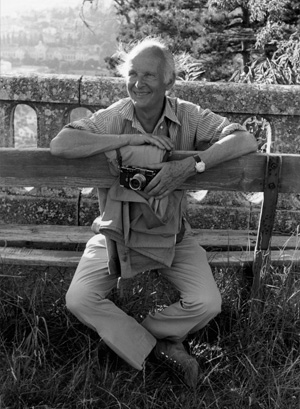
Henri Cartier-Bresson
Bresson

Image by Gertrude Käsebier

Even if the name doesn’t ring some little bell in your memory, chances are you most likely have viewed his work at some point. He was literally the inventor of the photojournalistic style… let that sink in for a minute or three. Before Cartier-Bresson, proper street photography as we know it and “still life reportage” as he called it was not a well practiced, or validated form of photography.

Born into a relatively well placed upper-class French family in 1908, Cartier-Bresson, like so many well known photographers, didn’t start out intending to be such. Painting was his major pursuit before picking up a camera. That all changed in 1931 when he set his eyes upon a photograph made by Hungarian photographer Martin Munkacsi. It was an image of three young boys in the surf of a lake in Africa. Cartier-Bresson said that he “couldn’t believe such a thing could be caught with a camera” and that he “suddenly understood that a photograph could fix eternity in an instant.” The photograph drove him to relinquish painting, and start making photographs. He was thoroughly a recorder of the spontaneity of human experience. There is much you can learn from Henri Cartier-Bresson to improve all aspects of your photo making.

Lessons you can learn from Henri Cartier-Bresson:

Strive to be invisible

When you’re working as a photographer it doesn’t take long to understand that humans tend to drastically change once they realize they are being photographed. Their mannerisms, expressions, and appearances all become noticeably different. Conspicuousness steals away realism very quickly if you are not careful. Cartier-Bresson understood this and moulded himself into somewhat of a photographic ninja. He shot with relatively small cameras, usually Leica 35mm Rangefinders. You have to understand that most photographers of his time were using larger format cameras which practically screamed “Hey, I’m making a photograph of you!!!” Anonymity allowed him to capture the essence of any scene in a way that was raw and unobtrusive.

Cartier-Bresson went so far as to conceal all the shiny surfaces of his gear with black paint to further decrease his footprint as a photographer. You might not want to go that far, but it will help you to capture better images if you blend into your surroundings. Plan for your sessions in a practical way. Don’t take more gear than you need, and keep a low profile. Try to wait until you’re ready to make an exposure before you raise your camera. Practice using your camera’s controls and memorize their placement. Also, avoid using a flash if it will likely interfere with your subject. Cartier-Bresson supposedly never used a flash for his images as he saw them as impolite and distracting. Photography, especially photojournalism, depends on the earnest capture of life in all its beauty, and regrettably, its occasional misery. Try to keep it real, literally.

Compose in camera

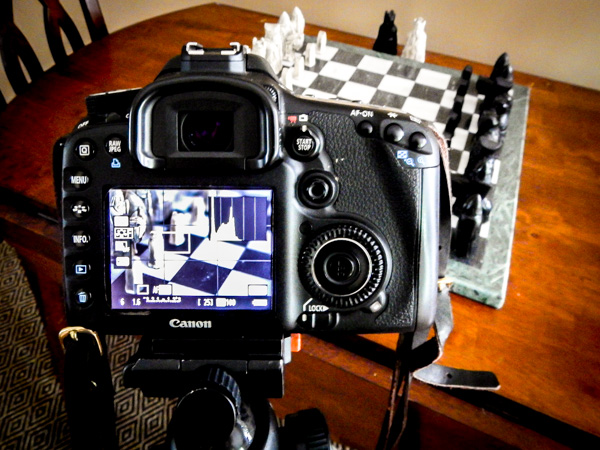
I know, I know. You’ve probably heard this before, and are most likely tired of having that phrase hurled at you. I feel your pain. I would always roll my eyes any time a seasoned photographer or well intentioned writer would talk about the importance of getting things right in-camera. Let’s be real here. It’s so easy to crop an image on the computer instead of using the camera’s viewfinder. It’s so much more convenient to salvage a less than correctly exposed image than to think through your aperture and shutter combinations.
Composeincamera

Post-processing photographs is a wonderful thing. Completely changing a photograph, however, is not always ideal. Cartier-Bresson was absolutely anti photo manipulation and believed any photograph should be cropped in the viewfinder before it was captured. Nearly all of his photographs were printed full-frame and even included about one millimeter of the unexposed negative so that his finished prints sported a thin black border to further prove the absence of cropping.

Any image is only as good as the ingredients put into its making. So try to put the best possible ingredients into your work so that your finished product will be something you will be proud to display and say “I made this”.

Focus as much on the art as the science

What we do as photographers would have been considered magic in an earlier time. Even at the basic level it is an amazing science. We record light that is completely unique and fleeting. You will never make the exact same photograph twice. The science of image making is an essential part of our creative process, but it must never be viewed as the only part.
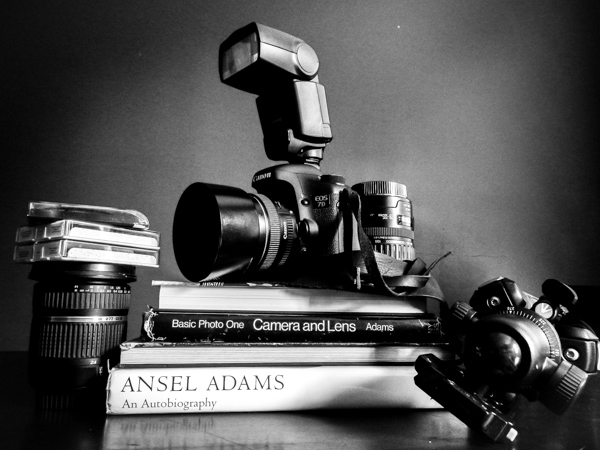
Artandscience

Surprisingly, Cartier-Bresson expressed, on multiple occasions, his almost complete lack of interest in the more technical portion of making photographs. The developing and printing of his negatives, actions so carefully controlled and guarded by most serious photographers of the time, were valid only to him in the cases where they allowed more effective expression of his vision. He saw the camera as a tool, and development and printing as merely a means to a much anticipated end. He said “people think far too much about techniques and not enough about seeing”.

You can lose your direction during the of making an image. Sometimes we let technical perfectionism overshadow our initial vision. Thorough knowledge of your gear is essential to grow as a photographer. However, like Cartier-Bresson tells us, don’t allow yourself to become so focused on your tools that you forget your craft.

Alfred Stieglitz
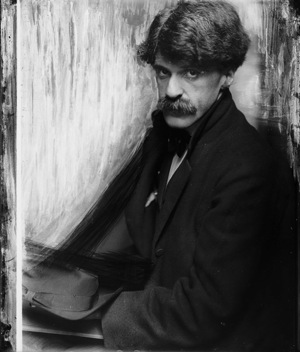
Stieglitz

Alfred Stieglitz was born into this world on January 1, 1864 and left it on July 13, 1946. Anything else that I can tell you about the impact of man’s life upon the world of photography and creative art will fall unbelievably short of the full measure of gratitude we owe him as photographers. That’s not hyperbole. Before Stieglitz, photography was not considered a form of artistic expression. There were no real schools of photography, and it certainly was not considered high art on the level of painting and sculpture. Stieglitz gave artists an outlet to show their work to the public, and was the catalyst that helped begin the careers of many celebrated artists including the paintings of Georgia O’Keeffe, and the legendary photographs of the great Ansel Adams. Stieglitz was always open to new techniques and innovative thinking towards art.

His work is removed from our time by nearly a century, and many of the technical mechanisms he used are now obsolete. Still, there is much insight to be gained from Alfred Stieglitz, and his contributions. We can learn from his approach to the art world as a whole, to better ourselves as photographers.

Lessons you can learn from Alfred Stieglitz:

Express yourself when you can

Stieglitz created a series of images called “Equivalents”. It is a collection of photographs that show a variety of different cloud formations. Each image was a self-reflection of the thoughts, emotions, and experiences that he was feeling at the time the frame was exposed. That made each image unique to only him. He was the only person who truly understood how he felt during each release of the shutter. So go out and photograph something that makes you happy. Share it with others if you want, or just keep it for yourself. Go and make photos of something that is only beautiful, or meaningful to you. The act in itself is very freeing.
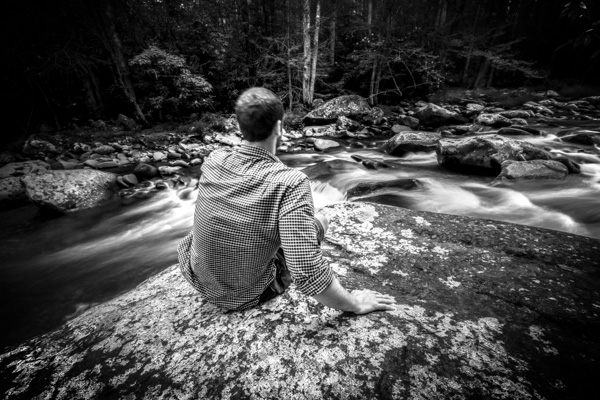
Expressyourself

This spot has special meaning only to me. I made this photo for myself and no one else.

You might be thinking “I express myself with all my work”, but really think about it for a moment. Do you ever make a photograph and immediately consider how it might be accepted or rejected by other people? Do you sometimes share an image that you personally think is outstanding but no one else seems to care about? We have all done it more often than we might comfortably admit.

Break the rules if you want

Simply put, any photograph that has ever been produced, resulted from of a combination of the following variables: size of aperture, shutter speed, depth of field, focal length, image receptor sensitivity and composition (film, digital sensor, ect) and that’s all. The key to making a great image is putting all those pieces together in such a way that they convert what was only visible within your own mind, into a photograph. Those are the only iron clad rules in photography. In the end it’s you who make the choices and operate the camera.
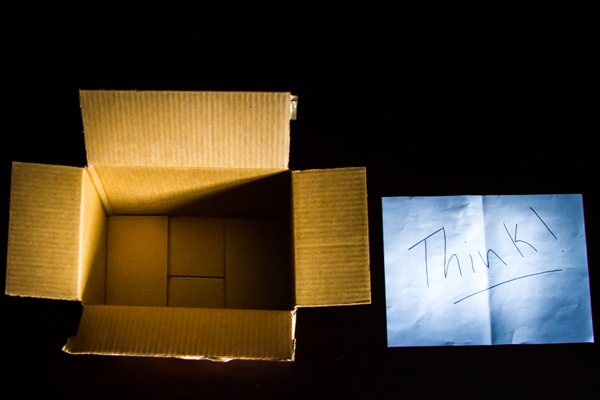
Bendtherules

Don’t be afraid to think outside the box!

Some really great work has resulted from stepping outside the mainstream. There are many stunning images that completely ignore the rule of thirds, leading lines, horizons, and so forth. Never completely cast aside guidelines, but don’t convince yourself that you are permanently tied to them either. Learning, and practicing, the tested and proven building blocks of strong photography will help you greatly. Just remember that ground breaking work often arises from the bending of rules.

Look for inspiration everywhere

Stieglitz promoted all art forms. He opened galleries to display the works of painters, sculptors, and of course photographers. He didn’t limit himself to only photography, or painting or to works fashioned from stone and clay. Instead, he drank it all in. He recognized that it was all tangled together and intertwined.

As photographers we are able to almost instantly project what sometimes takes other artists days or weeks, or even months to create. However, this relative ease of creation can gradually place blinders on our creative thinking. We can reach a point when we only look at other photographs for inspiration. That kind of thinking limits our scope as artists. This mindset is especially dangerous for new photographers and can lead to frustration, disappointment and even worse, emulation that festers into plagiarism.

Don’t let yourself have artistic tunnel vision. Begin to look for inspiration everywhere to fuel your photography. Black and white sketches, paintings, wood carvings, architecture, kids finger-painting – everything has the potential to give you a smack of creativity that you can mould into photographic inspiration. The truth is that you really never know what will inspire you.

Please share your questions and comments below. Have you heard of these two masters before? Have they influenced your photography?

The post Cartier-Bresson and Stieglitz – Study the Masters of Photography to Become a Better Photographer by Adam Welch appeared first on Digital Photography School.


Digital Photography School

 
Comments Off on Cartier-Bresson and Stieglitz – Study the Masters of Photography to Become a Better Photographer

Posted in Photography


New study investigates online reviews – makes surprising discoveries

16 Jul

Screen_Shot_2013-07-15_at_2.38.02_PM.png

Online product reviews are a huge part of our lives these days, and often, they’re the nearest thing we get to a ‘hands on experience’ before we buy something. But how do we know they’re honest? Dishonest reviews are a serious problem for retailers (and indeed for content websites like dpreview.com) and a team at the Massachusetts Institute of Technology has been investigating why people are driven to leave reviews of products that they haven’t actually used. Their findings might just surprise you. Click through to read more. 

News: Digital Photography Review (dpreview.com)

 
Comments Off on New study investigates online reviews – makes surprising discoveries

Posted in Uncategorized