RSS
 

Posts Tagged ‘stop’

Stop the Rush and Return to Simplicity

30 Apr

As modern day photographers it is easy to get overwhelmed and consumed by new gear, new technology, new software, new techniques (did someone say HDR?) and so on. With so much going on in the industry, sometimes you need to step back, sit down and relax.

Sometimes you need to stop the rush in your head and slow the heck down.

With that said, I thought it would be worthwhile to share some advice for you new photographers that feel an intense desire to do more than you know you can handle at the moment. Or for you photographers that have experience already, but want to go back to simplicity.

Before I dive into my advice, read through Simon Ringsmuth’s article: 5 Tips to Help You Slow Down and Take Better Photos. Now that you have done that, here is my advice.

Slow Down

To add to Simon’s article, I wanted to share a video I recorded on the same topic of slowing down:

You will notice that I have shared some very specific things you can do to force yourself to simplify your photography. Things like switching to manual focus completely, using a smaller memory card, or not using Auto-ISO. Each of these things will force you not only to think, but to think specifically about the subject or scene rather than just broadly.

Prime Lenses

Prime lenses are another way to simplify. It would be nice to have expensive zoom lenses with f/2.8 or wider apertures. But do you need that? Might it just complicate your photography?

Instead of spending the money on expensive lenses, or an all-in-one zoom, try prime lenses. When I am on the job I’m typically using either a 20mm, 35mm, 50mm or 85mm lens. Each has an aperture of f/2.0 or wider. They’re lighter so they don’t hurt my back, they’re smaller so they take up less room, and they make me move my feet and think about perspective more.

They are simple.

with-paddle

Made using a prime lens.

Technique

Admittedly, when HDR first became popular I hopped on the bandwagon. But eventually I got bored with doing the same bracketing technique over and over. At the time processing HDR was not even close to perfection, so the time needed for post-processing was way too much for my liking.  So I stopped and instead started to bracket two exposures, or three if needed. Then I would manually mask in specific parts of the scene as needed. I would do this using onOne Perfect Layers or Photoshop – depending on what else I wanted to do to the photo.

Having written books on long exposure and panoramic photography, I love both those techniques. But I don’t always need to do them. I don’t always need filters or a tripod.

A good example of this is as follows. Recently I have started trusting the dynamic range of my camera’s sensor more than ever. Instead of using a filter as often as I used to, when possible I will use that dynamic range and recover highlights and shadows inside of Lightroom. The histogram for my photos is typically towards the middle so that it’s even easier to recover both ends of the spectrum.

Fortunately the Nikon D810 has an amazing dynamic range to allow this. Many other cameras are in a similar situation.  That doesn’t mean I never use my neutral density filters, because I do. It just means I simplify when I can, because it allows me to enjoy photography even more.

rely-on-sensor

Sky blackened without filters and only using Lightroom.

Processing

When it comes to processing photos I often see so many filters being used by photographers. There is nothing wrong with that, but I sometimes feel it’s overboard. I might be a minority with how I feel about processing, but here it goes.

When processing photos I am a mix of a purist who also likes to experiment. I am colour-blind, so I rely on my ColorChecker Passport to guarantee accurate colors. But I know that my colors are often off. It happens and that’s okay, but I still aim for accuracy. That’s the purist side of my mentality. The experimental side wants me to try new things, and that is also okay.

But, lately while processing I have been keeping things simple. Very basic color correction as needed, contrast, clarity, and so on. Or a very basic black and white conversion using either Lightroom, onOne, Silver Efex or Tonality. I don’t go for anything out of the ordinary. My black and white processes are very simple. Because sometimes simple is best.

Vineland

Simple photo and processing brought a smile to hundreds of Vineland, NJ residents.

Keep it at One

If you really want to return to simplicity, try spending your photography time with only one camera body and one lens. For the past few months I have been participating in the WE35 project at The Photo Frontier. It’s a project where each photographer is researching the world of photography, and life in general with only one camera body and a 35mm lens (or 35mm equivalent).

We35

Doing this is extremely challenging and mentally fulfilling. It requires you to simplify your entire photography workflow. So I encourage you to give it a try, as well as the other tips I have shared here.

I will leave you with one more note. Believe in yourself, your knowledge, and your creativity. You don’t need expensive equipment or to always do fancy techniques. You need yourself, your camera and a lens. So step back and enjoy photography and stop driving yourself nuts over every piece of gear and technique that you can do.

googletag.cmd.push(function() {
tablet_slots.push( googletag.defineSlot( “/1005424/_dPSv4_tab-all-article-bottom_(300×250)”, [300, 250], “pb-ad-78623” ).addService( googletag.pubads() ) ); } );

googletag.cmd.push(function() {
mobile_slots.push( googletag.defineSlot( “/1005424/_dPSv4_mob-all-article-bottom_(300×250)”, [300, 250], “pb-ad-78158” ).addService( googletag.pubads() ) ); } );

The post Stop the Rush and Return to Simplicity by Scott Wyden Kivowitz appeared first on Digital Photography School.


Digital Photography School

 
Comments Off on Stop the Rush and Return to Simplicity

Posted in Photography


Last Stop: Photo Book Documents 150 Vanishing US Rest Stops

12 Dec

[ By WebUrbanist in Culture & History & Travel. ]

rest stop photo montage

For the last five years, this photographer has been traveling around the United States and capturing an eclectic but dying breed of roadside architecture: the American rest stop.

rest stop brick wood

rest stop simple a frame

the last stop big bend

rest stop waggon cannon

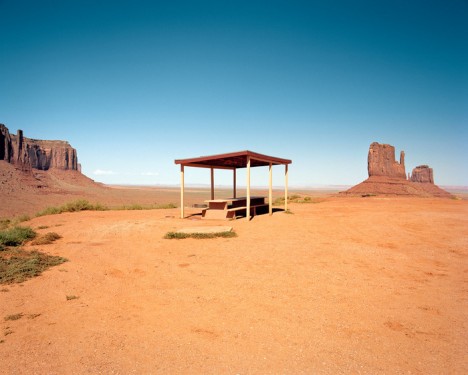
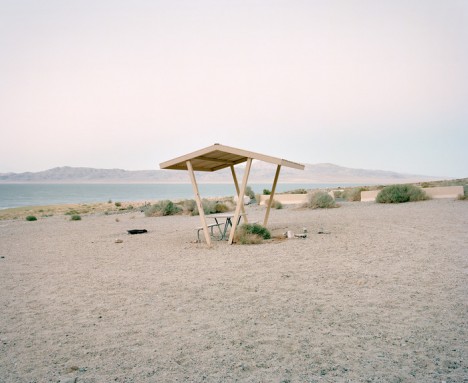
Ryann Ford of Austin, Texas, who has taken 150 pictures of  these to date, notes that this architectural typology has been associated with ” rest, relief, hospitality, and nostalgia” for the last half-century. The shots shown here include Big Bend National Park, Texas (FM 170), Walker Lake, Nevada (U.S. 95), Thackerville, Oklahoma (I-35), Clines Corners, New Mexico (U.S. 66/I-40), Monument Valley, Arizona, and more.

the last stop photo book

the last stop picture pages

the last stop cover page

Though The Last Stop has just reached her crowdfunding goal on Kickstarter, there is still time left to support the project in return for this oversized coffee table book which will be filled with 100 pages of images and stories. It represents both an aesthetic treat but also a critical archive of these structures, many of which are being abandoned or destroyed. Polaraids, prints and other prizes are also available.

rest stop map image

rest stop abandoned deserted

rest stop desert roof

rest stop picnic area

“When interstate highways were first built, passing up many small towns, rest stops were a way to reconnect people to the places they were traveling though. They gave small towns a chance to show their cultural significance. Rest areas have become relics of America’s roadside past. These sites not only illustrate a unique period in the American travel experience, but are significant for the architectural forms found within them.”

Share on Facebook


[ By WebUrbanist in Culture & History & Travel. ]

[ WebUrbanist | Archives | Galleries | Privacy | TOS ]


WebUrbanist

 
Comments Off on Last Stop: Photo Book Documents 150 Vanishing US Rest Stops

Posted in Creativity


Using a 10 Stop Neutral Density Filter to add Drama to the Sky

24 Nov

In this Adorama video Bryan Peterson shows you how he uses a 10 stop neutral density filter to take an image from average, to dynamic. The filter basically just blocks light allowing you to make longer exposures. In this city skyline shot it changes how the clouds appear in the final image.

Filter mentioned in the video:

  • B+W 10 stop neutral density filter

Other dPS articles about using ND filters:

  • Polarizing and Neutral Density Filters: Essentials for Landscape Photography
  • High Speed Sync Versus a Neutral Density Filter to Overcome Bright Sunlight in Portraits
  • How to do Dreamy Landscape Photography with a Neutral Density Filter
  • 7 Tips to Help Improve Your Seascape Photos by Controlling the Waves
  • Step-by-step Guide to Long Exposure Photography

The post Using a 10 Stop Neutral Density Filter to add Drama to the Sky by Darlene Hildebrandt appeared first on Digital Photography School.


Digital Photography School

 
Comments Off on Using a 10 Stop Neutral Density Filter to add Drama to the Sky

Posted in Photography


Typographic Shelter: Most Obvious City Bus Stop in the World

01 Sep

[ By WebUrbanist in Art & Sculpture & Craft. ]

bus stop art baltimore

If you cannot spot this giant  bus shelter in Baltimore, you may have bigger problems than missing the bus and getting to work on time.

bus shelter spells design

bus city street stop

Standing 14 feet high, the signage-plus-bus-stop spells out B-U-S in big capital letters, providing spaces to sit (on all three characters) as well as overhead protection from the rain (in the B and S). Each letter is also seven feet wide.

bus stop urban shelter

Created by mmmm, “BUS is a place to enjoy, interact, and meet while waiting for the bus. It is a leisure space in the middle of the rhythm of the city, a fun place for the inevitable waiting at a bus stop. BUS is made with wood and steel, materials that are typically used to build urban furniture.”

bus stop letters shelter

The idea is to work with simple, conventional and durable materials to create something both functional but potentially iconic – a place that anyone will know when you mention it. Like other guerrilla bus stops and functional urban shelters, it certainly stands out, but also seems more straightforward and civic.

bus stop design concept

“The three letters of BUS are big enough to accommodate two to four people each and protect them from rain, sun, wind, and inclement weather. They allow people to assume different postures of sitting or standing while waiting for the bus. The S allows people to lie back while they wait, and the B provides shelter.”

bus stop typographic installation

From their website, this is “a permanent public art project supported by Creative Alliance and Southeast Community Development Corporation in conjunction with the Baltimore Office of Promotion and the Arts, the European Union National Institutes for Culture (EUNIC), and SPAIN arts & culture. It is part of the initiative TRANSIT, Creative Placemaking with Europe in Baltimore.”

Share on Facebook


[ By WebUrbanist in Art & Sculpture & Craft. ]

[ WebUrbanist | Archives | Galleries | Privacy | TOS ]


WebUrbanist

 
Comments Off on Typographic Shelter: Most Obvious City Bus Stop in the World

Posted in Creativity


The Bucks Stop Here: 9 Closed & Abandoned Dollar Stores

25 Aug

[ By Steve in Abandoned Places & Architecture. ]

abandoned closed Big Lots dollar store
Dollar Stores may be the new face of retail in post-9/11 America but when they close or are abandoned, that’s change we don’t want to believe in.

Big Lots? More like Big Lost, know what I’m sayin’? A big lot of credit goes out to Flickr user Andrew T…has left the building for capturing the forlorn state of the above former Green Bay, WI, Big Lots store in August of 2011. Good thing he did – by December of the same year, the store had been demolished and all that was left was an open field.

General Retreat

abandoned closed Dollar General Columbia dollar store 1a

abandoned closed Dollar General Columbia dollar store 1b

abandoned closed Dollar General Columbia dollar store 1c

abandoned closed Dollar General Columbia dollar store Radio Shack

It’s getting to the point where not much remains open in Columbia, SC… Columbia Closings’ alphabetical list goes on and on and on. Very few failed local businesses are dollar stores, however, which may say something about the city’s economy. Here’s a Dollar General that just couldn’t cut the mustard in early 2012 but if the strip mall’s landlord thinks he’s getting the last laugh, they’d best think again: the store re-opened as a Radio Shack.

Detroit Buck City

abandoned closed Detroit dollar store 2

abandoned closed Detroit dollar store 1

You know the neighborhood’s going downhill fast when the local dollar store accepts food stamps… and then closes… and then gets tagged. Such is the sad case of Y OLLAR TORE (formerly MY DOLLAR STORE), not part of a chain though it’s doubtful that would have helped save them. If you haven’t already guessed, this post-apocalyptic ex-business is located on Detroit’s east side, which is definitely not its best side.

Next Page – Click Below to Read More:
The Bucks Stop Here 9 Closed Abandoned Dollar Stores

Share on Facebook


[ By Steve in Abandoned Places & Architecture. ]

[ WebUrbanist | Archives | Galleries | Privacy | TOS ]


WebUrbanist

 
Comments Off on The Bucks Stop Here: 9 Closed & Abandoned Dollar Stores

Posted in Creativity


Stop Collecting Tips and Start Practicing Photography

23 May

Young photographers are often better at digital photography than older photographers. This article will explain why this might be, and how you can improve your skills faster. You may be surprised to hear that IQ (Intelligence Quotient) apparently peaks at age fourteen.

Now, IQ is a deeply flawed measure of intelligence, and fourteen year olds certainly shouldn’t take over the world; but the young brain has incredible processing power.

young-photographers_8915-600

As we age, we lose this raw speed and (hopefully) replace it with shortcuts, experience and ‘wisdom’. This allows us to make better choices and retain the illusion of intelligence, but it also limits our creativity. Incensed? Read on…

Knowledge versus understanding

A quick mathematics question; what’s 8 squared? Ask a child and they’ll have to work it out. You probably know it’s 64 without thinking. This is knowledge; remembered facts.

Remember Pythagoras’ Theorem? Maybe you even know the same explanation, ‘the square of the hypotenuse is equal to the sum of the squares of the other two sides’. This is knowledge; a tool. Ask a mathematician and they’ll be able to prove it and explain why it’s true. This is understanding.

art-photography_1712Ask a layperson about the white balance setting on your camera. They’ll probably have no clue what you mean. Ask an average photographer and they’ll be able to tell you it controls the colour cast. Ask a physicist and they’ll understand far more deeply what’s going on and why.

Knowledge is very useful. It’s quick to learn by rote. How else can a young child pick up concepts that took the greatest geniuses years to develop? Most education equips us to slot into a role in a business. Understanding isn’t normally necessary. It’s enough to know that e=mc2 – only a few people need to understand the implications of this equation. Some of them for work; and others to satisfy a yearning to understand.

Precisely because our society values superficial understanding, it doesn’t occur to us to make knowledge our own, to transform it into understanding. We think that by knowing the name of something that we understand it. A brown-throated thrush. Satori. Light.

Make the leap from words to visuals

Words are useful; they allow us to communicate. But they’re really quite limited, and the language you speak tends to limit what you can think. Philosophers are acutely aware of this. So are mystics, and as artists, we’re always seeking to move beyond the cage that words present. Try defining love – or even the smell of fresh roses.

To communicate understandings, ideas and feelings, we have to package them up into sentences (parcels of knowledge) and share them with others, who then unpack them in the light of their own unique experience to create their personal understandings. I normally teach one-to-one, but when I teach bigger classes there’s a tendency for students to just collect the parcels and never unwrap them.

We are particularly prone to this, because Holistic Photography is both a craft and an art. We can certainly learn the first bit; apertures, shutter speeds, the inverse square law; but we often falter with the latter. The Golden Mean? That’s just another technique.

barcelona-sagrada-familia_1902

Sagrada Familia in Barcelona, from a different point of view

What ends up happening is that our head becomes so filled up with knowledge that it blinds us to the world around us. We’ll visit the famous cathedral that we read about in the guidebooks and have such a strong preconception about what it must be like that we fail to notice how it looks at the specific time that we’re there. When I’m teaching photography courses in Barcelona, the Sagrada Familia is a major attraction; but there are a myriad ways of photographing it that are overlooked. If we’re photographing people, we may get so stuck in our heads thinking about lighting ratios or the half-remembered tips of a ‘how to pose your model‘ article that we’re not available to make the human connection which leads to the poses that look best. We get stuck in our heads and cease feeling or seeing.

Stand in front of Rothko’s multiforms in a gallery if you get the chance. You can’t quite explain why, but they move you, if you let them. Van Gogh isn’t treasured (now) because of his technique, but because of the way he expressed his internal world, which happened to match our own at moments. Because while we’re all different, we’re also all the same.

There is a visual language. You can learn it in art school. Complementary colour schemes for emphasis, how different shapes can give different meanings, and where to put things in your frame and why. But to understand how to create, you’ll have to feel in your own body what works for you, and let your own mind tell you what’s right or wrong.

image-1

Theory versus action

Young photographers look for knowledge online. They have access to more information than they can ever read. Most are open to learning, so they progress rapidly. Like the zen master said, your cup can’t be full if you want to put more in it.

But they also have the benefit of few responsibilities, short attention spans and huge amounts of time. They underestimate the importance of learning from others. So they read a bit, get bored, and just play with the camera. Digital is free to experiment with, so they make thousands of mistakes and try things we never would. Then, when they reach a barrier, Google instantly provides the answer. It’s no wonder that they learn far faster.

imageCompare the contrary method. To get a big stack of books and methodically work your way through them, supplemented by overpriced photography magazines. Let’s not forget the millions of photography articles online as well. It’s addictive. Our brain rewards us for learning. We feel like we’re improving. But content is a trap, and too much information atrophies or paralyzes us.

Information with application is different. If we can immediately use what we’re learning, we’ll assimilate it faster and retain more. I studied French for almost a decade and can hardly hold a conversation, but speaking Spanish with my Peruvian girlfriend makes it much easier to learn.

There needs to be a balance. I see some photographers who learned a few techniques back when film was still popular, and have just stuck with them. If it’s not broken, don’t fix it, they reason. But no, you need to be constantly evolving, learning form others and letting your photography keep pace with your own evolution.

But chances are if you’re reading this, you’re taking in too much information without applying it. Get a little bit of relevant theory and then practice, practice, practice until you understand it well enough to integrate it with your vision. Then seek out another bit of knowledge to turn into understanding.

The takeaway from this is that we’re really not as capable as we might imagine. Nor do we understand how to best work with our psychology to make the most of our energies. We try to learn the ‘right’ settings by looking at the aperture, shutter speed and ISO used in photos we admire. But our brain hasn’t evolved to memorize numbers.

photographers_9490

It can however tell you if a drinks can is full or not just by picking it up. Far better it is then to develop the muscle memory associated with changing the settings on your camera. Work on specific areas until they’re second-nature and you’ll find your photography will improve far faster.

Go forth and practice!

So that’s enough theory for now. Here’s a test; set an alarm to ring in a couple of hours then carry on with whatever you were doing. Try and remember what this article was about. If you can’t remember what you read, then there was no point in spending your time to read it. There’s a wealth of knowledge available that can push your photography to the highest levels; but only you can unpack it into understandings. Make it applicable. Make it stick. Use it. Make it your own.

The post Stop Collecting Tips and Start Practicing Photography by Ben Evans appeared first on Digital Photography School.


Digital Photography School

 
Comments Off on Stop Collecting Tips and Start Practicing Photography

Posted in Photography


Windows 8 – Stop Rearranging My Windows!

20 Apr

Prevent Windows 8.1 from automatically rearranging and resizing windows when they are moved to the edges.

Just as with Windows 7, when you move windows to the borders of the Windows 8.1 Desktop, they will automatically rearrange and resize. For example, moving a window to the top will make it appear full screen (except for the Taskbar unless it is set to Auto-hide), and moving a window to the left or right edge will make it fill half the screen.

While some people appreciate this automatically occurring, advanced users and those who want more control over their window placements may find this feature extremely annoying. Luckily, it can be disabled:…

Read more at MalekTips.
New Computer and Technology Help and Tips – MalekTips.Com

 
Comments Off on Windows 8 – Stop Rearranging My Windows!

Posted in Technology


Chinese government orders Nikon to stop selling D600

19 Mar

nikon_d600.png

The Nikon D600 had a rocky introduction in 2012, with countless users noting that the camera often produces images with dust/oil spots. Nowhere though is the D600 having as rough a time as China, were the government has issued an order to Nikon to stop selling the D600 entirely following an investigative report on CCT (China Central Television) that captured dealers trying to avoid refunding money to angry customers. Learn more

News: Digital Photography Review (dpreview.com)

 
Comments Off on Chinese government orders Nikon to stop selling D600

Posted in Uncategorized


Rolling Stop: 10 Abandoned Roller Skating Rinks

23 Feb

[ By Steve in Abandoned Places & Architecture. ]

abandoned roller skating rinks
These abandoned roller skating rinks once saw social interaction mesh seamlessly with healthful recreation backed by a toe-tapping musical soundtrack.

Faded Starlight

abandoned Starlight Roller Rink Utah(image via: Arbyreed)

Pretty much all that remains of the former Starlight Roller Skating Rink and outdoor dance hall are the bandshell, ticket booth and concrete outdoor “dance floor”. Located between Toquerville and Pintura just off the old Cedar City highway (now I-15), the Starlight was built in the early 1940′s as an open-air dance hall and/or roller skating rink, the latter activity taking precedence as the Big Band era closed.

abandoned Starlight Roller Rink Utah(images via: Arbyreed)

According to the oldest resident of Pintura (likely a former patron), the Starlight Roller Skating Rink was abandoned in 1953 as the Korean War was drawing to a close. Credit Utah’s arid climate for preserving the facility’s remnants and credit Flickr user Arbyreed for these spectacular photos taken in February of 2010.

Alberta Blues

abandoned roller rink Calgary Alberta Canada(image via: Michael Oliver)

Who could imagine a roller skating rink wouldn’t be able to thrive in Calgary, Alberta? Oh, just about everyone: this is CANADA, a place where real skating is done with ice skates and nobody pays for the privilege… during Calgary’s long cold winter, at least. Props to Flickr user Michael Oliver for the disturbing yet delightful image above.

A View To A Bushkill

abandoned Bushkill Park roller rink(images via: TheUnknownCameraman)

Bushkill Park had a good run – the Easton, PA-area amusement park was open from 1902 through 2004 – but severe flood damage inflicted by Hurricanes Ivan and Wilma caused the storied park and its signature roller rink to close pending a massive renovation nobody thinks will actually occur. Almost a decade after the worst flooding in a century, Bushkill Park remains stubbornly comatose.

abandoned skates at Bushkill Roller Rink(images via: TheUnknownCameraman)

If Bushkill Park’s owners need funds to jump start the clean-up they might try selling off some of the roller rink’s massive inventory of skates before they rot away. Check out this video from TheUnknownCameraman to virtually experience exploring the post-apocalyptic rink.

Beaten Down In Eatontown

abandoned Eatontown Roller Rink(images via: Legend Has It… and Atlanticville)

The former Eatontown Roller Rink in Eatontown, New Jersey closed in 2005 and has been quietly deteriorating ever since. Well, not exactly EVER… on February 19th of 2009, high winds caused part of the building’s roof and side walls to collapse. The Eatontown Roller Rink’s rather sudden demise may have been a blessing for its owner, who was planning to demolish the moldering roller rink anyway. Now it won’t take quite so long.

Next Page – Click Below to Read More:
Rolling Stop 10 Abandoned Roller Skating Rinks

Share on Facebook


[ By Steve in Abandoned Places & Architecture. ]

[ WebUrbanist | Archives | Galleries | Privacy | TOS ]


WebUrbanist

 
Comments Off on Rolling Stop: 10 Abandoned Roller Skating Rinks

Posted in Creativity


Can’t Stop the Music: Submerged Turntable Plays Perfectly

15 Feb

[ By Steph in Art & Installation & Sound. ]

Submerged Records 1

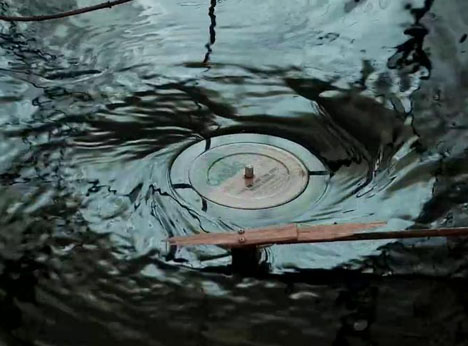
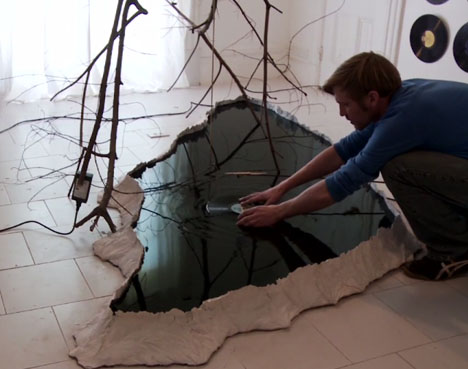
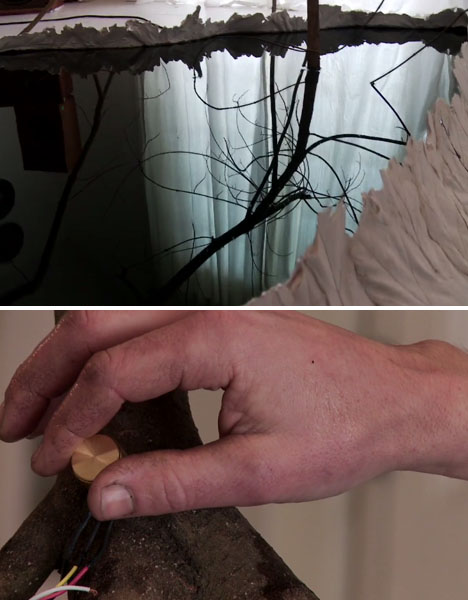
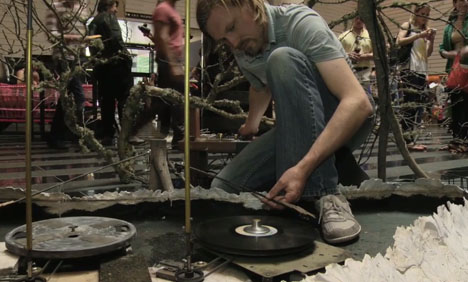
What will become of all that humans have created when we’re no longer on the planet to preserve it? This project by artist Evan Holm is both a nod to the grief that the mere thought of losing so much art, architecture, music and other culturally significant creations can incite, and hope for a new beginning. ‘Submerged Turntables’ play music perfectly even when placed underwater, spinning in a black pool.

Submerged Records 2

Watching the record swirl in the water is an eerie sight, powerfully evoking visuals of the monster floods we’ve watched wipe out human settlements in epic disaster movies as well as in real life. The knob to control the record player is built into a branch that hangs over the pool. The video below shows the process of setting up the installation.

Submerged Records 3

“There will be a time when all tracings of human culture will dissolve back into the soil under the slow crush of the unfolding universe,” says Holm. “The pool, black and depthless, represents loss, represents mystery and represents the collective subconscious of the human race. By placing these records underneath the dark and obscure surface of the pool, I am enacting a small moment of remorse towards this loss.”

Submerged Records 4

“In the end however this is an optimistic sculpture, for just after that moment of submergence; tone, melody and ultimately song is pulled back out of the pool, past the veil of the subconscious, out from under the crush of time, and back into a living and breathing realm. When I pe

Share on Facebook


[ By Steph in Art & Installation & Sound. ]

[ WebUrbanist | Archives | Galleries | Privacy | TOS ]


WebUrbanist

 
Comments Off on Can’t Stop the Music: Submerged Turntable Plays Perfectly

Posted in Creativity