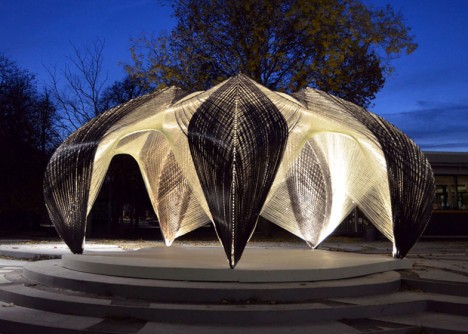
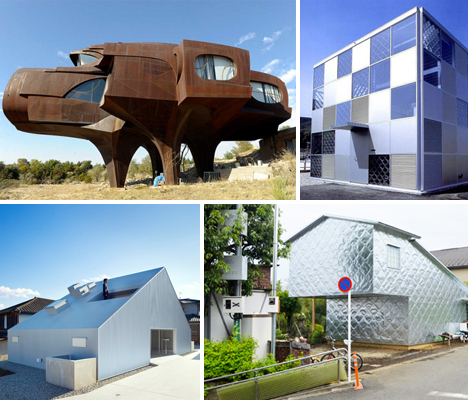
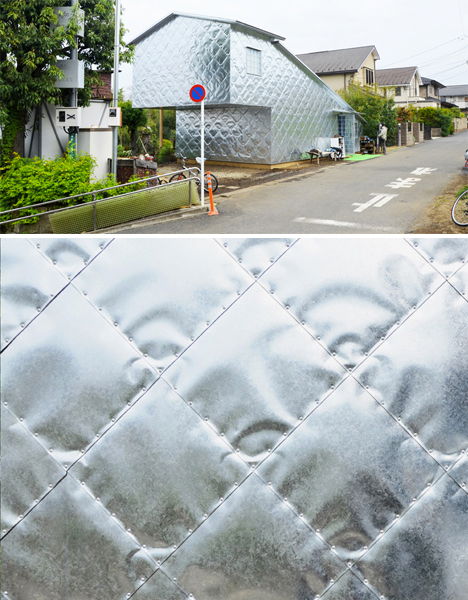
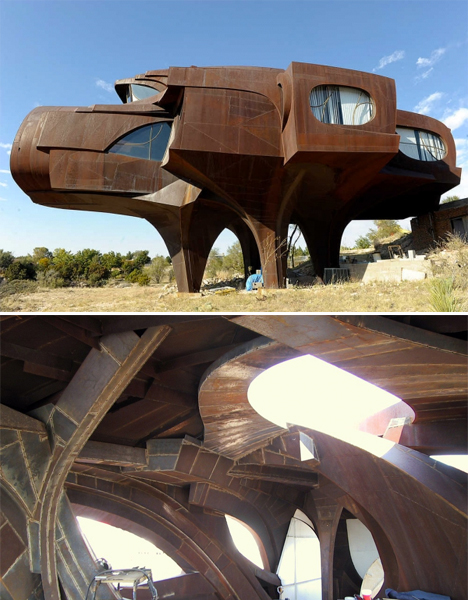
A few nice visual art images I found:
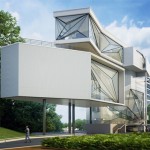
JAXPORT Gallery: “The Art of the Steel Crane” by Barbara Holmes and Deborah Reid

Image by JAXPORT
Opening reception at JAXPORT Gallery, December 2011
“The Art of the Steel Crane” is centered around a recurring theme and in the duo’s art: the self, a spirit that is also all powerful. The persona is representative of how we present to the world, the child inside everyone and acts as a self-reflective tool for the viewer to connect to the art. The exhibition consists of glass sculptures, a series of photographs, including some exclusive edition prints, an animation video piece, and a menagerie of paintings. “The Art of the Steel Crane” will be showing at JAXPORT Gallery from November 21, 2011 until January 5th, 2012. Find out more information on Barbara’s barbarafryefield.blogspot.com/
Barbara Fryefield
Barbara Fryefield, is an expressive artist, fine artist, and teacher. She holds a B.A. in Psychology and a Certificate in Art for Education. Barbara is owner of the Artist Palette Florida LLC. She has a gift for working with children and has been a k-12 art teacher for three years. Barbara applies knowledge of creative art, painting, drawing, and visual art to her work with children and adults. She facilitates using each of these processes in a non-threatening, spontaneous, and fun way that helps participants construct a new understanding of themselves and those around them. She works with adults, children, and families focused on self-expression, communication, and wellness.
Deborah Reid
Deborah R. Reid is a lifelong painter and a practicing attorney. Her work is largely based on her own photographs which she interprets in a combination of oil, acrylic, egg shell, ink and now aerosol.Deborah curates monthly art shows at the Zodiac Grill on Adams Street as a fundraiser for Jacksonville Area Legal Aid. Her work can be seen there, at Fireflies on San Jose as well as regional galleries.
Deborah is a seasoned admiralty practitioner. Prior to joining the Florida Bar, she practiced in California, New Jersey and New York. She is now with the commercial litigation firm of Rumrell & Brock, P.A. Commencing in 2012; Deborah will be conducting workshops on Intellectual Property and Law for Artists.
For additional information and/or images, please contact Meredith Fordham Hughes by email or by phone at (904) 357-3052.
JAXPORT Gallery
Located on the first floor of JAXPORT Headquarters, the Gallery features local artists rotating on a bi-monthly basis. JAXPORT Gallery is open during normal JAXPORT Headquarters hours and admission is free.
Photo credit: JAXPORT, Meredith Fordham Hughes
JAXPORT Gallery: “The Art of the Steel Crane” by Barbara Holmes and Deborah Reid

Image by JAXPORT
Opening reception at JAXPORT Gallery, December 2011
“The Art of the Steel Crane” is centered around a recurring theme and in the duo’s art: the self, a spirit that is also all powerful. The persona is representative of how we present to the world, the child inside everyone and acts as a self-reflective tool for the viewer to connect to the art. The exhibition consists of glass sculptures, a series of photographs, including some exclusive edition prints, an animation video piece, and a menagerie of paintings. “The Art of the Steel Crane” will be showing at JAXPORT Gallery from November 21, 2011 until January 5th, 2012. Find out more information on Barbara’s barbarafryefield.blogspot.com/
Barbara Fryefield
Barbara Fryefield, is an expressive artist, fine artist, and teacher. She holds a B.A. in Psychology and a Certificate in Art for Education. Barbara is owner of the Artist Palette Florida LLC. She has a gift for working with children and has been a k-12 art teacher for three years. Barbara applies knowledge of creative art, painting, drawing, and visual art to her work with children and adults. She facilitates using each of these processes in a non-threatening, spontaneous, and fun way that helps participants construct a new understanding of themselves and those around them. She works with adults, children, and families focused on self-expression, communication, and wellness.
Deborah Reid
Deborah R. Reid is a lifelong painter and a practicing attorney. Her work is largely based on her own photographs which she interprets in a combination of oil, acrylic, egg shell, ink and now aerosol.Deborah curates monthly art shows at the Zodiac Grill on Adams Street as a fundraiser for Jacksonville Area Legal Aid. Her work can be seen there, at Fireflies on San Jose as well as regional galleries.
Deborah is a seasoned admiralty practitioner. Prior to joining the Florida Bar, she practiced in California, New Jersey and New York. She is now with the commercial litigation firm of Rumrell & Brock, P.A. Commencing in 2012; Deborah will be conducting workshops on Intellectual Property and Law for Artists.
For additional information and/or images, please contact Meredith Fordham Hughes by email or by phone at (904) 357-3052.
JAXPORT Gallery
Located on the first floor of JAXPORT Headquarters, the Gallery features local artists rotating on a bi-monthly basis. JAXPORT Gallery is open during normal JAXPORT Headquarters hours and admission is free.
Photo credit: JAXPORT, Meredith Fordham Hughes
Eddo Stern discusses Dark Game hardware at Art Center Media Design Program Design Dialogues

Image by G A R N E T
Design Dialogues Fall 2010: Computation After New Media
Guest Curator: Garnet Hertz
This lecture series explores key concepts in computational media to empower individuals to imagine, collaborate, provoke, and prototype through computing.
As a result of its widespread adoption, digital media has transitioned from "new media" to a ubiquitous part of contemporary life. This shift from novelty to familiarity has considerable ramifications for academic institutions working in the fields of media arts and digital culture. Exploring the formal potentials of information and networked technologies is no longer of significant interest: information technologies need to be understood as an embedded part of culture and history. Digital cultural practices must also work to extend their parent disciplines, including the studio arts, media history and theory, design, computer science and engineering.
Each speaker in the "Computation After New Media" series will focus on one word— a single term they feel is a core part of their work within the framework of computation. These lectures will be aimed at exploring the underlying structures of computationalism, providing an important leverage into the philosophy, languages, and principles of digital media.
SCHEDULE:
– October 1: Sharon Daniel, UCSC
– October 8: Eddo Stern, UCLA
– October 22: Paul Dourish, UCI
– October 29: George Legrady, Experimental Visualization Lab, UCSB
– November 19: Casey Reas, UCLA, author, Form + Code in Design, Art, and Architecture
– December 3: Celia Pearce, Georgia Tech, author Communities of Play: Emergent Cultures in Multiplayer Games and Virtual Worlds
Design Dialogues brings provocateurs from the worlds of design, art, academia, and technology into the MDP Studio. Each term, a guest curator is invited to build a series around a theme of their choosing.
Meetings: 12-2 pm. Talks: 3-6 pm in the Wind Tunnel Gallery. Open only to Media Design students, alumni, and faculty.
October 1: Sharon Daniel
Sharon Daniel is Professor of Film and Digital Media at the University of California, Santa Cruz where she teaches classes in digital media theory and practice. Her research involves collaborations with local and on-line communities, which exploit information and communications technologies as new sites for "public art." Daniel’s role as an artist is that of “context provider”—assisting communities, collecting their stories, soliciting their opinions on politics and social justice, and building the online archives and interfaces that make this data available across social, cultural and economic boundaries. Her goal is to avoid representation—not to attempt to speak for others but to allow them to speak for themselves.
Daniel’s work has been exhibited internationally at museums, festivals including the Corcoran Biennial, the University of Paris, the Dutch Electronic Arts Festival, Ars Electronica and the Lincoln Center Festival as well as on the Internet. Her essays have been published in books and professional journals such as Leonardo and the Sarai Reader. Daniel has recently presented “Improbablevoices.net” at the Fundacion Telefonica in Buenos Aires and at the conference “contested commons” in New Delhi, India. Her current research is supported by grants from the Daniel Langlois Foundation, the UCIRA, UCSC Arts Research Institute, and the Creative Work Fund.
October 8: Eddo Stern
Eddo Stern works on the disputed borderlands between fantasy and reality, exploring the uneasy and otherwise unconscious connections between physical existence and electronic simulation. His work explores new modes of narrative and documentary, experimental computer game design, fantasies of technology and history, and cross-cultural representation in computer games, film, and online media. He works in various media including computer software, hardware and game design, kinetic sculpture, performance, and film and video production. His short machinima films include "Sheik Attack", "Vietnam Romance", "Landlord Vigilante" and "Deathstar". He is the founder of the now retired cooperative C-level where he co-produced the physical computer gaming projects "Waco Resurrection", "Tekken Torture Tournament", "Cockfight Arena", and the internet meme conference "C-level Memefest" He is currently developing the new sensory deprivation game "Darkgame". Stern’s work can be seen online at www.eddostern.com/
October 22: Paul Dourish
Paul Dourish is a Professor of Informatics in the Donald Bren School of Information and Computer Sciences at UC Irvine, with courtesy appointments in Computer Science and Anthropology. He teaches in the Informatics program and in the interdisciplinary graduate program in Arts Computation and Engineering. His primary research interests lie at the intersection of computer science and social science; he draws liberally on material from computer science, science and technology studies, cultural studies, humanities, and social sciences in order to understand information technology as a site of social and cultural production. In 2008, he was elected to the CHI Academy in recognition of his contributions to Human-Computer Interaction.
Dourish is the author of "Where the Action Is: The Foundations of Embodied Interaction" (MIT Press, 2001), which explores how phenomenological accounts of action can provide an alternative to traditional cognitive analysis for understanding the embodied experience of interactive and computational systems. Before coming to UCI, he was a Senior Member of Research Staff in the Computer Science Laboratory of Xerox PARC; he has also held research positions at Apple Computer and at Rank Xerox EuroPARC. He holds a Ph.D. in Computer Science from University College, London, and a B.Sc. (Hons) in Artificial Intelligence and Computer Science from the University of Edinburgh.
November 19: Casey Reas
Casey Reas lives and works in Los Angeles. His software, prints, and installations have been featured in numerous solo and group exhibitions at museums and galleries in the United States, Europe, and Asia. Casey’s ongoing Process series explores the relationship between naturally evolved systems and those that are synthetic. The imagery evokes transformation, and visualizes systems in motion and at rest. Equally embracing the qualitative human perception and the quantitative rules that define digital culture, organic form emerges from precise mechanical structures.
Casey is a professor at the University of California, Los Angeles. He holds a masters degree from the Massachusetts Institute of Technology in Media Arts and Sciences as well as a bachelors degree from the School of Design, Architecture, Art, and Planning at the University of Cincinnati. With Ben Fry, Reas initiated Processing in 2001. Processing is an open source programming language and environment for creating images, animation, and interaction.
Reas and Fry published Processing: A Programming Handbook for Visual Designers and Artists, a comprehensive introduction to programming within the context of visual media (MIT Press, 2007). In 2010, they publishing Getting Started with Processing, a casual introduction to programming (O’Reilly, 2010). With Chandler McWilliams and Lust, Casey has just published Form+Code in Design, Art, and Architecture (PAPress, 2010), a non-technical introduction to the history, theory, and practice of software in the arts.
Casey is the recipient of a 2008 Tribeca Film Institute Media Arts Fellowship (supported by the Rockefeller Foundation), a 2005 Golden Nica award from the Prix Ars Electronica, and he was included in the 2008 ArtReview Power 100. His images have been featured in various publications including The New York Times, The International Herald Tribune, Print, Eye, Technology Review, and Wired.
December 3: Celia Pearce
Celia Pearce is a game designer, author, researcher, teacher, curator and artist, specializing in multiplayer gaming and virtual worlds, independent, art, and alternative game genres, as well as games and gender. She began designing interactive attractions and exhibitions in 1983, and has held academic appointments since 1998. Her game designs include the award-winning virtual reality attraction Virtual Adventures (for Iwerks and Evans & Sutherland) and the Purple Moon Friendship Adventure Cards for Girls.
Celia received her Ph.D. in 2006 from SMARTLab Centre, then at Central Saint Martins College of Art and Design, University of the Arts London. She currently is Assistant Professor of Digital Media in the School of Literature, Communication and Culture at Georgia Tech, where she also directs the Experimental Game Lab and the Emergent Game Group. She is the author or co-author of numerous papers and book chapters, as well as The Interactive Book (Macmillan 1997) and Communities of Play: Emergent Cultures in Multiplayer Games and Virtual Worlds (MIT 2009). She has also curated new media, virtual reality, and game exhibitions and is currently Festival Chair for IndieCade, an international independent games festival and showcase series. She is a co-founder of the Ludica women’s game collective.
Curator: Garnet Hertz
Doctor Garnet Hertz is a Fulbright Scholar and contemporary artist whose work explores themes of technological progress, creativity, innovation and interdisciplinarity. Hertz is a Faculty Member of the Media Design Program at the Art Center College of Design in Pasadena California, a Postdoctoral Research Scholar at the Institute for Software Research at UC Irvine and is Artist in Residence in the Laboratory for Ubiquitous Computing and Interaction at UC Irvine. He has shown his work at several notable international venues in eleven countries including Ars Electronica, DEAF and SIGGRAPH and was awarded the prestigious 2008 Oscar Signorini Award in robotic art. He is founder and director of Dorkbot SoCal, a monthly Los Angeles-based DIY lecture series on electronic art and design. His research is widely cited in academic publications, and popular press on his work has disseminated through 25 countries including The New York Times, Wired, The Washington Post, NPR, USA Today, NBC, CBS, TV Tokyo and CNN Headline News.