RSS
 

Posts Tagged ‘Starchitects’

Honoring Zaha Hadid: 5 of the Starchitect’s Greatest Projects

01 Apr

[ By Steph in Architecture & Public & Institutional. ]
SONY DSC

The world lost a star architect this week, trailblazing Iraqi-born Zaha Hadid, who was the first woman to receive the Royal Institute of British Architects (RIBA) Gold Medal. Her striking modern structures are experimental, visionary and bold, never afraid to make a strong statement. These are not buildings designed to blend into their environments, but rather sculptural focal points, every one of them a landmark in its respective city. Attempting to narrow down her best works is as futile as it is subjective, but here are five that stand out as prime examples of her distinctive style.

Glasgow Riverside Museum of Transport

hadid glasgow

hadid glasgow 2

hadid glasgow 3

hadid glasgow 4

The spiky, jagged front facade of this museum flows into ribbons of reflective zinc, symbolizing the landscape of its setting as the junction of the rivers Clyde and Kelvin. Designed like a linear tunnel bent to one side, its roof mimicking waves in the water, with a column-free, open center for hosting exhibits. Said Hadid of the project, “Through architecture, we can investigate future possibilities yet also explore the cultural foundations that have defined the city. The Riverside Museum is a fantastic and truly unique project where the exhibits and building come together at this prominent and historic location on the Clyde to enthuse and inspire all visitors.”

Heydar Aliyev Center, Baku

hadid heydar 1

hadid heydar 2

hadid heydar 3

hadid heydar 4

hadid heydar 5

The organic form of this cultural center in Azerbaijan gives it the look of a gigantic sea shell nestled among rectilinear Soviet architecture, establishing fluid connections between itself and the surrounding plaza. It’s all vaulted curves and sinuous lines extending over the roof and back to the ground again. Said Hadid, “Elaborate formations such as undulations, bifurcations, folds, and inflection modify this plaza surface into an architectural landscape that performs a multitude of functions: welcoming, embracing, and directing visitors through different levels of the interior. With this gesture, the building blurs the conventional differentiation between architectural object and urban landscape, building envelope and urban plaza, figure and ground, interior and exterior.”

Messner Mountain Museum, Corones

hadid messner 6

hadid messner 4

hadid messner 2

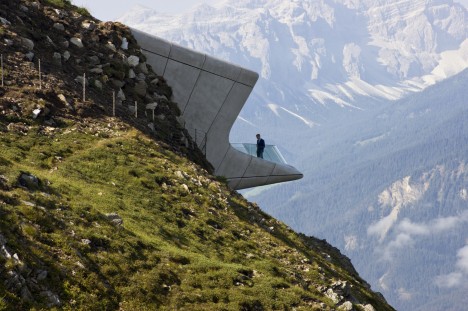
Poking out of a peak within the Italian Alps, the Messner Mountain Museum Corones almost seems to have unearthed itself from the depths of Mount Kronplatz to look out onto South Tyrol. In fact, the overlook visible from outside is only the tip of a structure enabling visitors to explore the mountain’s caverns and grottos. Views from the shard-like lookouts are directed to specific peaks, and the pale exterior panels are informed by the tones of the adjacent limestone.

London Aquatics Center

hadid london aquatics

hadid london aquatics 2

hadid london aquatics 3

The undulating swimming venue for the 2012 Olympics in London is inspired by “the fluid geometries of water in motion,” nearly every line within the interior taking its shape from waves. As dynamic and beautiful as it truly is, the design reflects a certain deliberate restraint on Hadid’s part. In contrast to the visually dazzling spaces she’s known for, this interior takes care not to outshine its intended purpose, keeping focus on the pool and its inhabitants. As seen in the aerial photography, controversial ‘wings’ were added to Hadid’s design to accommodate extra seating during the Games, but have since been removed to honor the integrity of her original vision.

MAXXI Museum, Rome

hadid maxxi 1

hadid maxxi 2

hadid maxxi 3

hadid maxxi 4

Often referred to as Hadid’s most iconic project, the MAXXI Museum of the Arts of the XXI Century in Rome complements the city’s antiquities while also bringing in a much-needed freshness and fluidity. An historic city full of ruins, without a lot of notable modern architecture, can start to feel static. Hadid injects a sense of vitality without dwarfing the centuries-old architecture in its immediate vicinity. Said Hadid, “Here we are weaving a dense texture of interior and exterior spaces. It’s an intriguing mixture of permanent, temporary and commercial galleries, irrigating large urban field with linear display surfaces. It could be a library; there are so many buildings that are not standing next to, but are intertwined and superimposed over one another. This means that, through the organizational diagram, you could weave other programs into the whole idea of gallery spaces. You can make connections between architecture and art – the bridges can connect them and make them into one exhibition.”

Share on Facebook


[ By Steph in Architecture & Public & Institutional. ]

[ WebUrbanist | Archives | Galleries | Privacy | TOS ]


WebUrbanist

 
Comments Off on Honoring Zaha Hadid: 5 of the Starchitect’s Greatest Projects

Posted in Creativity


Star Wars x Starchitects: Lightsabers Meet Modern Design

26 Nov

[ By Steph in Design & Products & Packaging. ]

architect star wars 7

How would Zaha Hadid’s signature brand of futuristic bio-inspired architecture translate to the design of a lightsaber if she were a Jedi? The project ‘Design x Saber’ mashes up the iconic Star Wars weapon with some of the design world’s biggest names of the 20th and 21st centuries, from the midcentury modern furniture sensibilities of Ray and Charles Eames to the graphic minimalist fashions of Issey Miyake.

architect star wars 6

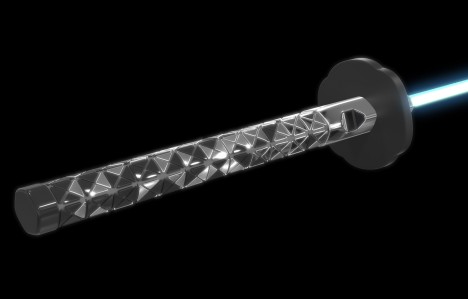
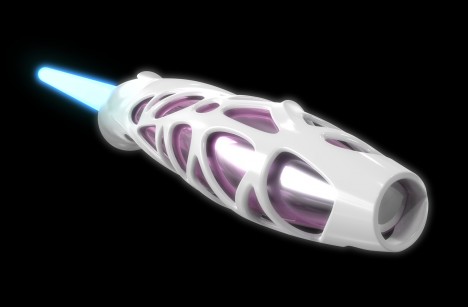
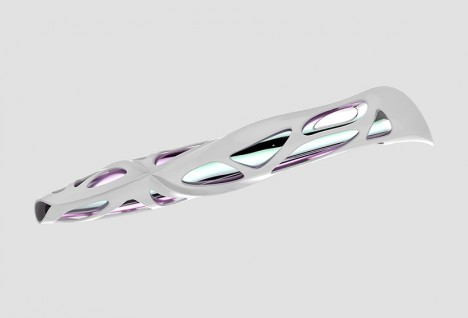
Y Studios, a San Francisco-based research company, identified five distinguished designers whose styles could be creatively applied to the Star Wars universe and then created a signature lightsaber for each one. Hadid’s saber, for instance, features a curvaceous white web wrapping around an iridescent metallic core for the hilt.

architect lightsabers

architect star wars 2

“With the Hadid saber, we wanted to explore movement through the form as an idea for designing the hilt,” says the studio. “By taking an exoskeletal structure and wrapping it around a chrome metal insert, it gave us a natural grip zone that related directly to the Hadid aesthetic. The simple, flowing and always changing curvature draws the eyes around the hilt from all angles, making it a true 360 degree design example.”

star wars starchitects 8 architect star wars 3

Miyake’s saber features a black faceted texture inspired by his famous Bao Bao bag paired with the silhouette of a Japanese katana sword, with the Aurebesh characters for ‘Jedi knight” etched into the blade. The Eames design, made primarily of wood, takes after the designer brothers’ most sought-after creation, the iconic Eames lounge chair made of plywood and leather.

architect star wars 4 architect star wars 5

German industrial designer Dieter Rams is best known for his pleasingly simple, pure white aesthetic and a “less but better” principle for good design; his saber is appropriately clean and balanced, free of unnecessary ornamentation. See the others and get more details at the Y Studios Vimeo channel.

Share on Facebook


[ By Steph in Design & Products & Packaging. ]

[ WebUrbanist | Archives | Galleries | Privacy | TOS ]


WebUrbanist

 
Comments Off on Star Wars x Starchitects: Lightsabers Meet Modern Design

Posted in Creativity


Rejected Starchitects: 8 Controversial Building Proposals

11 Sep

[ By Steph in Architecture & Offices & Commercial. ]

Rejected Starchitects Foster Airport 1

Even the world’s most famous architects, from Zaha Hadid to Frank Gehry, get rejected sometimes. When Norman Foster’s visionary proposal for a new London airport built right in the middle of the Thames estuary was rejected, the architect retorted that the decision lacked “courage,” and that does often seem to be the case, with cities balking at overly ambitious and futuristic designs. But sometimes, it just comes down to money – or the architect’s ego.

Floating London Airport by Norman Foster

Rejected Starchitects Foster Airport 2

Rejected Starchitects Foster Airport 3

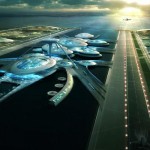
Land-poor London needs a new solution for an airport that can grow along with the city in the decades to come, but adding new runways would just be a short-term fix. Architect Norman Foster’s solution is to build a four-runway airport on the Isle of Grain in the Thames estuary, linking to existing and new high speed train networks. The proposal would use land that’s not currently suited for anything else, and would also make it easy to transport good directly to Britain’s other container ports. But the proposal isn’t among the three that London city officials are moving forward with, leading Foster to comment that the decision is “sadly predictable.”

Eisenhower Memorial by Frank Gehry
Rejected Starchitects Gehry Eisenhower 1

Rejected Starchitects Gehry Eisenhower 2

Perhaps unsurprisingly, Frank Gehry’s design for the Eisenhower Memorial was deemed a bit too flashy by the former president’s family, leading to a series of re-designs before the architect’s proposal was finally scrapped. The Eisenhower family wanted a memorial that was “simple, sustainable, and affordable,” and while Gehry’s design seems uncharacteristically sedate compared to his usual work, it still included elements that the family and committee found to not be in keeping with Dwight Eisenhower’s humble character. Congressional budget cuts ultimately slashed the funds available to the project, and now it’s unlikely to break ground.

Kimball Art Center Extension by Bjarke Ingels
Rejected Starchitects BIG Kimball 2

Rejected Starchitects BIG Kimball 1

Rejected Starchitects BIG Kimball 3

BIG is an appropriate acronym for the Bjarke Ingels Group, as the firm typically designs innovative, futuristic architectural solutions that are sometimes so far outside the box as to be a bit mind-boggling. Often described as a ‘wonder kid,’ young architect Bjarke Ingels seems to think on a large scale, dreaming up mountain-shaped residences with walkable green roofs and other unexpected designs. In the case of the Kimball Art Center in Park City, Utah, one design after another has been rejected. The first, a twisting timber structure, got the axe for being out of character with the historic setting. The second, a large concrete volume that proved more popular with locals, was thrown out for failing to meet strict Old Town planning guidelines in the former mining town.

Neues Stadt-Casino by Zaha Hadid
Rejected Starchitects Hadid Casino 1

Rejected Starchitects Hadid Casino 2
Even Zaha Hadid, among the most celebrated of contemporary architects, has designs rejected every now and then. Hadid’s proposed design for the Neues Stadt-Casino for Basel, Switzerland won a competition four years ago, but Swiss tradition allows the public to have the final say on projects of this size that make use of public money. 62.5% of voters rejected the proposal, leading it to be scrapped.

Next Page – Click Below to Read More:
Rejected Starchitects 8 Controversial Building Concepts

Share on Facebook


[ By Steph in Architecture & Offices & Commercial. ]

[ WebUrbanist | Archives | Galleries | Privacy | TOS ]

WebUrbanist

 
Comments Off on Rejected Starchitects: 8 Controversial Building Proposals

Posted in Creativity


Fallen Starchitects: 7 Failures of Famous Architects

24 Feb

[ By Steph in Architecture & Offices & Commercial. ]

Architectural Failures 1

Even the world’s most famous and celebrated architects have their failures, whether due to unforeseen consequences of an extraordinarily complex design or just plain shoddy construction. From the mold and cracks in Frank Lloyd Wright’s masterpiece Fallingwater to downright dangerous flying roof panels at Calatrava’s opera house in Valencia, these structural defects have led to injuries, lawsuits and in some cases, potential razing of a project before it’s even opened to the public. You can’t quite call these buildings outright failures just because they’ve got structural issues, especially since some of them are already iconic. But is this what happens when architects neglect practical considerations in favor of bold aesthetics?

Mold and Structural Failures: Frank Lloyd Wright’s Fallingwater

Architectural Failures Fallingwater 1

The masterpiece of perhaps the only architect who’s a household name in America, Fallingwater by Frank Lloyd Wright was a fantasy home, a grand experiment that sought to push the boundaries of existing technology and building methods of the time. Cantilevered over a waterfall on Bear Run in rural Pennsylvania, the residence is undeniably stunning. Who wouldn’t want to live in a house perched right over the water, constantly filled with aquatic sounds and reflections? Anyone who’s ever dealt with mold. Fungal growth and excess humidity got so bad so quickly, owner Edgar Kaufmann nicknamed the house ‘Rising Mildew.’ And that’s just one of the major problems that began to plague the house almost immediately after it was built.

There were conflicts all along between Wright, Kaufmann and the contractors building the house and various elements were rebuilt several times. The cantilevers developed for the structure weren’t quite up to the task of holding it up, and the building started to deform before it was even complete in 1937. Two large cracks formed on the terrace’s parapet as soon as the formwork was removed. Wright insisted that the design didn’t require any kind of propping system, but by 1995, a deflection of 7″ was measured at the edge of the largest cantilever, along with a number of serious cracks. The Western Pennsylvania Conservancy, which owned it by that point as a museum, had to do an extensive restoration and add steel trusses to support the cantilevers. Of course, these problems hardly put a dent in the importance of this house’s impact on 20th century architecture, or in Wright’s legacy.

Roof Falling Off: Calatrava’s Palau de les Arts Reina Sofia Opera House, Valencia, Spain

Architectural Failures Calatrava Opera House

Architectural Failures Calatrava Winery

Santiago Calatrava is best known for sweeping, bird-like designs that seem like they could lift up off the ground and fly away. His Palau de les Arts Reina Sofia Opera House in his hometown of Valencia, Spain is a perfect example of his signature style, with 14 above-ground stories and three below-ground, all covered in a curved roof reminiscent of a helmet. The tallest opera house in the world at 246 feet, it contains four auditoriums. Right after it opened to the public in 2005, a series of problems began to plague the structure: the main stage platform in the largest hall collapsed, forcing the cancellation of performances. Then, the complex was inundated with 7 feet of floodwaters, destroying electronic equipment in the lower levels.

But in early 2014, the city of Valencia filed suit against Calatrava for a more serious issue: sections of the mosaic roof began to come off in high winds, forcing authorities to cancel performances and close the building to the public. And this is just one among many lawsuits and accidents relating to Calatrava’s structures. A conference center he designed in Oviedo suffered structural collapse, his footbridge to the Guggenheim museum in Bilbao has required the city to pay out medical costs for dozens of pedestrians who slipped on the glass surface, and another footbridge over the Grand Canal in Venice has required ‘excessive repairs.’ Calatrava was also ordered to pay for the leaking roof of the Ysios Winery (pictured above.)

Leaking, Cracks and Falling Ice: Gehry’s Strata Center

Architectural Failures Gehry Strata Center 1

Architectural Failures Gehry Strata Center 2

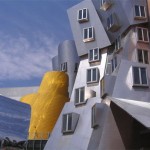
This massive 720,000-square-foot academic complex for the Massachusetts Institute of Technology is known as the Ray and Maria Stata Center after its two primary donors, and houses the Computer Science and Artificial Intelligence Laboratory in addition to other academic departments and offices for thinkers like Noam Chomsky. It would be hard for anyone who knows the slightest thing about architecture to miss the fact that it’s a Frank Gehry design, with its sharp angles and melange of metallic finishes. Like most of Gehry’s work, the structure is both praised and reviled – you either love it or you hate it. Gehry himself says it “looks like a party of drunken robots got together to celebrate.”

But MIT administrators have a less than glowing opinion of it for a different reason. The structure leaks, masonry has cracked, mold has developed, drainage has backed up and falling ice and debris repeatedly blocks emergency exits. MIT sued the architect in 2007, accusing him of negligence and breach of contract in the design of the center. Gehry’s response is that MIT is simply after his insurance money, stating “A building goes together with seven billion pieces of connective tissue. The chances of it getting done ever without something colliding or some misstep are small. I think the issues are fairly minor.”

Falling Apart: Zaha Hadid’s Guangzhou Opera Center

Architectural Failures Guangzhou Hadid 1

Architectural Failures Guangzhou Hadid 2

Zaha Hadid’s Guangzhou Opera Center has been praised as the world’s most beautiful performing arts venue with a futuristic ‘twin boulder’ design on the edge of the Pearl River. Sharp angles, geometric patterns and stark white surfaces belie Hadid’s organic inspiration, taken from the geology and topography of the setting. Dotted with starry lighting, the main auditorium has a womb-like feel in gleaming gold. Unfortunately, just a single year after it opened to the public, the building was marred by falling glass and large cracks in the walls and ceilings, leading to serious leaks.

Like many of these ‘failures,’ the problem here isn’t so much Hadid’s design as it is the shoddy materials and construction techniques of the contractors that built it. Many of the 75,000 granite slabs that make up the exterior have begun to fall off, with some blaming poor quality craftsmanship and others blaming Guangzhou’s extraordinarily humid climate. But in China, deadlines to complete even the most complex buildings are often rushed, and a lot of architecture is built with the expectation that it will only stand for about 25 years. The construction group that built the opera center say that it was just extremely difficult to fulfill Hadid’s vision.

Next Page – Click Below to Read More:
Fallen Starchitects 7 Failures Of Famous Architects

Share on Facebook


[ By Steph in Architecture & Offices & Commercial. ]

[ WebUrbanist | Archives | Galleries | Privacy | TOS ]

WebUrbanist

 
Comments Off on Fallen Starchitects: 7 Failures of Famous Architects

Posted in Creativity