Canon’s Photokina stand is popular as always. The company is eager to show off its EOS 7D Mark II to Photokina attendees, and the public in turn turned out to give the camera a try judging by the crowds at the booth. We took our turn handling the 7D II and checked out the booth.
Tag: Stand
-
Bird Photography Tips – How to Make Your Bird Photographs Stand Out
Have you ever been disappointed when browsing through the bird photographs in your own portfolio? I was, in fact many times! Even today I get disappointed to see several of my own bird photographs and keep thinking why did I take that photograph in the first place?
In most cases, the reason for failure of not appealing bird photographs is the boring or distracting background.
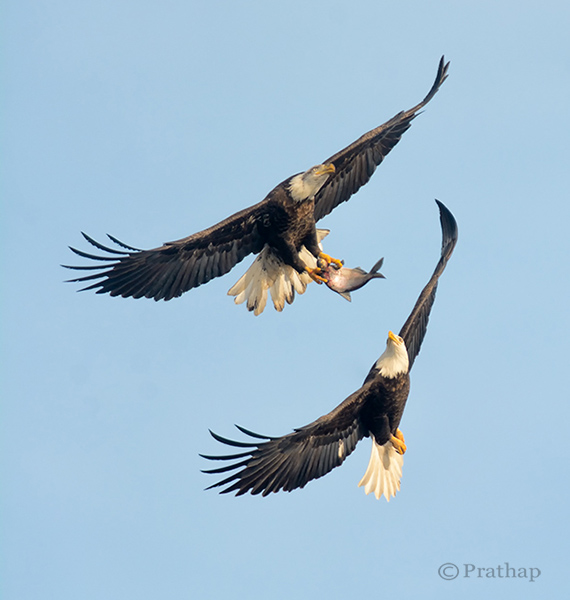
Take a look at your portfolio again and see if the culprit is the background. You will be surprised, shocked, and probably start thinking why did I take this photograph? What was in my mind?
The reason is very simple. It’s our natural behaviour. We are accustomed seeing only what we want to see. Imagine a situation like this. You have your camera and a decent telephoto lens, when you see a magnificent bird like a Bald Eagle perching on a lone tree.
What do you do? You will most likely start capturing photographs in burst mode. Don’t you? We all do! The urge to capture the beauty, and the fear of losing that opportunity doesn’t allow us to think. Unless. . .By following these very simple bird photography tips, and making a few changes before you press the shutter, you will be able to create bird photographs that stand out.
Your Background Makes the Picture
Remember that we see our world different than the Camera. We tend to see only what we want to see. Meaning, we are so tuned to looking at the world using filters. Our brain passes only the information which is very important to us filtering out all the unimportant things. So, we see only the bird and its beauty, but don’t see the background, or the distracting elements in the background.
But the camera doesn’t filter, it records everything that it sees.
No matter how beautiful the bird is, you have to make sure that the background is either clean, or interesting enough that it will complement the bird, which is your main subject of interest.
Use Your Legs
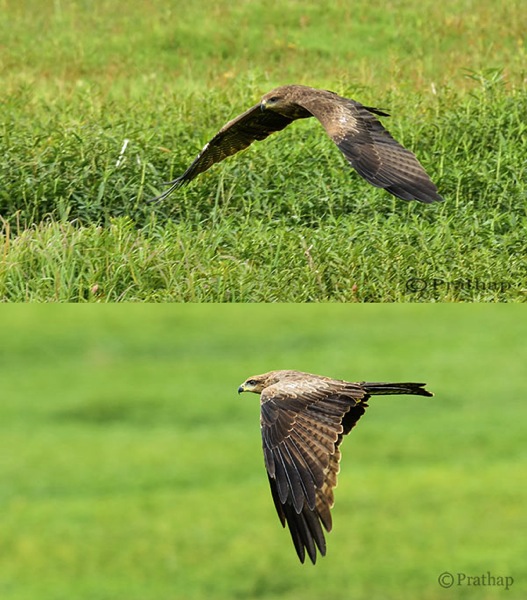
Do you use your legs when you are photographing? Does this question sound crazy? Think again. Once you get to see the bird, it is a common tendency to capture it immediately. In that urge to capture, you generally forget to move around.
In order to get a clean and appealing background you have to move around sometimes, or rather most of the time. But remember to move very slowly. Most of the time moving just few feet to the left, right, forward or backward will give wonderful results.
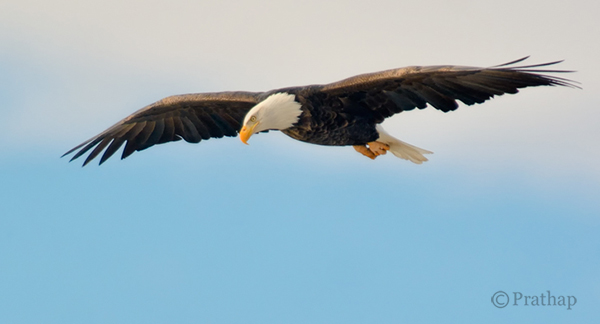
After all you are not a tripod!
Patience Always Pays Off
There is no substitute for patience when it comes to achieving anything worthwhile in your life. It is no different in the case of bird photography.
Why do we want to always move? Why can’t we sit in one place for several minutes to hours?
If you think deeper about it, you will understand that we are almost always restless. Also, we believe in the future or something that is non-existent. Learn to live in the present. Learn to embrace what is there in front of you. Rather than moving on in search of the next bird, spend time with the bird in front of you.
I would recommend you to spend hours to days in succession. You will fall in love with the bird and ultimately with nature. Patience is the key to making great photographs of any bird.
Use Depth of Field (DOF) to Your Advantage
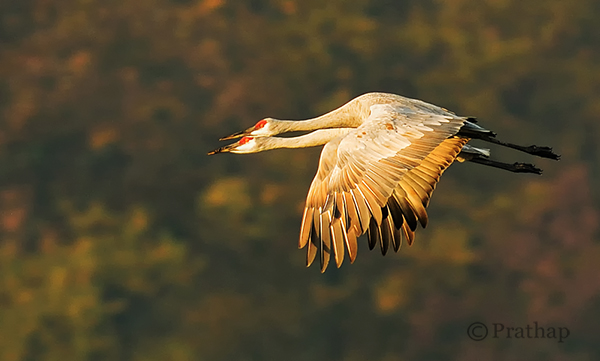
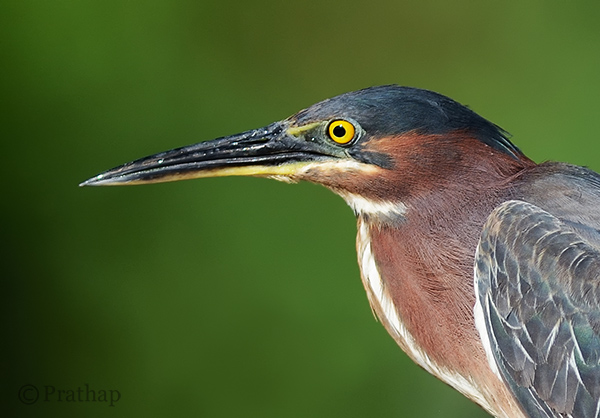
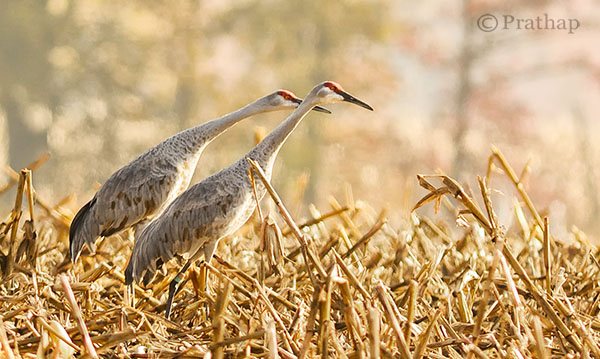
Depth of Field plays a major role in making your bird photographs look beautiful. By using DOF you can either isolate the subject from its background by using shallow DOF, or give importance to both the bird and its background by using deep DOF.
If the background does not convey anything about bird’s habitat, then using larger apertures like f/2.8, f/4, f/5.6 yields a pleasing bokeh in the background helping the bird to stand out in the frame.
Otherwise, including the habitat by using smaller apertures like f/8, f/11, etc., helps to narrate a story to the viewer.
Fill the Frame
If you go through the bird photographs across the net, you will find that the majority of bird photographs will have the bird filling the frame.
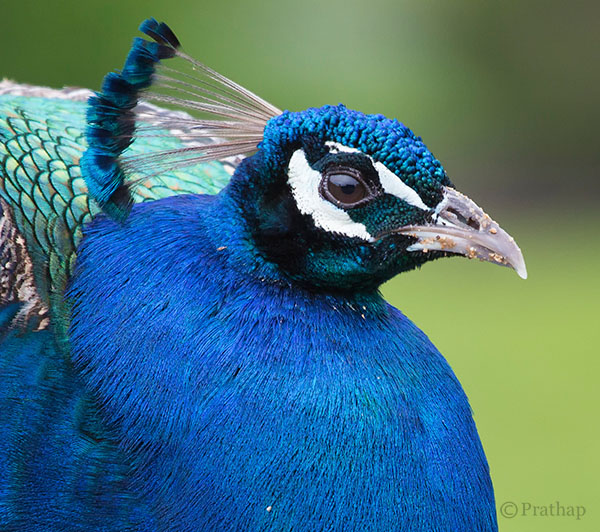
There are three main reasons for filling the frame with the bird:
- Most of the times, it’s all about the bird and its beauty. So, there is no reason why something else should be occupying the frame.
- The bird will be lost in the frame if it occupies only a part of the frame. Unless it is in its habitat, or there is a directional light illuminating it more than anything else in the frame.
- Filling the frame with the bird avoids any distractions in the background which is usually the case.
Remove Distractions in Post-Processing
This is a debatable topic for sure. Is it ethical or unethical? It depends really.
Are you sharing it only on social media sites? It shouldn’t bother you much. If you feel that removing distraction makes it a more pleasing image, it should be fine. However, it should not be overdone. Also, you should never do that if you are submitting your images to competitions or bird ID sites or any other place where it is not allowed.
You should always try to achieve a distraction free image in the field. But, that is not always possible. My suggestion is to remove only the distractions that are by no means possible to remove in the field. Things like a tiny branch running across the bird, bright elements like aluminum foils, papers, etc., could be removed as they don’t contribute to the final result.
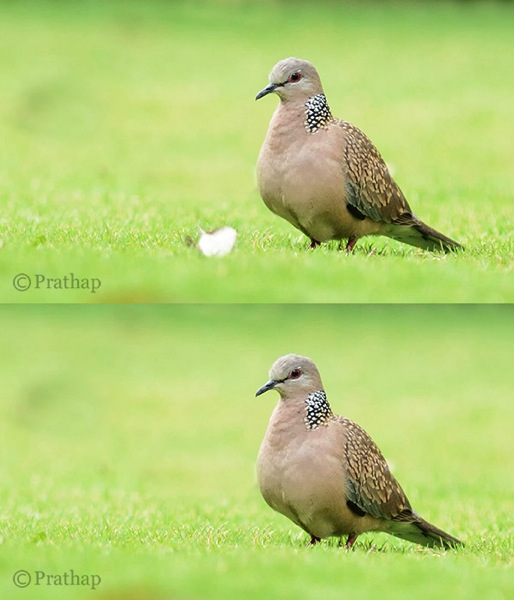
Cropping is another way to remove distractions and recompose the scene. It is an essential tool for the bird photographer since it is not always possible to have the longest telephoto lens.
Conclusion
Keep the background clean and make the bird stand out in the frame
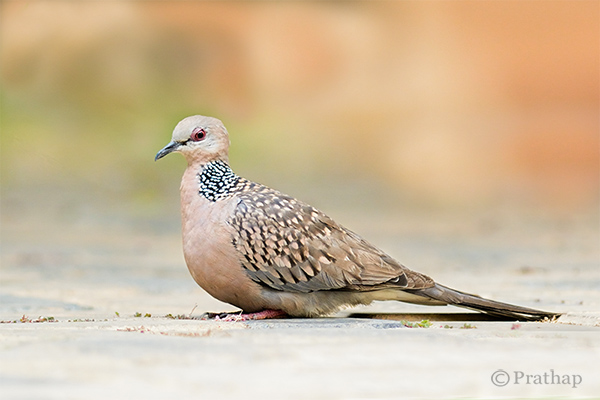
You will make excellent photographs by following the above simple tips on bird photography. Now go out and shoot. That’s the best tip I can give if you want to seriously improve you bird photography, enjoy!
The post Bird Photography Tips – How to Make Your Bird Photographs Stand Out by Prathap DK appeared first on Digital Photography School.
-
Make Your Online Portfolio Stand Out

You’ve assembled all your best work in an online portfolio, but is that site getting you noticed? Taking great pictures is not enough sometimes. Your portfolio is on line to showcase your career, it should be creatively appealing but also concise, focused and easily found through the clutter of the internet. FashionPhotographyBlog.com invited Julian Dormon, the founder of BigBlackBag to share five tips to make your online portfolio stand out.
1. Define Who You Are
Have you always been passionate about one topic, like fashion or travel, or do you dream of branching into other fields? No matter what, showcase the work that will land your next assignment. You can easily group your photos into different categories, with each project telling its own story. Choose a strong “headline” image to draw the viewer in.
It never hurts to write a short caption that explains the process and what was accomplished. Fill each category with a dozen of your best pictures, keeping in mind that clients have little time to scan through all your work. Think of it as a visual resume that explains your key skills.
2. Function Before Form
The best websites are simple, clean designs that viewers can easily navigate. There are dozens of companies that can do the heavy lifting when it comes to crafting and hosting our online portfolio, but it’s ultimately up to you to organize it. Don’t clutter your site with too many pictures and avoid high-tech functions like Flash. The biggest drain on bandwidth should be devoted to your photos, especially as more and more people are viewing on mobile devices.
Include a bio and your contact information. Also keep a close eye on your colleagues. Websites evolve quickly and what was a popular design a few years ago may look dated now. Update your portfolio with your latest and best work to keep fresh once every month or two but definitely every quarter.
3. Make Sure Your Portfolio Shows Up In Searches
Keep your online portfolio to basic HTML, which shows up more easily on search engines. You can use specific tags and keywords to put your site on top of internet searches. Again, an online portfolio company can take care of this for you.
Google remains the dominant search engine and it’s better to work with them than against them. Consider using Google My Business to help draw local traffic to your site.
4. Use All Your Social Media Voices
Gone are the days where you could just message your friends about an event or show or add a link on Facebook. Tumblr, Pinterest and Twitter are all vying for people’s attention–and more social media sites are on the way. Use each site to promote your work, making sure to list the URL for your online portfolio consistently.
5. Don’t Forget the Old Fashioned Way to Promote
Reach out to friends and clients when you have something to share. Did your photo just get published in a magazine, or were you interviewed in a local paper? Send an email, tweet or post on Facebook about the news. It may not go “viral”, but word of mouth could help you land that next gig.
Contributor’s Bio
Julian Dormon is the Founder of BigBlackBag, specializing in professionally designed online portfolio websites perfect for photographers, artists, and other creative professionals. He’s an amateur photographer and professional entrepreneur with a passion for all things beautiful.
-
CP+ 2014: Fujifilm stand report

We’re at the CP+ show in Yokohama Japan where Fujifilm is showing off its latest camera, the weathersealed X-T1. Yesterday the show was cancelled due to heavy snow and today the line of people waiting to get in is formidable. Editor Barnaby Britton finagled an exhibitor’s pass to get in early and beat the crowds. Click through to read our report from the Fujifilm stand.
-
CP+ 2014: Nikon stand report

We’re at the (currently very snowy) CP+ show in Japan and we’ve been checking out the Nikon stand, getting a feel for the latest products and exploring the various demonstrations. Click through for a look at what we found. trust us – it’s worth it just for the scale model of Yokohama…
-
CP+ 2014: Canon stand report

Canon has a large stand at this year’s CP+ show in Yokohama, Japan, showcasing its current range of DSLRs, compact cameras and Cinema EOS video lineup. We’re at the show, and stopped by earlier today for a look at what’s on offer. Click through for our stand report, which we’ll be updating over the next couple of days.
-
Perspective in Photography – Don’t just stand there move your feet!
Photographers often fall into the bad habit of shooting everything we see from eye-level. We are walking around, something catches our eye, and we take a picture right from where we are standing. If you want to make an immediate impact in your photography, you need to get out of your eye-level (or tripod-level) rut. You need a change in perspective.

Sure, you can change your composition by zooming in or out with your lens, but if you want to change your perspective, you are going to need to move. Don’t let your feet, or your tripod, root you to the spot: get ready for some bending, turning, walking, and climbing. Start working with perspective in photography, your images will thank you for it.
Get Low
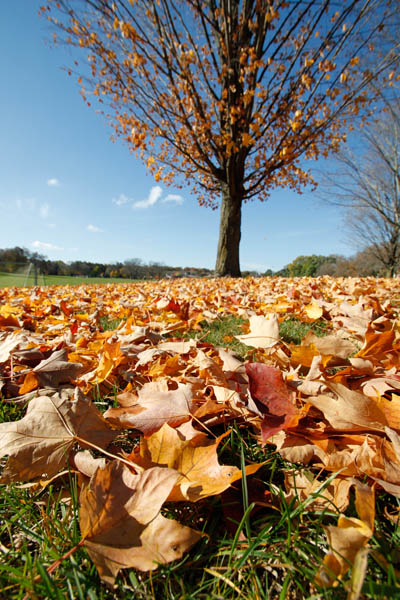
Get your camera down towards ground level, and see how it impacts your perspective. Getting down low allows you to feature the foreground of your composition, and gives your viewer context for the rest of the photograph. Use a wide angle lens to feature the foreground, while pulling the viewer into the image, as below.
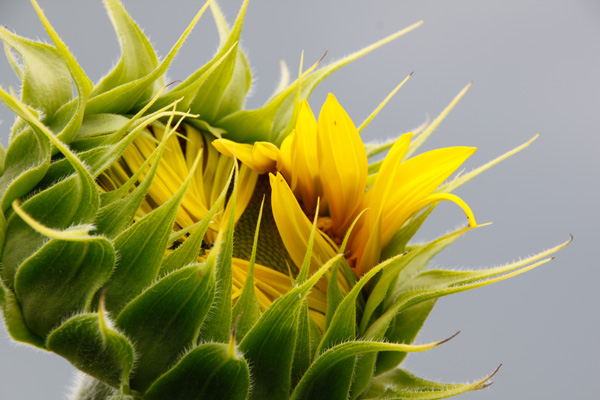
Getting down low can change the way your viewer feels or reacts to your subject. Getting low can make your subject appear taller or more imposing. Subjects viewed from below can look commanding and powerful. Even a simple sunflower can be seen to tower above its surroundings.
Getting low can also completely disorient your viewer. This near water-level view becomes a study in colour and texture, as the water and the fallen autumn leaves interact with each other. From eye level, this would simply have been a photograph looking down into a storm gutter. Getting low simplifies the composition and puts the viewer into a different, and unique perspective than their everyday viewpoint.

Get Up High or Look Up High
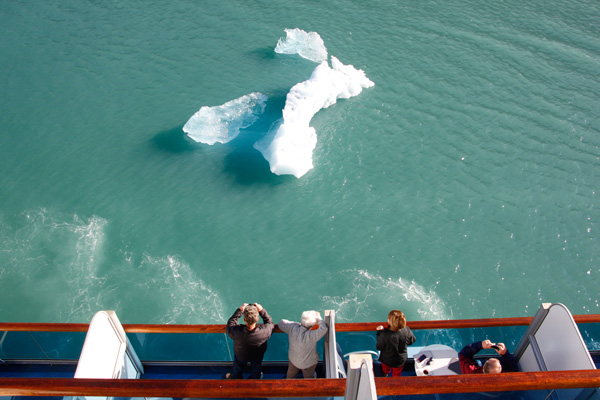
You can get low and look at subjects from their level, but you can also get up high and take in your subject from above. Getting well above your normal line-of-sight will certainly give you a new perspective. In the photograph below, the other tourists on the decks below give context to the passing iceberg, as seen from the cruise ship. This higher-up view also provides a sense of scale for the large size of the ice berg and hints at the size of the ship.
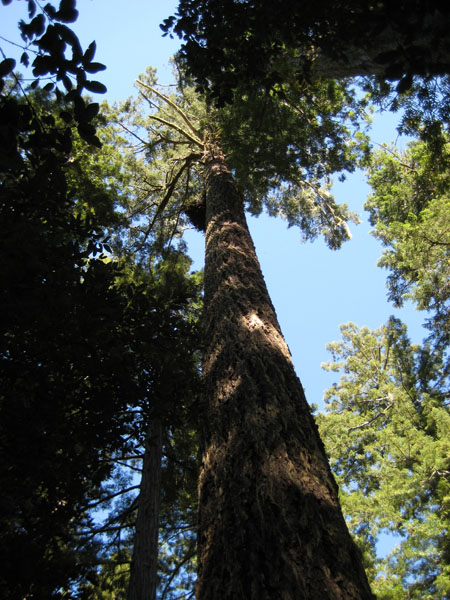
If you do not want to physically get up high, standing and shooting does not mean you only have to shoot straight ahead. Spend some time looking up, and you will find plenty to improve your compositions and your perspective. With very tall subjects, looking up from below will accentuate their height and size. The power and immensity of these redwood trees are best emphasized by looking up, from directly below.
Go for the Lateral
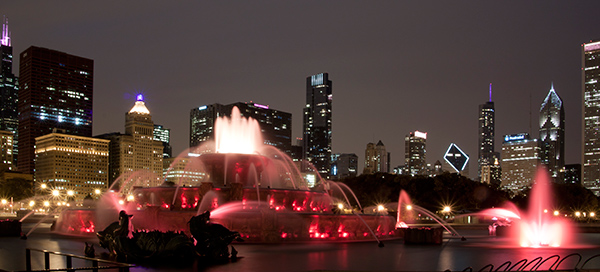
Finally, do not forget to think laterally. Beyond just changing your stance or your direction of shooting, you also need to remember to move yourself. Talk the time to walk around your subject, to consider the background and foreground. Think about how all the pieces of your final composition fit together. Your first view and your first angle are often not the best available, but you cannot be sure until you have taken the time to investigate others. Walking all the way around Buckingham Fountain allowed me to choose this final composition and perspective featuring the downtown Chicago skyline. I also made the choice to position the spray from the fountain directly in front of a building to make it more visible.
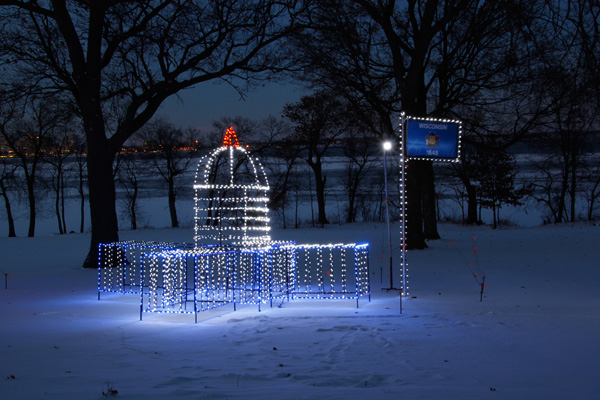
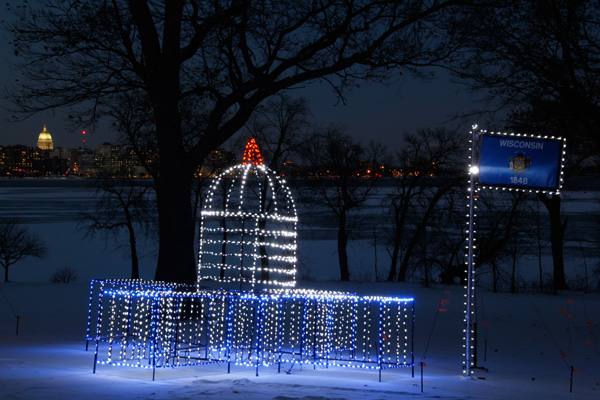
Moving your feet can change the way that different objects in your photograph interact with each other. While the top photograph of the Wisconsin Capitol in lights was an adequate shot, moving just a few feet to the right and squatting down allowed me to feature the lit outline in the foreground with the actual Capitol building in the background. This juxtaposition of elements improves the story-telling ability of the photograph.
Summary
Do not fall into the trap of shooting everything you see at eye-level, just as you see it. Take the time to explore your subject, and considering changing your perspective. Get low and see what changes, get up high and explore a new view, or move laterally and watch different interactions occur and disappear between objects.
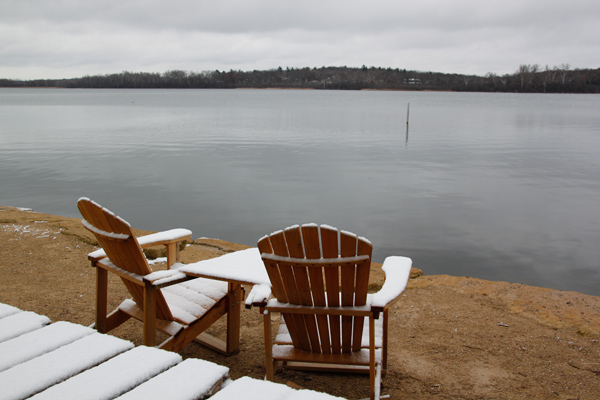
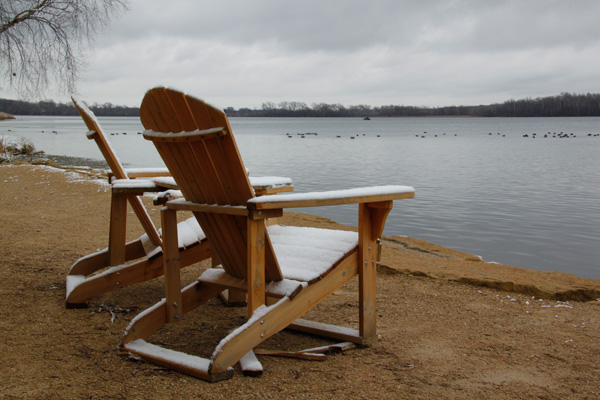
You may have a hard time choosing a favourite view: from above to emphasize the view of the foreground lake, or get low to show the expanded context and the threatening winter sky? Share your thoughts or your own perspective images in the comments below!
The post Perspective in Photography – Don’t just stand there move your feet! by Katie McEnaney appeared first on Digital Photography School.
-
The Glif: A Stand and Tripod Mount For All Phones

Extra photos for bloggers: 1, 2, 3
We found it! The photo gizmo with the highest usefulness to square-inch ratio. The Glif is a tiny little thing, with a trillion useful uses.
It’s a pocketable phone stand and tripod mount that’ll prop up absolutely any phone, cased or uncased, at any angle.
Prop your phone vertically or horizontally or mount it to a tripod.
Record shake-free videos. Combine it with a self-timer app for flawless selfies and big group photos. Or, just keep your phone at the perfect angle to watch a movie.
This handy gadget adjusts to hold your iPhone in an Otterbox case, your friend’s phone nekked, your mom’s Android … Glif’s usefulness knows no bounds.
Learn More About the Glif
$ 30 at the Photojojo Shop
© laurel for Photojojo, 2014. |
Permalink |
No comment |
Add to
del.icio.us
Post tags:
-
CES 2014: Panasonic Stand Report

CES 2014: Panasonic typically has a truly large presence at CES, and this year is no exception. Just beyond the acres of curvy 4K displays are some of the most interesting photo-related announcements at the show – the Leica Nocticron 42.5mm F1.2 with Power O.I.S., for example, along with some prototype lenses on display with the diminutive Lumix GM1. We also got some hands-on time with Lumix compacts announced for the show. Take a look at what’s new for Panasonic at CES 2014
-
CES 2014: Fujifilm Stand Report

CES 2014: Fujifilm’s stand was bustling, with most of the attention centered around their X-series lineup. While most of the new products were compact cameras – such as the world’s first rugged superzoom – we also spent some quality time with the new 56mm F1.2 and 10-24mm F4 lenses. Join us for a virtual tour of the Fujifilm booth