RSS
 

Posts Tagged ‘Sony’

Shooting with the Sony Alpha 7 and Alpha 7R

15 Nov

AlphaTwins.jpg

We’ve been shooting with Sony’s Alpha 7 and Alpha 7R over the past few weeks to get an insight into how the compact full-frame twins behave. While the two models are twins, they’re by no means identical, with each sibling very quickly showing its own, distinct personality. We’ll be publishing more in the coming weeks as we move towards completing our review, but we wanted to share our perspective, now we’ve had some experience to informed our opinion.

News: Digital Photography Review (dpreview.com)

 
Comments Off on Shooting with the Sony Alpha 7 and Alpha 7R

Posted in Uncategorized


Sony Alpha 7R test scene samples added to first impression review

15 Nov

TestScene2.jpg

We’ve updated our first impressions review of the Sony Alpha 7R with our studio test scene showing image quality for both JPEG and Raw files. The new scene also offers downloadable Raw samples of both daylight and low light scenes. As always, you can compare the A7R to the increasing number of cameras in our test scene.

News: Digital Photography Review (dpreview.com)

 
Comments Off on Sony Alpha 7R test scene samples added to first impression review

Posted in Uncategorized


Sony A3000 Review

09 Nov

Sony A3000 Review.jpg

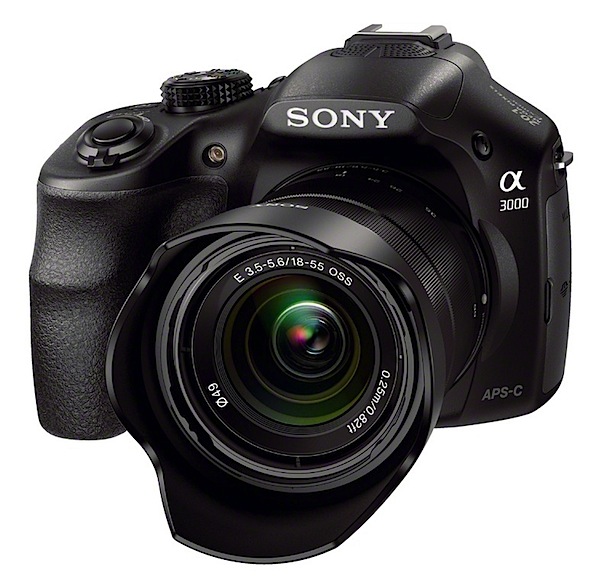
If you hanker for a DSLR and don’t have the budget for a high end full frame camera nor even enough $ $ $ for an APS-C sized sensor job, look this way… the news suddenly has suddenly got brighter.

Most of the early action in mirrorless interchangeable lens cameras was in the area of models that offered viewing only via a rear screen, sometimes with an add on turret finder.

But they just didn’t look like a DSLR!
ILCE3000_Phantom01.jpg

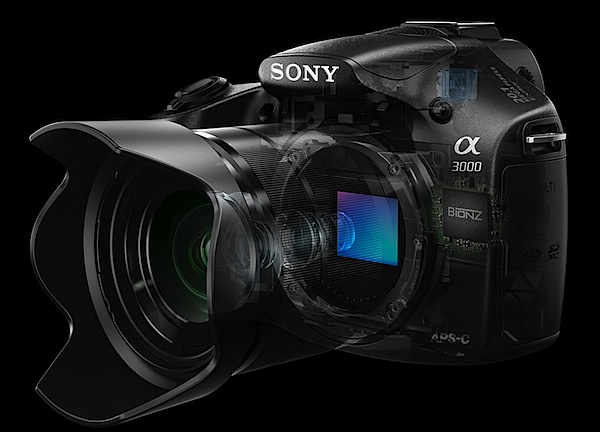
Now Sony has come up with an appealing answer to a mirrorless interchangeable lens camera that has the appeal of a DSLR … with maybe a few less bells and whistles.

The A3000 indeed has a traditional DSLR look and feel with a simple user interface.

For one thing, you know you’re holding a DSLR with a traditional DSLR body shape and speed grip.

To whet your appetite further, you can choose from 16 interchangeable E-mount lenses from Sony and Zeiss for a range of shooting options.

The camera can shoot a maximum image size of 5456×3632 pixels, sufficient to make a 46x31cm print.

Video can be shot in MPEG4 or AVCHD, with the latter offering Full HD 1920×1080 pixels.

I was unable to shoot stills while recording video.

Handling

The camera is surprisingly small, easy to hold and well-balanced, at least it felt well-balanced with the f3.5-5.6/18-55mm OSS kit lens that was supplied with the review camera. Bear in mind that this is the package that is usually offered: body and 18-55mm lens.

One Sony exec made the statement that ‘newcomers are often daunted by the complex settings found in traditional DSLR products … The 3000 user interface has been inspired by our easy to use NEX range of cameras.’

There are many key DSLR features in the camera, including a hot shoe and an eye level viewfinder. I ventured out in bright sun and at first found the viewfinder to be a dim alternative to the LCD screen, but then managed to successfully lift the brightness of both via a menu helper.

To minimise total size and weight the A3000 accepts existing E-Mount lenses from the NEX family of products.


Cables 2.jpg

Church ext 2.JPG

Church int 2.jpg

Sony A3000 Controls

At this point I have to disagree with the Sony spokesman. Firing up the camera with nary a glance at the instruction manual (thankfully available online) I found my early hours a mess of confusion.

You can find the PDF of the full manual here.

Confusion? For one thing there was no menu button, at least there was no button labelled ‘menu’.

But let’s look it over.
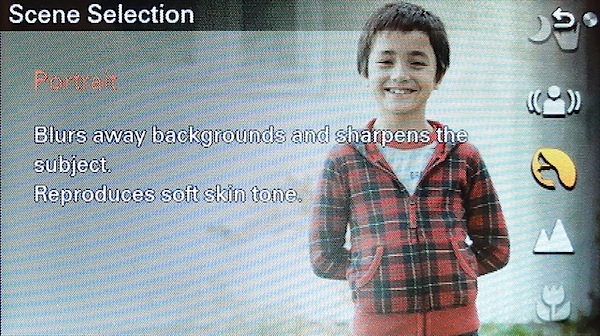
Scene selection.jpg

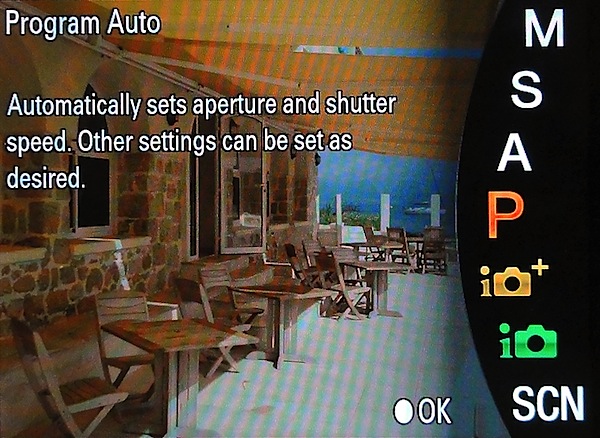
Top deck: familiar territory, with the mode dial housing positions for intelligent and superior auto exposure, PASM, movie, sweep panorama and scene selection (presets for portrait, sports, macro, fireworks etc).

Forward are the power and shutter buttons. At one corner is the replay button.

Rear: just over the edge is the movie record button, which I feel could have been better placed at the camera’s far right corner.

Then there are three unlabelled ‘soft keys’ — A, B and C — which take care of menu choices. Here’s how Sony describes the functions of these keys:

‘The soft keys have different roles, depending on the context. The assigned role (function) of each soft key is shown on the screen. To use the function shown at the upper right corner of the screen, press soft key A. To use the function shown at the lower right corner of the screen, press soft key B. To use the function shown at the center, press the center of the control wheel (soft key C). You can assign the functions to the soft key B.’

By careful inspection of the manual you can eventually suss out the functions of these three buttons but I found them to be a bit bewildering at first.

Anyway … the control wheel has positions for burst shooting and the self timer, ISO setting, display options plus exposure correction and AF options.
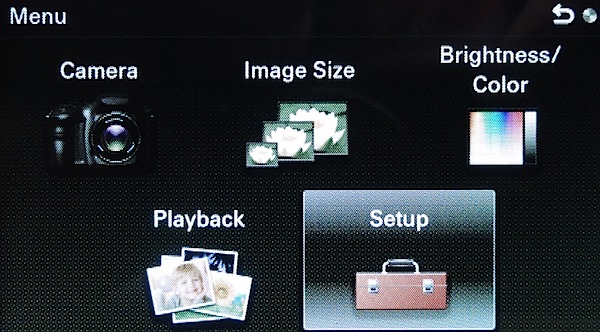
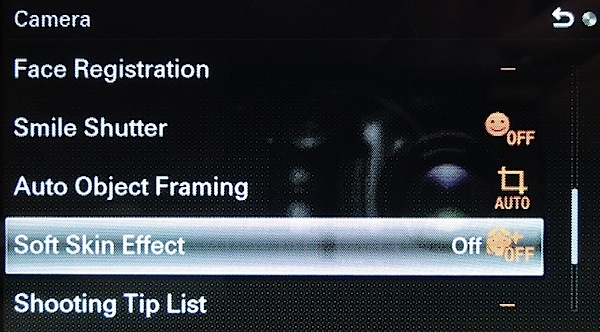
Menu.jpg

Menu 2.jpg

Fifteen picture effects are accessible from the menu (soft key A). These include ‘artistic treatments’, like retro photo, miniature and partial colour.

Pano 2.JPG

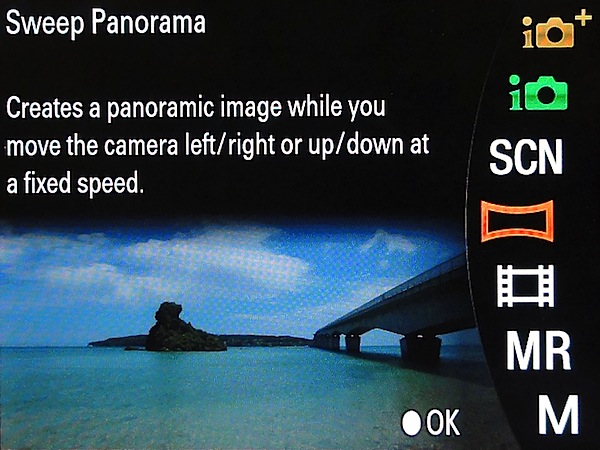
Sony’s sweep panorama feature is included that can shoot panos up to 12,416 x 1856 pixels in size.

One note: unlike most interchangeable lens digicams, you need to manually blow away any dust on the sensor. Like this: ‘After turning off the camera, remove the lens and blow off dust on and around the image sensor surface using a blower.’ Careful!

ISO Tests

Sony Cyber-shot A3000 ISO 100.JPG

Sony Cyber-shot A3000 ISO 400.JPG

Sony Cyber-shot A3000 ISO 800.JPG

Sony Cyber-shot A3000 ISO 1600.JPG

Sony Cyber-shot A3000 ISO 3200.JPG

Sony Cyber-shot A3000 ISO 6400.JPG

Sony Cyber-shot A3000 ISO 12800.JPG

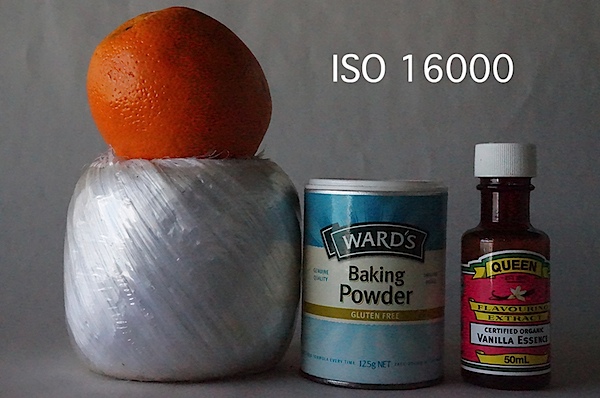
Sony Cyber-shot A3000 ISO 16000.JPG

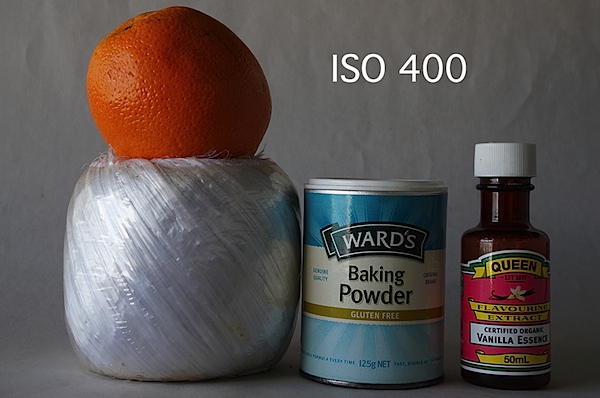
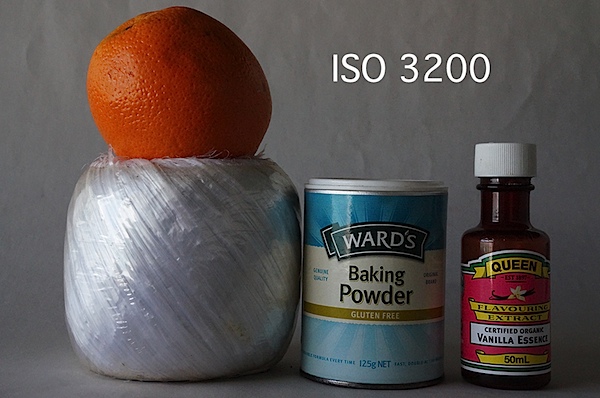
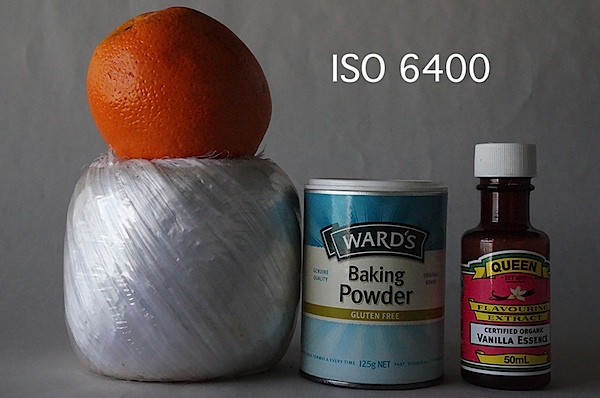
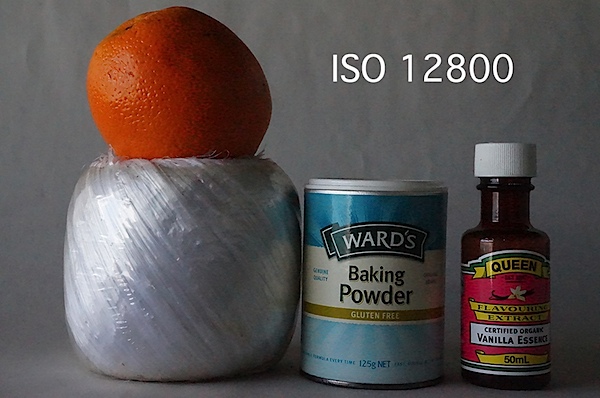
Only at ISO 3200 was noise beginning to rise. At ISO 6400 noise up slightly but sharpness acceptable. At ISO 12800 noise up further, sharpness noticeably down and ugly artefacts evident.

At ISO 16000 the show was over: noise up, sharpness down and ugly artefacts worse.

Sony A3000 Review Verdict

Quality: above average. Accurate colour.

Why you’d buy the Sony A3000: small DSLR-like camera; access to lots of lenses.

Why you wouldn’t buy the Sony A3000: menu access confusing.
An attractive camera for the newcomer. Lots to like. Especially the price.

Sony A3000 Review Rating: 4 stars

Sony A3000 Specifications

Image Sensor: 20 million effective pixels.Metering: Multi segment, centre-weighted, spot.
Lens Mount: Sony E-mount.
Exposure Modes: iAuto, Superior Auto, Program AE, shutter and aperture priority, manual.
Effective Sensor Size: 23.5×15.6mm APS-C CMOS.
35 SLR Lens Factor: 1.5x.
Shutter Speed (stills): 30 to 1/84000 second and Bulb.
Continuous Shooting: 3.5 fps.
Memory: SD/SDHC/SDXC, Memory Stick Pro Duo/Pro-HG Duo cards.
Image Sizes (pixels): Stills: 5456×3632 to 2736×1824.
Movies: 1920×1080, 1440×1080, 640×480.
Viewfinder: Turret electronic plus 7.5cm LCD screen (230,400 pixels).
File Formats: JPEG, RAW (Sony ARW), JPEG+RAW, MPEG4, AVCHD.
Colour Space: sRGB, Adobe RGB.
ISO Sensitivity: Auto, 100 to 16,000.
Interface: USB 2.0, HDMI mini, remote.
Power: Rechargeable lithium ion battery, DC input.
Dimensions: 128x91x85 WHDmm.
Weight: 411 g (inc battery).
Price: Get a price on the Sony A3000 with 18-55mm Lens or the Sony Alpha A3000 with 18-55mm Lens and 55-210mm Lens + 32GB Card + Battery + Case + Flash + 3 Filters + Tripod + Tele/Wide Lenses Kit.

Post originally from: Digital Photography Tips.

Check out our more Photography Tips at Photography Tips for Beginners, Portrait Photography Tips and Wedding Photography Tips.

Sony A3000 Review

The post Sony A3000 Review by Barrie Smith appeared first on Digital Photography School.


Digital Photography School

 
Comments Off on Sony A3000 Review

Posted in Photography


‘Every six months I want to do something new’ Kimio Maki of Sony

05 Nov

SonyInterview.jpg

Kimio Maki is something of a legend within Sony, and is considered the ‘father’ of several important products. These include the RX-series of digital cameras –  the groundbreaking RX100 / II and RX1 / R – and also the new Alpha A7 and A7R, which bring full-frame imaging to the mirrorless interchangeable lens market. We caught up with him at this year’s Photo Plus Expo in New York. Click through to read our interview.

News: Digital Photography Review (dpreview.com)

 
Comments Off on ‘Every six months I want to do something new’ Kimio Maki of Sony

Posted in Uncategorized


Sony Cyber-Shot RX100 Mark II Review

03 Nov

Sony Cyber-Shot RX100 Mark II Review.jpg

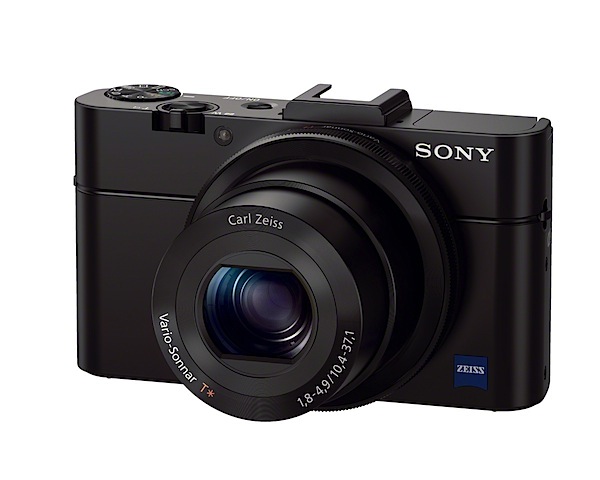
Welcome to Mark II of the Sony Cyber-Shot RX100, a neat, surprising camera that could sit happily alongside an upper level snapper (like a DSLR) in the camera bag. Unsurprisingly, it is priced at the upper level of compact digicams.

It has a reasonably fast Carl Zeiss f1.8, 3.6x optical zoom, imaging to a 20.2 million pixel CMOS, enabling the capture of a maximum image size of 5472×3080, leading to a 46x26cm print.

Video can be captured in AVHCD or MPEG4, up to a Full HD 1920×1080 pixel resolution.

Yes, you can shoot still shots in the middle of a video recording but with a click or two on the audio.

Sony Cyber-Shot RX100 Mark II review back.jpg

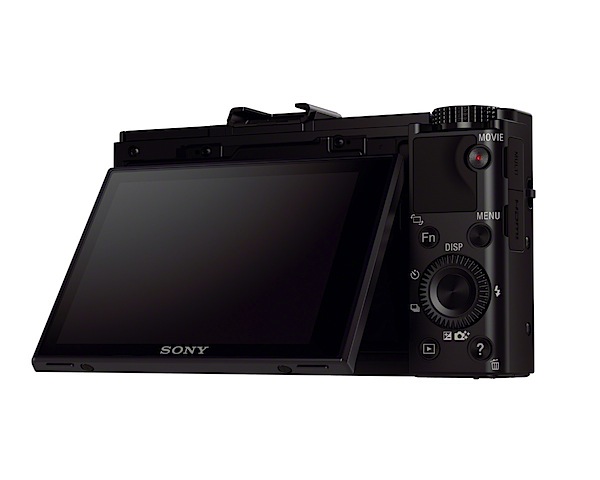
The body is made from aluminium and has a tiltable (up/down) LCD screen that responds to touch commands as well as tilting up by 84 degrees and down by 45 degrees. There is a (pricey) turret viewfinder to allow clear viewing in bright light that fits into the camera’s hot shoe; this shoe also accepts a clip on LCD screen, external flash or a microphone adaptor.

Sony Cyber-Shot RX100 Mark II Review top.jpg

Sony Cyber-Shot RX100 Mark II Features

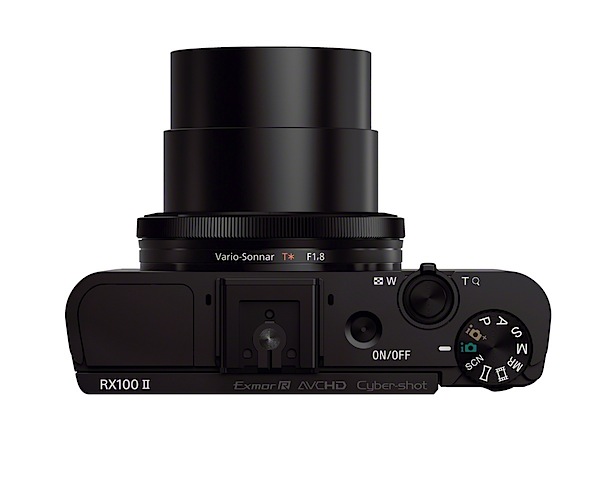
The camera control layout follows the usual Sony pattern: at extreme left is the flash cell; centre of the top surface is the multi interface shoe (or ‘hot shoe’); to the right is the power button, zoom lever and shutter button; nearby is the mode dial with positions for intelligent and superior auto exposure (!), PASM, movie, memory recall, sweep panorama and scene selection (presets for portrait, sports, macro, fireworks etc).

Function button.jpg

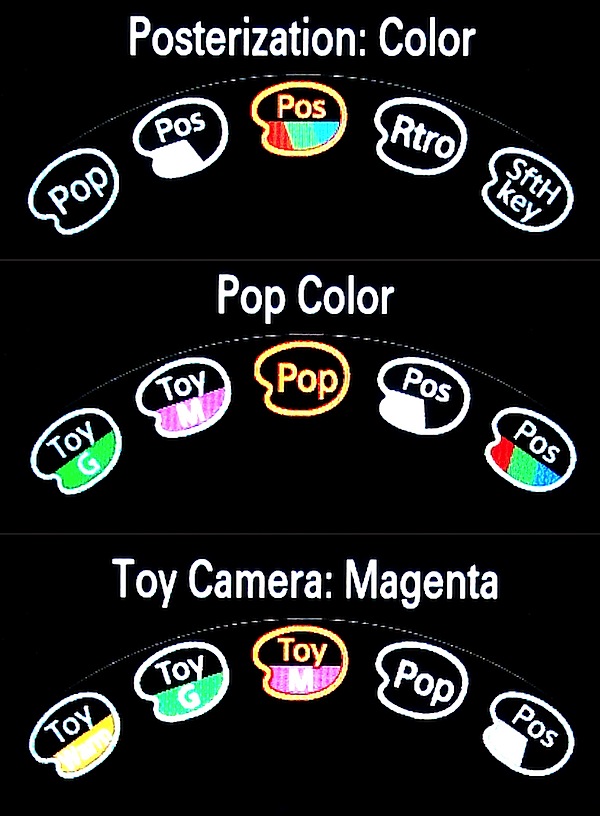
Rear: the familiar movie record button is on the top right corner; beneath it is a really useful Function button that offers exposure correction, ISO setting, AWB, the D-RANGE Optimiser and access to a wide range of effects … such as posterisation, pop colour, partial colour, retro, toy camera effect (in colorisations such as cool, warm, green, magenta). You could spend days with this item!

The D-Range Optimiser shoots a bracket of three shots with different exposures; the camera then overlays the bright area s of the under exposed image and the dark areas of the over exposed image to create an image with improved gradation. A single image with the ideal range is saved.

Menu 1.jpg

Menu 2.jpg

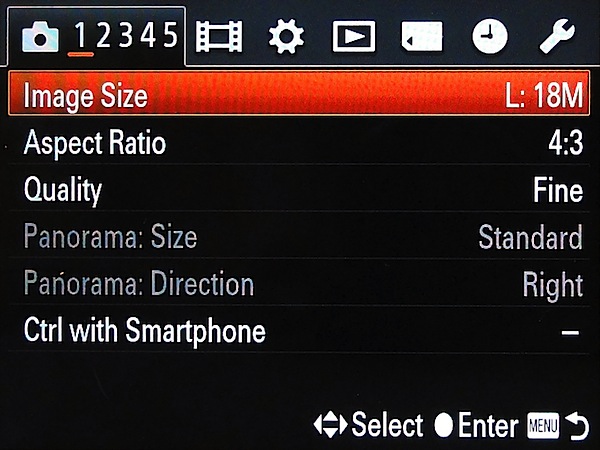
Nearby is the menu button which displays a super wide range of options. Newbies should pay deep attention to this menu … it all happens here! If you find a specific function is not working properly, it’s most likely because a ‘box’ in the menu has not been ticked!

Lower is the control wheel. Here you can select options for flash, self timer, burst shooting and exposure compensation. If your camera happens to be set to auto or intelligent auto you can access a range of picture effects, change image brightness, colour etc.

The central button of the control wheel locks in tracking focus to the subject nearest centre frame.

Lower still is the replay button and one which doubles as the image trash action and gives access to a useful information bank. I guess the latter gives the game away with the RX100: it is really a high priced beginners’ camera! Oh well!

Sweep panorama.jpg

Sony Cyber-Shot RX100 Mark II Pano 1.JPG

Sony, IMHO, has by far the best sweep panorama feature of all compact digicams: you can pan right, left, up or down and capture panos in enormous sizes. Like: 12,416×1856 pixels!

NFC

This is also Sony’s first NFC camera. Wassat?

Near Field Communication is designed to enable users to instantly share images with other NFC capable devices, such as Android smartphones, tablets, laptops or even TV.

The company’s strategy behind NFC is to simplify the connection of its RX100 II to smart devices. Once connected, users can remotely control the camera’s shutter release from the mobile device, quickly receive the captured image via WiFi and upload the transferred images straightaway to a social networking site.

But is NFC just Bluetooth or Wifi? Maybe.

Take a look at http://en.wikipedia.org/wiki/Near_field_communication for more info.

Snoopy 2.JPG

Sony Cyber-Shot RX100 Mark II Review Yacht.jpg

Distortion

No problems at either end of the zoom. A well corrected lens.

Startup

In just a little over two seconds the camera came to life after the power was tapped. Then I was able to fire off a run of shots as fast as I could tap the button.

Sony Cyber-Shot RX100 Mark II Review ISO Tests

Sony Cybershot RX100 Mark II ISO 100.JPG

Sony Cybershot RX100 Mark II ISO 400.JPG

Sony Cybershot RX100 Mark II ISO 800.JPG

Sony Cybershot RX100 Mark II ISO 1600.JPG

Sony Cybershot RX100 Mark II ISO 3200.JPG

Sony Cybershot RX100 Mark II ISO 6400.JPG

Sony Cybershot RX100 Mark II ISO 12800.JPG

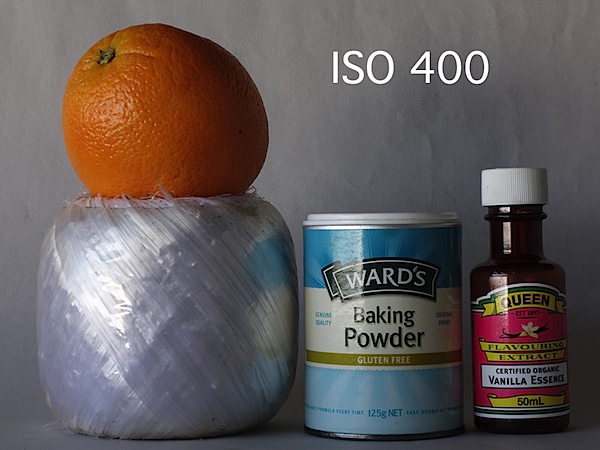
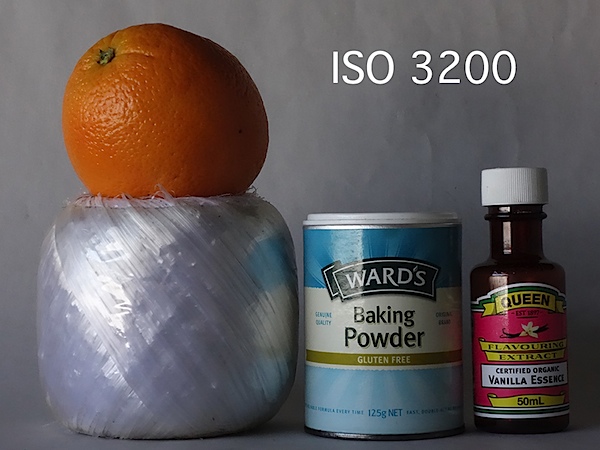
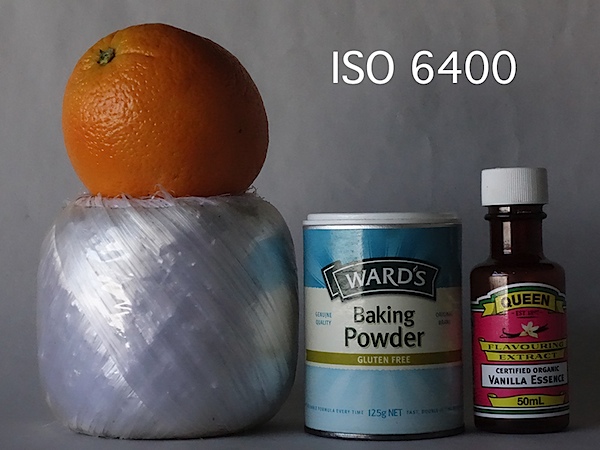
At ISO 1600 sharpness dropped off slightly but noise was low. By ISO 6400 these factors were a little worse. By ISO 12800 sharpness was down further and noise up — but not by a large factor.

Sony Cyber-Shot RX100 Mark II Review Verdict

Quality: just above average.
Why you would buy the Sony Cyber-Shot RX100 Mark II: compact; fast Zeiss lens.
Why you wouldn’t buy the Sony Cyber-Shot RX100 Mark II: limited zoom range for your needs; LCD screen tilts are limited.

A surprising package in such a tiny body.

User guide.jpg

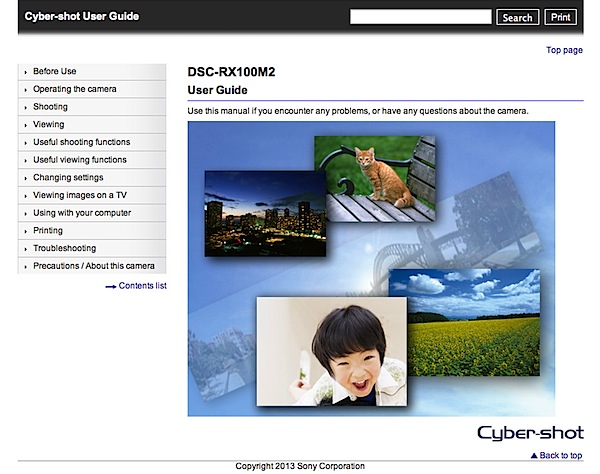
I felt the manuals to be inadequate: aside from a 37 page PDF basic guide in English and a Web-based user guide with no search facility, that was all. For a camera at this price level you could at least expect at least a decent searchable PDF manual.

Otherwise, a very good performance.

Sony Cyber-Shot RX100 Mark II Specifications

Image Sensor: 20.2 million effective pixels.
Metering: Multi pattern, centre-weighted, spot.
Exposure Modes: Auto, Program AE, shutter and aperture priority, manual.
Sensor Size: 13.2×8.8mm Exmor R CMOS.
Lens: Carl Zeiss Vario Sonnar T* f1.8-4.9/10.4-37.1mm (28-100mm as 35 SLR equivalent).
Shutter Speed: 30 to 1/2000 second.
Continuous Shooting: 2.5, 10 fps.
Memory: Memory Stick Duo, PRO Duo/PRO-HG Duo/SD/SDHC/SDXC and Micro SD/SDHC cards.
Image Sizes (pixels): 5472×3080 to 2592×1944.
Movies (pixels): 1920×1080, 1440×1080, 640×480.
LCD Screen: 7.6cm LCD (1,229,000 pixels).
Colour Space: sRGB, Adobe RGB.
File Formats: JPEG, RAW, JPEG+RAW, AVCHD, MPEG4.
ISO Sensitivity: Auto, 160 to 25600.
Interface: USB 2.0, micro HDMI, WiFi, DC, remote.
Power: Rechargeable lithium ion battery, DC input.
Dimensions: 102x58x38 WHDmm.
Weight: 281 g (with battery and card).
Price: get your hands on a Sony DSC-RX100M II Cyber-shot at Amazon here.

Post originally from: Digital Photography Tips.

Check out our more Photography Tips at Photography Tips for Beginners, Portrait Photography Tips and Wedding Photography Tips.

Sony Cyber-Shot RX100 Mark II Review

The post Sony Cyber-Shot RX100 Mark II Review by Barrie Smith appeared first on Digital Photography School.


Digital Photography School

 
Comments Off on Sony Cyber-Shot RX100 Mark II Review

Posted in Photography


Sony Xperia Z1 review: Smartphone with camera-sized sensor

01 Nov

z1.jpg

The Sony Xperia Z1 offers a 1/2.3-inch sensor — the same size found in most consumer compact cameras and significantly larger than the 1/3-inch sensors common in smartphones. The comparatively large sensor is combined with a high pixel count of 20.7MP, a fast F2.0 lens and a physical shutter button. We put the Xperia Z1 through our rigorous testing regimen. Read our review on connect.dpreview.com.

News: Digital Photography Review (dpreview.com)

 
Comments Off on Sony Xperia Z1 review: Smartphone with camera-sized sensor

Posted in Uncategorized


Tennessee in full frame: Sony Alpha 7 real-world samples

31 Oct

Rugged-chap.jpg

The Alpha 7 is Sony’s latest full-frame E-mount mirrorless camera. It’s identical to the A7R in almost every respect. The key difference: a 24 megapixel CMOS sensor with on-chip phase detection. We recently got our hands on a production model Alpha 7 and shot some real-world samples using the Sony FE 24-70mm F3.5-5.6 OSS, 35mm F2.8 ZA and FE 55mm F1.8 ZA lenses. See gallery

News: Digital Photography Review (dpreview.com)

 
Comments Off on Tennessee in full frame: Sony Alpha 7 real-world samples

Posted in Uncategorized


Sony Cyber-shot RX10 Real-world Samples

30 Oct

sonyrx10thumbs.jpg

The Sony RX10 is a 20MP zoom compact camera with a 1 inch sensor and a 28-300mm (equivalent) constant-aperture F2.8 lens. We were impressed by its features and handling when we used it recently, and this week we’ve been using a production-quality sample, in an effort to get a feel for what it can do. Click through for a gallery of real-world samples shot on the RX10 in a range of different environments and lighting conditions. 

News: Digital Photography Review (dpreview.com)

 
Comments Off on Sony Cyber-shot RX10 Real-world Samples

Posted in Uncategorized


Fresh from Tennessee: Sony A7R real-world samples

30 Oct

DSC00080-horse.jpg

We’ve been able to get our hands on the highly anticipated full-frame Sony Alpha 7R again, and have posted a gallery of real-world samples using a final production camera. Follow the link for some shots taken in the Volunteer State – Tennessee.

News: Digital Photography Review (dpreview.com)

 
Comments Off on Fresh from Tennessee: Sony A7R real-world samples

Posted in Uncategorized


Voigtlander creates VM-E Close Focus adapter for Sony cameras

24 Oct

close-focus-adapter-web.png

Voigtlander has announced the VM-E Close Focus adapter, which will allow the use of M-mount lenses on Sony E-mount cameras such as the recently-announced full frame A7 and A7R. Unlike most similar adapters, though, Voigtlander’s latest includes a focusing helicoid for close-up work, with 4mm travel. This overcomes a limitation of many rangefinder lenses, which often have longer minimum focus distances than similar SLR lenses. It’s set to be available in December for €289.

News: Digital Photography Review (dpreview.com)

 
Comments Off on Voigtlander creates VM-E Close Focus adapter for Sony cameras

Posted in Uncategorized