The post Sony to Announce New Line of Compact Cameras Next Week appeared first on Digital Photography School. It was authored by Jaymes Dempsey.
Sony’s is famous for its full-frame mirrorless lineup, which offers stellar image quality, lightning-fast autofocus, and more.
Sony is also famous for its APS-C mirrorless lineup, which offers similarly fast autofocus but in a compact package.
Yet Sony is about to take their mirrorless system a step further.
Earlier this week, Sony unveiled this graphic on their Sony Japan website:
And while the announcement hasn’t officially been followed by additional details, Sony Alpha Rumors has reported that Sony will be announcing a brand-new type of mirrorless camera, one that combines the compactness of the Sony a6000 series with the image quality of the a7 and a9 series.
According to Sony Alpha Rumors, the first of these cameras will be labeled the Sony a7C, where the ‘C’ will likely stand for either Concept or Compact.
So what can we expect from this new mirrorless body?
The a7 III’s 24 MP sensor
A fully-articulating screen in the style of the a7S III
Autofocus from the a7S III
A design close to that of the Sony a6600 (though a hair larger)
4K/30p video recording capabilities
In-body image stabilization
One SD card slot
A headphone jack as well as a mic input
A higher price tag than the a7 III (which currently sits around $ 2000 USD)
Sony Alpha Rumors also reports that the a7C “will be marketed for vloggers and YouTubers,” and will debut alongside a new set of compact lenses.
If all this information is accurate (and I suspect that it is!), we’re going to be in for quite a treat. The a7C will offer some of Sony’s best goods, and future a7C cameras should be similarly impressive.
Really, this camera seems like a powerful hybrid; while it may be aimed at YouTubers and vloggers, it should also appeal to travel photographers, street photographers, and even more casual, walkaround photographers.
Plus, the new compact lens lineup will hopefully address a common frustration among Sony mirrorless photographers: that the cameras are compact, but the lenses aren’t.
So if you’re looking to grab a compact camera that can handle video and stills on the go, keep an eye out for the announcement!
Now over to you:
Are you excited about the upcoming Sony a7C announcement? Is it a camera you’ll be interested in purchasing? Share your thoughts in the comments!
The post Sony to Announce New Line of Compact Cameras Next Week appeared first on Digital Photography School. It was authored by Jaymes Dempsey.
Prepare your calendars (and your wallets), because Sony has unveiled a countdown for its next product, a ‘new concept’ that’s due to be announced within the next week.
While a still image of the countdown was first shared on the Sony Japan website, the official Sony Camera YouTube channel has since created a countdown video, embedded below, that points to an announcement being made at 9pm EDT / 6pm PDT on September 14.
No further information is being shared at this time about what exactly is being announced, but you can set a reminder on the Youtube countdown to be notified in advance of the virtual event.
The post Tamron 28-200mm f/2.8-5.6 Di III RXD Lens for Sony Review appeared first on Digital Photography School. It was authored by Suzi Pratt.
The Tamron 28-200mm f/2.8-5.6 is a lens that Tamron touts as “the lightest and most compact f/2.8 tele zoom for Sony mirrorless.”
It debuted in the summer of 2020, and has a solid build quality and a reasonable price point, similar to the rest of Tamron’s recent lens offerings.
But how does the image quality stack up? Let’s find out.
Recent Tamron lenses
Tamron has been on a roll with its Sony E-mount lens releases lately.
The recently released 70-180mm f/2.8 completed Tamron’s holy trinity of fast zooms (the others being the Tamron 17-28mm f/2.8 and the Tamron 28-75mm f/2.8). All three of these lenses have been massively popular due to their solid builds, compact sizes, and affordable prices relative to their Sony G Master equivalents. Additionally, Tamron has released a handful of other fast prime lenses, including the Tamron 35mm f/2.8.
Tamron 28-200mm specs
The Tamron 28-200mm is a full-frame autofocus lens for Sony E-mount cameras. While it can be used with Sony APS-C cameras, it is best used with a full-frame camera. All sample images in this post were taken with the Sony a7R III.
Focal Length: 28 to 200mm
Maximum Aperture: f/2.8 to f/5.6
Minimum Aperture: f/16 to f/32
Angle of View: 75° 23′ to 12° 21′
Minimum Focus Distance: 7.5″ (19.05 cm)
Optical Design: 18 Elements in 14 Groups
Diaphragm Blades: 7, Rounded
Image Stabilization: No
Filter Size: 67 mm (Front)
Dimensions (ø x L): 2.91 x 4.6″ (74 x 116.8 mm)
Weight: 1.27 lb (575.5 g)
Pros
Small and lightweight
Variable aperture lenses are often looked down upon by photographers, because you can’t retain a fast f-stop when you zoom in. This means shooting at 200mm on the 28-200mm will force you to shoot at f/5.6, making it much more difficult to shoot in low lighting. However, variable aperture lenses are generally much smaller and weigh less compared to zoom lenses with constant apertures.
Indeed, the Tamron 28-200mm is incredibly small and light given its focal range. This makes it a great lens for travel or landscape photographers who work with ample light and don’t mind sacrificing a fast aperture at all focal lengths.
Simple and easy to use
Like many recent Tamron lenses, the 28-200mm is very straightforward, with a single physical switch to lock the lens and keep it from sliding out when not in use.
Other than that, it’s an intuitive plug and play lens that works exceptionally well with Sony E-mount cameras. All autofocus features, including face detection and eye autofocus (for both people and animals), were fast and accurate; the lens performs well on Sony cameras.
Moisture resistant
The build quality is solid without adding lots of weight. The Tamron 28-200mm is moisture-resistant for use in wet conditions, and also has a fluorine coating on the front lens element to prevent dust and dirt build-up.
Speaking of the front lens element, the filter size is 67mm, exactly the same as the three lenses in the Tamron holy trinity. This makes it easy to interchange filters such as polarizers and ND filters among these lenses if you buy into the full Tamron lens system.
Sony a7R III | Tamron 28-200mm | 1/160 sec | f/11 | ISO 200
Five- or six-year extended warranty
This is a bonus that comes with all Tamron lenses. If you register the Tamron 28-200mm lens within two months of purchasing it, you get an extended six-year warranty if you are in the USA, or a five-year warranty if you are in Europe.
Compared to Sony’s one-year warranty, this is a pretty big advantage when going with a Tamron lens.
Great image quality
So with all of the great points about this lens, how is the image quality?
It’s surprisingly good for a variable-aperture lens. Bokeh or lens blur is soft and pleasing, especially at longer focal lengths. Image sharpness is phenomenal, although admittedly not as crisp as a prime lens. And chromatic aberration, or color fringing, which often plagues all-in-one zoom lenses, is not a problem on this lens.
Similarly, 4K video shot with this lens also boasts great image quality, which leads us to the next section of the article.
Sony a7R III | Tamron 28-200mm | 1/100 sec | f/4.5 | ISO 1600
Cons
No image stabilization
Unfortunately, none of Tamron’s recent Sony E-mount lenses come with image stabilization. This feature is likely withheld to keep lenses smaller and more affordable, but it means that the Tamron 28-200mm is not an optimal lens for video or shooting handheld in low light. If you use the lens with a camera that has in-body image stabilization (IBIS), this can help make up for the lack of lens-based image stabilization. But in my experience, it’s always best to have a camera with IBIS and a lens with image stabilization.
On the plus side, this lens is lightweight enough that you could use it on a gimbal for video work, as long as you can balance it out when shooting at longer focal lengths.
Variable aperture
While the Tamron 28-200mm does give you a fast f/2.8 aperture when shooting on the wide end, the more you zoom in, the slower the aperture gets.
This may not be a big deal-breaker if you tend to shoot in scenarios with tons of natural or artificial lighting. However, if you shoot a lot in low light, the variable aperture might bother you.
Comparison to the Sony 24-240mm
The most direct competitor to the Tamron 28-200mm is the long-standing Sony 24-240mm f/3.5-6.3 lens. This Sony lens is very close in size to the Tamron, although it is slightly heavier, coming in at 780 g (1.72 lb) compared to 575 g (1.27 lb).
However, the Sony 24-240mm does offer slightly more range than the Tamron, plus it has OSS, or optical image stabilization. The OSS comes in handy if you shoot video, or like to have extra support when shooting handheld. The Sony lens does cost more, at $ 1,085 USD, but it has been out for so long that used versions of the lens can be had for prices similar to that of the Tamron.
If you value the extra range and OSS, the Sony may be the better all-in-one lens for you. However, it is quite a bit heavier than the Tamron and also has a significantly shorter warranty.
Sample image gallery
Sony a7R III | Tamron 28-200mm | 1/60 sec | f/6.3 | ISO 1250
Sony a7R III | Tamron 28-200mm | 1/125 sec | f/5.6 | ISO 2500
Sony a7R III | Tamron 28-200mm | 1/160 sec | f/4.5 | ISO 2500
Sony a7R III | Tamron 28-200mm | 1/80 sec | f/4.5 | ISO 2000
Sony a7R III | Tamron 28-200mm | 1/250 sec | f/4.5 | ISO 2000
Sony a7R III | Tamron 28-200mm | 1/125 sec | f/7.1 | ISO 1000
Sony a7R III | Tamron 28-200mm | 1/320 sec | f/5.6 | ISO 1250
The post Tamron 28-200mm f/2.8-5.6 Di III RXD Lens for Sony Review appeared first on Digital Photography School. It was authored by Suzi Pratt.
Sony has announced the impending release of the LA-EA5, its newest A-mount to E-mount lens adapter. In addition to changing mounts, the new adapter provides autofocus support for Sony A-mount SSM (Super Sonic wave Motor) lenses, SAM (Smooth Autofocus Motor) lenses, and even non-motorized screw-drive lenses in still shooting modes.
An illustration showing the internal construction of the LA-EA5 adapter, with emphasis on the screw-drive motor.
Despite the ability to power non-motorized screw-drive lenses (limited to the a7R IV and a6600, at least for the time being), the LA-EA5 features a compact form factor, thanks to clever internal gear and motor positioning. Sony says the adapter provides ‘full support for focal plane phase-detection autofocus (stills only), wide-area focal phased detection autofocus (stills only), Real-time Eye AF for both humans and animals, Real-time Tracking and AF/AE (auto exposure) tracking for SSM/SAM lenses on nine most recently introduced E-mount cameras at up to 11 frames per second depending on the camera model.’ The supported camera models, as of this press release, are as follows:
Sony a7 III
Sony a7R III
Sony a7R IV (up to 10 fps)
Sony a6100
Sony a6400
Sony a6600 (up to 11 fps)
Sony a9 (up to 10 fps)
Sony a9 II (up to 10 fps)
Sony a7S III
Sony says the LA-EA5 will be available in October 2020 for a suggested retail price of $ 250 / $ 330 CAD. You will be able to find a full compatibility list on Sony’s support page (currently shows ‘Coming Soon’ as of posting this article).
Press release:
Sony Electronics Announces New LA-EA5 Lens Adaptor for A-Mount Lenses
New Adaptor Enables Advanced Autofocus Capabilities When Attaching A-mount Lenses to Latest E-mount Bodies
SAN DIEGO – September 1, 2020 – Today, Sony Electronics Inc. announced the new LA-EA5, a 35mm Full-frame A-mount lens adaptor that allows users to easily pair advanced E-mount camera bodiesi with A-mount lensesi.
Using the new LA-EA5 A-mount adaptor, users can now access the acclaimed autofocus and high-speed shooting capabilities found in Sony’s latest E-mount camera bodiesi with A-mount SSM (Super Sonic wave Motor) and SAM (Smooth Autofocus Motor) lensesii, as well as A-mount lenses that do not have internal focus motors.
Full support is provided for focal plane phase-detection AFiii, wide-area focal phase-detection AFiii coverage, Real-time Eye AF for both humans and animals, Real-time Tracking and AF/AEiv (auto exposure) tracking for SSM/SAM lenses on nine most recently introduced E-mount camerasi at up to 11fpsv depending on the camera model. When used with the Alpha 7R IVvi or Alpha 6600vi, for the first time, these capabilities are possible with lenses that do not have internal focus motors, such as the Sonnar T* 135mm F1.8 ZA and Planar T* 85mm F1.4 ZA.
The LA-EA5 combines a compact design, featuring an aperture drive unit and a newly developed compact AF drive unit. To ensure comfortable operation when used on an E-mount camera body, the new adaptor’s diameter matches that of the A-mount, perfectly aligning with the edges of the mount. The LA-EA5 allows easy operation on full-frame E-mount bodies, even when a vertical grip is attached to the camera body.
Pricing and Availability
The LA-EA5 is available in October 2020 for a suggested retail price of $ 249.99 USD and $ 329.99 CAD.
Exclusive stories and exciting new content shot with the new lens and Sony’s other imaging products can be found at alphauniverse.com, a site created to educate and inspire all fans and customers of Sony’s ? – Alpha brand.
Notes
i. As of Sept. 2020, focal plane phase-detection AF is supported for SSM/SAM lenses on the Alpha 7 III, Alpha 7R III, Alpha 7R IV, Alpha 6100, Alpha 6400, Alpha 6600, Alpha 9, Alpha 9 II, and Alpha 7S III. Focal plane phase-detection is supported for lenses that do not have internal focus motors on the Alpha 7R IV and Alpha 6600.
ii. STF lenses are manual focus only. Teleconverters are not supported.
iii. Autofocus is not available during movie recording.
iv. For AE tracking, the aperture is fixed for the first frame while shutter speed and ISO are used for exposure adjustment.
v. Maximum continuous shooting speed is 10 fps with the Alpha 7R IV, Alpha 9, and Alpha 9 II, and 11 fps with the Alpha 6600. Continuous shooting speed may change depending on the attached lens.
vi. The Alpha 7R IV must be updated to software V1.20 or later, and the Alpha 6600 must be updated to software V1.10 or later.
Update (September 1, 2020 at 10:50am ET): Updated the article to clarify that support for non-motorized screw-drive lenses is limited to a7R IV and a6600 camera systems.
The Alpha 9 II is Sony’s latest high-end sports camera and is capable of silently shooting 24MP images at up to 20 frames per second with no blackout between frames. If that sounds familiar, it’s because the a9 II’s predecessor was similarly capable, but this new version brings some refinements and enhancements to make for a formidable, yet compact, option for professional sports and action photographers.
One of the most significant of updates is a new mechanical shutter mechanism that allows for 10 fps bursts: this is significant because if you find yourself in a situation where you can’t use the electronic shutter for risk of banding or other artifacts, the older model could only muster 5 fps which is a bit uninspiring on a camera meant to specialize in sports and action. Suddenly, this is a camera that will give you a solid burst rate in just about any setting, rather than being best suited for brightly lit outdoor venues.
Key specifications:
24MP full-frame stacked CMOS sensor with 93% autofocus coverage across the frame
20 fps continuous shooting with full AF (electronic shutter)
New mechanical shutter rated to 500k shots, allows for 10 fps shooting with full AF
5.5-stop (CIPA rated) 5-axis image stabilization
Dual UHS-II SD card slots
3.69M-dot OLED viewfinder (1280 x 960 pixels) with up to 120 fps update
1.44M-dot rear touchscreen LCD
Oversampled full width UHD 4K/24p video (1.24x crop for 30p); no Log option
Gigabit ethernet, 5GHz Wi-Fi, 10 banks of FTP / camera settings
Support for voice memos
Battery CIPA rated to 690 shots
678g (24oz)
Processed and cropped in Adobe Camera Raw. ISO 25600 | 1/800 sec | F2.8 | Sony FE 70-200mm F2.8 GM @ 152mm
With some additional ergonomic tweaks, the Alpha 9 II is an evolution of its predecessor’s revolutionary capabilities, but it remains impressively compact and speedy. And, of course, it comes with Sony’s industry-leading autofocus implementation. It’s available now at an MSRP of $ 4499 USD.
What’s new and how it compares
While the a9 II isn’t quite as revolutionary as its predecessor, it comes with some valuable updates.
Read more
Body, handling and controls
On the outside, the a9 II looks a lot like Sony’s a7R IV with an extra pair of dials on the top left. That’s a good thing.
Read more
Image quality
The a9 II produces lovely images across a variety of situations, with great noise performance and a fantastic JPEG engine.
Read more
Dynamic Range
The a9 II’s dynamic range is up there with the best in its class, but if DR is your main concern, it might not be your best choice.
Read more
Autofocus
The a9 II has, hands down, the best autofocus performance money can buy.
Read more
Video
With oversampled 4K video, the a9 II is great for casual run-and-gun video shooting, but it lacks some options that experienced users will miss.
Read more
Conclusion
It’s compact, it’s a great value, and its autofocus system will all-but-guarantee that you’ll just ‘get the shot.’ Read why we give the a9 II a gold award here.
Read more
Sample gallery
Check out how the a9 II performs right here. Where else will you find a sample gallery with everything from rugby to farm animals?
The post Decline in Camera Sales Continues While Sony Outpaces Nikon appeared first on Digital Photography School. It was authored by Jaymes Dempsey.
Nikkei has unveiled the 2019 sales and market share data for digital cameras, and numbers are looking bad across the board:
In 2019, camera units sold dropped by over 22%, which mirrors last year’s 22% decline, and suggests that the shrinking digital camera market won’t stabilize anytime soon.
Nikkei also revealed individual market share numbers:
Canon is the industry leader (45.4% market share)
Sony is now second (20.2% market share)
Nikon comes in to third (18.6% market share)
Fujifilm claims fourth (4.7% market share)
Panasonic nabs fifth (4.7% market share)
Last July, we reported on market share data, and the biggest news was Nikon’s decline. If you compare the 2019 data (above) to last year’s data (here), you’ll see that Nikon has descended yet again, dropping from the second spot to third (to be replaced by Sony, which increased its market share after a 2018 downturn).
This is in spite of the Nikon Z6, Z7, and Z50 models, which were Nikon’s (seemingly unsuccessful) attempt at refreshing its DSLR-centric camera program to compete better with major mirrorless players. As is clear from the numbers, a few high-performing mirrorless models just weren’t enough to outcompete Sony, a company that has been steadily capturing photographers thanks to a well-rounded APS-C and full-frame camera lineup.
But despite Sony’s impressive array of mirrorless models, it is Canon that managed to capture the largest digital camera market share in 2019, and has continued to eclipse its competitors by showing significant overall market share growth from 2018.
And while Canon has gained a lot of negative press lately thanks to EOS R5 overheating issues, it’s tough to see Canon losing its dominance anytime soon, especially when you consider the company’s “full steam ahead” approach to mirrorless development in 2020, with the release of both the EOS R5 and EOS R6, new RF lenses, and more.
Also notable is the fifth position in the market share rankings, previously occupied by Olympus but now held by Panasonic. This is hardly a surprise, given Olympus’s decision to sell off their camera division, but note that Panasonic is now pretty much on par with Fujifilm (a company that had seen a significant increase of market share in 2018, only to drop again in 2019).
Now over to you:
When do you think the camera market decline will end? Or is this the end of mass-market digital cameras? Also, how do you feel about Nikon’s descent? Do you think the company will rebound for this year’s data? Share your thoughts in the comments!
The post Decline in Camera Sales Continues While Sony Outpaces Nikon appeared first on Digital Photography School. It was authored by Jaymes Dempsey.
We’ve started digging into the a7S III’s video capabilities. Initial results are positive: we measured excellent, sub-10ms rolling shutter rates, and we can confirm that the camera uses a dual gain sensor.
The Sony a9 II is built for speed and power, but that doesn’t mean everything you point it at has to be moving fast. In fact, its 24MP full-frame sensor, 20 fps burst shooting (with autofocus) and 693 phase-detect AF points make it very well equipped to handle virtually any shooting scenario. Especially those with slow-moving, meandering cattle.
The post Sony Announces the a7S III, With 4K/120p and a 9.44M-dot EVF appeared first on Digital Photography School. It was authored by Jaymes Dempsey.
After months of rumors, it’s finally official:
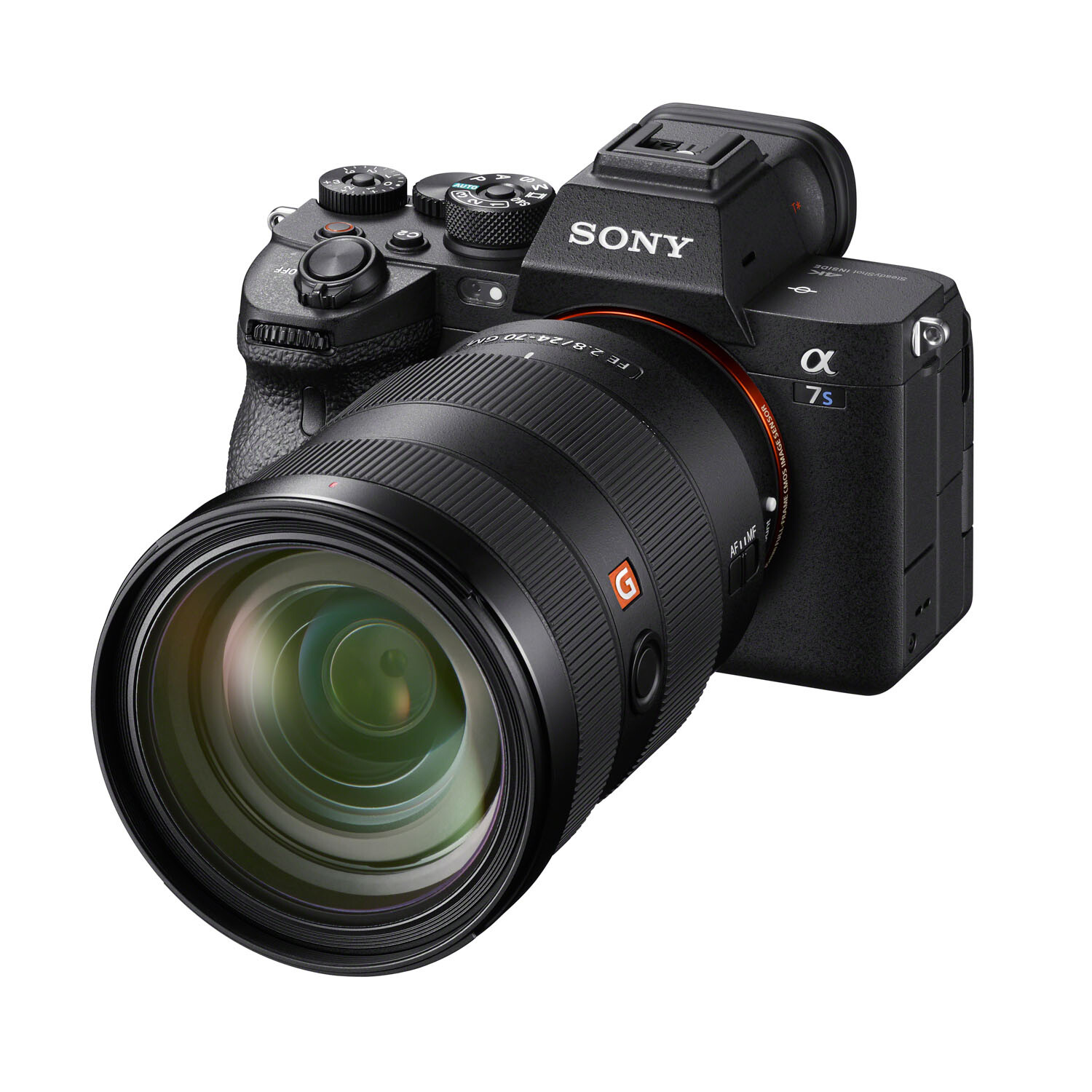
The Sony a7S III will hit the shelves in September, offering a whole host of brand new features, including a stellar autofocus system, a class-leading electronic viewfinder, pro-level video recording capabilities, and much more.
Let’s take a closer look.
What is the Sony a7S III?
The a7S III is Sony’s latest video/stills hybrid camera, which replaces the a7S II (a camera that debuted way back in 2015 and was long overdue for an upgrade).
The a7S III is a full-frame mirrorless model and technically designed to excel at both video and still shooting. But there’s a clear lean toward videographers, thanks to advanced recording capabilities such as:
4K/120p video (with a 1.1x crop)
Internally recorded, uncropped 4K/60p video (with a recording limit of 1 hour)
Internally recorded, uncropped 4K/30p video (with no time limit)
10 bit 4:2:2 recording
S-Log
As you can see, there’s quite a lot to satisfy serious videographers, such as the internal 4K/120p (for high-quality slow-motion footage), as well as unlimited 4K/30p shooting (for projects that require longer recording times).
You also get in-body image stabilization, as well as impressive high-ISO performance and at least 15 stops of dynamic range (according to Sony, anyway).
But while the a7S III is an impressive video contender, how does it look when arranged against more still-centric cameras? Can it hold its own?
Can the a7S III work for still photography?
At first glance, the a7S III is an extraordinarily capable camera for still photographers.
I mentioned the in-body image stabilization above, and that’s a boon for videographers and still photographers alike. You also get dual card slots, important for a select crowd of professional photographers, and a fully-articulating LCD for capturing images (or video) from awkward angles.
And the a7S III packs a 9.44M-dot electronic viewfinder, which is by far the highest resolution EVF currently available in a mirrorless camera (the former EVF champions sit at a still-respectable 5.76M-dot resolution). This should put to rest any claims by photographers that mirrorless EVFs just can’t compete with OVFs, because a near 10M-dot EVF is going to look insanely good.
The a7S III also features a new AF system, offering 759 phase-detection points, as well as 10 frames-per-second continuous shooting with a buffer of 1000+ RAW images.
All this seems extremely impressive, but for one major feature:
Resolution.
The a7S III only packs 12 MP, which is perfect for video but deeply disappointing for still photographers, especially in the current resolution-hungry market. These days, full-frame cameras offer a resolution of at least 20 MP, but often push higher, from 24 MP in the Sony a7 III to 61 MP in the Sony a7R IV.
Of course, there are photographers out there who aren’t caught up in the megapixel craze, and those folks might be willing to use the a7S III for still shooting, assuming they also have significant video needs. But megapixels aren’t just about marketing; a 12 MP camera does offer serious limitations in terms of high-resolution printing, as well as cropping in post-processing.
So while the a7S III is a truly impressive video camera, it (like its predecessors) sacrifices too much to be a serious still photography option for most shooters.
The a7S III will hit the shelves in September for an MSRP of $ 3500 USD, and is currently available for preorder here.
Now over to you:
What do you think about the a7S III? Are you pleased? Disappointed? And would you use it for still photography? Share your thoughts in the comments!
The post Sony Announces the a7S III, With 4K/120p and a 9.44M-dot EVF appeared first on Digital Photography School. It was authored by Jaymes Dempsey.
With all the focus on its video features, it might be easy to forget that the Sony a7S III is also a stills camera. This sample gallery features photos captured while shooting our latest episode of DPReview TV.