RSS
 

Posts Tagged ‘Sony’

Tamron 70-300mm for Sony Review: A Compact, Well-Priced Telephoto Lens

02 Jan

The post Tamron 70-300mm for Sony Review: A Compact, Well-Priced Telephoto Lens appeared first on Digital Photography School. It was authored by Suzi Pratt.
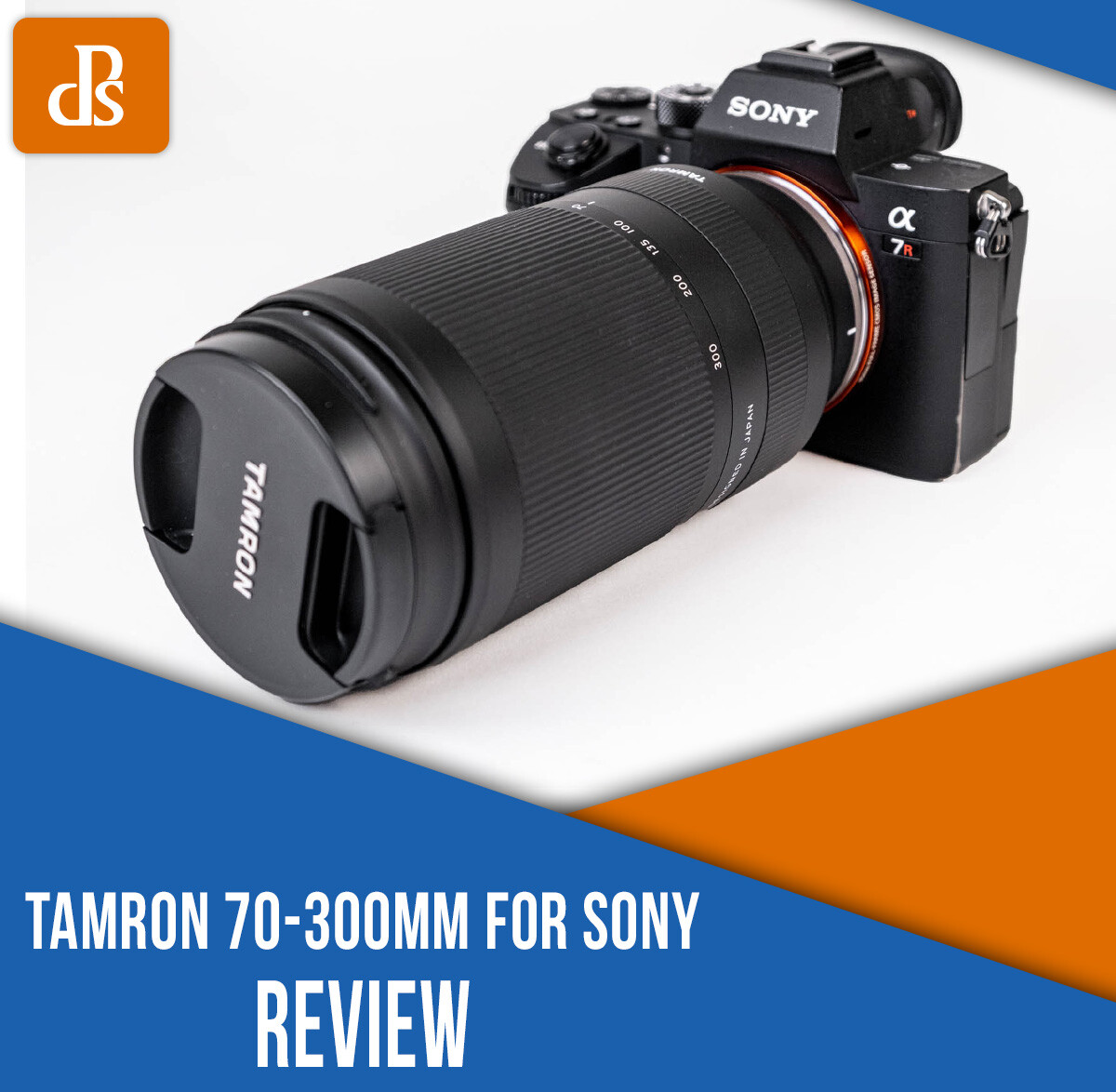
Tamron 70-300mm for Sony review

The new Tamron 70-300mm f/4.5-6.3 lens is the “world’s smallest telephoto zoom lens for Sony E-mount full-frame mirrorless cameras.”

But does this lens live up to the hype?

Let’s find out in this Tamron 70-300mm for Sony review!

Tamron 70-300mm for Sony review

Tamron 70-300mm for Sony: Overview

The Tamron 70-300mm is made to be used on a full-frame camera, but you can also mount it on an APS-C camera; the equivalent focal length just gets cropped to 105-450mm. This can be an advantage if you prefer getting more zoom out of your lens.

Besides its compact and lightweight build (more on that below!), the biggest appeal of this lens is the price. At just $ 550 USD, the Tamron 70-300mm is more than half the price of the Sony alternative.

For comparison’s sake, the Sony FE 70-300mm f/4.5-5.6 has a slightly faster f-stop and also comes with image stabilization. But it is larger, heavier, and more expensive than the Tamron model. So if budget, size, and weight are a concern, the Tamron 70-300mm is the way to go!

  • Released: September 2020
  • Focal Length: 70 to 300mm
  • Maximum Aperture: f/4.5 to f/6.3
  • Minimum Aperture: f/22 to f/32
  • Lens Mount: Sony E (full-frame)
  • Minimum Focus Distance – 31.5″/0.8 m
  • Focusing: Autofocus
  • Image Stabilization: No
  • Filter Size: 67 mm
  • Dimensions: 5.8” x 3″/148 mm x 77 mm
  • Weight: 19.2 oz/545 g
Tamron 70-300mm for Sony review

Lens design

The Tamron lens follows on the coattails of some impressive Tamron releases, such as the 28-200mm f/2.8-5.6. And if you’ve used any recent Tamron lenses, the 70-300mm will feel very familiar in your hands. It has a similar look and feel to other Tamron lenses, and it takes a 67 mm front filter, just like many other Tamron lenses.

While the build is mostly plastic, the lens is weather-sealed with a dust- and moisture-resistant construction. This makes the 70-300mm ideal for shooting in a variety of outdoor conditions. I wouldn’t take the lens out in pouring rain, but a light drizzle is totally fine.

Aside from its low price point, the biggest advantage of the Tamron 70-300mm is its compact size. With a weight of just 545 g (1.2 lb) and a length of 5.8 in, it’s easy to forget that you’re hauling a rather long-range telephoto lens. The small size also makes it easier to hold the lens for long periods of time, especially compared to bigger lenses like the Sony 100-400mm. 

Tamron 70-300mm for Sony review

Ease of use and performance

The Tamron 70-300mm is a very straightforward lens. There’s a zoom ring and a manual focus ring with no additional buttons or switches on the lens.

It would be nice to have a lock switch to prevent the zoom barrel from sliding out when you use the lens – and while it’s not a dealbreaker, the lack of a lock is something to be aware of.

All Sony autofocus modes (including Eye AF) are as snappy as they’d be if using a native Sony lens. If you have any concerns about using a third-party lens, rest assured that all modern Tamron lenses work flawlessly with Sony E-mount cameras.

Image quality

Snowy owl
300mm | 1/1600s | f/6.3 | ISO 400

Photos on the 70-300mm Tamron are razor sharp. Color rendition is also accurate, with absolutely no chromatic aberration or distortion.

While this lens doesn’t have a fast f/2.8 or f/1.8 aperture, beautiful bokeh can still be achieved with sufficient distance between the subject and the background. The bokeh is pleasing and smooth. The lens’s sweet spot seemed to be between f/4.5 and f/11.

The lens also has a nice minimum focusing distance of 31.5 in (0.8 meters) when shooting at 70mm. This allows you to get pretty close to your subject and still get crisp shots. 

autumn leaves
186mm | 1/800s | f/5.6 | ISO 1600

Best uses

Given its focal range and features, the 70-300mm is best used as a complementary lens to a wide-angle or mid-range zoom, such as the 24-70mm.

Shooting purely at 70-300mm may suit some photography styles, but most photographers will want to occasionally get a shot wider than 70mm, which is when a wider second lens will come in handy.

snowy landscape
70mm | 1/320s | f/6.3 | ISO 640

However, you can use the Tamron 70-300mm as your sole lens and get some great wildlife, landscape, and portrait shots. Just make sure you have enough light or a camera that can shoot at high ISOs because of the narrower maximum lens aperture. If you plan to shoot indoors or in low light, the Tamron 70-180mm f/2.8 will better suit your needs.

The Tamron 70-300mm can also work as a great video lens. Just note that it lacks image stabilization (IS), so it is best used on a tripod or a gimbal stabilizer if shooting video.

Tamron 70-300mm for Sony review: Conclusion

For the budget-conscious photographer, or for those wishing to have the smallest and lightest camera kit, the Tamron 70-300mm is a bargain of a lens.

One of the only reasons why you may not opt for this lens is if you prefer the all-in-one Tamron 28-200mm lens. The 28-200mm is smaller and slightly more expensive, and it gives you a much wider focal range at the expense of not being able to zoom as far as 300mm. 

If you are interested in purchasing the Tamron 70-300mm for Sony, you can grab it here.

So what do you think? Would you buy the Tamron 70-300mm, or would you opt for a different lens? Let me know in the comments below!

The post Tamron 70-300mm for Sony Review: A Compact, Well-Priced Telephoto Lens appeared first on Digital Photography School. It was authored by Suzi Pratt.


Digital Photography School

 
Comments Off on Tamron 70-300mm for Sony Review: A Compact, Well-Priced Telephoto Lens

Posted in Photography


Lensrentals’ most popular gear: Canon once again dominates with Sony, Nikon far behind

01 Jan

It’s the end of the year and that means Lensrentals has once again rounded up a list of the most popular camera bodies, lenses and accessories rented from Lensrentals and LensProToGo customers in 2020. Although this year has been, shall we say, different than most, the macro-level look at the most popular rental gear hasn’t changed much. That said, there are a few interesting trends emerging based on the 2020 data.

As it has been since 2017, the Canon 24–70mm F2.8L II lens takes the top spot of the most popular item to fly off Lensrentals’ shelves. Following it is the Canon 5D Mark IV, Canon 70–200mm F2.8L IS II, Sony a7 III and Canon 70–200mm F2.8L IS III. It isn’t until sixth place that we see a change of places. Instead of the Ronin-S, Canon’s 35mm F1.4L II lens snatches up sixth place.

A list of the most popular individual pieces of gear for 2020. Click to enlarge.

As has been the case for a number of years now, Canon absolutely dominates the list of most-rented gear. Canon holds 7 of the top 10 (70%) items and 13 of the top 20 (65%). Lensrentals also note Canon easily took the top spot for new releases in 2020, suggesting people seem more comfortable renting newer Canon gear compared to new offerings from other brands. To that end, Lensrentals’ data also shows that RF mount lenses rent at eight times the rate of Nikon Z mount lenses—a rather staggering statistic considering the new mirrorless mounts were released at the same time and have roughly the same number of lenses available for both mounts.

It shouldn’t come as a surprise, but there’s been significant growth in mirrorless camera and lens rentals. This backs up essentially all other data showing the migration away from DSLRs is undoubtedly happening. Another interesting trend is third-party lenses, such as those offered by Sigma and Tamron, are on the rise.

An ordered list of the most popular brands by rental market share. Click to enlarge.

All in all, across the board, the top five rental brands are Canon, Sony, Nikon, Sigma and Blackmagic, respectively. The only change in the top five compared to 2019 is Blackmagic, which overtook Panasonic for the final spot.

The full blog post from Lensrentals is a great read, so be sure to visit via the link below to ingest all the data there is to offer.

The Top Rented Photo and Video Products of 2020

Articles: Digital Photography Review (dpreview.com)

 
Comments Off on Lensrentals’ most popular gear: Canon once again dominates with Sony, Nikon far behind

Posted in Uncategorized


Gear of the Year: Carey’s choice – Sony a9 II

31 Dec
Photo: Dan Bracaglia

We were being out-paced by a semi-truck on a dirt road off an Idaho interstate in a mad gambit to skip an hour’s worth of stop-and-go traffic. As the 18-wheeler rounded a corner far ahead of us, leaving our sight, I felt a bit of humility. Mostly relief. Though if we’d wanted, we could easily have kept up with the truck in the little Subaru we were bouncing around in.

It was nice to take comfort in the certainty that every photo I would take on this trip would be reasonably exposed and perfectly focused.

But earlier, we’d been tailing the truck a bit closer and all the dirt it kicked up made us feel like we were crash-landing on the Red Planet in a Martian storm. The subsequent realization that we’d left our cell phone reception back by the highway also encouraged a little more caution.

Visitors visit parts unknown in Craters of the Moon National Monument. Processed and cropped slightly in Adobe Camera Raw.
ISO 100 | 1/500 sec | F8 | Sony FE 100-400mm F4.5-5.6 GM @ 141mm.

We were on our way back from Bozeman, Montana, from a DPReview video shoot on a farm. In normal times, road tripping to parts unknown is one of my favorite activities, and the ensuing uncertainty is honestly part of the appeal. But the additional uncertainty of the pandemic weighed on me a little bit. Every rest stop, every carefully vetted Airbnb stay was a risk, necessitating masks and buckets of hand sanitizer.

So it was nice to take a small bit of comfort in one thing – the certainty that every photo I would take on this trip would be reasonably exposed and perfectly focused. I had Sony’s a9 II with me, and free from worrying about whether or not the camera would do its job, I came away with some of my favorite photographs I was able to take this year.

Why it matters

It may not have bird detection, but the a9 II’s tracking is just solid.
ISO 100 | 1/1000 sec | F5.6 | Sony 100-400mm F4.5-5.6 GM @ 100mm

Back when I wrote our review of the a9 II, I said it had the best autofocus performance money could buy. Canon’s subsequent EOS R5 and R6 cameras have come close to closing the gap, and they have pretty awesome animal detection algorithms. But the a9 II’s tracking just works incredibly well, pretty much all the time; it’s tenaciously sticky and tracks anything I put the AF point over, and the camera can track human eyes that are absolutely tiny in the frame.

As a tool for the type of work I wanted to do, the Sony a9 II did the job.

It’s also easy to forget that there are plenty of cameras out there for which we don’t recommend using subject tracking all the time. Heck, even Sony’s a7R IV, which, on paper, features the same implementation, can struggle with fast action. (Admittedly, this could be the massive resolution, but if the AF can’t keep up, what’s the point of all those megapixels?).

The clouds roll into Mount Rainier National Park. Processed in Adobe Camera Raw.
ISO 125 | 1/160 sec | F8 | Sony FE 100-400mm F4.5-5.6 GM @ 137mm

Shooting with a camera that has the most dependable subject tracking I’ve used really freed my mind to focus on composition and capturing a variety of moments. As the camera tracked my chosen subject and kept it in critical focus, I could easily experiment with my composition with my eye to the finder and end up with an image I was happy with.

No camera is perfect, but this one is pretty darn good

I have to admit, one of the great frustrations of my job is that in over five years of living, breathing and testing cameras, there isn’t one camera that does everything exactly the way I want. Yes, I know that might be the most #firstworldproblem ever. Maybe I’m just too picky.

Great eye detection means the a9 II didn’t get tripped up at all by the foreground elements in this Montana farm photo. Processed in Adobe Camera Raw.
ISO 100 | 1/160 sec | F2.8 | Sony FE 24-70mm F2.8 GM @ 70mm

The Sony a9 II, for all its impressiveness, still has some interface lag, convoluted menus and a handful of other quirks. It’s overkill for many people, while others would value more megapixels or slightly greater dynamic range over the a9 II’s speed and AF tracking. Oh, and the touchscreen kind of stinks.

You’ll also notice that the images presented here are processed through Adobe Camera Raw (original JPEGs in the gallery below). Sony’s JPEG engine has some of the best detail retention and noise reduction on the market, but I just felt like some images needed a more personal touch to really replicate what I saw in front of me as I hit the shutter button. That would admittedly be an issue were I a full-time sports shooter on a tight deadline.

The road ahead will always be windy and more than a little uncertain. Processed in Adobe Camera Raw.
ISO 100 | 1/500 sec | F8 | Sony FE 24-70mm GM @ 24mm

But as a tool for the type of work I wanted to do, it did the job. It may not be a camera that I fully enjoy the experience of using, but the confidence it inspires is hard to overstate. And that made all the difference on an uncertain road trip in these uncertain times.

And lastly, happy new year to everyone reading (and thanks for reading this far). Here’s to hoping for some slightly more certain times ahead, and thank you for being a part of DPReview.

Read our full Sony a9 II review here

Sample gallery

$ (document).ready(function() { SampleGalleryV2({“containerId”:”embeddedSampleGallery_7395303261″,”galleryId”:”7395303261″,”isEmbeddedWidget”:true,”selectedImageIndex”:0,”isMobile”:false}) });
Articles: Digital Photography Review (dpreview.com)

 
Comments Off on Gear of the Year: Carey’s choice – Sony a9 II

Posted in Uncategorized


DPReview TV: Sony FX6 Review

19 Dec

What would the Sony a7S III look like if it were a cinema camera? Spoiler: it would look like the Sony FX6. This week, Jordan reviews the FX6 to see how it compares with the a7S III. Which one would he pick? You might be surprised.

Subscribe to our YouTube channel to get new episodes of DPReview TV every week.

  • Introduction
  • Jordan's background
  • A Sony FS5 body with a7S III internals?
  • Design changes
  • Audio inputs
  • Interface and menus
  • Electronic variable ND filter
  • Recording modes
  • Raw video recording
  • Autofocus
  • Picture profiles
  • Who's it for?

Articles: Digital Photography Review (dpreview.com)

 
Comments Off on DPReview TV: Sony FX6 Review

Posted in Uncategorized


Sony announces new SDK for camera automation aimed at product photography

08 Dec

Sony has announced a small but significant update to the Sony Software Development Kit (SDK). This update allows users to craft custom imaging solutions using Sony cameras.

The new camera automation software SDK has been created with product photographers in mind and is designed to streamline a product photography imaging workflow using Sony cameras. Sony writes, ‘It’s especially useful for large e-commerce businesses, allowing them to simplify, speed up and standardize product photography.’

This streamlining is achieved by the SDK enabling ‘virtually every facet’ of the camera and lens to be automated and controlled. This includes automation and control over white balance, image resolution, compression options, zoom, focus and video triggering. Multi-camera support is included, meaning that it will be easier than ever to capture 360° interactive product shots, for example.

The SDK is the first to support full-frame multi-camera control, allowing for multi-angle image capture. It has also gained macOS compatibility, which Sony states is the most-used operating system in the product photography industry. The SDK is also compatible with Windows and Linux. The SDK also launches alongside a Sony team and website prepared to offer support. Further, Sony states that bespoke apps are possible.

Yasuo Baba, Director of Digital Imaging for Sony Europe BV, said of the SDK, ‘This is a key part of Sony’s long-term vision. Sony’s Alpha range are the world’s most trusted mirrorless cameras, and this new move helps to back this up with the best software and the best support.’ Baba continues, ‘By doing this, we aim to make it easier and quicker for companies in e-commerce, and other B2B sectors, to automate every part of the image creation process.’

Many high-end Sony mirrorless cameras are supported by the SDK, including the A9 II, A7R IV, A7 III, A7C and the RX0 series. While a niche SDK, it should prove very useful for some photographers and allow for a streamlined, more efficient workflow. It will also be interesting to see what sort of creative uses enterprising photographers come up with for the new SDK.

This is not Sony’s first major SDK release of 2020. In February, the company released a remote control SDK kit. This SDK allows key camera controls and still image data to be captured via remote access, which Sony stated at the time is of interest to industries including security, entertainment and ‘many others’.

A lot of great things can be created when a platform is opened to development, so it’s nice to see Sony developing new software development kits for its cameras. If you’d like to learn more about the latest SDK, click here.

Articles: Digital Photography Review (dpreview.com)

 
Comments Off on Sony announces new SDK for camera automation aimed at product photography

Posted in Uncategorized


Viltrox unveils 33mm F1.4, 56mm F1.4 APS-C prime AF lenses for Sony APS-C camera systems

04 Dec

Viltrox has announced the release of its new AF 33mm F1.4 and 56mm F1.4 APS-C prime lenses for Sony E-mount camera systems.

The new 33mm F1.4 (50mm full-frame equivalent) features an all-metal construction and is comprised of 10 elements in 9 groups, including one extra-low dispersion element and one high refractive index element. It features the option to manually or automatically control the aperture, a minimum focusing distance of 40cm (15.75″), offers a built-in micro USB port for updating the firmware and is compatible with Sony’s Eye AF technology thanks to its onboard stepping motor (STM) driving the autofocus.

The lens measures in at 72mm long, 65mm diameter and weighs 270g (9.5oz). Viltrox has a full list of compatible Sony cameras on the 33mm F1.4 product page, where you can also buy the lens today for $ 259.

Moving onto the 56mm F1.4 (85mm full-frame equivalent), it too features an all-metal construction and is comprised of 10 element in 9 groups, including an extra-low dispersion element and a high fraction index lens. Interestingly, unlike the 33mm F1.4 lens, the 56mm F1.4 lens appears to be identical in optical design and features to the 56mm F1.4 lens Viltrox released for Fujifilm X-mount systems back in September.

The 56mm F1.4 also supports Sony Eye AF technology, has a built-in micro USB port for updating the lens’ firmware and uses an STM motor for driving autofocus. The lens measures in at 72mm long, 65mm diameter and weighs 290g (10.2oz).

You can find a full compatibility list on Viltrox’s 56mm F1.4 product page, where you can also pre-order the lens for $ 299.

Articles: Digital Photography Review (dpreview.com)

 
Comments Off on Viltrox unveils 33mm F1.4, 56mm F1.4 APS-C prime AF lenses for Sony APS-C camera systems

Posted in Uncategorized


Tamron announces 17-70mm F2.8 for Sony APS-C cameras

03 Dec

$ (document).ready(function() { SampleGalleryV2({“containerId”:”embeddedSampleGallery_9982586042″,”galleryId”:”9982586042″,”isEmbeddedWidget”:true,”selectedImageIndex”:0,”isMobile”:false}) });

Tamron has introduced the 17-70mm F2.8 Di III-A VC RXD lens for Sony APS-C bodies. The lens has a 35mm-equivalent focal length of 25.5-105mm and uses the company’s ‘Vibration Compensation’ image stabilizer (no word on its performance).

The 17-70 F2.8 has a total of 16 elements, including one hybrid aspherical and two glass-molded aspherical elements. The focus unit is driving by a ‘Rapid eXtra-silent stepping drive’ (RXD) stepper motor.

The minimum focus distance is 19cm (7.5″) and the maximum magnification is 0.21x. The lens is 12cm (4.7″) long and weighs in at 524g (1.2lbs). It’s weather-sealed, and its front element has a fluorine coating to repel water and oil.

The 17-70mm F2.8 Di III-A VC RXD will be available in mid-January for $ 799.

Press release

Tamron Announces World’s First[1] 17-70mm F2.8 Wide Range 4.1x Standard Zoom Lens with VC For APS-C Mirrorless Cameras

17-70mm F/2.8 Di III-A[2] VC RXD (Model B070)

December 2, 2020, Commack, NY – Tamron announces the launch of the 17-70mm F/2.8 Di III-A VC RXD (Model B070), a high-speed standard zoom lens for Sony E-mount APS-C mirrorless cameras on January 14, 2021 at approximately $ 799. Due to the current global health crisis, the release date or product supply schedule could change.

The new 17-70mm F2.8 is Tamron’s first high-speed zoom lens for mirrorless cameras with APS-C size sensors. It features a maximum aperture of F2.8 across the entire 4.1x zoom ratio covering a focal length of 17-70mm (a full-frame equivalent of 25.5-105mm) ideal for everyday use, and superb optical performance. It is a small, lightweight lens that is also equipped with Tamron’s VC (Vibration Compensation) mechanism to minimize camera shake. This VC mechanism leverages AI technology when shooting video.

[1] Among interchangeable F2.8 standard zoom lenses for APS-C mirrorless cameras (As of November 2020: Tamron)

2 Di III-A: For APS-C format mirrorless interchangeable-lens cameras

The lens features Moisture-Resistant Construction, Fluorine Coating and a Ø67mm filter size – the same as the Tamron series of lenses for full-frame mirrorless cameras. Compatible with many of the features that Sony builds into its cameras, including Fast Hybrid AF and Eye AF, the lens is the ideal everyday zoom for a multitude of situations. It is a highly practical lens that enables photographers to attain high image quality while enjoying the benefits of the large F2.8 aperture.

PRODUCT HIGHLIGHTS

World’s first high-speed standard zoom lens for APS-C cameras with the focal length range of 17-70mm 4.1x zoom ratio

The Model B070 has a focal length range of 17-70mm, equivalent to 25.5-105mm on full-frame cameras. It is the first F2.8 high-speed zoom lens in the world for APS-C mirrorless cameras to achieve a 4.1x zoom ratio.

Outstanding optical performance

The optical construction of the new 17-70mm F2.8 features 16 elements in 12 groups. Two GM (Glass Molded Aspherical) lens elements and one hybrid aspherical lens element are precisely arranged to maintain high-resolution performance from edge to edge.

Upgraded VC effective in combination with Sony APS-C mirrorless cameras, leveraging AI for video shooting

The 17-70mm F2.8 features Tamron’s proprietary VC mechanism. Additional sophisticated algorithms optimized for this model and a dedicated, independently operating MPU all combine to superbly compensate for vibration. This feature is available when the lens is used with cameras with or without in-body image stabilization. When shooting video, by leveraging AI technology, image stabilization performance improves compared to conventional models.

Close focusing?MOD is just 7.5” at the wide-angle end

The 17-70mm F2.8 zoom focuses close, down to 7.5” MOD (Minimum Object Distance). This is far superior to the performance achieved by conventional high-speed zoom lenses for APS-C cameras. In addition, the 15.4” MOD at the 70mm telephoto end ensures good close-range shooting performance allowing photographers to enjoy compelling close-up shots.

A highly portable compact design

The 17-70mm F2.8 zoom measures a scant 4.7” in length and 74.6mm in maximum diameter and weighs only 18.5 oz. The lens also maintains the same small Ø67mm filter size of each lens in the Tamron mirrorless lens line-up. This is remarkable for a lens with built-in VC image stabilization. When used with Sony’s APS-C mirrorless cameras, this zoom is nicely balanced and provides a comfortable user experience.

The RXD (Rapid eXtra-silent stepping Drive) stepping motor unit is exceptionally quiet and perfect for video use

Moisture-Resistant Construction and Fluorine Coating provide extra protection

Compatible with many camera-specific features and functions, including Fast Hybrid AF and Eye AF

SPECIFICATIONS

Model

B070

Focal Length

17-70mm (for APS-C frame mirrorless format)
(25.5-105mm full-frame equivalent field-of-view)

Maximum Aperture

F2.8

Angle of View (diagonal)

79° 55′-23° 00′?(for APS-C frame mirrorless format)

Optical Construction

16 elements in 12 groups

Minimum Object Distance

7.5“ (WIDE), 15.4“ (TELE)

Maximum Magnification Ratio

1:4.8 (WIDE) / 1:5.2 (TELE)

Filter Size

Ø67mm

Maximum Diameter

Ø74.6mm

Length*

4.7“

Weight

18.5 oz

Aperture Blades

9 (circular diaphragm)**

Minimum Aperture

F22

Standard Accessories

Flower-shaped hood, Lens caps

Compatible Mounts

Sony E-mount

* Length is the distance from the front tip of the lens to the lens mount face.

** The circular diaphragm stays almost perfectly circular up to two stops down from maximum aperture.

Specifications, appearance, functionality, etc. are subject to change without prior notice.

Articles: Digital Photography Review (dpreview.com)

 
Comments Off on Tamron announces 17-70mm F2.8 for Sony APS-C cameras

Posted in Uncategorized


MonsterAdapter’s new LA-KE1 adapter brings autofocus, aperture control to Pentax K-mount lenses on Sony E-mount cameras

25 Nov

MonsterAdapter, a relatively new player in the lens adapter game, has revealed the details of the LA-KE1, a new adapter that will make it possible to mount Pentax K-mount glass to Sony E-mount mirrorless camera systems.

There isn’t much information available about MonsterAdapter. The company’s Facebook page, which appears to be its only online presence, was created on May 20, 2020, when the company announced the development of the LA-EA4r, a modified version of Sony’s LA-EA4 adapter that expanded functionality and support. MonsterAdapters has since released another adapter, the LA-VE1, which makes it possible to adapt Minolta Vectis V-mount lenses to Sony E-mount mirrorless cameras.

Now, the company is promoting its forthcoming LA-KE1, which it claims is the ‘first of its kind in the world.’ The adapter offers full autofocus, aperture control and EXIF data transfer for Pentax K-mount lenses (KAF, KAF2, KAF3 and KAF4) to Sony E-mount cameras. The adapter uses a pair of motors for turning the screw-drive autofocus in older K-mount lenses.

This not only brings the ability to shoot with Pentax lenses to Sony E-mount cameras, but also enables many of Sony’s AI-assisted focusing modes to be used with the Pentax lenses, new and old. MonsterAdapter says the exact functionality will vary depending on what camera you’re using — noting a more powerful camera likely means more features — but both Human and Animal Eye-AF focus modes should be able to work on adapted glass.

MonsterAdapter also notes that due to the limits of screw-drive lenses, this adapter is best suited for still photographs—not video. In addition to the images of the prototype adapter in this article, SonyAlphaRumors has also shared a hands-on video demonstration of it in action:

No price is given for the LA-KE1 adapter, but it is set to ‘hit the market within this year,’ according to the company’s announcement post. You can keep up with the latest news on MonsterAdapter’s Facebook page.

Articles: Digital Photography Review (dpreview.com)

 
Comments Off on MonsterAdapter’s new LA-KE1 adapter brings autofocus, aperture control to Pentax K-mount lenses on Sony E-mount cameras

Posted in Uncategorized


Sony announces its new FX6 full-frame cinema camera with 10-bit 4:2:2 4K/120p internal recording

22 Nov

Sony has announced the launch of its new FX6 full-frame 4K cinema camera, which merges Sony’s cinema technology and form factor with advanced imaging technologies taken from its Alpha mirrorless camera systems.

$ (document).ready(function() { SampleGalleryV2({“containerId”:”embeddedSampleGallery_8582380549″,”galleryId”:”8582380549″,”isEmbeddedWidget”:true,”selectedImageIndex”:0,”isMobile”:false}) });

At the core of the camera is a 4K 10.2-megapixel full-frame backside-illuminated CMOS Exmor R sensor powered by a Sony Bionz XR image processing engine — likely the same setup used in the Sony a7S III. Sony notes the sensor offers 15+ stops of dynamic range and has a maximum ISO of 409,600 for ultra-low-light shooting.

The FX6 captures 10-bit 4:2:2 full-frame footage at 120 frames per second (fps) at 4K and 240 fps in 1080. If you use the onboard 12G-SDI port, the FX6 can output 16-bit SDI Raw 4K/60p video. Sony has also added its S-Cinetone look profile, which is inspired by its Venice colorimetry and also found in the company’s FX9 cinema camera.

Footage is stored to one or both of the camera’s dual CFexpress Type A card slots, which are also backwards compatible with SD UHS-II cards. It’s worth noting though that any recording over 100 fps will require the use of the faster CFExpress Type A cards, as even UHS-II SD cards won’t have the bandwidth to get the job done.

Below are still frames pulled from footage captured with the FX6:

$ (document).ready(function() { SampleGalleryV2({“containerId”:”embeddedSampleGallery_6490417008″,”galleryId”:”6490417008″,”isEmbeddedWidget”:true,”selectedImageIndex”:0,”isMobile”:false}) });

The FX6 uses Sony’s E-mount for attaching lenses, making it compatible with more than 50 native lenses and countless dozens third-party lenses. The FX6 features the same 627-point Fast Hybrid AF system found in the FX9 and Sony’s Alpha mirrorless cameras, including advanced Face Detection and Real-time Eye AF. The FX6 also has internal electronic variable ND filters, which can be manually adjusted ‘in smooth increments from 1/4 to 1/128.’ Below is a video demonstration of the FX6’s electronic ND filter at work:

The FX6 is constructed of a magnesium alloy chassis that measures 11.6cm (4.6”) x 15.3cm (6”) x 11.4cm (4.5”) and weighs 890g (1.96lbs). The included 3.5” LCD viewfinder can be attached to various locations on the body, thanks to its modular design.

Other features include built-in Wi-Fi, four-channel audio recording and compatibility with Sony’s Catalyst Browse/Prepare software as well as Sony’s Content Browser mobile app that can be used to monitor video and control focus, iris and even zoom remotely.

The FX6 full-frame cinema camera from Sony will be available for $ 6,000 in December through Sony and authorized retailers. It will also be available as a kit with Sony’s FE 24–105mm F4 G E-mount lens for $ 7,200. Sony is also releasing a new FE C 16–35mm T3.1 G lens in December that will retail for $ 5,500.

Press release:

Sony Electronics Launches FX6 Full-frame Professional Camera to Expand its Cinema Line

FX6 Combines the Best of Sony’s Industry-leading Digital Cinema Technology with Advanced Imaging Features from Alpha™ Mirrorless Cameras

FX6 Product Highlights:

  • 4K 10.2 megapixel full-frame back-illuminated CMOS Exmor R™ sensor
  • Compact and lightweight body design for on-the-go shooting
  • Ultra-high sensitivity with ISO expandable up to 409,600 for very low light conditions
  • 15+ stops of dynamic range[i]
  • S-CinetoneTM look profile, also used in FX9 and inspired by VENICE colorimetry
  • BIONZ XR™ image processing engine, first used in Alpha 7S III
  • Fast Hybrid Auto Focus, also used in Alpha cameras and FX9
  • Recording up to 4K 120p / HD 240p, 10-bit 4:2:2 color depth in full-frame[ii]
  • Support for up to 12G-SDI and 4K at up to 60p 16-bit SDI RAW output
  • Compatible with more than 50 native E-mount lenses

SAN DIEGO – November 17, 2020 – Sony Electronics Inc. today officially announced the FX6 (model ILME-FX6V) camera, the latest addition to Sony’s Cinema Line, a series of products that brings the company’s expertise in imaging technology to a broad range of filmmakers and content creators.

Sony’s Cinema Line, which also includes the VENICE and FX9 cameras, delivers a coveted filmic look cultivated from extensive experience in digital cinema production, as well as enhanced operability thanks to an innovative body design, extensive durability and intuitive customizability.

As part of the Cinema Line, the all-new FX6 incorporates Sony’s core technologies of image sensor, processing engine, and AF (autofocus) performance. FX6 is also compatible with the wide range of Sony E-mount lenses for creative flexibility.

“The new FX6 is the latest example of Sony’s drive to continuously push the boundaries of imaging technology based on the needs of our customers,” said Neal Manowitz, deputy president of Imaging Products and Solutions Americas, Sony Electronics. “With the advancement of our Cinema Line, we are dedicated to enabling the extraordinary skills and talent of today’s content creators and cinematographers. The FX6 leverages technology from Sony’s industry-leading VENICE cinema camera and marries it with the best of Sony’s innovative Alpha mirrorless camera technology.”

Full-frame Cinematic Image Quality

The new camera features a 10.2 MP[iii] full-frame back-illuminated Exmor R™ CMOS sensor that delivers a 15+ stop wide dynamic range[iv] with high sensitivity and low noise. FX6’s base sensitivity is ISO 800 with an enhanced sensitivity setting of ISO 12,800[v] – expandable up to 409,600[vi] – for shooting in low and very low light conditions. It is capable of recording in XAVC All Intra 4:2:2 10-bit depth with stunning image quality in DCI 4K (4096 x 2160 – up to 60p), QFHD 4K (3840 x 2160 – up to 120p[vii]) and FHD (1920×1080 – up to 240p) for incredibly detailed slow motion. When more convenient file sizes are needed, FX6 can record in XAVC Long GOP 4:2:0 8-bit QFHD 4K (3840 x 2160 – up to 120pvii) and 4:2:2 10-bit FHD (1920×1080 – up to 240p). FX6 also includes a BIONZ XR™ image processing engine, first used in the new Sony Alpha 7S III camera, providing up to four times faster processing performance compared to the FS5 II.

Developed with the same expertise as Sony’s world-leading VENICE cinema camera, FX6 offers advanced cinematic color science including S-CinetoneTM for richer tonal reproduction right out of the box as well as S-Log3, S-Gamut3 and S-Gamut3.Cine for post-production flexibility. FX6’s cinematic color science is optimized for premium applications by capturing the maximum dynamic range from the sensor and providing creative freedom. Leveraging the color science of VENICE, FX6 also allows productions to easily match footage with other cameras in the Cinema Line.

Advanced Video Features

Pulling from Sony Alpha’s impressive AF features, FX6 offers Fast Hybrid AF by combining 627-point[viii] focal plane phase-detection AF with advanced Face Detection and Real-time Eye AF in high frame rates with continuous AF, allowing camera operators to effortlessly and precisely track fast-moving subjects in slow motion without losing focus. Fast Hybrid AF works with over 50 native E-mount lenses. The camera can also capture up to five times slow-motion with 4K (QFHD) 120fps.

The new FX6 also offers internal electronic variable ND filters for easy and seamless control of the camera’s filter density. Users can set variable ND to auto or adjust the filter density manually in smooth increments from 1/4 to 1/128 for perfectly exposed images without affecting the depth of field or shutter angle, even during changing lighting conditions. Combined with the camera’s ultra-high sensitivity, the electronic variable ND filter provides users with outstanding creative control in almost any shooting environment.

Made for Content Creators on the Go

Outstanding Mobility and Operability

Built with a durable magnesium alloy chassis, measuring just 4.6 inches x 6 inches x 4.5 inches (116 millimeters x 153 millimeters x 114 millimeters) and weighing just 1.96 pounds (0.89 kilograms), FX6 has a compact and lightweight design making it easy for users to grab and shoot at any time. The new camera includes a heat dissipating structure to keep the camera’s components within their normal operating ranges to prevent overheating, even during extended recording times. FX6 also features a modular design allowing users to easily pair accessories, such as grips and viewfinders, or attach the camera to other mechanisms, such as gimbals and drones.

FX6’s 3.5-inch LCD Viewfinder can be attached on multiple locations of the camera body for added freedom and easy menu control with touch operation. Using a quick access control menu for commonly accessed features, camera operators can change key settings with a single touch – including Codec, Imager Scan Mode, Picture Size and Frequency, Base ISO and Sensitivity, Shooting Mode and Audio Levels.

Professional-level Reliability

In line with professional workflows, FX6 includes a 12G-SDI output that also supports 16-bit RAW, HDMI output, timecode in/out, built-in Wi-Fi and four channel audio recording (via XLR Interface, Multi-Interface Shoe and built-in Stereo Mic). The new camera also features two media slots compatible with CFexpress Type A cards[ix] for higher overall capacity and faster read and write speeds in addition to SDXC UHS-II/UHS-I cards.

Additionally, Sony’s Catalyst Browse/Prepare[x] software facilitates fast and easy editing. Users can import FX6’s image stabilization metadata into Catalyst Browse/Prepare to transform handheld footage into incredibly smooth and stable visuals. FX6 also has a dedicated Clip Flag button to easily filter and locate preferred takes using Catalyst Browse/Prepare. This software also reflects metadata indicating when FX6 is rotated or in its normal position, eliminating the need to rotate footage beforehand. FX6 is also compatible with Sony’s Content Browser Mobile App to easily monitor and control focus, iris, and zoom remotely[xi].

About Cinema Line

Cinema Line is series of professional cameras that have a filmic look, cultivated from Sony’s long experience in digital cinema production, and enhanced operability and reliability that responds to the wide variety of creator’s high demands.

Cinema Line includes the digital cinema camera VENICE, which is highly acclaimed in the feature and episodic production industry, and the professional camera FX9, which is has been popular for documentary and drama production. With the new FX6, Sony brings versatile creative tools to all types of visual storytellers.

FE C 16-35mm T3.1 G E-mount Cinema Lens

The FE C 16-35mm T3.1 G (model SELC1635G) lens, announced at IBC 2019, will be available in December 2020 to pair with FX6, FX9 and other full-frame Sony cameras. This new lens supports intelligent shooting functions unique to E-mount cameras – such as fast and accurate AF within shallow depth of field – while also offering manual focus options in a form factor familiar to professional cinema creators.

The FE C 16-35mm T3.1 G delivers stunning bokeh and corner-to-corner resolution thanks to two XA (Extreme Aspherical) elements with extreme surface precision of 0.01-micron, circular 11-blade apertures in addition to three aspheric lenses that are positioned in a way that effectively reduces field curvature, astigmatism and, in combination with two ED (Extra-low Dispersion) glass elements, reduces color distortion. Additionally, floating focus provides outstanding resolution at every zoom position. The new lens also features Nano AR (Anti Reflection) coating, to reduce flare.

The focus ring offers a 140-degree large angle of rotation for fine control, with distance scale markers for consistent focus reset during multiple takes. Linear Response MF enables smooth manual focus, allowing users to adjust focus accurately and intuitively. Three independent rings for focus, iris and zoom enable users to get the exact creative results they desire. Each ring has the industry standard 0.8mm pitch gear for use of follow focus accessories, and the 114mm barrel diameter is compatible with industry standard matte box accessories. A two-speed servo provides smooth, accurate control of focal length and can be activated from a switch on the lens or a lever on the FX6 Smart Grip.

Pricing and Availability

The new FX6 full-frame Cinema Line camera will be available in December and will be sold for approximately $ 5,999.99 USD and $ 8,048.99 CAD, at a variety of Sony’s authorized dealers throughout North America.

A new kit featuring the FX6 full-frame Cinema Line camera and FE 24-105mm F4 G E-mount Lens will also be available in December and will be sold for approximately $ 7,199.99 USD and $ 9,658.99 CAD. It will be sold at a variety of Sony’s authorized dealers throughout North America.

The FE C 16-35mm T3.1 G lens will be available in December and will be sold for approximately $ 5,499.99 USD and $ 7,199.99 CAD, at a variety of Sony’s authorized dealers throughout North America.

Exclusive stories about Cinema Line, FX6, FE C 16-35mm T3.1 G and Sony’s other imaging products can be found at www.sonycine.com and www.alphauniverse.com, resources designed to educate and inspire all fans of Sony’s technology for content creation and photography.

Articles: Digital Photography Review (dpreview.com)

 
Comments Off on Sony announces its new FX6 full-frame cinema camera with 10-bit 4:2:2 4K/120p internal recording

Posted in Uncategorized


The Sony a7 IV Will Launch in 2021, With a 30+ MP Sensor and 4K/60p Recording

16 Nov

The post The Sony a7 IV Will Launch in 2021, With a 30+ MP Sensor and 4K/60p Recording appeared first on Digital Photography School. It was authored by Jaymes Dempsey.

Sony a7 IV rumors
The Sony a7 IV will likely be the next a7 model to launch, around a year after the a7S III (pictured above).

It’s been over two years since the release of the Sony a7 III, but it seems like we’re finally getting close to its successor.

According to Sony Alpha Rumors, the a7 IV will debut midway through 2021. And while the camera won’t offer any truly groundbreaking features, SAR’s “usually very good source” suggests a suite of intriguing specs.

First, the sensor will no longer fit Sony’s 24 MP mold. Instead, we’ll be treated to a megapixel upgrade, something in the “30-32 MP region.” If this is true, the Sony a7 IV resolution will offer a meaningful boost over the 24 MP a7 III and a7C, without reaching the storage-hogging heights of the a7R series. Personally, I’m a big fan of this megapixel “middle ground” – it guarantees some additional pixels without significantly affecting high-ISO noise performance (and you can bet that Sony’s done a good job with the sensor, which means that it’ll offer a noise performance at least comparable to the excellent a7 III).

One of the few areas where the a7 III has lagged behind the competition is with the electronic viewfinder, which comes in at 2.36M-dots, compared to the Canon EOS R’s and the Nikon Z6’s 3.69M-dot resolution. But while the a7 IV won’t compete with its 5.76M-dot sibling, the a7R IV, SAR claims the a7 IV should offer a 3.69M-dot EVF, which puts it in a “professional” range and should improve the overall a7 IV shooting experience.

Sony Alpha Rumors also claims that, despite a “cheap” LCD, the “image quality and AF will be top-notch.” While I wouldn’t expect anything less from an a7 III successor, it’s nice to hear it from a source.

As for video:

The a7 IV will offer (unsurprisingly) 4K/60p recording, which should be enough for most videographers, though it certainly won’t turn heads like the a7S III with its 4K/120p capabilities, or the Canon EOS R5 with its 8K option.

Finally, you can expect a price of around $ 2500 USD, which is expensive without heading into that “niche professional” category.

We’re a long way off from an announcement, but make sure to check back on dPS for any relevant updates!

The post The Sony a7 IV Will Launch in 2021, With a 30+ MP Sensor and 4K/60p Recording appeared first on Digital Photography School. It was authored by Jaymes Dempsey.


Digital Photography School

 
Comments Off on The Sony a7 IV Will Launch in 2021, With a 30+ MP Sensor and 4K/60p Recording

Posted in Photography