RSS
 

Posts Tagged ‘Sony’

Sony replaces RX100 V with RX100 VA, bringing RX100 VI processor and firmware

14 Jul
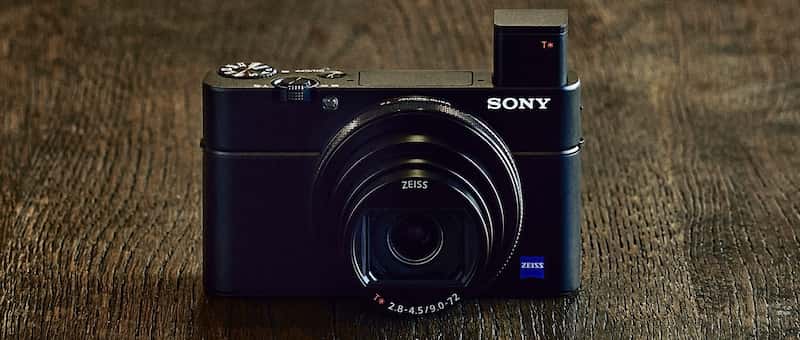
Look familiar? The RX100 VA is a subtle refresh of the RX100 V with a change of processor the only hardware difference.

Sony has quietly updated its RX100 V, bringing a couple of the goodies from the RX100 VI travel zoom. The updated RX100 VA gains a new processor and various firmware tweaks but misses out on the VI’s other hardware improvements.

The updated processor brings some performance benefits but it also means the VA gains the latest Sony menu system, which has been restructured, has clearer indicators of where you are in the menu and, most significantly, has a customizable ‘My Menu’ tab. This allows you to group the settings you regularly change, rather than having to remember which sub-section of which tab they’re buried in.

On top of this, the camera’s Eye AF and subject tracking performance should be improved. The refresh rate of the viewfinder is also said to be uprated. In addition, these are some of the differences we found:

  • Deeper buffer (233 files, up from 150)
  • Proxy movie mode (captures 720p footage alongside 4K capture)
  • ‘Zone’ AF area mode
  • Variable size spot metering, Entire Screen Average and Highlight Spot metering
  • Add ratings to images (with ability to customize which ratings are available)
  • Three Auto WB options (Std, Ambience or White)

However, the RX100M5A does not get the improved one-touch viewfinder, nor the touchscreen added in the RX100M6. Its rear screen tilts down by 45°, not 90. Nor does the VA gain all the firmware improvements from the VI: there’s no sign of Hybrid Log Gamma or the ability to capture S-Log3 footage, for instance.

The RX100 VA also loses compatibility with Sony’s in-camera ‘PlayMemories Camera Apps.’

The updated Sony menus are a little easier to navigate and gain a custom ‘My Menu’ tab.

There’s been no press release from Sony of the changes but the VA appeared on Sony’s Japanese site last week and has replaced the RX100 V if you visit the Sony US website. This is the first time Sony has made any update to an RX100 model, rather than simply replacing it, perhaps offering hope that the company will continue to develop both the long-zoom and short, bright-zoom models in the lineup.

Articles: Digital Photography Review (dpreview.com)

 
Comments Off on Sony replaces RX100 V with RX100 VA, bringing RX100 VI processor and firmware

Posted in Uncategorized


Sony Cyber-shot DSC RX100 VI review

12 Jul
Silver Award

83%
Overall score

The Sony Cyber-shot DSC RX100 VI is the latest pocketable compact camera to feature a 1″-type image sensor. Unlike existing models in the marketplace, the RX100 VI ventures into the do-everything/travel camera space, with the addition of a 24-200mm equivalent F2.8-4.5 lens.

Like its immediate predecessor, the Mark VI offers quick and accurate on-sensor phase detection autofocus, the ability to shoot at up to 24 frames per second and highly detailed 4K video taken from the full width of its sensor. It becomes the first RX100-series camera to offer a touchscreen and has a redesigned electronic viewfinder that can be activated or stowed-away with a single push.

Key features:

  • 20.1MP 1″-type stacked CMOS sensor
  • F2.8-4.5, 24-200mm equiv. zoom lens
  • Retractable 2.36M-dot EVF with 0.59x equiv. magnification
  • 24 fps burst shooting (with continuous autofocus)
  • UHD 4K video at 30p and 24p, 1080p slow-motion capture
  • 5-axis image stabilization
  • 3″ touchscreen LCD
  • On-sensor phase-detection autofocus
  • Wi-Fi with NFC for quick image transfer to mobile devices
  • USB charging

Despite the significantly increased lens range, the RX100 VI is less than 2mm (5/64″) thicker than the Mark V. The result is a camera that can lend itself to a wider range of photographic situations (making it a solid traveling companion) but with a less bright lens that means sacrificing some of the low-light capability of its sister models.

The RX100 VI has a recommended selling price of around $ 1,200 before sales tax, or £1,150/€1,299 in Europe, including VAT.


What’s new and how it compares

The RX100 VI is more of a travel zoom than an enthusiast compact. We see how it compares with Panasonic’s TZ / ZS models, as well as its immediate predecessor.

Read more

Body and design

The RX100 VI incorprorates a touchscreen but it’s still most satisfying if you don’t try to get too involved.

Read more

What’s it like to use

The RX100 VI is a very powerful travel camera and highly capable for family photography, but it’s not as good in low light as some of its peers.

Read more

Autofocus

Autofocus is very impressive: delivering a very high hit-rate even when you shoot 24 times per second. Eye AF is also hugely valuable. The design of the autofocus system is a little convoluted, though.

Read more

Video

The RX100 VI can shoot some very attractive, detailed video and has an extensive feature set to support this. There are also significant limitations in terms of time and absent features.

Read more

Image quality

The RX100 VI produces some of Sony’s nicest JPEGs yet and, on our sample at least, the lens looks excellent.

Read more

Conclusion

The RX100 VI is a hugely capable camera. It trades some of its predecessors’ low light performance for greater daytime flexibility, though the price tag is steep.

Read more

Articles: Digital Photography Review (dpreview.com)

 
Comments Off on Sony Cyber-shot DSC RX100 VI review

Posted in Uncategorized


Tamron releases updated firmware for 28-75mm F2.8 for Sony E-Mount

11 Jul

Tamron has released firmware version 2.0 for its 28-75mm Di III RXD, addressing previously acknowledged autofocus issues.

The update specifically addresses focusing issues on Sony E-mount cameras while shooting video, including ‘autofocusing operation and loss of focus,’ while also addressing ‘flicker on peripheral parts of the image when zooming.’

The firmware update is done through the Sony cameras themselves, with the lens mounted. We’ll be updating our review sample, so keep an eye out on our homepage for a full review in the coming weeks.

Press release

Notice about Firmware Update for Tamron 28-75mm F/2.8 Di III RXD (Model A036)

Dear users and potential purchasers of Tamron interchangeable lenses.

Thank you for using Tamron products.

We are pleased to inform you that the firmware update for the 28-75mm F/2.8 Di III RXD (Model A036) for Sony E-mount, full-frame mirrorless cameras, is now available. The firmware update is available through Sony E-mount camera bodies.

Please review the information below.

Affected model
28-75mm F/2.8 Di III RXD (Model A036)

Firmware version
Ver.2

Improvements
This update improves known issues for autofocus with Sony E-mount mirrorless cameras, when the range of focus search distance is broad, in video recording mode.
Tap for more details.

How to Update
The lens firmware can be updated using cameras that support this lens firmware update.
Tap for more details.

How to Check your Lens Firmware Version
From your camera’s menu screen, please select “Setup” then “Display version.”

Inquiries regarding this matter
Please contact your local Tamron distributor.
http://www.tamron.com/en/#distributors

Articles: Digital Photography Review (dpreview.com)

 
Comments Off on Tamron releases updated firmware for 28-75mm F2.8 for Sony E-Mount

Posted in Uncategorized


Sony Cyber-shot RX100 VI sample gallery updated

07 Jul

$ (document).ready(function() { SampleGalleryV2({“containerId”:”embeddedSampleGallery_8189628340″,”galleryId”:”8189628340″,”isEmbeddedWidget”:true,”selectedImageIndex”:0,”isMobile”:false}) });

With enough reach to land itself in ‘travel zoom’ territory, the Sony RX100 VI is well suited for a wide range of shooting situations. We’ve tested the 1″ compact with a 24-200mm equiv. zoom both in the office and out on summertime excursions, and our full review is imminent. In the meantime, take a look at our expanded gallery – now with converted Raw files.

Articles: Digital Photography Review (dpreview.com)

 
Comments Off on Sony Cyber-shot RX100 VI sample gallery updated

Posted in Uncategorized


Voigtlander releases details and price of its 110mm F2.5 Macro APO-Lanthar for Sony E-Mount

03 Jul

Lens manufacturer Cosina has provided more specification for the Macro APO-Lanthar 100mm F2.5 lens that it first announced at CP+ in March. The E-mount lens is due to begin shipping in August 2018, and is quoted on the Japanese website as having a price of ¥148,000 – approximately $ 1350/£1050 before tax.

The new manual focus lens offers 1:1 macro and a closest focusing distance of 35cm. It uses three floating lens groups for focusing to ensure optimal quality at all distances – according the Cosina – and apochromatic correction to produce high resolution and detailed images for the full frame Sony sensors.

With electric contacts the lens can transmit aperture and focusing information to the camera, which will be recorded in the EXIF data of the image as well as being used to inform the 5-axis image stabilization systems of the Sony range. The contacts also allow manual focus assistance to be triggered by turning the focusing ring.

For full specification see the Cosina website.

Manufacturer information

Macro APO-LANTHAR 110mm f/2.5 E-Mount

Voigtländer MACRO APO-LANTHAR 110mm F2.5 is a high performance manual focus 1:1 macro lens optimized for the imaging sensors of Sony mirrorless cameras. Inheriting the APO-LANTHAR designation, the lens is highly corrected to eliminate optical aberrations including longitudinal chromatic aberration. The lens covers the full frame image area, and achieves a maximum image reproduction of 1:1 life size with no additional attachments. In order to ensure subjects from minimum focus distance to infinity are captured with extremely high image quality, a 3-group floating mechanism is employed to adjust three optical groups according to focus distance. The 110mm focal length on full frame format ensures not only a good working distance from subjects for macro shooting, but also its angle of view for portraiture does not look too cropped in comparison with 135mm and 200mm lenses. Another attractive feature is the ability to create images with a strong out-of-focus ‘bokeh’ effect, made possible by the 110mm focal length and F2.5 maximum aperture. This lens is a manual focus and manual aperture design, but also features electrical contacts that enable the lens settings at image capture to be included in the Exif information of the image data. Furthermore, the lens is installed with a distance encoder to enable support for 5-axis image stabilization on bodies with this feature, by providing distance to subject information used to compensate for camera shake. Focus peaking while manual focusing is also supported.

Main Features

  • Full frame Sony E-mount with electrical contacts
  • Apochromatic optical design that eliminates chromatic aberrations
  • Optical design optimized for digital imaging sensors
  • Maintains high image quality at all shooting distances with a 3-group floating mechanism
  • Extremely solid and durable all-metal barrel
  • Manual focus for precise focusing
  • Maximum reproduction ratio of 1:1 at a minimum focus distance of 35 cm

Articles: Digital Photography Review (dpreview.com)

 
Comments Off on Voigtlander releases details and price of its 110mm F2.5 Macro APO-Lanthar for Sony E-Mount

Posted in Uncategorized


Sample gallery: Sony FE 400mm F2.8 GM OSS

28 Jun

$ (document).ready(function() { SampleGalleryV2({“containerId”:”embeddedSampleGallery_9152913946″,”galleryId”:”9152913946″,”isEmbeddedWidget”:true,”selectedImageIndex”:0,”isMobile”:false}) });

We first heard about Sony’s pro-level FE 400mm F2.8 GM OSS lens back in the winter. This past weekend we finally had the chance to put this impressive sports/wildlife lens to the test at a professional soccer match – read our first impressions. We even had the chance to toss on the Sony 1.4x teleconverter for some shots at an 560mm equiv. field of view. Have a look for yourself at the results.

Articles: Digital Photography Review (dpreview.com)

 
Comments Off on Sample gallery: Sony FE 400mm F2.8 GM OSS

Posted in Uncategorized


First Impressions: Sony FE 400 F2.8 GM OSS

27 Jun

First Impressions: Sony FE F2.8 GM OSS

We first gazed upon Sony’s new FE 400mm F2.8 GM OSS lens at CP+ earlier this year. This past weekend I had the chance to use it in-person at a Major League Soccer match between the New York Redbulls and Dallas FC.

Paired with the Sony a9 and vertical grip, the combination easily met – and in some cases, exceeded – what I’ve come to expect in terms of AF performance, bokeh and handling for a pro sports camera+lens combo. Continue reading for my first impressions from the field, and check out our full gallery from the match below:

See our Sony FE 400mm F2.8 GM OSS samples

Fast AF speed

ISO 1000 | 1/2000 sec | F2.8

This shooting opportunity – arranged by Sony – felt like the perfect real world scenario to put a 400mm F2.8 through it paces. I’ve shot a lot of soccer at the collegiate level over the years, mostly with a 300mm F2.8, but never at the professional level. Despite my inexperience, I walked away with a hit rate close to 98% mostly using the Zone area AF mode; this really impressed me.

Though I initially set the camera up with the intention of using back button AF, I ended up using the half press shutter to activate autofocus nearly the whole time. Most sports photographers would avoid this as it can lead to missed shots: decoupling the two allows you to hit the shutter without the risk of driving focus onto the wrong subject or into a hunt. But the Sony drove focus in the correct direction, locking onto my intended subject, pretty much every time.

Prior to the match, Sony talked about how the lens’ design had been optimized for speed and super fast tracking even at the a9’s top burst speed of 20 fps. I mostly shot at 10 fps, but found the lens kept up marvelously.

Beautiful bokeh and background separation

ISO 1250 | 1/1000 sec | F2.8

While I started the game with the lens slightly stopped down, I opted to open the 400mm up to F2.8 as the sun began to set. These wide open shots in particular display beautiful background separation, with lovely bokeh, thanks in part to an 11-blade circular aperture. For sports photographers, the quality of a lens’ bokeh is obviously second to sharpness and AF performance, but lovely bokeh sure is nice to have.

A little lighter

At 2.9kg / 6.4lb., the lens weighs about 1kg less than the Canon 400mm F2.8, but make no mistake – this is still a heavy piece of kit. Sony says it’s light enough to shoot hand-held. I’ll admit I’m not the world’s strongest man, and 15 minutes of free-arming that lens definitely left me a little sore the next day.

Sore arms aside, it’s worth calling out that Sony’s 400mm feels exceptionally balanced. This is because much of the glass, and therefore weight, is located toward the back of the barrel resulting in a lens that doesn’t tend to pull forward/down as much as some similar telephoto primes. The build quality is also excellent – exactly what you’d expect of a pro-level tele. Above is the lens’ magnesium alloy shell.

Compatibility with teleconverters

ISO 1250 | 1/1000 sec | F4 | 560mm (1.4x teleconverter)

The 400mm F2.8 is compatible with both Sony’s 1.4x and 2x teleconverters. The former provides an equivalent field of view of 560mm and F4, the later 800mm and F5.6. The above is an example taken with the 1.4x teleconverter.

Other bits

As you would expect for $ 12,000, the lens has image stabilization with three different modes for various sports/action scenarios. It also has a customizable ring – located right in front of the focus ring – that can be set to do things like engage the APS-C crop mode on the camera, for more reach. There’s also a drop-in filter tray near the lens mount.

One of my favorites things about this lens is a bit more superficial: the snazzy orange ring around the front of the carbon fiber hood. Perhaps in years to come, we’ll see that orange ring more often along the sidelines.

Final thoughts

ISO 1250 | 1/1250 sec | F2.8

To many, the 400mm F2.8 was the final piece of the puzzle that had been missing in Sony’s glass line up. With this new telephoto prime, Sony is getting closer to being able to claim that it has a lens to meet the needs of any working photographer.

But now that the upper end of the market has been addressed, I implore you Sony, address the needs of the more modest end too. This $ 12K 400mm F2.8 is a huge accomplishment, but how about a reasonably-fast sub-$ 500 prime? A 35mm F1.8 perhaps…

Articles: Digital Photography Review (dpreview.com)

 
Comments Off on First Impressions: Sony FE 400 F2.8 GM OSS

Posted in Uncategorized


Sony RX100 VI vs Panasonic ZS200 vs Panasonic ZS100: which is the best travel companion?

26 Jun

Intro

Sony’s RX100 may have ushered in the era of the 1″ sensor compact, but it took Panasonic to combine these larger sensors with the long-lens flexibility that defines a travel zoom. This shouldn’t be a surprise, since Panasonic spearheaded that type of camera back in the days when small sensors ruled the Earth.

The RX100 VI, with its 24-200mm equivalent lens, marks Sony’s entry into the travel zoom sphere, pitching it squarely up against Panasonic’s ZS/TZ models: the ZS100 and ZS200. So how do they compare?

Body

The Panasonics, with their longer lenses, are a little larger in every dimension. They have viewfinder eye-pieces extending slightly from their upper left-hand corners. This extra space finds some use, though, with both cameras offering control dials on their top right shoulders, which the Sony lacks. The ZS200 even finds space for a rubber strip down the front of the camera, making it much easier to grip in a stable manner.

The RX100 M6 is still a pretty reasonable size for an 8x travel zoom

The Sony comes closest to counting as pocketable. The RX100 series have added a couple of mm here and there over their lifetime, but although they’ve been creeping up in size compared with enthusiast compacts, the RX100 M6 is still a pretty reasonable size for an 8x travel zoom.

All three cameras have metal bodies but in each case it’s a fairly thin shell, so don’t expect any of them to put up with much rough-and-tumble.

Lenses

The Lumix DC ZS200 has by far the greatest lens range of this trio but, in order to keep the size of the camera down, also has the least bright lens of the three. Its F3.3-6.4 maximum aperture is the most limited in terms of low light performance, and it gives a little less control over depth-of-field at traditional portrait focal lengths.

The ZS100 sits in the middle of the group, with a 25-250mm equivalent lens and F2.8-5.9 maximum aperture, while the Sony opts for the most modest zoom range (~24.5 to 200mm equivalent) but in combination with the brightest aperture range.

The RX100 VI maintains a value of F4 up to and a little beyond 100mm equivalent, meaning it can shoot passable portraits

F2.8-4.5 isn’t much to shout about if you compare it with the short, bright zoom on the RX100 V, but it’s noticeably brighter than those of the Panasonics. The RX100 VI maintains a value of F4 up to and a little beyond 100mm equivalent, meaning it can shoot a passable portrait, as well as a wide range of holiday snaps.

Autofocus

We’ve been pretty impressed with the autofocus performance of the Panasonic ZS / TZ cameras. It’s not pro sports level but it’s pretty good at subject tracking and produces a pretty reasonable hit-rate, even when shooting at 10 fps.

However the RX100 VI is playing at a rather different level. One of the main things you’re paying for in this camera is its fast sensor with on-sensor phase detection. This, along with algorithms Sony developed for its a9 pro sports camera, means hugely impressive autofocus performance. Even at its maximum shooting rate of 24 frames per second, it’s able to track moving subjects very effectively.

Sony’s Eye AF system outperforms the Panasonics by a significant degree, in terms of both speed and accuracy.

Even if you don’t shoot fast-moving subjects or rattle-off 24 fps bursts, the RX100 VI’s autofocus can be very useful. While the Panasonics are able to identify and focus on subjects’ eyes as part of its Face Detection mode, the Sony’s Eye AF system outperforms it by a significant degree, in terms of both speed and accuracy. If you hold down a button to engage Eye AF you can essentially depend on your subject being perfectly focused.

Viewfinders

All three cameras feature viewfinders, which is hugely useful when shooting in bright light, adding to the flexibility of all these cameras. The ZS100 has the smallest, lowest-resolution finder of the three, followed by ZS200, with the RX100 VI offering the highest resolution as well as the largest viewfinder image.

Camera Resolution Magnification
(35mm equiv)
Technology
Panasonic Lumix DMC ZS100 1.17m dot equiv 0.46x Field-sequential LCD
Panasonic Lumix DC ZS200 2.33m dot equiv 0.53 Field-sequential LCD
Sony Cyber-shot DSC RX100 VI 2.36m dots 0.59x OLED

The Sony has the upper hand in this respect, since it has a bright contrasty OLED viewfinder, whereas the Panasonics use field-sequential lower contrast LCDs. These refresh one color after another, rather than showing red, green and blue at the same time. The resulting ‘rainbow effect’ can be off-putting for some users and becomes more visible in low light.

Image Quality

All three cameras perform very well in terms of image quality, compared with older travel zooms or contemporary smartphones, thanks to their large, 1″-type sensors. A 13.2 x 8.8 mm chunk of silicon isn’t much when compared with most interchangeable lens cameras, but it’s enough to offer in the region of a 3EV difference to a smartphone shot at the same F-number (though multi-shot and computational techniques allow some of the latest phones to compete).

Panasonic and Sony have historically ranked somewhat poorly in our estimation when it came to JPEG color, but both have made significant improvements with their recent models. These improvements, combined with some of the most sophisticated noise reduction and sharpening available see us leaning towards the Sony when it comes to JPEG quality.

Lens performance tends to be somewhat variable with the complex, collapsible lenses used in this class of camera

Lens performance tends to be somewhat variable with the complex, collapsible lenses used in this class of camera but we’ve been impressed by what we’ve seen of the Sony lens, so far, whereas we haven’t encountered a ZS200 that could maintain sharpness across its full (extensive) zoom range.

Low light performance is somewhat hindered by the cameras’ relatively slow maximum apertures, which give them less access to light, meaning noisier images than you can get with the likes of the RX100 V or LX10 with their shorter but brighter lenses.

Video

All three cameras offer 4K video at up to 30 frames per second but they achieve it in very different ways. The Sony samples the full width of its sensor then processes and downsizes this higher-res footage to UHD 4K resolution. This allows it to capture more detail than the Panasonics, which use a 3840 x 2160 pixel crop from the center of their sensors.

Using a crop means the Lumixes are effectively using smaller sensors, which means less total light capture and noisier footage, as well as losing any wide-angle capability from their lenses. The Sony also offers a range of advanced video features such as the ability to shoot Log footage.

However, a major drawback for all three cameras is that none of them incorporate ND filters in their lenses, nor do they include filter threads for attaching one. This suggests video was fairly low down on the list of priorities in their design.

A major drawback for all three cameras is that none of them incorporate ND filters in their lenses, nor do they include filter threads for attaching one

Aftermarket options exist that glue a threaded mount onto the front of the lens. However, given how delicate these lenses are, we think you’d have to be pretty committed to shooting video to take this approach (and, ideally, fairly careful each time you apply torque to attach a filter).

The Panasonics limit their 4K recording to 15 minutes, while the RX100 VI claims only 5. In each case, these results are likely to be even shorter when shooting in warm environments, which may further restrict your shooting.

Add to this the lack of mic sockets on all three cameras, and you can pretty much rule them out for serious video work, unless you’re really fond of the booming, rasping interruption of wind noise or are willing to give up the convenience and compactness of the camera by carrying a separate audio recorder.

Controls

All three cameras have comparatively limited direct control. Each has a mode dial from which it’s entirely possible to engage P, A, S or M exposure modes, but none of them appears designed with constant settings changes in mind.

As alluded to earlier, the Panasonics do have an edge here though, thanks to the additional control dial on their top right corners. The function of this dial can be reconfigured, which you may wish to do, depending on how you like to shoot. This ability to customize the dial’s function and its more convenient location make it much more convenient than the small, fiddly dial on the back panel of the Sony, which you need to re-arrange your hand position to reach.

The RX100 VI has the most sophisticated Auto ISO system, whereas the ZS200 doesn’t offer quite so much scope for fine-tuning

The RX100 VI has the most sophisticated Auto ISO system, reducing your need to directly control this, the ZS200 doesn’t offer quite so much scope for fine-tuning and the ZS100 is the least clever, with you just having to hope it’ll make the right choices for you.

All three cameras have free-rotating dials around their lenses. These are great for controlling continuously adjustable settings, such as zoom or manual focus but give no tactile feedback to help indicate when you’re adjusting discrete settings, such as aperture value, ISO or exposure compensation, which can lead to accidental settings changes.

Touchscreen

The RX100 VI is the first of its line to include a touchscreen and, like other recent Sonys, this can be used to position the AF point, both when the rear screen is being used and as a touchpad when the camera is to your eye.

Panasonic was the first brand to use the rear screen as a touchpad, so it probably shouldn’t come as a surprise that its touchscreen implementation is rather more polished. The Lumixes may lack the ability to specify which areas of the screen should/shouldn’t be active in touchpad mode, but they allow the use of the touchscreen for a much wider range of functions.

Panasonic was the first brand to use the rear screen as a touchpad

The menus in the ZS100 and 200, while different, are both touch sensitive. Both cameras also offer a customizable version of their Q.Menus, which are designed with large, easy to press buttons. You can customize the Sony’s comparable ‘Fn’ menu but you can’t interact with it via the touchscreen.

Conclusion

Overall, then, it looks like an easy win for the Sony. It’s the smallest, and has the brightest lens. It may be the shortest zoom of the three, but it includes a range that will be enough for most applications, so this shouldn’t be limiting.

Our impressions so far are that it also has the best lens, the best autofocus and video that’s both cleaner and more detailed. There are also a couple of things the RX100 does that the Panasonics can’t. Its frankly ridiculous continuous shooting performance may be a differentiator for some photographers, and its Eye AF performance alone would make a huge difference for anyone taking portraits.

Where it loses out is in terms of control. The Panasonics have an extra control dial and make much more extensive use of their touchscreens, which makes it easier to take control over them when you’re shooting. They also trounce the Sony in terms of battery life, offering between 25 and 50% longer battery life depending on the model. This may be a deciding factor for anyone traveling.

The Sony certainly promises a lot more but you also have to pay for that.

Then, of course, there’s the price. Even at list prices, the RX100 VI’s $ 1200 price tag makes it 50% more expensive than the ZS200 and 70% more expensive than the ZS100. This price difference on the street is likely to be still larger, given how long the ZS100’s price has had to drop since launch.

The Sony certainly promises a lot more but you also have to pay for that. Whether it’s worth it for you is something we’ll try to establish in our forthcoming review.

Articles: Digital Photography Review (dpreview.com)

 
Comments Off on Sony RX100 VI vs Panasonic ZS200 vs Panasonic ZS100: which is the best travel companion?

Posted in Uncategorized


DPReview TV: Sony RX100 VI review

24 Jun

Sony recently announced the RX100 VI, the newest addition to its compact camera line. With six iterations of the RX100 series now in circulation, how does this new model stand out from the rest? Chris and Jordan take the camera for a spin and tell us what they think about the new, longer lens, the updated viewfinder and more. They even manage to fit in some well earned hammock time in the process.

Read our RX100 VI first impressions and RX100 VI: What you need to know articles to learn more.

RX100 VI first impressions

RX100 VI what you need to know

And make sure to subscribe to our YouTube channel to get new episodes of DPReview TV every week.

Subscribe to our YouTube channel

Sony RX100 VI sample gallery

$ (document).ready(function() { SampleGalleryV2({“containerId”:”embeddedSampleGallery_8189628340″,”galleryId”:”8189628340″,”isEmbeddedWidget”:true,”selectedImageIndex”:0,”isMobile”:false}) });
Articles: Digital Photography Review (dpreview.com)

 
Comments Off on DPReview TV: Sony RX100 VI review

Posted in Uncategorized


Hands-On with the new Sony RX100 VI Compact Camera

23 Jun

Sony continues to innovate and release new versions of their popular line of mirrorless and compact cameras. Just release is the newest Sony RX100 VI, the sixth version in just six years. But at just under $ 1200 USD is it worth the price? Let’s see.

There are quite a few new things and upgrades from the Mark V. Let’s see what a few different testers had to say about it in Venice recently where Sony handed out some cameras to put through the paces. Here’s a small list of features:

Image courtesy of Sony.

  • New 24-200mm lens (with the 2.73 crop factor) but with an f/2.8 maximum aperture.
  • 24 frames per second burst mode.
  • Buffer 233 JPEGs standard.
  • 315 phase detection autofocus points.
  • 90-degree tilting LCD screen.
  • New touchscreen capabilities.
  • Easier popup electronic viewfinder.
  • Does 4K video.
  • New Vlogging stick available for easier video creation.

Photo Gear News

Richard Sibley from Photo Gear News gives the Sony RX100 VI some good tests as he walks around Venice. See what he has to say about shooting video, slow-motion, and other things. He talks about the aperture range limitations and the menu system.

?

Camera Labs

See what Gordon Laing, prolific camera reviewer, had to say about the Sony RX100 VI. His test of the tracking autofocus shows impressive results on moving subjects with the phase detect autofocus of this camera.

So what does he like, and what does he miss from the Mark V? Watch to find out.

?

Things missing on the RX100M6 he’s noted are:

  • No microphone jack or Bluetooth audio connection
  • The wider aperture of f/1.8 that was available on the Mark V
  • No built-in Neutral Density filter that was on earlier models

For a little humor

Finally, to inject a little humor into things is Kai (former of DigitalRevTV). His point of view and way of approaching things is unique and adds a bit of spice to reviews that can otherwise get a little dull.

?

The official word from Sony

Lastly, here is Michael Bubolo from Sony to give us the low-down on some of the official specs and features of this new camera.

?

Is this camera for you?

I have to admit when I heard about the 24-200 equivalent zoom lens I was a bit jealous as compared to my Fuji X100F with a fixed 23mm (35mm equivalent) lens. But the 1″ sensor (2.73x crop factor) on the Sony is a lot smaller, so I’ll stick with my Fuji!

So who is this camera for? At the price of around $ 1200, it’s not for everyone. Perhaps it’s good as a backup to their DSLR for pros, or for bloggers (and vloggers) who do video and want something portable. The zoom range certainly is attractive and it does a nice job on video for sure. But would you spend this much on a compact camera?

Note: currently the Sony RX100 VI is only available for pre-order from Amazon and other retailers.

Let’s discuss in the comments section below.

The post Hands-On with the new Sony RX100 VI Compact Camera appeared first on Digital Photography School.


Digital Photography School

 
Comments Off on Hands-On with the new Sony RX100 VI Compact Camera

Posted in Photography