RSS
 

Posts Tagged ‘Sigma’

Sigma 20mm F1.4 ‘Art’ lens real-world sample gallery

29 Jan

The Sigma 20mm F1.4 DG HSM | A is the newest member of Sigma’s family of ‘Art’ lenses. It’s also the widest member of the Art lens family, and with a maximum aperture of F1.4 Sigma claims that it’s the fastest 20mm lens in the world. We shot this lens on both 5DS R and 7D Mark II bodies, and since we had an EOS mount smart adaptor we even tried it on the Sony A7R II as well.

From what we’ve seen so far, this lens carries on the Art lineup’s tradition of stunning performance for the price, although this lens does have some characteristics that might not be ideal for all. For instance, it shows quite a bit of field curvature towards the brighter apertures when focused at nearer distances, and our rooftop shots show this particular copy performs better on the left side than the right side. As soon as an F-mount version of the Sigma is available, we plan on doing a shootout between this and the Nikon 20mm F1.8. In the meantime, enjoy a collection of images from the world’s widest F1.4 lens.

Articles: Digital Photography Review (dpreview.com)

 
Comments Off on Sigma 20mm F1.4 ‘Art’ lens real-world sample gallery

Posted in Uncategorized


Sigma demos WR Ceramic lens filter strength with impact test

26 Jan

In a newly released video, Sigma tests the strength of its protective ceramic lens filters in an impact test. Putting claims of toughness to the test, the video shows a 49g / 1.7oz metal ball dropped from a height of about 1.3m / 4ft onto the WR Ceramic Protector as well as three competing lens filters. While the ceramic protector survives unscathed, the competition isn’t so lucky.

In addition to its WR Ceramic Protector, the video features a ‘conventional protector,’ ‘Brand A Chemically Strengthened Glass Protector,’ and a ‘Brand B Chemically Strengthened Glass UV Filter.’ According to Sigma, the WR Ceramic Protector is 1000% stronger than a conventional protector and 300% stronger than a chemically strengthened glass filter. The ceramic filters are also scratch-resistant with a water-repellant coating.

Sigma has a half dozen new WR Ceramic Protectors available now:

  • 67mm for $ 93 USD
  • 72mm for $ 108 USD
  • 77mm for $ 118 USD
  • 86mm for $ 202 USD
  • 95mm for $ 247 USD
  • 105mm for $ 315 USD

Via: Sigma Blog

Articles: Digital Photography Review (dpreview.com)

 
Comments Off on Sigma demos WR Ceramic lens filter strength with impact test

Posted in Uncategorized


Sigma 18-300mm F3.5-6.3 DC Macro Lens Review

18 Dec

It seems that in the world of photography today the demand for lighter, and more versatile, gear is at an all time high. The average photographer (if there is such a thing) wants to be able to cover a huge variety of subjects, and carry as few lenses as possible. Shooting quick and light has become the goal of many. In addition, even the hobbyist photographer has become more knowledgeable and more discerning about what cameras and lenses they choose to use. This has lead to an increased demand for all-in-one lenses that are built to higher performance standards than we’ve saw since, well, ever.

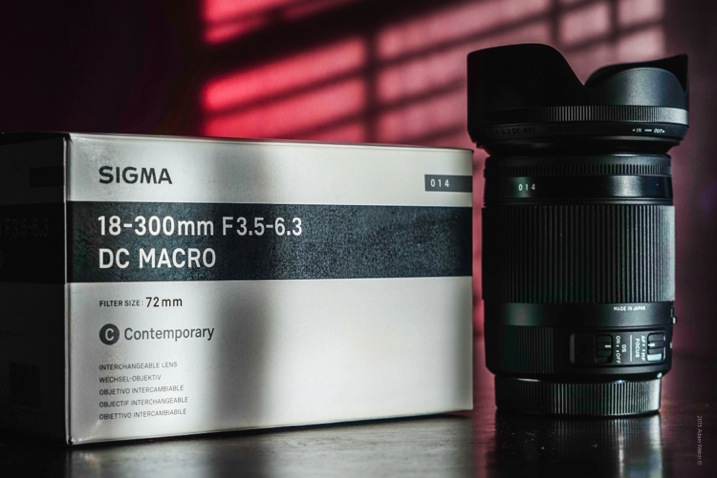
Enter the Sigma 18-300mm F3.5-6.3 DC Macro OS HSM C Lens
Lens 1

Now, take a mental breath after reading that title and then we’ll continue. Don’t let the name for this lens (which I will shorten to Sigma 18-300mm) trouble you, because we’ll talk more about all those letters and their meanings soon. Sigma has attempted to squeeze a lot of features, versatility, and performance into a lens that won’t break the bank. Let’s see if the good folks over at Sigma have succeeded.

The lengthy title for the Sigma 18-300mm is simply a road map so that you know exactly what the lens brings to the table.

  • The DC of course means that it is intended for digital camera bodies.
  • OS designates the lens is equipped with image stabilization technology.
  • HSM relays that the lens sports a hypersonic motor drive autofocusing mechanism.
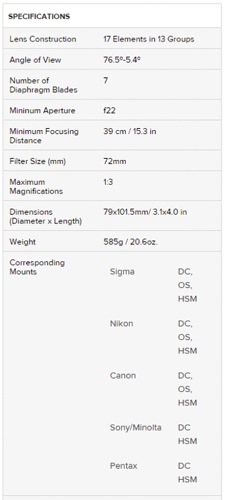
  • The macro designation means that it has a relatively close minimum focusing distance and is capable of producing macro images (1.0x or 1.1x magnification).
  • Lastly, C stands for indicated this lens is part of Sigma’s Contemporary series. This lens is designed to be mounted only to APS-c(cropped) sensor cameras.

Down to business…
Lens 4

Build Quality and Function

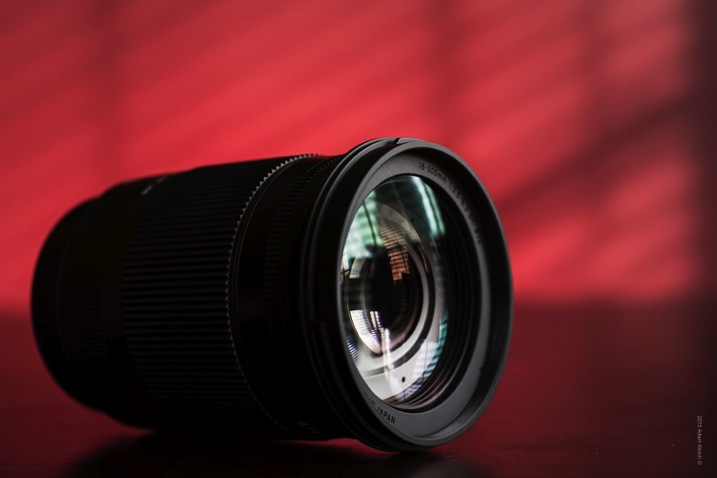
The lens arrived well packaged from Sigma. The optics were all clean and free of smudges and dust. First handling of the lens proved to be immediately impressive.
Lens Elements

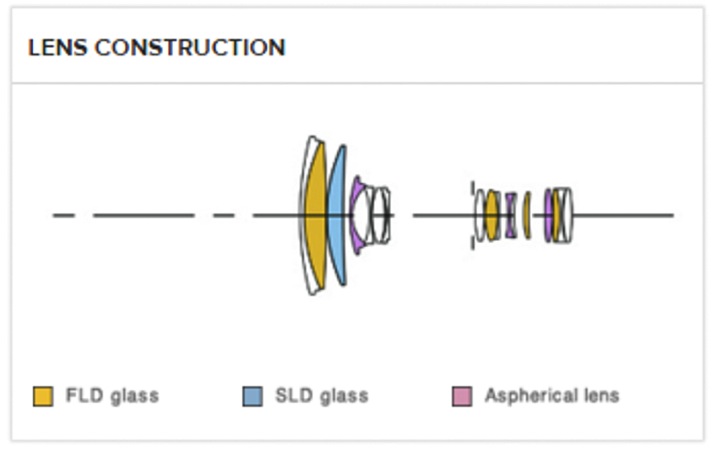
Specs

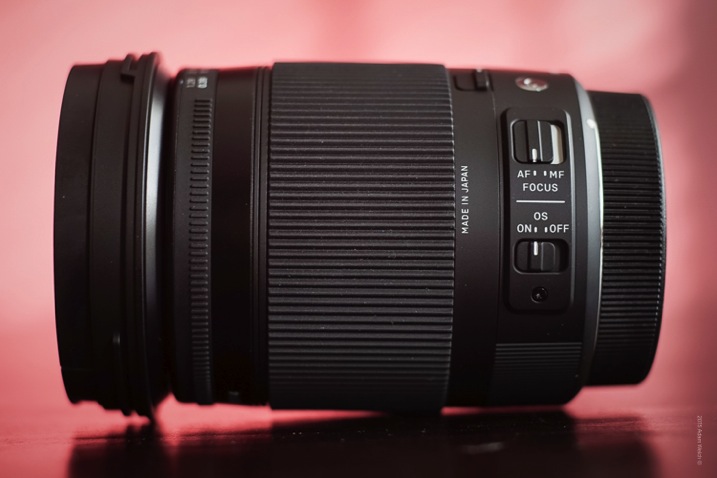
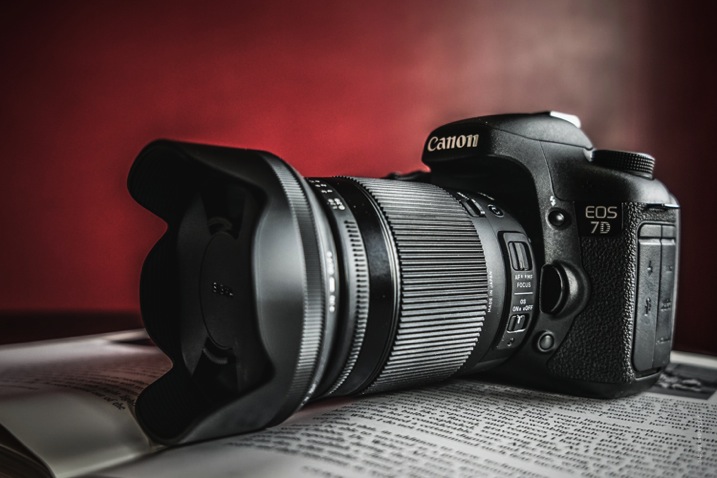
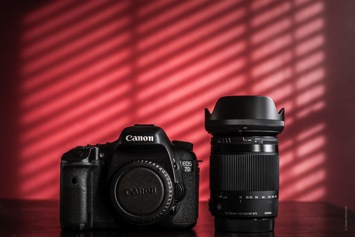
The lens felt very solid but in no way overly heavy. Both the focus and zoom rings are rubberized, and provide a suitable grip for cold or damp fingers. Everything is exceptionally tight and smooth. Some telephoto lenses of this type arrive a little too tight and require some use before the zoom ring operates easily, but the Sigma 18-300mm was just right out of the box. Autofocusing performed very well and was quite fast using my Canon 7D, but the image stabilization was not the best. It became virtually unnoticeable at longer focal lengths, so it remained off for the majority of the test images.

The overall body of the lens is finished with a very understated yet attractive matte black appearance, in case you love form as much as function. Included in the box is quality petal-type lens hood, which fits the lens perfectly and mounts in reverse for storage. Sigma also placed a small rubberized ring at the base of the hood which really helps in the on/off application. It’s a small detail but worth mentioning.

Speaking of details: The effort (or lack thereof) a manufacturer puts towards the little things is of great importance. Here are a few small points that stand out about the Sigma 18-300mm.

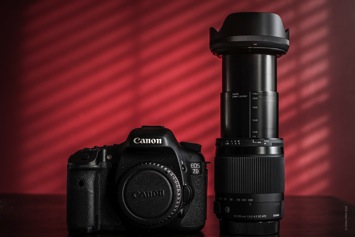
  • Zoom-Lock: The zoom-lock switch is a great feature for any zoom lens in my opinion, by preventing gravity from gradually extending the lens while carrying your camera on a strap.
  • Raised mounting indicators: Attaching your lens to your camera can be difficult in low light or if you’re in a hurry. Sigma has chosen to use a small white bead embedded into the lens body instead of merely paint. It makes lining up the lens much easier, and is longer lasting.
  • Lens Hood Indicators: In addition to the rubberized ring, the lens hood also has mounting markings to help mount the hood on the go or in low light.
Lens 3

Lens 9 Lens 10

Lens 8

Lens 12

Image Quality

Sharpness and Distortion

Test images showed that sharpness is acceptable/good across all apertures for a lens in this range, and likewise with contrast. Each of these images were shot at 18mm, at apertures ranging from f/3.5 to f/22. Maximum sharpness seemed to be achieved between f/8 and f/16.

F3 5

Shot at f/3.5

F5 6

Shot at f/5.6

F8

Shot at f/8

F16

Shot at f/16

F22

Shot at f/22

There is some moderate softening at the corners, and minor vignetting at 18mm, but it’s not overly distracting. Very minimal, if any, distortion was encountered even at the shortest focal length.

Wide

This is a scene shot at the shortest focal length of 18mm and at f/6.3.

For comparison, here are two images shot from the previous vantage point, after zooming to 300mm (shot at f/6.3).


300mm 1

300mm 2

Color

Color rendition is very good with the Sigma 18-300mm. Colors came through true to life, and quite crisp across all focal lengths. However, it had a significant amount of chromatic aberration which was quite apparent, and worsened towards the edges of the frame. Fortunately, it was easily removed with one click using Lightroom, so all is not lost.

Macro Use

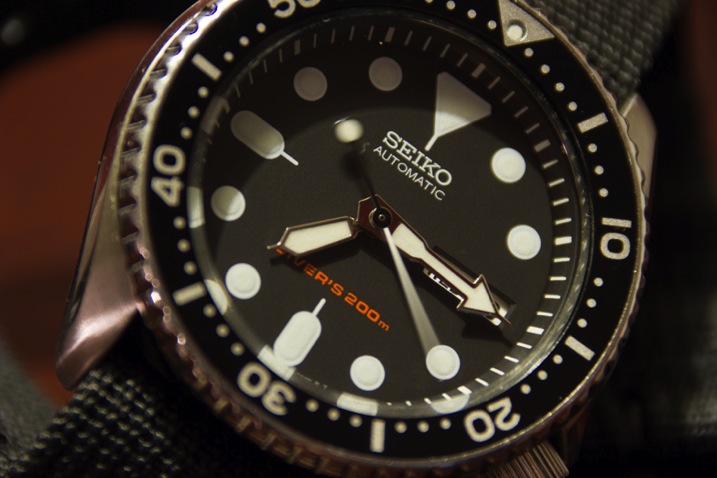
After-all, this lens bears the designation of a macro lens so let’s talk a little about how it truly performs as such. Dedicated macro lenses produce images with a magnification factor of around 1.0 or 1.1x (meaning the subject is life size on the camera sensor). The Sigma 18-300mm has a maximum magnification factor of 1.3x. Though it may not be considered a true macro lens, it performs astonishing well for a lens with such a large focal range.
Macro

Sigma lists the minimum focusing distance at around 15.3 inches (39cm), but in my tests focus was achieved even closer. You can really get up close and personal using this lens. In addition, there is an optional macro adapter (great build also) available for this lens which will further enhance its macro capabilities.
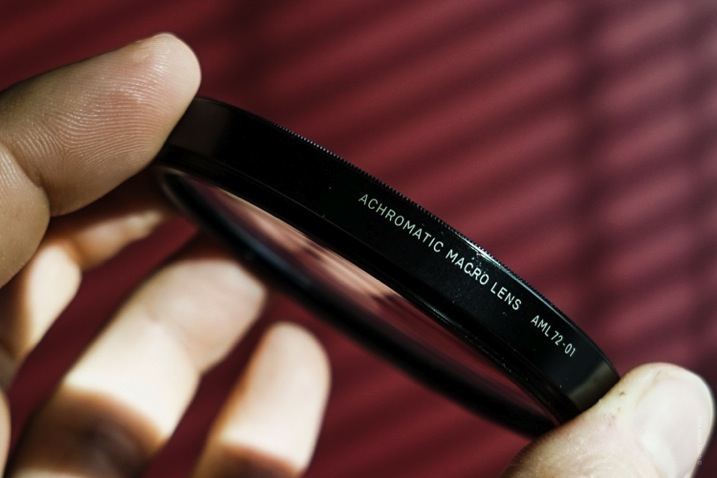
Macro Adapter

Extras

An interesting accessory available for this, and most Sigma glass, is a USB dock which can be used for tweaking the parameters of your particular lens. This could be of some use to the sports and wildlife crowd. Here is a description of the docking station provided by Sigma.

“The Sigma USB dock works in conjunction with Sigma Optimization Pro software in order to connect a photographer’s lens to their personal computer to update firmware, calibrate the lens and other customizations such as the focus parameter. For the Sports category, changes can be made to: Autofocus speed, focus limiters, manual focus override and optical stabilization functionality. Updating the firmware can be done via the internet. Sigma Photo Pro is available for Mac and PC computers.”

Summary

Overall, the Sigma 18-300mm lens does a fantastic job of combining high telephoto zoom capabilities with macro functionality. While not perfect, it performs well in many ways.

Here’s what you’ll probably like:

  • Great focal range for a multitude of shooting situations.
  • Low optical distortion.
  • Surprisingly acceptable macro performance.
  • Build quality is absolutely fantastic.
  • Attention to detail and usability is superb.
  • Good sharpness for a lens in this price range.
  • Fast autofocus.
  • Silky smooth operation of zoom and focusing rings.
  • Available USB Calibration Dock.

Lens 14

Here’s what you may not like:

  • Moderate but resolvable chromatic aberration.
  • Image stabilization performance is questionable.

The Sigma 18-300mm F3.5-6.3 DC Macro OS HSM C is a more than capable lens option for those where are seeking to combine the local focal range of a telephoto lens, with the close-up capabilities of a macro.

Does this lens offer the best of both worlds? No.

Does this lens bring you a little bit of both, while offering great image quality at an affordable price? Yes.

Sigma has produced a very capable lens option which will delight those who maintain realistic performance expectations from their gear. It is an impressive lens at a budget price. Give it a try!

Have you tried this lens or any other all-in-one? What are your thoughts?

googletag.cmd.push(function() {
tablet_slots.push( googletag.defineSlot( “/1005424/_dPSv4_tab-all-article-bottom_(300×250)”, [300, 250], “pb-ad-78623” ).addService( googletag.pubads() ) ); } );

googletag.cmd.push(function() {
mobile_slots.push( googletag.defineSlot( “/1005424/_dPSv4_mob-all-article-bottom_(300×250)”, [300, 250], “pb-ad-78158” ).addService( googletag.pubads() ) ); } );

The post Sigma 18-300mm F3.5-6.3 DC Macro Lens Review by Adam Welch appeared first on Digital Photography School.


Digital Photography School

 
Comments Off on Sigma 18-300mm F3.5-6.3 DC Macro Lens Review

Posted in Photography


Sigma Announces Protective Lens Made of Clear Glass Ceramic

16 Dec

Sigma has created an all-new protective filter, the Sigma Water Repellent (WR) Ceramic Protector, using Clear Glass Ceramic with water and oil repellent coating. This is the first filter to use such a material in its construction. It promises both lighter weight and higher strength than normal protective filters with minimal effects on transmittance and sharpness.

It will be available in common filter thread sizes between 67mm and 105mm. See the press release below for more info, or take a look at it on their website at: http://www.sigmaphoto.com/wr-ceramic/


Press Release:

SIGMA CORPORATION ANNOUNCES WORLD’S FIRST PROTECTIVE LENS MADE OF CLEAR GLASS CERAMIC

RONKONKOMA, NY — December 16, 2015 – Sigma Corporation of America, a leading DSLR lens and camera manufacturer, today announced the new Sigma Water Repellent (WR) Ceramic Protector, a lens filter that features new Clear Glass Ceramic material and provides enhanced protective qualities. Pricing and availability is not yet available.

This shock- and scratch-resistant Clear Glass Ceramic was developed specifically for Sigma in partnership with a glass manufacturer. Made with a special heat treatment that evenly precipitates microcrystalline spinel throughout the materials, the Clear Glass Ceramic is 10 times stronger than a conventional protective filter and three times the strength of a chemically strengthened filter. The lens protector also contains WR coating, which repels water, dust and oil, and allows fingerprints to be easily removed. This enhanced protection helps to preserve the lens and ensure long-term, top-notch image quality.

“The Sigma WR Ceramic Protector is the latest example of Sigma’s dedication to innovative and first-to-market photography equipment,” said Mark Amir-Hamzeh, president of Sigma Corporation of America. “The new Clear Glass Ceramic protector is the first of its kind and the strongest material used in the industry. It will enable photographers to safeguard their lenses, while maintaining the impressive sharpness offered by high-quality glass, like our Global Vision line of lenses.”  
Key features of the Ceramic Protector include:

  • Scratch-resistant – Sigma’s Clear Glass Ceramic offers a Vickers hardness number of 700HV. The strength of the Clear Glass Ceramic is much stronger than chemically strengthen glass and is; 10 times stronger than conventional filters
  • Thinner and lighter – This new protector is up to 50 percent thinner and is up to 30% lighter than previous Sigma filters
  • High transmittance – Sigma’s Clear Glass Ceramic offers very high transmittance, making it ideal for use as optical glass
  • Water- and oil-repellent coating – The water repellent coating reflects only 0.24 percent of visible light, thereby minimizing flare and ghosting. Its ability to repel both water and oil is also excellent, with water drops bouncing right off, and fingerprints easily to remove

This filter is offered in the most popular filter thread sizes, and is compatible with all Sigma lenses and other lenses that accept front filter threads that are 67mm-105mm diameters. Compatible lenses in Sigma’s Art line include: 35mm F1.4 DG HSM, 30mm F1.4 DC HSM, 18-35mm F1.8 DC HSM, 24-35mm F2 DG HSM, 24-105mm F4 DG OS HSM, 50mm F1.4 DG HSM, 24mm F1.4 DG HSM, 19mm F2.8 DN, 30mm F2.8 DN and 60mm F2.8 DN. Compatible lenses in the Sports line include the 120-300mm F2.8 DG OS HSM and 150-600mm F5-6.3 DG OS HSM. Compatible lenses in the Contemporary line include the 17-70mm F2.8-4.0 DC OS HSM, 18-200mm F3.5-6.3 DC OS HSM, 18-300mm F3.5-6.3 DC OS HSM and the 150-600mm F5-6.3 DG OS HSM. As with all of Sigma’s lenses, the filter is checked with Sigma’s own Modulation Transfer Function (MTF) measuring system, “A1,” in the company’s factory in Japan. 

For information about Sigma, go to www.sigmaphoto.com or follow the company on Twitter, Instagram and Facebook.

Articles: Digital Photography Review (dpreview.com)

 
Comments Off on Sigma Announces Protective Lens Made of Clear Glass Ceramic

Posted in Uncategorized


dPS Writer’s Favorite: Sigma 24-105mm F4 Lens

02 Dec
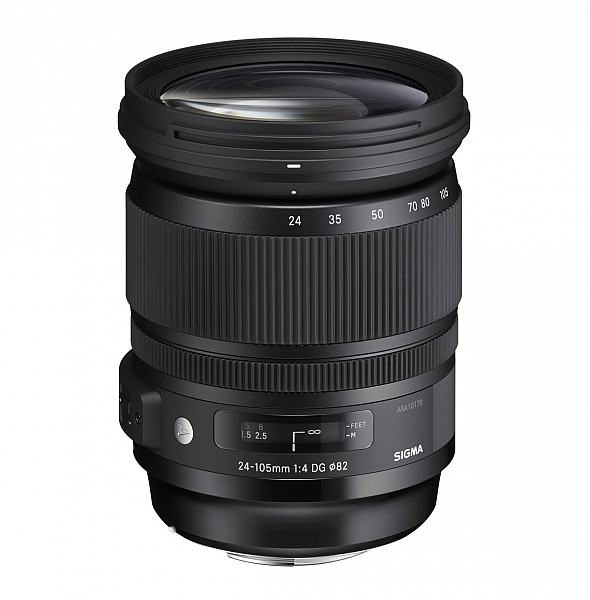
24-105mm-f4-dg-os-hsm-a-635-e73

Image: Sigma Photo

Perhaps you’ve heard of Sigma’s Art series of lenses? After years spent making relatively mediocre lenses, the Japanese manufacturer has stepped up their game to create some beautiful gems that outshine the lenses made by the camera companies themselves.

The 50mm f/1.4 and the 35mm f/1.4 were both on my list, but I seem to have ended up with the Sigma 24-105mm f/4 Art lens, and while my artistic conscience might try to persuade me of the superiority of prime lenses, it’s currently my favourite.

Zoom versus Prime Lenses

The prime lenses I like are big and heavy, because of the large maximum aperture. Assuming that my assistant carried them everywhere and could change them instantly, I might be less keen on the versatility of the Sigma. But that’s not the case, and often a zoom is the better choice. Zoom lenses used to be too much of a compromise. The Sigma 24-105mm lens compromises just enough, and delivers a lot. It’s a slow lens at f/4, but the optical stabilization is good, and the high ISO capabilities of current cameras means that I’ve never felt too limited by this. It’s certainly a compromise compared to a prime, but at f/8, I bet you couldn’t tell the difference. The bokeh for this zoom, necessarily a matter of personal taste, and not as amazing as some of the prime lenses, is good enough too.

Sigma 24-105mm lens

Bokeh at f/4, 105mm

But I want Nikon/Canon, I want the best…

Canon has an equivalent 24-105mm f/4 lens from their premium L-series. It’s a versatile lens, and I know several professional photographers who use it almost exclusively. I use Nikon, but I’ve seen comparisons that demonstrate that optically, the Sigma Art series lens is sharper. The Canon is weather-sealed though, which the Sigma is not. Nikon has a 24-120mm lens that isn’t as sharp as the Sigma either. If image quality is what you want most, the Sigma is the best among the three lenses. Of course, both Nikon and Canon make 24-70mm lenses that are sharper, though at the expense of the longer telephoto reach.

Sigma 24-105mm lens

We photographers love our lenses

Why choose the 24-105mm focal length over a 24-70mm?

Forgetting prime lenses, the main competition for my affections were the Nikon 24-70mm and the Tamron 24-70mm lenses. There’s also a Tokina 24-70mm available that I didn’t consider. I decided against the Nikon because it doesn’t have optical stabilization (OS). While the larger f/2.8 aperture is attractive, it doesn’t make as much difference in low light for static subjects as the OS on the Sigma. Moreover, the stabilization is useful for on-the-go filming too. The Tamron however, has the larger f/2.8 aperture and is also stabilized.

I chose the Sigma lens because of the longer reach. 70mm, for me, is not as flattering for headshot portraits as the 85-105mm focal lengths that the Sigma provides. I find I use the extra reach quite often. On the other end, 24mm seems to be wide enough for the majority of situations on a full-frame body. If I need a larger field of view, or shallower depth of field, I can often stitch multiple photos together.

Sigma 24-105mm lens

That 105mm short telephoto is useful

Space for a whinge

It’s not a perfect lens, and there are a few omissions that I’d like to have a moan about to help round out the My Favourite Lens angle. While the lens is sharp, it does have noticeable distortion and a fair bit of vignetting too, especially at larger apertures. This is an issue that I’m happy to accept because the RAW photo conversion software does a good job of correcting these flaws.

The bigger issue is the lack of weather sealing, which I’d have happily paid a bit more for. It makes you think twice when photographing in the rain or by the sea. The thoughts are usually, “I wonder if the lens will survive this?” and, “I wonder if I’ll buy the Nikon if it doesn’t?”. Showers aside, the lack of weather sealing does mean that the lens attracts more dust – it veritably sucks it up, and distributes it liberally amongst its inner optics, safe from my lens cleaning cloth. The build quality is good, but not as solid as the Canon L-series lens, for example, and after some abuse, the focal length numbers on mine wore off as they are not etched into the lens. Sigma were good about fixing this though.

Sigma 24-105mm lens

Distortion and Vignetting even At 62mm, f/8

Conclusion

I’ve tested a huge number of lenses, and also read pretty much most of reviews of the others, to keep up to date. I chose to buy the Sigma 24-105mm f/4 OS, and it lives on my camera pretty consistently. It’s photographed a range of genres from landscapes, to portraits, and fashion, and the image quality has been good.

As photographers, there’s a tendency to fuss over MTF charts and such like; but having the right focal length available immediately is far more important, and as for overall sharpness and rendering compared to primes, it’s usually only experienced photographers who, occasionally, may notice the difference.

DSC_2741

googletag.cmd.push(function() {
tablet_slots.push( googletag.defineSlot( “/1005424/_dPSv4_tab-all-article-bottom_(300×250)”, [300, 250], “pb-ad-78623” ).addService( googletag.pubads() ) ); } );

googletag.cmd.push(function() {
mobile_slots.push( googletag.defineSlot( “/1005424/_dPSv4_mob-all-article-bottom_(300×250)”, [300, 250], “pb-ad-78158” ).addService( googletag.pubads() ) ); } );

The post dPS Writer’s Favorite: Sigma 24-105mm F4 Lens by Ben Evans appeared first on Digital Photography School.


Digital Photography School
 
Comments Off on dPS Writer’s Favorite: Sigma 24-105mm F4 Lens

Posted in Photography


Sigma US goes public with Black Friday lens deals

21 Nov

Sigma is getting Black Friday started early this year, offering discounts on five of its lenses online now through Monday, November 30th including the 50mm F1.4 DG HSM Art. Savings range from $ 100 up to $ 300 off individual lenses – and considering the current results of our readers’ poll, a few of you may be interested. Read more

Articles: Digital Photography Review (dpreview.com)

 
Comments Off on Sigma US goes public with Black Friday lens deals

Posted in Uncategorized


Sunrise, sunset: Sigma 24-35mm F2 DG HSM Art gallery updated

02 Nov

Sunset is coming early in the day again, and while that marks the start of a grey season here, the beginning of fall makes for some glorious golden hours. Recently, Tech Editor Rishi Sanyal ventured out with the Sigma 24-35mm F2 Art for a sunset portrait session. Take a look at our expanded real-world samples. Read more

Articles: Digital Photography Review (dpreview.com)

 
Comments Off on Sunrise, sunset: Sigma 24-35mm F2 DG HSM Art gallery updated

Posted in Uncategorized


Sigma 35mm f/1.4 Art Lens Review

02 Sep

When it comes to off-brand (or third party) camera gear, do you feel a bit skeptical? I was in the same boat for my entire photography career, choosing to invest exclusively in Nikon gear when I was a Nikon shooter, then all Canon when I switched over for the Canon 5D Mark III. “You get what you pay for” is what all of my photography colleagues would tell me, and I was an avid believer until this past summer when I invested in my first ever off-brand camera lens: the Sigma 35mm f/1.4.

Dubbed Sigma’s true flagship lens, the 35mm f/1.4 debuted in 2012 as the very first addition to the Art category, in Sigma’s newly announced lens categories. This shiny prime lens entered a crowded market in which Canon, Nikon, and Sony all have competitive offers, but Sigma’s version comes in at a fraction of the price, which is one of its most attractive features. So in this case, does the adage, “you get what you pay for” truly apply?

Sigma 35mm f/1.4 lens review

Let me preface this article by stating that this is the very first 35mm prime lens that I’ve owned, so I cannot make true comparisons between Sigma’s lens and that of other manufacturers, but I took it through several test runs to see how it held up. These were my findings.

Main Features

Sigma’s 35mm fixed lens is equipped with a fast f/1.4 maximum, and f/16 minimum aperture. It has quiet, quick Hypersonic Motor (HSM) focusing with manual override and a 0.3m (one foot) minimum focal distance – no image stabilization is included. The lens has mounts for all major DSLR camera types including Canon, Nikon, Sony, and Pentax, and it works on both full frame and APS-C (crop sensor) cameras. Out of the box, the lens comes with front and rear caps, a lens hood and a warranty and instruction guide, all packaged within a nicely padded, zippered nylon case. Brand new, this lens retails for $ 899, significantly less than other versions made by Canon and Nikon, which run upwards of $ 1,300.

Pros

Fast, accurate autofocusing speed

On the technical side of things, this lens performed impressively well. Even when shooting at f/1.4, all images produced by this lens were super sharp. Autofocusing speed was pretty fast and accurate, even when attempting to use this lens in an action setting like the concert below.

Sigma 35mm f/1.4 lens review

Little to no visible distortion

After spending some time with the Canon 24mm f/2.8 prime lens that produces quite a bit of barrel distortion, I was pleasantly surprised to find that the Sigma 35mm has pretty much no visible distortion. Although bear in mind that lens distortion can be easily fixed in post production using Photoshop’s lens Correction filter (or Lightroom’s Lens Correction panel).

Sigma 35mm f/1.4 lens review

Cons

Mostly plastic build

Perhaps the first thing that struck me about this lens when I first interacted with it what its sleek, yet mostly plastic build. Compared to Canon and Nikon versions that are made of a mix of metal and plastic, this mostly plastic Sigma lens felt like it may not hold up very well in the long run. The Sigma seems to live up to its Art lens designation with the feeling that this lens would hold up better being used for artistic purposes, more so than run and gun type of shooting.

Larger and heavier than Canon/Nikon equivalent

Despite being made of mostly plastic, the Sigma also feels pretty heavy (23.5 oz./ 665g), and it is indeed slightly heavier than its Nikon (21.2 oz / 600g) and Canon (20.5 oz. / 580g) equivalents.

Sigma 35mm f/1.4 lens review

Overall Take

While I loved capturing the world through a sharp 35mm prime lens, it was difficult to get over this lens’ size. The 35mm is known as a classic lens in photojournalism and street photography, and yet due to its size and plastic build, it was questionable if the Sigma 35mm f/1.4 could hold up well over time, especially in on-the-go style photography. As a result, I have to agree with my photography colleagues that you’d get what you pay for over time.

Investing in the more expensive Canon 35mm f/1.4 would be worth the extra expense ($ 899 for the Sigma, $ 1479 for the Canon) just because the L lens designation ensures a higher quality, more durable lens. As an additional option, the slower Canon 35mm f/2 comes with image stabilization and is priced lower at $ 599.99, so that may be a better budget option. And a final, even cheaper alternative might be to add 5mm to the lens focal length by going for the Canon 40mm f/2.8 pancake lens, the smallest and cheapest ($ 149 USD) of them all.

Basically, splurge for the Sigma 35mm f/1.4 and enjoy comparable, superior optics to the Canon and Nikon equivalents, but what you save in money might cost you later when testing the long-term durability of this lens.

Sigma 35mm f/1.4 lens review

googletag.cmd.push(function() {
tablet_slots.push( googletag.defineSlot( “/1005424/_dPSv4_tab-all-article-bottom_(300×250)”, [300, 250], “pb-ad-78623” ).addService( googletag.pubads() ) ); } );

googletag.cmd.push(function() {
mobile_slots.push( googletag.defineSlot( “/1005424/_dPSv4_mob-all-article-bottom_(300×250)”, [300, 250], “pb-ad-78158” ).addService( googletag.pubads() ) ); } );

The post Sigma 35mm f/1.4 Art Lens Review by Suzi Pratt appeared first on Digital Photography School.


Digital Photography School
 
Comments Off on Sigma 35mm f/1.4 Art Lens Review

Posted in Photography


Sigma 24-35mm F2 DG HSM A real-world sample gallery posted

22 Jul

There’s been a great deal of interest in the Sigma 24-35mm F2 Art lens since its launch last month. And who can blame the internet for getting excited over the world’s fastest full-frame zoom? With all of the appeal and high-end touches offered by Sigma’s ‘Art’ series, the 24-35mm just begs to be taken out for a spin – and DPReview’s Deputy Editor Rishi Sanyal did just that. See the gallery

Articles: Digital Photography Review (dpreview.com)

 
Comments Off on Sigma 24-35mm F2 DG HSM A real-world sample gallery posted

Posted in Uncategorized


Tamron and Sigma offer firmware update service for Canon EOS 5DS/5DS R live view issues

26 Jun

Tamron and Sigma have both announced updates for their lenses to provide full compatibility with Canon’s EOS 5DS and 5DS R models. Both firmware updates refer to behavior in live view shooting, something that has also caused problems in the Rebel T6s and T6i. This suggests that Canon’s latest models feature a change in the way they drive lenses. Read more

Articles: Digital Photography Review (dpreview.com)

 
Comments Off on Tamron and Sigma offer firmware update service for Canon EOS 5DS/5DS R live view issues

Posted in Uncategorized