It’s the season for pre-holiday financial earnings reports, and Fujifilm’s latest numbers tell a familiar story – digital camera sales are down on the whole, with steady sales of higher-end products. Despite that, Fuji’s imaging solutions division saw an increase in operating income, up to 12.4 billion yen in the first half of the financial year, marking a 2.7x improvement year-on-year. Read more
Tag: Show
-
Canon’s Q3 financial results show increased profit, decline in ILC sales volume
Canon’s Imaging Systems business has reported its third quarter sales fell by ¥26.5bn ($ 220m), compared to the same time last year. The company blamed a decline in worldwide demand for its interchangeable lens cameras ‘due to market shrinkage,’ with unit sales down 17% year-on-year, despite sales increases in Japan and Europe. Read more
-
Nameless Paints: Cleverly Coded Tubes Show Color Composition
[ By WebUrbanist in Design & Products & Packaging. ]
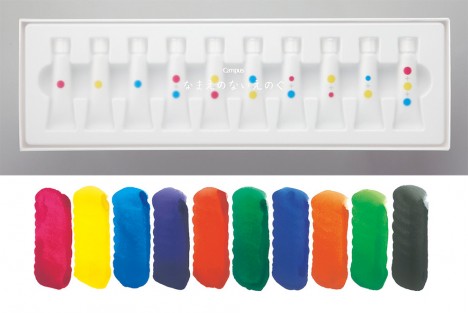
Instead of names or swatches, this series of minimalist paints comes in tubes that show off constituent colors that double as lessons about how complex hues and shades are created.

The nameless tubes are intended to eschew the use of words altogether and thus avoid existing associations, representing contents instead as a combination of three primary colors (cyan, yellow and magenta) with dots indicating relative amounts. The effect simultaneously divorces the product from names and looks in favor of a more abstract representation scheme that recalls unintuitive systems like binary.
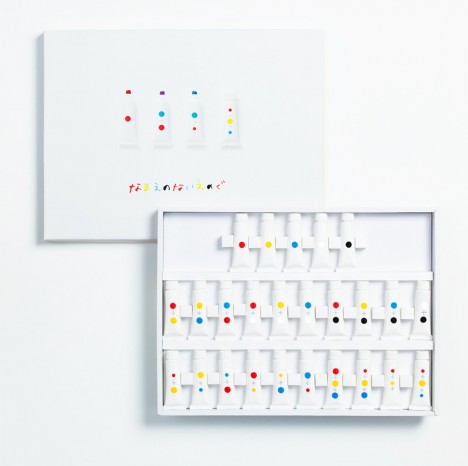
These 2012 Kokuyo Design Awards-winning visual labels hint at contents and teach kids how to make their own mixtures. The paints themselves will be on sale later this year.
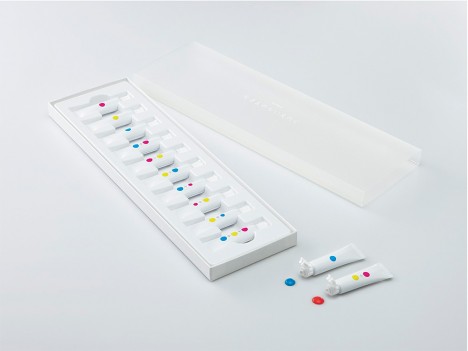
“By not assigning names to the colors we want to expand the definition of what a color can be, and the various shades they can create by mixing them” says creator Yusuke Imai, who made these with design partner Ayami Moteki (via Colossal and Spoon & Tamago).
Want More? Click for Great Related Content on WebUrbanist:
One-Handed, Color-Coded First Aid Kit for Fast & Easy Use
If any design should be simple and intuitive, surely it would be an emergency medical kit – something you make lack time, treatment expertise or even a …
Click Here to Read More »»
Color-Coded Cars: Time-Collapse Film Reorders Rush Hour
There is no computer-generated imagery behind this surreal-seeming scenography, but rather a skillful remixing of reality to sort actual automobiles by color. …
Click Here to Read More »»
Wild Wallpaper: Interactive Decor You Can Rip & Color
Hanging wallpaper is made much more fun when you get to paint and peel it, revealing intricate geometric patterns that won’t be found on any other wall.
Click Here to Read More »»


[ By WebUrbanist in Design & Products & Packaging. ]
[ WebUrbanist | Archives | Galleries | Privacy | TOS ]
-
Wayfinding in Subways: 3D Blueprints Show NYC Tunnel Systems
[ By WebUrbanist in Architecture & Cities & Urbanism. ]
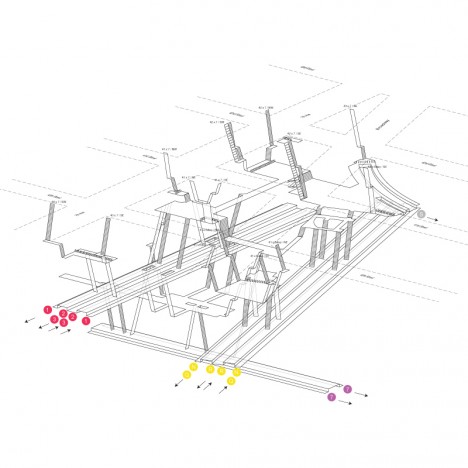
Inspired by detailed three-dimensional maps of Hong Kong subway stations, a New York artist has painstakingly documented and rendered a gorgeous series of helpful underground diagrams.
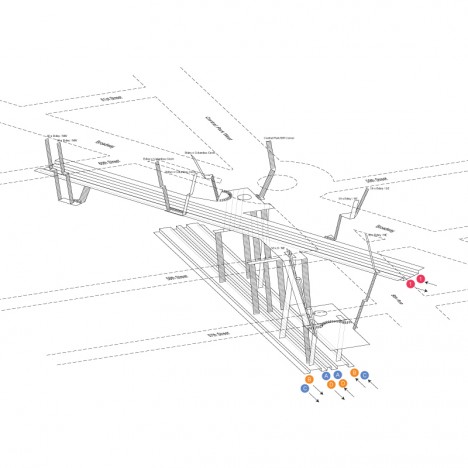
Exiting a subway network can be a disorienting experience. While stair signage and sidewalk compasses can help, anyone navigating based on landmarks or other surface features is lost. Project Subway NYC by Candy Chan is a step in the right direction. Using pen, paper and a camera, she meticulously recorded directions and relative positions of tracks and lines, referring to Google and MTA resources as a baseline.
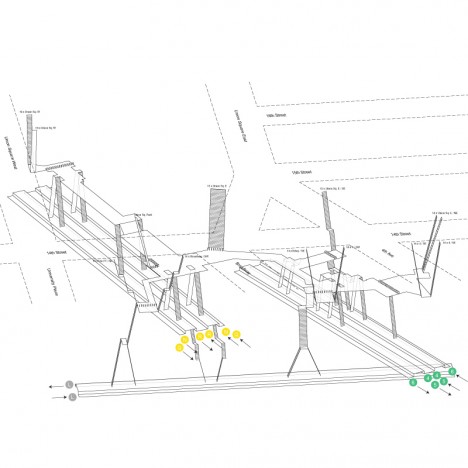
She then took the results into AutoCAD, verified those drawings in person, and proceeded to model and render the results using Rhino, Adobe Illustrator and Photoshop to produce 3D maps. Her explorations have helped her identify pain points for navigating these multilevel stations.
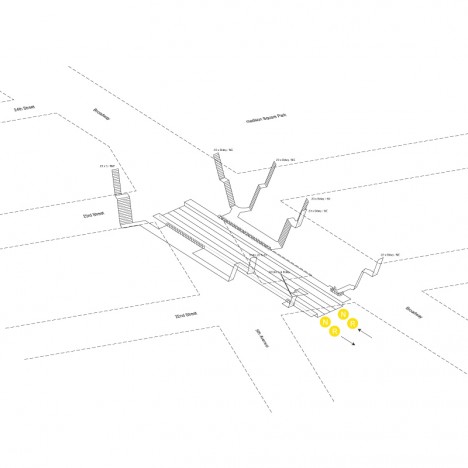
From CityLab: “The first batch includes five stops along Broadway: Columbus Circle, Times Square, Herald Square, Madison Square, and Union Square. But Chan hopes to do more, in Manhattan as well as in the outer boroughs. Since the project just launched two weeks ago, she’s gauging people’s reactions to decide which stations to explore next.”
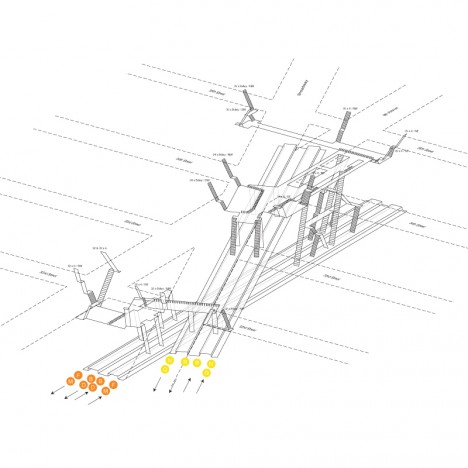
Still, 3D maps may not in themselves be a solution – murals, screens, signage or other indicators tied to visual landmarks from the world above would be a welcome addition for those who cannot read English or simply navigate using different means and methods.
Want More? Click for Great Related Content on WebUrbanist:

Stealth Style: Navigate Subways with a Map-Backed Necktie
Putting loose ends to good use, this clever piece of street-smart apparel takes advantage of the usually-hidden flip side of your standard-shaped men’s …
Click Here to Read More »»
6 Abandoned Railroads, Subways, Trains & Transit Stations
The age of the railroad may be over, but the marks of these powerful transport systems are evident everywhere you go – as well as abandoned train and subway …
Click Here to Read More »»

Future of Wayfinding: Augmented Reality for Urban Bicyclists
Using augmented reality highlights, hints and cues to guide bikers through complex city paths and streets, this conceptual system addresses issues of …
Click Here to Read More »»
[ By WebUrbanist in Architecture & Cities & Urbanism. ]
[ WebUrbanist | Archives | Galleries | Privacy | TOS ]
-
Submit your photos to Feature Shoot’s ‘Vertical Living’ group show for your chance to be displayed at PIX
Feature Shoot is accepting submissions for its latest group show, and winners will have their work displayed at PIX 2015 – our interactive photo expo. The show centers on themes of ‘vertical living,’ and will be curated by Feature Shoot Editor-in-Chief Alison Zavos. Read more
-
Show off: Sony Cyber-shot RX10 II slow-motion and 4K video samples
The Sony Cyber-shot RX10 II offers some impressive video capture capabilities including the option to record in 4K. And like the RX100 IV, the RX10 II can capture slow motion video at 240, 480 or 960fps, the latter of which gives the equivalent of 40x super slow motion. Read more
-
6 Tips on How to do Horse Show Photography for Parents
The sport of horse riding and showing can be very rewarding and beneficial to a young child. However, capturing those memories to print and share with family and friends can be a challenge for parents. Basic horse knowledge is helpful not only in keeping your child and their horse safe, but others around them as well. The following are a few dos and don’ts to get you started successfully, and safely, photographing your child at horse shows.
#1 Avoid the use of flash
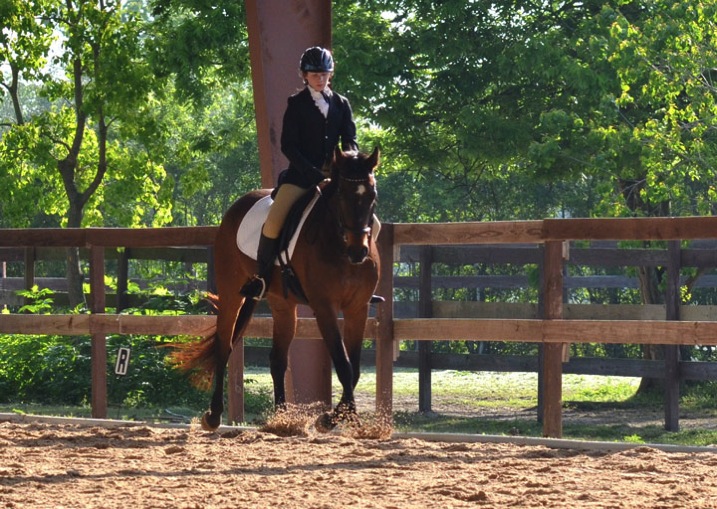
Camera flashes from the audience during rodeos and exhibitions are common, and for the most part those horses are accustomed to many distractions. However that may not be true for the horse your child is riding. An experienced horse with an inexperienced or nervous rider, at an off-property show (and sometimes the excitement of a show at their home barn) may react differently from their usual calm, sensible self. A covered arena can be challenging in terms of lighting and on-camera flashes won’t effectively reach the far end. If they are riding in the morning or late afternoon one side of the arena should be sunny. Wait until the horse and rider are in the sunlit area before capturing the moment. Obviously, this will cut down on the number of images taken, but they should be sharper and brighter, and worth the wait.
#2 Make yourself visible to the horses
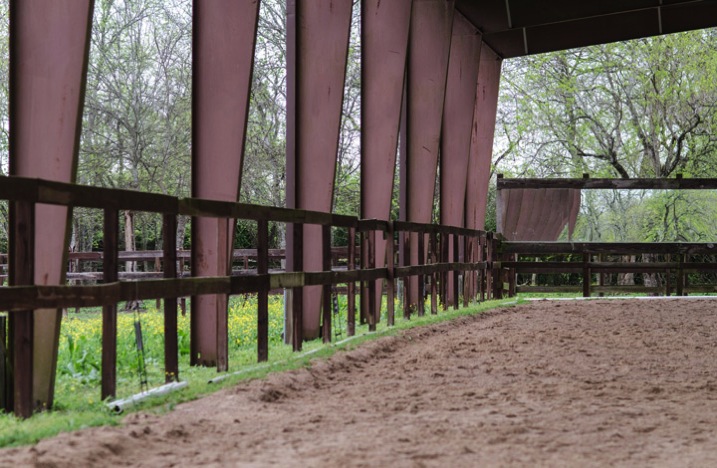
Do not hide behind a fence post, arena support, fence, etc. Wide arena supports can be tempting to steady yourself, but this is essentially playing peek-a-boo with a half-ton animal (that has a mentality of a young child) which your son/daughter is sitting on. Horses notice change and if an object or person has moved they may look for it; taking their attention away from the rider. In addition to being noted as a comment or error on the rider’s test, this could also create a dangerous situation if your child’s horse is a bit on the nervous side. Stand or sit out in the open – let them see you, and stay there until the test is complete. Standing on a lower step of a mounting block, outside the arena, will get your camera higher than the fence. But, position yourself during the time riders are entering and exiting the arena, and remain there for the duration of the ride.
#3 Shoot hand held without a tripod or monopod
Do not use a tripod or monopod. Depending upon the type and location of the event there may be several horses, riders and their trainers, waiting to enter or exit the arena, return to stalls, etc. Extended tripod legs can be a tripping hazard for people, and a scary thing for horses. Fence railings, tables and tucking your arms into your body are good solution to stabilize your camera.
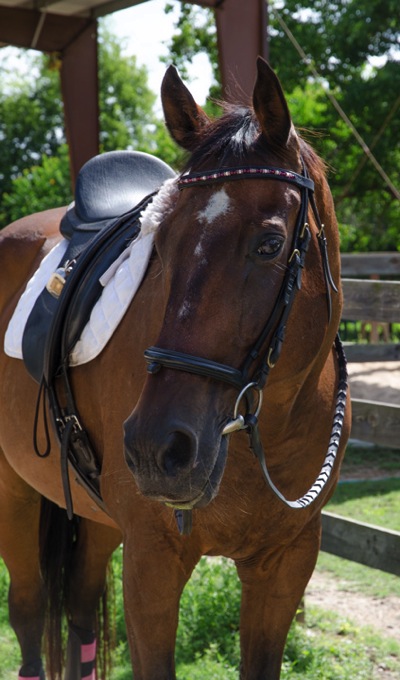
Besides, most tests are over in a few minutes, so foregoing that extra gear will allow you to quickly rejoin your child. Larger shows often hire official show photographers who will take pictures inside the main arena (from a vantage point different from spectators) that you can purchase later. Additionally, if you are using a tripod or monopod you may be viewed as a professional (whether that is the case or not) by show officials who may ask that you refrain from taking any pictures if they feel you are in competition with the official photographer.
#4 Use a fast prime lens
DO buy, rent, or borrow the fastest prime lens you can – 50mm or 85mm preferred (keeps the horse’s head in proportion). A longer lens (85mm) also keeps your camera out of everyone’s personal space and avoids any possible flight response in the horse. There are many bomb-proof horses for young riders who will absolutely not react to anything (near or far), but you don’t want to test that out – especially with your child holding the reins or sitting on top of all that power.
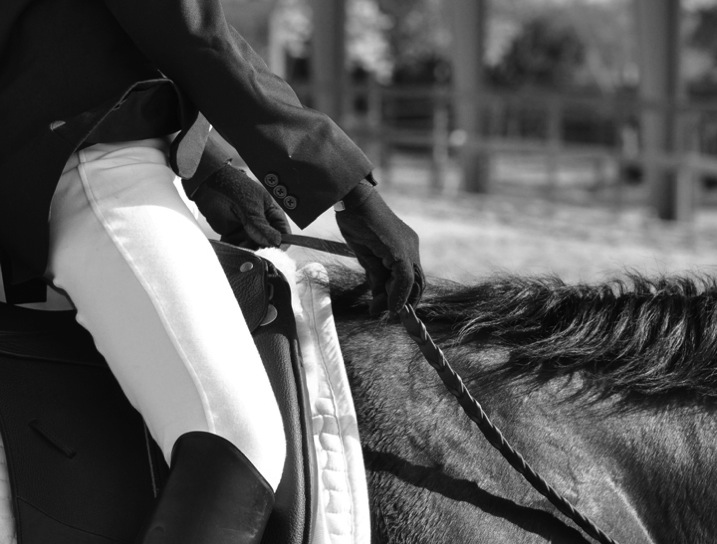
A fixed focal length lens also means you won’t be able to adequately shoot across a large arena. Riding tests often have the horse and rider cover the entire arena, so capture your child when they are closer to you; details such as the rider’s hands, legs, and boots produce great images too.
#5 Know the routine your child will be doing
DO learn the tests your child is riding. Tests in both English and Western disciplines require specific movements, to be performed at certain places in the arena. Being familiar with the tests will allow you to anticipate the next movement and be ready to shoot, especially when using a fixed focal length lens. Some movements are photographically more appealing than others, but simply ensuring that all four legs of the horse are visible, arena supports are not coming out of the rider’s head, and the focus is centered on the rider’s or the horse’s eyes, will improve your images. Test movement patterns can usually be found on the internet (In the states, the United States Equestrian Federation website is a good starting place for all disciplines).
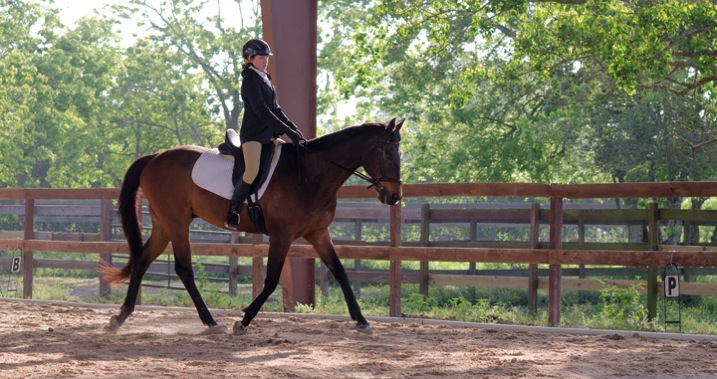
#6 Take details shots outside the show ring
Do shoot the details outside of the show ring; the relationship between horse and rider, grooming/tacking up, show clothes, friends, bridle, stalls, etc., – all those moments leading up to and after riding the actual test.
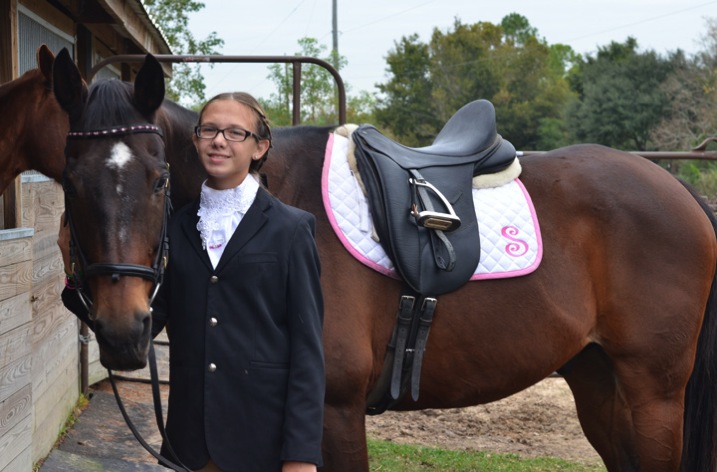
Photographing activities of the entire day completes the horse show story, which the show’s official photographers do not usually cover. Using a 50mm or 85mm lens captures the action without being too close (not adding to a rider’s show nerves) and produces casual, natural photographs. Older, more experienced riders, often assist the younger riders with tacking up and grooming for shows (among their many other duties that day) held at their home barn. An experienced rider can be a valuable asset on show day and may already have an established relationship with your child.
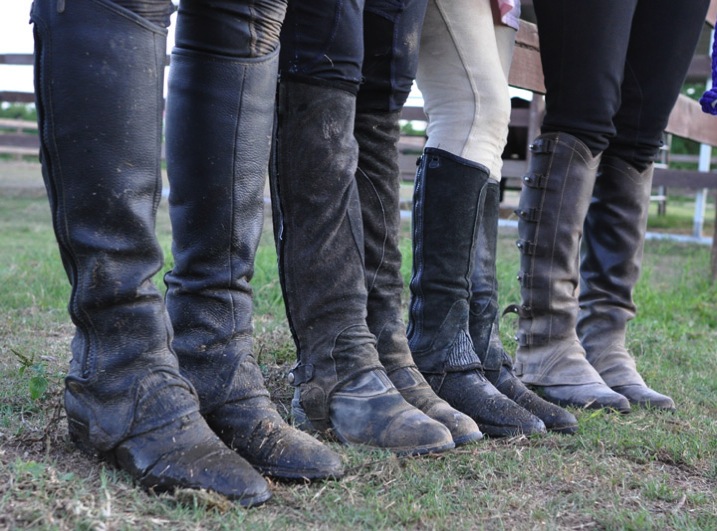
Horse show photography can be exhausting, dirty, and a continuous learning opportunity, but can also be an amazing experience. Dress comfortably, avoiding open toed shoes, and approach the day as an adventure that you and your child will remember forever.
googletag.cmd.push(function() {
tablet_slots.push( googletag.defineSlot( “/1005424/_dPSv4_tab-all-article-bottom_(300×250)”, [300, 250], “pb-ad-78623” ).addService( googletag.pubads() ) ); } );googletag.cmd.push(function() {
mobile_slots.push( googletag.defineSlot( “/1005424/_dPSv4_mob-all-article-bottom_(300×250)”, [300, 250], “pb-ad-78158” ).addService( googletag.pubads() ) ); } );The post 6 Tips on How to do Horse Show Photography for Parents by Sherry Bowman appeared first on Digital Photography School.
-
Linnaeus Tripe photographs of 1850s Burma and India on show in New York and London
An exhibition of photographs taken by Captain Linnaeus Tripe during a tour of India and Burma is on show in The Metropolitan Museum in New York, and will then move to London’s Victoria and Albert Museum. The collection of 60 images made on paper negatives display historic places, buildings, geology and the infrastructure of parts of the two countries, and were in some cases the first photographs ever to be taken of these sites. Read more
-
Sim TV: Interactive 3D Models of Television Show Floor Plans
[ By WebUrbanist in Design & Fixtures & Interiors. ]

Be the show drama or comedy, the scenes set by designers for television programs tend to become as familiar as the characters being acted and the stories they tell – with these interactive models from HomeByMe, you can take a step back and see some famous and classic sets from a new perspective. As a bonus: you can also click to download any view as a static image, too, or check out some of other TV home plans hand-drawn in 2D – meanwhile, start by clicking on the images below to spin them around.

First on the list: Dexter‘s sleek Miami loft full of whites, blacks and grays but largely devoid of color – a perfect home for a calculated killer trying to fit in yet finding it hard to show (or even have) emotion. You can even see his closet where he keeps, well, never you mind.

On a lighter note, this apartment was home to half the cast of Friends, Rachel and Monica mostly but with some rotation as well (no pun intended). Spin the model to see their bedrooms, bathroom, living room, kitchen and deck from different angles.

On the set of How I Met Your Mother has some added elements of seasonal decor, including a Christmas tree as well as some figures of the cast sprinkled in for scale and perspective.

The Big Bang Theory features a surprisingly odd-shaped dwelling when seen from a distance – perhaps not as obvious in the show itself, the floor plan is full of strange intersections, extraneous spaces and odd angles, not too unlike the minds of its inhabitants.
Want More? Click for Great Related Content on WebUrbanist:
As Seen on TV: Floor Plans from Famous Television Series
A talented cast, backed by brilliant directors and writers, makes you feel like part of the action – not just through the actors telling a story. But spaces …
Click Here to Read More »»
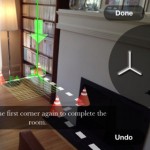
Magic Plan App Makes Amazing Automatic Floor Plans
A high-tech new app can create floor plans of any building from a series of iPhone pictures, letting you easily envision your living or working space.
Click Here to Read More »»
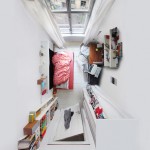
Interior Aerial Photos: Room Portraits Show Personal Stories
Day in and day out we see the same rooms in the same ways. But what if you could get a unique new view on your home, office, school or favorite coffee shop … …
Click Here to Read More »»
[ By WebUrbanist in Design & Fixtures & Interiors. ]
[ WebUrbanist | Archives | Galleries | Privacy | TOS ]