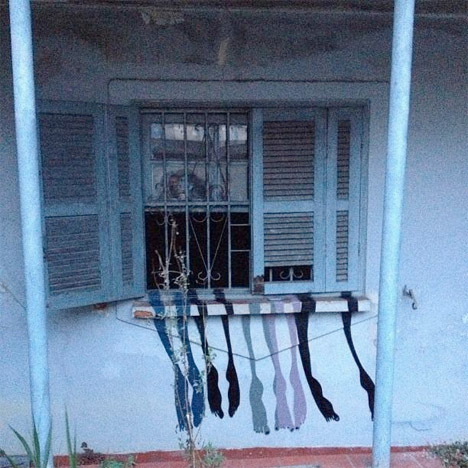
Tag: Shadows

  • Out of the shadows: Aaron Draper discusses ‘Underexposed’

    We introduced Aaron Draper’s project ‘Underexposed’ a little while back. In case you missed it, Draper has made a project of taking stylized portraits of individuals experiencing homelessness, aiming to help others literally see them in a new light. Filmmaker Eric Becker sat down with him at PIX 2015 to talk in depth about the project – how it came about, what the critical reaction has been to it and how Draper earns the trust of his subjects. Find out how the project came together.

    Articles: Digital Photography Review (dpreview.com)

  • Weekly Photography Challenge – Shadows

    To have a strong shadow you must have a hard light source, one that is small and harsh. That includes:

    • Direct sunlight
    • A spotlight
    • A bright flashlight
    • Streetlights

    Have a look on an overcast day – you cannot see your own shadow.

    Oiluj Samall Zeid

    By Oiluj Samall Zeid

    Weekly Photography Challenge – Shadows

    This week it’s your job to find and photography some shadows (like these). Keep in mind what a good shadow photograph is:

    • Shows the shape of something easily identifiable
    • Dramatic
    • Graphic
    • About shapes and form
    • Often found late in the day or early morning when the sun is low and the shadows are longer

    On the other side of the coin also consider what is not a shadow:

    • A silhouette
    • A reflection
    Hernán Piñera

    By Hernán Piñera

    The image above is a silhouette not a shadow. The light is coming from behind the subject and while there is a shadow the outline of the subject is the actual person not a shadow. This is the key difference.

    Stefano Corso

    By Stefano Corso

    In the image above the outlines are reflections, not shadows.

    Be clear on the difference between the three when you head out to shoot your shadows like these:

    Marina Del Castell

    By Marina del Castell

    TumblingRun

    By TumblingRun

    Loren Kerns

    By Loren Kerns

    Shadow selfies work great sometimes too. Watch for them as you go about your day:

    KimManleyOrt

    By KimManleyOrt

    Todd Lappin

    By Todd Lappin

    Hernán Piñera

    By Hernán Piñera

    John Sonderman

    By John Sonderman

    Scott Schiller

    By Scott Schiller

    Ian Sane

    By Ian Sane

    Share your images below:

    Simply upload your shot into the comment field (look for the little camera icon in the Disqus comments section) and they’ll get embedded for us all to see or if you’d prefer upload them to your favourite photo sharing site and leave the link to them. Show me your best images in this week’s challenge. Sometimes it takes a while for an image to appear so be patient and try not to post the same image twice.

    Stefano Corso

    By Stefano Corso

    Kumar's Edit

    By Kumar’s Edit

    Evelyn Berg

    By Evelyn Berg

    Ruben Steeman

    By Ruben Steeman

    googletag.cmd.push(function() {
    tablet_slots.push( googletag.defineSlot( “/1005424/_dPSv4_tab-all-article-bottom_(300×250)”, [300, 250], “pb-ad-78623” ).addService( googletag.pubads() ) ); } );

    googletag.cmd.push(function() {
    mobile_slots.push( googletag.defineSlot( “/1005424/_dPSv4_mob-all-article-bottom_(300×250)”, [300, 250], “pb-ad-78158” ).addService( googletag.pubads() ) ); } );

    The post Weekly Photography Challenge – Shadows by Darlene Hildebrandt appeared first on Digital Photography School.


    Digital Photography School

  • Weekly Photography Challenge – Shadows

    Early I shared an assortment of shadowy images. I love playing with light and photographing shadows is a great way to help you learn to see light, and direction of light. Here are a few more examples:

    Mgstanton

    By mgstanton

    Life Pilgrim

    By Life Pilgrim

    Daniela Hartmann

    By Daniela Hartmann

    This week’s photography challenge is all about the shadows. So head out and look for some light that creates interesting shadows. For a shadow image to work well you need a couple of things:

    1. A hard light course like direct sun. You cannot find good shadows on an overcast or cloudy day.
    2. Light that skims the surface like the late evening or dusk kind. Look for the long shadows at the end of the day (or first thing in the morning) they will add more drama to your images.
    3. An interesting and well defined subject. For a shadow to be interesting the viewer needs to be able to identify and connect with the object producing the shadow, even if the object isn’t in the photo itself. Some things that work particularly well are trees, bicycles, people, a fence, etc.

    Let’s see a few more examples that are well done:

    Michael

    By Michael

    Angelo Domini

    By Angelo Domini

    Harris Hui

    By Harris Hui

    Broo_am (Andy B)

    By Broo_am (Andy B)

    Seema Krishnakumar

    By Seema Krishnakumar

    Grozz

    By Grozz

    Camil Tulcan

    By Camil Tulcan

    Mark Anderson

    By Mark Anderson

    David Rodriguez Martin

    By David Rodriguez Martin

    Hapal

    By hapal

    Magdalena Roeseler

    By Magdalena Roeseler

    You can see by the images above that even tiny things like a seed can produce a great shadow. Find some ordinary household objects, put them in the sun, and see what the light does to the shadow. Try rotating it or moving around it.

    Another idea is to do a self portrait using your own shadow. See how creative you can get with that. Throw your shadow on a wall, do a crazy pose, or get your camera in the shadow too. Mix it up, let’s see what you got! Humor is good too!

    Dustin Diaz

    By Dustin Diaz

    Gian?merz

    By gian?merz

    Claudio Cicali

    By Claudio Cicali

    Volodymyr Pavlyuk

    By Volodymyr Pavlyuk

    BMiz

    By BMiz

    Sherwood411

    By Sherwood411

    Share your images of shadows

    Simply upload your shot into the comment field (look for the little camera icon in the Disqus comments section as pictured below) and they’ll get embedded for us all to see or if you’d prefer upload them to your favourite photo sharing site and leave the link to them. Show me your best images in this week’s challenge.


    The post Weekly Photography Challenge – Shadows by Darlene Hildebrandt appeared first on Digital Photography School.


    Digital Photography School

  • Book of Shadows: 2D Shape Cutouts Cast Silhouettes on Pages

    [ By WebUrbanist in Design & Products & Packaging. ]

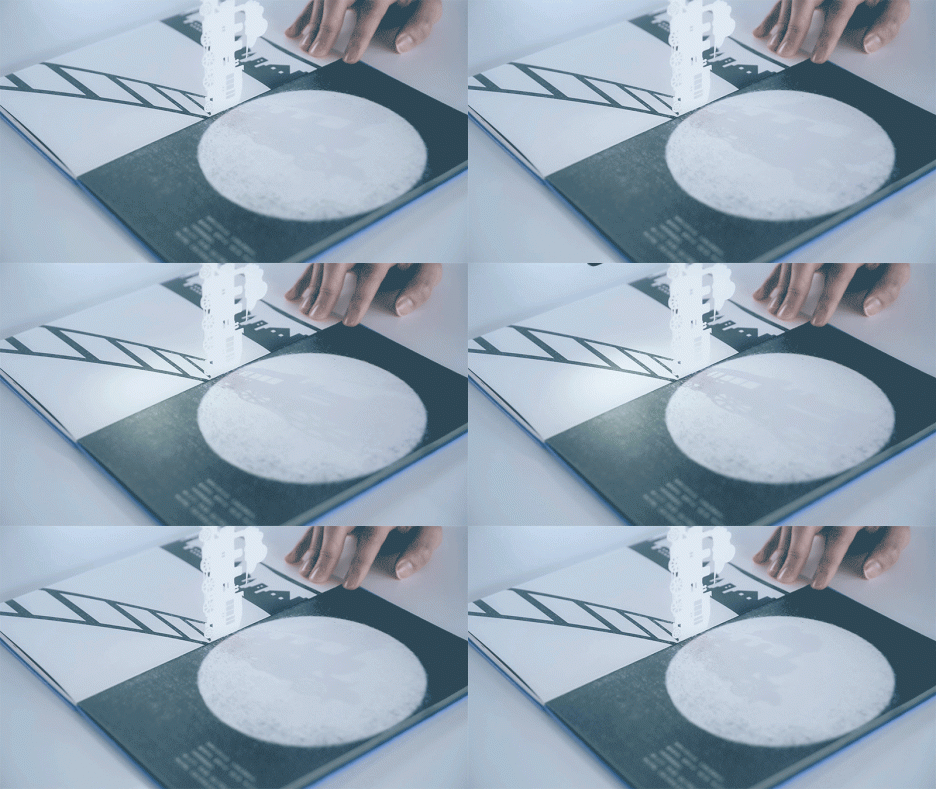
    motion train animated example

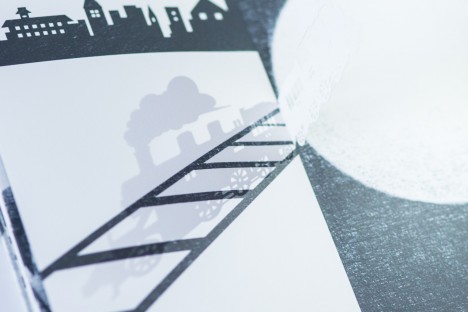
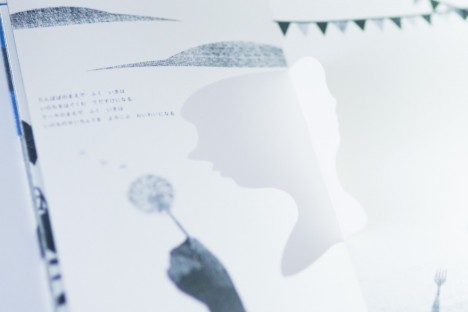
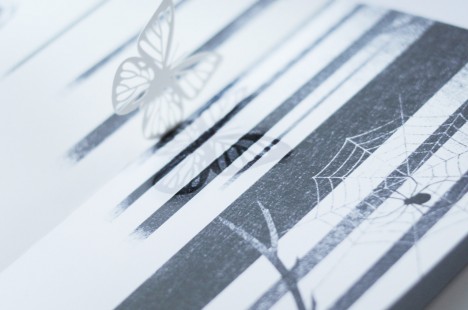
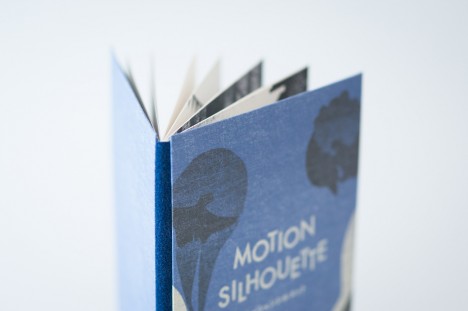
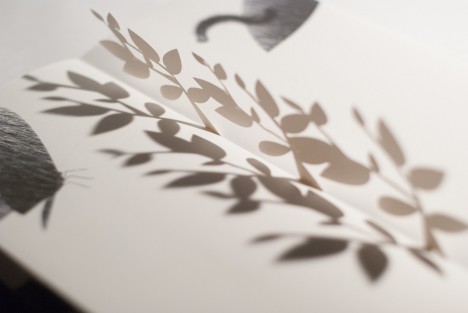
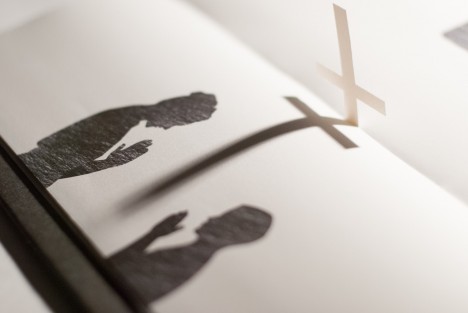
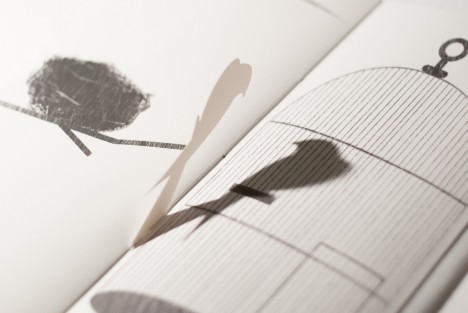
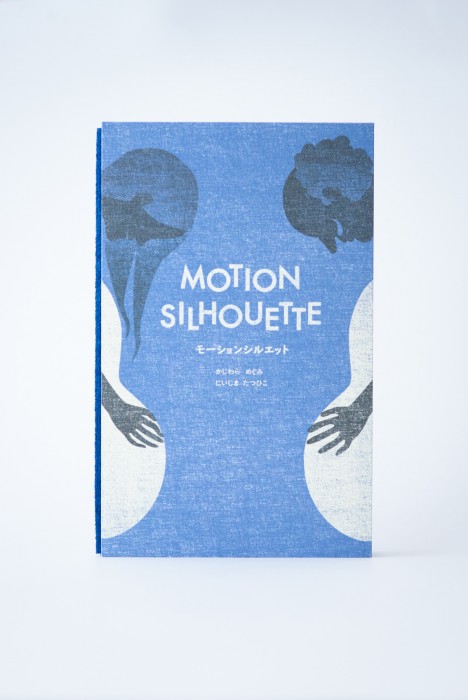
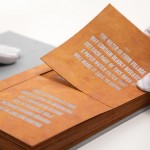
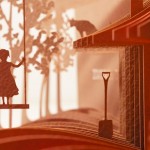
    A children’s book with an interactive twist, Motion Silhouette engages readers through pop-up pieces that require lighting to animate shadow pictures on each page.

    motion train moving page

    motion train other page

    motion womans face page

    motion butterfly shape page

    The idea is to add elements of manual animation that are necessarily subjective – each person will hold, turn and highlight the cutouts in different ways.

    motion animated book shadow

    motion silhouete tree city

    motion silhouette

    Secondary readers or viewers (young kids watching over parents’ shoulders) will also have their own unique experience each time.

    silhoutte book one

    silhouette spider web

    silhouette plant shapes

    silhouette cross page

    silhouette bird page

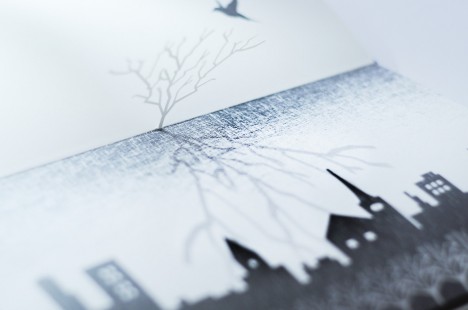
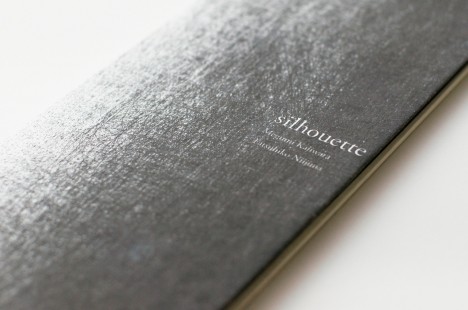
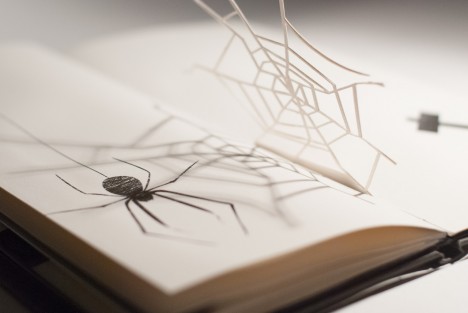
    Motion Silhouette is actually a sequel to another book, simply titled Silhouette (excerpts shown above), a work which similarly uses slightly less-developed pop-up pages to create a more basic multi-dimensional experience.

    motion silhouette book

    From its Japanese creators, Megumi Kajiwara and Tathuhiko Nijima: “I will begin to talk about the story and illustrations shadow falls on top of the page overlap. In this work, you can enjoy the animation of shadow phantasmagoric by you move the light. Trees and become bigger and bigger, which aims to train a distant star. Story that changes depending on the page falling shadows, shadows move around the top of the page.”

    Share on Facebook


    [ By WebUrbanist in Design & Products & Packaging. ]

    [ WebUrbanist | Archives | Galleries | Privacy | TOS ]


    WebUrbanist

  • Head Light: Popup Wall Lamp Has Horns that Glow in Shadows

    [ By WebUrbanist in Design & Fixtures & Interiors. ]

    light and dark headlight

    A classy alternative to hanging animal parts, this deer head wall lamp started as a design concept, went viral as a prototype and has just been funded for full production via a successful crowdfunding campaign.

    popup lighting design

    owl lamp pop up

    peacock lamp pop up

    This particular popup lighting design is the first in a series of pieces that combine abstracted animals (including an owl and a peacock) and minimalist home lighting design – a sort of modern (and less morbid) take on faux taxidermy.

    popup dear head light

    deer head light pair

    pop up light night

    Chen Bikovski is a Tel Aviv-based designer exploring the relation of light and space. “Since I was a child, I was fascinated by Pop-up books…The excitement before turning a page, a simple pull that uncovers a whole new world. I loved how the story came to life, how the books created a fantasy world that flew off the page. The magic, the excitement, the naiveté…”

    dear head light design

    pop up lighting

    dear head light in room

    Named ‘Promising Young Designer of 2012,’ Chen’s work is presented in prominent galleries and featured in leading design publications. “The idea behind Popup Lighting was to create a permanent light fixture that would bring a magical ambiance to any space. A multi-dimensional light that would inspire the senses and ignite the imagination.”

    Share on Facebook


    [ By WebUrbanist in Design & Fixtures & Interiors. ]

    [ WebUrbanist | Archives | Galleries | Privacy | TOS ]


    WebUrbanist

  • Retro Nikon ‘DF’ emerges from the shadows

    DF-shadow.png

    The much rumored retro-styled full frame camera from Nikon looks to be coming. The latest teaser video from Nikon offers the clearest view of what the camera will look like, with close-up shots of the camera’s side, back, and top-plate (including traditional shutter speed dial). The fifth of November looks like it could be memorable for more than just our UK audience. Watch video, see screen shots

    News: Digital Photography Review (dpreview.com)

  • Shadows: Weekly Photography Challenge

    Earlier today we published our post – 25 Images with Shadows – which we hope gave you a little inspiration.

    Shadow images
    Now it is your turn.

    We’d love you to to grab your camera and over the next week look for some shadow images because that’s the theme for this weeks challenge. Take a shadow photo and then share it with us as outlined below.

    Once you’ve taken your ‘Shadow’ shots we’d love to see them in comments below. Simply upload your shot into the comment field (look for the little camera icon in the Disqus comments section as pictured below) and they’ll get embedded for us all to see or if you’d prefer upload them to your favourite photo sharing site and leave the link to them.

    If you tag your photos on Flickr, Instagram, Twitter or other sites with Tagging tag them as #DPSPINK to help others find them. Linking back to this page might also help others know what you’re doing so that they can share in the fun.

    Also – don’t forget to check out some of the great shots posted in last weeks Pink challenge – there were some great shots submitted.

    Post originally from: Digital Photography Tips.

    Check out our more Photography Tips at Photography Tips for Beginners, Portrait Photography Tips and Wedding Photography Tips.

    Shadows: Weekly Photography Challenge

    The post Shadows: Weekly Photography Challenge by Darren Rowse appeared first on Digital Photography School.


    Digital Photography School

  • Add Impact to Your Photos by Including Shadows

    In music they say the spaces between the notes are just as important as the notes themselves. Similarly in photography, it can be the spaces that are not in the light that add impact to an image.
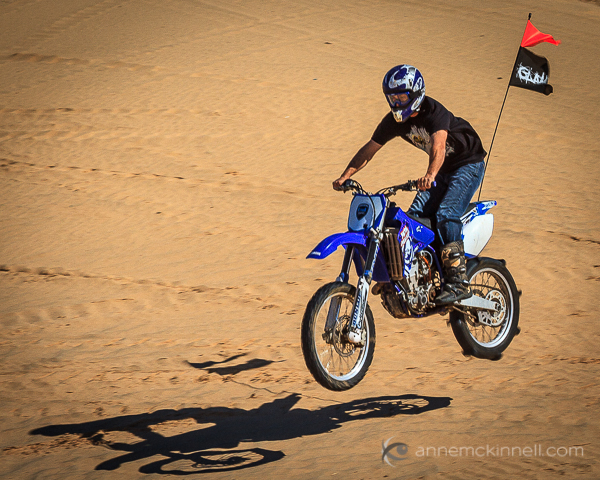
    Imperial Sand Dunes, California by Anne McKinnell

    If it were not for the shadow cast by the dirt bike, it might be difficult to tell it was off the ground.

    Shadows help tell a story and enhance the mood and visual power of a photograph. In fact, they can be so interesting, that they “overshadow” the subject itself!

    By focussing your attention on the shadows, you can create beautiful compositions full of contrast, form, and minimalist simplicity. An object and its shadow will strengthen each other. Sometimes you might even want to cut the object out entirely, and play with capturing only the interesting shadows that are cast by it.
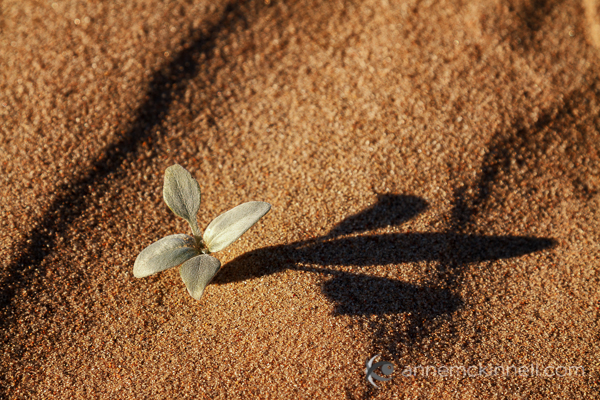
    A small plant and it's shadow by Anne McKinnell

    In this image of a small plant, it is really the shadow that is the main subject for the image would have very little interest without it.

    Photographing shadows works best with strong, simple shapes that make interesting graphic designs such as flowers, sharp lines, or even human beings. After all, who hasn’t taken a picture of their own shadow as it stretches out across the sidewalk in front of them?

    You can use shadows compositionally the same way you would use any other element in the scene: as leading lines, patterns, curves that guide the eye into the scene or to create a balance of negative and positive space.
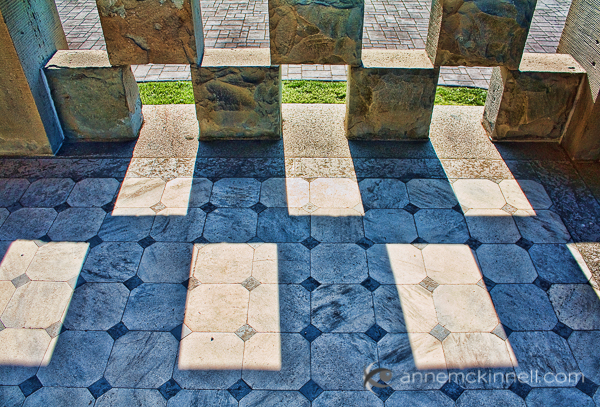
    Sandstone blocks and shadows by Anne McKinnell

    Look for patterns created by shadows. Here, an interesting pattern is formed by the sandstone blocks and their shadows.

    Exposing for the Shadows

    If you put your camera on an automatic mode (even aperture or shutter priority mode) and try to photograph a shadow, it’ll probably come out too light. This is, after all, what cameras are designed to do – expose with enough brightness to see detail. Of course, this isn’t always what we want, and shadows are a prime example of when you need to manually change your exposure to make sure the shadow remains in darkness.

    There are a few ways that this can be done:

    • Set your camera to manual mode. This is for advanced photographers. On manual mode, you’re responsible for setting your aperture, shutter speed, and ISO value. If you’re not sure what settings to use, you can copy them from the values on your auto setting and then tweak them as you go.
    • Use EV compensation. If you take a shot and see on the LCD screen that it is too bright, you can simply locate the camera’s EV (exposure value) compensation button. Almost every camera will have one, even point-and-shoots and camera phones; it is denoted by a square with a (+/-) symbol. Using that, you can simply turn the exposure up or down to be brighter or darker, as you see fit, and if you’re using live view it will probably render directly in the display. If the shadows come up too bright, just lower the exposure compensation a little to deepen them.
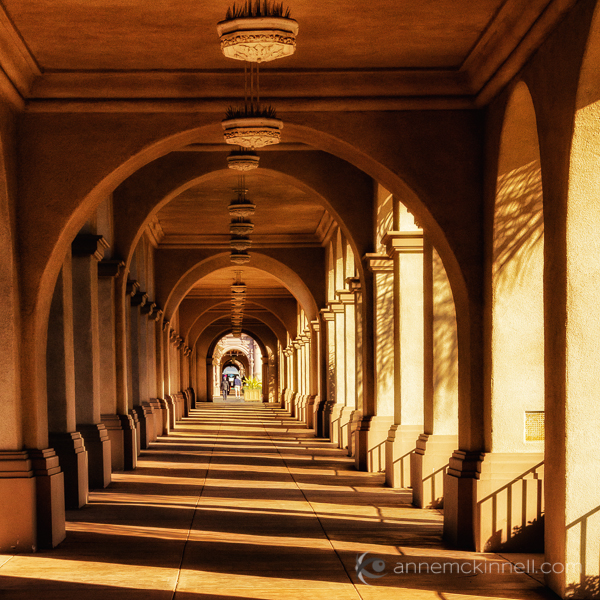
    The El Prado Pedestrian Walkway, Balboa Park, San Diego, California, by Anne McKinnell

    Late afternoon sidelight created a pattern, an interesting repetition of lines, in this arcade.

    • Lock down your exposure. If you have a DSLR, it probably has an exposure lock feature, though it may need to be configured in the camera’s menu. Using exposure lock, you can fill your frame with the part of your scene that’s not in shadow – or else some well-lit mid-tone – and let your automatic exposure calculate for that. Then you lock it in by pressing the AE-L (auto-exposure lock) button on your camera. This will freeze the settings as they are, so you can recompose the image to include the shadow and the camera won’t re-calculate and brighten the exposure to account for them. This way, you’ll get perfectly exposed highlights and deep shadows. Alternatively, you can simply note the settings, dial them in to manual mode, and bypass the exposure lock altogether.
    • Bracket your shot. When you bracket your image, you take several shots at different exposures. Mid-range cameras and higher will have this feature built in – it might feature a dedicated BKT button, or the option might be available in the menu. If so, you’ll be able to select how many pictures to take and how many stops of difference between them. This makes it simple to take three exposures, for example, one with the exposure the camera thinks is correct, one underexposed by one stop and one overexposed by one stop. If this feature is not available, it can be achieved through changing the settings in manual mode, or by taking several shots with different EV compensations.
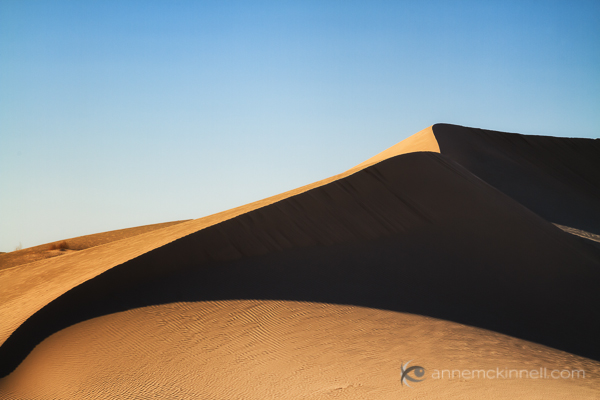
    Imperial Sand Dunes, California by Anne McKinnell

    In this image of a sand dune, the shadow adds form to the dune and creates a strong and balancing line in the image. I made this image mid-afternoon during a scouting trip. It turned out much better than the image I made of the same location later in the day when the right side of the dune was entirely in shadow.

    Next time you’re out shooting, make a point of noticing the shapes of the shadows. Challenge yourself to actively use them to create mood, to add dimension to your subject, or to take center stage in a creatively crafted composition.

    Post originally from: Digital Photography Tips.

    Check out our more Photography Tips at Photography Tips for Beginners, Portrait Photography Tips and Wedding Photography Tips.

    Add Impact to Your Photos by Including Shadows


    Digital Photography School

  • Dark City: Giant Mirrors Aim to Illuminate Town in Shadows

    [ By WebUrbanist in Conceptual & Futuristic & Technology. ]

    shadow city solar panels

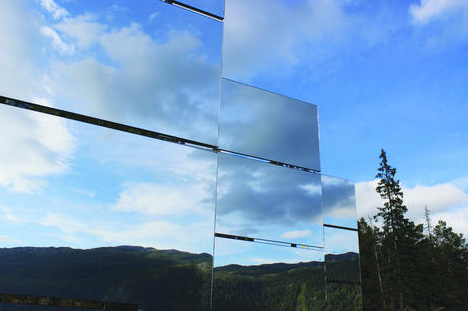
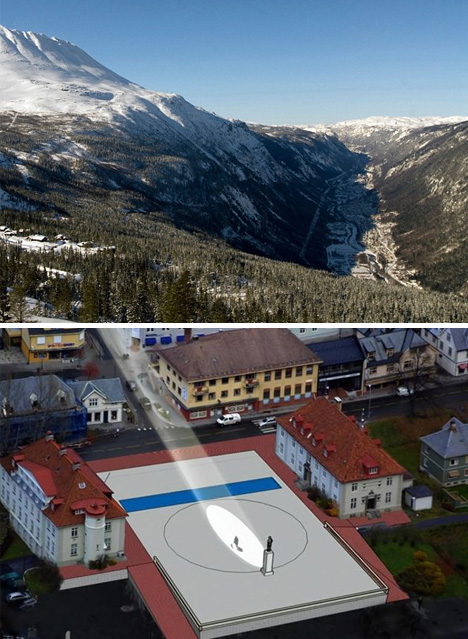
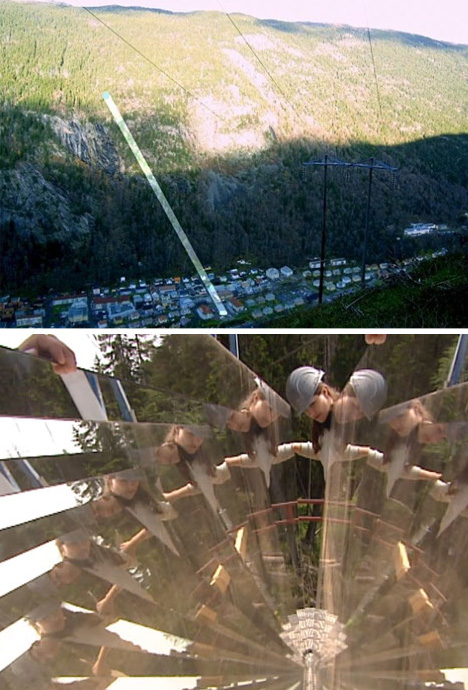
    A lovely little settlement in a lush valley of Norway sounds like a slice of paradise – except that the surrounding hills keep it out of sunlight for nearly half of the year. This incredible undertaking aims to change that, illuminating the town square even in the darkest parts of the year.

    shadow town mirror project

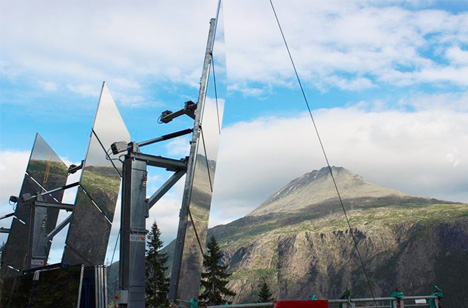
    A set of mirrors positioned high above Rjukan will rotate to reflect sunlight into the center of the settlement, which, thanks to being rather predictably bathed in light, will be available to residents and visitors who wish to walk through it. The system will be computer-controlled from the town hall.

    shadow valley mirror array

    If this sounds far-fetched or even futuristic, consider this: the idea was originally pitched exactly 100 years ago by a local developer in the area, but scrapped at the time due to cost. Its originator went ahead and constructed a cable car instead, to help people in the area climb high enough to get natural light in the winter.

    shadow illuminate town square

    Even today the installed array will run up a bill of nearly a million dollars and include over 500 square feet of mirrored surface (lighting up over 2000 square feet below). But for residents of this remote and shadowed settlement, who normally have to forsake the sun 5 months of the year, the effect is worth the price.

    Share on Facebook


    [ By WebUrbanist in Conceptual & Futuristic & Technology. ]

    [ WebUrbanist | Archives | Galleries | Privacy | TOS ]


    WebUrbanist

  • Painted Shadows Haunt Abandoned Psychiatric Hospital

    [ By Steph in Art & Street Art & Graffiti. ]

    Lost Souls Abandoned Mental Hospital Art 1

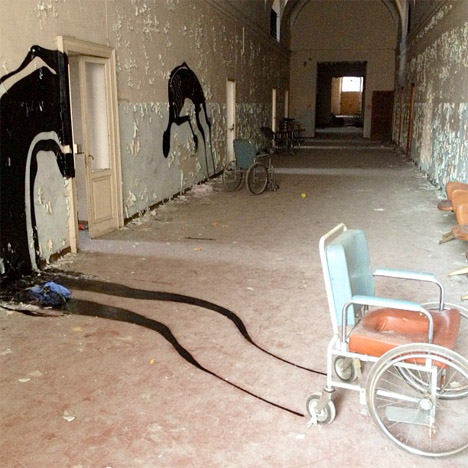
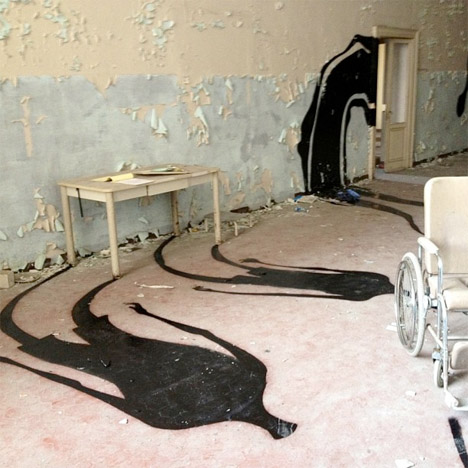
    Eerie shadows float out of empty wheelchairs, trailing up cracked and peeling walls and slinking under doorways in a series of paintings in an abandoned mental hospital by Brazilian artist Herbert Baglione. These flowing black silhouettes in a ruined facility in Parma, Italy are part of a larger collection entitled ’1000 Shadows,’ reflecting the essence of darkness that is often left behind in neglected places.

    Lost Souls Abandoned Mental Hospital Art 2

    Lost Souls Abandoned Mental Hospital Art 3

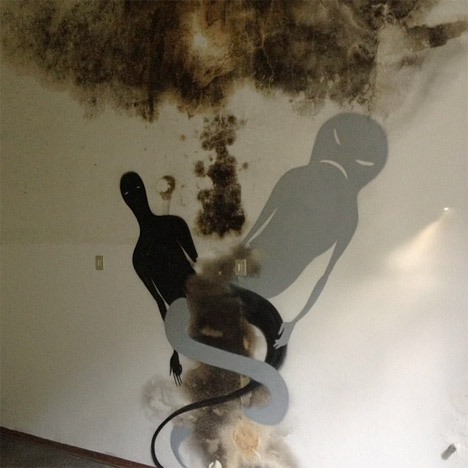
    The creepy abandoned hospital is still strewn with furniture. Spirits appear to tussle with each other, tangling amid mildew spots on the walls. Baglione’s painted shadows capture, in visual form, the feeling many of us experience when standing inside such a facility.

    Lost Souls Abandoned Mental Hospital Art 4

    Lost Souls Abandoned Mental Hospital Art 5

    Such morose, frightening imagery may not be an entirely accurate reflection of the very real, human people who were actually patients at the hospital, but it’s certainly an effective interpretation of the haunted mood projected by the buildings themselves.

    Lost Souls Abandoned Mental Hospital 6

    Other settings in the series include abandoned apartments in Paris, and homes in São Paulo. See more from this series, and other works painted on urban surfaces, on Baglione’s Facebook page.

    Share on Facebook


    [ By Steph in Art & Street Art & Graffiti. ]

    [ WebUrbanist | Archives | Galleries | Privacy | TOS ]


    WebUrbanist