RSS
 

Posts Tagged ‘Seminar’

Is that a Workshop, Tour or Seminar [Part III]

16 Aug

In part I and part II of this series we learned the photo workshop is typically one where the instructor concentrates on delivering an intense teaching/learning experience at a location conducive to enhancing that goal.  In comparison is the photo tour where the delivery is all about exotic or exciting locations with a photo tour leader putting you in the right place at the right time, and might provide minimal formal instruction.

Located somewhere between the tour and workshop is the photo seminar. More often than not the seminar combines the best attributes of the workshop and tour by providing numerous lecturers and presentations, from internationally recognized keynote speakers who augment acclaimed local and national professionals in various photography disciplines.
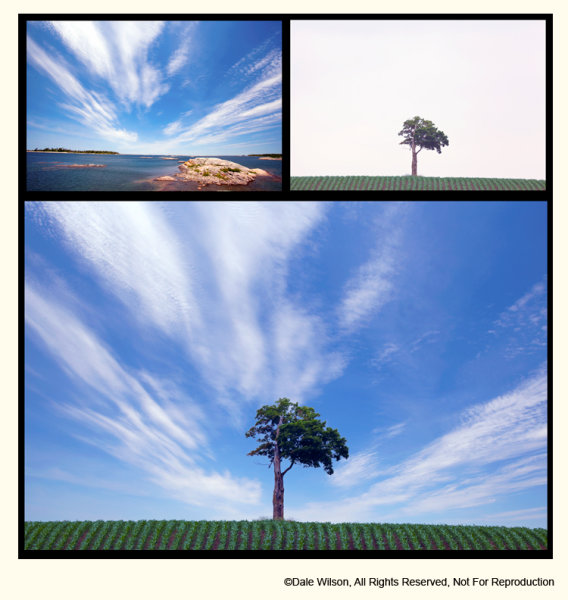
In 1994, I attended a 60-minute presentation where a digital artist explained that a new software called Adobe Photoshop would revolutionize the photography industry. My notes from that lecture said “alpha mask – change sky.”  I later learned how to do alpha masks and discovered that I need not sit and look out a window while it was raining. Nineteen years later there is little argument that Photoshop has changed our industry, and “masks” are one of the foundation tools every digital photographer must eventually learn.

In 1994, I attended a 60-minute presentation where a digital artist explained that a new software called Adobe Photoshop would revolutionize the photography industry. My notes from that lecture said “alpha mask – change sky.” I later learned how to do alpha masks and discovered that I need not sit and look out a window while it was raining. Nineteen years later there is little argument that Photoshop has changed our industry, and “masks” are one of the foundation tools every digital photographer must eventually learn.

The seminar is also sometimes referred to as a conference, but the crux of the event remains very much constant: numerous presenters under one roof presenting a variety of topics by experts in their field over several days at one venue.

Seminars are offered by both private enterprise as well as professional and amateur photography associations who also may open their doors to non-members.  In Canada the two most recognized national association conventions are hosted in different cities each year by the members of Professional Photographers of Canada (PPOC) and Canadian Association for Photographic Art (CAPA).  You can do a web search in your country of residence for professional associations such as Professional Photographers of America (PPA) or your national amateur chapter of Fedération Internationale de l’Art Photographique (FIAP).

Seminars are typically chock-a-block full of presenters offering a variety of topics and many also offer a slate of add-on field trips. It is not uncommon with the larger conventions to have 25, or more, presenters on a four day program which is augmented with a keynote presentation each evening.  Intensity is the key word with seminars.

A close cousin to the seminar is the non-degree granting photo school. The concept is very similar, the delivery is quite different.  Whereas in the seminar scenario participants are introduced to a variety of instructors, concepts and theories, the school typically places a classroom of students with one instructor for the entire time period.  Additionally, the school tends to be more about a mixture of theory and practical application, whereas the seminar tends to deliver concepts and ideas for individual exploration at a later time.

Each approach has their advantages and disadvantages. If you are seeking exposure to a variety of concepts and motivation the seminar might be the best approach. By comparison, if you are seeking to spend a lot of one-on-one time learning a particular technique or skill set the school might be the better choice.  Be aware, however, if you “hook-up” with a presenter in the seminar situation who has poor instructional technique you can find some solace that the next lecturer, an hour or so later, might be better.  In the school environment, however, if you have a poor instructor you will be less than satisfied over the duration of several days, a week, or even longer.  Be diligent and do your homework well; there are many great photographers who simply are not good at sharing their knowledge, skills or information for a variety of reasons.  As suggested in the opening of this series, there are instructors and then there are teachers – not all are truly teachers.

In summation we can generally draw to following conclusions:

Workshop:  Typically intense training with one instructor that includes field and formal classroom instruction with measureable outcomes. The location is secondary but supportive of the curriculum.

Photo Tour:  Location(s) is the key ingredient and instruction is minimal if at all. The tour leader is typically a well known photographer who should also be familiar with the locations and scope of the tour, be it cultural, wildlife, etc.

Seminar:  Typically a broad array of concepts, discussion and disciplines with a variety of presenters. It is about being introduced to new theories, approaches and motivation. They are typically shorter in duration with minimal practical application.

Post originally from: Digital Photography Tips.

Check out our more Photography Tips at Photography Tips for Beginners, Portrait Photography Tips and Wedding Photography Tips.

Is that a Workshop, Tour or Seminar [Part III]

Digital Photography School

 
Comments Off on Is that a Workshop, Tour or Seminar [Part III]
Posted in Photography


Is that a Workshop, Tour or Seminar [Part II]

09 Aug

In our previous post on this topic we learned that the photo workshop is primarily a teaching venue, with a very structured curriculum leading to measureable outcomes. The keynote teacher and/or assistant instructors should be available upon demand and continuously be pushing, cajoling and exciting you to advance your skill set.  The workshop is all about learning.

The photo tour was borne as a hybrid from the conventional tour business that blossomed in the 1970’s.  While travelling tourists enjoyed the convenience of having another labour over the details of accommodation, meals and destinations, many tour administrators recognized a need to cater to niche markets that included an array of interests and hobbies. Specialized tours were developed to meet all types of sundry from participating in archaeological digs to experiencing the daily life of Zulu tribes. Somewhere in the middle was the hobbyist photographer whose key interest was in photographing the A to Z’s of the planet, and having someone else attend to all the details.

So what should we be aware of when researching for the right fit in a tour company?


A good tour company should have an itinerary and support staff that puts you front-and-centre with the attractions and characters at the right time of day to maximize your photo opportunities.

A good tour company should have an itinerary and support staff that puts you front-and-centre with the attractions and characters at the right time of day to maximize your photo opportunities.

Almost all photo tours that pique an interest involve travel to some remote location, usually out of country and more often than not to another continent.  While Canadians might like to travel to Asia, for example, many Asians like to travel to Canada.  Common wisdom would suggest that an Albertan could probably put together a more complete tour package of the Canadian Rockies than an administrator in Shanghai, for example. Conversely, that same Shanghai administrator should be more thorough in developing a week long traverse of the Great Wall of China than our friend from Jasper.

This is not to suggest that non-nationals cannot, and do not, provide great experiences to other countries – many do, but, many more do not.  It is essential you review their credentials to gain informed insight with the administrator’s familiarity of the geography being visited.

Most importantly, ensure the itinerary has been developed with the photographer in mind.  Many tour operators simply don’t understand that photographers want to have the option of being on location no less than 30 minutes prior to sunrise. Likewise, how can we be enjoying dinner when the mother of all sunsets is happening just beyond our spreads of Peking Duck or prime Alberta beef.

Review that itinerary as you might research the merits of a particular car purchase. Relentlessly research the web for everything you can locate about the company, this particular destination, the tour leader, language interpreters if necessary, accommodations, meals and dietary concerns, maximum number of participants, modes of transportation and are they certified and insured, any mobility concerns you might have, sleeping arrangements, and so on.

Is the tour leader a photographer from whom you think you could have fun? Is that photographer also known to freely share his insights, vision and passion to craft? Many tour companies only hire the well known photographer as an aid to marketing and selling the tour.  Did the photographer have any input toward the tour development and itinerary?  How many times has this company and/or tour leader been to these destinations; what is their familiarity with local customs and traditions?

Be wary of the quasi-photographer who is developing and leading a tour to a new destination. More often than not he is only looking to make a few bucks to augment his own cost of adding that destination as another notch in his prize belt. By the same token there are photographers who offer fabulous small group excursions, just be wary and use the telephone to interview this photographer/leader.

The photo tour is all about the experience – be that destination, cultural, or a myriad of other experiences and interests. The photographer- leader might offer an evening or two of presentations, and maybe some informal one-on-one time while out enjoying the sites, but bear in mind the photo tour is not about tutelage but experience.

With good research and due diligence you can ensure that a photo tour meets your expectations and helps fulfill the most important mandate: having fun.  Always remember, if you are having fun you are doing it right!

Part III — the seminar.

Post originally from: Digital Photography Tips.

Check out our more Photography Tips at Photography Tips for Beginners, Portrait Photography Tips and Wedding Photography Tips.

Is that a Workshop, Tour or Seminar [Part II]


Digital Photography School

 
Comments Off on Is that a Workshop, Tour or Seminar [Part II]

Posted in Photography


Is that a Workshop, Tour or Seminar [Part I]

05 Aug

There is a modern day aphorism:  Those that can – do. Those that can’t – teach.  I believe, however, the later part of the phrase should be amended to read “Those who can’t – shouldn’t.”

A majority of photographers working today as professionals ply their trade in the commercial, wedding and portrait disciplines. There are also countless photographers who have historically made images of landscape and nature pictures – the kind of stuff we all love to do. These image makers would typically place their material with a stock photo agency to license their work on their behalf. Unfortunately this business model has been collapsing over the past five, or so, years and will likely continue.

The by-product of this collapse in landscape and nature picture sales has translated to a deluge of photography workshops, tours and seminars.  Many of these instructor-photographers bring impeccable skills and talents to the table; unfortunately an even greater number bring little more than platitudes and promises.

The novice photographer will have to do some research to learn what firm offers something worthy of your hard earned cash.  You will have to sift through a lot of chafe to find the nice gems, fortunately they do exist.

Is the intensity of a workshop what you seek, or perhaps the enjoyment of a tour or the diversity of a seminar? Hopefully this little primer will help steer you in the right direction by explaining the differences and offering some suggestions to ensure you get the right fit for what you are seeking, and at the right skill level.

The workshop offers the opportunity to try out all the gear you might own with good critique from the instructor.

The workshop offers the opportunity to try out all the gear you might own with good critique from the instructor.

A workshop is first and foremost a teaching venue.  It will in all likelihood be based from a single location where you will eat, live and breathe photography.  A secondary consideration is the actual location, the physical presence to facilitate the theme of the workshop.

The better workshops usually come with a systematic structure: early morning shoot, late morning lecture, early afternoon lecture or critique session and late evening shoot. The shooting sessions will usually always concentrate on the topic presented at the day’s lecture session(s). By the end of the workshop you should have received sufficient lectures, personal evaluation of your efforts, and an overdose of encouragement to meet the objectives outlined. The course syllabus should be available for your study in advance of enrolment.

Before you do enrol, research to see who the lead instructor will be as well as the supporting teachers, and whether that lead is on site or just loaning their name. Does that leader come with a pedigree that includes accomplishment in their chosen field through innovative techniques, or writing of their findings in books or magazine articles? Are they continuously exploring their own vision, and what is their reputation from previous students?  Contact those testimonial writers personally – they could be just friends of the workshop leader.

One of the very first clues you might have whether the workshop is for you is by asking the question: “Will the instructor be making photographs during the workshop?”  If the answer is yes, you might want to consider moving to another workshop that interests you. The logic being, how is it possible for the instructor to teach and offer guidance if they are concentrating on looking through their own viewfinder?  You, the student, should have their attention; the instructor can take pictures on their time – you have already bought and paid for that time.

Most importantly, is the lead instructor an instructor or a teacher? As ridiculous as this might sound, almost anyone can stand in front of a small audience and regurgitate from a prepared lesson plan. A teacher, on the other hand, has that inner quality of being able to instil a desire to learn, of generating an excitement enabling students to be part of a process, promoting confidence and self-esteem all while offering constructive criticism without the student ever knowing. A teacher has a true passion in their chosen art, the art of sharing.  Their enthusiasm is contagious.

Next up: What is the photo tour?

Post originally from: Digital Photography Tips.

Check out our more Photography Tips at Photography Tips for Beginners, Portrait Photography Tips and Wedding Photography Tips.

Is that a Workshop, Tour or Seminar [Part I]


Digital Photography School

 
Comments Off on Is that a Workshop, Tour or Seminar [Part I]

Posted in Photography


Process Workflow Seminar

18 May

In this video, I give an overview of my Process Workflow Seminar.
Video Rating: 5 / 5

How to fix hot spot on eyeglasses and eye blinks from your flash quick and easy.
Video Rating: 5 / 5