RSS
 

Posts Tagged ‘RX100’

Sony Cyber-shot RX100 VI sample gallery updated

07 Jul

$ (document).ready(function() { SampleGalleryV2({“containerId”:”embeddedSampleGallery_8189628340″,”galleryId”:”8189628340″,”isEmbeddedWidget”:true,”selectedImageIndex”:0,”isMobile”:false}) });

With enough reach to land itself in ‘travel zoom’ territory, the Sony RX100 VI is well suited for a wide range of shooting situations. We’ve tested the 1″ compact with a 24-200mm equiv. zoom both in the office and out on summertime excursions, and our full review is imminent. In the meantime, take a look at our expanded gallery – now with converted Raw files.

Articles: Digital Photography Review (dpreview.com)

 
Comments Off on Sony Cyber-shot RX100 VI sample gallery updated

Posted in Uncategorized


Sony RX100 VI vs Panasonic ZS200 vs Panasonic ZS100: which is the best travel companion?

26 Jun

Intro

Sony’s RX100 may have ushered in the era of the 1″ sensor compact, but it took Panasonic to combine these larger sensors with the long-lens flexibility that defines a travel zoom. This shouldn’t be a surprise, since Panasonic spearheaded that type of camera back in the days when small sensors ruled the Earth.

The RX100 VI, with its 24-200mm equivalent lens, marks Sony’s entry into the travel zoom sphere, pitching it squarely up against Panasonic’s ZS/TZ models: the ZS100 and ZS200. So how do they compare?

Body

The Panasonics, with their longer lenses, are a little larger in every dimension. They have viewfinder eye-pieces extending slightly from their upper left-hand corners. This extra space finds some use, though, with both cameras offering control dials on their top right shoulders, which the Sony lacks. The ZS200 even finds space for a rubber strip down the front of the camera, making it much easier to grip in a stable manner.

The RX100 M6 is still a pretty reasonable size for an 8x travel zoom

The Sony comes closest to counting as pocketable. The RX100 series have added a couple of mm here and there over their lifetime, but although they’ve been creeping up in size compared with enthusiast compacts, the RX100 M6 is still a pretty reasonable size for an 8x travel zoom.

All three cameras have metal bodies but in each case it’s a fairly thin shell, so don’t expect any of them to put up with much rough-and-tumble.

Lenses

The Lumix DC ZS200 has by far the greatest lens range of this trio but, in order to keep the size of the camera down, also has the least bright lens of the three. Its F3.3-6.4 maximum aperture is the most limited in terms of low light performance, and it gives a little less control over depth-of-field at traditional portrait focal lengths.

The ZS100 sits in the middle of the group, with a 25-250mm equivalent lens and F2.8-5.9 maximum aperture, while the Sony opts for the most modest zoom range (~24.5 to 200mm equivalent) but in combination with the brightest aperture range.

The RX100 VI maintains a value of F4 up to and a little beyond 100mm equivalent, meaning it can shoot passable portraits

F2.8-4.5 isn’t much to shout about if you compare it with the short, bright zoom on the RX100 V, but it’s noticeably brighter than those of the Panasonics. The RX100 VI maintains a value of F4 up to and a little beyond 100mm equivalent, meaning it can shoot a passable portrait, as well as a wide range of holiday snaps.

Autofocus

We’ve been pretty impressed with the autofocus performance of the Panasonic ZS / TZ cameras. It’s not pro sports level but it’s pretty good at subject tracking and produces a pretty reasonable hit-rate, even when shooting at 10 fps.

However the RX100 VI is playing at a rather different level. One of the main things you’re paying for in this camera is its fast sensor with on-sensor phase detection. This, along with algorithms Sony developed for its a9 pro sports camera, means hugely impressive autofocus performance. Even at its maximum shooting rate of 24 frames per second, it’s able to track moving subjects very effectively.

Sony’s Eye AF system outperforms the Panasonics by a significant degree, in terms of both speed and accuracy.

Even if you don’t shoot fast-moving subjects or rattle-off 24 fps bursts, the RX100 VI’s autofocus can be very useful. While the Panasonics are able to identify and focus on subjects’ eyes as part of its Face Detection mode, the Sony’s Eye AF system outperforms it by a significant degree, in terms of both speed and accuracy. If you hold down a button to engage Eye AF you can essentially depend on your subject being perfectly focused.

Viewfinders

All three cameras feature viewfinders, which is hugely useful when shooting in bright light, adding to the flexibility of all these cameras. The ZS100 has the smallest, lowest-resolution finder of the three, followed by ZS200, with the RX100 VI offering the highest resolution as well as the largest viewfinder image.

Camera Resolution Magnification
(35mm equiv)
Technology
Panasonic Lumix DMC ZS100 1.17m dot equiv 0.46x Field-sequential LCD
Panasonic Lumix DC ZS200 2.33m dot equiv 0.53 Field-sequential LCD
Sony Cyber-shot DSC RX100 VI 2.36m dots 0.59x OLED

The Sony has the upper hand in this respect, since it has a bright contrasty OLED viewfinder, whereas the Panasonics use field-sequential lower contrast LCDs. These refresh one color after another, rather than showing red, green and blue at the same time. The resulting ‘rainbow effect’ can be off-putting for some users and becomes more visible in low light.

Image Quality

All three cameras perform very well in terms of image quality, compared with older travel zooms or contemporary smartphones, thanks to their large, 1″-type sensors. A 13.2 x 8.8 mm chunk of silicon isn’t much when compared with most interchangeable lens cameras, but it’s enough to offer in the region of a 3EV difference to a smartphone shot at the same F-number (though multi-shot and computational techniques allow some of the latest phones to compete).

Panasonic and Sony have historically ranked somewhat poorly in our estimation when it came to JPEG color, but both have made significant improvements with their recent models. These improvements, combined with some of the most sophisticated noise reduction and sharpening available see us leaning towards the Sony when it comes to JPEG quality.

Lens performance tends to be somewhat variable with the complex, collapsible lenses used in this class of camera

Lens performance tends to be somewhat variable with the complex, collapsible lenses used in this class of camera but we’ve been impressed by what we’ve seen of the Sony lens, so far, whereas we haven’t encountered a ZS200 that could maintain sharpness across its full (extensive) zoom range.

Low light performance is somewhat hindered by the cameras’ relatively slow maximum apertures, which give them less access to light, meaning noisier images than you can get with the likes of the RX100 V or LX10 with their shorter but brighter lenses.

Video

All three cameras offer 4K video at up to 30 frames per second but they achieve it in very different ways. The Sony samples the full width of its sensor then processes and downsizes this higher-res footage to UHD 4K resolution. This allows it to capture more detail than the Panasonics, which use a 3840 x 2160 pixel crop from the center of their sensors.

Using a crop means the Lumixes are effectively using smaller sensors, which means less total light capture and noisier footage, as well as losing any wide-angle capability from their lenses. The Sony also offers a range of advanced video features such as the ability to shoot Log footage.

However, a major drawback for all three cameras is that none of them incorporate ND filters in their lenses, nor do they include filter threads for attaching one. This suggests video was fairly low down on the list of priorities in their design.

A major drawback for all three cameras is that none of them incorporate ND filters in their lenses, nor do they include filter threads for attaching one

Aftermarket options exist that glue a threaded mount onto the front of the lens. However, given how delicate these lenses are, we think you’d have to be pretty committed to shooting video to take this approach (and, ideally, fairly careful each time you apply torque to attach a filter).

The Panasonics limit their 4K recording to 15 minutes, while the RX100 VI claims only 5. In each case, these results are likely to be even shorter when shooting in warm environments, which may further restrict your shooting.

Add to this the lack of mic sockets on all three cameras, and you can pretty much rule them out for serious video work, unless you’re really fond of the booming, rasping interruption of wind noise or are willing to give up the convenience and compactness of the camera by carrying a separate audio recorder.

Controls

All three cameras have comparatively limited direct control. Each has a mode dial from which it’s entirely possible to engage P, A, S or M exposure modes, but none of them appears designed with constant settings changes in mind.

As alluded to earlier, the Panasonics do have an edge here though, thanks to the additional control dial on their top right corners. The function of this dial can be reconfigured, which you may wish to do, depending on how you like to shoot. This ability to customize the dial’s function and its more convenient location make it much more convenient than the small, fiddly dial on the back panel of the Sony, which you need to re-arrange your hand position to reach.

The RX100 VI has the most sophisticated Auto ISO system, whereas the ZS200 doesn’t offer quite so much scope for fine-tuning

The RX100 VI has the most sophisticated Auto ISO system, reducing your need to directly control this, the ZS200 doesn’t offer quite so much scope for fine-tuning and the ZS100 is the least clever, with you just having to hope it’ll make the right choices for you.

All three cameras have free-rotating dials around their lenses. These are great for controlling continuously adjustable settings, such as zoom or manual focus but give no tactile feedback to help indicate when you’re adjusting discrete settings, such as aperture value, ISO or exposure compensation, which can lead to accidental settings changes.

Touchscreen

The RX100 VI is the first of its line to include a touchscreen and, like other recent Sonys, this can be used to position the AF point, both when the rear screen is being used and as a touchpad when the camera is to your eye.

Panasonic was the first brand to use the rear screen as a touchpad, so it probably shouldn’t come as a surprise that its touchscreen implementation is rather more polished. The Lumixes may lack the ability to specify which areas of the screen should/shouldn’t be active in touchpad mode, but they allow the use of the touchscreen for a much wider range of functions.

Panasonic was the first brand to use the rear screen as a touchpad

The menus in the ZS100 and 200, while different, are both touch sensitive. Both cameras also offer a customizable version of their Q.Menus, which are designed with large, easy to press buttons. You can customize the Sony’s comparable ‘Fn’ menu but you can’t interact with it via the touchscreen.

Conclusion

Overall, then, it looks like an easy win for the Sony. It’s the smallest, and has the brightest lens. It may be the shortest zoom of the three, but it includes a range that will be enough for most applications, so this shouldn’t be limiting.

Our impressions so far are that it also has the best lens, the best autofocus and video that’s both cleaner and more detailed. There are also a couple of things the RX100 does that the Panasonics can’t. Its frankly ridiculous continuous shooting performance may be a differentiator for some photographers, and its Eye AF performance alone would make a huge difference for anyone taking portraits.

Where it loses out is in terms of control. The Panasonics have an extra control dial and make much more extensive use of their touchscreens, which makes it easier to take control over them when you’re shooting. They also trounce the Sony in terms of battery life, offering between 25 and 50% longer battery life depending on the model. This may be a deciding factor for anyone traveling.

The Sony certainly promises a lot more but you also have to pay for that.

Then, of course, there’s the price. Even at list prices, the RX100 VI’s $ 1200 price tag makes it 50% more expensive than the ZS200 and 70% more expensive than the ZS100. This price difference on the street is likely to be still larger, given how long the ZS100’s price has had to drop since launch.

The Sony certainly promises a lot more but you also have to pay for that. Whether it’s worth it for you is something we’ll try to establish in our forthcoming review.

Articles: Digital Photography Review (dpreview.com)

 
Comments Off on Sony RX100 VI vs Panasonic ZS200 vs Panasonic ZS100: which is the best travel companion?

Posted in Uncategorized


DPReview TV: Sony RX100 VI review

24 Jun

Sony recently announced the RX100 VI, the newest addition to its compact camera line. With six iterations of the RX100 series now in circulation, how does this new model stand out from the rest? Chris and Jordan take the camera for a spin and tell us what they think about the new, longer lens, the updated viewfinder and more. They even manage to fit in some well earned hammock time in the process.

Read our RX100 VI first impressions and RX100 VI: What you need to know articles to learn more.

RX100 VI first impressions

RX100 VI what you need to know

And make sure to subscribe to our YouTube channel to get new episodes of DPReview TV every week.

Subscribe to our YouTube channel

Sony RX100 VI sample gallery

$ (document).ready(function() { SampleGalleryV2({“containerId”:”embeddedSampleGallery_8189628340″,”galleryId”:”8189628340″,”isEmbeddedWidget”:true,”selectedImageIndex”:0,”isMobile”:false}) });
Articles: Digital Photography Review (dpreview.com)

 
Comments Off on DPReview TV: Sony RX100 VI review

Posted in Uncategorized


Hands-On with the new Sony RX100 VI Compact Camera

23 Jun

Sony continues to innovate and release new versions of their popular line of mirrorless and compact cameras. Just release is the newest Sony RX100 VI, the sixth version in just six years. But at just under $ 1200 USD is it worth the price? Let’s see.

There are quite a few new things and upgrades from the Mark V. Let’s see what a few different testers had to say about it in Venice recently where Sony handed out some cameras to put through the paces. Here’s a small list of features:

Image courtesy of Sony.

  • New 24-200mm lens (with the 2.73 crop factor) but with an f/2.8 maximum aperture.
  • 24 frames per second burst mode.
  • Buffer 233 JPEGs standard.
  • 315 phase detection autofocus points.
  • 90-degree tilting LCD screen.
  • New touchscreen capabilities.
  • Easier popup electronic viewfinder.
  • Does 4K video.
  • New Vlogging stick available for easier video creation.

Photo Gear News

Richard Sibley from Photo Gear News gives the Sony RX100 VI some good tests as he walks around Venice. See what he has to say about shooting video, slow-motion, and other things. He talks about the aperture range limitations and the menu system.

?

Camera Labs

See what Gordon Laing, prolific camera reviewer, had to say about the Sony RX100 VI. His test of the tracking autofocus shows impressive results on moving subjects with the phase detect autofocus of this camera.

So what does he like, and what does he miss from the Mark V? Watch to find out.

?

Things missing on the RX100M6 he’s noted are:

  • No microphone jack or Bluetooth audio connection
  • The wider aperture of f/1.8 that was available on the Mark V
  • No built-in Neutral Density filter that was on earlier models

For a little humor

Finally, to inject a little humor into things is Kai (former of DigitalRevTV). His point of view and way of approaching things is unique and adds a bit of spice to reviews that can otherwise get a little dull.

?

The official word from Sony

Lastly, here is Michael Bubolo from Sony to give us the low-down on some of the official specs and features of this new camera.

?

Is this camera for you?

I have to admit when I heard about the 24-200 equivalent zoom lens I was a bit jealous as compared to my Fuji X100F with a fixed 23mm (35mm equivalent) lens. But the 1″ sensor (2.73x crop factor) on the Sony is a lot smaller, so I’ll stick with my Fuji!

So who is this camera for? At the price of around $ 1200, it’s not for everyone. Perhaps it’s good as a backup to their DSLR for pros, or for bloggers (and vloggers) who do video and want something portable. The zoom range certainly is attractive and it does a nice job on video for sure. But would you spend this much on a compact camera?

Note: currently the Sony RX100 VI is only available for pre-order from Amazon and other retailers.

Let’s discuss in the comments section below.

The post Hands-On with the new Sony RX100 VI Compact Camera appeared first on Digital Photography School.


Digital Photography School

 
Comments Off on Hands-On with the new Sony RX100 VI Compact Camera

Posted in Photography


REVIEW and Thoughts on the Sony RX100 V Compact Camera

11 Jun

Sony’s RX100 is a storied line of compact cameras that have always packed a powerhouse of features into small but sturdy frames. This fifth iteration (the Sony RX100 V also know as the DSC-RX100M5) builds on that history with a wealth of features for a modern photographer’s needs.

REVIEW: Sony RX100 V Compact Camera

Who the Sony RX100V is for

The RX100 Mark 5 is, in my mind, the perfect camera for family travel, street shooting, and as a secondary landscape camera when your main camera is occupied. The 24-70mm equivalent zoom lens lends enough useful range while the 24mm end of the lens works well for landscapes, group shots, and even the occasional selfie.

I bought the RX100 V specifically for its high frame rate for video but have grown to love the high-quality 4K video in such a compact body. With a frame rate up to 1000 frames per second (fps), it is amazing what can be captured with this small package. The 20MP sensor makes for excellent image quality with some room to crop to your liking.

This camera will appeal to landscape photographers who might want some freedom for unique compositions while their heavy DSLR is stuck to a tripod. Street photographers will love its compactness and flip out screen. I don’t see it getting a lot of use as a portrait camera, although it does have a nice f/1.8 – f/2.8 starting aperture range.

Small Package – Big Stats

Let’s take a look at some key stats from Sony’s website:

  • 20.1MP 1″ sensor
  • 2.9X optical zoom – 24-70mm equivalent
  • 11 – 44x at digital zoom
  • 2.95″ 1.2MP rear screen with 100% coverage
  • Active Optical SteadyShot
  • Four focus modes including Manual
  • 315 point wide phase detection autofocus, 25 point contrast detection plus four other modes
  • Exposure Compensation from -3EV to +3 EV in 1/3 stop increments
  • Full expanded ISO range from 80-25,600 for stills and 125-12,800 for video
  • Shutter Speeds from Bulb/30 seconds to 1/2000th maximum
  • Auto High Dynamic Range and ND Filter capabilities
  • Exposure and White Balance Auto Bracketing feature
  • 4 x 2 3/8 × 1 5/8 inch (101.6 x 58.1 x 41.0 mm) physical size
  • Approximate weight of 10.5 oz (299 g)
  • All kinds of picture effects, creative styles, and picture profiles
  • US $ 999 suggested retail price

Camera Controls

The controls are a mixed bag. On the one hand, there are few of them and most photographers will be familiar with how to change ISO, adjust the Exposure Compensation and zoom the lens. On the other hand, after a year of testing, I have found the main rotating dial for mode selection is getting a little sticky. It’s not as smooth as it was when new.

REVIEW: Sony RX100 V Compact Camera

I do like the ease with which you can shoot 4K video (see 4K video section later in this article for my impressions on that). The video button is right by your thumb when holding the camera and makes for ease of use. I would say it’s even easier to use than most smartphones. You use your pointer finger for shooting still images and your thumb for shooting video.

As is typical with Sony cameras, the menu screens are arranged over and then down and there are a lot of them. As I mention later in the Apps section below, this can make things a little cumbersome, but with all the features manufacturers pack into their software these days, it’s to be expected.

The flash is activated with a manual catch release and must be manually pushed down, leaving it a bit exposed for possible damage.

Flip Screen

The flip screen is a handy feature which I love. If you take anything off-angle, especially low shots, this feature will save your back and help you better compose your images. It flips both up and down as well as options in between.

REVIEW: Sony RX100 V Compact Camera - flip screen

It’s not a touchscreen, which is a little disappointing, and it doesn’t rotate to the side and front like some screens. But the simple versatility of flipping up and down is a bonus. Those looking for help composing selfies need only flip the screen all the way up and the image will correct for front viewing and composition.

Focus/Aperture Ring

For those of us who learned manual focus and are familiar with the use of a manual aperture ring, this feature is a great throwback which feels natural to me. Using the big ring around the lens feels like a natural way to change the aperture and it is a lot smoother than lenses from the 80s and earlier.

REVIEW: Sony RX100 V Compact Camera - aperture and focus ring

It’s also a great way to tighten focus when getting in close or shooting video. While not perfect, it can be used to rack and control focus on video shoots to a finer, smoother degree than with buttons or knobs. I find myself using this feature often.

ISO Performance

DXOMark gave the sensor a rating of 70 on its 0-100 (or 102 if you count the Hasselblad X1D-50c) scale. This puts the Sony RX100 V in the middle of the pack for its peer group and I tend to agree. You can comfortably shoot up to ISO 1000 without much noise encroaching on image quality, but after that, you’ll start to notice a difference.

The ability to shoot as low as ISO 80 is a nice touch for landscape photographers. While it is an expanded option (meaning it is not true ISO 80 according to the standard) the smoothness is a delight.

REVIEW: Sony RX100 V Compact Camera - Landscape ISO 80

100% crop - REVIEW: Sony RX100 V Compact Camera

A 100% crop of the ISO 80 image above.

Going to the other extreme, ISO 6400 will show a lot of noise but can be cleaned to an acceptable degree in post-processing. Below are images with no noise reduction applied, shot at ISO 6400.

REVIEW: Sony RX100 V Compact Camera - ISO 6400

Viewfinder

I’m not too sure why the Sony RX100 V has a viewfinder. Maybe I’m an old curmudgeon, but looking through a viewfinder only to find a smaller screen always seems weird to me. Also, accssing it requires the flick of a small catch on the side of the camera and then you have to manually pull out the viewfinder.

REVIEW: Sony RX100 V Compact Camera

This is clunky and more than once I have pulled that eyepiece all the way off.

REVIEW: Sony RX100 V Compact Camera

Oops!

It does have a diopter for those who need that. But the viewfinder requires manual pushing to put it back in place. It seems antiquated.

Autofocus Speed

Sony’s hybrid phase/contrast-detection autofocus system will delight most parents. It’s not DLSR super-fast, but with 315 focus points and quality action tracking, the camera can keep up with most children. What does that mean for people without kids?

REVIEW: Sony RX100 V Compact Camera

While the maximum focal length of 70mm won’t make this camera a secondary in sports photographers’ camera bags, the autofocus speed and lock-on capabilities make it no slouch for everyday action. I found the camera quick to latch on to main subjects and tracking was accurate while following things like swinging pocket watches that were on fire.

One downside I found was having to use the four-way directional controller (via your thumb) to slowly move the focus point while in Flexible Spot mode. It’s slow, but there isn’t another option. Having the flexibility is great, but don’t expect to use it for fast moving subjects.

REVIEW: Sony RX100 V Compact Camera

One note on manual focus: Having the zoom assist for manual focus is awesome when shooting the small things in life and for checking to ensure what you want really is in focus.

Burst Mode – High-Speed Stills

The high-speed continuous shooting mode is awesome. It shoots up to 24fps while autofocusing and can shoot in either JPEG or RAW, which is impressive. It takes a while for the memory to dump to your card but this feature is superior to most DSLRs.

The burst mode is great for any kind of close (remember the 70mm limit) action. It is especially useful when the camera is coupled with an underwater housing and you are trying to snap photos of turtles or fish that are much agiler than you.

REVIEW: Sony RX100 V Compact Camera - seat turtle

REVIEW: Sony RX100 V Compact Camera - b/w sea turtle

It does, however, mean you will have a lot more images to delete. 30 minutes of shooting various subjects at 24fps can easily lead to over 1000 images to cull.

Flash Performance

Average. Let’s just put that out there.

A flash this big, with an index rating of 1.31 ft to 33.46 ft (0.4 m to 10.2 m) in Auto shouldn’t be expected to outperform a dedicated strobe with its own battery pack. It’s good up to about 10 feet in/3m in real-world use and does the job.

But you don’t buy this camera to use the flash all the time. The is no dedicated hotshoe either, so adding a speedlight isn’t an option.

REVIEW: Sony RX100 V Compact Camera

High-Speed Video

This is one area I find the RX-100 V stands above its competition. I love the high frame rate shooting, with speeds up to 1000 frames per second (FPS). The video is shot in a maximum size of 1040p, or standard HD, so don’t expect 4K at 1000 fps (that will run you maybe $ 50,000).

The clips are at a maximum of 2 seconds long, but with NTSC rate of 960 fps, that’s 80 seconds of video when played at 24 fps. Using the high-frame-rate is fairly easy and you can choose to activate recording either before or after pressing the record button. Meaning, it will buffer video once activated so you can move through the action and then stop recording when finished. Or, hit record and then move through the action.

For instance, I shot some burning hourglasses for Andy Suzuki and the Method for a music video of theirs called Overtime. Not knowing how long it would actually take to (quickly) move with and through the flames and capture the hourglass on fire, I chose to freely buffer and stop recording after I knew I tracked through the shot. It worked quite well as you can see below.

4K Video

To be sure, not all 4K videos are equal. Comparing the Sony RX100 V to a $ 5000 video camera would not be fair, so I chose to grade the Sony against expectations for a dual-purpose camera. Most importantly, I wanted to see good video quality (great was not required at this price point and form factor) and decent audio.

With those parameters, the Sony did not disappoint and did better than expected. I would label it a quality 4K video that fits into the middle ground between consumer grade and semi-pro grade. It’s already blissfully far ahead of my other Canon gear (which sadly lack 4K in cameras that cost five times the Sony).

The SteadyShot capabilities should be taken with a grain of salt, in my opinion. While it does help, the camera’s small size makes it difficult to get truly steady shots while shooting handheld at 4K.

?

Panorama Mode

I was first introduced to Sony’s panoramic mode while teaching a student. It was intriguing then and still works today. It’s a lot like most smartphones now, in that you pan the camera over a limited range (about 180 degrees) and the camera will work its magic for you.

panoramic shot - REVIEW: Sony RX100 V Compact Camera

pano shot - REVIEW: Sony RX100 V Compact Camera

REVIEW: Sony RX100 V Compact Camera

REVIEW: Sony RX100 V Compact Camera

I had some trouble recently after not using the camera for a while.

My family was visiting Grand Canyon National Park, which just begs for panoramas. It had been about 5 months since I used the feature and it took me five tries before I was successful. When you fail, the camera usually doesn’t tell you what you did wrong, just that things didn’t work (sometimes it will tell you to move faster or slower, but other than that, you’re in the dark).

This frustration took away from the enjoyment of the scene in front of me.

I’ve been shooting panoramas since the days of masking 35mm film and feel I understand how it works in smartphones and other digital devices. Why the camera was not cooperating with me that day is still unknown to me. My advice is to practice before you need to use it.

Apps

I’m not used to a camera that has additional apps available and it looked like a cool idea at first. Then I realized I needed to pay to upgrade the camera to do things others already do, like time-lapse shooting.

REVIEW: Sony RX100 V Compact Camera

The apps are a little clunky to get into, requiring navigation through the directory of menus just to switch mode, essentially. I wish there was an easier way to access them.

That being said, the time-lapse app is very useful and has some pre-baked settings to help with sunrise, sunset, passing clouds and other common situations. That helps a lot.

REVIEW: Sony RX100 V Compact Camera

Connectivity

This camera comes packed with the modern convenience of wifi. It can connect to your phone if you have the Sony PlayMemories Mobile app. For those that love the instantness of transferring images to their phone, you’ll enjoy it. It’s not the simplest setup, but once activated, transfers are pretty easy (but buried in the menus).

REVIEW: Sony RX100 V Compact Camera - Sony PlayMemories app

REVIEW: Sony RX100 V Compact Camera

After a year of use, I eventually removed the app from my phone. I wasn’t using it that often as I found it just as easy to wait and plop the SD card into my laptop when back at home. The zoom on the camera wasn’t much more than simple zooms with my phone and considering my viewer would see the image on a phone, most likely, the 20MP were wasted for this.

In the Field

I remember buying the Canon Powershot G-1 back when it first came out in 2001, just before my daughter was born. I was frustrated then with the startup speed and those memories came flashing back when I start the RX100 M5. It’s just not quick to come into play. I ran some tests to find that it takes 2-3 seconds realistically to start up. It seems like an odd slowness and I had to adjust or be disappointed about missing quick shots.

The weight of the camera is just right in the hand. It feels solid, even though I worry about breaking the flash and viewfinder because they are a little less robust.

It’s not truly compact enough to fit in your pocket comfortably unless you have tight pants, but it’s also comfortable enough to carry in your hand most of the time when exploring a new city. It also fits perfectly in a coat pocket or purse.

Westminster Abby – Great Britain ISO 125, f/5.6, 1/50th.

What Could Be Improved

First, it seems everyone expects a touchscreen on a camera of this size these days. They even want them on DLSRs. It’s helpful when focusing and choosing exposure settings and it would be a huge help the Sony RX100 series.

Second, battery life is not that great. Sony says it’s good for 220 shots or 110 minutes of video. While shooting 4K video out the plane window from LA to Seattle, I changed the battery three times during a two-hour flight. No flash, not a lot of focus adjusting, just video shots out the window and about 40 stills. It seemed subpar.

Lastly, they need to add or assign some programmable hot-keys so photographers can pick and choose the features to have at hand. Having to go into and out of an app to shoot time-lapse is cumbersome (after I paid $ 9.99 for it as well). Maybe they could make it assignable to one of the Scene modes available from the top dial.

Wait! One more pet peeve about cameras of this size – no external charger. Charging is in-camera via micro-USB, which is easy enough, but shipping the unit with a charger would be much appreciated considering how quickly it can go through batteries while shooting video.

Two Great Accessories

REVIEW: Sony RX100 V Compact Camera

This camera is thankfully small enough to hide in most coat pockets (not so much with jeans, unless you have fairly loose ones) but I eventually wanted to take the camera backpacking. Worried about the danger of scratches and dents (or worse), I looked around and found that Lowepro makes a perfectly sized case for it.

It’s called the Tahoe 25 II and has room for the camera plus a memory card or two in the zippered pouch in front. A belt loop makes it ideal for hiking and I used it often during an attempted climb of Mt. Whitney.

The second accessory is an underwater case from Ikelite. There is a more expensive version of this case and it offers full control of the camera. But I found the action case to cover what I needed without shelling out too much (it retails for about $ 300 US).

Conclusion

My conclusion is the Sony RX100 V is a winner of a compact camera. It’s packed full of feature and has the ability, with apps, to expand as new software is created. The 4K video is excellent and the high-speed video is a lot of fun.

This camera is perfect for family trips (while reviewing images for this article, I noted I had previously rented the Sony RX100 IV for a family trip to Europe and enjoyed that version as well). It can fit the family in for a group selfie while not breaking your shoulder carrying it around all day. Compact enough for a purse or coat pocket, it is always at hand when your phone just won’t give you a quality image.

With a dynamic range around 12 stops, it can already deliver a wide range exposure latitude. Couple that with the user-adjustable bracketing and there is almost no scene you can’t capture.

Lastly, this camera is slowly but surely turning me into a Sony convert.

Sample Photos

Skógafoss – Iceland ISO 80, f/6.3, 1/80th.

Seljalandsfoss – Iceland ISO 125, f/8, 1/200th.

Underwater sea urchin – Costa Rica ISO 125, f/4, 1/60th high-speed burst mode was used

Panama canal locomotive and the moon – Panama ISO 6400, f/4, 1/13th.

Ground cover – Costa Rica ISO 80, f/5.6, 1/40th.

Mt. Whitney and The Milky Way – California, USA ISO 1000, f/2.2, 25 seconds.

Mt. Whitney – USA ISO 80, f/2.2, 1/1000th.

Mt. Dickerman – Washington, USA ISO 80, f/3.5, 1/400th.

San Gabriel Mountains – California, USA ISO 80, f/5, 1/800th.

Downtown Juneau – Alaska, USA ISO 12,5 f/6.3, 1/250th.

Ducati ISO 640, f/1.8, 1/1000th.

Seattle and Elliot Bay – USA ISO 80, f/5, 1/320th.

Tide Flats – Alaska, USA ISO 125, f/18, 1/400th.

The post REVIEW and Thoughts on the Sony RX100 V Compact Camera appeared first on Digital Photography School.


Digital Photography School

 
Comments Off on REVIEW and Thoughts on the Sony RX100 V Compact Camera

Posted in Photography


Sony announces Cyber-shot RX100 VI with 24-200mm zoom

08 Jun

$ (document).ready(function() { SampleGalleryV2({“containerId”:”embeddedSampleGallery_0346324624″,”galleryId”:”0346324624″,”isEmbeddedWidget”:true,”selectedImageIndex”:0,”isMobile”:false}) });

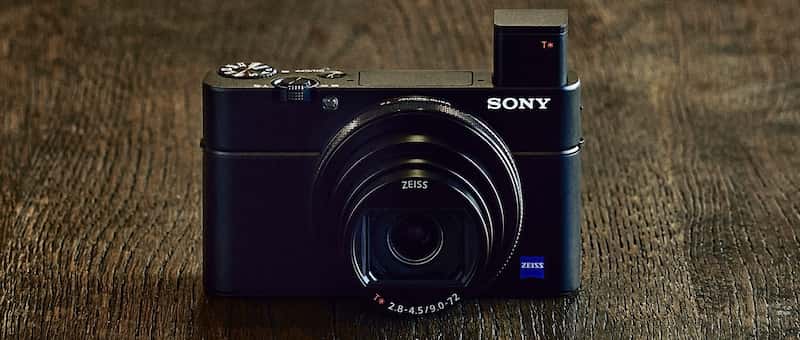
Sony has announced the Cyber-shot RX100 VI, a 1″-type compact camera with a 20.1-megapixel Exmor RS stacked CMOS sensor, 24-200mm equivalent F2.8-4.5 zoom lens, 315 phase detection points covering approximately 65% of the sensor, and the ability to shoot at 24 fps with autofocus.

The RX100 VI becomes the first in the Cyber-shot RX100-series to gain a touchscreen, allowing both touch shutter and touch focus. The screen can tilt up to 180 degree upwards and 90 degree downwards, extending shooting flexibility. The new camera is essentially the same size as its predecessor the RX100 V, but its depth has been increased slightly, by 1.8mm.

The RX100 VI includes the latest Bionz X processor with front-end LSI, as used in the most recent Alpha cameras

Sony says that the RX100 VI contains processing and experience developed in the creation of the a9 sports camera. It includes the latest Bionz X processor with front-end LSI, as used in the most recent Alpha cameras. This helps give what the company says is the world’s fastest AF (measured at 0.03 seconds) and with twice the EyeAF tracking performance of the Mark V.

The RX100 VI’s Hybrid AF system includes 315 phase detection points, covering approximately 65% of the sensor for ‘high-density tracking’.

The RX100 VI’s 24-200mm lens comprises 15 elements in 12 groups, featuring two ED (extra-low dispersion) aspherical glass elements and eight aspherical lens elements including four AA (advanced aspherical) lenses. Sony describes the pocketable camera as having “two lenses worth of interchangeable lens”, incorporating the range of a 24-70mm lens and a 70-200mm in one “do anything” camera. Meanwhile, it offers a claimed 4EV of image stabilization. Unlike its predecessor, there is no ND filter for video shooters.

LensEquivalentApertures([“Equivalent focal length (mm)”,”Panasonic ZS100″,”Canon G7 X II”,”Panasonic LX10″,”Sony RX100 V”,”Panasonic ZS200″,”Sony RX100 VI”], [[24,null,””,4.90909090909091,”Canon G7 X II at 24mm: F4.9″,3.8181818181818183,”Panasonic LX10 at 24mm: F3.8″,4.90909090909091,”Sony RX100 V at 24mm: F4.9″,9.0,”Panasonic ZS200 at 24mm: F9.0″,7.6363636363636367,”Sony RX100 VI at 24mm: F7.6″],[25,7.6363636363636367,”Panasonic ZS100 at 25mm: F7.6″,null,””,4.0909090909090917,”Panasonic LX10 at 25mm: F4.1″,5.454545454545455,”Sony RX100 V at 25mm: F5.5″,null,””,8.7272727272727284,”Sony RX100 VI at 25mm: F8.7″],[26,7.9090909090909092,”Panasonic ZS100 at 26mm: F7.9″,null,””,4.90909090909091,”Panasonic LX10 at 26mm: F4.9″,6.0000000000000009,”Sony RX100 V at 26mm: F6.0″,null,””,null,””],[27,8.1818181818181834,”Panasonic ZS100 at 27mm: F8.2″,null,””,5.454545454545455,”Panasonic LX10 at 27mm: F5.5″,null,””,null,””,null,””],[28,null,””,null,””,6.0000000000000009,”Panasonic LX10 at 28mm: F6.0″,6.8181818181818183,”Sony RX100 V at 28mm: F6.8″,9.5454545454545467,”Panasonic ZS200 at 28mm: F9.5″,null,””],[29,null,””,null,””,6.8181818181818183,”Panasonic LX10 at 29mm: F6.8″,null,””,null,””,null,””],[30,8.7272727272727284,”Panasonic ZS100 at 30mm: F8.7″,null,””,null,””,null,””,null,””,null,””],[31,null,””,null,””,7.6363636363636367,”Panasonic LX10 at 31mm: F7.6″,null,””,null,””,null,””],[32,9.0,”Panasonic ZS100 at 32mm: F9.0″,6.0000000000000009,”Canon G7 X II at 32mm: F6.0″,null,””,7.6363636363636367,”Sony RX100 V at 32mm: F7.6″,null,””,9.5454545454545467,”Sony RX100 VI at 32mm: F9.5″],[34,9.2727272727272734,”Panasonic ZS100 at 34mm: F9.3″,null,””,null,””,null,””,null,””,null,””],[35,null,””,null,””,null,””,null,””,10.090909090909092,”Panasonic ZS200 at 35mm: F10.1″,null,””],[36,9.5454545454545467,”Panasonic ZS100 at 36mm: F9.5″,null,””,null,””,null,””,null,””,null,””],[39,null,””,6.8181818181818183,”Canon G7 X II at 39mm: F6.8″,null,””,null,””,null,””,null,””],[40,null,””,null,””,null,””,null,””,null,””,10.90909090909091,”Sony RX100 VI at 40mm: F10.9″],[50,null,””,null,””,null,””,null,””,11.454545454545457,”Panasonic ZS200 at 50mm: F11.5″,null,””],[54,null,””,7.6363636363636367,”Canon G7 X II at 54mm: F7.6″,null,””,null,””,null,””,null,””],[70,null,””,null,””,null,””,7.6363636363636367,”Sony RX100 V at 70mm: F7.6″,12.81818181818182,”Panasonic ZS200 at 70mm: F12.8″,null,””],[72,null,””,null,””,7.6363636363636367,”Panasonic LX10 at 72mm: F7.6″,null,””,null,””,null,””],[90,null,””,null,””,null,””,null,””,13.636363636363637,”Panasonic ZS200 at 90mm: F13.6″,null,””],[100,null,””,7.6363636363636367,”Canon G7 X II at 100mm: F7.6″,null,””,null,””,null,””,null,””],[109,null,””,null,””,null,””,null,””,null,””,12.272727272727273,”Sony RX100 VI at 109mm: F12.3″],[135,null,””,null,””,null,””,null,””,15.545454545454547,”Panasonic ZS200 at 135mm: F15.5″,null,””],[144,15.818181818181818,”Panasonic ZS100 at 144mm: F15.8″,null,””,null,””,null,””,null,””,null,””],[157,16.090909090909093,”Panasonic ZS100 at 157mm: F16.1″,null,””,null,””,null,””,null,””,null,””],[160,null,””,null,””,null,””,null,””,15.818181818181818,”Panasonic ZS200 at 160mm: F15.8″,null,””],[200,null,””,null,””,null,””,null,””,16.636363636363637,”Panasonic ZS200 at 200mm: F16.6″,12.272727272727273,”Sony RX100 VI at 200mm: F12.3″],[250,16.090909090909093,”Panasonic ZS100 at 250mm: F16.1″,null,””,null,””,null,””,17.181818181818183,”Panasonic ZS200 at 250mm: F17.2″,null,””],[300,null,””,null,””,null,””,null,””,17.454545454545457,”Panasonic ZS200 at 300mm: F17.5″,null,””],[360,null,””,null,””,null,””,null,””,17.454545454545457,”Panasonic ZS200 at 360mm: F17.5″,null,””]], {“isMobile”:false})

The RX100 VI’s XGA OLED pop-up EVF is similar to previous models in the series, but once popped-up, the finder optics no longer need to be manually extended for use.

Sample Gallery:

$ (document).ready(function() { SampleGalleryV2({“containerId”:”embeddedSampleGallery_6192027586″,”galleryId”:”6192027586″,”isEmbeddedWidget”:true,”selectedImageIndex”:0,”isMobile”:false}) });

On the video front, the RX100 VI is capable of full-width, oversampled 4K video with support for 8-bit HLG (Hybrid Log Gamma) for easy HDR capture. The RX100 VI is also able to record superslow motion video at either 250, 500 or 1000 fps.

The new Sony Cyber-shot RX100 VI will ship next month, priced at $ 1200 (£1,150 in the UK).

At the same press conference, Sony also announced the VCT-SGR1 shooting grip, designed for the RX0 and RX100-series cameras. The VCT-SGR1 includes camera controls, an adjustable head and built-in tripod. It will be available in September for around $ 100.

Press release:

Sony’s New RX100 VI Combines Versatile 24-200mm Large Aperture, High Magnification Zoom Lens with World’s Fastest AF Speed

  • Maintains compact body size of acclaimed RX100 series while adding a ZEISS® Vario-Sonnar T* 24-200mm F2.8 – F4.5 Large Aperture High Magnification Zoom Lens
  • World’s Fastest 0.03 seconds AF speed combined with 315 focal-plane phase-detection AF points covering approximately 65% of frame
  • 1.0-type stacked 20.1 MP Exmor RS™ CMOS image sensor with DRAM chip and upgraded BIONZ X™ image processor and Front-end LSI
  • High-speed continuous shooting at up to 24 fps with full AF/AE tracking
  • Optical image stabilization equivalent to a 4.0-stop faster shutter speed
  • High Resolution 4K Movie Shooting with full pixel readout and no pixel binning plus 4K HDR for instant HDR workflow

NEW YORK, Jun.5, 2018 – Sony – a worldwide leader in digital imaging and the world’s largest image sensor manufacturer – has today announced another exciting model for their popular Cyber-shot RX100 series of compact cameras, the RX100 VI (model DSC-RX100M6).

The innovative new RX100 VI camera is the first of all the RX100 models to include a high magnification zoom lens, as it packs in an impressive ZEISS® Vario-Sonnar T* 24-200mm F2.8 – F4.5 lens yet doesn’t sacrifice the pocket-size portability, fast responsiveness and high image quality that has become the hallmark of Sony’s RX100 lineup. It’s extensive zoom, impressive image quality and versatility for both still images and video make it an ideal choice for capturing daily life, cityscapes, portraiture, sports, wildlife and everything in between.

The new model is equipped with a 20.1 MP 1.0-type stacked Exmor RS™ CMOS image sensor with DRAM chip and an upgraded BIONZ X™ image processing system with a front-end LSI that maximizes processing speed and optimizes image quality in all shooting environments. Additionally, the RX100 VI features an incredibly efficient Fast Hybrid AF system with 315-point phase-detection AF points on the sensor that can acquire focus in as little as 0.03 seconds, the world’s fastest AF acquisition time for 1.0-type sensor cameras. It can also shoot at up to 24 fps at full resolution with continuous AF/AE tracking and produces beautiful 4K video with full pixel readout and no pixel binning.

“We’re continuing to innovate our RX camera lineup, providing our customers new and different ways to capture what they’ve never been able to capture before,” said Neal Manowitz, Vice President of Digital Imaging for Sony Electronics. “The new RX100 VI is the latest example, delivering extensive reach, extremely advanced autofocus, high-speed shooting and more, while still being able to slip easily into your pocket. It’s the ultimate pocket travel camera.”

New High-Magnification 24-200mm Zoom Lens plus Outstanding Image Quality

A first for Sony’s RX100 series of cameras, the new ZEISS® Vario-Sonnar T* 24-200mm F2.8 – F4.5 lens packs the power of both 24-70mm and 70-200mm focal lengths into a singular compact design. This is achieved thanks to its unique design featuring two ED (extra-low dispersion) aspherical glass elements and eight aspherical lens elements including four AA (advanced aspherical) lenses. All pieces work together seamlessly to deliver outstanding sharpness from corner-to-corner at all focal lengths, maintaining the acclaimed image quality of the RX100 series.

The impressive new lens on the RX100 VI maintains a large aperture throughout the entire zoom range, ensuring portraits can be created with beautiful background defocus, fast moving subjects can be captured with crisp focus and no blurring, and much more. Additionally, the lens has built-in Optical SteadyShotTM image stabilization that is equivalent to a 4.0-stopvifaster shutter speed, helping to prevent camera shake or blurry imageseven in a low-light condition or at telephoto zoom range.

Lightning-Fast AF Performance and Shooting Speeds

The new RX100 VI model features a Fast Hybrid AF system that ultimately allows the camera to lock focus in as little as 0.03 seconds. This innovative AF system combines the respective advantages of 315-point focal-plane phase-detection AF points that cover approximately 65% of the sensor and contrast-detection AF. This high speed focusing complements the versatile 24-200mm range of the lens, ensuring all subjects can be captured with precise detail and clarity.

Additionally, a first for the RX100 series of cameras, the RX100 VI includes Sony’s advanced High-density Tracking AF technology, which concentrates AF points around a subject to improve tracking and focus accuracy. The popular Eye AF technology is also available with approximately 2x the tracking performance of the current RX100 series model[ix]. Further, the camera has LCD touch focusing and touchpad focus point control for users that would like to drag their fingers to ideal focus points of their choice.

An ideal complement to the AF system, the RX100 VI offers continuous high-speed shooting at up to 24 fps with full AF/AE tracking, with an impressive buffer limit of up to 233 images. The display lag of the EVF has been substantially reduced compared to prior models, allowing shooters to capture the decisive moment with ultimate confidence. Also, for convenience during image playback, continuously shot images can be displayed in groups instead of individual shots.

The RX100 VI also has a high speed Anti-Distortion Shutter (maximum shutter speed of up to 1/32000 second) that reduces the “rolling shutter” effect commonly experienced with fast moving subjects, and can shoot completely silently in all modes, including continuous high speed shooting, when electronic shutter is engaged. A mechanical shutter mode is also available as well if required by the user.

Advanced Movie Capabilities Including 4K HDR

The pocket-friendly RX100 VI is packed with a variety of video capabilities that will satisfy even the most demanding video enthusiasts.

With Fast Hybrid AF, the focal-plane phase-detection AF points ensures accurate focusing and tracking performance, even for the severe focusing requirements of 4K movie shooting. AF drive speed and AF tracking sensitivity can also be adjusted via the menu system, giving shooters plenty of flexibility based on their focusing preferences.

In 4K mode, the new RX100 VI utilizes full pixel readout without pixel binning to ensure that all the finer details of 4K video are captured with minimal moire and ‘jaggies’.

For the first time in a Cyber-shot camera, the RX100 VI features 4K HDR compatibility thanks to its new HLG (Hybrid Log-Gamma) picture profile that offers an instant HDR workflow solution. Additional professional caliber video features include S-Log3/S-Gamut3, 120p Full HD mode, Picture Profile, proxy recording and more. The RX100 VI is also able to record super slow motion video at either 240fps, 480 fps or 960 fps.

Premium Design, Control and Convenience

The new RX100 VI is equipped with a high-contrast 2.35 million dot XGA OLED Tru-Finder™ with ZEISS®T* Coating, ensuring true-to-life image preview and playback functionality. The EVFitselfretracts in and out of the camera body based on user preference, and can be activated instantly by asingle One-push Access button.

A first for Sony’s RX series, RX100 VI has a touch shutter that can be activated by tapping the back LCD screen, a zoom lever with customizable zoom speeds and an LCD that can be rotated 180 degrees upward or 90 degrees downward for a variety of shooting angles for the creator. There is also aMonitor Auto OFF function that boosts max number of still images by up to 30%, and the camera is also Wi-Fi®, NFC™ and Bluetooth® compatible.

Pricing and Availability

The new Sony Cyber-shot RX100 VI compact camera will ship next month for about $ 1,200 US and $ 1,600 CA.

Sony Cyber-shot RX100 VI specifications

Price
MSRP $ 1200/£1150
Body type
Body type Compact
Body material Aluminum
Sensor
Max resolution 5472 x 3648
Other resolutions 3:2 (3888 x 2592, 2736 x 1824), 4:3 (4864 x 3648, 3648 x 2736, 2592 x 1944), 16:9 (5472 x 3080, 3648 x 2056, 2720 x 1528), 1:1 (3648 x 3648, 2544 x 2544, 1920 x 1920)
Image ratio w:h 1:1, 4:3, 3:2, 16:9
Effective pixels 20 megapixels
Sensor photo detectors 21 megapixels
Sensor size 1″ (13.2 x 8.8 mm)
Sensor type BSI-CMOS
Processor Bionz X
Color space sRGB, AdobeRGB
Color filter array Primary color filter
Image
ISO Auto, 125-12800
Boosted ISO (minimum) 80
Boosted ISO (maximum) 25600
White balance presets 9
Custom white balance Yes
Image stabilization Optical
CIPA image stabilization rating 4 stop(s)
Uncompressed format RAW
JPEG quality levels Extra fine, fine, standard
File format
  • JPEG (Exif v2.3, DCF v2.0)
  • Raw (Sony ARW v2.3)
Optics & Focus
Focal length (equiv.) 24–200 mm
Optical zoom 8.3×
Maximum aperture F2.8–4.5
Autofocus
  • Contrast Detect (sensor)
  • Phase Detect
  • Multi-area
  • Center
  • Selective single-point
  • Tracking
  • Single
  • Continuous
  • Face Detection
  • Live View
Autofocus assist lamp Yes
Digital zoom Yes (3.8x)
Manual focus Yes
Normal focus range 8 cm (3.15)
Macro focus range 8 cm (3.15)
Number of focus points 315
Screen / viewfinder
Articulated LCD Tilting
Screen size 3
Screen dots 1,228,800
Touch screen Yes
Screen type TFT LCD
Live view Yes
Viewfinder type Electronic
Viewfinder coverage 100%
Viewfinder magnification 0.59×
Viewfinder resolution 2,359,296
Photography features
Minimum shutter speed 30 sec
Maximum shutter speed 1/2000 sec
Maximum shutter speed (electronic) 1/32000 sec
Exposure modes
  • Auto
  • Program Auto
  • Aperture Priority
  • Shutter Priority
  • Manual Exposure
Scene modes
  • Portrait
  • Sports Action
  • Macro
  • Landscape
  • Sunset
  • Night Scene
  • Handheld Twilight
  • Night Portrait
  • Anti Motion Blur
  • Pet Mode
  • Gourmet
  • Fireworks
  • High Sensitivity
Built-in flash Yes
Flash range 5.90 m (at Auto ISO)
External flash No
Drive modes
  • Single
  • Continuous
  • Self-timer (single, continuous)
  • Single/continuous bracketing
  • WB bracketing
  • DRO bracketing
Continuous drive 24.0 fps
Self-timer Yes
Metering modes
  • Multi
  • Center-weighted
  • Spot
Exposure compensation ±3 (at 1/3 EV steps)
AE Bracketing ±3 (3 frames )
WB Bracketing Yes
Videography features
Format MPEG-4, AVCHD, XAVC S
Modes
  • 3840 x 2160 @ 30p / 100 Mbps, XAVC S, MP4, H.264, Linear PCM
  • 3840 x 2160 @ 30p / 60 Mbps, XAVC S, MP4, H.264, Linear PCM
  • 3840 x 2160 @ 25p / 100 Mbps, XAVC S, MP4, H.264, Linear PCM
  • 3840 x 2160 @ 25p / 60 Mbps, XAVC S, MP4, H.264, Linear PCM
  • 3840 x 2160 @ 24p / 100 Mbps, XAVC S, MP4, H.264, Linear PCM
  • 3840 x 2160 @ 24p / 60 Mbps, XAVC S, MP4, H.264, Linear PCM
  • 1920 x 1080 @ 120p / 100 Mbps, XAVC S, MP4, H.264, Linear PCM
  • 1920 x 1080 @ 120p / 60 Mbps, XAVC S, MP4, H.264, Linear PCM
  • 1920 x 1080 @ 100p / 100 Mbps, XAVC S, MP4, H.264, Linear PCM
  • 1920 x 1080 @ 100p / 60 Mbps, XAVC S, MP4, H.264, Linear PCM
  • 1920 x 1080 @ 60p / 50 Mbps, XAVC S, MP4, H.264, Linear PCM
  • 1920 x 1080 @ 60p / 28 Mbps, MP4, H.264, AAC
  • 1920 x 1080 @ 60p / 28 Mbps, AVCHD, MTS, H.264, Dolby Digital
  • 1920 x 1080 @ 60i / 24 Mbps, AVCHD, MTS, H.264, Dolby Digital
  • 1920 x 1080 @ 60i / 17 Mbps, AVCHD, MTS, H.264, Dolby Digital
  • 1920 x 1080 @ 50p / 50 Mbps, XAVC S, MP4, H.264, Linear PCM
  • 1920 x 1080 @ 50p / 28 Mbps, MP4, H.264, AAC
  • 1920 x 1080 @ 30p / 50 Mbps, XAVC S, MP4, H.264, Linear PCM
  • 1920 x 1080 @ 30p / 16 Mbps, MP4, H.264, AAC
  • 1920 x 1080 @ 25p / 50 Mbps, XAVC S, MP4, H.264, Linear PCM
  • 1920 x 1080 @ 25p / 16 Mbps, MP4, H.264, AAC
  • 1920 x 1080 @ 24p / 50 Mbps, XAVC S, MP4, H.264, Linear PCM
  • 1920 x 1080 @ 24p / 24 Mbps, AVCHD, MTS, H.264, Dolby Digital
  • 1920 x 1080 @ 24p / 17 Mbps, AVCHD, MTS, H.264, Dolby Digital
  • 1280 x 720 @ 30p / 6 Mbps, MP4, H.264, AAC
  • 1280 x 720 @ 25p / 6 Mbps, MP4, H.264, AAC
Microphone Stereo
Speaker Mono
Storage
Storage types SD/ SDHC/SDXC, Memory Stick Pro Duo/ Pro-HG Duo
Connectivity
USB USB 2.0 (480 Mbit/sec)
HDMI Yes (micro-HDMI with uncompressed 4K/30p output)
Microphone port No
Headphone port No
Wireless Built-In
Wireless notes 802.11b/g/n with NFC
Remote control Yes (wired or smartphone)
Physical
Environmentally sealed No
Battery Battery Pack
Battery description NP-BX1 lithium-ion battery & USB charger
Battery Life (CIPA) 240
Weight (inc. batteries) 301 g (0.66 lb / 10.62 oz)
Dimensions 102 x 58 x 43 mm (4.02 x 2.28 x 1.69)
Other features
Orientation sensor Yes
Timelapse recording No
GPS None

Articles: Digital Photography Review (dpreview.com)

 
Comments Off on Sony announces Cyber-shot RX100 VI with 24-200mm zoom

Posted in Uncategorized


Sony Cyber-shot RX100 VI sample gallery updated

08 Jun

$ (document).ready(function() { SampleGalleryV2({“containerId”:”embeddedSampleGallery_8189628340″,”galleryId”:”8189628340″,”isEmbeddedWidget”:true,”selectedImageIndex”:0,”isMobile”:false}) });

The Sony RX100 VI is only a few days old, but we’ve already been out shooting with it quite a bit. Sony’s RX100 series represents some of the most advanced technology we’ve ever seen in a compact camera, and the latest iteration makes an interesting shift to a longer lens range. Take a look at the latest images we’ve added to our existing sample gallery.

Articles: Digital Photography Review (dpreview.com)

 
Comments Off on Sony Cyber-shot RX100 VI sample gallery updated

Posted in Uncategorized


Sony Cyber-shot RX100 VI first impressions

07 Jun

The longer lens of RX100 VI was immediately apparent when it came to shooting portraits. Even for this fairly wide shot I used a longer focal length (84mm equiv) than the RX100 III, IV and V offered.

ISO 125 | 1/125 sec | F4 | 83mm equiv.

Unsurprisingly, perhaps, the first thing that really hit me when shooting with the RX100 VI was the lens range. Which is pretty impressive. While I’ve personally always been happy to forego a bit of lens length if it means keeping the lens fast, I’ll be the first to admit there are times when you feel the limits of that approach. The lens used on the RX100 III, IV and V was lovely and bright but its 70mm equiv. zoom isn’t very satisfying for head-and-shoulders portraits, for instance. The Mark VI has no such problems and made it easy for me to shoot a variety of ‘people’ pictures as I walked along New York’s Highline.

I found myself appreciating the extra reach almost immediately, but I suspect it’ll take longer to get a sense for how much has been lost

You don’t get something for nothing, of course. The RX100 VI’s maximum aperture ranges from F2.8 to 4.5. Impressively this means it’s brighter at the long end than the original RX100, despite offering twice the focal length in a similarly-sized body. However, you lose a stop and a third of brightness, compared with previous RX100s, at the wide end. I found myself appreciating the extra reach almost immediately, but I suspect it’ll take longer to get a sense for how much has been lost, especially in terms of low-light capability, when shooting wide.

This wouldn’t be the first time I’ve been left with mixed feelings about a camera in the RX100 series. Equally, though, it’s not the first time I’ve looked back at my images and found myself thinking ‘that’s really quite impressive for such a small camera.’

Touchscreen and controls

Despite the very different lens, another thing that very quickly made itself apparent was that this is still, for better or worse, an RX100. As such it takes great pictures but, broadly speaking, prefers to be used as a ($ 1200) point-and-shoot, rather than a camera that invites direct control.

The touchscreen relieves some of the pressure on the camera in that there’s now a quick and easy way to specify an autofocus point. There’s a slight lag after you touch the screen but it works pretty well. I also found that configuring the left-hand side of the screen to act as a touchpad, when shooting through the viewfinder worked pretty well for me. But, at least for people pics, I found myself not really wanting to specify an AF point at all. Instead, holding down the central button on the back of the camera engaged EyeAF, meaning I could leave the camera to focus on my subject’s eye while I worried about composition and blathering away about why I wanted to take their photo.

130mm equiv at F4.5 gives the same depth-of-field as shooting at F12 on full frame, but with the background far enough away, you can still draw attention to your subject.

ISO 125 | 1/320 sec | F4.5 | 130mm equiv.

As with other recent Sonys, the touchscreen is only really used for setting the focus point. The Fn and main menus still require you to navigate using the four-way controller. This of course means the RX100 series still hasn’t caught up with the near-immediate tap the screen, click the lens ring level of control offered by the likes of the Olympus XZ-2, even after nearly six years and as many iterations.

Responsiveness

The RX100 VI is responsive and fast-to-focus enough for spur-of-the-moment candid shots.

ISO 125 | 1/320 sec | F4.5 | 55mm equiv.

Aside from the touchscreen, the camera is very responsive, as you might expect from a a model that can shoot at 24 frames per second, while maintaining full autofocus. However, shoot a burst and you start to notice just how much data that entails. The RX100 VI has a UHS-I style card slot, so can’t take advantage of the faster write speeds of the latest cards, which can sometimes mean having to wait for the buffer countdown to end before being able to make the settings change you want.

Like recent Sony models, there’s still plenty you can do while the camera is writing to the card. Most crucially, you can keep shooting, so it’s not going to cause you to miss a shot. But I did find myself sometimes wanting to drop out of continuous drive mode, but being unable to because the camera was still saving the images from the previous burst.

The lack of built-in ND filter severely limits what would otherwise be impressive video specifications

I was slightly surprised by how much difference the new ‘one-touch’ viewfinder mechanism made. I’d never thought of the two stage: pop-up and pull action as being that onerous but eliminating the need to pull out the eye frame and, perhaps more importantly, the need to push it back in before pressing the finder back into the body, makes the whole process quicker. I found myself using the viewfinder more often as a result. Though I’m going to have to disengage the function that shuts the camera off when you close the viewfinder…

Clouds in a bright sky

Although I didn’t encounter it (as I’ve mainly been shooting stills so far), there’s another small change that is likely to make a significant difference to me, and anyone else who enjoys shooting video. The lack of built-in neutral density (ND) filter severely limits what would otherwise be impressive video specifications.

Without an ND filter, or any way to easily attach one, it’s difficult to maintain anywhere near the 1/50th or 1/60th of a second shutter speeds that filmmakers will typically aim for. It’s a problem I encountered recently when shooting with the Panasonic ZS200, meaning I simply couldn’t shoot video in bright light. The lens on the RX100 VI stops down a little further than that of the Panasonic, but at small apertures, diffraction negates the benefit of the RX100 VI’s detailed, oversampled 4K footage. It’s worth noting of course that if this is a limiting factor for you, the RX100 V (with its faster lens and built-in ND) is still a very capable video camera, and it remains available.

First impressions

There are times you don’t necessarily want to have to carry a full-sized camera around with you, though you do give something up in terms of direct control (don’t get me started on using a free-rotating control ring to set aperture).

ISO 125 | 1/320 sec | F4 | 54mm equiv.

Personally, I find 200mm equivalent is enough to cover most of the shooting I do. Except for very specific needs, I don’t find extending beyond that gives me much additional benefit. And my initial shooting rather confirms that for me. It was liberating to be able to shoot at 200mm equiv with a relatively large sensor camera with a reasonably bright aperture, yet then be able to stuff it into my jacket pocket.

But the thing that most struck me about the using RX100 VI was how often, when I showed my images to the strangers I’d just photographed, was how often I got a smile and a response along the lines of “that’s a really good camera.”

Sample gallery

$ (document).ready(function() { SampleGalleryV2({“containerId”:”embeddedSampleGallery_8189628340″,”galleryId”:”8189628340″,”isEmbeddedWidget”:true,”selectedImageIndex”:0,”isMobile”:false}) });
Articles: Digital Photography Review (dpreview.com)

 
Comments Off on Sony Cyber-shot RX100 VI first impressions

Posted in Uncategorized


Sony Cyber-shot RX100 VI sample gallery

07 Jun

$ (document).ready(function() { SampleGalleryV2({“containerId”:”embeddedSampleGallery_8189628340″,”galleryId”:”8189628340″,”isEmbeddedWidget”:true,”selectedImageIndex”:0,”isMobile”:false}) });

The Sony Cyber-shot RX100 VI represents a slight departure from the models that preceded it, breaking the mold with a 24-200mm equiv. zoom. We’ve been shooting with the new camera in New York, and we’ve prepared an initial JPEG sample gallery to give you an idea of how well it performs.

Click the link above to check out our images, and and keep an eye on our homepage for updates as we continue shooting with the latest member of the RX100 family.

Learn more about the Sony Cyber-shot RX100 VI

Articles: Digital Photography Review (dpreview.com)

 
Comments Off on Sony Cyber-shot RX100 VI sample gallery

Posted in Uncategorized


Sony Cyber-shot RX100 VI: Video overview

07 Jun

The Sony Cyber-shot RX100 VI, is a 1″-type compact camera with a 20.1-megapixel Exmor RS stacked CMOS sensor and a 24-200mm equivalent F2.8-4.5 zoom lens. We’ve been shooting with one since it was announced yesterday, and have prepared a brief overview video from the launch event in New York.

Learn more about the Sony Cyber-shot RX100 VI

Articles: Digital Photography Review (dpreview.com)

 
Comments Off on Sony Cyber-shot RX100 VI: Video overview

Posted in Uncategorized