RSS
 

Posts Tagged ‘Rule’

Instagram says viral meme about new content ‘rule’ is a hoax

22 Aug

Instagram has dismissed another viral spam image that is circulating on its platform, this one claiming that, starting tomorrow, all user content will be made public (including deleted messages) and that the company will be able to use images against users in court. Instagram brand communications manager Stephanie Otway told WWD, ‘There’s no truth to this post.’

The image has gone viral thanks to, in part, accounts with large numbers of followers that reshared the claim, including ones belonging to musicians, actors and politicians. The image tells viewers that they must reshare the meme to prevent Instagram from using their images and other account details, but doing so is pointless and only helps surface the spam content.

This isn’t the first time claims related to user content have gone viral on social media. Facebook was forced to address similar claims in 2012 and again in 2015, for example. Instagram details the information it gathers on users and how it utilizes that information on its official Data Policy.

Articles: Digital Photography Review (dpreview.com)

 
Comments Off on Instagram says viral meme about new content ‘rule’ is a hoax

Posted in Uncategorized


Proposed rule changes would make it easier for drones to fly at night, above crowds

15 Jan

Despite a partial government shutdown in the United States, Transportation Secretary Elaine Chao announced a new proposed rule that would simplify the process of flying drones at night and over crowds of people by removing the need for waivers.

The proposed rule, which can be read as a draft (PDF), would remove the need for commercial drone operators to file for waivers granting them permission to fly both at night and over large gatherings of people. It would also drones to have ‘an anti-collision light illuminated and visible for at least 3 statute miles, according to the document proposal.

‘This will help communities reap the considerable economic benefits of this growing industry, and help our country remain a global technology leader,’ said Chao in her statement to the nonprofit Transportation Research Board.

DJI chimed in on the proposed rule change with a blog post on its website that begins by stating:

DJI, the world’s leader in civilian drones and aerial imaging technology, welcomes the U.S. Department of Transportation’s proposals announced today to help expand the use of drones in America, and looks forward to a substantive discussion that balances the requirements of the proposed rules with the benefits they would achieve.

The proposed rule change also lists out new rules for smaller drones. Specifically, drones weighing less than .55lbs / 250g would be able to fly over crowds without any new restrictions. However, drones weighing more would need their manufacturers to prove that if the drone ‘crashed into a person, the resulting injury would be below a certain severity threshold,’

The proposed rule change will be open for public comment for 60 days before anything can be set in stone.

Articles: Digital Photography Review (dpreview.com)

 
Comments Off on Proposed rule changes would make it easier for drones to fly at night, above crowds

Posted in Uncategorized


Center Field – 9 Acceptable Ways For Breaking Rule of Thirds in Photography

22 Nov

When starting, most photographers tend to shoot all subjects center-frame. As they learn more about photography and composition, they learn that centering a subject is not appealing and that they must follow the ‘Rule of Thirds’ to have a good composition. What if I suggest breaking Rule of Thirds?

The Rule of Thirds

The Rule of Thirds is taking a frame and dividing it into three equal sections both horizontally and vertically, creating a rectangular ‘tic-tac-toe’ box. Framing a subject so that it falls on one of the four intersecting points of that box can sometimes make an image more appealing to a viewer engaging with it.

2 - Breaking Rule of Thirds in Photography

Implementing the Rule of Thirds.

While you may not perfectly frame your subject to fall within one of those four points, if your subject falls on one of the four internal lines within the box, in most cases, it still gives a better appeal than a centered image.

When It’s a Good Idea to Center Your Subject

1. Centering as a Compositional Tool

Placing your subject dead-center can work to your benefit if the subject still tends to comply with the Rule of Thirds guideline. Such as, when more than one point of focus falls on more than one line within that ‘Rule of Thirds’ box as shown in the image below.

The sets of pillars fall on one of the two vertical lines in the frame according to the Rule of Thirds even though the entire image is centered.

2. Place Focus on Your Main Subject

Sometimes when there is a busy foreground or background, placing your subject dead-center helps to draw the viewer’s attention to it. While the image below shows much texture, centering the stool brings focus to it.

4- Breaking Rule of Thirds in Photography

Bring better focus to a subject by centering.

3. Emphasize Symmetry

You may sometimes run into a subject that has a symmetrical value to it. The item could include columns at a building’s entrance, a person’s face or something with repetitional characteristics. Centering the subject, in this case, allows the viewer to relax because the order in the image makes sense.

5- Breaking Rule of Thirds in Photography

This nonsymmetrical image is not as appealing as the image below.

In the next image, there is a sense of order due to the equal number of pillars to the right and left of the fountain, producing symmetry.

6 - Breaking Rule of Thirds in Photography

This image represents symmetry.

4. Draw the Viewer’s Eye Inward

One of the most common goals for a photographer is to draw a viewer’s attention into the image instead of out of it. Straight roadways, paths, or sidewalks are great examples that keep your viewer’s attention within the frame – by drawing the eye inward.

The hall and chandeliers are centered taking the eye inward into the photo.

5. Create a Sense of Size and Space

Centering a subject can often showcase its size, especially when surrounded by people, buildings or other objects that serve as a comparison. Such as in the image below.

8 - Breaking Rule of Thirds in Photography

Centering a subject can sometimes emphasize the size of a subject.

Centering a subject can also give a sense of space. A good example is when there is water or cityscape in the foreground of an image and a clear sky in an upper part of the image. See an example below.

9 - Breaking Rule of Thirds in Photography

Centering the Eiffel Tower in this image works to show a sense of space.

6. Square Image Format

A great way to justify centering an image is when you use the square image format. A square has all equal sides in length, so placing a subject dead-center works well. I also like it because, in most cases, it’s an equal distance from the subject to all edges of the sides.

Centering the Eiffel Tower in this image works to show a sense of space.

7. Shooting With Shallow Depth of Field

When you open up your aperture and shoot with shallow depth of field around your subject, it creates a more three-dimensional feel, adding depth to your image. In this case, centering your subject works because it washes out distraction around your subject, as in the image below.

11 - Breaking Rule of Thirds in Photography

Shooting with a shallow depth of field.

8. Overcoming Location Difficulties

Sometimes the location of a fixed subject makes it difficult to capture a stunning shot. During these times try to get creative, as I did in the image of the clock at Grand Central Terminal in New York City below. I could’ve taken that shot from any number of directions or angles. However, for a better shot, I centered it at an angle that included the American flag in the background.

12 - Breaking Rule of Thirds in Photography

Center a subject to overcome location difficulties.

9. Simplicity

You know the saying, ‘less is more?’ While placing a subject off-center adds tension to an image, placing a subject dead center can give a calm and orderly feeling. In addition, placing your subject in a central position is like opening a book to its story. You are making it the most important element in the image. A natural environment, a natural face – it’s an open book. What is your subject’s story that you are introducing to your viewers?

13 - Breaking Rule of Thirds in Photography

Simplicity

Tying It Altogether…

Some ‘rules’ are meant to be broken. The Rule of Thirds is not the only way to guarantee a good composition. As long as you understand why you’re breaking the rules and foregoing guidelines with a specific intention, your images can be as compelling subject-centered as with your subject off-center.

The post Center Field – 9 Acceptable Ways For Breaking Rule of Thirds in Photography appeared first on Digital Photography School.


Digital Photography School

 
Comments Off on Center Field – 9 Acceptable Ways For Breaking Rule of Thirds in Photography

Posted in Photography


Ask the staff: Pick one focal length or lens to rule them all

27 Mar
Can you guess the focal length? Photo by Wenmei Hill

We handle a lot of glass in the DPReview office, but there always seems to be a handful of lenses or fixed lens cameras that everyone is extra eager to lay some paws on. Which got us thinking of a fun hypothetical: If we could only choose one lens to use for the rest of time, what would it be?

To keep things interesting, and to vary the answers, we opened the question up to include one lens in particular or one focal length. The photograph that accompanies each answer was shot with that staff member’s chosen lens or focal length. We purposely didn’t list the gear used. See if you can guess!

Carey Rose

Any guesses what focal length Carey gravitates toward?

Before I worked at DPReview, I would have immediately chosen the 35mm focal length. Now that I’ve worked at DPReview for some time, I have to say… I haven’t really changed my mind.

Splurging on a battered old D700 after college left me without enough money to pick up anything approaching a fast zoom, so I started building up a collection of affordable Nikon AF-D primes: a 50mm F1.8, a 35mm F2, an 85mm F1.8. I quickly realized that I just wasn’t a zoom guy, and the 35mm F2 was glued to my camera most of the time. A used X100 was a natural next step for a more portable setup when I scored a good deal on one.

Even today, after using lens after lens and camera after camera for review after review, the 35mm focal length remains my go-to. It doesn’t matter whether I’m headed to shoot an event, a wedding, an environmental portrait, or just strolling around when some nice light hits, it’s more likely I’ll have a 35mm lens with me than any other.

Wenmei Hill

Wenmei likes versatility. Did she choose a zoom or a prime?

I’m going to take the easy way out and pick a zoom lens rather than a single focal length. My choice is the Nikon AF-S 24-120mm F4G ED VR, and my excuse is that the majority of shooting I do (documentary lifestyle and candid portraiture) requires a flexibility that is difficult to get with a single focal length.

I’m choosing the 24-120mm even though it’s not one of my ‘favorite’ lenses because it is relatively small, lightweight and versatile enough to get the variety of shots I look for when photographing. I am able to immerse myself in a scene at 24mm but also step back for a portrait at 120mm, using the longer focal length to get pleasing bokeh and separation from the background.

Shooting it on a DX-format body gives me even more reach at the long end (180mm equivalent) for portraits. I already use this lens as my everyday lens when I don’t have a particular creative plan and want to be prepared for anything, so it’s the one I’d choose if I had to pick just one.

Dale Baskin

Dale chose a specific focal length that he didn’t always love. Can you guess what it is?

This will probably seem like I’m going for the low hanging fruit, but I would choose 35mm. I used to be a solid 50mm guy, and if I wanted to go a bit wider I switched to 28mm, skipping 35mm entirely. My shift to 35mm began in earnest when I started shooting Fujifilm’s X100 series of cameras, which have a 35mm equivalent lens.

Now, one could argue that I’m choosing 35mm because I really enjoy the camera to which it’s attached, but that’s not the case. In fact, when I first started shooting the X100 I enjoyed it despite the focal length. It was actually the one thing I didn’t care for about the camera. However, as I continued to use it, I learned to adjust my style to take advantage of the 35mm field of view. After a few months, I found myself really enjoying it, so I decided to do a little experiment: I was about to embark on a trip to Brazil and decided to shoot my entire adventure at 35mm. The idea was both exciting and scary; I knew from experience that I would be giving up some shots by not having the right lens. However, I like to travel light, and I hate carrying camera gear, so I threw down the gauntlet and accepted my own challenge.

The upshot? I had a great trip and captured a lot of memorable images. Did I miss a few shots along the way? Sure, I did. But on the flip side, I got some great photos I would have otherwise missed because I forced myself to visualize every scene at 35mm instead of mentally switching to a different focal length. Now, no matter what camera I happen to be testing, one of the first lenses I always put on the front is a 35mm (or equivalent).

Sam Spencer

Sam chose a specialty lens. This image was shot using a similar lens, albeit with a different focal length. Do you know what it is?

Forever? Forever ever? I’m sure I could do the practical thing and say ’24-70’, or be a motorsports spectator the rest of my life and say ’70-200’, but I’m weirder than that. If it was a lens for me to shoot what makes me happy for the rest of my days, it’d be the Nikon PC-E 85mm F2.8 for product, portrait, and automotive photography. The maximum magnification of 1:2 means I can get close for product, and use the tilt to either get more of the product in focus, or isolate the focal point. I like medium telephoto lenses for the narrower field of view that makes selecting a background out of a busy environment much easier, and even F2.8 can be bright enough to blur the background at 85mm. I’m a control freak, not a speed demon, so I’ll be watching eBay for a copy…

Dan Bracaglia

Dan’s image was shot with the equivalent of his favorite focal length. The image was cropped in slightly, still any ideas what he chose?

The first and only lens I’d owned for many years was a 50mm. But as my interest in photography (and other activities) grew I found myself yearning for other lenses. If you’d asked me this question when I was 16 years old and shooting a lot of skateboarding, I probably would have said a fisheye is my favorite lens. If you’d asked me again when I was 18 or 19 years old and starting to get into photojournalism, I’d probably have said 24mm. If you’d ask me when I was 24-28 years-old, and reviewing cameras for a living, all why exploring the streets of NYC/Seattle, I most likely would have said 35mm. But these days, I’ve come full circle and 50mm is my focal length of choice if I could only shoot one lens for the rest of my life.

Sometimes overlooked or seen as pedestrian, there are plenty of reasons why a normal 50mm lens is number one in my heart and bag: For starters the nifty fifty is as practical as they come. Most manufacturers make a reasonably fast, yet inexpensive 50mm equiv. Moreover, I’d argue its the most versatile focal length of them all: in a pinch it can be used for portraiture or detail shots, in the same way a tele can. And it can also be used in some capacity as a wide-angle, if you have the room to move (I’ve shot many concerts with just a 50mm, without feeling a need for something wider). And if you get a reversal ring, you can mount a nifty fifty backward and use it for macro shooting!

For years I’ve carried a Nikon 50mm F1.8 in my bag as the ultimate backup for just about anything I’m shooting: weddings, concerts, portrait sessions, travel. It’s light cheap and versatile. But these days, the lens spends as much time mounted on my camera as glass I own costing 6x as much.

Jeff Keller

Jeff chose a workhorse zoom. Can you guess which one?

Since I’m always shooting with something work-related, I don’t get to use my EOS 5D III very often. But when I do, my daily driver is the Canon EF 24-105mm F4L IS USM. Not the most exciting choice of lens, I admit, but for land- and cityscapes that I enjoy taking, it definitely fits the bill. The image stabilization works well, it focuses silently and the weatherproofing is helpful when you’re out at Snoqualmie Falls and it’s throwing mist. Naturally, not long after I bought the 24-105, the Mark II arrived, with new optics, better autofocus and new coatings to reduce lens flare and ghosting. The lens is larger and heavier than my Mark I model, which I consider a good size for its focal length and aperture.

It’s nice to see that Canon isn’t the only one offering a lens with this focal range. Sigma’s 24-105mm F4 DG OS HSM Art lens is even bigger and heavier than Canon’s Mark II version, but the build quality is excellent. And, according to DxO, it’s also a sharper lens. And did I mention that it’s a bit cheaper?

Thus, if I was stranded in a world with wonderful landscapes and cool architecture, the Sigma 24-105mm F4 Art would be permanently mounted on my 5D III.

Vladimir Bobov

Vladimir is our newest DPR team member. He makes sure the site works properly. Any guesses what focal length he chose?

I wasn’t sure whether to bother praising the 50mm focal length. I figured that it’s so common, that talking about it would be either redundant at best or boring at worst. However, sorting my photo collection by focal length showed that I took more photos with a 50mm (on a 35mm full frame camera) than with any other lens, including the more versatile zooms.

So why pick the “normal” prime for the rest of my life? Versatility and portability. It’s the perfect lens for candid portraits in a casual setting – fast enough to use in low light, and small enough to not intimidate the subject. Wide enough for full-body and group portraits, and good enough for head-and-shoulders (especially when paired with an APS-C camera). I’ve also been able to use it effectively for landscapes, close-ups, product, and food photography. So although I’d certainly miss the other focal lengths, with enough creativity and trickery, the 50 and I could live happily ever after.

Richard Butler

Richard chose a favorite lens that doesn’t yet exist. This image falls toward the tele-end of his made-up range. Can you guess what it is?

If I have to live within the constraints of reality, then I’d be tempted to say a 35mm just for its Goldilocks-like flexibility. But, it seems only fair that if I agree to be bound by an arbitrary restriction, I’m should get to relax the need to limit myself to lenses that actually exist. The problem is that I really like 35-40mm equivalent lenses but also love something around 90mm equiv. for portraiture and a lifetime seems like a long time to have to go without.

Equally, if I have a 24 or 28mm equivalent lens, I get back into the habit of ‘seeing’ wide-angle scenes and I’m sure there’s some aphorism about making one’s life spicy. This is why I’m pushing back against reality: the need for a 90mm equiv, rules out the use of a 24-70mm equiv and, over time, the limiting equivalent aperture of an 18-55mm F2.8 on APS-C would leave me frustrated. Sigma’s 18-35mm F1.8 is a work of genius that I wish were available on mirrorless systems, so I’m going to put my faith in the men and women of Aizu and trust that they’ll make me a 16-60mm F2 for APS-C mirrorless. I mean, how hard could it be?

Allison Johnson

Allison chose a specific zoom lens, can you guess which one?

Maybe a truly bold person picks a prime to shoot with for the rest of their life, but I’m going to play it safe and pick a zoom, whatever that says about me. The Olympus 12-40mm F2.8 is not the very best lens I’ve ever shot with, but it’s fairly versatile, sturdy and relatively small. It’s the right size (along with the OM-D cameras I’ve used it with) so that it’s doable to carry around all day in my purse, and I like having a fairly wide 24mm equiv. out to 80mm for a little more reach when I want it.

Really, it’s not special in any way except that it’s a solid standard zoom for a system I like. I’ve had many happy days shooting with it, including one wonderful afternoon at a defunct nuclear power plant (seriously, it was awesome). If picking a zoom makes me basic, then so be it.

Barney Britton

Any guesses what lens Barney chose?

If I was trying to impress you, and if I wasn’t such a died-in-the-wool contrarian, my choice for ‘go-to’ camera and lens would be a Nikon D810 and a 35mm lens – something good, like the Nikon 35mm F1.4 or Sigma Art 35mm F1.4, or perhaps an old ’sleeper’ favorite, like the Nikon AF-D 35mm F2, for the hipsters. If you were to ask me what focal length I use most, I’d say that probably around 90% of my photography could be achieved with a 35mm lens. If you were to ask some of my comment-thread critics on the other hand, they’d tell you that 90% of my photography could be achieved with an iPhone, or their 5-year old daughter, or their blind grandmother, or their blind grandmother’s 5 year-old iPhone, but that’s beside the point.

But I’m not trying to impress you. Which is why I’m going to cheat a little, and make a case for a zoom lens, and one that doesn’t get a lot of love in these parts – the Nikon AF-S 24-120mm F4. The current version of Nikon’s ‘street-sweeper’ do-everything zoom, it’s true that the 24-120mm isn’t the sharpest lens in Nikon’s stable, or the best-controlled when it comes to distortion, or the toughest, and all the rest. It’s a kit zoom. A pretty good kit zoom, in my opinion, but still. So why – if I had to choose only one lens – would I pick the 24-120mm? Because it just works. I know that if I go out shooting with the D810 and 24-120mm, come rain or shine (or snow, or hail, or desert dust, or any of the other nasties I’ve thrown at it) I can capture pretty much anything I might want or need to. It’s almost boring. I wish I had more of an excuse to attach other lenses, but to be honest, most of the time I just don’t. I actually sold a bunch of my Nikon glass recently, because it wasn’t getting used.

The image above was taken just after a torrential downpour last December which turned into a hail storm. The camera and lens were – like me – soaked. Could I have taken it on something better? Maybe, but I wouldn’t have wanted to risk damaging a more expensive lens in those conditions. And would it be a better picture had I done so? Or a happier memory? No.

What would you choose?

If you could only shoot with one lens, or one focal length for the rest of your life, what would you choose? Feel free to share your answer in the comments! 

Articles: Digital Photography Review (dpreview.com)

 
Comments Off on Ask the staff: Pick one focal length or lens to rule them all

Posted in Uncategorized


Photography: One Hobby to Rule them All

18 Aug

Fellow photographers, let’s reflect for a moment on our mutual passion for this amazing art form, and maybe even do a little bragging about it. Photography is an incredibly rewarding hobby; in fact, it’s so rewarding that I believe it to be the best hobby one could enjoy. Here are five reasons why.

IMG 1636 dps

1. Photography complements many other hobbies

If your other hobby involves any physical thing, well then, you’re able to take beautiful photos of it! Whether it’s gardening, cars, or cooking, being able to skillfully photograph the things you spend your free time doing, only enhances the pleasure you take in those activities.

IMG 6922 dps

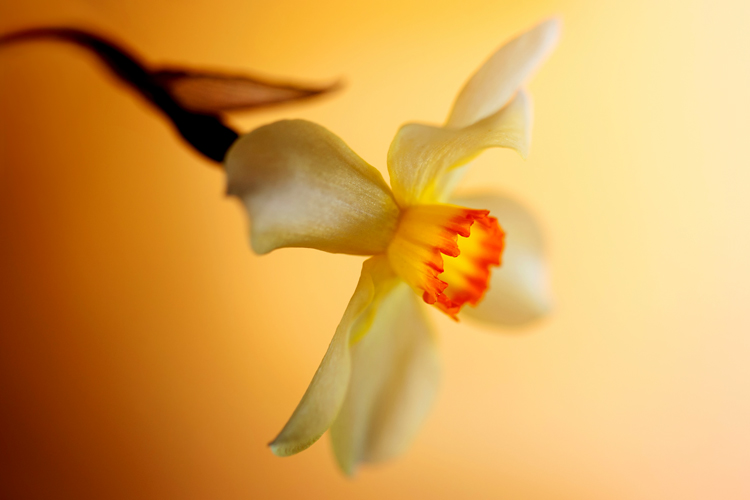
This principle extends beyond the photographer too. My mom spends all of her free time in the summer taking care of her numerous gardens (about five different flower gardens, a vegetable garden, an herb garden, and two shade gardens). She loves to see photos of the many plants that she puts so much time and energy into cultivating (and of course I love taking them; the photo below is of a daffodil that was grown by my mom this spring).

IMG 5299 dps

2. Photographers get to beautifully capture their loved ones

Anybody with a camera tends to take a billion photos of their kids, especially while they’re so little and cute – it’s pretty much impossible not to. But only photographers are knowledgeable about window lighting, reflectors, bouncing a flash, or using fast glass to make the best photos in poor lighting situations. Especially for an active little one, it takes a photographer who knows how to take control of the camera settings to get a shot that’s not blurry.

IMG 8438 dps

Aside from the kids, folks are always grateful for the photographer in the family who takes photos during holiday gatherings and special occasions. Unless the photographer corrals everybody into a group shot, it usually doesn’t get taken. There is also the candid photos of genuine moments while families enjoy each other’s company. While selfies and food photos abound, a true photographer is more focused on the meaningful moments.

All of those everyday moments matter, especially when it comes to one’s immediate family. I’m 30 years old, but I still spend Sunday evenings over at my parent’s house for family dinner. None of my immediate family particularly likes getting photographed – but every now and then I sneak in some candids. The older I get, the more these kinds of photos are cherished.

26045993031 0e0648589a o dps

3. Photographers get to relive their magic of vacation all over again

All of the wonders that we spend our hard-earned money to see make the trip back home, packed up into a few tiny memory cards.

IMG 9719 dps

There’s no doubt that anybody with a smart phone is snapping away their entire vacation. But it takes some specialized gear to really capture the most amazing travel photographs. It also takes some post-processing knowledge to make those photos wall-worthy.

For example, wide angle lenses are crucial in capturing the majesty of a stunning landscape, or perhaps some ancient architecture. Just the right amount of HDR will really bring out a landscape, or an intense black and white conversion might be the perfect touch for an architectural shot. Photographers know how to work their digital toolkit to really make the most of those beautiful vacation memories.

9233878664 aef785d3a7 o dps

4. Photographers get to see the world from a different perspective

Photography often propels us forward into new territory, that we otherwise wouldn’t experience. If there’s any beauty to be captured, we’re willing to accept the uncomfortableness that might go along with it.

Getting up before dawn on a weekend isn’t most people’s idea of a great way to start the day, but capturing a sunrise photo makes it all worth it. Dirty hands and knees are often required for getting the perfect floral or insect shot.

IMG 9521 dps

Photography connects us with nature in ways that wouldn’t exist without our cameras. I truly believe that the heart of a photographer is just a little more wild, a little more adventurous.

6573220145 6bf98a9bf7 o dps

5. Photographers are a part of one big, awesome, online community

Whether it’s Flickr, 500px, your favorite online photography forum, or maybe even your local photography club -photographers support each other. For the most part, we are ready and willing to help, to share our process, and to share what the conditions, settings and equipment were for those really amazing shots.

IMG 5622 dps

When you go looking, there is an almost never-ending source of support and encouragement for your photography. It is one of the few creative realms where we’re able to teach one another, even if we’re separated by half the planet. And that, my fellow photographers, is quite the blessing!

Does anybody have any other perks that they love about being a photographer? I’d love to hear some more reasons why photography rocks in the comments below.

googletag.cmd.push(function() {
tablet_slots.push( googletag.defineSlot( “/1005424/_dPSv4_tab-all-article-bottom_(300×250)”, [300, 250], “pb-ad-78623” ).addService( googletag.pubads() ) ); } );

googletag.cmd.push(function() {
mobile_slots.push( googletag.defineSlot( “/1005424/_dPSv4_mob-all-article-bottom_(300×250)”, [300, 250], “pb-ad-78158” ).addService( googletag.pubads() ) ); } );

The post Photography: One Hobby to Rule them All by Matt Robinson appeared first on Digital Photography School.


Digital Photography School

 
Comments Off on Photography: One Hobby to Rule them All

Posted in Photography


The Rule of Thirds – How it Can Help or Hinder Your Composition

27 Oct

How compositional rules can help or hinder your composition

Creating good photographs, and becoming a good photographer, is in general, not just about learning about your camera and all the rules of composition. These help, but while you should know your camera and have a good knowledge of technique, the biggest challenge you need to give yourself is learning to expand your perception, of the world and learn to see the world as it really is. Our minds are basically full of distractions – endless thoughts about our needs, wants, and to do lists. It’s a bit like living in a bubble which you need to break out of, so that you are fully able to see what’s happening around you, and not be distracted by your mind.

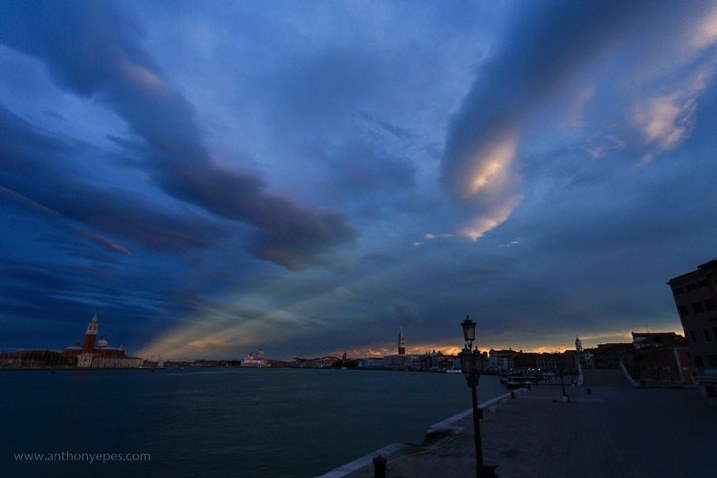
ROTAnthonyEpes 02

“It takes a lot of imagination to be a good photographer. You need less imagination to be a painter because you can invent things. But in photography everything is so ordinary; it takes a lot of looking before you learn to see the extraordinary.” – David Bailey

I think the rules of composition, and in particular the Rule of Thirds, are a great way to develop your perception. It’s not a rule you should learn and then overlay on all of your images, or your view of the world.

For me rules are a way to train your eye, so that eventually you can unleash its wild creativity. The creativity that is totally unique to you and exists in no other person.

Rules of composition:

  • Do work and help you create excellent compositions – but don’t use them all the time (don’t use anything all of the time)
  • Help you develop your perception and train your eye to see the wonders of the world
  • Create harmony between your subject and its setting

My philosophy with rules is always, “Learn the rules like a pro, so you can break them like an artist.” (Picasso said that by the way, not me).

20130116_tomi_188

Use them like a tool box

I like to think of the rules of composition as a little tool box that you can draw from in different ways, and in different variations. They aren’t always necessary, but they are super useful for helping your mind be both disciplined and focused, as well as creative, free, and wild.

So – what is the Rule of Thirds?

I love the rule of thirds because it’s a very simple, and easy concept to understand. It’s one of the key compositional rules (others include: leading lines and natural framing) that many photographers use to enhance their compositions. Although it can be tricky initially to bring it into your photos, once you start composing using the Rule of Thirds, it will immediately give your photographs a feeling of flow and depth; as well as helping them look balanced, creating an easy path for the eye of the viewer.

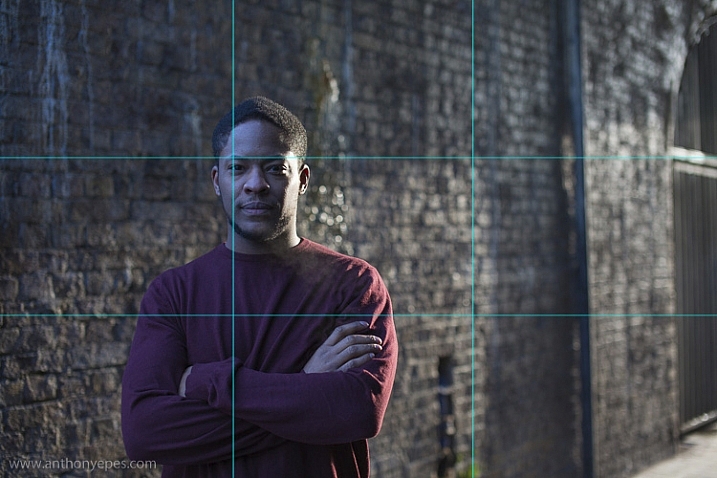
The rule of thirds breaks the image up into nine equal squares. Where the lines intersect we call these Points of Interest. The rule works by placing your subject, and other elements, along the lines and at the points of interest. Most cameras will have the option to overlay this grid on the viewing screen, so turn it on if that helps.

ROTAnthonyEpes 01

The human eye is naturally drawn to the these points of interest. It won’t generally look in the centre of an image first, unless there is a particularly arresting subject drawing the eye there.

Why use the rule of thirds?

Generally placing your subject off-balance, then using one, two or several other elements within the frame, placed at the points of interest, creates a much more visually appealing photo than having your subject dead centre. It:

  • Creates balance
  • Adds more complexity to an image than just placing your subject in the centre
  • Creates energy
  • Gives your photo a sense of depth, rather than just being a flat image

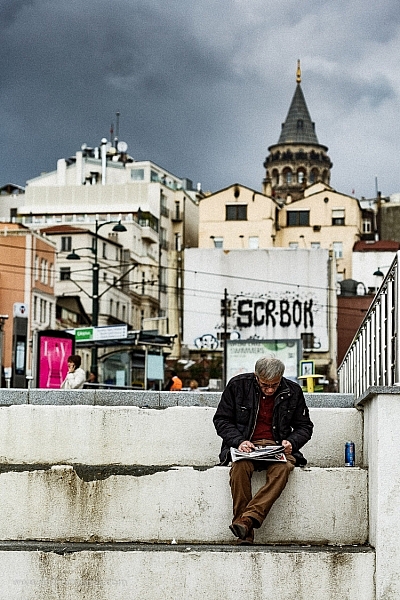
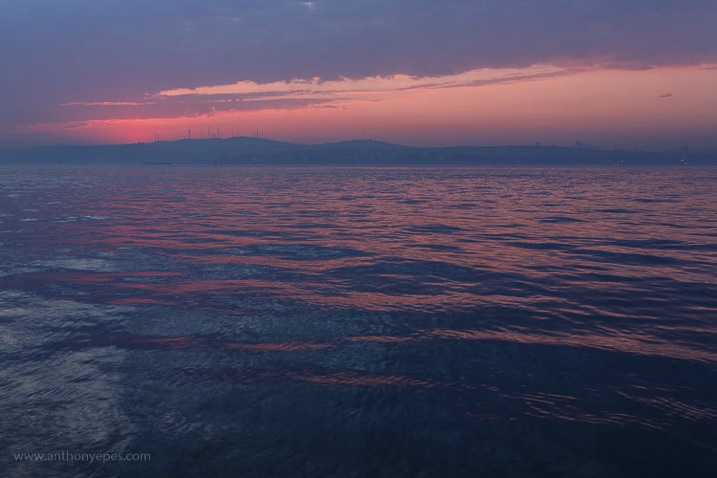
20151008_istanbul_001

What’s very important also, is that you have one or two other elements within the frame that balance or create energy, tension or harmony with your subject. It’s not enough to just have your subject off-centre. Let’s look at some examples.

Let’s start simply. Rule of thirds can be applied to your horizon line. Don’t put it in the middle, use it to run along the top or bottom third of the image:

This is more unusual to do than you imagine. Of the thousands of photos I have with a horizon line only a handful are not running along the centre of the image.

With every technique you use, there has got to be a reason for doing it. Otherwise you just see technique. I used it in the photo above (at the top of the article) because the clouds and sky were so much more interesting than the foreground, and below, because the light on the water was beautiful.

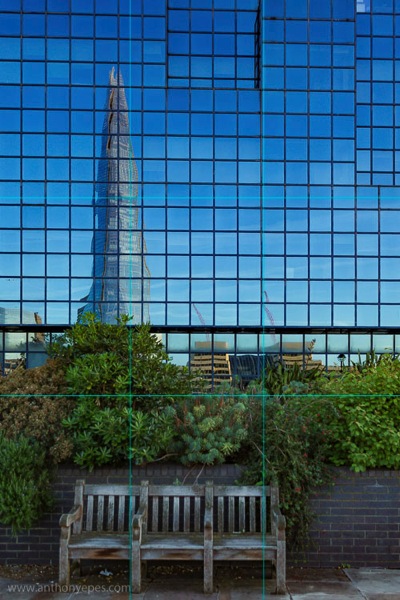
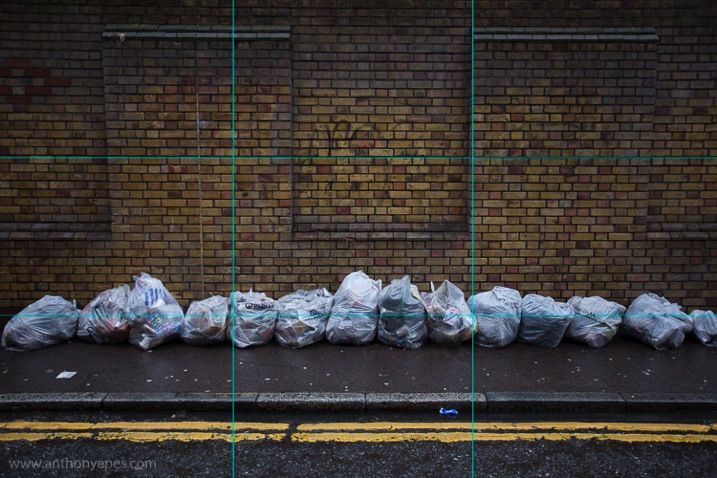
ROTAnthonyEpes 03

You can also apply the idea of having lines run along the upper or lower third of your image to things other than the horizon. Here I’ve applied it to some well organized rubbish bags. Notice that the line of bags follows the bottom horizontal line, but that it’s also emphasized by the line of the pavement and double yellow line at the bottom? These elements create energy – giving it perhaps a sense of movement and flow. Then you have the vertical lines and brickwork patterns as a contrast. All of this order of lines and patterns are very pleasing to the eye. The mind is always looking for order within the chaos of the world!

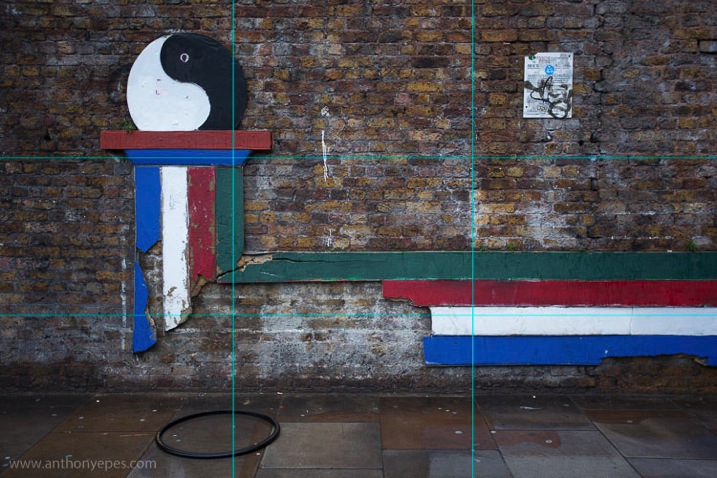
ROTAnthonyEpes 04

It’s important to say that I am not walking around looking for pictures that fit into the rule of thirds, or any of the other composition rules. But when I find a subject I’m interested in (I believe passion for your subject is the most important thing in your photography) and I am composing, looking for elements etc., then that’s when the rules are really helpful. Once you really get familiar with the rules, then you can start to adapt them to your own creative vision.

I have a passion for urban decay, you might call it. In the image below, instead of placing the ball and the column dead centre, I placed it in the left third of the frame. The other elements that are balancing it out are the ring on the floor, the lines going horizontally along the image, connecting with the points of interest lines, and then in the top third of the photo we have the notice on the wall. Take away the notice and the ring, and you’d have a much plainer, less interesting image.

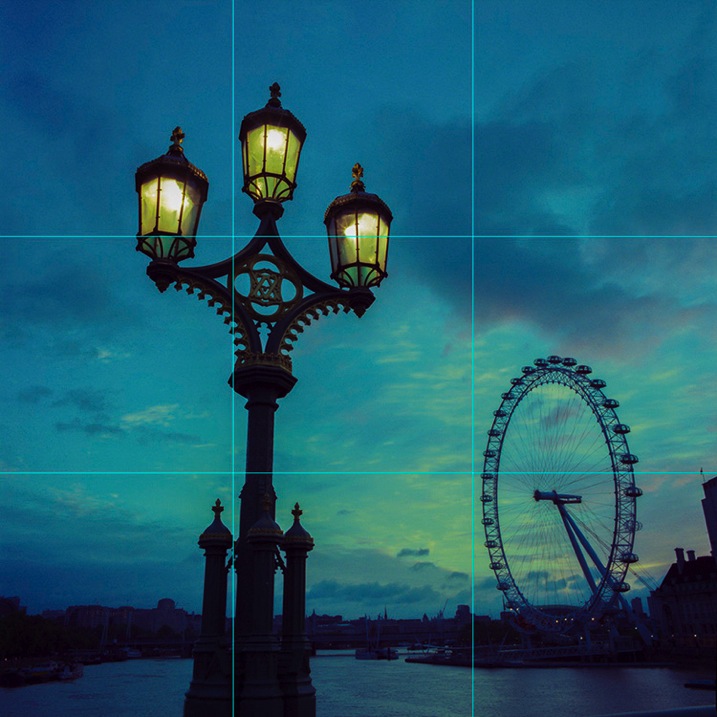
ROTAnthonyEpes 05

Below is one of my favourite photos of London. Here you have the old street lamp hitting the two left hand points of interest, and the wheel of the London Eye in the bottom right corner. You could say that there are only two elements in this photo – a primary and a supporting secondary in juxtaposition. The street lamp being the primary element is placed on the first third and is without a doubt the main subject. But by adding the London Eye as the secondary element we now have a sense of place, and the relationship is complete. It says, “This is London!”

ROTAnthonyEpes 06

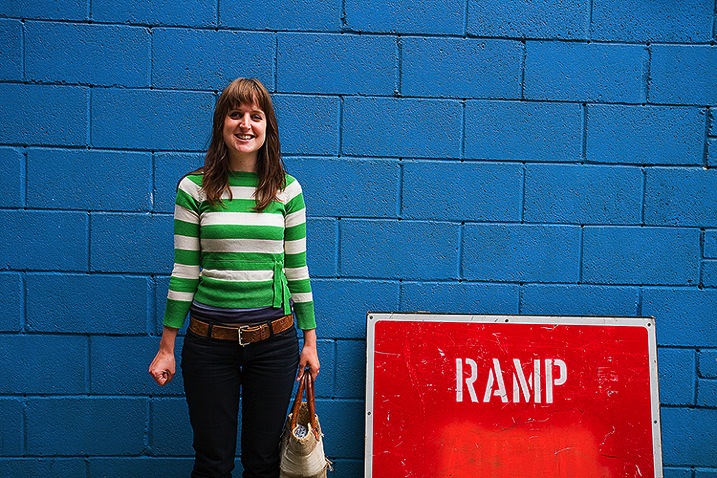
I like that the third element in the image below is the blue background, which helps the image feel clean. But because of the balancing elements of the woman and the sign, it’s not overly simple.

ROTAnthonyEpes 07

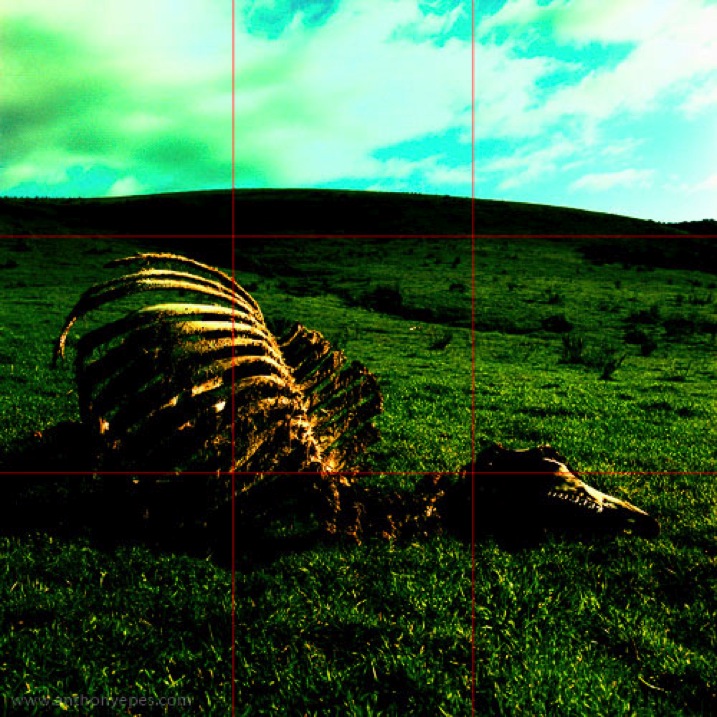
In the photo below is a rough adherence to the Rule of Thirds. Can you see where I placed the elements and why? Do you think this was the best way to compose the image? What’s important for me is that it’s not just a photo of a skeleton – it’s a photo of a skeleton in a very beautiful place. I find that lots of photographers will get absolutely mesmerized by their subject and start taking photos before absorbing the whole scene (you know that time when you get your images up on the computer and wonder why they don’t look as great as you thought they were going to, this is often due to not taking in the whole scene).

ROTAnthonyEpes 08

A very interesting skeleton it is, and unusual to come across. But there is also the element of perspective and the upper third being an almost ethereal sky. If you take away the sky the photo wouldn’t pop, would it? By placing the subject nearer the lower third I’ve created space for it to rest in.

Rule of thirds will help you capture beauty

Most people are able to appreciate, and see, the beauty and harmony of nature on a large scale – that epic view of a sunset over a beach, the vast meadow of beautiful flowers. But when you put a camera up to your eye, and reduce an image to a much smaller scale, I think most people lose that ability to see the harmony of the world, and thereby its beauty. The rule of thirds will help you see how to create harmony and balance within your photo, by helping you when you are placing your elements within your frame.

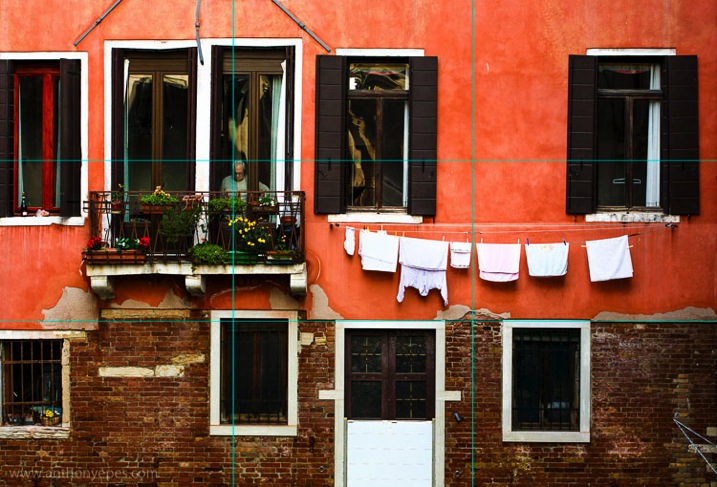
And now to Venice. This photo below is a bit more complicated, but let’s look at what elements are the most important. The man, definitely. He is bang on one of the points of interest. Now notice how the change of colour and texture of the building runs along one of the lines.

There is some of the structure of the rule of thirds but that’s not the whole story here. So you can use elements of the rule of thirds and then add in your own ideas and elements. It’s all flexible. Play with it.

ROTAnthonyEpes 09

Let the rules help you be excellent

You can sometimes use the rule of thirds to almost repair your image, by cropping. All processing programs will have the grid available, and I know that some photographers will overlay the grid and crop their image to fit these rules. I am not a fan of any kind of regular cropping. Why? Because I think in general it makes you a lazy photographer. Don’t rely on anything after the fact to make your photo better, when you can capture something in-frame now. By all means use things to enhance an already good photo, but no bad photo can be saved in post-production.

But – if you love post production, and you want that to be what defines your images, that’s fine. But become awesome at that, be excellent. What unifies all photographers who are taking consistently excellent photos is they are committed to excellence in their own way. That I can get behind.

ROTAnthonyEpes 10

We all come to rules differently. I’ve noticed in my workshops that not everyone has an affinity for absorbing rules, and putting them into practise. Maybe the idea of a more technical basis for your photography makes you squirm. But I would really encourage you to stick with it. Even if it takes a while for you to absorb this, the technical aspects of photography really give you a good grounding, so that you have the ability to take the photographs that you see in your mind’s eye.

If you are more of a technical rules-based person, my advice is to try and propel yourself away from the rules. I’ve noticed that people who get too involved in rules of composition, and their camera buttons, often find it difficult to really see what’s going on around them. So learn the rules, but then really push yourself to see beyond them.

So go explore and take the rules with you. Learn them, play with them and have fun.

googletag.cmd.push(function() {
tablet_slots.push( googletag.defineSlot( “/1005424/_dPSv4_tab-all-article-bottom_(300×250)”, [300, 250], “pb-ad-78623” ).addService( googletag.pubads() ) ); } );

googletag.cmd.push(function() {
mobile_slots.push( googletag.defineSlot( “/1005424/_dPSv4_mob-all-article-bottom_(300×250)”, [300, 250], “pb-ad-78158” ).addService( googletag.pubads() ) ); } );

The post The Rule of Thirds – How it Can Help or Hinder Your Composition by Anthony Epes appeared first on Digital Photography School.


Digital Photography School

 
Comments Off on The Rule of Thirds – How it Can Help or Hinder Your Composition

Posted in Photography


Tools That Rule: 13 Ways to Work Smarter, Not Harder

04 Aug

[ By Steph in Design & Products & Packaging. ]

tools vector scissors 1

Most of the tools we use have looked the same for decades, if not centuries, but that doesn’t mean they’re optimized to be as useful, convenient and durable as they can be. These clever tweaks on conventional tool designs can be incredibly simple, like adding a ledge to scissor handles for cutting straight lines, or unexpectedly innovative, like an illuminated glove that makes it easy to light whatever you’re working on while freeing up your hand.

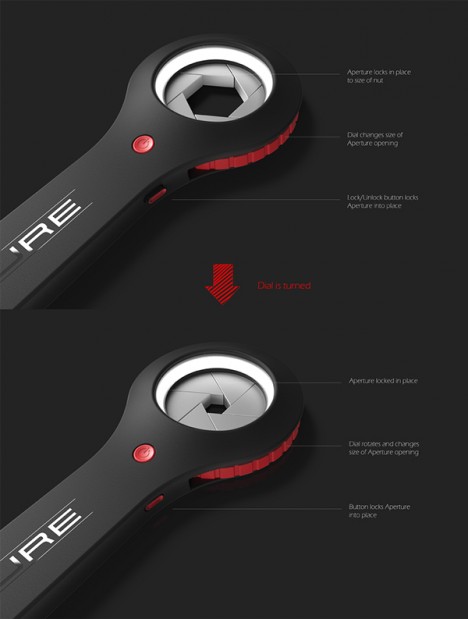
Locking Aperture Wrench

tools aperture wrech

The aperture wrench eliminates the storage issues and guesswork associated with having an entire set of wrenches, with an aperture based on that of a camera lens. The metal blades of the aperture close around any given nut and automatically lock into place for perfect custom sizing and a secure fit.

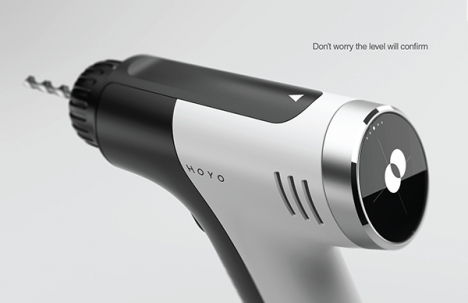
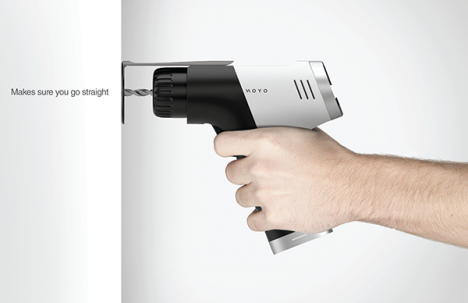
Hoyo Drill

tools hoyo 2 tools hoyo 1

“You could almost keep your drill on the dinner table,” says the designer about the looks of the Hoyo, a sleek black-and-white power drill. In addition to ‘looking like a race car,’ the Hoyo has an optional stabilizer to ensure that you always enter a surface perfectly straight, dial presets to adjust the power depending on the material you’re drilling, and a built-in level.

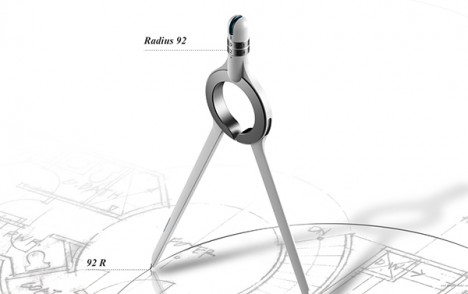
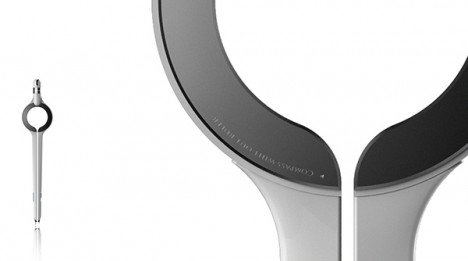
Ruler Compass

tools compass 2 tools ruler compass

Conventional compasses typically have to be used in conjunction with rulers when you want to draw a circle of a very specific size. This one features a radius display that tells you the size of your circle as you move the leg of the compass

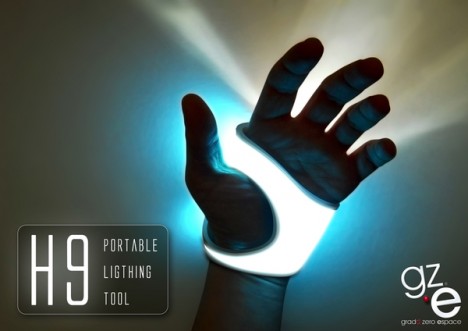
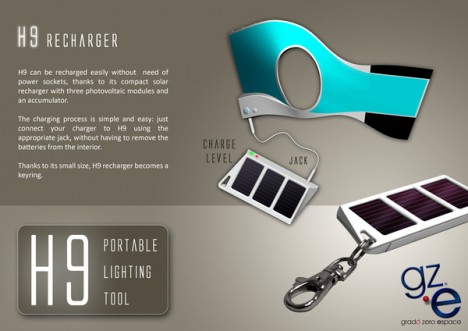
Portable Lighting Tool

tools lighting tools lighting 2

Ultra-portable and easy to recharge either with an outlet or an included mini solar panel, the H9 Portable Lighting Tool is a silicone sheath that wraps around your hand to provide up-close illumination for whatever job you’re trying to complete. You can direct the light exactly where it needs to be, but don’t have to sacrifice the utility of your hand.

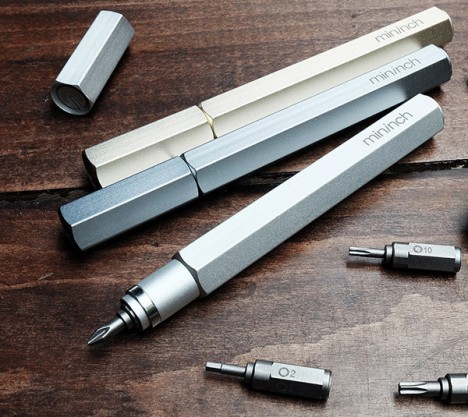
Tool Pen by mininch

tool pen

Carrying a set of screwdrivers becomes as simple as carrying a pen with the Tool Pen, a lightweight, compact and ultra-sleek multitool solution with 18 bits. Six can fit inside the tool without making it heavy, and it comes in a variety of metallic finishes.

Next Page – Click Below to Read More:
Tools That Rule 13 Ways To Work Smarter Not Harder

Share on Facebook


[ By Steph in Design & Products & Packaging. ]

[ WebUrbanist | Archives | Galleries | Privacy | TOS ]


WebUrbanist

 
Comments Off on Tools That Rule: 13 Ways to Work Smarter, Not Harder

Posted in Creativity


The Rule Of Thirds: When To Use It, When To Lose It

14 Apr

The rule of thirds has been around for so long that it’s tough to say who came up with it. Long before the camera was ever invented, artists used it as well as the golden ratio to make their masterpieces as far back as the Renaissance. The first time it was written, though, was by an artist and engraver by the Continue Reading

The post The Rule Of Thirds: When To Use It, When To Lose It appeared first on Photodoto.


Photodoto

 
Comments Off on The Rule Of Thirds: When To Use It, When To Lose It

Posted in Photography


Destroying Landmarks: The Majority or Exception to the Rule

21 Oct

In news recently was the utterly astonishing video posted by Boy Scout leaders who purposely destroyed an 20-million-year-old  rock formation in Goblin Valley State Park, Utah. Since their video surfaced (see below) they’ve been subject to death threats and its come to light one of the suspects, the one toppling the formation, is in a law suit for disability. This is astonishing for numerous reasons. Their disregard for leave no trace, their stupidity for recording and sharing their law breaking actions on YouTube, their continued denial they’ve done something wrong and the utter disregard for nature. While these individuals are easy to vilify because of their stupidity it leaves me wondering are they really the exception or do the majority of people actually harm these types of locations just in a non-public fashion? This question comes to mind both because of this event and a recent trip of mine to a very sensitive place (photo to come tomorrow) where photographers, in the name of preservation, hold its location secret.

One could take a hardline interpretation to my question and state that everyone stepping foot on a protected area is technically destroying it, albeit slowly. The term “loving to death” comes to mind in these situations because it is the volume of people doing the damage, even if they are nature loving and respectful. As to the number of people who blatantly damage protected areas, I get the vibe the numbers are far higher than most would estimate. Those who are preservation minded often assume more people are like them than not, but the more I read about articles of vandalism & theft in state and national parks/monuments the more I think preservationists are the minority. Even with in the photography community I’ve seen people put their photo efforts first as they tread over protected areas.

This brings me back to my recent photo shoot where photographers keep a sensitive location secret. I was ultimately successful on my photo shoot in finding a hidden and very sensitive location, but to do so I had to piece clues together through research and spend a couple hours hiking/searching. How far should photographers go to keep sensitive locations secret?

The answer to that question likely depends on whether you consider yourself a conservation photographer, or at a minimum preservation minded photographer. I’ve gone back and forth on this with other photographers in private conversation and I always side on keeping the most sensitive locations secret. While I normally feel sharing information is the way to go, some locations are just too easily destroyed even by photographers. The problem with secrets of course is that it drives some to find it at all costs and those individuals aren’t always guaranteed to be preservationist minded. Ultimately its a real pickle of an ethics question. The right answer is ultimately the one that allows you to sleep at night.

As to the Goblin Valley incident This is beyond my comprehension that anyone could be this stupid. Given their role as Boy Scout leaders they really need to be made an example of when prosecuted.

The underlying disrespect and ignorance people have for nature is what irks me the most. While this flaw in our society is highlighted in this horrible situation, I find some solace knowing that it generates an uproar among those that know better. It creates an opportunity to education people. It’s just unfortunate it comes at such a cost.

Related Reading

  • Men may face felony charges after toppling Goblin Valley formation
  • Scout leader who filmed himself lifting and destroying ancient rock formation sued a motorist claiming car crash had left him with ‘debilitating and disabling’ back injury only LAST MONT
  • Professional Climber Cuts Down Juniper Trees to Enable New Route
  • Petroglyph thefts near Bishop stun federal authorities, Paiutes

Copyright Jim M. Goldstein, All Rights Reserved

Destroying Landmarks: The Majority or Exception to the Rule

The post Destroying Landmarks: The Majority or Exception to the Rule appeared first on JMG-Galleries – Landscape, Nature & Travel Photography.


Related Stories

  • Destroying Landmarks: The Majority or Exception to the Rule – Enclosure
  • Hunter’s Moon Rising
  • Hunter’s Moon Rising – Enclosure
Feed Ads by FeedBlitz
powered by ad choices


JMG-Galleries

 
Comments Off on Destroying Landmarks: The Majority or Exception to the Rule

Posted in Equipment


Kids’ Rooms Rule: 32 Creative & Fun Bedrooms for Children

06 May

[ By Steph in Design & Furniture & Decor. ]

Kids Bedrooms MAIN
When the rest of the house is carefully furnished and decorated to be both practical and a visual representation of the adult residents’ style, why should kids’ rooms be a primary-colored afterthought? These 32 bold, modern bedrooms for children by 8 interior designers and furniture manufacturers around the world offer smart solutions for little ones’ needs, often with compact modular all-in-one sets.

8 Compact Colorful Bedrooms by GAB

Kids Bedrooms GAB 1

Kids Bedrooms GAB 2

Kids Bedrooms GAB 3

Some modern furniture retailers offer incredibly compact, function-packed bedroom sets for kids and teens that make use of every inch of space. Italian company GAB is among them, with colorful bunk beds and trundle beds that provide sleeping space for more than one child while maintaining organization and privacy. The sets are visually cohesive, with desks, storage, wardrobes and other components on wheels so they can slide around as needed.

5 Fancy Bedrooms by AltaModa

Kids Bedrooms AltaModa 1

Kids Bedrooms AltaModa 2

Kids Bedrooms AltaModa 3

Kids Bedrooms AltaModa 4

Kids Bedrooms AltaModa 5

For parents who want their children’s bedrooms to match the rest of their traditionally decorated homes, AltaModa offers a range of furniture and decor concepts that are like adult rooms in miniature, but with a dash of whimsy. The same attention to detail that would be seen in the master bedroom is applied here, with themes like horses, poodles, nautical, baseball and aviation.

Sophisticated Puzzle Panel Bedroom by Geometrix Design

Kids Bedrooms Geometrix 1

Kids Bedrooms Geometrix 3
The adults in the house might get jealous of this cool, sophisticated kids bedroom idea by Geometrix Design. A soothing palette of silver, gunmetal and gold is carried from the eye-catching puzzle-piece wall to a built-in closet, entertainment center and storage area on one side of the room.

Next Page:
Kids Rooms Rule 32 Creative Fun Bedrooms For Children

Share on Facebook


[ By Steph in Design & Furniture & Decor. ]

[ WebUrbanist | Archives | Galleries | Privacy | TOS ]


WebUrbanist

 
Comments Off on Kids’ Rooms Rule: 32 Creative & Fun Bedrooms for Children

Posted in Creativity