Perfectly Clear for iPad — Photo Correction (Automatic) itunes.apple.com Description ???Special Promo??? Get Perfectly Clear for iPad this week only for .99! ?????? Your skin… flawless Your memories… perfectly preserved Perfectly Clear for iPad — Correct your iPad pictures in 1 click! Our lab-quality corrections make sure your photos are perfect… with just 1 click! We’ve taken all the amazing features and functionality from our award winning Perfectly Clear iPhone app, re-designed it and optimized the workflow for the iPad, and added even more powerful automatic corrections and functionality to create the ultimate iPad correction app! No effort is required to create and then share beautiful looking images with this fun-to-use app. Watch as the Perfectly Clear automatic corrections peel off your original photo to reveal a bright, color corrected, crisp photo with flawless skin and details you didn’t see in your original. Perfectly Clear also provides the ability to fine tune the automatic corrections with easy to use sliders and presets. Behind the scenes the Perfectly Clear app applies various patented corrections (from 10 years of scientific research), automatically delivering you a beautiful photo you can’t wait to share. Perfectly Clear for iPhone is powered by the same robust correction technology licensed to many of the largest photography companies, retailers, and labs around the world. To learn more about what sets our digital corrections … Video Rating: 2 / 5
Comments Off on Perfectly Clear for iPad — Photo Correction (Automatic) App Review
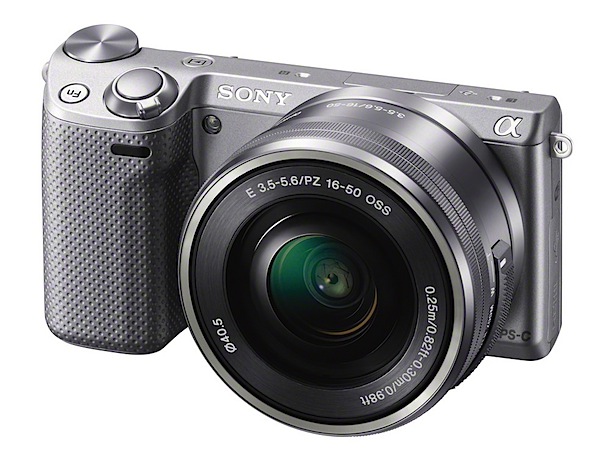
Now here’s another one: a deliciously tiny, mirrorless, interchangeable lens camera that can almost replace many DSLRs on themarket. Sony was one of the early entrants in this game and, in typical fashion, continues to refine the bloodline with this third generation product in the 5 series.
In a press release introducing the camera the company asked:
‘Are DSLR cameras too big and too hard?’
The NEX-5R attempts to make a reply and only NEX-5R users will be able to confirm the real answer.
In looks the camera is tiny and appears further dwarfed by attaching the f3.5/16-50mm kit lens (supplied for this review) but the bulk, handling and overall weight is far from intimidating. With this lens attached it is only just pocketable.
Sony NEX-5R Features
If you’re looking for external controls, stop right now!
Top deck: on/off switch, replay and Function button that accesses a customisable menu and, depending on which shooting mode you’re in, alters aperture and/or shutter speed; there’s also a control wheel that sets aperture value and shutter speed in the appropriate modes. Set back a little is the familiar red video record button.
Rear: to the right of the LCD screen (which dominates this area) is a four way control wheel that accesses continuous shooting, exposure, ISO and screen display options. This is accompanied by two assignable soft key buttons that access menu options.
Most camera controls can be accessed via the sensitive touch screen. Those who are thick-fingered amongst us will have trouble tho’!
A novel plus of the touch screen is the ability to take vertical format self portraits with the camera held at arm’s length!
For many the camera has an important add-on with its integrated Wi-Fi capabilities and in-camera apps. By installing the appropriate (Windows) app on your iOS or Android mobile device it allows you to transfer files from the camera to the device.
I had little difficulty in transferring my images to Facebook and my own Wi-Fi network, aside from the tedious finger work involved in the necessary data input.
By installing the Smart Remote Control application, users can do a remote check on the image on their camera display, adjust camera exposure, and even take a picture — all from their Xperia smartphones.
The 16.1 megapixel capture can shoot maximum 4912×3264 pixel images and make 42x28cm prints. The sweep panorama function will please many brave enough to search out suitable subjects and the patience and resourcefulness to take them to the print stage.
Full HD movies can be captured in either AVHCD or MPEG. Maximum res is 1920×1080 pixels. A good thing in one way is that you cannot capture a still whilst in record video mode, so no breaks in your movie!
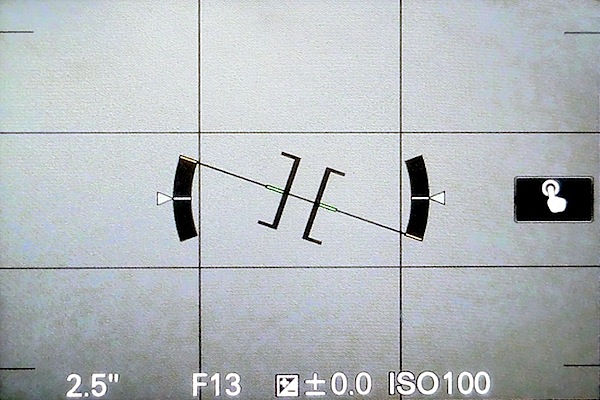
I know I’ve said it before but the switchable on-screen level gauge is a mighty help when you’re shooting in a hurry and likely to miss this important factor.
For many, the deal breaker when considering this camera is the vari-angle screen that tilts up, down and even forward for self-portraits; however, the latter will not work if you attach an optional flash unit to the camera’s top deck.
Sony NEX-5R ISO Tests
Noise begins to creep in at ISO 3200. More so at ISO 6400. Images at ISO 12800 are useable. High noise level at ISO 25600.
Sony NEX-5R Review Verdict
Quality: above average.
Why you’d buy the Sony NEX-5R: compact, high quality picture maker.
Why you wouldn’t: too basic — you need more features.
Welcome to another in the NEX line!
Sony NEX-5R Specifications
Image Sensor: 16.1 million effective pixels. Metering: multi zone, centre-weighted, spot. Lens Mount: Sony E-mount. Exposure Modes: iAuto, Program AE, shutter and aperture priority, manual. Effective Sensor Size: 23.5×15.6mm CMOS. 35 SLR Lens Factor: 1.5x. Shutter Speed (stills): 30 to 1/4000 second and Bulb. Continuous Shooting: up to 10 fps. Memory: SD/SDHC/SDXC, Memory Stick Pro Duo cards. Image Sizes (pixels): Stills: 4912×3264 to 2448×1376. Movies: 1920×1080 (AVCHD), 1440×1080 and 640×480 (MPEG4). Viewfinder: 7.5cm LCD screen (921,600 pixels). File Formats: JPEG, RAW (Sony ARW 2.2), JPEG+RAW, AVCHD, MPEG4. Colour Space: sRGB, Adobe RGB. ISO Sensitivity: Auto, 200 to 25600. Interface: USB 2.0, HDMI mini, Wi-Fi. Power: Rechargeable lithium ion battery, DC input. Dimensions: 111x59x39 WHDmm. Weight: 276 g (inc card and battery). Price: Get a price on the Sony NEX-5R(Body Only) or the Sony NEX-5R with 18-55mm Lens.
Post originally from: Digital Photography Tips.
Check out our more Photography Tips at Photography Tips for Beginners, Portrait Photography Tips and Wedding Photography Tips.
We’ve just posted our review of the Nikon Coolpix S800c, in collaboration with Jeff Keller of The Digital Camera Resource Page. The S800c was the first compact camera from a major manufacturer to openly use the Android mobile operating system when it was released last year. On one side it’s a 16MP BSI-CMOS compact camera with a 10x, 25-250mm lens built in, on the other it’s a 3.5″ OLED touchscreen device running Android 2.3. Click through for a link to the full review.
It was late on the scene but its arrival still surprised many. After all, it is four years since Panasonic appeared with the first model in this guise.
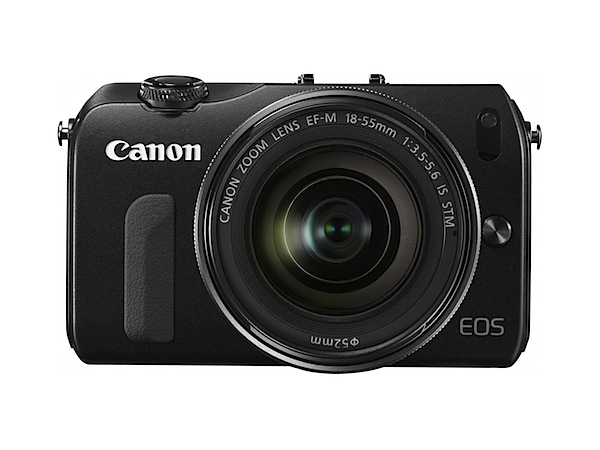
Canon’s first MILC (Mirrorless Interchangeable Lens Camera) or CSC (Compact System Camera) magnesium alloy body model followed many other marques’ entries but differed to some by immediately offering an adaptor that accepted the mainstream Canon EF lens range. Using 35 SLR lenses the magnification factor is 1.6x, surely not a deterrent factor.
At first glance, it’s a strange beast. The review camera was stark black in colour, with only the control labels picked out in off white — and few they are! It was tested with the f3.5/18-55mm lens.
I immediately looked for the exposure modes and quickly found only three on the top mode dial: intelligent auto, still photos and video. Where’s Program, aperture and shutter priority I queried?
Where? They’re accessible via a touch screen system that at first I found foreign, then quickly settled into its style.
Tap the upper left corner of the LCD screen and you’re presented with an array of M, Av, Tv, P: manual, aperture and shutter priority and Program. Easy!
Next to the mode dial is the on/off button — and tass all!
At the rear there is nowt else but menu and info buttons plus replay and the main dial with options for single/continuous shooting, a central Q-set button, erase and exposure lock (if your focus area differs from the main metering area).
As I mentioned, the text labels are in off white … and they are sure hard to see in dim light!
Canon EOS M Features
The 18 megapixel CMOS can capture a maximum 5184×3456 pixel image, enough to make a 44x29cm image.
Movies? Full HGD MPEG4 video at 1920×1080 pixel resolution is within its capabilities and can be happily recorded to SD cards rated as Class 6. You can shoot stills mid-video but the latter is interrupted.
Interestingly, the EOS-M kit is supplied with the new Speedlite 90EX flash unit as standard. A wireless master function allows the control of multiple flash guns wirelessly.
There some factors which seem to indicate that the EOS-M is not designed to attract the pros out there: the screen-driven control is one of them; another is the provision of a range of creative filters that includes toy camera, grainy B&W, fish eye distortion etc.
Overall, the camera appeals due to its compact dimensions, light weight and (once you get used to it), simple touch screen operation.
Canon EOS M ISO Tests
Clean performance al the way to ISO 3200. BY ISO 6400 noise is starting to appear but not badly so. At ISO 12800 noise is obvious but certain shots will accept it.
Canon EOS M Review Verdict
Quality: above average.
Why you’d buy the Canon EOS-M: compact camera with access to Canon’s full frame lens range.
Why you wouldn’t: touch screen operation deters you; a long tele, full size lens would look silly on the EOS-M; no vari angle screen.
The Canon EOS M is available in black, silver, white, red.
Welcome to another MILC! A lightweight, compact camera. Maybe the more ambitious out there should await for the next, higher specced model to arrive.
Canon EOS M Specifications
Image Sensor: 18 million effective pixels. Metering: Multi pattern, centre-weighted averaging, spot, partial. Exposure Modes: Auto, Program AE, shutter and aperture priority, manual. Sensor: 22.3×14.9mm CMOS. Lens Mount: Canon EF-M, EF (with adaptor). 35 SLR Lens Factor: 1.6x. Shutter Speed: 60 to 1/4000 second. Flashy sync: 1/200 sec. Memory: SD/SDHC/SDXC. Image Sizes (pixels): 3456×2304 to 720×480. Movies: 1920×1080 (30, 25, 24 fps), 1280×720 (60, 50 fps), 640×480 60/50 fps. LCD Screen: 7.7cm LCD (1,040,000 pixels). File Formats: JPEG, RAW (14-bit), JPEG+RAW, MPEG4. Continuous Shooting: up to 4.3 fps. Colour Space: sRGB, Adobe RGB. ISO Sensitivity: Auto, 100 to 12800; 25600 (with expansion). Interface: USB 2.0, HDMI mini, AV output, mic input, Eye-Fi. Power: Rechargeable lithium ion battery, DC input. Dimensions: 109x66x32 WHDmm. Weight: 298 g (inc battery). Prices: Get a price on the Canon EOS M with EF-M18-55mm IS STM Lens or the Canon EOS Mwith a EF-M 22mm STM Lensat Amazon.
Post originally from: Digital Photography Tips.
Check out our more Photography Tips at Photography Tips for Beginners, Portrait Photography Tips and Wedding Photography Tips.
Ben Brain, Digital Camera’s Deputy Editor, takes a look at Nikon’s new flagship D-SLR, the D3s, a direct update to the popular D3, released back in 2007. The D3s gives a high response and light sensitivity which is perfectly suited for sports, wildlife and press photographers. Watch the video to find out the main features and advantages of this professional level D-SLR are and see how it performs in different conditions. Video Rating: 4 / 5
www.artoftheimage.com – Sigma 8-16mm Lens Review and Photo Examination – Part 1 of 2 Check out the new Art of the Image Recommended Photography Gear List at http PS If you have kids or know someone with kids, check out my latest online book, “Diary of a Nerd King” at www.nerdkingdiary.com. It’s funny and it’s FREE! Please pass it along… thanks! PSS If you have toddlers or small children, check out http for my children’s ebooks for Kindle, iPad, iPod, iPhone, laptops, etc! Please pass it along… thanks!
Filmed at 10mm. A boat in waves, lots of spray, pitching rolling, movement, very intricate detailed waves flying past. Can the camera cope? Watch the video to see. The lens was a Tamron 10-24mm with a polarising filter fitted, the lens was around 10mm when filming, to get an ultra wide view of the boat. The spray and the boat are fast moving and complex, great test to see how the camera copes with moving objects. The new Nikon d5100 has a 16.2 MP CMOS sensor much like that in the D7000, 1080p movie capability and a side-articulated 921K dot 3.0″ tilt/swivel LCD. The D5100 also becomes the first Nikon DSLR to be able to apply special processing filters to stills and video. The company has also introduced the ME-1 external microphone. The camera will be available from this month as a kit with the 18-55mm VR lens for 9.95 while the microphone will retail at 9.99.
www.microglobe.co.uk Canon EOS 20th Anniversary Canon EOS Series Digital SLR Cameras Full Review – Canon EOS 400D – Canon EOS 1D Mark II Digital SLR – Canon EOS 1V 35mm – Canon EOS 20D – Canon EOS 3000V Digital SLR – Canon EOS 350D – Canon EOS 40D – Canon EOS 450D SLR Digital – Canon EOS-1D Mark-III – Ultra Sonic Motor – Image Stabiliser – USM – EF Lenses – Electro Optical System EOS. www.microglobe.co.uk Video Rating: 4 / 5