RSS
 

Posts Tagged ‘Responsibilities’

Responsibilities of Landscape Photographers

21 Sep

It is hardly questionable that landscape photography is both rewarding and fun. The whole process from planning and researching an outing, to making your way to a location during ideal conditions and, finally, producing a completed image of an exquisite vista can be so fulfilling it’s easy to see why it is such a popular genre.
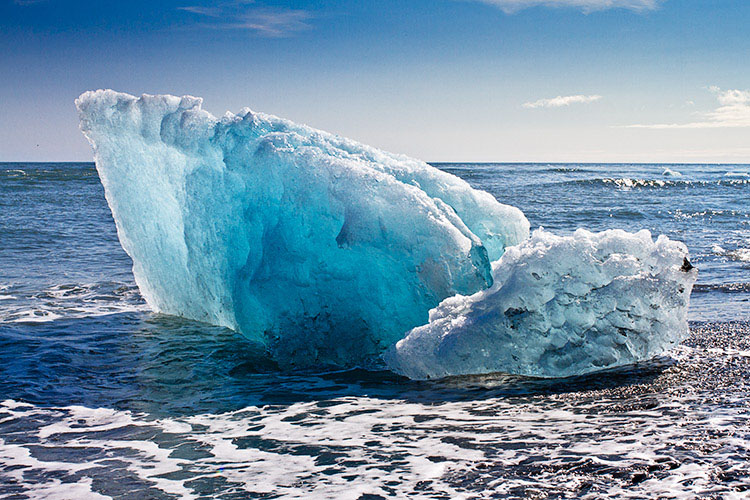
Iceberg

Unfortunately, there are costs to this popularity. Even though most landscape photographers do identify as environmentally-minded, the sheer number of visitors to some locations can cause adverse effects despite the best of intentions.

There are a few things you can look out for and practices you can take up to help ensure that you nullify – or at least minimise – your environmental impact on your next photography trip.

Watch your step

Chances are you have heard the often-quoted, “Take only photographs, leave only footprints”. It’s a good starting point that simply means do not intentionally damage your surroundings and do not leave your litter. Sadly, it doesn’t go far enough.
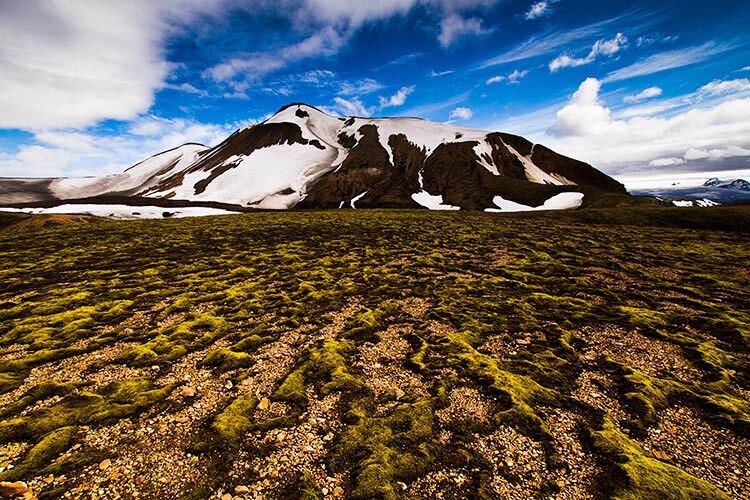
Moss in Iceland takes decades to grow but moments to permanently destroy.

Moss in Iceland takes decades to grow, but moments to permanently destroy.

Many ecosystems are extremely fragile and footsteps alone can cause catastrophic damage. Take Iceland’s mossy lava fields: that moss can take many decades to grow, but it can only handle being stepped on two or three times before it’s destroyed permanently.

There are countless other examples of fragility in the world, such as California’s Mono Lake and its Tufa formations. It is easy, however, to prevent this damage. Just adding a little bit of extra location research before you head out can reveal any extra care you should take to prevent any damage.

If you’re traveling abroad and find that obtaining the relevant information is difficult, don’t be afraid to ask local people or officials. I once listened to an impassioned Icelandic warden rant about a tourist who drove a rented 4×4 and devastated about a quarter mile of moss just to stand at the edge of a lake for five minutes. Just ask around, they will probably be grateful for your concern and may even be able to turn you on to lesser-known opportunities.

Follow local regulations
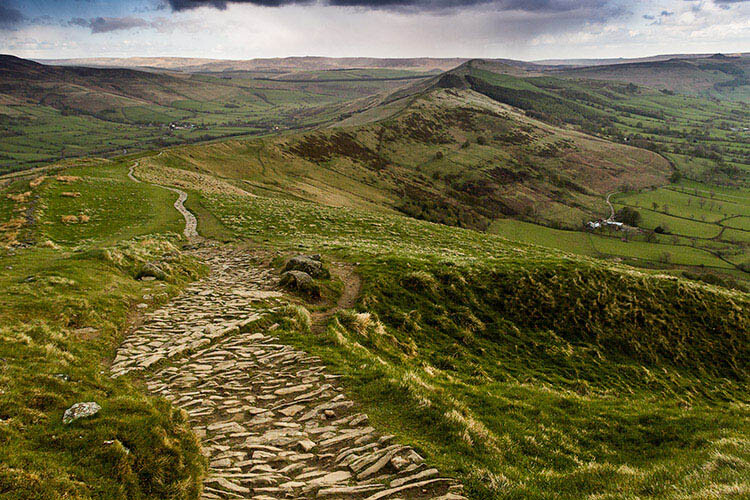
In areas that you're required to stay on marked trails, the rule is usually to keep you safe.

In areas you’re required to stay on marked trails, the rule is usually there to keep you safe.

People failing to keep to required areas on marked hiking trails is one of the most commonly ignored regulations. Although taking a few steps off a trail can seem harmless enough, often those rules are put into place for safety reasons. Things like unstable terrain, sheer drop-offs and even wildlife can all cause danger to visitors.

While it can be rationalised that using common sense should negate most danger, you should consider that most of these regulations will be the product of insurance policies. If, for the sake of photos, these regulations are seen to be constantly ignored then it isn’t much of a stretch to imagine future access to these areas being limited or restricted to photographers.
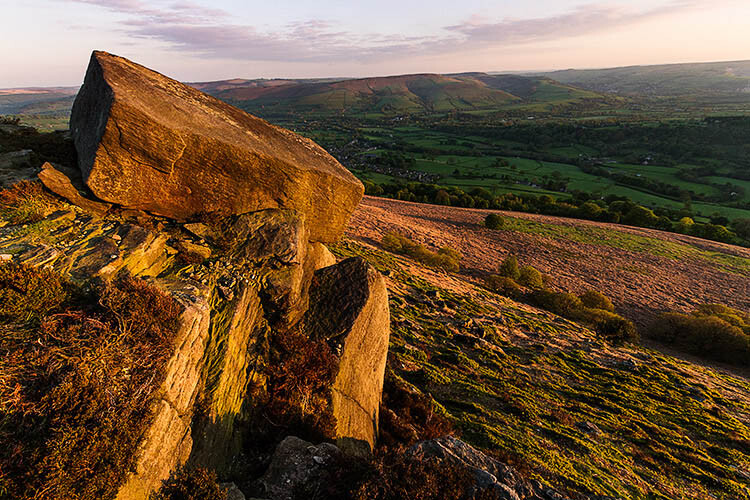
Large rock formations, boulders and cliffs all pose a danger to hikers.

Large rock formations, boulders and cliffs all pose a danger to hikers.

Other concerns when it comes to local regulations involve the law as it relates to photography. While in most places you are well within your right to photograph whatever you see, that is not the case everywhere. Belgium and France are both examples of countries where Freedom of Panorama is limited in some way. For example, when the Eiffel Tower is lit up at night it is considered a copyrighted scene and images of it cannot be published without explicit consent.

Now, a quick search on Flickr reveals a huge number of images of the Eiffel Tower at night and further research reveals that the regulation is primarily concerned with commercial usages. As such, this aspect may not seem extreme and probably will not cause any aggravation while you’re travelling, but you should still pre-empt any possible clashes with local authorities by thoroughly researching relevant laws in the country that you’ll be photographing in.

Consideration of others
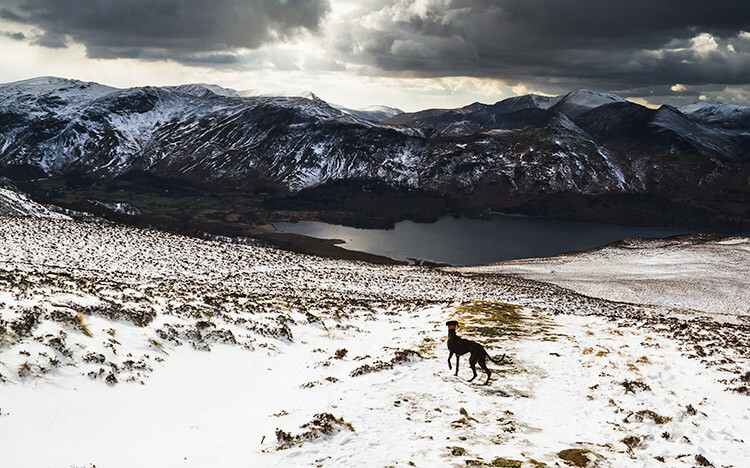
Sheep worrying causes a significant loss of livestock annually and it can cause farmers to revoke access to their land.

Sheep worrying causes a significant loss of livestock annually and it can cause farmers to revoke access to their land.

Beyond legal and environmental implications, it is important to consider other people who are around you. Courtesy and tact go a long way towards this and will often prevent any conflict before there is even a need for resolution. Simple acts like working as quickly as possible to move out of a prime viewing spot in a crowded space and not blocking the passage of others are simple ways to help ensure that you’re not preventing someone else from enjoying a location. If in doubt, try to ask yourself if there’s any way you are being an imposition on others. If so, consider changing your behavior accordingly.

An incident I witnessed at the popular Svartifoss waterfall in Iceland should drive this point home. The waterfall is at the end of a moderately steep half-kilometre trail. As it’s so short a distance, and the waterfall is so spectacular, it gets very crowded. The closest you can get to the waterfall is a rocky outcrop big enough to fit three or four people. To the left, it’s possible to stand in the stream.

While a large crowd awaited their turn for the best views, a woman and her young daughter had commandeered a position in the stream. The girl was dressed in a leotard and was being directed by her mother to perform a variety of dance poses as the latter took photos on her phone. In the forty-five minutes they were doing this, it was obvious that the girl was extremely uncomfortable among the massive group of tourists, yet her mother’s only agitation was her daughter’s apprehension. With the tension between the pair and the presence of a young girl in a leotard dominating the only view of the waterfall, there was a palpable discomfort among the dozens of tourists.

I don’t believe there is anything wrong with what they were trying to achieve, but the whole situation could have been vastly different with a bit of forward planning. Had they known what they were doing beforehand, and then gotten it done in a few altercation-free minutes, they could have achieved their results and the experience wouldn’t have been tainted for everyone else present.

Conclusion

Landscape photography is a great pursuit. The rewards to the photographer and their audiences are many, but certain behaviors can be detrimental for both the landscape and the people in it. For the most part, common sense and thorough research will steer you in the right direction.

googletag.cmd.push(function() {
tablet_slots.push( googletag.defineSlot( “/1005424/_dPSv4_tab-all-article-bottom_(300×250)”, [300, 250], “pb-ad-78623” ).addService( googletag.pubads() ) ); } );

googletag.cmd.push(function() {
mobile_slots.push( googletag.defineSlot( “/1005424/_dPSv4_mob-all-article-bottom_(300×250)”, [300, 250], “pb-ad-78158” ).addService( googletag.pubads() ) ); } );

The post Responsibilities of Landscape Photographers by John McIntire appeared first on Digital Photography School.

Digital Photography School

 
Comments Off on Responsibilities of Landscape Photographers

Posted in Photography


What are the Real Responsibilities of a Professional Photographer?

24 Apr

The number of different roles that a professional photographer has to lead these days can be pretty intense and intimidating, but it’s just part of the job. From the creative, to the technical, to the business and marketing, here is a list everything that a professional photographer really has to do to make a living.

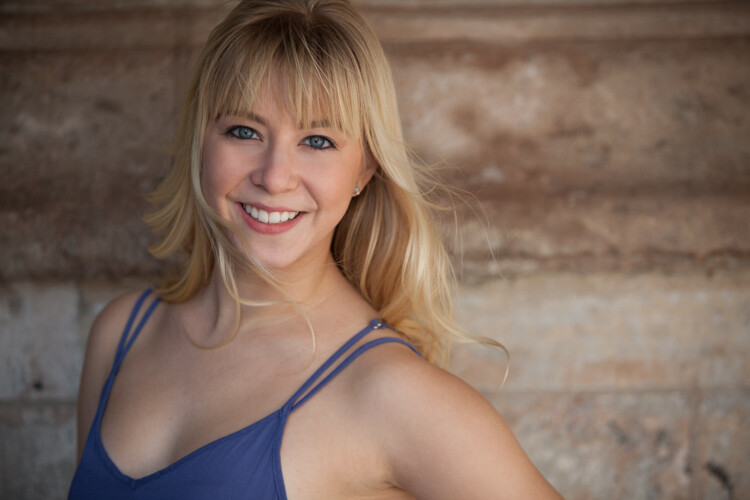
Portrait of a dancer

Share this with anyone who thinks you only push a button for a living!

1. A photographer is an artist and storyteller

Professional photographers are in the business of telling stories. They create images that are both beautiful on the surface, and give us a glimpse of what is underneath. Portrait photographers aim to capture a feeling of what the person is like with a single look. Wedding and event photographers aim to tell the story of what the day was like. Product photographers aim to give the viewer an idea of what using the product will feel like. Art photographers aim to make the viewer think and feel something.

There are artistic aspects to all types of photography. To be a good photographer you will often have to compromise to the needs of your client, but figure out how to infuse your spin on what you create whenever possible.

2. A photographer is a craftsperson

No matter how good of an artist and storyteller you are, there lies the underlying fact that photography is also a craft. You need to be good with your tools and technical abilities. You need to have the ability to successfully take what’s in your head and turn it into the final product. Spend an equal amount of time learning your tools as you do thinking about what to capture.

Bethesda Terrace Wedding

Engaged couple

You need to know how to use your camera. You need to know how to use light and color to your advantage. You need to know how to edit and retouch your work so that it can look its absolute best. You need to be able to organize your archive well and to work quickly and efficiently. You need to have a standard workflow. This is all part of becoming a good craftsperson.

3. A photographer is a businessperson

Not many people actually enjoy the process of selling. We all wish our work sold itself – that people would be able to see the talent in the images and would purchase something or hire you based on that alone. However, that rarely happens in the real world, no matter how good you are. Even top artists rely on galleries, representatives, and marketers to sell their work.

From the very beginning, you need to think as both a creative and a businessperson. You need to put equal time into each to succeed. You should read books on selling and marketing. Don’t make people uncomfortable of course, but don’t be afraid to sell. The worst words a photographer can say are, “Sorry for the shameless self-promotion.” Don’t feel shame for promoting what you do. If you’re proud of your product, then let people know about it! Social media, mailing lists, networking, SEO, web design, and branding are all tied into this idea. The more put together you are as a business, the easier it will be to market.

Being a successful businessperson these days means that you have to network. Let people know what you do, pass out your business cards when it’s appropriate, connect with similar creatives to share advice, and connect with people in your community and field. And for pete’s sake, respond quickly to inquiries! If you don’t, someone else will.

3. A photographer is an expert in logistics:

Executive group portrait

Pushing the button is only a tiny part of the process of any job. Photography is about creating an experience for your clients. From the beginning, you have to be good at communicating with them to understand what they want. You can lead clients in certain directions that you think are best, but you need to cater to their likes and interests at the same time. A photographer needs to listen and advise so that everyone has the right expectations and has an idea for how a job will go.

A photographer is a planner. They are in charge of organizing the assistants, travel, make-up artists, and everything else in a seamless manner. Job planning is difficult work and should be charged for. This is all part of being a good photographer. Some high-end photographers have production companies to do this work for them. If you are one of the many who does this yourself, charge for your production time.

A good photographer is meticulous about planning but then relies on serendipity. A photographer is an expert in contingencies and Murphy’s Law, and saves the day when things go wrong. I know wedding photographers who carry small sewing kits with their gear. Plan the day and the shots that you want to capture. Have backups for everything that can possibly break or go wrong. Go into a job comforted that you can handle anything and your confidence will soar. Then when the job happens, keep your eyes open to serendipity. That is where the magic happens. The better planned you are, the more comfortable you will be to veer off of the plan when the situation presents itself.

4. A photographer is an actor and a performance artist

Worrying is good, but showing your worry is not. Plant a smile on your face and show confidence in the face of adversity. Inspire and comfort. You will come across to many clients who will be so nervous. Photography has the ability to make a lot of people nervous. There are many people who hate having their photograph taken.

You want to learn how to read people and get through to them effectively. Each subject is different and sometimes you have to play the role of therapist to figure out how to talk to them to get them to do what you need. I’m an introvert myself and have had to teach myself to do this over the years. It used to make me so uncomfortable but now it’s way far down on my list of worries.

Have a stash of jokes or comments to back you up. When I see people giving one of those awkward smiles to the camera I like to just call them out on it. “Give me your most uncomfortable smile. Well, we can only go uphill from that look!” Or “That’s just terrible.” I don’t use that for all types of people, but it works a lot.

People also like direction. It makes them think that you know what you’re doing. I personally try to capture my subjects in ways that feel natural, so if they look like they need direction, I’ll pose them even if I know I’m not going to use those photos, all to make them more comfortable. Then I’ll tell them to stand in a way that feels natural to them and we’ll go from there. That usually works.

Keep them moving. Tell them to change positions slightly every shot or two. If someone starts getting uncomfortable in their stance, point for them to move somewhere else to break their tension.

Ask them questions that make them think and open up! Get them talking about themselves so they loosen up and like you more. Smile at what they say. Sometimes I’ll even hold the camera up and tell them I want to shoot them while they’re talking. I’ll take some shots while they are and when they give the right look or mood I’ll tell them, “Hold that! Don’t move an inch!.”

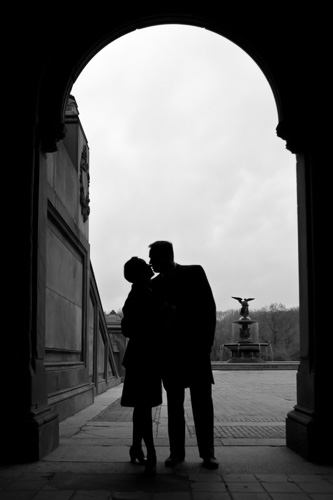
A portrait for an engaged couple in Grand Central Station NYC (seen kissing in foreground)

Getting to the point of pushing the button, and all the editing afterwards, is where the real work happens for a photographer. When all of this is done well, the pushing of the button can almost feel like an afterthought. It will be so much easier to record those magical moments when you are able to create a magical environment.

Did I miss out on anything? What else do you think a professional photographer needs to do to be successful?

googletag.cmd.push(function() {
tablet_slots.push( googletag.defineSlot( “/1005424/_dPSv4_tab-all-article-bottom_(300×250)”, [300, 250], “pb-ad-78623” ).addService( googletag.pubads() ) ); } );

googletag.cmd.push(function() {
mobile_slots.push( googletag.defineSlot( “/1005424/_dPSv4_mob-all-article-bottom_(300×250)”, [300, 250], “pb-ad-78158” ).addService( googletag.pubads() ) ); } );

The post What are the Real Responsibilities of a Professional Photographer? by James Maher appeared first on Digital Photography School.


Digital Photography School

 
Comments Off on What are the Real Responsibilities of a Professional Photographer?

Posted in Photography