Tag: Reflective

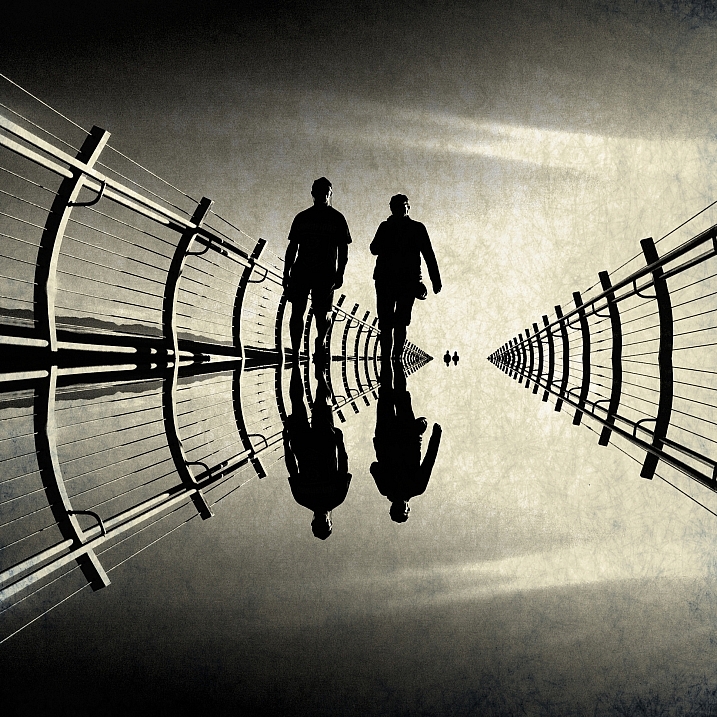
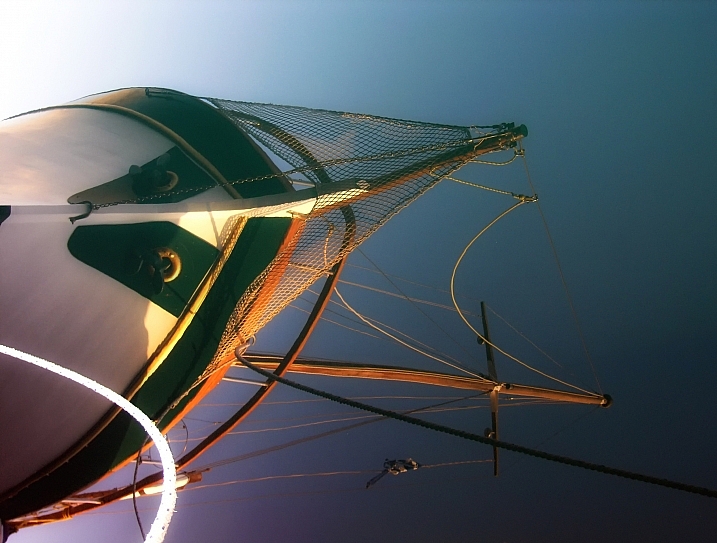
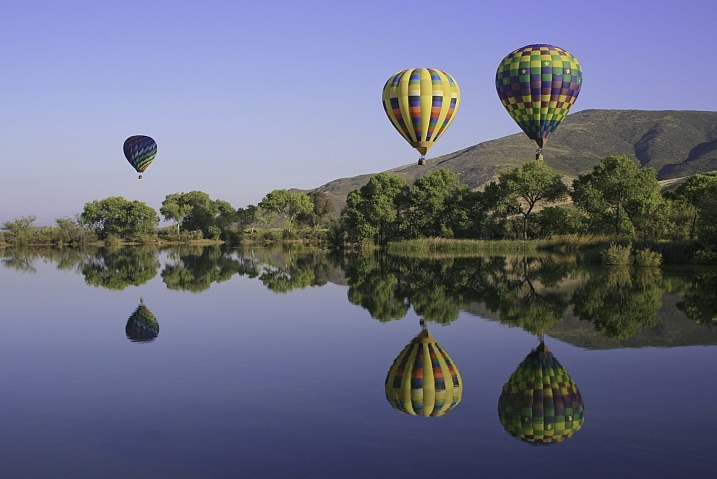
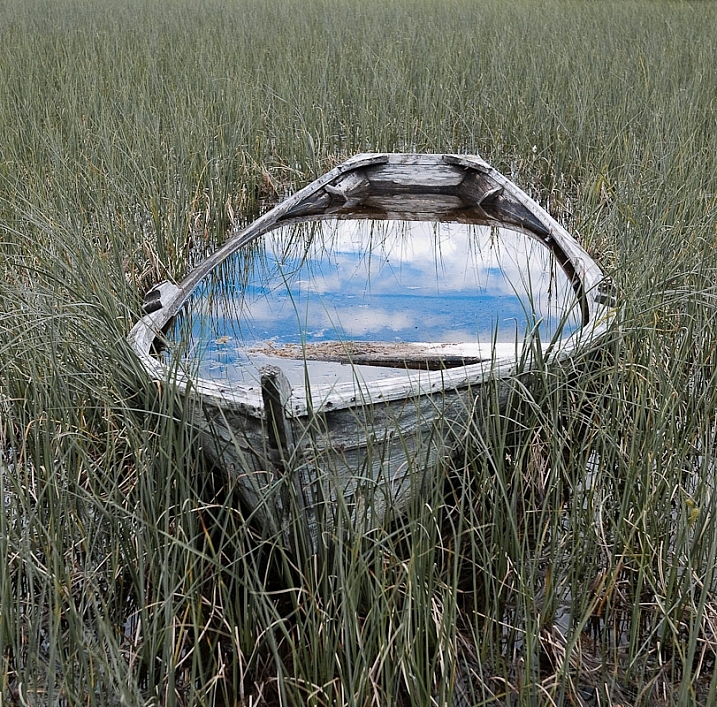
  • 24 Reflective Mirror Images to Make You Look Twice

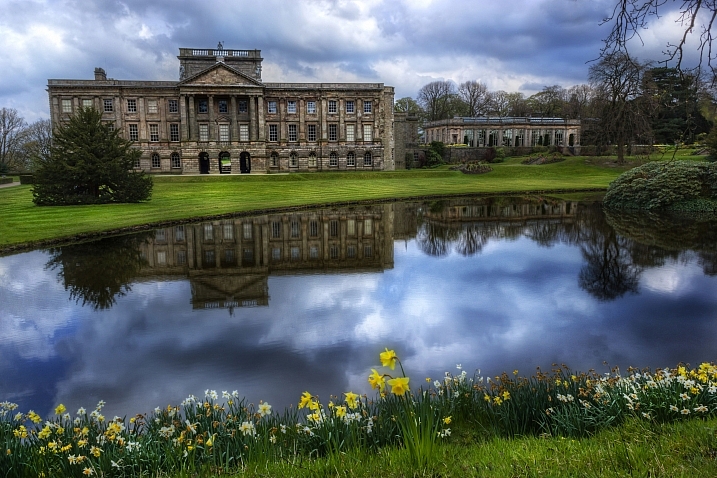
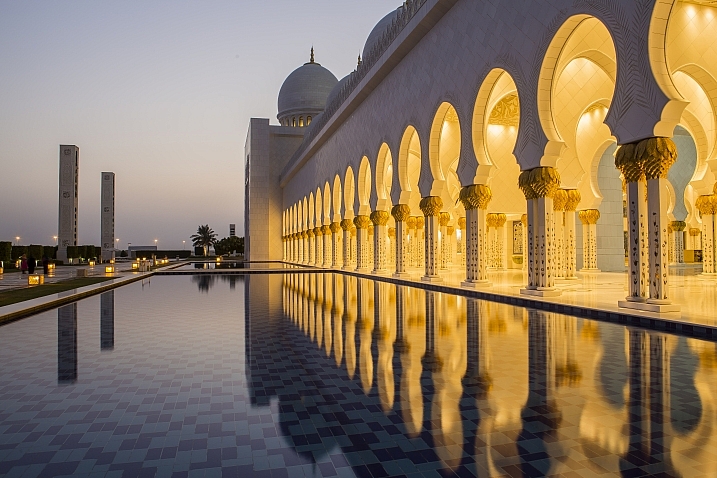
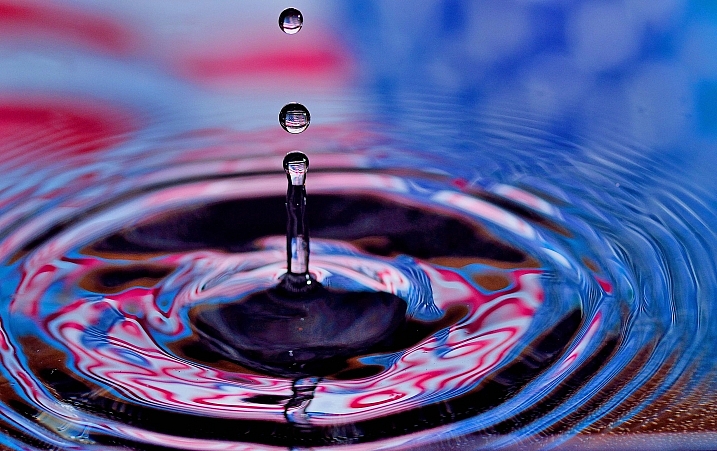
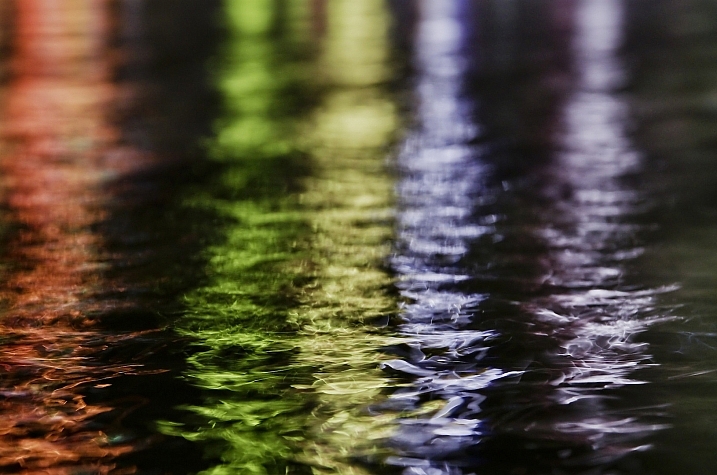
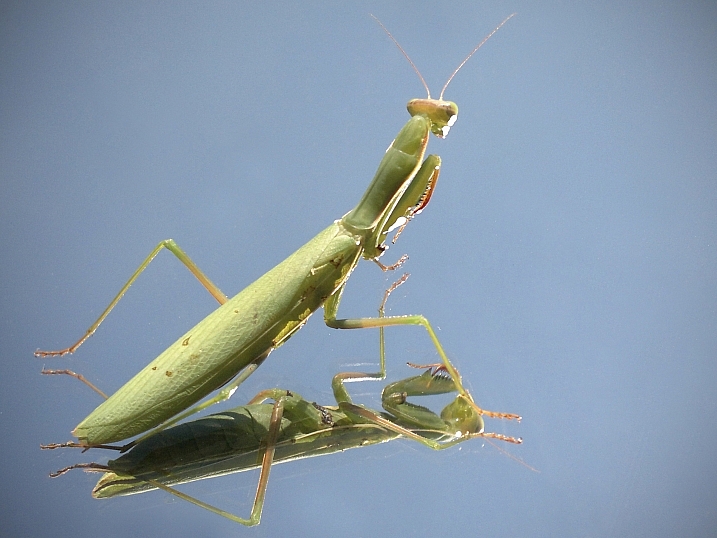
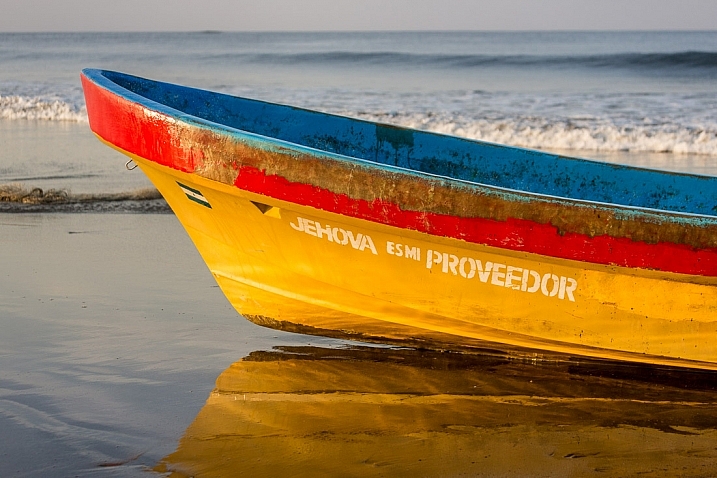
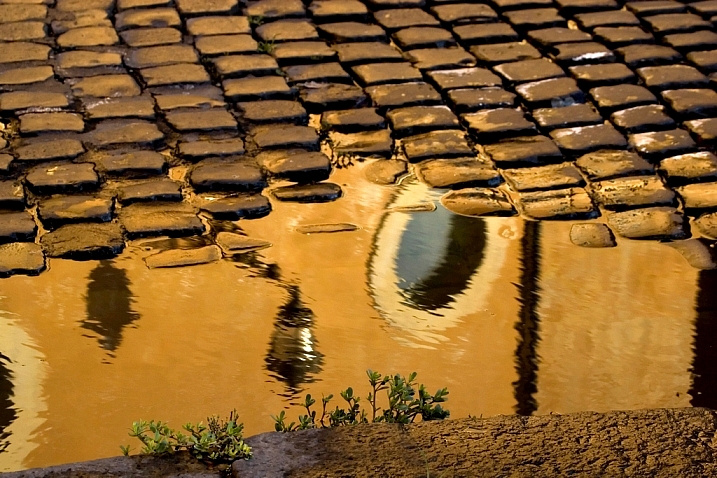
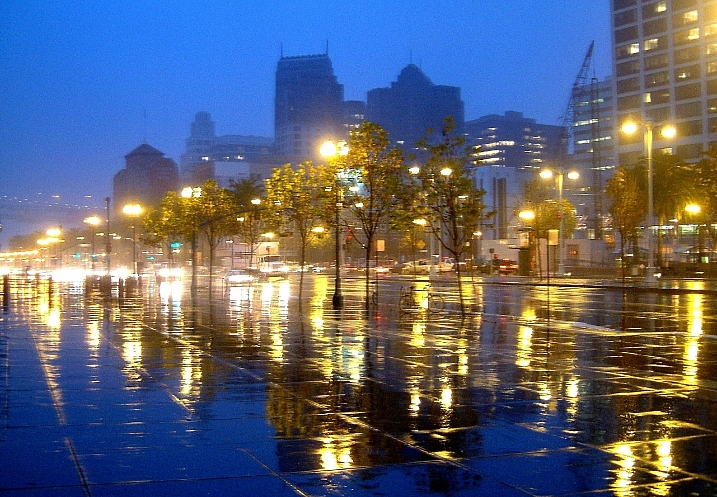
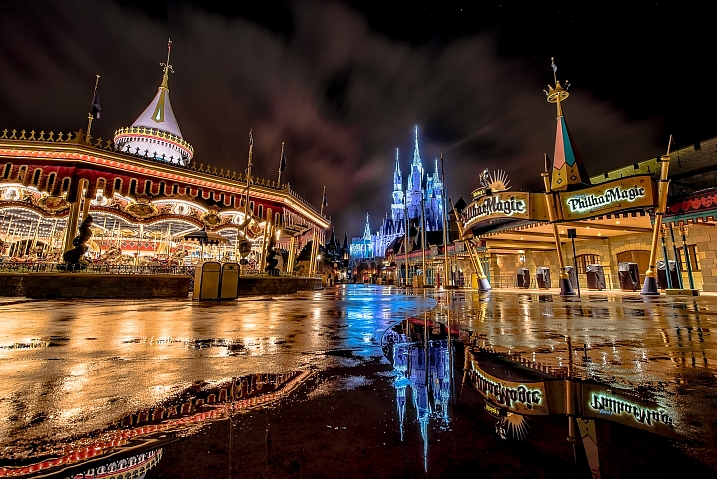
    Kids love a good puddle to splash in – photographers love them for a different reason – reflections.

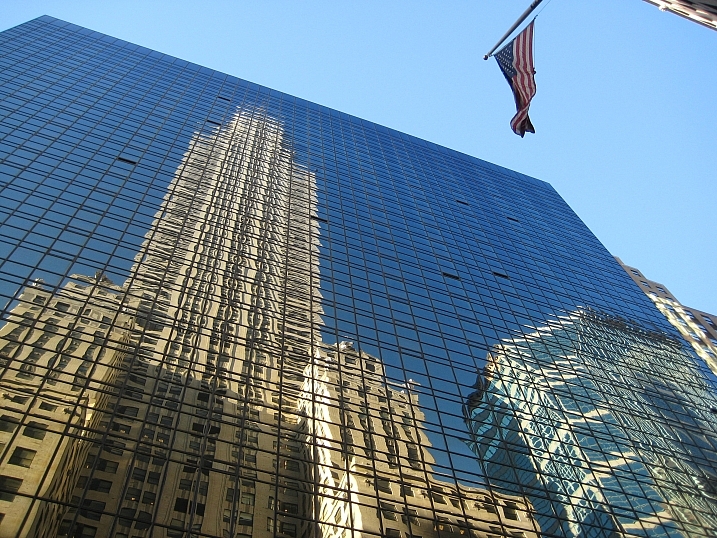
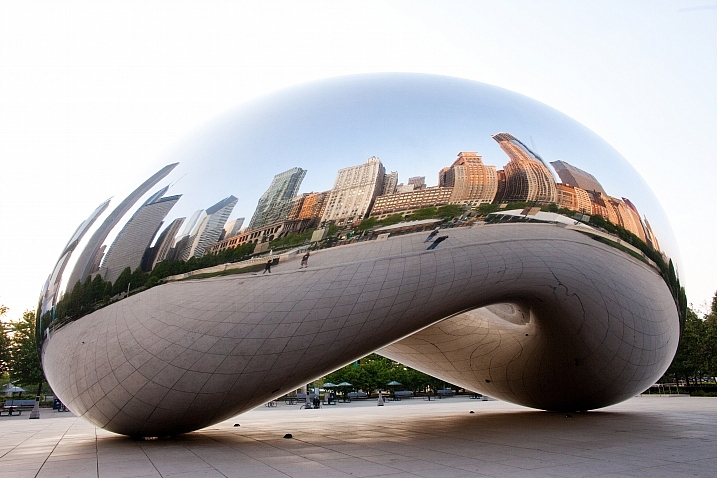
    In this collection of images have a look at how these photographers captured reflective surfaces in creative ways:

    Darlene Hildebrandt

    By Darlene Hildebrandt

    Nick Kenrick

    By Nick Kenrick

    Theophilos Papadopoulos

    By Theophilos Papadopoulos

    Karol Franks

    By Karol Franks

    Jos Van Wunnik

    By Jos van Wunnik

    Highlights6

    By highlights6

    ANDY ARCIGA ( Www.arcigaandy.com )

    By ANDY ARCIGA ( www.arcigaandy.com )

    Jon Wallach

    By Jon Wallach

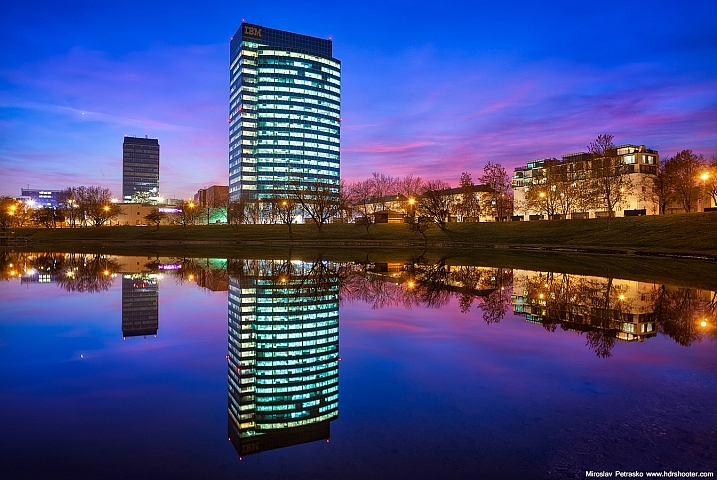
    Miroslav Petrasko

    By Miroslav Petrasko

    ?Jin Mikami?

    By ?Jin Mikami?

    Mario

    By Mario

    Darlene Hildebrandt

    By Darlene Hildebrandt

    Stefano Corso

    By Stefano Corso

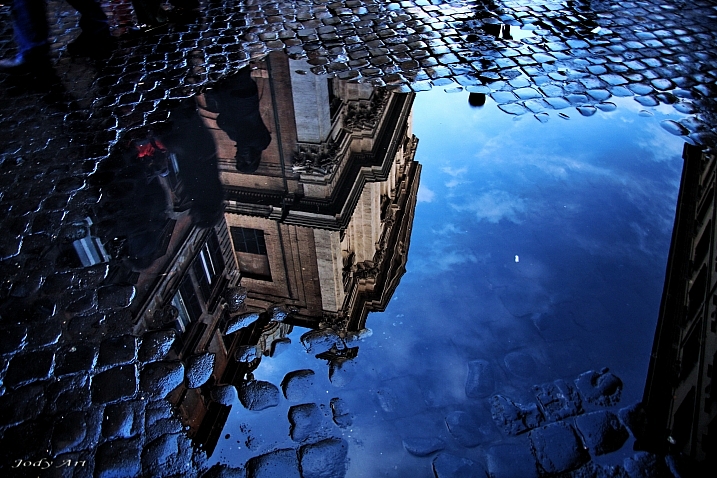
    Jody Sticca

    By Jody Sticca

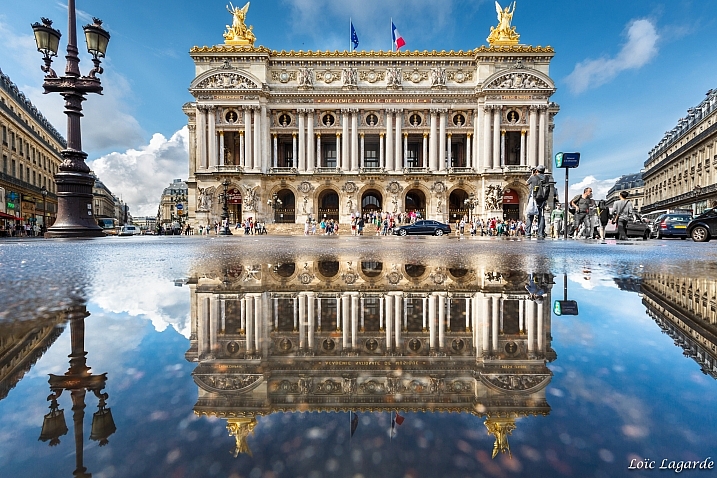
    Loïc Lagarde

    By Loïc Lagarde

    Neil Howard

    By Neil Howard

    Davide D'Amico

    By Davide D’Amico

    Thomas Hawk

    By Thomas Hawk

    ?ethan

    By ?ethan

    Brett Kiger

    By Brett Kiger

    Phil Whitehouse

    By Phil Whitehouse

    Thomas Hawk

    By Thomas Hawk

    Roman Kruglov

    By Roman Kruglov

    Moniek Van Rijbroek

    By Moniek van Rijbroek

    googletag.cmd.push(function() {
    tablet_slots.push( googletag.defineSlot( “/1005424/_dPSv4_tab-all-article-bottom_(300×250)”, [300, 250], “pb-ad-78623” ).addService( googletag.pubads() ) ); } );

    googletag.cmd.push(function() {
    mobile_slots.push( googletag.defineSlot( “/1005424/_dPSv4_mob-all-article-bottom_(300×250)”, [300, 250], “pb-ad-78158” ).addService( googletag.pubads() ) ); } );

    The post 24 Reflective Mirror Images to Make You Look Twice by Darlene Hildebrandt appeared first on Digital Photography School.


    Digital Photography School

  • How to Photograph Reflective Surfaces

    Photographing reflective surfaces and objects is usually quite challenging, and can easily turn the work of the photographer into a frustrating task.

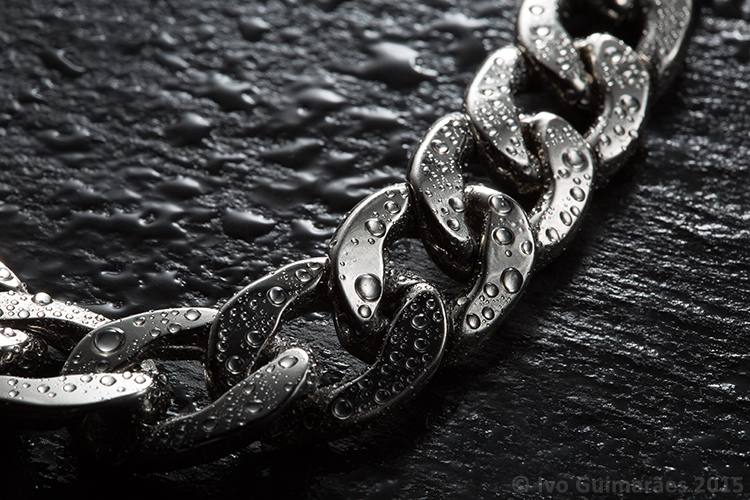
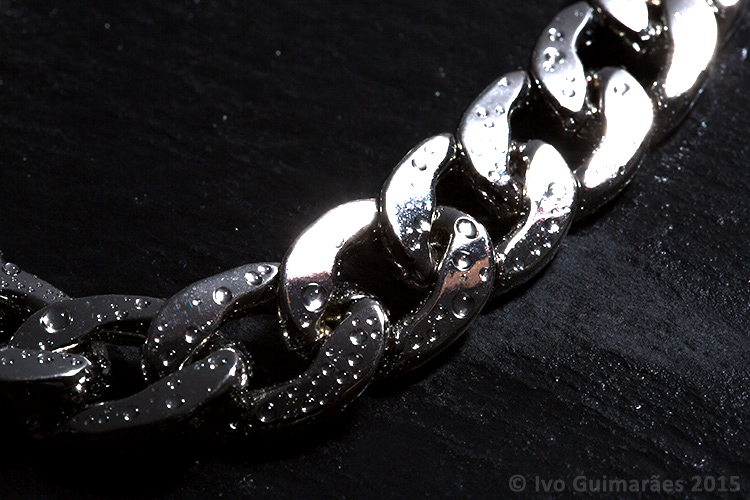
    Reflections are a hard to tame beast, but it gets easier to control if you know the rules. So, in this article I will show you how to create a high impact image with controlled reflections, like the one below, with a really simple, but highly effective, technique and using equipment you most certainly already own.
    01

    A reflective surface acts like a mirror reflecting light, so if the light source of your image comes from the same direction as the camera, it causes specular highlights resulting in blown out spots without texture, and an overall poor looking image like the following one photographed with the flash mounted on camera.
    02

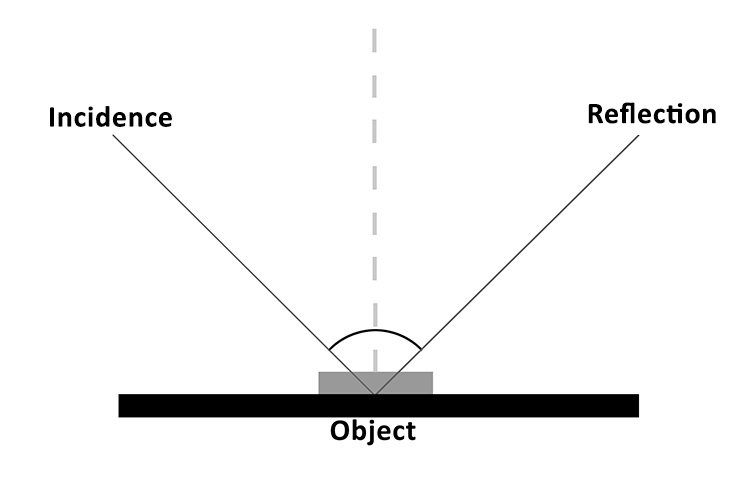
    It all comes down to the basic principles of light and the way it behaves, which is in fact very predictable. The law of reflection explains this phenomenon. If you project a ray of light on a flat reflective surface like a mirror, then the angle of incidence equals de angle of reflection, like the following diagram illustrates:
    03

    So, physics apart, what this really means is that if you are trying to photograph a reflective surface you should never light it from the same angle as the camera, otherwise you will only get light bouncing straight back at you (depending on the angle of the object).

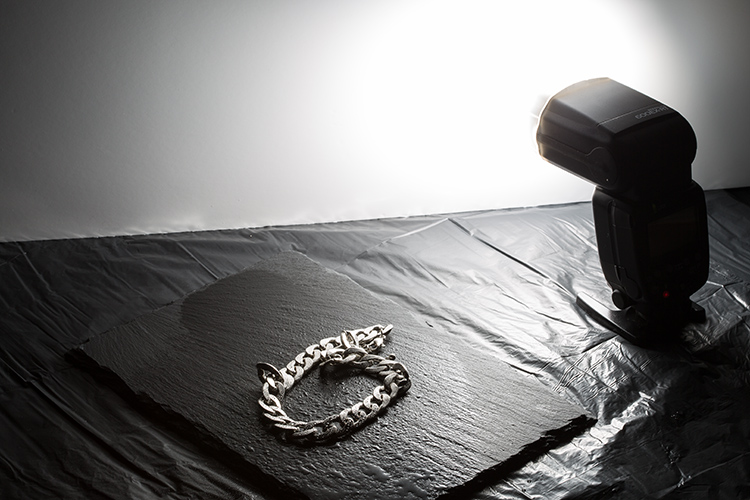
    The trick here is to use a big light source, and position it in the same opposite angle of your camera, in relation to the photographed object (behind it).

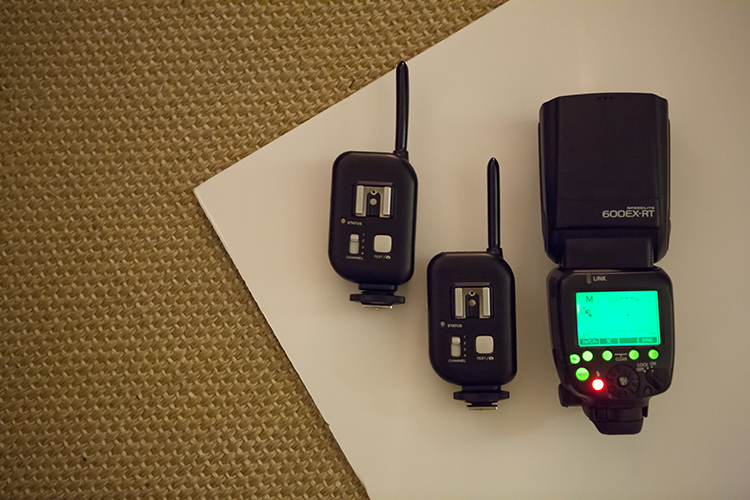
    You can do this with a studio flash head and a big softbox, but there is a much simpler and cheaper way of doing it. You just need some white cardboard, a flash, and trigger system to fire it off-camera.
    04

    Here is how you can use this lighting setup:
    05

    The light from the flash bounced off the cardboard is a much bigger light source, allowing you to control the reflections on your image, creating gradients that shape the object, and avoiding specular highlights. Notice it also creates texture on the rock background.
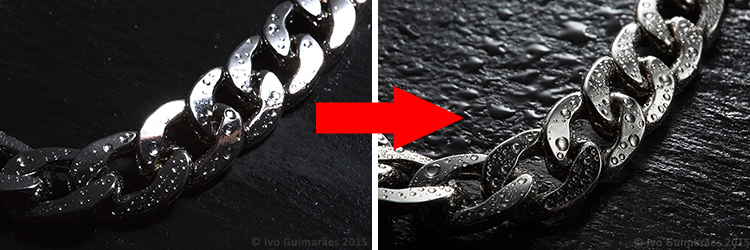
    06

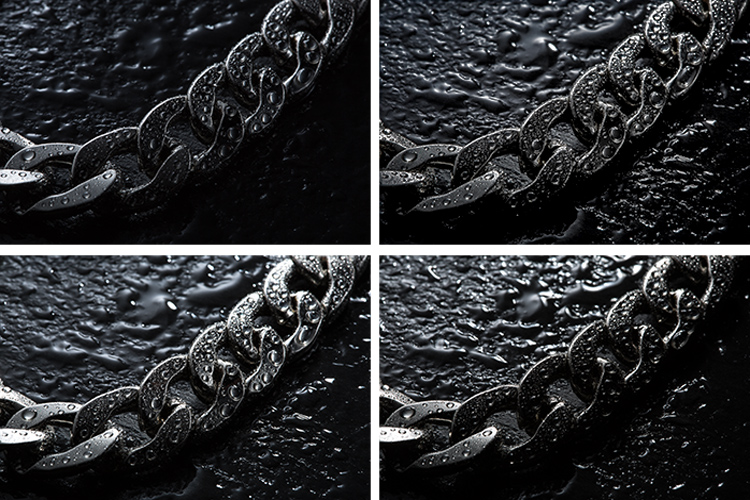
    This simple technique allows you to create a lot of different lighting effects in your image, depending how you position your flash, and angle the cardboard in relation to the photographed object, which also creates texture on the background stone and water drops.

    Here are some examples of light variations on this imag,e with just some small adjustments to the cardboard positioning.
    07

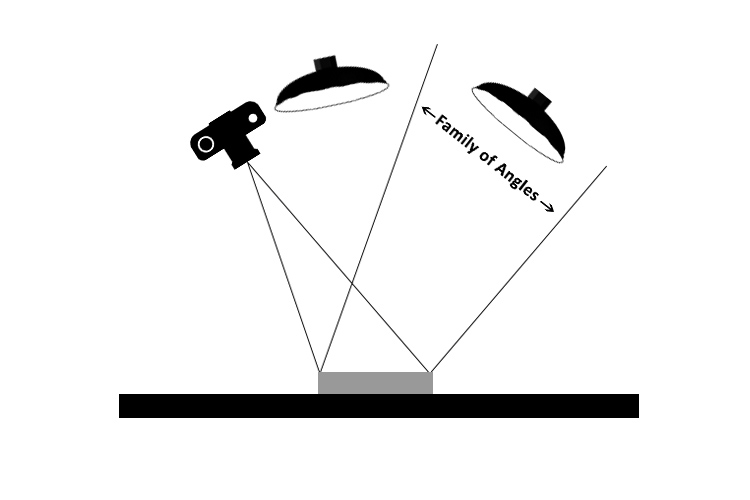
    Knowing that light rays will always bounce from a reflective surface, at the same angle at that at which they strike it, makes it possible to determine the best positioning for the camera and the light source, taking into consideration the family of angles as you can see in the next diagram.
    08

    The light positioned within the family of angles will produce a direct reflection and the light outside of the family of angles will not light a mirror-like subject at all, from the camera’s point of view.

    Even though the reflections on these images are not direct, but rather diffused reflections (which makes difficult to calculate the light angle as it is being bounced and dispersed in different directions) the family of angles can give you a good estimate of how to position your light in relation to the camera angle, in order to control the reflections in your image.

    All this technical information about light physics may seem overwhelming at first, but it will all make sense when you start playing around with it. So, give it at try, I’m sure you will get great images. Please share any questions and your images of reflective objects in the comments section below.

    googletag.cmd.push(function() {
    tablet_slots.push( googletag.defineSlot( “/1005424/_dPSv4_tab-all-article-bottom_(300×250)”, [300, 250], “pb-ad-78623” ).addService( googletag.pubads() ) ); } );

    googletag.cmd.push(function() {
    mobile_slots.push( googletag.defineSlot( “/1005424/_dPSv4_mob-all-article-bottom_(300×250)”, [300, 250], “pb-ad-78158” ).addService( googletag.pubads() ) ); } );

    The post How to Photograph Reflective Surfaces by Ivo Guimaraes appeared first on Digital Photography School.


    Digital Photography School

  • Deceptively Reflective: 12 Mirrored Buildings Trick the Eye

    [ By Steph in Architecture & Houses & Residential. ]

    mirror buildings ring lapierre 3

    Intentionally fooling the eye to either completely disorient you or focus your vision on a certain part of a scene, these mirrored buildings reflect their surroundings, often seeming to disappear entirely when viewed from certain angles. Hopefully, all of these deceptive reflective surfaces aren’t killing too many birds.

    Reflective Roadside Cafe
    mirror buildings roadside cafe 1

    mirror buildings roadside cafe 2

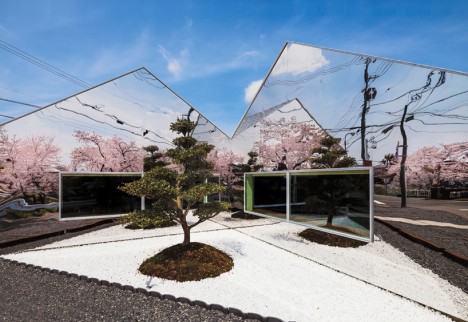
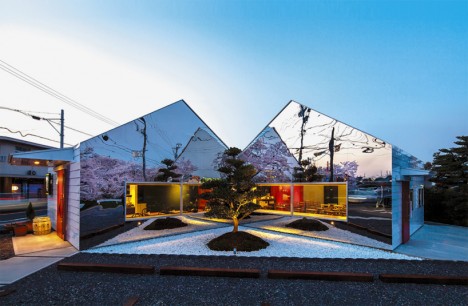
    The branches of an adjacent row of cherry trees are multiplied many times over in the polished mirrored surfaces of this roadside cafe by japanese firm Bandesign. The trees are a tourist draw during bloom season, so putting the focus on them helps draw in business for the cafe owners.

    Chateau de Rentilly: Mirror-Clad French Country House
    mirror buildings chateau 1

    mirror buildings chateau 2

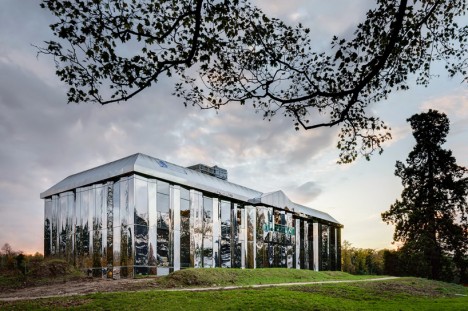
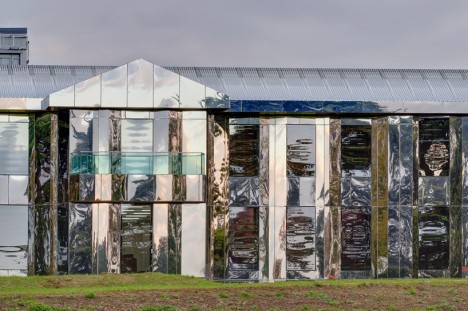
    Mirrored panels completely transform a 1960s country house, Le Château de Rentilly, in the French countryside. Architecture studio Bona-LeMercier worked with artist Xavier Veilhan and set designer Alexis Bertrand to enhance the structure itself and also put the focus on the picturesque hillside setting. The former home is now a permanent gallery for Frac Île-de-France, the region’s contemporary art fund.

    Invisible Barn

    mirror buildings invisible barn 1

    mirror buildings invisible barn 2

    mirror buildings invisible barn 3

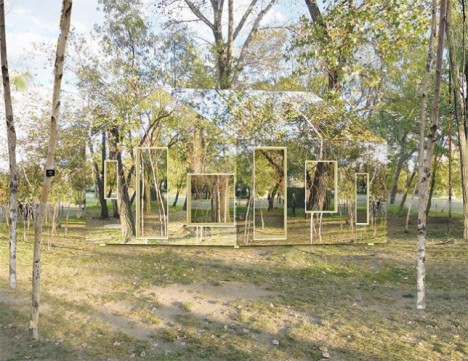
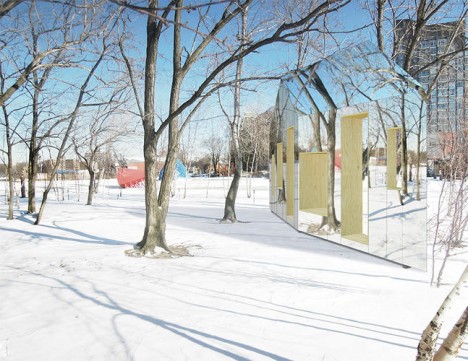
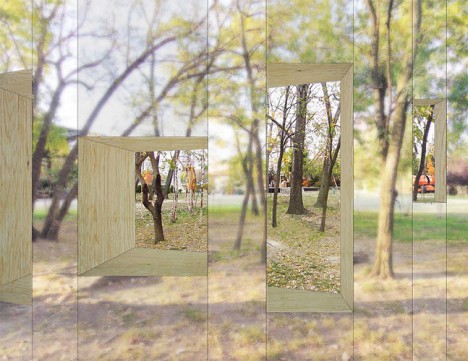
    A combination of see-through portals and mirrored surfaces make this structure seem like a mirage as you approach the little park in which it stands. Designed for the 2014 Folly Competition, the mirrored barn isn’t actually a three-dimensional structure but rather a house-shaped wall.

    Optical Illusion Street Facade Art

    mirror buildings street facade 1

    mirror buildings street facade 2

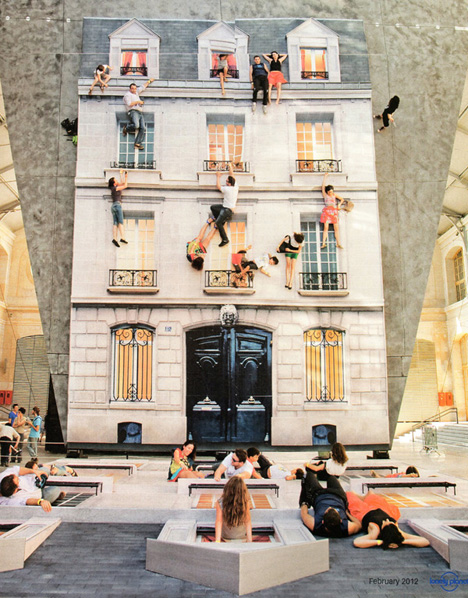
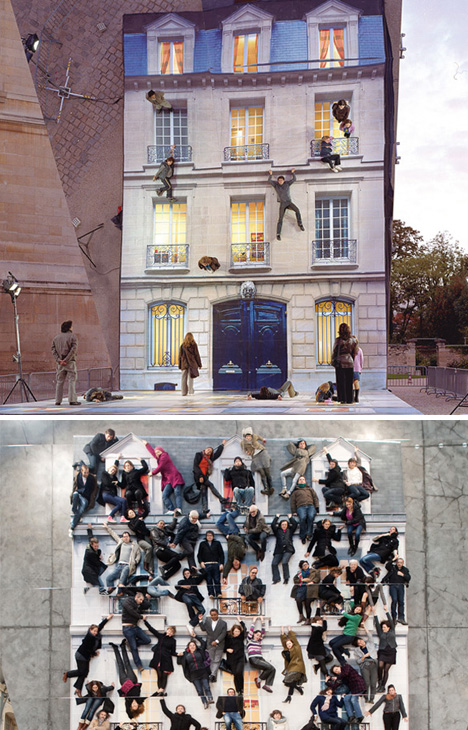
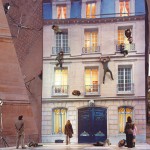
    Ordinary passersby suddenly become talented acrobats when they interact with ‘Bâtiment,’ an installation by Leandro Erlich on display at Le 14 in paris as part of the In_Perceptions exhibition. The project added a massive mirror to the vertical facade of a real building, reflecting a fake facade that was applied to the sidewalk in front of it. The result is a fun optical illusion that made participants appear to defy gravity.

    Next Page – Click Below to Read More:
    Deceptively Reflective 12 Mirrored Buildings Trick The Eye

    Share on Facebook


    [ By Steph in Architecture & Houses & Residential. ]

    [ WebUrbanist | Archives | Galleries | Privacy | TOS ]


    WebUrbanist

  • Lumu smartphone light meter app updated with reflective mode

    Even for photographers who would not even think about taking pictures with a smartphone camera, with the right accessories your phone can be a very useful photographic tool. The Lumu light meter is a great example – it plugs into the headphone socket of a smartphone and, with the help of the dedicated Lumu app, turns your smartphone into a fully-fledged light meter that can help enhance your understanding of a scene’s lighting situation. Click through to read more

    Articles: Digital Photography Review (dpreview.com)

  • Mirrored images offer reflective perspective

    mirrors2.jpeg

    Greek artist Panos Papanagiotou takes a reflective approach to his photography, using his iPhone and apps that create a mirrored effect. Everyday items are transformed into symmetrical studies that challenge the viewer to look at otherwise mundane details in a fresh way. Click through for more information and images from Papanagiotou’s Mirrors series in our article on connect.dpreview.com.

    News: Digital Photography Review (dpreview.com)

  • How to photograph Shiny Reflective Objects Silver Chrome Met

    see www.learnmyshot.com for equipment used. Learn How to Shoot Silver and other Highly Reflective Objects.More photography tutorial videos at learnmyshot.com