RSS
 

Posts Tagged ‘Readers’

2016 DPReview Readers’ Best Shots: People

31 Dec

2016 DPReview Readers’ Best Shots: People

Photo by Michal Herrmann

The old man and the sea. Old and hard working, most elderly still need to work to make a living. You can look into his eyes and read his story.

FUJIFILM XT10 with 58MM Helios 44/2 at 58mm, 1/100 sec, ISO 640, F2

Picking your favorite image is never an easy task. Nevertheless, our readers were up to the challenge when we asked them to submit their best shots of 2016. We received a huge number of submissions, and it was no small job picking favorites. We didn’t need the reminder, but it underscored just how talented our readership is. Photos were divided into three categories and we settled on a small selection to feature in each.

For this category, ‘people,’ we looked for photos that tell a story about the human side of this world we inhabit. There were many beautiful and compelling images submitted – be sure to check out all of the submissions here and here.

A huge thanks to everyone that participated and gave us a chance to see your work!

2016 DPReview Readers’ Best Shots: People

Photo by Pavel Matousek

From a photo essay on Kenya children AIDS care program.

Nikon D600 with 50mm at 50 mm, 1/250 sec, F4, ISO 200

2016 DPReview Readers’ Best Shots: People

Photo by Ahnaf Akeef

The Weary Way Back Home. This was taken on a boat on our way back from a waterfall we went to see in Bandarban, Bangladesh.

Canon 6D with 24-70 2.8L II at 70mm, 1/1250 sec, F2.8, ISO 100

2016 DPReview Readers’ Best Shots: People

Photo by Gabriel Jakab

Photo taken in a rainy day or, as I like to say, the Golden Hour for rugby.

Nikon D750 at 200mm, 1/1000 sec, F2.8, ISO 1250

2016 DPReview Readers’ Best Shots: People

Photo by Michel Hébert

Here is a candid portrait shot I took in May 2016 during the Lag BaOmer celebration in the Mile-End neighborhood of Montreal, where there is a quite large Hasidic Jewish community. The contrast between the lighting of some faces (provided by the bonfire in the middle of the street) and the darkness of others reminds me of the clair-obscur/Chiaroscuro style of some dutch painters like Rembrandt. What do you think?

Olympus E-M5 Mark 2 with Olympus 75mm F1.8 at 75 mm, 1/10 sec, F2, ISO 1600

2016 DPReview Readers’ Best Shots: People

Photo by Richard Caughey

Pat McManus live at the Corn Market Blues event at the Raven in Corby, UK. First time out with my Fuji XT2. 

FUJIFILM X-T2 with 18-55mm F2.8-4 at 46.3mm, 1/250 sec, F4, ISO 4000

2016 DPReview Readers’ Best Shots: People

Photo by Myrgjorf

Masai warrior – the lion killer, with a traditional hat from the lions fur. Masai village, Mara North Conservancy.

Canon 7D Mark II with 70-200mm F4 at 150 mm, 1/250 sec, F4, ISO 320

2016 DPReview Readers’ Best Shots: People

Photo by Afzal Khan

The best cook.

Sony A99 with Minolta 50mm F1.7 at 50mm, 1/60 sec, F3.5, ISO 1000

2016 DPReview Readers’ Best Shots: People

Photo by Al Downie

Storytime for sleepyheads

FUJIFILM X-Pro2 with 35mm F2 at 35mm, 1/125 sec, F2, ISO 400

2016 DPReview Readers’ Best Shots: People

Photo by Rick Jacobi

Golden Eagle Festival in Western Mongolia Oct 1st as Kazakhs are entering the parade ground.

Sony A7R-II with 70-300mm at 300mm, 1/250 sec, F10, ISO 200

Articles: Digital Photography Review (dpreview.com)

 
Comments Off on 2016 DPReview Readers’ Best Shots: People

Posted in Uncategorized


2016 DPReview Readers’ Best Shots: Places

30 Dec

2016 DPReview Readers’ Best Shots: Places

Photo by Fred Gunnerson

Every Spring people come from all over to view and photograph the orchards in bloom. It only lasts a few weeks so you have to be ready when the rain stops. The bottom half of the photo is Oregon and the top half is Washington. That’s Mt. Adams in the background.

Hood River, Oregon, USA

Picking your favorite image is never an easy task. Nevertheless, our readers were up to the challenge when we asked them to submit their best shots of 2016. We received a huge number of submissions, and it was no small job picking favorites. We didn’t need the reminder, but it underscored just how talented our readership is. Photos were divided into three categories and we settled on a small selection to feature in each.

The category featured here is ‘Places’. We tried to include a variety of our favorite landscapes and cityscapes to feature. A huge thanks to everyone that participated and gave us a chance to see your work! You can find all of the submitted images here, here and here.

2016 DPReview Readers’ Best Shots: Places

Photo by Michele Palazzo

New York City’s iconic Flatiron building emerges from the blizzard like the bow of a giant ship plowing through the wind and the snow. Taken during the historic coastal storm “Jonas” on January 23rd, 2016. Shot January 23rd, 2016 in New York City with a Ricoh GR.

New York City, NY, USA

2016 DPReview Readers’ Best Shots: Places

Photo by Hans Kruse

Morning sun at the Quiraing on Isle of Skye shot during a photo workshop I was leading on Isle of Skye, Scotland in September 2016.

Isle of Skye, Scotland

2016 DPReview Readers’ Best Shots: Places

Photo by George Fowler

This picture was taken a few weeks ago in Shiobara, an area about two and a half hours north of Tokyo in the countryside. The fall colors were at their peak and the footbridge across the small river was absent of any people.

Shiobara, Japan

2016 DPReview Readers’ Best Shots: Places

Photo by Mike Sandman

Designed by the architect Frank Gehry, inspired perhaps by an Escher woodcut. Magnetically attractive to the eye, but the roof leaks.

Stata Center, MIT, Cambridge, Mass. USA 

2016 DPReview Readers’ Best Shots: Places

Photo by Derek Dammann

An early spring dawn breaks at the Dark Hedges in County Antrim, Northern Ireland.

County Antrim, Northern Ireland

2016 DPReview Readers’ Best Shots: Places

Photo by Morten Smedsrud

Sunrise over the Troll Wall from Store Trolltind, the highest peak in the Trolltindene mountain ridge, Romsdal Norway.

Romsdal, Norway

2016 DPReview Readers’ Best Shots: Places

Photo by Peter Alessandria

Photo of Harvest Full Moon (Oct 2016) rising behind the Statue of Liberty in New York Harbor. This shot was planned weeks in advance to align the trajectory of the moon with Lady Liberty.

Statue of Liberty, New York, NY, USA

2016 DPReview Readers’ Best Shots: Places

Photo by Maurice J Byatt

Crater Lake National Park, OR, USA

2016 DPReview Reader’s Best Shots: Places

Photo by Damjan Sirca

Taken on 28/10/16 in Yosemite valley – a bad weather forecast is not always bad news.

Yosemite Valley, CA, USA

Articles: Digital Photography Review (dpreview.com)

 
Comments Off on 2016 DPReview Readers’ Best Shots: Places

Posted in Uncategorized


Have your say! DPReview Readers’ Choice Awards open for voting

10 Dec

All five initial categories of our 2016 Readers’ Choice Awards are now open for voting. Help decide which cameras and lenses take home the ultimate bragging rights. Vote now

Articles: Digital Photography Review (dpreview.com)

 
Comments Off on Have your say! DPReview Readers’ Choice Awards open for voting

Posted in Uncategorized


Check Out These Books: 18 Home Libraries for Ravenous Readers

29 Sep

[ By SA Rogers in Design & Fixtures & Interiors. ]

home-library-net-nook-madrid

Short of actually curling up in a relaxing space to get lost in the words on a page, there’s nothing reading enthusiasts love more than gazing at photo after photo of beautiful libraries, especially those they could potentially recreate in their own homes. This inspiration gallery of home libraries runs the gamut between secluded cabins in the woods and clever hammock placement to secret rooms and even bathtub-adjacent mini libraries.

Secluded Library & Guest House in the Woods

home-library-guest-house-1

home-library-guest-house-2

home-library-guest-house-3

If seclusion is what you’re after, this ‘secret room’ in the woods of upstate New York offers an elevated level of privacy as you browse a floor-to-ceiling collection of books. Studio Padron designed the ‘Hemmelig Rom’, a 200-square-foot black cabin made from oak, as a guest house immersed in its woodland environment. The logs that make up the bookshelves and walls came from the forest outside.

Reading Net for Kids

home-library-reading-net-1

home-library-reading-net-2

home-library-reading-net-3

Perfect for homes with mezzanines (especially if you line the walls with bookshelves), this idea from Spanish studio Playoffice would be fun to recreate. The ‘reading net’ is a meshed fabric suspended from the railings of a family library so kids (and adults) can climb in and enjoy a book in elevated comfort.

Dynamic Wall-to-Wall Library in Costa Rica

home-library-casa-kike

Architect Gianni Botsford designed this unusual narrow home on stilts for the tropical jungle of Costa Rica, lining an entire wall of it with floor-to-ceiling bookshelves broken up by dynamic diagonal lines that meat the beams of the roof.

Library in the Home of Architect Mario Bellini

home-library-bellini

Presented as part of a Salone del Mobile exhibition called ‘Where Architects Live,’ this photo lets us peek at Mario Bellini’s home drafting table in his mezzanine library, as well as the piano and record room below. What you can’t see in the picture is that the bookshelves in that library continue nearly 30 feet into the air, accessible by sliding ladders.

Wraparound Home Library

home-library-wraparound-2

home-library-wraparound

Books are the primary focus in the entire common area of ‘Hendee-Borg House’ in Sonoma, California by William O’Brien Jr. The living and dining area is flanked by wall-to-wall bookshelves on three sides.

Next Page – Click Below to Read More:
Check Out These Books 18 Home Libraries For Ravenous Readers

Share on Facebook


[ By SA Rogers in Design & Fixtures & Interiors. ]

[ WebUrbanist | Archives | Galleries | Privacy | TOS ]


WebUrbanist

 
Comments Off on Check Out These Books: 18 Home Libraries for Ravenous Readers

Posted in Creativity


Reader’s poll results: What was the most exciting announcement of Photokina?

26 Sep

What’s been the most exciting announcement of Photokina?

Every two years people flock to Cologne to find out what’s next in the world of photography. This year we’ve seen some announcements that left us very excited, but we wanted to know what you, our readers, think of what’s come out of the show this year. So we asked: what’s been the most exciting announcement of Photokina? With more than 5,000 votes counted, we have a pretty good idea.

Winner: Fujifilm GFX 50S development

Winning by a margin as big as its sensor is the announcement of the development of the Fujifilm GFX 50S and a selection of lenses to go along with it. Built around the 51.4MP 43.8 x 32.9mm sensor that is found in the Pentax 645Z and Hasselblad X1D-50c medium-format cameras, it lays claim to being the world’s first medium format mirrorless camera with a focal plane shutter. While Hasselblad stuck with leaf shutters built in to the lens, which is common in the medium-format world, Fujifilm claims using a focal plane shutter has allowed them to design a short flange back distance in to their new lenses, helping vignetting and sharpening.

There’s loads more to the new system, which you can learn more about in the official announcement, or our hands-on article.

Runner up: Olympus E-M1 II development

Trailing on the heels of the big Fujifilm with nearly 1,000 votes is the much smaller, but arguably a much more powerful, Olympus E-M1 II. Sure, the 20MP Micro Four Thirds sensor isn’t nearly as big, but this one has been tricked out with all sorts of technology.

First, it gains an array of 121 cross-type AF on-sensor phase detection points spread further than its predecessor. The new autofocus system and sensor work alongside the new dual quad core TruePic VIII Image Processor with four CPU cores and four image processing cores that achieve image processing speeds approximately 3.5 times faster than the TruePic VII Processor.

That means this little powerhouse can shoot Raw continuously at 18fps with continuous autofocus and auto exposure, or 60fps without autofocus. This all on top of a slew of other improvements, which you can learn more about in the announcement or our hands-on articles.

Runner up: Sony a99 II

Third place in our Photokina poll comes as no surprise, as it helped shed some light around the fate of Sony’s Alpha mount cameras. The Sony a99 II answers prayers with a 42MP BSI sensor from the Sony a7R II, complete with its 399 on-sensor PDAF points. These work in conjunction with the 79-point dedicated PDAF sensor to create what Sony calls ‘Hybrid Cross AF points.’ The a99 also receives an a-mount first: 5-axis in body image stabilization that should provide up to 4.5 stops of stability.

The improvements don’t stop there. Read the official announcement or look at our hands-on article for more information.

Runner up: Canon EOS M5

Another product our readers are excited about is Canon’s latest mirrorless camera: the EOS M5. It gains features fans of the EOS-M lineup have been begging for, namely an EVF and a sensor equipped with Canon’s marvelous Dual Pixel Autofocus system. What results is a small and responsive camera with a touch screen, digital image stabilization for video, and all sorts of other goodies.

For more information, check out the announcement or our First Impressions Review.

Runner up: Sigma 85mm F1.4 DG HSM Art

The Sigma 85mm F1.4 Art edged into the top five by just a single vote, and it’s easy to understand why our readers are excited about it – they’ve been waiting a while for this one. Starting with the 35mm F1.4 Art, Sigma started producing an excellent lineup of zooms and F1.4 prime lenses. After the 35 they made a 50, after which people logically assumed an 85 would come. Instead we got a 24mm F1.4, then an industry-first 20mm F1.4, which are both wonderful lenses.

Finally, they’ve focused all their optical prowess in to producing what they’ve billed as ‘The Ultimate Portrait Lens’, with a (de) focus on bokeh quality, and an improved AF motor. Our polls indicate that this is a lens many people cannot wait any longer to try, us included.

Honerable mention: Panasonic Lumix DMC-GH5 development

It only missed the top five readers’ picks by one vote, and while we only got a look at the new GH5 under glass at the show, Panasonic was able to provide us with some drool-worthy specs and capabilities of their upcoming flagship. It will offer 4K/60p capability for the first time in a consumer ILC, and will provide 4:2:2 10-bit 4K video. The GH5 will also provide a 6K Photo mode that will extract 18MP stills from burst footage, or 8MP stills from 60p 4K clips. These impressive specs are enough to keep us eagerly waiting for the GH5’s arrival.

Articles: Digital Photography Review (dpreview.com)

 
Comments Off on Reader’s poll results: What was the most exciting announcement of Photokina?

Posted in Uncategorized


Readers’ Showcase: Arek Halusko

16 May

Readers’ Showcase: Arek Halusko

Roxy and Chili taking a break in the sun. Surrey BC, June 2007. Photo by Arek Halusko

For DPR reader Arek Halusko, photography is a form of stress relief. Based in BC, Canada, he runs his own business and finds himself drawn to photographing urban scenes, where there’s always something to shoot around the corner. Take a look at some of his work.

Interested in having your work featured in an upcoming Readers’ Showcase? Let us know! Include your DPR user name a link to your online portfolio.

Readers’ Showcase: Arek Halusko

Staircase downtown Vancouver BC. May 2005. Photo by Arek Halusko

Where are you from, and how did you get into photography?

Originally I’m from Poland and my family emigrated to Canada in 1984. We ended up in Kamloops BC and then I moved to the Lower Main Land of BC in 1995. I took up photography in 2001 as a way to relieve stress while working at a very fast growing local ISP. After 15 years it’s still the best way to clear my mind from stress, although this time it’s from running my own business.

Readers’ Showcase: Arek Halusko

Tin Solder New Westminster Quay, May 2005. Photo by Arek Halusko

What was your first camera?

I was given a camera when I was about 9 years old until I bent the shutter blades trying to see what was inside this mechanical wonder. It wasn’t until about 20 years later when I got a Pentax Spotmatic, although don’t remember which model/year.

Readers’ Showcase: Arek Halusko

Little house on a foggy morning in Glen Valley BC. Jan 2010. Photo by Arek Halusko

What cameras and lenses do you use now?

99% of the time I use an Olympus E5 and once in a while Olympus E1. The E1 for me has the ultimate in ergonomics. Lens-wise I mostly use the Zuiko 12-60mm and own Zuiko 4:3 8mm FE, Zuiko 4:3 50-200mm. 

Readers’ Showcase: Arek Halusko

New Westminster BC parkade on Columbia St. Sept 2004 . Photo by Arek Halusko

Do you have a favorite focal length, or are there a few that you tend to prefer?

Wide-angle is my preference. I really got hooked on wide-angle when I got a Kiron 24mm for my Pentax MZ3 in the early 2000’s and then the Zuiko 4:3 11-22mm for my Olympus E1.

Readers’ Showcase: Arek Halusko

Fishing on a foggy morning in front of Pattullo Bridge in Surrey BC. Feb 2007. Photo by Arek Halusko

Most of your photos seem to be taken not too far from your home in BC. Do you ever travel to take photos or do you tend to stay close to home?

Unfortunately I haven’t had a chance to travel outside of Canada so all of my images are either from BC or Alberta. I’m planning on taking cross Canada trips starting next year when me and my wife plan to drive from Vancouver area to Inuvik and if the Dempster highway extension is finished then on to Tuktoyaktuk. I always stick to urban/city scenes as I’m drawn to the structural patterns and cityscapes, and there’s always something to shoot around the corner.

Readers’ Showcase: Arek Halusko

Sky Strain bridge leading from New Westminster BC over the Fraser River To Surrey BC. Jan 2005. Photo by Arek Halusko

What are some of your favorite locations to shoot?

Vancouver city, and the interior of BC – especially the Cache Creek/Ashcroft/Fraser Canyon area. Last summer I did a lot of day/weekend trips to the interior of BC so have lots of locations marked to come back to and shoot this summer. For me this is a bit of a shooting style/subject change as I haven’t had a chance to get out to downtown Vancouver much in the last few years.

Readers’ Showcase: Arek Halusko

Golden Ears bridge in Surrey/Maple Ridge BC. Jan 2010. Photo by Arek Halusko

Do you set goals or create projects for yourself as a photographer, or is it more free-form?

It’s 99% free-from although did a lot of experiments when I was still in the early stages of photography, from product shots to night club photography. The last project I did was to see what I could do in dreary/foggy weather since the West Coast of Canada is like that from October to May. It turned out better than I expected.

Readers’ Showcase: Arek Halusko

Sky Strain and Pattullo Bridge in Surrey BC. Sept 2009. Photo by Arek Halusko

In your opinion, what’s been the most important technological advancement in photography since you started shooting?

Without a doubt, the introduction of the affordable Canon D30. For me, going from a film Pentax MZ3 to a D30 was a 180 degree change in what I could accomplish in one day of shooting. Also, the CPU race between AMD and Intel at around the same time, which brought huge computing power to allow cheap and powerful digital darkrooms for every photographer.

Readers’ Showcase: Arek Halusko

Old car doors in Spences Bridge BC. July 2015. Photo by Arek Halusko

What’s the best advice you’ve been given as a photographer?

When you are looking for/at the scene/subject visualize it like you would see it in the viewfinder, it takes some time but eventually it’ll click in like your first balanced bike ride.

Articles: Digital Photography Review (dpreview.com)

 
Comments Off on Readers’ Showcase: Arek Halusko

Posted in Uncategorized


Best Photos of 2015 by JMG-Galleries Blog Readers

26 Apr

Olmsted Point Stars

Every year I like to start off by providing a roadmap of inspiration for myself and those that read my blog by compiling a list of great photos from my blog readers. I am very thankful to everyone that takes part as their enthusiasm has enabled me to turn this into a tradition that is now on its 9th year. It is amazing to think that so many people have embraced this and find it as invigorating as I do. Thank you!  If you’re just discovering my Best of Photos project you’ll find in the list below very talented and passionate photographers of all skill levels. Participants span a spectrum of skill level from hobbyists to professionals and cover a wide variety of genres including landscape, macro, nature, photojournalism, portraiture, event, wildlife, fine art photography and more.  Some names you’ll recognize as being famous and others  you won’t. I invite you to visit each link below as I have and introduce yourself to many of the participating photographers.

If you’d like to take part next year and be informed when submissions open for the “Best Photos of 2016? blog project add your name to my mail list. You won’t be spammed. I send out newsletters quite infrequently.

Thank to everyone who took part! I hope reviewing your best photos of the year and comparing them to years pasts keeps you inspired and aware of your progress as a photographer.

Best Photos of 2015

  1. Jim M. Goldstein – Best Photos of 2015
  2. Scott Wyden Kivowitz – Best and Favorite Photographs of 2015
  3. Chris Moore – Exploring Light – Top Ten Photos of 2015
  4. Nilesh Patel – Best of 2015
  5. Dave Wilson – Best of 2015 – Dave Wilson Photography
  6. Michael Russell – My 10 Favorite Photographs of 2015
  7. Jim Campbell – In My Image
  8. Salter C Ballard – my 2015 best photos
  9. Rachel Cohen – 2015 My Year in Review
  10. JJ RAIA – 2015 Jim Goldstein Blog Project
  11. Andrew S. Gibson – My Ten Favourite Photos from 2015
  12. Russ Bishop – 2015 – The Year in Pictures
  13. Randy Langstraat – ADVENTR.CO – My Ten Favorite Photos of 2015
  14. Clint Losee – Top 10 of 2015 – My 10 Best Landscape and Scenic Photos
  15. Mike Cavaroc – Free Roaming Photography
  16. Richard Murphy – Best of 2015
  17. Franka M. Gabler – Franka M. Gabler Photography – Favorite Images from 2015
  18. Isabel and Steffen Synnatschke – 2015 – Our favorite images of the year
  19. Johann A. Briffa – 2015 Retrospective – Flickr Album
  20. Carl Donohue – Expeditions Alaska Favorite Photos of 2015
  21. Alexander S. Kunz – Twelve favorite photos from 2015
  22. Richard Wong – Favorite Photos From 2015 – Richard Wong
  23. Matt Anderson – MATT ANDERSONS BEST PHOTOS OF 2015
  24. Patricia Davidson – My Top Favorite Photos of 2015
  25. Joseph W. Smith – Favorites from 2015
  26. Martijn van der Nat – Best of 2015
  27. El Paisaje Perfecto – Landscapes of the year. 2015 Edition.
  28. Jenni Brehm – Changing Perspectives – Best of 2015
  29. Pete Miller – USKestrel Photography – uskestrelphotography – My Favorites of 2015
  30. Gary Crabbe – Enlightened Images – My Favorite Photos of 2015 – A Year-End Retrospective
  31. Greg Russell – Alpenglow Images – 2015 Year in Review
  32. Paul Conrad – 2015: A Look Back – My Year in Photos
  33. Philip Esterle – Philip Esterle Photography
  34. Suzy Walker-Toye – Best of 2015 and year in review
  35. Mike Matenkosky – My Favorite Photos from 2015
  36. Alan Majchrowicz – Photo Highlights 2015
  37. Rob Tilley – Best of 2015 – My Favorite Images of the Year
  38. Jon Gresham – The Sun Shines and the Igloo Melts
  39. Mike Cleron – 2015 Favorites
  40. Adrian Klein – Best Photos of 2015
  41. Björn Göhringer – Top 15 From 2015
  42. Chris Tucker – My Best Photos of 2015
  43. Greg A. Lato – latoga photography – My Favorite Photos of 2015
  44. Greg Clure – Greg Clure Photography – Best of 2015
  45. Alister Benn – Alister Benn – Best of 2015
  46. John Fujimagari – The Stentorian Image – Best Of Twenty Fifteen
  47. SkyVista Photography by Steve Luther – Photographic Journeys – SkyVista Photography 10 Favorite Images of the Year
  48. Mike Chowla – My Ten Best of Images of 2015
  49. Björn Kleemann – Best of 2015
  50. Phil Colla – Natural History Photography – Best Photos of 2015
  51. Edith Levy – Edith Levy Photography – 2015 My Year in Review
  52. Andre Krajnik – MyBlog by solaner – a photographer’s view to the world a traveler’s blog
  53. Fred Mertz – BEST OF 2015
  54. Harold Davis – Harold Davis Best of 2015 – Backwards and Forwards
  55. David Leland Hyde – Landscape Photography Blogger – My Favorite Photographs of 2015
  56. Anne and Frank Klug – Ten Favorite Images from 2015
  57. Scott Thompson – Scott Shots Photography – My 10 Best Tahoe Photos of 2015
  58. Jim Stamates – My 10 Best of 2015
  59. Daniel Leu – Favorites of 2015
  60. Tim Newton – 2015 Favorites
  61. Pat Ulrich – Favorite Photographs of 2015
  62. Caleb Weston – Dubland.net
  63. Lon Overacker – Lon’s Favorites of 2015
  64. Brent Huntley – photographyandtravel.com
  65. Jean Day – Jean Day Photography Best of 2015
  66. Denise Goldberg – top photos 2015
  67. Dan Baumbach – 2015 Favorites
  68. M.C.Andrews – The Aerial Horizon
  69. Alex Filatov Photography – Top Photos of 2015
  70. Martin Quinn – Martin Quinn – 2015 Favorites
  71. Anja Eichler – ae.i – travel photography and social media for shutterbugs
  72. Brian King – Brian King Images
  73. QT Luong – Year 2015 in Review: Water Favorites
  74. Amanda Sinco – Favorite Images from 2015
  75. G Dan Mitchell – G Dan Mitchell’s 2015 Favorite Photographs
  76. Bryan William Jones – Top Photos of 2015
  77. Kevin Ebi – Living Wilderness – Best of 2015
  78. Dayne Reast – 2015 Highlights
  79. Bryn Tassell – Bryn Tassell – Favourites of 2015
  80. Michael Bainbridge – 50 of the Best Photographs of 2015
  81. Catalin Marin – My favourite shots of 2015
  82. J.T. Dudrow – A Glimpse Back at 2015
  83. Laurie Buchwald – My 2015 Photography Year in Review
  84. Andrew S. Gray – Abstract Landscapes 2015 – Andrew S. Gray Photography
  85. Anthony Quek – Bugs and Insects of Singapore
  86. Stephen G. Weaver – Stephen Weaver 2015 Favorites
  87. Chuq Von Rospach – 2015 in Review: My Favorite Images
  88. Milan Hutera – 2015 in Pictures
  89. Derrald Farnsworth-Livingston – Journey Of Light Photography – Top 10 Favorite Images from 2015
  90. Floris van Breugel – Floris van Breugel Best of 2015
  91. Andrew Thomas – Best Aerials of 2015
  92. Nick Fitzhardinge – 2015 – a review
  93. Tom Whelan – Twelve from 2015
  94. Jeff E Jensen – A Few Favorites from 2015
  95. Sara M. Skinner Photography – My Top 10 Favorites of 2015
  96. Mike Christoferson – MLCreations Photography
  97. Mark Graf – Michigan Nature Photos – Twenty Fifteen
  98. Navin Sarma – Navin Sarma Photography
  99. Mark Garbowski – 2015 – A Gallery of Favorites – Mark Garbowski Photography
  100. Torsten Muehlbacher – Best of 2015
  101. Rick Holliday – My Favorite Images from 2015
  102. Tony Wu – Favorite Photos of 2015
  103. Jon McCormack – “2015: Ethiopia
  104. Wendy M. Seagren – Thruthelensephotography – Best of The Best
  105. Stephen L. Kapp – Top 10 Images of 2015
  106. Richard Peters – The year of the wildlife photo without a subject in the frame.
  107. RJ Wilner – 2015 Favorites
  108. Stefan Baeurle – Top 10 Favorites of 2015
  109. Brian Knott – FMKPhoto – 2015 year in review
  110. Christian Cueni – My top pictures in 2015
  111. David Richter – Favorite Images of the Year – 5 of 2015
  112. Patrick Endres – 100 Favorite photos from 2015
  113. Dennis Gingerich – My favorite 5 in 2015
  114. Madeline Pain – Best Photos of 2015
  115. Harley James – Backcountry Bibles – Tramping in New Zealand
  116. Tom Poole – My Favourite images from 2015
  117. Wednesdays in Marblehead – Wednesdays in Marblehead – Best of 2015
  118. Jo West – Jo West Images – Photo Blog
  119. Jeff Sullivan – Top 10 Favorite Travel and Landscape Photos from 2015
  120. Mark Hespenheide – Favorites of 2015
  121. Scott F McGee – Under Pressure Photography 10 Favorites of 2015
  122. Mike Walker – Mike Walker 2015 Top 10
  123. Susan Taylor – Susan Taylor’s Best of 2015
  124. Deb Snelson – Favorite Photos 2015
  125. David J Grenier – 2015 Top Twelve Photographs
  126. Colleen Miniuk-Sperry – CMS Photography – Colleen Miniuk-Sperry Photography – Favorite Photos and Poem From 2015
  127. Michael Zapata – Top Photos From 2015
  128. Roy Kropp – Roy Kropp 2015 Favorites
  129. Daniel Gauss – Dan’s Shot On Site Google+ Page
  130. Tina R Schell – 2015 Favorites and Weekly Photo Challenge-Circles
  131. Drake Dyck – Top Ten Favourite Images of 2015
  132. Jeremy Freshwater – 2015 Best
  133. Rob – NeverHappen – Best of 2015
  134. D. Ottar Flack – RedStormPhoto – Best of 2015
  135. Robin Black – Robin Black Photography
  136. Elizabeth Hahn – EM Hahn Photography
  137. Steve Cole – 2015 Retrospective
  138. Kurt Lawson – Kurt Lawson Photography
  139. Michael Burkhardt – Wilderness Adventure Images – Best of 2015
  140. Derek Fogg – British Landscapes Photography – Looking Back on 2015
  141. Charlotte Gibb – Best of 2015 – A Year of Photography
  142. Eric E Photo – Top 10 of 2015
  143. Will Burrard-Lucas Wildlife Photography – 2015 Year in Review
  144. Vaibhav Tripathi – My favorite 12 photos from 2015
  145. Hugh Sakols – Hugh Sakols Photography
  146. charles barnwell – My Best Images of 2015
  147. Burt Gearhart – Best of 2015
  148. Robert H Clark – 2015 Images – A Year In Review
  149. Deborah Zajac – Top 10 2015 Images
  150. Michael Frye – My Top Photographs of 2015
  151. Les Taylor – Les Taylor Photography – Top 10 Photos of 2015
  152. Phil Slade – Best Images of 2015
  153. Brad Goldpaint – 2015 Letting Go and Allowing Life
  154. Ron Niebrugge – Photo Blog – Niebrugge Images
  155. Greg Vaughn – Favorite Photos of 2015
  156. Seán Duggan – Sean Duggan Photographics – Best of 2015


Special thanks to Holger Elhard for his technical assistance!

The post Best Photos of 2015 by JMG-Galleries Blog Readers appeared first on JMG-Galleries – Landscape, Nature & Travel Photography.


JMG-Galleries – Landscape, Nature & Travel Photography

 
Comments Off on Best Photos of 2015 by JMG-Galleries Blog Readers

Posted in Equipment


Readers’ Showcase: Giulio Magnifico

24 Apr

Readers’ Showcase: Giulio Magnifico

Udine, Italy. 2/20/2014. Nikon D800E + Sigma 35mm F1.4 Art. This man was sitting on a bench waiting for his bus at the station in my hometown. I took the photo with a LED light mounted above my camera. Photo and caption by Giulio Magnifico

Reportage photographer Giulio Magnifico wants to take people on a journey with him when they look at his photos. He captures street scenes and card nights in local osterias in his hometown of Udine, Italy, but over the past few years the focus of his work has been reporting on the refugee crisis in the Middle East and Europe. He discusses with us his experience reporting from refugee camps, how he got his start in photography and what his next move will be. See a sample of his work here and head to his website for more.

Interested in having your work featured in an upcoming Readers’ Showcase? Let us know! Include your DPR user name a link to your online portfolio.

Readers’ Showcase: Giulio Magnifico

Udine, Italy. 11/24/2014. Nikon D800E + Sigma 35mm F1.4 Art. This is a typical scene inside an Italian osteria: a group of friends are playing a card game and drinking wine, inside the osteria ‘Pepata di Corte’ in my hometown. Photo and caption by Giulio Magnifico

First, introduce yourself and let us know your history with photography.

My name is Giulio Magnifico and I’m a 28 year old photographer. I was born and still live in northern Italy, in Udine. I studied photography in high school and I’ve been a photographer since. I concentrate on reportage photography, and have traveled a lot for it. In 2014 I went to Syria, Iraq, Sicily, Paris and in 2015 went again to the Syrian and Croatian borders.

Readers’ Showcase: Giulio Magnifico

Zakho, Iraq. 9/20/2015. Nikon D800E + Sigma 35mm F1.4 Art. A Yazidi woman is on the ground cooking dinner for her family inside a refugee camp. Photo and caption by Giulio Magnifico

(cont.) I collaborated with the German newspaper ‘Der Spiegel’, and have exhibited my work in a gallery in London called Albumen Gallery as well as a photographic studio in Udine. In the last year I held a personal exposition in Tolmezzo (a city near Udine), sponsored by the culture department, with 70 of my photos and one video. This summer, I will have a personal exhibition at the MEDphotofest in Sicily. I hope to make photography my only job in the future.

Readers’ Showcase: Giulio Magnifico

Udine, Italy. 6/5/2014. Nikon 1 V1 + 1 Nikkor 10mm F2.8. A photo captured with my street camera, a little Nikon 1 V1, inside an underground passage when a man was walking out. Photo and caption by Giulio Magnifico

What do you shoot with?

I shoot with a Nikon D800E and two lenses, a Sigma 35mm F1.4 Art and a Nikkor 105mm AFS-G F2.8 Micro, but I can take almost all of my photos with just the 35mm. I love it. Additionally, I use a Nikon 1 V1 with 1 Nikkor 10mm F2.8 and a small video camera mounted on top of my D800E (the Polaroid Cube).

Readers’ Showcase: Giulio Magnifico

Trieste, Italy. 6/2/2015. Nikon D800E + Sigma 35mm F1.4 Art. This man was sitting on a bench in a Trieste park. He had one leg and may have lost the other because of disease, but he was a happy fellow anyway. Photo and caption by Giulio Magnifico

Your portfolio contains a mix of street scenes and reportage, with a clear focus on the human element. What drives you to capture the stories of others?

Life is made by humans. A beautiful landscape is beautiful because we perceive it that way. And that’s why I love to capture the human soul, because we make our own history. My goal is to transfer human emotions with my photos.

Readers’ Showcase: Giulio Magnifico

Augusta harbor, Italy. 8/7/2014. Nikon D800E + Nikkor 105mm Micro F2.8 AFS. I took this photo while reporting on migrants for the German magazine Der Spiegel. This is a Syrian girl inside an Italian marine boat, rescued from the sea during her trip from the Libyan coast to Sicily. Photo and caption by Giulio Magnifico

You’ve photographed refugees in Iraq, Turkey, Slovenia and elsewhere. What has the experience been like?

That’s a deep kind of experience. I found out that in the worst situations you can find the best people and emotions. At the beginning it was hard to do it, especially reporting in Sicily (where people land from Libya and Greece) and in Croatia (in the heart of the Balkan route), because I felt like a stranger, and the people seemed to be animals in a zoo. And I hated that.

Readers’ Showcase: Giulio Magnifico

Tal Abyad, Syria/Turkey border. 6/19/2015. Nikon D800E + Sigma 35mm F1.4 Art. A little syrian boy escaped from Tal Abyad when the ISIS seized his city, was searching in wastes and selling bottles of water for one turkish lira. Photo and caption by Giulio Magnifico

(cont.) I hate to photograph people somewhere full of journalists and media reporters. I prefer to go alone with my camera into the heart of the situation, like in Iraq or the Syrian border. That way I can live with and like them, and I think my results/photos are better. People accept me as one of them and not as a journalist, or as someone who wants to make a profit off of them.

Readers’ Showcase: Giulio Magnifico

Adana, Turkey. 6/21/2015. Nikon D800E + Sigma 35mm F1.4 Art. A Syrian mother asking for charity on a street with her two sons in her arms. Photo and caption by Giulio Magnifico

Your portraits of refugees are often accompanied by video clips as well. What can you capture through video that you can’t through stills?

I can capture the whole background and environment behind a single image. Many times there are photos which you can think that are made in one kind of environment but, instead, when you see the surroundings it’s completely different from what you thought. My dream is to take people with me when they look at my shots. You can do that with a photo, but with a video of the photo you can add the sound and the whole background. If it was possible I would even use a ‘smell capture’ in order to reproduce the smell…

Readers’ Showcase: Giulio Magnifico

Kilis, Turkey/Syria border. 5/11/2014. Nikon D800E + Nikkor 105mm Micro F2.8 AFS. A little Syrian girl was playing with me and my camera on the streets of the last small city in Turkey before the Syrian border. Photo and caption by Giulio Magnifico

Your photos are almost exclusively black-and-white – why do you prefer that look?

Well, the way I see it, light is in black and white. Colors can modify how an image is perceived – a red color can attract attention, green makes you feel relaxed, etc… Also, there are people that see colors very differently from others. I think that one of my particular strengths is to see the scene around me in black and white, or better, with the lights and shadows. I think I honed this skill at school when my teachers taught me how to draw in black and white.

Readers’ Showcase: Giulio Magnifico

Diyarbakir, Turkey 9/24/2014. Nikon D800E + Sigma 35mm F1.4 Art. A man is reading the Koran inside the Diyarbakir mosque. Photo and caption by Giulio Magnifico

What’s your next photographic endeavor?

I’m currently a bit occupied with some exhibitions and conferences here in Italy, but I will soon go to the Middle East again, to the south of Syria and a nearby region.

Readers’ Showcase: Giulio Magnifico

Erbil, Iraq. 9/22/2014. Nikon D800E + Sigma 35mm F1.4 Art. A family of Yazidi refugees in some shacks inside a yard in the neighborhood of Erbil. Photo and caption by Giulio Magnifico

What’s the best advice you’ve received as a photographer?

Don’t make boring photos that you can see in a postcard.

Articles: Digital Photography Review (dpreview.com)

 
Comments Off on Readers’ Showcase: Giulio Magnifico

Posted in Uncategorized


The Top 10 Camera Features Wish List of dPS Readers and Writers

17 Apr
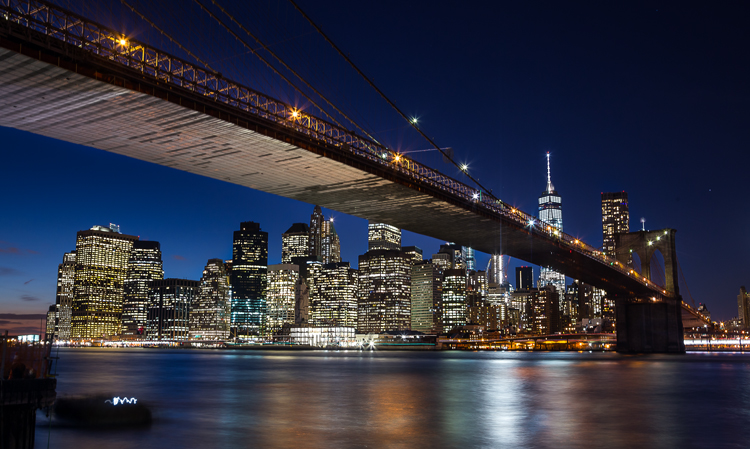
Brooklyn Bridge picture taken using a remote shutter release and a neutral density filter, which could be eliminated with camera improvements.

Brooklyn Bridge picture taken using a remote shutter release and a neutral density filter, which could be eliminated with camera improvements.

It is becoming almost cliche, but there has never been a better time to be a photographer. What we can do now with modern digital cameras, without spending that much money, is incredible. Without breaking the bank, you can now get an extremely high resolution digital camera, with low light performance and a dynamic range unheard of just a few years ago, that shoots at speeds measured in multiple frames per second. If that isn’t enough, it will also double as a video camera with HD quality as a bare minimum. It will even send the pictures wirelessly to your phone. It seems ungrateful to ask for more. Still, everything can be improved, can’t it?

And just to be clear – when I say improved, I don’t mean adding more megapixels. Or demanding even better low light performance and dynamic range. Or achieving even faster focus and shooting speeds. The manufacturers know everybody wants that stuff, and they seem to be putting all their energy into those areas.

But doesn’t it seem like there are features that could be added to cameras that wouldn’t require a technological breakthrough? Or that wouldn’t make your camera cost a fortune? It always seemed that way to me. So I started asking around to other photographers, then I started asking readers, and finally I asked my fellow dPS writers.

How would you improve digital cameras?

I got some good answers, and have combined them with my own to create a list of 10 new features (a wish list) that could be added to digital cameras to make them better. Here they are, in no particular order:

1. A Small LCD for the Histogram

The first improvement is a separate, smaller LCD on the back of the camera. Why? Let me explain.

We all know that the best way to evaluate exposure when you are shooting is to look at the histogram. Looking at just the picture on the LCD doesn’t work as well when you are trying to evaluate exposure. But look what happens to the picture on the screen when you add the histogram:
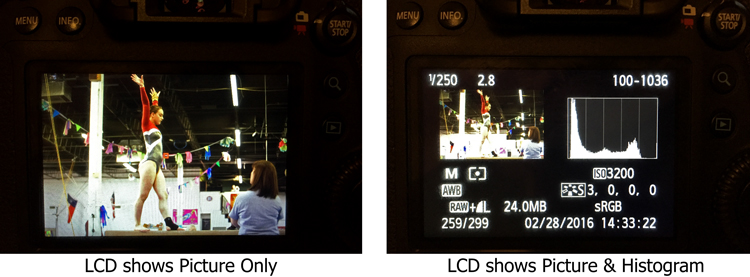
LCD-graphic

On the left, where you have the full picture, you can clearly see it. But once you add the histogram, the picture on the right becomes tiny. It is unusable and tells you nothing. We are essentially forced into a position of having to choose between a picture we can see, or just viewing the histogram (but not both). I’d like to do both.

To fix that, you could just put another very small LCD on the back of the screen. It would show only the histogram, so that you could still have a full sized version of your picture.

2. Three Dials

When you set the exposure level of your pictures, there are three controls: shutter speed, aperture, and ISO.

At the same time, how many dials do we have to set those three controls? Two – and that’s if we’re lucky. Entry level cameras often only have one. To change all three exposure controls with only two dials, means you have to press buttons while turning dials. It’s a rather cumbersome process, for the most important and commonly used functions of the camera. If we have three exposure settings, shouldn’t we have three dials to set them?

The odd man out is always ISO, and I personally think this is a hold-over from the days of film. Back then, you couldn’t change the ISO except by changing your film. When digital came along, everyone was pretty happy to be able to change the ISO at all, so having to press a button didn’t seem like a big deal. In addition, at that time, available ISO ranges were extremely limited and if you raised the ISO much then digital noise quickly became a problem.

But now? ISO ranges are huge! Even entry level cameras have ISO ranges up to 25,000. ISO is now truly a equal partner in the exposure triangle. It should be treated as such. That means it should have its own dial. You shouldn’t have to press buttons to adjust it.
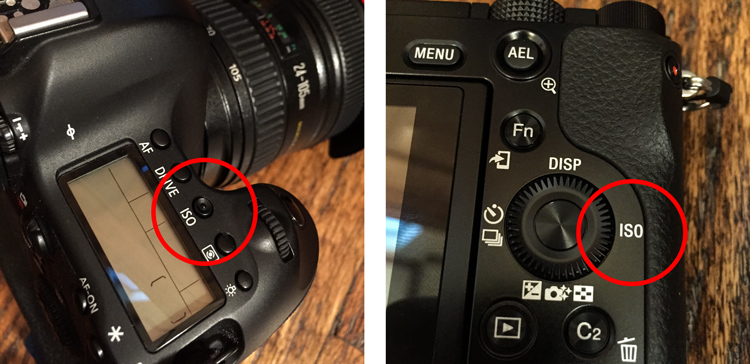
ISO-controls-graphic

Stop ISO discrimination! Let’s make it an equal member of the exposure triangle by giving ISO its own dial!

Where would you put the extra dial? There are many places you could choose from, but one thought is to get rid of the mode dial. Having a dedicated dial to quickly change the mode is another hold-over from a time when there were fewer camera controls (and no menus). Who changes their modes so frequently that the most valuable real estate on the camera needs to be taken up with a dial for it? Don’t most people just pick a mode and use it most, or all of the time? Even those that change modes don’t do so often enough that it needs its own dial.

Note: It actually appears that this change might be on the way. There are three dials on most Fujifilm mirrorless cameras and one of them is dedicated to ISO. Perhaps others will follow suit.
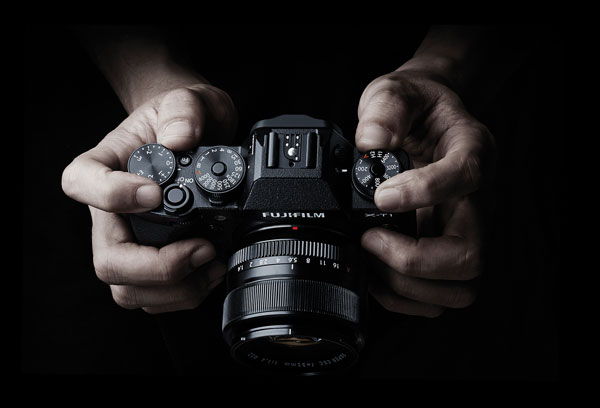
Supplied by Fujifilm

Supplied by Fujifilm

3. Lower ISOs

Speaking of ISO, in the rush to expand ISO values on the high side, the lower side of the ISO scale has been completely neglected. The camera manufacturers have worked very hard to make digital sensors more sensitive to light. It would seem like a simple thing to make the sensor less sensitive to light. Why couldn’t cameras have ISO levels of 50, 25, 12, and so on?

Why would that matter? It would put us in more control over shutter speed, and avoid the necessity of carrying around neutral density filters. Why do landscape photographers need to carry around a bunch of neutral density filters to slow down their shutter speeds? If we could lower the ISO, that would require a longer shutter speed for a proper exposure. It seems like that could just be built in, and would make it much simpler. Instead of adding a 3-stop neutral density filter to your lens, you could then just reduce the ISO from 100 down to 12 (3 stops).
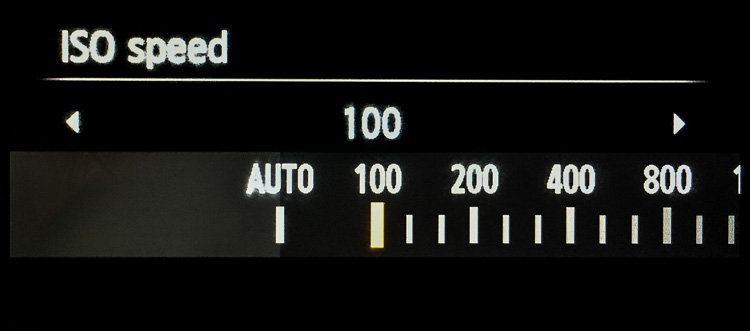
Why stop at ISO 100? We should see ISO 50, 25, 12, 6, 3, and so on.

Why stop at ISO 100? We should see ISO 50, 25, 12, 6, 3, and so on.

Of course, we might need to talk about the numbering system for these low ISOs. Moving down 10 stops from ISO 100 would result in ISO .09 which may not work.

4. Retractable Remote Shutter Release

Speaking of landscape photographers, something every one of them needs is a remote shutter release, or an intervalometer. It seems like the shutter release could detach from the camera with a retractable cable. That way you could pop it out and trip the shutter, without moving the camera or risking vibration.
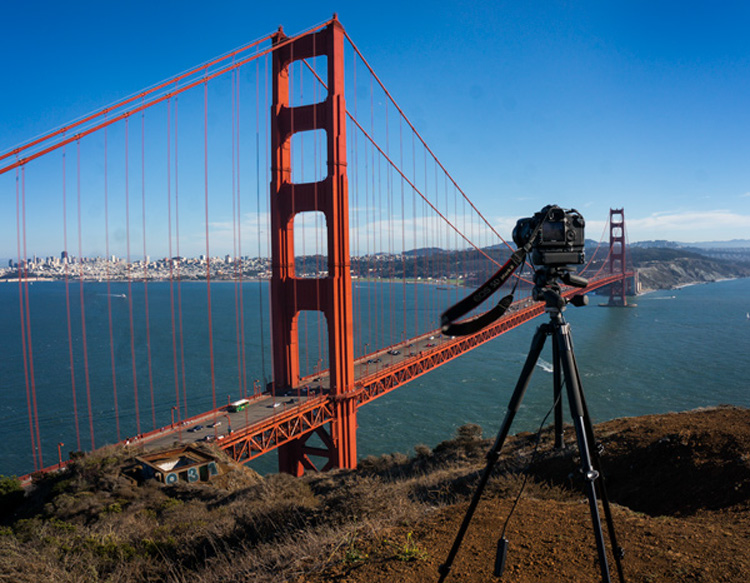
TripodAtGoldenGate

Note the remote shutter release hanging down. Wouldn’t it be nice to have a retractable unit?

It would mean that we wouldn’t have to carry around remote shutter releases.

5. Allowing Longer Shutter Speeds

Another improvement would be to allow longer shutter speeds without the need to switch over to Bulb mode. At present, most cameras limit the length of shutter speeds to 30 seconds. If you want to use a longer shutter speed than that you can, but you have to switch over to Bulb mode. It would be nice to be able to take exposures of a minute or longer without having to switch modes.

Why is this important? Largely because of bracketing (or Auto Exposure Bracketing, or just AEB for short). When you bracket, you are taking three (or more) exposures: one at normal exposure, one underexposed, and one overexposed. If you are starting with a long shutter speed, then the longer shutter speed required for the overexposed picture will often need to be longer than 30 seconds.

For example, if you are taking a bracket of three photos, with your starting shutter speed at 15 seconds, and you set the exposures 2 stops apart, the bracket won’t work as you hope. In this example, the overexposed picture of the bracket would need a shutter speed of one minute (starting at 15 seconds, adding one stop doubles your shutter speed to 30 seconds, and the second stop doubles it again to one minute). But your camera will only allow a shutter speed of 30 seconds, so that won’t work. Your camera will take the normal and underexposed photos, but the overexposed one will be limited to 30 seconds.
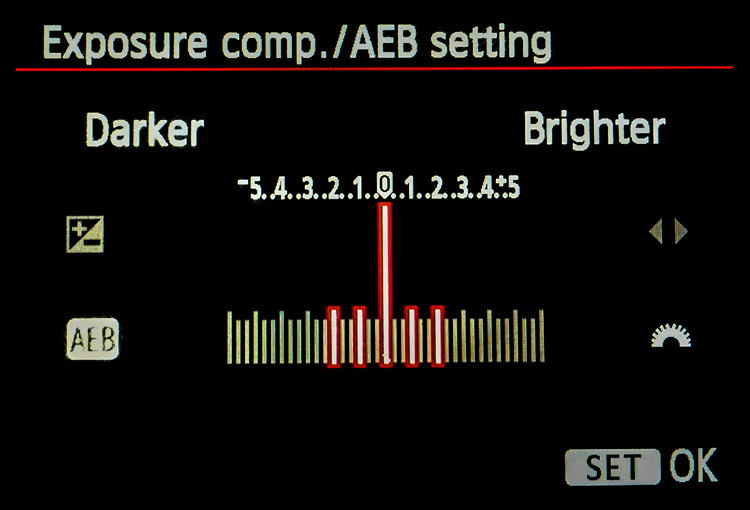
Here is a pretty common bracket for those who use them (5-shots, with each shot separated by 1 stop). If the original shutter speed is longer than 6 seconds, the camera will not capture the entire bracket because the most overexposed picture would need longer than 30 seconds.

Here is a pretty common bracket: 5-shots, with each shot separated by 1 stop. If the original shutter speed is longer than 6 seconds, the camera will not capture the entire bracket because the most overexposed picture would need longer than 30 seconds to expose.

How often does this happen? A lot more than you might think. Landscape photographers are known for being out before the sun is up, and they all want to use a combination of a small aperture to maximize depth of field and a low ISO to minimize noise. The only way to get a proper exposure in these conditions is to use very long shutter speeds. These are the same people who have very little control over their lighting and often face dynamic range problems, so they are the most likely to bracket their photos.

6. Self-Timers

Why are self-timers on cameras limited to two and 10 seconds? A reader named Jeff Johnson wondered about this (as well as raising some of the other improvements mentioned in this article). Every $ 10 digital watch in the discount store will allow you to set timers of different ranges, why not our digital cameras?

This is another one that seems to be a hold-over from a prior era. Timers were mechanical devices at one time, and it may have made a lot of sense to limit the options. Now, it doesn’t make sense. It seems like we ought to be able to set whatever length of timer we want, or at least have a few more options.

7. Improved Wifi

One exciting recent development in cameras has been the introduction of Wifi. It allows you to transfer your pictures to your phone or other device wirelessly. But it is usually clunky. You have to turn off your phone’s data connection to connect with your camera. Some have raised the idea of using bluetooth for connection to phones, tablets, and laptops (in addition to wifi). dPS writer John McIntire echoed that, and pointed out the smartphone and tablet control for things like timelapse and long exposures.

 8. Hyperfocal Distance Calculator

Despite its name, the concept of hyperfocal distance is not that complicated. It is just the closest point at which you can focus, and still keep your entire background acceptably sharp. It depends on only three factors:

  1. The sensor size of your camera
  2. The focal length you are using
  3. Your aperture setting.

There are charts and apps that will help you calculate the hyperfocal distance for your shot.
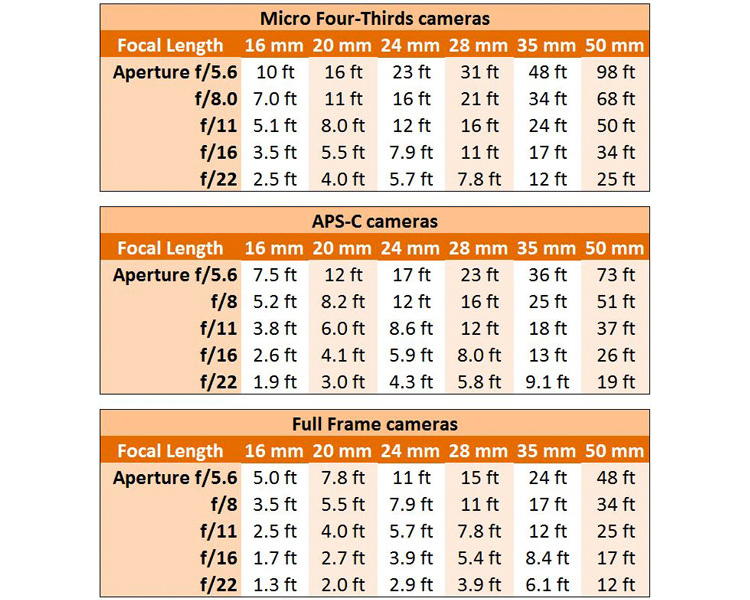
Hyperfocal Distance Charts

Hyperfocal Distance Charts

But why should you be forced to calculate it at all? The aforementioned Jeff Johnson had another great idea of having the camera calculate it for you. After all, the camera is a computer. It already knows all three of the variables involved. Why couldn’t the camera just tell you the hyperfocal distance? It could be part of the camera’s display.

Note: Once again the Fuji cameras lead the way, as the X-T1 and possibly others, do indeed have a hyperfocal distance display inside the viewfinder.

9. Internal storage

Storage has changed remarkably fast in a short period of time. Just a few years ago, you might have been carrying around a bunch of 4 GB memory cards with you. After a couple hundred pictures, you’d swap it out for another. But now, the sizes of memory cards are huge. 128 GB is commonplace, and not all that outrageously expensive. There are even 256 GB cards or even 512 GB cards available as well. As a result, most of us just buy a large card and leave it in the camera. We download the pictures periodically, and resume shooting with the same card.

That’s already a better situation than what we had a few years ago, but doesn’t it seem weird that there is no storage at all in digital cameras (at least not in the mirrorless cameras and DSLRs we tend to use)? It did to Leanne Cole, who wondered why we are fooling around with memory cards at all at this point. Given how much storage can fit in a small place, haven’t we reached the point where storage should be built-in to the camera? Why not have a 500 GB drive already added?

10. Your Changes

These are some items we’d like to see. I think some of these are good ideas, but I suspect there are better ideas out there. So what would you change? Are there things you would add? Are there features you’d like to see put on the digital camera wish list?

Please let us know in the comments below.

googletag.cmd.push(function() {
tablet_slots.push( googletag.defineSlot( “/1005424/_dPSv4_tab-all-article-bottom_(300×250)”, [300, 250], “pb-ad-78623” ).addService( googletag.pubads() ) ); } );

googletag.cmd.push(function() {
mobile_slots.push( googletag.defineSlot( “/1005424/_dPSv4_mob-all-article-bottom_(300×250)”, [300, 250], “pb-ad-78158” ).addService( googletag.pubads() ) ); } );

The post The Top 10 Camera Features Wish List of dPS Readers and Writers by Jim Hamel appeared first on Digital Photography School.


Digital Photography School

 
Comments Off on The Top 10 Camera Features Wish List of dPS Readers and Writers

Posted in Photography


Readers’ Showcase: Phil Garcia

10 Apr

Readers’ Showcase: Phil Garcia

Arctic fox, Iceland 2014. A young white morph Arctic Fox sunbathing in front of his den. After spending a week camping close to that place, the family just accepted me as one of them. Probably because of the smell! Photo and caption by Phil Garcia

Phil Garcia made a career of shooting mountain sports, but found his hobby photographing wildlife becoming more than a side project. Now he maintains a home in Iceland, studying and capturing the country’s native Arctic Fox. Garcia is about to publish a book of his Arctic Fox photographs, and shares with us his views on photographing wildlife, respecting the natural world and what it takes to weather Iceland’s rain.

You can see more of his work at his website, and reserve a copy of his forthcoming book by contributing to his crowdfunding campaign. Interested in having your work featured in an upcoming Readers’ Showcase? Let us know! Include your DPR user name a link to your online portfolio.

Readers’ Showcase: Phil Garcia

Common Vulture, Pyrénées mountains, Spain 2016. Vultures are quite common in my area and they are my winter favorite. I spend loads of time every year at the top of this cliff in the biting wind to catch this kind of shot. Photo and caption by Phil Garcia

Tell us where you’re from and your history with photography.

I’m a French photographer – I was born in the Pyrenees mountains, close to the Spanish border. It’s a mountain area with lots of wildlife, such as eagles, vultures, capercaillie, foxes, mountain goats, deers, etc. I bought my first camera when I was 15, that was 30 years ago. Then I became a full time photographer in the sports business, specifically mountain sports such as skiing and mountain biking. I shot for big brands like Oakley and Redbull and also for many magazines, while shooting wildlife and nature photography as a hobby.

Readers’ Showcase: Phil Garcia

Atlantic puffin, Iceland, 2015. Some years ago, I made my first trip to Iceland. That was the time before I went completely mad about that country and decided to buy a house there and spend lots of time photographing its nature. This puffin was shot in the midnight light on the westernmost point of Iceland, facing Greenland. Photo and caption by Phil Garcia

What do you shoot with now?

I’m a Canon guy, and at the moment I shoot with the EOS 5D Mark III and 7D II. I don’t use the 1D series anymore, mainly for weight reasons. Because I travel lots I like to take advantage of the APS-C format with smaller and lighter lenses. My lens kit include the 300mm F2.8, 70-200mm F2.8, 100mm macro, TS-E 90mm, 50mm and 16-35mm F4, all L-series.

Readers’ Showcase: Phil Garcia

Eurasian Nuthatch, Pyrénées Mountains, France 2013. Snow is also one of my favorites subjects, but this picture was made from a comfortable shelter in my garden! Photo and caption by Phil Garcia

What kind of subjects do you specialize in photographing?

In my wildlife and nature photography, I like mountain mammals and birds of prey. But I shoot any kind of animal if it makes an aesthetic picture. I’m more after the good light and scene than after some particular or rare species. There are lots of animals I’ve never photographed properly but I don’t really mind, I’m not ticking boxes. I prefer a good shot of a sparrow than 50 average shots of eagles.

Readers’ Showcase: Phil Garcia

Arctic Fox, Iceland 2016. In winter, the arctic foxes of the white morph turn completely white. That’s a picture that took me a long time to get, as most of their areas are so remote that it’s quite impossible to get there in the middle of the winter, as the roads are often closed and the boats can’t sail. Photo and caption by Phil Garcia

You’re preparing a book featuring the Arctic Fox for publication. What draws you to this subject in particular?

I’ve spent a lot of time in Iceland over the last five years, as I bought a house there. Iceland is full of birds but there is only one proper mammal to photograph: the Arctic Fox. And it’s a hard one, it took me two years to get my first proper shot of an Arctic Fox. I spent lots of time in the field, and I got to know Ester, an Icelandic biologist specialized in Arctic Foxes. With my wife, we participate in local studies for its protection, spending weeks taking notes in front of a den in the cold and rain. In the end, it has become a full time passion, even when I’m not in Iceland!

Readers’ Showcase: Phil Garcia

Arctic fox, Iceland 2014. July is the time for the young foxes to learn many things from their parents. Although the animal is a canid, the cubs love to play in a very kitten-like way. Photo and caption by Phil Garcia

Iceland is an important photographic subject to you as well. What is it that makes it such a unique destination for photographers?

Like in many Arctic countries, I think the light makes all the difference. It has amazing light and a very wild nature. I can spend a week in the field and hardly meet a couple of people. I photograph animals that may see a man twice a year. And many places are not hunted, meaning the animals are not extremely afraid of man, like in many other places in the world. 

Readers’ Showcase: Phil Garcia

Arctic fox, Iceland 2014. After spending a week around them, the mother of this cub was so confident in me that she very often left me at her den with her cubs around while she went hunting guillemots for them. During that time, the male kept on checking the territory from a distance. He never got that friendly. Photo and caption by Phil Garcia

What advice would you give a photographer visiting Iceland for the first time?

Any photographer I’ve met who has traveled to Iceland for the first time has one thing to say: ‘When will I be able to go back there?!’ It’s amazing but it’s a hard country too: it’s cold at any time of the year, and you always need a good rain outfit. I mean a real rain outfit, not just Goretex, thick rubber like sailors wear! If you visit Iceland, you must also take a lot of care to not disturb the natural environment – don’t break any plants, don’t walk on moss. It took the moss three hundreds of years to grow some centimeters thick and can be ruined instantly.

Readers’ Showcase: Phil Garcia

Stilt, Mediterranean area, France, 2015. I love to play with lights and water, especially when I use my floating hide. This stilt was playing with the light too. Photo and caption by Phil Garcia

What’s the experience of publishing a photo book been like so far?

It’s been going pretty well so far as I decided to publish it myself, so I’m the boss of everything! It’s a subject that is hard to sell for a publisher so I didn’t even bother to propose it. It’s really a lot of work to promote the book, but the crowdfunding went pretty well, it’s almost done. Now comes the fun part of checking the files, the paper orders and the printing. I’ve done that already in a previous job, so it should be fine and the book will be beautiful!

Readers’ Showcase: Phil Garcia

Arctic fox, Iceland 2014. This was certainly the first time that this blue-morph Arctic Fox met a man in a short distance. He was not scared at all, just very curious. Photo and caption by Phil Garcia

What advice would you give to new wildlife photographers?

That’s an easy one, as I have guided workshops in Iceland for the last three years. I’ll tell you what I tell my people: First, learn everything about the animal, from books or the internet. Second, learn about its habitat. Then you can open your camera bag and hopefully shoot something. Let the animal determine the distance, never follow it when it leaves and most importantly, as my friend Ester would say: ‘Don’t feed the foxes!’ What that generally means is ‘Don’t interfere in the animal’s life, just look at it.’

Articles: Digital Photography Review (dpreview.com)

 
Comments Off on Readers’ Showcase: Phil Garcia

Posted in Uncategorized