RSS
 

Posts Tagged ‘Purpose’

What is the Purpose of Your Photography?

06 Jun

The post What is the Purpose of Your Photography? appeared first on Digital Photography School. It was authored by Kevin Landwer-Johan.

What is the purpose of your photography? Having a good answer to that question, a predetermined purpose, and can help you improve your photography.

© Kevin Landwer-Johan

For professional photographers, hopefully the answer will be straight forward. Whether the focus is on commercial, wedding, editorial or any other genre of photography. To provide your clients with the best images you can should be the ideal.

Hobbyists and part-time photographers may find it more difficult to answer the question. Having a clear idea in mind as to why you take photographs helps you develop your skills more succinctly. If the ‘why’ drives you, your photos will be more impactful and memorable to those who see them.

© Kevin Landwer-Johan

How having purpose can help you improve

Concentrate on a goal, and you are more likely to get somewhere. Taking photos and having no real purpose for them can lead to discouragement or, at best, very slow growth.

Setting yourself goals to attain, and even a time frame to work in, will stimulate your imagination. When you have an objective, you will think differently about what you now want to achieve. Ambling along will no longer be so satisfying.

Learning will become more a part of your photography experience unless you’ve set your sights too low. Endeavoring to reach your goals should not be too easy. Pushing beyond what you are used to doing will mean you have to pick up some new skills.

© Kevin Landwer-Johan

Stock photography challenge

Once you know where you are headed, you will discover what you most need to learn to get you there. If, for instance, you decide to sign up with a stock photo agency as a contributor, you’ll need to learn:

  • Which agencies are worth signing up for
  • The agency requirements for photos
  • What style of photos each agency wants
  • How the best contributors make a living from their photography
  • Post-processing skills to meet the quality level

These things may not seem directly related to learning or growing as a photographer. Ask any number of successful stock photographers, and many will tell you they learned so much more of their craft after signing up. Also, good agencies have standards way higher than most casual photographers attain. Learning to reach these standards is a practical way to improve your photography.

© Kevin Landwer-Johan

Social media attention

Maybe you just want your images to stand out more on Pinterest or Instagram. Whatever your preferred social media platform is, there’s tons of competition. Being motivated to gain more likes and shares is not a bad thing. Especially when it means you have to up your photography skills to do it.

Learning from those who are already high achievers can help. Find some whose photos you admire and study them. You need a concentrated focus on what you want to achieve.  Without it, you can become easily overwhelmed by all the good, (and not so good) photos in your social media feeds.

Set yourself goals. Be realistic about the numbers you want to attain. Focus your attention on discovering what you need to do to accomplish what you want. What camera skills need upgrades to make your photos more attractive?

For example, if your main subject is food or still life learn more about:

  • Simple lighting setups
  • Graphic design within photos
  • Color combinations that work well
  • Lens choice and how it affects your subject

If you photograph people, learn to draw out more interesting responses from them. This is not a camera related skill, but it’s mandatory in taking great portraits.

© Kevin Landwer-Johan

Part timer – weddings, portraits, etc.

Is your focus is on making some money by selling your services to others? Keep your client’s needs in mind. Don’t be so full of your own ego that you don’t provide them with a service they want.

Have a clear direction you want to head in. This is healthy, but it must include your clients’ requirements first. After all, you are offering them a service, and what good will it be to them if it’s not what they’d hoped for?

You may need to improve your communication skills. Learn to make yourself clearly understood. This is as important as listening carefully to your potential clients.

Again, these are not camera skills, but learning them well will certainly make you a better photographer. Your goal should be to make photos you are happy with and your clients will love. It’s no good just to satisfy yourself.

© Kevin Landwer-Johan

Photographs for your own enjoyment

Of course, you may enjoy taking photographs for your own pleasure. If you’re not interested in making a little extra cash or sharing on social, having a purpose will still help you.

Setting yourself short, medium, and long term goals will help you grow and achieve more. Even if you’re not willing to share your photos with anyone else, having something to aim for in your picture taking will help build your skills.

Self assignments are a practical means of helping you grow and reach your objectives. Choose a topic that you love or want to learn more about. Pick anything that will hold your interest over a longer period of time.

Plan how long you will make the project and what results you want from it. Remain flexible to lengthen it if you are really enjoying the process and experiencing growth because of it.

As you work on your project, make sure to edit your photos as well. Don’t keep everything. Choose the best and place them in a separate folder. This way you are not looking through all your images, just the ones you like the most.

Study them. Ask yourself why you find these ones better than the others. Compare them. Think about how you can make improvements to your photos and go back to take them again if you can.

© Kevin Landwer-Johan

Conclusion

Build some structure and have purpose for the photographs. Doing this will increase your satisfaction levels. You will experience more steady learning of new skills and improvement of existing ones. You will enjoy using your camera more because you will be taking better photos.

Which of these ideas can you implement to help you have more purpose for the photographs you are making?


The post What is the Purpose of Your Photography? appeared first on Digital Photography School. It was authored by Kevin Landwer-Johan.


Digital Photography School

 
Comments Off on What is the Purpose of Your Photography?

Posted in Photography


Video: Travel Photography Tips – Shoot with a Purpose

15 Dec

The challenge with travel photography is that you may not get back to a location again anytime soon. So many photographers try and squeeze out as many photos as possible. The issue is lack of attention to detail and having any intentions or purpose before shooting.

What do you want your image to show?

Waiting for the right gesture, or even right subject to enter your scene is critical.

In this image shot in Trinidad, Cuba I found some amazing light skimming across the cobblestone streets. But it lacked something.

By waiting for a subject, the couple, to enter the scene it is more of a complete story.

In this video, photographer Mitchell gives you some great examples of how to shoot lots of images but end up with better results than just rapid-fire shooting.

The key points mentioned in the video are:

  • It’s not about shooting as many images as possible, but to shoot as many as possible with a purpose and intent.
  • Don’t settle for one or two shots from each scene. Get out of the mindset of needing to get the perfect shot in as few frames as possible. It’s not a contest.
  • Don’t spray and pray. Have an idea of what you want to capture.
  • Explore different framings and camera settings.
  • See how the light changes from different angles.
  • Experiment with different perspectives.

Another example

Here you can see some shots I took of two men deep in conversation in Cienfuegos, Cuba. But it still wasn’t quite what I wanted. The first (upper left) was too busy. The second (right) was more focused on the med but lacked context of the busy street scene. The third (lower left) shot from across is getting closer. 

Finally with the addition of the cyclist I had the shot I had envisioned. It shows context, has layers of activity, and interest. To me, it really speaks about daily life in a Cuban city. 

Do you photograph with purpose? Slow down and think about each frame you shoot. Be intentional.

And come home with great photos!

The post Video: Travel Photography Tips – Shoot with a Purpose by Darlene Hildebrandt appeared first on Digital Photography School.


Digital Photography School

 
Comments Off on Video: Travel Photography Tips – Shoot with a Purpose

Posted in Photography


Abandoned Tobacco Factory Gets an Acid-Toned Makeover & a New Purpose

21 Mar

[ By SA Rogers in Art & Installation & Sound. ]

kalana

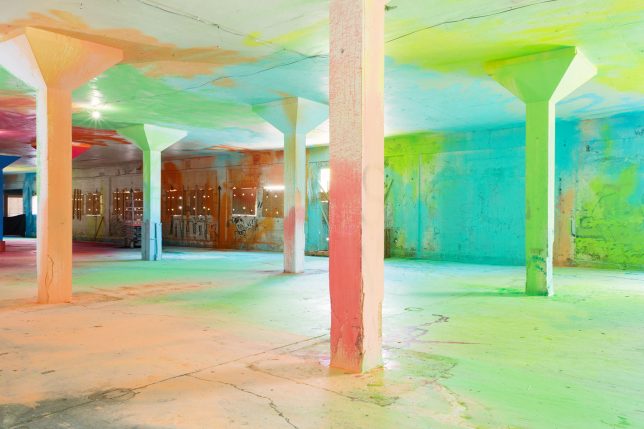
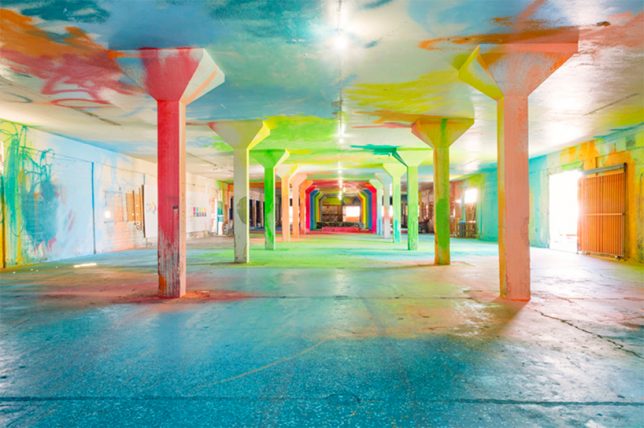
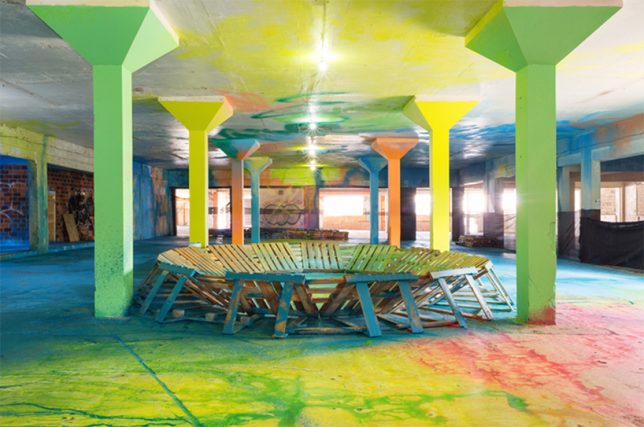
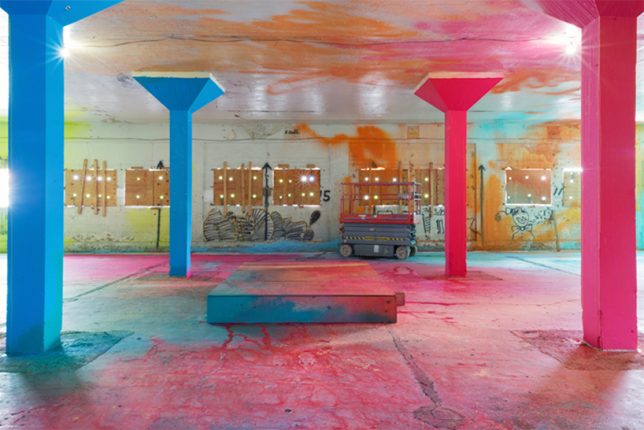
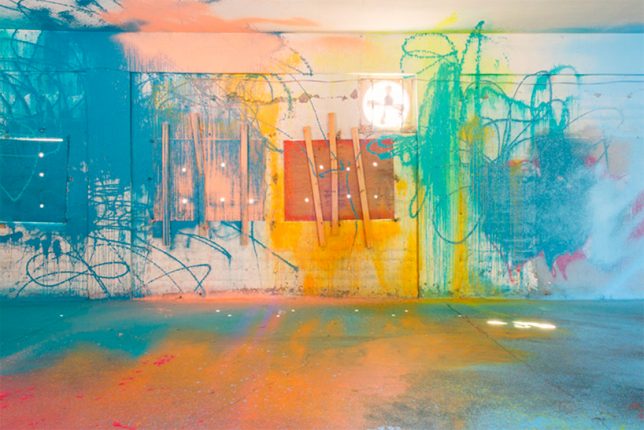
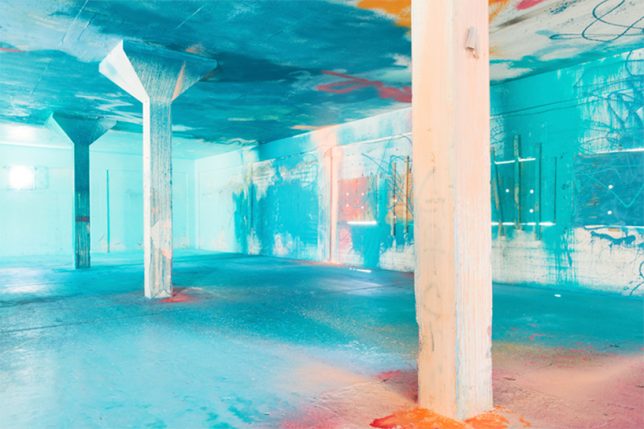
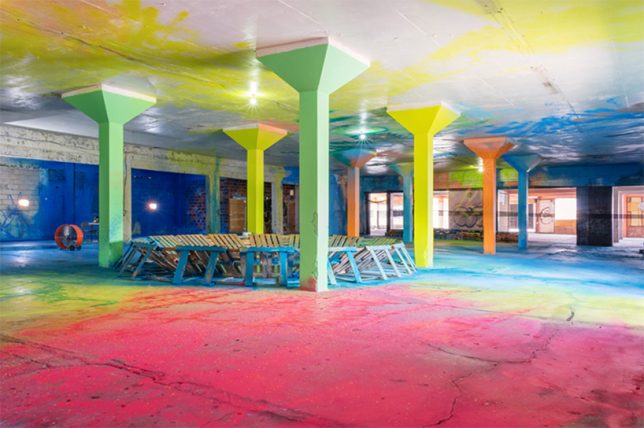
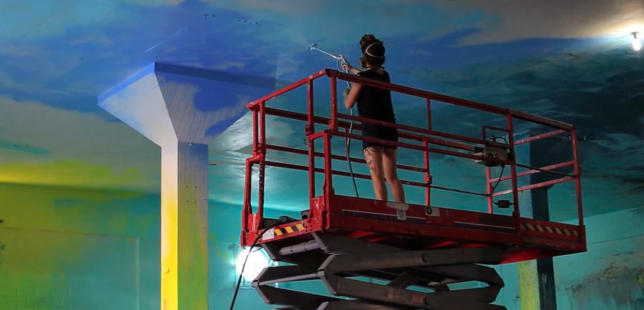
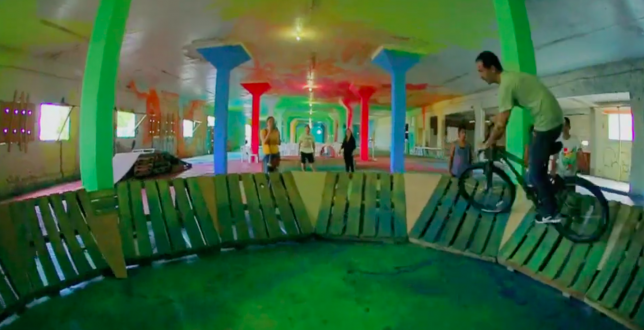
An abandoned, dark and dilapidated tobacco factory is ‘activated’ as a public meeting place to talk about revitalizing unused spaces through a cheerfully haphazard application of vivid, acid-toned paint. Puerto Rican artist Sofia Maldonado created ‘Kalaña’ as part of the series ‘Cromática: Caguas a Color,’ a collaboration with six other artists exploring the intersection of art, community and abandoned architecture.

kalana 2

kalana 6

You can take in the cavernous space while it’s empty and appreciate it for all its wild neon drips, sprays and strokes, taking in how much this simple application of paint has transformed the feel of the space, making it exponentially more welcoming. But Maldonado doesn’t consider the work complete until it’s buzzing with people, serving its ultimate purpose.

kalana 3

kalana 4

“My work is mainly inspired by colors and also by the Caribbean way of living; just experiencing light and color,” she says. “The project itself is not just painting an abandoned building. It’s also the idea of having an agenda. It’s a different format of how a public art piece can also become a creative and educational hub.”

kalana 5

kalana 7

Now, a circular bike ramp encourages playful interaction with the space, and there’s a small stage for speeches and performances. The space will host workshops, lectures, music, presentations and other events.

Screen Shot 2017-03-20 at 3.03.35 PM

Screen Shot 2017-03-20 at 3.02.27 PM

“This project was very challenging, but I think it’s exactly what I needed in order to create a new sort of dialogue that could place my work in a different context…” says Maldonado. “It allows me to bring my work into a bigger dimension and also to start a dialogue with the community and open a door for people to have a different perspective and intends to bring new meaning to what painting is, what public art could be, and also how can you integrate a community that surrounds it.”

Share on Facebook


[ By SA Rogers in Art & Installation & Sound. ]

[ WebUrbanist | Archives | Galleries | Privacy | TOS ]


WebUrbanist

 
Comments Off on Abandoned Tobacco Factory Gets an Acid-Toned Makeover & a New Purpose

Posted in Creativity


Interview: Celebrity photographer Jeremy Cowart speaks to us about The Purpose Hotel

20 Jul

Imagine staying at a hotel where everything in the rooms – and the nightly rate of the room itself – benefited someone in need. That’s the idea that lodged in commercial and editorial photographer Jeremy Cowart’s imagination, and which has since evolved into ‘The Purpose Hotel’.

With a Kickstarter campaign launching this week, Cowart hopes to open the first Purpose Hotel in Nashville within three years. So why would a successful photographer switch from taking pictures of some of the world’s biggest celebrities, to get into the hotel business?

We spoke to Jeremy recently about his work, and his plans for The Purpose Hotel.


What is the Purpose Hotel?

It’s going to be a hotel where everything in the building is connected to a cause, or a non-profit. So everything you’re interacting with is helping someone, somewhere in the world. Our tagline is ‘Change the World in Your Sleep’.

The Purpose Hotel will be a for-profit hotel, so in that regard it’s a normal hotel business, we just have a very serious cause at the core of our mission, and that cause is to help as many organizations as possible.

There are a million hotels out there, and obviously some are trying to think more along the lines of giving something back, but I’m not aware of any hotel that’s doing it at the level that we’re aiming for.

What inspired you to create the concept of the Purpose Hotel?

I was on a photo shoot four years ago, and I was staying at the Standard, a hotel in LA. And the room number was designed like a name tag – it said something like ‘Hello, my name is Room 121’. And for whatever reason that inspired me, and I took it a different direction, and wondered what if that room number was a story that you felt connected to? And what if that story was a child’s face, and what if by staying in that room you were sponsoring that child?

So it started with that simple idea, and then as I was looking around that hotel room I started thinking, well, I know there are non-profits that make soaps, and shampoo… what if the TV showed inspiring documentaries from filmmakers all around the world… what if the Internet fee went to fight human trafficking… what if room service was connected to Food for the Hungry?

I just had this lightbulb moment – what if everything was helping something? And it grew from there. 

Instead of going out and buying soaps and shampoo from whoever, or artwork just to fill the hotel, we’re going to go and source those from companies that are already supporting non-profits.

$ (document).ready(function() { SampleGalleryV2({“containerId”:”embeddedSampleGallery_8161897269″,”galleryId”:”8161897269″,”isEmbeddedWidget”:true,”standalone”:false,”selectedImageIndex”:0,”startInCommentsView”:false,”isMobile”:false}) });

Is photography core to the concept of the Purpose Hotel?

In a way, yes. It’ll obviously still be a hotel, but as a photographer and an artist I want there to be an amazing display of both, in the hotel. I can’t wait to personally curate those galleries because I have so many friends and peers in the industry whose work I really want on the walls of the hotel.

My dream is for the whole hotel to be a living, breathing art gallery, where we sell the artists’ work, and that money goes to them. I want to help artists make a living through the hotel, and I hope that we can also give a percentage of sales to organizations that do art therapy. So that kids around the world can process their past, their history, through art therapy. I got to do that in Uganda and it was amazing.

At this point, would you say you’ve made a transition of sorts, from making a living purely from photography, to more of a philanthropic way of life?

Sure, it could be called philanthropy, it could be called being an entrepreneur. But at the end of the day I think of myself as an idea chaser. When we have those whispers of ideas, a lot of people don’t pursue them because they think they’re impossible or they think they can’t, but I love the challenge of chasing those ideas no matter how big they are.

I’m passionate about the intersection where creativity and helping people meet. If I can help the community and do it in a really interesting, creative way, I’m passionate about that.

Was there a single experience, or trip that lead you to be more interested in philanthropy?

It was a sort of building, escalating thing. From my first trip to Africa in 2005, followed up by many more trips, doing projects overseas. I’m the founder of Help Portrait, which is a non-profit where we have photographers all over the world giving portraits to people in need. So yeah – I’ve found so much fulfillment from all of those projects. 

Do you see yourself potentially making a living out of projects like this, or will you always be a commercial photographer as well?

Good question, and I’m not sure about the answer. I’ll always be a visual artist first. I think that will continue to morph into different forms – I’ll always have a camera in my hands, I’ll always shoot, but I hope that there are humanitarian projects and personal projects in my future.

What has your photographic career taught you?

Every photographer wants to build a name for themselves, and wants to be famous and all that. But I’ve learned that it’s a lot less fulfilling than you think it is. It’s not that great, it’s not going to change your life. I like to say that greatness should be used to serve a greater purpose. So how do you use greatness to do something even bigger than yourself? That’s a lesson I’ve learned, and I’m continuing to do things that are bigger than me, and which aren’t about me.

Articles: Digital Photography Review (dpreview.com)

 
Comments Off on Interview: Celebrity photographer Jeremy Cowart speaks to us about The Purpose Hotel

Posted in Uncategorized


5 Tips for Creating a Photo Essay with a Purpose

24 Jun

As a photographer, you are a storyteller. The nouns are your subject matter; the verbs are the color and contrast that keep the story moving. A cast of characters all working together to get your point across. Instead of proper grammar, you ensure proper exposure. Instead of spelling errors, you watch for tack-sharp focus. For those times when the story is especially important and meaningful, or for when one image doesn’t say it all, there is the photographic essay. With blogging and social media, photo essays are more popular than ever: humorous or emotionally relevant, sparking debate or encouraging compassion, each with a story to tell.

melanie1

I’ve mentioned before that taking on a photo project is one of my favorite ways to reignite my love for photography, but beyond that, it’s a great way to get your message across and have your work seen by a larger group. A photo essay is intriguing; it’s something to talk about after people hear that you’re a photographer and want to know about the glitz and glamour of it all. It’s the perfect thing to tell them after you’re done going on and on about all of the red carpets, the celebrities, the fame, and the fortune. It also can be extremely satisfying and kick-start your creative wonderment.

By definition, a photographic essay is a set or series of photographs intended to tell a story or evoke emotions. It can be only images, images with captions, or images with full text. In short, it can be almost anything you want it to be. Which is where I struggle most–when the options are limitless. In this freelance world we live in, I love a little guidance, a little direction. Ideally, someone to tell me exactly what they want and promise to be thrilled with whatever I produce, for my fragile artist ego can’t take any less. While I continue my quest for that, I offer you these 5 tips for creating your own, completely without bounds, photographic essay:

1) Let it evolve on its own

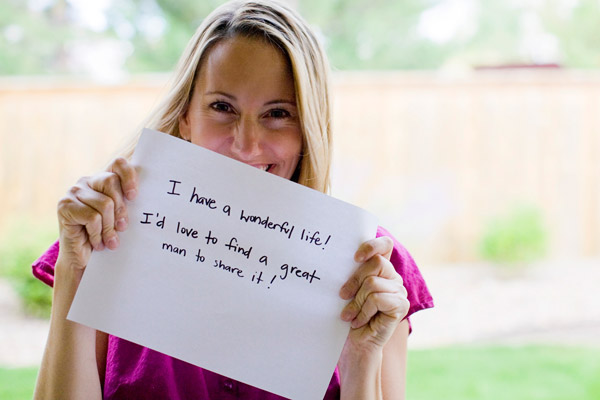
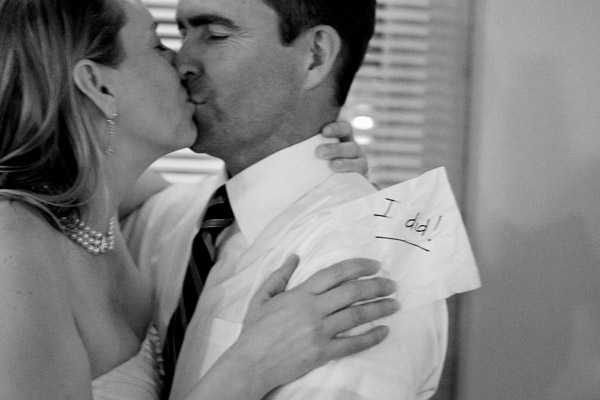
Each time I’ve had a very specific concept in mind before I started shooting, it’s never been the end result. An example: for a hot minute, I offered a “day in the life” session to my clients. I was photographing so many of the same clients year after year that I wanted to be able to offer them a different spin on the portrait sessions I was doing for them. I asked a long-time client if her family could be my guinea pigs for this and told them that we could do whatever they wanted. We went out for ice cream, had a mini dance party in their living room, and I photographed a tooth that had been lost that very morning. Then, very last, I photographed the two young daughters with notes they had written, which to be honest, I’m not even sure how they had come about. I rushed home after the session and edited those last note pictures first just because they were so different from what I usually shoot, and posted them on my personal Facebook page the heading Notes Girls Write.

sarah

gracie

Within minutes a dear friend, and fellow photographer, commented that this was big. Bigger than just the two pictures. She and I would spend the next year working on a photo essay that became a blog, that in turn became a book entitled Notes Girls Write. We photographed hundreds of women of all ages with their notes, each one later expressing having their portrait taken with their own words was an extremely powerful moment for them. Beyond my beautiful children, the fact that I can make a bed with hospital corners like no one’s business, and the award I won in the 4th grade for “Most Patient”, Notes Girls Write is one of my proudest accomplishments. It evolved on its own, starting from a few similar photographs that struck a cord in viewers and becoming a large and powerful project, one of the biggest markers in my career so far.

lindsay1

IMG_6287b

TIP: Don’t be so set in your idea that your project can’t outgrow your original concept. Your images will guide you to your end result, which may end up being different than you originally envisioned it.

2) If you think there’s something there, there’s likely something there

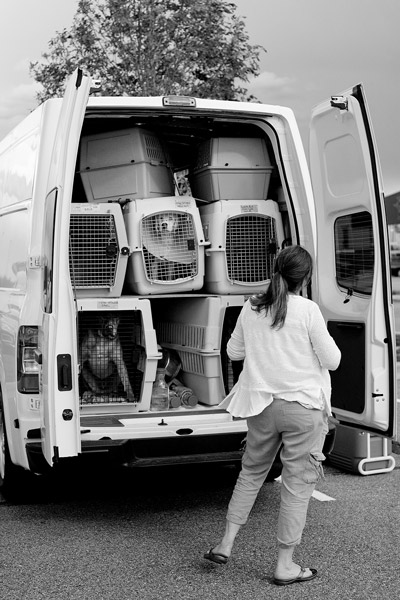
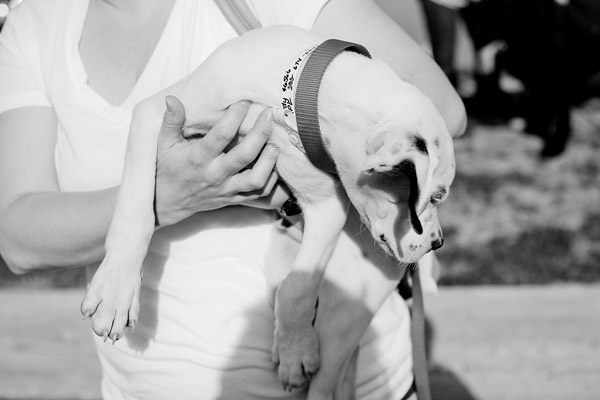
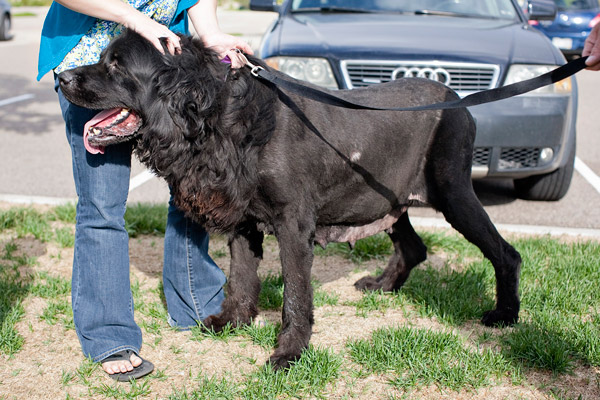
For the last year I have been a “foster mom” with a dog rescue group. Volunteers transport dogs that would otherwise be put down from overpopulated shelters, or seized from terrible situations, to my area, where dog adoption rates are much higher. These dogs live in foster homes while they receive medical care and basic training so that they can be adopted out to loving homes. It’s incredibly rewarding. Especially when I had hardwood floors.

I knew from the first time I met the transport van I wanted to document what it looked like: a van full of dogs that just narrowly escaped death arriving to temporary homes where they will experience a level of love and care which they’ve likely never known. I tear-up every time I see it. I am also put to work every time I am there, so taking photos while holding onto a 100 pound German Shepard is tough. It’s going to take me several trips to have enough images to do anything with, but that’s fine. I have no idea what I will be doing with these photos. I know they will find a home somewhere: maybe with the rescue group to raise awareness, or to help bring in volunteers, or maybe they will do nothing more than document my own story with volunteering, or perhaps something more. I’m not sure yet, but the point is that I have the images, ready for their time, whenever that is.

dog1

dog2

dog3

TIP: If you think there is something to it, there likely is. Even if it’s just a personal passion project. Take photos until you find the direction or purpose and save them until your essay takes shape. You may not end up using all, or any of the images, but in continuing to take photographs, your project will be defined.

3) Shoot every single thing

I’m the “World’s Worst Over-Shooter”. Need one image? Let me take a hundred so we know we have it. Luckily for my bad habit, the photographic essay needs over shooting. Whether you know what your plan is, or have no idea want your end result will look like, the more coverage you have, the better. This is one of the few times I push my luck and ask my subjects to work for me until they never want to see me again (I only photograph people though, so if you are photographing mountains or something, you have the added advantage of not pushing people until they cry or yell). Don’t be shy. Shoot everything you know you don’t need, just in case you need it. Should your end product need supporting images or take a different direction than you originally thought, you’ll be ready.

Take advantage of digital (if that’s how you shoot) and fill a memory card. You may end up trashing everything, or you may not. I had no idea that my Notes Girls Write project would span for as long as it did, but because I didn’t turn down anyone who was interested in the very beginning I ended up with some shots that told complete stories and expanded on the original concept.

sarah2

sarah3

TIP:  Think big. If you are shooting an essay where mountains are your subject matter, see the mountain in pieces and photograph the surrounding trees, rocks, and whatever else. This will save you having to return to the beginning of the project for supporting shots, or having to reshoot if your essay takes a different turn than you planned.

4) Ask for help with image selection

I struggle with this one–I let my personal feelings get involved. Throughout our Notes Girls Write project I was constantly picking images based on my personal feelings–the subjects that I had connected with more, and the girls that I knew were most interested in the project. This is where it is so helpful to have someone else help. Someone who has no personal feelings towards the images and will help you pick based only on the strength of the image and not your own feelings. Even if people were not involved as subjects, you tend to have personal feelings toward images that the general public may not see the power behind.

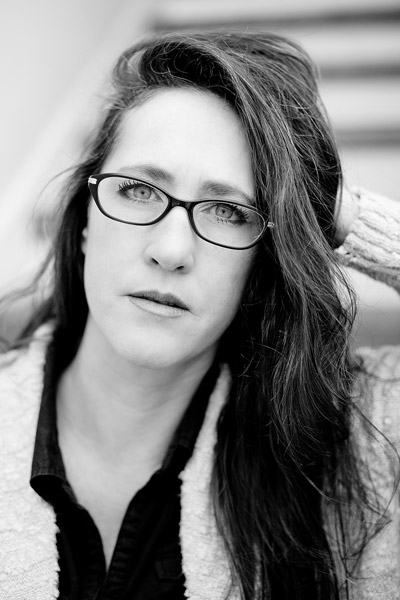
I recently photographed several dozen sexual assault survivors as part of a photographic essay for a victim advocacy’s annual gallery show. This event is meant to put faces on the survivors and raise awareness, and has been a large local event for years. I was thrilled to be selected to be the exclusive photographer, though this was one of the hardest projects I’ve ever taken on. The photo sessions themselves, whether five minutes or 30, were extremely emotional for the survivors and in the time I spent with them, I often learned a lot about their journey and experience. This made it difficult for me to pick which final images would be used for the show, based only on the power of the image and not my personal feelings. In the end several select friends helped me narrow each survivor’s images down, and the subjects themselves selected which would be the final image used, as ultimately this is their story.

SAVA1

SAVA2

SAVA3

TIP: All creative work is personal, and looking at photographs we take ourselves is incredibly hard to do with clear eyes. We see the mistakes, the personal feelings, the shot that could have been better. It’s impossible to always set these aside so when working on a project that is incredibly important to you, or large in scale. Have others help you decide what images to use for your final pieces. Bring in people who are interested in photography and people that aren’t. People that know about your subject matter and people that don’t understand it at all. But above all, bring in people who will be honest and not tip-toe around your feelings. Lastly, also bring a thick skin.

5) Tell your story, in fact shout it from the rooftops if you can

Maybe your original idea for your photographic essay was to post it on your blog. Awesome, nothing wrong with that, but are you sure it can’t be more? Shop it around, who can it help? Does this benefit a group, an organization, or a person? Could it inspire people? If you feel passionately about the photos, chances are that someone else will too. Your photographic eye doesn’t stop when your shooting is done. If you felt compelled to take the time to create a photographic essay, there are likely “readers” for your story.

img_6359b

TIP: This isn’t the time to be humble. Taking on a photo essay is a large endeavour. While there’s nothing wrong with having it be something you only did for your own personal growth, showing it around can be helpful both in experience and longterm benefit. Post it on social media, find appropriate places your essay could be displayed, and think about how it helped you. Every single photo essay I have done has led to an outstanding connection, or more work, and there is nothing wrong with getting those things along with the personal gain of accomplishing something you’re proud of.

The ideas are truly for a photographic essay are limitless. Truly.

Want a few more ideas for projects, try these?

  • Using a Photography Project to Spark your Creativity
  • Photography projects that make you feel alive
  • Jumpstart Your Photography – Start a 365 Project
  • 8 Photo Projects in Your Own Backyard

Have you ever done a photographic essay? What is your experience? Share with in the comments if you have, or have considered it. If you haven’t, what are you waiting for?

The post 5 Tips for Creating a Photo Essay with a Purpose by Lynsey Mattingly appeared first on Digital Photography School.


Digital Photography School

 
Comments Off on 5 Tips for Creating a Photo Essay with a Purpose

Posted in Photography


Create Photos With IMPACT By Composing With Purpose

09 Jul

After I started my own critique forum I soon started to realize that composition is one of the most commonly critiqued parts of a photograph and in reality composition is the most important element of a photograph next to the subject.

That said, what composition really comes down to, and what I’m talking about today, is the idea of composing with purpose.

Compose With Purpose Not As an After Thought

I’m not here today to tell you about the different “rules” of composition. I’m not going to tell you what is right and what is wrong, because ultimately, the “rules” themselves are both right and wrong in different situations and it’s up to you as the photographer to determine when and how to use them – to do that – you must compose with purpose.

It’s not easy to teach the idea of composing with purpose, but I’m going to attempt to do so by using one of the most commonly photographed landscape subjects out there – sunset – as an example. After all it’s probably safe to say that most of us have experienced at least one or two of these in our lives.

So how many of you return to your computer after photographing a spectacular sunset to see that the entire import is filled with images that basically look exactly the same as one another? Not only do they all look the same, but they’re all missing something. They might look a little like this one right?

Composed With Purpose-2

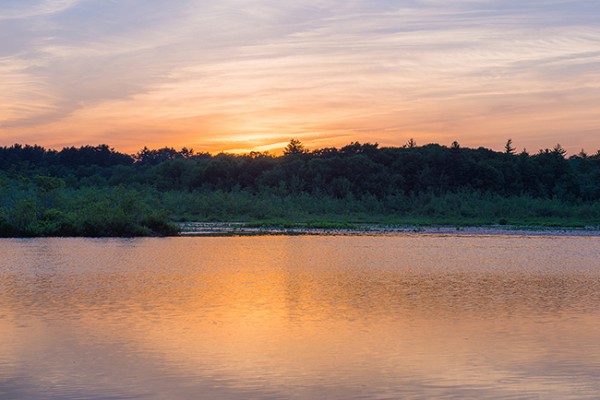
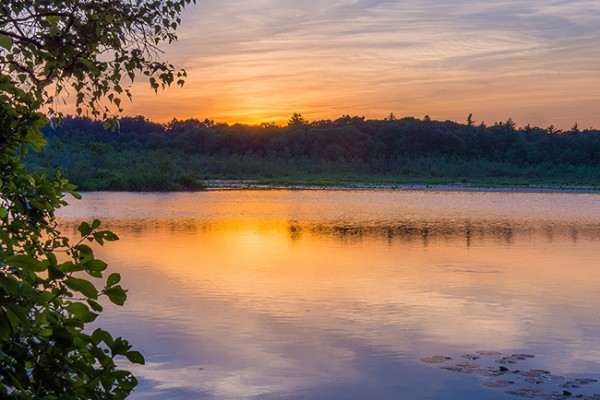
It’s not that this is a bad photograph of the sunset, there’s detail in the water, the sky and even in the tree line behind the lake, but there’s no planned composition or story being told in the photo. It has nothing to keep the eyes of the viewer interested and ultimately it falls flat.

Just a Small Change Can Have a Big Impact

The photograph below is the exact same sunset at the same location the only difference is that I’ve just chosen a very specific composition for the scene and thus created a more complete photograph.

Composed With Purpose

By taking a little extra time to think about all the elements of the scene in front of me (with my eyes not my camera) and consciously place everything from the setting sun, to the trees in the foreground, to the lily pads on the water within the frame I was able to take what is not only a beautiful sunset and capture it in time, but I was able to add depth to what I captured which allows me to showcase not only what was happening, but where it was happening – this is what adds impact to your photos.

Of course the above is a very simple example of what I’m talking about today, but it’s important to realize that composition isn’t just a set of rules that we must follow – instead composition is an active search for the best elements within the scene in front of you.

Sometimes you’ll need to step back and take the entire scene in to find the composition that make the most sense, other times you might want to put on a super telephoto or grab some binoculars and zoom way in to find some very interesting details not obvious to your normal vision.

So the next time you go out with your camera and something starts to attract your attention, whatever it may be, don’t stress too much about the rules that you’ve learned instead just try to compose with purpose. Hopefully by doing so you’ll get some unique and powerful compositions that will ultimately allow your photographs to stand out from the crowd.

Post originally from: Digital Photography Tips.

Check out our more Photography Tips at Photography Tips for Beginners, Portrait Photography Tips and Wedding Photography Tips.

Create Photos With IMPACT By Composing With Purpose


Digital Photography School

 
Comments Off on Create Photos With IMPACT By Composing With Purpose

Posted in Photography