RSS
 

Posts Tagged ‘Public’

Tether Tools reveals it used an image without permission, issues public statement and apology

23 Dec

Tether Tools CEO Josh Simons has preemptively apologized for the company’s use of an image without the permission of the photographer who took it. In a letter published on December 14, Simons explained that an image used as a placeholder in concept mockups for the company’s redesigned website accidentally went live on the final site.

Explaining the process that led to this image’s accidental use, Simmons wrote in his letter:

One concept used behind-the-scenes candid images of photographers using Tether Tools’ gear. Behind the Scene Instagram images, similar to what you would see here @tethertools were added For Placement Only (FPO) during the design phase, to show an example of the type of photos that could be rotating regularly on an embedded Instagram API feed. This API mock-up, which included a customer’s Instagram BTS photo, was placed near the footer of one page in the proposed layout.

Over the course of time, through various layouts and edits the design was approved but embedding the Instagram API on this page was overlooked by the web design team. At launch the new website had close to 1,400 pages and finalizing this element on this page was missed. The use of the image was accidental and simply an oversight. The photo was never used in any other way, not in advertising campaigns or print materials, nor to promote any specific product.

Simons says Tether Tools was alerted to the image’s presence by a third-party, and that the company has since removed the image and contacted the photographer. The photographer, who is said to be a Tether Tools customer, has been compensated for the image’s use and was given an apology for the mistake.

In a statement to Fstoppers, Tether Tools said, “Both parties are satisfied and most of all we are gratified by the nature in which everything was handled.”

Via: Fstoppers

Articles: Digital Photography Review (dpreview.com)

 
Comments Off on Tether Tools reveals it used an image without permission, issues public statement and apology

Posted in Uncategorized


Mobile Urbanism: Wheeled Benches & Planters Let Public Reconfigure Square

08 Sep

[ By WebUrbanist in Design & Furniture & Decor. ]

A former parking has become a Green Oasis in front of Poznan, Poland’s city hall, but beyond providing seating and greenery the redesign adds another key element: effectively endless flexibility.

Custom-created benches and planters (filled with an array of taller trees and shorter flora) create a system of mobile street furniture that can be configured in an infinite variety of ways.

Normally, independent islands allow small groups to gather. As needed, though, the benches can be matched up for anything from public speeches to in-the-round performances — the modular geometry of the 14 benches and 20 planters allows them to befit together like pieces of a puzzle.

Developed by Atelier Starzak Strebicki, this modular courtyard serves as a gathering space, open-air amphitheater or auditorium — the street furniture elements can also be moved out of the way entirely if the entire square is needed.

The seats are also doubled-up, allowing people to sit on a higher or lower tier (or both simultaneously for crowded events). At the same time, the furnishings are sufficiently heavy that no one need worry about someone walking (or rolling) away with them at the end of the evening.

These fairly simple but robust steel-and-wood designs provide a nice industrial-style contrast with their historic surroundings, and suggest another way of thinking about public furniture, one which allows it to serve different functions on demand.

Share on Facebook


[ By WebUrbanist in Design & Furniture & Decor. ]

[ WebUrbanist | Archives | Galleries | Privacy | TOS ]


WebUrbanist

 
Comments Off on Mobile Urbanism: Wheeled Benches & Planters Let Public Reconfigure Square

Posted in Creativity


Photographer caught using someone else’s public domain photo to win awards

06 Sep

Swiss photographer Madeleine Josephine Fierz has been stripped of two photography awards after it was revealed that she’d won them using someone else’s photo.

The contest-winning image, seen above, was taken by Thai photographer Sasin Tipchai, who had uploaded it under a CC0 license to stock photography website Pixabay. Fierz submitted the image as her own, ultimately receiving first place in the Moscow International Foto Awards (MIFA) and second place in the Fine Art Photo Awards.

The deception was discovered after Sasin posted on Facebook about Fierz’s use of his images, and someone else shared it with the Moscow International Foto Awards’ Facebook page. That brought it to the attention of officials who, after looking into the matter, revoked Fierz’s award and removed the image from its website. The image has also been removed from the Fine Art Photo Awards website.

In a statement to Khaosod English, MIFA jury member Hossein Farmani commented on the matter, saying:

[Fierz] claimed since she bought these photos, she thought that she could manipulate it a little and claim it as her art. As a jury of MIFA we take these allegation very seriously and we investigate and delete images in question as soon as we can verify the facts. It’s almost impossible for us to know which images belong to whom unless photographers let us know, like you did.

Articles: Digital Photography Review (dpreview.com)

 
Comments Off on Photographer caught using someone else’s public domain photo to win awards

Posted in Uncategorized


Gyroscopic Public Transit Concept Hovers Above Traffic at Varying Heights

26 Aug

[ By SA Rogers in Conceptual & Futuristic & Technology. ]

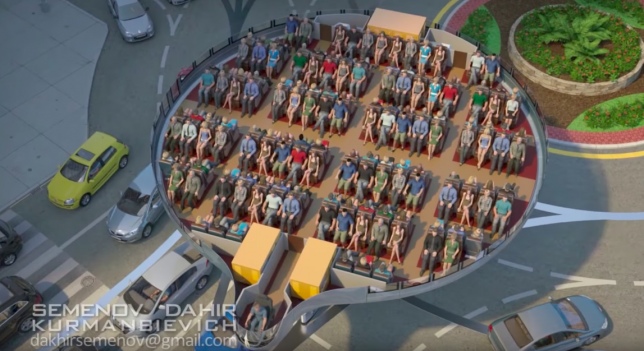
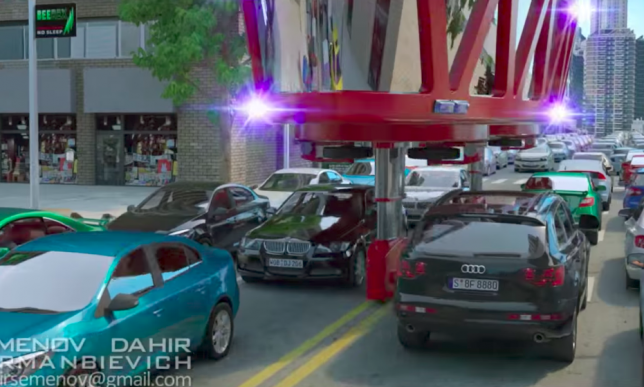
In this strange vision of a city in the not-so-distant future, disc-shaped public transit, emergency vehicles and cargo vehicles rise up above traffic on vertical supports to zoom through the streets unimpeded, lowering to the ground at designated stops. Created by designer Dahir Insaat, ‘Gyroscopic Transport’ looks like an alternate take on China’s traffic-straddling bus (which turned out to be a giant traffic-snarling scam, by the way.) Could this new proposal be any better?

In a video announcing the concept, Insaat explains how the technology works and lays the groundwork for gyroscopic vehicles with the potential to be more successful than their predecessors. Taking inspiration from recent developments in the area of electric motor control, Insaat developed a gyro car that “meets all current safety requirements.” Noting that it’s financially and often physically impossible to significantly expand roads in existing cities, the designer suggests that we take to our “unused road medians” as a solution.

The Gyro car could fit into existing roadway infrastructure while remaining independent from the flow of regular motor vehicle traffic below. It can elevate high enough on its supports to safely pass over most vehicles, running along a special fortified strip between lanes. The car itself has a lightweight body and can either be designed with mass transit interiors to fit large groups of passengers, or as luxurious lounges. In the video, the designer also explains how the concept could extend to emergency responders like firefighters.

Of course, the concept hasn’t avoided criticism and questions as to its feasibility. What happens when a vehicle hits its support pillars at high speed, for example? These kinds of technical details don’t seem fully fleshed out yet, but it’s an interesting idea, and watching the pods navigate traffic circles is kind of mesmerizing.

Share on Facebook


[ By SA Rogers in Conceptual & Futuristic & Technology. ]

[ WebUrbanist | Archives | Galleries | Privacy | TOS ]


WebUrbanist

 
Comments Off on Gyroscopic Public Transit Concept Hovers Above Traffic at Varying Heights

Posted in Creativity


Sony Kumamoto sensor factory earthquake: first public footage

14 Aug

Sony Kumamoto sensor factory: first public footage of the 2016 earthquake

On April 16, 2016, disaster struck in Kumamoto in the Kyushu region of Japan. A series of earthquakes, including an unprecedented 7.0 mainshock struck beneath Kumamoto City where Sony’s sensor factory resides. The factory itself was a mere 20 kilometers from the earthquake’s epicenter. A foreshock (warning) of magnitude 6.2 came approximately two days earlier, which gave the factory time to evacuate; however, the damage to the carefully built, precision controlled and automated factory with clean rooms was devastating. Not to mention the impact on the lives of those in the region…

During a recent trip to the repaired Kumamoto factory, DPReview was afforded an inside look at the facility and a chance to meet the very people that keep one of the world’s largest sources of imaging sensors operational. We watched a video that showed the extent of the damages and repair efforts. Combined with a better of understanding of how the facility operates, we were able to appreciate just how extensive the destruction and repair processes were. We’ll get to that in the following slides, but have a look above at the public’s first look of footage from the facility during the earthquake, and the massive repair efforts that followed.

Massive impact

Before we dive more into the impact on Sony’s sensor factory itself, we’d be remiss to not mention the impact on the region. The foreshock and mainshock together claimed more than 50 lives, injured 3,000 others, forced more than 44,000 people to evacuate from their homes and left over 180,000 people seeking shelter in the days after the earthquake. The entire city of Kumamoto was left without water, flights were grounded, as was rail service due to a derailed train. A thousand buildings had been seriously damaged either directly by the earthquake or due to the resulting fires and landslides, and an entire hospital had to be evacuated due to the building being knocked off its foundation.

More than 140 aftershocks were registered within just two days. The estimated economic costs due to the earthquake are estimated to be up to $ 7.5 billion USD. Although you can’t quite appreciate it in this image, the sensor factory is surrounded by mountainous hills resulting from a tectonic line housing many active faults. Earthquakes of some magnitude or another are common to the area. In the following days we’ll have more pictures of the area, as we traveled extensively within the Kyushu region.

Source of statistics: Wikipedia

‘The outside was visible from inside the clean-room’

Many sections of the 40,000 square meter facility were severely damaged. There were continued aftershocks for many days that made it difficult to even re-enter and start repairs. In fact, the region is used to After it was deemed safe to enter, the damage was assessed. It was extensive. Heavy duty H-beams for structural support buckled, causing walls and ceilings to collapse. Here is an image showing the ceiling of the clean room ripped open, exposing the sky above. ‘Now we were speechless’ said the camera crew filming the damage.

And those ceilings aren’t your typical roofs over your head: they house tracks that carry many of the parts from machine to machine in the automated processes of taking a silicon wafer and generating active sensors from them. Essentially, many parts of the sensor development process were disrupted.

Delicate, precision machinery: shattered

The extensive damage to the clean room meant that many of the machines automatically processing silicon wafers to generate sensors* were destroyed, including the many wafers each machine contained. Throughout the video you’ll see shattered silicon – at various stages of the silicon-to-sensor process – scattered everywhere. Ultimately many functional machines were salvaged, removed, and brought back after the clean room was reconstructed, but many were deemed too damaged to ever function again.


* Stay tuned for an in-depth look at the actual sensor manufacturing process, which we learned about during a recent trip to the factory.

All hands on deck

The sensor factory in Kumamoto produces most sensors Sony manufactures not just for their own cameras, but for other manufacturers as well, including those in the smartphone, security camera, webcam, automotive, medical and other imaging-related industries. The disruption of this facility had no small impact: consider that by July 2017, Sony has sold 7.2 billion sensors worldwide.

Therefore, it was imperative to restore operations to normal as soon as possible. And that’s why Sony factory members themselves, including executive ones, went to work right away restoring the factory. There are nearly 2700 employees at this factor, and it was all hands on deck.

A spirit of personal responsibility and dedication

Imagine an earthquake at your corporate office that ruined much of your workspace. Would you expect to return to clean up and help repair the damage yourself? That’s what the Kumamoto employees did. The spirit is really remarkable when you stop to consider that most of us here in the States would expect our companies to simply ‘deal with it’. Here is a factory employee vacuuming up thousands of fragments of broken silicon wafers.

Operations resumed ahead of schedule

The factories worked with such diligence and dedication that they restored operations ahead of schedule. They did this whilst putting in place precautions that would lower the lead time from 3.5 months to 2 months were this sort of disaster to happen in the future. These measures included stronger piping as well as the engineering of self-stop systems that halt precision processes when shake is detected. These systems respond in particular to P-waves, the first of two major elastic seismic waves to arrive at a seismograph during an earthquake.

A human story of courage, dedication and ultimate success

And so the story ends on a happy note. Here is an image of the team of employees that worked countless hours to restore the Kumamoto facility to normal operations. We can only imagine the dedication involved, and how heartening it was to work together to bring back to life such an important part of the company. It’s a story of not just company dedication and culture, but a human one of working together to achieve an honorable goal.

We were obviously touched watching the video and seeing the spirit of the employees. Were you? Let us know in the comments below.

Articles: Digital Photography Review (dpreview.com)

 
Comments Off on Sony Kumamoto sensor factory earthquake: first public footage

Posted in Uncategorized


NPPA says LA public park photography ban is unconstitutional

10 Aug
LA instituted a blanket ban on photography in Pershing Square during the Downtown Stage summer concerts, but the NPPA, ACLU, and others say the ban is unconstitutional. Photo: Visitor7

A photography ban that is being ‘strictly enforced’ in a Los Angeles public park during a series free concerts has been branded ‘unconstitutional’ by city and national media and public liberties groups.

The picture-taking ban was put in place by the Los Angeles Department of Recreation and Parks at the request of the performers of the Pershing Square Downtown Stage summer concerts that are being held in the Pershing Square public park. However, freedom groups including the American Civil Liberties Union (ACLU) have complained the ban is at odds with the First Amendment of the American Constitution.

As the park is a public space, the City is acting unlawfully by restricting the rights of citizens and the media to record the events, and it doesn’t have the power to overrule constitutional rights, according to lawyers working for a group of bodies fighting the ban.

The National Press Photographers Association, Society of Professional Journalists/Los Angeles Chapter, Society of Professional Journalists/National, California Broadcasters Association, Electronic Frontier Foundation, American Photographic Artists, American Society of Media Photographers, Digital Media Licensing Association, Freedom of the Press Foundation, Professional Photographers of America, Radio and Television Digital News Association, and Reporters Without Borders have got together with the ACLU to prepare a letter that was sent to the City department in which the collective protests the ban and states why it is unlawful.

The group specifically objects to a clause in the terms and conditions of the concerts that states that even photography and videography made on iPads will not be allowed:

(1) Cameras/Photography: At the request of the artist/performer, video, photo and audio devices are prohibited at Pershing Square’s Downtown Stage Saturday concerts. This includes Pro cameras, monopods, tripods, selfie sticks, iPads or professional photography/video equipment of any type. This policy will be strictly enforced due to contractual agreement.

“There should be no restrictions on photography and videography in Pershing Square during the Summer Concert Series or at any other time,” reads the letter. “Even assuming the photography ban is being applied in a content-neutral manner, the rule is still unconstitutional.”

“Unfortunately, the NPPA sees these type of onerous restrictions far too often nationwide,” Mickey Osterreicher, the general counsel for the National Press Photographers Association, said in a statement. “It is still extremely difficult to understand how the City of Los Angeles and its attorneys could believe they had the authority to contractually agree to a request barring photography and recording along with audio-visual devices from a traditionally public forum such as Pershing Square during certain events.”

The restrictions at the events also cover the ability of attendees to record audio and to distribute leaflets, which are also considered to be unconstitutional considering the freedoms that are inherent in public forums.

For more information see the NPPA and ACLU websites.

You can read the full letter, which the NPPA helped to draft, sent from the ACLU to the Los Angeles Department of Recreation and Parks below:

August 3, 2017

Via E-Mail
Mr. Mike Feuer
Los Angeles City Attorney
James K Hahn City Hall East, Suite 800
Los Angeles, CA 90012

Mr. Michael A. Shull
Los Angeles Dept. of Rec. and Parks, General Manager
221 N Figueroa St., 3rd Floor, Suite 350
Los Angeles, CA 90012

Dear Messrs. Feuer and Shull:

I am writing on behalf of the National Press Photographers Association, Society of Professional Journalists/Los Angeles Chapter, Society of Professional Journalists/National, California Broadcasters Association, Electronic Frontier Foundation, American Photographic Artists, American Society of Media Photographers, Digital Media Licensing Association, Freedom of the Press Foundation, Professional Photographers of America, Radio and Television Digital News Association, and Reporters Without Borders about City rules and policies that apply to Pershing Square, particularly to the Summer Concert series, that violate the First Amendment. Because Pershing Square is a public forum, any restrictions on First Amendment activities there must be content-neutral, reasonable time, place, and manner restrictions. The existing policies providing for a total ban on photography/videography and an arbitrary permitting scheme for circulating pamphlets at the Downtown Stage Summer Concert Series are facially unconstitutional, as will be shown below.

Accordingly, I request that these policies be modified to comport with the United States Constitution. Namely, there should be no restrictions on photography and videography in Pershing Square during the Summer Concert Series or at any other time. Additionally, distribution of pamphlets, flyers, or other printed, non-commercial materials is a protected First Amendment right and should not be limited either.

The Summer Concert Series Policies at Issue
The ACLU’s First Amendment concerns relate to the stated policies of the Los Angeles Department of Recreation and Parks listed on the department’s website1. The specific policies at issue are as follows:

(1) Cameras/Photography: At the request of the artist/performer, video, photo and audio devices are prohibited at Pershing Square’s Downtown Stage Saturday concerts. This includes Pro cameras, monopods, tripods, selfie sticks, iPads or professional photography/video equipment of any type. This policy will be strictly enforced due to contractual agreement.

(2) Flyers/Handouts/Product Samples: The distribution of promotional items, flyers or printed materials is not permitted without written permission of Pershing Square. The sampling and distribution of products is prohibited without a venue permit.

When contacted about the specifics of the second policy, the Department of Recreation and Parks redirected the ACLU to the Pershing Square office to answer questions regarding permitting criteria. An employee of the park later informed the ACLU that “in general” distribution of expressive materials is not allowed at Pershing Square at any time. When asked what authority governed this rule, that same employee vaguely referred the ACLU to a “post order” issued by the local police department. The ACLU has since contacted the Central Community Police Station and requested the “post order” but has yet to receive a response.

Legal Standard
Governmental restrictions on expressive activity like photography and leafletting are subject to the most searching scrutiny when they apply in public fora. See Perry Education Assn. v. Perry Local Educators’ Assn., 460 U.S. 37, 45 (1983) (“[In the public forum,] the rights of the state to limit expressive activity are sharply circumscribed.”) Courts engage in “forum analysis” to determine the validity of speech restrictions applied to a given piece of government owned or controlled property. See Walker v. Texas Div., Sons of Confederate Veterans, Inc., 135 S.Ct. 2239, 2250 (2015) (recognizing that “‘forum analysis’ [is applied] to evaluate government restricts on purely private speech that occurs on government property.”) Federal courts classify government-owned property into three categories for purposes of forum analysis(1) traditional public forums; (2) public forums by government designation (areas opened for limited expressive use; and (3) nonpublic forums (which, by tradition or design are not appropriate platforms for unrestrained communications; e.g., military installations and federal workplaces). See Perry, 460 U.S. 37 at 43–47.

Public parks have long been deemed public forums by the United States Supreme Court. See Perry, 460 U.S. 37 at 45 (“[A]t one end of the spectrum are streets and parks which ‘have immemorially been held in trust for the use of the public.”). Governmental actors may only restrict expressive activity in a public forum through reasonable time, place, and manner regulations. Id. However, when the government seeks to enforce a content-based prohibition in these spaces, its regulations must be narrowly-tailored to further a compelling state interest. Id. Pershing Square is a public forum, and remains one during the Summer Concert Series. The Park does not suddenly become a non-public forum even if the City in some way yields control of the park to a concert promoter or other private party during the concerts, contrary to the City’s belief and practice. See Rule 1 on Cameras/Photography (“This policy will be strictly enforced due to contractual agreement”).

Numerous courts have rejected the argument that private contracting over traditional public forums abrogates the government’s First Amendment obligations. The Second Circuit, for instance, has held that a publicly-funded stadium managed by a private company under a long-term lease was still a public forum. See Paulsen v. County of Nassau, 925 F.2d 65, 69–70 (2d Cir. 1991) (pointing to the intent of the government in creating the forum, the fact that the private contractor was to “operate[] [the stadium] in the interests of the County,” and the history of consistent practice of allowing the enjoyment of First Amendment rights, parades, political rallies, speeches, etc., as objective evidence that stadium was a public forum by government designation). The Tenth Circuit has similarly held that a public sidewalk sold by Salt Lake City to a church organization was still considered a public forum, even while technically owned by the church. First Unitarian Church of Salt Lake City v. Salt Lake City Corp., 308 F. 3d 1114, 1123-24 (10th Cir. 2002).

Because the City retained an easement on the sidewalk and because of the property’s objective characteristics, the Tenth Circuit rejected the argument that the sale of the land transformed the sidewalk into a non-public forum where First Amendment activities could be absolutely restricted. Id. at 1124–25. The objective characteristics the court looked to in determining whether the sidewalk was a public forum were (1) whether the property shares “physical similarities” with more traditional public forums; (2) whether the government has permitted broad public access to the property; (3) whether expressive activity would “tend to interfere in a significant way with the uses to which the government has as a factual matter dedicated the property”; and (4) whether the property has traditionally been open to the public. Id. at 1125 (internal quotation marks and citation omitted). Here, factor one is met because even during the concert series – the park maintains its typical physical characteristics, mirroring other public parks across the City.

Factor two is met; indeed, the concert series is free and open to the public. Factor three is met as well; the concert itself is actually devoted to expressive activity, the playing of music, the sharing of ideas through sound. Therefore, the activity that the government seeks to restrict here would not interfere with the temporary use that the park is devoted to, it is instead part-and-parcel with that use. Lastly, factor four is met; Pershing Square has been open to the public for more than one-hundred years and according to the park’s website, its role as a location for expressive activity dates back to 1918.2 Thus, Pershing Square is a public forum during the Summer Concert Series.

Analysis
Because the park is a public forum, the question becomes whether the rules at issue, enforced by the Los Angeles Department of Recreation and Parks are reasonable time, place, and manner restrictions.

Video/Photo/Audio Device Prohibition
Private citizens have a First Amendment right to record film/audio and take photographs in public. See Turner v. Driver, 848 F.3d 678, 689 (5th Cir. 2017) (recognizing that the First Amendment’s protects “the right to film”.); Am. Civil Liberties Union of Illinois v. Alvarez, 679 F.3d 583, 595 (7th Cir. 2012) (“The act of making an audio or audiovisual recording is necessarily included within the First Amendment’s guarantee of speech and press rights as a corollary of the right to disseminate the resulting recording. The right to publish or broadcast an audio or audiovisual recording would be insecure, or largely ineffective, if the antecedent act of making the recording is wholly unprotected, as the State’s Attorney insists.”); Fordyce v. City of Seattle, 55 F.3d 436, 439 (9th Cir. 1995); Crago v. Leonard, 2014 WL 3849954 at *3 (E.D. Cal. 2014) (“As early as 1995, the Ninth Circuit has recognized a ‘First Amendment right to film matters of public interest.’”); see also Fields v. City of Phila., 2017 WL 2884391 (3d Cir. 2017) (clarifying that the First, Fifth, Seventh, Ninth, and Eleventh Circuit Courts of Appeals have recognized a First Amendment right to record police activity in public)’

Thus, the government may only regulate photography and recording at the Summer Concert Series via reasonable time, manner, and place restrictions. To sustain a time, place, and manner restriction on First Amendment activities, the government must show that the restriction (a) is content-neutral, (b) is narrowly tailored to serve a significant government purpose, and (c) leaves open ample alternative channels of communication. See Ward v. Rock Against Racism, 491 U.S. 781, 789 (1989).

Even assuming the photography ban is being applied in a content-neutral manner, the rule is still unconstitutional. For one, the government does not have a clear, significant interest in a blanket ban on photography and videography at free, public concerts. Perhaps the City believes that the ban serves to protect the copyright interests of performers. If so, the ban is unconstitutionally overbroad because it prohibits a large range of activities that do not violate copyright law. First, many people will use their cameras, iPhones, etc. to take selfies, or to share video clips with friends on Facebook, with no intent to use them for commercial purposes. These uses are generally lawful “fair uses” Similarly, freelance and media photographers or critics may

take photographs or video for inclusion in media outlets. Journalistic and critical uses do not violate copyright law either, even if the freelance photographer is paid by a media outlet, or the media outlet publishes them in a newspaper that is sold. In the event that an individual goes beyond the bounds of “fair use” and violates the rights of a performer, copyright law provides a more than adequate remedy. See, e.g., CAL. CIV. CODE. § 3344(a) (West 1984). Thus, a blanket ban on recording is not narrowly tailored to satisfy this – or any other – important interest.

Flyer/Handout/Product Sample Prohibition

The distribution of expressive materials in public is also protected by the First Amendment. See Hague v. Comm. For Indus. Org., 307 U.S. 496 (1939) (deeming facially unconstitutional a municipal ordinance that prohibited leafletting on “any street or public place” without a permit); Klein v. City of San Clemente, 584 F.3d 1196 (9th Cir. 2009) (affirming preliminary injunction against law banning leafletting on parked cars); Foti v. City of Menlo Park, 146 F.3d 629 (9th Cir. 1998) (deeming facially unconstitutional a municipal ordinance in California that banned signs placed on vehicles parked in public roadways designed to “attract the attention of the public”). Therefore, the same standard used to analyze the validity of the video/photo/audio device prohibition applies here: any regulation must be reasonable as to time, place, and manner and comport with the standard established under Ward v. Rock Against Racism, 491 U.S. at 789.

As is the case for the photography/videography ban, the City will be unable to demonstrate that the ban on leafletting without permission is consistent with the First Amendment for two reasons. First, the permitting system in place is so arbitrary that it invites discrimination and thus, is facially unconstitutional. The current rule, as written on the Pershing Square website3, contains no criteria whereby officials decide whether to allow or reject a permit application. Nor does that website provide a link to download or submit a permit application. Officials at the Los Angeles Department of Recreation and Parks also report that there is “no uniform department policy on how permits are issued” and that “case-by-case permitting decisions are made on site [at the Summer Concert Series].” The lack of a permitting policy from the Department results in a “standardless discretion” possessed by the government, which is clearly inconsistent with the First Amendment. See Forsyth County, Ga. v. Nationalist Movement, 505 U.S. 123, 140 (1992).

Second, if the City were to simply ban leafletting without effectuating its arbitrary permitting system, that ban is overbroad, even if the City were to assert valid interests it is trying to further through the ban. See generally Klein v. City of San Clemente, 584 F.3d 1196, 1202 (9th Cir. 2009) (“As both this court and the Supreme Court have repeatedly emphasized, ‘merely invoking interests … is insufficient. The government must also show that the proposed communicative activity endangers those interests.’”) (citation omitted).

Examples of possible legitimate interests for a restriction on distribution of expressive materials are relieving overcrowding, expediting traffic flow, and maintaining the privacy and quiet enjoyment of civilians. See Saieg v. City of Dearborn, 641 F.3d 727, 736 (6th Cir. 2011); City of Watseka, 796 F.2d 1547, 1550 (1986). But courts are highly unlikely to conclude that a leafletting ban is narrowly tailored to those asserted interests. Concerts are inherently noisy and crowded; thus, the government cannot claim to have a legitimate interest in maintaining privacy, relieving overcrowding, or expediting traffic flow because such an interest would cut against the natural and foreseeable results of the government’s own actions here, putting on the Summer Concert Series. Nor can the City justify its ban by asserting a desire to prevent littering because there are obvious, far less restrictive means to solve the problem, e.g., enforcing the city’s littering laws, which undercut the government’s position. See e.g., Schneider v. State of New Jersey, Town of Irvington, 308 U.S. 147, 163 (1939) (“There are obvious methods of preventing littering. Amongst these is the punishment of those who actually throw papers on the streets.”). Moreover, the City does not ban people attending the concert series from bringing food, coffee, newspapers, and other materials to the Summer Concert series, and it is hard to believe that leafletting would add significantly to the amount of litter the City is already prepared to deal with. See Klein, 584 F.3d at 120-2-03.

Conclusion
In sum, neither the photography/videography ban nor the arbitrary permitting scheme for distribution of expressive materials will be upheld in court as valid time, place, and manner restrictions on the First Amendment. In fact, the City of Los Angeles has already lost at the Ninth Circuit on one of these issues. See Gerritsen v. City of Los Angeles, 994 F.2d 570, 575–77 (9th Cir. 1993) (holding a similarly restrictive “handbill-distribution scheme” in El Pueblo Park unconstitutional). Though the United States Constitution and the Supreme Court’s jurisprudence are clear on this issue, the decision from the Ninth Circuit in Gerritsen sent a striking message to the City of Los Angeles: local government may not arbitrarily infringe upon its citizens’ First Amendment rights in public parks. The fact that the City has chosen to promulgate and enforce rules that violate these rights for the second time in just over twenty years makes it likely that a court would deny qualified immunity if anyone who was prohibited from leafletting or taking pictures were to bring a suit for damages. Accordingly, the ACLU urges the City to eliminate its rules restricting First Amendment activity in Pershing Square or, at the very least, modify them to comport with the United States Constitution.

Please contact me within the next 10 days to ensure that steps are being taken to solve these problems. If the City intends to stand by these restrictions, the ACLU will consider all appropriate action to address these constitutional violations.

Sincerely,

Peter J. Eliasberg
Chief Counsel/
Manheim Family Attorney
For First Amendment Rights

Articles: Digital Photography Review (dpreview.com)

 
Comments Off on NPPA says LA public park photography ban is unconstitutional
Posted in Uncategorized


Renowned self-portrait photographer Cindy Sherman goes public on Instagram

08 Aug

Renowned photographer Cindy Sherman has made her formerly private Instagram account public, allowing anyone to view and follow it. Sherman first launched the Instagram account last October under the handle @misterfriedas_mom, but has since been changed to @_cindysherman_. The account currently features nearly 600 posts and is growing like gangbusters—in the last two days alone her follower count has risen by nearly 30,000 to a total of 87.2K as of this writing.

Sherman—who is well-known for her critical self-portrait work following the release of her Untitled Film Stills project—has shared a variety of distorted and otherwise surreal selfies on Instagram, as well as more mundane images from her life. According to The New York Times, she uses the app Facetune (iOS | Android) to modify her selfies in extreme ways… this is probably one of the few times you’ll see selfies identified as bona fide art.

When she spoke with The New York Times early last year, Sherman said that social media “seems so vulgar” to her, but the draw of Instagram was too much. Several months later she launched a private account, and this weekend she finally opened it up for everyone to see.

Why exactly she has decided to make the account public isn’t clear, but fans of surreal self-portraits taken by MacArthur Genius Grant recipient have a new must-follow account to check out.

Articles: Digital Photography Review (dpreview.com)

 
Comments Off on Renowned self-portrait photographer Cindy Sherman goes public on Instagram

Posted in Uncategorized


Federal Court confirms (again): Police can be photographed in public

11 Jul

Following in the footsteps of the US’s First, Fifth, Seventh, Ninth and Eleventh Circuit Courts of Appeals, judges for the Third Circuit Court of Appeals have unanimously ruled that individuals have a First Amendment right to photograph and video record police officers in public. The decision follows multiple cases involving law enforcement retaliation against individuals who were recording police activity in public.

The ruling, which was filed on July 7, 2017, details two cases in which Philadelphia police officers interfered with individuals who were recording public law enforcement activity.

The first case involved Amanda Geraci, who was filming the arrest of an anti-fracking protester when an officer ‘pinned’ her against a pillar, blocking her ability to record the arrest. The second case involved Richard Fields, who was arrested after refusing to stop recording public police activity.

On behalf of the court, and per the document filed last week, Judge Thomas Ambro wrote, “Simply put, the First Amendment protects the act of photographing, filming, or otherwise recording police officers conducting their official duties in public.”

There may be exceptions to this right, the judge notes, such as times when a “recording interferes with police activity.” However, in the absence of that concern, the Court finds that “under the First Amendment’s right of access to information, the public has the commensurate right to record—photograph, film, or audio record—police officers conducting official police activity in public areas.”

Articles: Digital Photography Review (dpreview.com)

 
Comments Off on Federal Court confirms (again): Police can be photographed in public

Posted in Uncategorized


Pollution Pops: Sewage-Ridden Public Waters Frozen into Horrifying Popsicles

21 Jun

[ By WebUrbanist in Art & Sculpture & Craft. ]

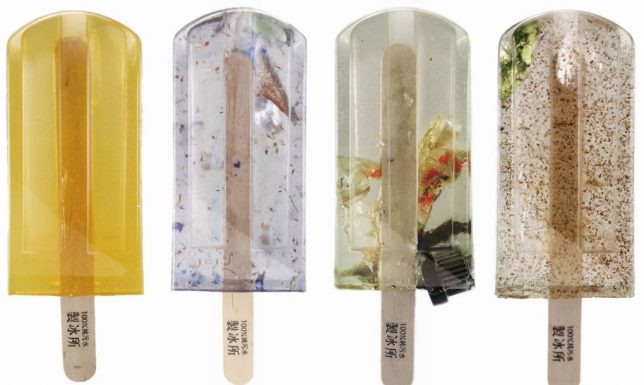
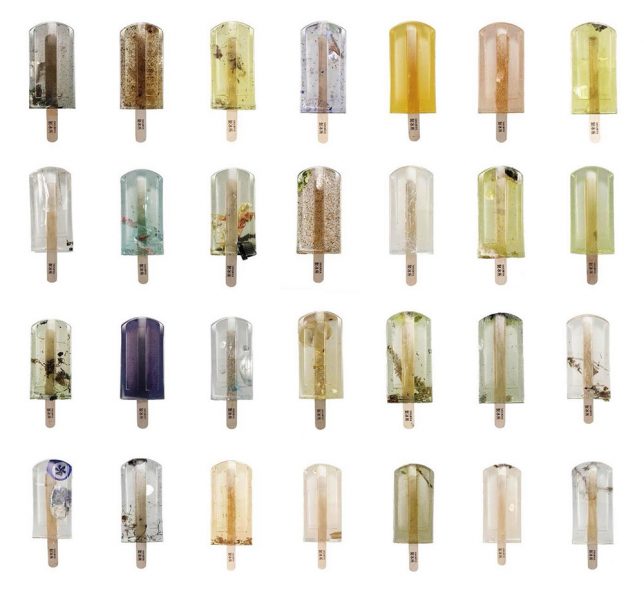
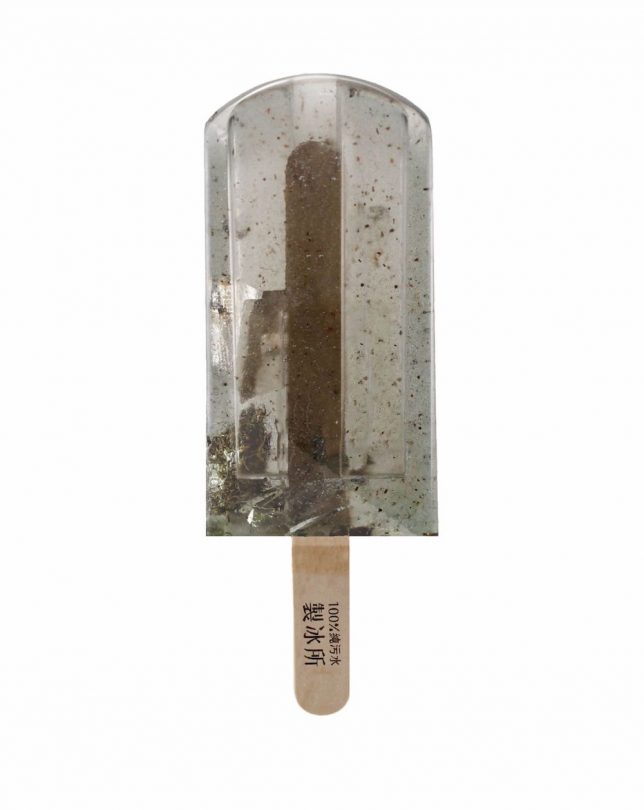
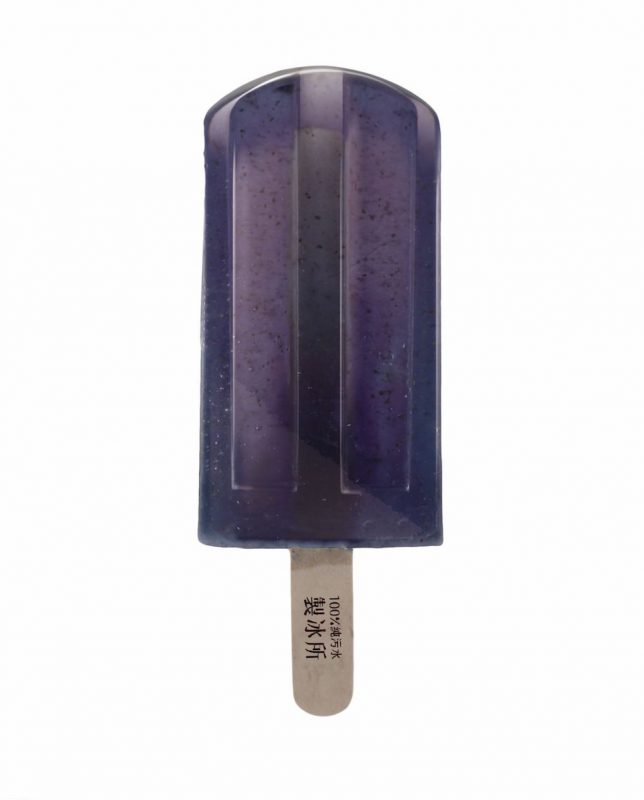
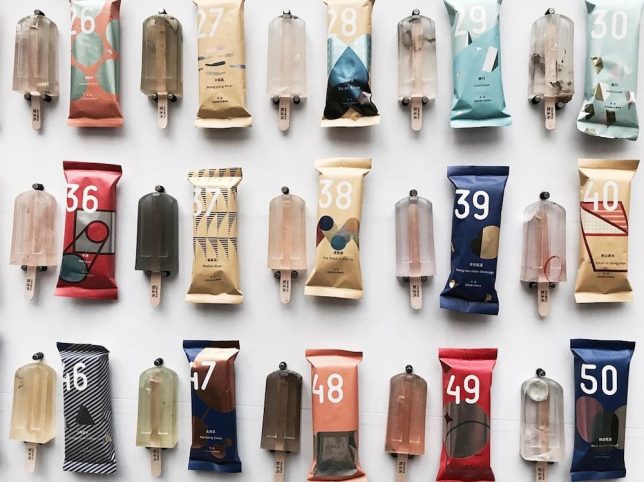
A stomach-churning twist on classic frozen treats, 100 stabilized ice pops made from Taiwan’s polluted lakes, rivers, beaches and ports feature an unsettling array of sewage found in public waters.

Each of these edible-scale popsicles was first frozen then preserved in polyester resin and wrapped in packaging. Diverse flavors feature ingredients such as plastic, arsenic, mercury and metal. Unappetizing titles include Yang-tzu-chou Drainage, The Large Ditch in Tianwei, and New Huwei Creek.

Some even look tasty at a glance, like some kind of hand-crafted iced delight. But the game of choosing something to try quickly becomes a nightmare of deciding which might be least terrible. Surely one without bits of cork, bottle caps or candy wrappers would be better, but then again: invisible poisons could be much worse.

Art students Hung I-chen, Guo Yi-hui, and Cheng Yu-ti from the National Taiwan University of the Arts concocted titled their line of less-than-delicious designs “Polluted Water Popsicles.” Their work was nominated for the Young Pin Design Award and featured in the New Generation of Design Exhibition this May at the Taipei World Trade Center.

Share on Facebook


[ By WebUrbanist in Art & Sculpture & Craft. ]

[ WebUrbanist | Archives | Galleries | Privacy | TOS ]


WebUrbanist

 
Comments Off on Pollution Pops: Sewage-Ridden Public Waters Frozen into Horrifying Popsicles

Posted in Creativity


Guerrilla Apparel: Pirate Printers Press Clothes to Painted Public Surfaces

07 May

[ By WebUrbanist in Art & Sculpture & Craft. ]

A Berlin street art collective is hitting the streets of Europe again, touring major cities to turn infrastructural patterns into (quite literal) streetwear across the continent. Each of their unique creations is tied to public art and design patterns often overlooked as we walk by (or on top of) them.

Raubdruckerin (AKA Pirate Printer) press apparel to painted street objects featuring a level of relief, soaking up the top layer to create impressions of manhole covers, vents, grates, bike lane symbols and just about anything else with some depth to it.

In German, there is some nuance to their name as well: ‘Rauber’ means both pirate and robber, while “drucken” is both press and print. Effectively, they press and steal patterns (though since their source material is quite literally in the public domain, no one so far seems to mind).

Like graffiti artists or mobile street painters with portable canvasses, their work tends to draw a crowd and has a performative aspect to it by its nature. In turn, they aim to raise awareness of overlooked and everyday design objects.

So far they have made their way through Amsterdam, Athens, Paris and Lisbon. In each location, they press cotton bags and apparel to street surfaces coated in eco-friendly ink, then wash up behind themselves to leave no trace.

Share on Facebook


[ By WebUrbanist in Art & Sculpture & Craft. ]

[ WebUrbanist | Archives | Galleries | Privacy | TOS ]


WebUrbanist

 
Comments Off on Guerrilla Apparel: Pirate Printers Press Clothes to Painted Public Surfaces

Posted in Creativity