RSS
 

Posts Tagged ‘Professional’

Amateur or Professional, Part II

18 Dec

In a recent post on the topic of Amateur or Professional Photography I asked an open ended question that would solicit responses.  While I was not surprised by the polarization, I was disappointed by how personal the comments became.

I will state categorically that any professional who is not willing to share information must be quite insecure in their own abilities. Like any business certain facets have to remain confidential in order to remain competitive in a free market enterprise.  Beyond that, I believe we do owe it to our industry to be honest with each other – no one, regardless of standing, is bigger than the industry itself – and that includes amateurs being honest with professionals.

Are you ready to open shop?

Many readers missed my point entirely in the opening post, that being if you are going to delve into the medium as a means of income then one should play by the rules.  The one rule that professional photographers cannot compete against is the various taxes that they must pay as a result of their vocation and business.  Each country and city has their own tax laws, and in Canada essentially all income has to be declared as taxable income. Should the professional photographer’s neighbour who photographs weddings on Saturday’s only for $ 300, not declare their income several things happen by default:  1. They are automatically at a 30% (the average income tax in Canada) price advantage due to tax evasion, 2. They have potentially broken tax statutes and that affects the economy of the community; and 3. They have devalued the industry as a whole. These are examples of ethics to which I was referring in the original post.

Believe me, your time, your equipment and your experience has value and as each increases so too should the value of your service. That is a basic business premise and has nothing to do with photographers feeling threatened. Should you really be interested in learning the profession, and haven’t had the opportunity to attend school, source a local photographer whose work you respect and ask if you can assist or apprentice with them for free for six months (I don’t agree with this approach personally, but if you are going to shoot jobs for free you would be doing the industry and your eventual clients a far greater service by learning from a well respected and established business person).

Beyond that, it is very much a wild west as far as photography as an industry is concerned.  There are no trade union protections to benefit the photographer, and likewise there are no minimum standards of delivery to protect the client.  Whether there should be is a whole other debate and one best not discussed on the DPS forum.  It is very much a climate of client and providers beware.

Moving forward, let’s take the wedding photographer completely out of the picture and think in the bigger realm.

Let’s also set the record straight: NO, it is not necessary to go to university or college to become a photographer.  NO, it is not necessary to apprentice with an established firm to become a photographer. NO, it is not necessary to become a student of business administration to become a photographer.  However, should you be fortunate enough to have been able to pursue photography as a profession by travelling these paths you will inherently have a huge advantage over the amateur who aspires to turn a love of craft into a successful business venture.

In short, you can be the best photographer in the world but if you do not know how to manage and market your business the chances of success are greatly diminished. The aspiring pro should have no illusions – photography is a tough business and the more you can learn about the industry and appropriate business practises, the better the opportunity of success. The client will decide whether your skill with a camera is commensurate with your fee structure.

Regardless of how you have entered the profession it is possible to earn a successful living with a camera while satisfying an internal desire to be a photographer by following a few well laid out principles.  The first golden rule that must be cemented in your business plan is to, well, have a business plan.  The second golden rule is to learn to pay yourself first; you are, after all, starting a business to earn an income.

If you can’t accept the fact that you need a business plan, you will unquestionably be wandering around aimlessly and without direction. The business plan today must reflect the current market, and, as we all know the photo industry is rapidly adjusting itself without checks and balances. Therefore your business plan will have to be fluid; no longer can we work on a five year plan.  Some would suggest a three year plan is risky and the proprietor should be giving serious consideration to a two year plan.

You are entering a service based industry and for the most part your skill level, locale and client base will dictate what you can charge as a fee. There are several web-based outlets that offer great advice, and are well worth reviewing.  As a poster earlier shared, Mark Wallace (Adorama TV) has a great video on You Tube:

In this video Mark offer a huge bucket full of sage advice; however I would caution that you not plug his “days of work” numbers in your daily costs calculations as it is quite unlikely you will work 250 days on start up.  To clarify, you will probably work more than 250 days, but what are your billable days?  Another resource that makes life easier for calculating the daily cost of business is a calculator from NPPA found here:  https://www.nppa.org/calculator .

From both of these resources there were several topics not itemized in the calculations.  You may decide to work from your home, and there may be tax advantages to doing that. However, there are also going to be increased costs on the home budget that require consideration. Are you even legally permitted to operate a home-based business in your community?  The calculators and Mark’s video –I could stand to be corrected—have not identified capital reserve requirements. You have expensive equipment that will most likely have to be replaced every three years due to technology advances. Should you be channeling funds into a capital reserve to lessen the blow when that day arrives? Are there tax advantages to renting your equipment?

Navigating the labyrinth of roads involved in any business will be a nightmare when starting out. You will be well served by educating yourself on solid business practices.

Spend some money on a lawyer and accountant.  Regardless if you are working as a professional or semi-professional, or even an amateur, you will be exposing yourself and equipment to liability risks that probably will not be covered by any type of home insurance policy you currently have. Your lawyer will also advise whether you are best served by incorporating or working as a sole proprietor.  Don’t forget about learning Intellectual Property laws, and learn who owns the results of your toil and under what circumstances.  It is imperative you have iron-clad contracts so both you and your client completely understands the others position before you even accept the commission.

Good accountants are worth their weight in gold; the better ones will give you sage advice and don’t particularly care about hurting your feelings.  If you really want a good gauge on how good your business plan has been prepared, go visit a local bank and ask for a business start-up loan.  These folks will not lend money if they see any risk in your plan and their judgement should, and can, speak volumes.

If you want to turn that avocation to a vocation, start working on a business plan first.  Make no mistake, it will be tough to succeed with long hard hours of non-paying administrative and business training that will siphon your cash flow quicker than a drop of water evaporating on hot asphalt in the desert sun.

If you are skilled and savvy enough there is always room for good photographers, and there probably always will be. At least I hope so – we all deserve to pursue our dreams providing we respect our neighbours in an honest and ethical way.

Postscript: By now I hope the readers following my posts will have recognized I am targeting two audiences. The first being the amateur who is just starting their journey, and the second being the advanced amateur who believes they are ready to advance into the profession. I would ask that you fire your criticisms toward me and not each other. Thank you in advance for following the posts. –Dale Wilson

Post originally from: Digital Photography Tips.

Check out our more Photography Tips at Photography Tips for Beginners, Portrait Photography Tips and Wedding Photography Tips.

Amateur or Professional, Part II

Digital Photography School

 
Comments Off on Amateur or Professional, Part II

Posted in Photography


Professional Throwing Demo – Thin-Necked Bottle

11 Dec

Jerry Sawitz demonstrates his abilities to one of his high school classes. Visit his website at www.jerrysawitz.com. This was shot with a Nikon D90 and a 20mm lens, hence the odd perspective. Because of this, the pot is larger than it looks.
Video Rating: 5 / 5

 
Comments Off on Professional Throwing Demo – Thin-Necked Bottle

Posted in Nikon Videos


Amateur or Professional?

28 Nov

Want to do some interesting reading? Do a Google search: “should amateur photographers charge a fee?” There is obviously a lot of expertise around the English speaking world on this topic – Google returned “about 2,760,000 results.”

Some of those results are so naive they are absolutely funny. For example: “I have a digital camera which takes pretty good pictures…” and “Call a photographer in town and see what they say for advice on how much $ $ $ …” and a classic “You won’t incur (in) any expenses by using your digital camera.”

As a professional with more than 20 years experience there are several things I have learned over that time. In order of the above statements I would respond with the following:

• Cameras don’t take the picture, it is the person standing behind it,
• Yes, I’m certain every professional photographer in town would be delighted to tell you how to establish a fee over the telephone; and
• What a wonderful day it will be when we can get our equipment and learn our skills for free.

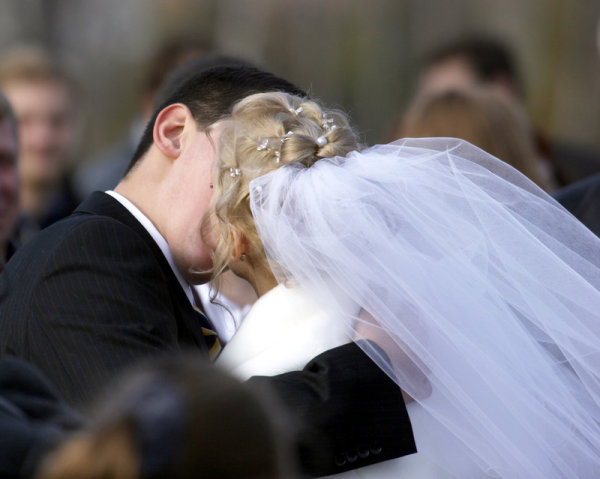
This question of “how much do I charge” often revolves around the topic of weddings. The interesting point remains that one of the most difficult and high pressure disciplines of the entire practice of photography is … wedding photography. It is a one shot deal – bad pun intended.


  © Can Stock Photo

Is this the work of an amateur?

I know many photographers, myself included, that have tens of thousands of dollars worth of equipment and the knowledge to use it, know what we would have to charge to cover overhead costs even if we were doing it for free by not charging a creative fee, and know precisely what we pay in equipment costs every year; but, we wouldn’t touch a wedding job with a ten-foot barge pole. Simply put, it is not within our skill set. Wedding photography is very specialized.

What I really don’t understand is why folks would either ask, or offer, to photograph a friend’s wedding. Don’t they understand that by working at their friends weddings they will not enjoy the ceremony or festivities that follow the ceremony?

What happens when that well intended gesture goes south? Not only are you going to feel bad, your friend won’t have any pictures, and you run the risk of even losing a friendship from your well intended offering.

Equally as bad, or even worse, what happens when a guest catches a toe in the strap of your camera bag, trips and falls and suffers a personal injury? You will no longer be considered a friend of the bride, but the wedding photographer who is ripe for a lawsuit.

Another most likely scenario is that you decide to change lenses to capture that key moment; let’s say signing of the registry. In your haste to be ready you drop a lens, a lens you purchased just three months ago that cost $ 950. You want to cry as you look at it lying in pieces at your feet. Is your bride-friend going to pay for a replacement? Probably not. And because you are an amateur you most likely don’t have all-peril equipment insurance that would offset the replacement cost.

Before offering your services it is paramount a review of the costs and liabilities that will be absorbed. There is a multitude of what if scenarios that has to be explored. Beyond the cost of equipment, beyond the cost of liability insurance and even beyond the cost of losing a potential friend, there are also questions regarding taxation and industry ethics.

After reading all the above arguments suggesting why you should charge a nominal fee for your services you will have then entered another scenario. In most countries this fee will be considered income, and will be taxed accordingly. Should you decide to not report the income another topic enters the discussion. I suspect tax avoidance would not only come with potential legal consequences, but at its most basic form it raises questions of ethics.

Professional photographers contribute to the local economy. They hire local students (most often aspiring photographers who desire to learn the profession before hanging out their own shingle), they pay various taxes, they pay studio rent, they pay insurance to local brokers, and a host of other expenses that most often support local service industries and overall economy. If enough weekend Rebels (they all shoot with Rebel’s, don’t they?) start shooting weddings for free that professional photographer will eventually have to close shop and the community loses the local jobs and economic spin-off the professional photographer supported.


© Can Stock Photo

Professional wedding photographers today often bring a reportage style as opposed to the traditional and formal approach.

As I mention, I do not photograph weddings as I do not feel qualified. I also strongly believe that each of us has a moral obligation to ensure we do not undermine the capacity of our neighbour to earn a living, regardless of occupation.

Before you agree to photograph that friend’s wedding, be honest with yourself, your friend, your neighbour and your community.

Post originally from: Digital Photography Tips.

Check out our more Photography Tips at Photography Tips for Beginners, Portrait Photography Tips and Wedding Photography Tips.

Amateur or Professional?


Digital Photography School

 
Comments Off on Amateur or Professional?

Posted in Photography


NEW Fujifilm 3D W3 Camera Professional Review – Mat Trim

18 Nov

Find out more info here: www.myfinepix.co.uk
Video Rating: 4 / 5

 
Comments Off on NEW Fujifilm 3D W3 Camera Professional Review – Mat Trim

Posted in 3D Videos


HD Professional Beauty Retouching in Photoshop by Lucy Literna

06 Nov

Portrait beauty retouching in Adobe Photoshop, skin retouching and photo enhancing tutorial by Lucy Literna. www.lucyliterna.com
Video Rating: 5 / 5

 
Comments Off on HD Professional Beauty Retouching in Photoshop by Lucy Literna

Posted in Retouching in Photoshop


PhotoEnhance makes your photos look professional

06 Nov

Photos are the most important ingredient in any property marketing campaign. Do you take your own photos for property sales or rentals? Did you know that professional photographers have their photos enhanced by skilled photoshop technicians? This is what helps their photos look so professional. PhotoEnhance lets you have the same professional photo-enhancing for a very low cost per photo.
Video Rating: 0 / 5

 
Comments Off on PhotoEnhance makes your photos look professional

Posted in Retouching in Photoshop


What Makes You A Professional Photographer?

05 Nov

Seattle's Pike Place Market | Seattle, Washington | James Brandon Photography

There are quite a few hot photography debates floating around the internet. Whether it’s HDR, watermarks, Nikon vs. Canon, Mac vs. PC, straight out of the camera vs. post processing; there’s certainly no shortage. One of the newer ones I’ve seen pop up recently is this big fuss over what makes a photographer a professional. This is a debate that I feel truly does have a black and white answer and shouldn’t be a debate at all. So let me explain and then let’s see if you agree…

When In Doubt, Use A Dictionary

First things first, let’s get the definition of professional and amateur and settle this debate real quick, then I’ll expound on it a bit.

professional

adjective

1 [ attrib. ] of, relating to, or connected with a profession: young professional people | the professional schools of Yale and Harvard.

2 (of a person) engaged in a specified activity as one’s main paid occupation rather than as a pastime: a professional boxer.

amateur

noun

1 a person who engages in a pursuit, esp. a sport, on an unpaid basis.

2 engaging or engaged in without payment; nonprofessional: an amateur archaeologist | amateur athletics.

Ok, thanks for reading!

Hehe, just kidding. But that really does settle this whole debate right? A professional photographer is someone who’s paid occupation is photography. An amateur is someone who engages in photography without payment just for the love it. So what’s wrong with that?

Nobody Wants To Be An Amateur

Well, almost nobody. I’ve found that most amateurs who have never been professionals want to be professionals. But many professionals miss being amateurs and the purity that came with it. When you get money and clients involved, the purity of creating art seems to get tainted to some extent, especially when you’re creating images to suit your clients needs instead of clients hiring you for your creativity and giving you freedom over the images. See the difference there? Being a professional has nothing to do with quality of work. There are amateurs that are better photographers than I am. There are amateurs that are better photographers than you are.

There are professional photographers out there who:

  • Have been making a living for 30 years with their grip-n-grin, hand under your chin, head slightly tilted, perma-smile, muslin backdrop in a studio type images.
  • Shoot weddings and charge $ 800 for 6 hours in JPG mode and burn the images straight out of camera to a disk, yet they make good money because they are so cheap and shoot so many weddings.
  • Run travel photography workshops around the world with a litany of sponsors and followers. Yet their images are plagued with halos and over saturation. Good marketing can take anyone a long way.

On the flip side, there are amateurs who:

  • Take far better images than most professionals, but just do photography for the love of it.
  • Have full time jobs and make enough money from their photography to buy new gear regularly.
  • Have full time jobs yet are more connected and intertwined in the photography community than a lot of professionals.
  • Make great money through photography but still work somewhere else to have steady income, health care, pensions, etc.
  • Take and create award winning photographs worthy of any gallery.
  • Make more money part time than some professionals make full time.

So why is being an amazing and unbelievably talented photographer not enough? Why do we also want to be considered a professional when our work shines above (what we feel is) the rest? I think it’s just the general disconnect around the two words and the secondary meanings that they have formed over recent years. I mean, think about this:

A teenager who goes out and races his car at a drag strip every single weekend, who lives and breathes racing, who works on his car every day after school, isn’t considered a professional. It’s his hobby, even though it takes up a very large portion of his every day life. Yet a NASCAR driver who hasn’t won a race in three years is still considered a professional race car driver. Why? Because that’s what he does for a living and he earns a paycheck for it!

My wife loves to cook. She’s a foodie to the core. She can take just about any recipe she sees on the Food Network and recreate it and make it her own. It’s amazing. But she isn’t a professional chef is she? Yet the guy that works at the burger joint up the street and runs the kitchen is considered a (professional) chef because that’s his living and his main source of income.

So why is photography any different? I really don’t understand…

Conclusion

Well, in this case, the conclusion is really up to you. Do you agree? Disagree? Voice your opinion in the comments below and let me know what you think. Or hit me up on twitter (@jamesdbrandon) and let me know there.  Be sure to use the hashtag #DPSdebate


Post originally from: Digital Photography Tips.

Check out our more Photography Tips at Photography Tips for Beginners, Portrait Photography Tips and Wedding Photography Tips.

What Makes You A Professional Photographer?


Digital Photography School

 
Comments Off on What Makes You A Professional Photographer?

Posted in Photography


Are Your Photos “Good Enough” For You To Be A Professional Photographer?

02 Nov

There are a lot of photographers out there selling photos, which are well … rubbish. And there are many people out there who regard photography as an unpaid hobby, and yet produce shots which could be sold. How do you know if your photography is suitable for the commercial world? It’s not an easy question to answer, and I don’t Continue Reading
Photodoto

 
Comments Off on Are Your Photos “Good Enough” For You To Be A Professional Photographer?

Posted in Photography


How To Become A Professional Photographer. Now.

30 Oct

I see more and more magazine articles and blog posts where disillusioned photographers advise aspiring young passionate artists not to enter this career. A few weeks ago, for example, I picked up a popular photography magazine and was left depressed because just about every article talked about photography being a dying profession and the inadequacy of it to pay bills. Continue Reading
Photodoto

 
Comments Off on How To Become A Professional Photographer. Now.

Posted in Photography


Engagement Portrait Shoots: 7 Professional Tips to take your Engagement Shoots to the Next Level

17 Oct

Engagement-Shoots

Today portrait photographer Christina N Dickson shares tips on how to shoot engagement portraits. Christina’s work can be found at www.ChristinaNicholePhotography.com.

Shooting engagement portraits are perhaps some of the most enjoyable for photographers. Most often, they are taken before the whirlwind of wedding planning is fully underway, and the couple is still quite enamored with one another. How do you take advantage of this time and produce incredible images? Follow these few steps to achieve real and vibrant engagement portraits.

1. Be involved!

As a photographer, you must keep your people skills sharp. With engagement photos, you have to do your research on the couple you are photographing. What are they like as a couple? What are they like as individuals? What is their wedding going to be like? How did they meet? This is going to affect the way you want to build your images and portray them.

2. Encourage affection!

Rather than posing each shot, ie, “okay, now you kiss her cheek!” encourage your couple to show as much affection as possible. Every couple does certain things to show one another love. If you want to capture them accurately, you will urge this type of interaction.

3. Be observant!

A couple is most natural when they are focusing on one another. Try to direct the shoot by suggesting they talk to one another, telling one another most embarrassing moments, or 5 things they love about each other– topics that will pull out expression, interaction, and affection.

4. Remember that space determines relationship!

If a couple is leaning in for a kiss, or walking arm in arm, you will be able to communicate a message of intimacy. Sometimes you can get sweet shots with contrast and tension in the picture by placing the couple far apart in the frame, but be sure that this is your purpose if your going to do it.

5. Tell a story.

No love story is the same. Find unique traits about the couple, and then pull this out in the creation of your images. If the couple is perfectly at ease with one another because they have been best friends for 10 years, you can create images with a laid back and contented feel. If the couple has had a whirlwind romance after meeting on e-harmony.com, it will be natural to pull out the affection and passion of their relationship

6. Be open to suggestions!

Often times the bride to be will have an idea for a shot she will suggest to you before hand. Other times her fiancé may think of an idea on the spot during the shoot. If you can integrate these ideas into your shooting, you will delight the couple, and possibly find yourself inspired by new ideas.

7. Be personable!

If you get to know your couple, and allow them to fall in love with your personality and style, you have a good chance of booking them for a wedding also. Your job is not only to take good pictures, but also to give them a fabulous time they will remember for the rest of their lives.

Post originally from: Digital Photography Tips.

Check out our more Photography Tips at Photography Tips for Beginners, Portrait Photography Tips and Wedding Photography Tips.

Engagement Portrait Shoots: 7 Professional Tips to take your Engagement Shoots to the Next Level


Digital Photography School

 
Comments Off on Engagement Portrait Shoots: 7 Professional Tips to take your Engagement Shoots to the Next Level

Posted in Photography